Episode 7Whales Don't Tow Ships. This One Did.Baron Munchausen and the Whale
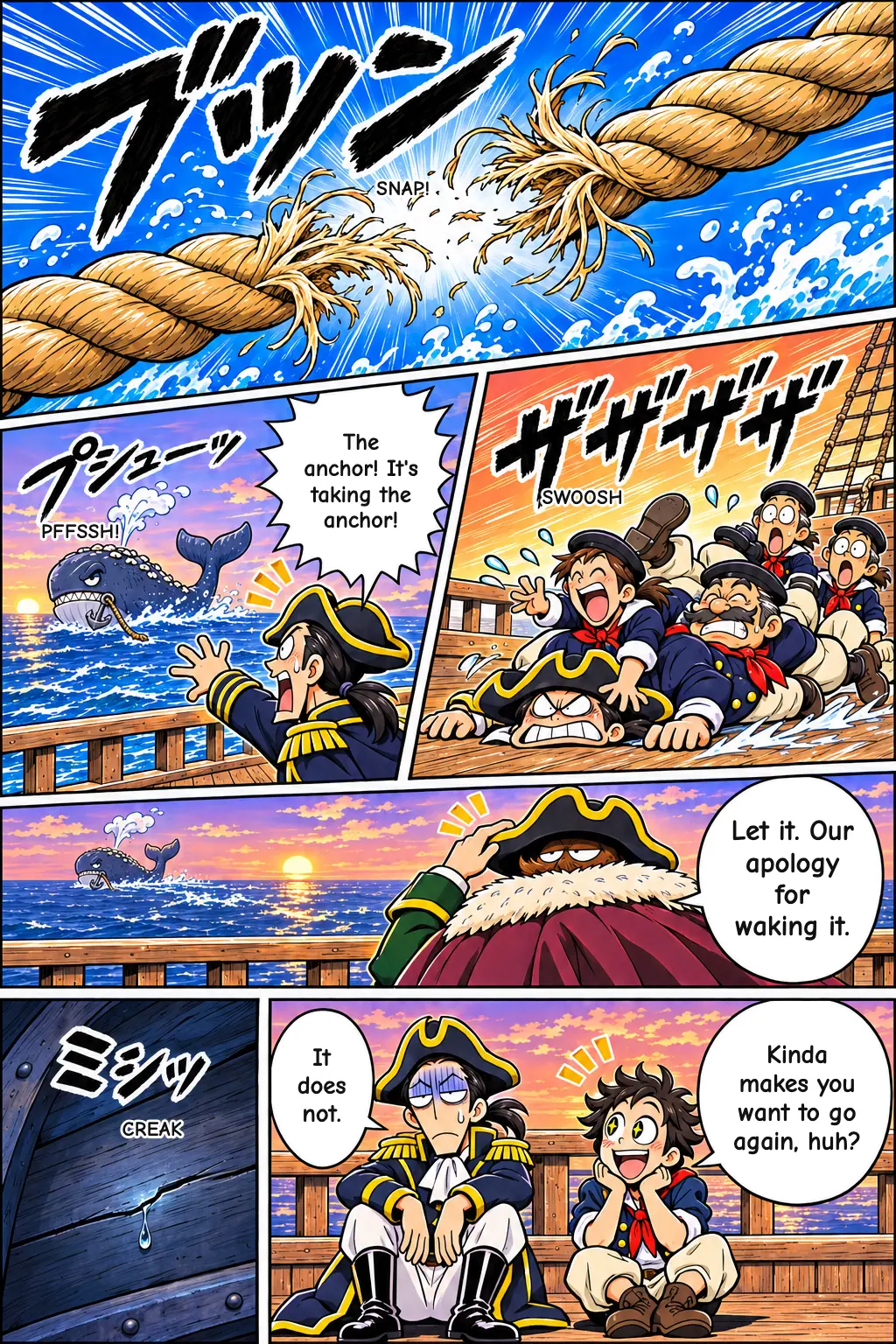
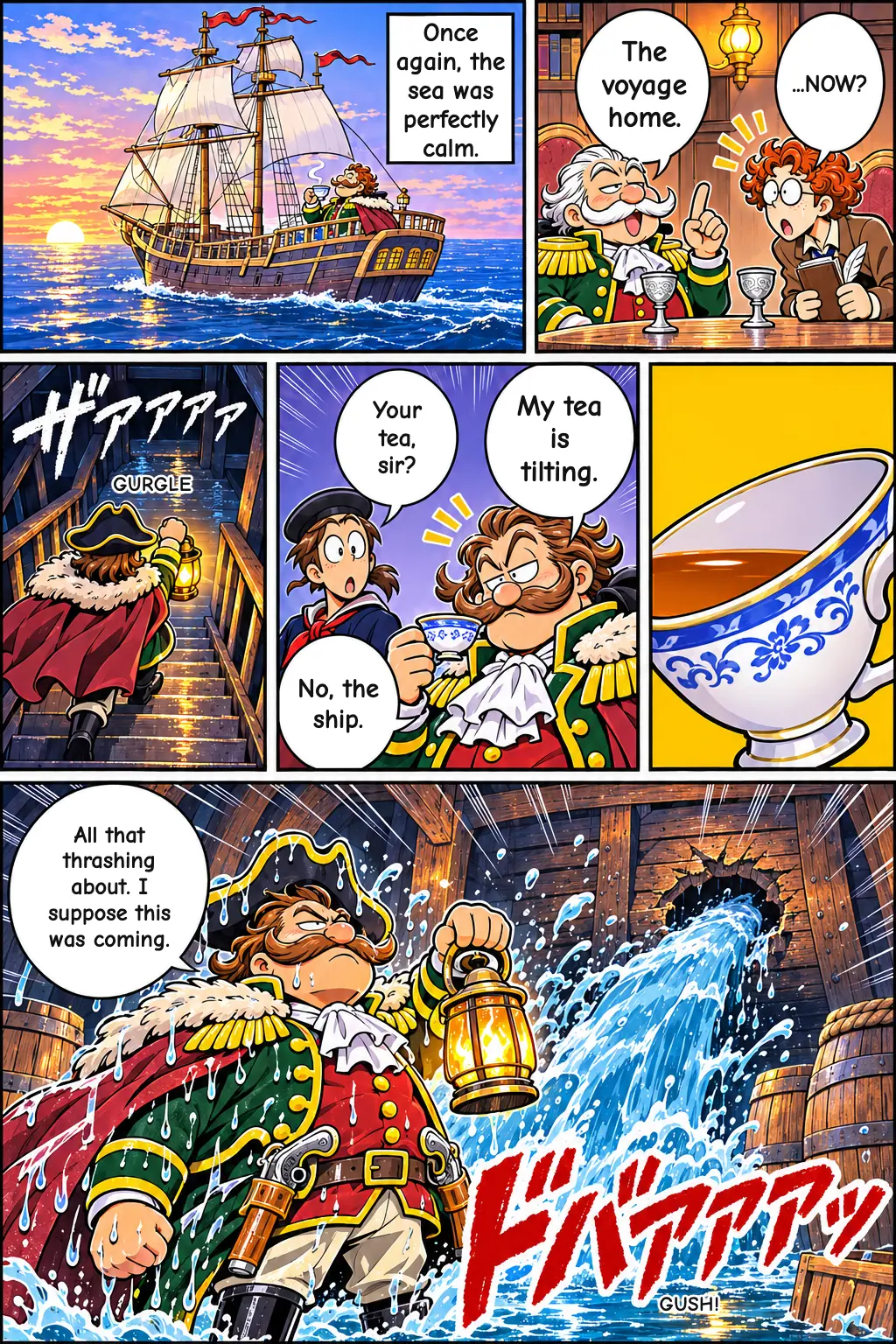
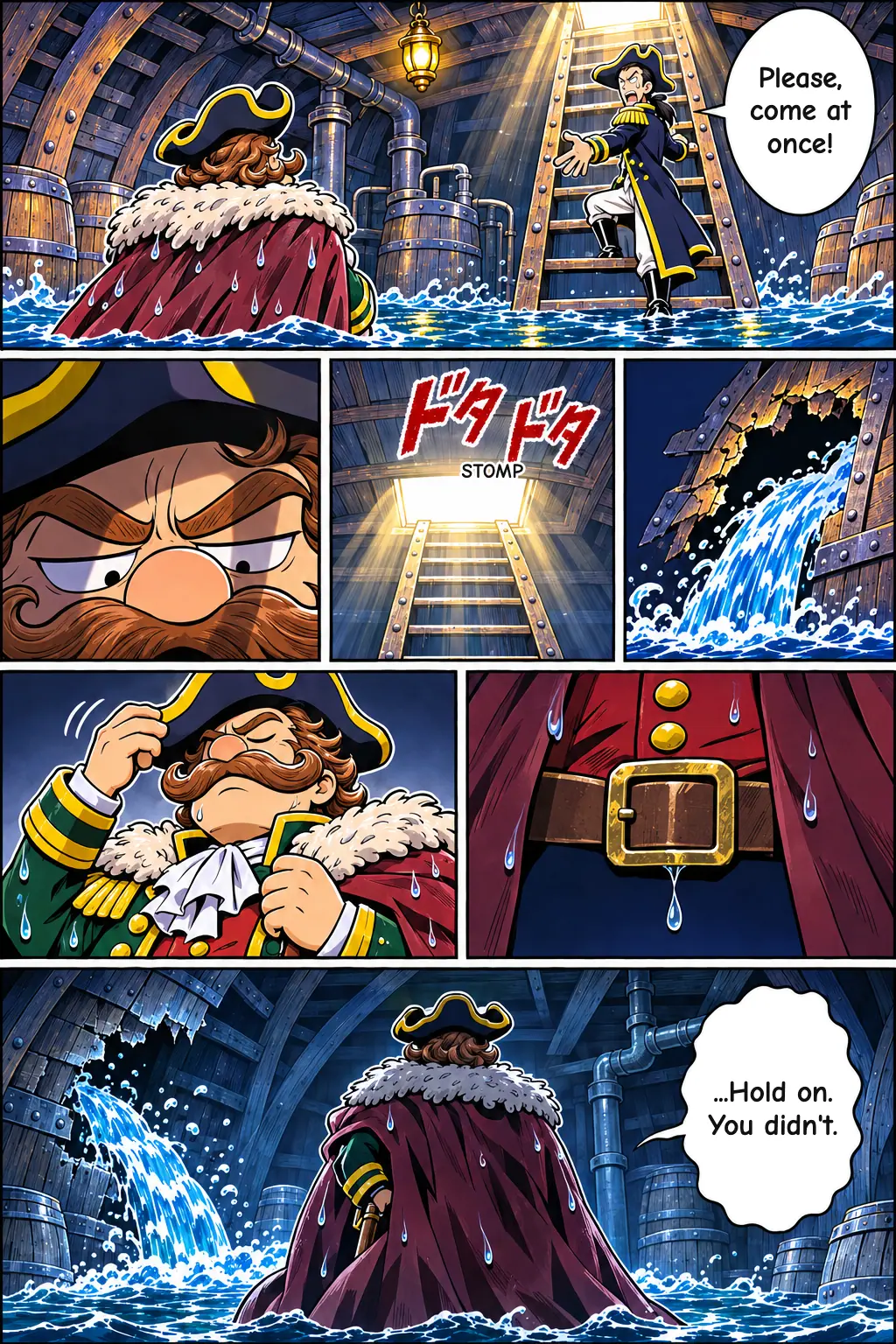
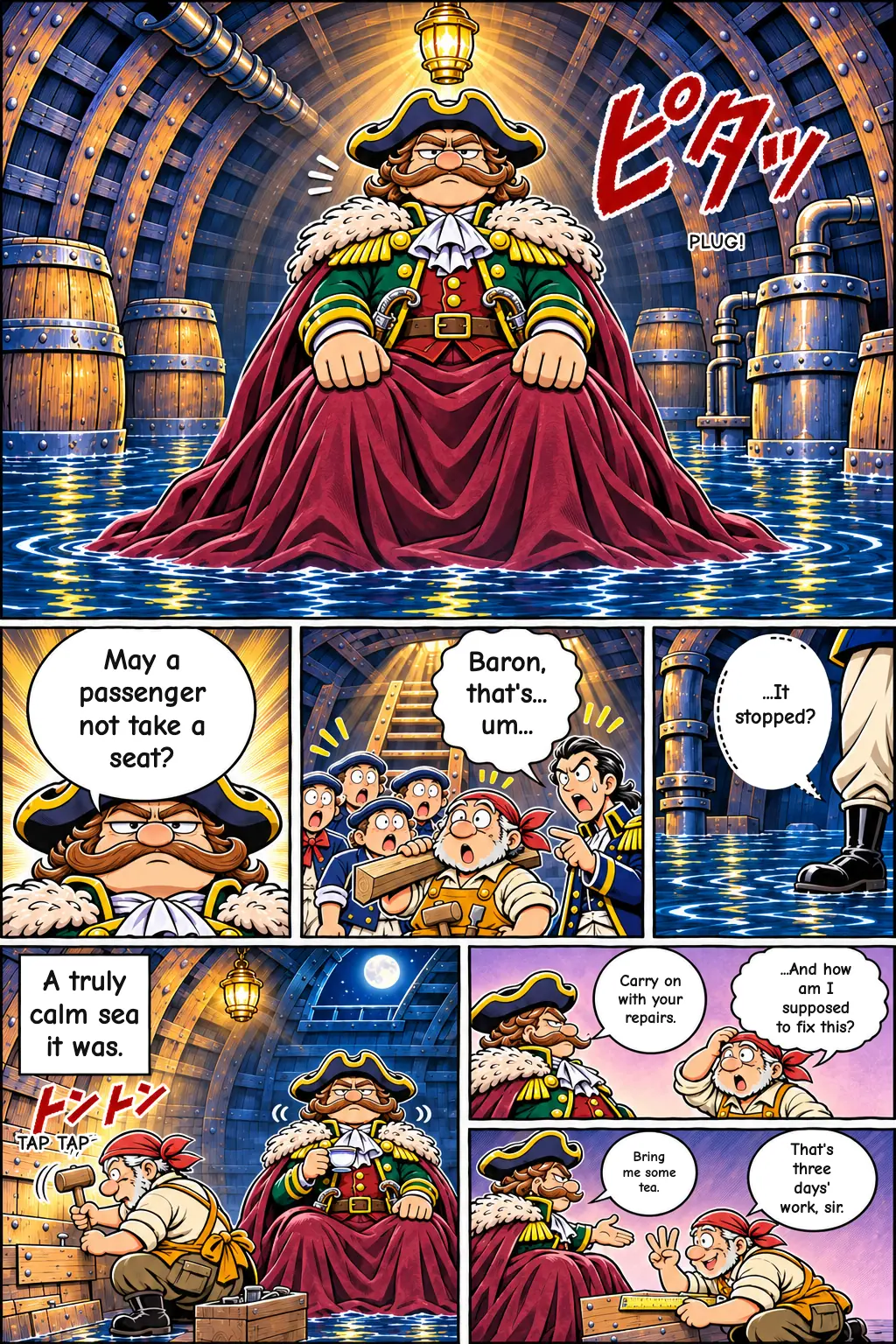
In the middle of the ocean, the ship slams into "something," and soon a giant whale, rudely woken from its nap, is dragging it across the sea. But the Baron forgot to mention the voyage home, where an even bigger crisis awaits, along with the world's most pompous solution. *Adapted elements: the storytelling frame and listener, the words and actions of the officer and sailors, the scene of raising sail to race alongside the whale, the tea props, and the pulling of the hair to restore the Baron's head.
Get new episodes in your feed. Follow us on:ThreadsBluesky
Story summary
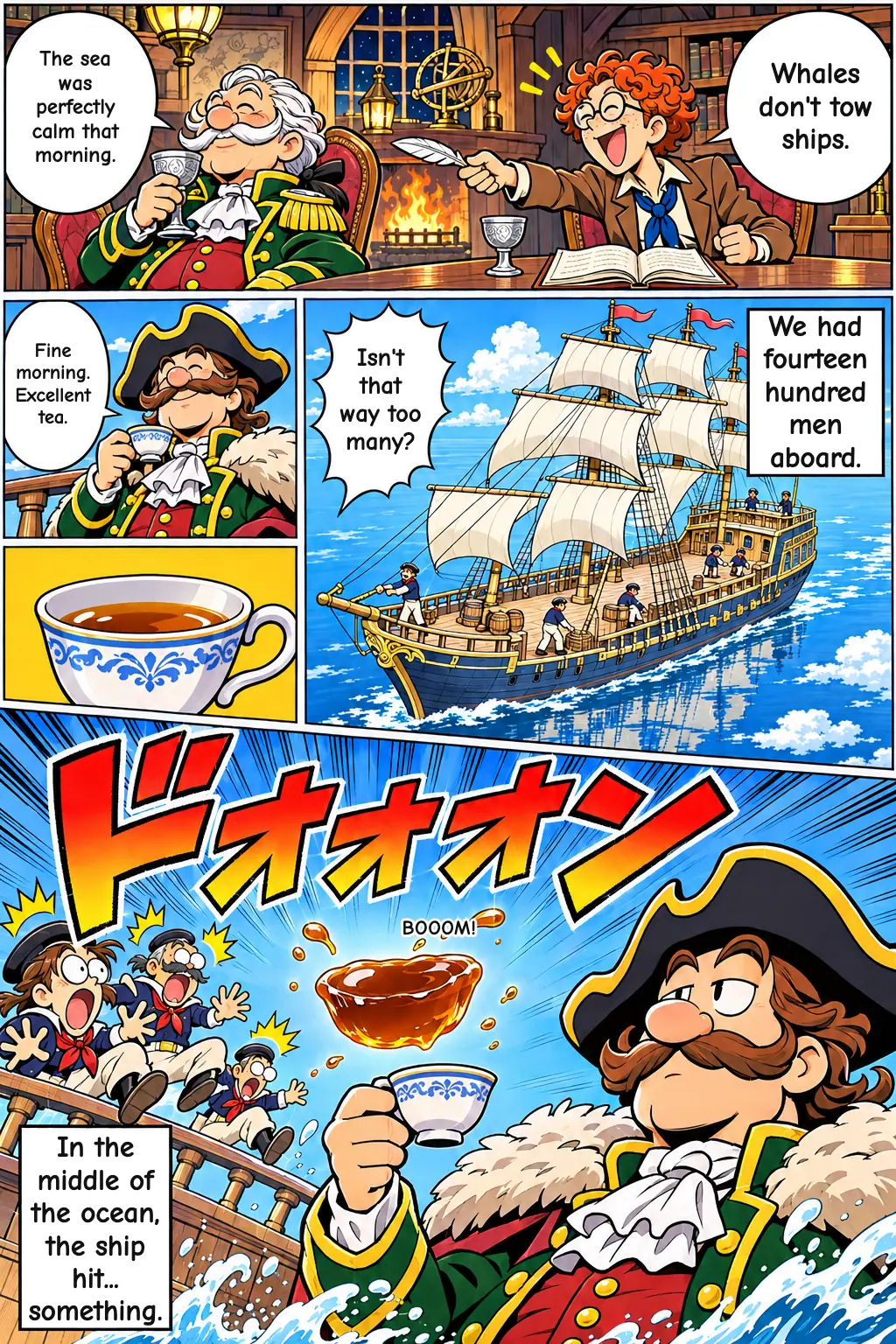
The Baron sets sail from Portsmouth, England, on a huge British warship bound for North America. By his count, it carries 100 guns and 1,400 men. Nothing interesting happens until the ship is about 300 leagues (very roughly 900 miles) from the St. Lawrence River. Then it hits something with tremendous force. Everyone assumes it's a rock, but when the crew lowers a weighted line 300 fathoms (about 1,800 feet), it never touches bottom. The damage is absurd.
Baron Munchausen and the Whale: Story Summary and Manga Explained
In short: "Baron Munchausen and the Whale" is a tall tale in which a warship crashes into a sleeping whale, and the furious animal seizes the anchor and drags the ship across the ocean. When the ship springs a leak during the chaos, the Baron saves everyone by sitting on the hole. It comes from the Baron Munchausen stories published by Rudolf Erich Raspe in 1785–86.
The Original Story: A Rock That Wasn't a Rock
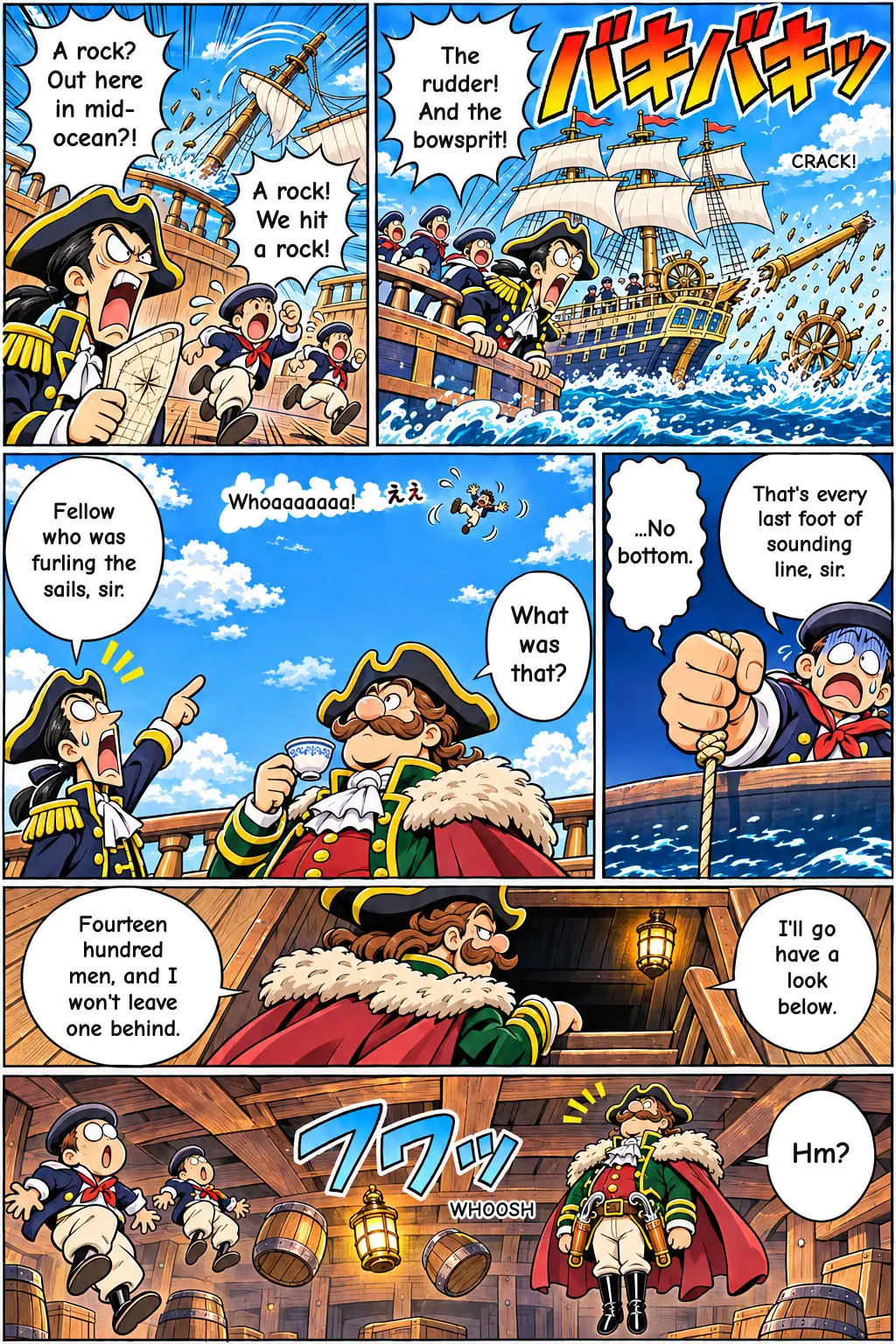
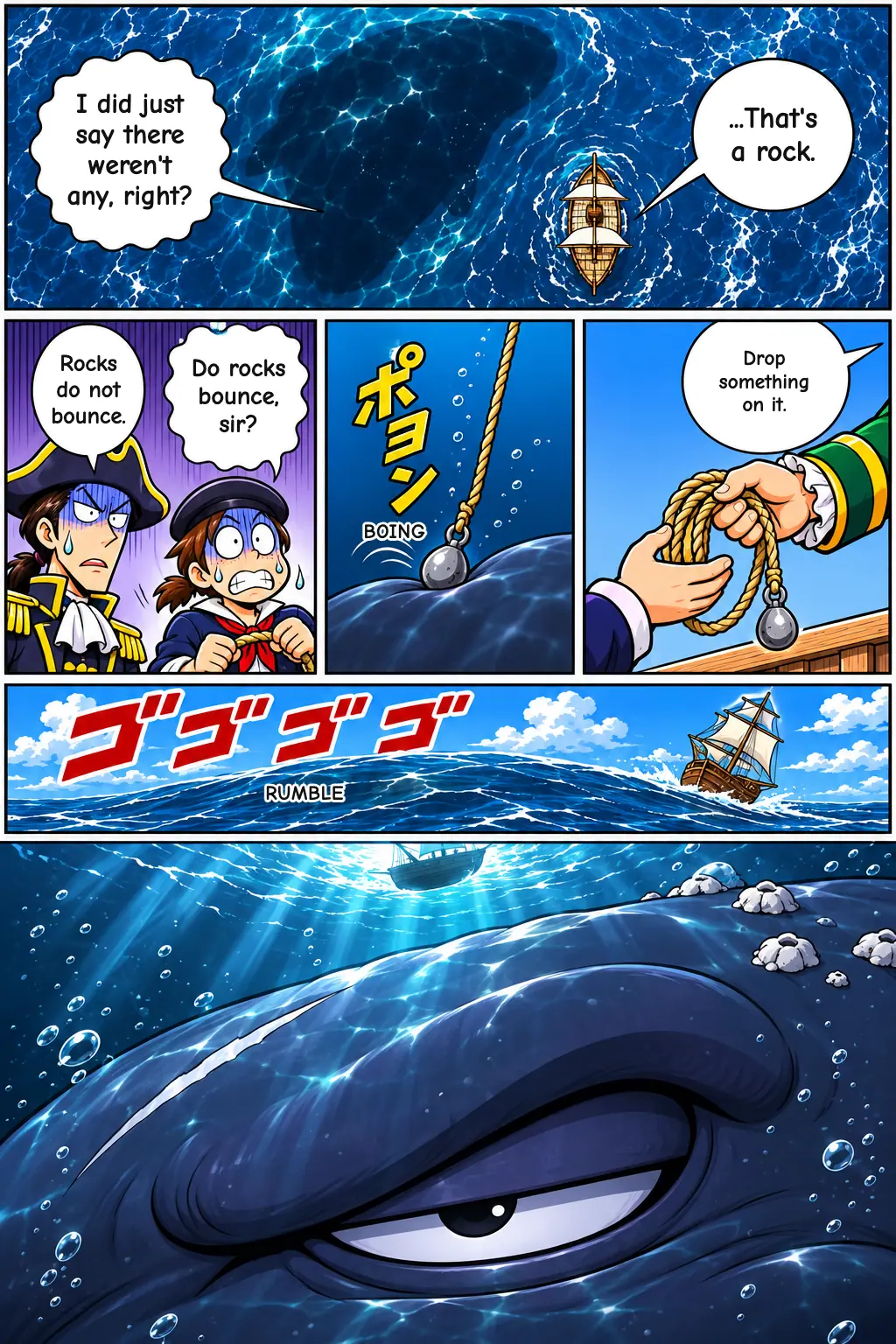
The Baron sets sail from Portsmouth, England, on a huge British warship bound for North America. By his count, it carries 100 guns and 1,400 men. Nothing interesting happens until the ship is about 300 leagues (very roughly 900 miles) from the St. Lawrence River. Then it hits something with tremendous force. Everyone assumes it's a rock, but when the crew lowers a weighted line 300 fathoms (about 1,800 feet), it never touches bottom.
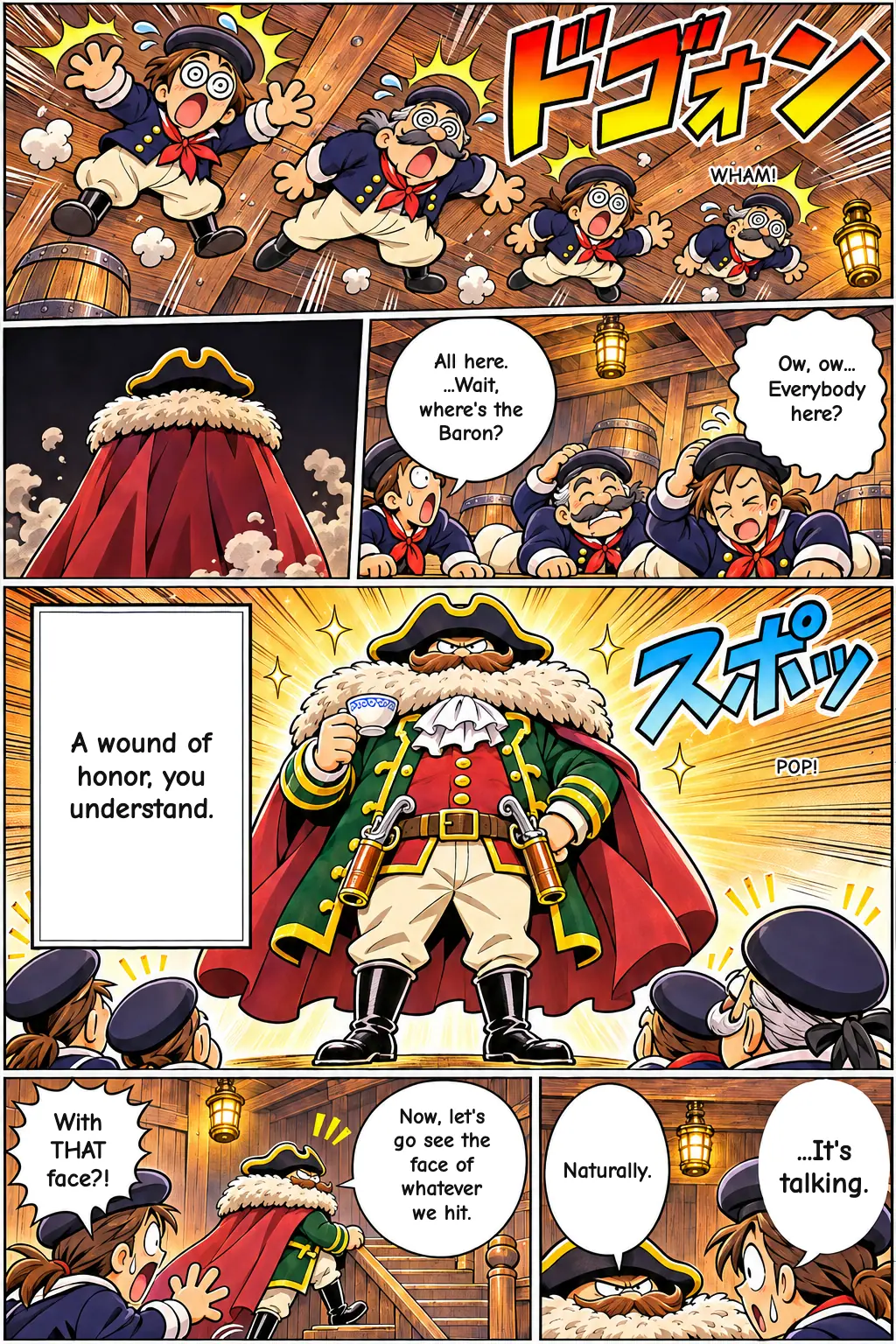
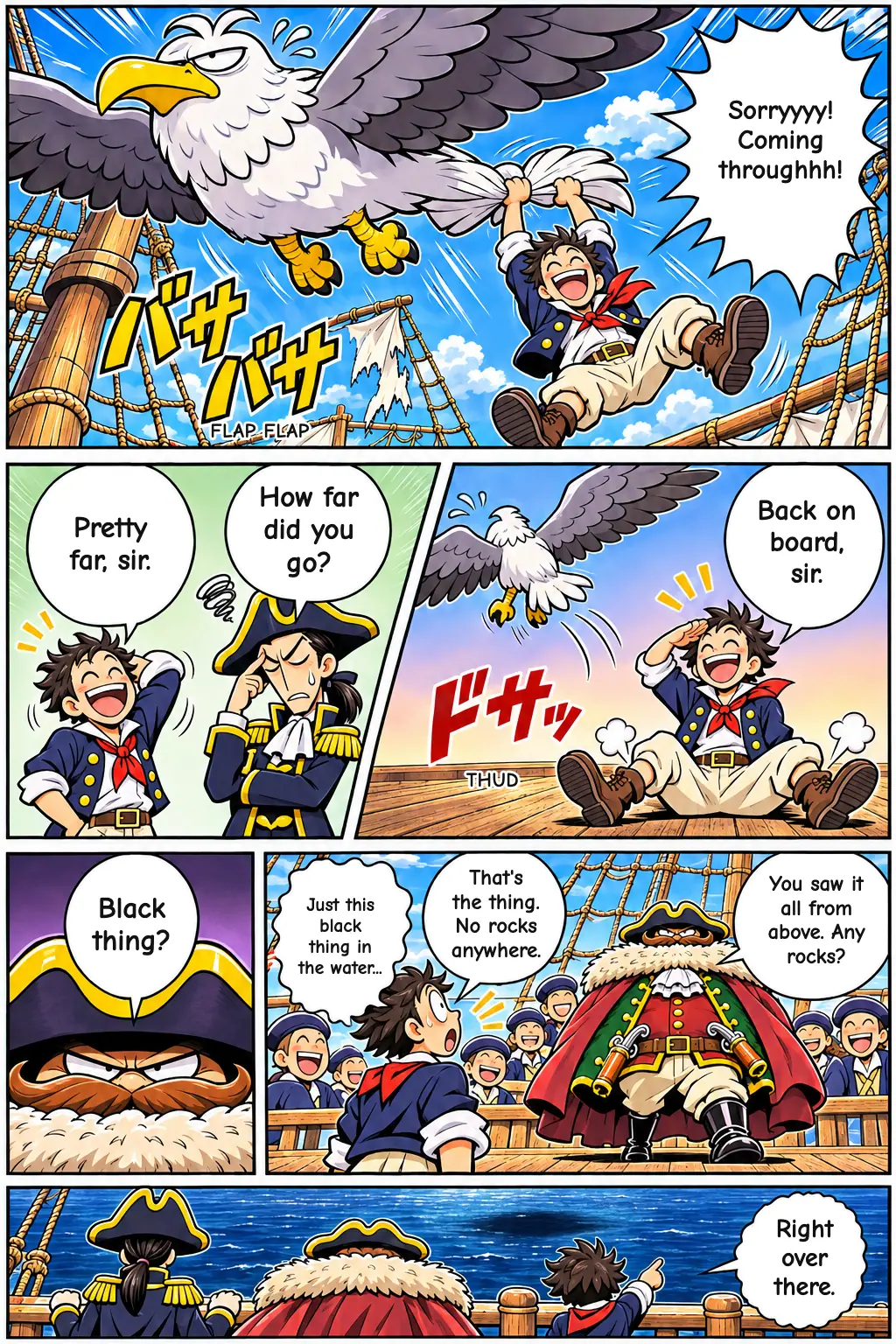
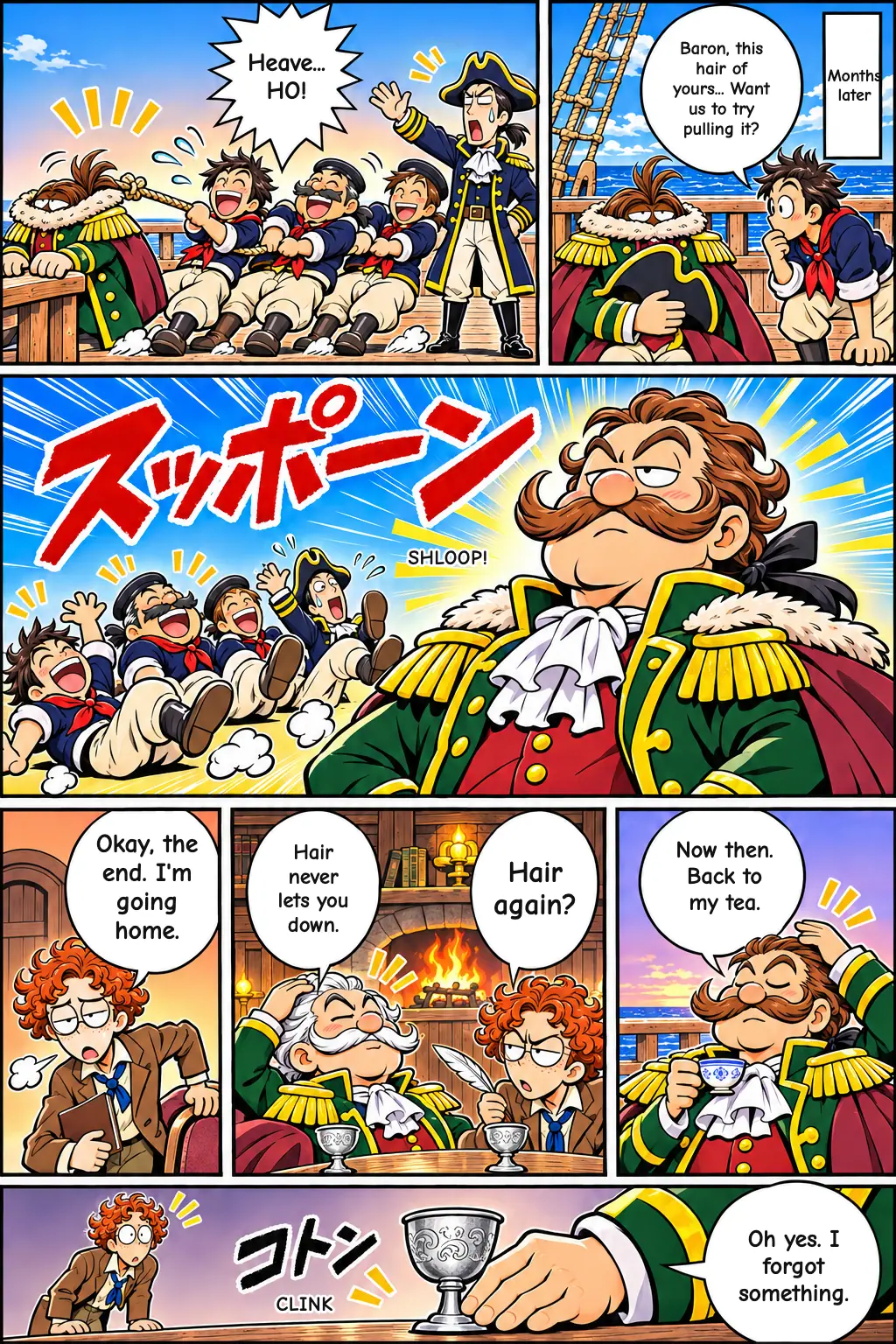
The damage is absurd. The rudder is gone, the bowsprit (the long spar at the front of the ship) is snapped, and the masts are split, with some falling into the sea. A sailor working high in the rigging is thrown about three leagues, then grabs the tail of a large seagull, which carries him back to the very spot he left. Below deck, people are slammed against the floor above them. The Baron's head is driven down into his stomach, where it stays for months.
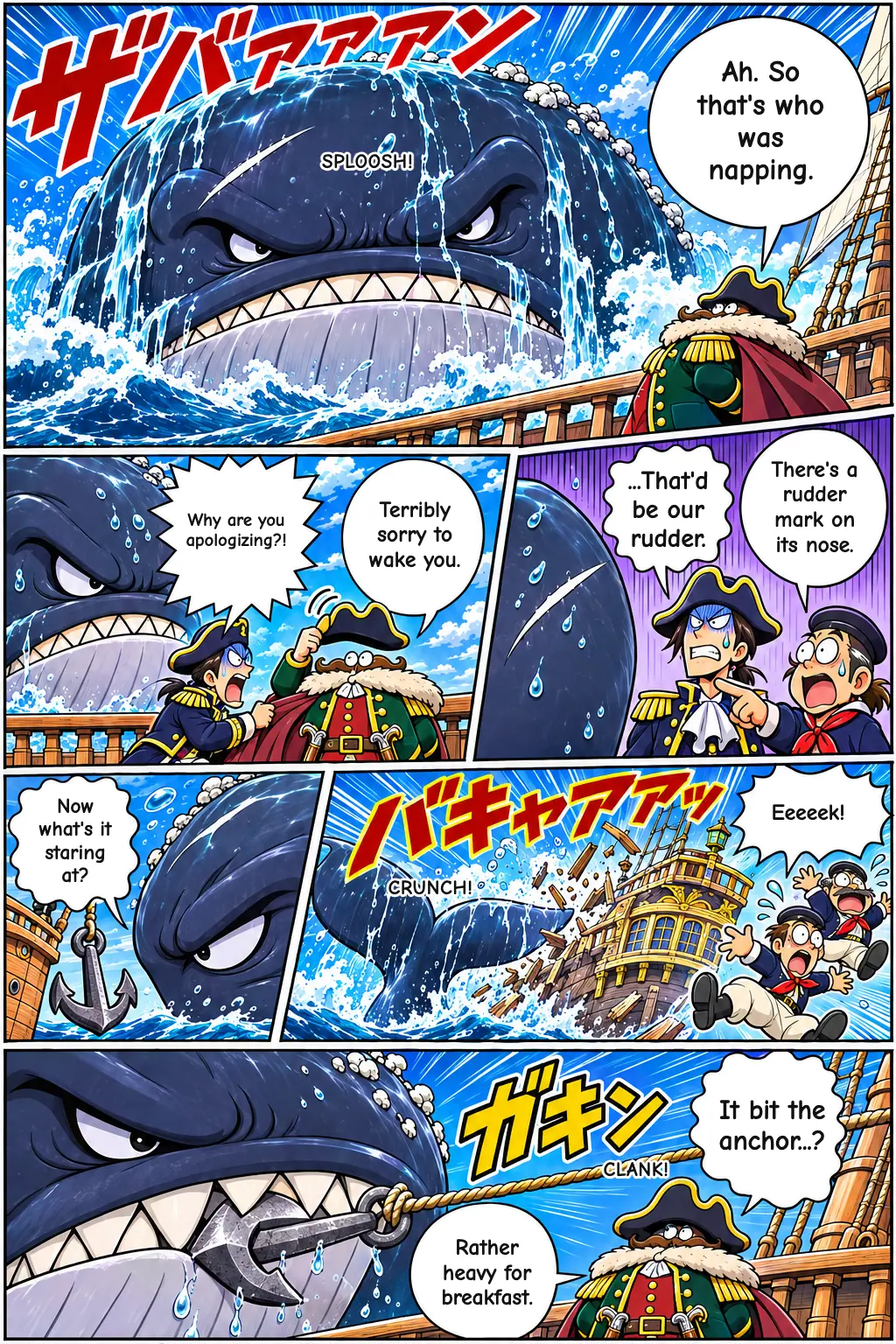
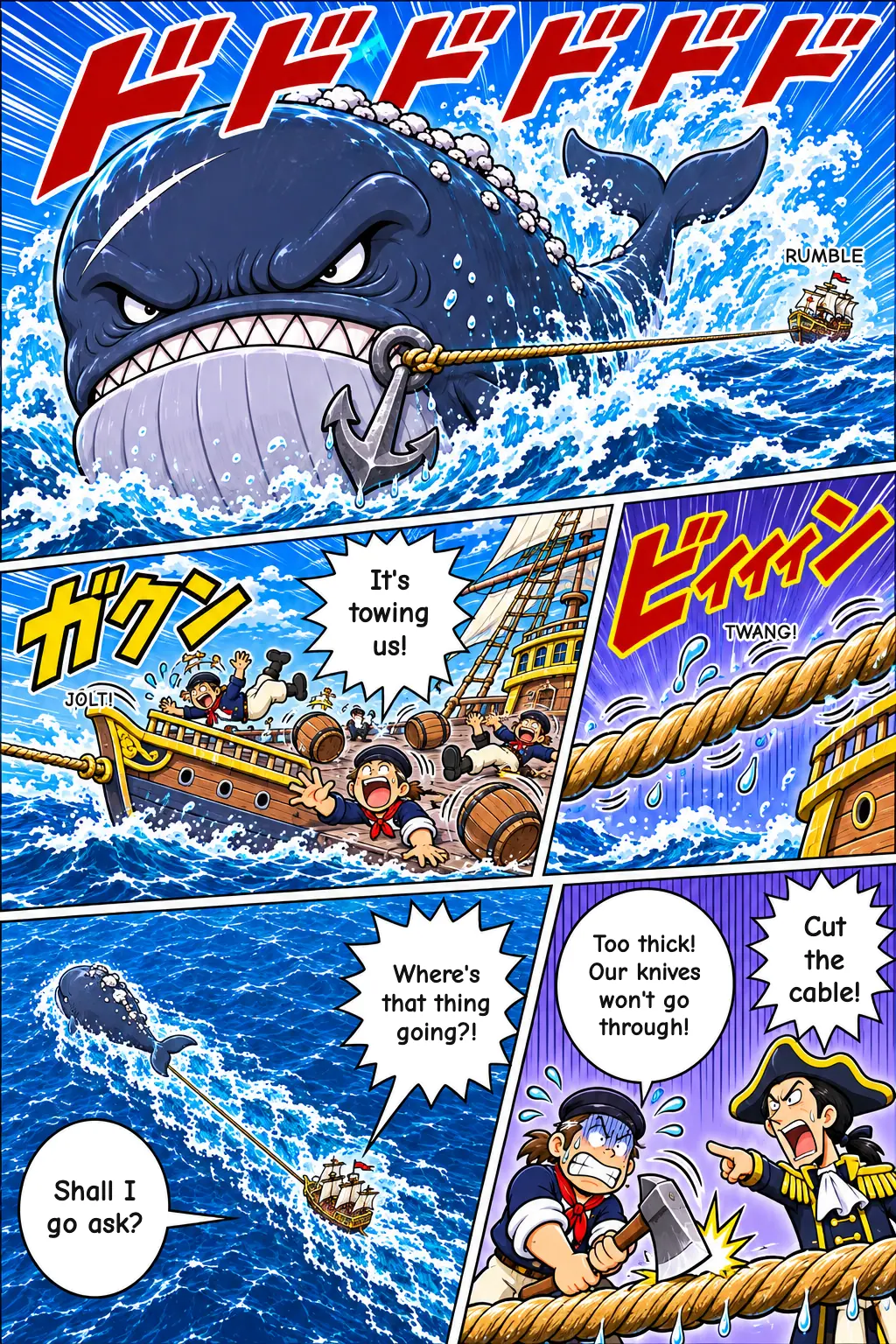
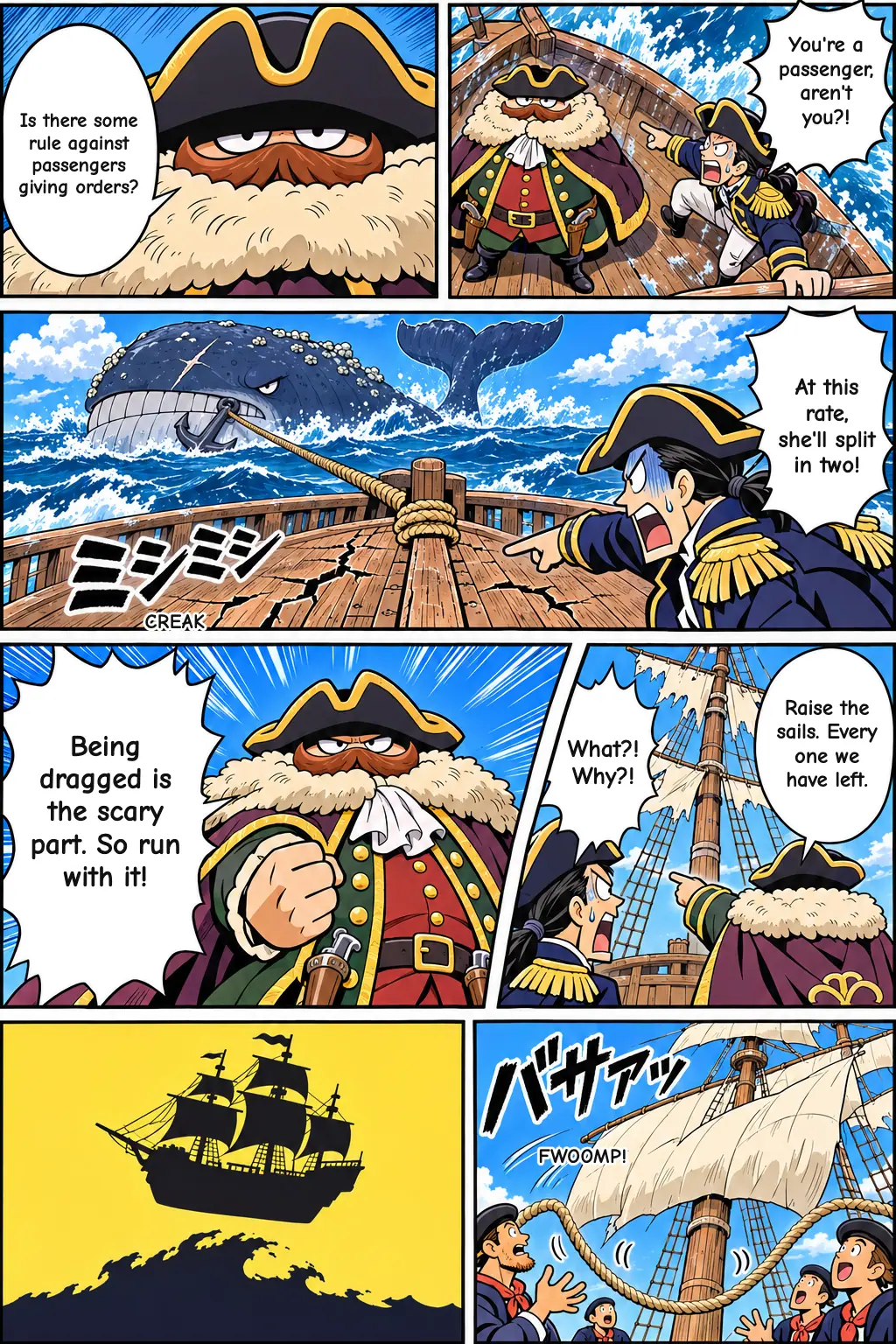
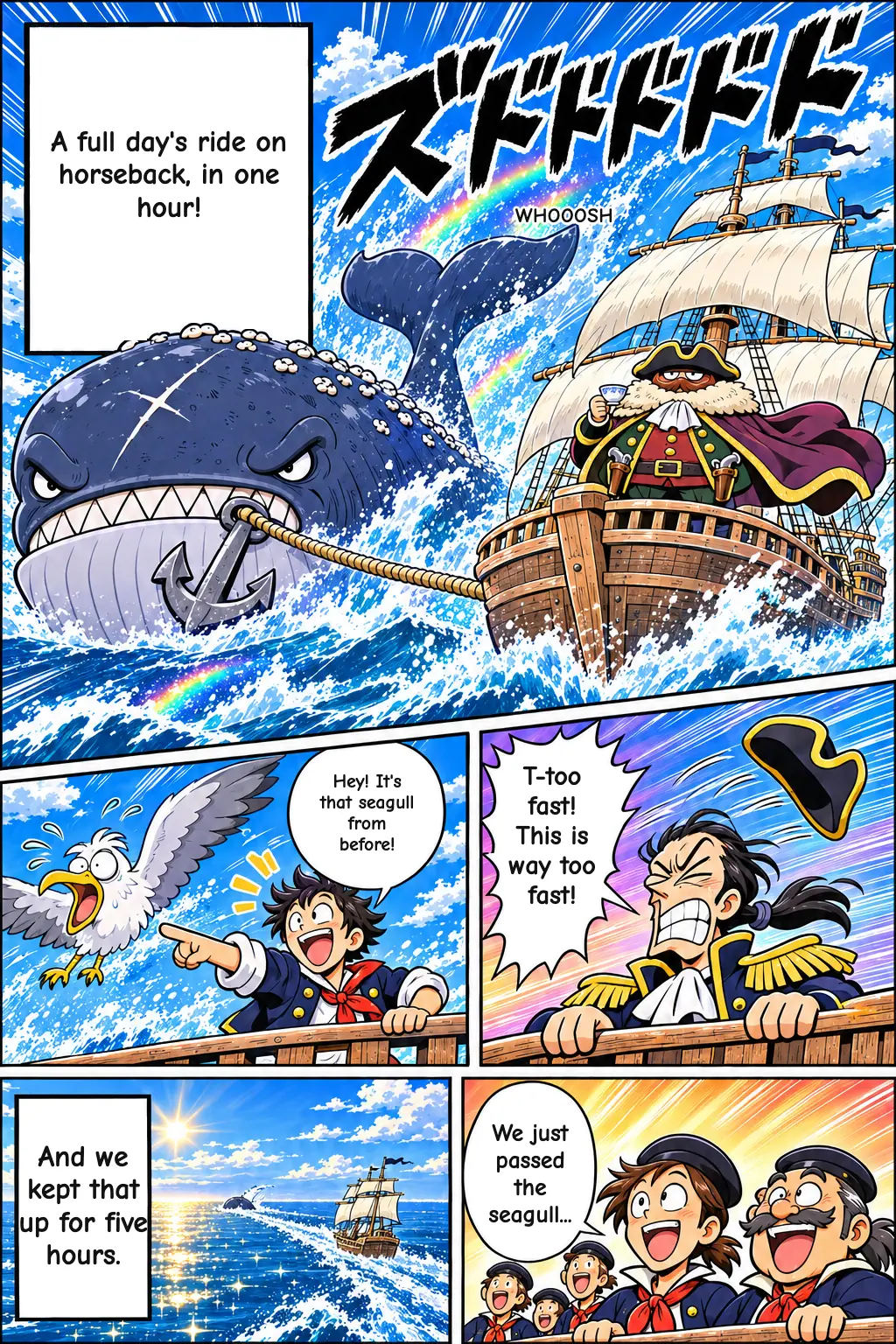
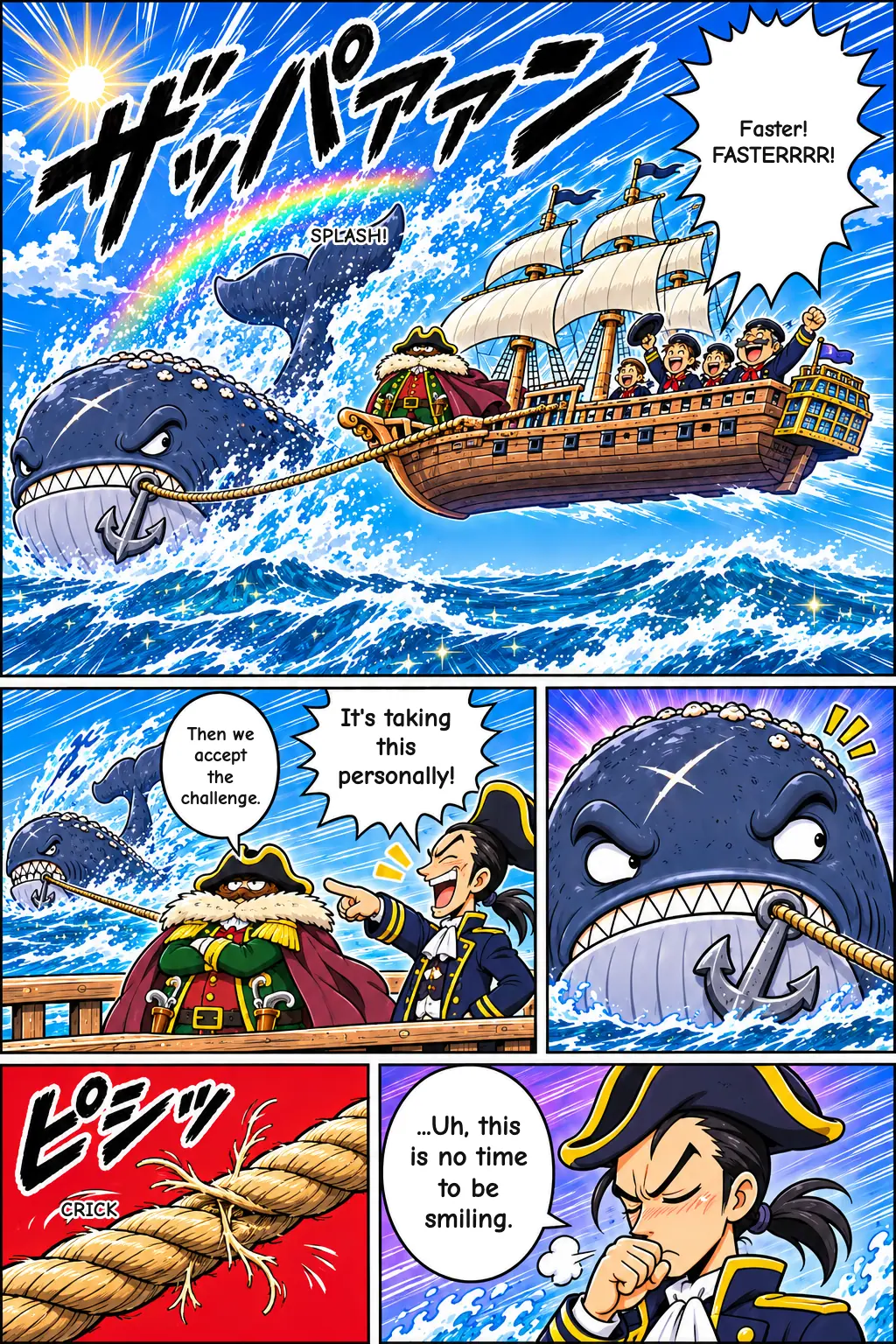
Then the culprit appears: a gigantic whale that had been asleep about 16 feet below the surface until the ship's rudder scratched its nose. The enraged whale smashes part of the stern with its tail, clamps the ship's anchor in its teeth, and tows the vessel some 60 leagues at 12 leagues an hour. Finally the cable snaps, and the whale swims off with the anchor.
Months later, on the way back to Europe, the crew finds the same whale floating dead in nearly the same area. It's more than half a mile long, far too big to bring aboard, so they cut off its head from their boats. Inside the mouth, under the tongue, they find the lost anchor and over 40 fathoms of cable. The Baron guesses this may be what killed it.
The Part the Baron "Almost Forgot"
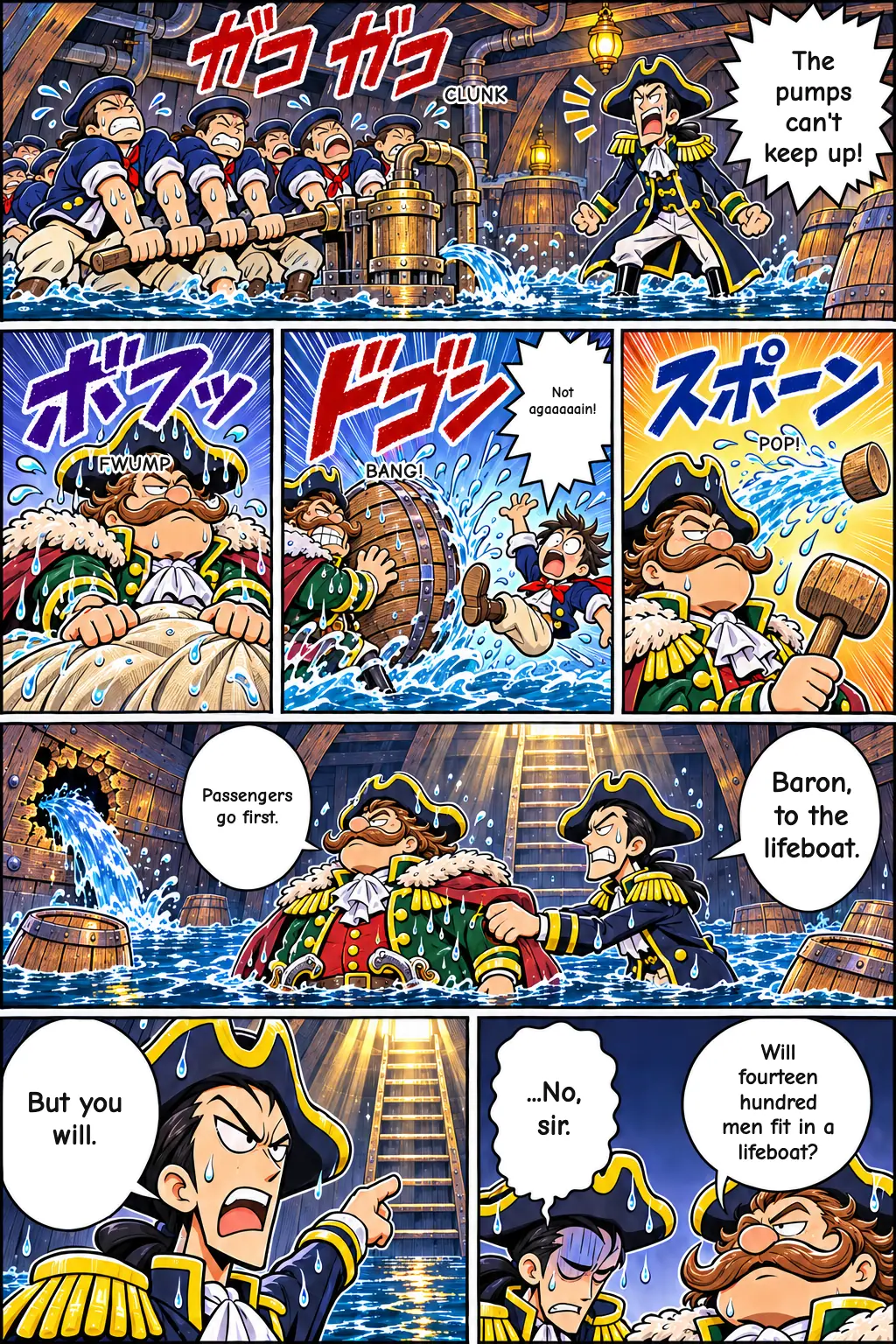
The best joke comes last. After finishing the story, the Baron casually adds that he nearly left something out: while the whale was towing the ship, it sprang a leak. Water poured in faster than the pumps could clear it, and the ship began to sink.
The Baron was first to find the hole, about a foot across. His solution was to take off his trousers and sit on it, staying put until the ship's carpenter could make repairs. In other words, the fate of the ship and its entire crew rested on the Baron's backside, and he reports this as a proud achievement. He finishes with a quip about his Dutch ancestry. Some readers may see a nod to the Dutch and their dikes, but the exact meaning of the joke is open to interpretation.
Why the Story Works: Tall Tales and a Real Baron
The book's history is almost as odd as the story. Rudolf Erich Raspe, a German scholar living in England, first published the tales anonymously in English in 1785. Gottfried August Bürger then produced an expanded German version in 1786. Later editions kept adding and rearranging material, so chapter numbers and small details can differ from one printing to another.
The hero borrows his name from a real person: Hieronymus Karl Friedrich von Münchhausen (1720–1797), a German nobleman who served with the Russian army and was known for telling colorful stories. The adventures themselves are fiction and shouldn't be taken as a record of his life.
The humor comes from the Baron's total confidence. He reports impossible events with precise measurements, as if exact numbers make them believable. The book is often read as a playful jab at boastful travelers and their unlikely accounts. It also belongs to a much older tradition: in Lucian's A True Story, written in the second century, a giant whale swallows a whole ship. Munchausen's whale is funny in a different way, because it behaves like someone woken from a nap and in a very bad mood.
What the Manga Keeps and What It Changes
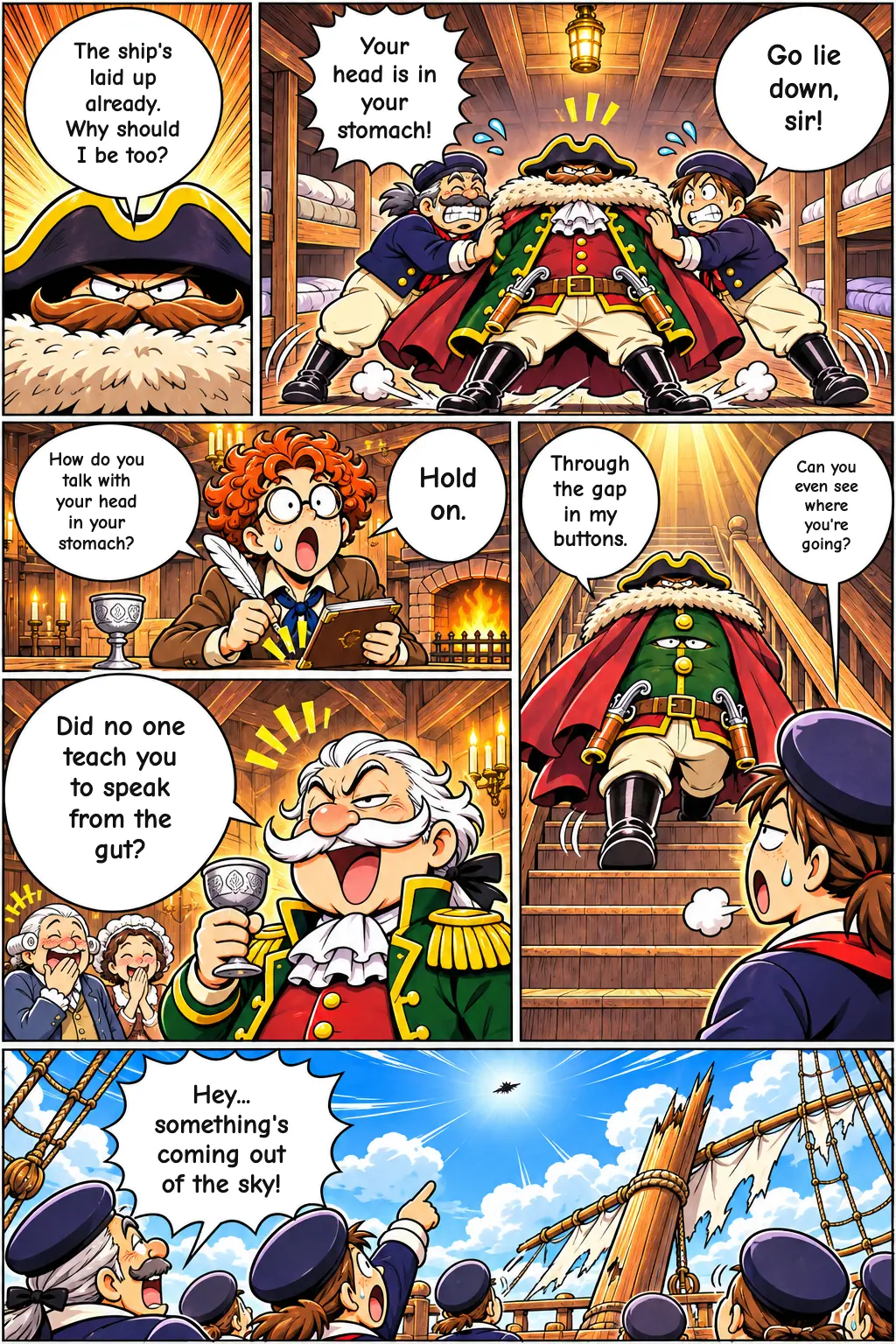
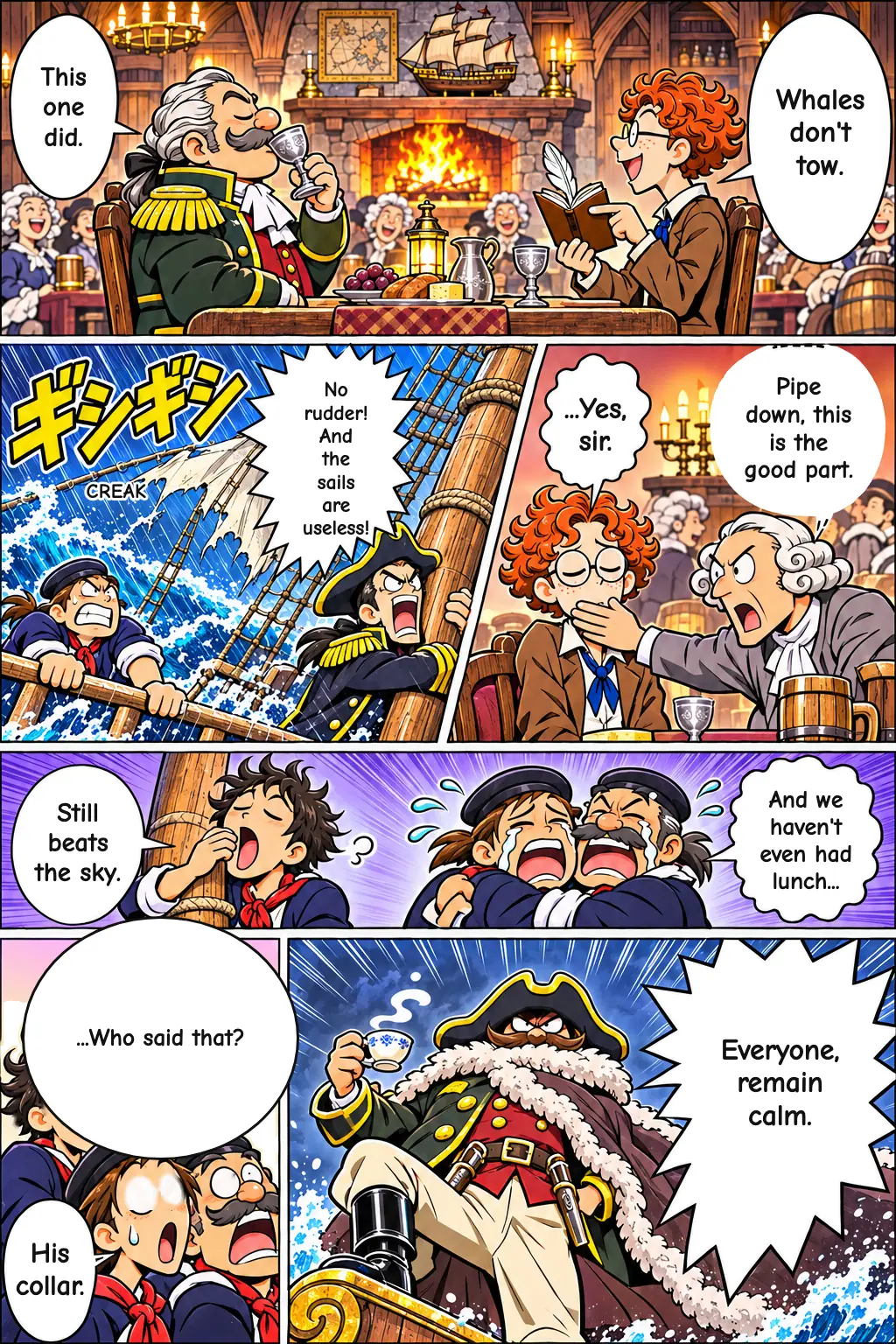
Episode 7 keeps the core of the tale: the mysterious collision, the Baron's head being forced into his stomach, the angry whale, the anchor, the long tow, and the Baron plugging the hole by sitting on it.
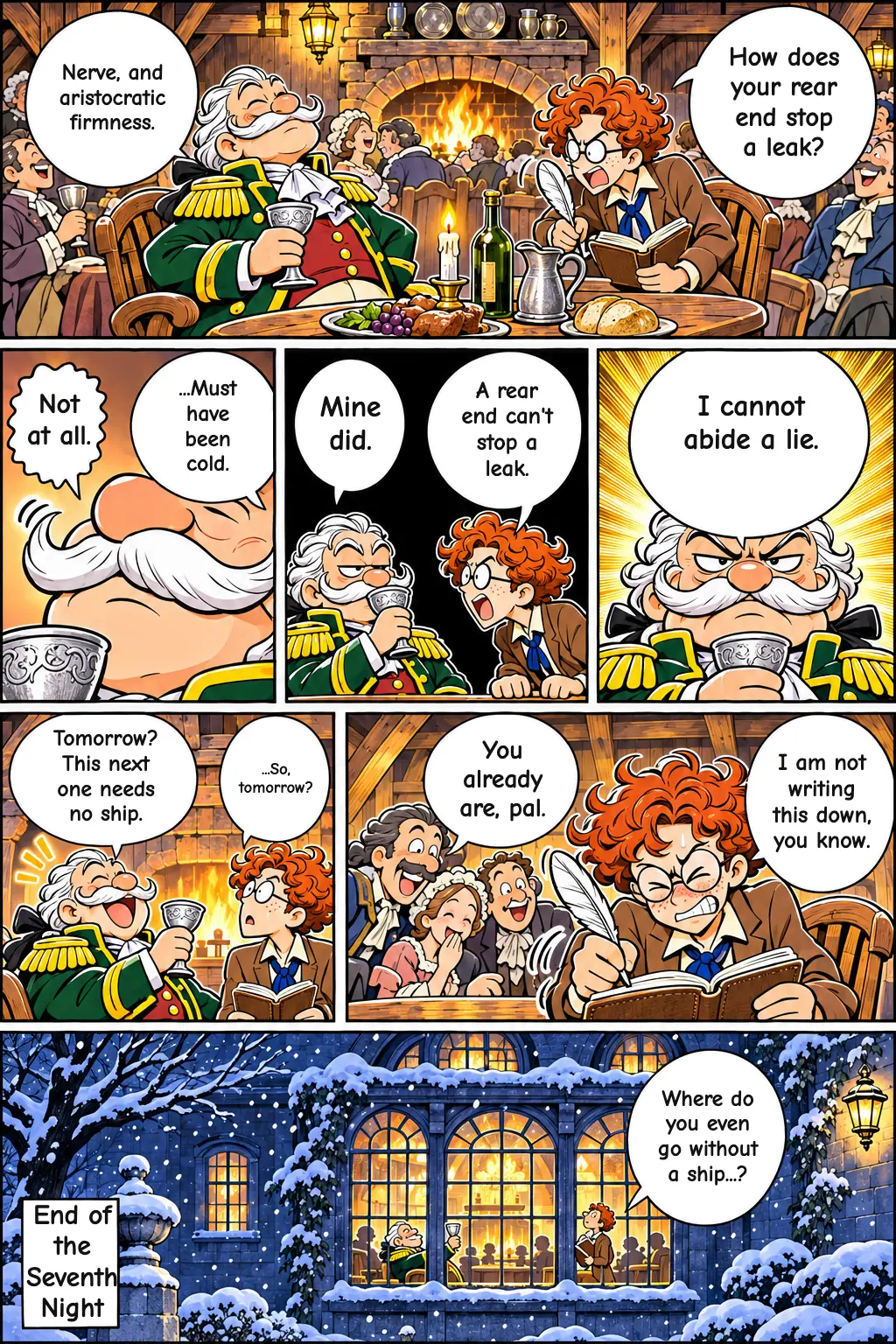
Several elements are original to the manga. The storytelling frame is new, including Theo, the listener who writes down the Baron's stories in a notebook and reacts with disbelief. The dialogue and actions of the officer and sailors are also invented, as are the scene where the crew raises sail to race alongside the whale and the tea props. The head-in-stomach moment is exaggerated into a soft, cartoonish sight gag.
The manga also restores the Baron's head by pulling his hair. As far as we can tell, the English text says only that the head returned after some months, though this hasn't been checked against every edition. The idea echoes another famous Munchausen episode, in which he pulls himself out of a swamp by his own hair.
The biggest structural changes come at the end. In the English text as we understand it, the leak happens during the tow, but the manga moves the crisis to the voyage home, while keeping the feeling of something the Baron forgot to mention. It also shows the hole in the bottom of the ship, a location we can't confirm from the source. The manga leaves out the dead whale and the cutting off of its head, and it drops the joke about Dutch ancestry, so the Baron's straight-faced pride carries the punchline instead.
Where to Read It
If you enjoy the idea of a man saving a warship with nothing but his dignity and his rear end, this story is even better with pictures. BARON MUNCHAUSEN: Fourteen Nights of Impossible Tales is on Manga Portal, with every episode free and no sign-up required. Start with Episode 7 if you came for the whale, or go back to the first night to meet the Baron and hear his other impossible claims.
Characters in this episode
Baron Munchausen
The narrator and hero, who describes impossible events as plain fact and proudly saves the ship by sitting on a leak.
The Giant Whale
A colossal whale, over half a mile long by the Baron's account, that wakes up angry and tows the warship by its anchor.
The Sailor
An unnamed crewman thrown from the rigging by the collision, who rides back on the tail of a large seagull.
The Seagull
A large bird that unknowingly carries the flung sailor back to the exact place he started.
The Crew
The warship's unnamed men, who are baffled by the collision and later recover the lost anchor from the dead whale.
Theo
A listener created for the manga, who records the Baron's stories in a notebook and reacts to them with disbelief.
FAQ
What happens in the Baron Munchausen whale story?
The Baron's ship strikes a sleeping whale in the middle of the ocean. The angry whale grabs the anchor in its teeth and tows the ship a huge distance until the cable breaks. Months later, the crew finds the whale dead with the anchor still in its mouth.
How does Baron Munchausen save the ship from sinking?
When the ship springs a leak, the Baron finds a hole about a foot wide and sits on it. He stays there until the carpenter can repair the damage. He tells this as a heroic deed he almost forgot to mention.
Who wrote The Adventures of Baron Munchausen?
Rudolf Erich Raspe, a German writer living in England, first published the tales anonymously in English in 1785. Gottfried August Bürger published an expanded German version in 1786. Later editions changed and added material, so details can vary.
Was Baron Munchausen a real person?
The name comes from a real German nobleman, Hieronymus Karl Friedrich von Münchhausen (1720–1797), who was known for telling colorful stories. The adventures in the book are fiction, not a record of his life.
Does the manga follow the original whale story exactly?
It keeps the main events, but moves the leak to the voyage home and adds a storytelling frame, a listener named Theo, and new scenes with the crew. It also leaves out the dead whale and the joke about Dutch ancestry. The hair-pulling that restores the Baron's head is treated as the manga's own addition.