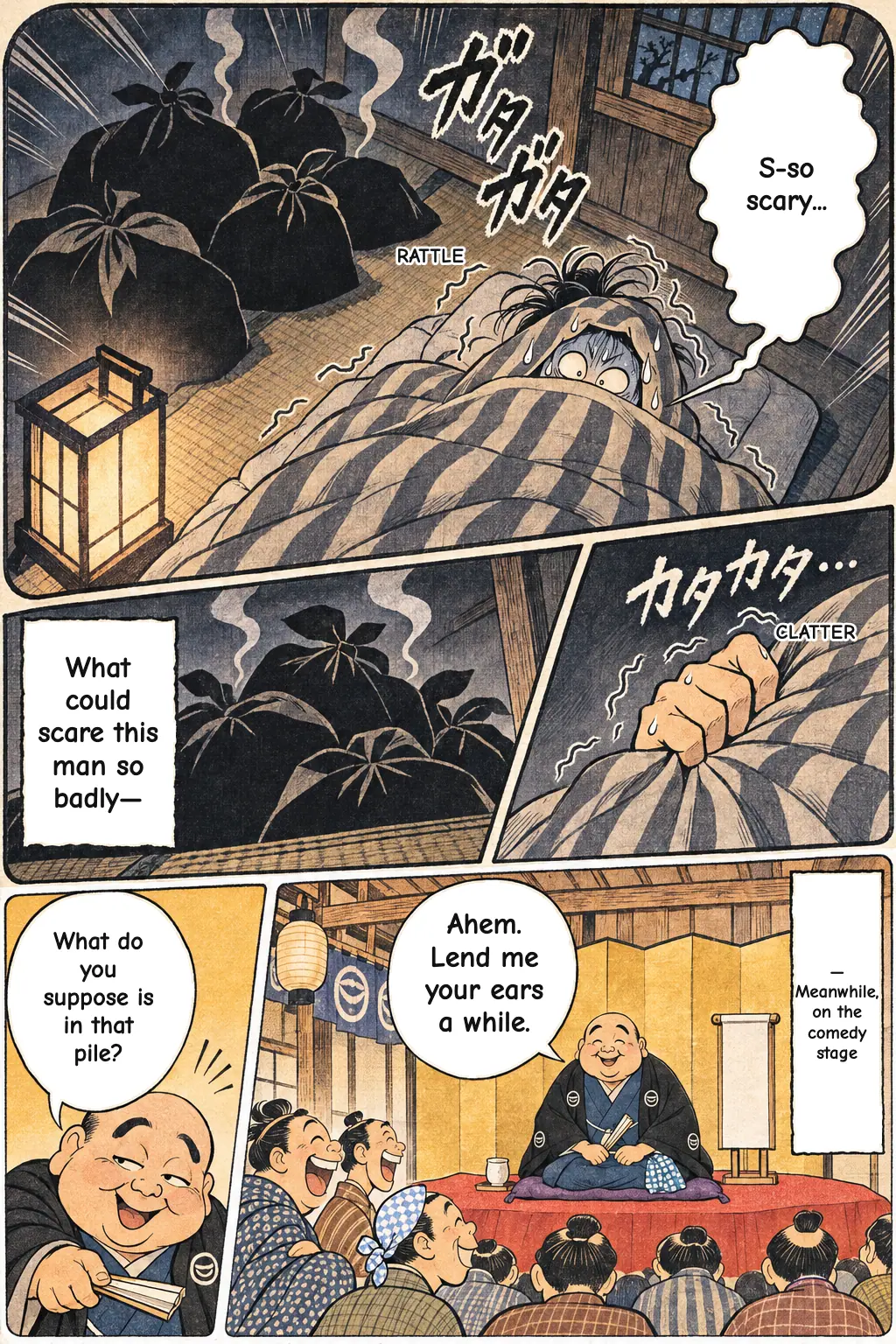
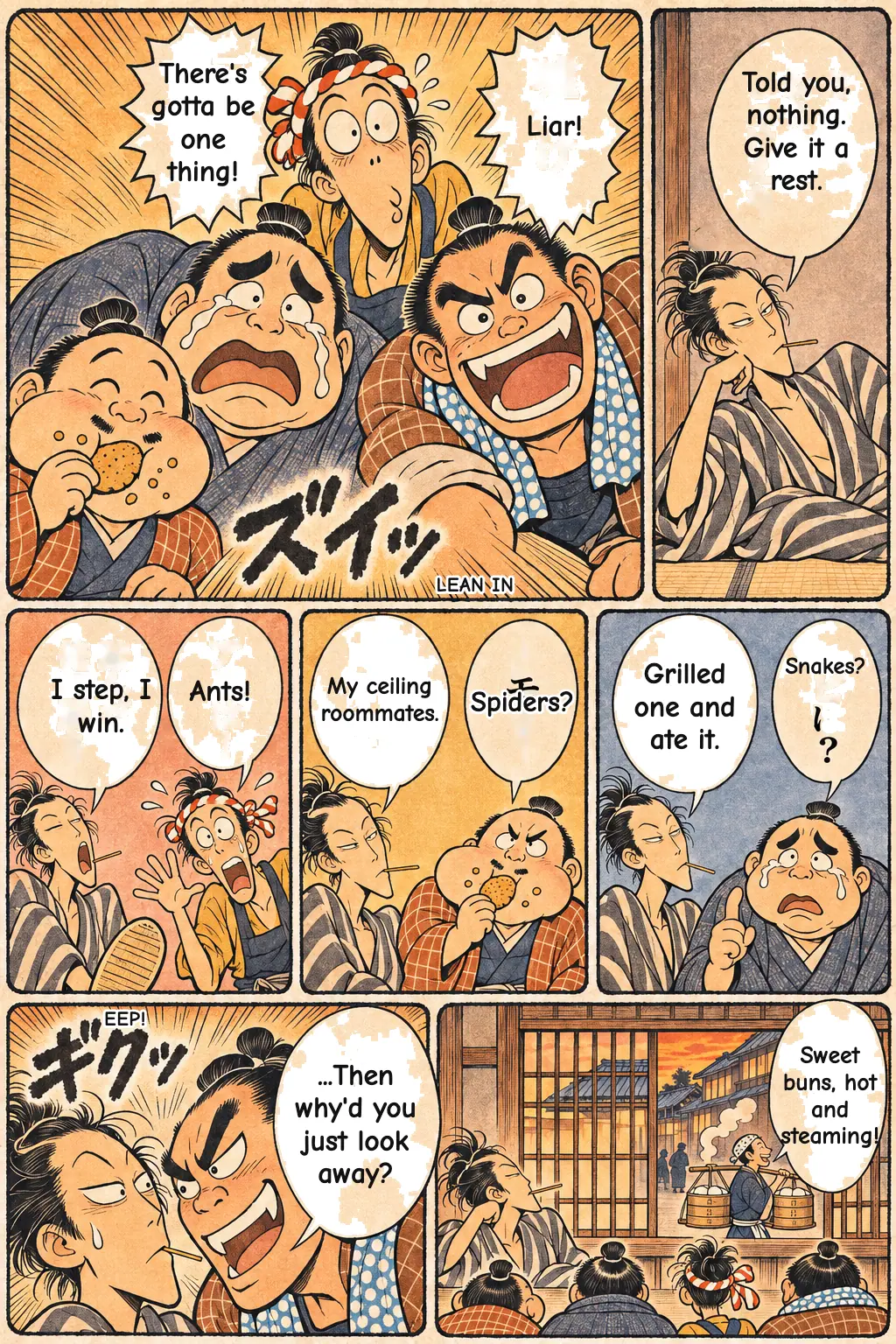
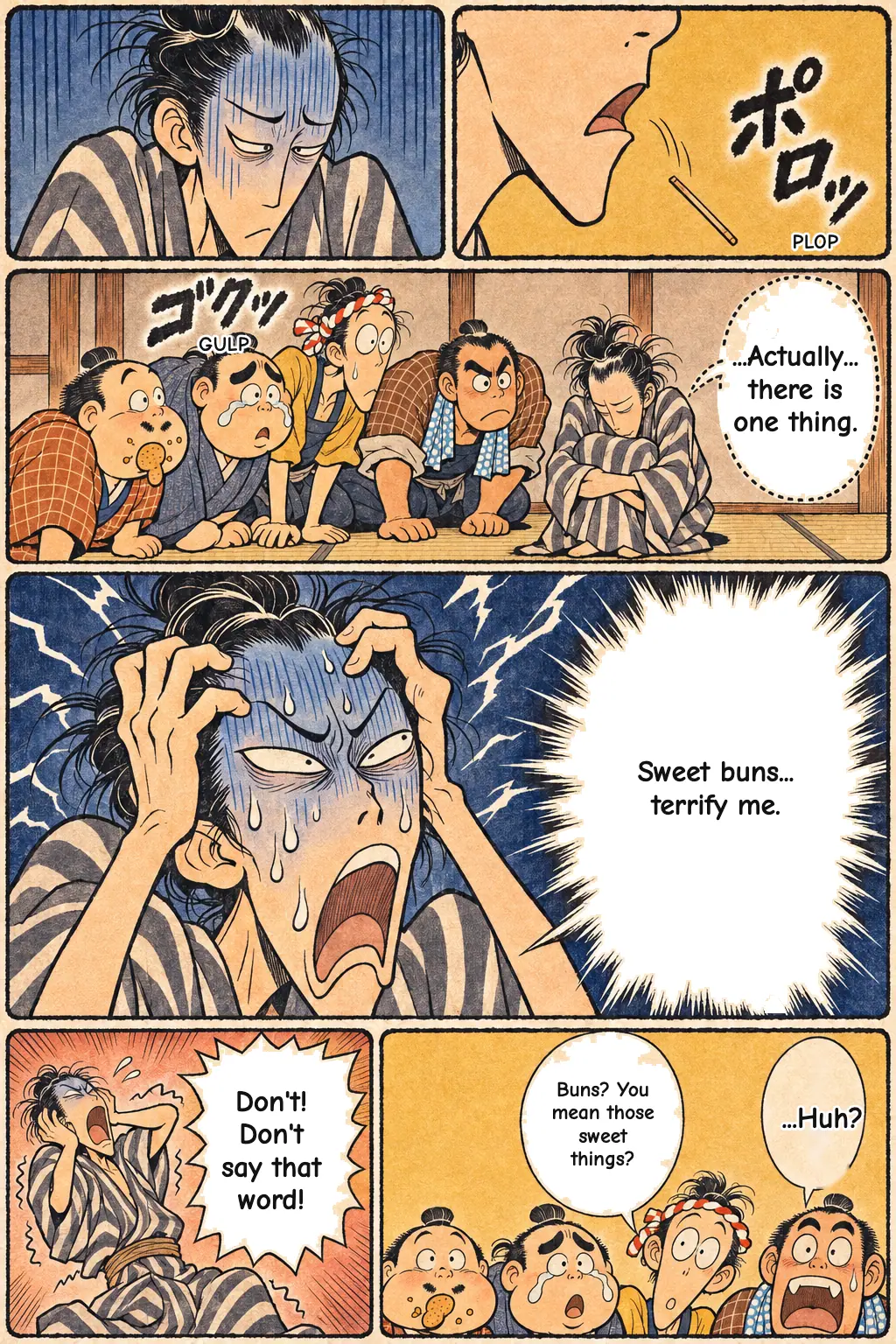
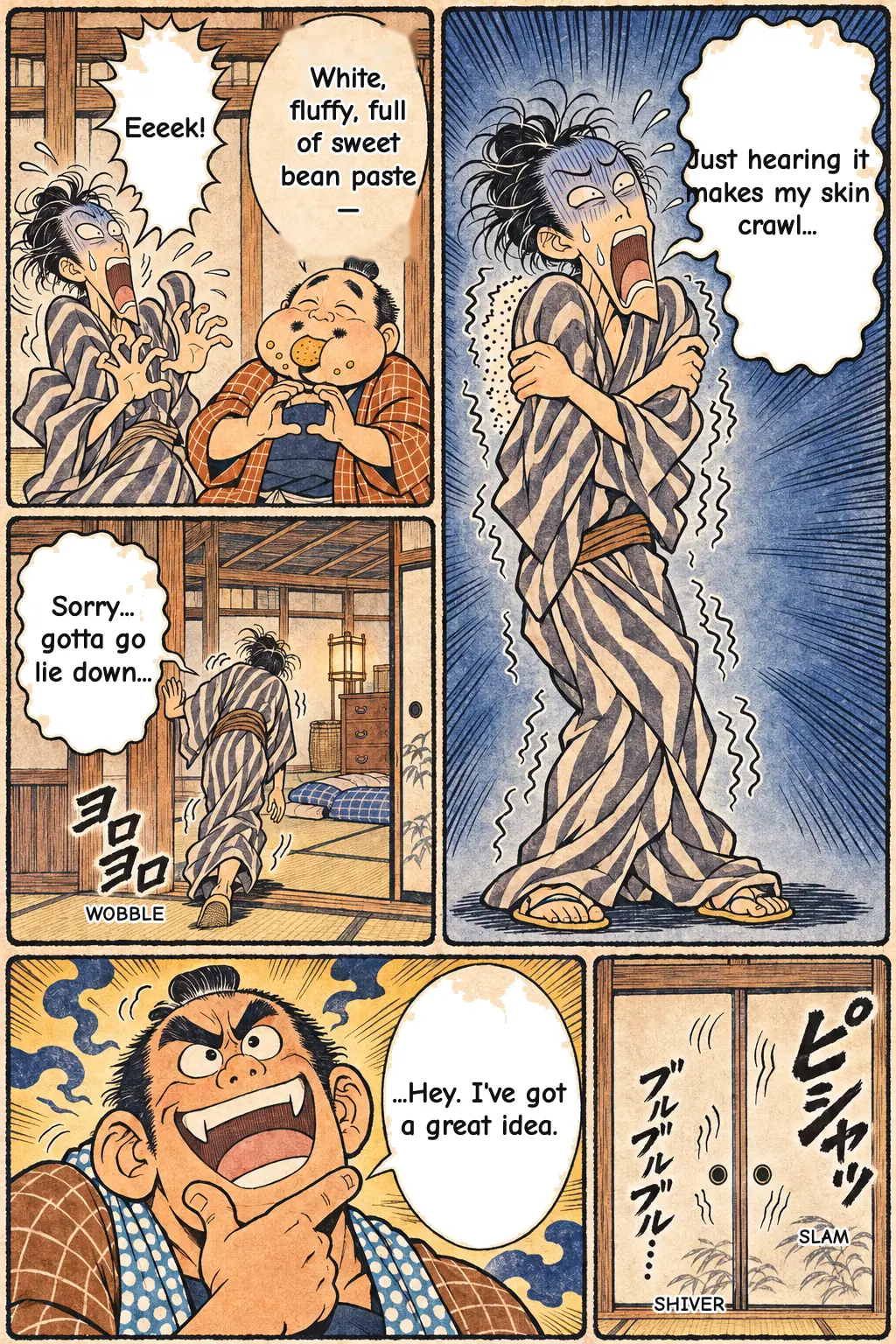
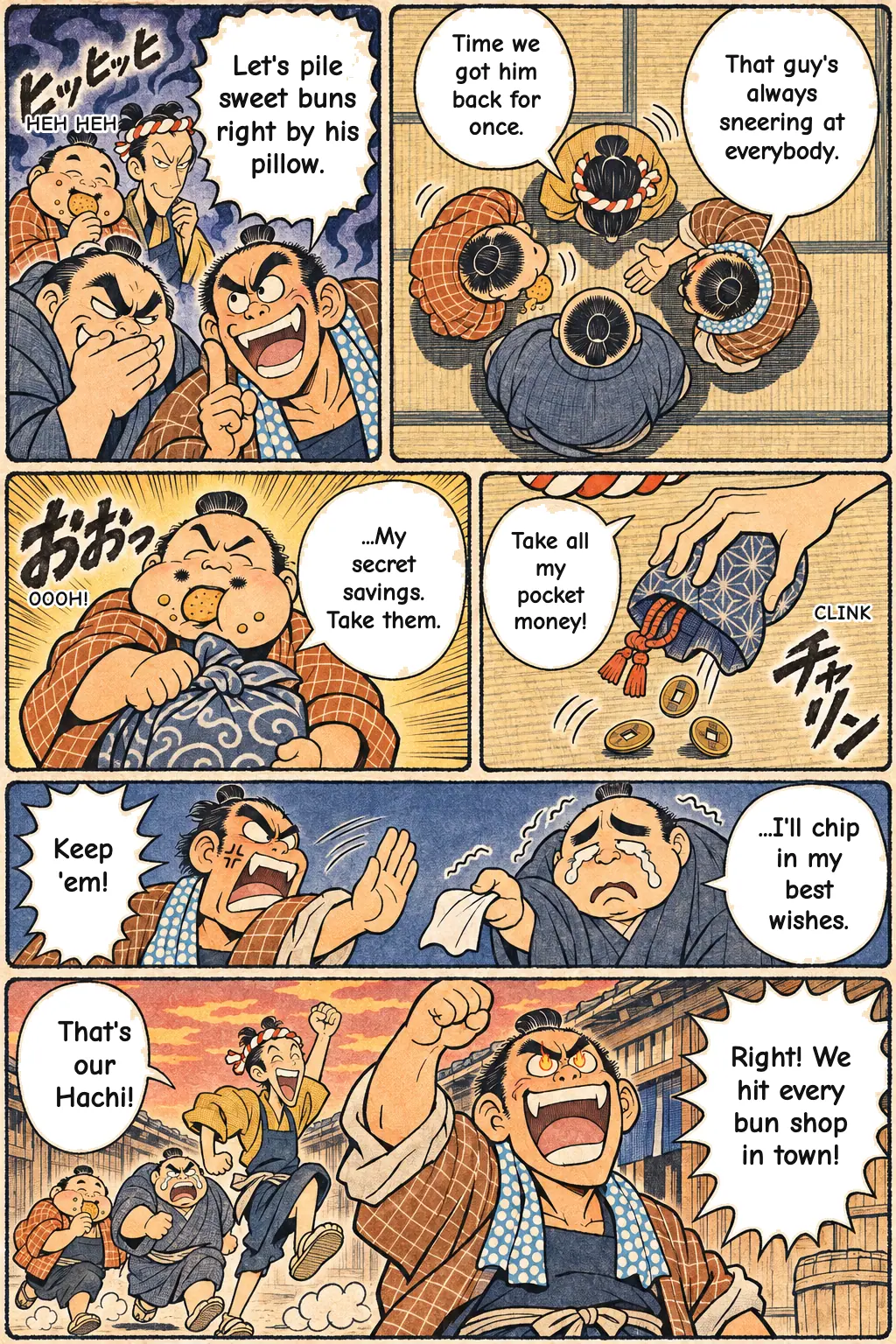
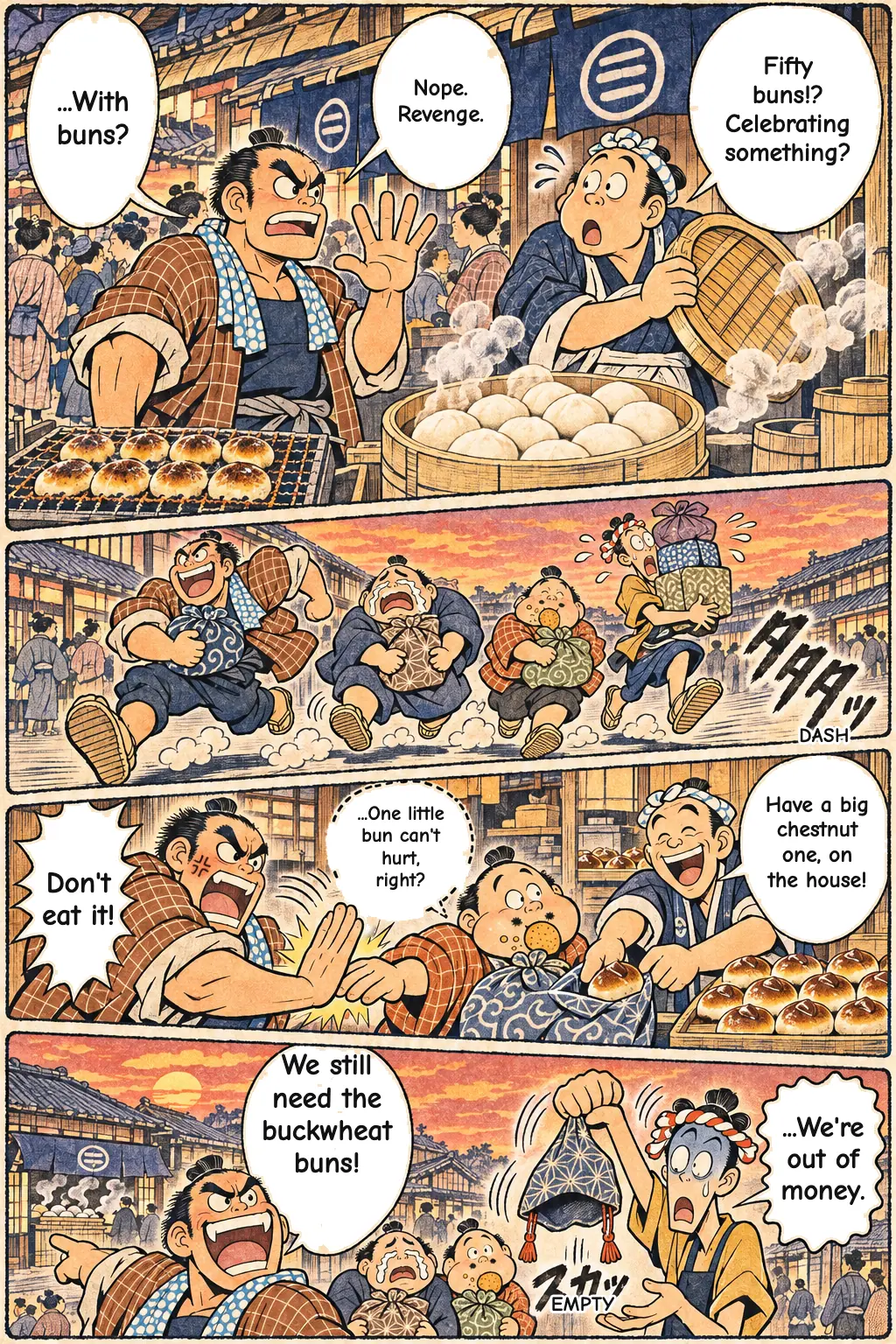
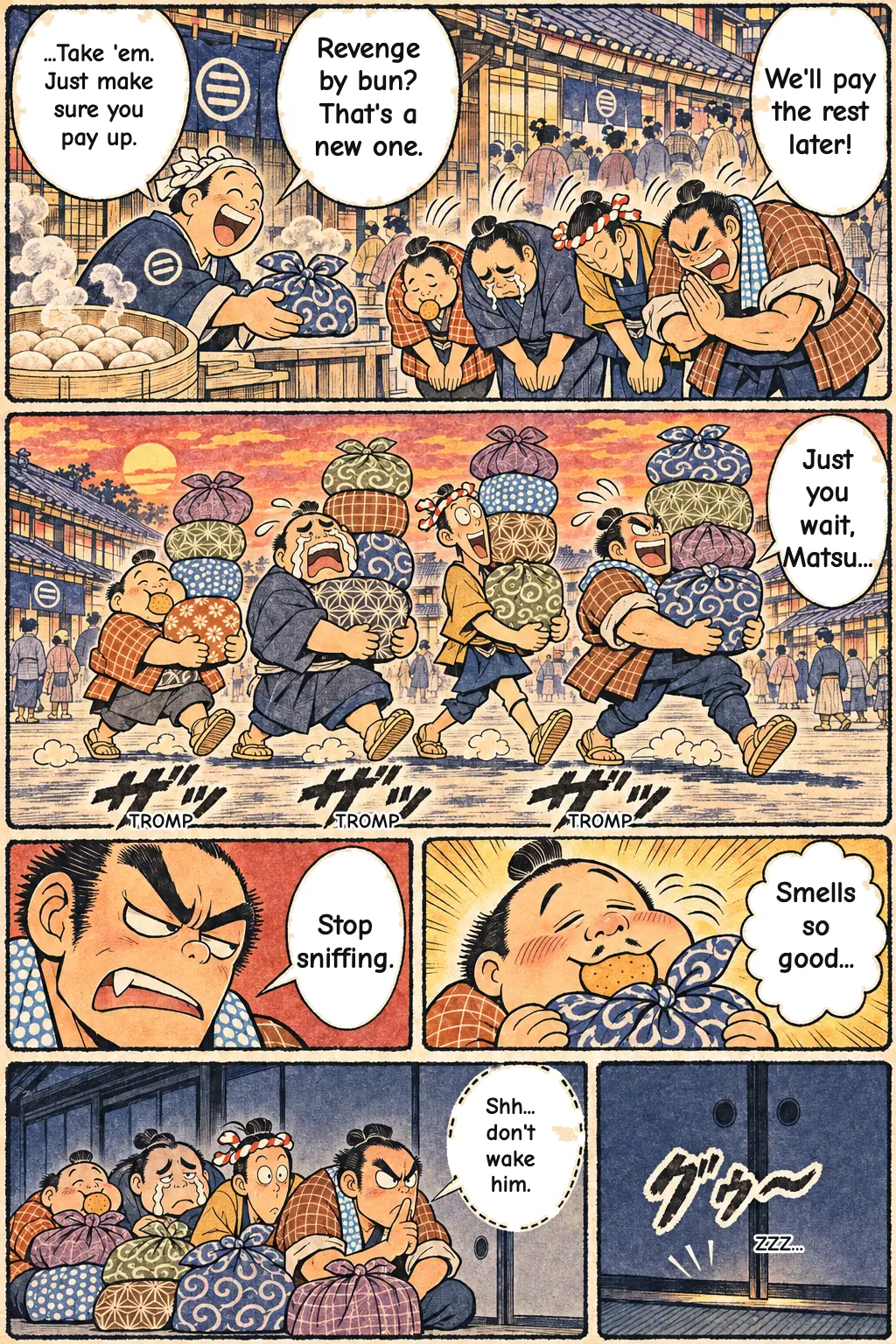
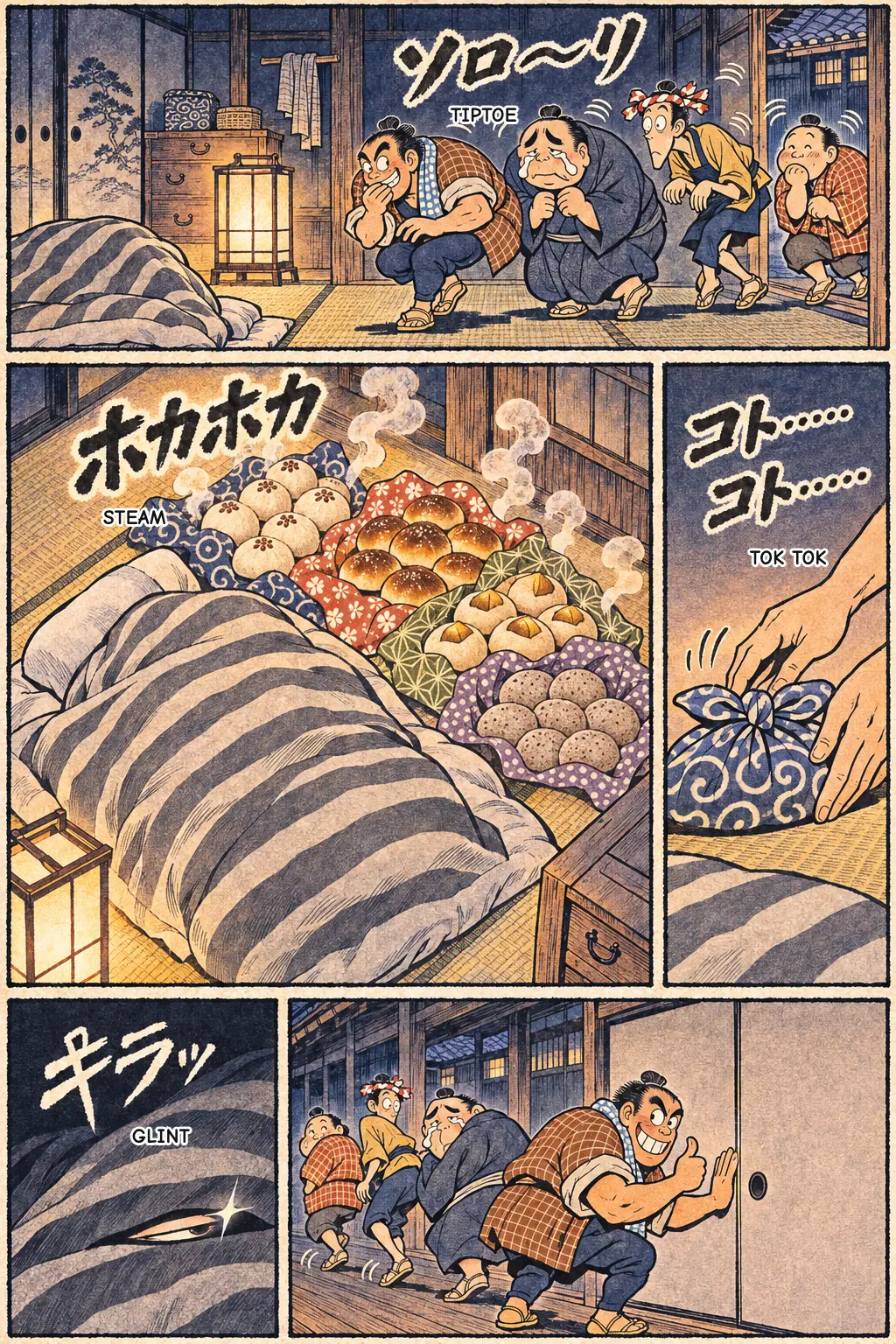
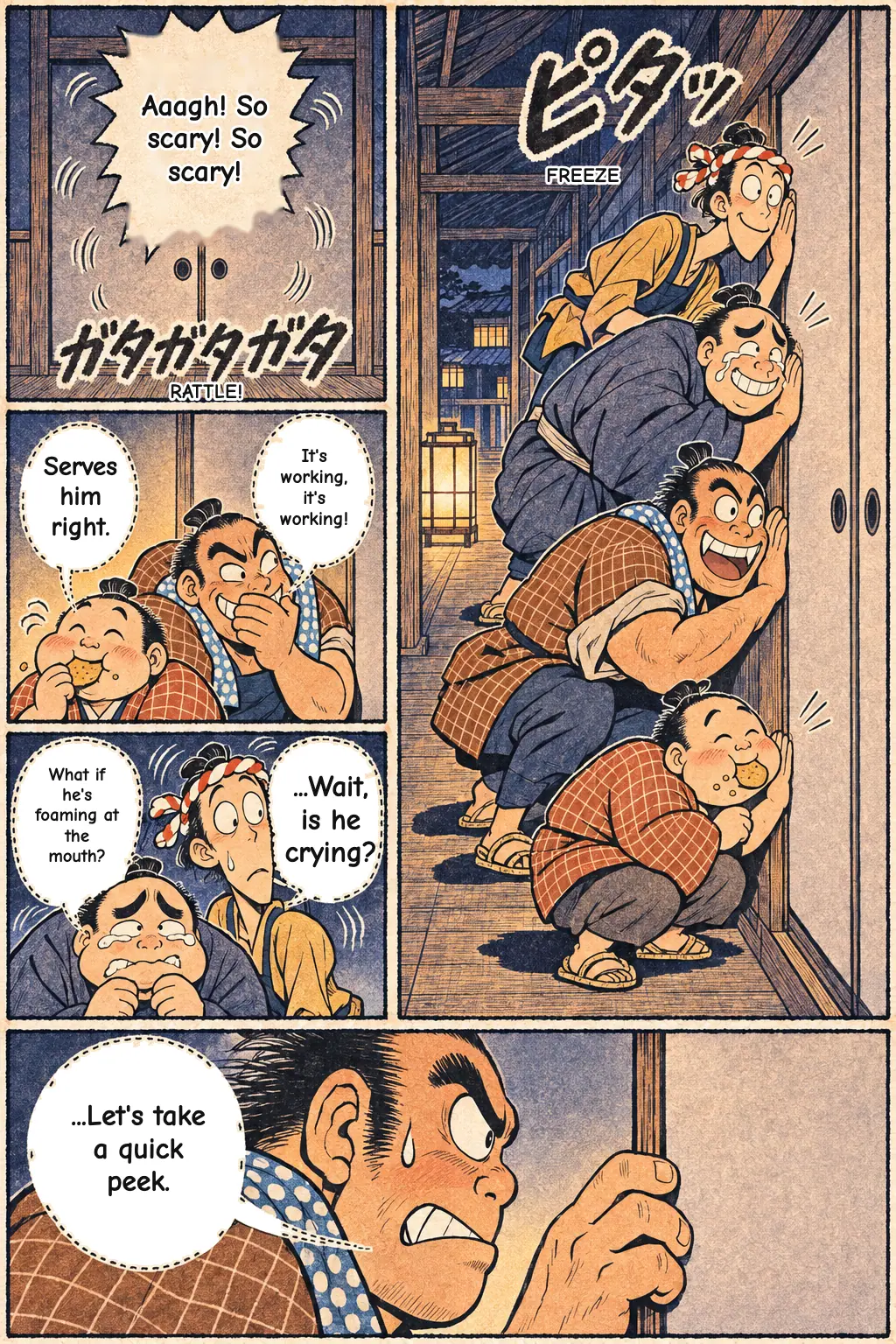
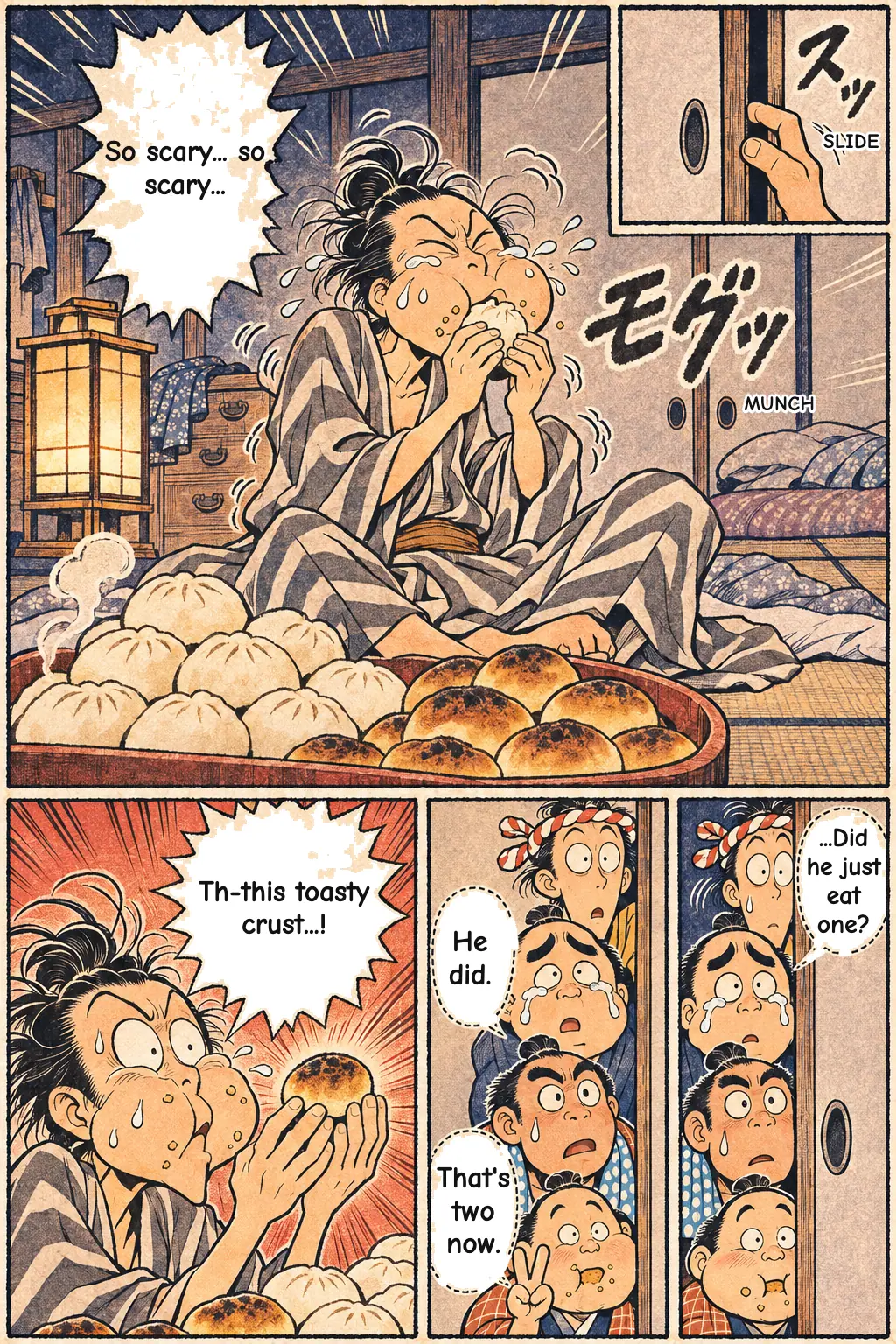
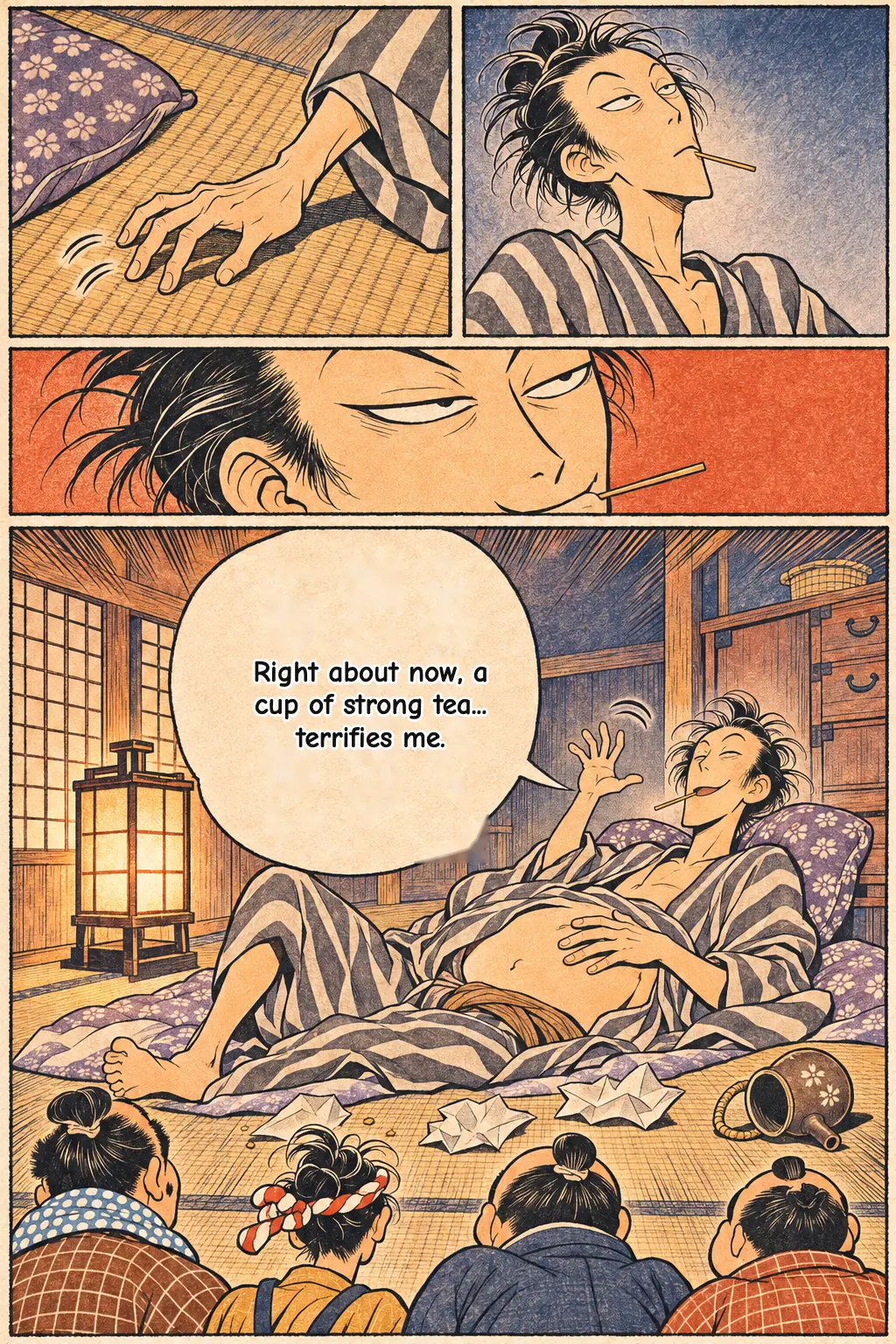
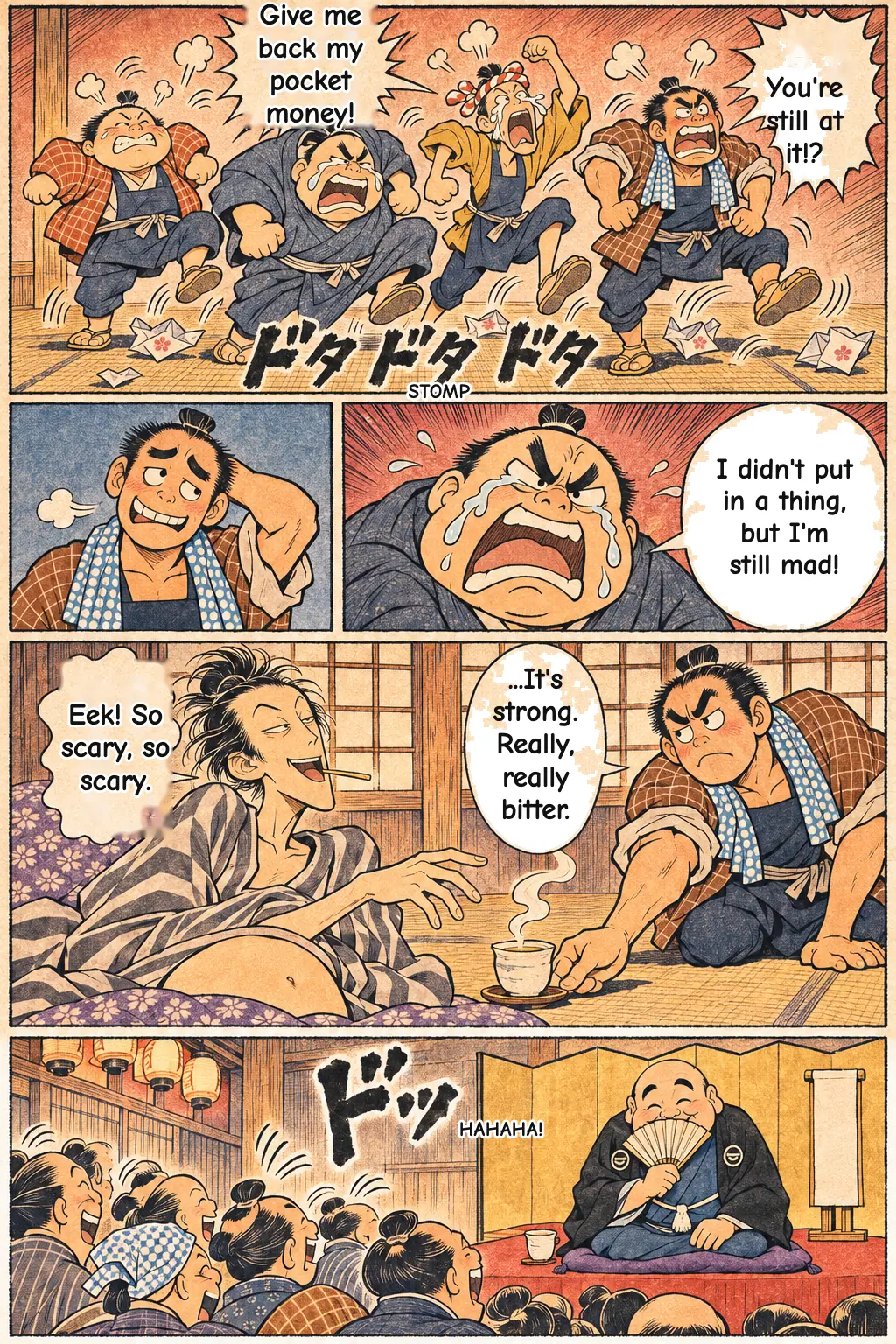
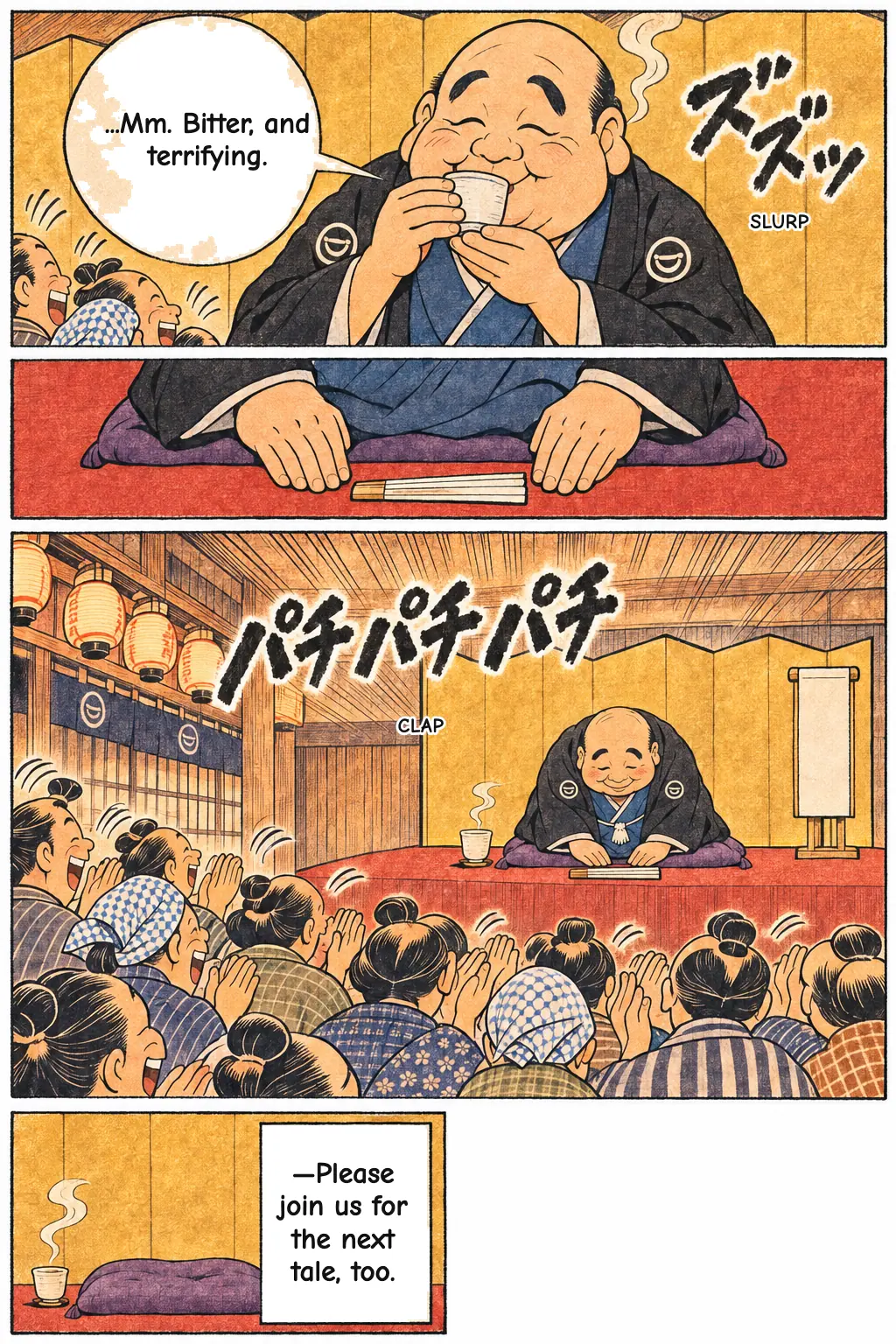
Matsu scoffs that nothing scares him. Pressed by his friends, he finally admits his one terror: sweet buns. So they pile a mountain of them by his pillow to teach him a lesson. Episode 1 of RAKUGO: Japan's Comic Tales.
Bookmark the series page so you can jump back in when the next episode is out: RAKUGORSS for this series
Get new episodes in your feed. Follow us on:ThreadsBluesky
Story summary
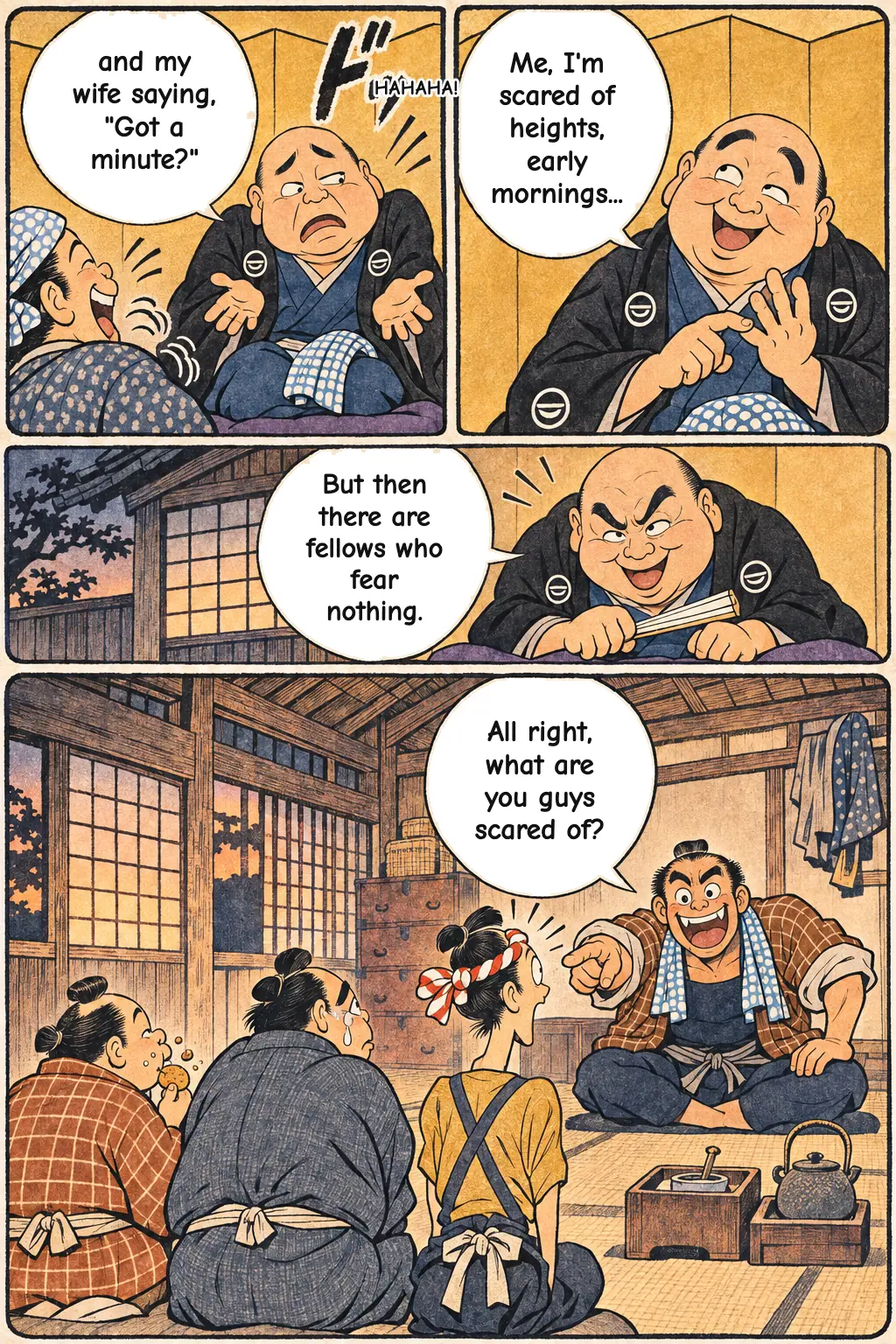
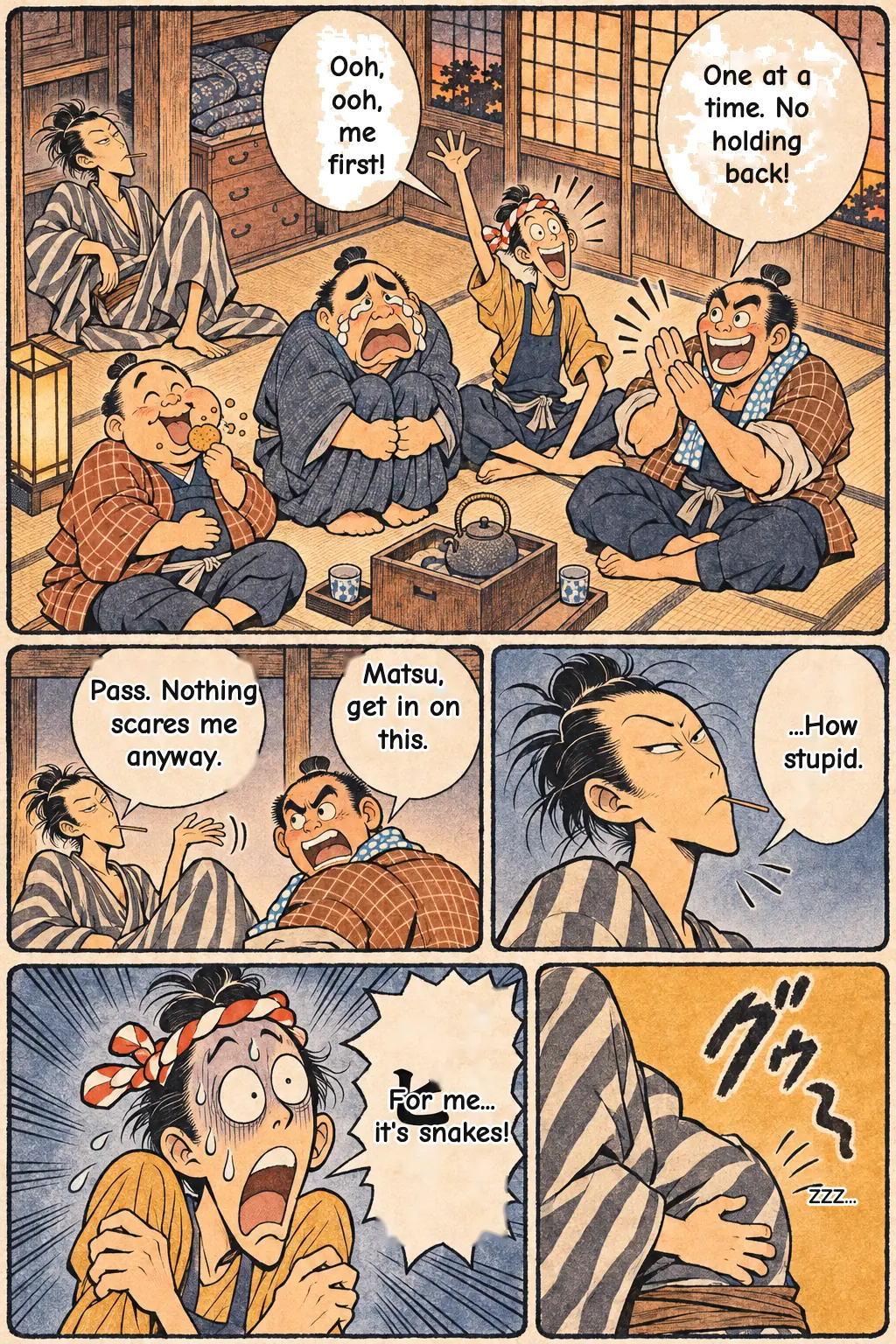
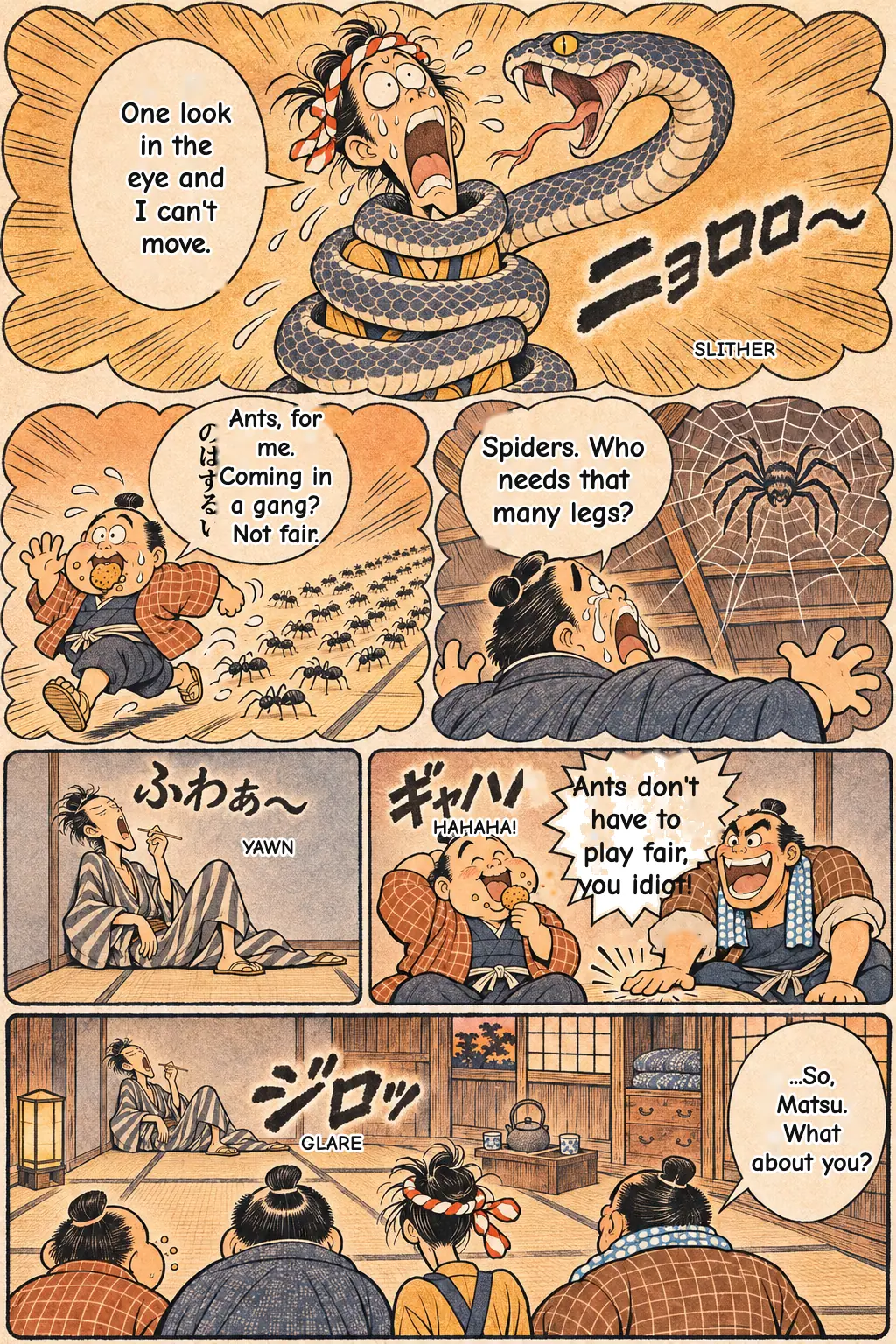
A group of young men are lounging together, trading the things that frighten them. One dreads snakes, another spiders, another ants. Only one man refuses to join in. Nothing scares him, he says, and he thinks the whole conversation is silly. His friends keep pressing him until he suddenly turns pale and confesses: there is one thing. Manju. Just talking about sweet buns makes him feel ill, so he goes off to the next room to lie down. The friends see a perfect chance to teach the show-off a lesson. They pool their money, buy a mountain of buns, and stack them by his pillow.
Manju Kowai Summary and Punchline Explained: Rakugo's Sweet Bun Tale
In short: Manju Kowai ("Scary Buns") is a classic Japanese rakugo comedy in which a man swears his only terror is manju, or sweet buns, tricks his friends into piling them by his pillow, and happily eats them all. Caught out, he names one more thing he is "afraid" of: a cup of strong tea. Early printed transcripts of the tale carry the older title Manju-girai.
Manju Kowai: The Story in Brief
A group of young men are lounging together, trading the things that frighten them. One dreads snakes, another spiders, another ants. Only one man refuses to join in. Nothing scares him, he says, and he thinks the whole conversation is silly.
His friends keep pressing him until he suddenly turns pale and confesses: there is one thing. Manju. Just talking about sweet buns makes him feel ill, so he goes off to the next room to lie down.
The friends see a perfect chance to teach the show-off a lesson. They pool their money, buy a mountain of buns, and stack them by his pillow. Then they creep up to the sliding door and peek through the gap, ready to enjoy his panic.
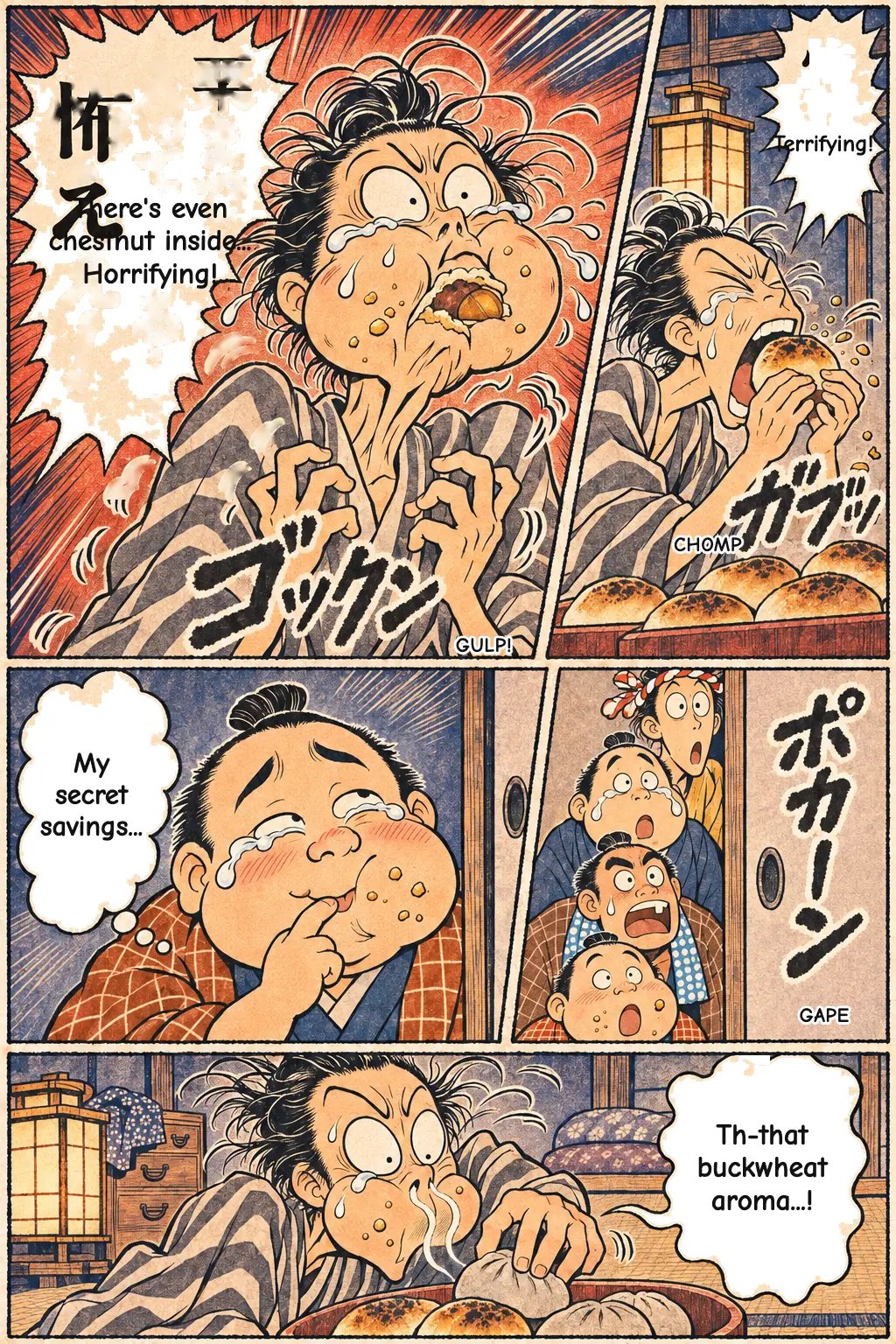
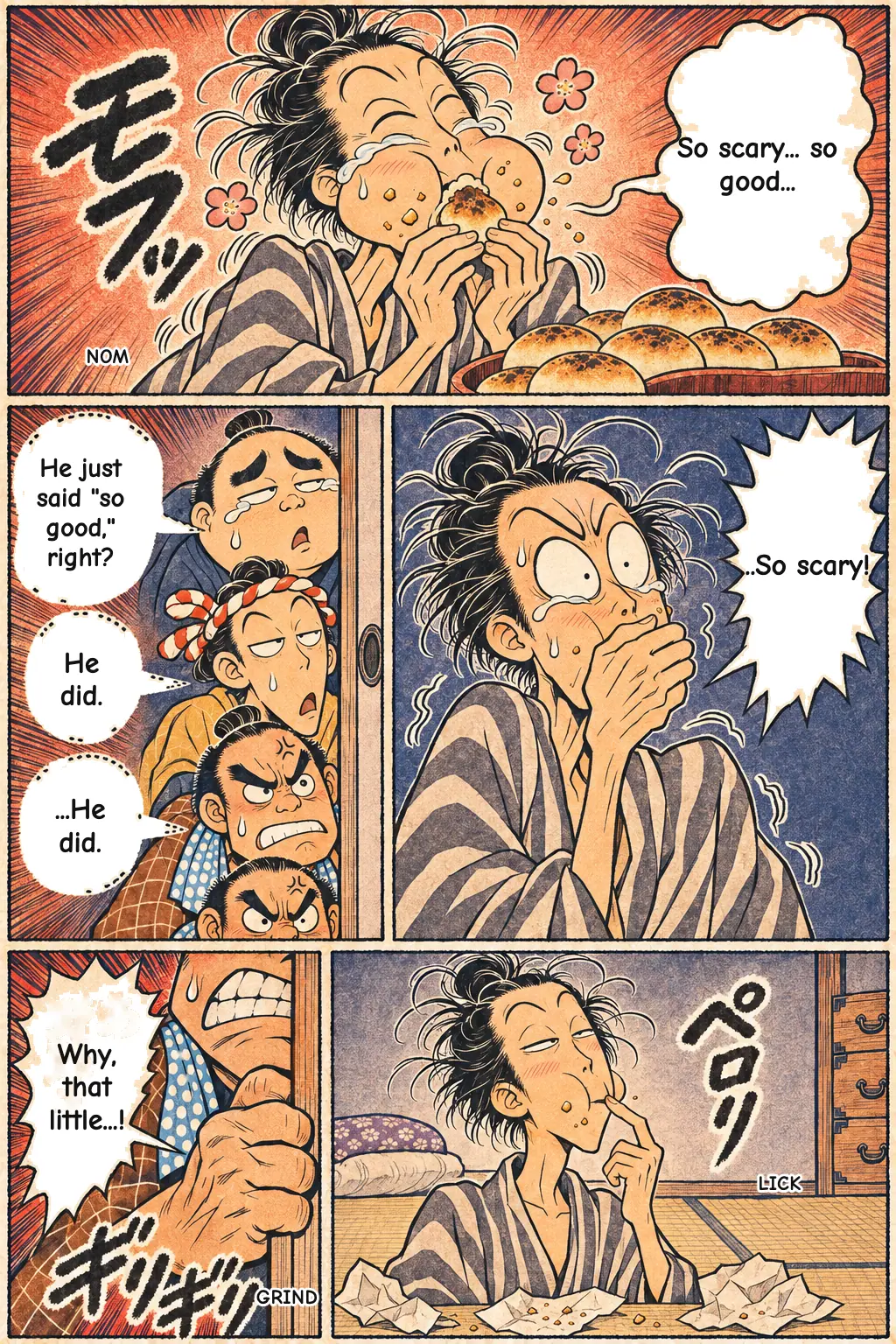
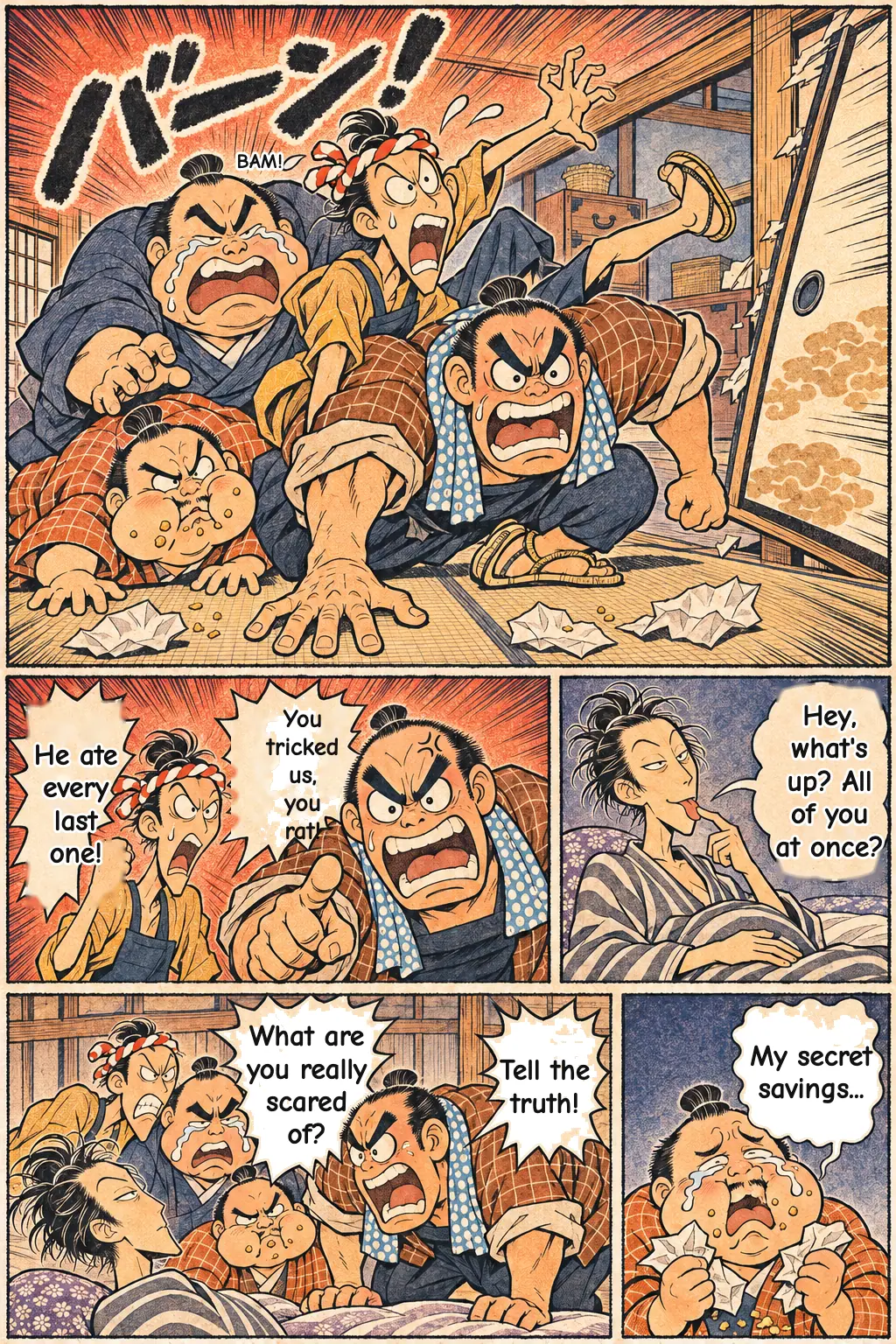
He does scream. "How frightening! How frightening!" But he is screaming with his mouth full. One bun after another disappears until the whole pile is gone. The friends finally realize they have been played, and they storm in to demand what he is truly afraid of. His answer is the final line of the story, explained further down.
What Is Rakugo?
Rakugo is a Japanese art of comic storytelling that has been performed for centuries and still fills yose, the variety theaters built for it. A single storyteller kneels on a cushion and plays every character, shifting voice and the angle of the head to mark who is speaking. The only props are a folding fan and a hand towel, which can become anything the story needs. Nearly every tale builds to a closing line called the ochi or sage, the punchline that sends the audience home laughing.
Manju and Tenement Life: The Background
A manju is a Japanese sweet: a soft wheat-based wrapper around anko, a paste of sweetened beans. It is not the same as a Chinese meat-filled steamed bun, even though the two are related in name and shape. Picture a small, dense, very sweet cake that begs for something to drink.
The story takes place among ordinary city folk, the kind of people who lived in nagaya, the long shared row houses of old Japan. Neighbors in such places knew each other's business, and teasing was a form of friendship. That is why the prank feels playful instead of cruel, and why nobody is seriously angry when the trick is turned back on them.
Traditional Story vs. What the Manga Added
The core plot comes from the storytelling tradition: the boast, the confession of a fear of manju, the pile of buns, the eating, and the request for tea. We checked this outline against an early transcript of a live performance, printed under the old title Manju-girai and credited to the storyteller Chokaro Baraku, in collections published in 1913 and 1925. Tellers have always varied the details, and longer versions with extra episodes also exist. Our manga keeps to a short form, and we wrote the script ourselves.
Several things are our own invention. The name Matsu is the one our manga uses, and tellers can name the characters differently. The imagined panels of each friend's fear, the shopping trip through steamed, baked, chestnut, and buckwheat buns, the stacked faces peeking through the door, and the over-the-top trembling while eating are all created for the page.
The storyteller who opens and closes the episode, Shomontei Fukurai, is a fictional narrator made for this series, not a real performer. His opening remark about everyone having something they cannot stand, and the closing gesture of pretending a hand towel is a bun, belong to the manga's frame.
The Punchline (Ochi / Sage) Explained
The last line, in Japanese, is koko-ra de koi ocha ga ippai kowai. In English, it comes out roughly as: "Right about now, I'm terrified of a nice cup of strong tea."
Two things make it land. The first is a habit every Japanese listener knows: after something very sweet, you want strong, slightly bitter green tea. A man who has just eaten a mountain of buns would want exactly that.
The second is the cheek of it. He has already learned that saying "I'm scared of it" makes his friends bring it to him. So, even after being exposed, he uses the trick one more time on the very people who just caught him. The word kowai, "scary," has become his way of saying "please."
Read the Manga: Free, No Sign-Up
If you came here looking for the plot, the story is even more fun when you can watch his face while he "suffers" through the buns. "Your Worst Fear? '...Sweet Buns.'" is Episode 1 of RAKUGO: Japan's Comic Tales here on Manga Portal. All episodes are free, with no registration required, and each one is a complete comic tale, so you can start anywhere. Fans of fear-based trickery can also look for Tanokyu later in the series, in which an actor and a giant serpent end up swapping secrets about what scares them.
Characters in this episode
Matsu
The boastful young man who claims to fear nothing except sweet buns, then eats every one his friends bring him.
The friends
A teasing group of neighbors who share their own fears and pool their money to prank Matsu, only to be outsmarted.
The bun sellers
Town shopkeepers who appear in the manga's added scene, wrapping up steamed, baked, chestnut, and buckwheat manju for the friends.
Shomontei Fukurai
The fictional rakugo storyteller created for this series, who introduces the tale from the stage and closes it with a bow.
FAQ
What is the rakugo story Manju Kowai about?
A man who boasts that nothing scares him admits to a single fear: sweet buns. His friends pile buns by his pillow as a prank, and he eats them all while crying out in mock terror. It was his plan all along.
What does "manju kowai" mean?
Manju is a Japanese sweet bun filled with bean paste, and kowai means "scary" or "I'm afraid." Together the title means something like "Buns Are Scary." Early printed transcripts use a different title, Manju-girai, which points to hating buns.
Why is the tea ending of Manju Kowai funny?
Strong green tea is what people in Japan crave after eating something very sweet. Even after his trick is exposed, the man says he is "afraid" of tea, hoping the same ploy will get him a drink. That final bit of nerve is the joke.
Is manju the same as a Chinese steamed meat bun?
No. The Japanese manju in this story is a sweet confection with a wheat-based wrapper and sweet bean paste inside. A Chinese meat-filled steamed bun is a savory food, despite the similar name and look.
Is Shomontei Fukurai a real rakugo performer?
No. Shomontei Fukurai is a fictional storyteller created as the narrator of RAKUGO: Japan's Comic Tales. The name and appearance are not based on any real performer.