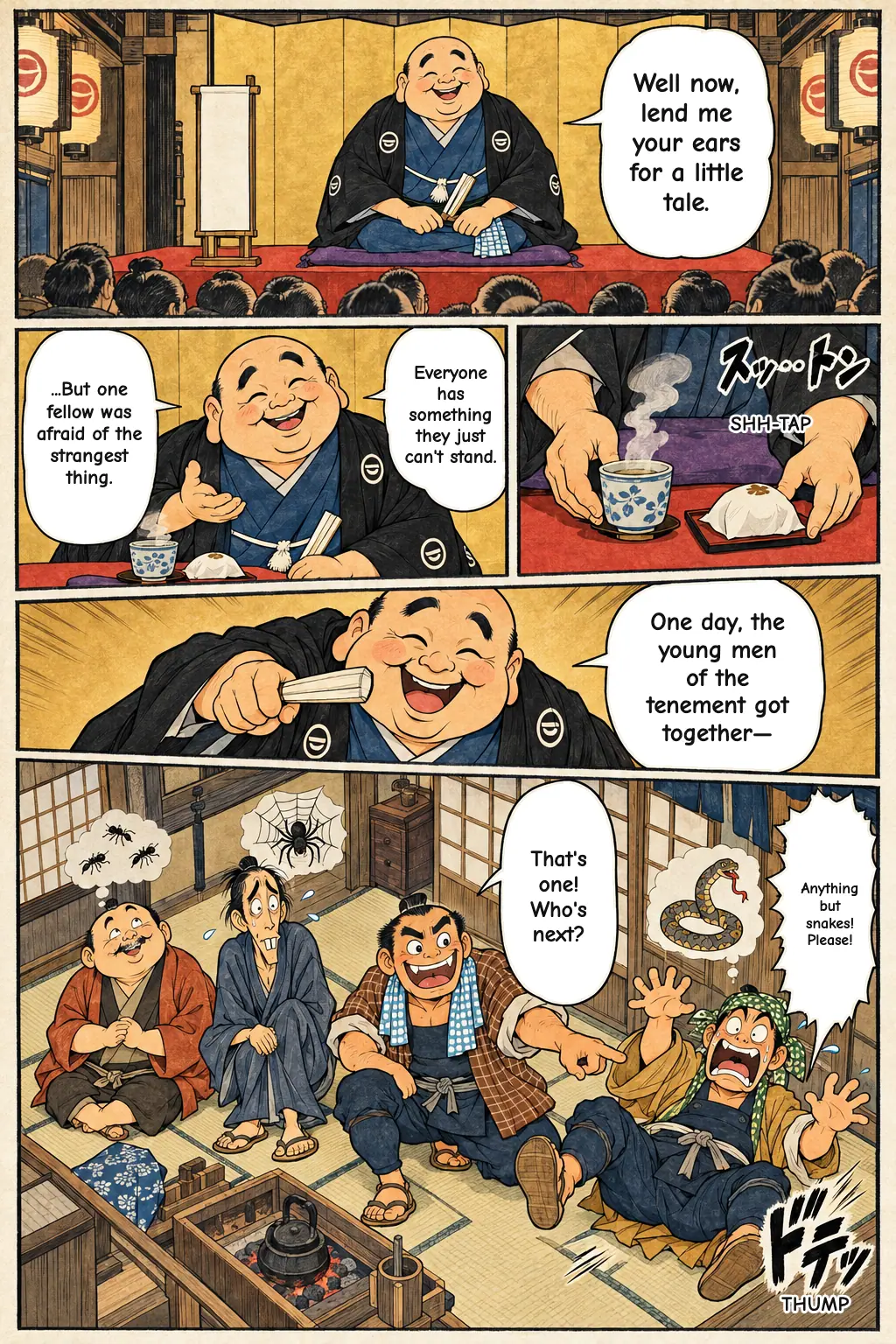
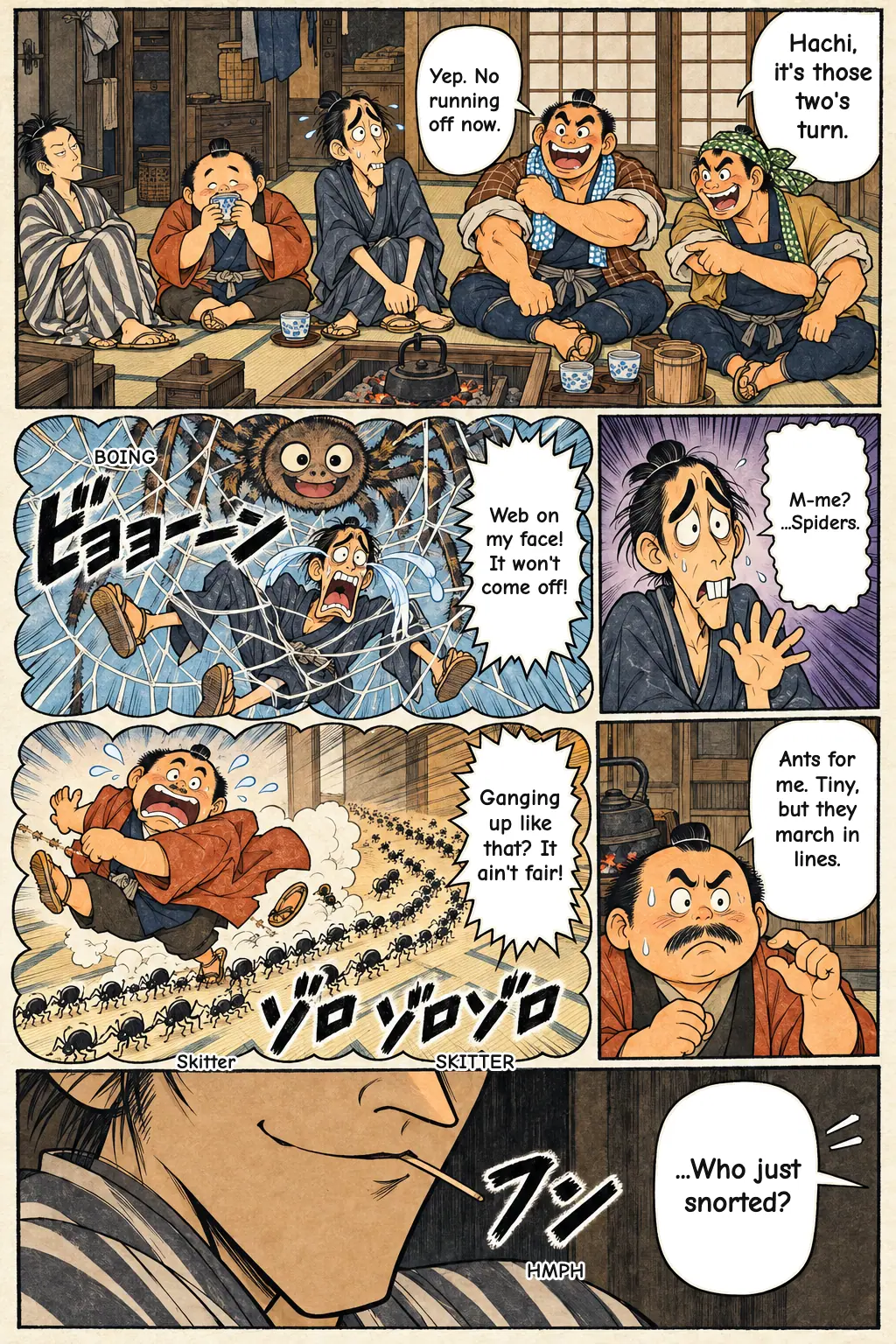
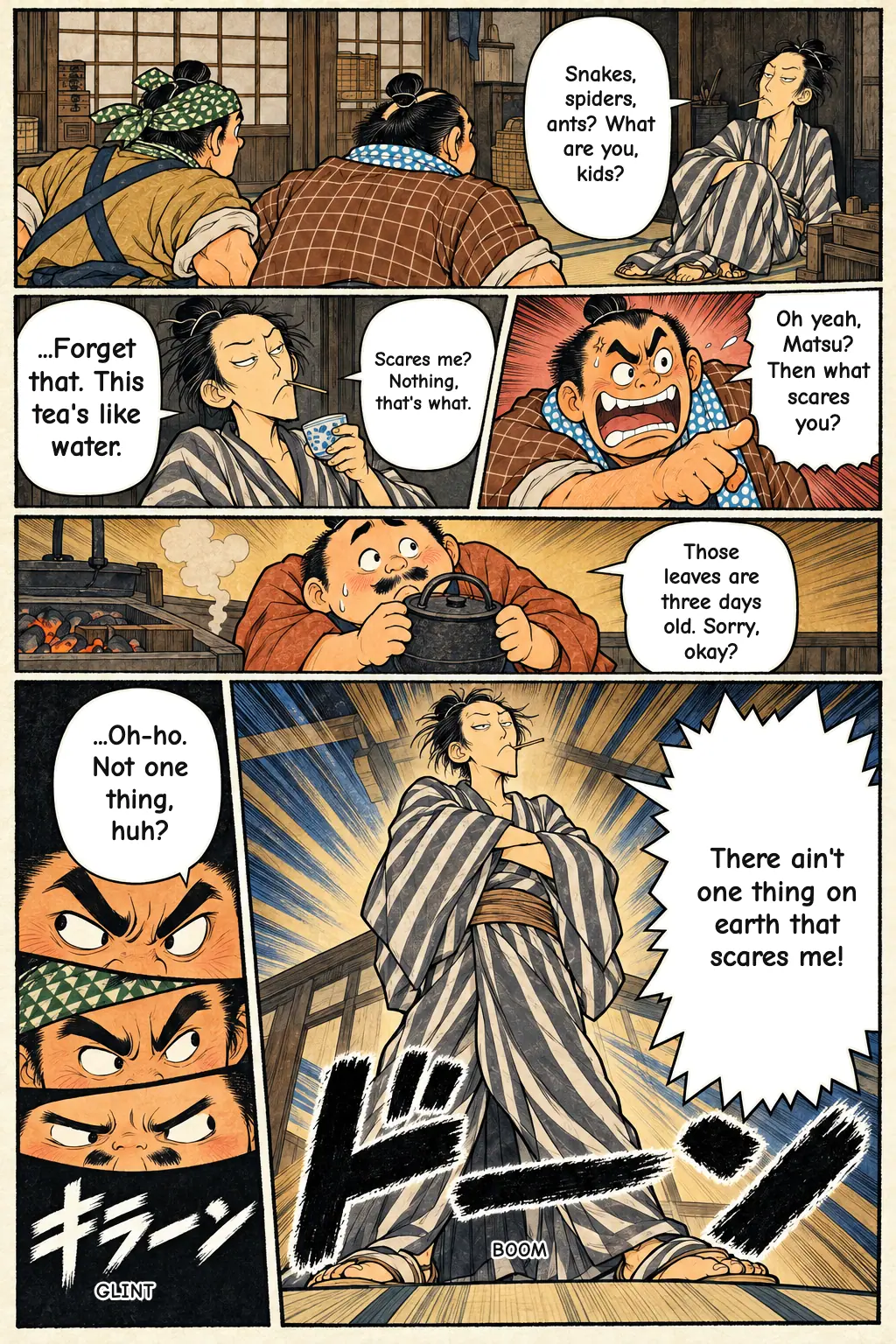
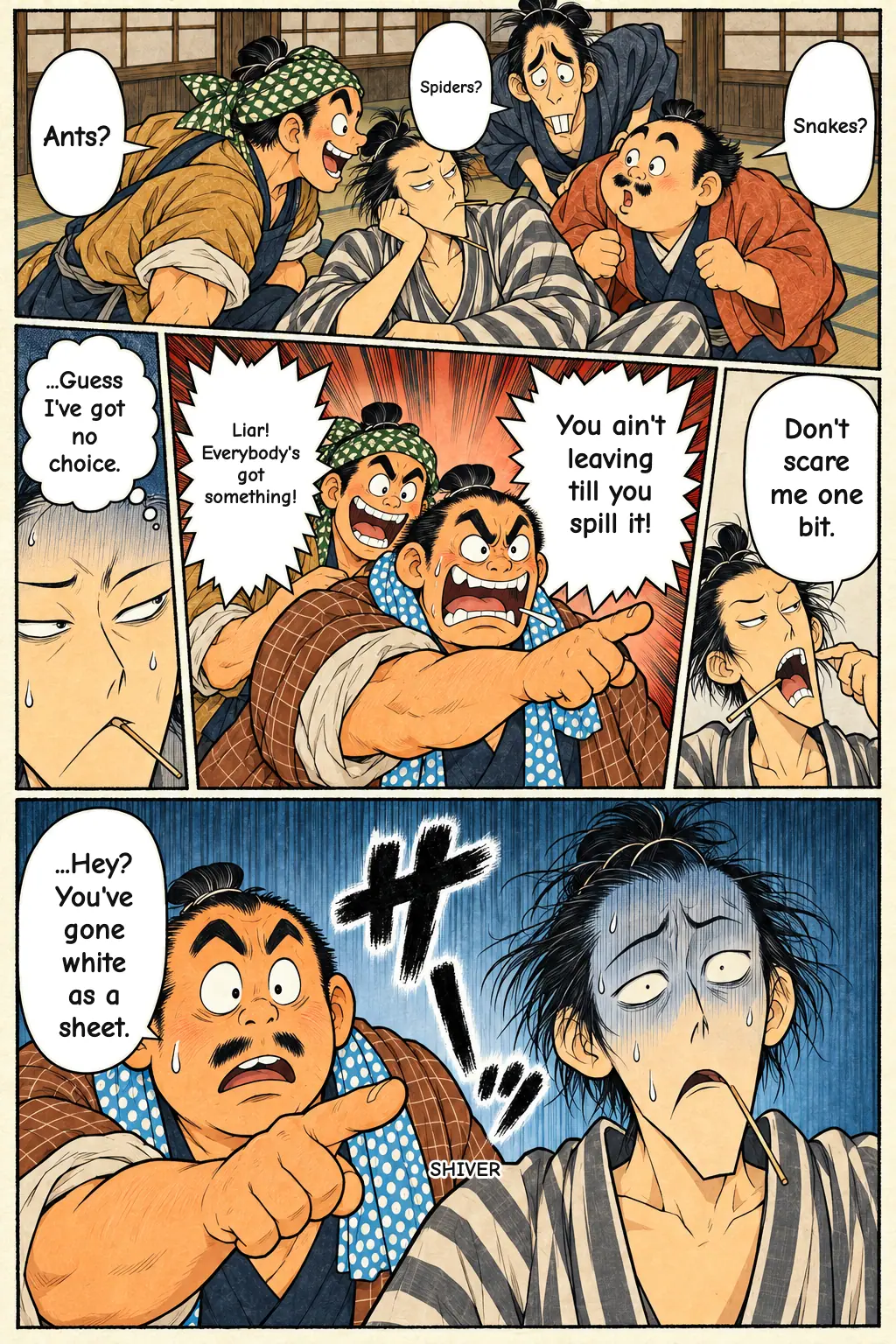
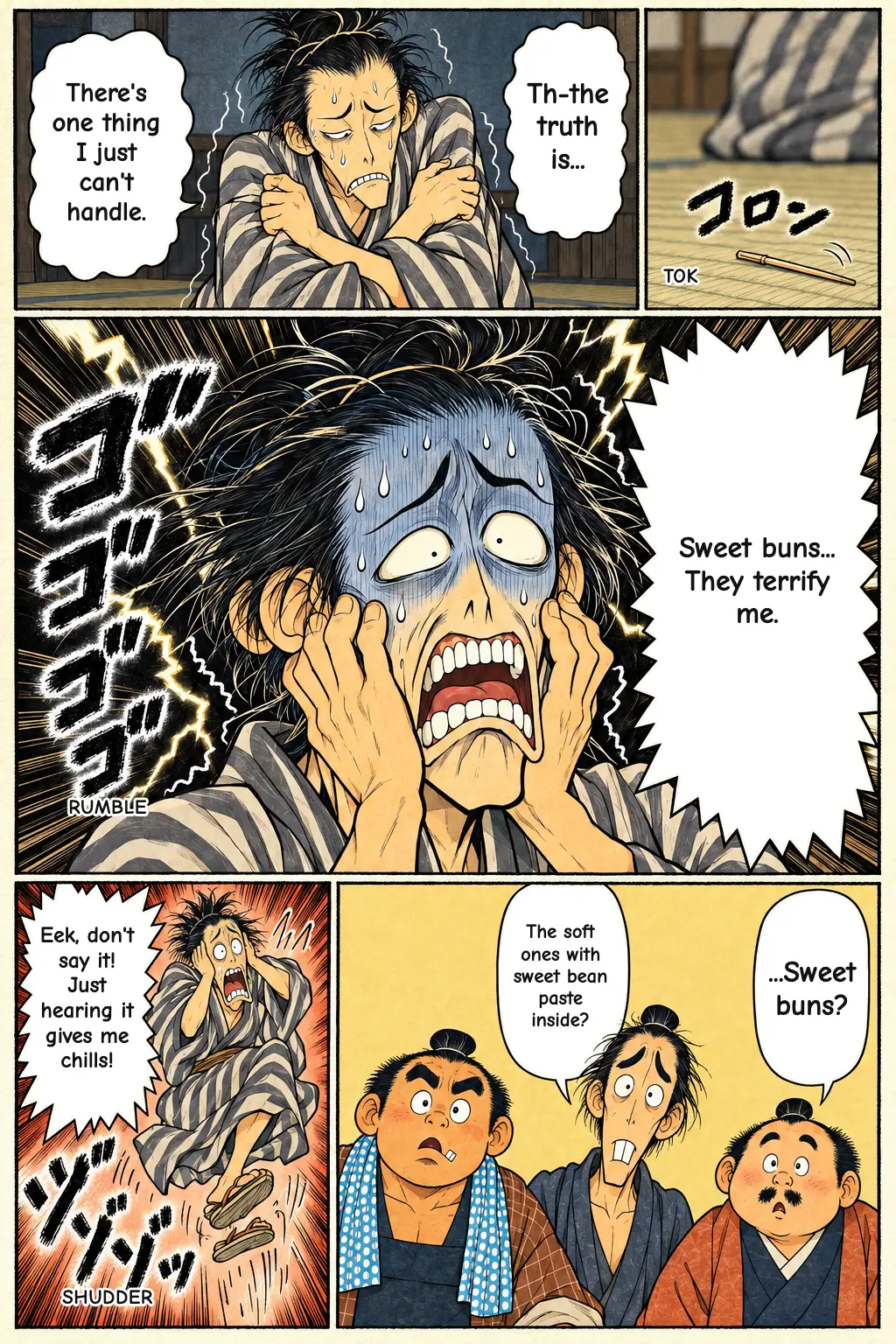
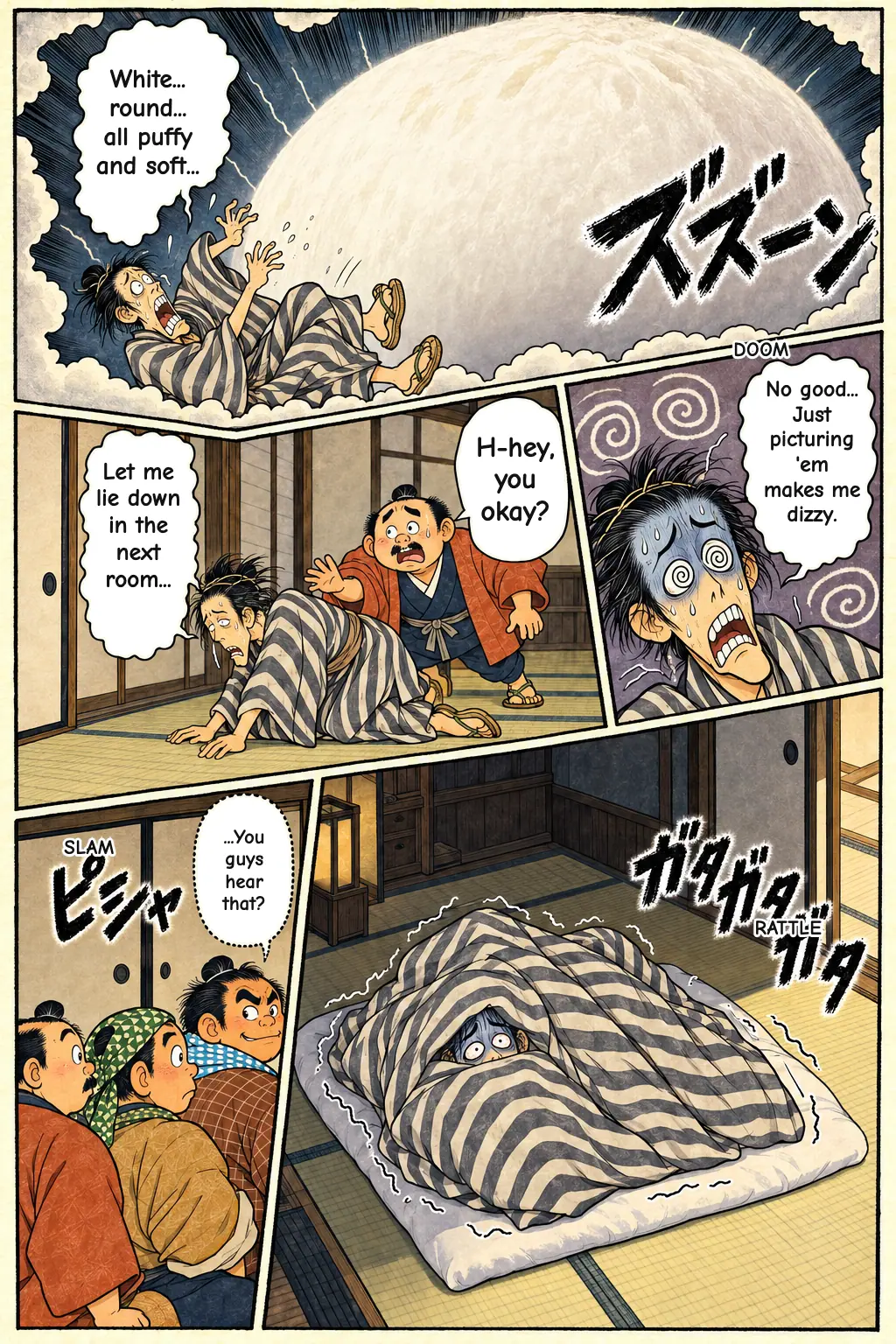
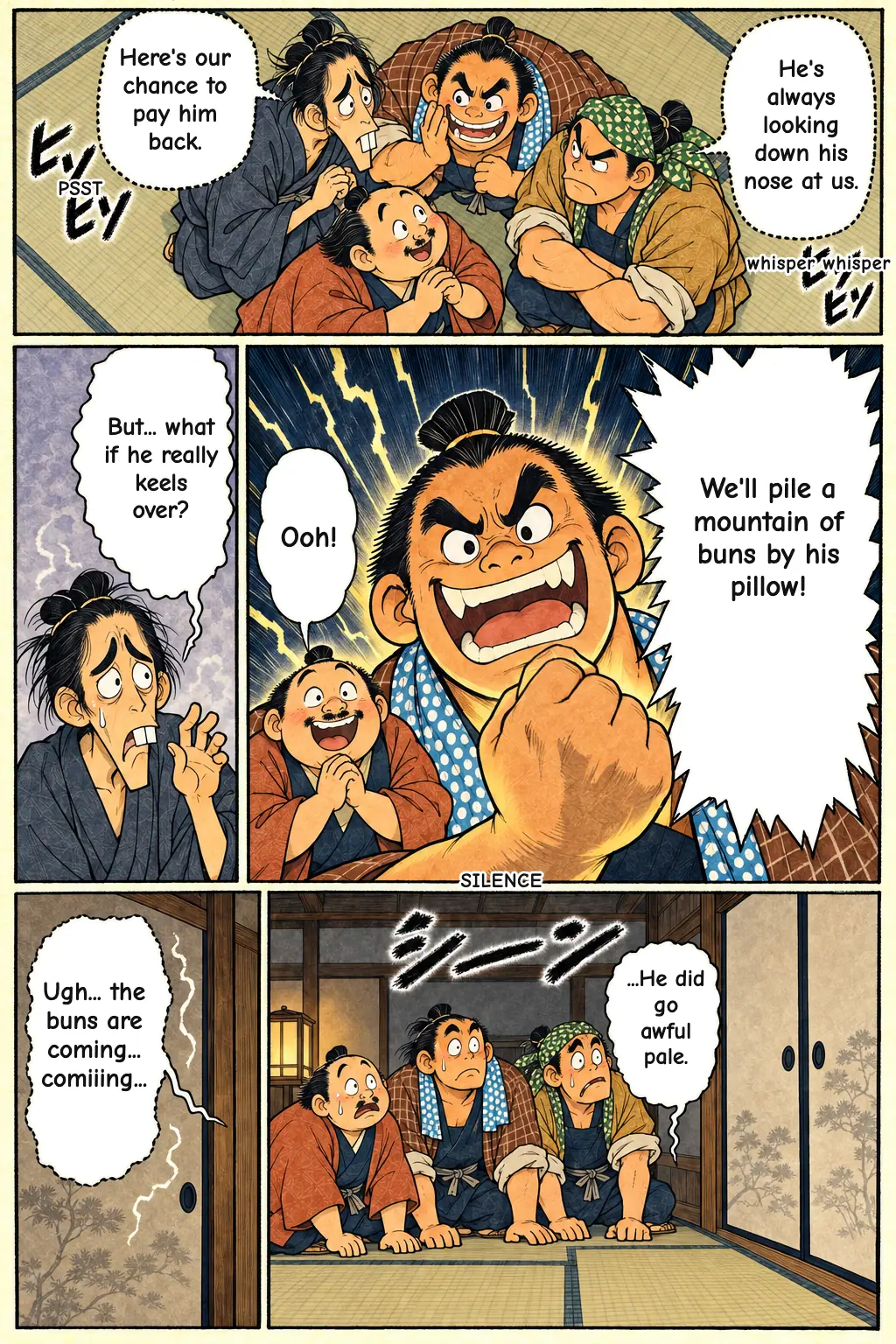
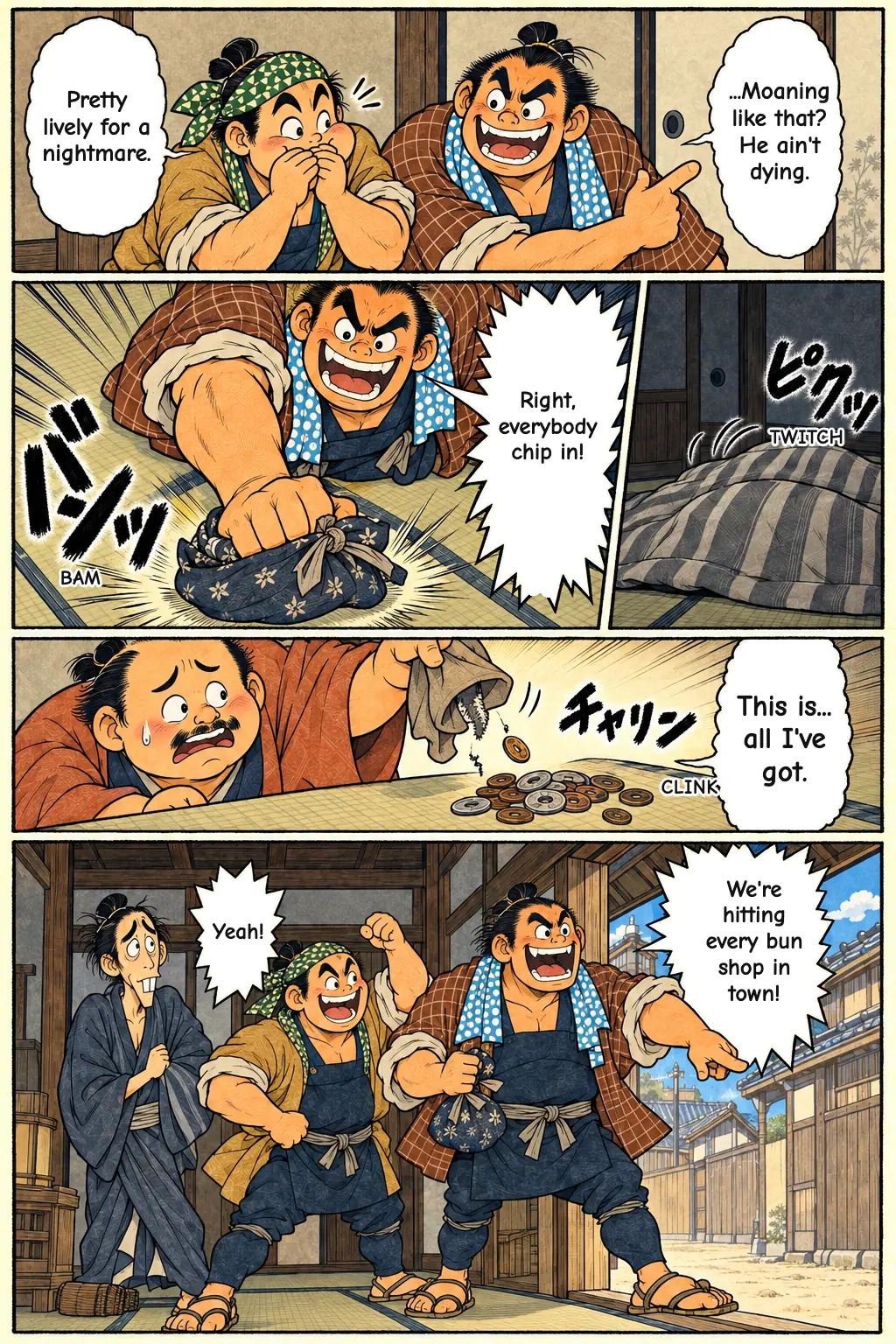
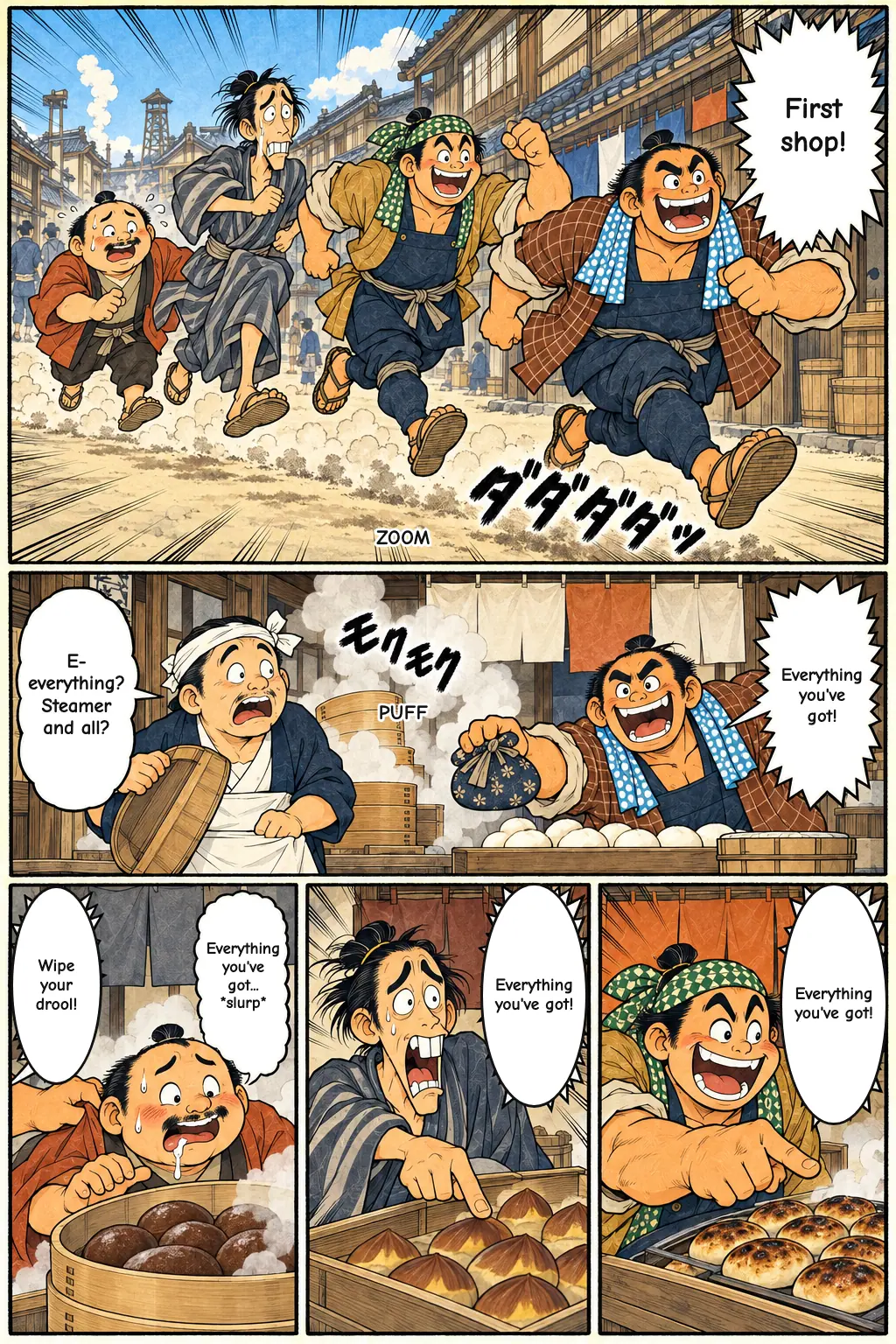
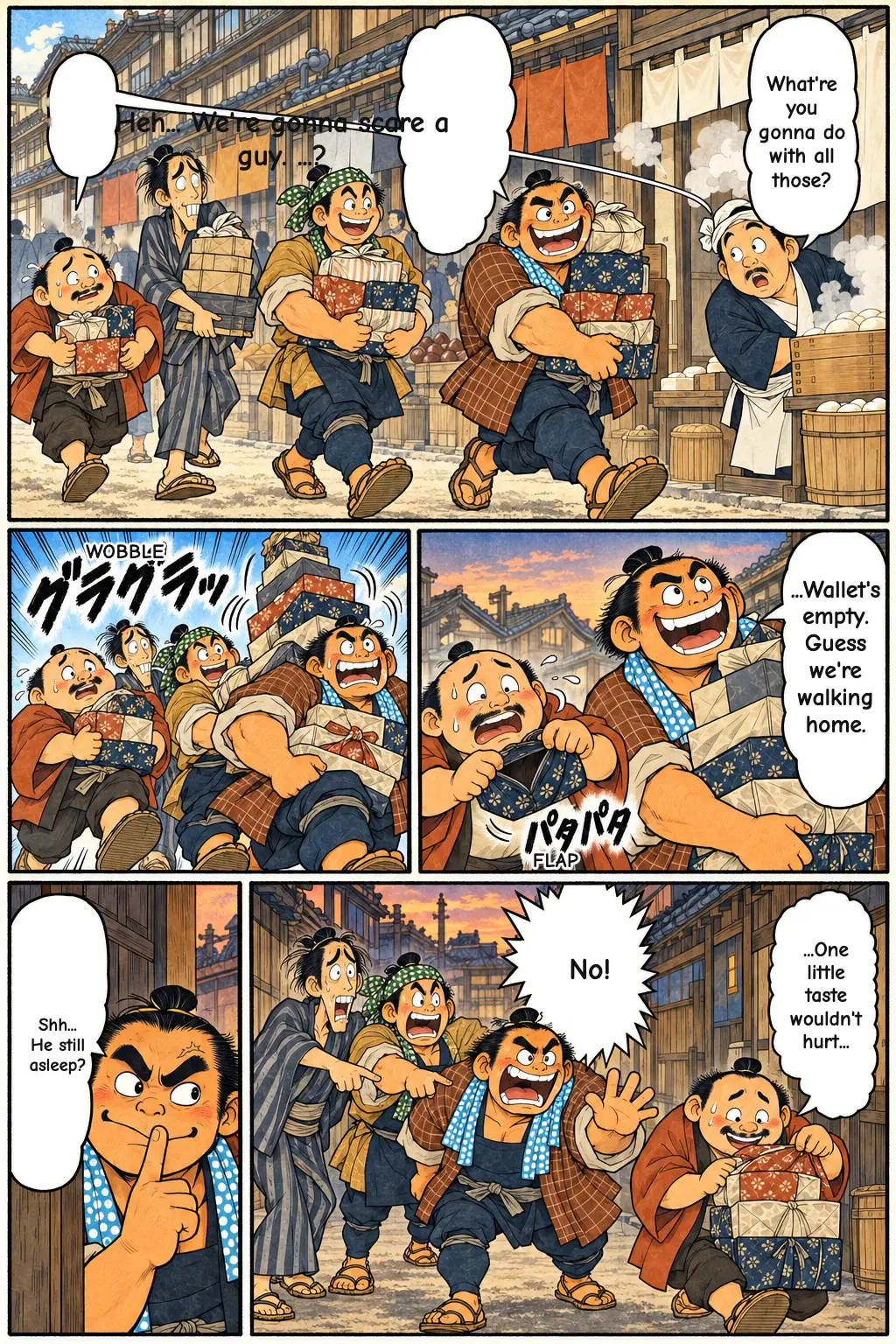
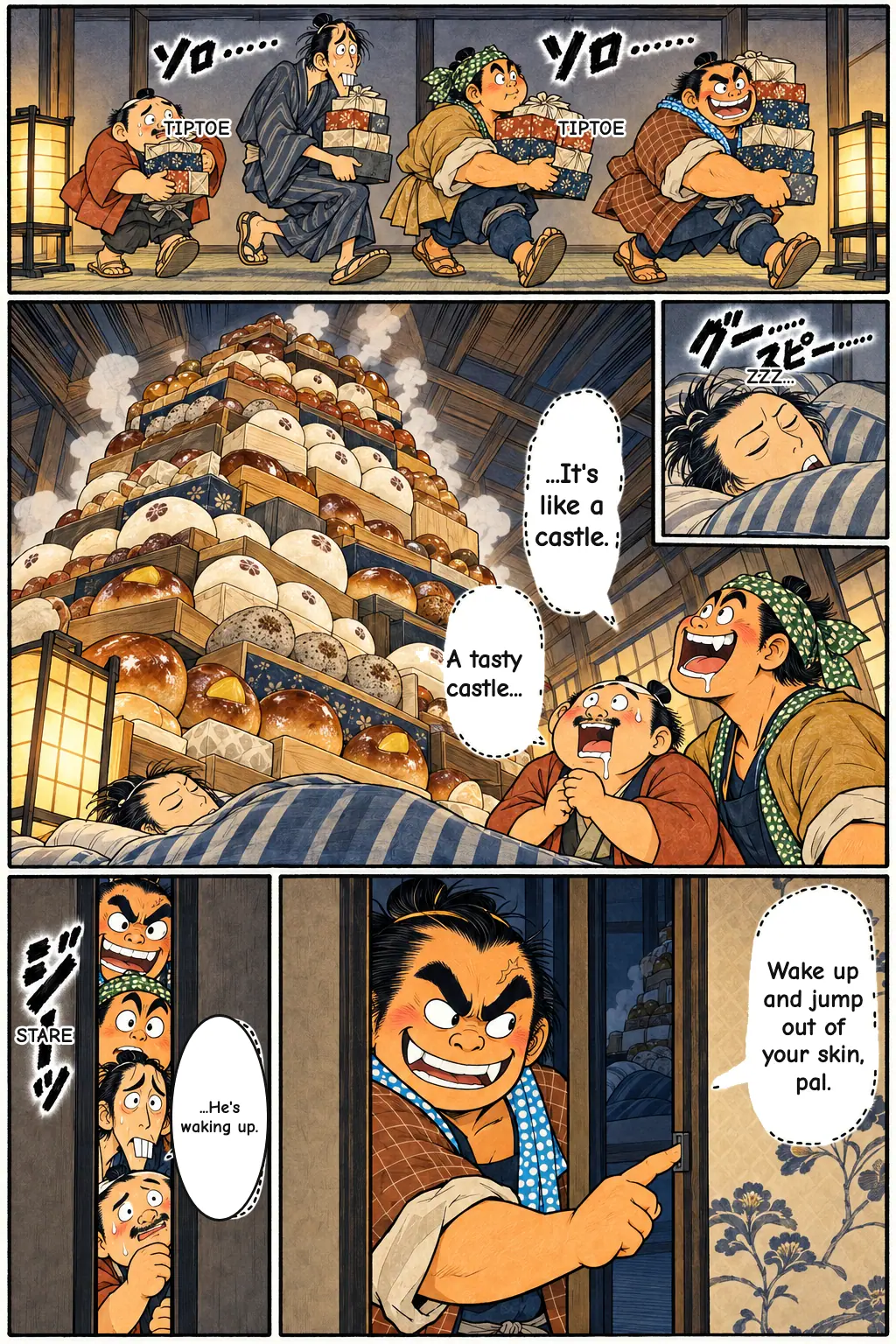
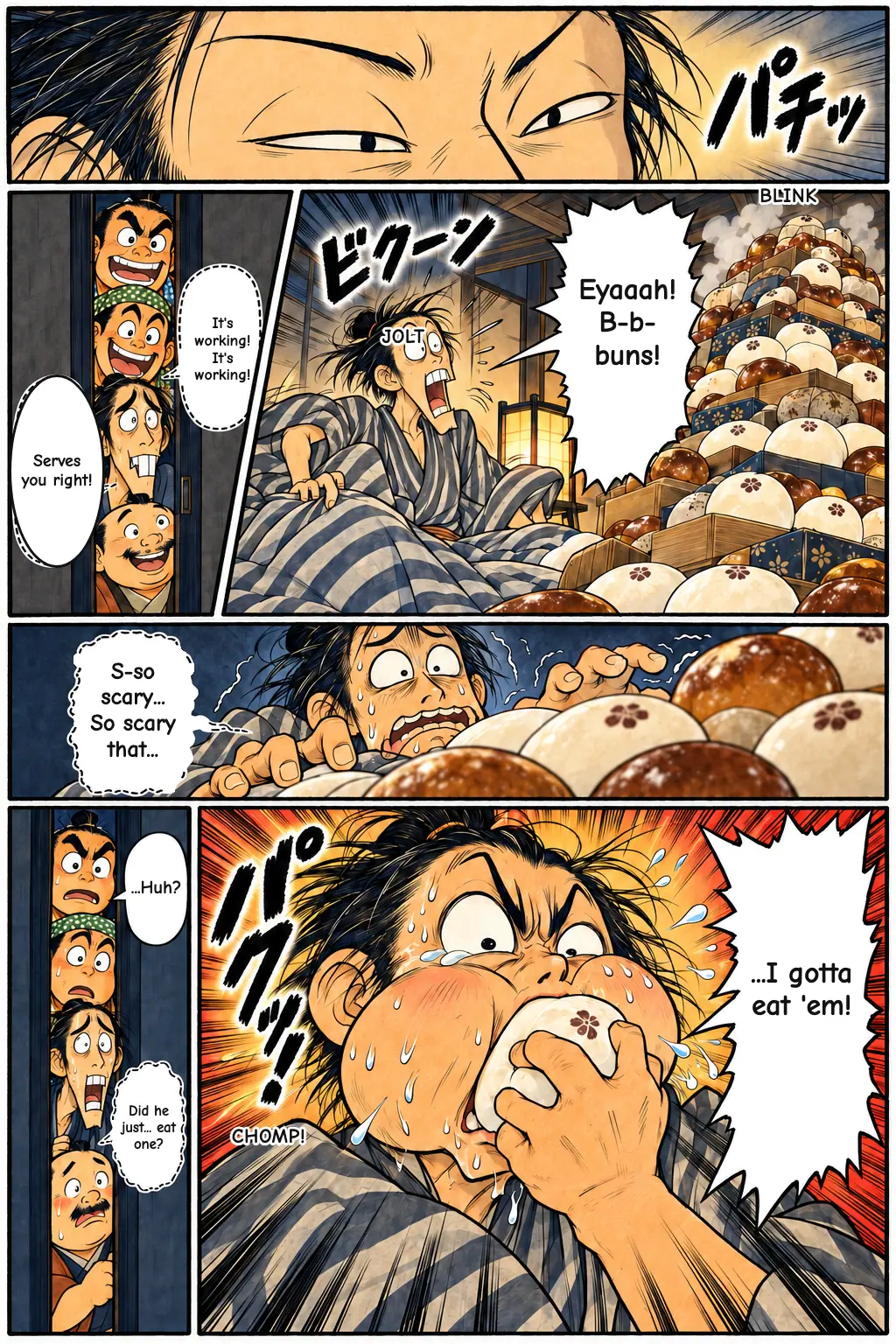
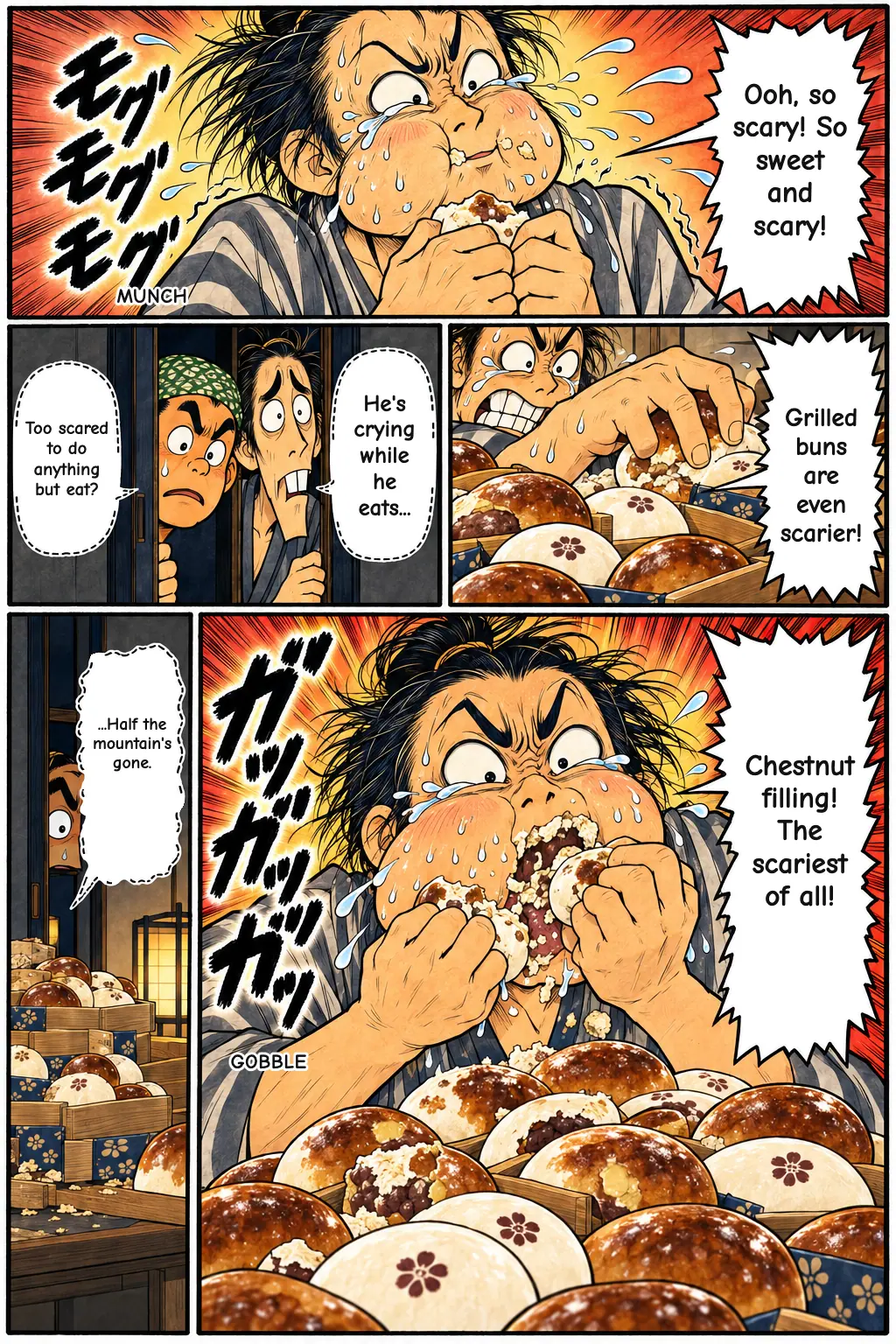
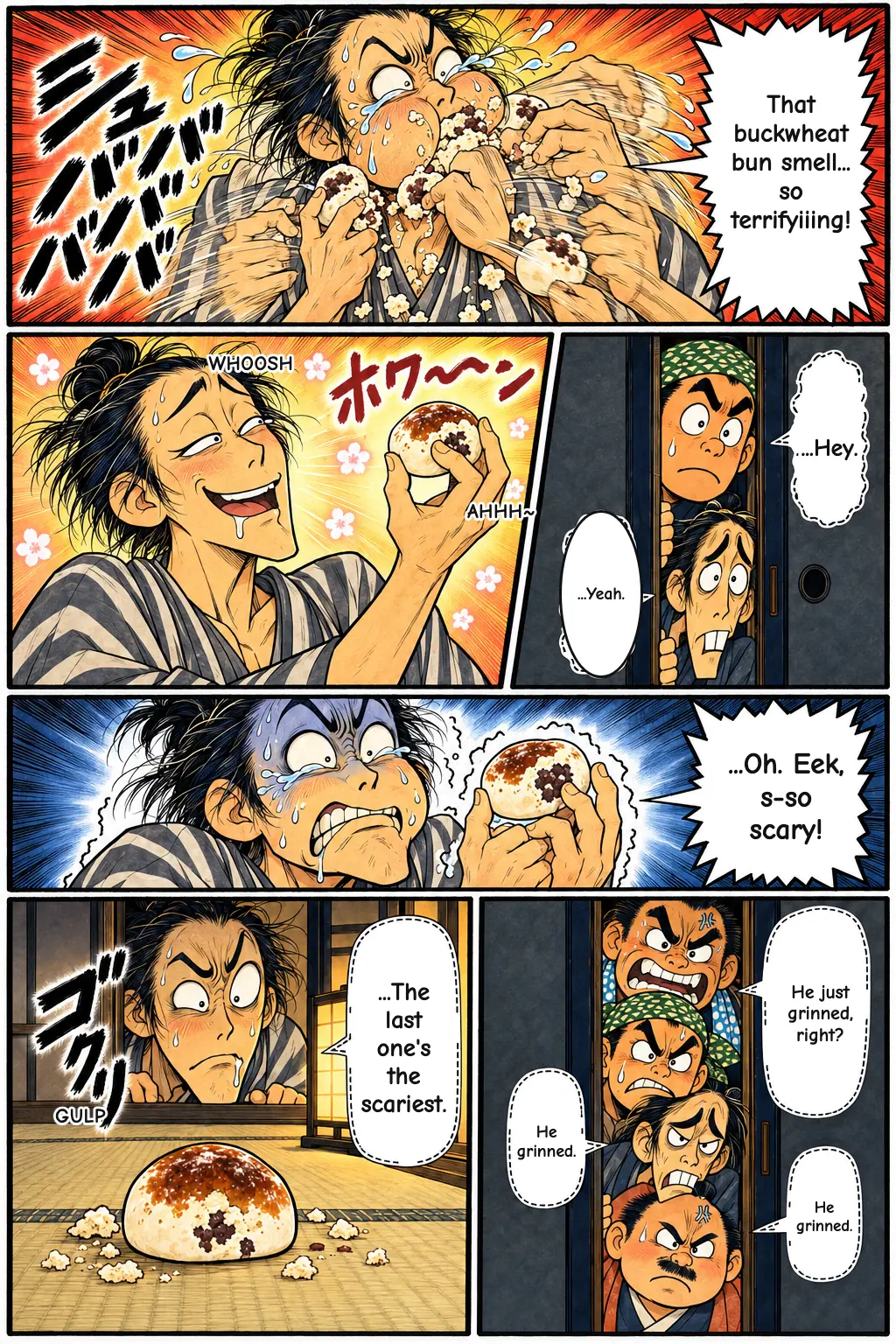
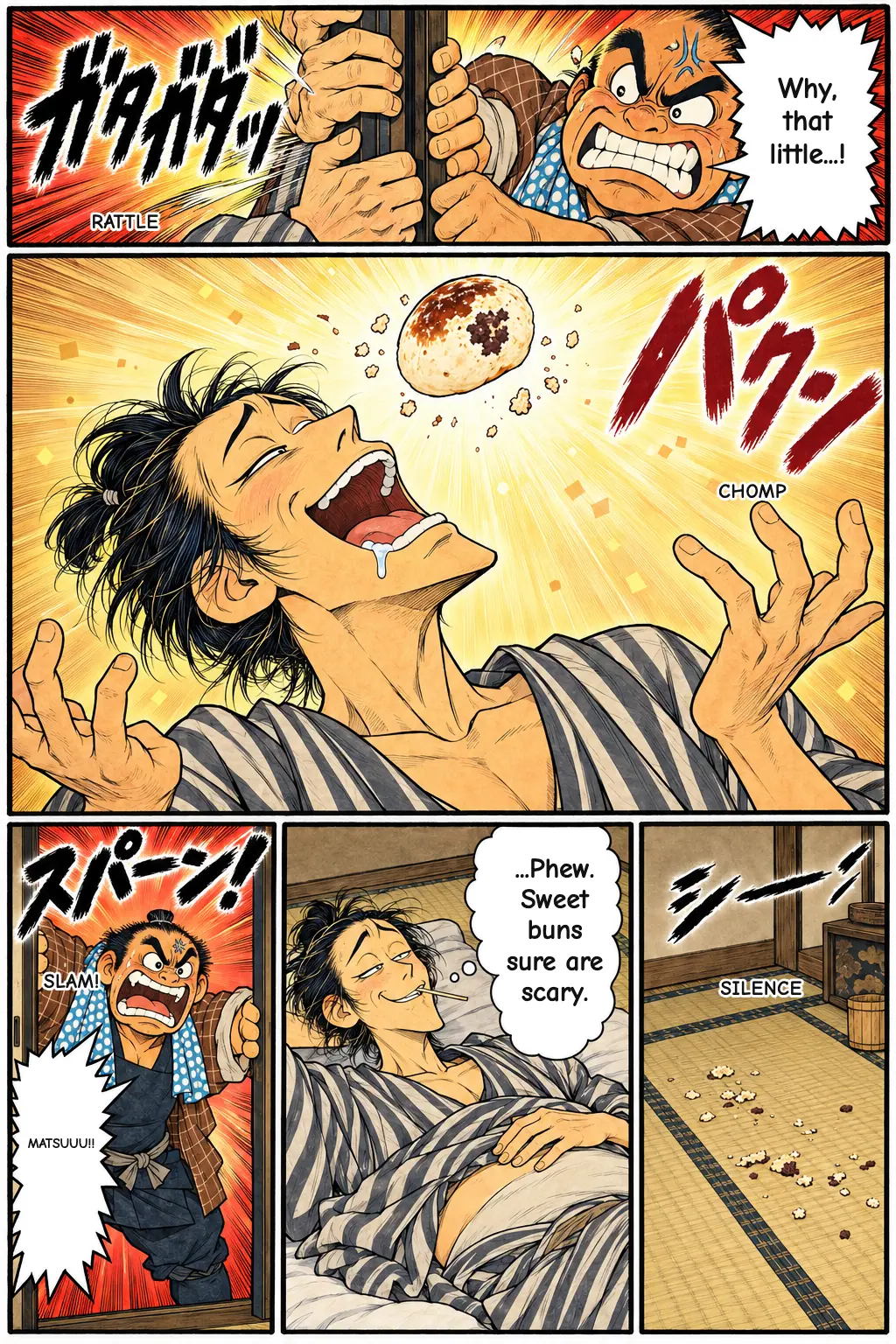
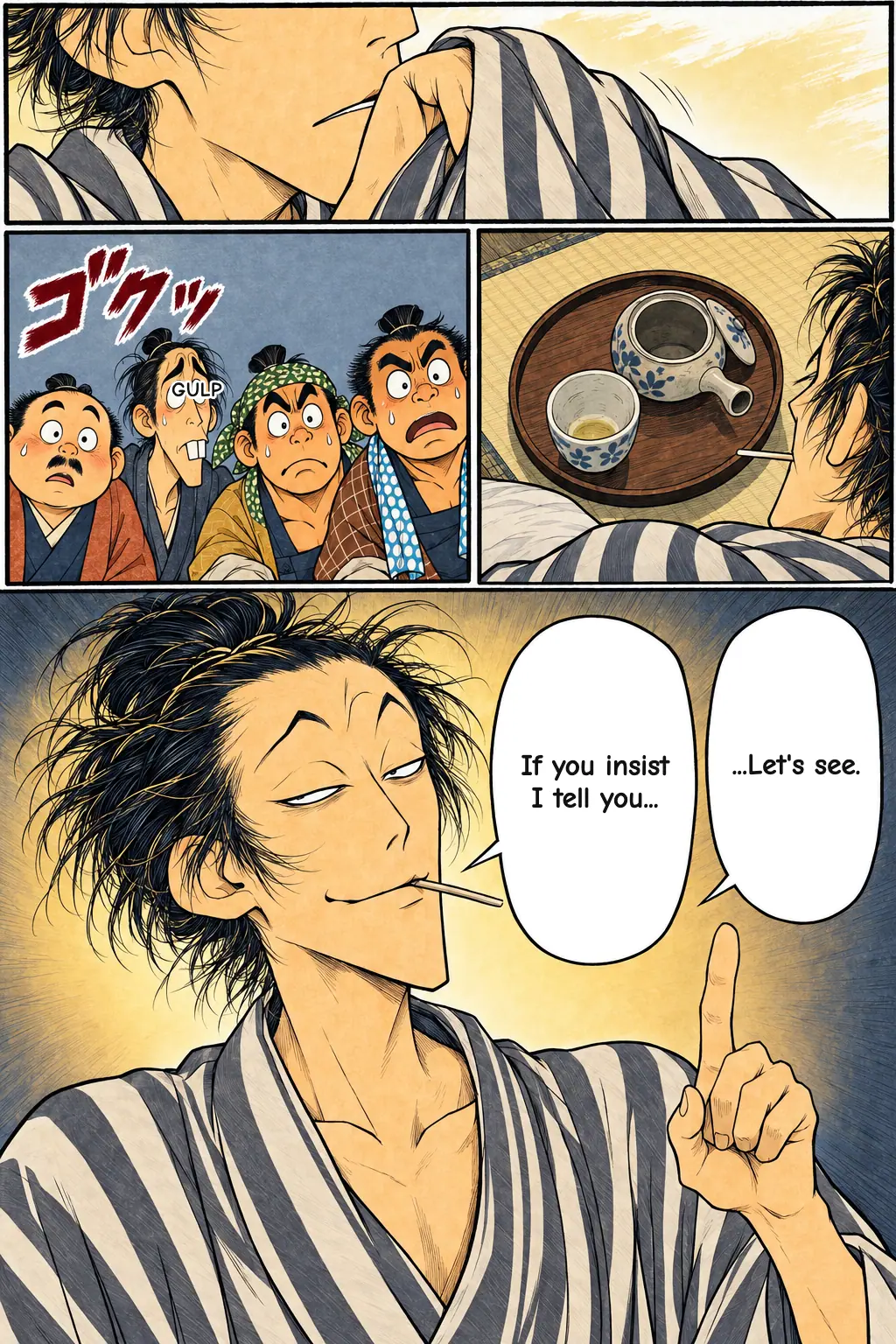
Episode 1 of the series. Tough-talking Matsu swears nothing scares him, until his tenement pals corner him and he turns pale: "Truth is... sweet buns terrify me." To teach him a lesson, they pile a mountain of buns by his pillow. But Matsu screams "So scary!" and eats every last one.
Manju Kowai, usually translated as "Scared of Sweet Buns," is one of the best-known stories in rakugo, Japan's traditional art of comic storytelling. It is short, simple, and built around a single clever trick, which is why it is often one of the first stories people meet. In the common version, a group of young men from the same neighborhood sit around chatting and take turns confessing what they fear or can't stand: snakes, spiders, ants, and similar everyday horrors. One man brags that nothing scares him and laughs at the rest.
Manju Kowai, usually translated as "Scared of Sweet Buns," is one of the best-known stories in rakugo, Japan's traditional art of comic storytelling. It is short, simple, and built around a single clever trick, which is why it is often one of the first stories people meet.
In the common version, a group of young men from the same neighborhood sit around chatting and take turns confessing what they fear or can't stand: snakes, spiders, ants, and similar everyday horrors. One man brags that nothing scares him and laughs at the rest. When they press him, he finally admits, reluctantly, that there is one thing: manju, sweet buns. Just thinking about them makes him feel sick, he says, and he goes off to lie down in the next room.
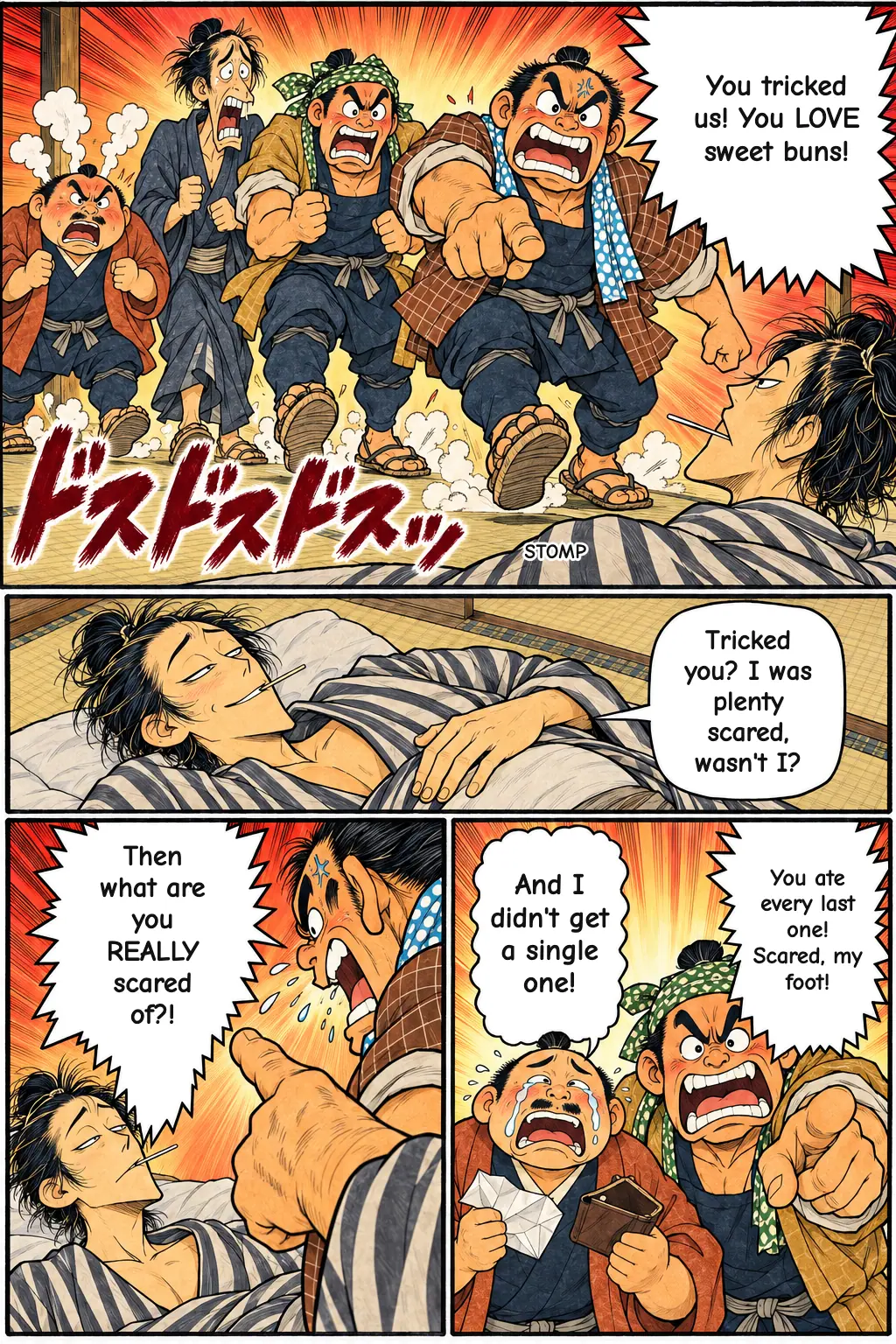
This man is always mouthing off, so his friends see their chance to get back at him. They pool their money, buy all kinds of sweet buns, and leave a pile of them beside his pillow. Then they peek in to enjoy his panic. Instead they find him crying "How frightening! How frightening!" while eating bun after bun until they're all gone. Realizing they've been fooled, the friends demand to know what he's really afraid of, and his answer is the punchline, which we explain further down.
The story has been told in slightly different ways over the years. An older title for it is Manju Girai, "I Hate Sweet Buns," so in some early tellings the man may say he hates the buns instead of fearing them, and the final line may be worded differently. One theory says the basic joke goes back to older Chinese comic stories, but that isn't settled.
What Is Rakugo?
Rakugo is a Japanese form of spoken comedy that has been performed for a few hundred years, mostly in small variety theaters called yose. A single storyteller, the hanashika, kneels on a cushion and plays every character alone, switching between them with a turn of the head and a change of voice. The only props are a folding fan (sensu) and a hand towel (tenugui). The fan can stand in for chopsticks, a pipe, or a brush, and the towel for a wallet, a letter, or a sweet bun. Most stories end on a final twist line called the ochi or sage, and the whole performance is built to get there.
Life in an Edo Tenement: The Background
Like many rakugo stories, Manju Kowai takes place among ordinary townspeople of Edo, the old name for Tokyo, in the later Edo period. Working people often lived in nagaya, long wooden row houses with thin walls, where neighbors were always in and out of each other's rooms. That closeness is what makes the setup work: a gang of friends who know each other well enough to tease, gang up, and plot a prank together.
It also helps to know what manju are. A manju is a Japanese sweet: a soft bun of wheat dough wrapped around sweet red bean paste (anko). It is not the same as the Chinese meat-filled steamed bun. In the story, manju are a small, cheap treat, the kind of thing a group of young men could chip in to buy a pile of.
What the Manga Changes
Our manga keeps the classic plot: the round of confessed fears, the man who claims he fears nothing, the fake confession, the pile of buns, and the final line. To check the plot we used early printed transcripts of real performances, made in the Meiji and Taisho eras (late 1800s to 1920s). Our main source is a version by the third-generation Chōkarō Baraku, a storyteller of that period, printed in collections from 1913 and 1925. All the dialogue and small gags in the manga are our own writing.
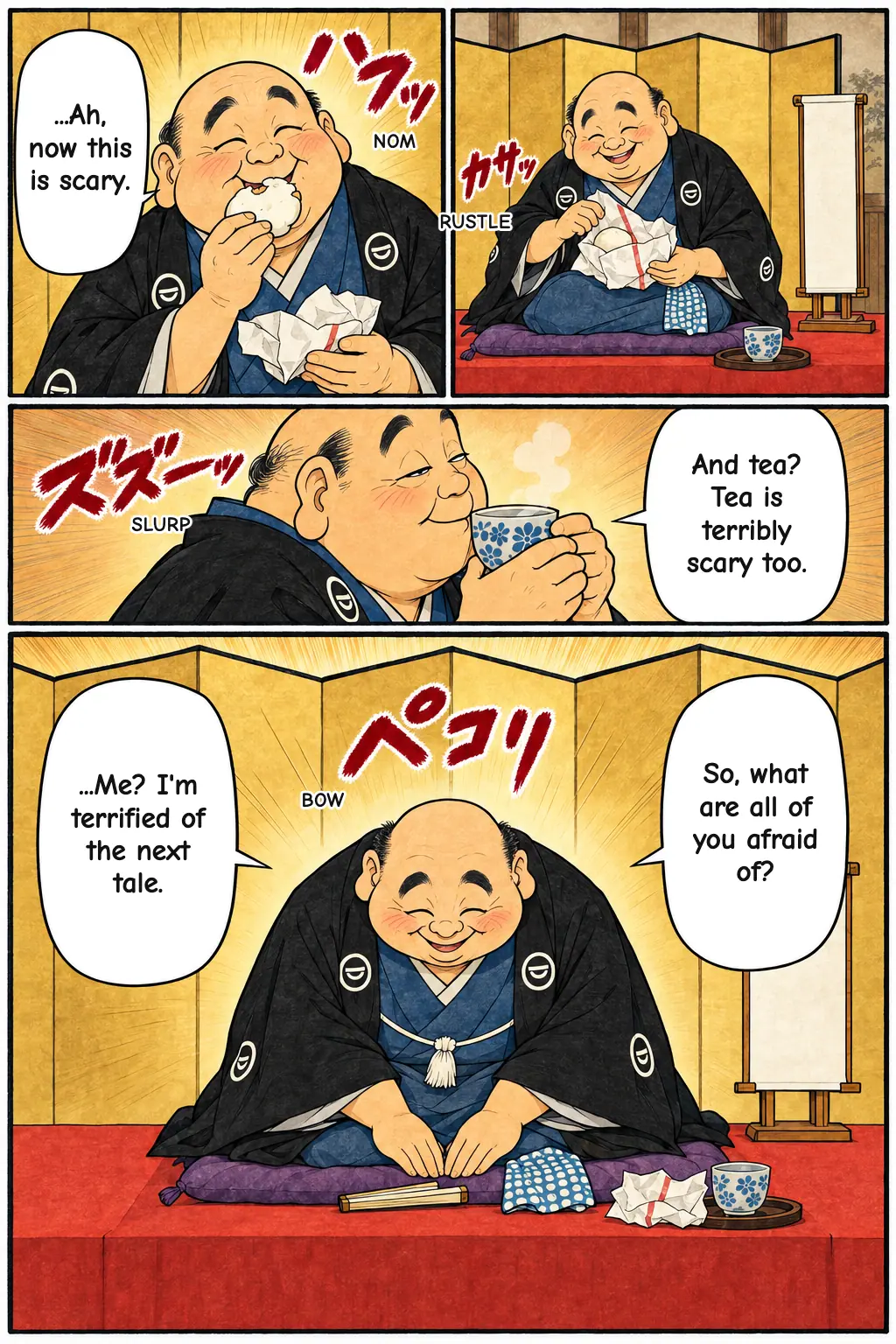
Several things are our own additions. The storyteller who opens and closes the episode, Shōmontei Fukurai, is a made-up narrator for this series and doesn't appear in any traditional source. His opening words ("Everyone has something they just can't stand") and his closing bit, where he pretends his hand towel is a bun and eats it, were invented for the manga. The over-the-top imagined panels of each friend's fear, the reaction faces during the bun-eating scene, the peek through the sliding door, and the drawings of tenement life are visual choices we made. The name Matsu and the faces and personalities of the friends were also created for the manga, since performers name these characters differently.
The Punchline Explained (Ochi / Sage)
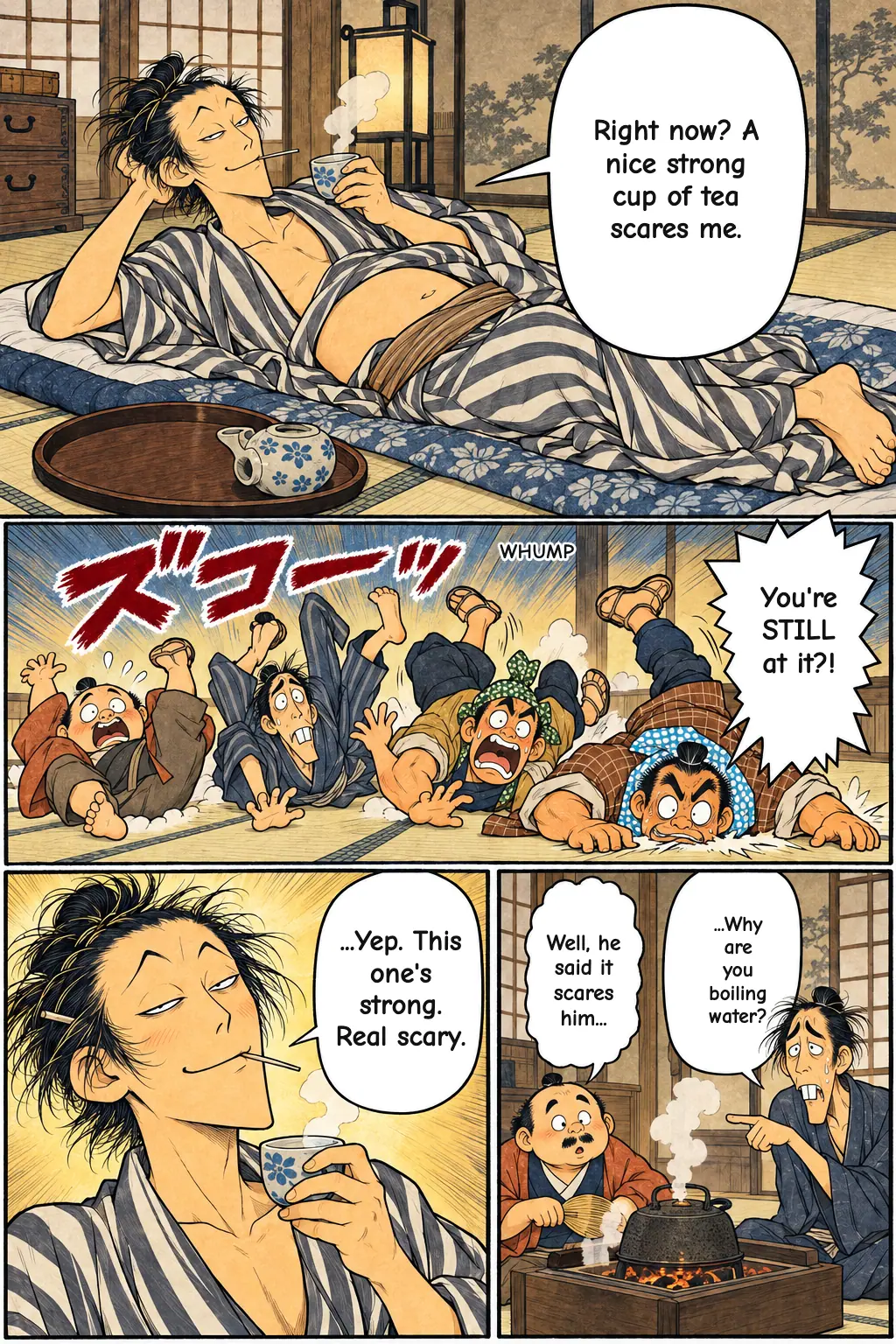
Once the friends catch on, they ask the man what actually scares him. He answers, more or less: "Right about now, a nice cup of strong tea scares me."
The joke rests on a Japanese habit. Sweet buns are usually eaten with strong, slightly bitter green tea to balance the sweetness, and after a whole pile of buns anyone would want a cup. The man has learned that whenever he says something "scares" him, his friends rush out to bring it. So he does it again and names the one thing he wants next. The first trick got him free buns, and the second asks for free tea right in front of the people he just fooled. The laugh comes from how shameless that second trick is.
Where to Read It
You can read Manju Kowai as Episode 1 of RAKUGO: Japan's Comic Tales here on Manga Portal. If you've only read the summary, the manga shows the build-up to the bun scene and Matsu's terrified munching panel by panel. It's a quick, light way into rakugo, and every episode is free to read with no sign-up.
Characters in this episode
Matsu (the man who "fears" sweet buns)
A tough-talking man who claims nothing scares him, then pretends to fear sweet buns so his friends will buy him a pile of them. The name Matsu is the manga's choice, since performers name him differently.
The tenement friends
Young neighbors who confess their own fears and try to punish Matsu's bragging with a prank, only to be fooled by him.
Shōmontei Fukurai
A fictional rakugo storyteller created for this series who opens and closes each episode with a fan and hand towel; he does not appear in the traditional story.
FAQ
What is the story of Manju Kowai?
A man who brags that he fears nothing admits under pressure that sweet buns (manju) terrify him. His friends pile buns by his bed to scare him, but he happily eats them all while pretending to be frightened. It turns out the fear was a trick to get free buns.
What does the ending of Manju Kowai mean?
At the end, the man says a cup of strong tea scares him now. In Japan, sweet buns are usually eaten with bitter green tea, so he's using the same trick a second time to get tea. The joke is how bold that second request is.
What is manju?
Manju is a traditional Japanese sweet: a soft wheat-dough bun filled with sweet red bean paste (anko). It is different from the Chinese meat-filled steamed bun.
What is rakugo?
Rakugo is a Japanese storytelling art that is several hundred years old. One performer kneels on a cushion and plays every character using only a folding fan and a hand towel, and each story usually ends with a punchline called the ochi or sage.
Is Manju Kowai based on a Chinese story?
One theory says the joke has roots in older Chinese comic tales, but this isn't certain. The version known in Japan is an Edo-style rakugo story, once also told under the title Manju Girai ("I Hate Sweet Buns").