Episode 9The Day Zeus Stopped Holding BackTitanomachy
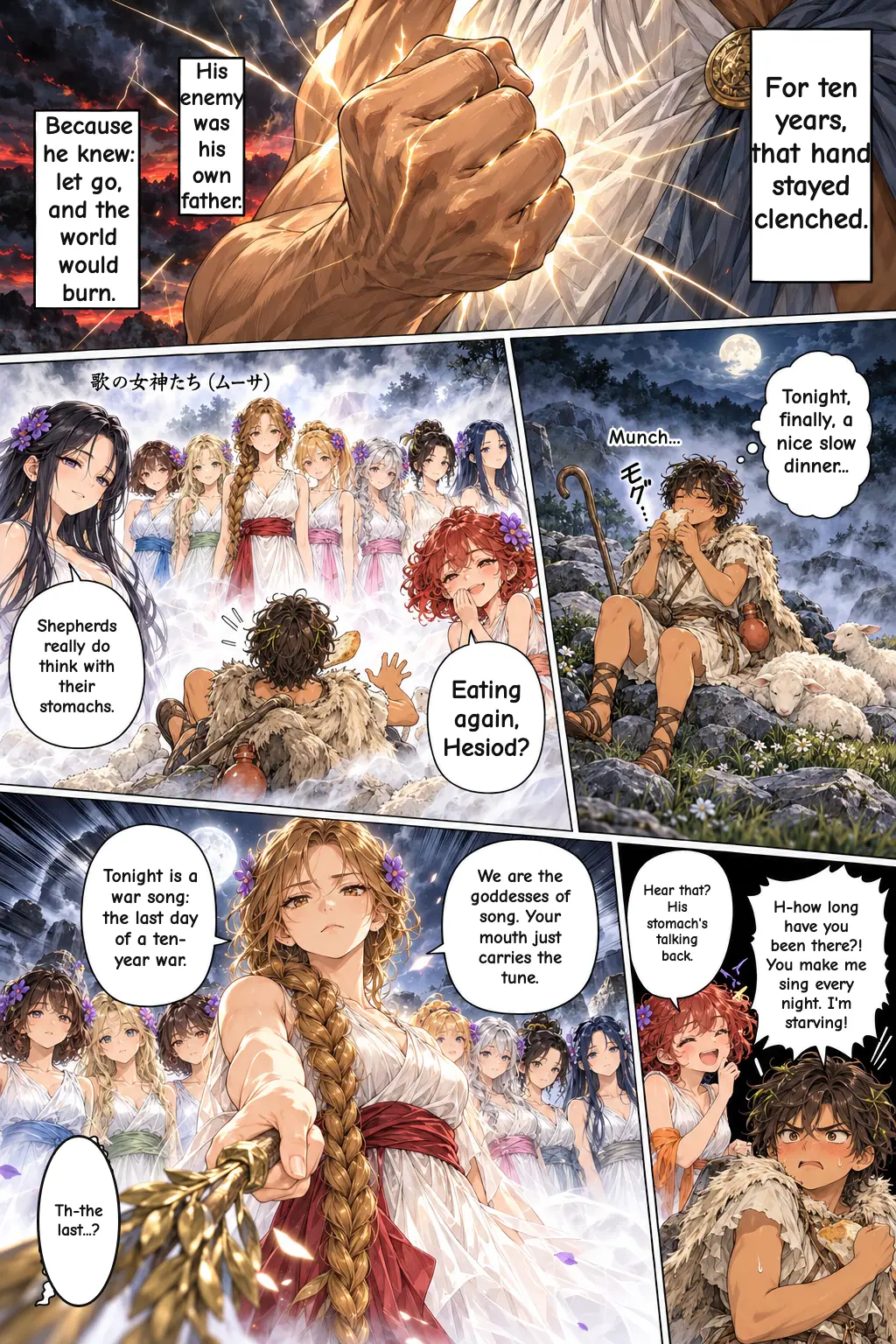
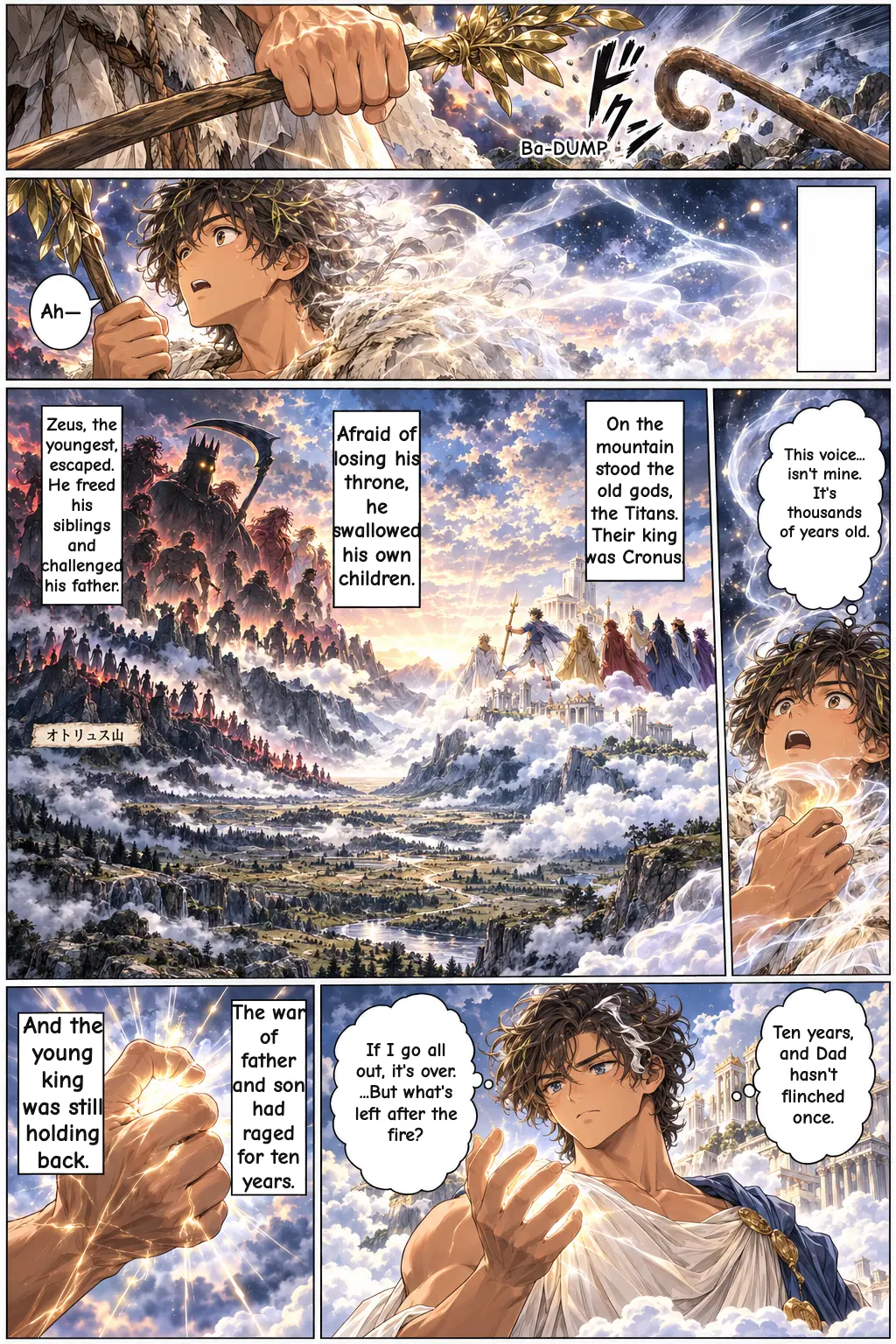
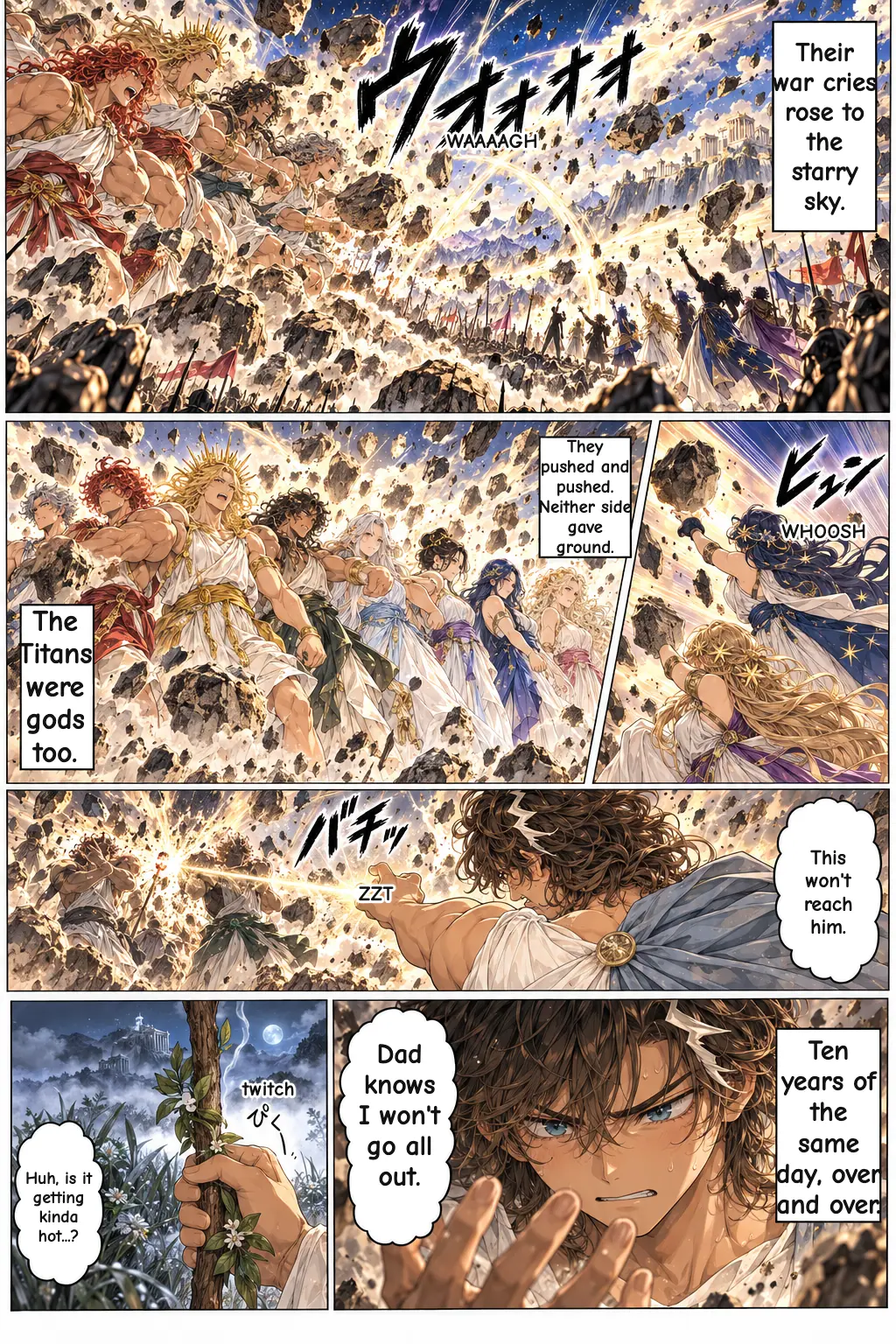
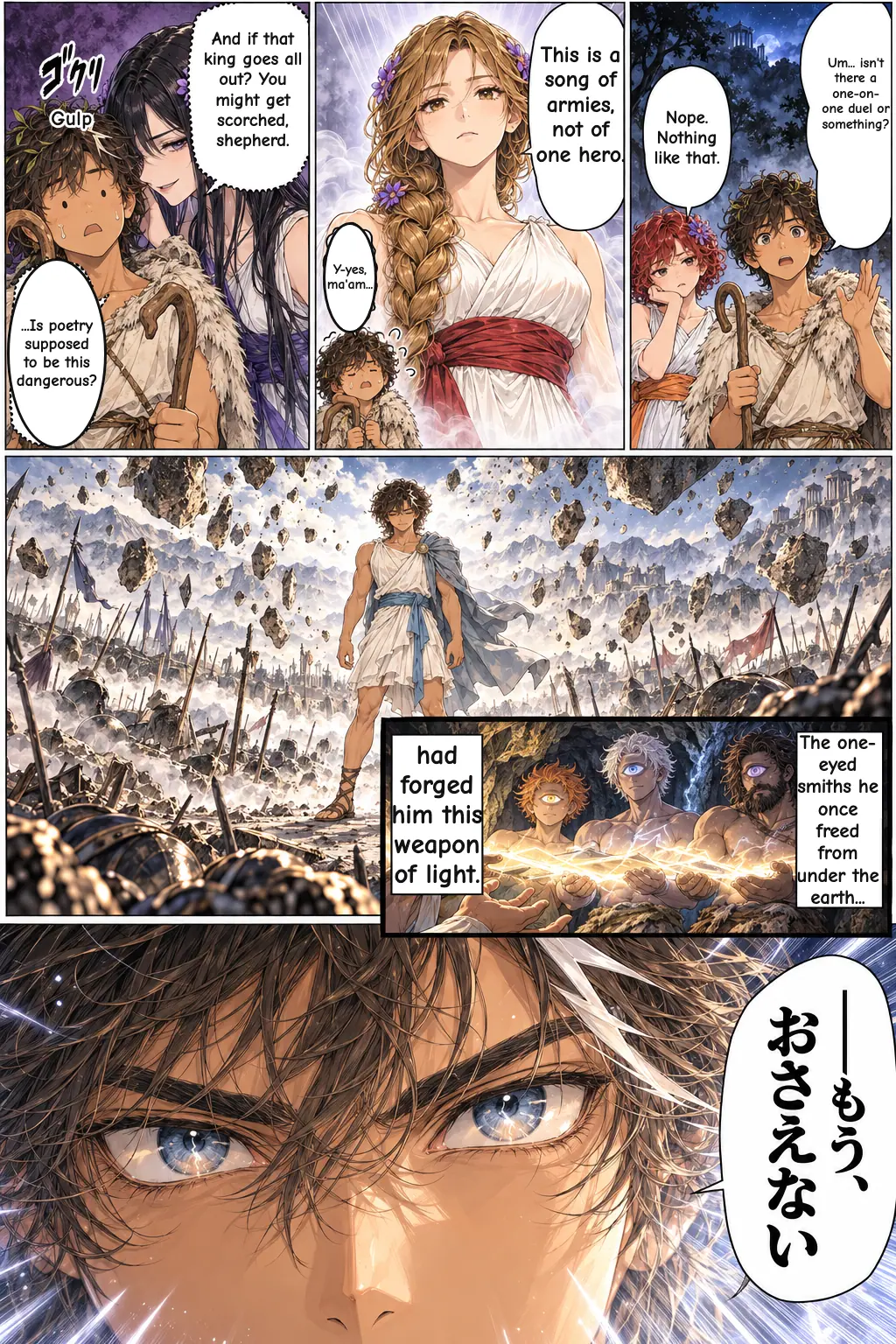
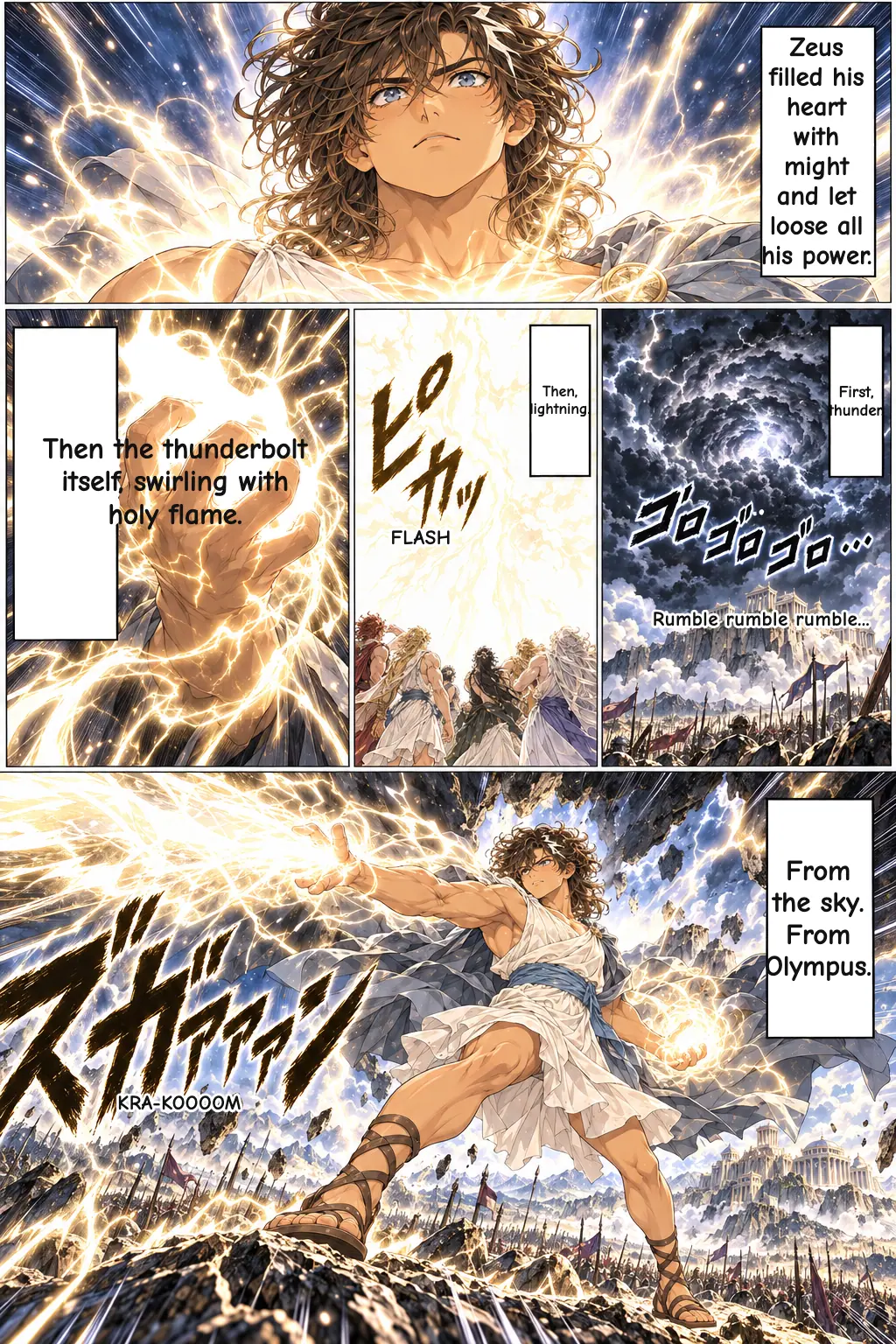
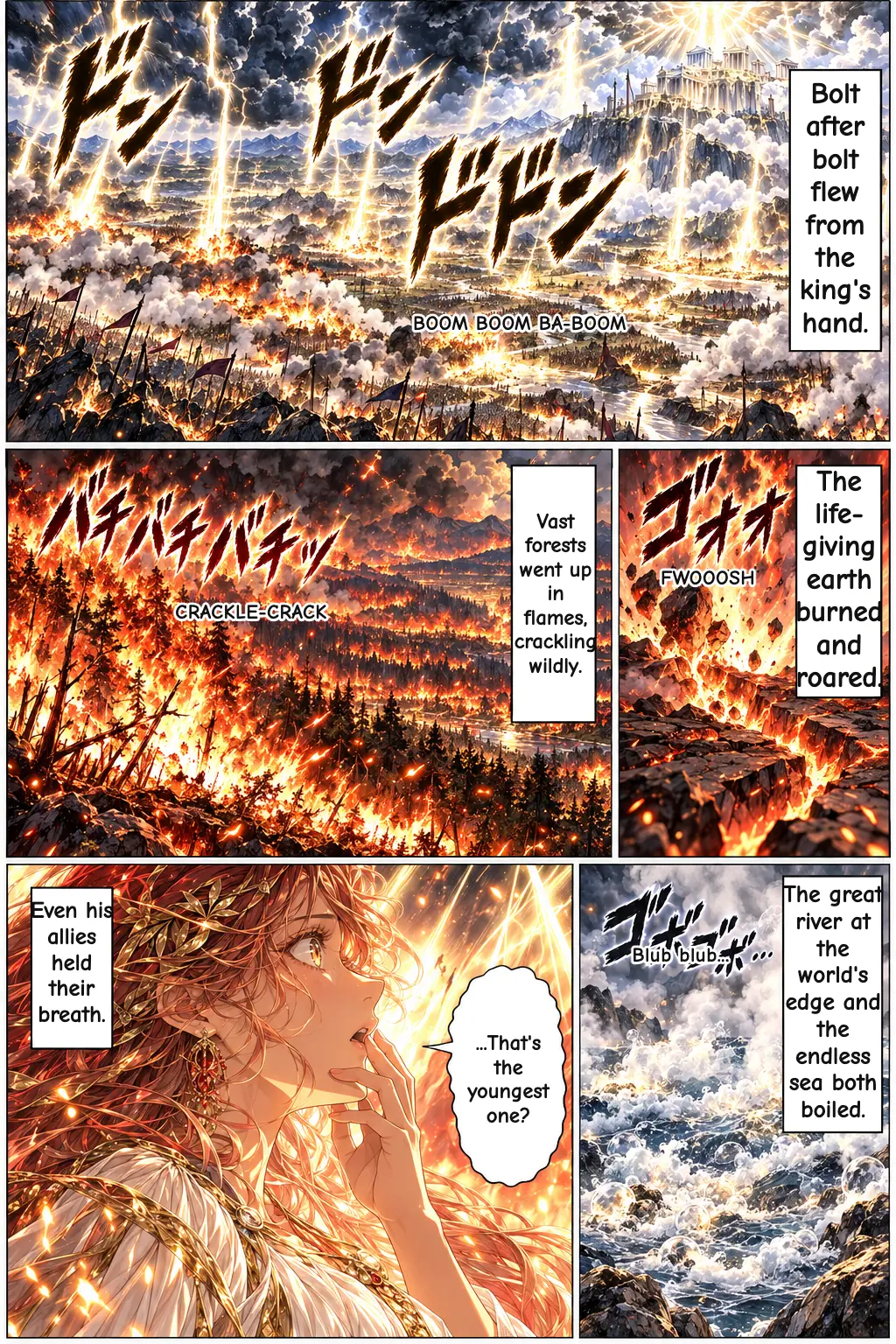
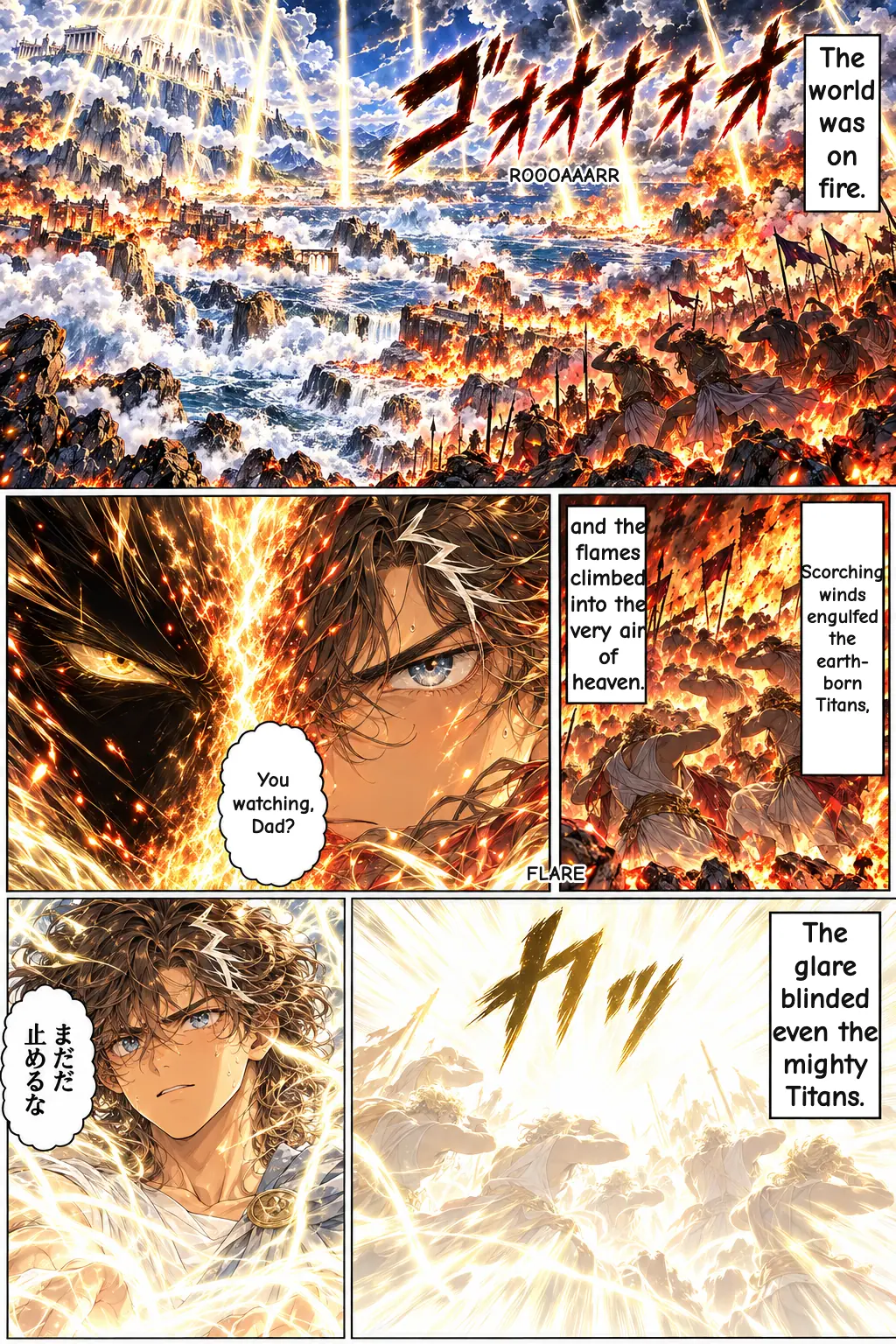
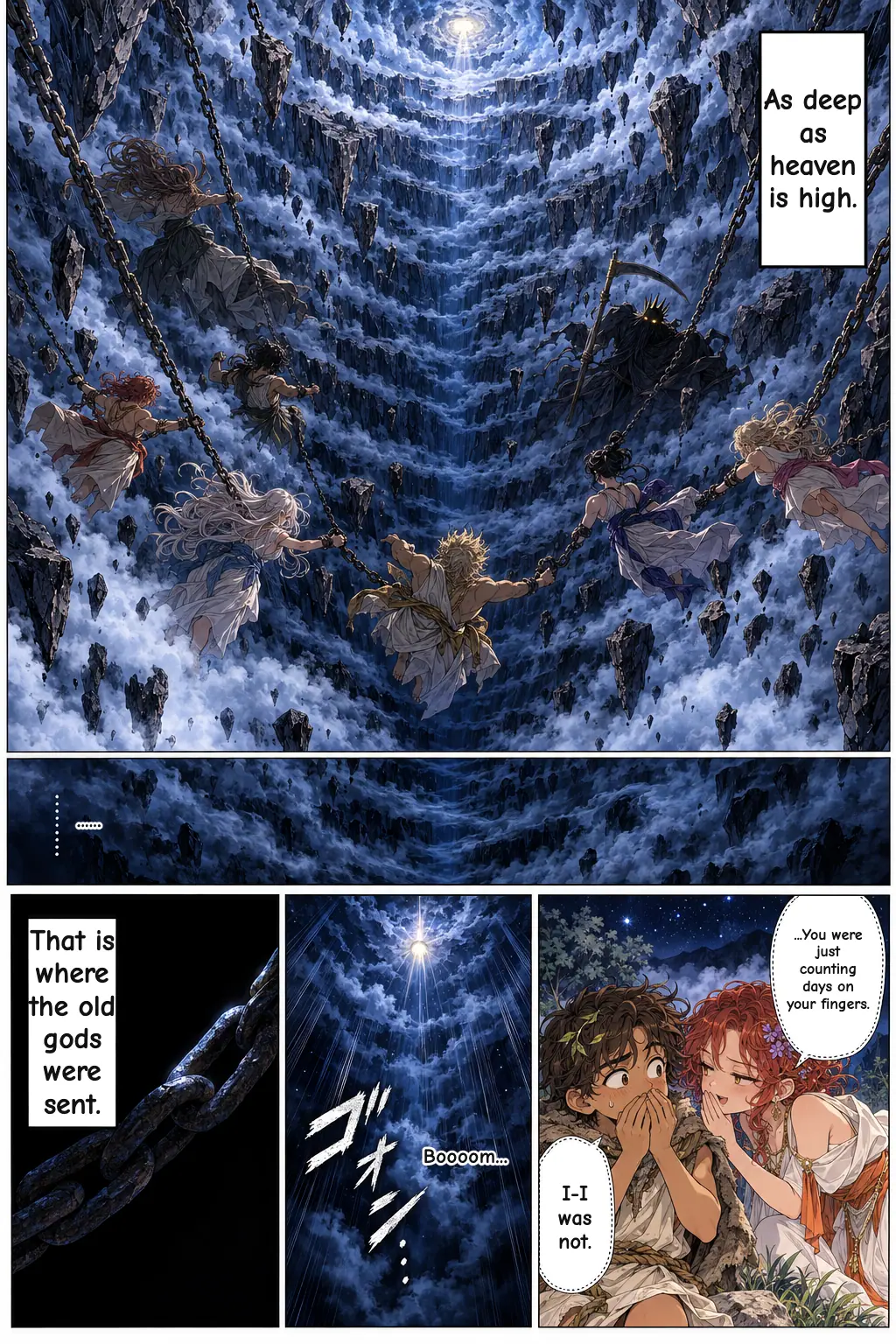
Cronus feared his children would take his throne. Zeus, the youngest, was the only one who escaped him, and he has fought his father for ten years. This is the war's last day. Zeus finally stops holding back and hurls lightning hot enough to set the world on fire. The three Hundred-Handers bury the sky under three hundred boulders. Together they drive the old gods down into Tartarus, which lies as far below the earth as heaven lies above it.
Titanomachy Explained: How Zeus Defeated the Titans
The Original Myth: The Last Day of the War
The Titanomachy is the war between two generations of Greek gods. On one side are the Titans, the older gods led by Cronus. On the other are the children of Cronus, led by Zeus, the youngest, who escaped when his father swallowed his brothers and sisters to protect his throne. In Hesiod's Theogony, the war has already gone on for ten years with neither side winning when the final battle begins.
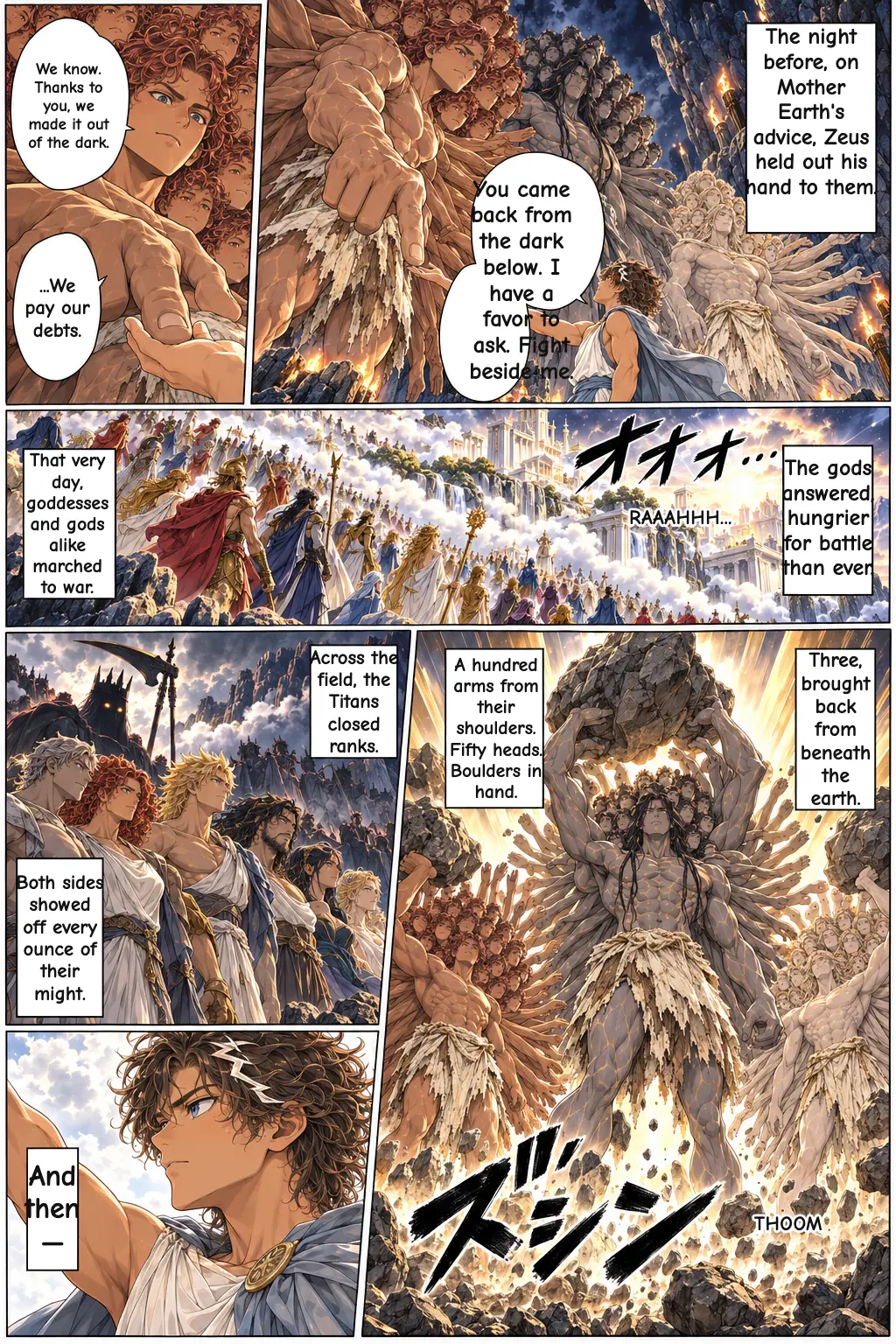
The poem describes that battle in about sixty lines (664–721). After Zeus calls on his allies to fight, every god and goddess joins in on the same day. Fighting beside the Olympians are three beings Zeus has brought back up from the darkness under the earth. Each has a hundred arms and fifty heads growing from the shoulders. They line up holding huge rocks, and the Titans tighten their own ranks across from them.
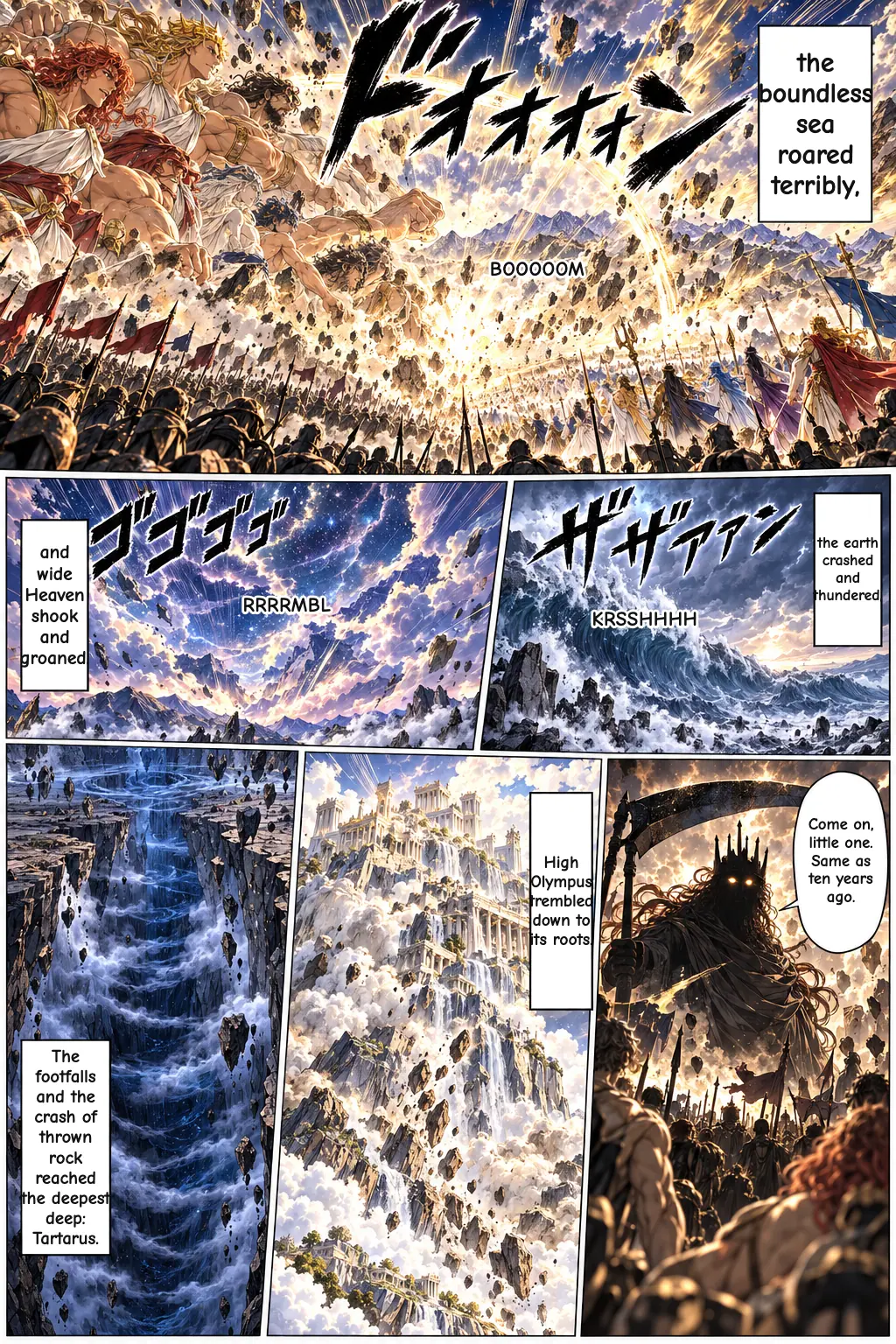
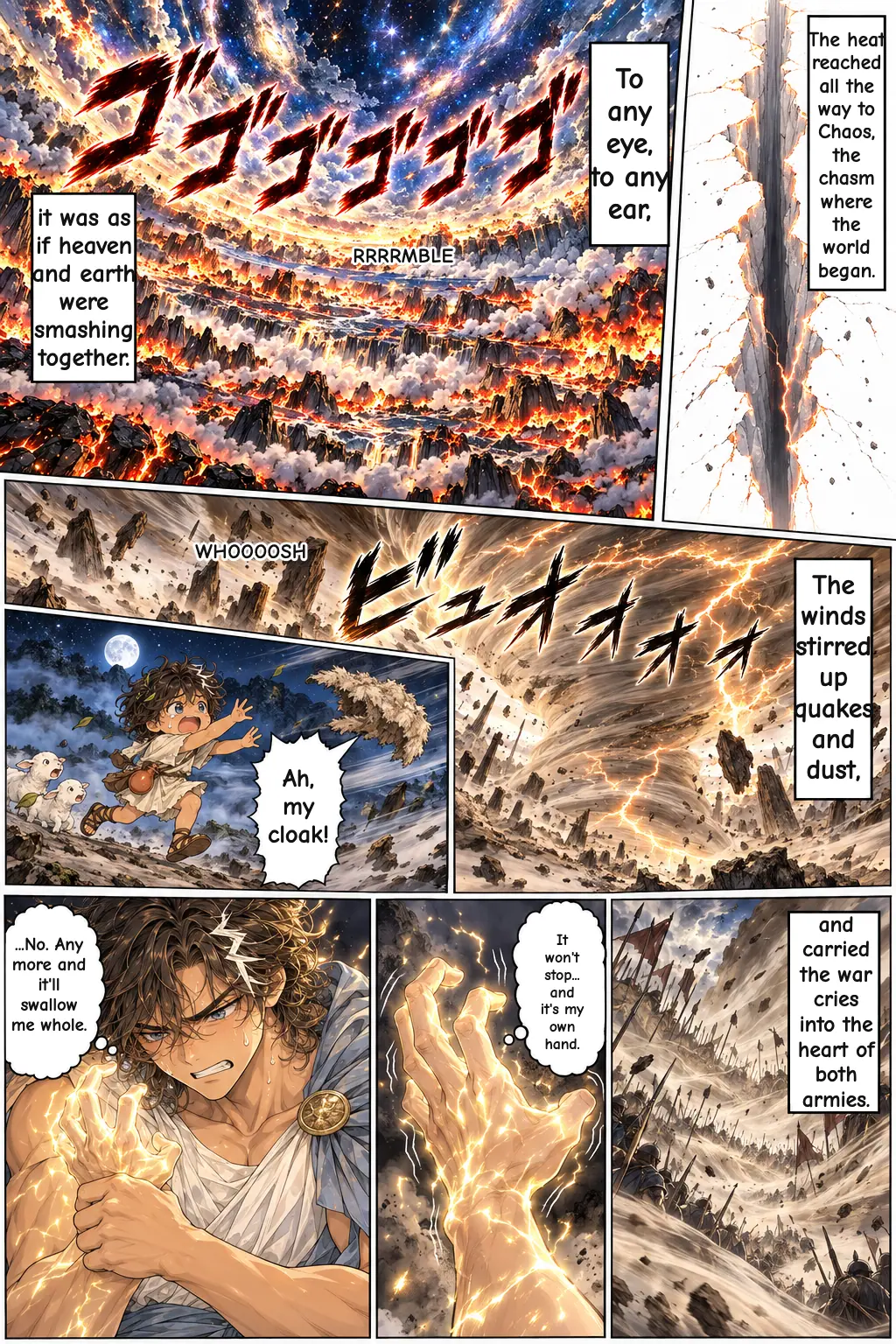
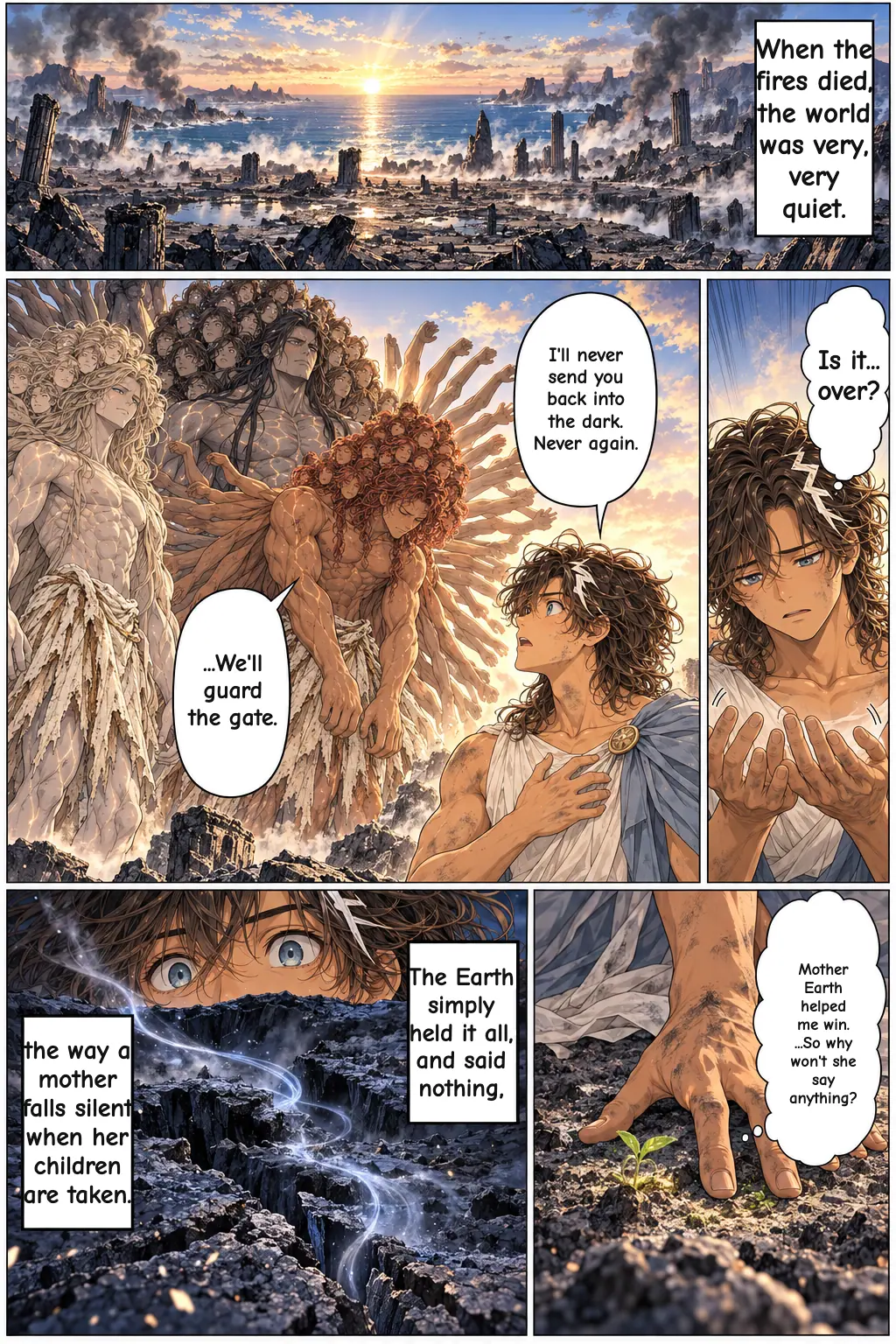
The clash shakes the whole universe. The sea roars, the earth rumbles, the wide sky groans, and Olympus trembles to its base. The noise reaches all the way down to misty Tartarus. Then Zeus stops holding back his strength. He moves forward without pause, hurling thunder and lightning from the sky and from Olympus, one bolt after another. The earth burns, forests crackle in flames, and the stream of Ocean and the sea itself boil. The heat wraps around the Titans, the flashes blind even them, and the fire reaches Chaos, the primeval void. Hesiod says it looked and sounded as if earth and sky were crashing into each other.
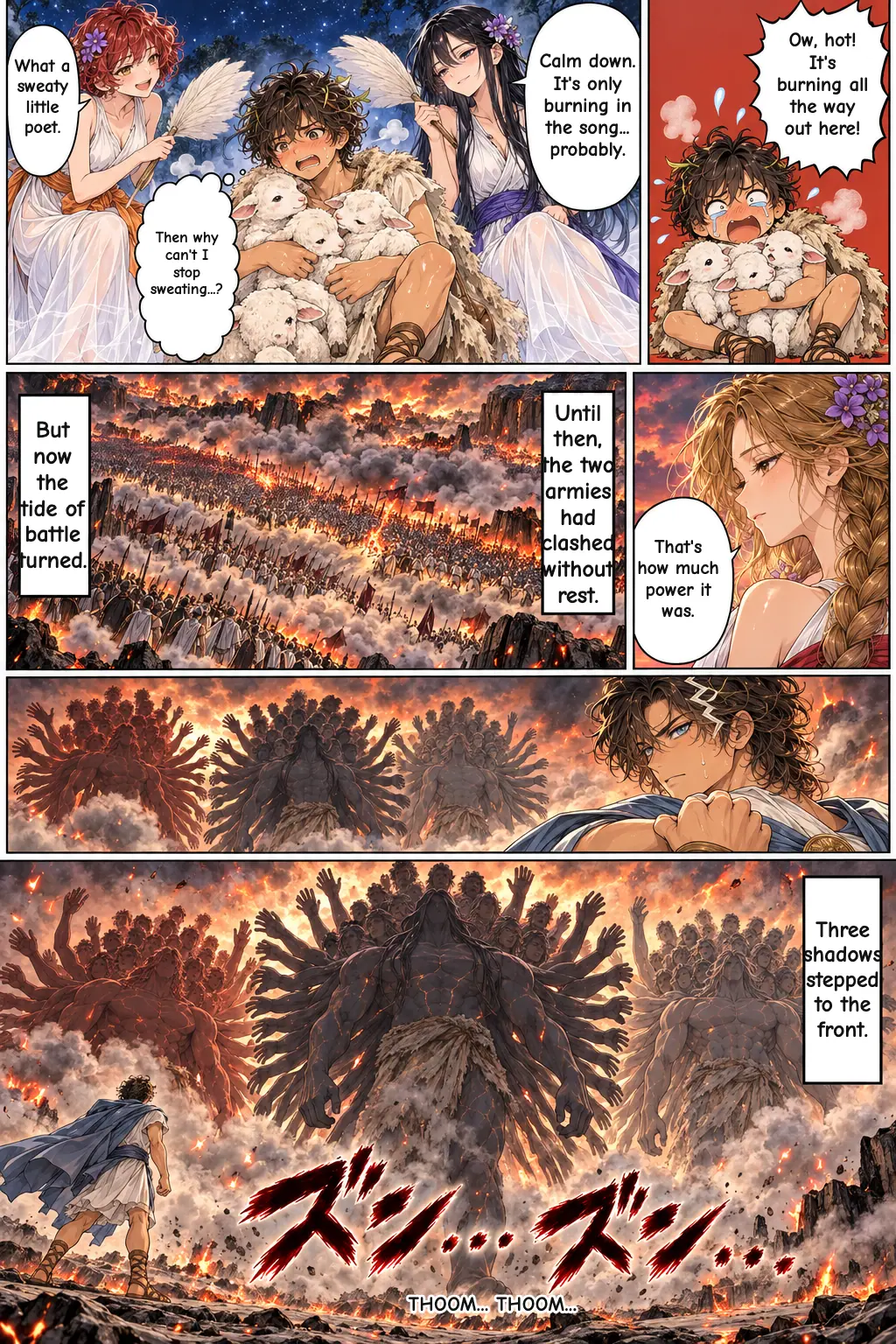
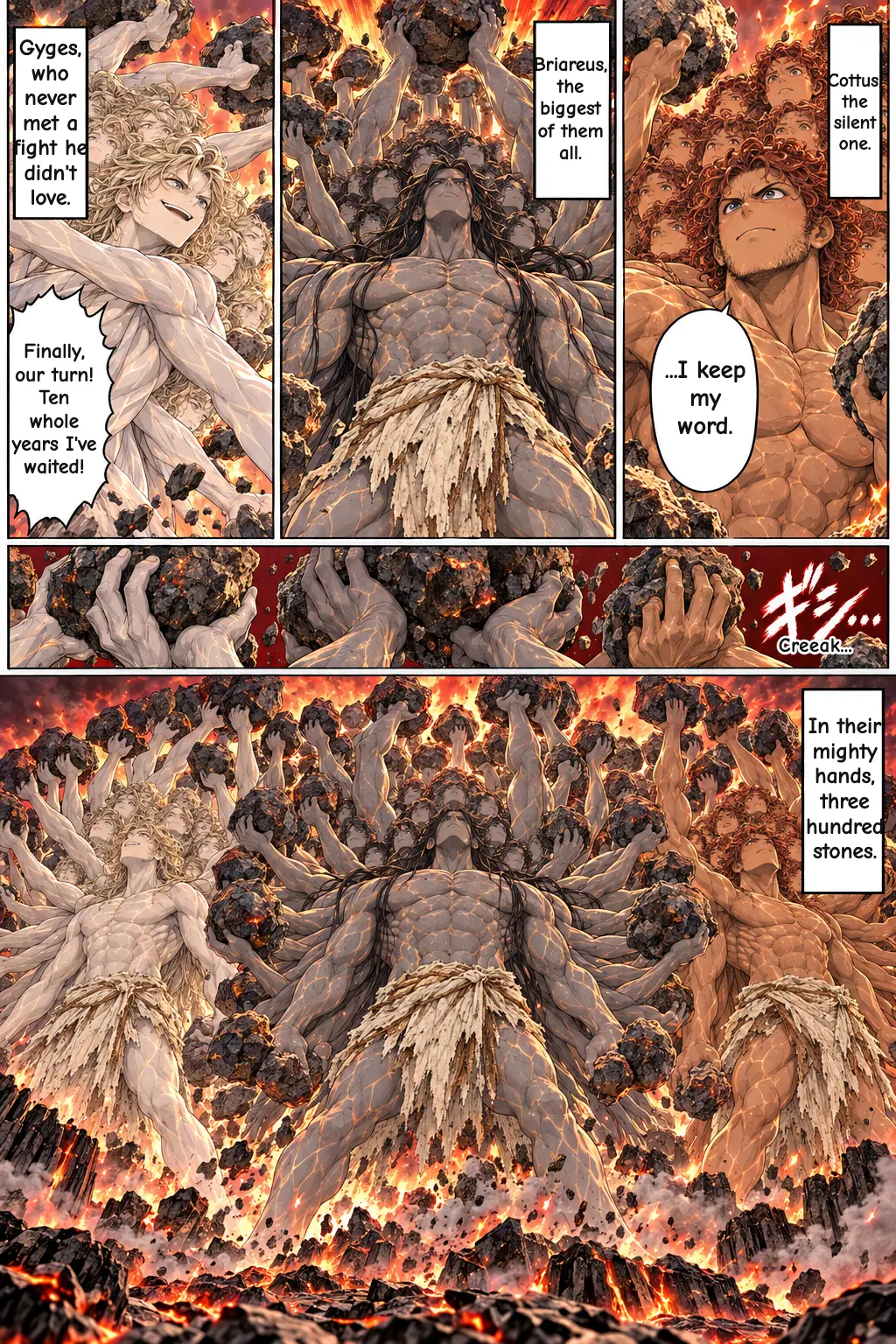
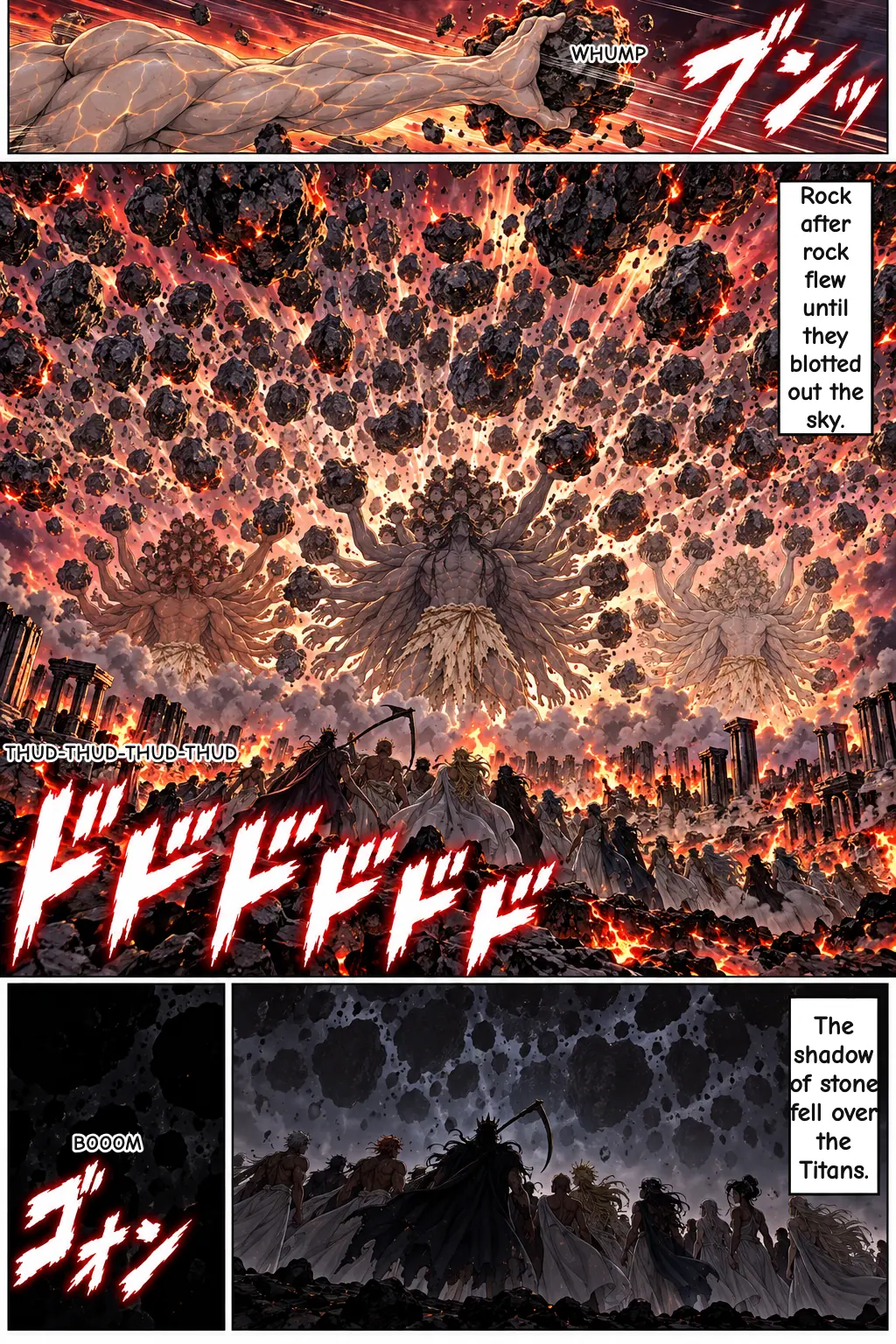
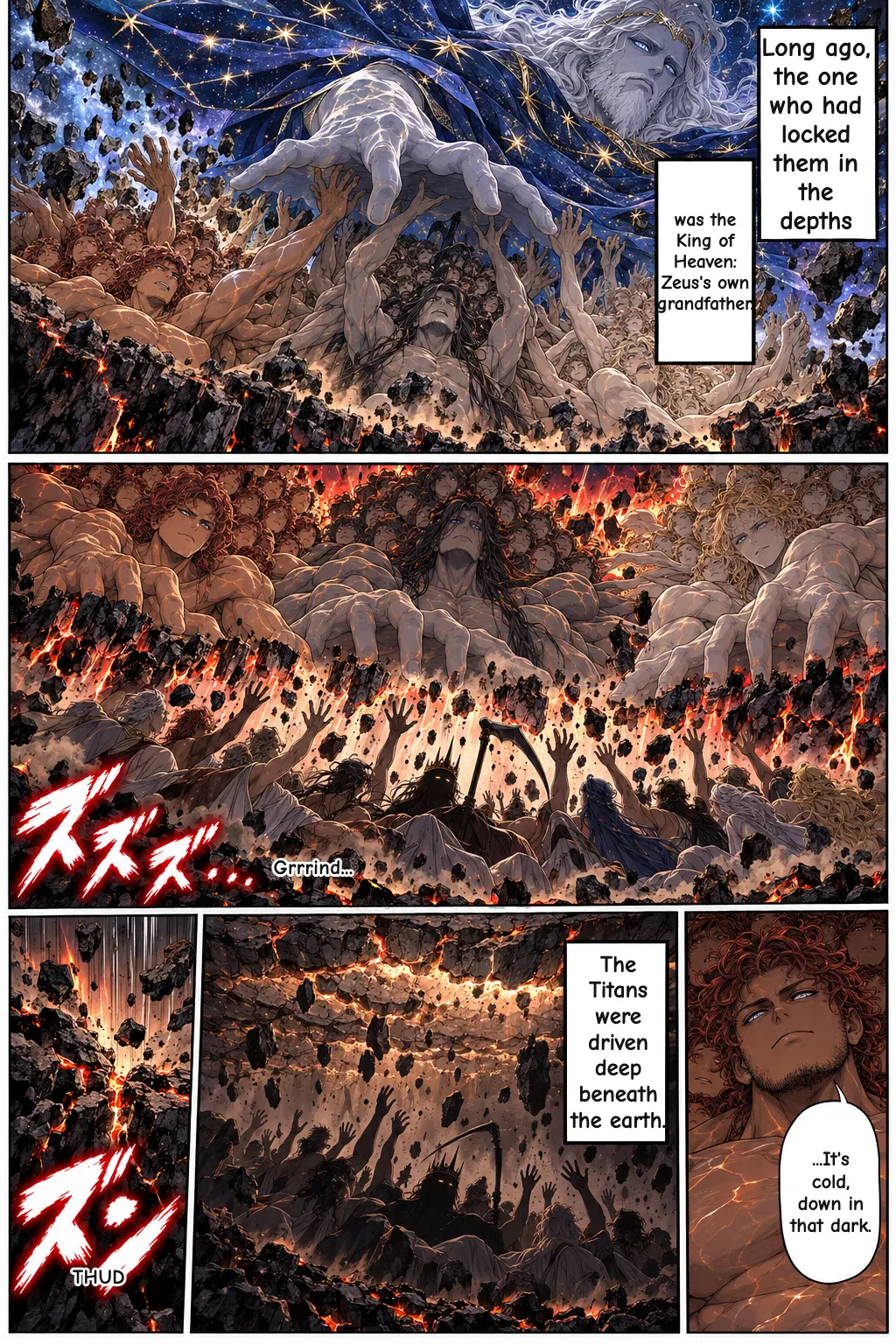
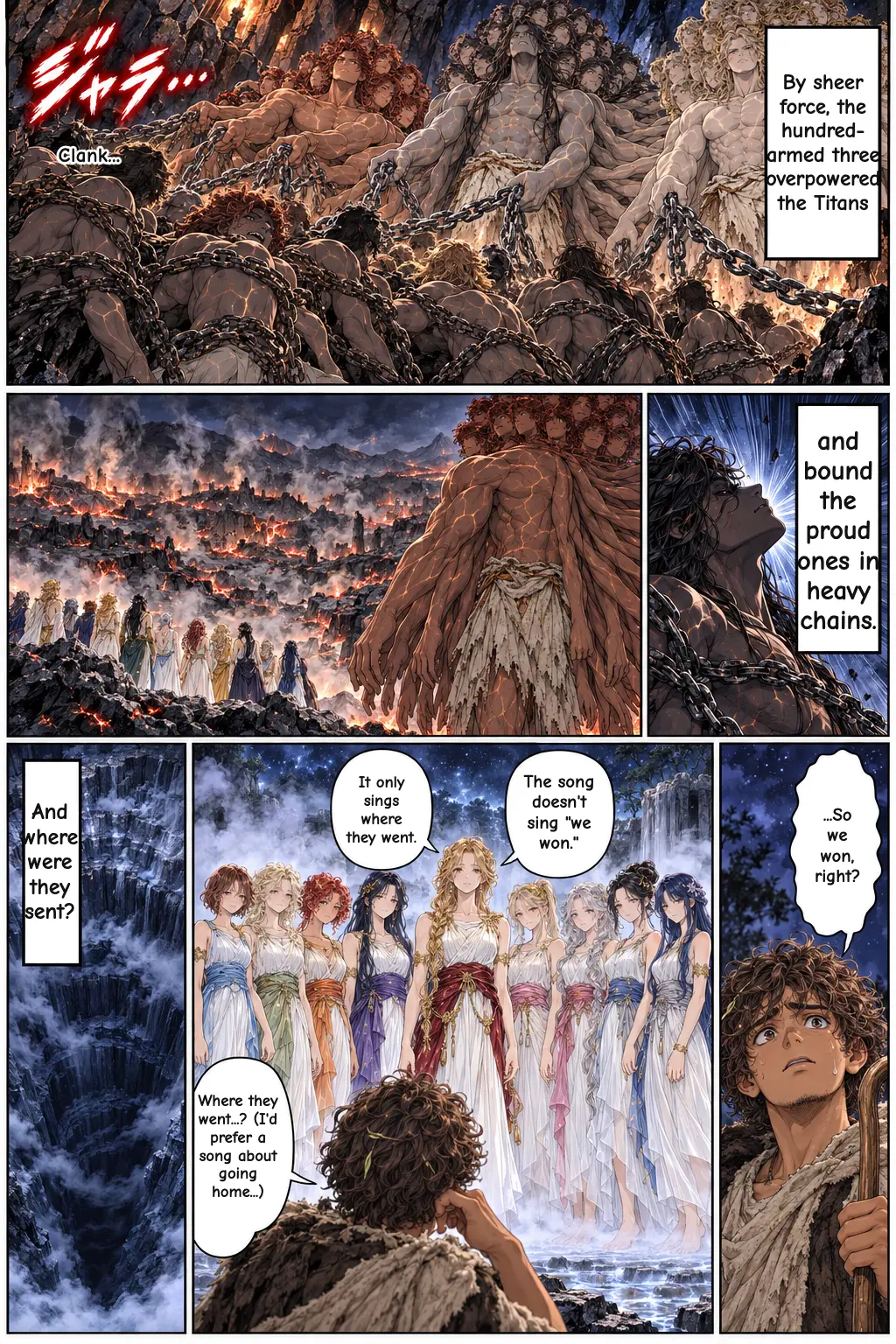
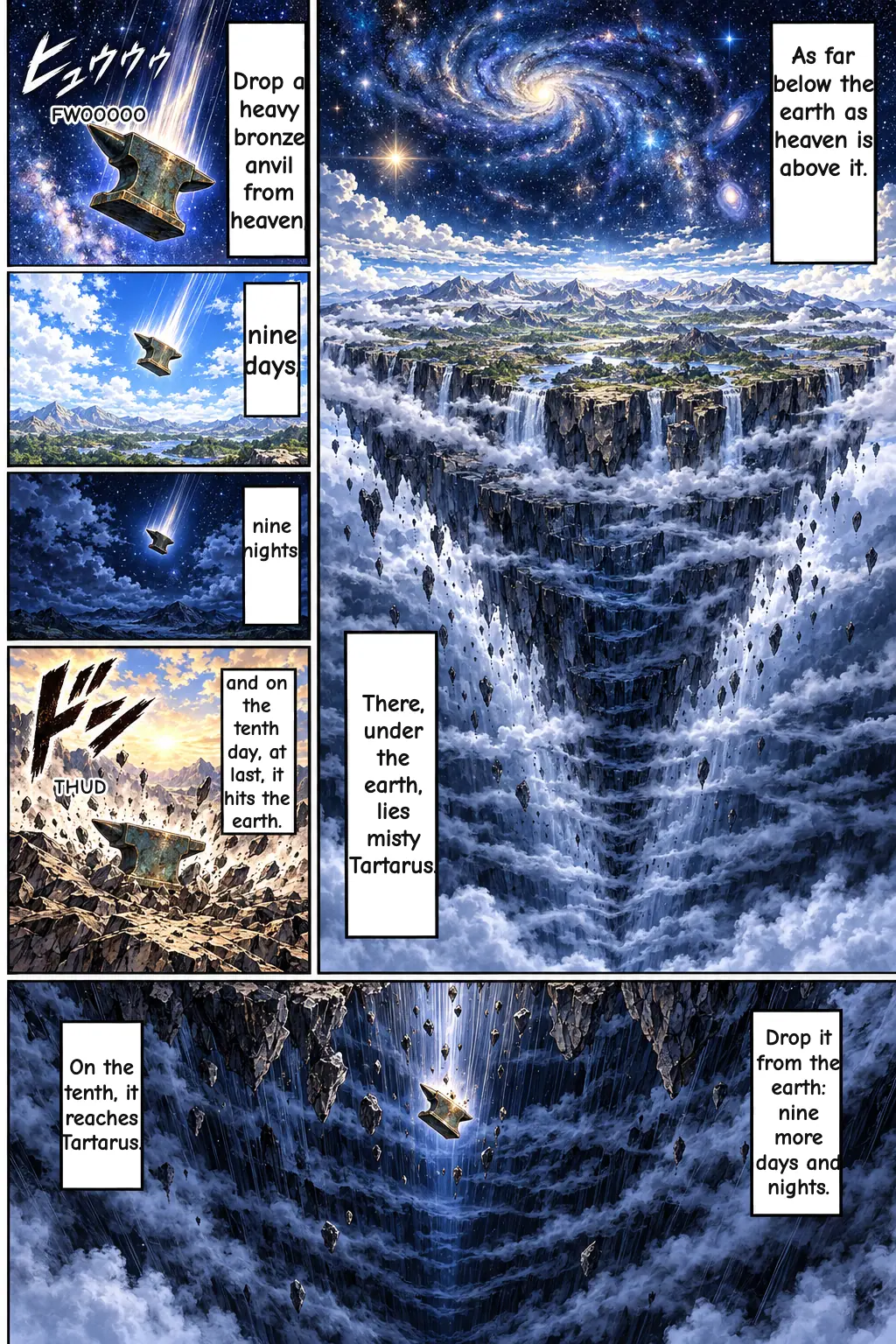
At last the battle turns. The three Hundred-Handers step to the front and throw three hundred rocks in quick succession, covering the Titans in shadow. They drive the Titans under the earth and bind them in painful chains in Tartarus, which lies as far below the earth as the sky lies above it.
Main Characters
Zeus is the leader of the younger gods and the god of thunder. Hesiod gives no description of his looks. What matters in this scene is his power: he holds it back at first, then releases all of it.
The Hundred-Handers are Cottus, Briareus (spelled Obriareus in some manuscripts) and Gyges. In the scene just before, Cottus answers Zeus on behalf of the three and promises to fight. Gyges is called 'never tired of war.' Briareus is only named. The Titans are described as a group: proud, strong, 'born of the earth.' Hesiod does not name any single Titan in this battle, and Cronus himself does not appear in these lines.
What This Myth Tells Us
Hesiod was a poet from Boeotia in central Greece, writing around 700 BCE in the same epic verse form used by Homer. The Theogony tells how the gods and the world came to be. Its central story is how power passed from Uranus (the sky) to his son Cronus, and then from Cronus to Zeus. The Titanomachy is the moment when that struggle ends and the rule of Zeus begins.
The poem stresses that Zeus does not win alone. He wins because he frees the Hundred-Handers and makes them his allies, and they are the ones who actually push the Titans into Tartarus. One common reading is that Zeus's rule rests on both force and fair dealing with his supporters. Some scholars also compare the story with older Near Eastern myths about generations of gods fighting for kingship in the sky, though how closely they are linked is still debated.
The heat reaching Chaos is also worth noticing. For a moment the universe seems to fall back toward the formless state it began in, before Zeus's victory restores order. Older stories of the war, such as a lost epic called the Titanomachy, may have told it differently. Hesiod's version is the oldest complete account we still have.
What the Manga Changed
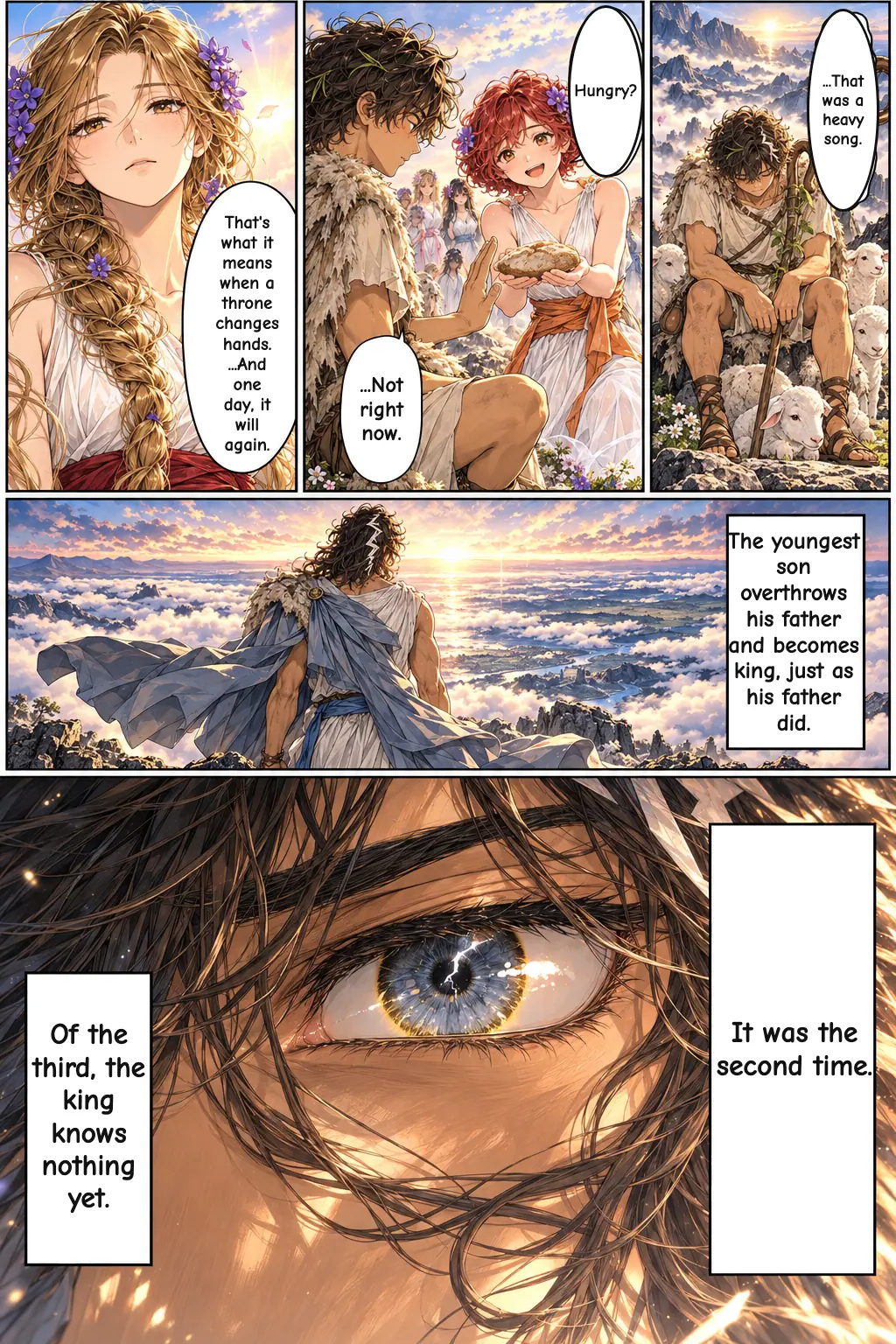
Hesiod gives very few visual details, so much of the manga is new. The faces, clothes and armor of each god, the look of Zeus's thunderbolts, and the exact design of the Hundred-Handers (how their arms and heads are arranged, their size and color) are all the artist's creation. The original only says they had a hundred arms and fifty heads from the shoulders and powerful limbs.
The poem places the Titans on Mount Othrys and the Olympians on Mount Olympus, but the landscape in the manga is designed freely. The size of the boulders, the way the three throw them, how the goddesses fight, and what the chains look like are also invented. The dialogue and most of the sound effects are new too, since in these lines the gods only shout and roar and say nothing. One thing the manga keeps from the source is the shape of the fight: army against army, with no one-on-one duels. Hesiod never says outright that the war ended here. That is only clear from the Titans' defeat, and the poem states that the gods' 'labors' are over much later, around line 881.
Where to Read It
If you want to read the original, look for any English translation of Hesiod's Theogony. The battle runs from about line 664 to line 721, and the lines right after describe Tartarus, its bronze gates, and the Hundred-Handers guarding it.
To see the battle itself, Episode 9 of GREEK MYTHOLOGY: Three Crowns of Heaven on Manga Portal shows Zeus finally unleashing his lightning and the Hundred-Handers burying the sky in stone. Every episode is free to read, and you don't need to sign up, so you can start from the beginning to see how Cronus's fear led to this war.
Characters in this episode
Zeus
The youngest child of Cronus and leader of the Olympian gods, who ends the war by unleashing his thunderbolts at full power.
Cottus
One of the three Hundred-Handers, who speaks for his brothers, promises to help Zeus, and leads the rock attack on the Titans.
Briareus
A Hundred-Hander with a hundred arms and fifty heads who fights beside Cottus and Gyges; Hesiod only names him in this scene.
Gyges
The third Hundred-Hander, described by Hesiod as never tired of war.
The Titans
The older generation of gods, proud and strong, who lose the war and are chained in Tartarus.
The Olympian gods
The gods and goddesses born of Cronus who fight together on Zeus's side.
FAQ
Who won the Titanomachy?
Zeus and the younger gods won. With the help of the Hundred-Handers, they drove the Titans under the earth and chained them in Tartarus. After that, Zeus ruled as king of the gods.
How long did the war between the Titans and the Olympians last?
Hesiod's Theogony says the two sides fought for ten full years without either one winning. The deadlock broke only after Zeus freed the Hundred-Handers and brought them in as allies.
Who were the Hundred-Handers?
They were three brothers, Cottus, Briareus and Gyges, each with a hundred arms and fifty heads. Zeus brought them back up from beneath the earth, and in the final battle they threw three hundred rocks at the Titans and pushed them into Tartarus.
What is Tartarus in Greek mythology?
Tartarus is a dark, misty pit deep beneath the earth. Hesiod says it lies as far below the earth as the sky is above it. The defeated Titans were imprisoned there.
Why did Zeus fight his father Cronus?
Cronus feared that one of his children would take his throne, so he swallowed them as they were born. Zeus escaped, and later he and his brothers and sisters went to war against Cronus and the Titans for control of the universe.