Episode 10The Kind Lie That Turned Her Into a SerpentDōjōji: Anchin and Kiyohime
A widow guarding her home alone falls for a young monk passing through. He sidesteps her feelings with a gentle lie: "I'll stop by on my way back." Then he takes another road home. After waiting and waiting, she becomes a great serpent, chases him down, and coils around a temple bell. In the end, prayer sets both of them free: the one who lied and the one who hated.
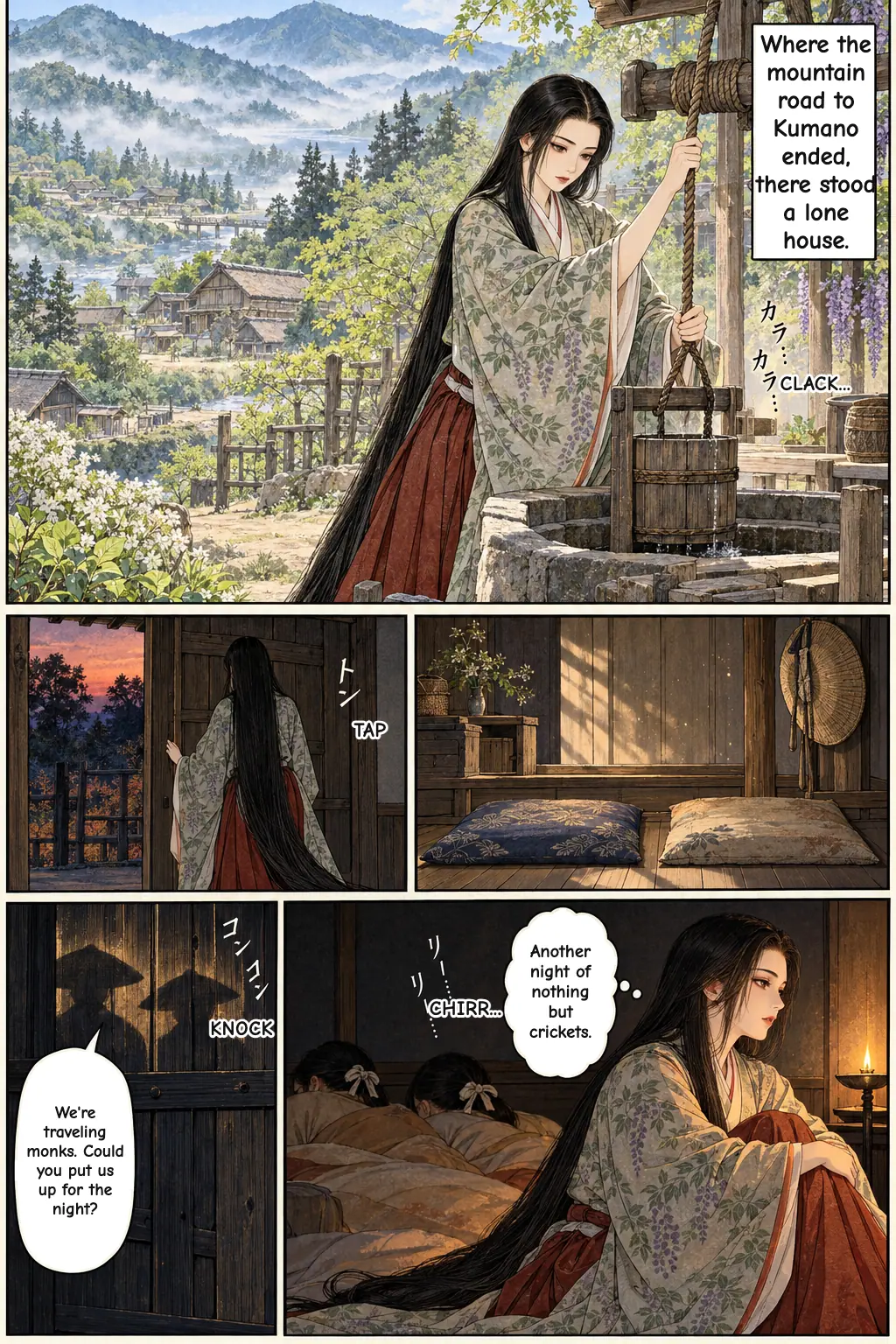
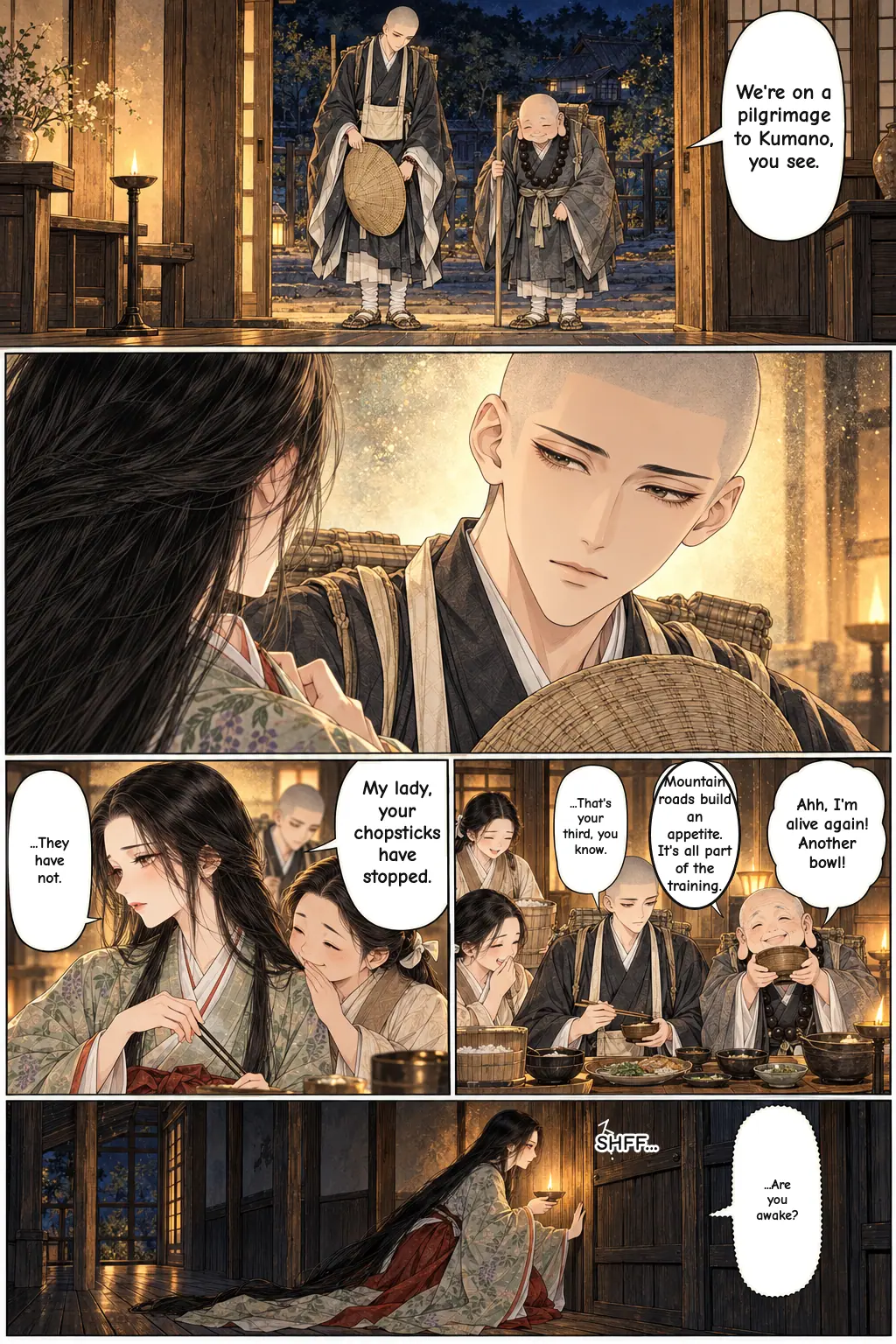
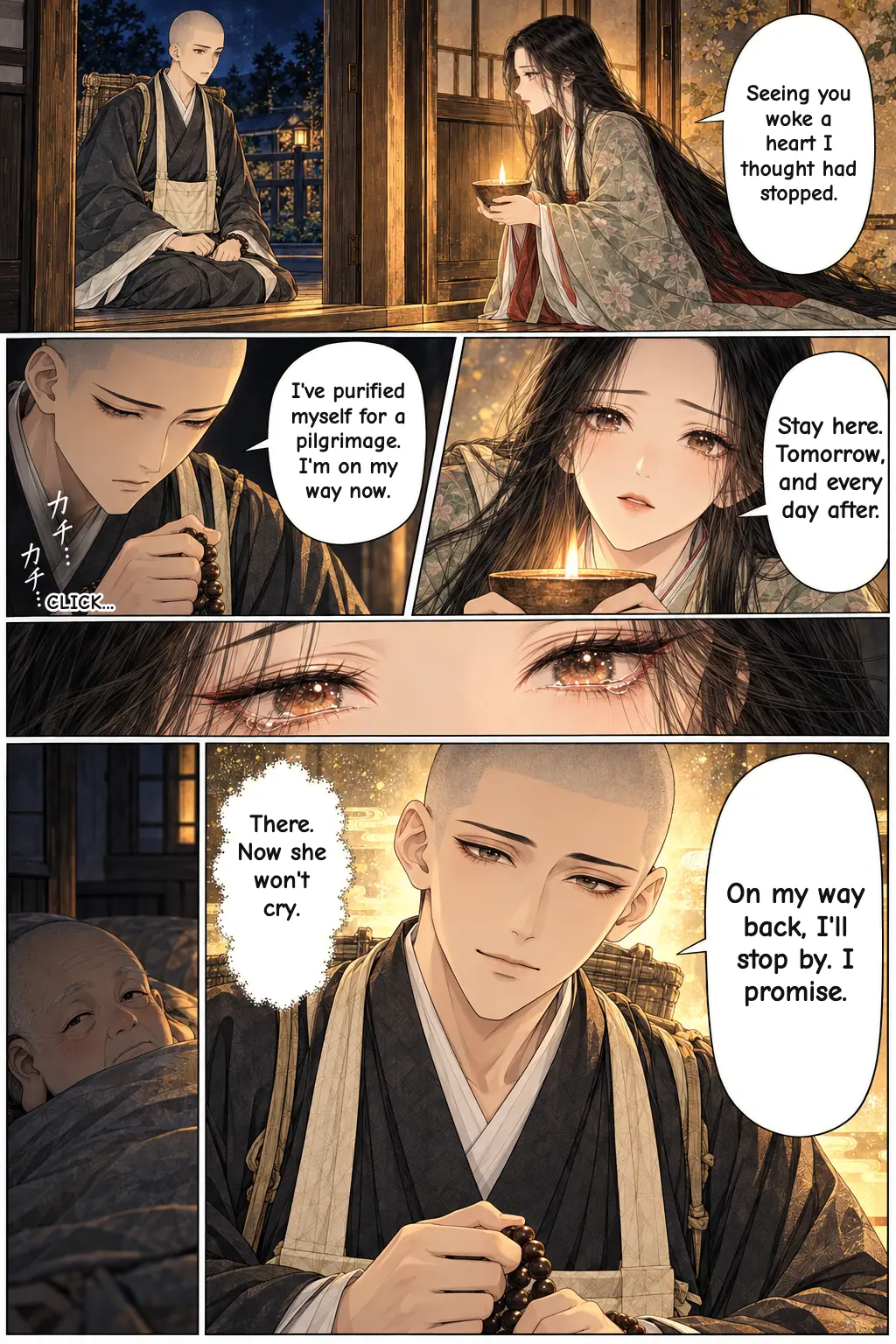
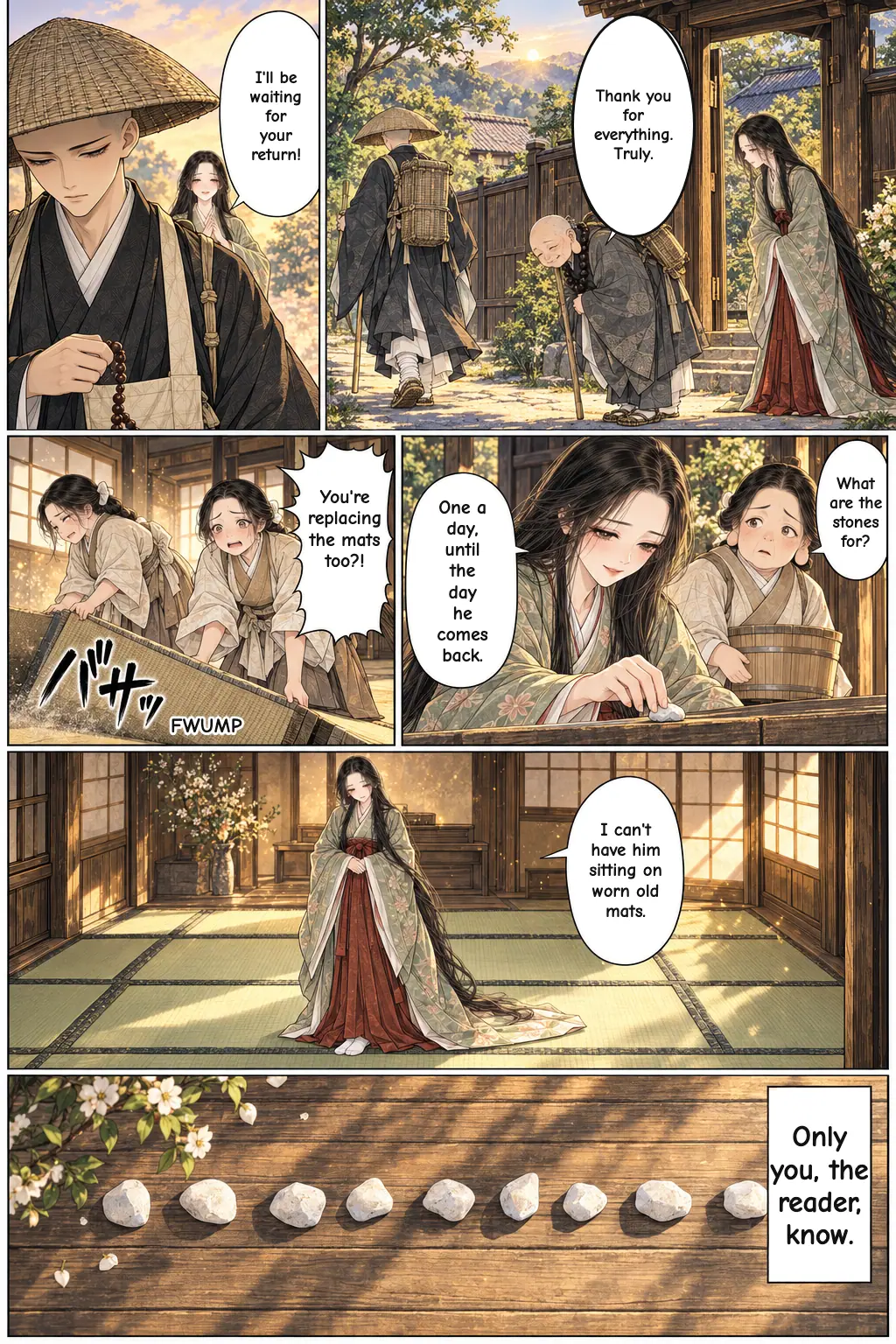
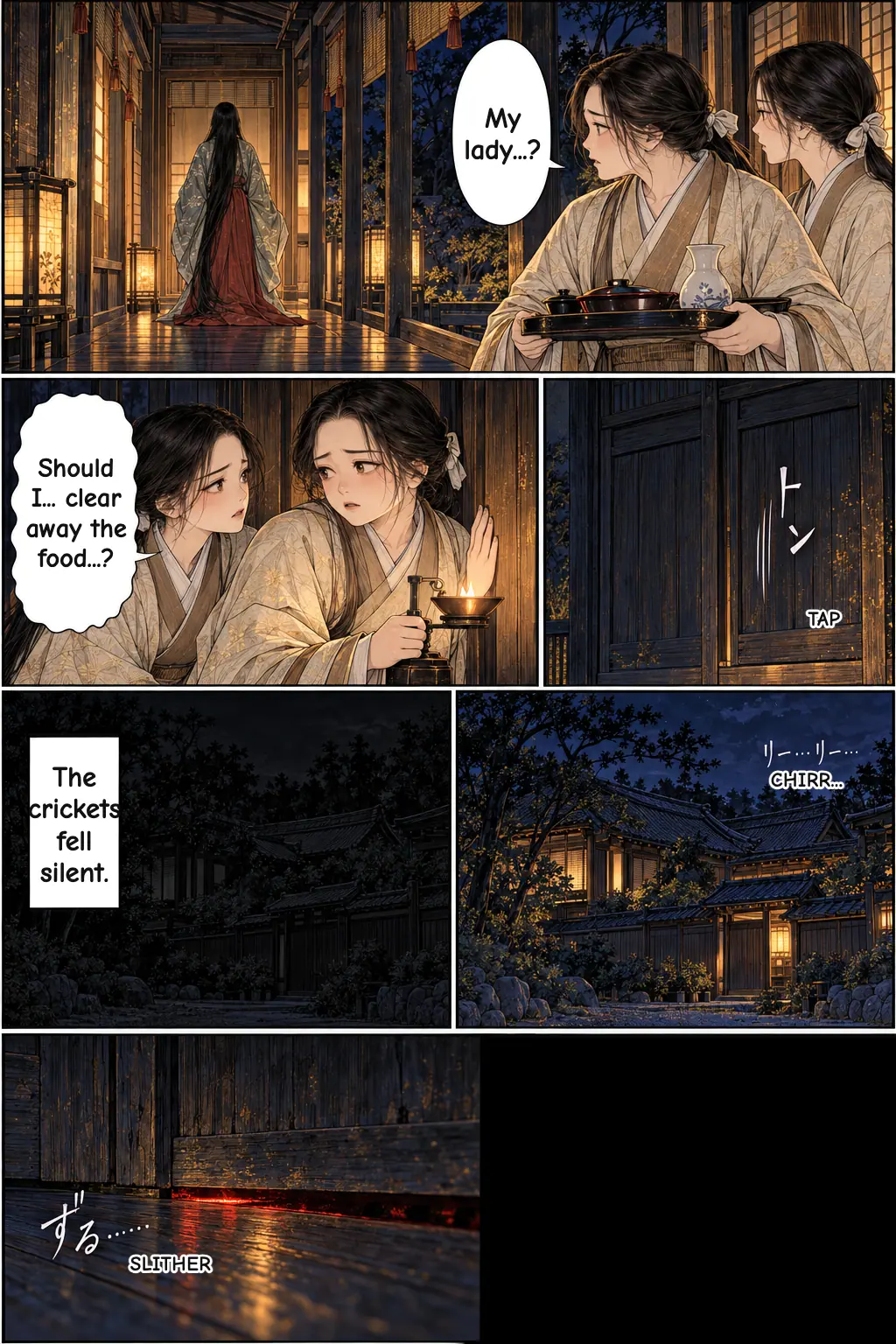
Two monks, one old and one young and handsome, are on pilgrimage to Kumano, a group of sacred shrines in the mountains of southern Japan. In Muro District of Kii Province, they stop for the night at the house of a widow who lives with two or three maidservants. The widow is drawn to the young monk the moment she sees him. That night she comes to where he is sleeping, tells him how she feels and asks him to be with her. He turns her down. He says he is purifying himself for the pilgrimage, and he promises to come back to her on his way home. She believes him.
Anchin and Kiyohime: The Dōjōji Serpent and Bell Legend Explained
In short: The Dōjōji legend is the Japanese tale of a widow who falls for a young pilgrim monk. He escapes her with a promise he never means to keep. When she learns she has been deceived, she dies, rises as a giant serpent and coils around the temple bell where he is hiding, and he is burned to ashes. Its oldest well-known telling is in the Konjaku Monogatarishū (Book 14, Tale 3), where a copied chapter of the Lotus Sutra finally frees them both. The names "Anchin and Kiyohime" come from later retellings.
The original story: a promise, a serpent, and a bell
Two monks, one old and one young and handsome, are on pilgrimage to Kumano, a group of sacred shrines in the mountains of southern Japan. In Muro District of Kii Province, they stop for the night at the house of a widow who lives with two or three maidservants. The widow is drawn to the young monk the moment she sees him. That night she comes to where he is sleeping, tells him how she feels and asks him to be with her.
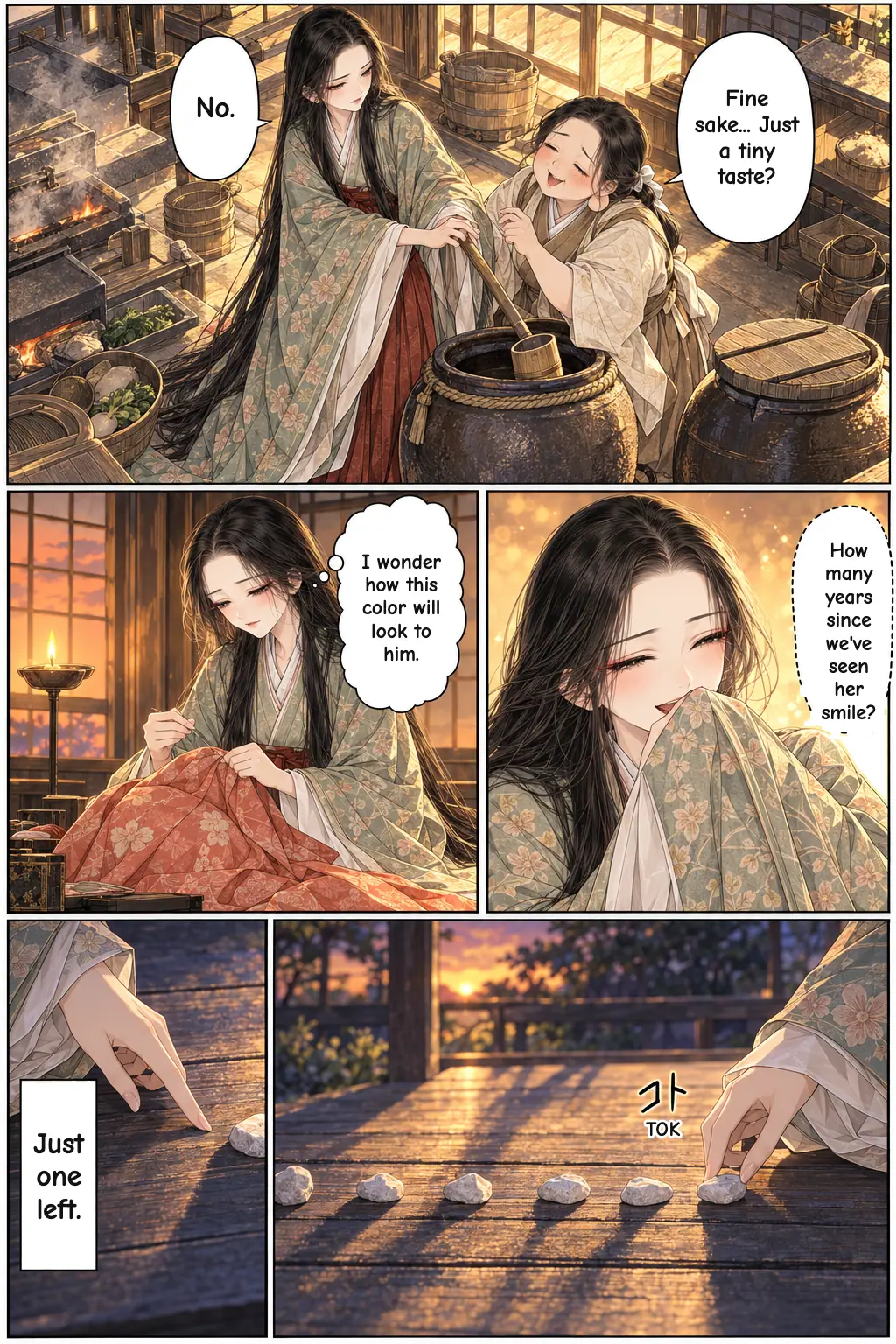
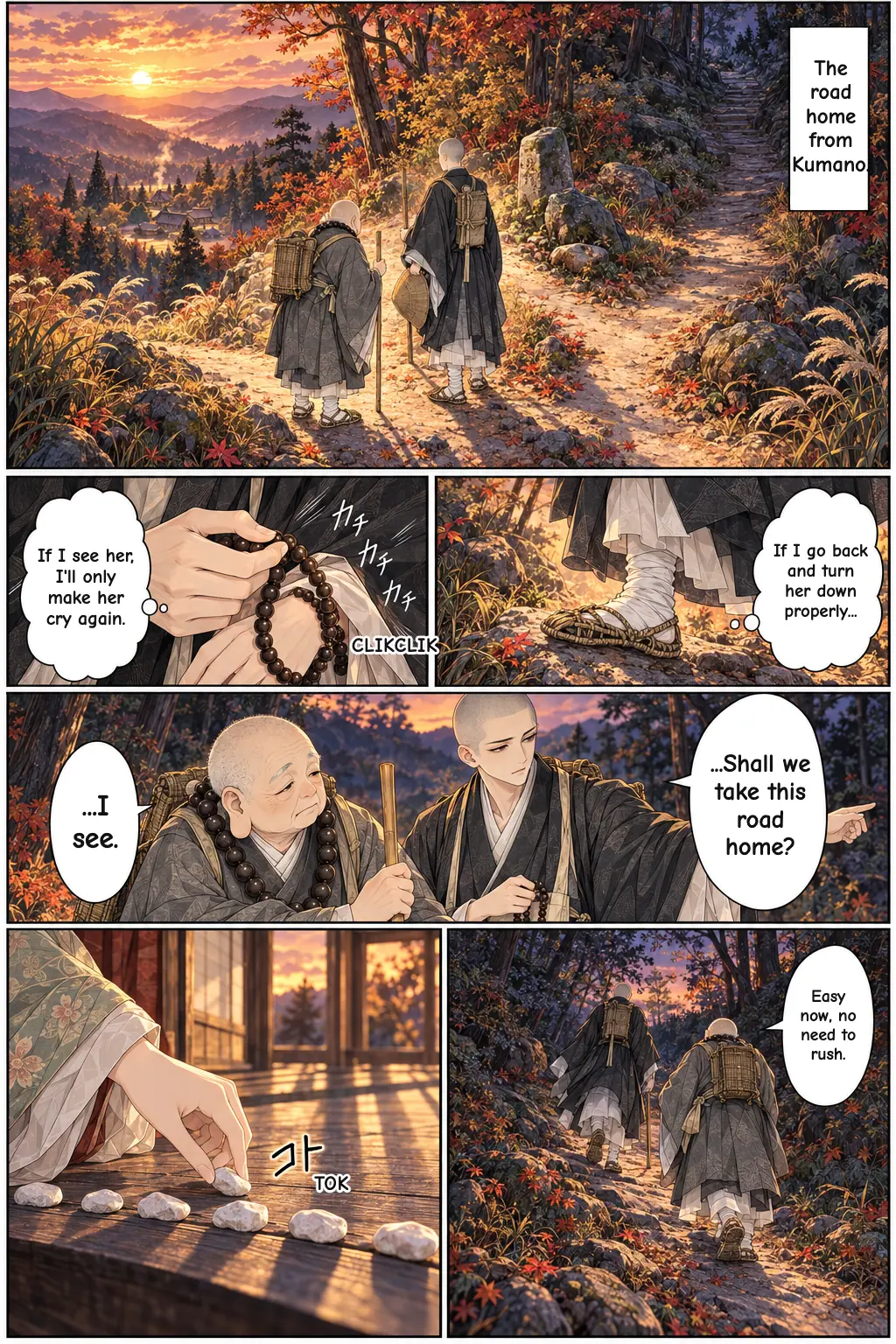
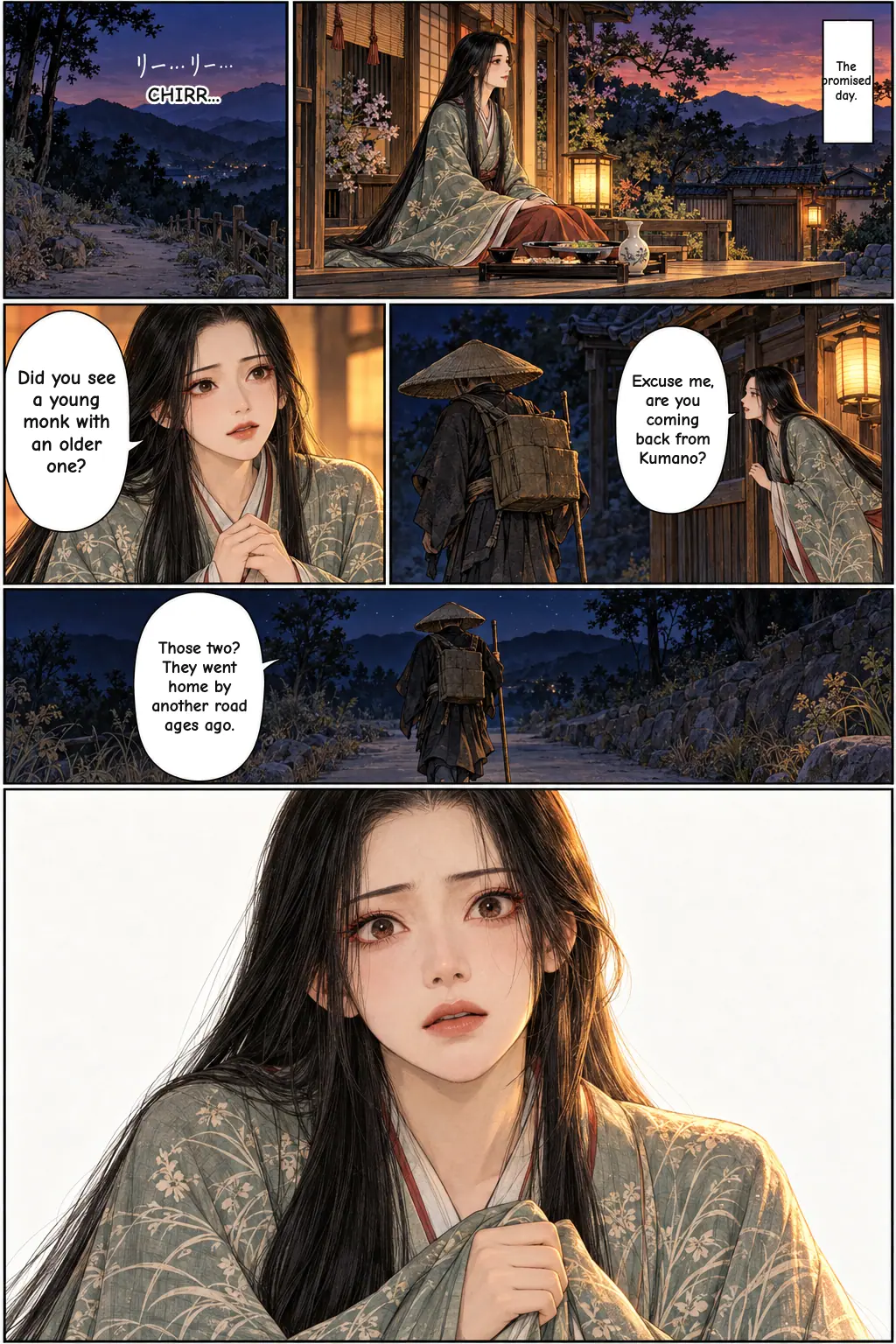
He turns her down. He says he is purifying himself for the pilgrimage, and he promises to come back to her on his way home. She believes him. She counts the days and gets everything ready for his return. But the young monk is afraid of her, and the two monks go home by another road. When she asks a traveler coming back from Kumano, she finds out they have already passed by.
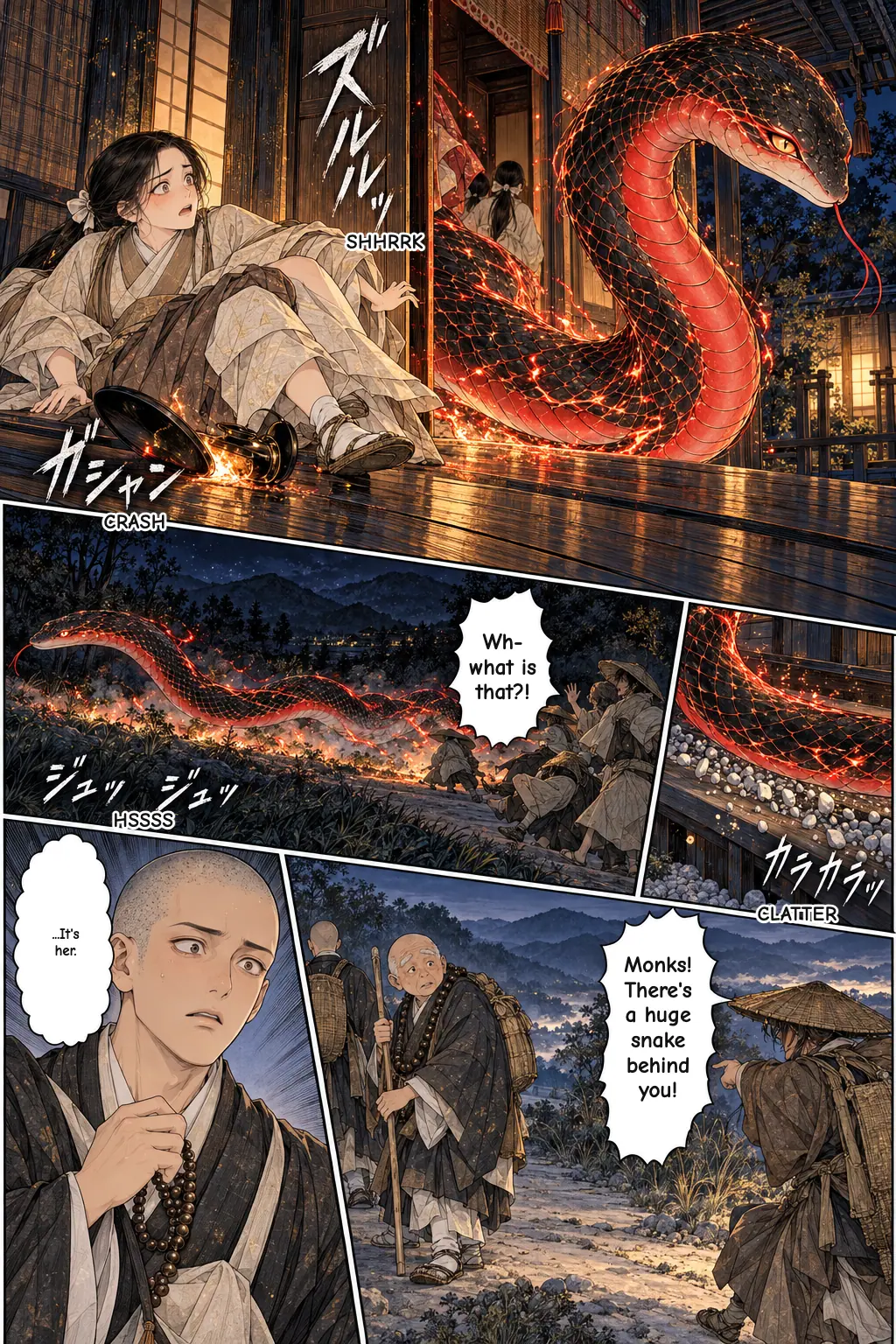
She goes back home, shuts herself in her bedchamber and lies there without a sound until she dies. Then a venomous serpent about five arm-spans long comes out of the room and heads down the road after the monks. People who see it hurry ahead to warn them.
At Dōjōji temple, and what came after
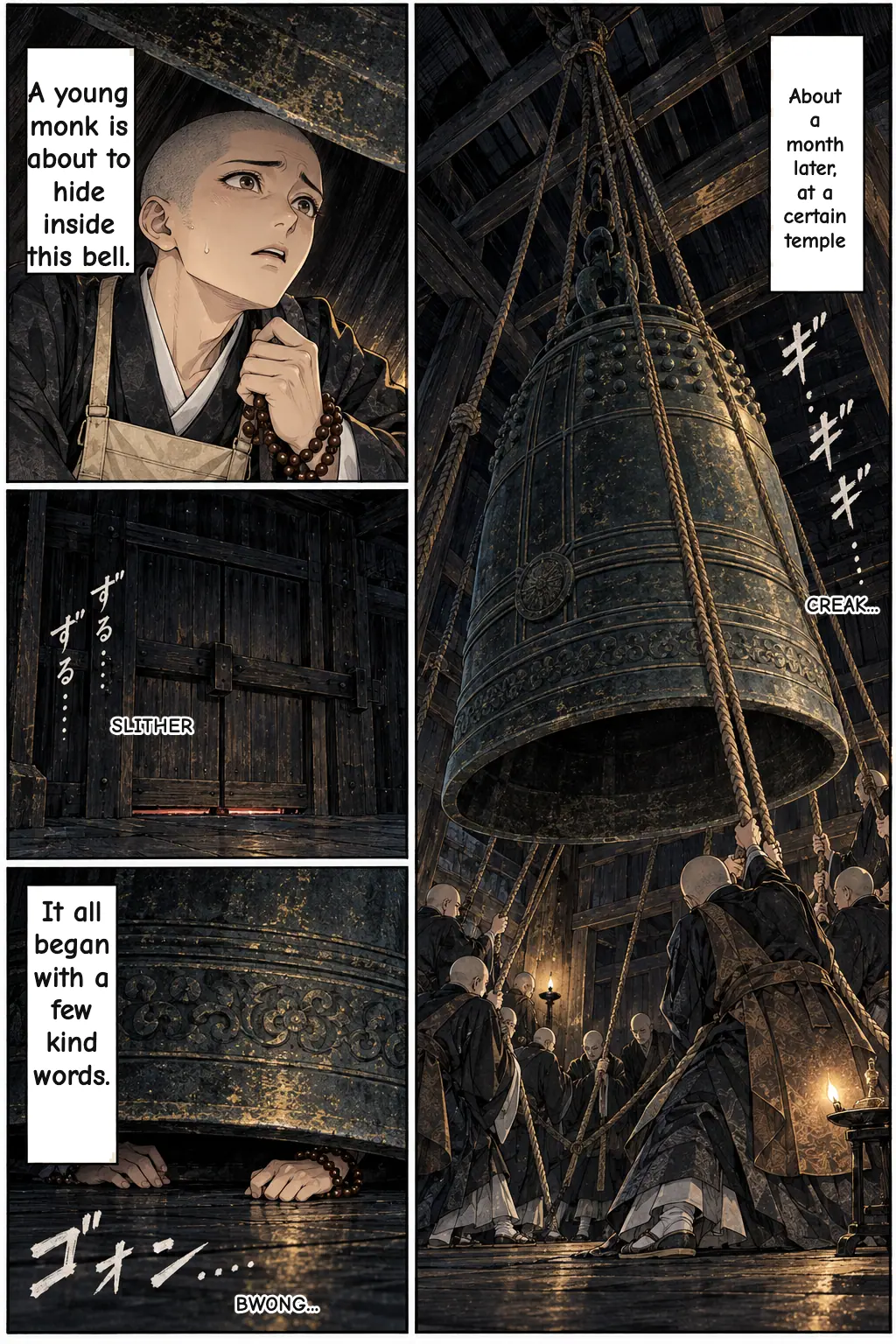
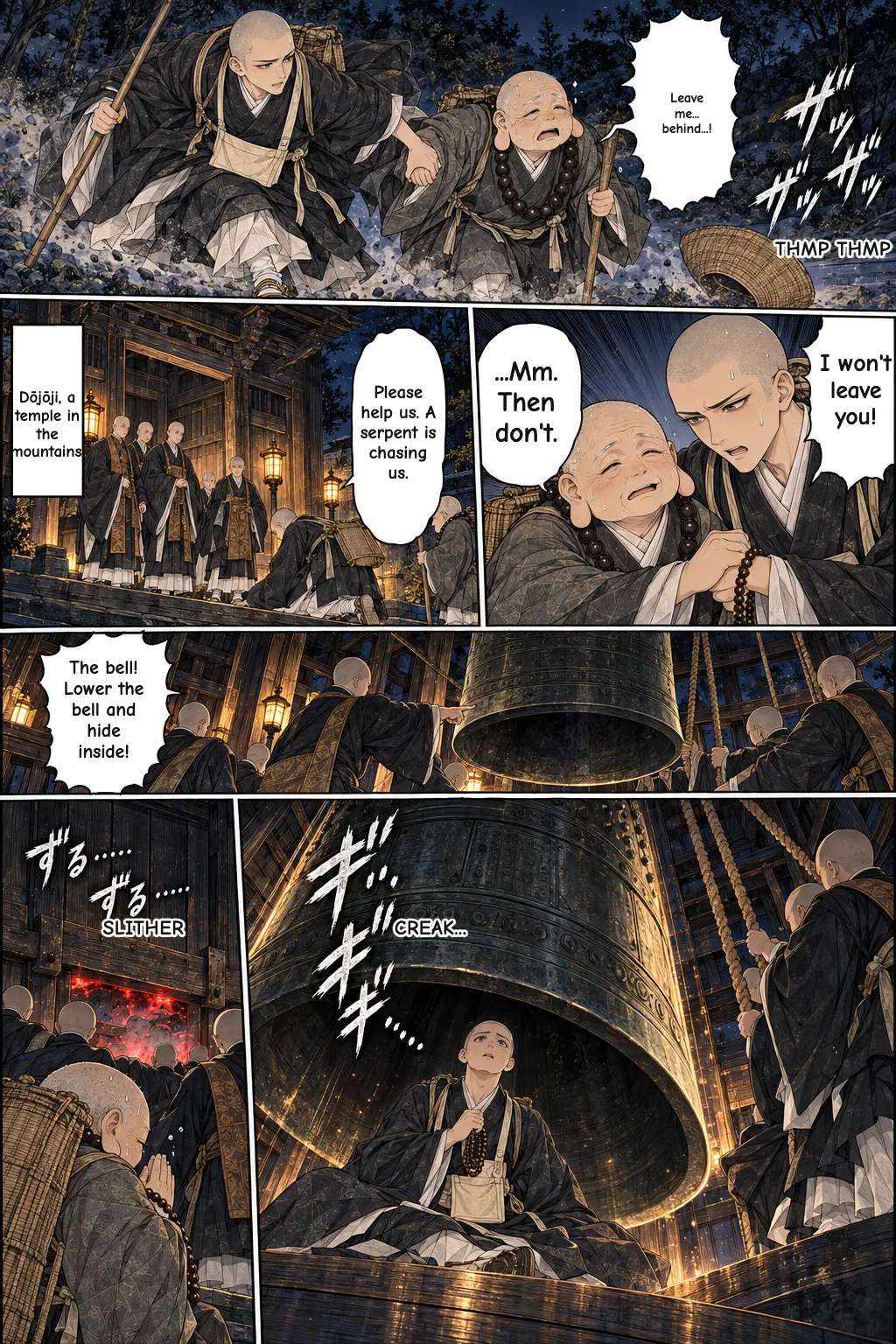
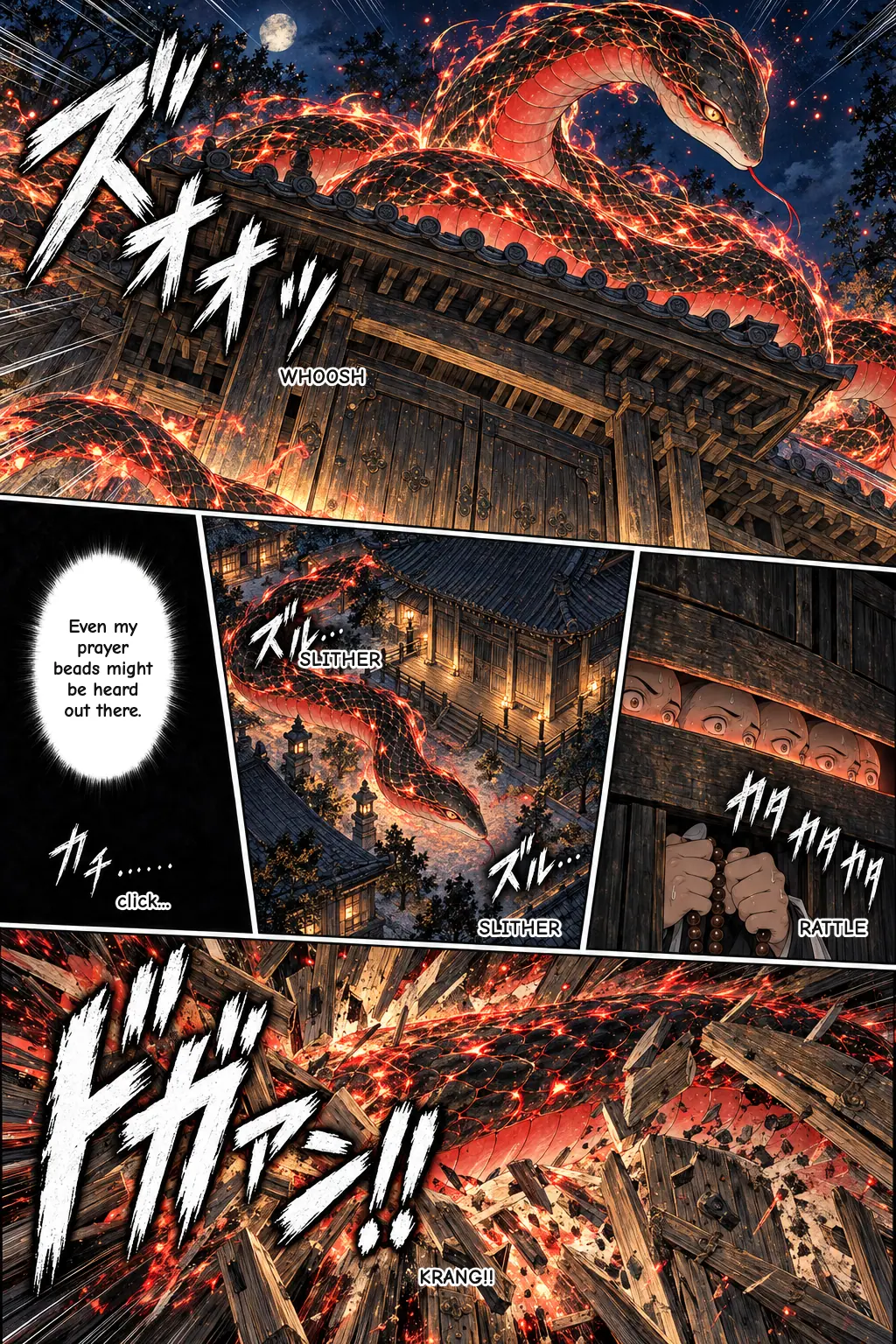
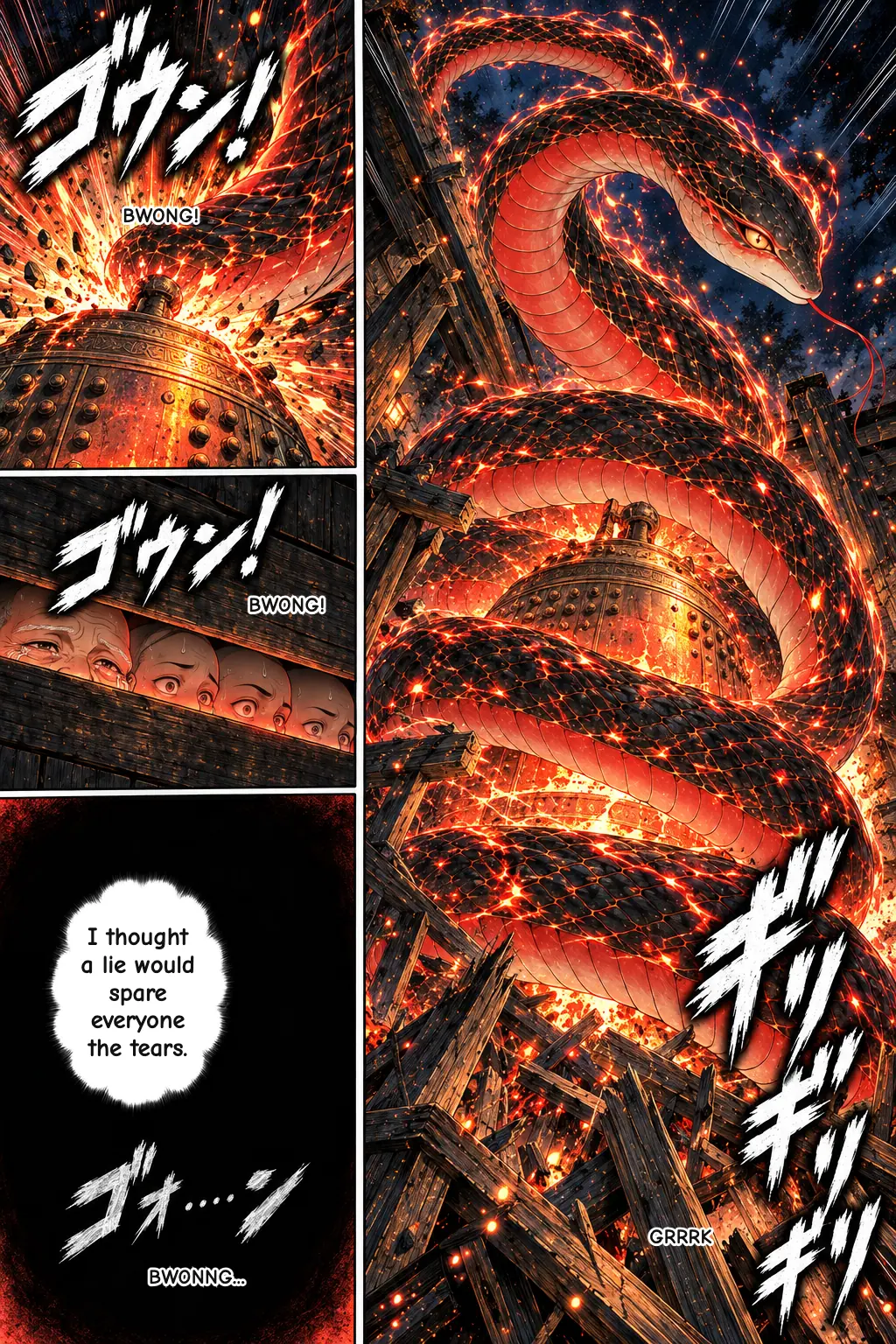
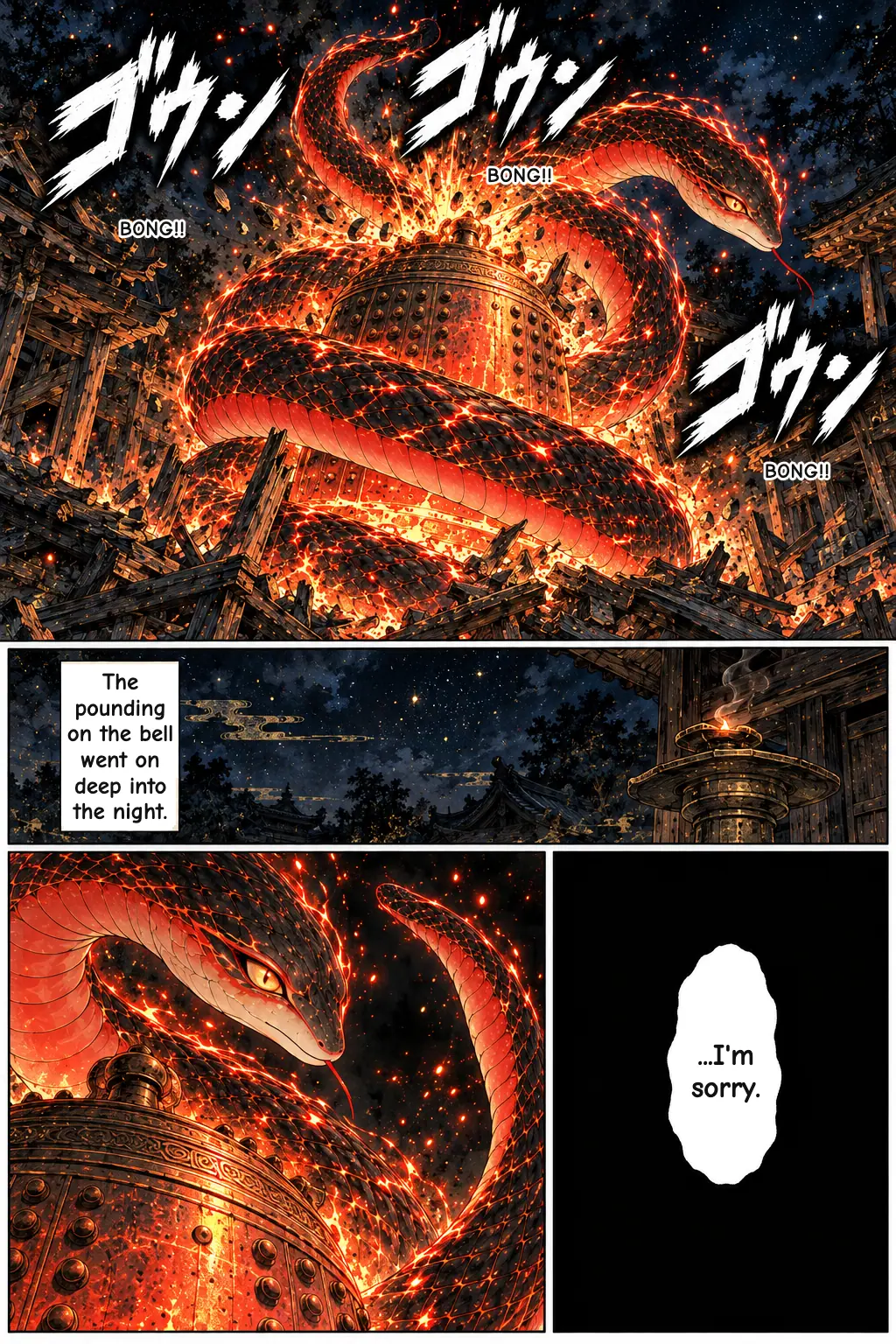
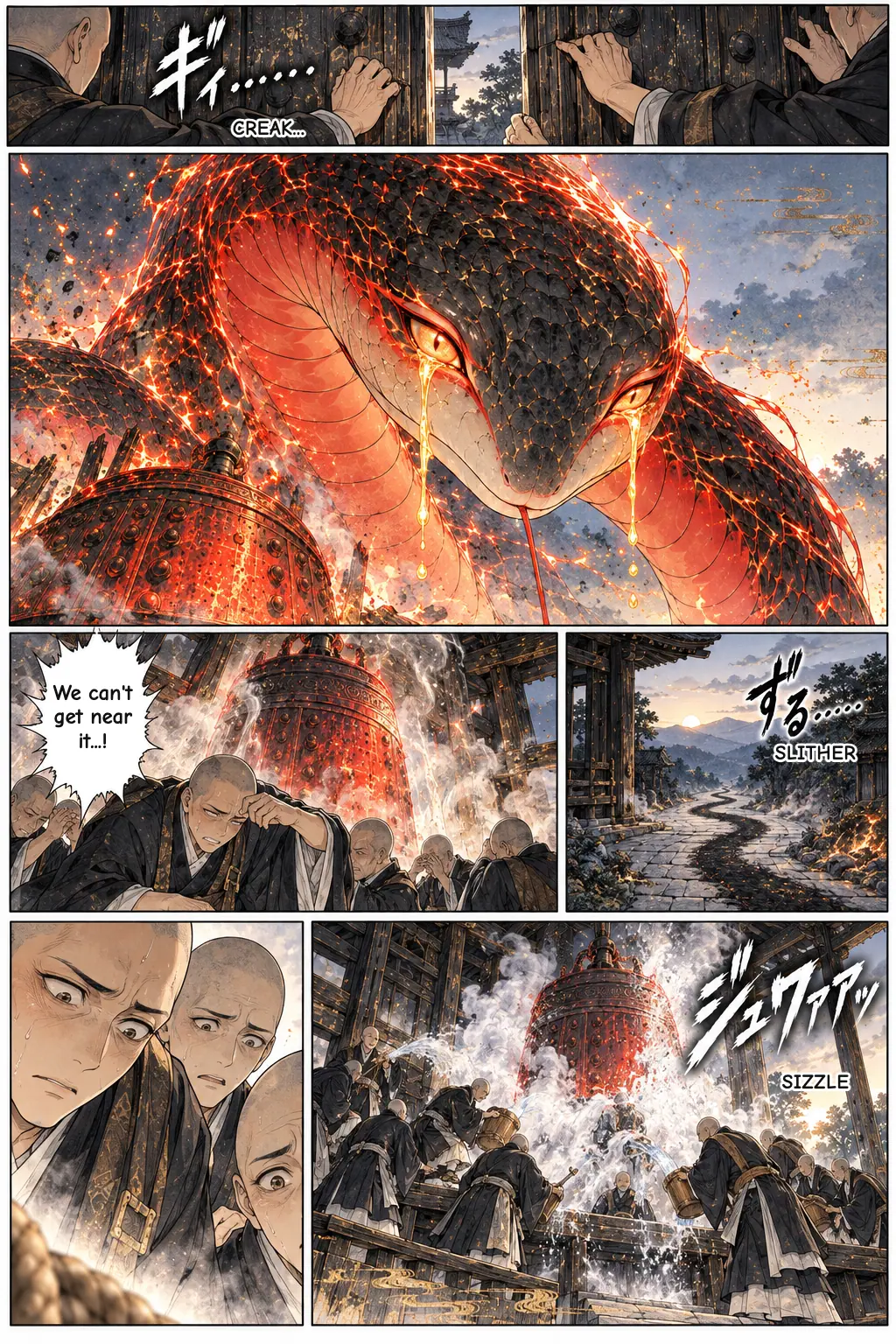
The monks run into Dōjōji, a temple in Kii, and tell their story. The temple's monks lower the great bronze bell over the young monk to hide him and shut the gate. The old monk hides with the temple monks. The serpent climbs over the gate, circles the hall, wraps itself around the bell and beats on its top with its tail for a long time. When the frightened monks finally look out, they see it weeping tears of blood. Then it raises its head, licks its lips and goes away.
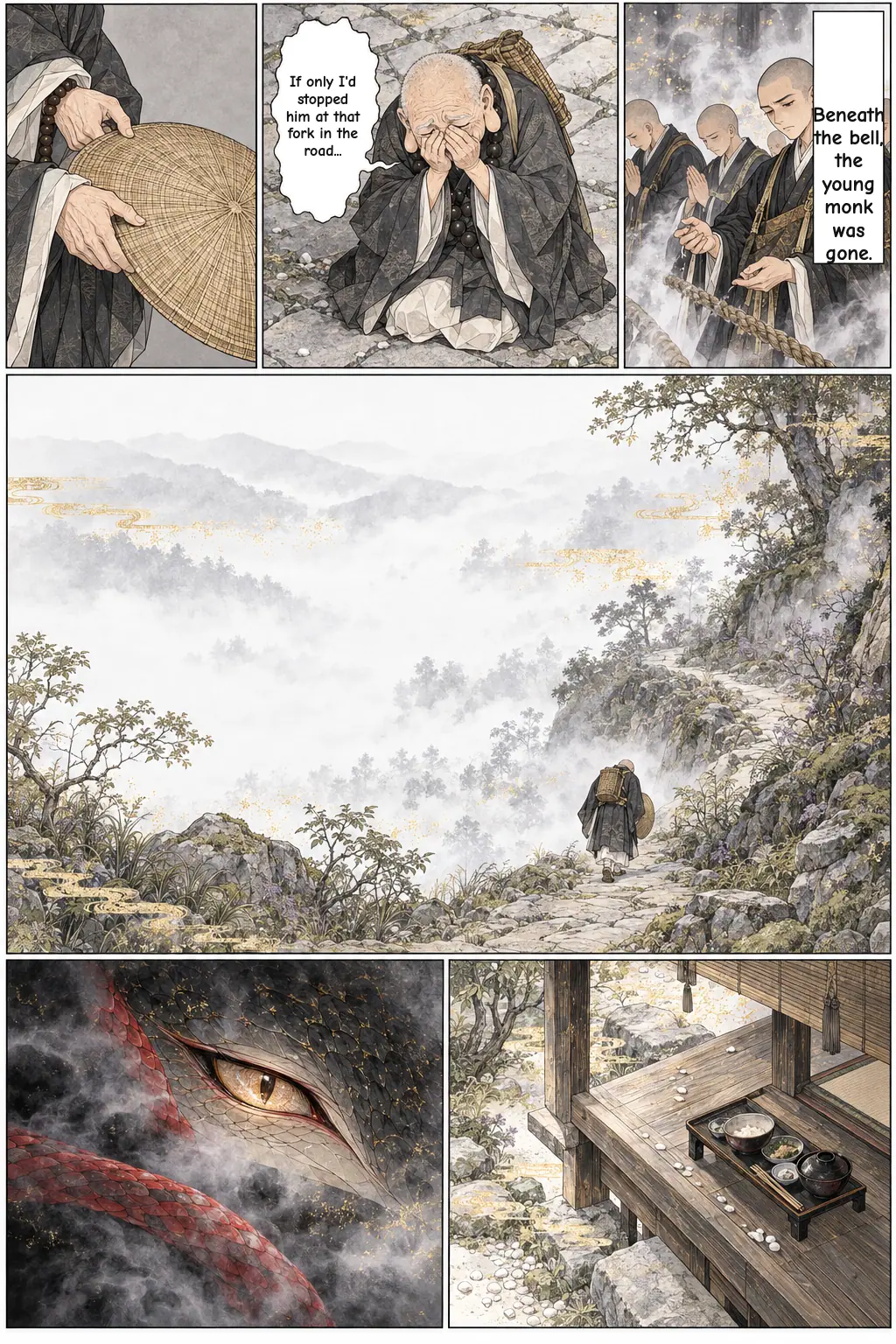
The bell is too hot to touch, as if it were on fire, which the text links to the serpent's venomous heat. Once they cool it with water and lift it, they find only a little ash. Not even the young monk's bones are left. The old monk goes home in tears.
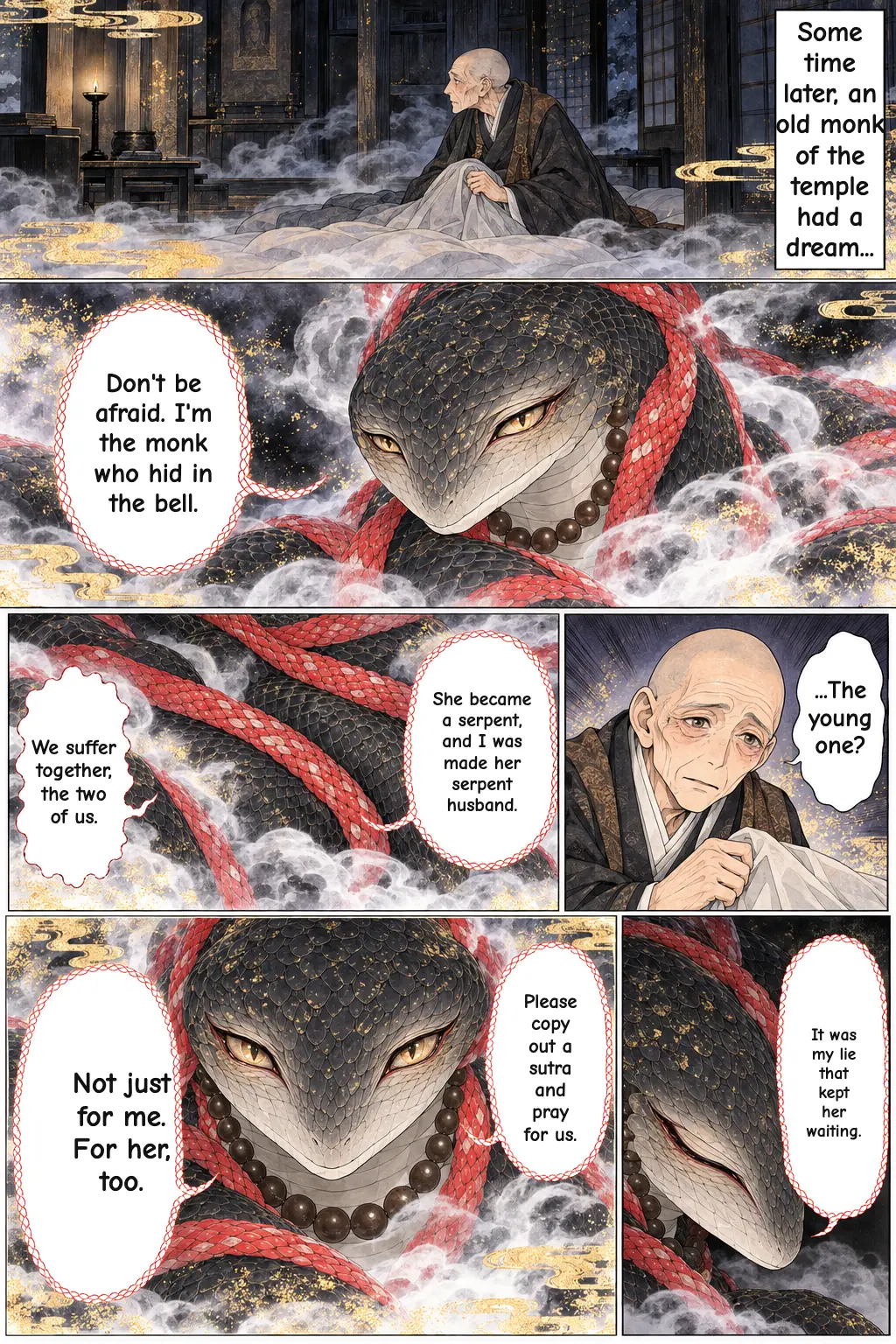
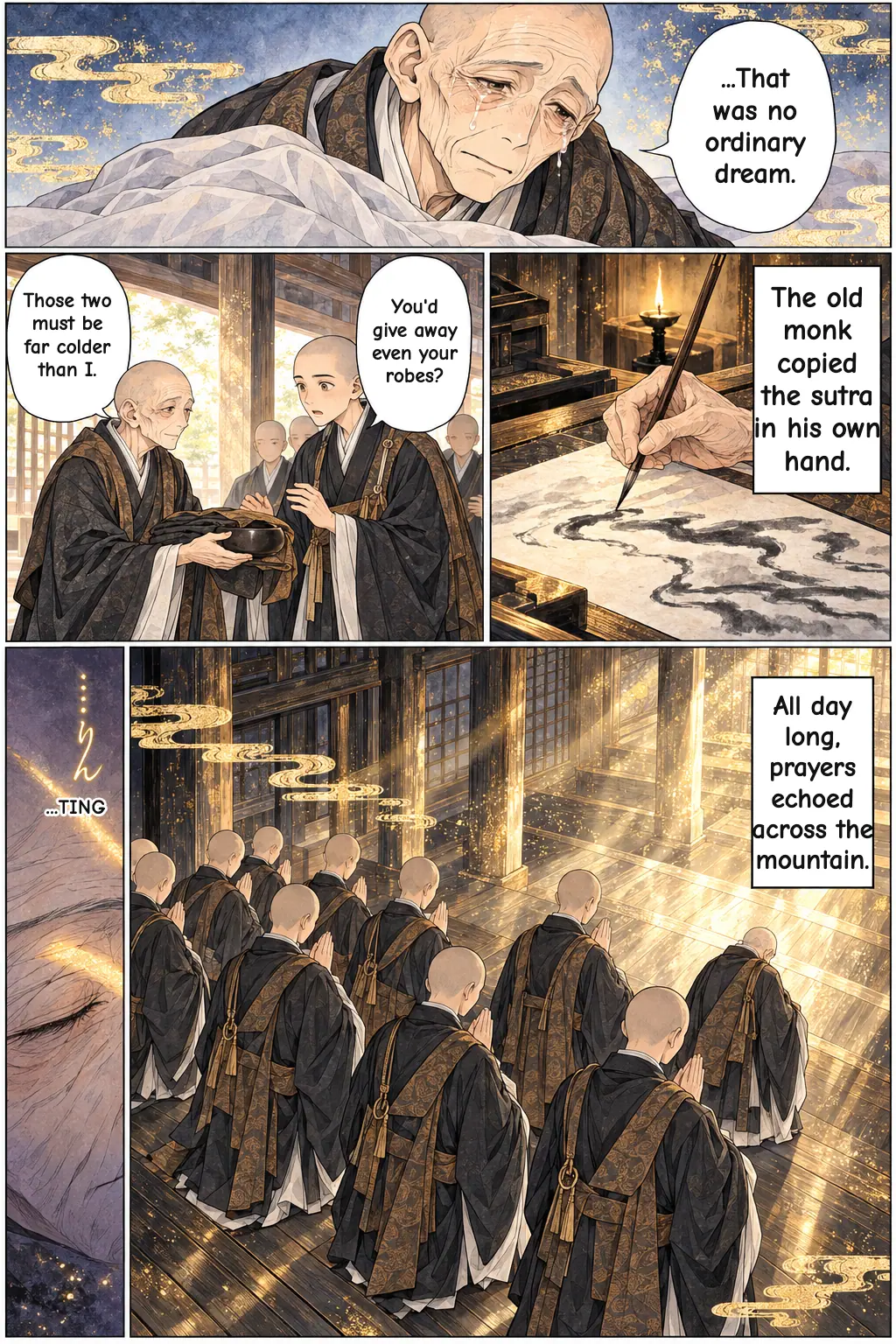
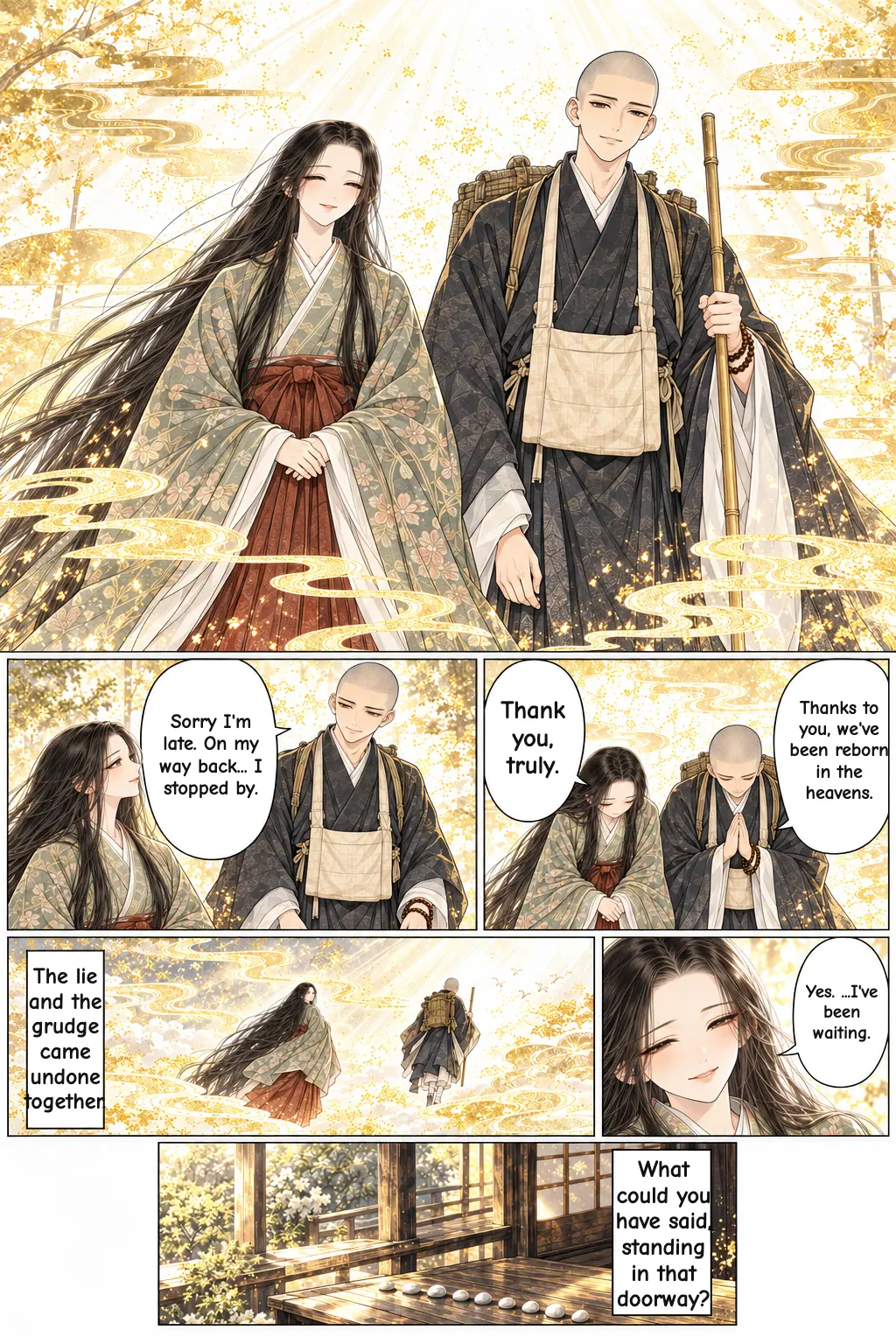
Some time later, the senior monk of Dōjōji dreams of a serpent even bigger than the first. It says it is the monk who hid in the bell. The woman has become a serpent and made him her husband, and now he suffers in a defiled body. He asks the old monk to copy the Lifespan of the Tathāgata chapter of the Lotus Sutra for the two of them. The old monk copies it himself and holds a day-long memorial service. In a second dream, the pair appear looking joyful. They thank him, say they have been reborn in two Buddhist heavens, she in Tōri (Trāyastriṃśa) and he in Tosotsu (Tuṣita), and rise into the sky.
What the tale meant in its time
The Konjaku Monogatarishū is a huge collection of more than a thousand tales from India, China and Japan, compiled in the late Heian period, generally dated to the early twelfth century. Many of its Buddhist stories exist to show the power of a scripture or a vow. This one praises the Lotus Sutra, which could save even a man trapped in a serpent's body. A similar version appears in an earlier collection of Lotus Sutra miracle stories, and the Konjaku version is generally thought to draw on that line of tellings.
The narrator closes by warning that this is how strong a woman's evil heart can be, and that this is why the Buddha warned monks to keep away from women. Today that line reads as the voice of a monastic, male-centered Buddhist culture, not as a fair judgment of the woman. Many modern readers notice that the monk's lie starts the tragedy, and that in the end the sutra saves both of them equally.
Anchin, Kiyohime and later versions
The original gives none of the three main characters a name. The names Anchin (the monk) and Kiyohime (the woman) come from much later retellings. So do several famous details, including the woman swimming across the Hidaka River and her being the daughter of a local steward. The Konjaku also never clearly says the serpent breathes fire, even though later pictures often show it that way. The story went on to become famous Noh and kabuki plays known simply as Dōjōji. The temple still stands in present-day Wakayama Prefecture and is closely tied to the legend.
What the manga changes
The episode title uses the well-known names so readers can find the story, but the manga is built on the Konjaku version. It adds things the original never describes: the widow's loneliness as she keeps her house alone, the everyday preparations she makes while waiting, and the young monk's doubts and guilt as he decides to take another road. How her death and change are staged, what the serpent looks like and the scenery along the chase are also the manga's own invention. The burning bell is shown through its glowing outline and color, and no remains are drawn. The narrator's final comment about women is left out of the manga, and this article explains it as part of the period's Buddhist thinking.
Where to read it
You can read Episode 10 of LOVE & ALLURE: Classic Japanese Tales of Romance, "The Kind Lie That Turned Her Into a Serpent," right above this article. The whole series is free to read with no sign-up. If this tale stays with you, the other episodes bring more classic Japanese stories of love and the uncanny to life in the same way.
Characters in this episode
The young monk (later called Anchin)
A handsome pilgrim to Kumano who turns down the widow with a false promise, hides inside Dōjōji's bell and is burned to ashes.
The widow (later called Kiyohime)
The mistress of a house in Kii Province who waits for the monk, dies of grief and rage, and becomes a great serpent.
The old monk
The young monk's traveling companion, who survives by hiding with the temple monks and goes home weeping.
The monks of Dōjōji
The temple community that hides the young monk under the bell and later cools and lifts it.
The senior monk of Dōjōji
The elder who hears the serpent's plea in a dream, copies the Lotus Sutra and frees both souls.
FAQ
What is the story of Anchin and Kiyohime?
A widow falls in love with a young monk on his way to Kumano. He promises to return but secretly takes another road home. She dies, becomes a serpent and coils around the bell at Dōjōji temple where he is hiding, and he burns to ashes inside it.
Where does the Dōjōji legend come from?
Its oldest well-known version is in the Konjaku Monogatarishū (Book 14, Tale 3), a Japanese tale collection from around the early twelfth century. A similar version appears in an earlier collection of Lotus Sutra miracle tales.
Are the names Anchin and Kiyohime in the original?
No. In the Konjaku version none of the characters have names. Anchin and Kiyohime, along with details like the Hidaka River crossing, come from later retellings.
How does the Dōjōji story end?
The dead monk appears to Dōjōji's senior monk in a dream as a serpent, trapped as the woman's husband, and asks for a chapter of the Lotus Sutra to be copied. After the old monk does this, both are reborn in Buddhist heavens.
Why did the woman turn into a serpent?
In the tale, her desire and her anger at being deceived take shape as a venomous serpent once she dies. In Buddhist stories of the time, serpents often stood for attachment and passions so strong they bind a soul.