Episode 942 Nights. Do Not Open the Door.The Kibitsu Cauldron (Tales of Moonlight and Rain)
Before the wedding, the shrine's sacred cauldron is struck for an omen, and it stays silent. Isora is deceived by her husband Shōtarō, and her devotion is trampled. For forty-two nights she waits outside the door where he hides.
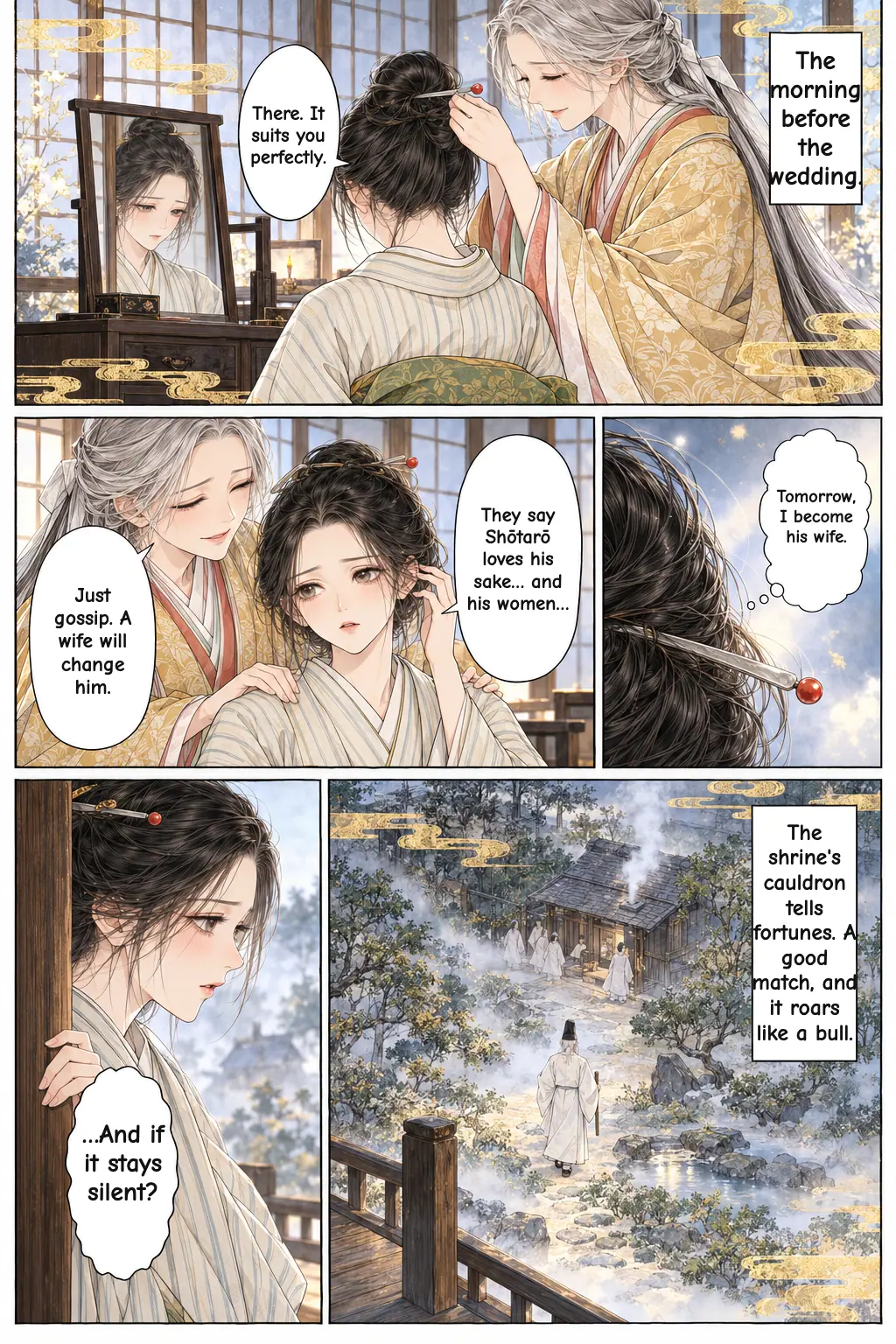
The tale is set in Kibi Province (in today's Okayama Prefecture). Shōtarō, the son of a farming family named Isawa, hates farm work and spends his time drinking and chasing women. His parents hope a good marriage will settle him down. They arrange for him to marry Isora, the daughter of Kasada, chief priest of the Kibitsu Shrine. She is described as beautiful, devoted to her parents, and skilled at poetry and the koto, a Japanese zither. Before agreeing to the match, the priest's family consults the shrine's sacred cauldron. A good omen is a loud roar, like a bellowing ox.
Kibitsu no Kama Summary: Isora's Ghost in Ugetsu Monogatari
In short: "The Kibitsu Cauldron" (Kibitsu no Kama) is a ghost story from Ueda Akinari's Tales of Moonlight and Rain (Ugetsu Monogatari, 1776). A faithful wife, Isora, is cheated and abandoned by her husband Shōtarō, and her vengeful spirit hunts him. He hides behind sealed doors for 42 nights, then opens the door one night too soon and disappears.
The original story, part 1: a silent cauldron and a broken marriage
The tale is set in Kibi Province (in today's Okayama Prefecture). Shōtarō, the son of a farming family named Isawa, hates farm work and spends his time drinking and chasing women. His parents hope a good marriage will settle him down. They arrange for him to marry Isora, the daughter of Kasada, chief priest of the Kibitsu Shrine. She is described as beautiful, devoted to her parents, and skilled at poetry and the koto, a Japanese zither.
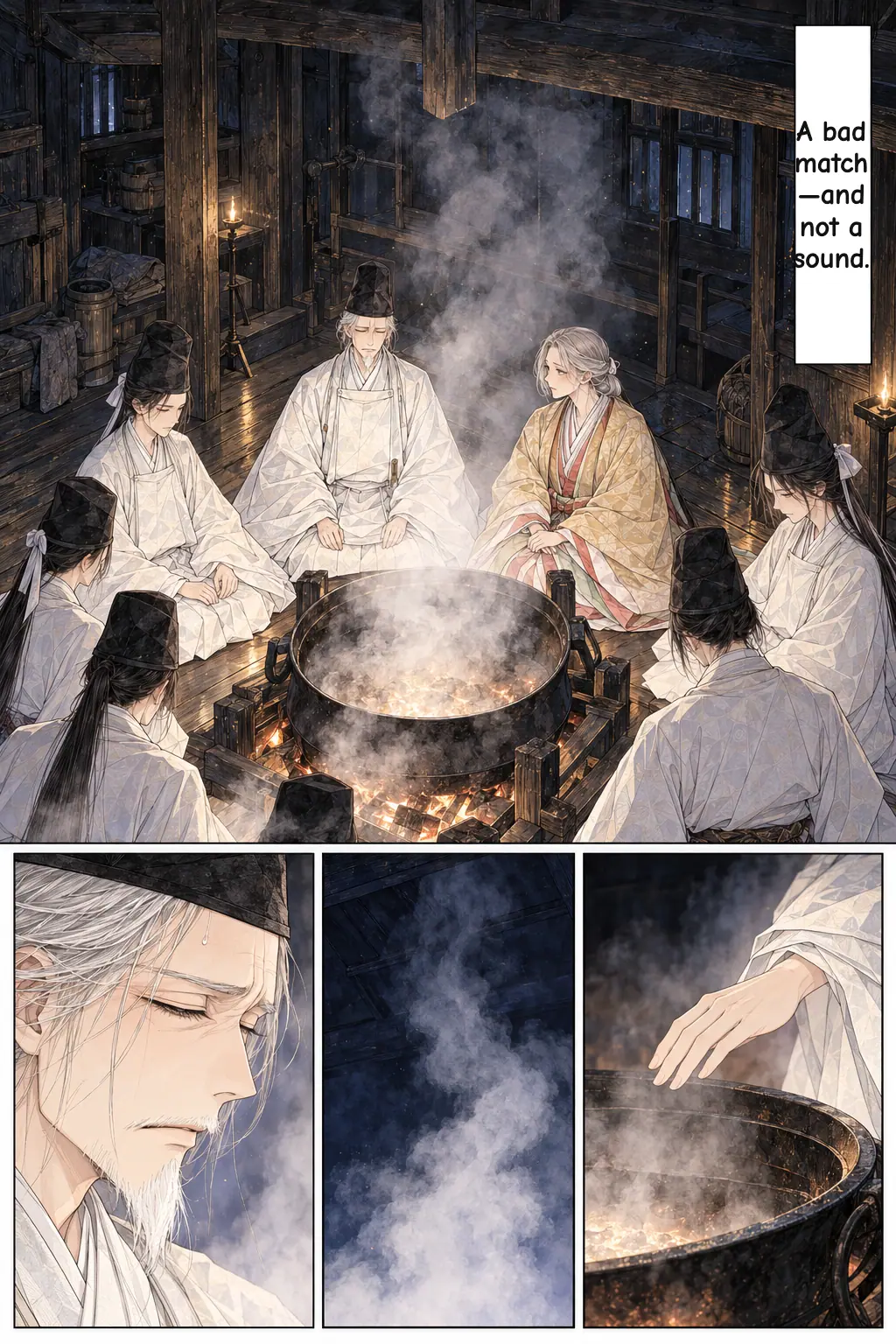
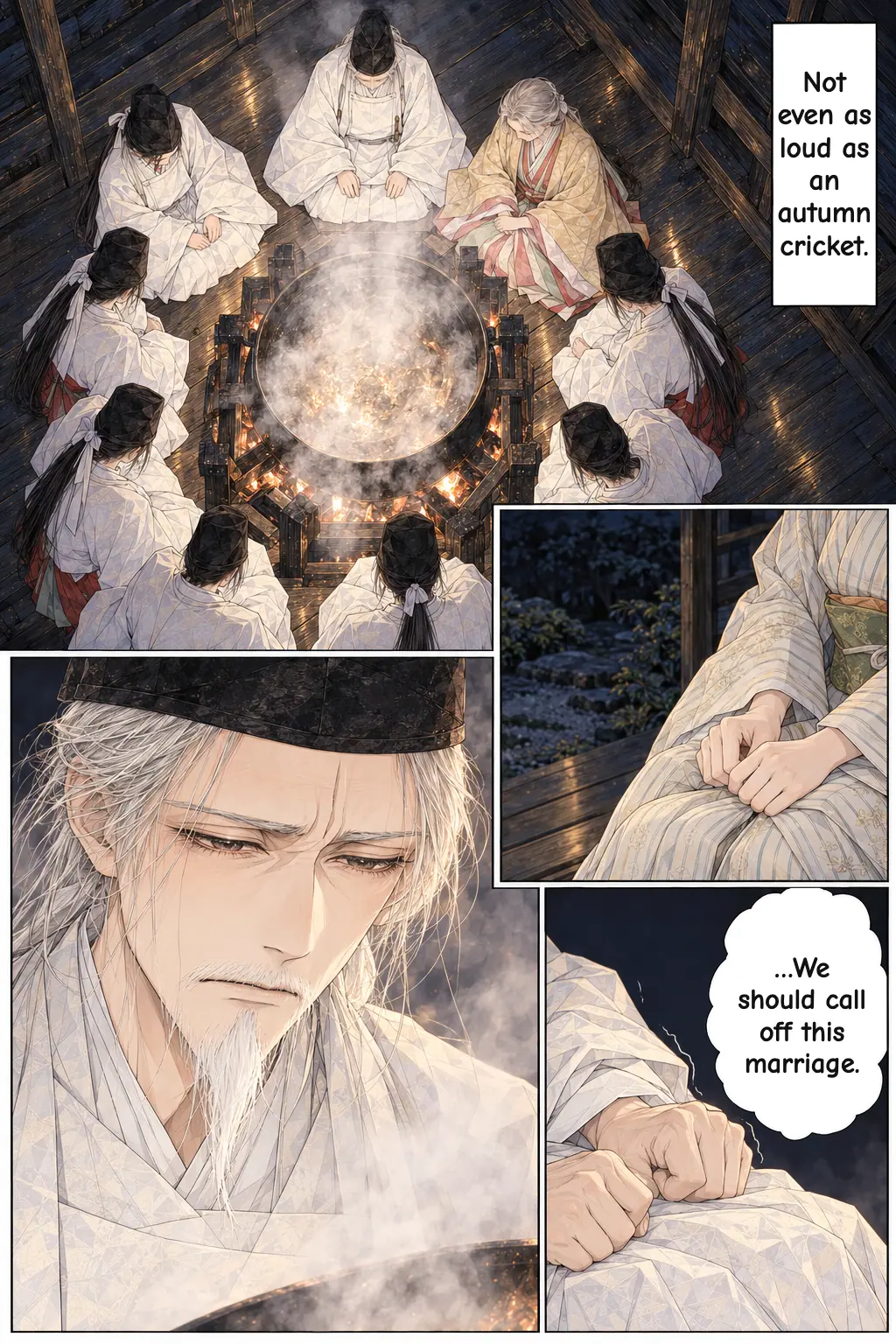
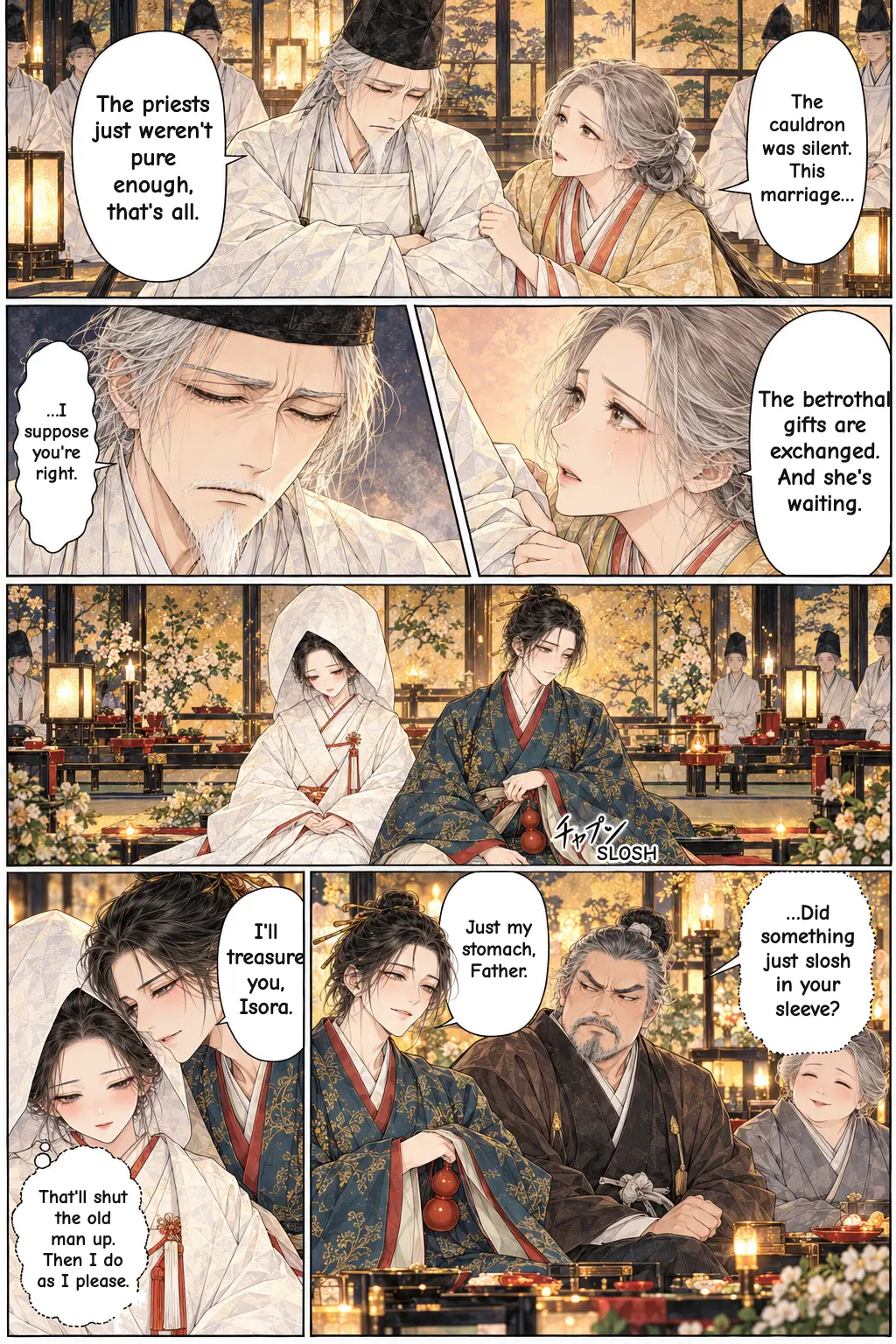
Before agreeing to the match, the priest's family consults the shrine's sacred cauldron. A good omen is a loud roar, like a bellowing ox. A bad omen is silence. The cauldron makes no sound at all, not even the faint hum of an autumn insect. Isora's mother explains this away, perhaps the priests were not properly purified, and the wedding goes ahead.
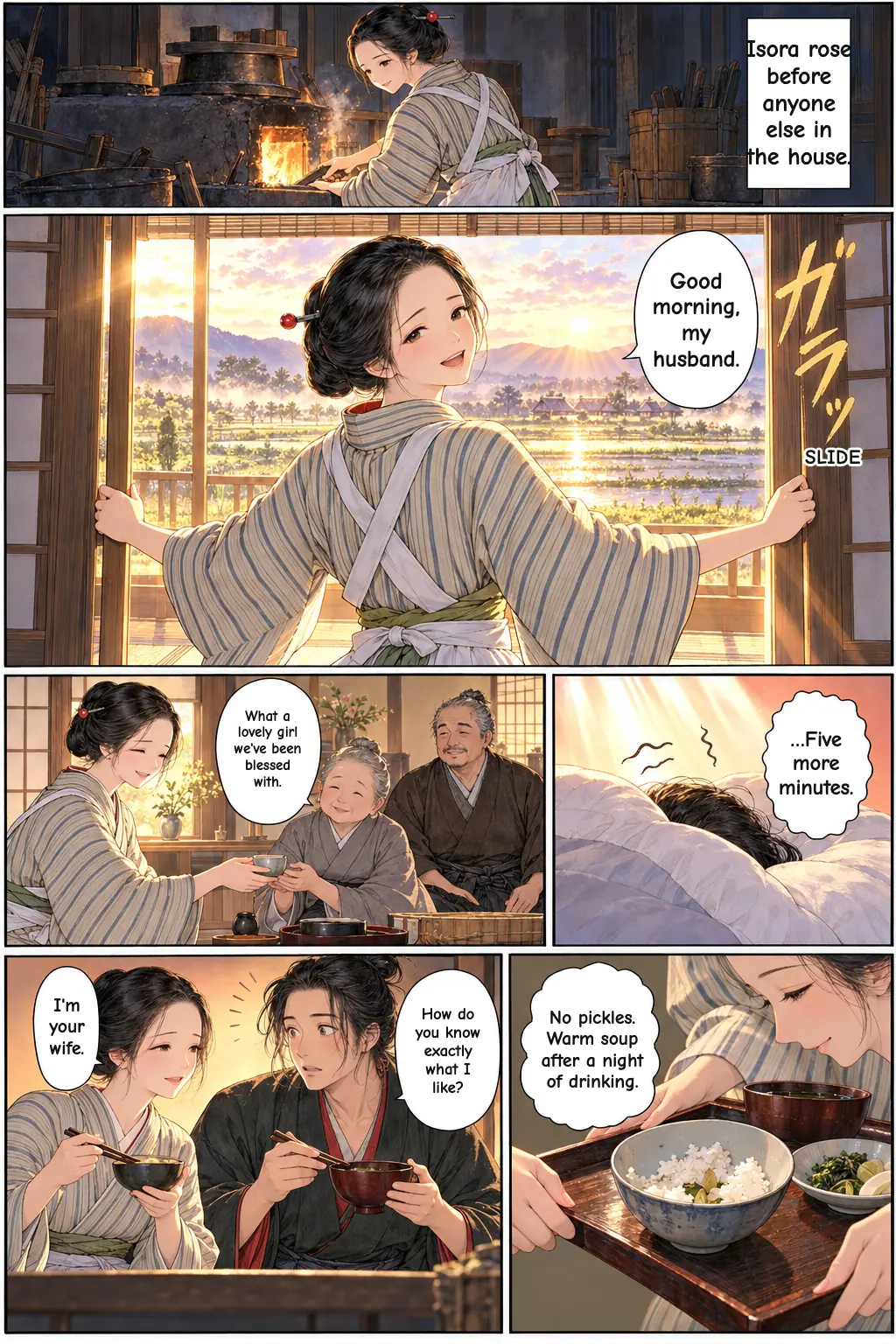
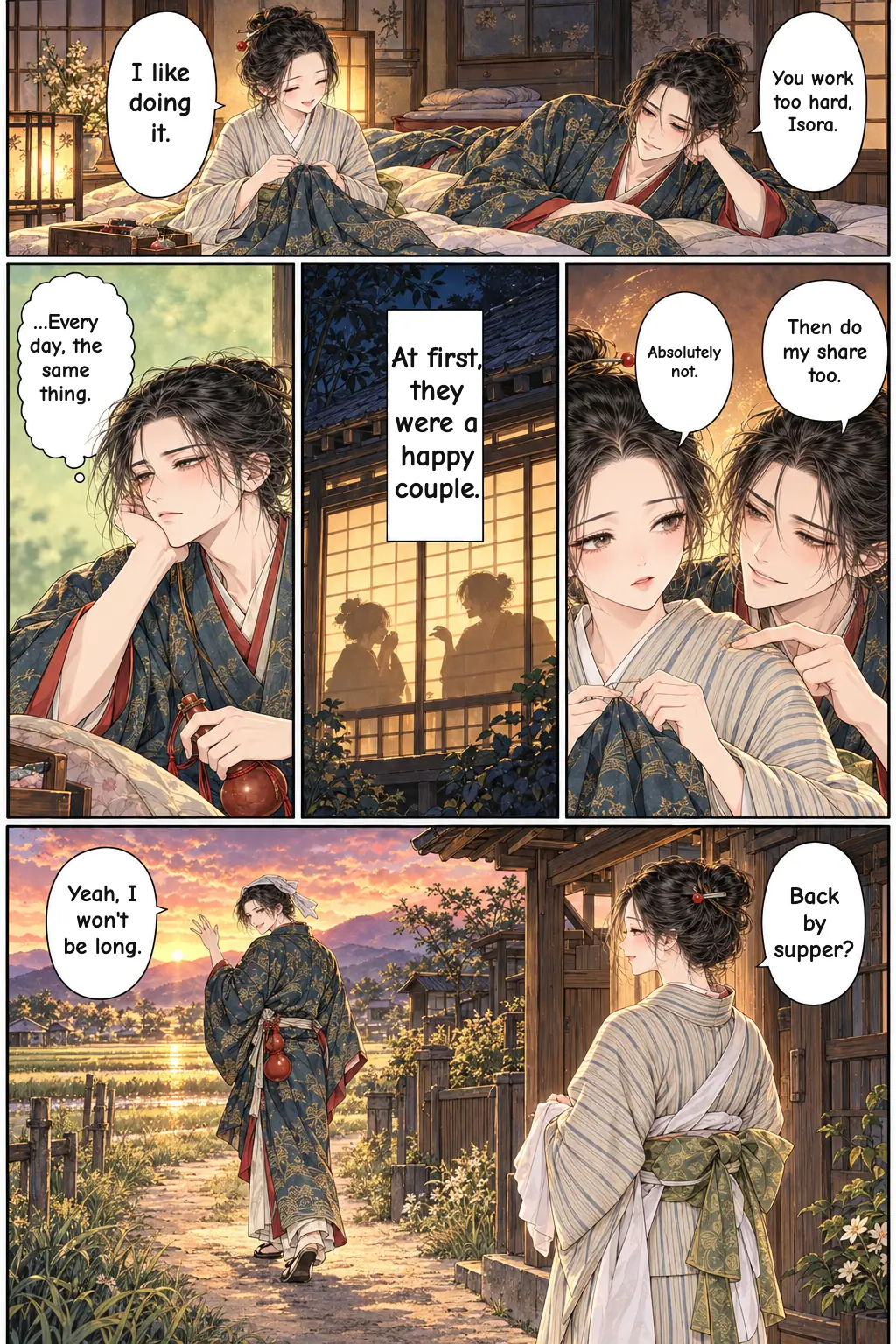
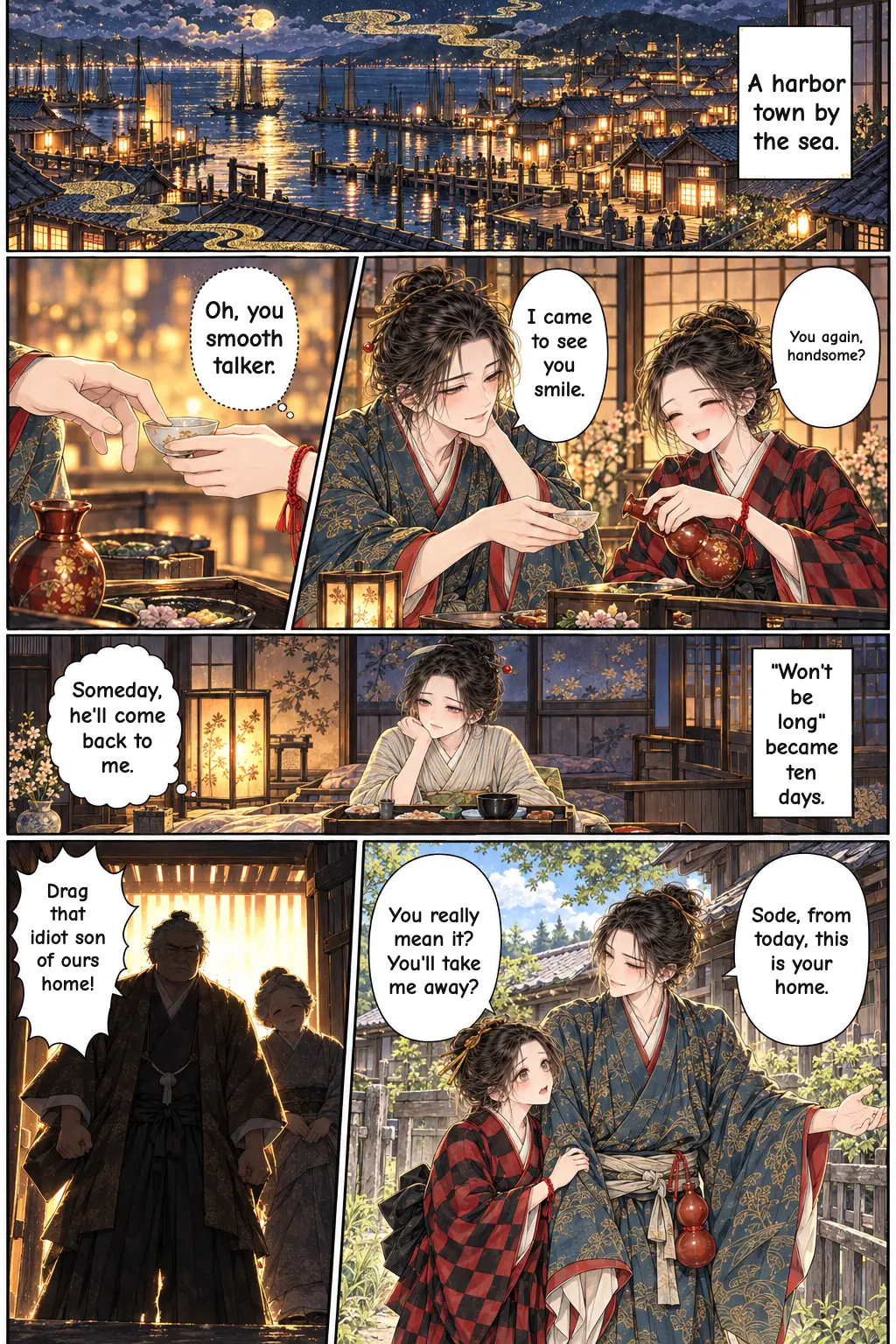
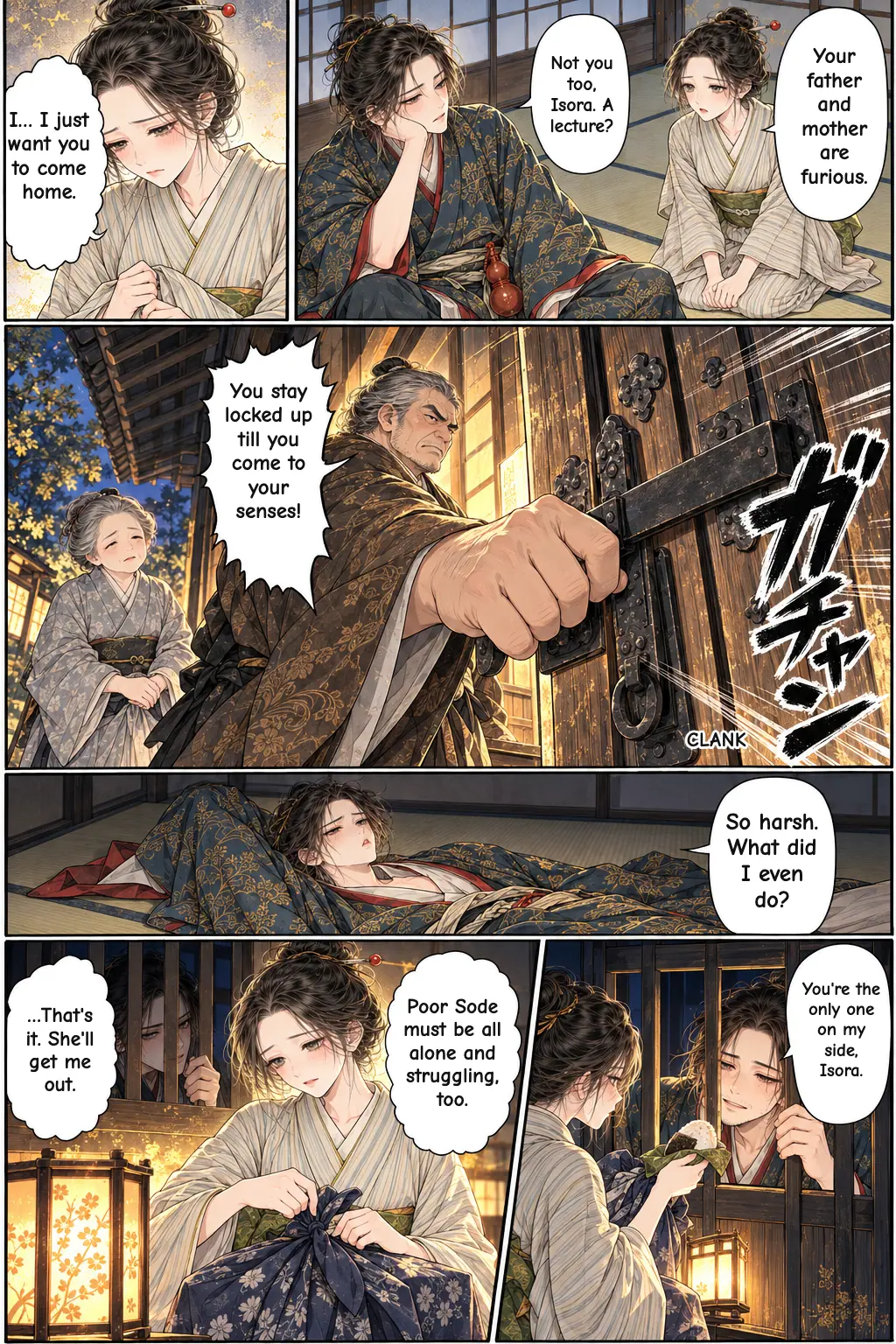
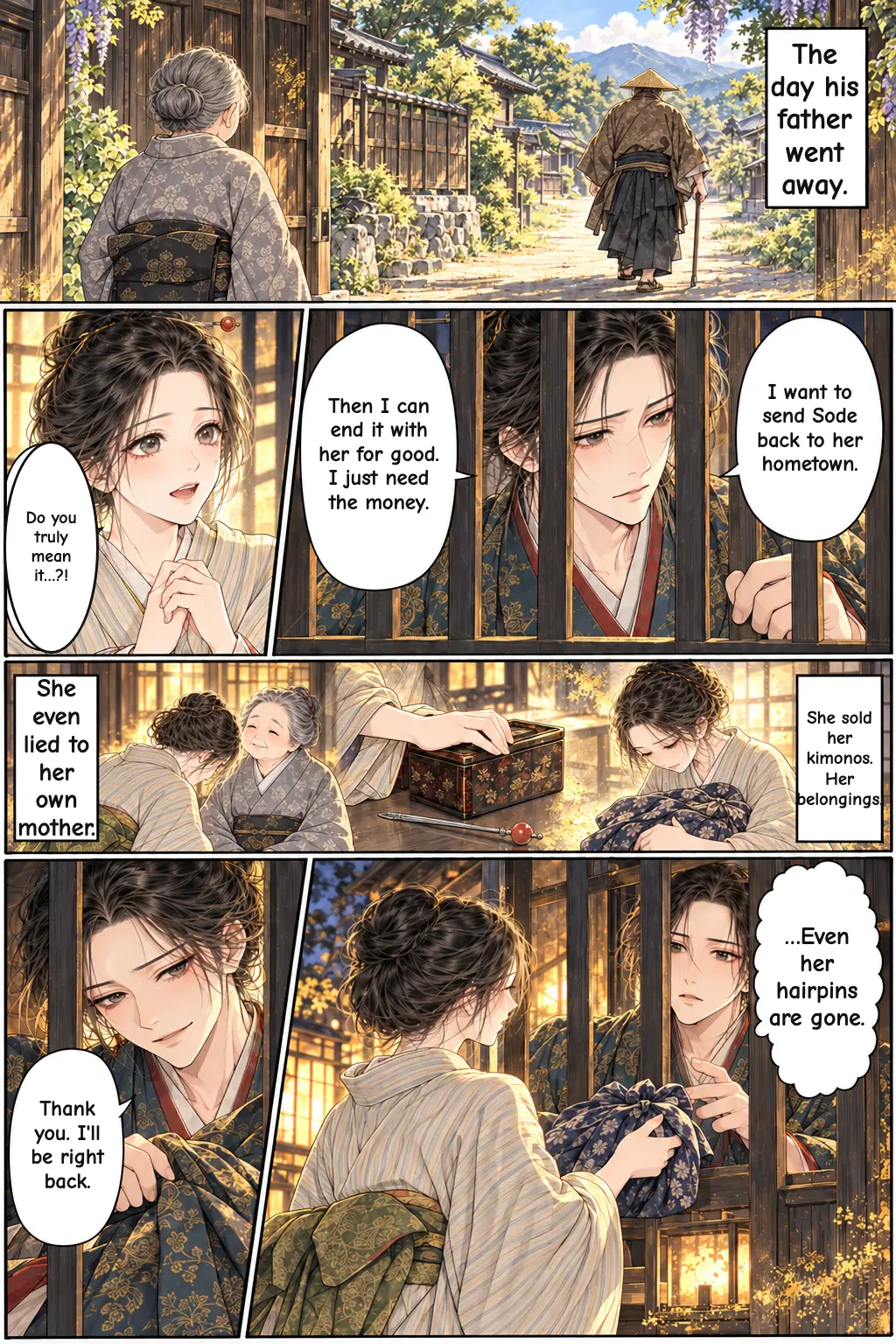
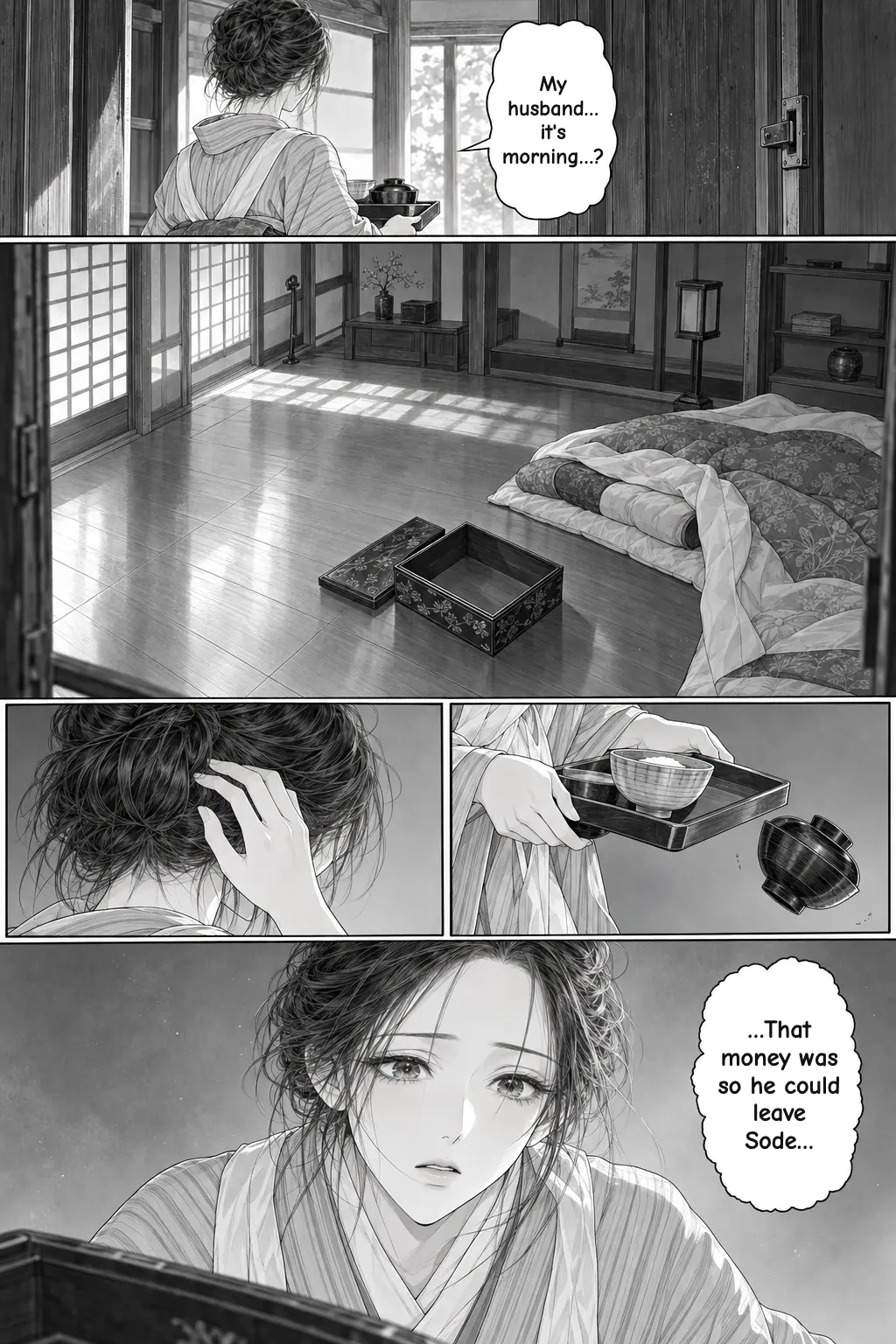
Isora serves her in-laws from dawn until late at night, and at first the marriage is happy. Then Shōtarō falls for Sode, a courtesan from the port of Tomo. He buys her contract, sets her up in a nearby village, and stops coming home. When his father locks him in a room, Isora still cares for him and even quietly sends gifts to Sode. Shōtarō then lies to her: he says he wants to send Sode home and needs money to do it. Isora sells her own clothes and belongings to raise it. He takes the money and runs off with Sode.
The original story, part 2: the ghost and the 42 nights
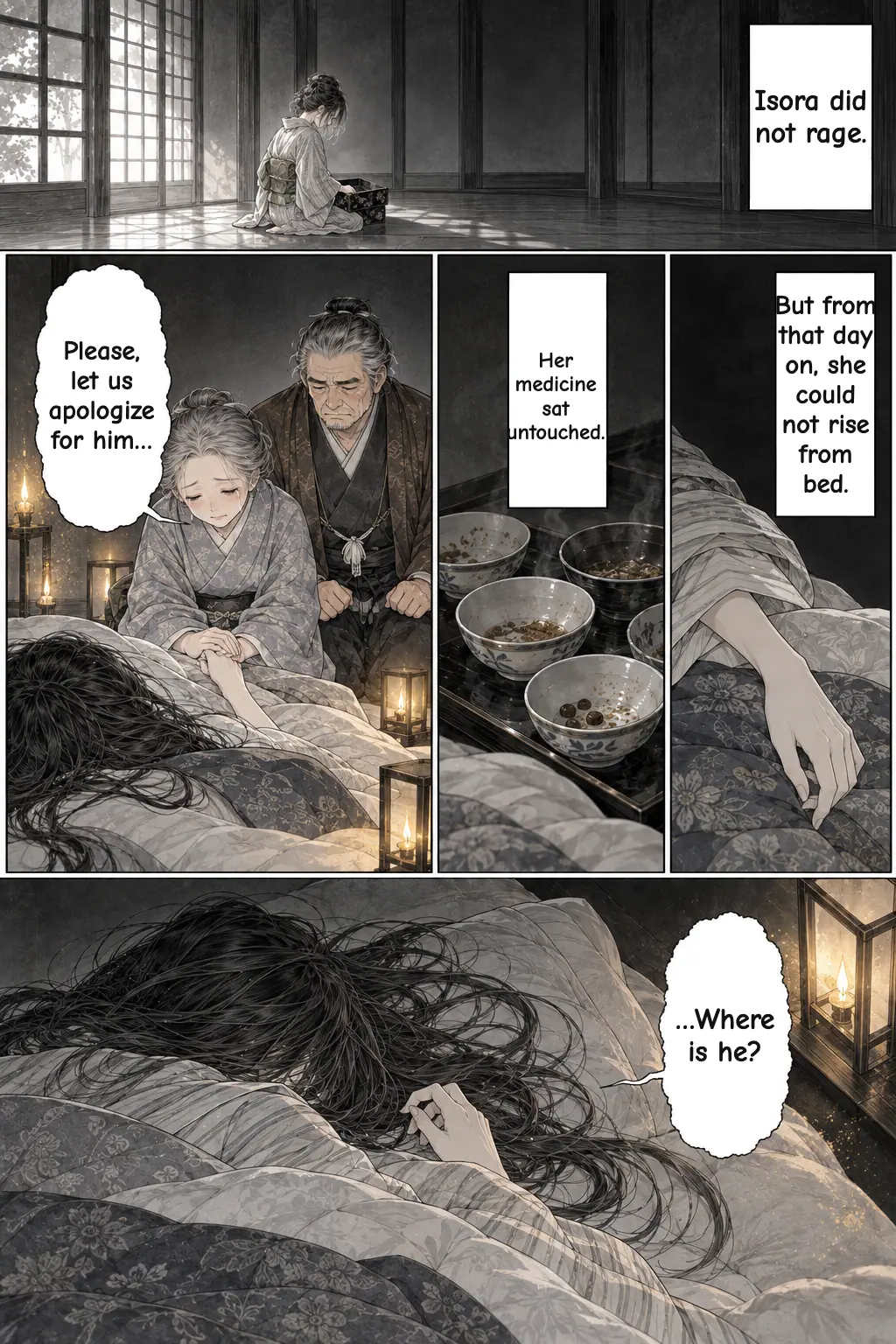
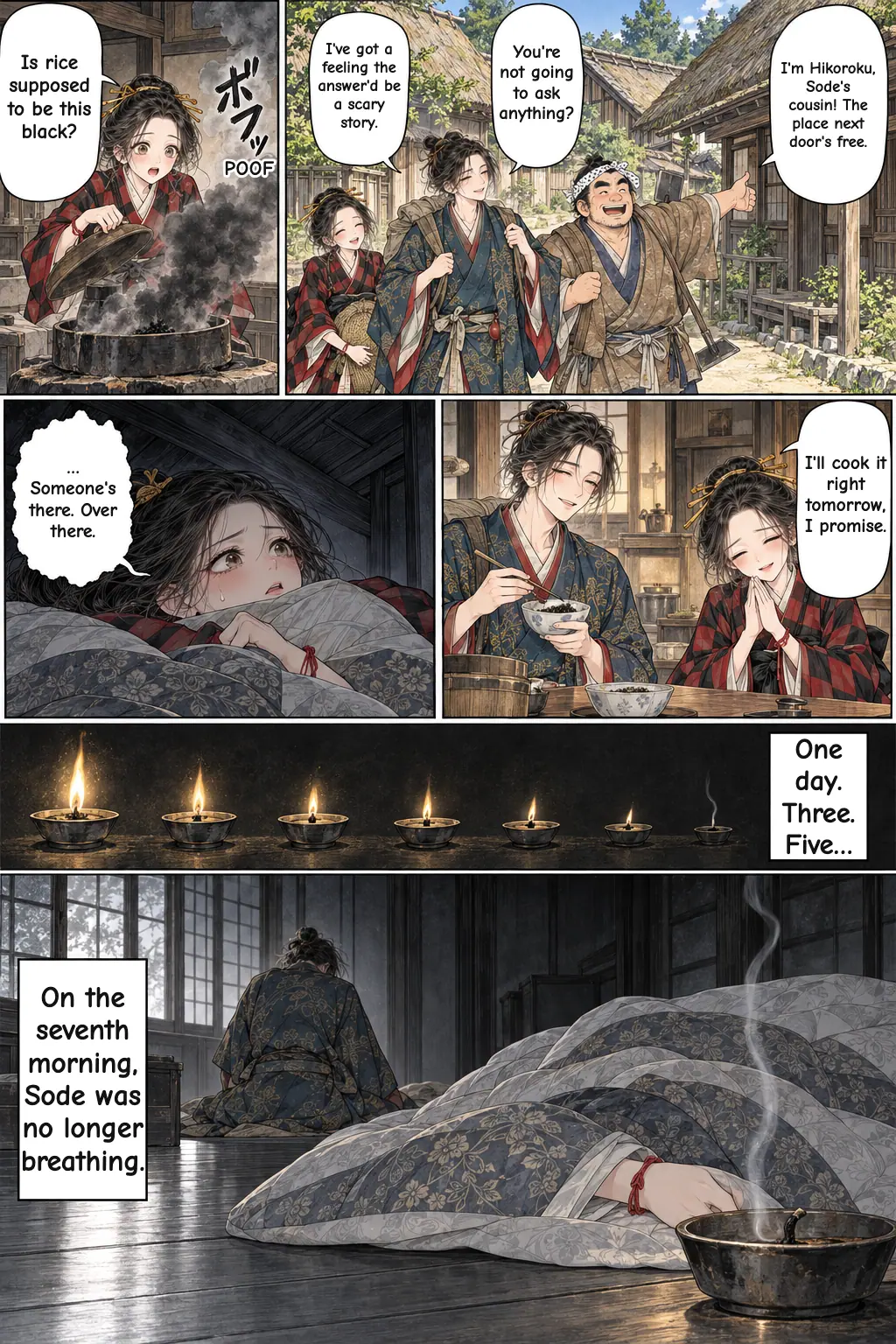
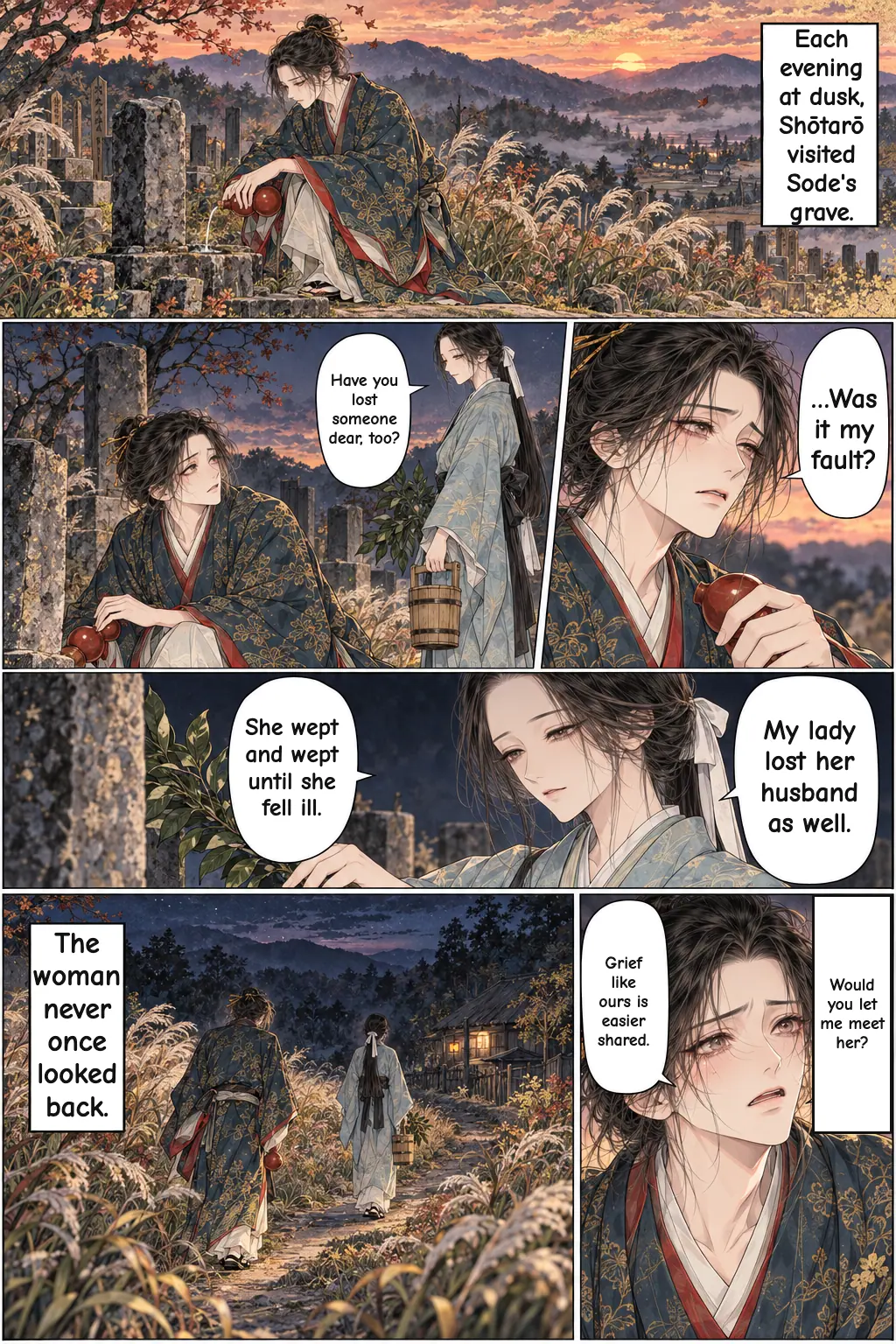
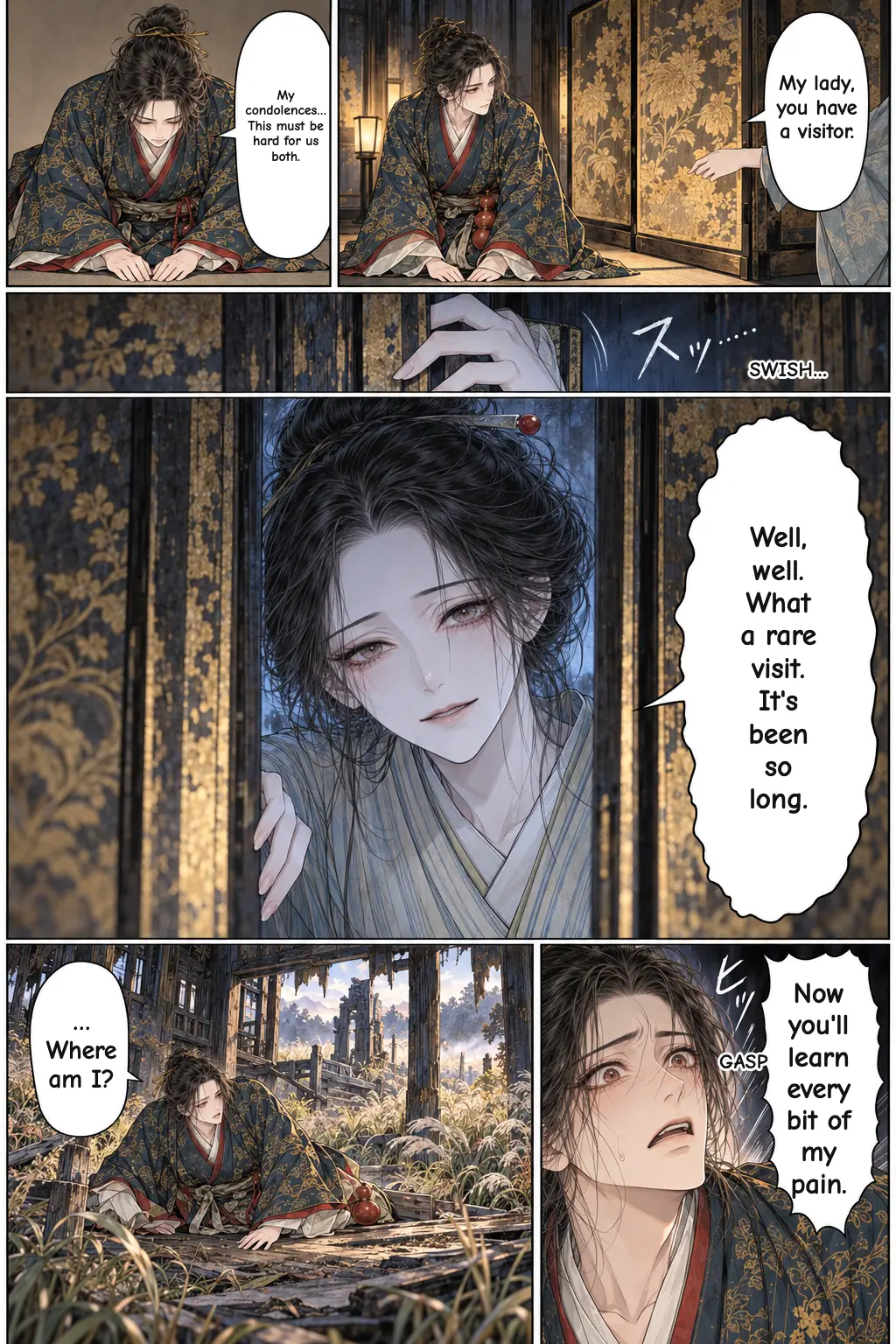
Learning she has been tricked, Isora falls ill from grief and resentment, and no doctor or prayer helps. Meanwhile the lovers settle in Harima Province, next door to Sode's cousin Hikoroku. Almost at once Sode falls sick, suffering as if possessed, and dies within about a week. Shōtarō visits her grave every evening. There he meets a maid who says her mistress has just lost her husband. He follows her to a dim, lonely house, and when the screen is pulled aside, the mistress is Isora: deathly pale, hollow-eyed, her fingers thin and blue. She promises he will now learn what his cruelty has cost. He faints, and wakes in a ruined hall in the middle of a field.
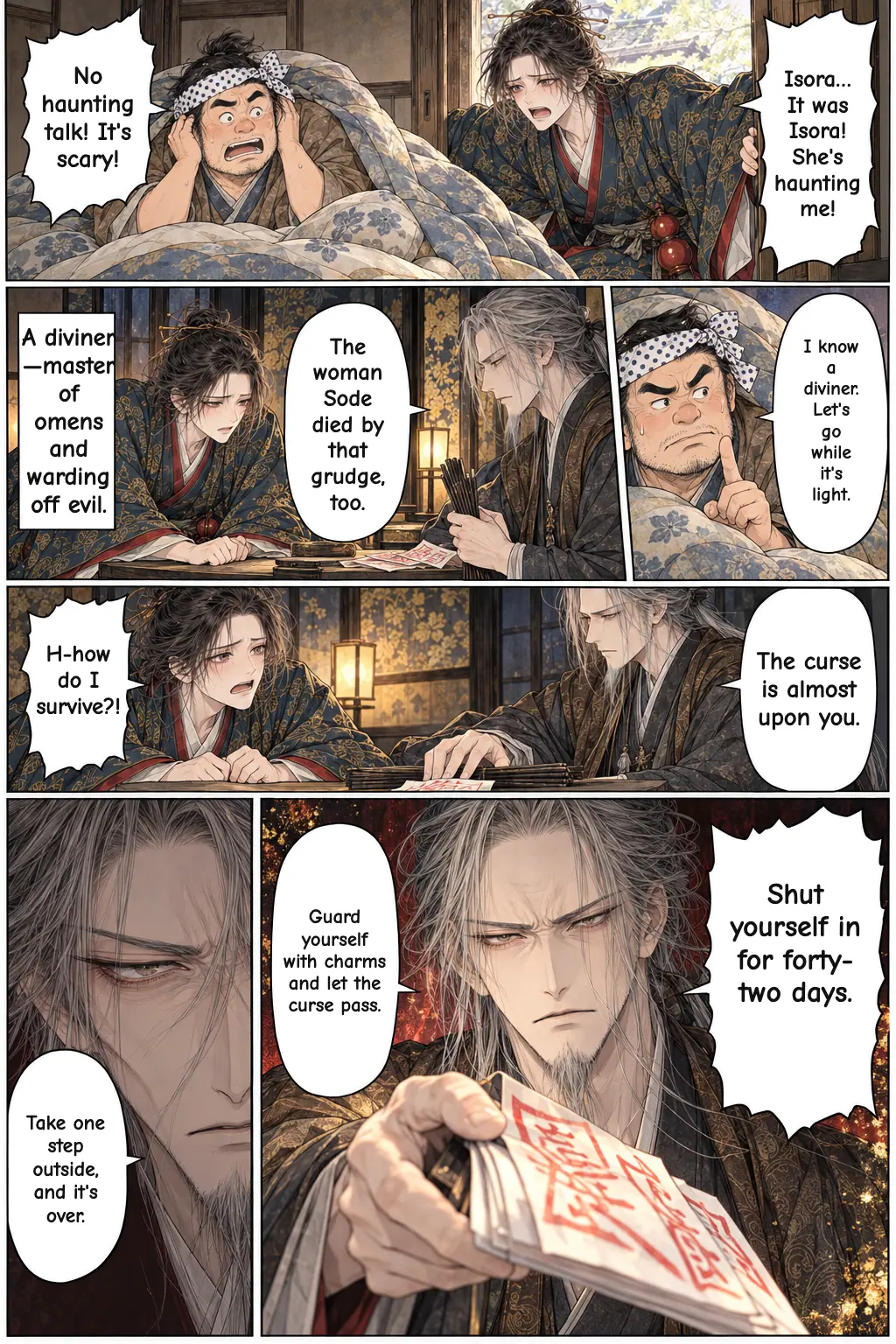
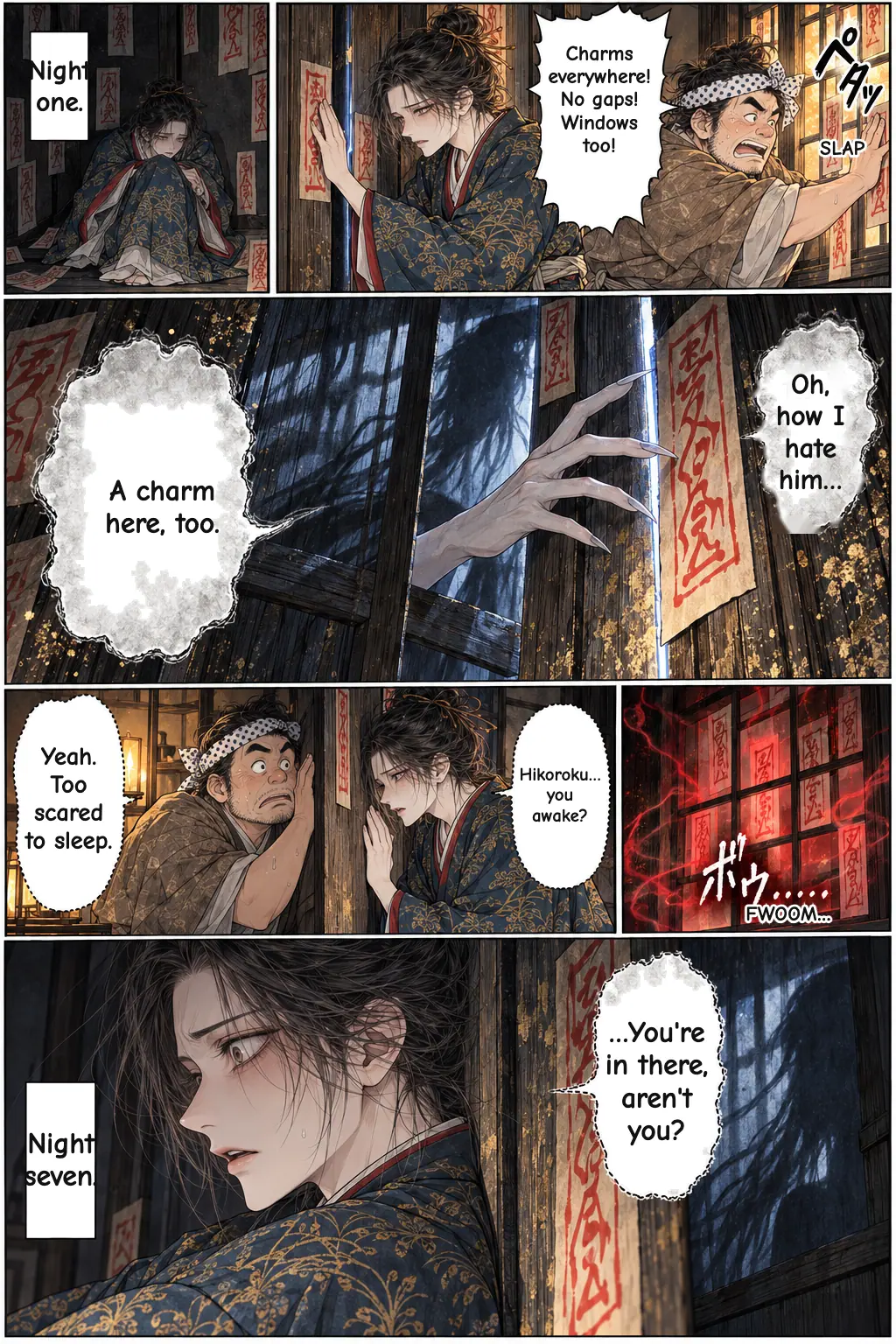
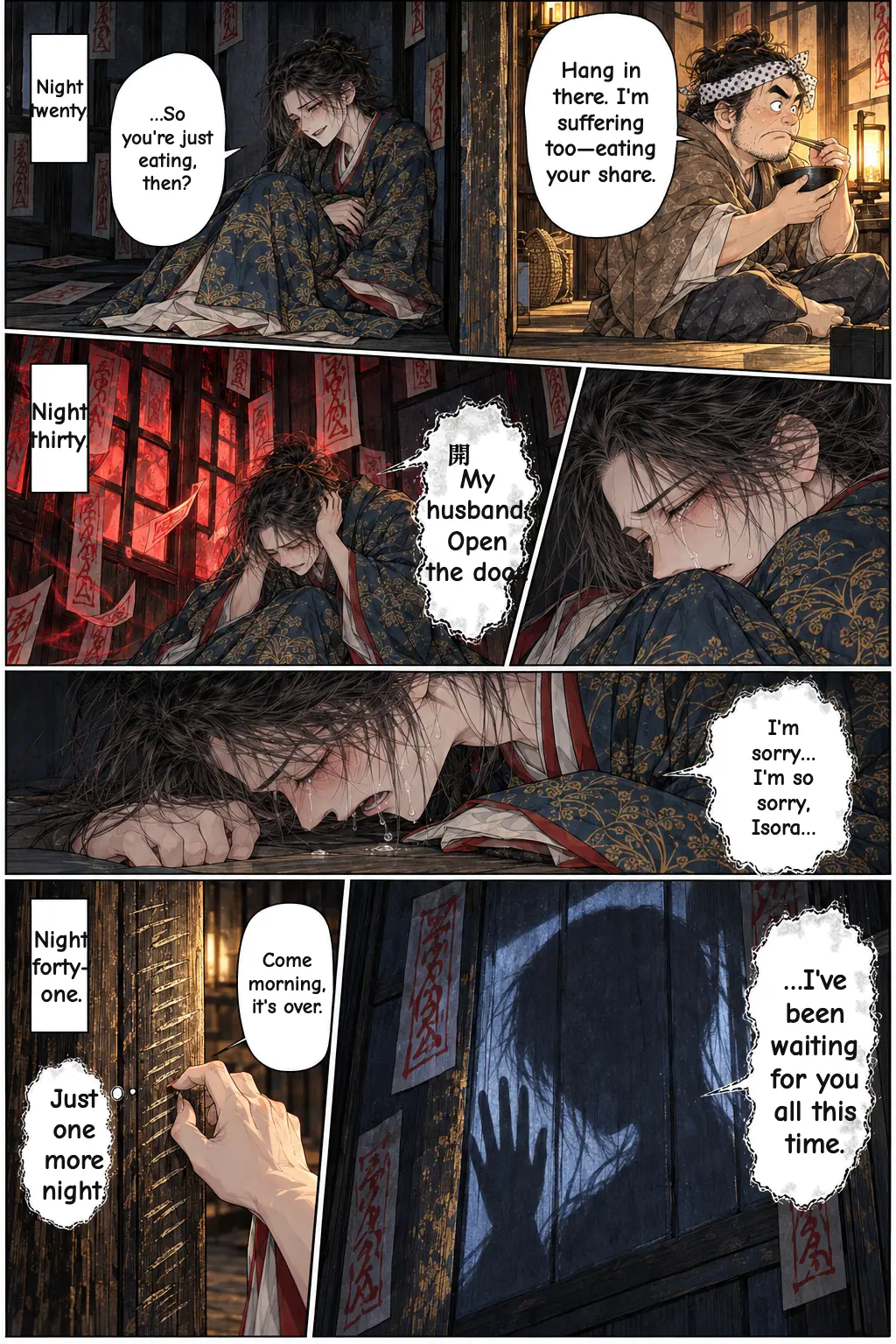
A diviner warns him that the curse is real, and that it killed Sode. Shōtarō must stay shut indoors for 42 days. He covers the doors and windows with red protective charms. Every night a voice outside complains bitterly that the charms are there too, and the window glows red.
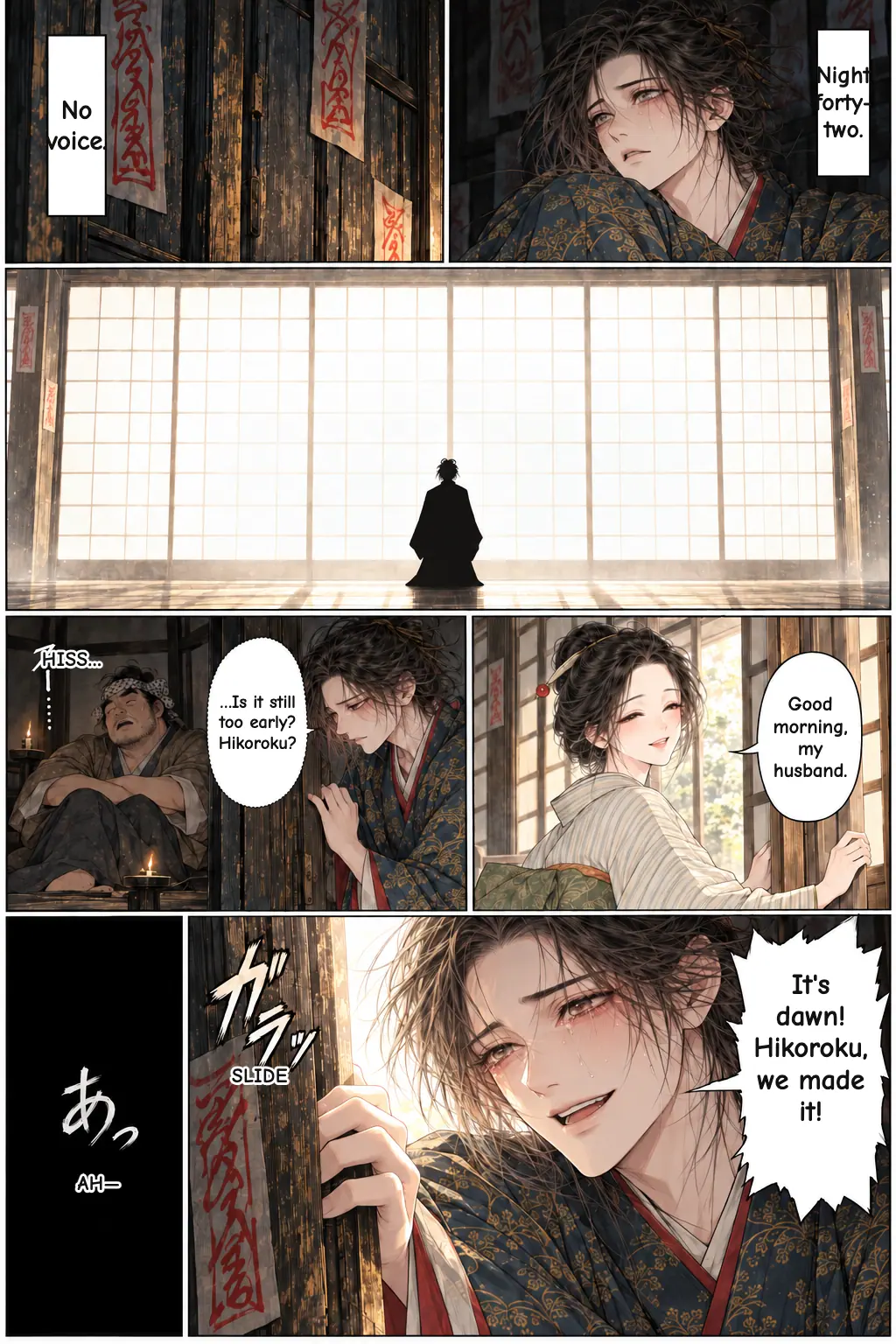
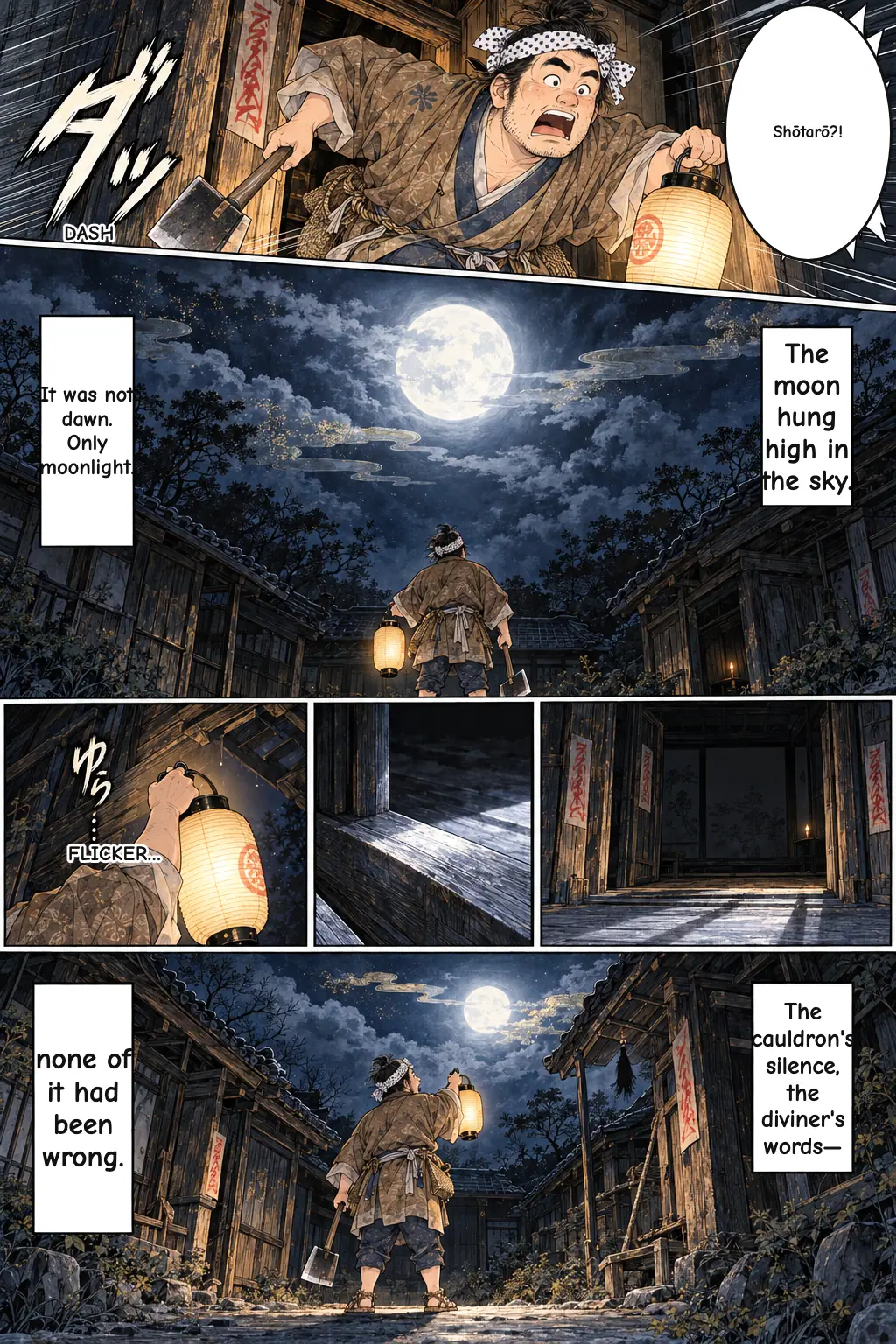
On the last night the sky seems to brighten, and Shōtarō calls out to Hikoroku that dawn has come and opens his door. A scream follows. Hikoroku rushes out with an axe, only to find that the light was the moon. Shōtarō is gone. Blood runs down the wall, and only his topknot hangs from the eaves. The tale closes by noting that both the diviner's warning and the cauldron's silence had come true.
Main characters
Shōtarō is weak rather than evil. He mourns Sode sincerely, but he uses everyone around him. Isora is the moral center of the story: patient and generous for a long time, which makes her transformation all the more frightening. Sode is a minor figure whose sudden death is the first sign of the curse. Hikoroku, Sode's cousin, is the ordinary neighbor who talks with Shōtarō through the wall during his long vigil and witnesses the end.
What the story tells us: culture and background
Ueda Akinari (1734–1809) was a scholar and writer of the Edo period. Ugetsu Monogatari contains nine tales in five volumes, and The Kibitsu Cauldron is in the third. Akinari often reworked older Chinese and Japanese stories, and some scholars link parts of this tale, such as the charms and the vigil, to Chinese ghost literature. That connection is a matter of scholarly discussion, not a settled fact.
The cauldron ritual itself is real. The Kibitsu Shrine in Okayama is known for a divination in which a cauldron's sound is read as an omen, and the ritual is still performed there today. Akinari built his story around something his readers would have recognized.
The tale opens with a short moral from the narrator: a jealous wife can bring disaster, but a husband who behaves properly can avoid it. Many modern readers notice that the story itself puts the blame squarely on the husband. Isora's rage comes only after years of loyalty are repaid with lies. That tension is part of why the tale is still read as one of the great Japanese ghost stories.
What the manga changes
Love & Allure follows the original's plot, but some parts are our own additions. The original only says that Isora fell ill when she learned the truth. The manga shows that moment in full, along with her inner thoughts, her expressions and her time on the sickbed. Shōtarō and Sode's brief life in Harima, the graveyard's season and weather, and the name and look of the maid (unnamed in the original) are all invented. So are the details of the cauldron scene, such as steam and the priests' prayers, and the words exchanged through the wall with Hikoroku.
The nightly haunting adds shadows at the door and trembling charms, but keeps the original's resentful voice and the red glow at the window. The biggest change is the ending. Akinari shows the blood and the topknot; the manga only suggests them, with an open doorway, a dying lamp and a shadow swaying under the eaves. Neither version shows the moment of the attack. The narrator's opening moral is left out.
Where to read it
You can read Episode 9, "42 Nights. Do Not Open the Door," right here on Manga Portal. Like every episode of Love & Allure: Classic Japanese Tales of Romance, it is free, with no sign-up needed. If you enjoy it, the series has more classic Japanese tales of love, longing and the supernatural.
Characters in this episode
Isora
The devoted daughter of the Kibitsu Shrine's priest, whose loyalty is betrayed until she returns as a vengeful spirit.
Shōtarō
Isora's idle, pleasure-seeking husband, who swindles her and runs away with his lover.
Sode
A courtesan from the port of Tomo who flees with Shōtarō and dies suddenly, as if possessed.
Hikoroku
Sode's cousin in Harima, who shelters the couple and keeps Shōtarō company through the wall during his 42-night vigil.
Kasada
Chief priest of the Kibitsu Shrine and Isora's father, who allows the marriage despite the silent cauldron.
The diviner
A fortune-teller who sees the curse and orders Shōtarō to seal himself in for 42 days with protective charms.
FAQ
What is The Kibitsu Cauldron about?
It is a Japanese ghost story about Isora, a loyal wife whose husband Shōtarō cheats her and runs off with another woman. Her vengeful spirit kills his lover and then him, despite 42 nights of protective seclusion. It is one of the nine tales in Ueda Akinari's Ugetsu Monogatari (1776).
Why didn't the Kibitsu cauldron make a sound?
In the story, the cauldron at the Kibitsu Shrine roars for a good omen and stays silent for a bad one. Its silence before the wedding warns that the marriage will end in disaster. Isora's mother explains it away, and the omen later comes true.
What happens to Shōtarō at the end?
On the 42nd and final night, he mistakes moonlight for dawn and opens his door. Hikoroku hears a scream and finds him gone, with only blood on the wall and his topknot hanging from the eaves.
Is the Kibitsu cauldron ritual real?
Yes. The Kibitsu Shrine in Okayama Prefecture is known for a divination ritual in which a cauldron's sound is read as an omen, and it is still performed today. Akinari built his fictional story around this real tradition.
Who wrote Tales of Moonlight and Rain?
Ueda Akinari, an Edo-period scholar and writer, published Ugetsu Monogatari in 1776. It collects nine supernatural tales in five volumes and is considered a classic of Japanese fiction.