Episode 8One Night, She Was Suddenly Out of ReachThe Tales of Ise: "Is This Not the Moon?"
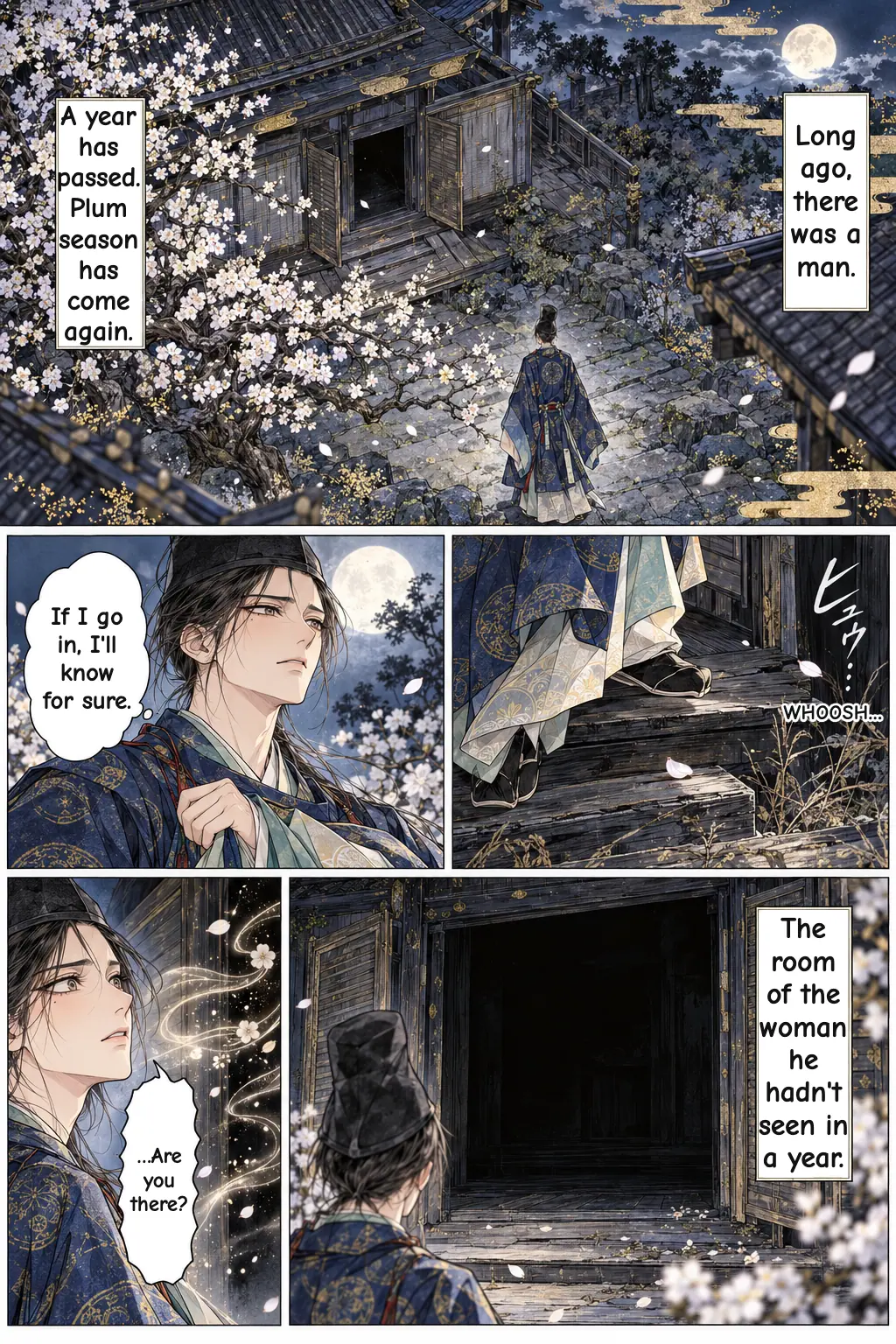
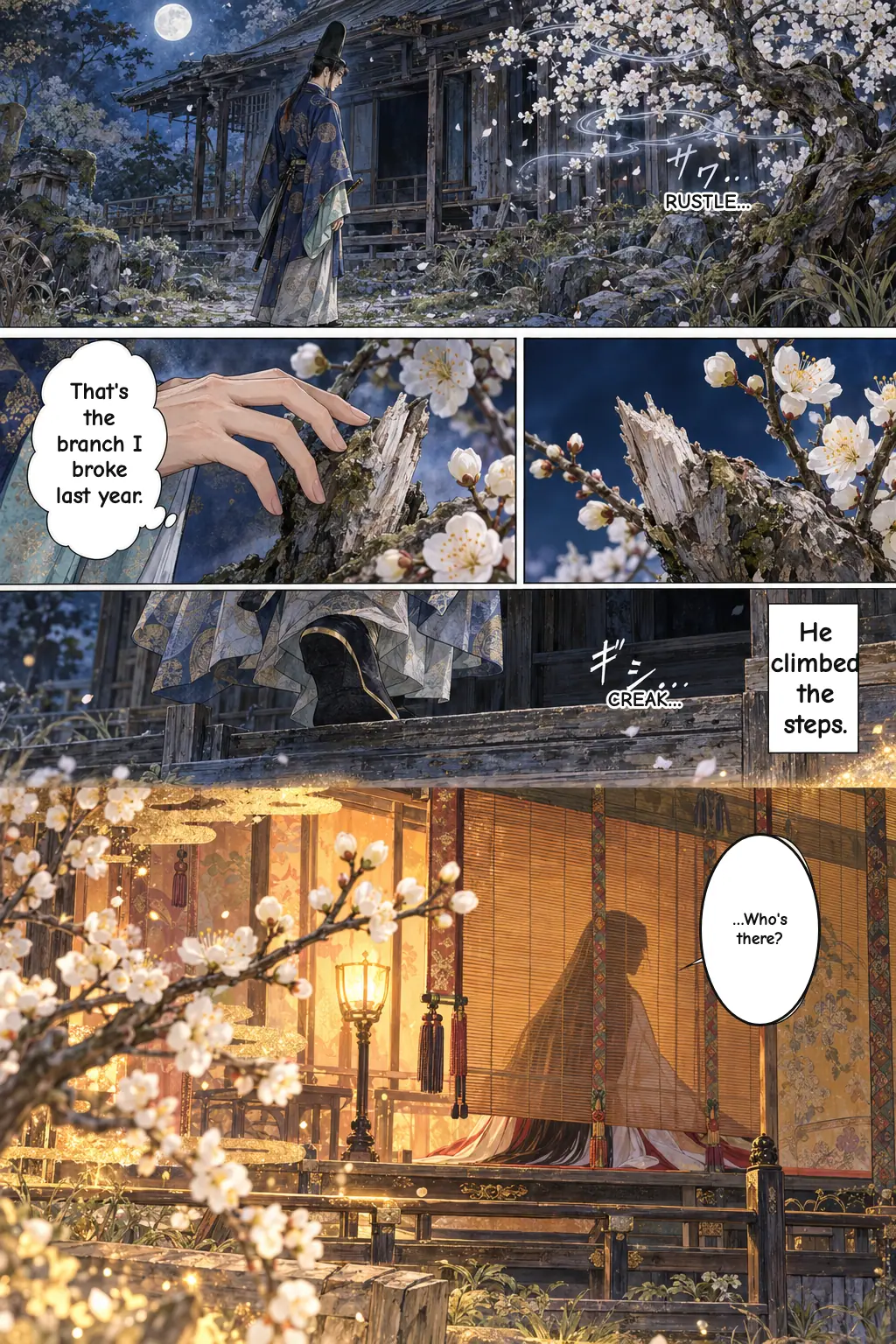
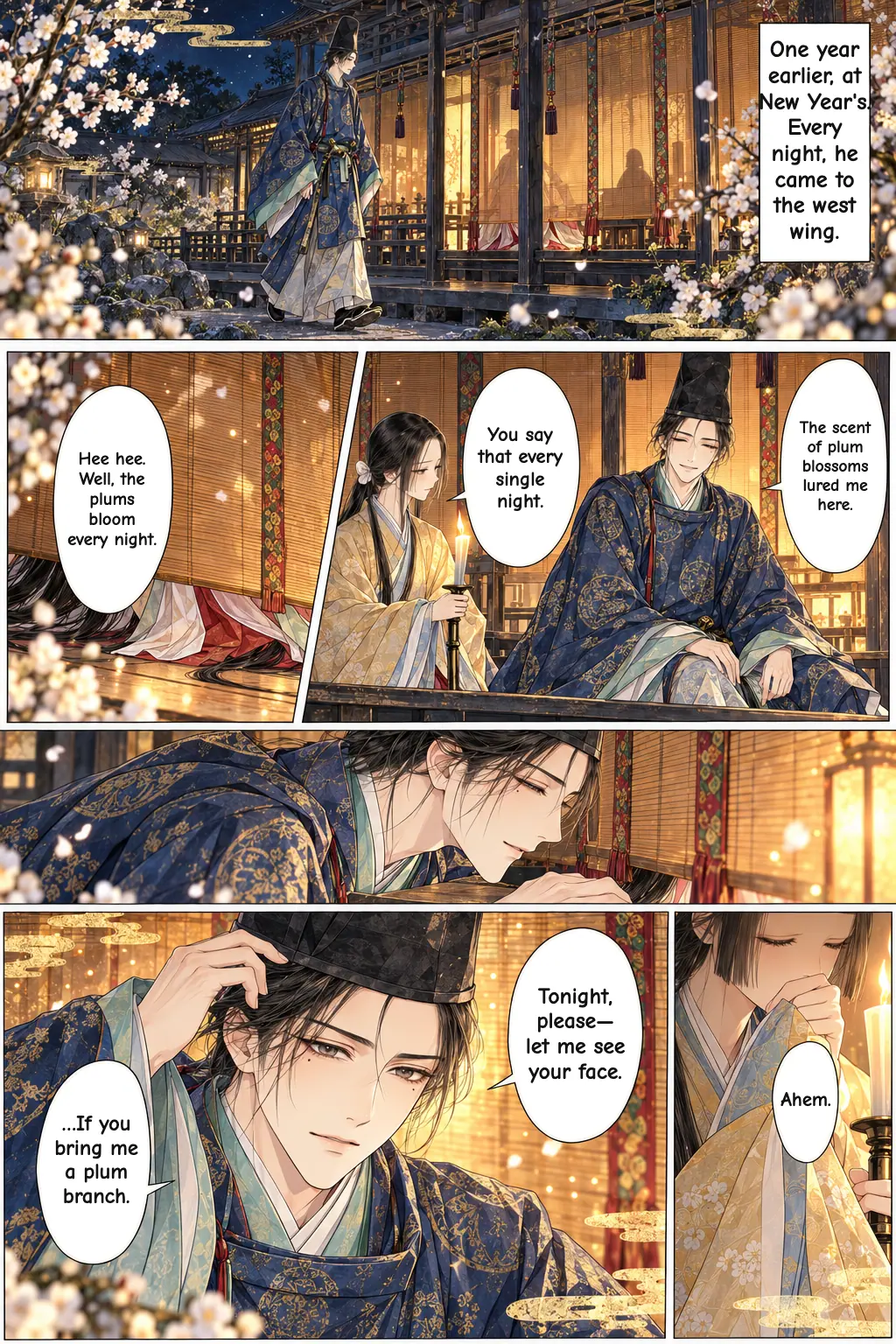
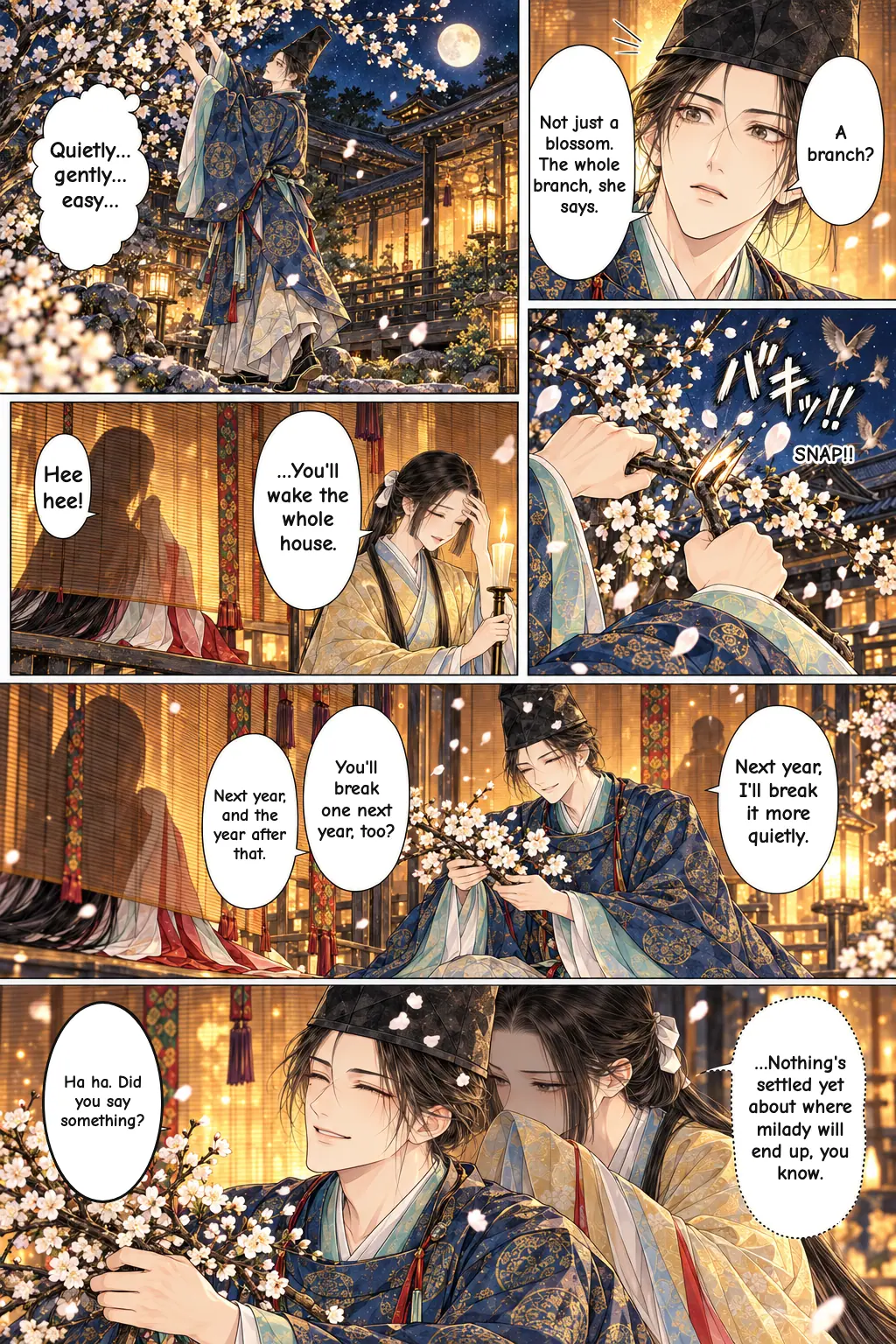
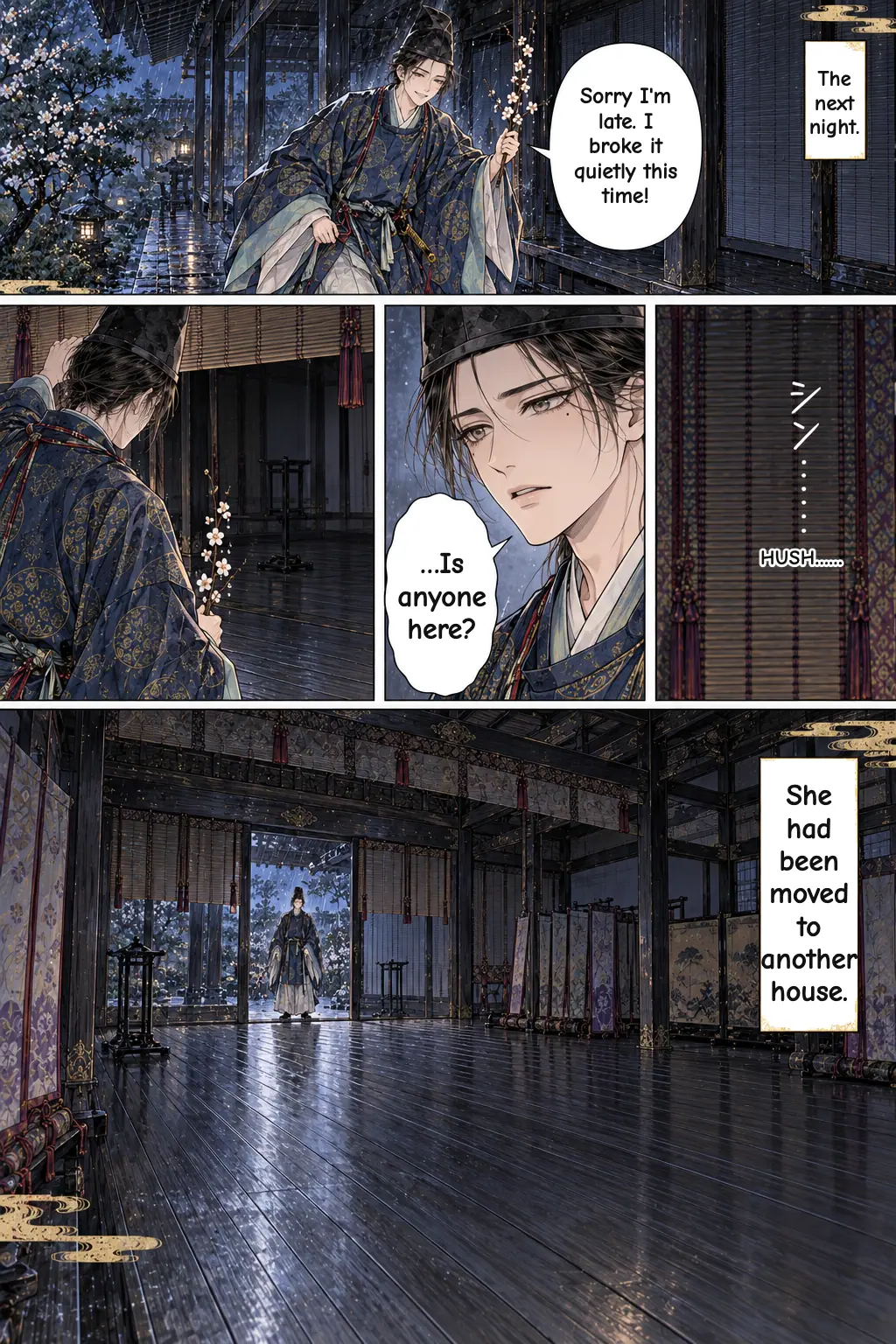
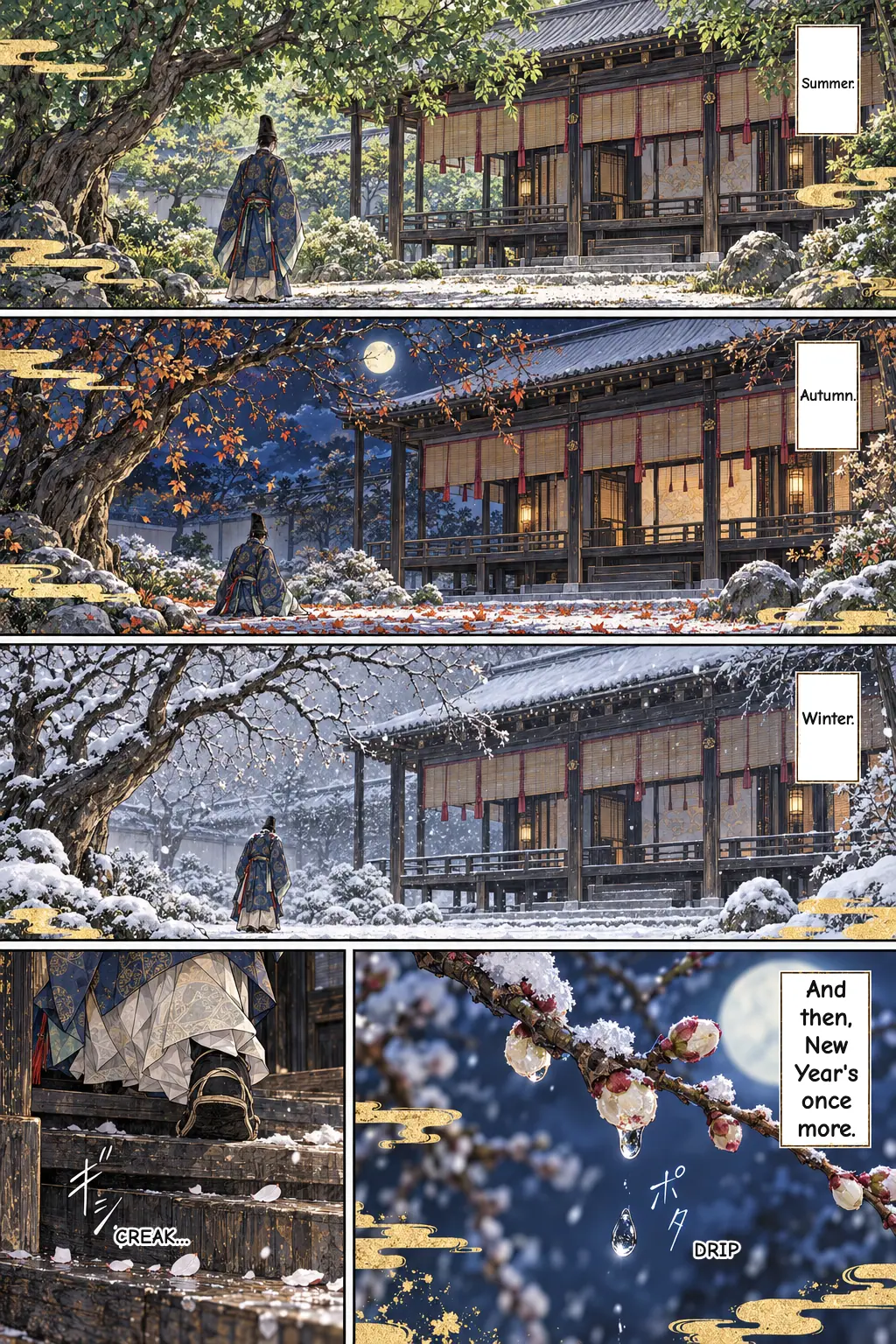
Last plum season, a man visited her every night, until one night she was suddenly moved somewhere he could never reach. A year later, on the same plum-scented night, he steps into her room once more.
The Tales of Ise (Ise Monogatari) is a collection of roughly 125 short episodes. Each one is built around one or more waka, the 31-syllable poems of classical Japan. Nobody knows who wrote it. It took shape over the early-to-mid Heian period, roughly the 9th and 10th centuries, and Episode 4 is one of its best-known pieces. The story is very short. In the capital, at Gojō on the east side of the city, lived a Grand Empress (ōkisai no miya). In the west wing of her mansion (nishi no tai) lived a woman.
"Is This Not the Moon?" — The Tales of Ise Episode 4 Summary & Meaning
In short: "Is This Not the Moon?" is Episode 4 of The Tales of Ise, a Heian-period Japanese classic. A man loses the woman he loves when she suddenly moves somewhere he cannot follow. A year later, in plum-blossom season, he goes back to her empty room, lies there until the moon sinks, and composes the poem that begins "Tsuki ya aranu."
The Original Story: A Room in the West Wing
The Tales of Ise (Ise Monogatari) is a collection of roughly 125 short episodes. Each one is built around one or more waka, the 31-syllable poems of classical Japan. Nobody knows who wrote it. It took shape over the early-to-mid Heian period, roughly the 9th and 10th centuries, and Episode 4 is one of its best-known pieces.
The story is very short. In the capital, at Gojō on the east side of the city, lived a Grand Empress (ōkisai no miya). In the west wing of her mansion (nishi no tai) lived a woman. A man with deep feelings for her had been visiting her, though the text says only that the visits were "not as he would have wished." Some readers take this to mean the affair was secret or forbidden, but that is an interpretation. The original doesn't explain it.
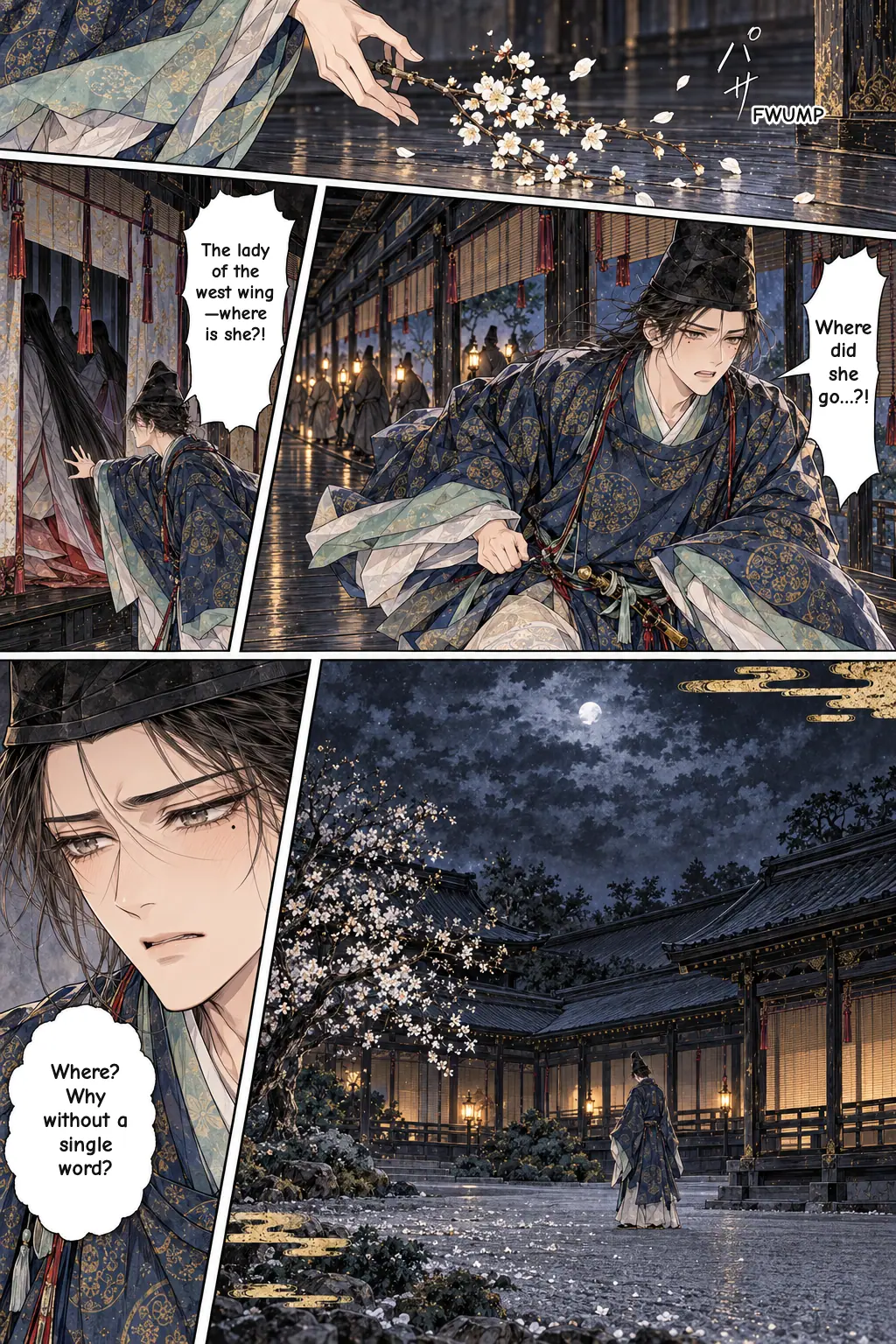
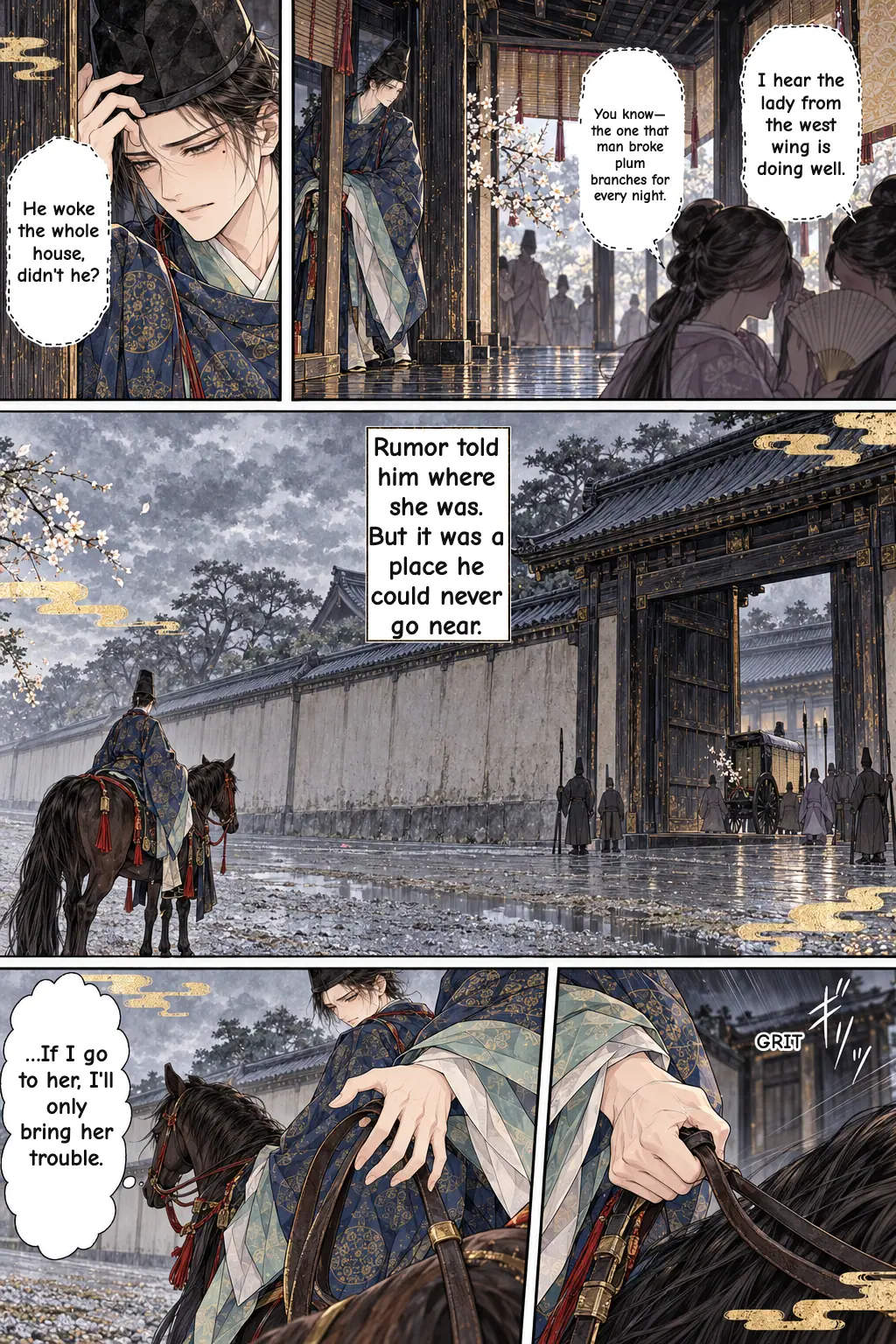
Around the tenth day of the first month, the woman suddenly went into hiding somewhere else. The man heard where she was, but it was not a place where an ordinary person could come and go. He spent the following months in misery.
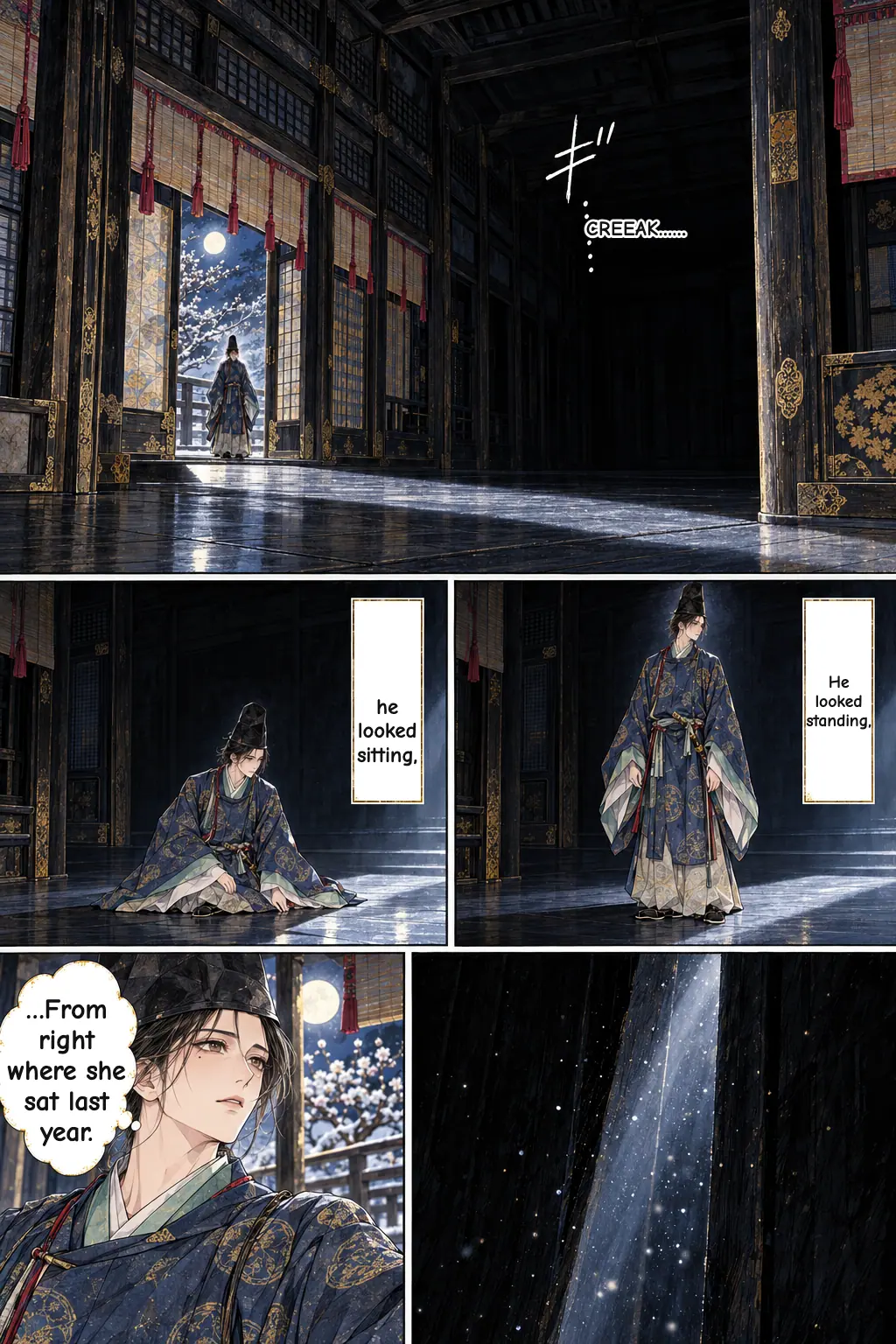
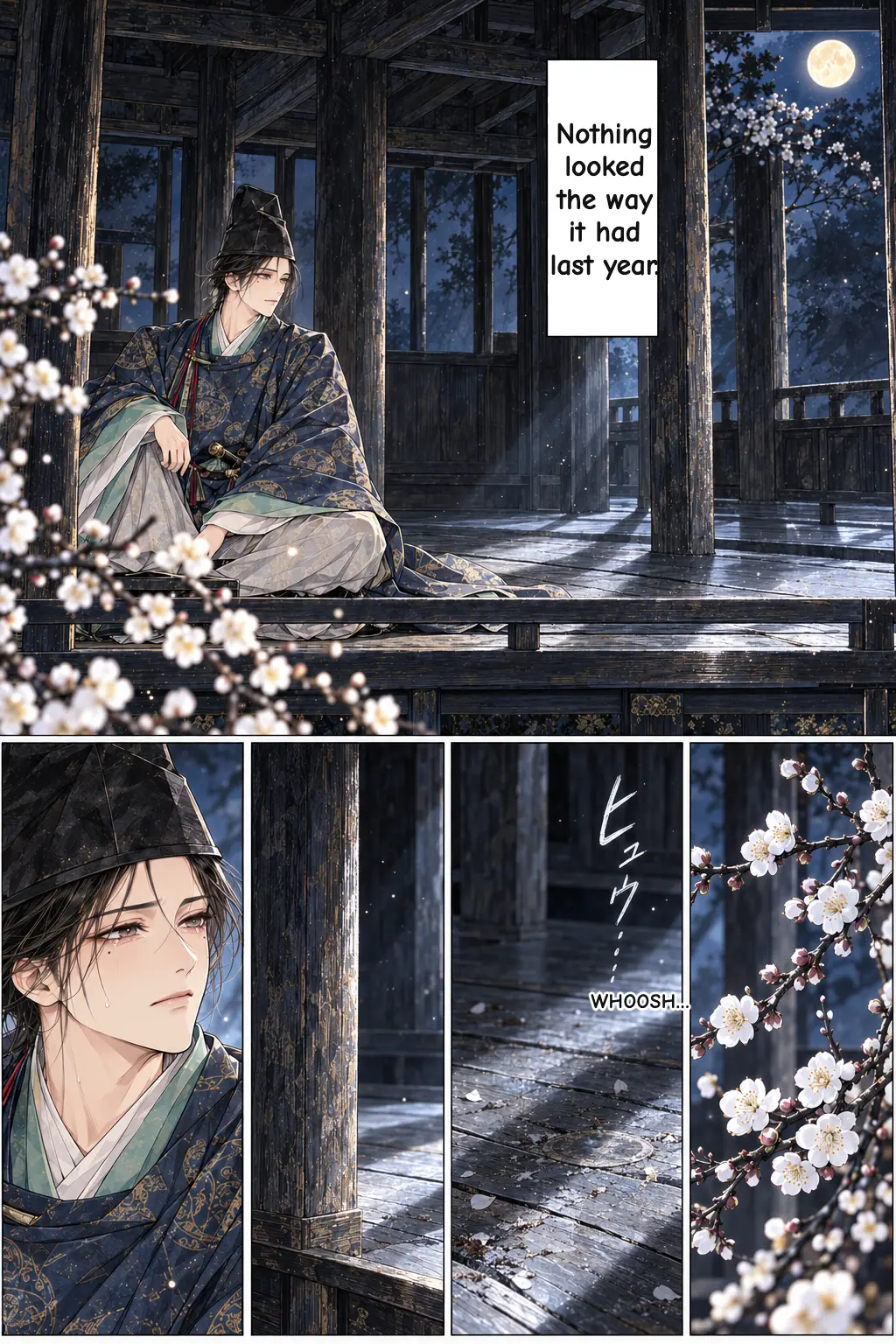
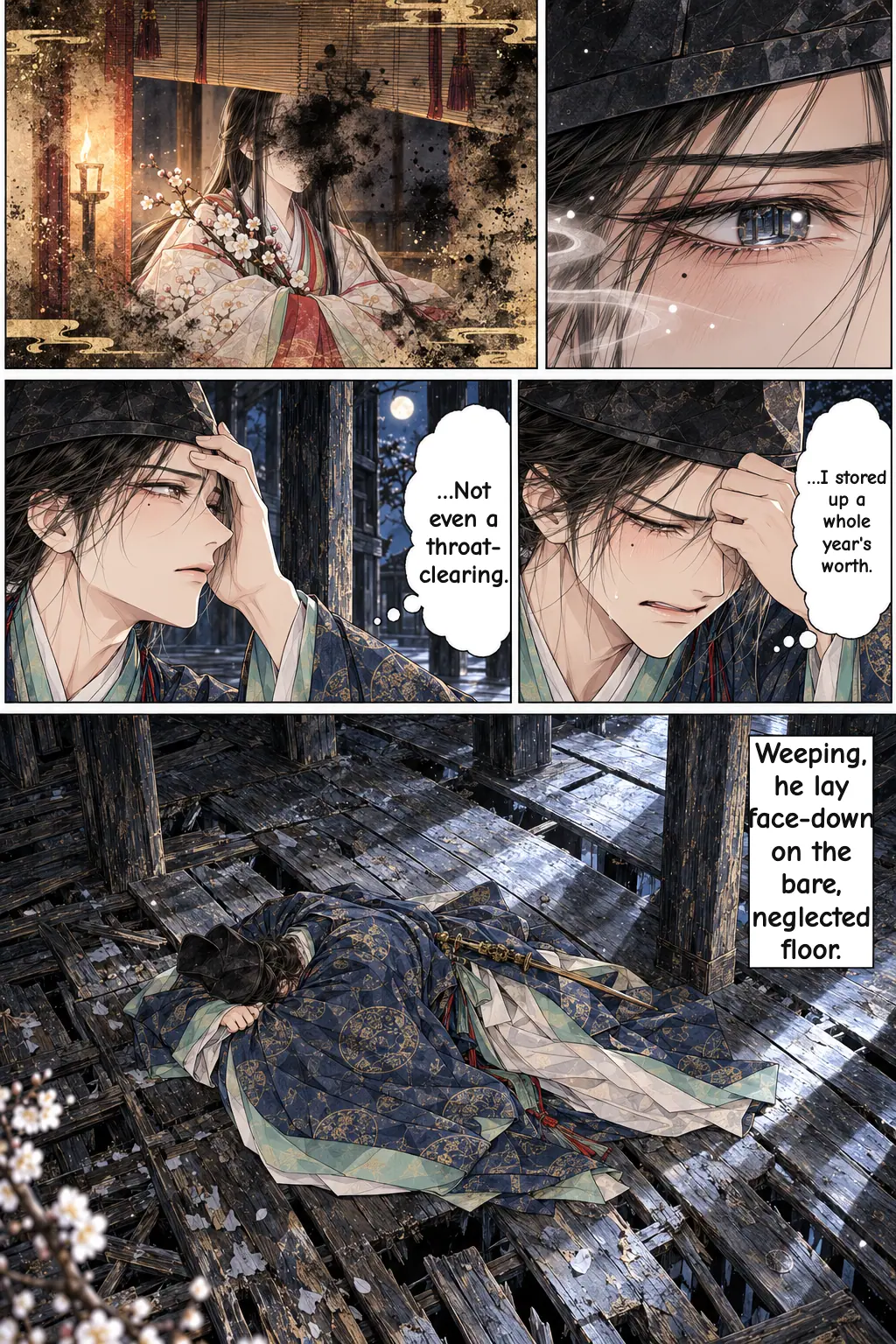
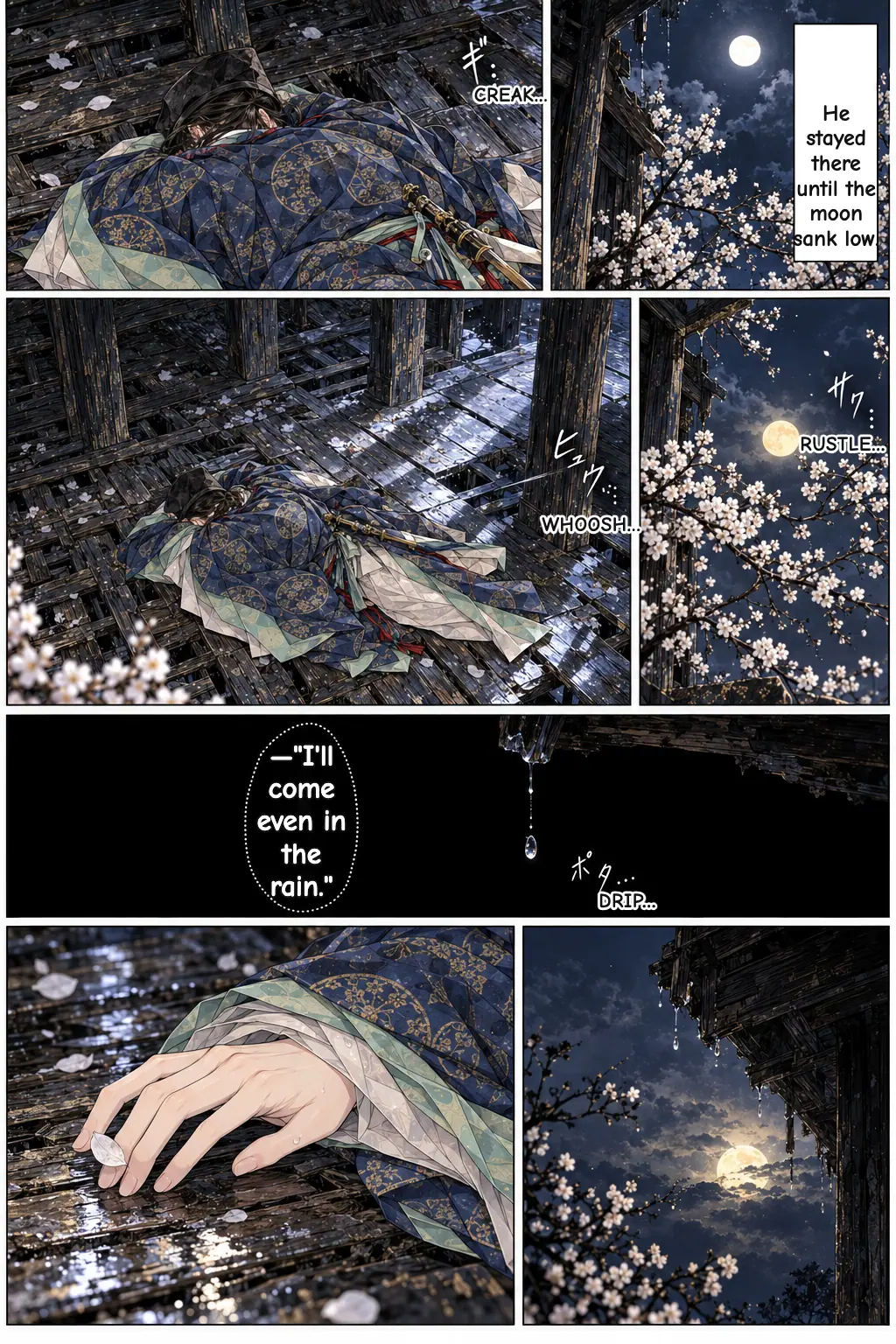
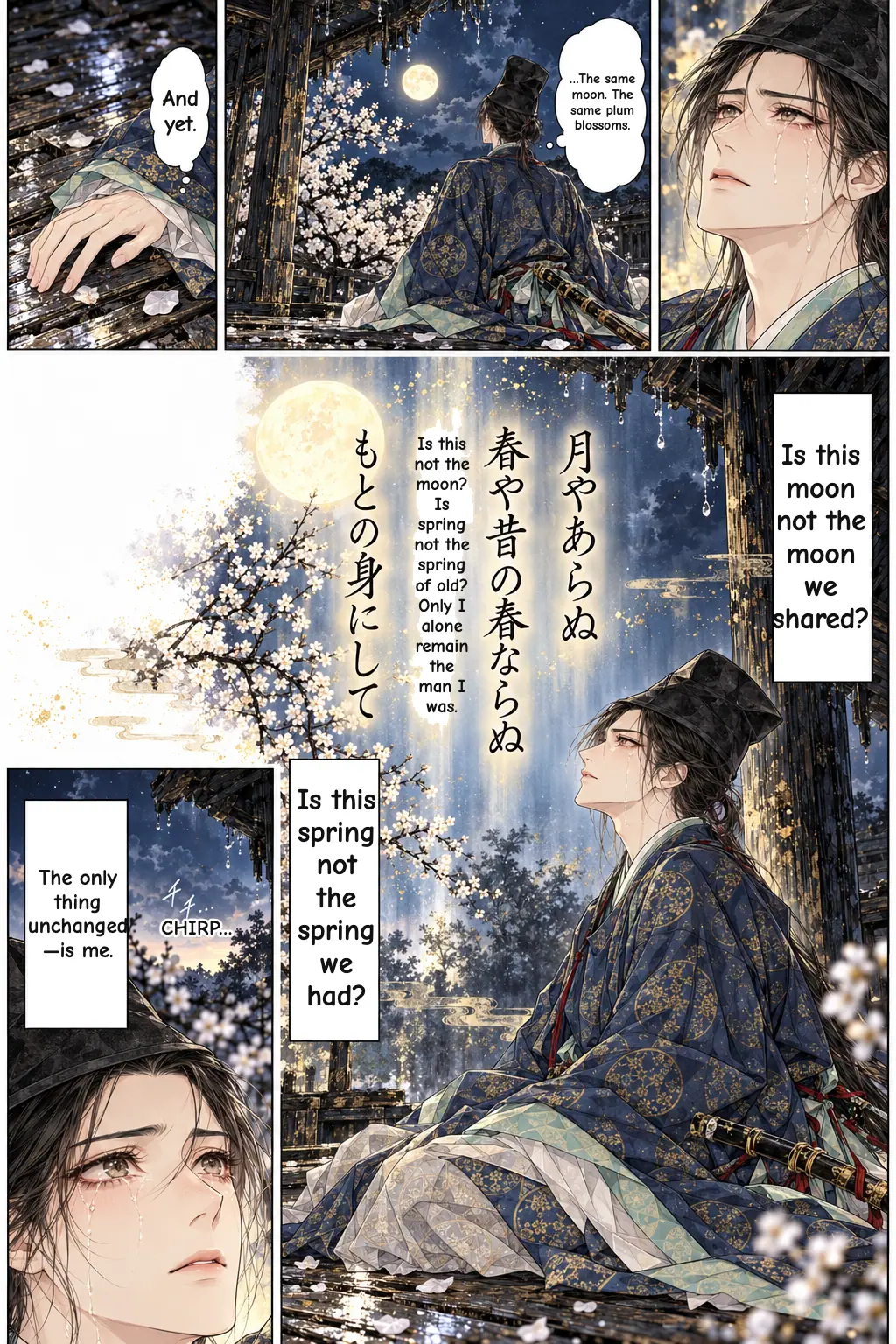
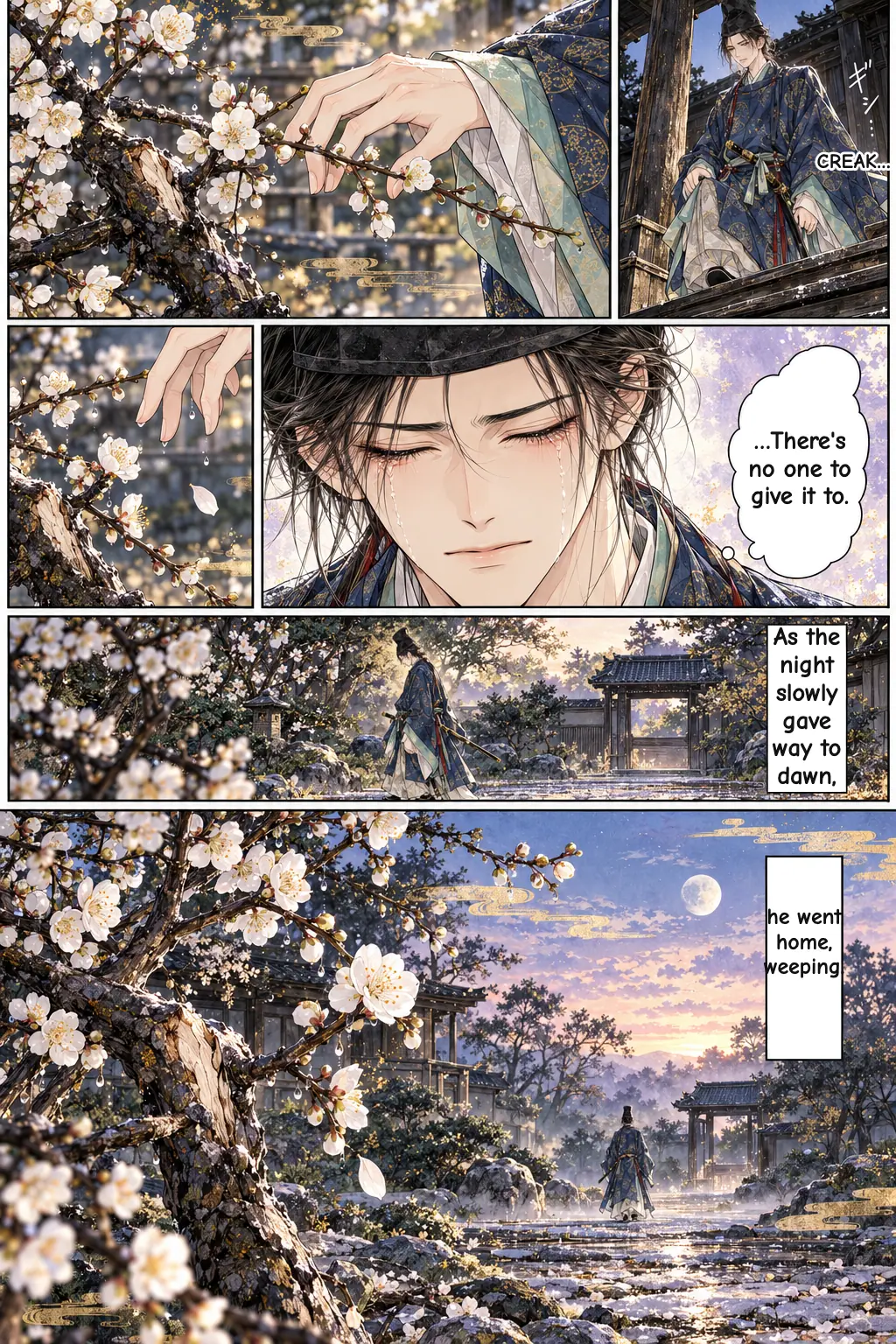
The next year, in the first month, when the plum trees were in full bloom, he missed the year before so much that he went back to the west wing. He stood and looked, then sat and looked, and nothing was the way it had been. In tears, he lay down on the bare, neglected wooden floor until the moon sank low. Remembering the past, he composed a poem, and as dawn faintly broke he went home, still weeping.
The Poem: "Tsuki ya aranu"
The whole episode leads up to one waka. Put loosely in our own words, it asks: Is this not the moon? Is this spring not the spring of long ago? Only I am still the same person I was. The moon and the plum blossoms have come back as they always do, and the man is unchanged. But the one thing that gave them meaning, the woman, is gone, so the whole world feels strange to him.
Scholars disagree on how to read the grammar. One view takes the opening lines as rhetorical: surely the moon and spring are the same, so why does everything feel different? Another reads them as real questions, as if the man is asking whether the world itself has changed. Both readings keep the same painful contrast between a world that returns every year and a love that does not.
The poem also appears in the Kokinshū, the first imperial poetry anthology (compiled in the early 10th century), in its fifth book of love poems. There it is credited to Ariwara no Narihira, a 9th-century courtier and poet.
Main Characters and Traditional Identifications
The text never names anyone. It doesn't even call him "a man" here, as most episodes do. He is simply someone whose feelings ran deep. Because the Kokinshū credits the poem to Narihira, the man has long been identified with him. That is a traditional reading, not something the episode says.
The woman is likewise unnamed. Based on neighboring episodes (especially 5 and 6) and later commentaries, a common theory holds that she was Fujiwara no Takaiko, who later became an imperial consort known as the Nijō Empress, and that the "unreachable place" was the imperial palace. The Grand Empress of Gojō is often identified as Fujiwara no Nobuko (Junshi). These identifications are widely repeated, but Episode 4 itself states none of them.
What the Story Tells Us About Heian Japan
In Heian aristocratic courtship, the man usually visited the woman at night and left before dawn. A woman's place of residence decided who could reach her. Once she moved into a guarded, high-ranking household, a lover could be cut off completely, even if he knew exactly where she was. That is the quiet tragedy of this episode: nothing violent happens, she is simply put out of reach.
The setting matters too. The first month of the old lunar calendar fell in early spring, when plum (ume) blossoms, prized for their scent, were at their peak. The moon and plum blossoms are classic images of time that comes back around. Here they are set against loss that doesn't. The episode is a short lesson in mono no aware, the gentle sorrow of seeing that things don't last.
What the Manga Changes and Adds
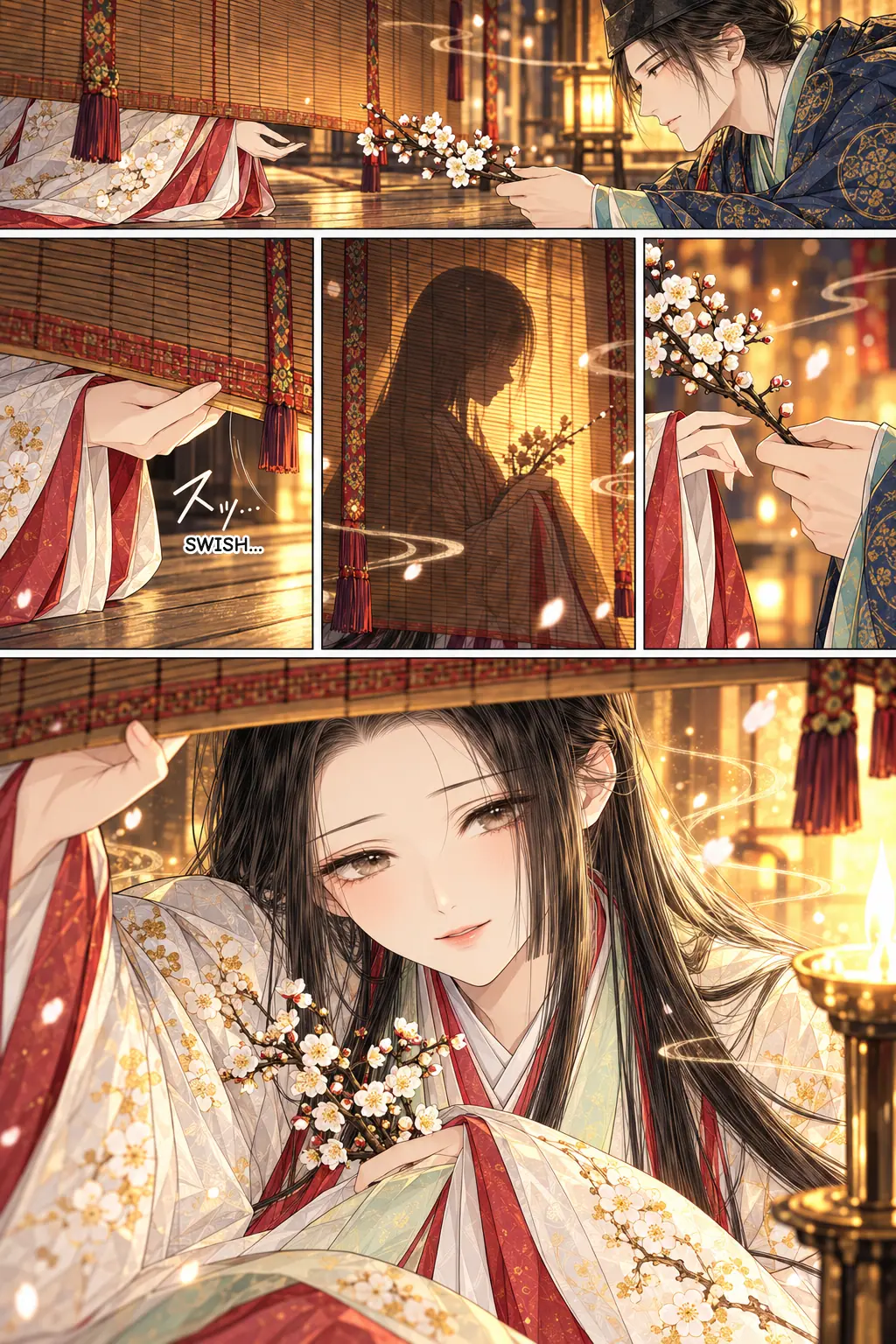
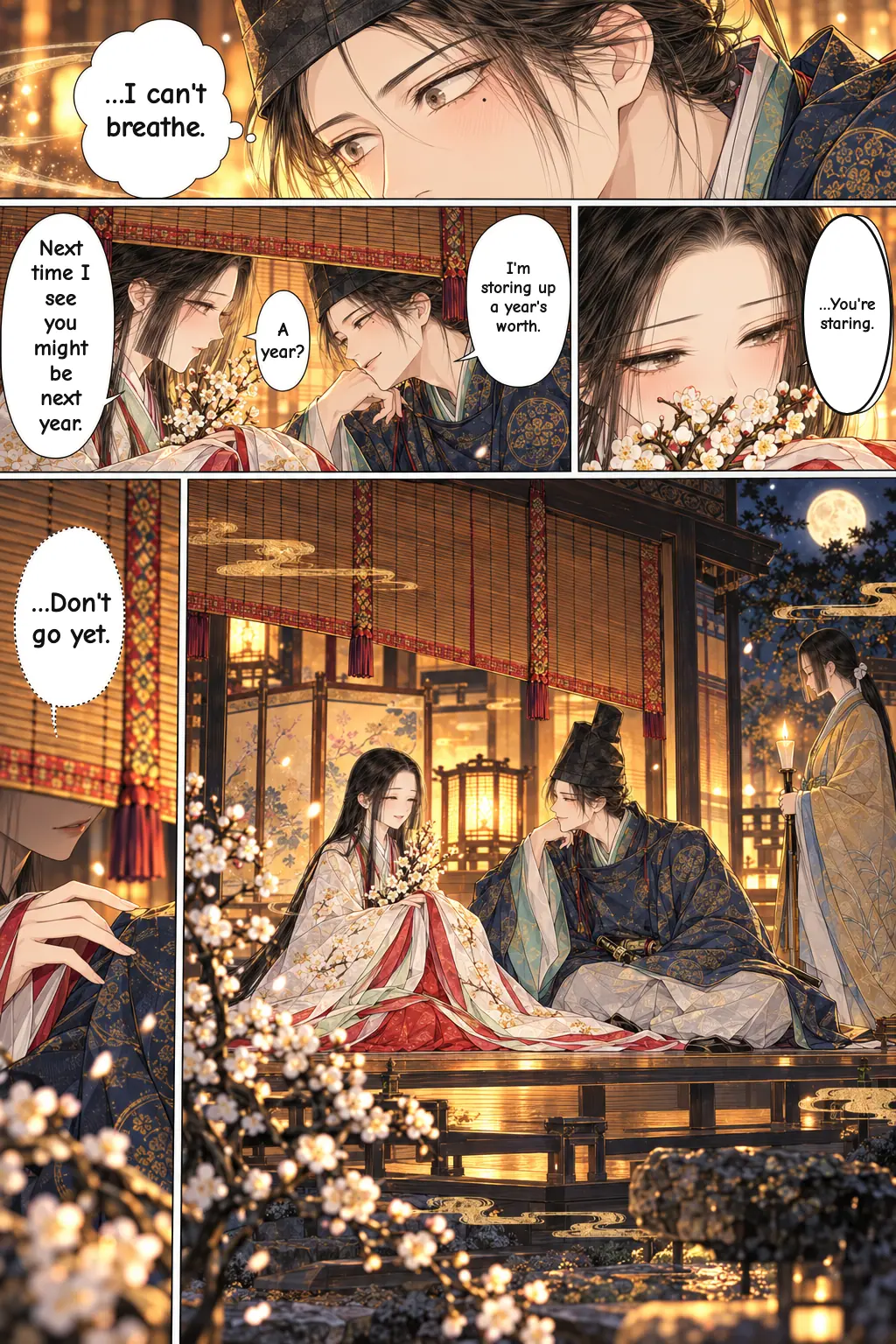
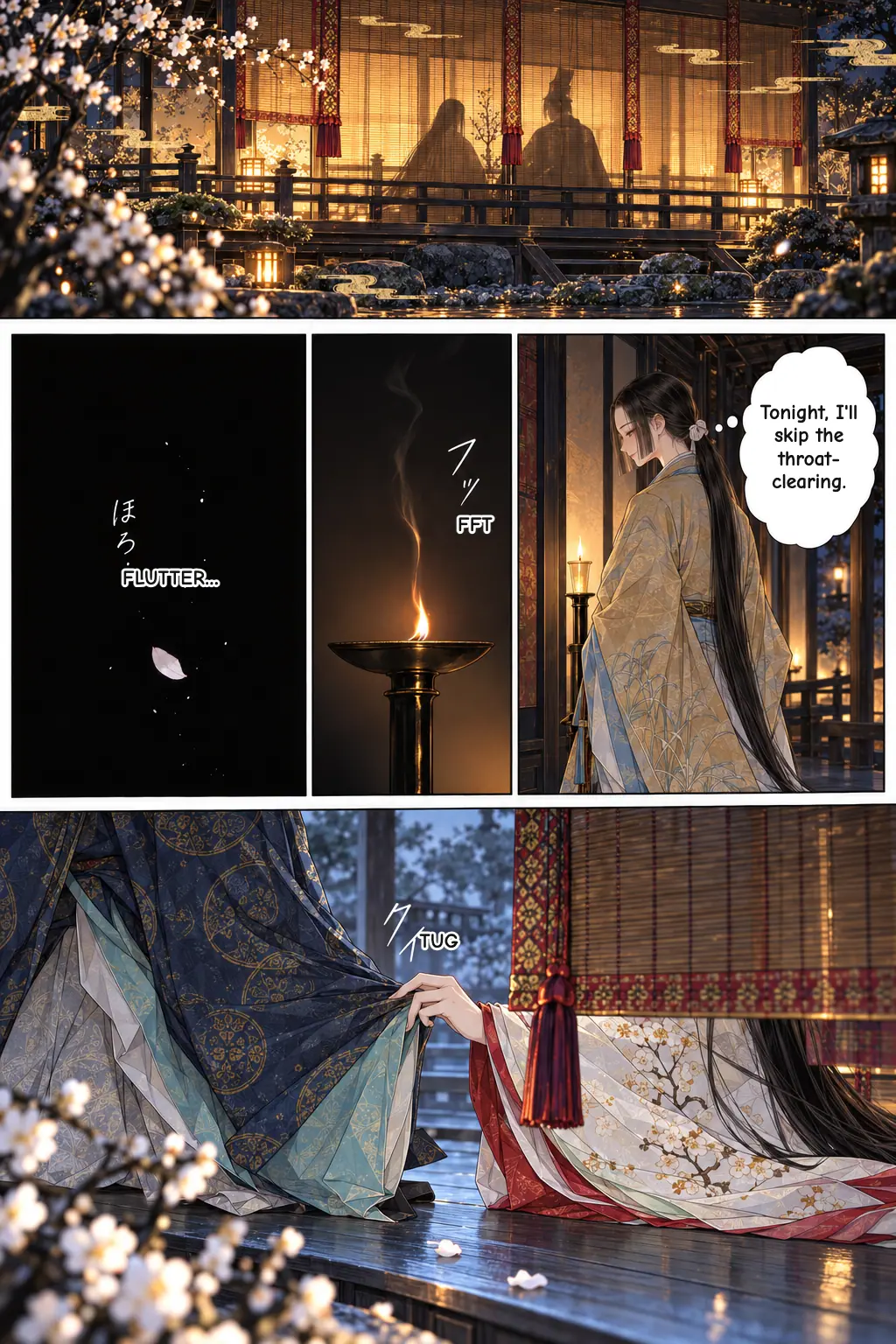
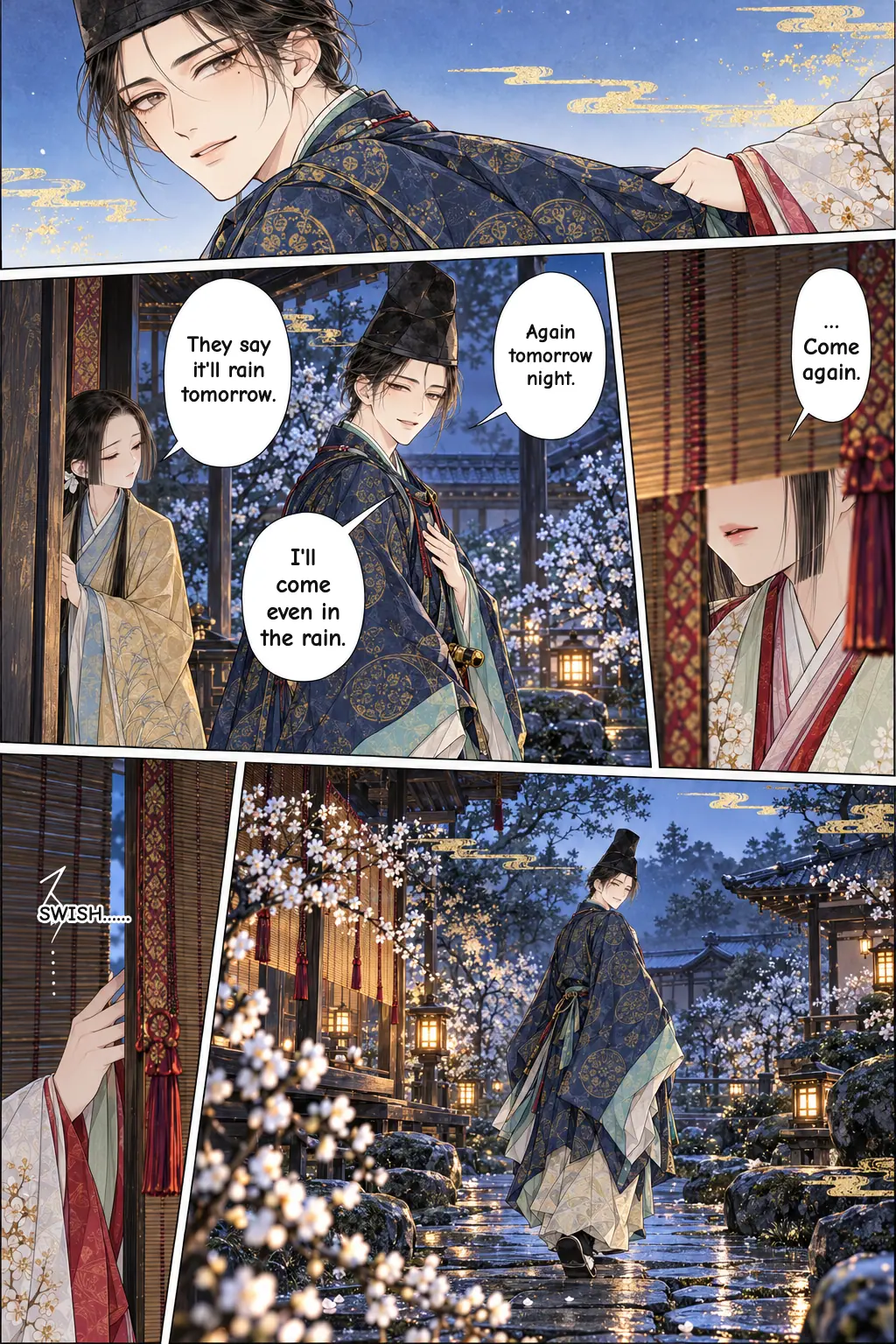
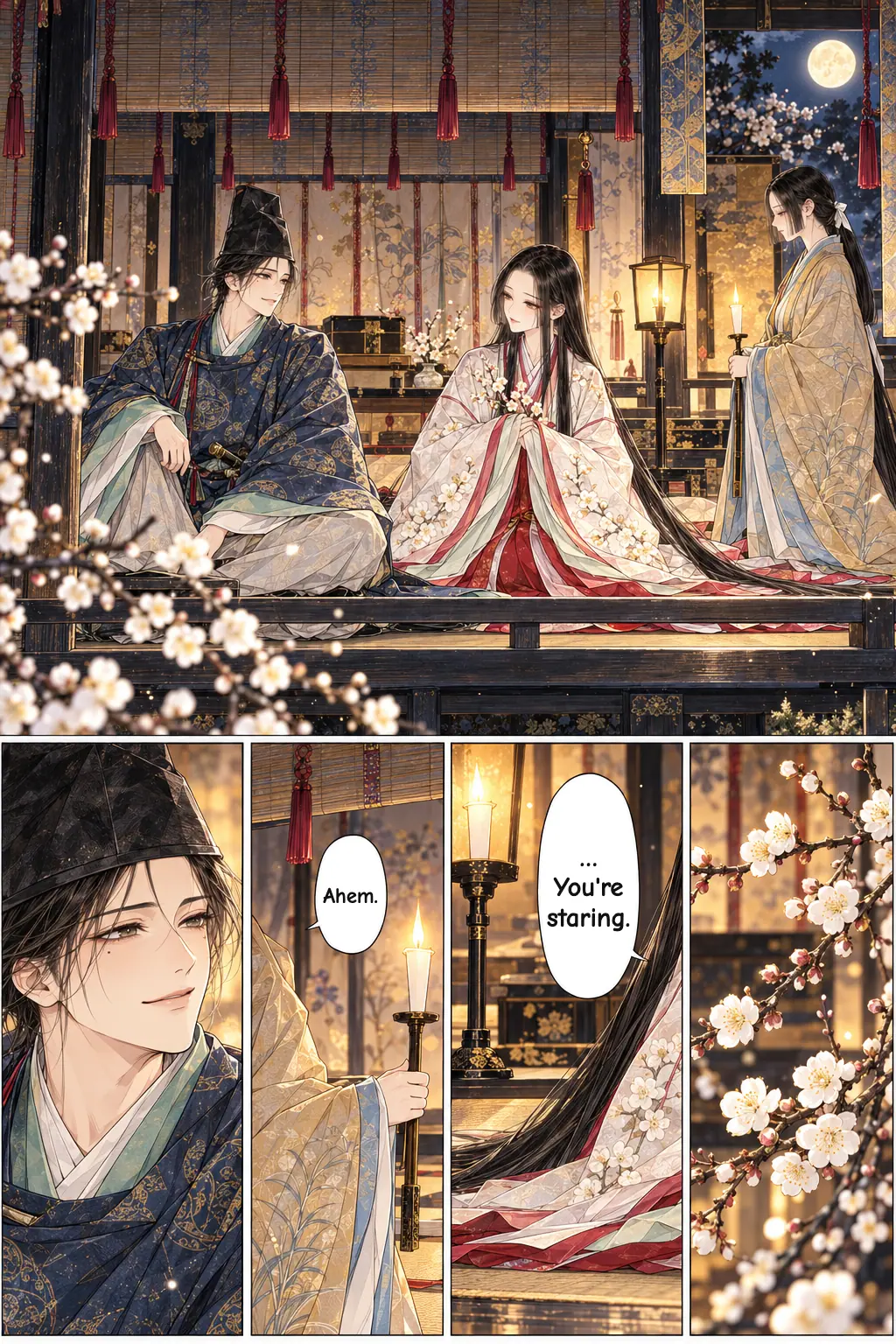
The original gives only a few lines to the past romance, so the manga invents it. Roughly eight pages of flashback show conversations through a bamboo blind, a plum branch being broken off, shared glances, and partings before dawn. None of these scenes are in the text. The characters' looks, clothing, ages, and all of the woman's dialogue are also new. In the original, she never speaks.
The manga also shows how the man spends his lonely year, which the source sums up in a single phrase. It fills in details of the deserted west wing beyond the source's "bare wooden floor," and it frames this year's visit the same way as last year's so readers can feel the change. The moonlight, plum scent, and dawn are visual choices, and so is our English rendering of the poem. In keeping with the original, the manga doesn't name the woman or show where she went.
Where to Read It
If you want to feel this tiny, aching story instead of just reading a summary, the manga version is above this article. It's Episode 8 of LOVE & ALLURE: Classic Japanese Tales of Romance, and like every episode in the series, it's free to read with no sign-up. Other episodes bring more classic Japanese love stories to life, so you can keep going as far as you like.
Characters in this episode
The Man (the one with deep feelings)
A courtier who loves the woman of the west wing, loses her, and returns a year later to compose the famous moon poem. He is traditionally identified with the poet Ariwara no Narihira.
The Woman of the West Wing
A woman living in the Grand Empress's mansion who suddenly moves somewhere her lover cannot reach. Later tradition, not this episode, identifies her as Fujiwara no Takaiko.
The Grand Empress of Gojō
The owner of the mansion, mentioned only to set the scene, and often identified as Fujiwara no Nobuko (Junshi).
FAQ
What is "Tsuki ya aranu" in The Tales of Ise?
It is the poem at the heart of Episode 4. A man returns to his lost lover's empty room in plum-blossom season and wonders whether the moon and spring are no longer what they were, since only he seems unchanged. It is one of the most famous waka in classical Japanese literature.
Who wrote The Tales of Ise?
The author is unknown. The work took shape in the early-to-mid Heian period. Because many of its poems are credited to Ariwara no Narihira in the Kokinshū, its unnamed hero has traditionally been linked to him.
Where did the woman go in Tales of Ise Episode 4?
The episode says only that she went somewhere people could not visit. A common theory, based on later episodes and commentaries, is that she was Fujiwara no Takaiko and entered the imperial court, but Episode 4 itself does not say so.
Is the man in Episode 4 Ariwara no Narihira?
Many readers assume so, because the same poem appears in the Kokinshū under Narihira's name. However, the episode never names him. It doesn't even call him "a man" as most episodes do.
Why are plum blossoms and the moon important in this story?
Both come back every year, so they stand for time that repeats. The man finds the moon and blossoms just as before while the woman is gone, and that contrast is the source of his grief.