Episode 7Gone Seven Years. Her Lamp Still Burned.Tales of Moonlight and Rain: \"The House Amid the Thickets\"
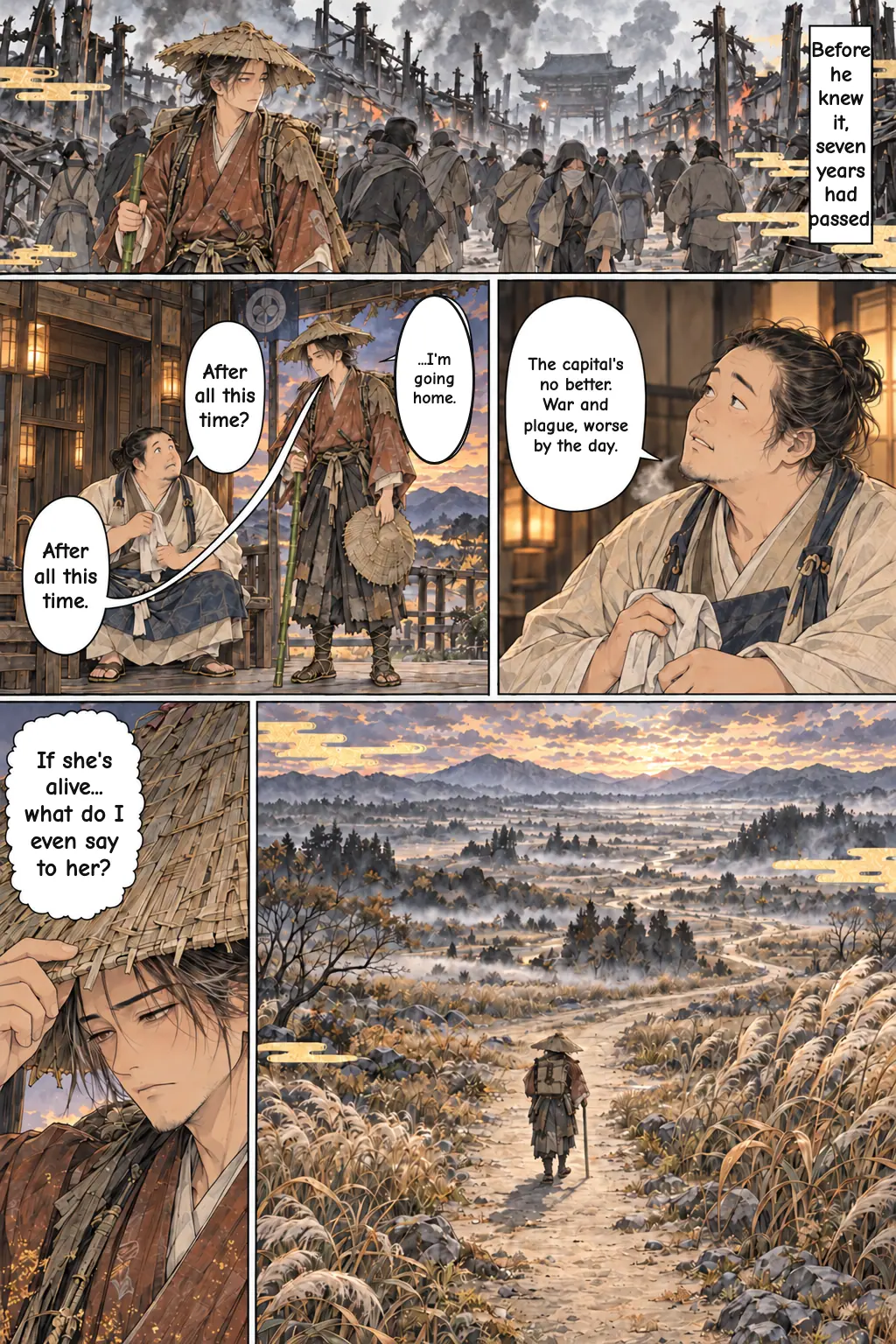
A man leaves his wife, swearing he'll be home by autumn, and sets off for the capital to sell silk. One reason not to return piles on another until seven years have gone by. When he finally reaches his village, it's buried in grass, and only his house has a light in the window.
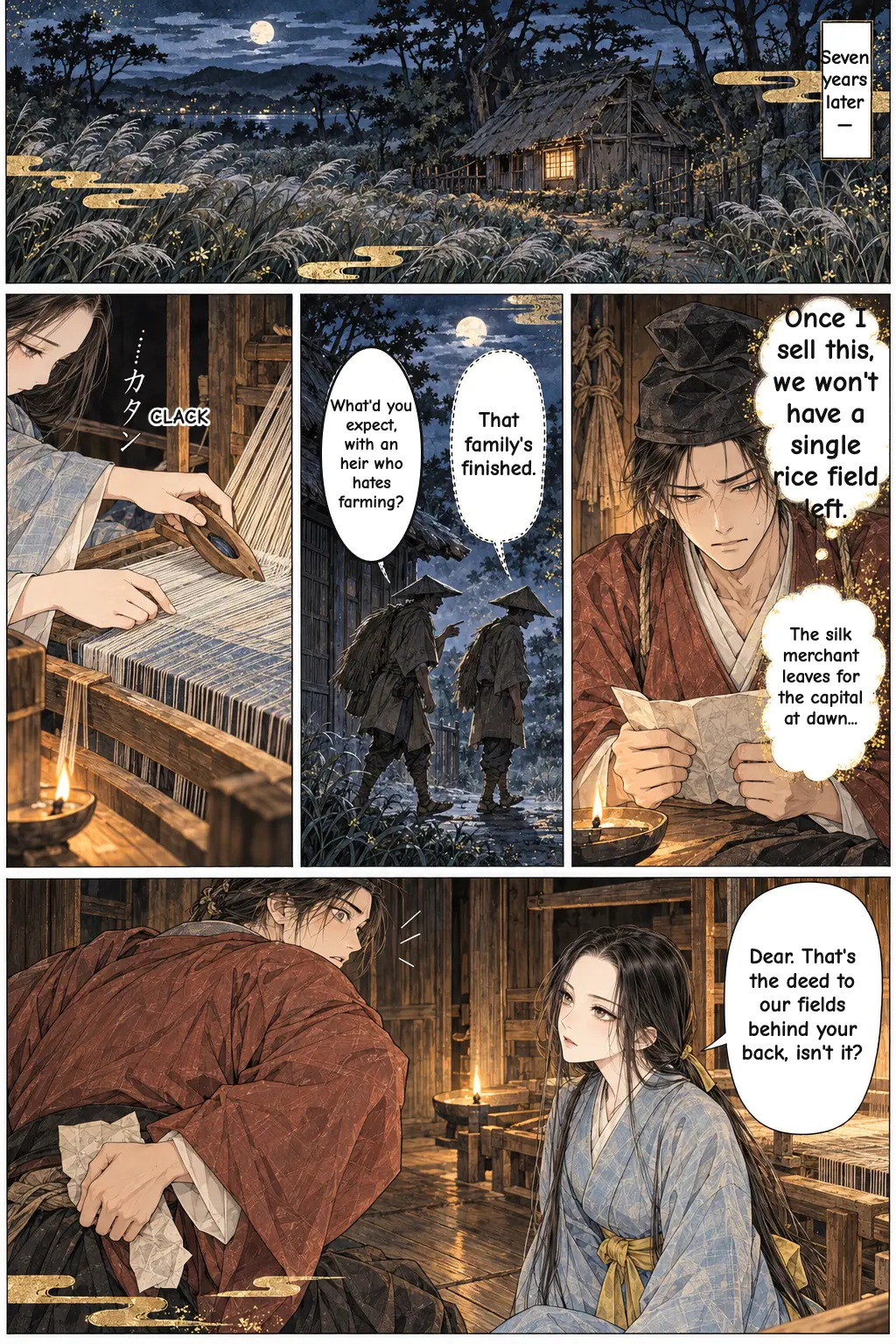
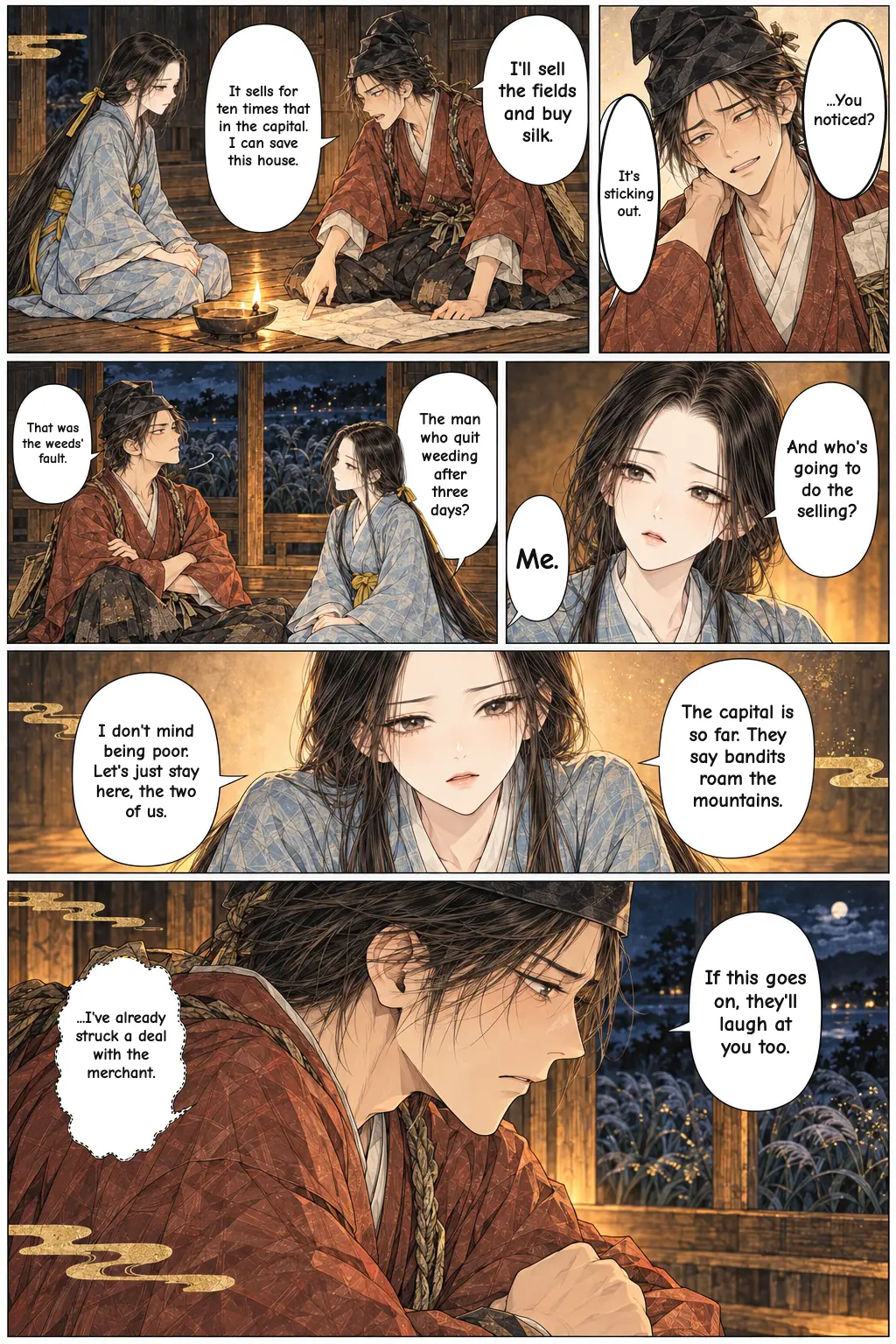
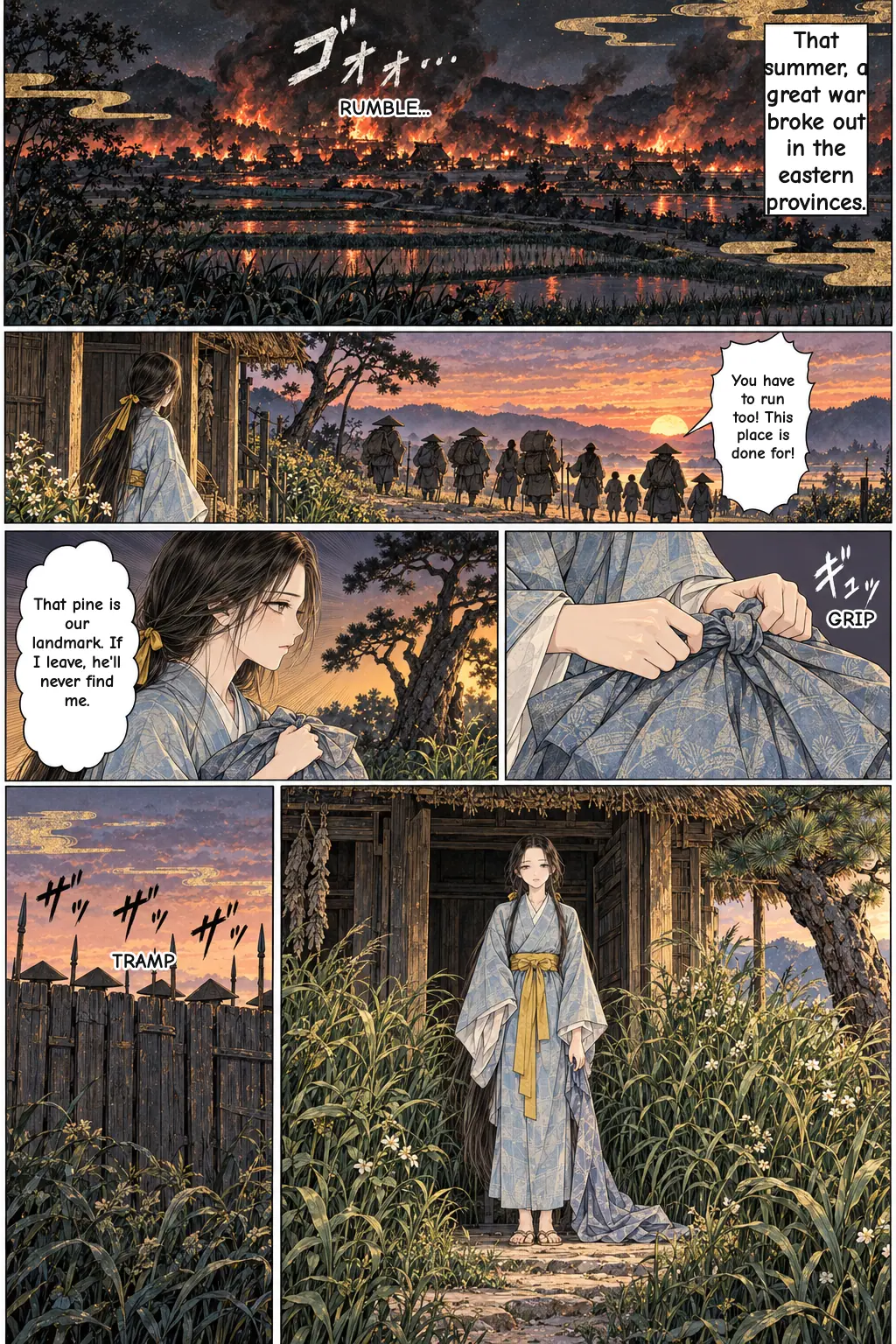
The story takes place in the village of Mama, in Katsushika District of Shimōsa Province, near present-day Ichikawa, just east of Tokyo. Katsushirō comes from an old family that used to be well off. He hates farm work, and his carelessness has left the household poor, so his relatives look down on him. He wants to restore his standing. A Kyoto merchant named Sasabe no Sōji comes to the area every year to buy Ashikaga silk, and Katsushirō decides to go into the trade with him. He sells his last fields, buys silk, and gets ready to leave for the capital. His wife Miyagi is beautiful and wise.
The House Amid the Thickets (Asaji ga Yado) Summary: Ugetsu Monogatari's Ghost Wife Story
In short: "The House Amid the Thickets" (Asaji ga Yado) is a ghost story from Ueda Akinari's Tales of Moonlight and Rain (Ugetsu Monogatari, 1776). Katsushirō leaves his wife Miyagi to sell silk in Kyoto and promises to come home by autumn. War and bad luck keep him away for seven years. When he finally returns, Miyagi welcomes him and they spend one night together. At dawn he learns she died long ago while still waiting for him.
The original story: a summary
The story takes place in the village of Mama, in Katsushika District of Shimōsa Province, near present-day Ichikawa, just east of Tokyo. Katsushirō comes from an old family that used to be well off. He hates farm work, and his carelessness has left the household poor, so his relatives look down on him. He wants to restore his standing. A Kyoto merchant named Sasabe no Sōji comes to the area every year to buy Ashikaga silk, and Katsushirō decides to go into the trade with him. He sells his last fields, buys silk, and gets ready to leave for the capital.
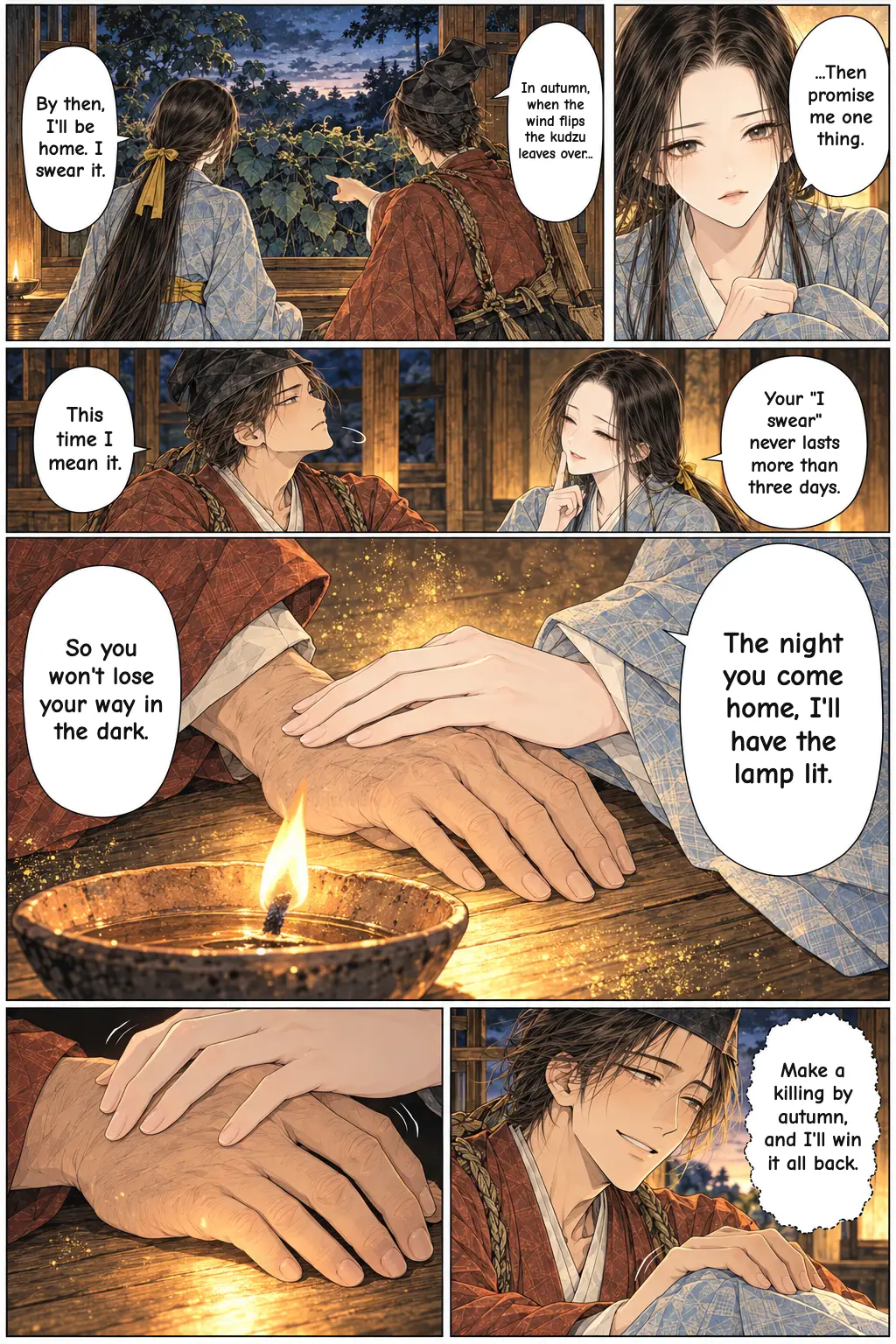
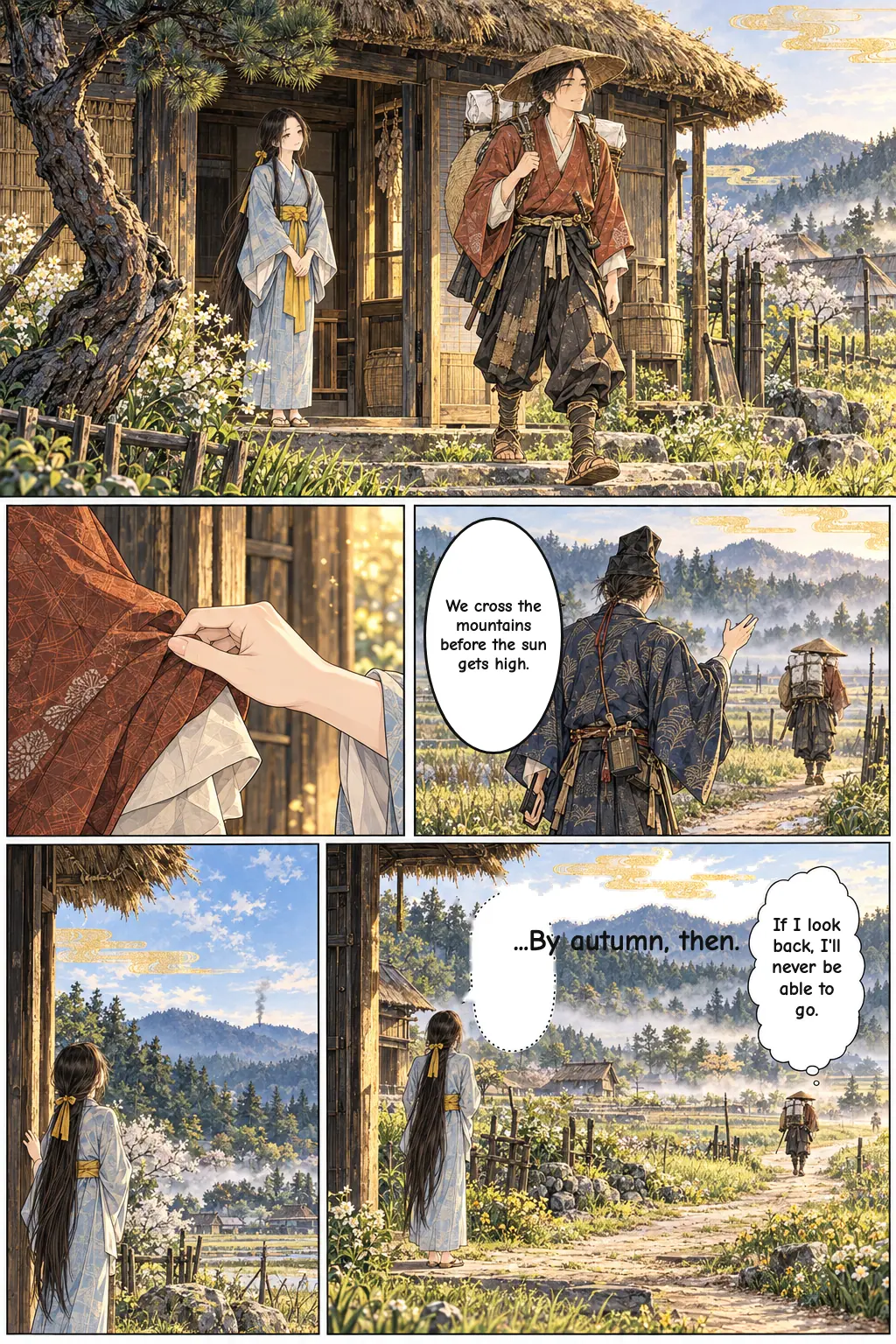
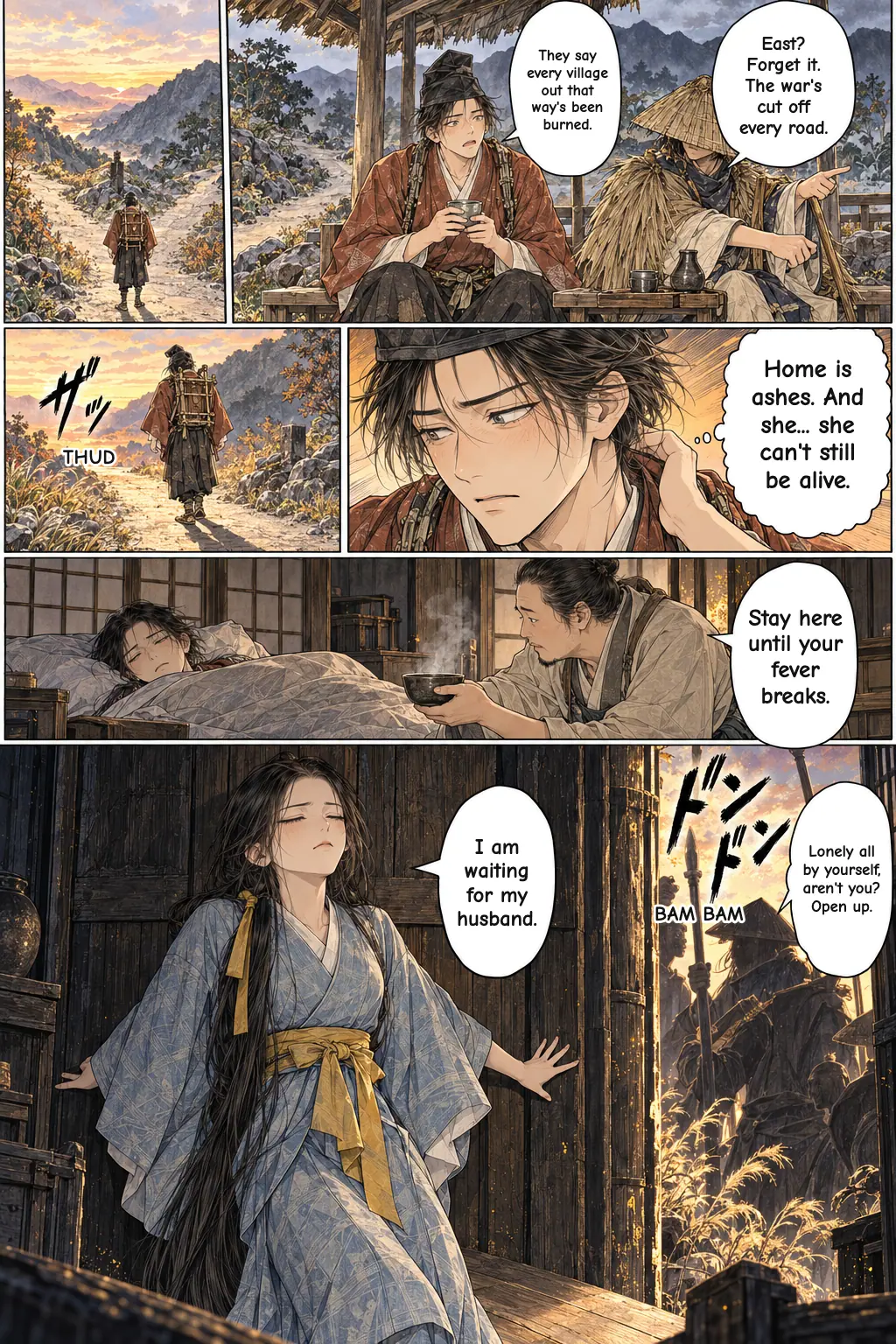
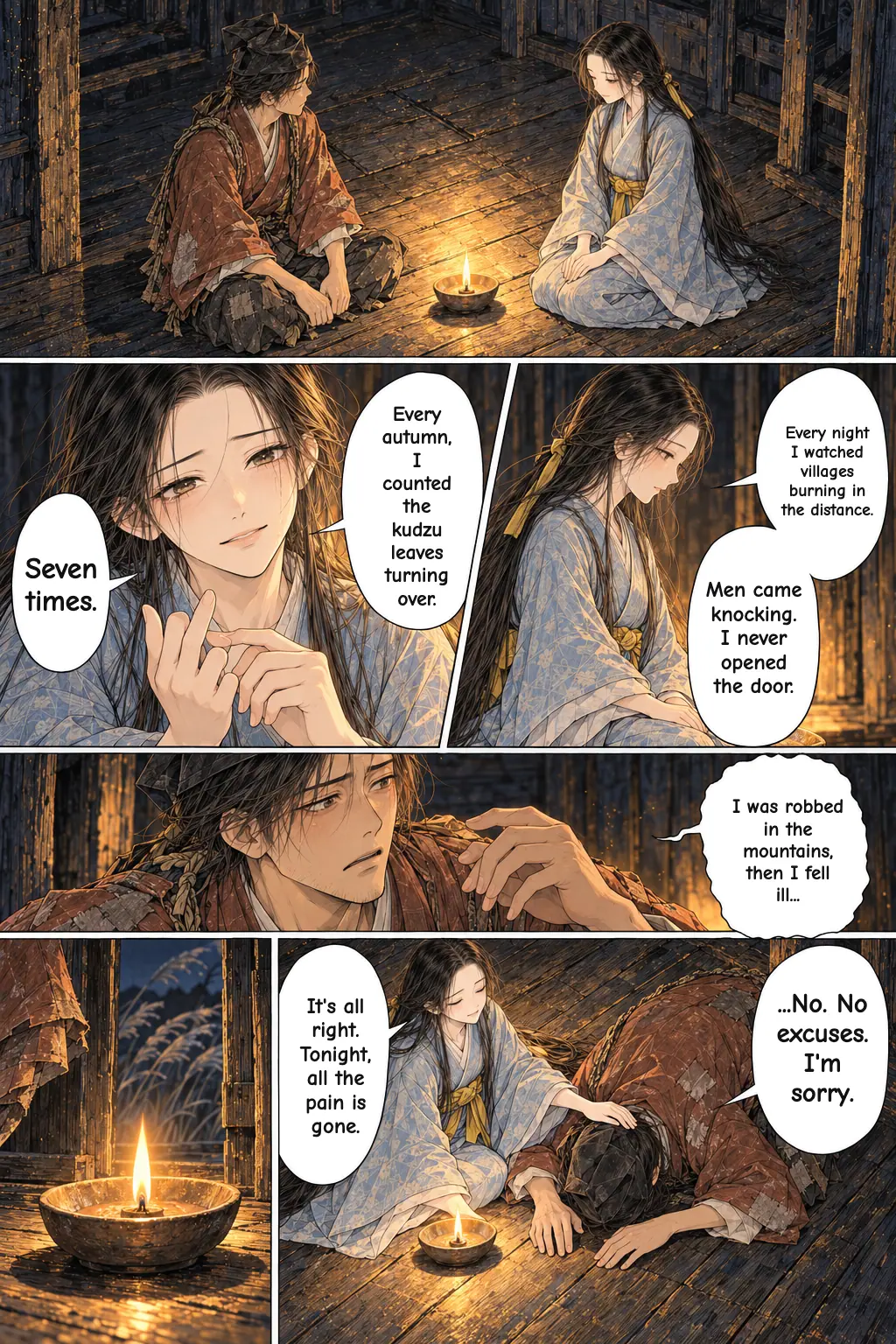
His wife Miyagi is beautiful and wise. She begs him not to go, but he gives his word that he will be back by autumn. The original plays on the word for kudzu leaves turning over in the autumn wind, which sounds like the word for coming home. That summer, in 1455, fighting breaks out between the Kamakura lord Ashikaga Shigeuji and the Uesugi family, who held the post of shogun's deputy in the east. This conflict is known as the Kyōtoku War. Young men are taken into the armies, and the old and the young run to the hills. Miyagi thinks about fleeing too, but she trusts her husband's promise and stays. Autumn comes and goes without him. She turns away the men who come courting, locks her door, and waits alone after even her servants have left.
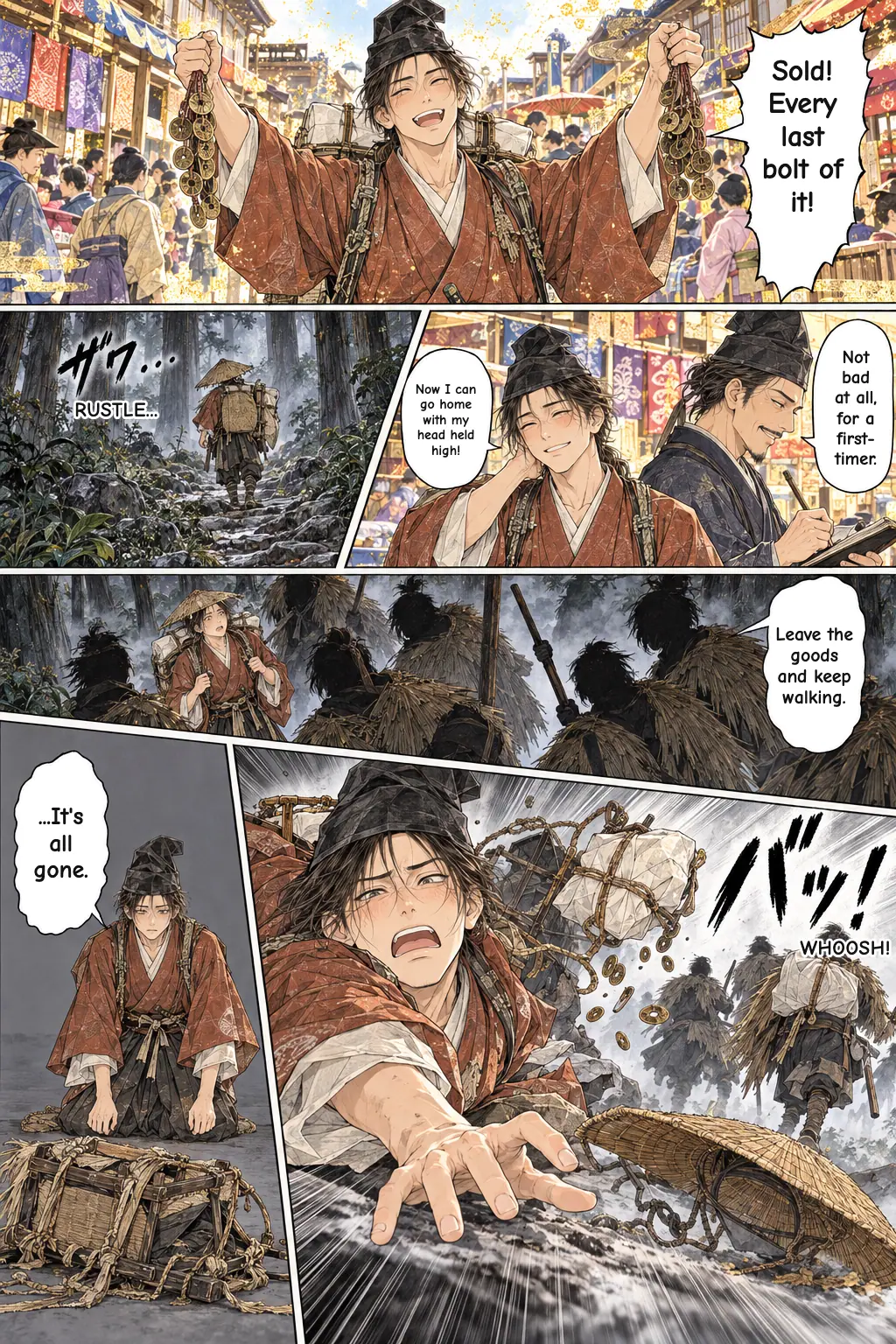
Katsushirō sells his silk at a profit in Kyoto. On the way home, bandits on the Kiso road take everything he has. He hears that the checkpoints to the east are closed because of the war, and he decides his village must have burned and his wife must be dead. He falls ill with a fever at Musa in Ōmi Province, where a kind man named Kodama Kahei takes him in. He stays in the region for seven years. Around 1461, war and plague around the capital push him to finally go home.
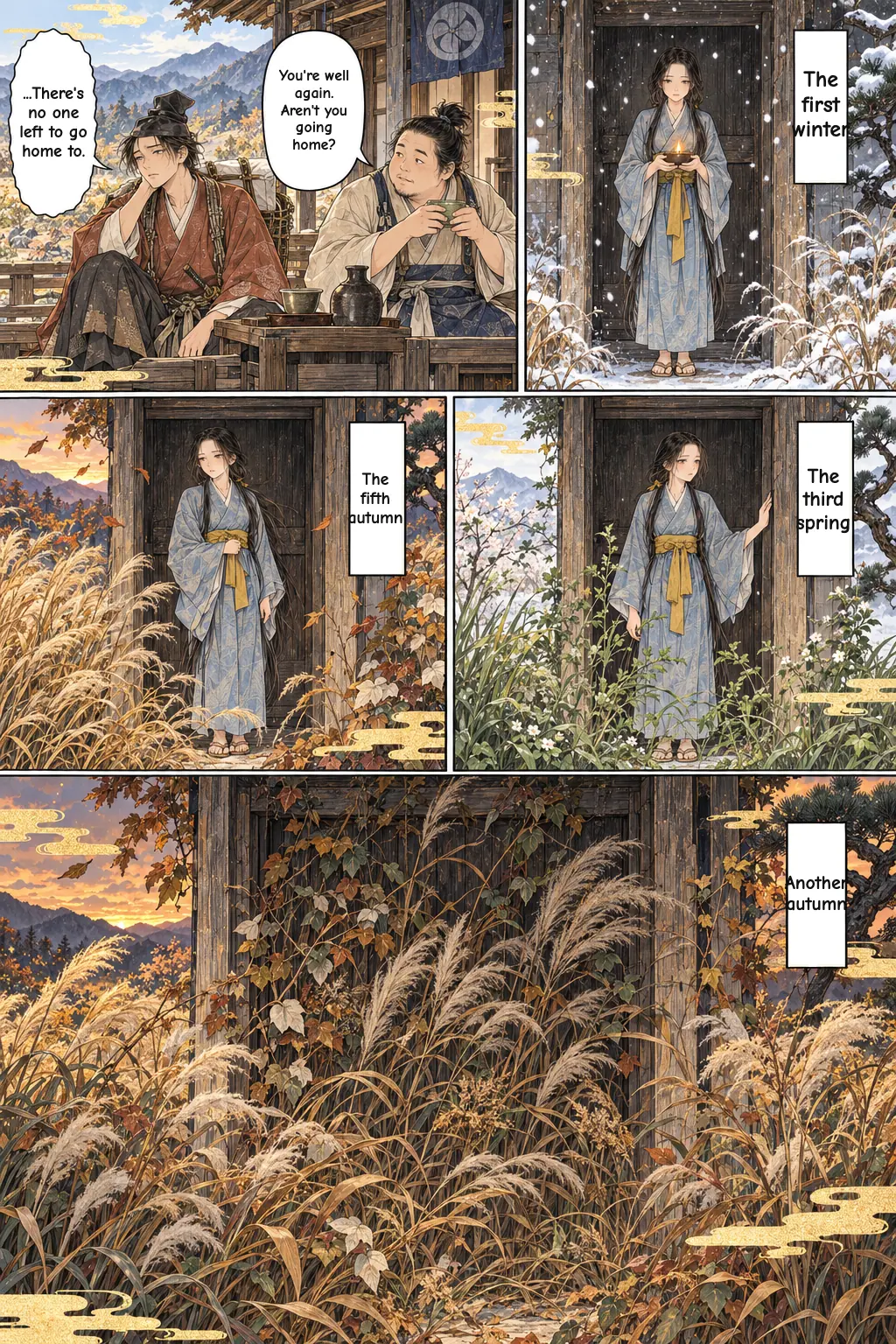
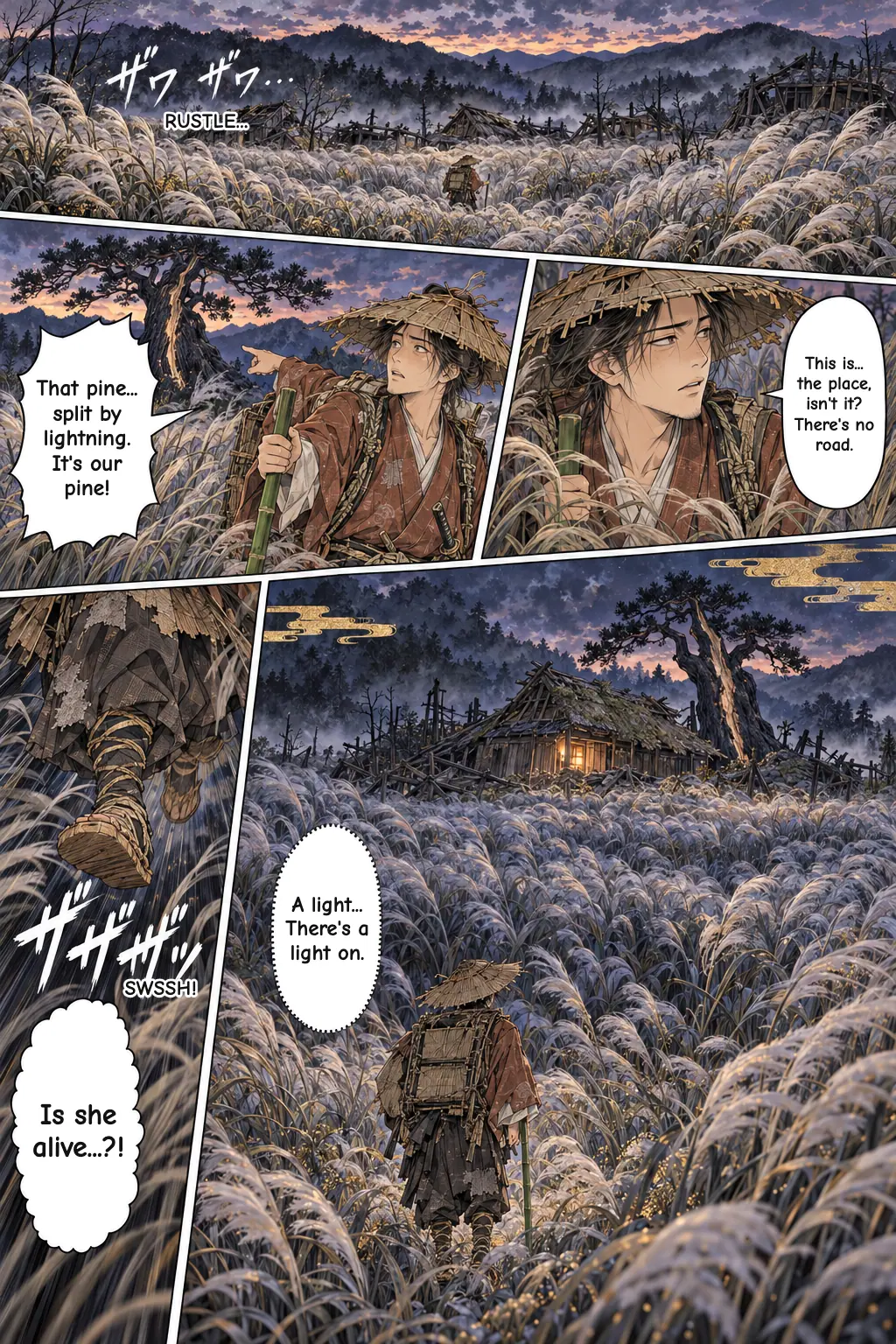
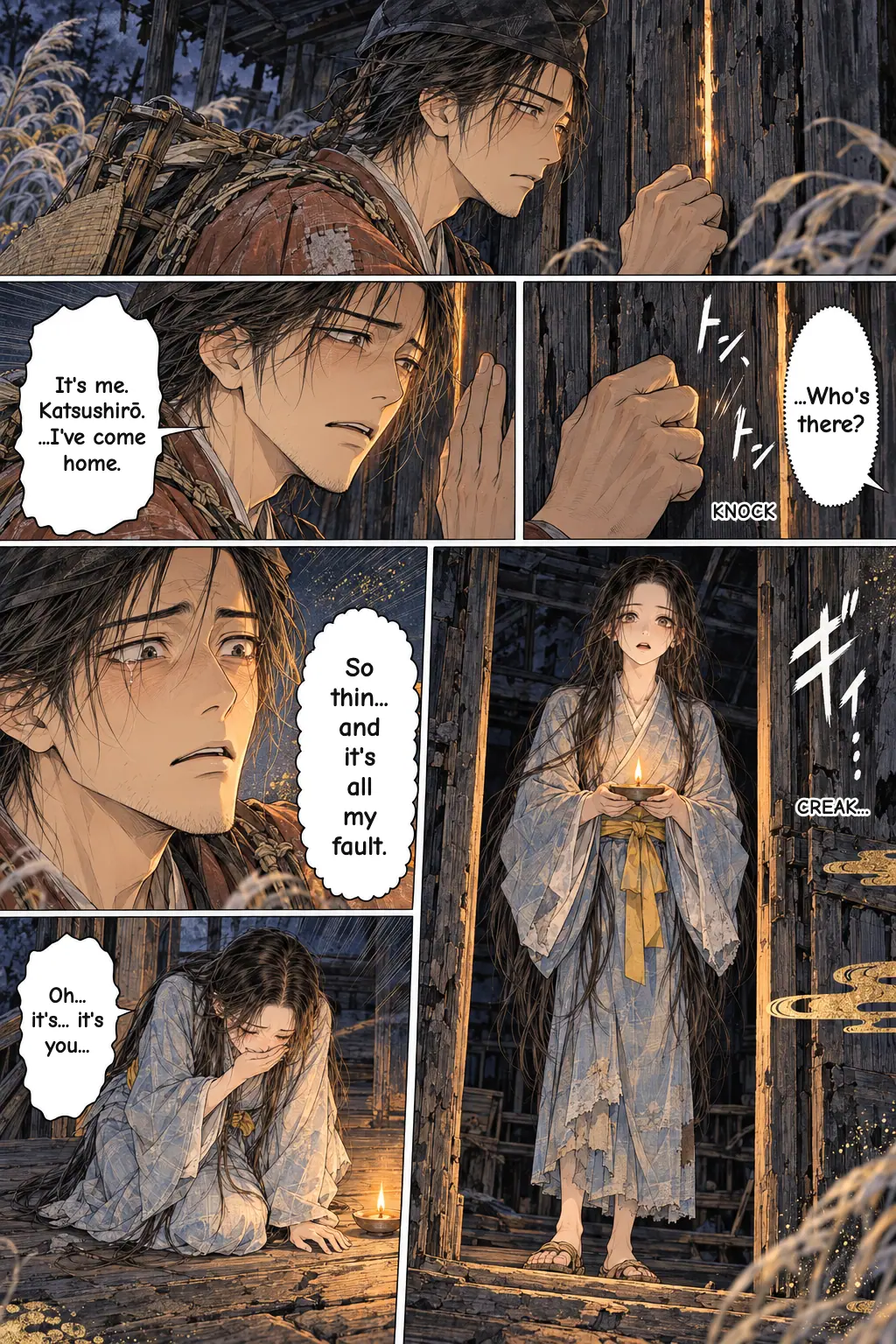
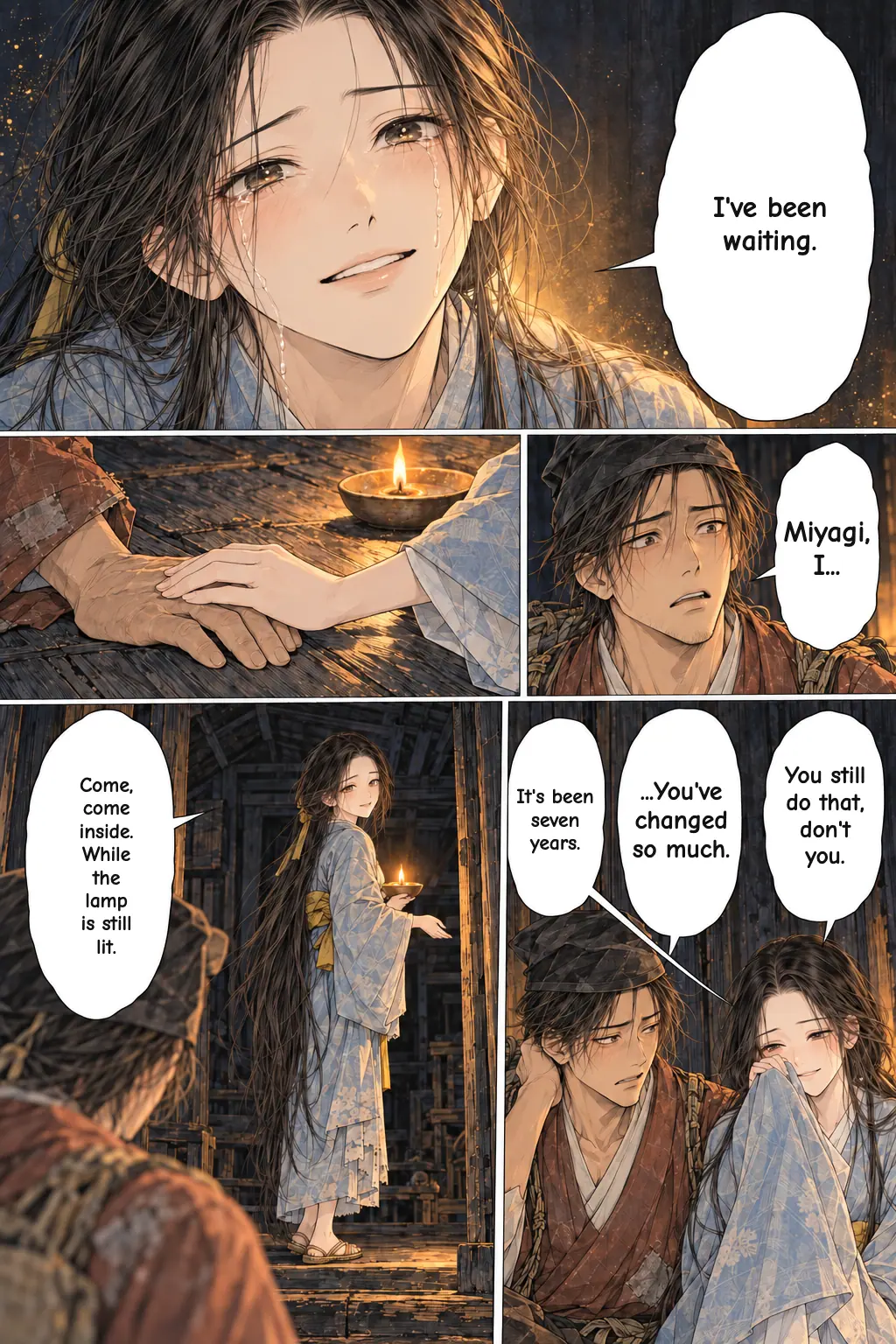
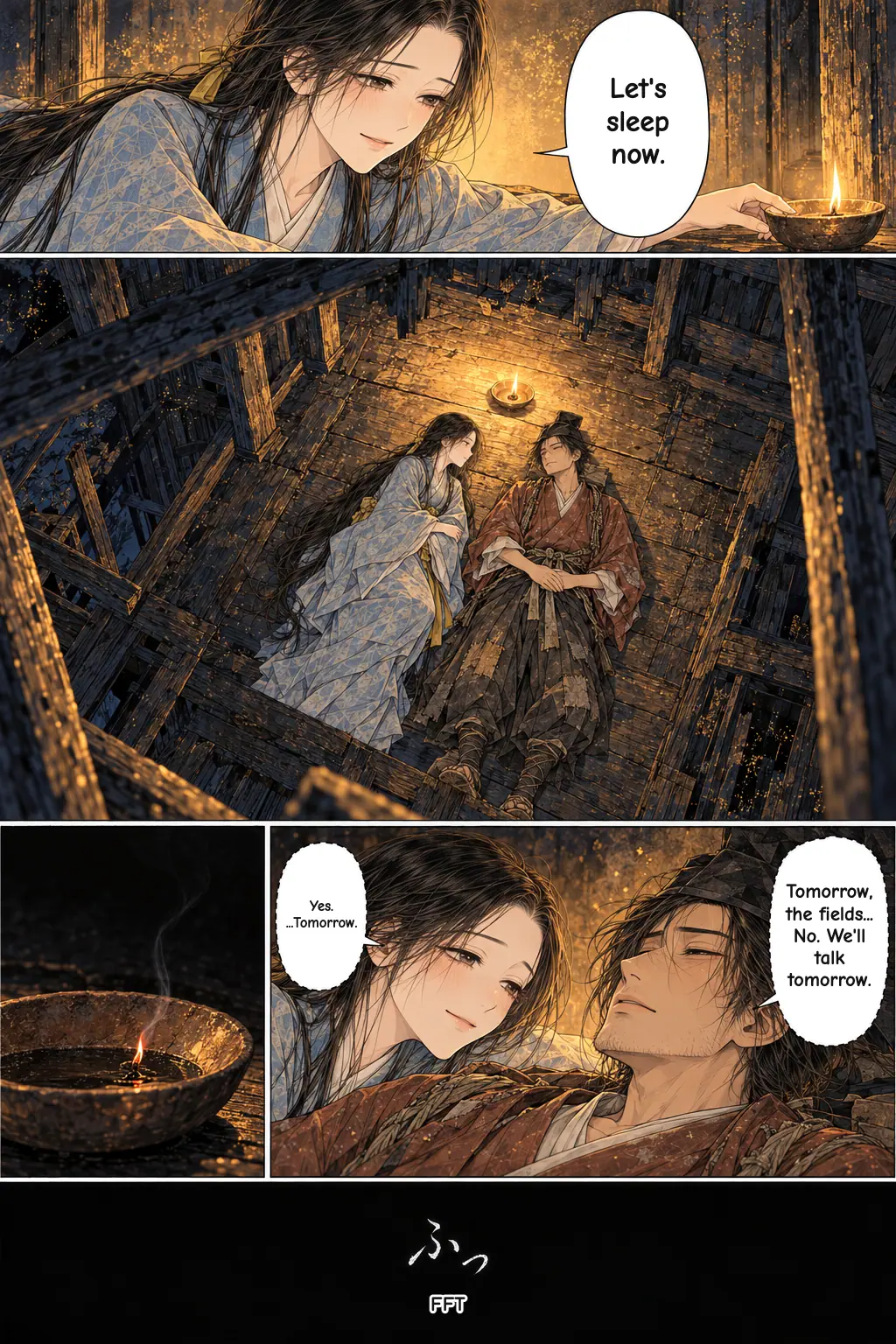
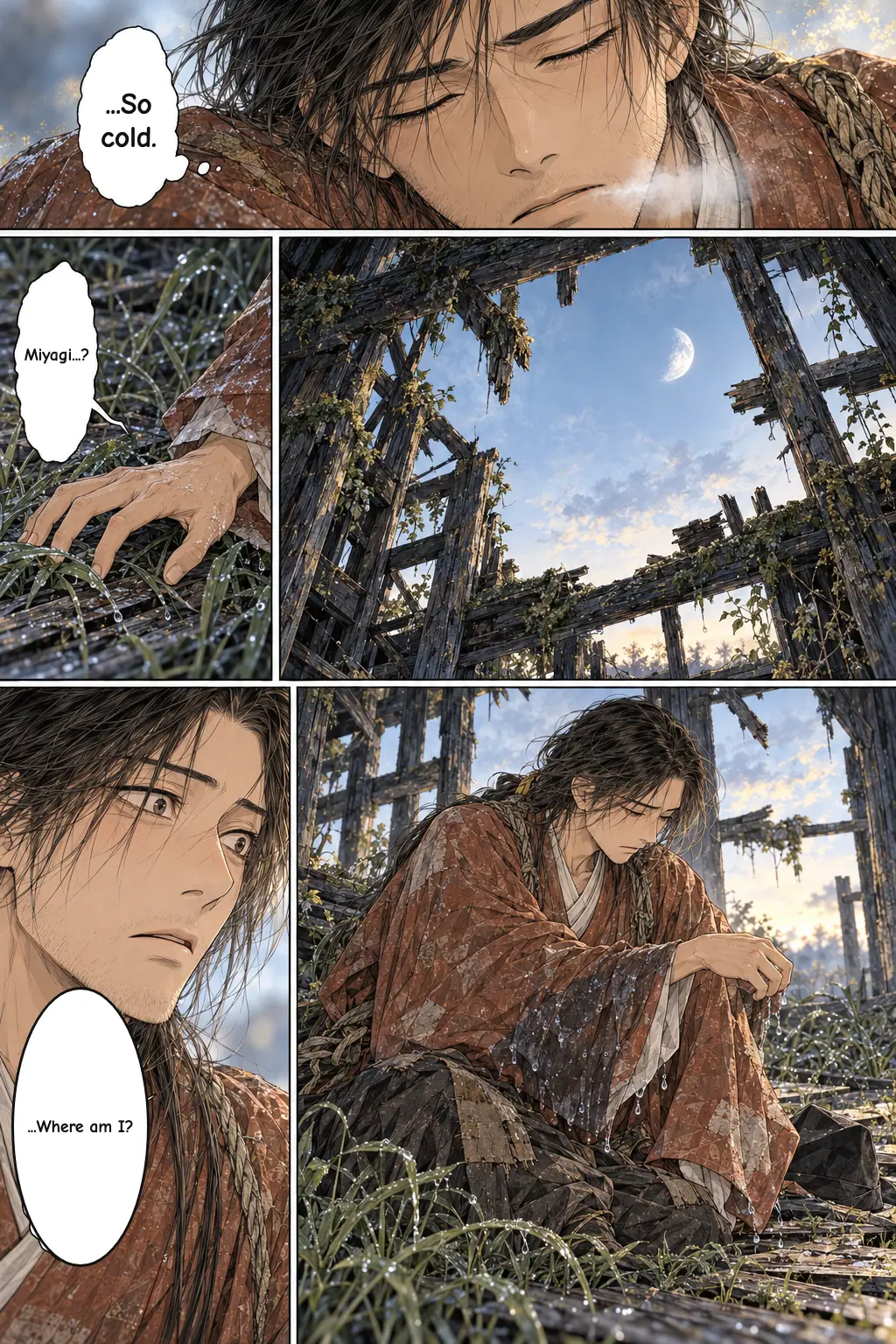
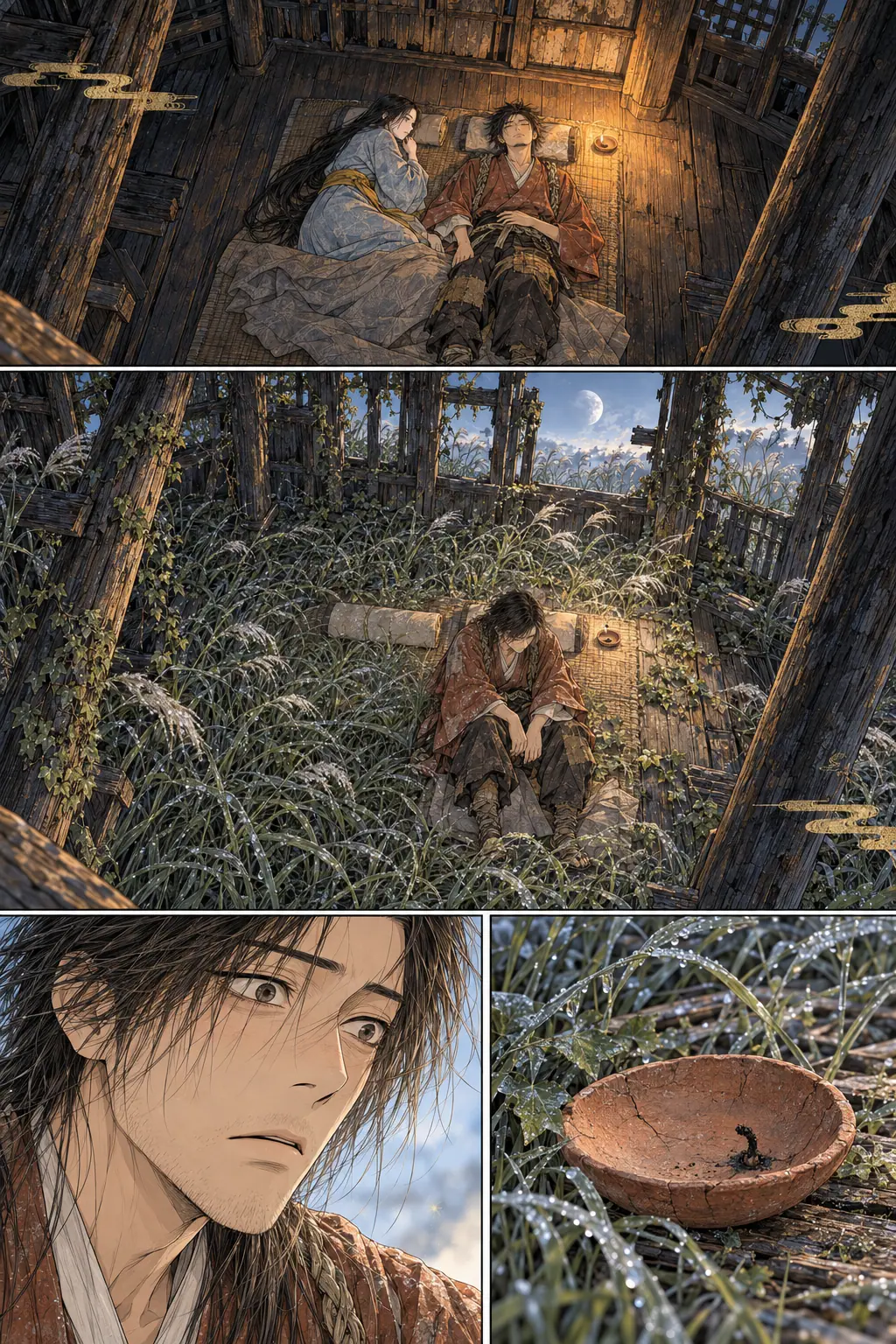
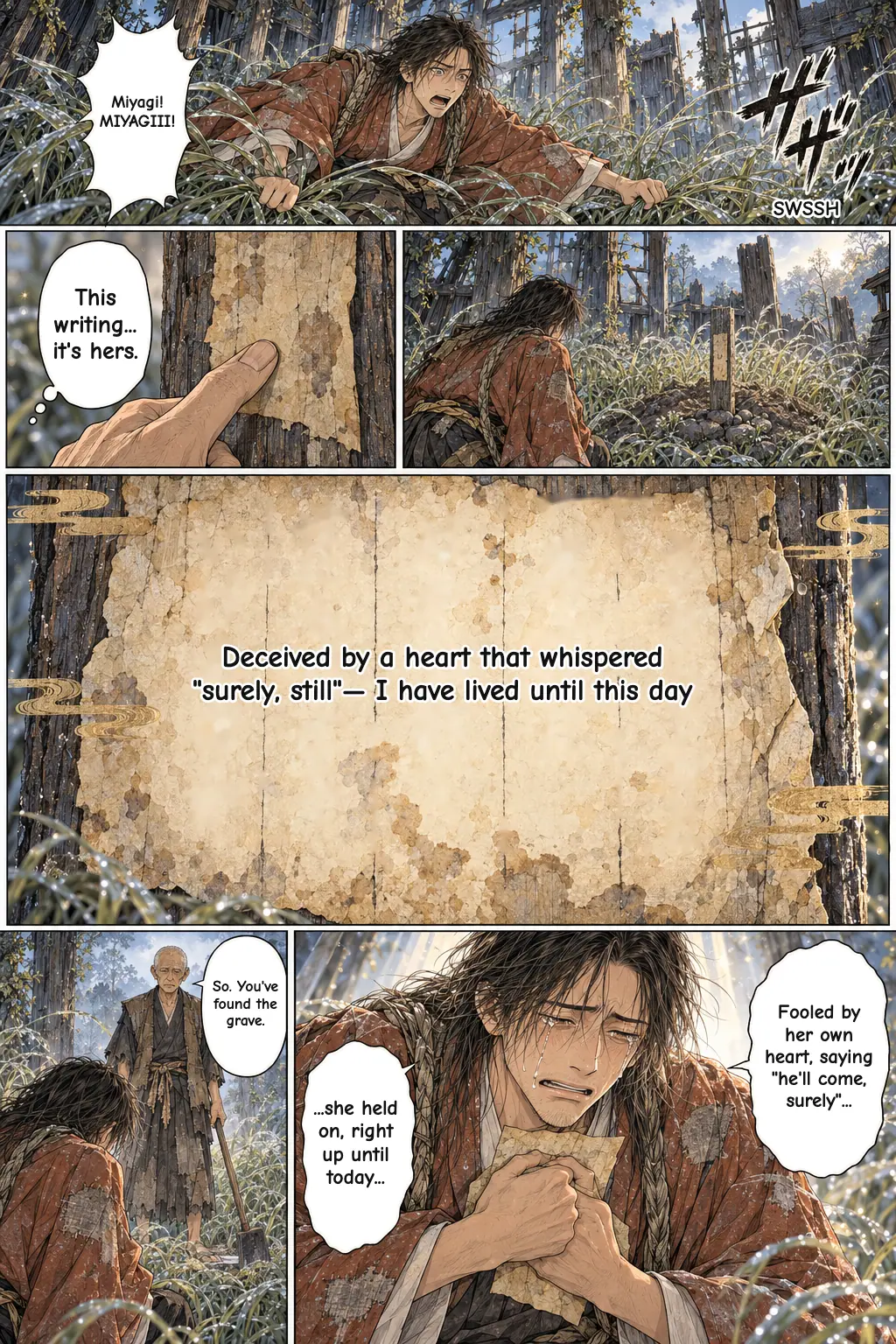
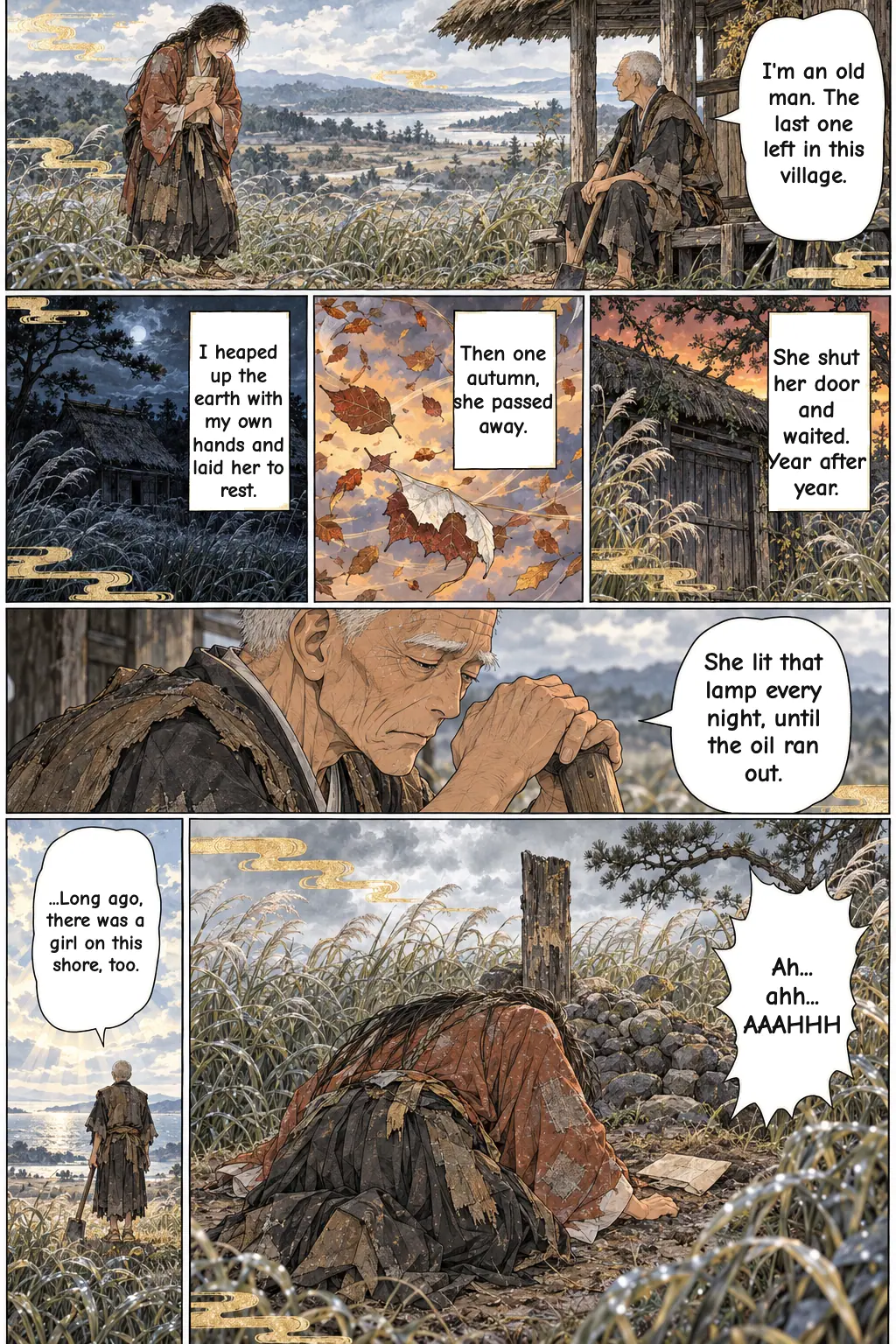
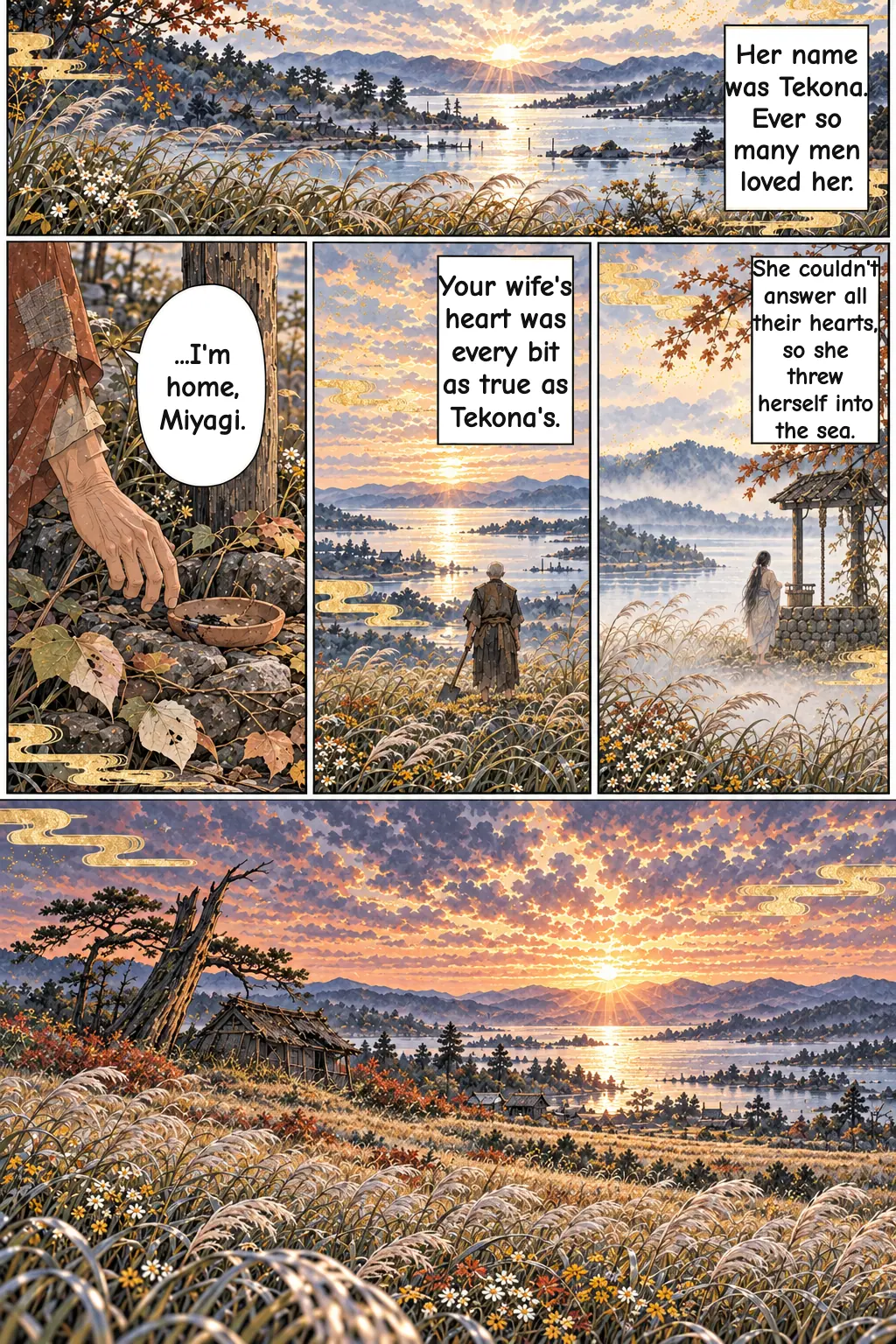
He reaches Mama at dusk. The village is overgrown with wild grass, and he can barely tell where the paths and houses used to be. He finds his own home by a pine that lightning had struck, and a lamp is burning inside. Miyagi comes to the door, thin, unwashed, and with tangled hair, and she weeps when she sees him. They tell each other everything that happened, then go to sleep. When the cold wakes him before dawn, the roof is gone and he can see the pale morning moon through it. The doors and floor have rotted away, and Miyagi is gone. Where their bed had been there is a burial mound, and next to it is an old paper with a farewell poem in her handwriting. In it she wonders how she managed to live this long on nothing but hope. An old villager, the elder of Uruma, tells Katsushirō that Miyagi stayed faithful until she died and that he buried her himself. He also tells the old legend of Tekona of Mama and says Miyagi's heart was truer still. Katsushirō writes a poem of his own and weeps for her.
Main characters
Katsushirō is easygoing and proud, and he wants to save face. He is not a villain. His failing is that he too readily believed his wife was dead, and he let the years go by. Miyagi is the moral center of the story. She keeps faith through war, hunger, and loneliness, and her love outlasts her own death. The elder of Uruma is the only one who knows the truth, and his account changes the night's reunion into a story about grief.
What the story is about: war, waiting, and faithfulness
Ueda Akinari (1734–1809) wrote Ugetsu Monogatari as a collection of nine supernatural tales in a polished literary style. Scholars often say that "The House Amid the Thickets" is partly adapted from a Chinese tale of a faithful wife in the Ming-era collection Jiandeng Xinhua. Akinari moved the story into Japanese history and set it during real fifteenth-century wars.
The title comes from asaji, a low wild grass that takes over abandoned land. In Japanese poetry it stands for neglect and the passing of time. The ending also brings in Tekona of Mama, a local legend that goes back to the eighth-century poetry anthology Man'yōshū. She was a beautiful girl courted by so many men that she drowned herself in an inlet. By putting Miyagi next to Tekona, the elder praises a woman who stayed loyal to one man. Readers can also take the story as quiet criticism of the husband who left her to wait alone. Many readers see both meanings.
The story also helped shape modern film. Mizoguchi Kenji's 1953 film Ugetsu combines it with another tale from the same collection.
What the manga changes
The manga keeps the main events of the original: the promise to return by autumn, the war, the bandits and the illness, the seven years, the lamp in the ruined village, the night together, the mound and the poem at dawn, and the elder's story. Several things in the manga are invented, though. Akinari gives almost no physical description, so Miyagi's face, age, and clothes, and the layout of the house, are the artist's own design. Scenes of Miyagi's seven years alone, such as the changing seasons, her weaving, and her watching the road, are imagined, as are the faces and lines of the men who court her. Katsushirō's time in Kyoto and Ōmi is condensed into a few panels.
Miyagi's death is shown through the elder's account and images of the seasons, not drawn directly. The dialogue on the reunion night is written in modern language, but it keeps what she says in the original: the terror of the war, her refusal of other men, and both her bitterness at waiting and her joy that he came back. The manga also chooses for itself how many hints to give that she is a ghost, and it adds a short closing image of Tekona's legend.
Where to read it
This story is Episode 7 of LOVE & ALLURE: Classic Japanese Tales of Romance on Manga Portal. You can read every episode free, with no sign-up. If you know how the story ends, go back to the reunion scenes and look for the hints about Miyagi that are hidden in them. The other episodes retell more of Japan's classic love stories, both ordinary and supernatural.
Characters in this episode
Katsushirō
A proud, careless villager from Mama who leaves to sell silk in Kyoto and does not come home for seven years.
Miyagi
Katsushirō's beautiful, faithful wife, who waits for him through war and loneliness and greets him one last time as a ghost.
Sasabe no Sōji
A Kyoto merchant who buys Ashikaga silk and takes Katsushirō to the capital.
Kodama Kahei
A kind man in Ōmi who takes Katsushirō in and nurses him through a fever.
The elder of Uruma
An old villager who stayed behind, buried Miyagi, and tells Katsushirō the truth.
Tekona of Mama
A girl from a local legend that goes back to the Man'yōshū, courted by so many men that she drowned herself; the elder compares Miyagi to her.
FAQ
What is the story of Asaji ga Yado?
A man named Katsushirō leaves his wife Miyagi to trade silk and promises to be home by autumn, but war and misfortune keep him away for seven years. When he returns, she welcomes him in their house. At dawn he finds out she died years earlier and that he spent the night with her ghost.
Who wrote Tales of Moonlight and Rain (Ugetsu Monogatari)?
Ueda Akinari wrote it. It was published in 1776 and is a collection of nine supernatural stories. It is one of the best-known works of Edo-period fiction.
Was Miyagi a ghost?
Yes. Katsushirō wakes up in a ruined house next to her grave, and an old villager tells him she died while waiting for him. The woman he spent the night with was her spirit.
Why did Katsushirō take seven years to come home?
On his way home, bandits robbed him and he heard the roads east were closed by war. He assumed his village had burned and his wife was dead, then fell ill in Ōmi and stayed there. He only went back after war and plague reached the capital.
Is the film Ugetsu based on this story?
Partly. Mizoguchi Kenji's 1953 film Ugetsu combines "The House Amid the Thickets" with another tale from the same collection.