Episode 6Every Night, I Dream of Striking a WomanThe Tale of Genji: "Aoi" (Lady Rokujō)
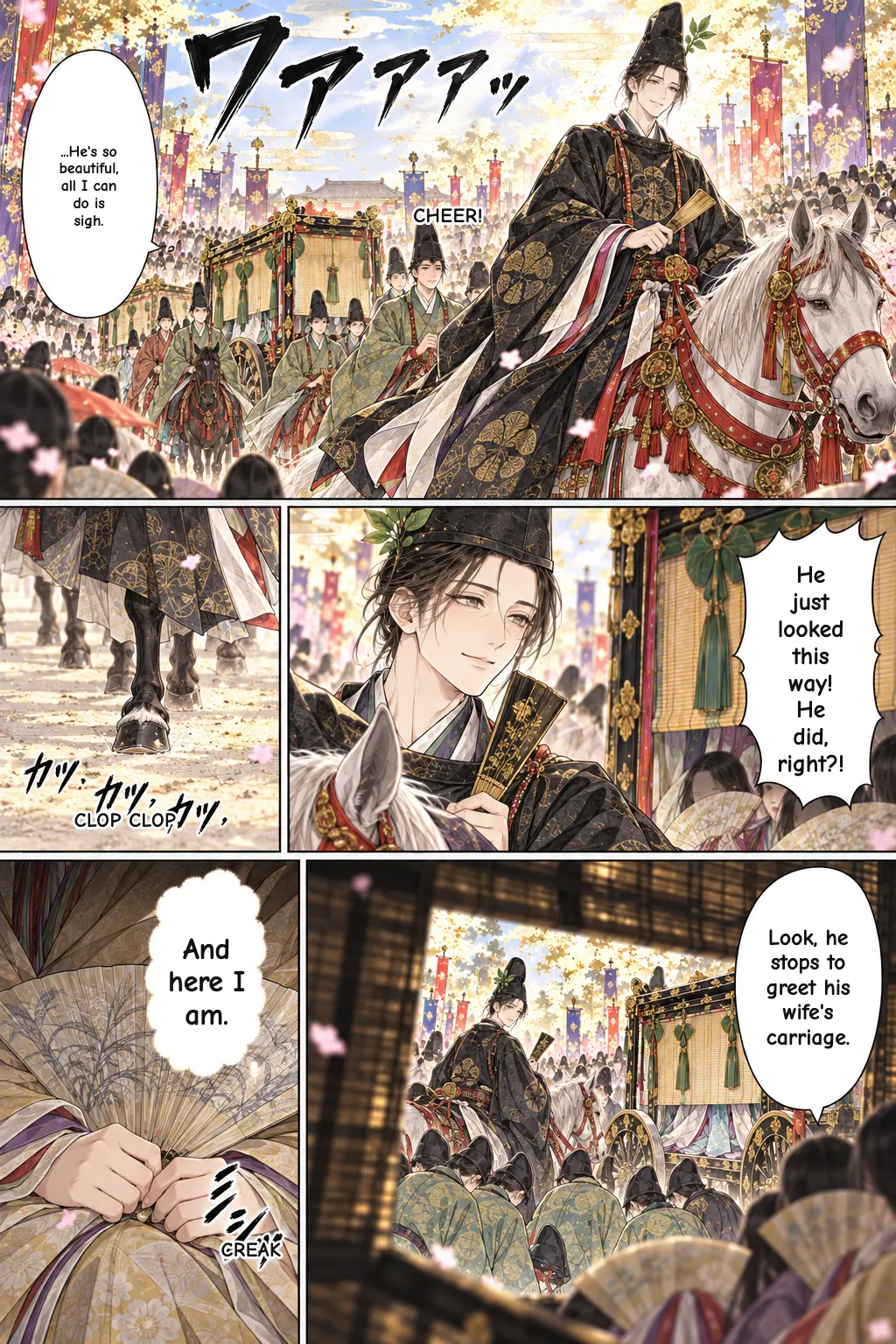
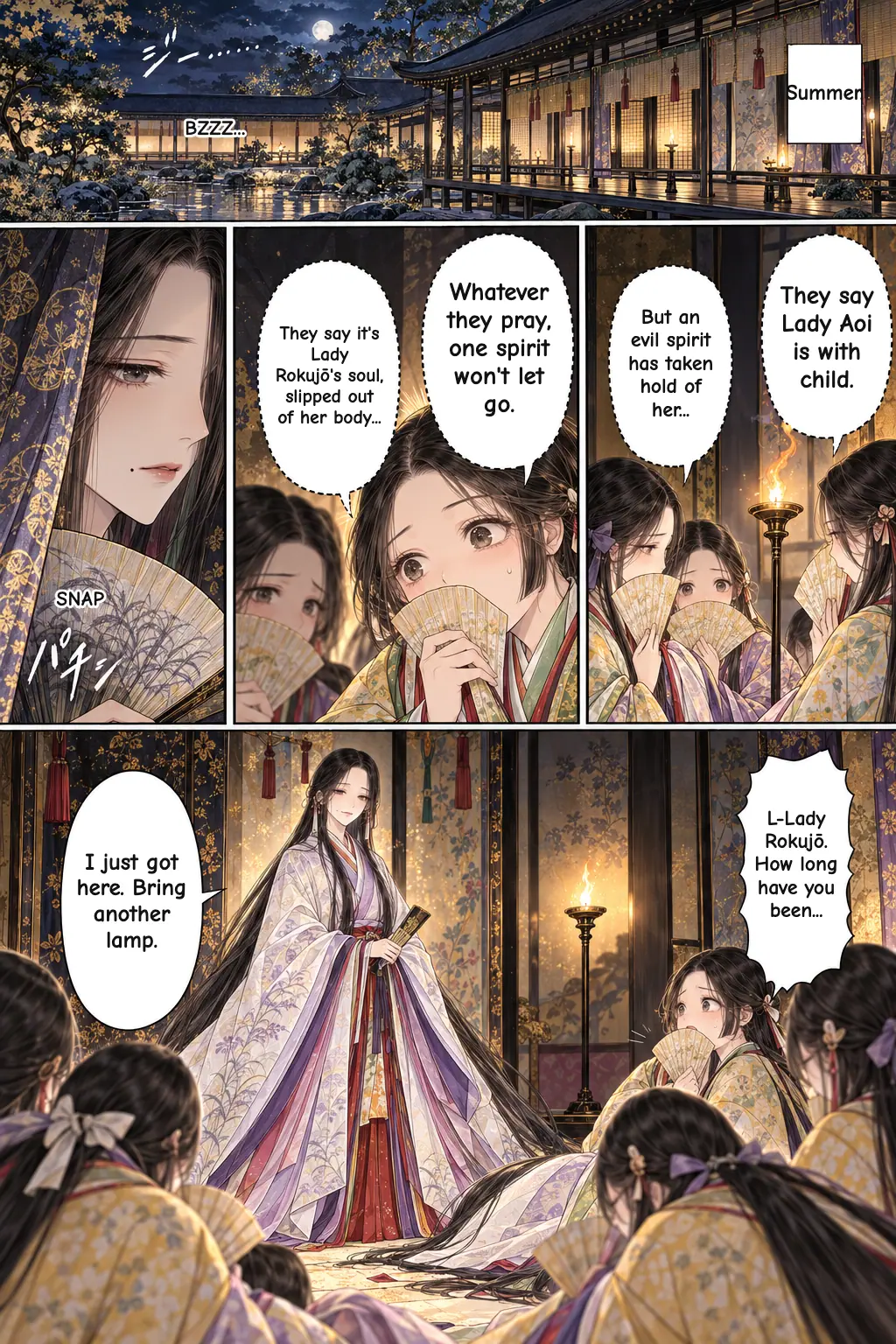
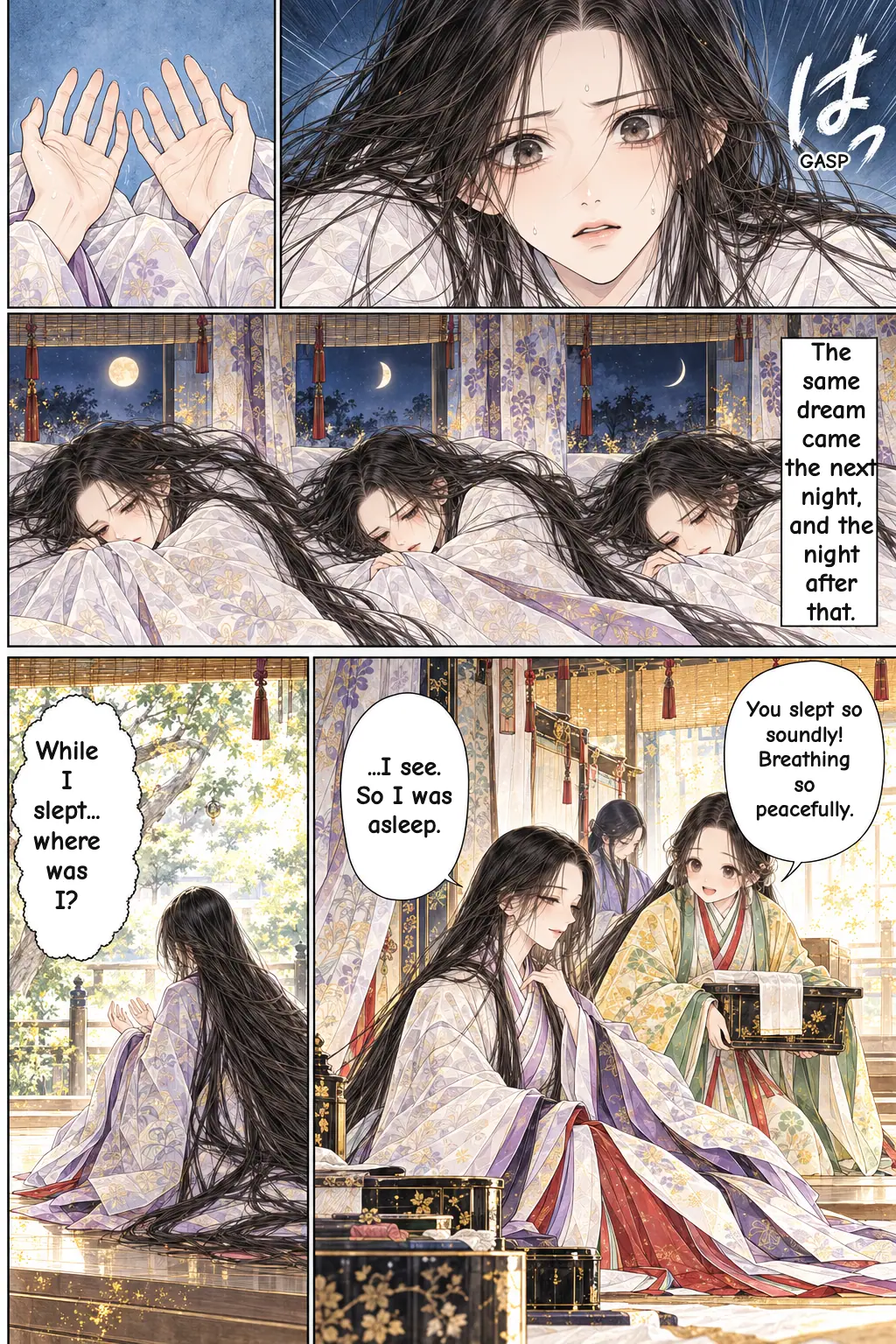
Episode 6 of the series. On festival day, proud Lady Rokujō goes unnoticed by her lover Genji, then is publicly humiliated by his wife's retainers. That summer, one spirit refuses to leave Genji's wife, Lady Aoi, and every time Lady Rokujō sleeps, she has the same dream.
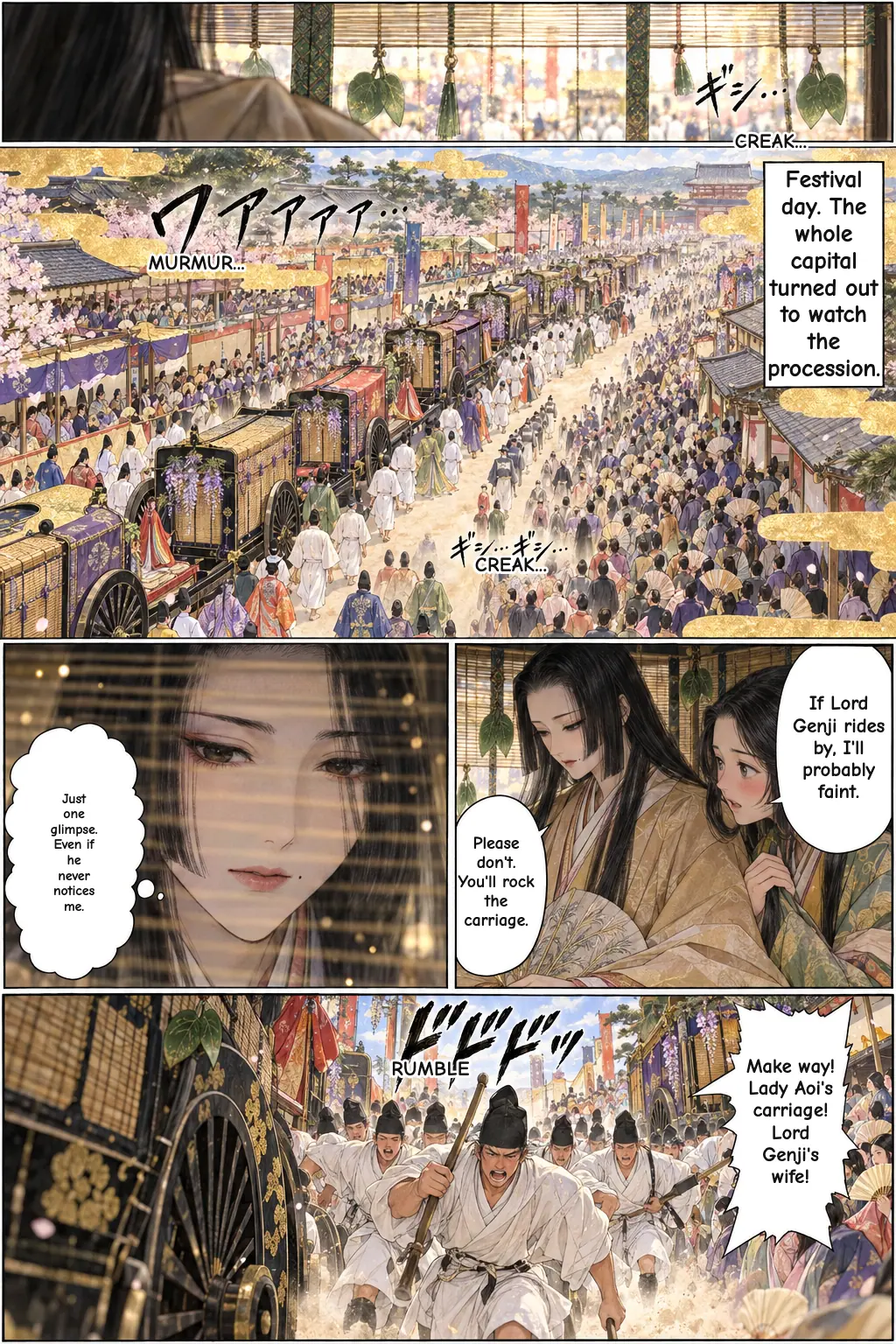
"Aoi" is Chapter 9 of The Tale of Genji, written by Murasaki Shikibu, a lady-in-waiting at the Heian court, in the early 1000s. The chapter opens with a change of reign: Genji's father, the Kiritsubo Emperor, gives up the throne, and Genji is promoted to Commander. A new Kamo Priestess (the Saiin, a royal princess who serves the Kamo Shrines) is chosen. Before she takes up her duties she goes to the river for a purification rite, and Genji is given a special place in her procession. The whole capital comes out to watch.
Tale of Genji "Aoi" Summary: Lady Rokujō's Living Spirit Explained
In short: "Aoi" is the ninth chapter of Murasaki Shikibu's early-11th-century Tale of Genji. In it, the proud Lady Rokujō is publicly humiliated by the servants of Genji's wife, Lady Aoi, during a festival procession. Rokujō's jealous soul seems to leave her body while she sleeps, and it torments Aoi through childbirth until Aoi dies suddenly in the autumn.
What Happens in "Aoi": The Original Story
"Aoi" is Chapter 9 of The Tale of Genji, written by Murasaki Shikibu, a lady-in-waiting at the Heian court, in the early 1000s. The chapter opens with a change of reign: Genji's father, the Kiritsubo Emperor, gives up the throne, and Genji is promoted to Commander. A new Kamo Priestess (the Saiin, a royal princess who serves the Kamo Shrines) is chosen. Before she takes up her duties she goes to the river for a purification rite, and Genji is given a special place in her procession. The whole capital comes out to watch.
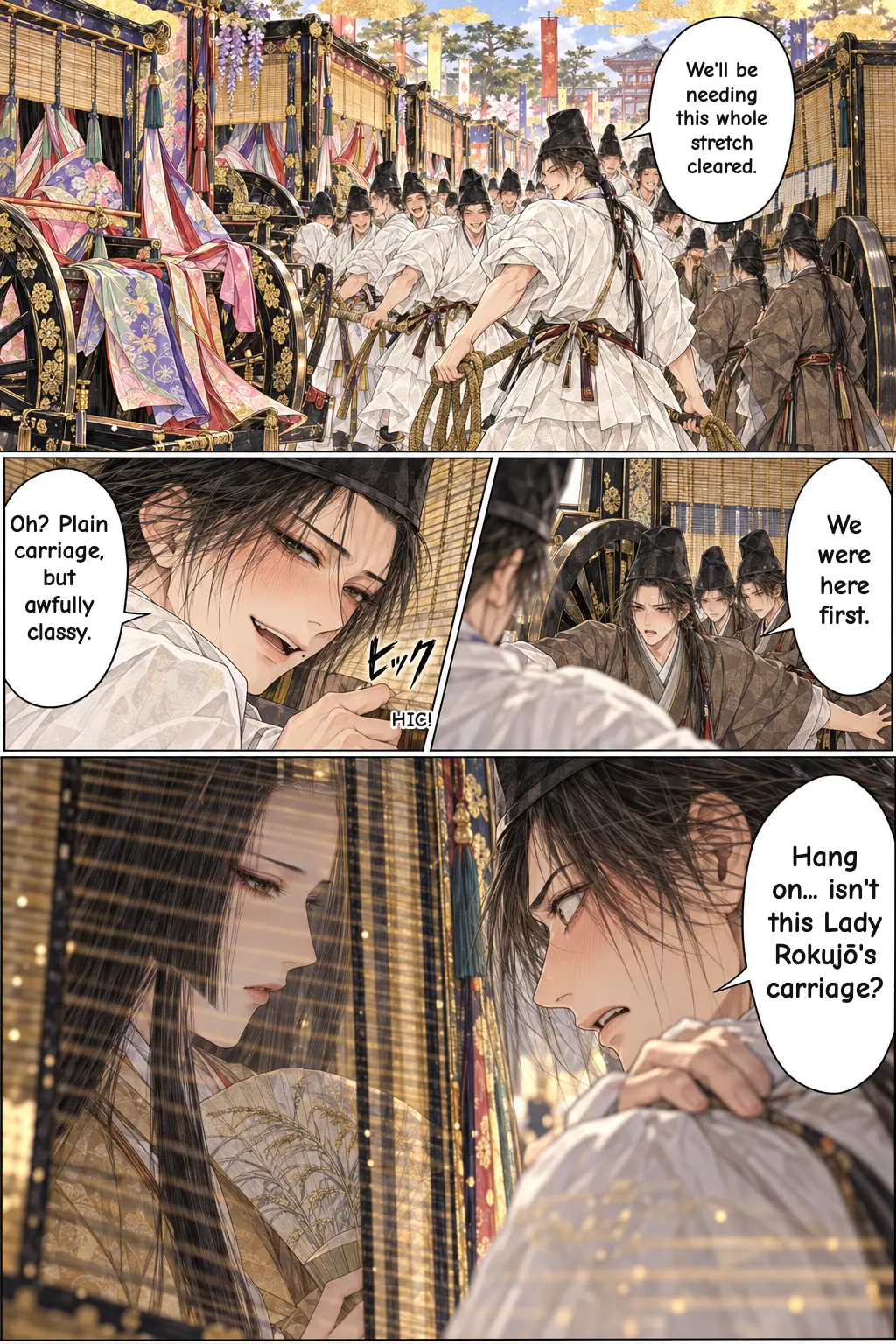
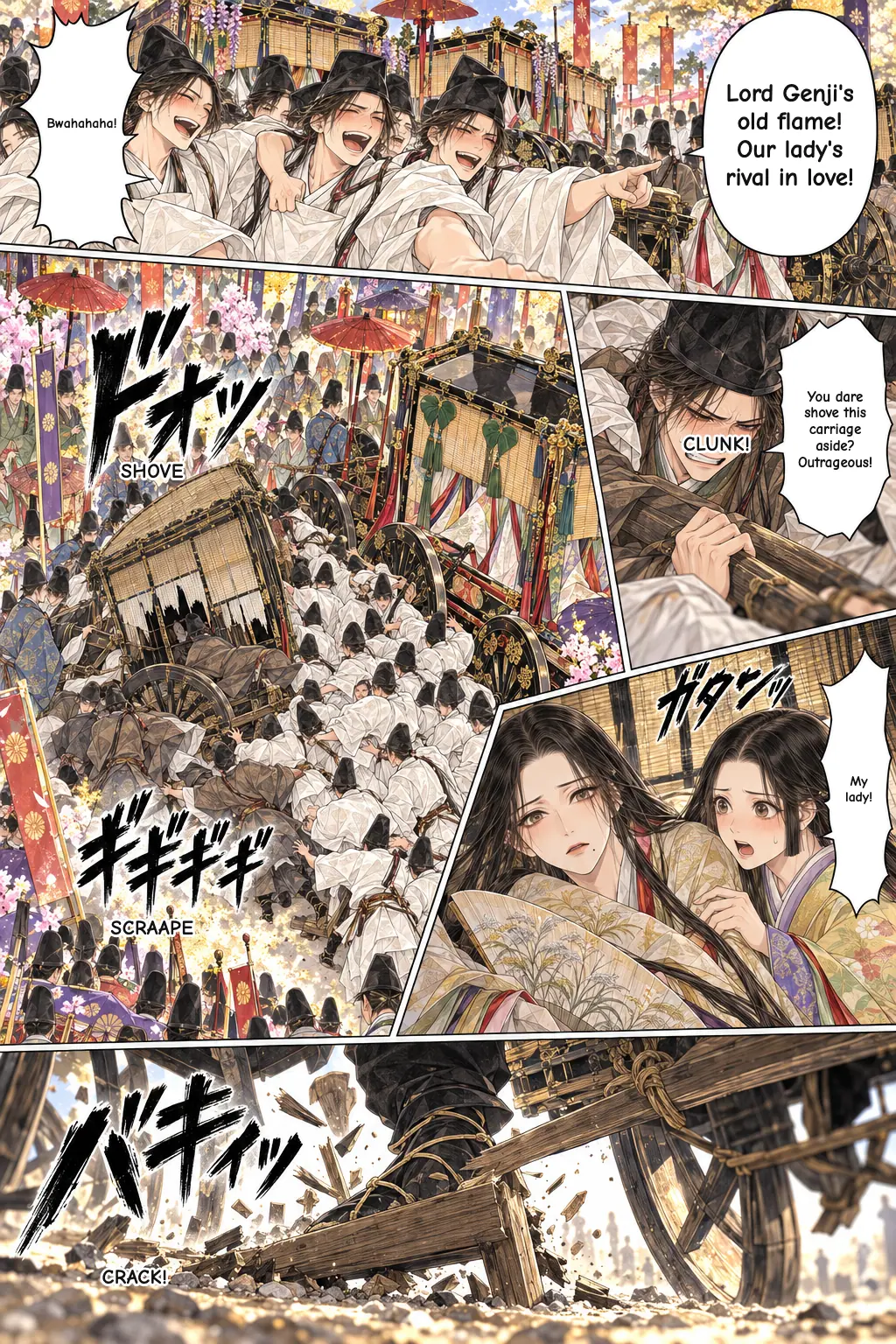
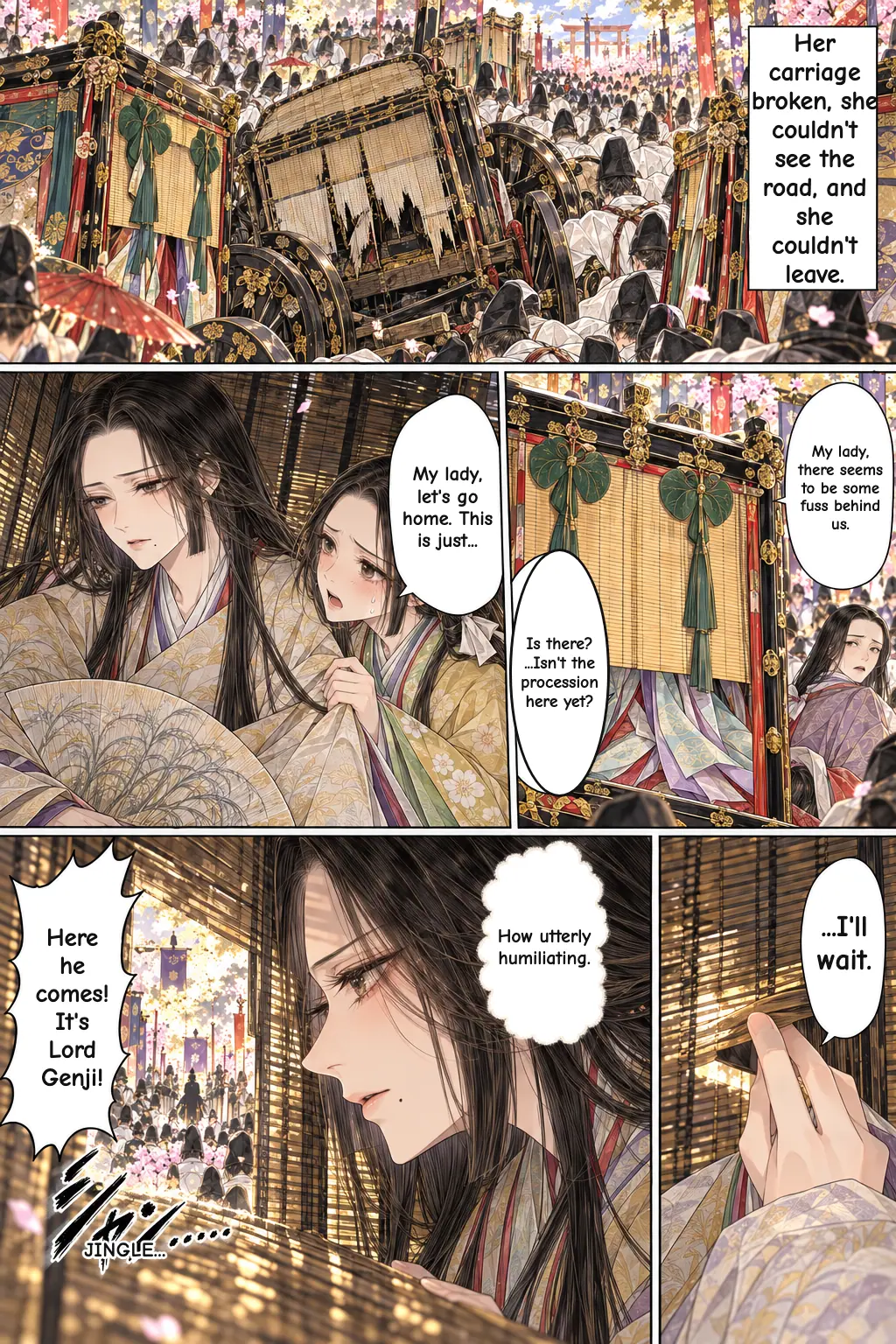
Lady Rokujō, the widow of a former crown prince and one of Genji's lovers, also comes, but in secret, riding in a plain, slightly worn wicker carriage. Genji's wife, Lady Aoi, had not planned to go. Her women talk her into it, and her party arrives late with a long line of fine carriages. Her young attendants have been drinking. To clear space, they shove Rokujō's carriage aside, recognize whose it is, and insult her. The stand that props up its shafts is broken, and the carriage is pushed so far back that Rokujō can see nothing and cannot leave. Then Genji rides past. He glances and smiles at other carriages but never notices hers, while his men bow respectfully to his wife's.
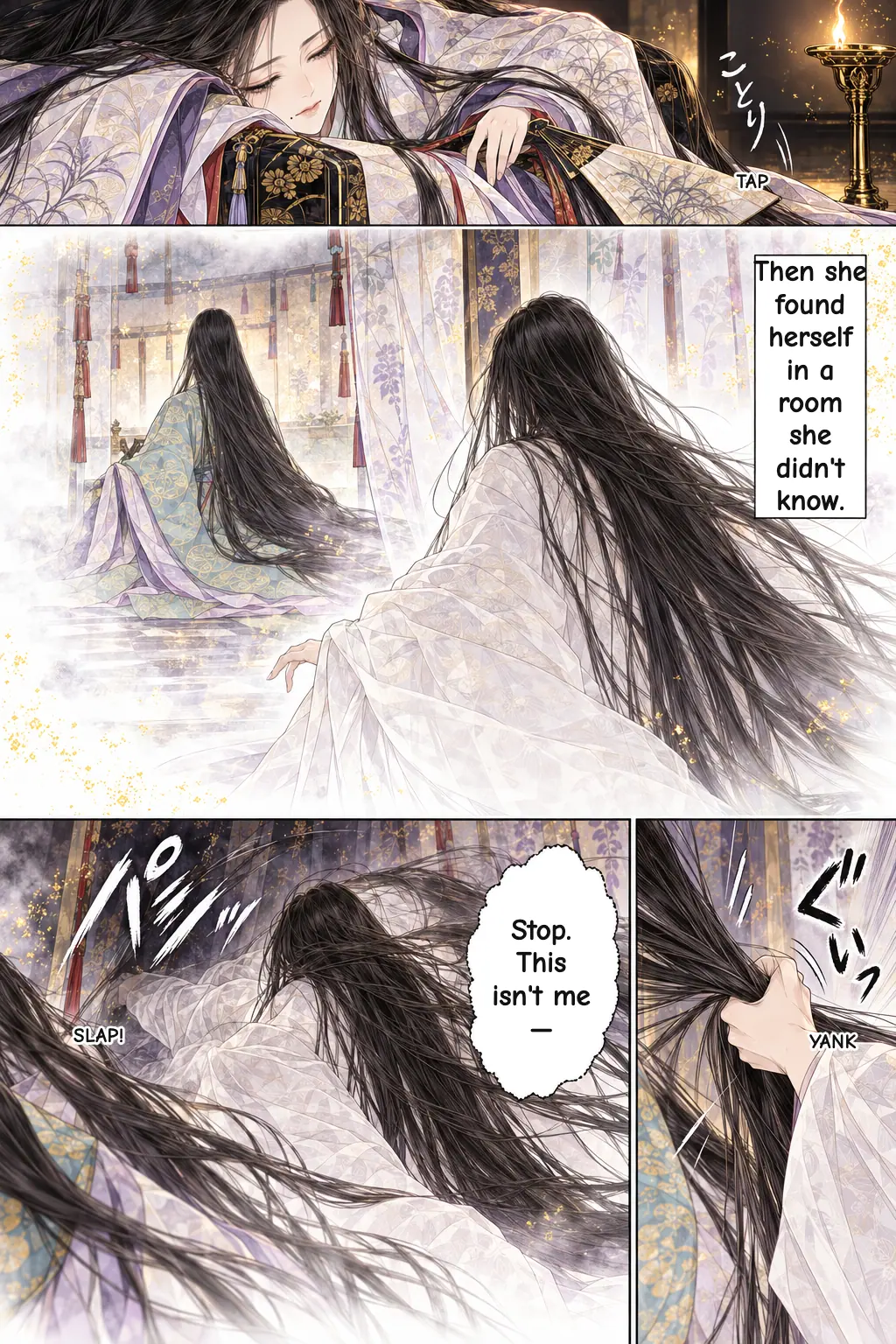
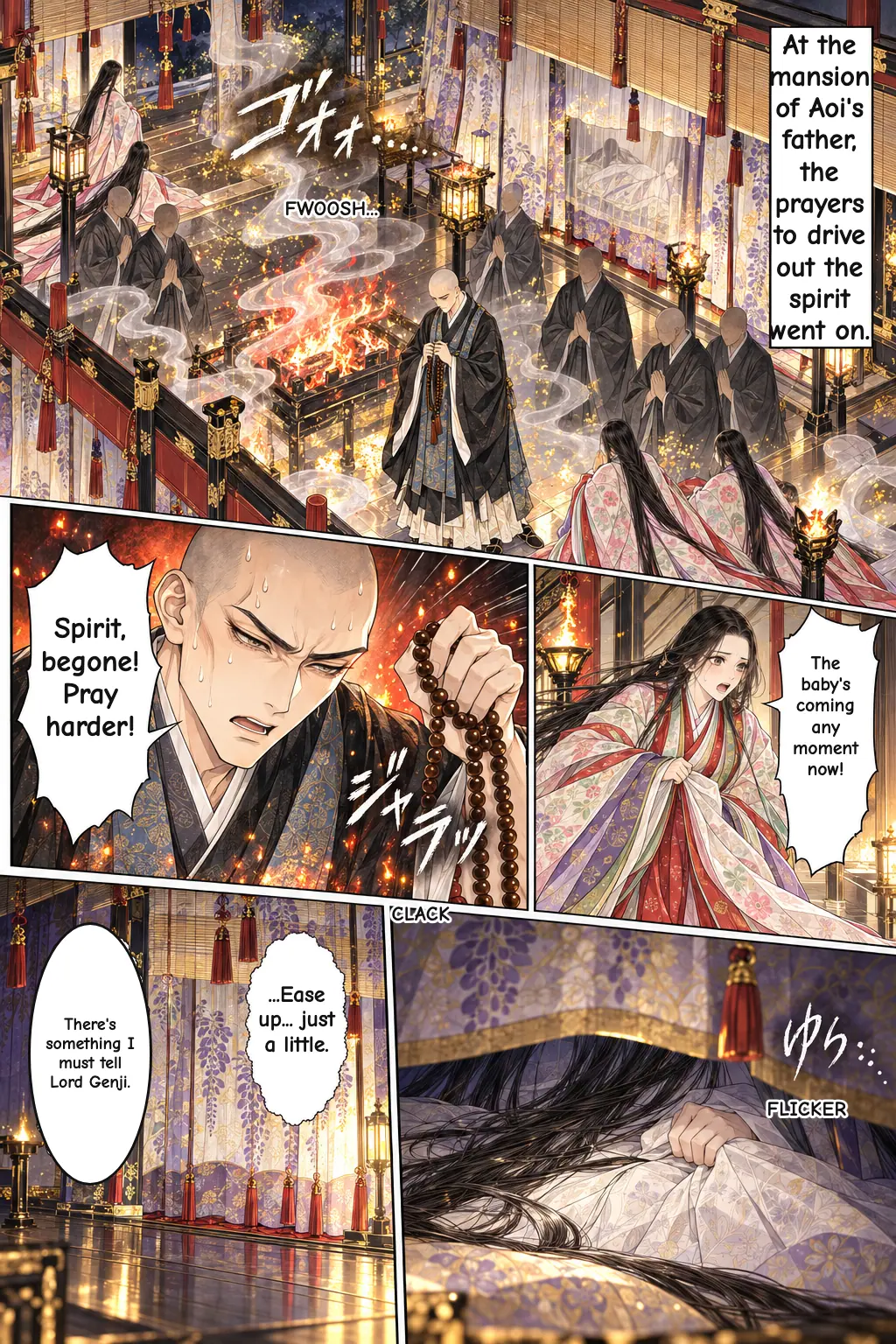
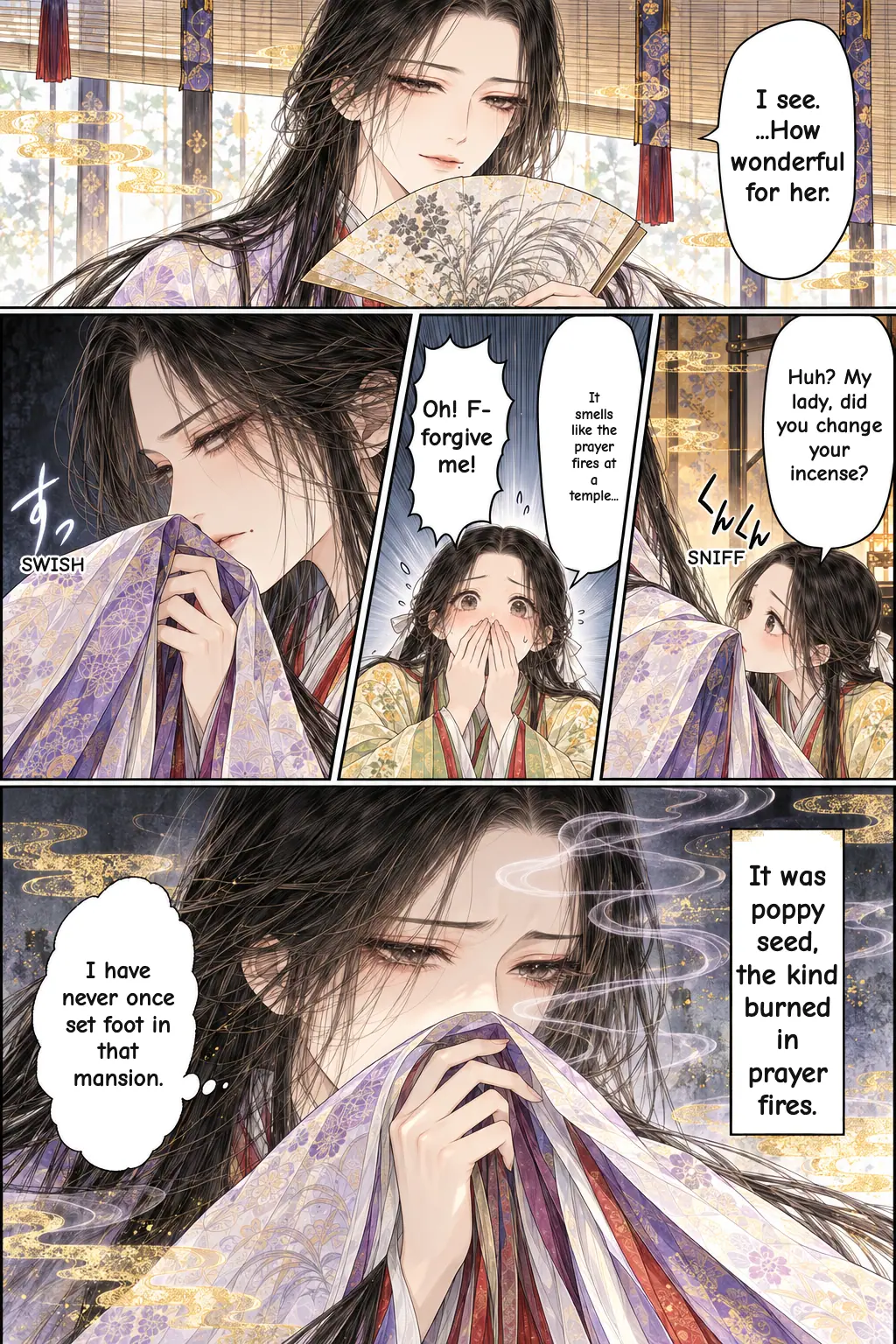
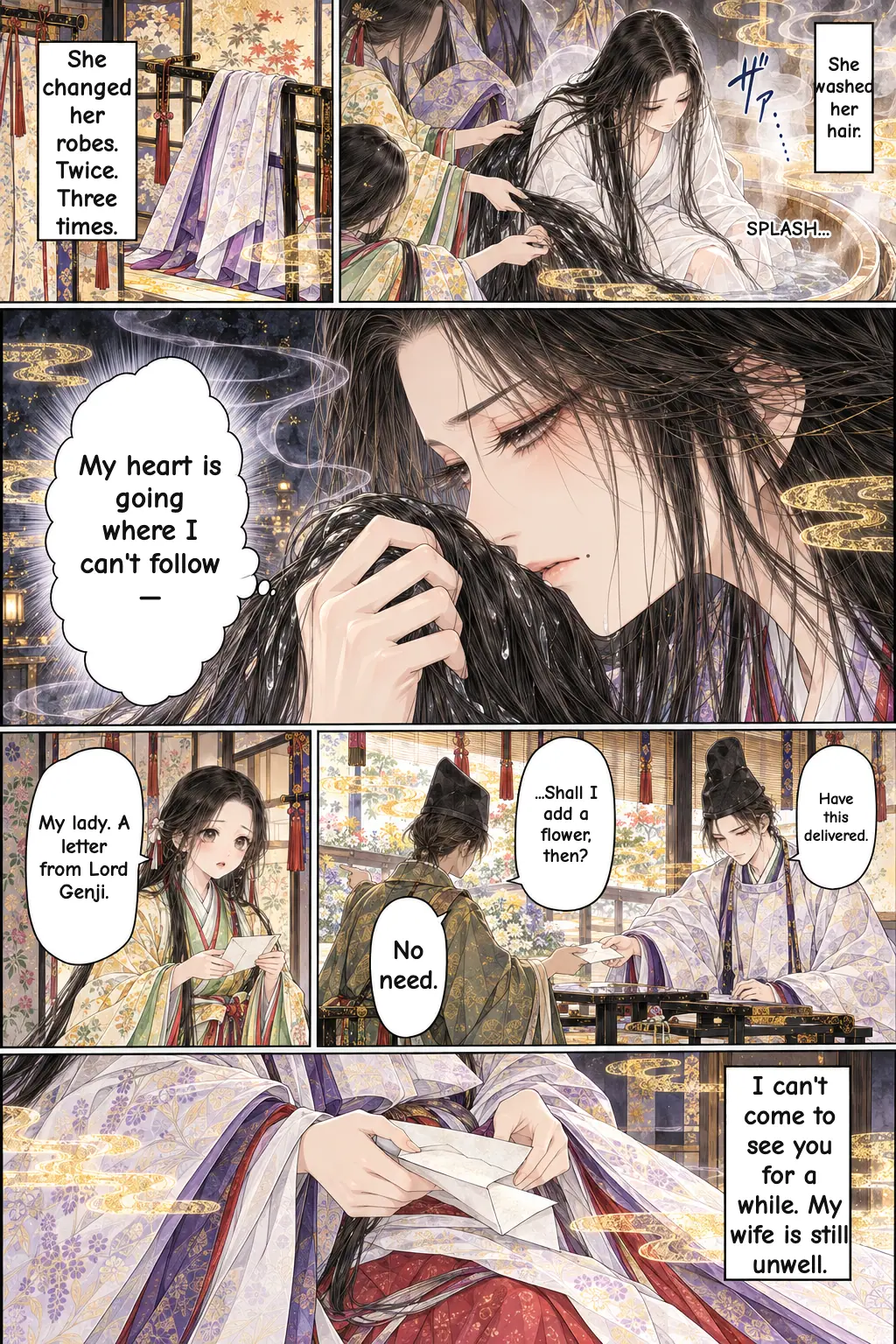
That summer the pregnant Aoi falls ill, attacked by possessing spirits. Priests force many spirits out of her and into a medium, but one will not move and clings to her tightly. People whisper that it may be Rokujō's living spirit, or the ghost of her late father. Rokujō, meanwhile, has the same dream again and again: she goes to a beautiful lady who seems to be Aoi and drags and beats her with a fury she never feels when awake. She starts to fear that her soul is leaving her body.
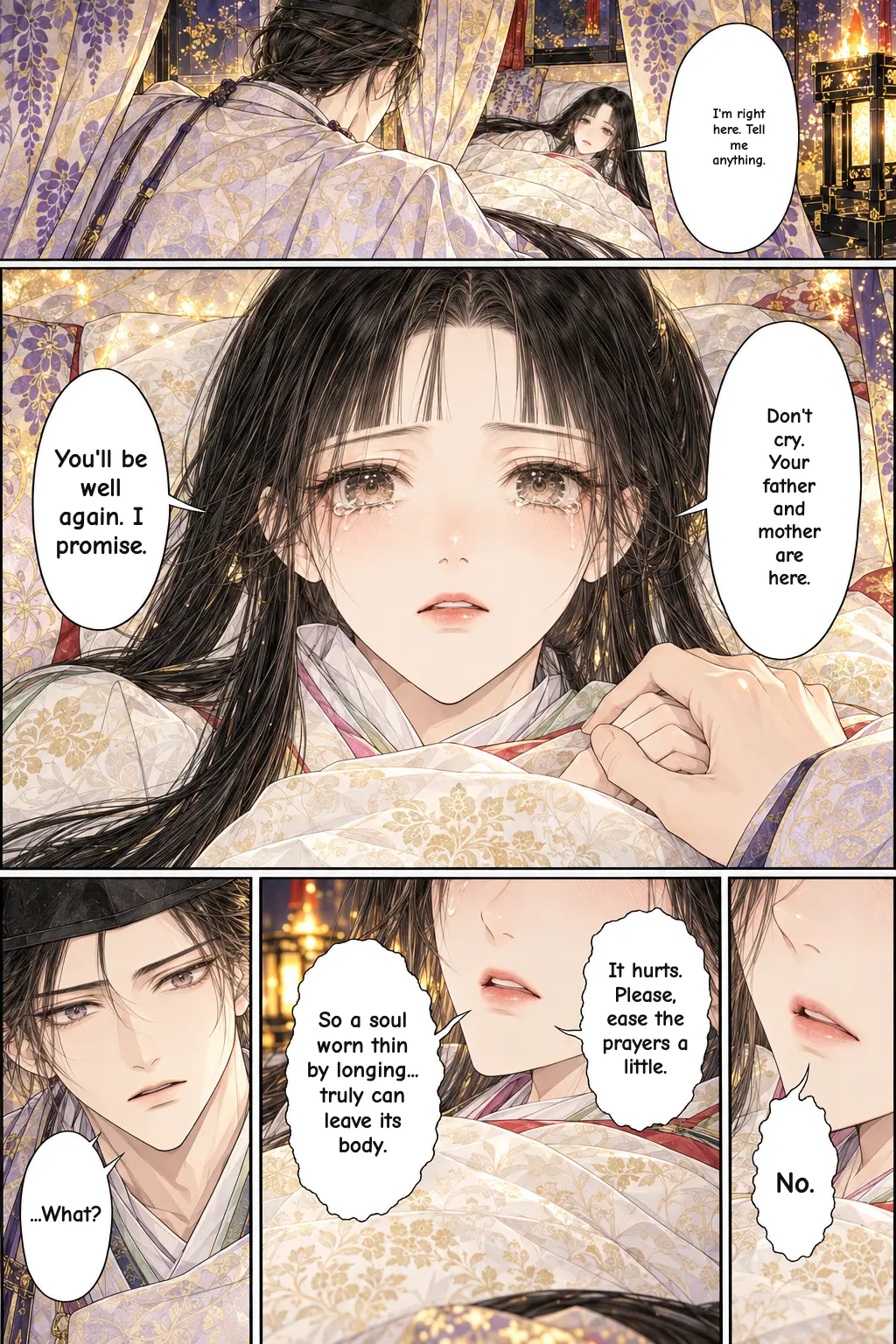
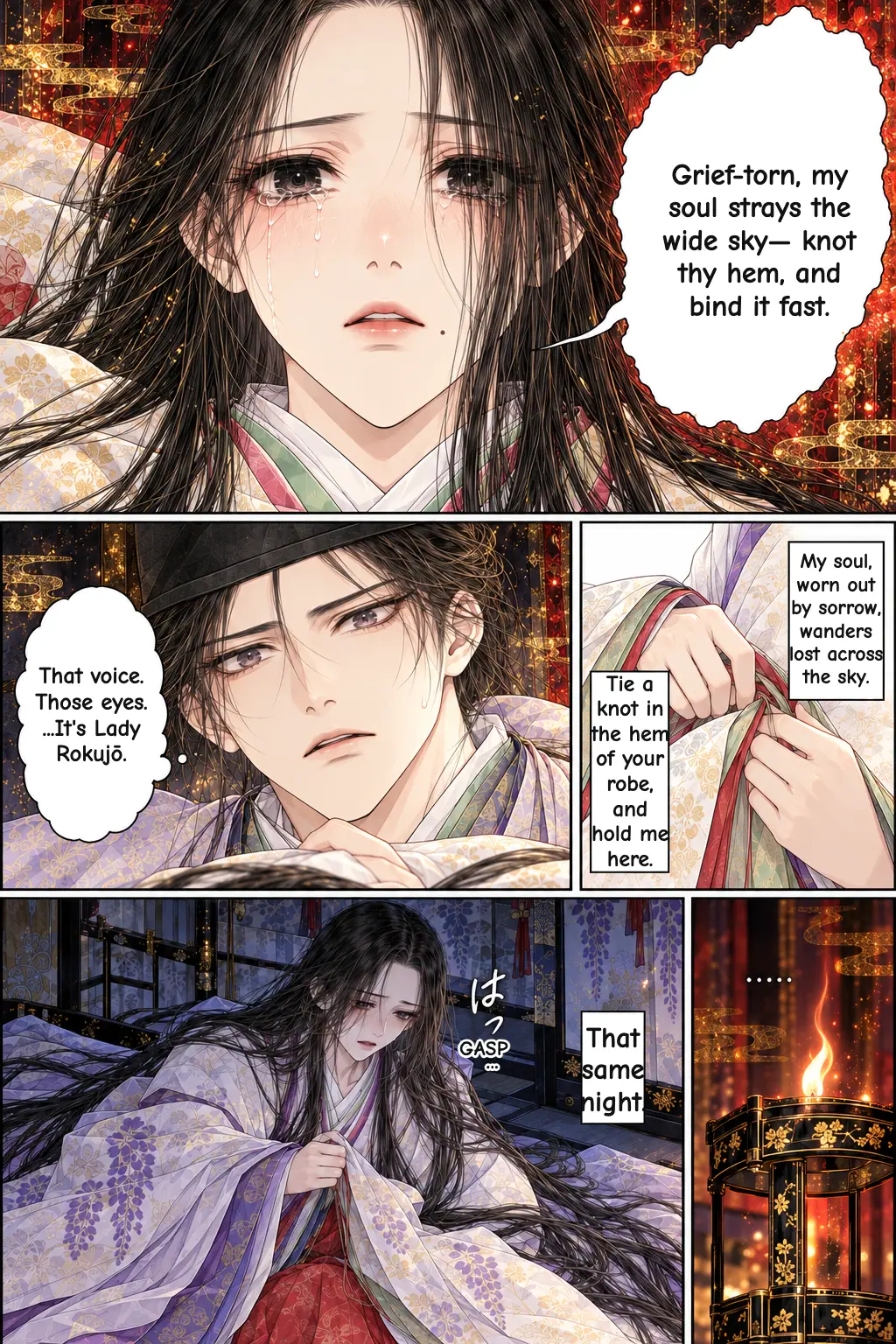
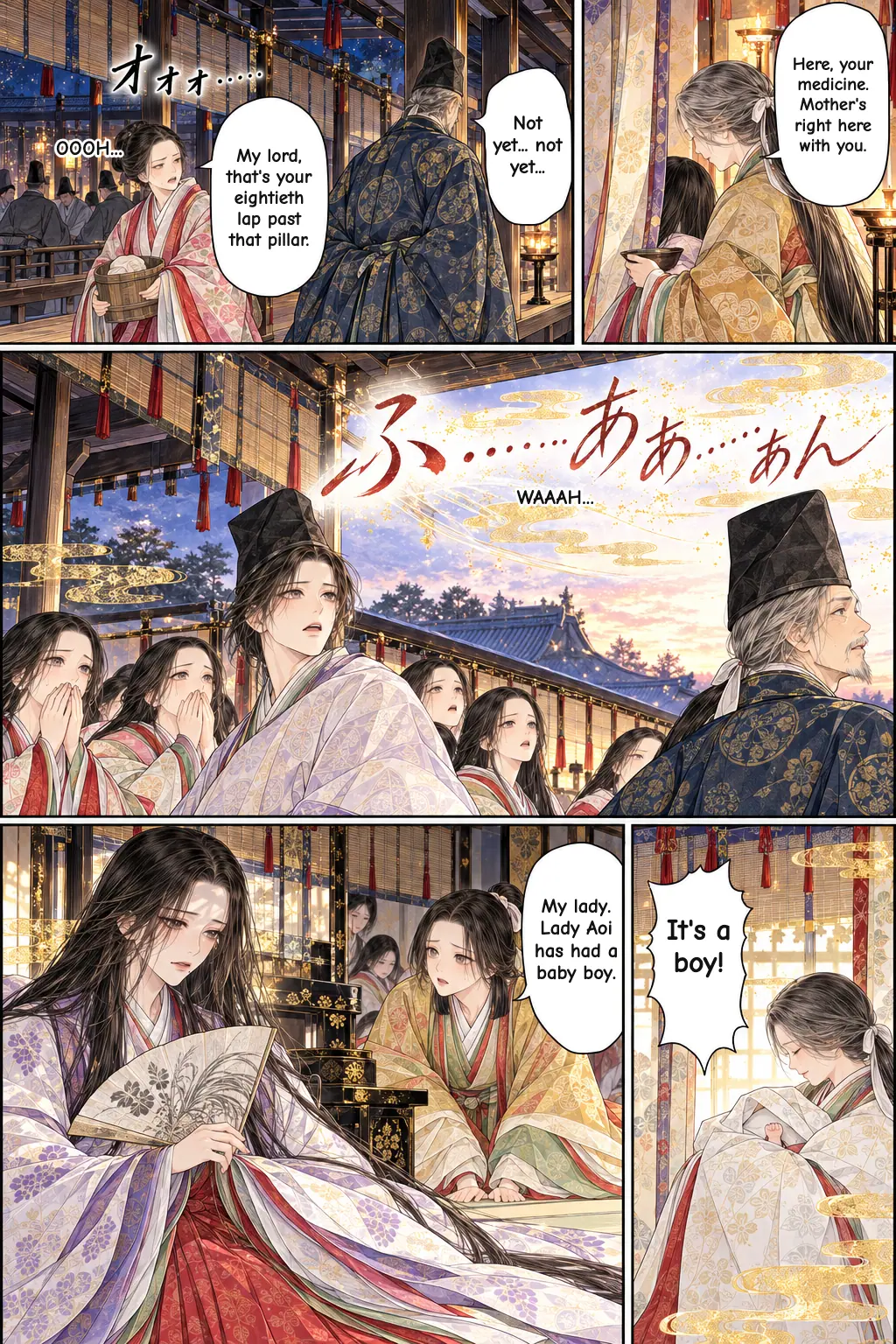
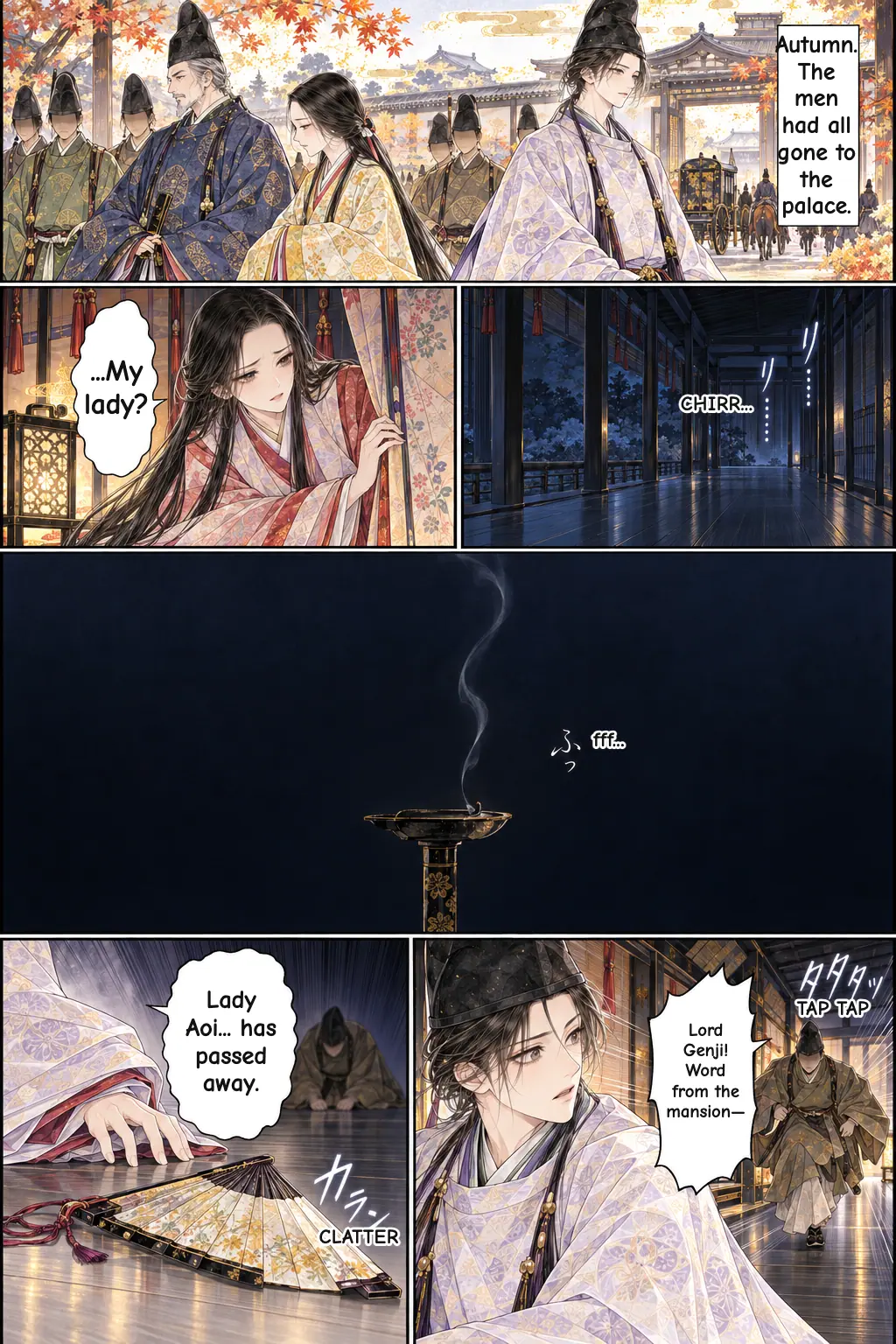
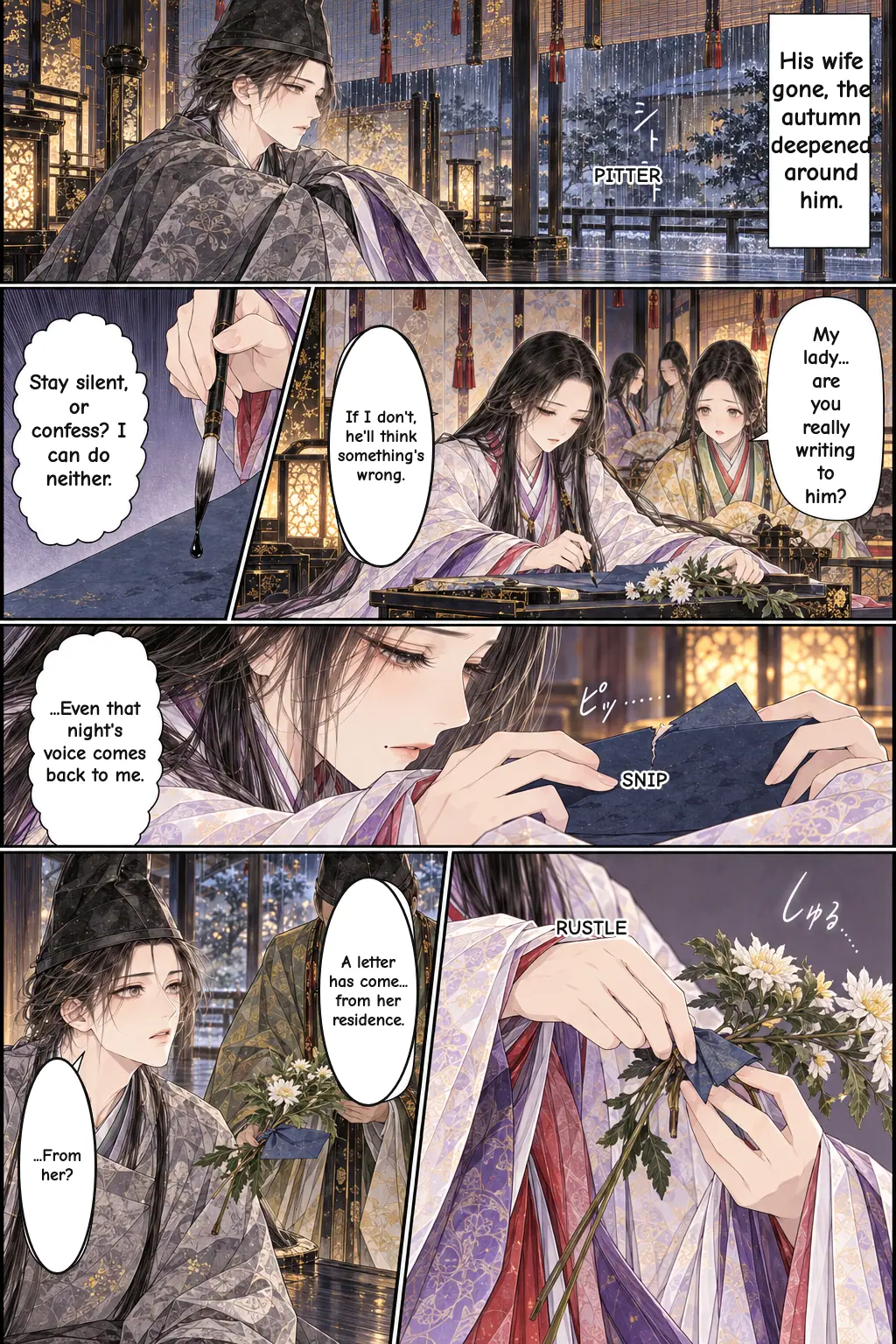
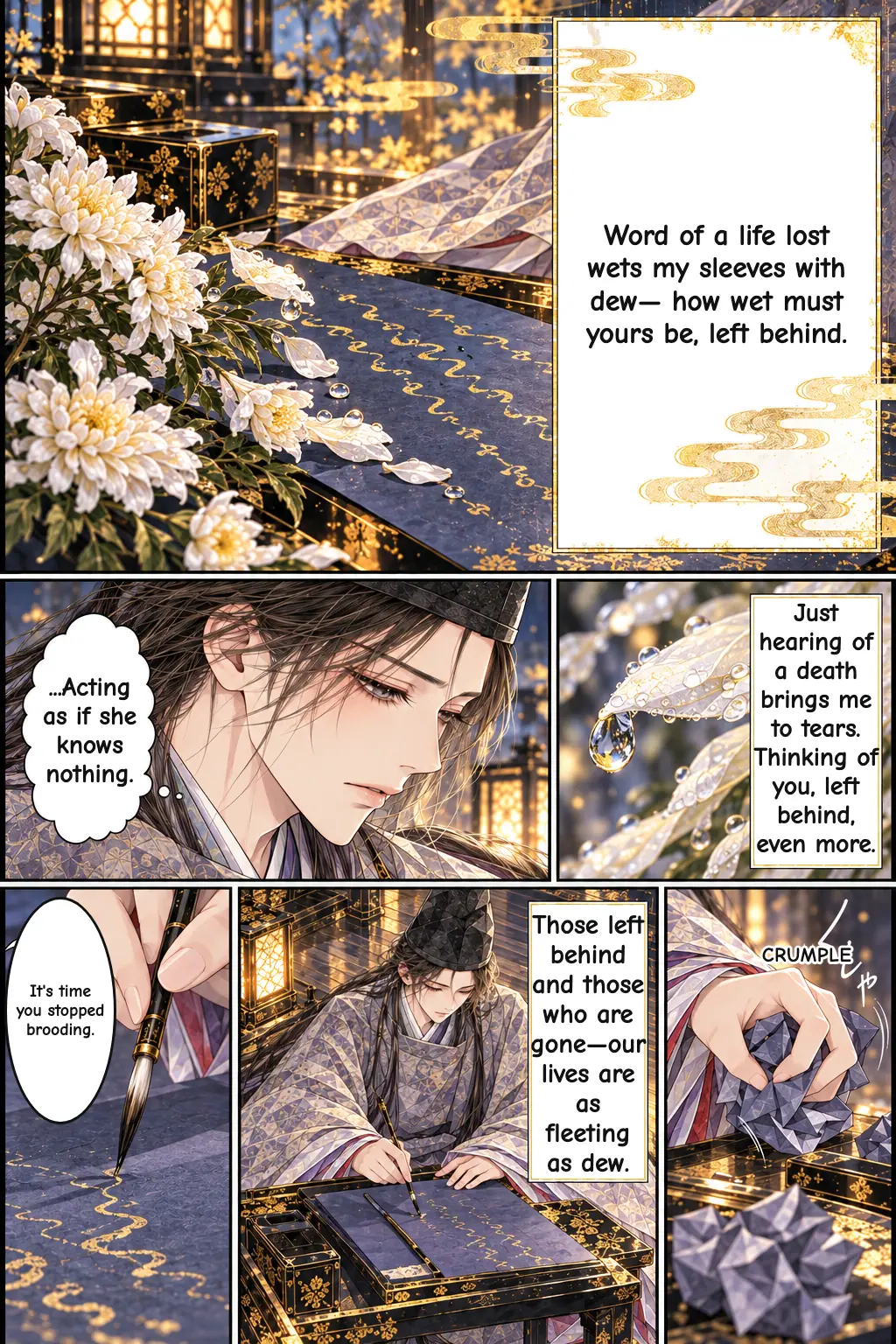
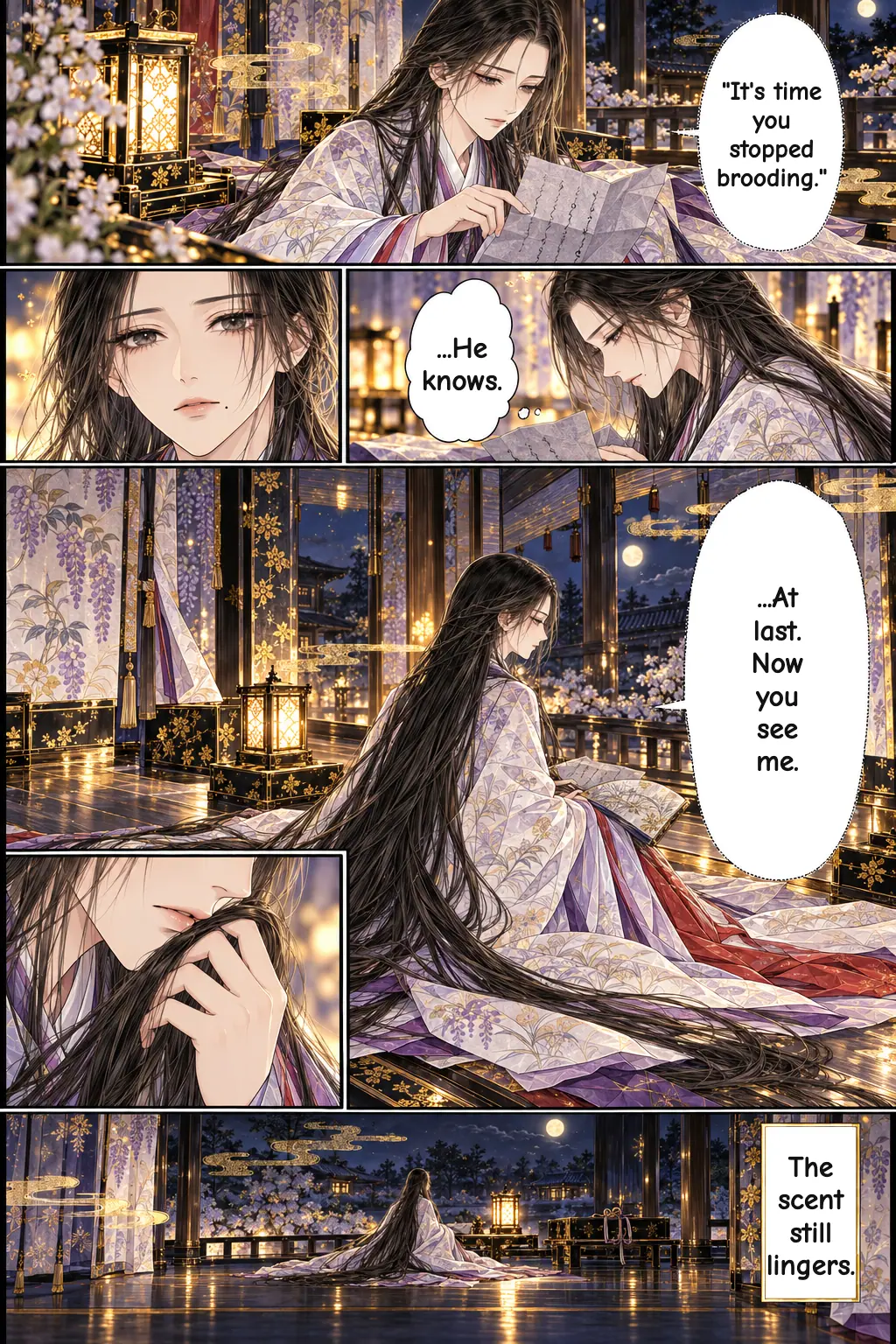
When Aoi goes into labor, the spirit asks to speak with Genji. Through Aoi's mouth, in Rokujō's own voice and manner, it recites a poem asking him to bind her grieving soul, which is drifting in the sky. Genji is horrified. Soon afterward a son is born. Rokujō then finds that the smell of poppy seeds, burned during exorcism rites, has soaked into her hair and clothes and will not wash out. In autumn, while Genji and Aoi's family are at the palace for the official appointments, Aoi suddenly falls ill and dies. After the funeral at Toribeno, Rokujō sends Genji a poem of sympathy. His reply is polite but cool, and it hints that he knows what is in her heart.
Main Characters
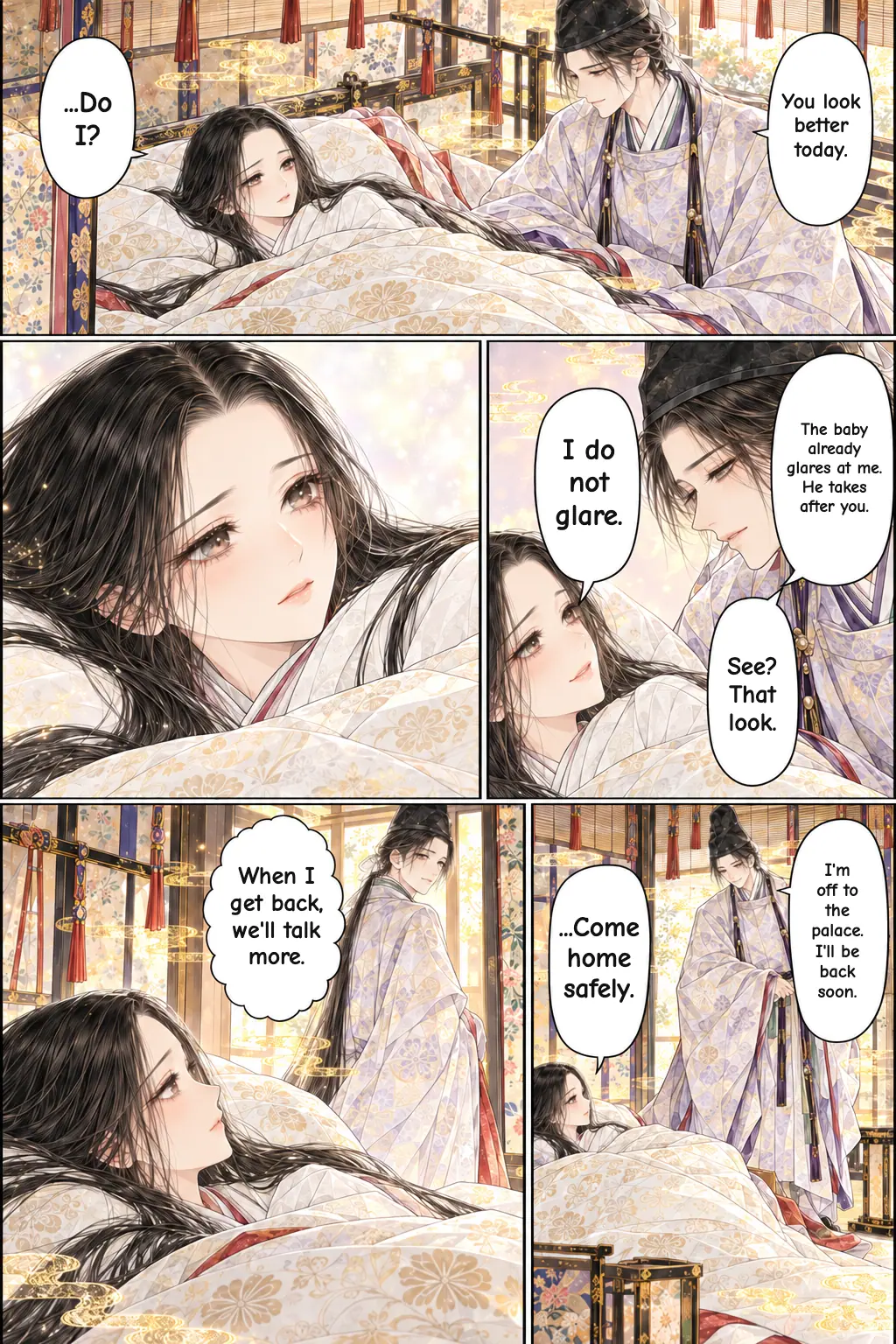
Genji, the dazzling hero, is caught between a wife he has never been close to and a lover he neglects. His father, the retired emperor, even scolds him for treating Rokujō so lightly. Lady Aoi is the proud daughter of the Minister of the Left. She and Genji have been distant for years, and only after the birth does she look at him for longer than usual. Lady Rokujō is cultivated, high-ranking and deeply proud. She is also thinking of leaving the capital to go with her daughter, the newly chosen Ise Priestess, to the Ise Shrine.
One small but useful detail: the name "Aoi" (a kind of hollyhock linked to the Kamo festival) was given by later readers. The text itself calls her by titles such as "the lady of the great house." Her son is just "the young lord" in this chapter. He is known as Yūgiri only in later chapters.
Living Spirits, Status and Shame in Heian Japan
In the Heian period (794–1185), illness was often blamed on mononoke, or possessing spirits. Healers chanted rites and tried to move a spirit into a medium so that it would name itself. What makes "Aoi" so striking is the ikiryō, or living spirit: the soul of a person who is still alive, slipping out because of strong feeling. Rokujō is not a villain who plans harm. She is a woman frightened to discover that her hurt pride may be acting without her.
The carriage quarrel matters because a carriage showed rank in public. Having hers broken and shoved to the back in front of the whole city was a deep humiliation for a woman of Rokujō's standing. The text blames drunk young servants, not Aoi herself. It also never says outright that Rokujō's spirit killed Aoi. People suspect a spirit and wait days in hope that she might revive. The idea that Rokujō caused Aoi's death is a reading, though a common one. The episode later inspired the Noh play Aoi no Ue, which shows Rokujō's jealous spirit on stage.
What the Manga Changes
The manga keeps the main events in order, from the carriage quarrel to the exchange of poems after Aoi's death, but it fills in what the text leaves unseen. The crowd, the pushing and the faces of Aoi's servants are invented, and the original gives the servants no names. The text says only that the spirit's voice and manner were Rokujō's. Showing her through a curtain, swaying hair and a double-exposed face is the artist's choice. Rokujō's dreams, the visible curls of poppy-seed smoke and her inner voice are also visual interpretations.
Some moments are compressed or shown quietly. The birth is shown only from outside the room, ending with the baby's cry. Aoi's death is a single panel of a lamp going out, where the text simply says she suddenly struggled to breathe and died. The look between Genji and Aoi is given more feeling than the original, which only says she watched him longer than usual. The festival day with young Murasaki and some scenes with the Ise Priestess and the retired emperor are cut or shortened. Grey mourning robes, chrysanthemums and blue-grey paper come straight from the chapter.
Where to Read It
If you want the full chapter, several complete English translations of The Tale of Genji exist, including those by Arthur Waley, Edward Seidensticker, Royall Tyler and Dennis Washburn. Each gives "Aoi" a slightly different flavor.
If you'd like to see the story first, Episode 6 of LOVE & ALLURE: Classic Japanese Tales of Romance tells it in manga form, from the festival crowds to Rokujō's recurring dream. Every episode is free to read, with no sign-up. It's an easy way to meet one of the most haunting heroines in Japanese literature before, or after, you open the book.
Characters in this episode
Hikaru Genji
The radiant hero, newly made Commander, who neglects his lover Rokujō and is horrified to hear her voice coming from his wife.
Lady Aoi (Aoi no Ue)
Genji's proud, distant wife, who is tormented by a spirit that will not leave her, gives birth to a son and dies suddenly in autumn.
Lady Rokujō (Rokujō no Miyasudokoro)
A cultured, high-ranking widow and Genji's lover, whose wounded pride seems to send her soul out as a living spirit.
The Minister of the Left
Aoi's father, who is at the palace for the autumn appointments when his daughter dies.
Princess Ōmiya
Aoi's mother and the retired emperor's sister, who holds her daughter up with medicine during the birth.
The Retired Emperor (Kiritsubo)
Genji's father, who has given up the throne and scolds Genji for treating Rokujō carelessly.
FAQ
What happens in the Aoi chapter of The Tale of Genji?
During a festival procession, Lady Aoi's drunk servants shove aside and humiliate Lady Rokujō's carriage. Later, a spirit that speaks in Rokujō's voice torments the pregnant Aoi. Aoi gives birth to a son and then dies suddenly in the autumn.
Did Lady Rokujō kill Lady Aoi?
The text never says so directly. It shows a spirit speaking in Rokujō's voice during the birth, and it says people blamed spirits for Aoi's sudden death. Many readers, and the Noh play Aoi no Ue, take Rokujō's living spirit to be responsible, but that is an interpretation.
What is an ikiryō (living spirit)?
An ikiryō is the spirit of a living person that leaves the body, usually because of intense emotion such as jealousy or resentment. Rokujō's is the most famous example in Japanese literature. She doesn't know she is doing it and is horrified when she suspects it.
What was the carriage quarrel in The Tale of Genji?
At the purification rite of the new Kamo Priestess, Aoi's servants fought for viewing space and forced Rokujō's carriage to the back, breaking its stand and mocking her. Because carriages showed rank, this public shame wounded Rokujō deeply.
Who is Aoi's son in The Tale of Genji?
He is Genji's son, born just before Aoi dies. In this chapter he is called only "the young lord," and later chapters call him Yūgiri.