Episode 5The Night I Remarried, My Husband Knocked"The Catalpa Bow" from The Tales of Ise
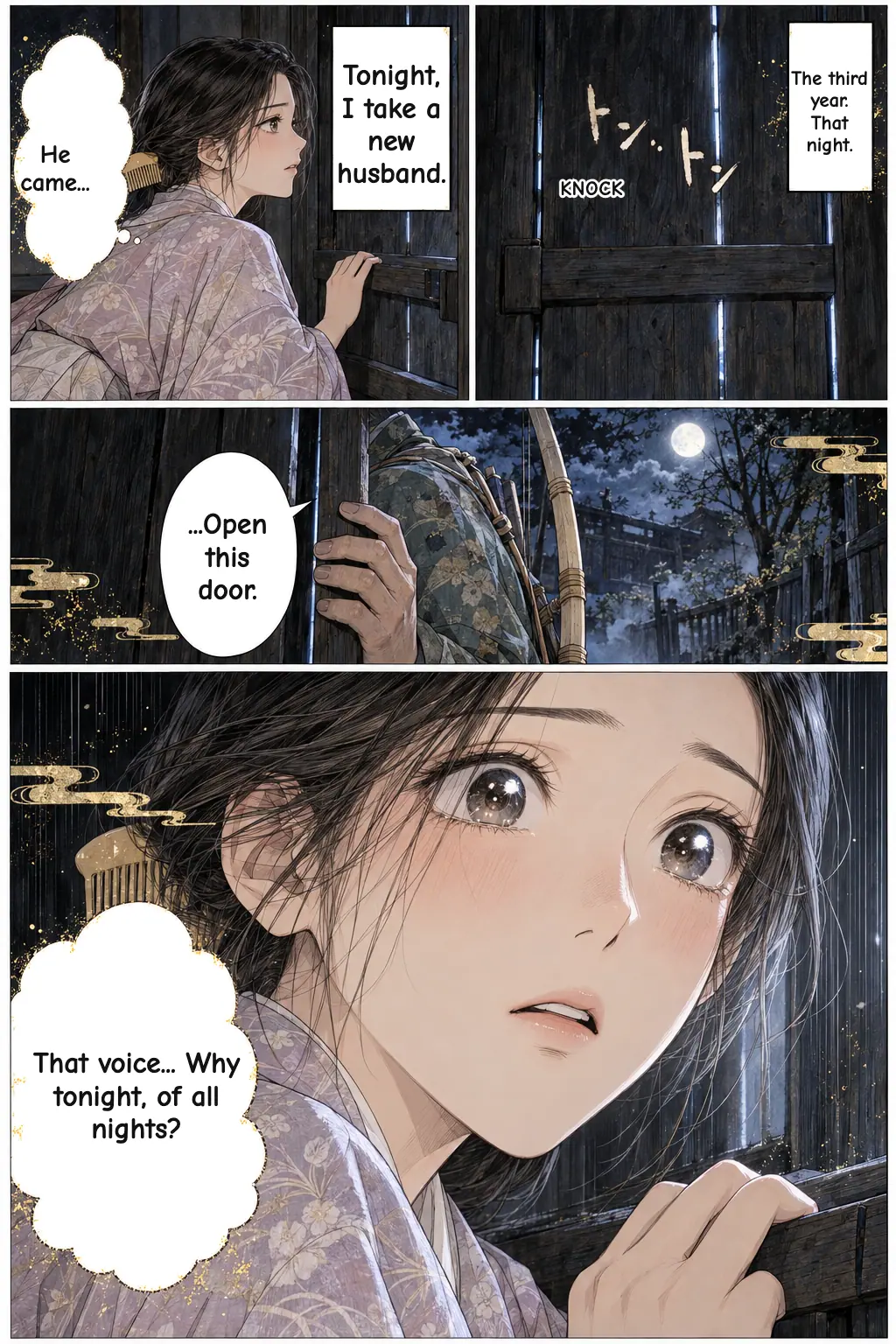
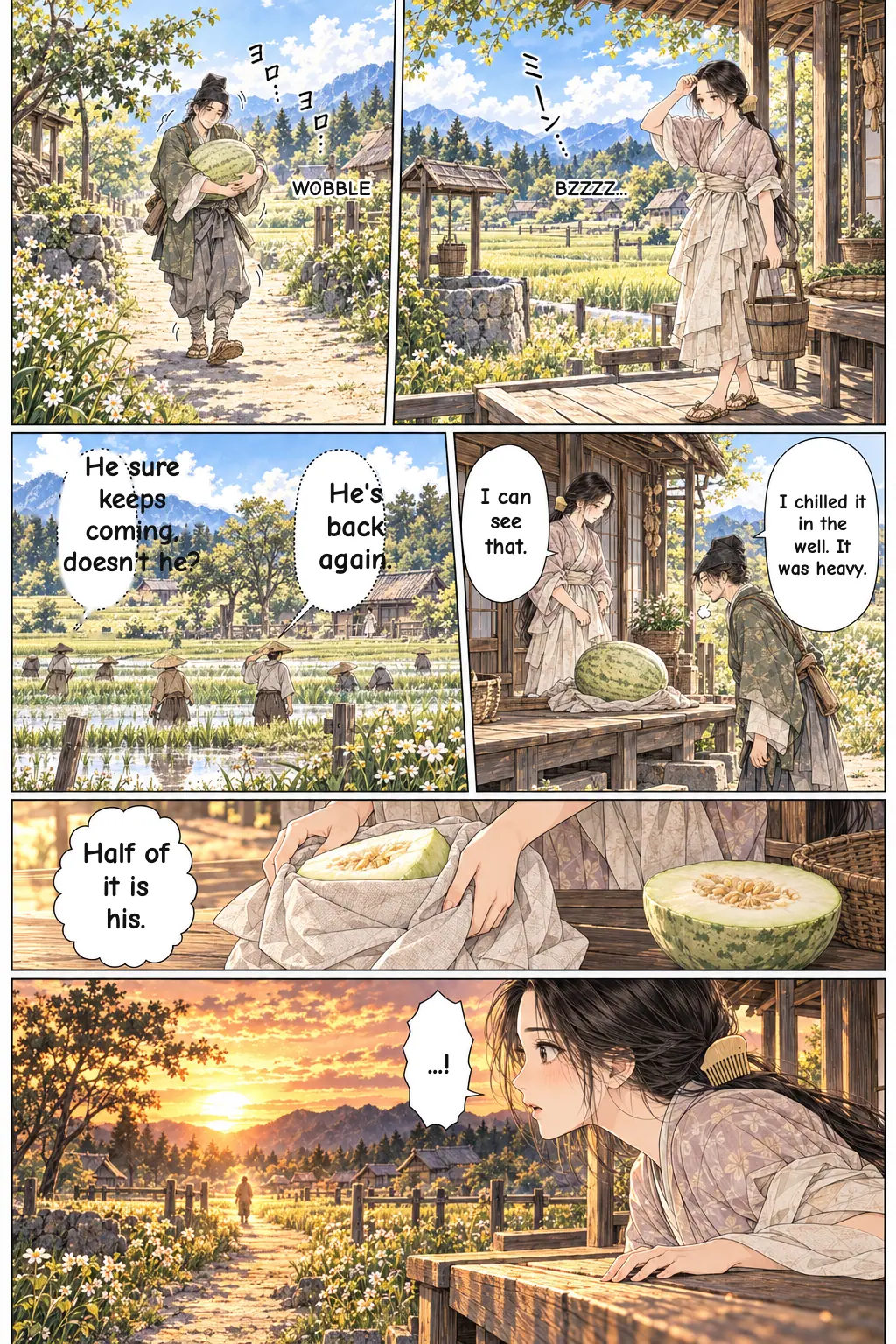
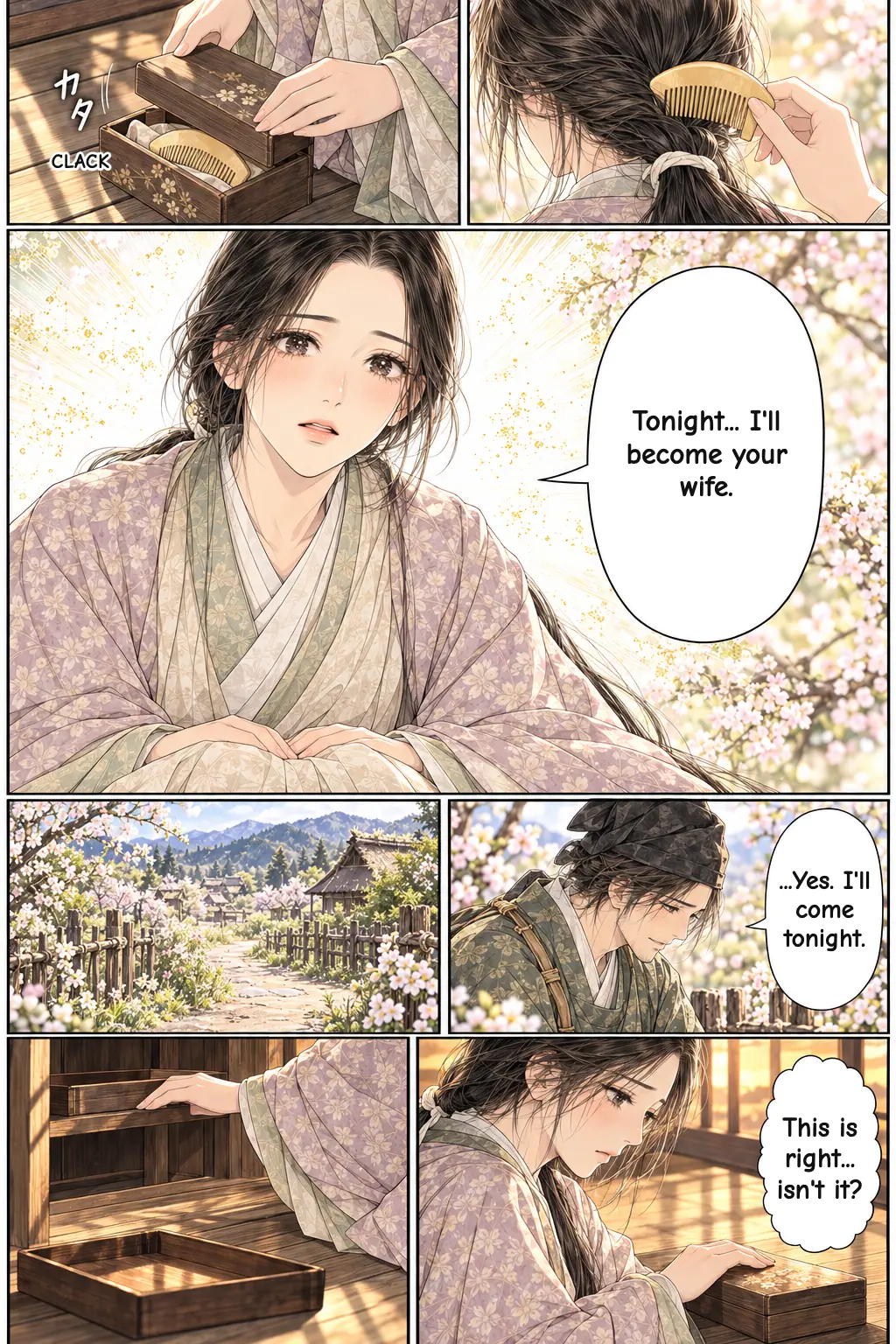
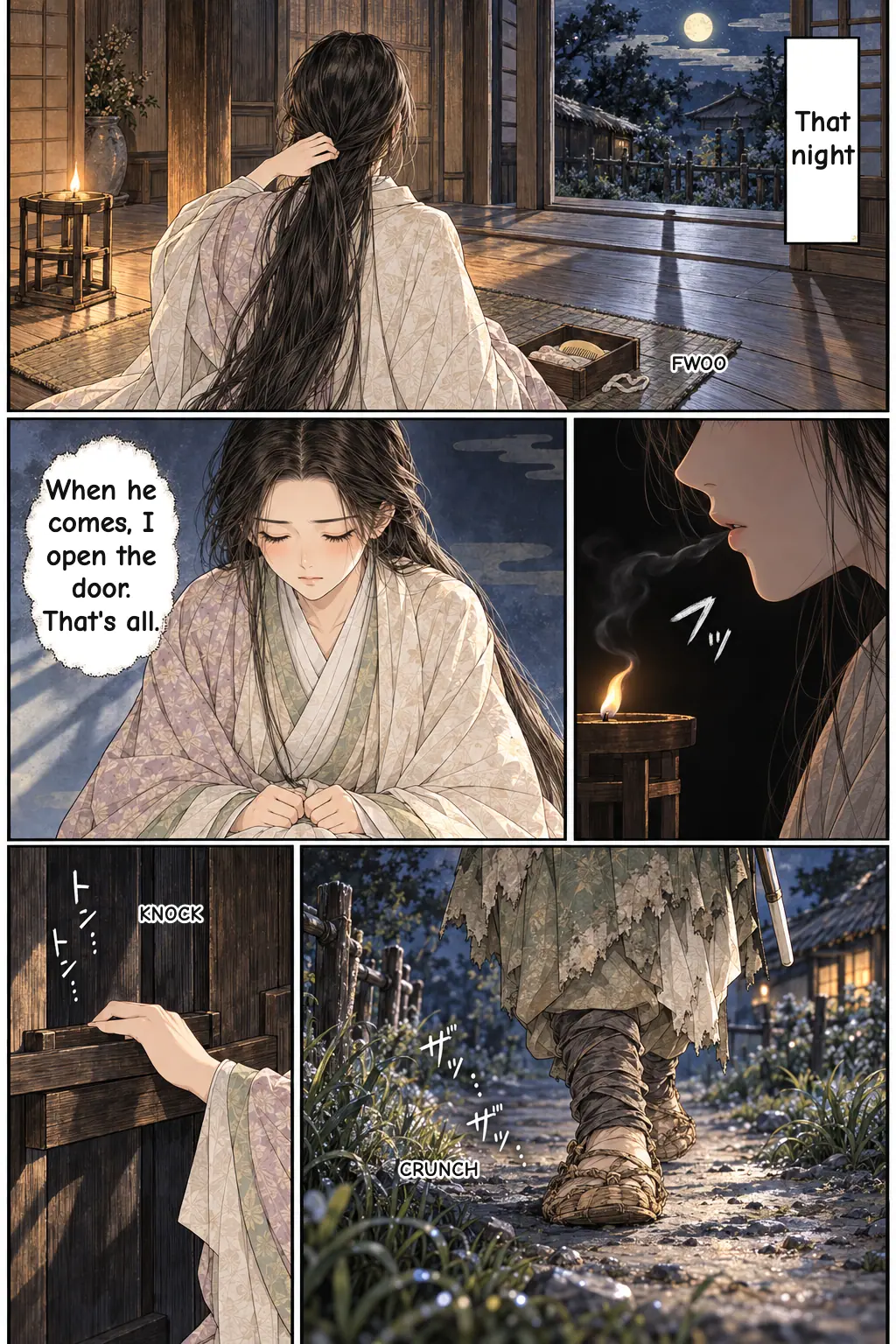
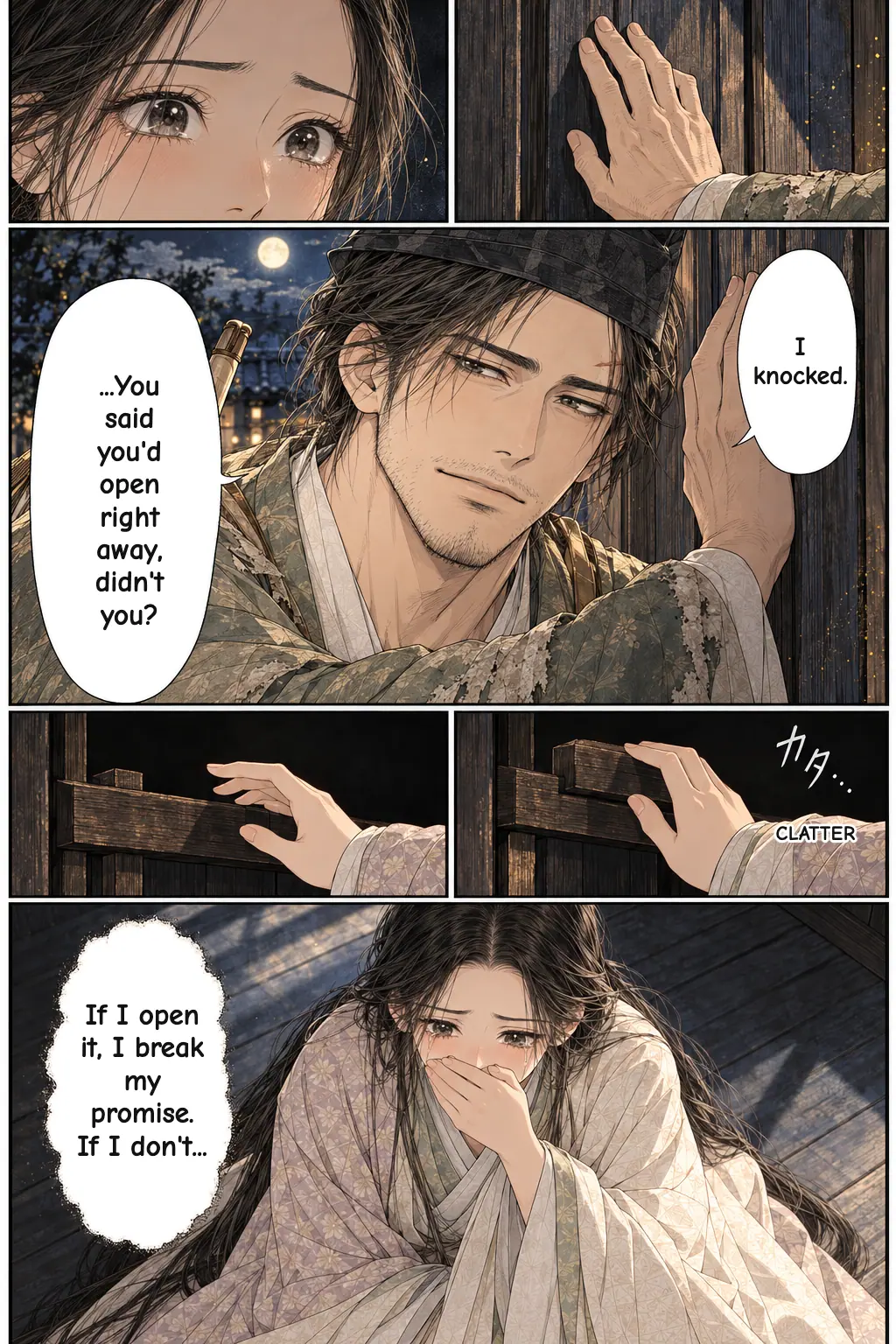
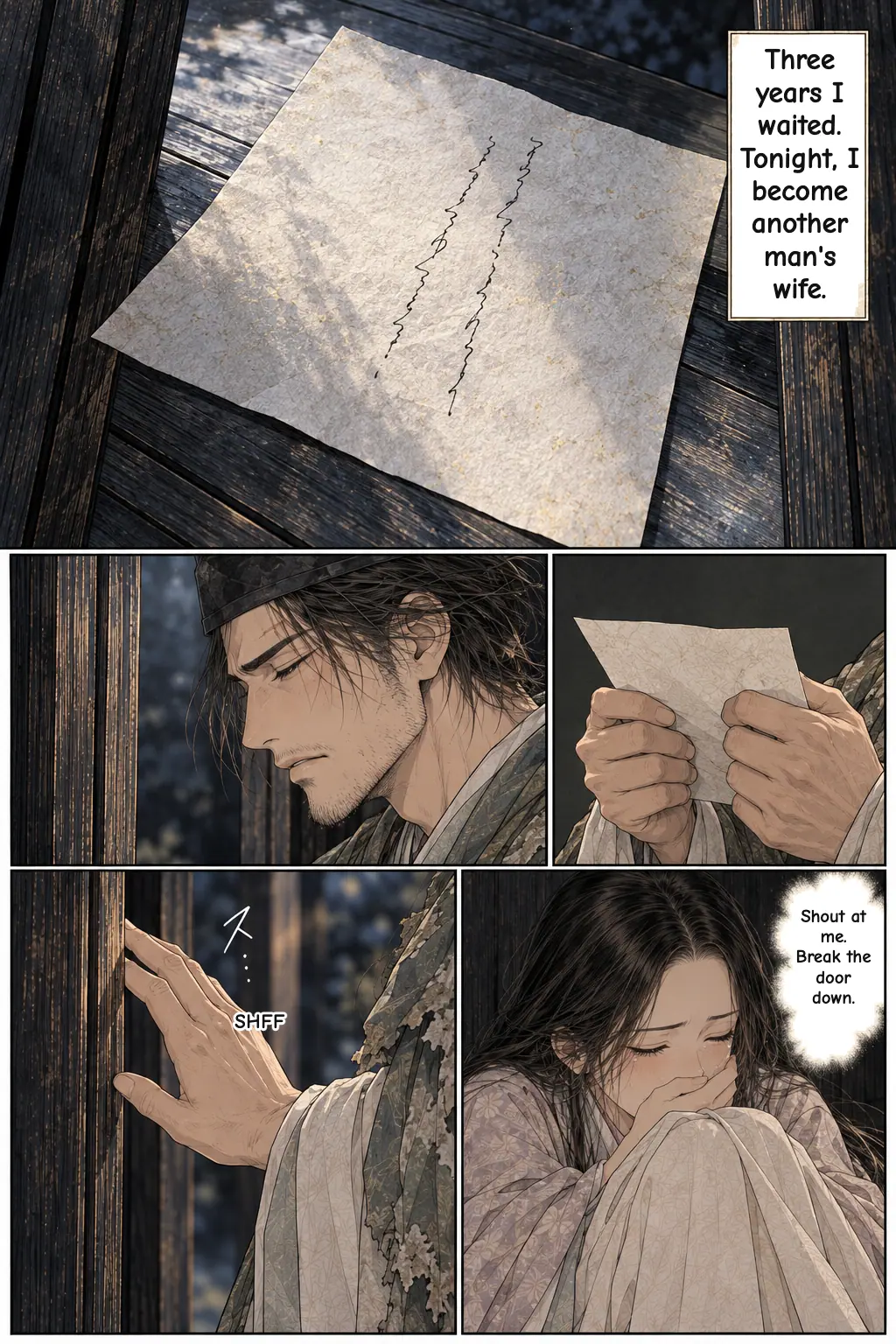
Her husband left for the capital, and for three years The Wife Who Waited kept waiting. Finally she promises to marry The Faithful Suitor, the man who stood by her the whole time. That night, someone knocks at her door. It's The Returning Husband, home at last.
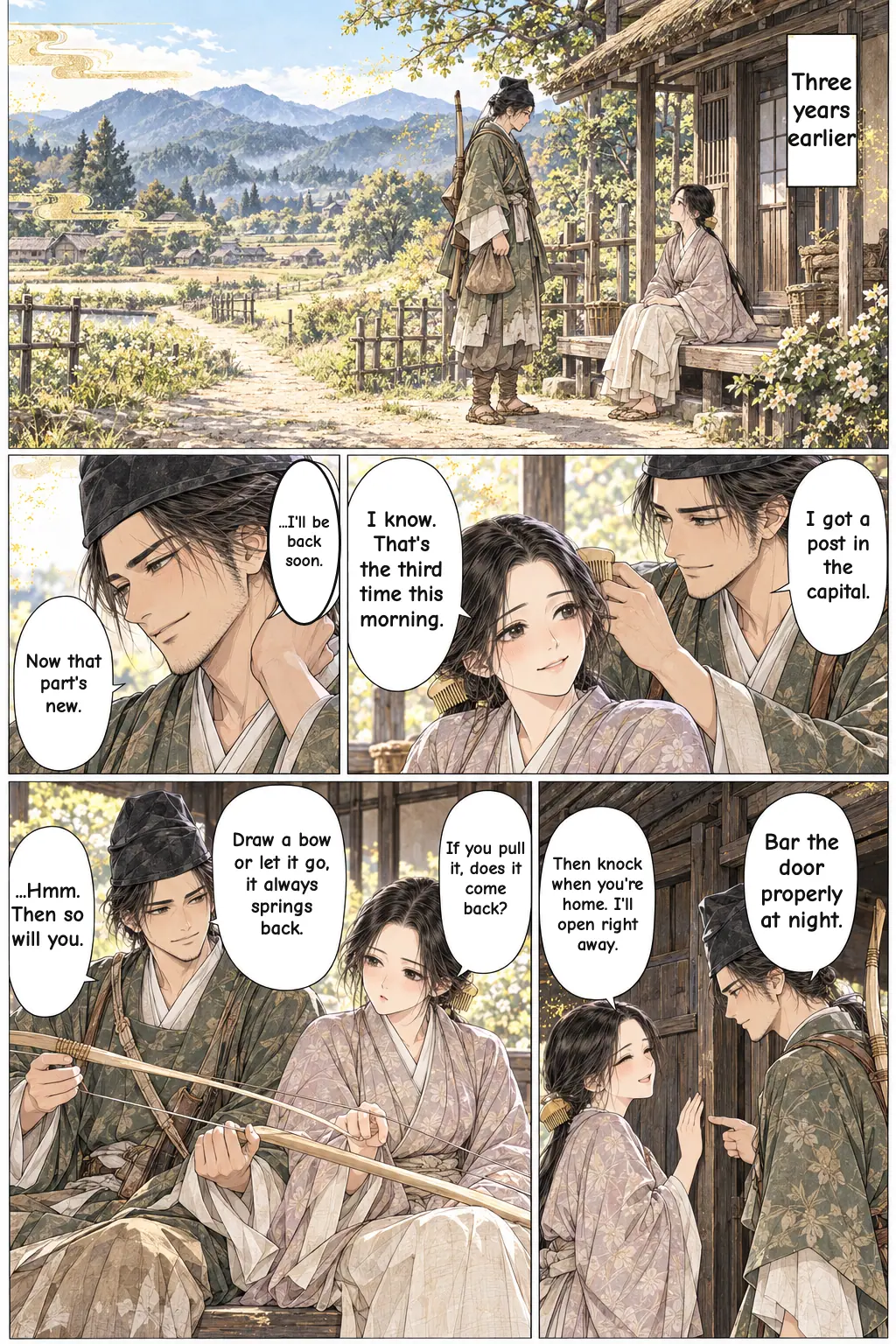
Like many episodes of The Tales of Ise, this one starts simply: long ago there was a man. He lived out in the countryside with a woman, and from the context they were living as husband and wife. He said he was going to the capital to serve at court. The two were sad to part, and he left. Then he did not come back for three years. The woman waited, and the waiting wore her down. In that time one man kept courting her, very earnestly and with real feeling. At last she agreed to spend the night with him, which in Heian terms meant agreeing to a marriage. On that exact night her husband came home.
The Catalpa Bow (Azusa Yumi): Tales of Ise Ep. 24 Story & Meaning
In short: "The Catalpa Bow" (Azusa Yumi) is Episode 24 of The Tales of Ise, a Heian-period Japanese collection of short stories built around poems. A wife waits three years for her husband to come back from the capital, and finally promises herself to another man. On that very night her husband knocks at the door. A short exchange of poems ends with him walking away, and with her death beside a spring.
The Original Story: What Happens in "The Catalpa Bow"
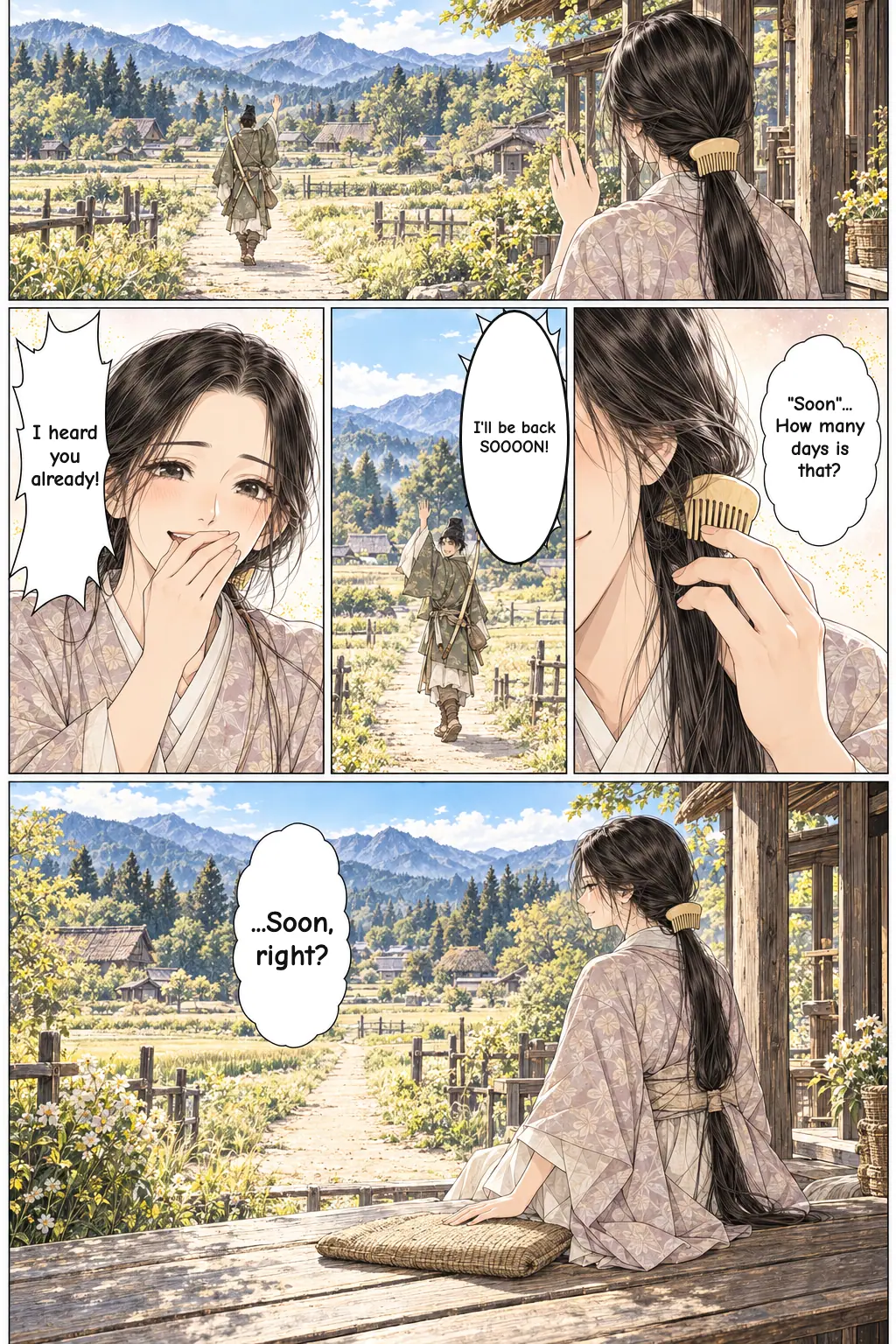
Like many episodes of The Tales of Ise, this one starts simply: long ago there was a man. He lived out in the countryside with a woman, and from the context they were living as husband and wife. He said he was going to the capital to serve at court. The two were sad to part, and he left. Then he did not come back for three years.
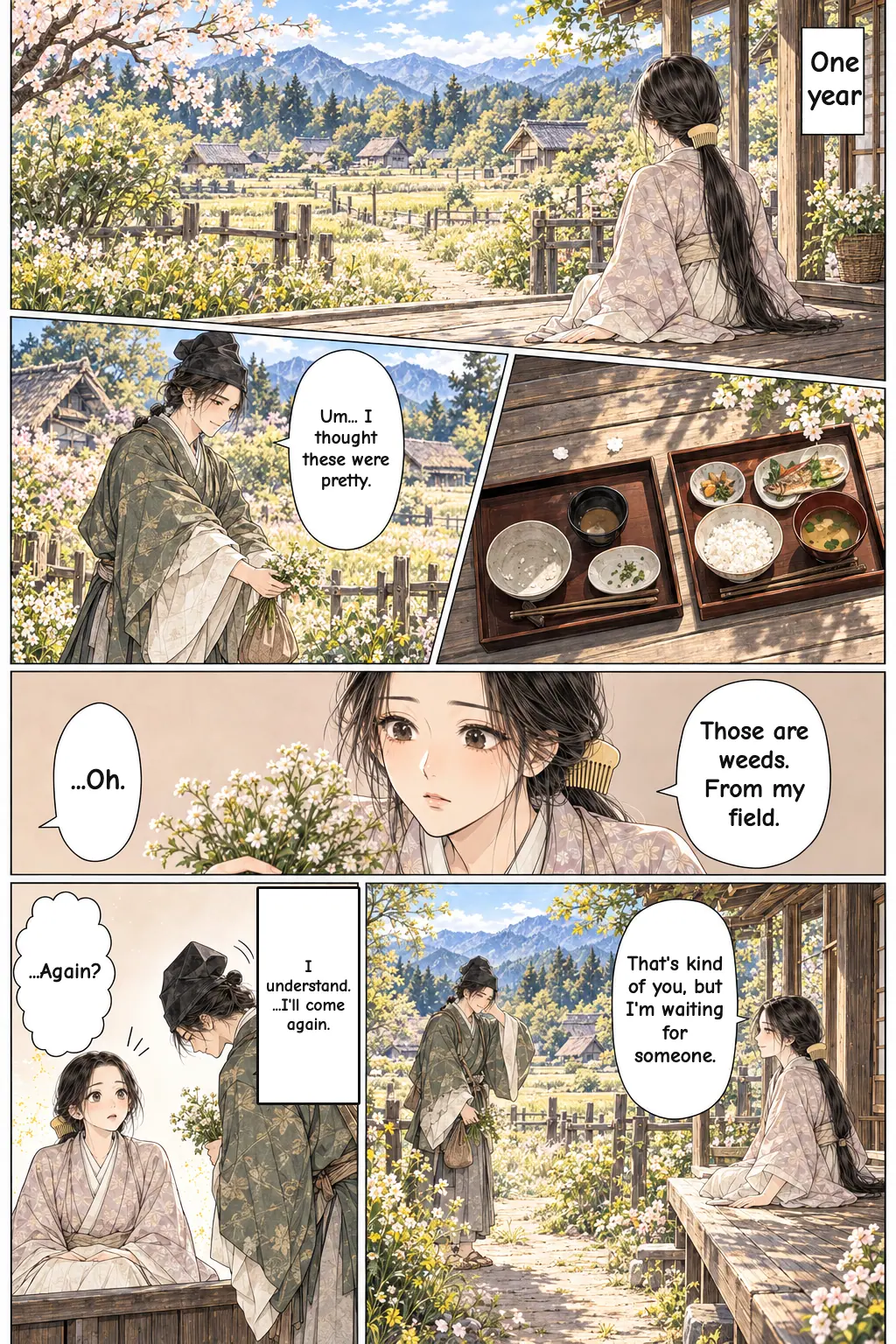
The woman waited, and the waiting wore her down. In that time one man kept courting her, very earnestly and with real feeling. At last she agreed to spend the night with him, which in Heian terms meant agreeing to a marriage. On that exact night her husband came home. He knocked and asked her to open the door.
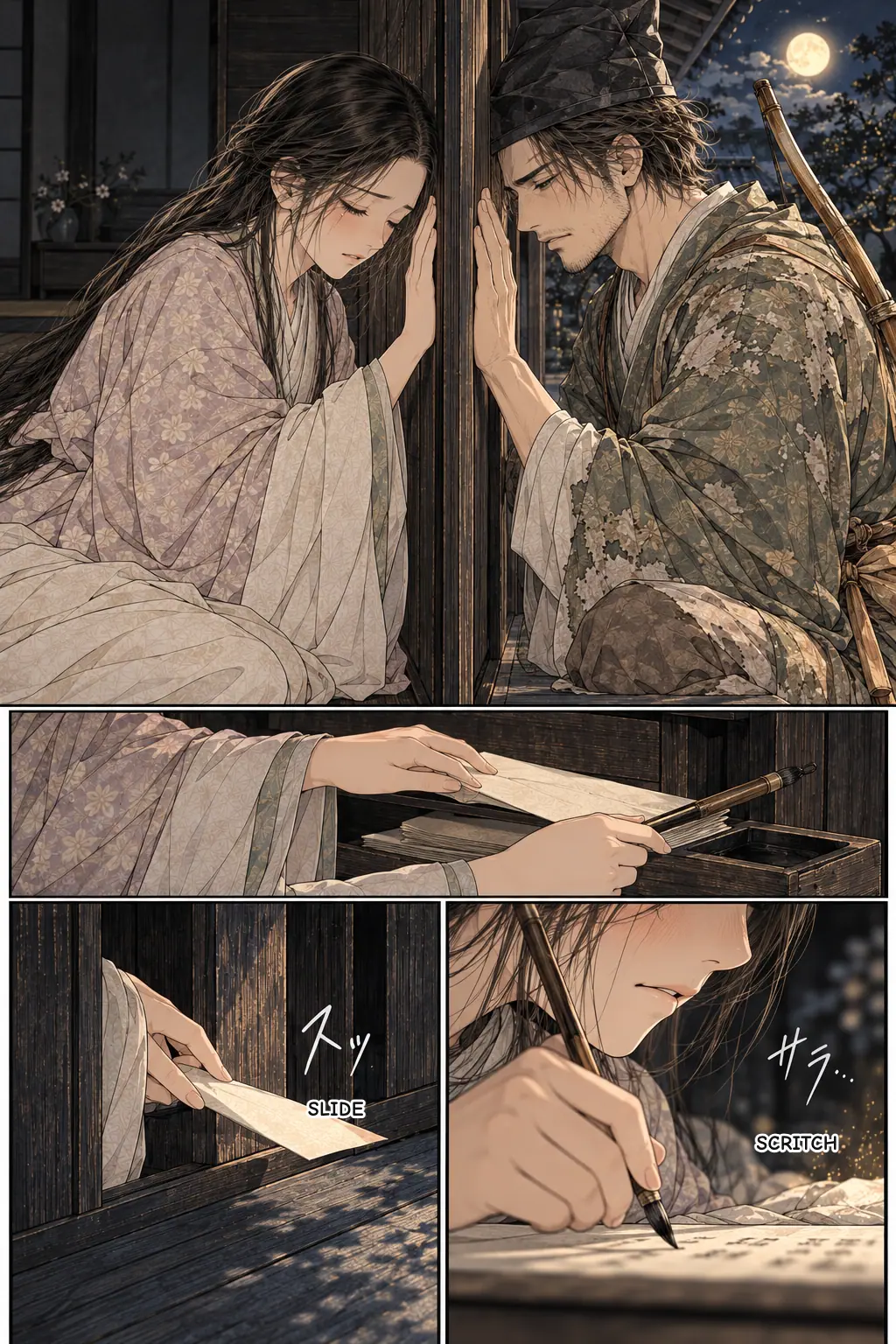
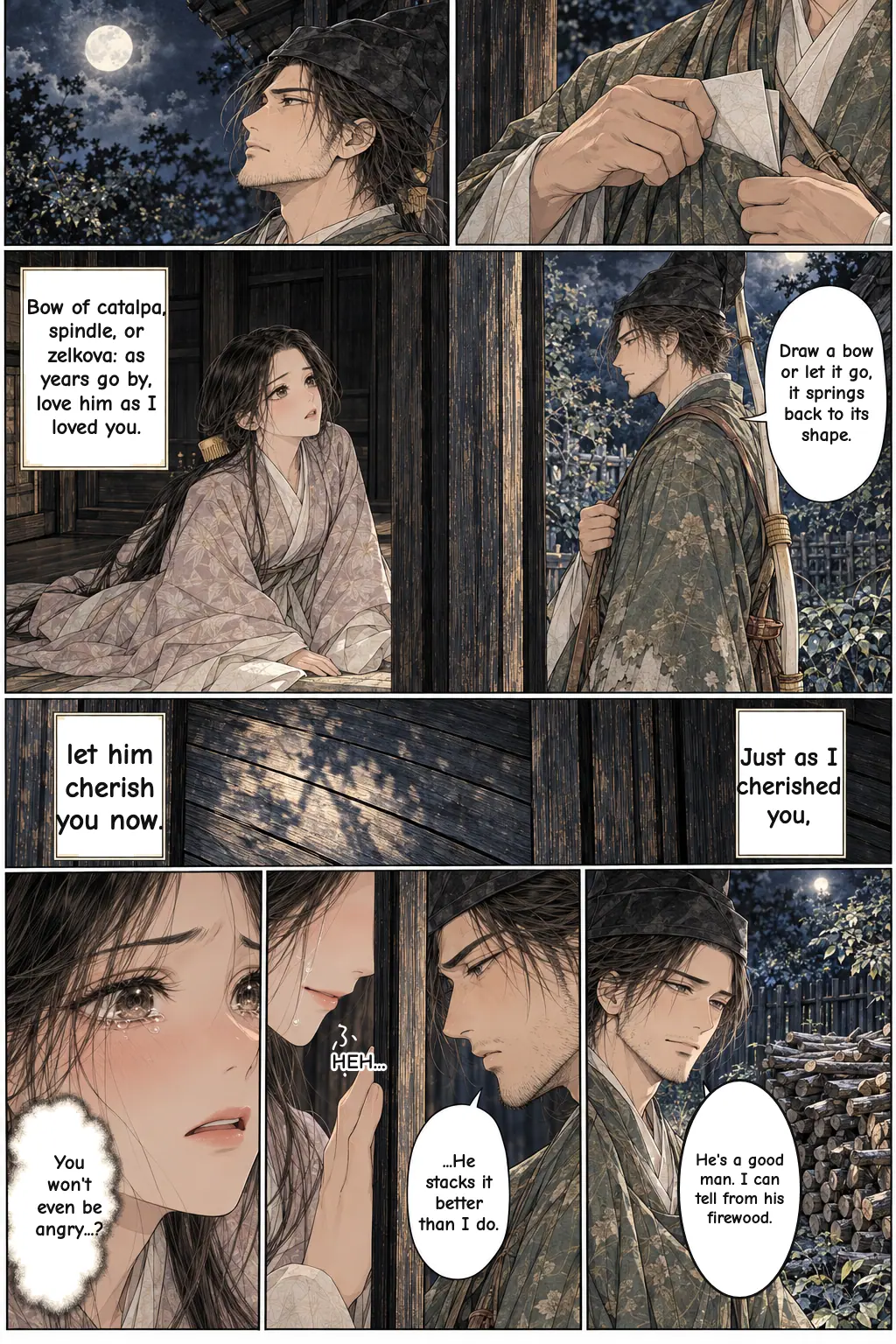
She did not open it. She passed him a poem instead. In it she said that she had waited three long years in sorrow, and that tonight, of all nights, she was sharing a new pillow with someone else. He answered with a poem that names three kinds of bows, the catalpa bow among them. Its meaning: as I cherished you over the years, cherish the new man the same way (it can also be read as "be cherished by him"). Then he turned to go.
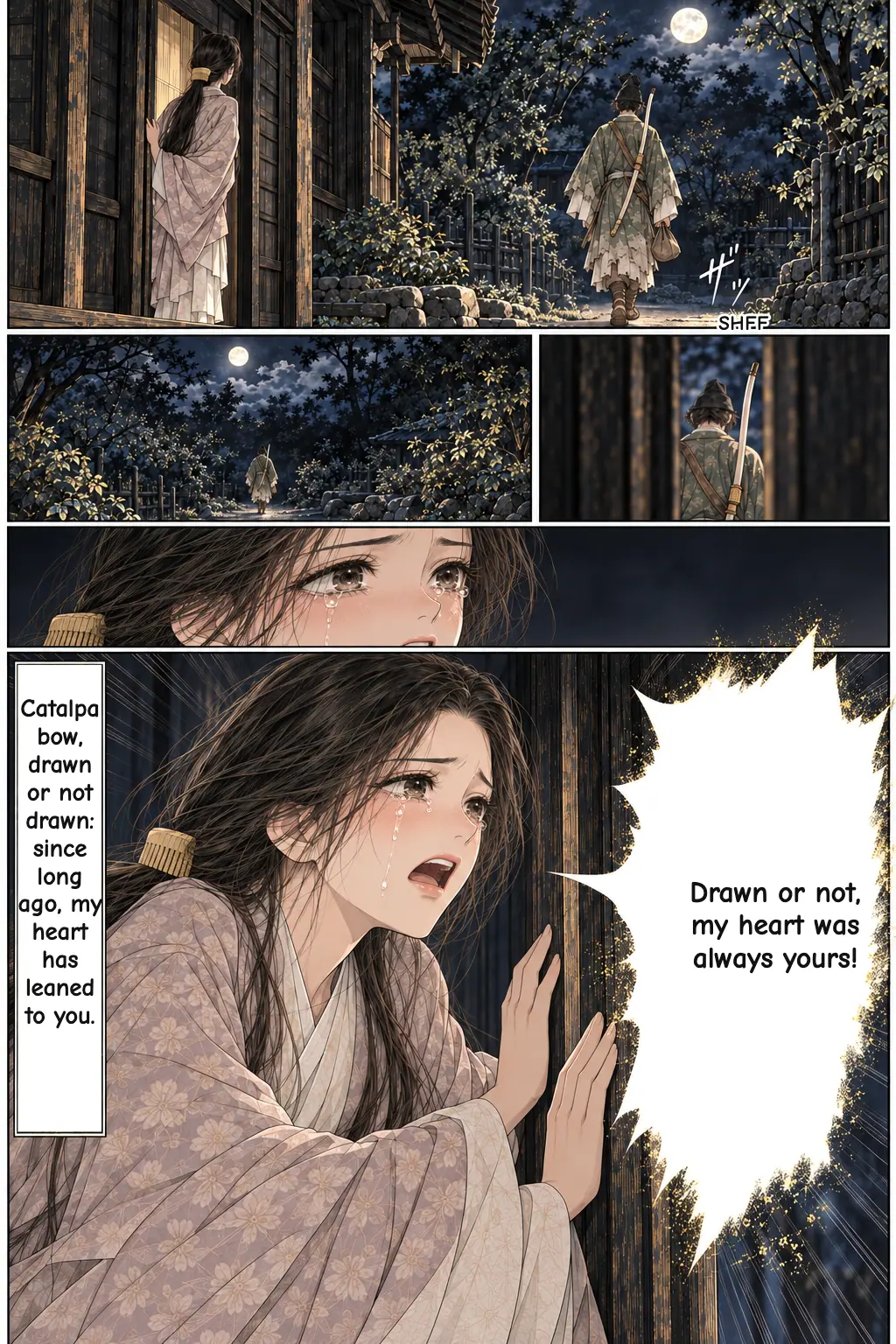
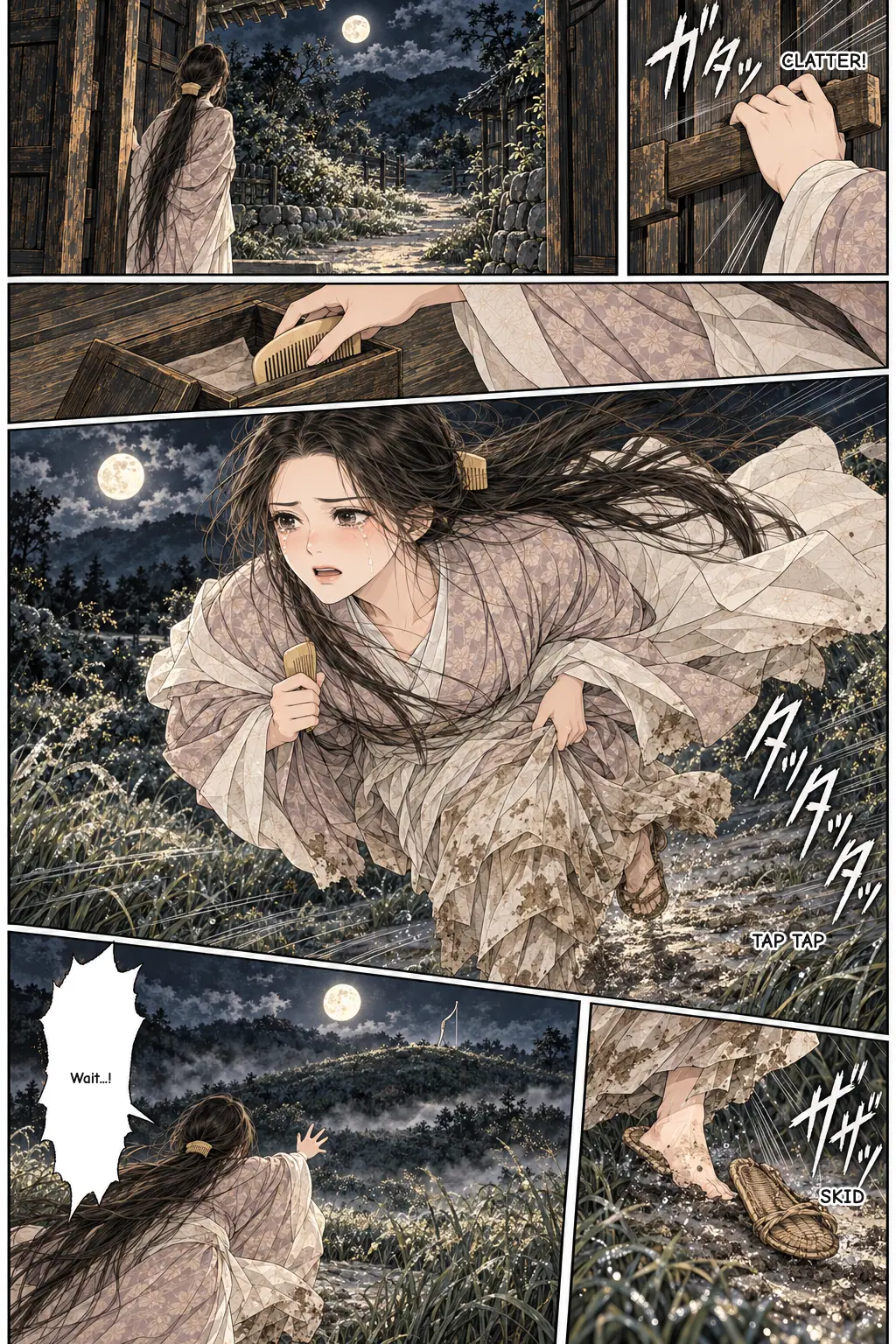
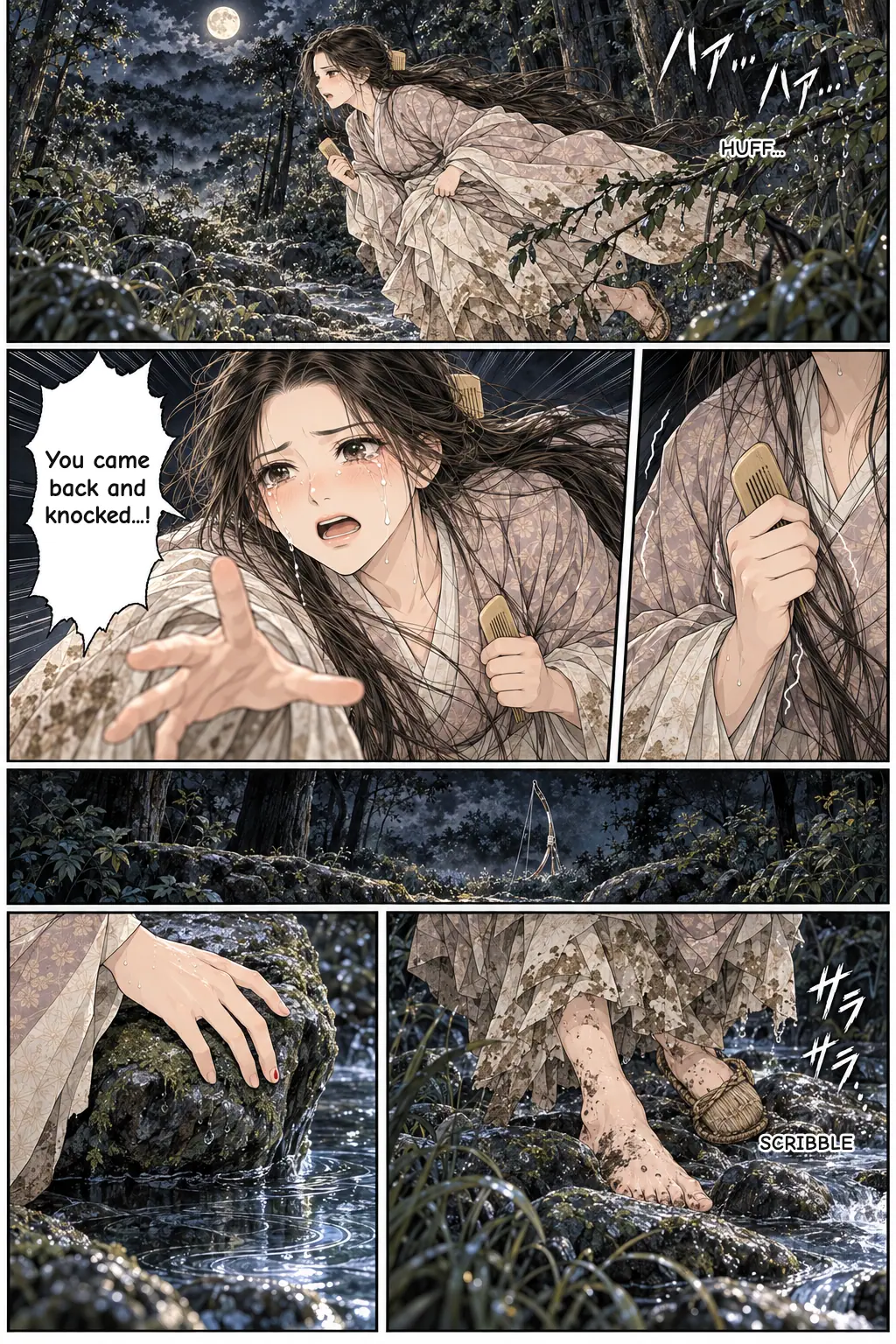
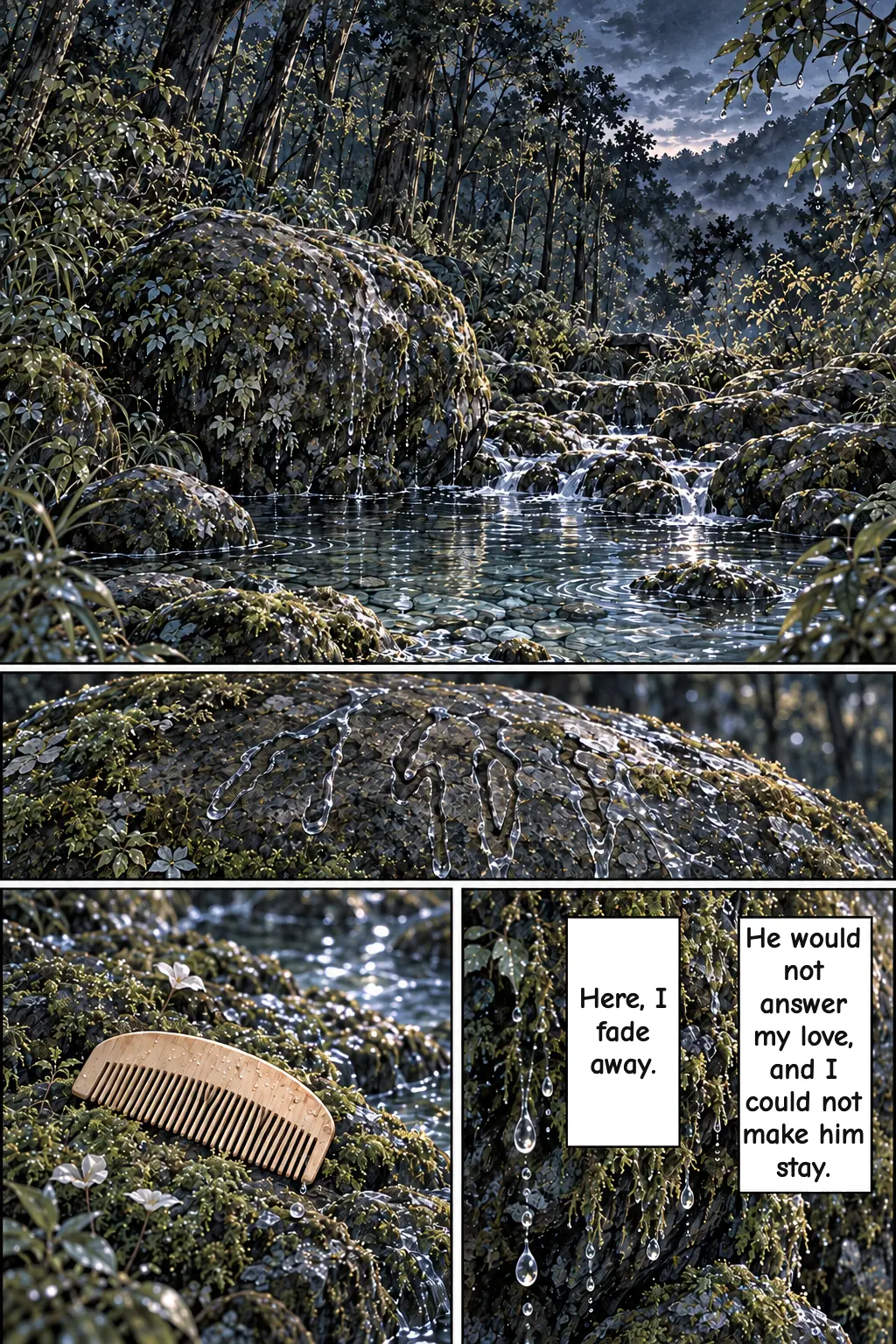
She answered with one more poem. Whether the bow is drawn or not, she said, her heart had leaned toward him since long ago. He still left. Overcome with grief, she ran after him but could not catch up. She collapsed at a place where clear water flowed, and on a rock there she wrote a last poem in the blood from her finger. It said she could not hold back a man who had left without loving her as she loved him, and that her life now seemed to be fading away. She died there. The text never tells us what the suitor did that night, or what became of the husband.
Main Characters
The original gives none of the three a name. The man is the usual "man" of The Tales of Ise. Readers often link that figure to the poet Ariwara no Narihira, but nothing in this episode says it is him, so it is best not to assume so. We are not told why he stayed away, what he did in the capital, or what he felt as he walked off.
The woman is the emotional center of the story, yet we learn nothing about her age, looks, or family. All we know is what she does: she waits, she makes a promise, she answers in poems, she runs after him, and she dies. The suitor never actually appears on stage. The only thing said about him is that he courted her earnestly and sincerely.
What the Story Tells Us: Poems, Bows, and Heian Marriage
The Tales of Ise is a uta monogatari, or "poem tale." It dates from the early to mid Heian period (roughly the 9th–10th centuries), and no one knows who wrote it. In this kind of book the prose exists to set up the poems, and the poems carry the feeling. That is why the climax happens through poetry rather than an argument. The door stays shut, and the whole conversation passes through verse.
The title image comes from the husband's poem. An azusa (catalpa-wood) bow was a common bow in old Japanese poetry. Drawing a bow (hiku) could also mean drawing someone toward you. The wife picks up his image and turns it around: whether or not anyone pulls at her heart, it has always leaned toward him. Their two poems on the same image make up the core of the episode.
Many commentators explain the background like this. Under the ancient legal codes (the ritsuryō household laws), a wife whose husband had been gone for a set period could lawfully remarry, and three years is often mentioned. This is a common explanation, but the story itself never brings it up. Either way, the woman has done nothing wrong, and that is part of why the ending feels so cruel. Readers have argued for centuries about the husband. Some hear his poem as a gracious blessing, and others hear it as a quiet, cold withdrawal.
What the Manga Changes
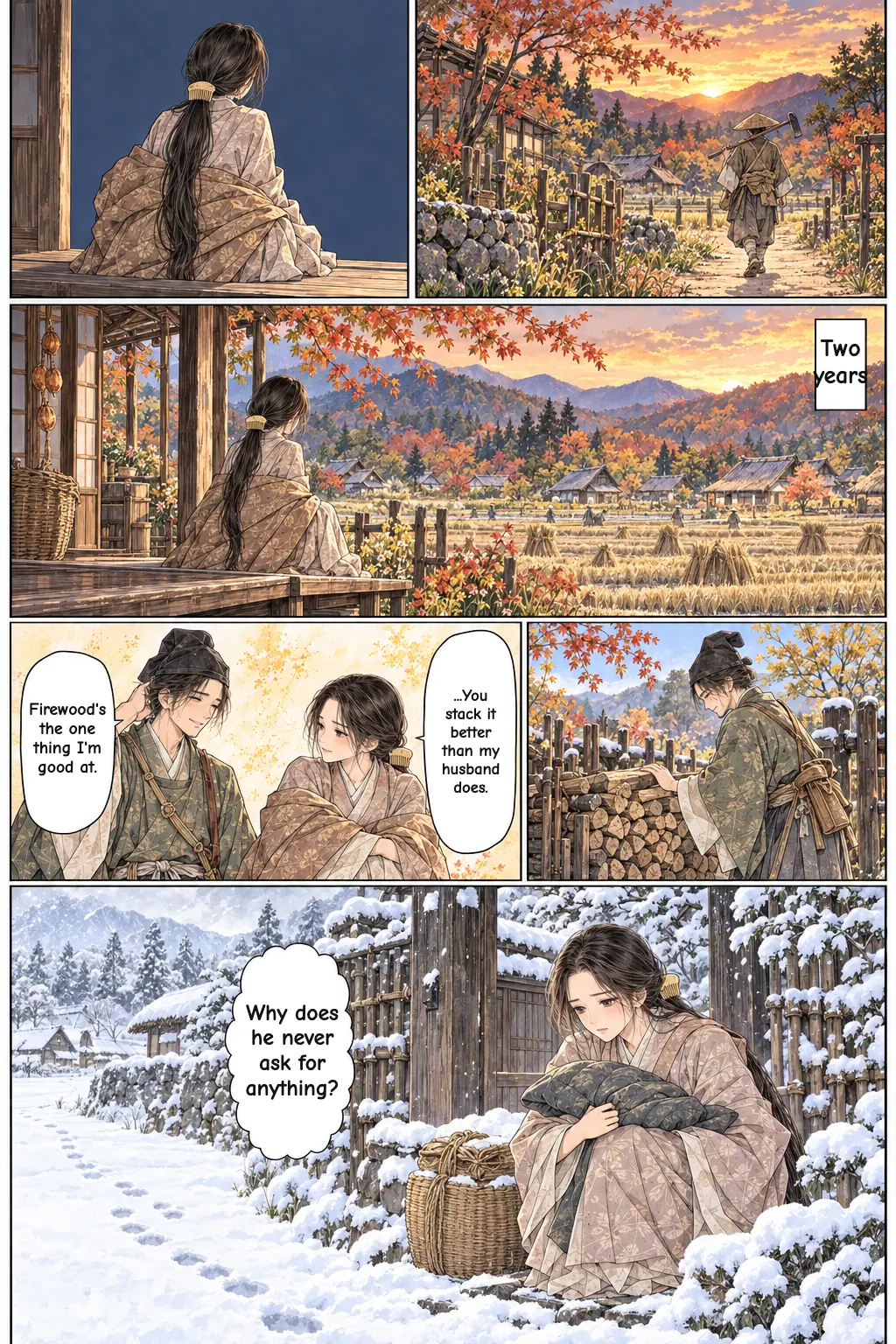
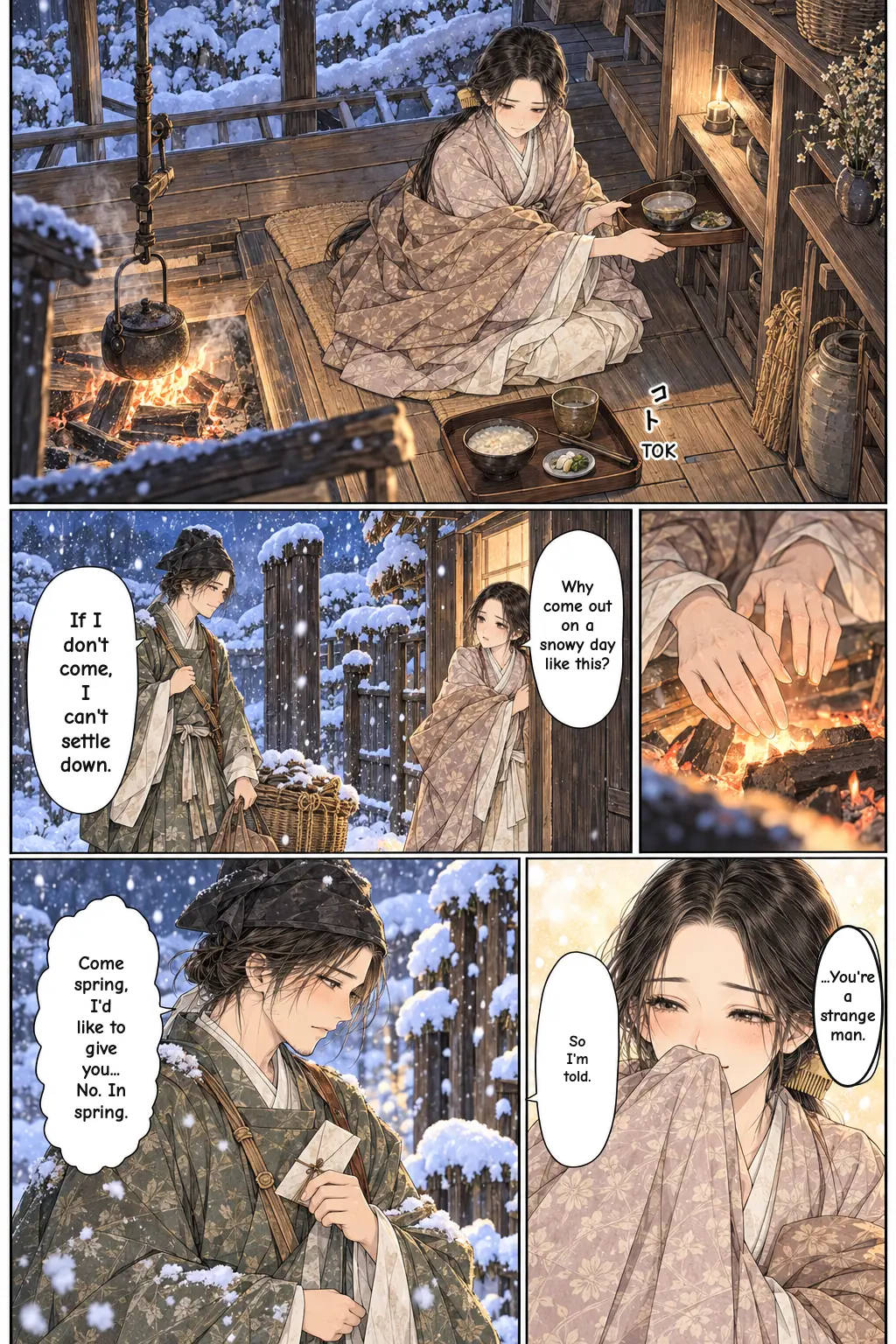
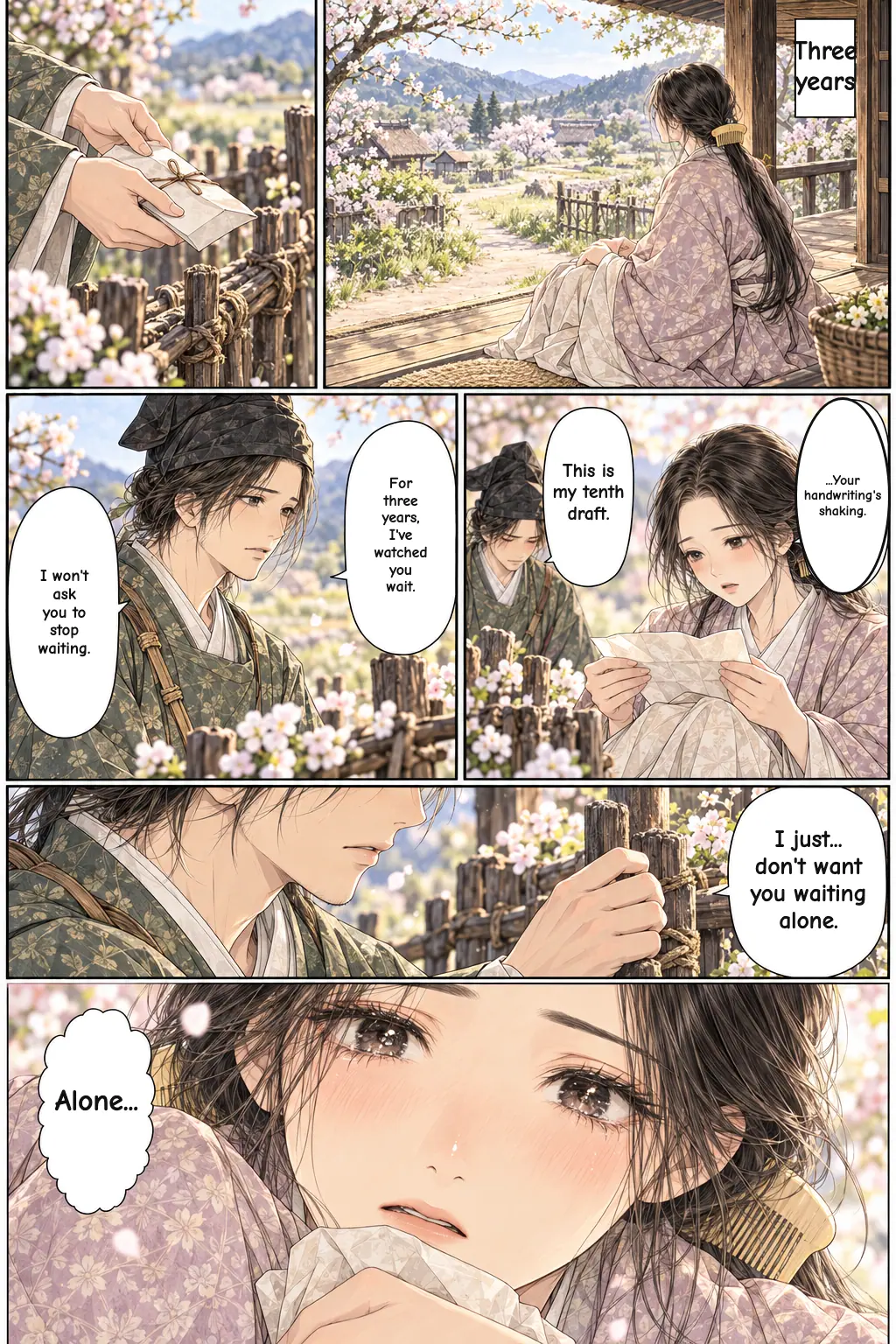
The original is only a few lines long, so the manga fills in a lot, and those parts are new creation, not tradition. The husband's parting words, the wife's life across three years of changing seasons, and the suitor's personality and way of courting her are all added. The time, weather, and setting of the night of the knock are added too.
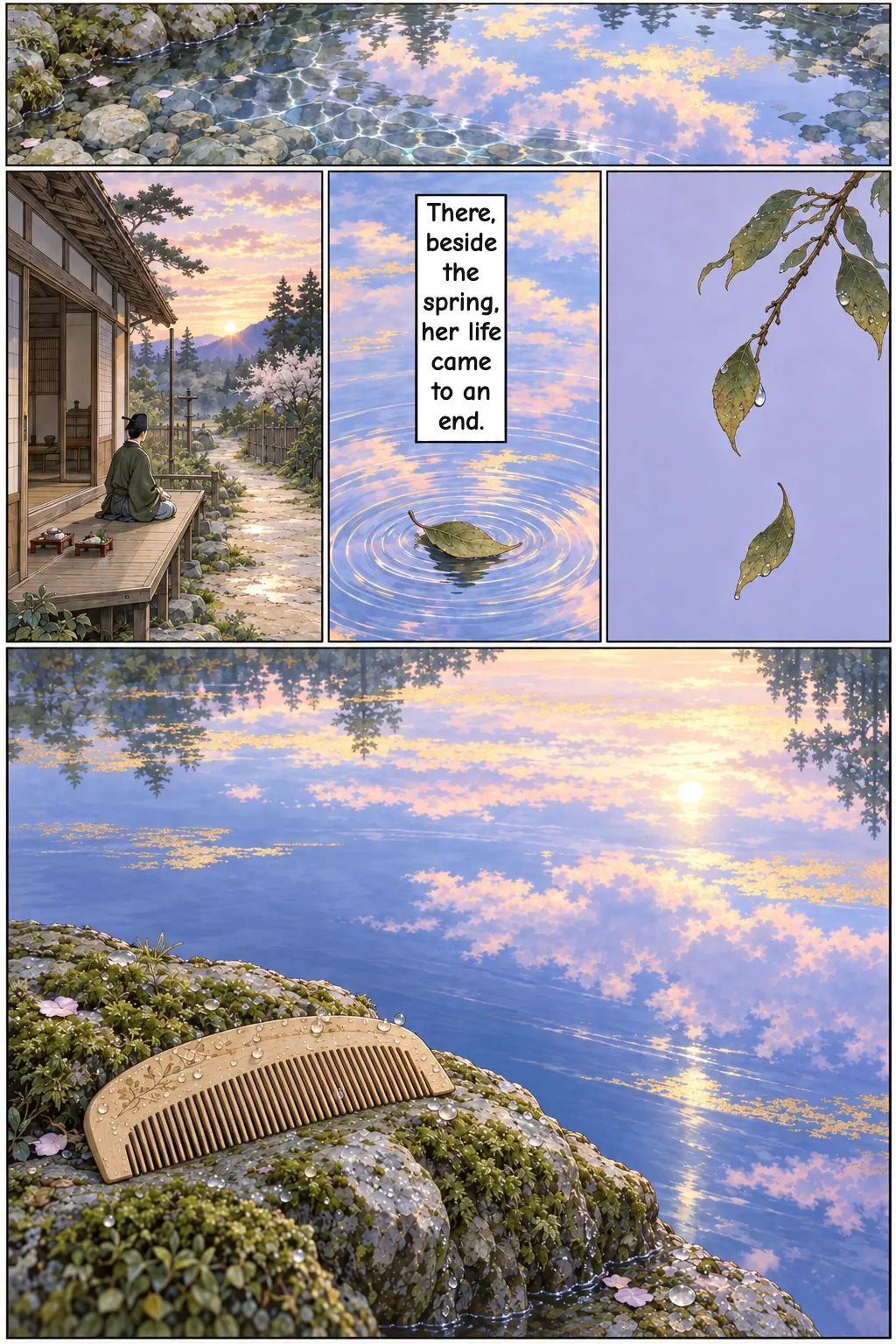
The manga also stages moments the text leaves open: how she hands over her first poem, and where and how she speaks her second. Anything louder than simply "saying" it is the manga's choice. Any glimpse of the husband's face or thoughts as he leaves is invented as well, since the original gives none. One deliberate change: in the original she writes her final poem in her own blood, but the manga does not show what she writes with. It suggests her death gently, through still water and falling leaves, and leaves the fates of the suitor and the husband open, just as the original does.
Where to Read It
"The Night I Remarried, My Husband Knocked" is Episode 5 of LOVE & ALLURE: Classic Japanese Tales of Romance on Manga Portal. It turns this short, heartbreaking poem tale into a full visual story you can read in a few minutes. Every episode is free, with no sign-up. If the catalpa bow stays in your mind, the other episodes in the series have more classic Japanese love stories to read next.
Characters in this episode
The Returning Husband (the "man")
A countryside man who leaves for the capital to serve at court, stays away three years, and comes home on the very night his wife has promised herself to someone else.
The Wife Who Waited (the woman)
She waits three years, finally accepts a sincere suitor, answers her husband only in poems, and dies by a spring after failing to catch him.
The Faithful Suitor
A man who courted the wife earnestly during the three years. The original says nothing else about him, and he never actually appears.
FAQ
What is "The Catalpa Bow" in The Tales of Ise?
It is Episode 24 (the 24th dan) of The Tales of Ise. A wife's husband comes home after three years on the very night she has agreed to take a new partner. It is named after the catalpa bow (azusa yumi) in the husband's poem.
Why didn't the wife open the door?
She had already promised that night to the man who courted her through the three years. So she told her husband this in a poem instead of letting him in. Commentators often add that the old law allowed a wife to remarry after a long absence, but the story itself doesn't say so.
What does the catalpa bow poem mean?
The husband names kinds of bows and asks her to cherish her new partner as he once cherished her (or to be cherished by him). Drawing a bow suggests drawing a heart. In her reply she uses the same image: whether pulled or not, her heart has always leaned toward him.
How does the story end?
The husband leaves. The wife chases him, falls at a clear spring, writes a final poem on a rock in her own blood, and dies there. The original never says what happened to the husband or the suitor afterward.
Is the man in this story Ariwara no Narihira?
The Tales of Ise is often linked to the poet Narihira, but this episode just calls him "a man." Nothing in the text identifies him.