Episode 4I Lent Her My Umbrella. She Never Left.The Lust of the White Serpent — Tales of Moonlight and Rain
Episode 4 of the series. On a rainy day, a timid young man named Toyoo lends his old umbrella to Manago, a beautiful woman soaked to the skin. She loves him with all her heart, but she is not human. Toyoo keeps running from her, until someone dies because of him. Then he decides to end things with the one he loved, by his own hand.
19 pagesFree · No sign-up
In short: "The Lust of the White Serpent" (Jasei no In) is a story from Ueda Akinari's 1776 collection Tales of Moonlight and Rain (Ugetsu Monogatari). A gentle young man named Toyoo lends his umbrella to a beautiful woman, Manago, on a rainy day. She turns out to be an ancient serpent who will not let him go. After her obsession costs a man his life, Toyoo traps her himself with a sacred priest's robe, and she is sealed in an iron bowl at Dōjōji Temple.
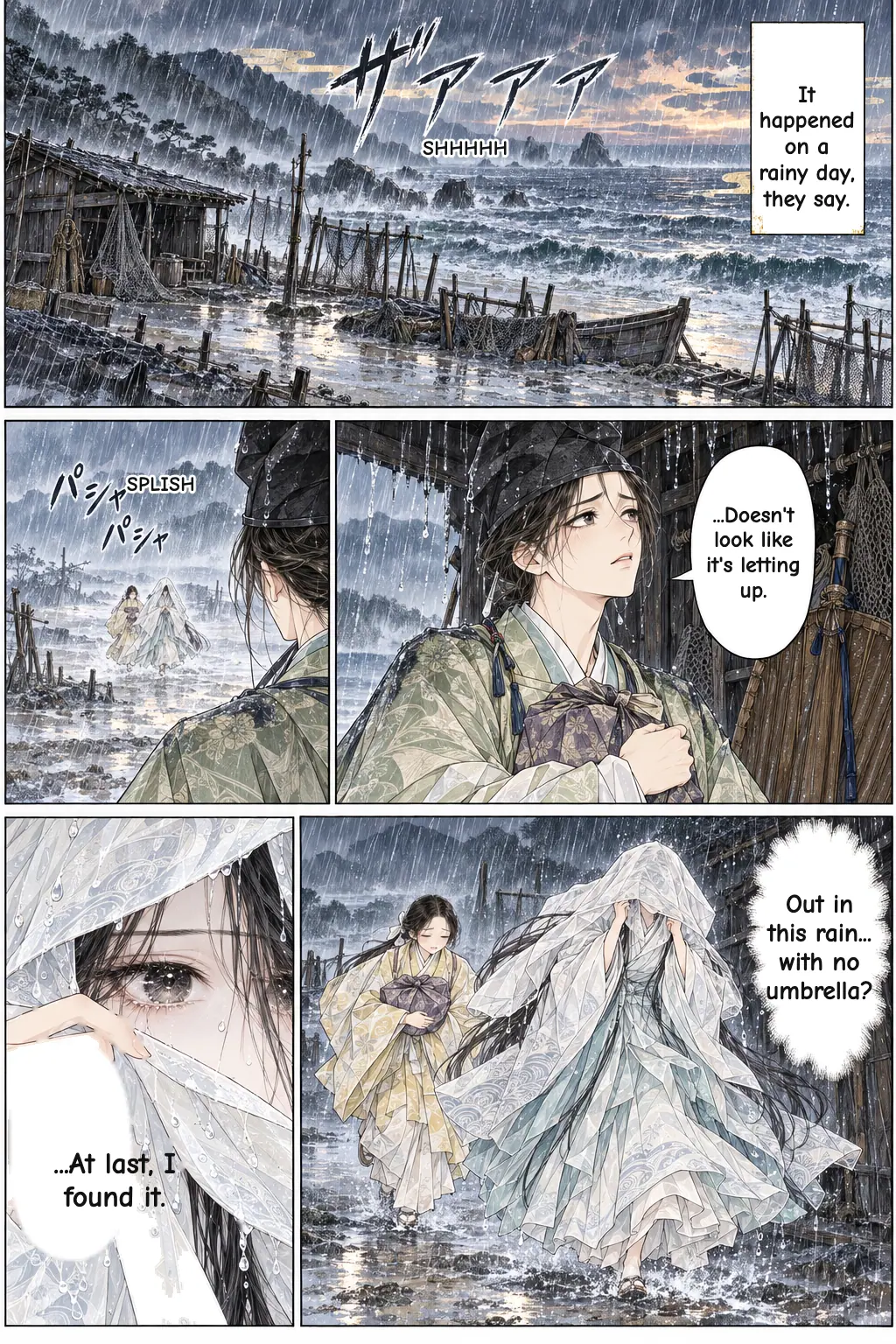
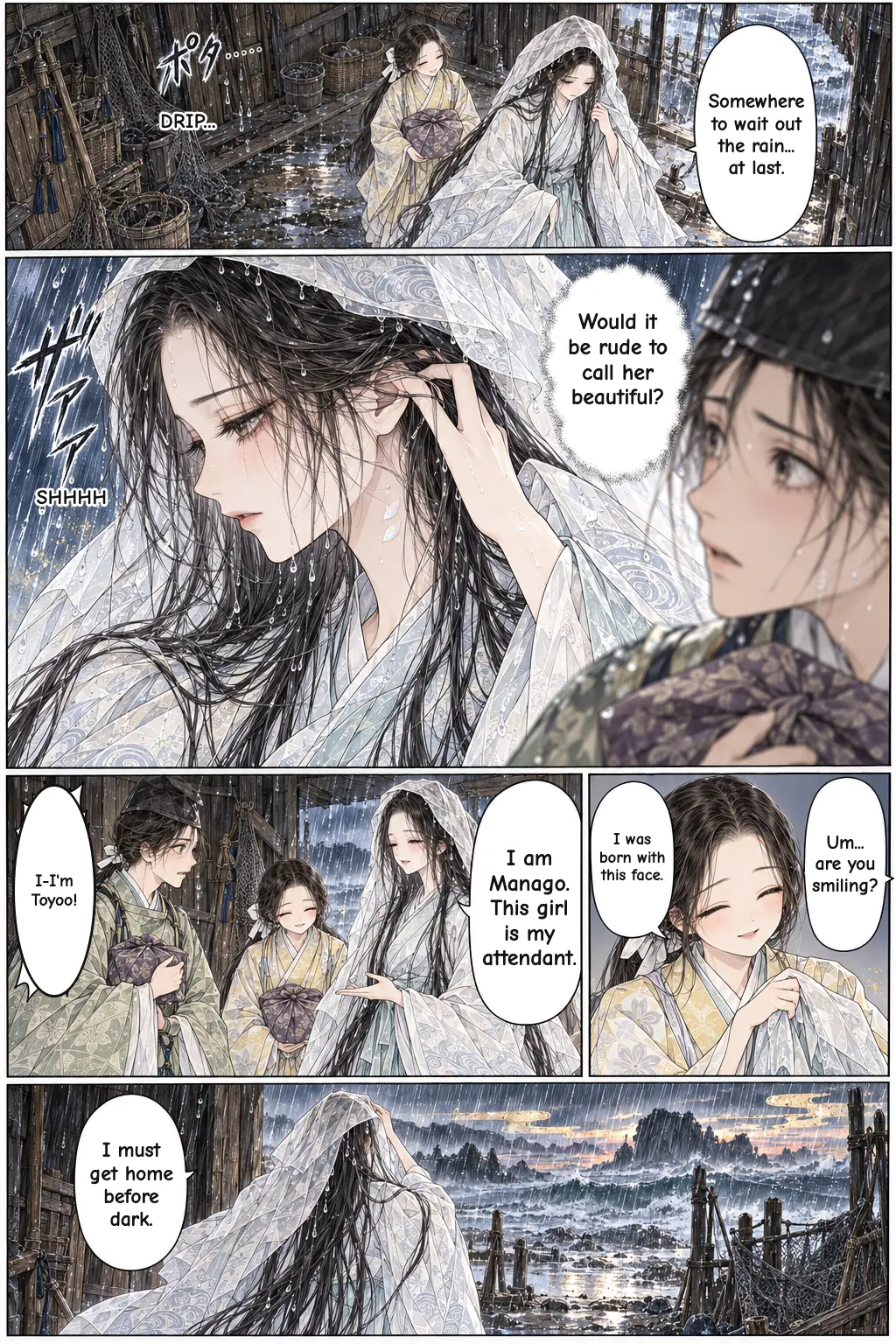
In Miwa-ga-saki, a fishing town in Kii Province (today's Wakayama Prefecture), lives a wealthy fishing boss named Ōya no Takesuke. His eldest son, Tarō, works hard at the family trade. His third son, Toyoo, does not care for fishing at all. He loves poetry, learning and refined city manners, and he studies with a Shinto priest in nearby Shingū. One day, on the way home, a storm drives him to shelter in a fisherman's hut. A strikingly beautiful woman of about twenty walks in, soaked, with a young maid of fourteen or fifteen. She introduces herself as Manago and says she lives near Shingū.
The Lust of the White Serpent (Jasei no In): Story Summary & Meaning | Tales of Moonlight and Rain
The Original Story: A Summary of "The Lust of the White Serpent"
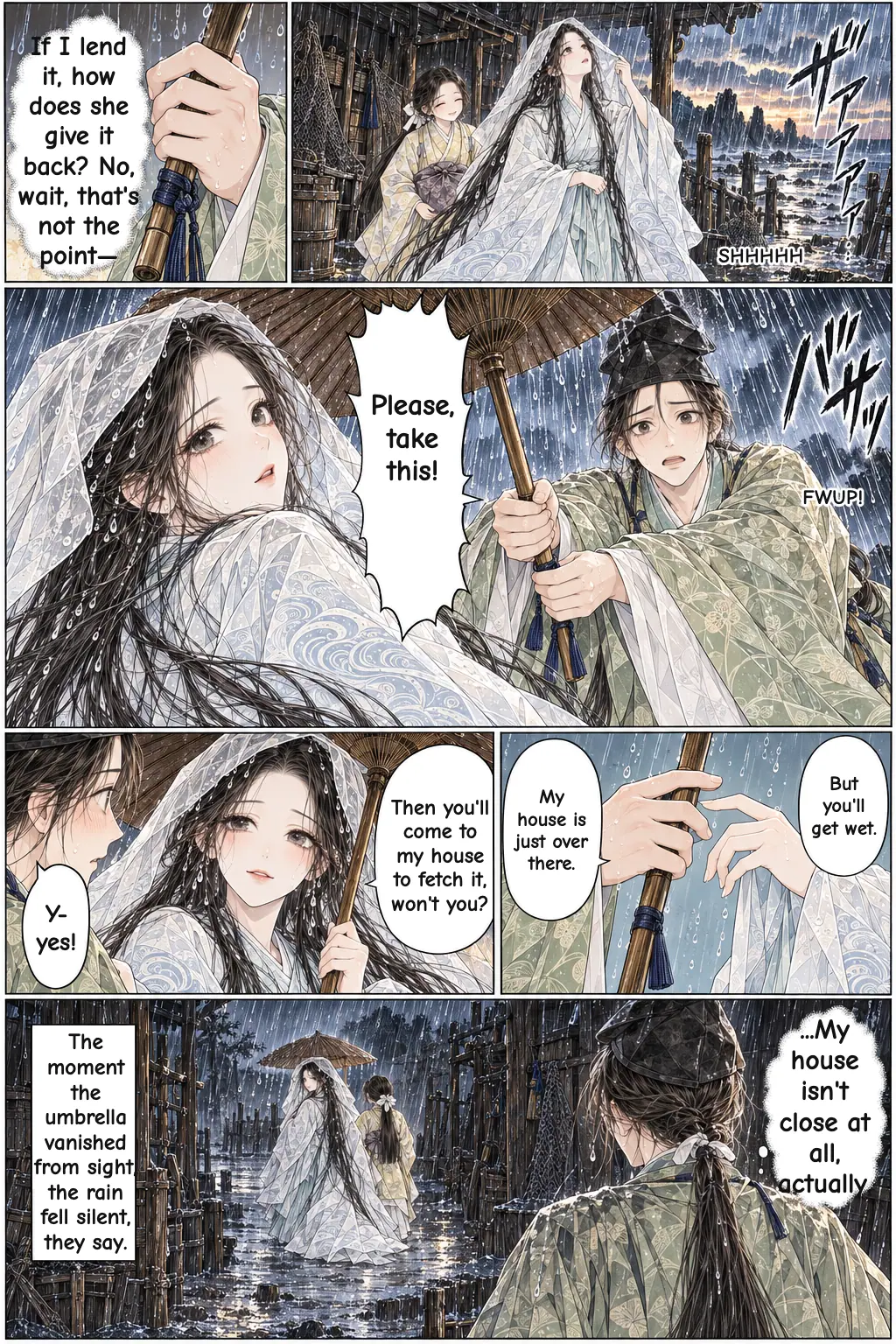
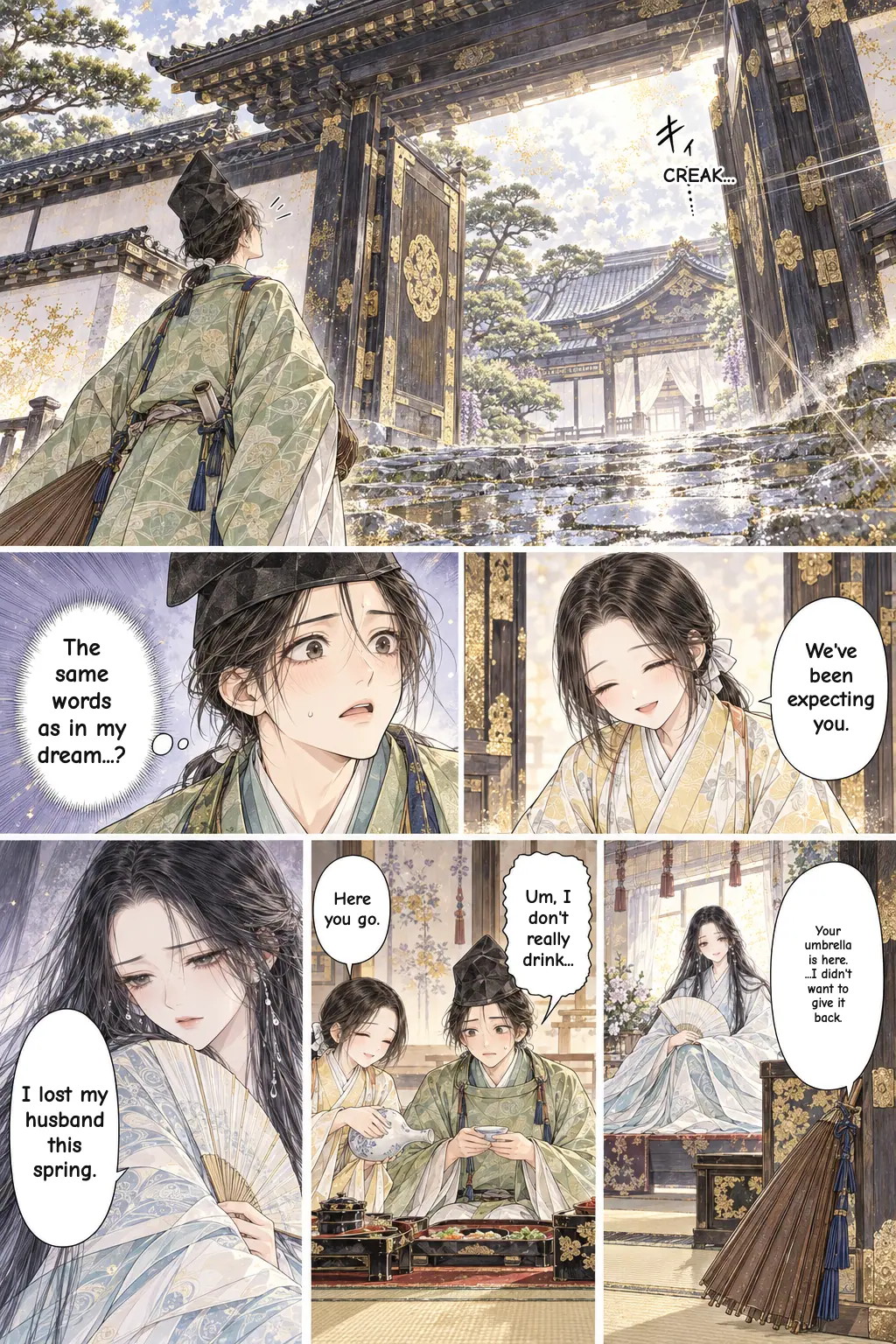
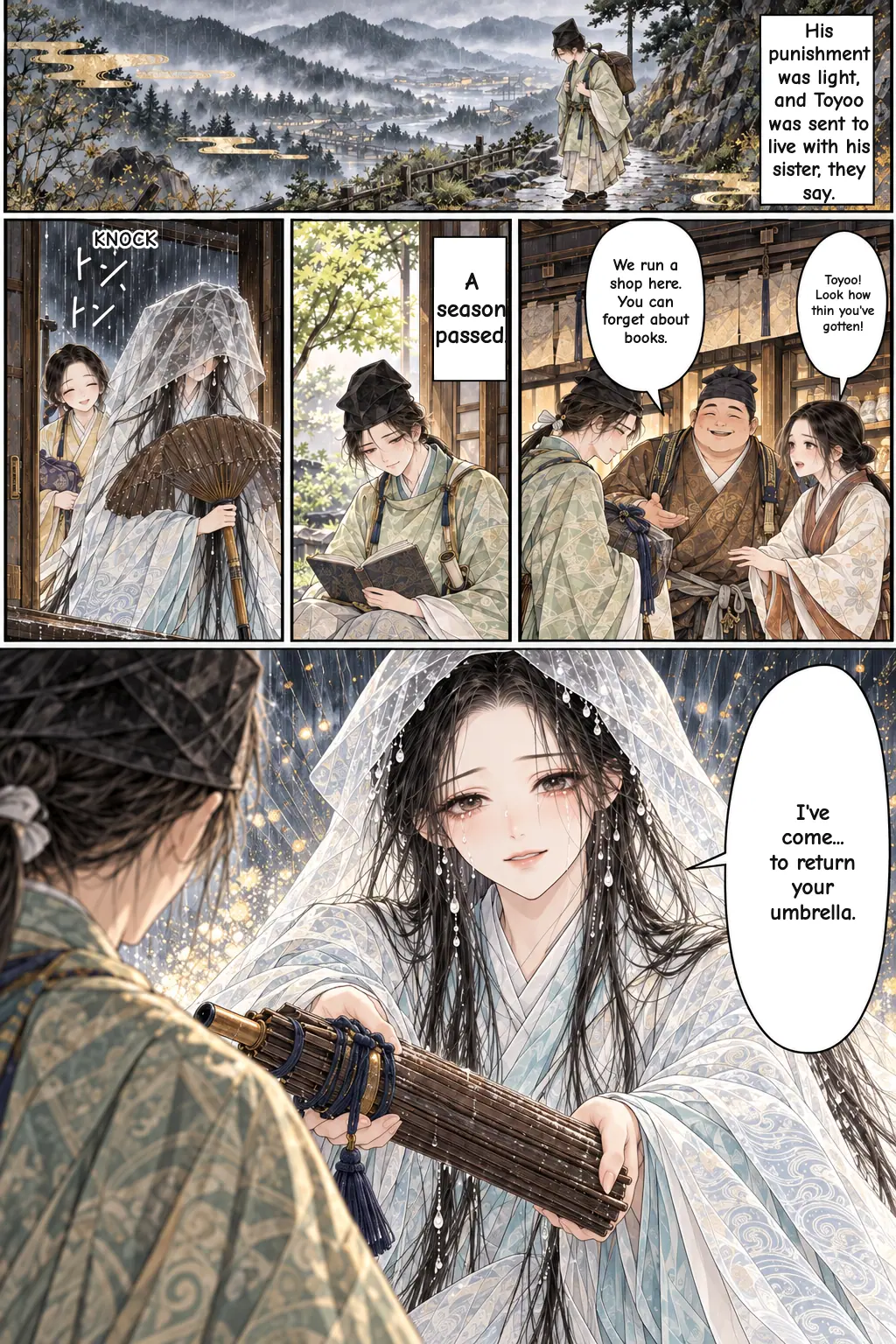
In Miwa-ga-saki, a fishing town in Kii Province (today's Wakayama Prefecture), lives a wealthy fishing boss named Ōya no Takesuke. His eldest son, Tarō, works hard at the family trade. His third son, Toyoo, does not care for fishing at all. He loves poetry, learning and refined city manners, and he studies with a Shinto priest in nearby Shingū. One day, on the way home, a storm drives him to shelter in a fisherman's hut. A strikingly beautiful woman of about twenty walks in, soaked, with a young maid of fourteen or fifteen. She introduces herself as Manago and says she lives near Shingū. Toyoo lends her his umbrella and promises to come and collect it.
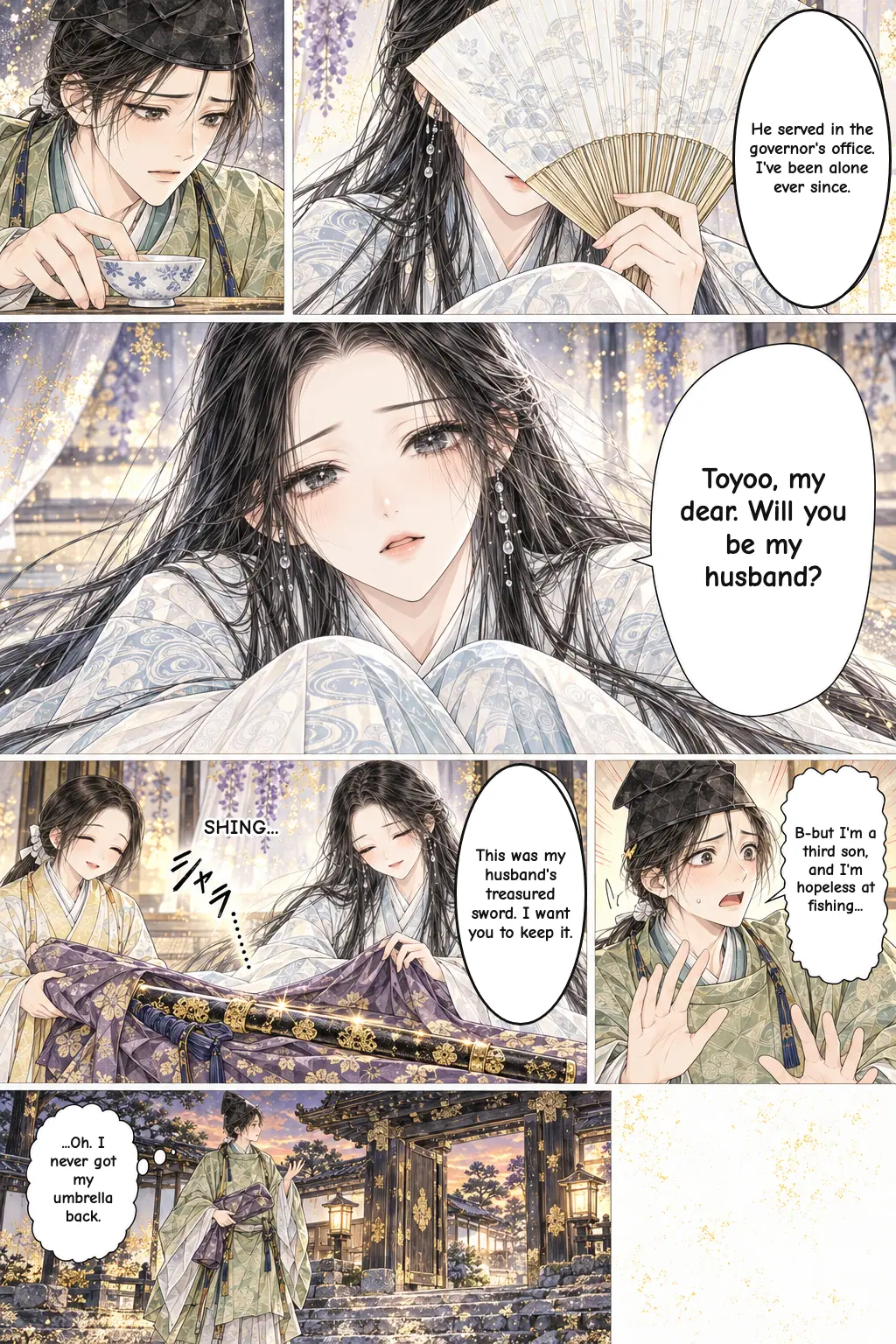
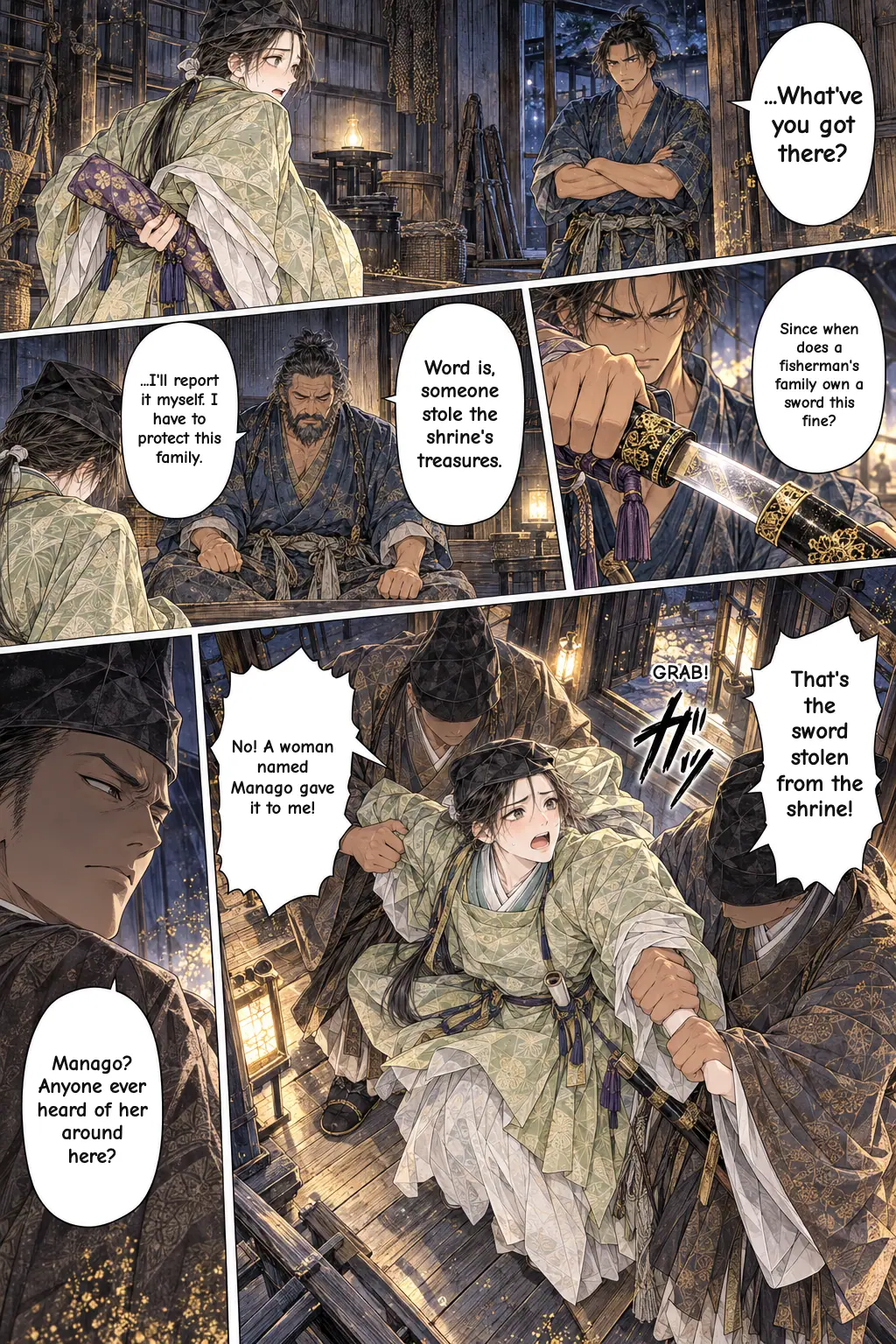
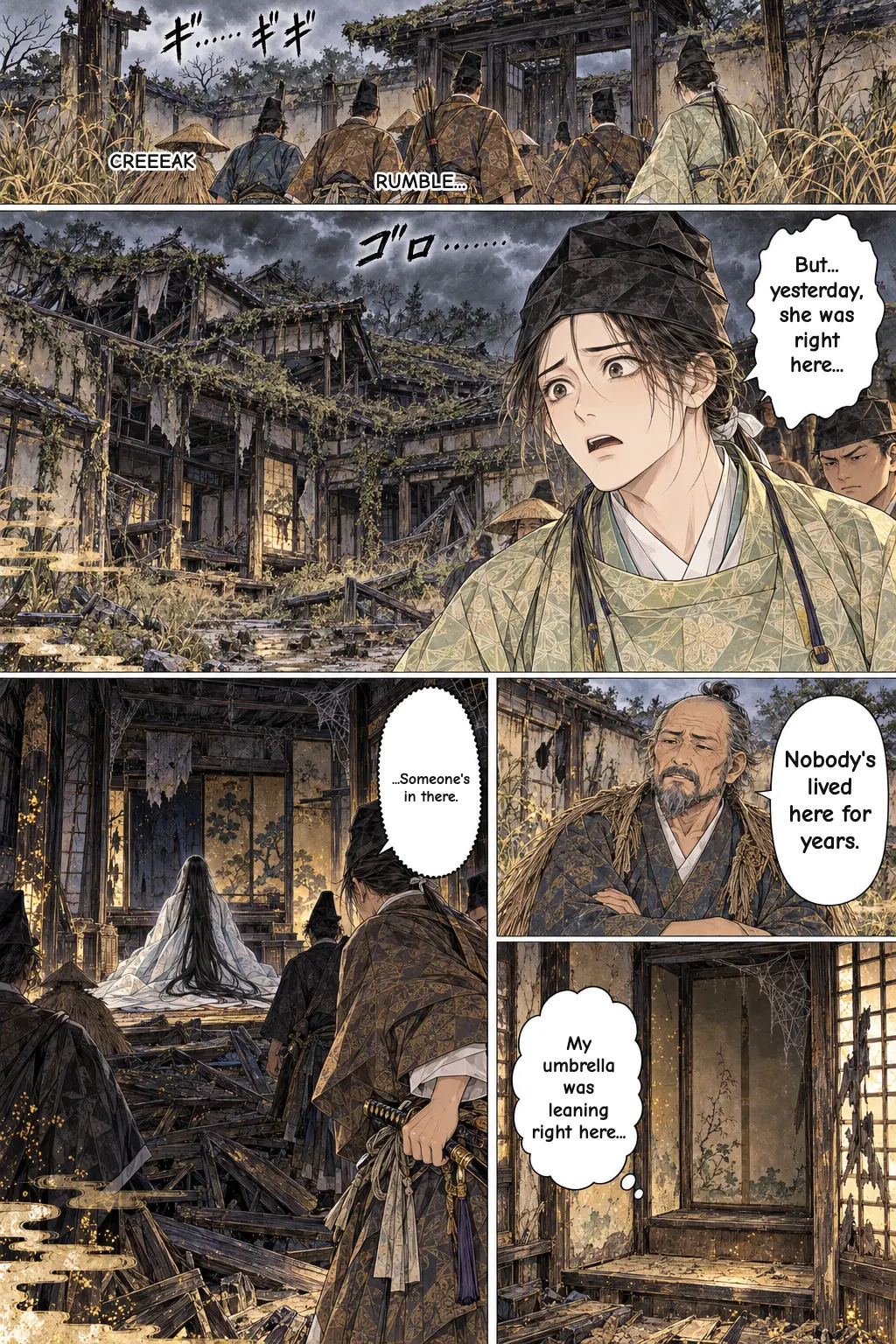
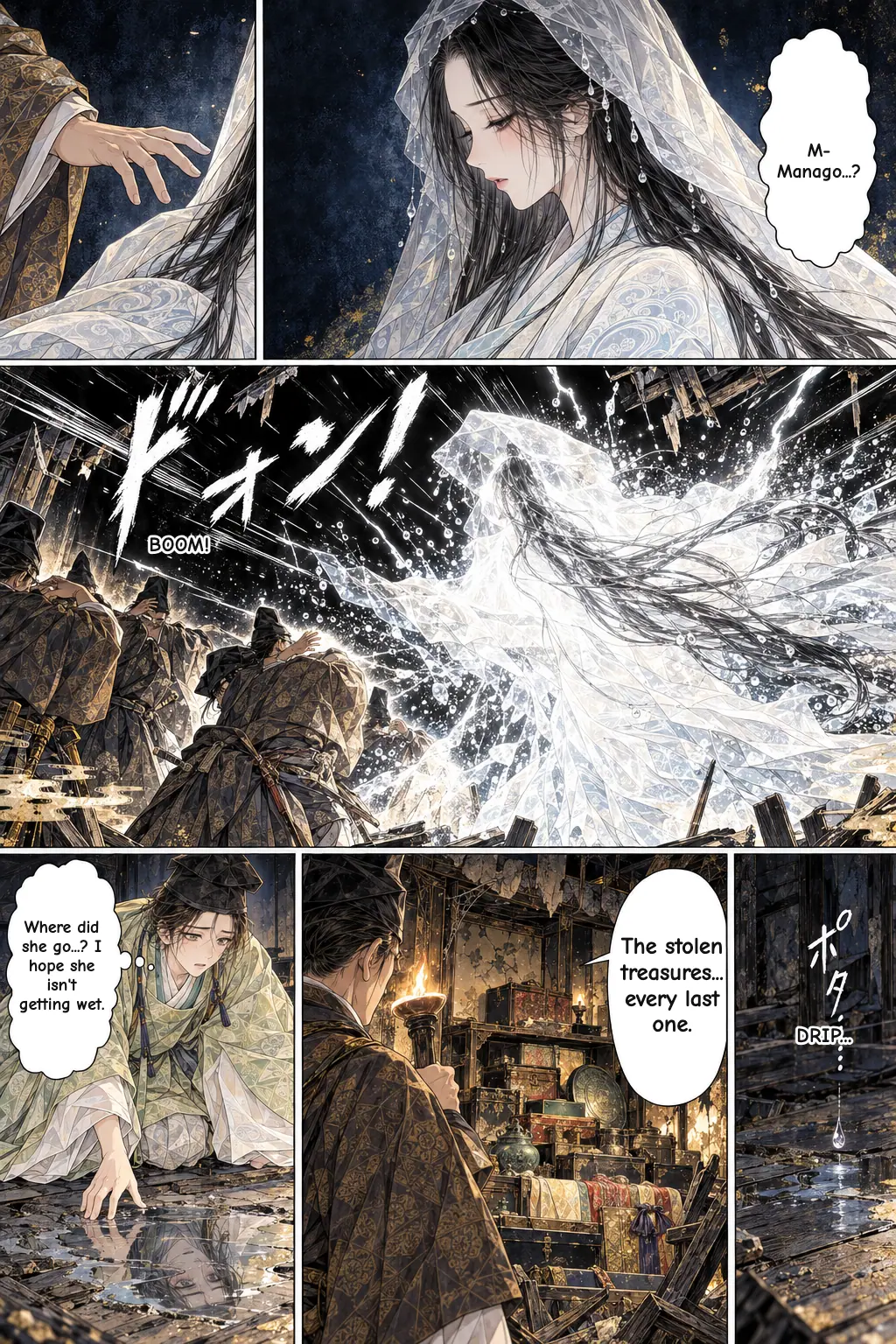
When he visits the next day, he finds a grand house. Manago tells him she is a widow whose husband, a minor provincial official, died that spring. She asks to become his wife and gives him a splendid sword decorated with gold and silver. At home, Tarō finds the sword. It matches treasures recently stolen from the Kumano shrine at Hayatama, and Toyoo's own father reports him. Toyoo is arrested. When soldiers go with him to Manago's house, they find a ruin where no one has lived for years. A beautiful woman sits inside. As they approach, thunder crashes, she disappears, and the stolen treasures are found piled up where she sat.
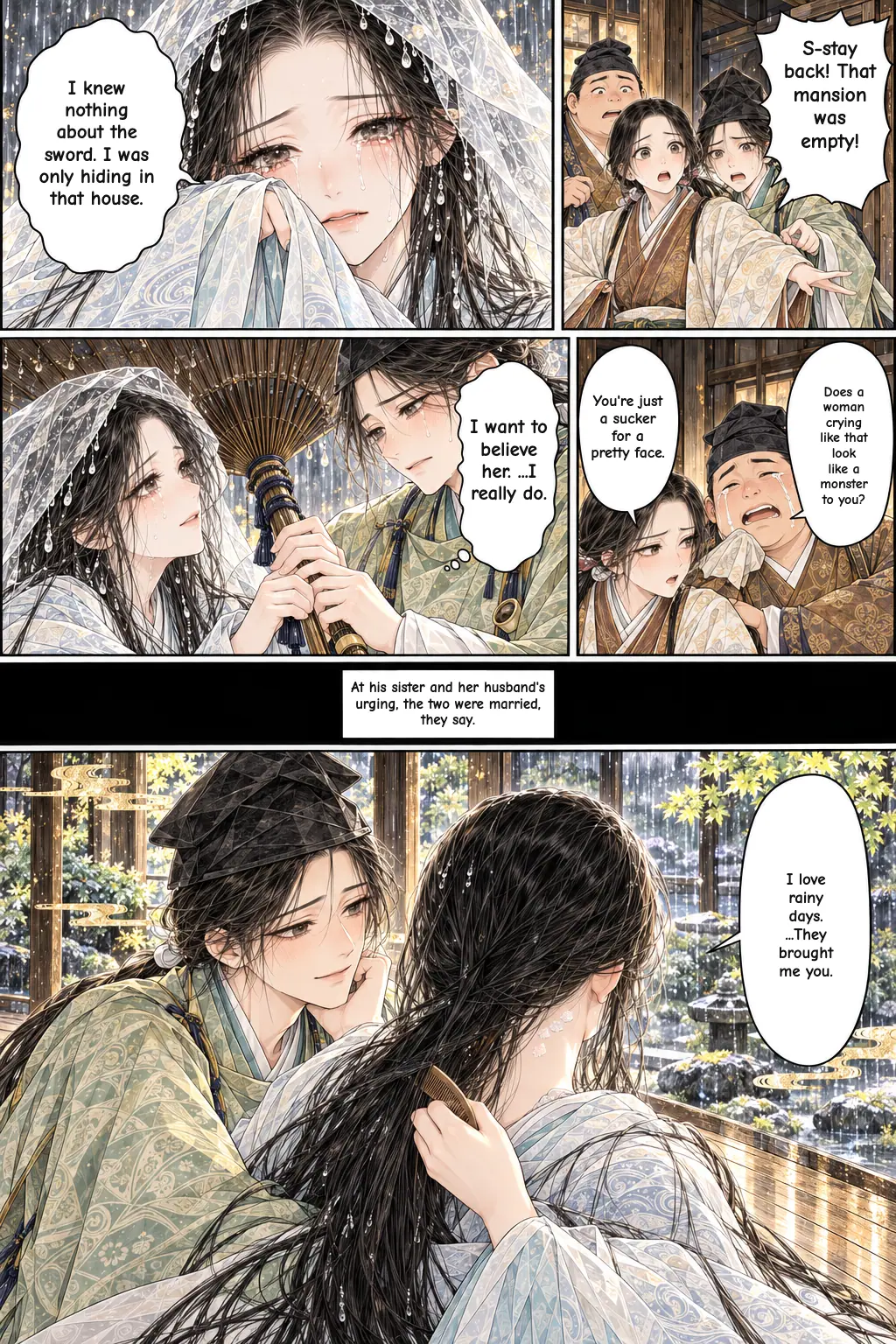
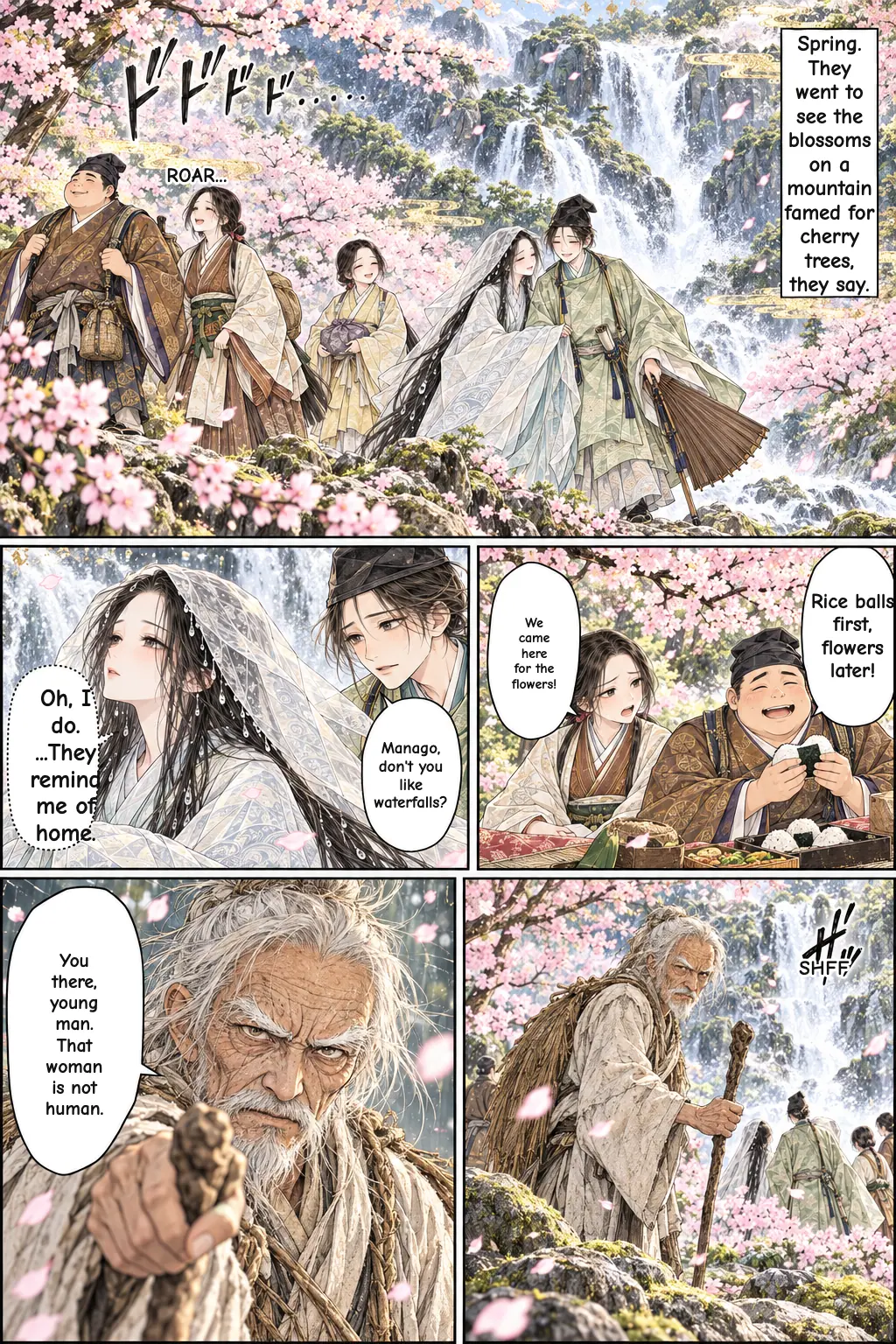
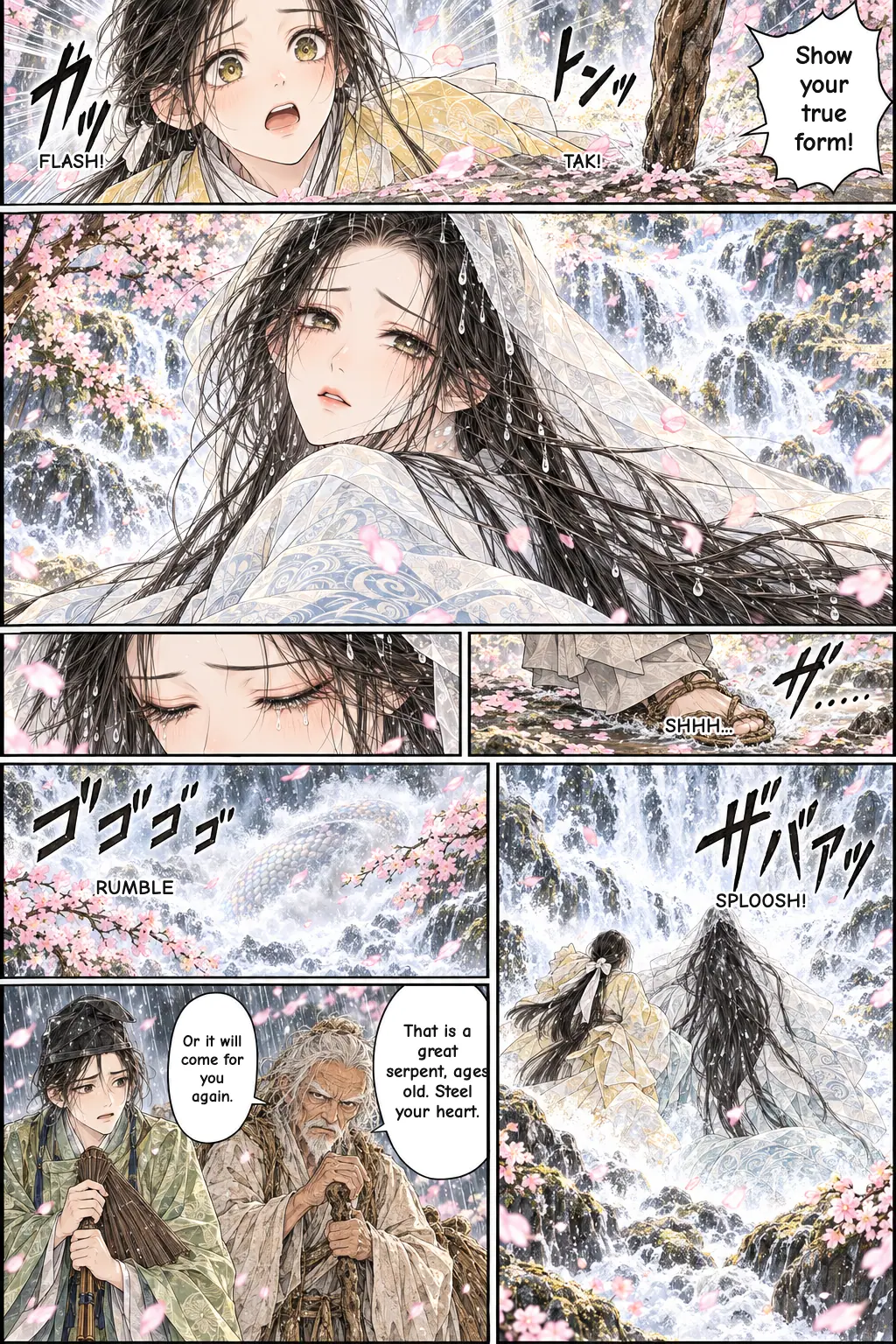
Toyoo gets a lighter punishment and goes to stay with his older sister and her husband, Tanabe no Kanetada, in Tsubaichi in Yamato Province. Manago and Maroya follow him there. In tears, Manago explains that the sword belonged to her late husband and that she had been hiding. The sister and her husband help bring about a marriage. But on a spring trip to the waterfalls of Yoshino, an old man named Taima no Sakahito, who serves the gods of Yamato, sees at once that she is an evil spirit. Manago and Maroya leap into the falls and vanish in a burst of water, cloud and rain. The old man tells Toyoo she is an old serpent with a lustful nature, and warns him to stay strong.
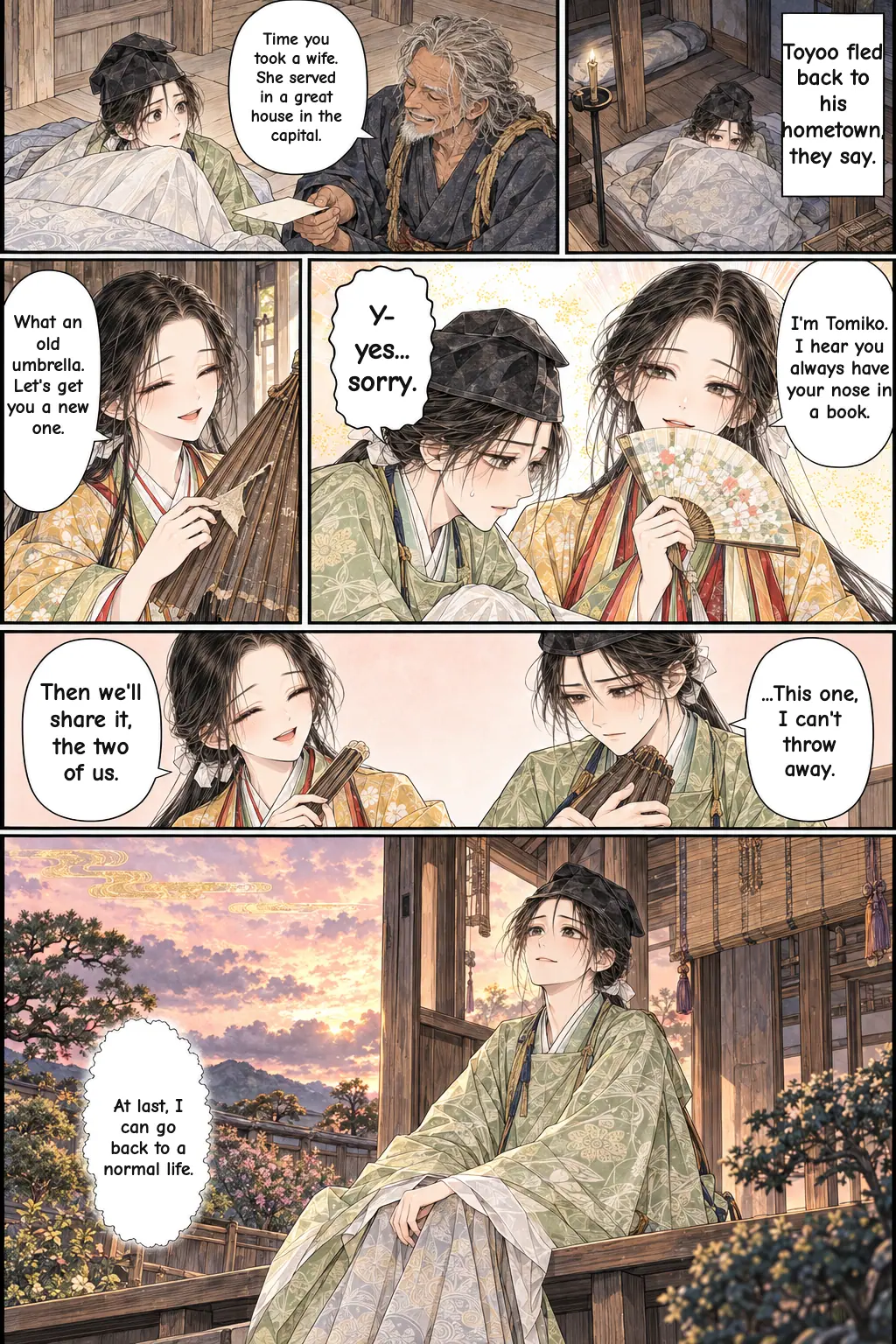
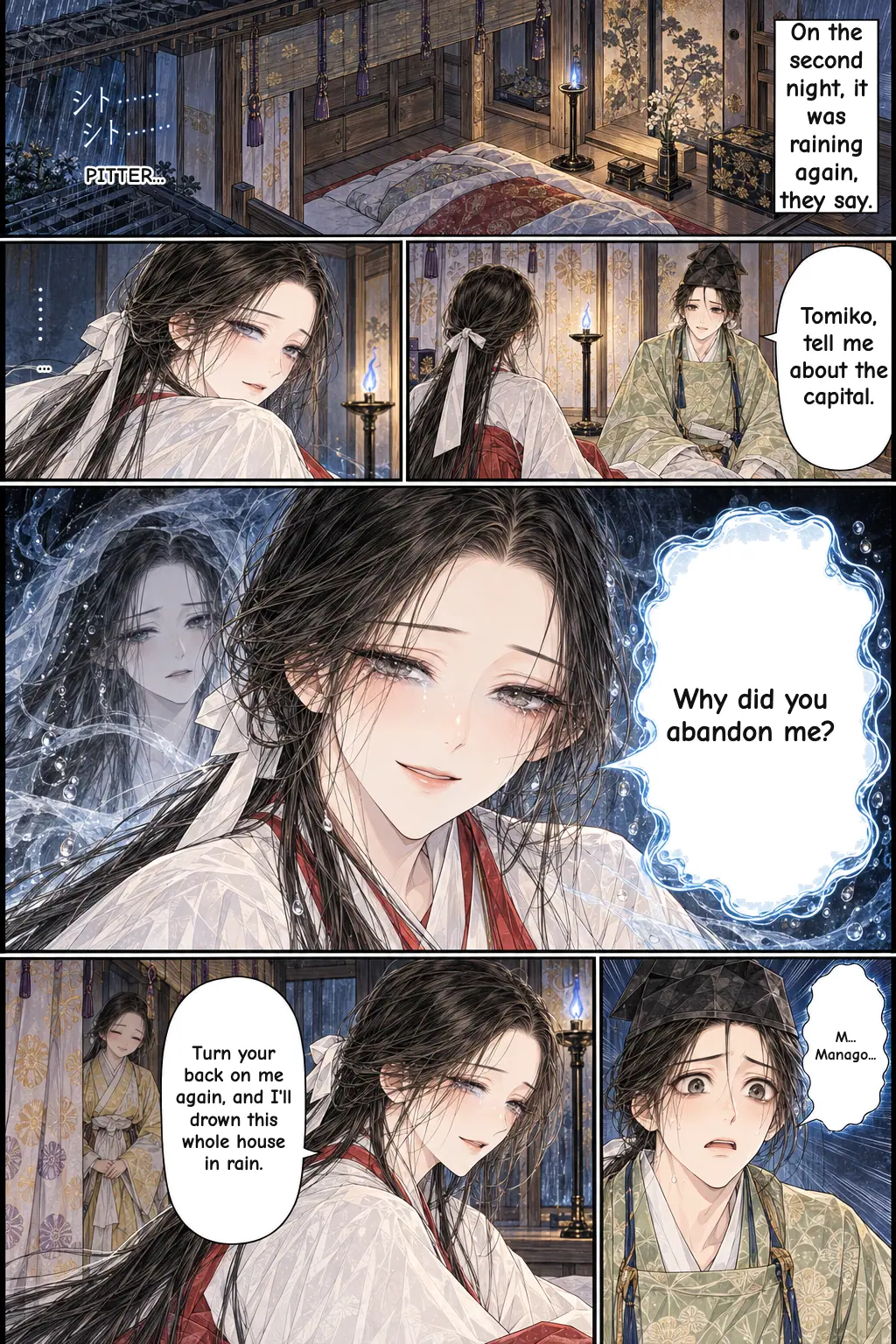
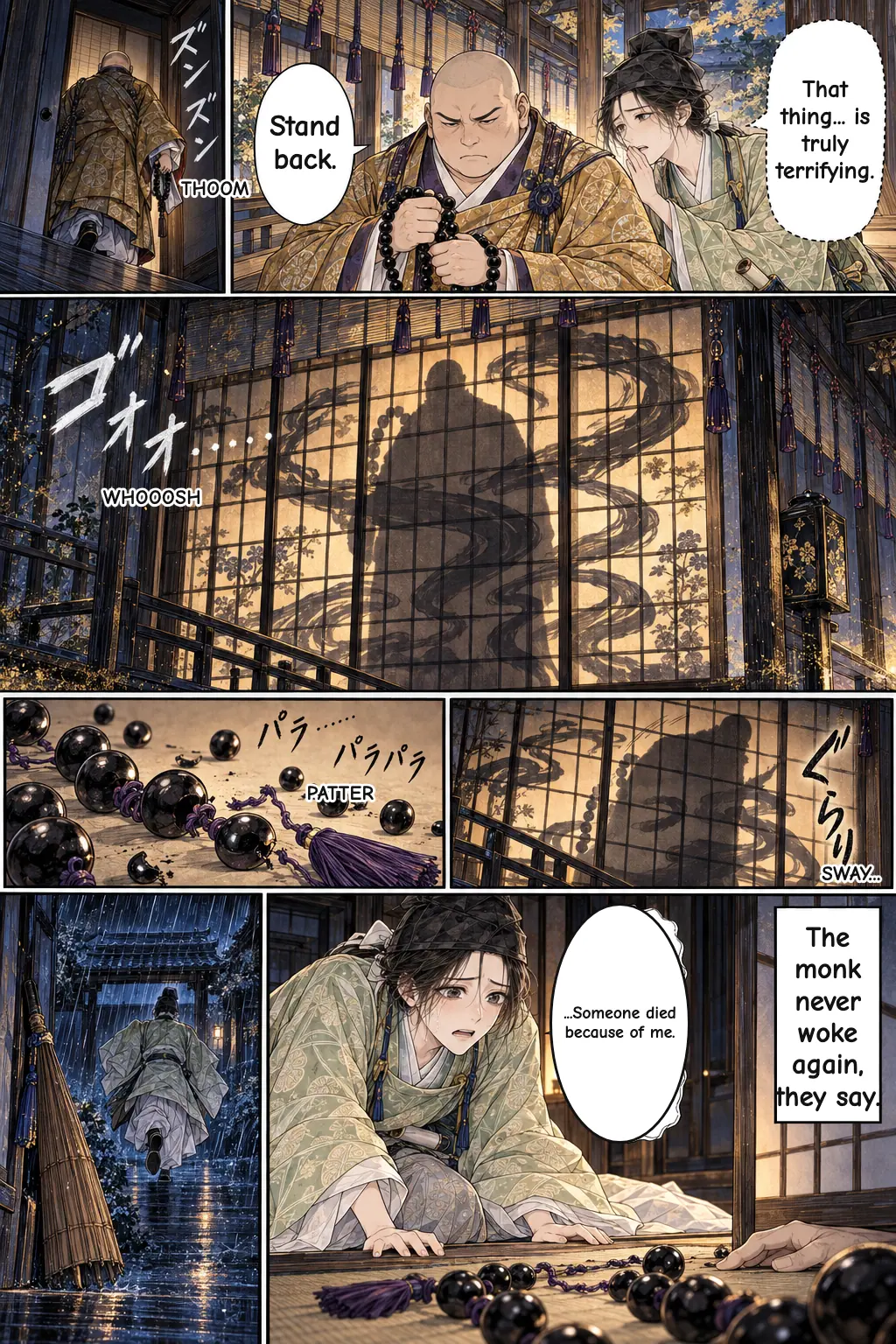
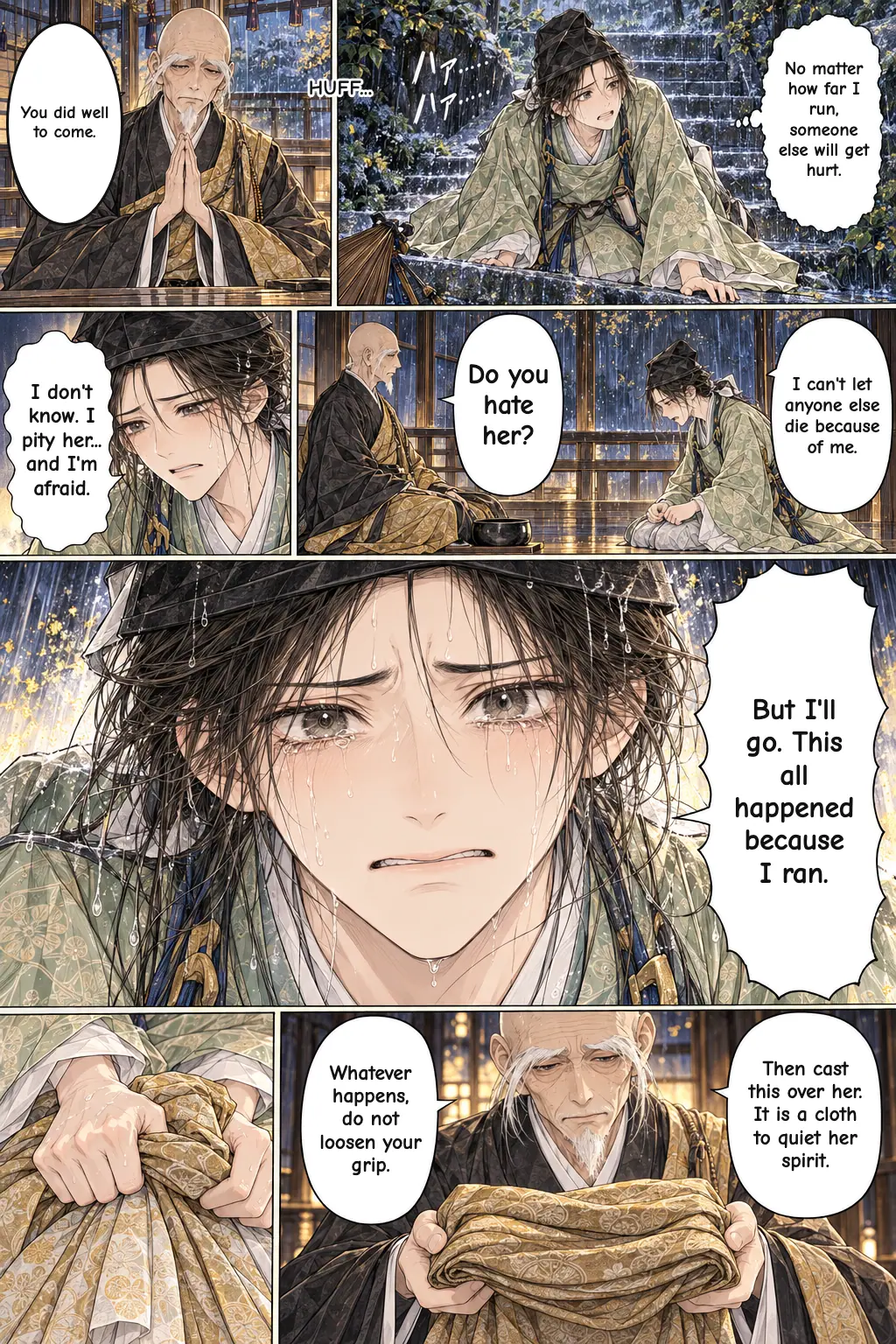
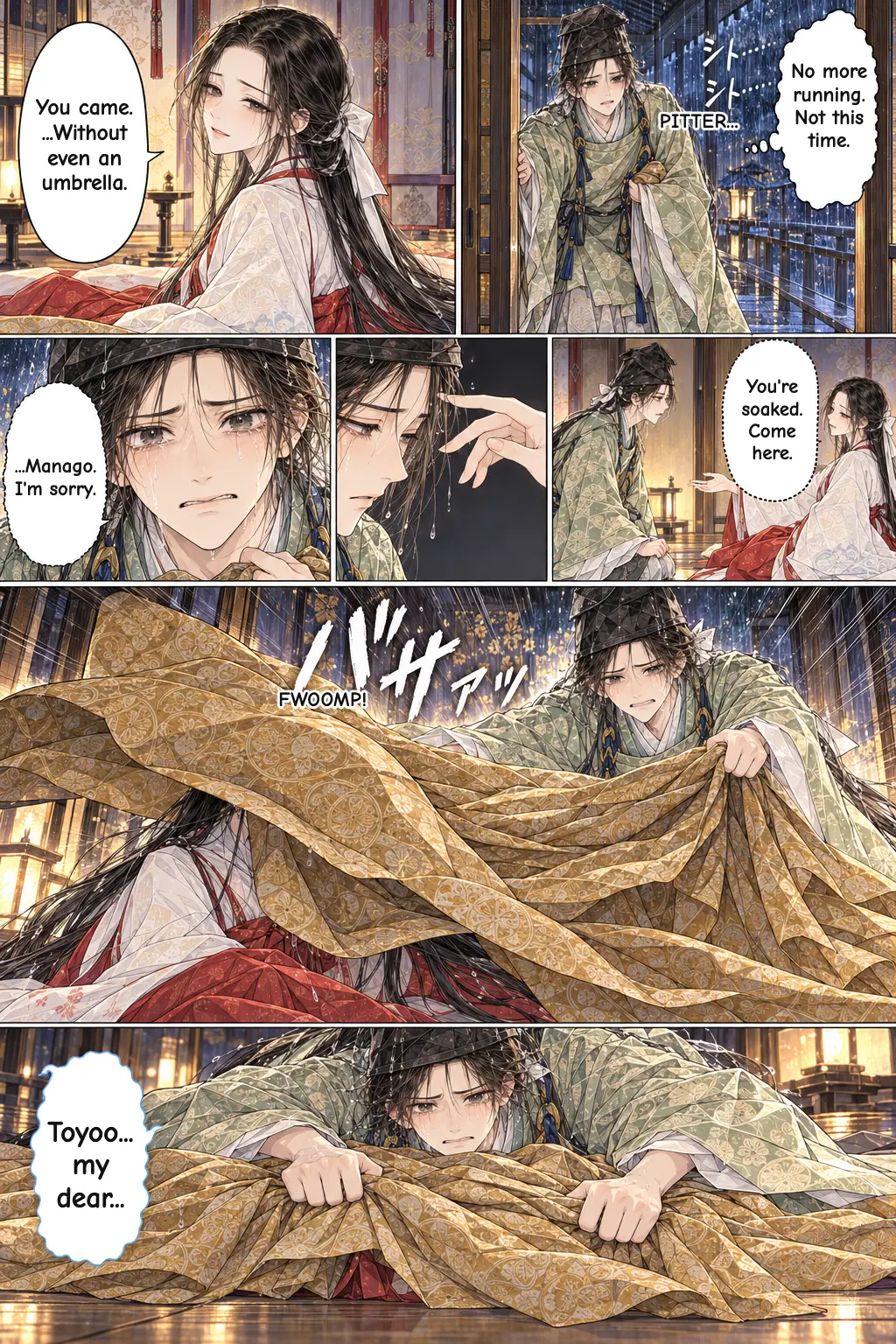
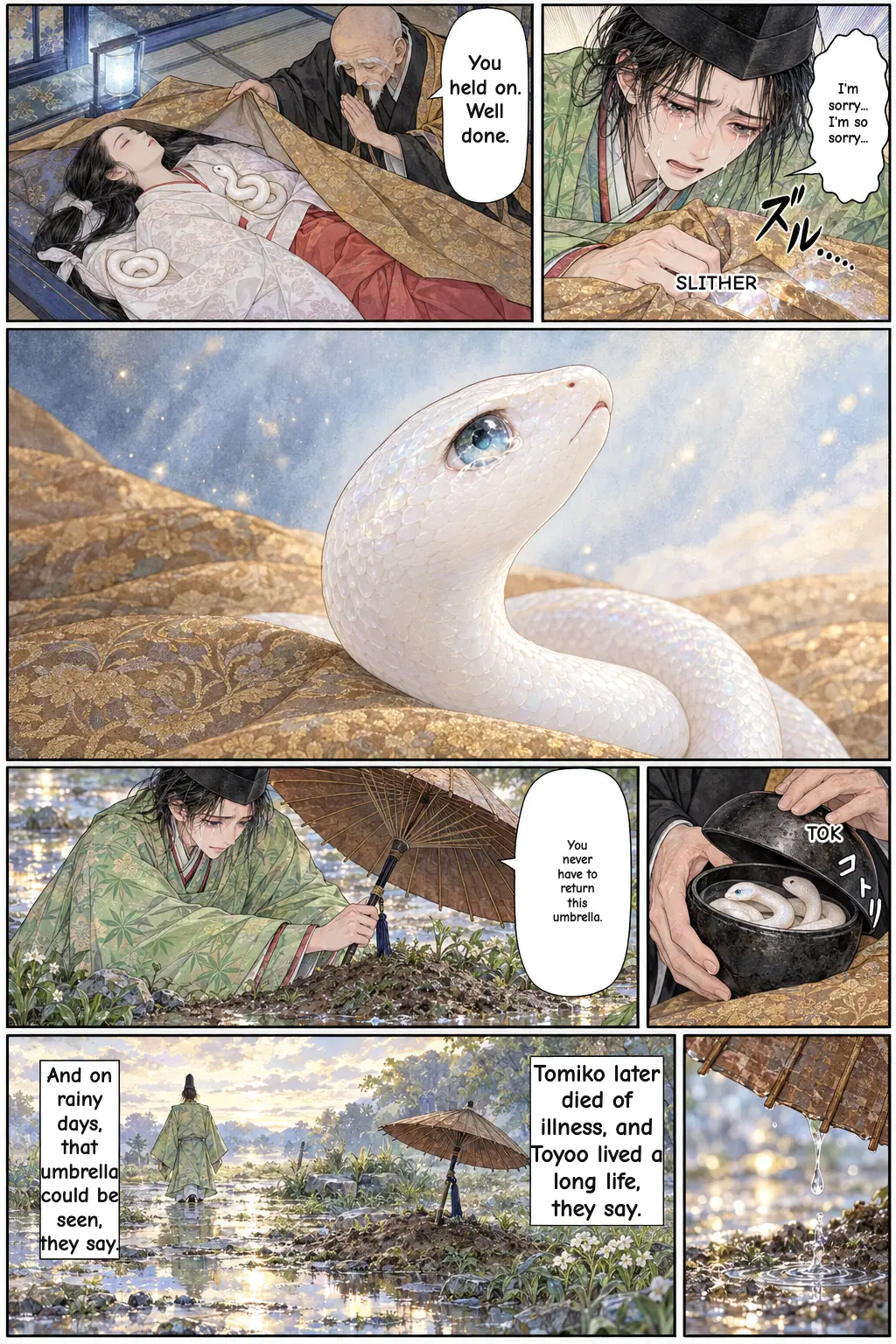
Back in Kii, Toyoo marries Tomiko, a woman who once served at the imperial court. On their second night, Tomiko speaks with Manago's face and voice and threatens bloodshed if he leaves her. A priest from Kurama Temple comes to drive the spirit out, but the giant serpent's poisonous breath kills him. Toyoo cannot bear for anyone else to die because of him. Hōkai, the abbot of Dōjōji Temple, gives him a robe soaked in the scent of mustard seed. Toyoo throws it over Manago with his own hands and holds her down. Under it lies a white snake about three feet long, with a smaller one, Maroya, beside it. The abbot seals both in an iron bowl and buries them before the temple. Tomiko later dies of illness, and Toyoo lives on unharmed.
Main Characters
Toyoo is not a typical hero. He is kind, dreamy and easily swayed by beauty, and for most of the story he runs from his problems instead of facing them. His turning point comes late, when he decides that his own weakness must not cost more lives. Manago is at once a lover and a monster. Her devotion seems real, but it is possessive and dangerous, and Akinari never fully settles whether to pity her or fear her. Around them stand Maroya, the silent maid who is also a snake; the two holy men, Taima no Sakahito and Hōkai, who see through the illusion; and Tomiko, an innocent wife caught between Toyoo and the serpent.
What the Story Means: Culture and Historical Background
Ueda Akinari (1734–1809) was a writer and scholar of Japanese classics in the Osaka area. Tales of Moonlight and Rain, published in 1776, gathers nine stories of the supernatural. This one is the longest and appears in the fourth volume. Akinari often reworked Chinese tales in a Japanese setting, and this story is widely seen as a retelling of the Chinese legend of Lady White Snake, in which a monk named Fahai also defeats a serpent woman. Its ending at Dōjōji also calls up a famous Japanese legend from that temple, about a woman who turns into a serpent out of love for a monk.
A common reading treats the story as a warning about desire. Toyoo's love of beauty and refinement makes him easy to deceive. Only when he takes responsibility, instead of waiting for others to save him, does the haunting end. Some readers also see Manago as a tragic figure whose love is real even though it destroys people. The story leaves room for both views, which is part of why it still feels modern. Today a "Serpent's Mound" is still said to stand at Dōjōji, linking the tale to a real place.
What the Manga Version Changes
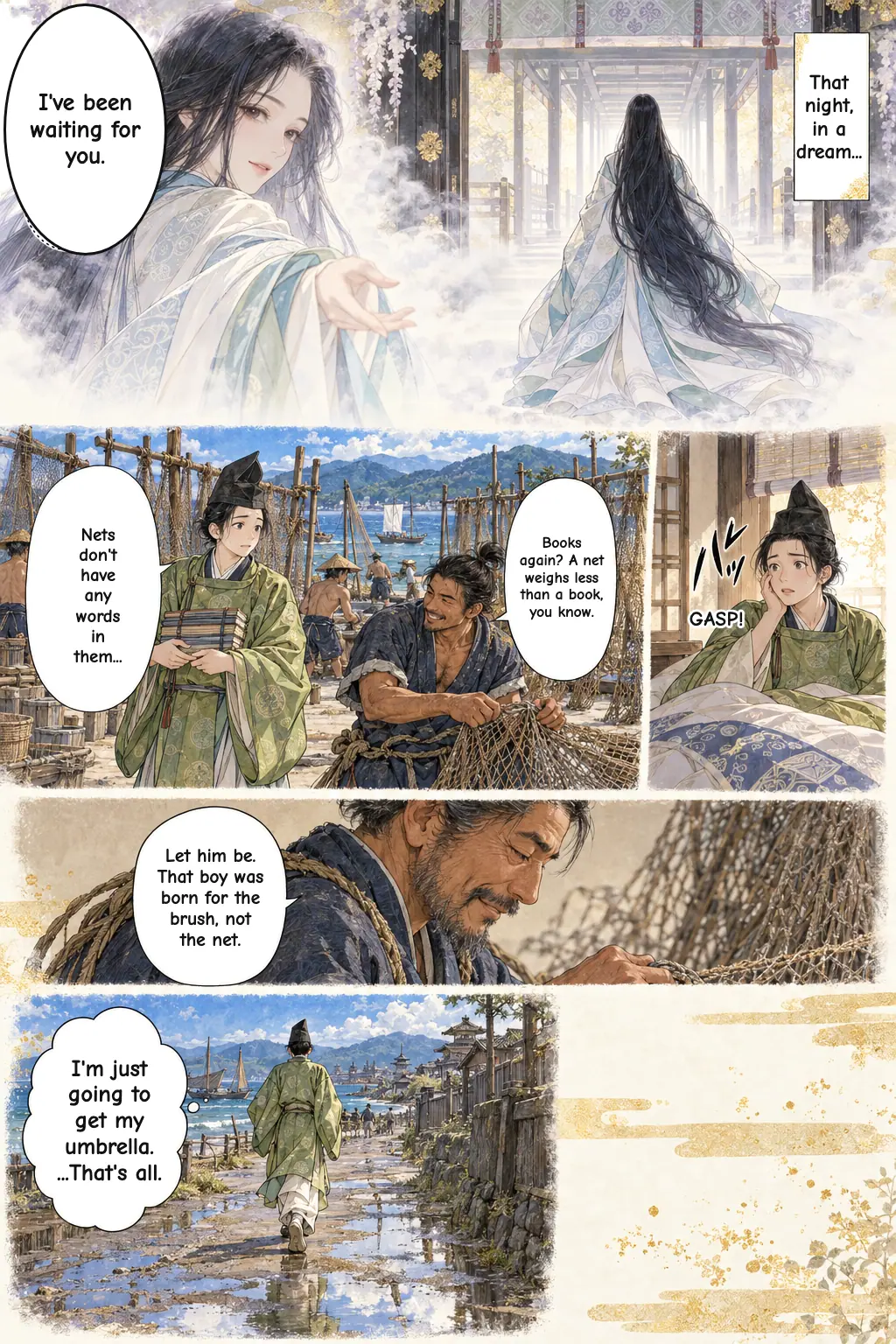
The manga keeps the main events and the ending of Akinari's story, but it builds the episode around four big scenes: the rainy shelter, the stolen sword, the waterfall at Yoshino, and the possession and sealing. The time Toyoo spends at his sister's house is cut down to a few panels. The original text describes very little of how people and places look, so the faces, the colors and patterns of the clothes, and the design of Manago's mansion and the ruined house are all the artists' own work. Maroya, who barely speaks in the original, is given more personality through her expressions.
Some moments are staged differently on the page. The Kurama priest's death is shown indirectly, through a shadow on a paper screen and falling prayer beads, but the narration makes clear that he dies, as in the original. The couple's wedding night fades to black. Tomiko's later death is covered in a single narrated panel. The dialogue is put into modern English, without changing what the characters mean. How the thunder and waterfall disappearances look, and the way the panels are laid out, are also creative choices, not details taken from the text.
Where to Read It
If you want to see Manago walk out of the rain and into Toyoo's life, Episode 4 of LOVE & ALLURE: Classic Japanese Tales of Romance on Manga Portal, "I Lent Her My Umbrella. She Never Left.", tells the whole story in manga form. Every episode is free to read, and you don't need an account. If this tale draws you in, the other episodes in the series bring more of Japan's classic stories of love and longing to the page.
Characters in this episode
Toyoo
The gentle, bookish third son of a fishing family in Kii, who lends his umbrella to a beautiful stranger and cannot escape her love.
Manago
A breathtaking young widow who falls for Toyoo, really an ancient white serpent whose love turns into a deadly obsession.
Maroya
Manago's young maid of fourteen or fifteen, always at her side, who is revealed to be a small snake.
Taima no Sakahito
An old man who serves the gods of Yamato and exposes Manago as an evil spirit at the Yoshino waterfall.
Tomiko
Toyoo's second wife, a former lady of the imperial court, who is possessed by Manago.
Hōkai
The holy abbot of Dōjōji Temple who gives Toyoo the priest's robe and seals the serpents in an iron bowl.
FAQ
What is "The Lust of the White Serpent" about?
It is a supernatural love story from Ueda Akinari's Tales of Moonlight and Rain (1776). A young man named Toyoo marries a beautiful woman, Manago, who is really an old serpent. After her obsession leads to a man's death, he helps a priest seal her away.
Who wrote Tales of Moonlight and Rain?
Ueda Akinari, a writer and scholar of Japanese classics, wrote it. It was published in 1776 and contains nine tales of ghosts and the supernatural. "The Lust of the White Serpent" is the longest of them.
How does "The Lust of the White Serpent" end?
Toyoo throws a sacred robe from the abbot of Dōjōji over Manago and holds her down. She turns out to be a white snake about three feet long, and the abbot seals her and Maroya in an iron bowl buried in front of the temple. Tomiko later dies of illness, but Toyoo lives on unharmed.
Is it related to the Chinese Legend of the White Snake?
Yes. The story is widely seen as Akinari's Japanese retelling of the Chinese tale of Lady White Snake, which also features a serpent woman and a monk who subdues her. Akinari moved the setting to Kii, Yamato and Dōjōji Temple.
Is Manago evil?
The story calls her a lustful old serpent, and her jealousy kills an innocent priest. Still, her love for Toyoo seems sincere, so many readers find her both frightening and tragic.