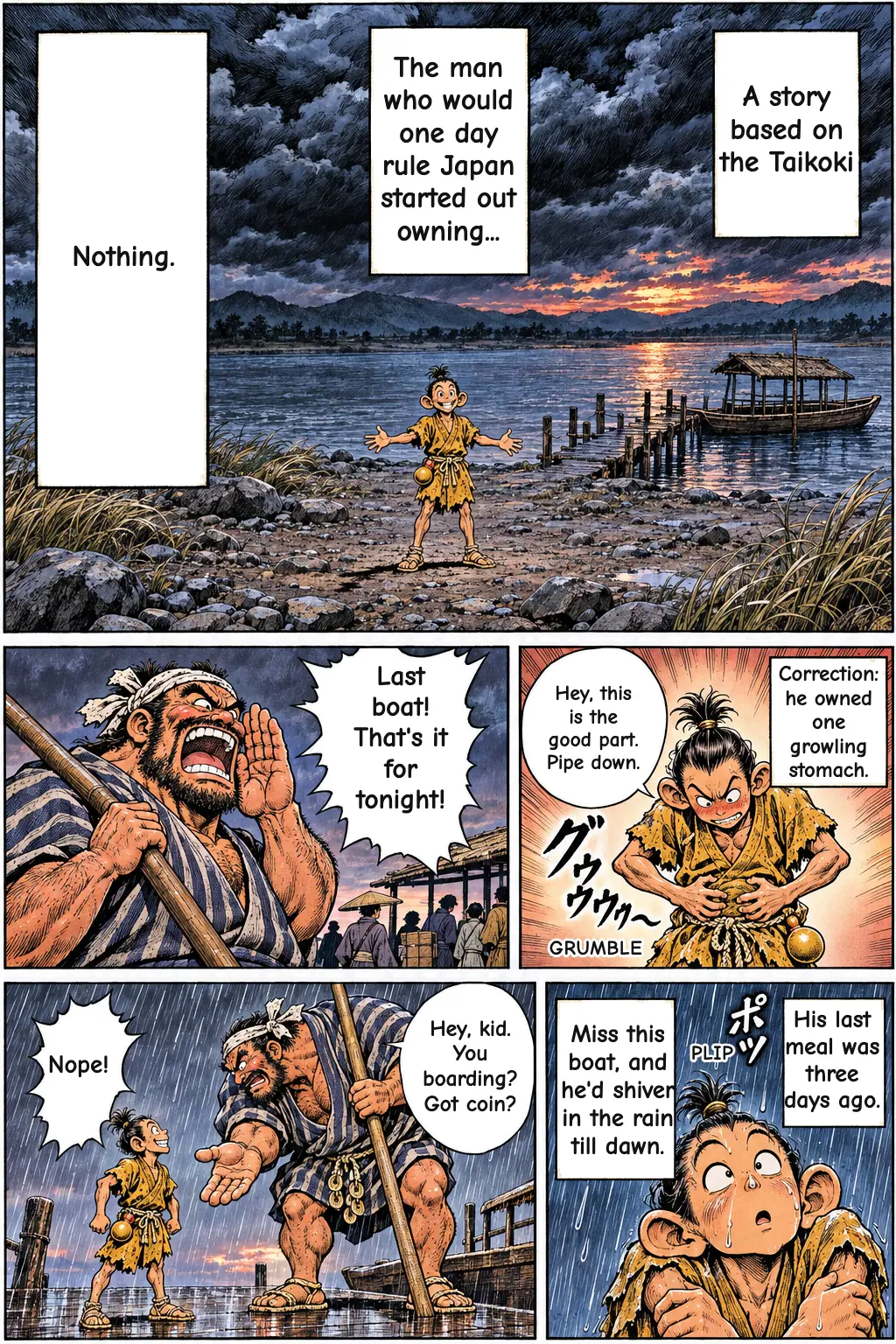
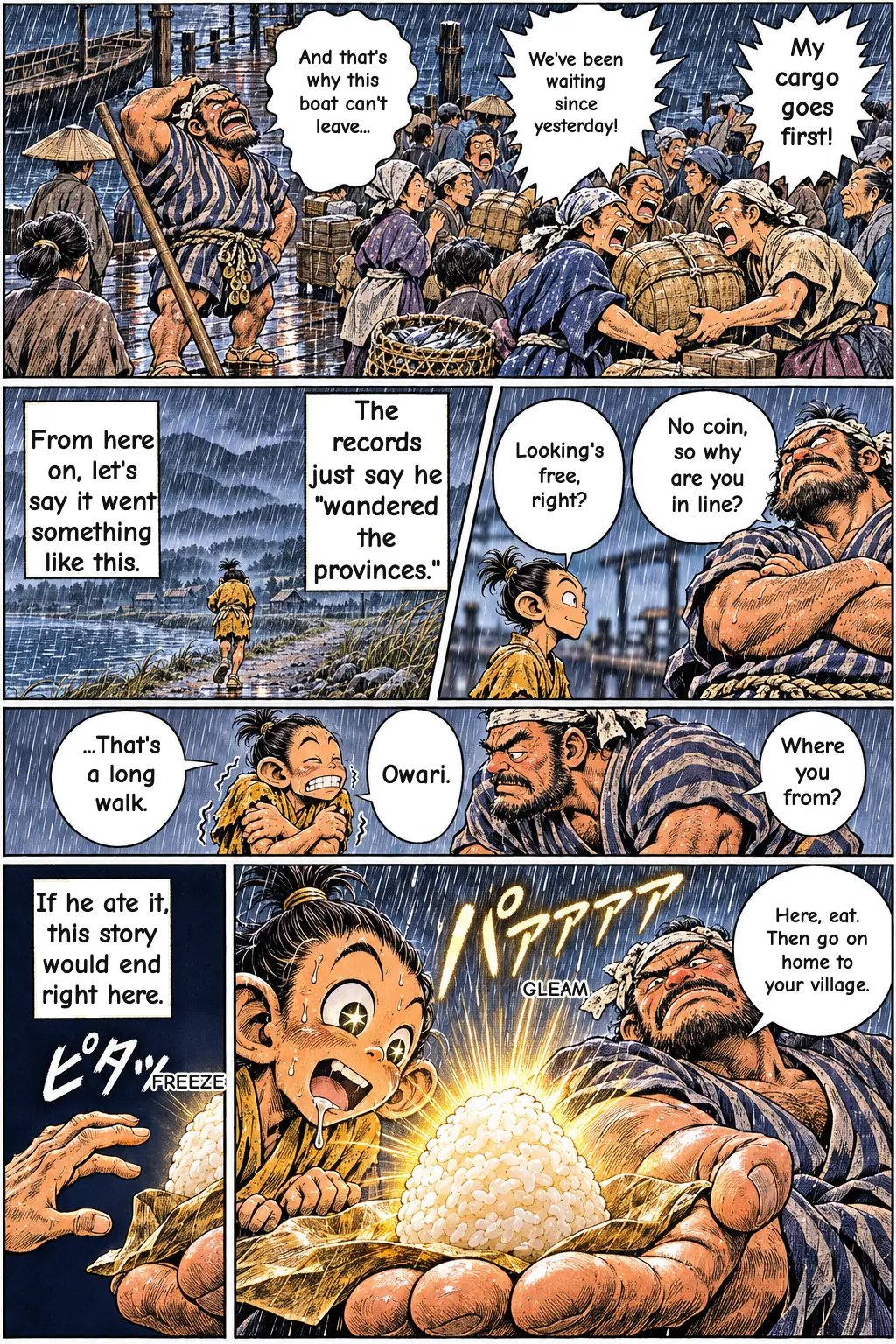
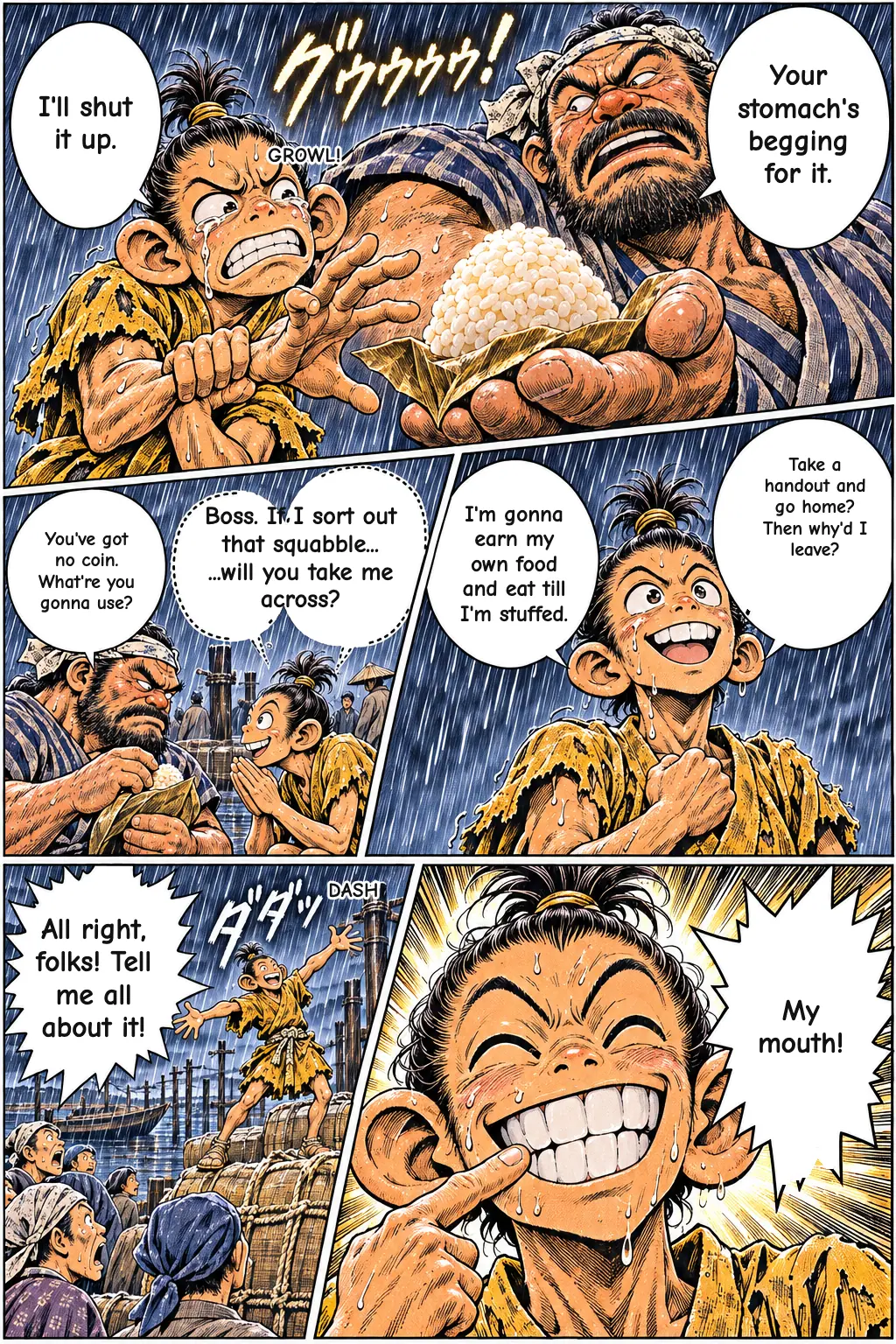
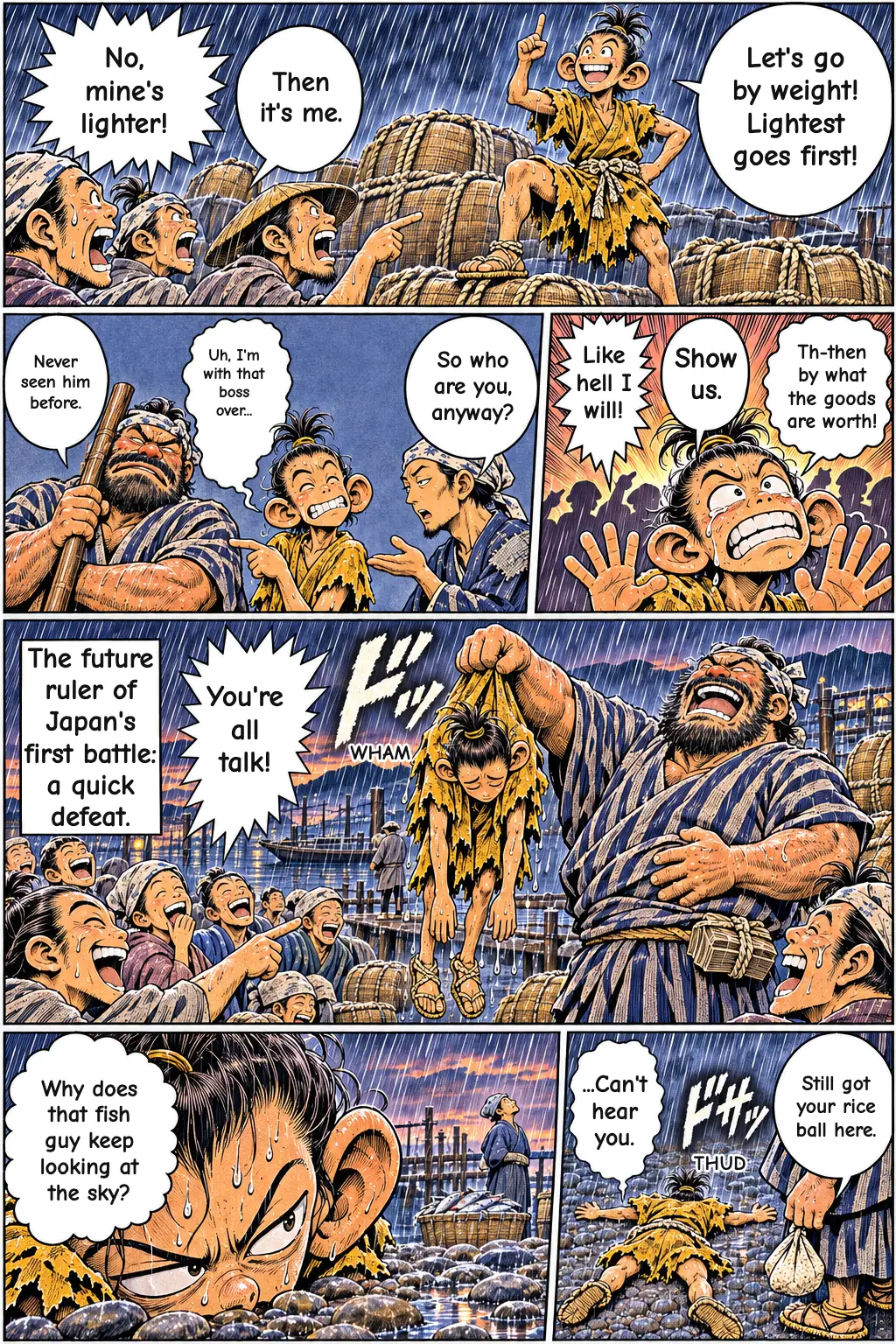
Episode 1He Would Rule Japan. He Owned Nothing.The Boyhood of Toyotomi Hideyoshi
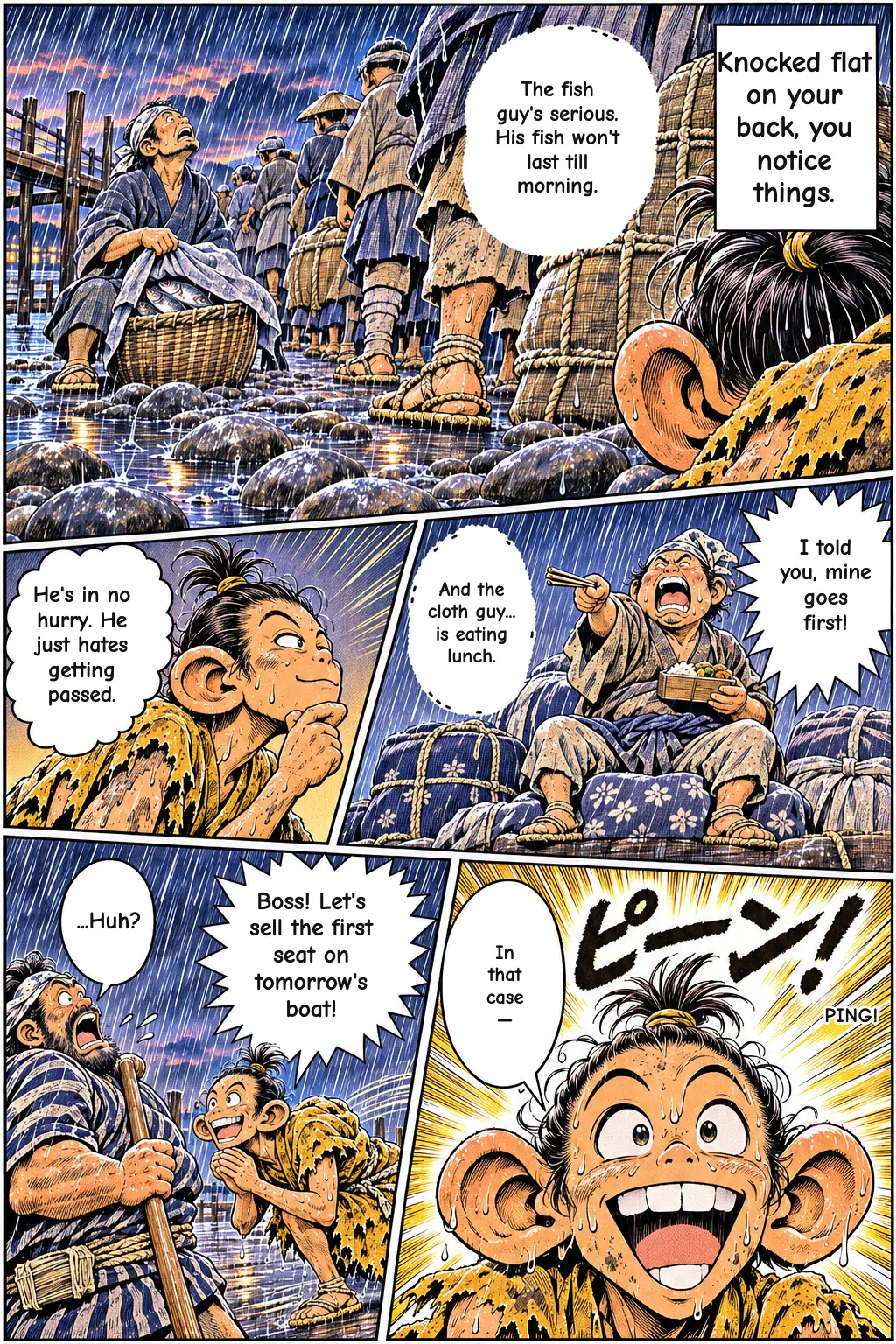
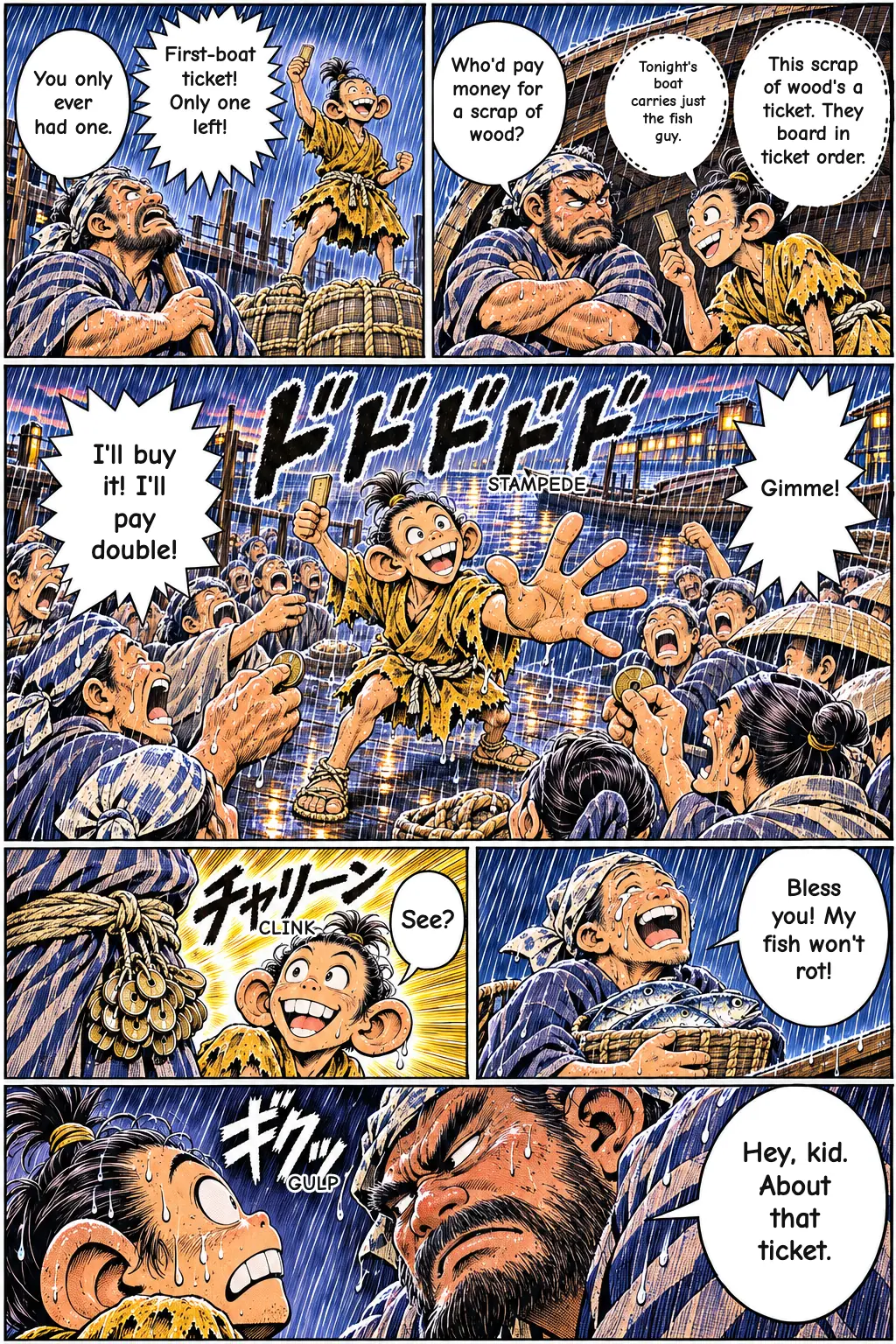
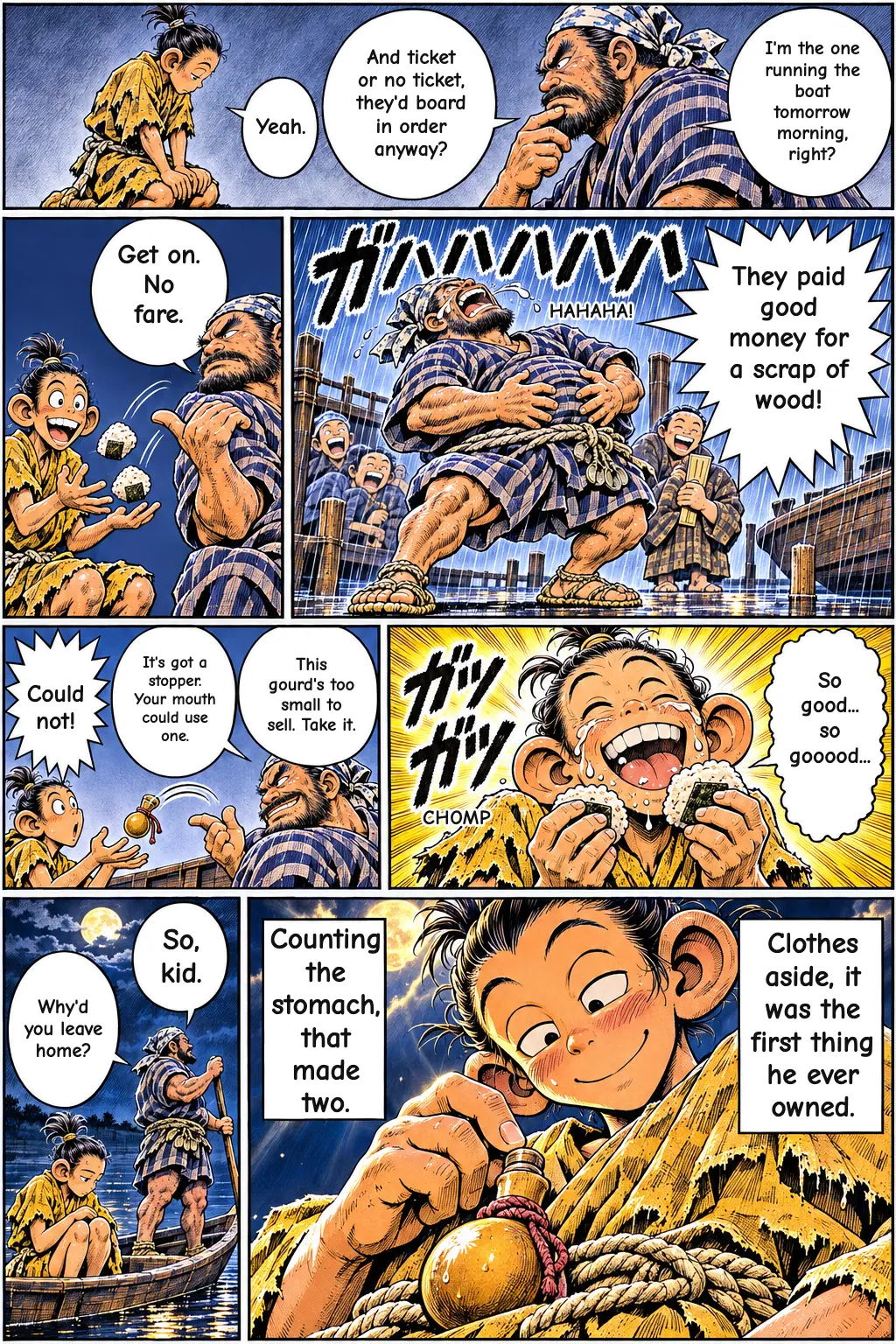
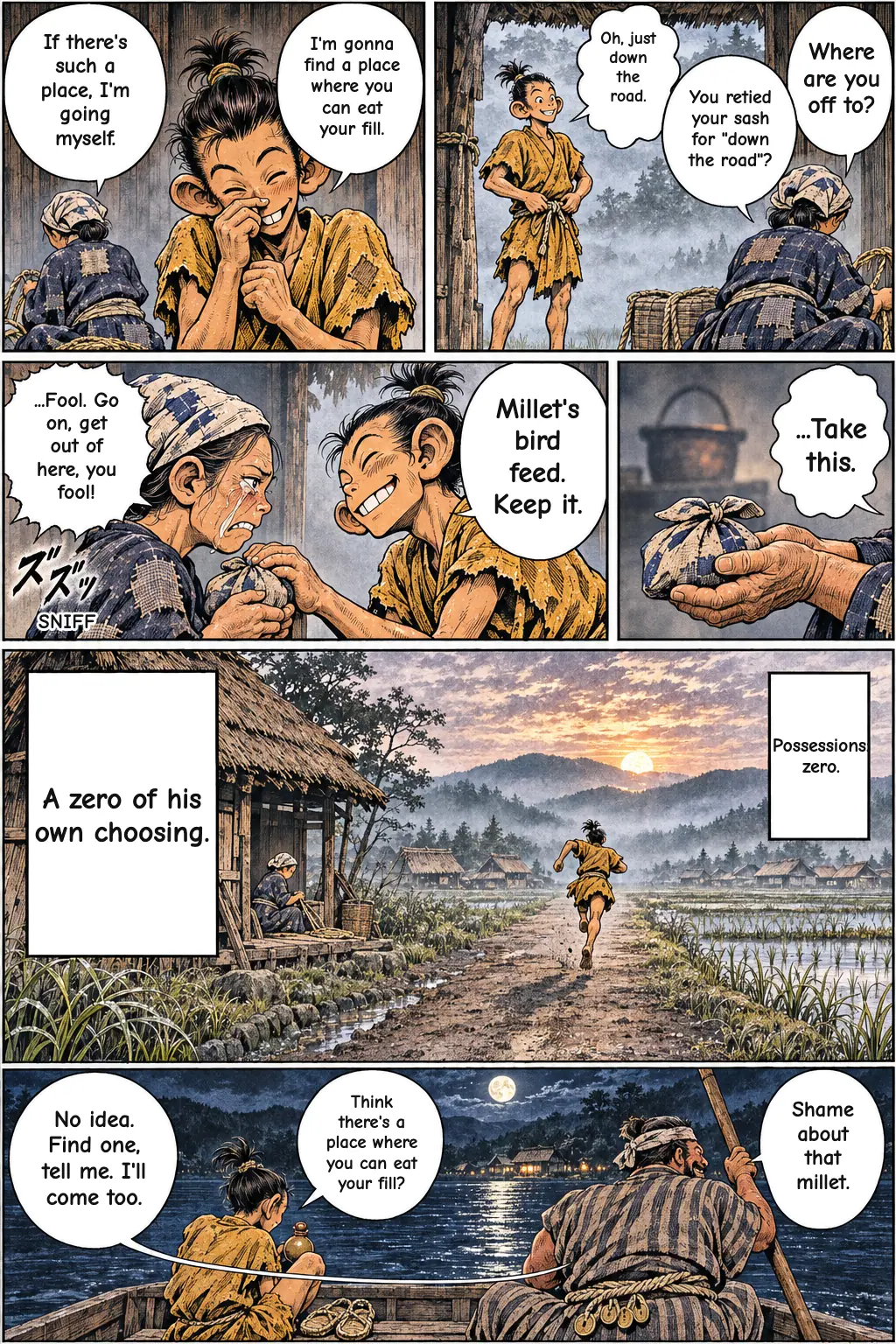
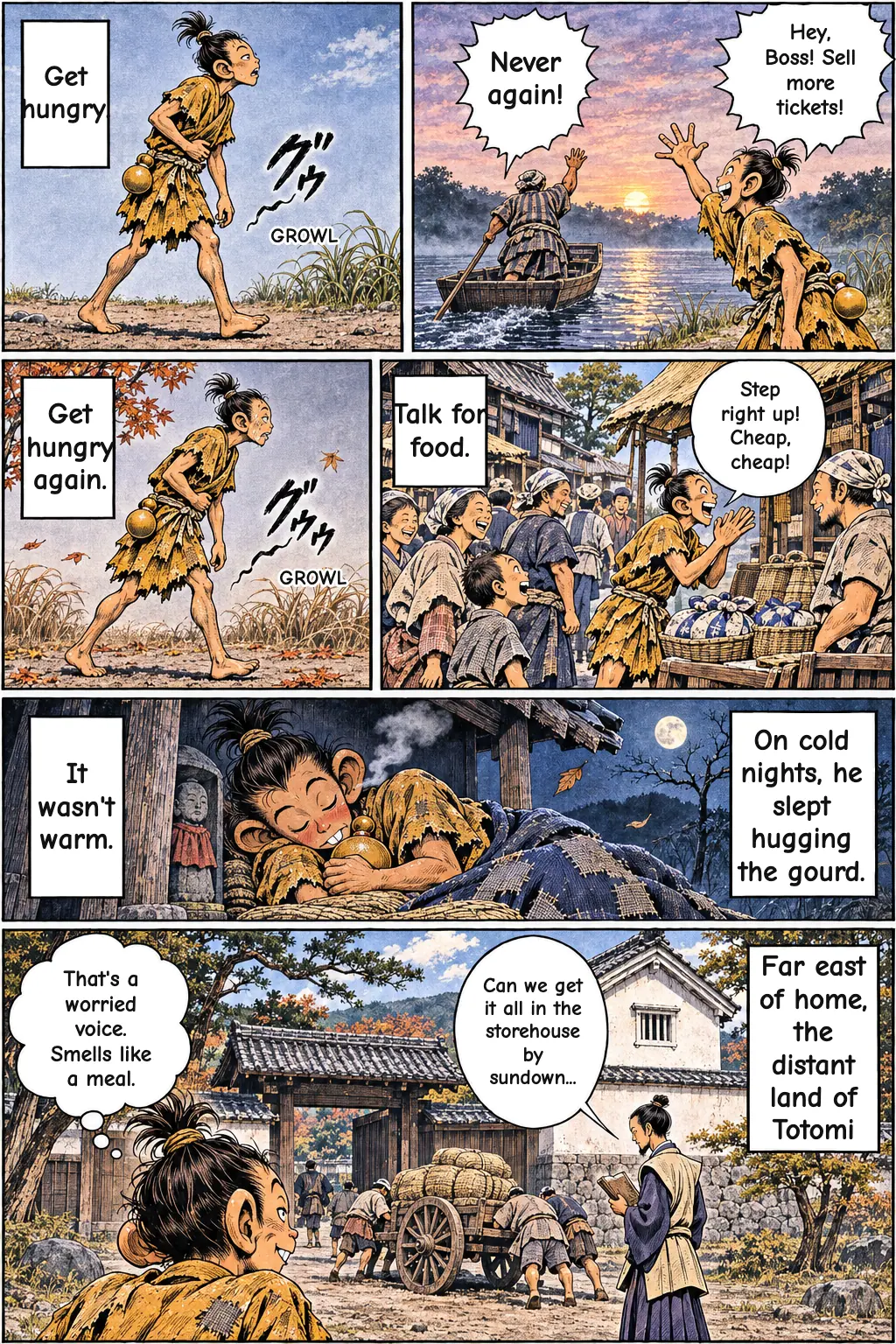
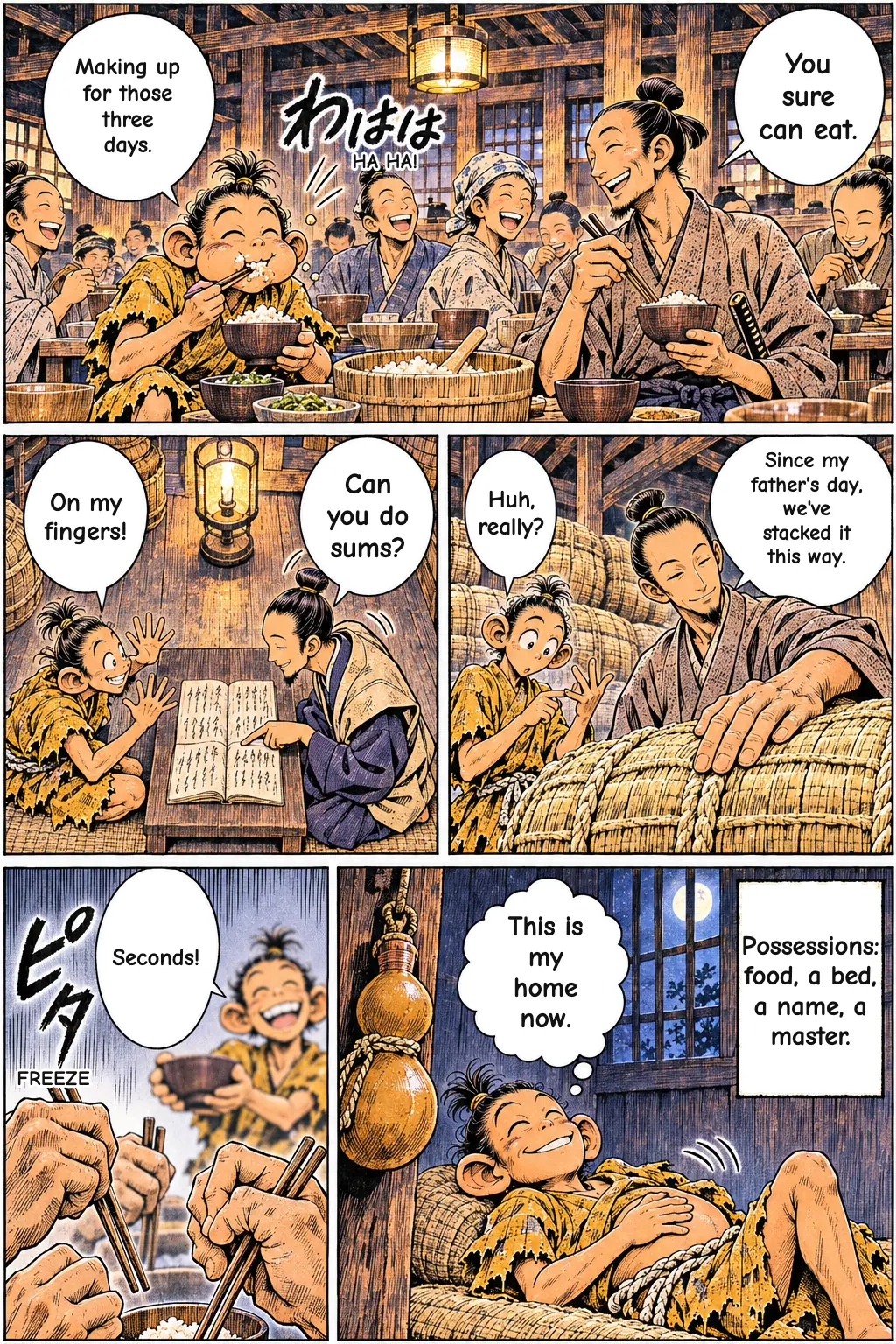
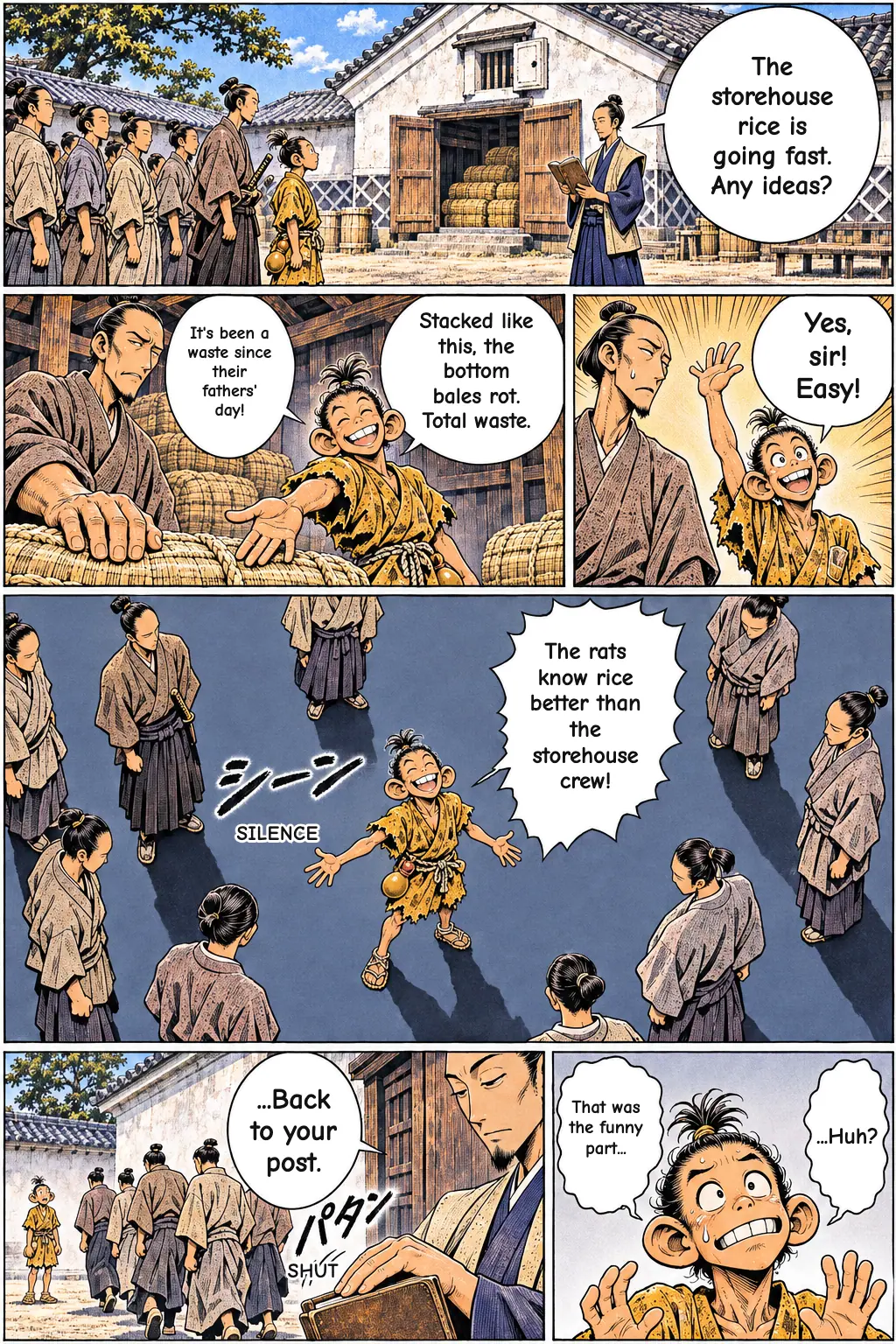
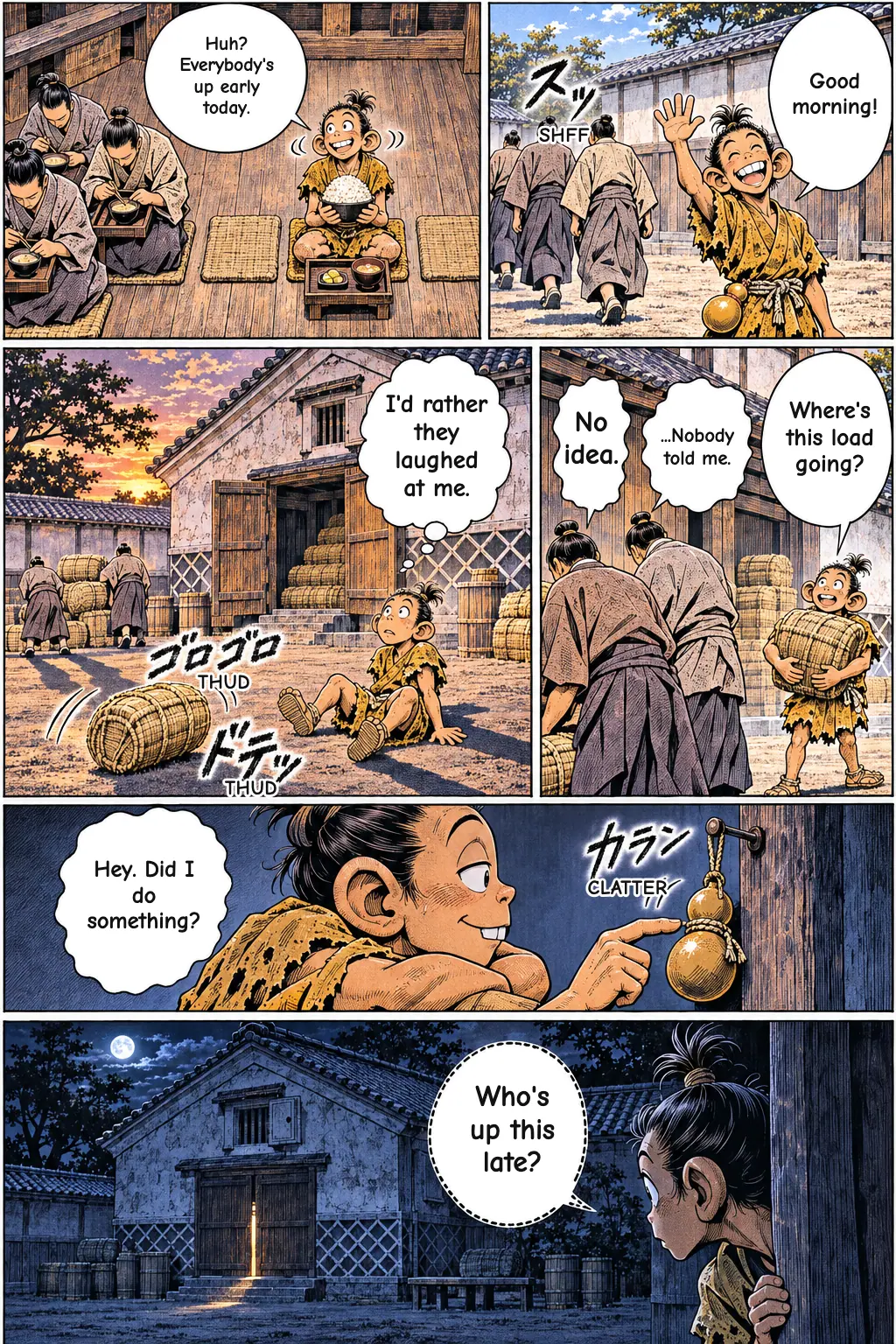
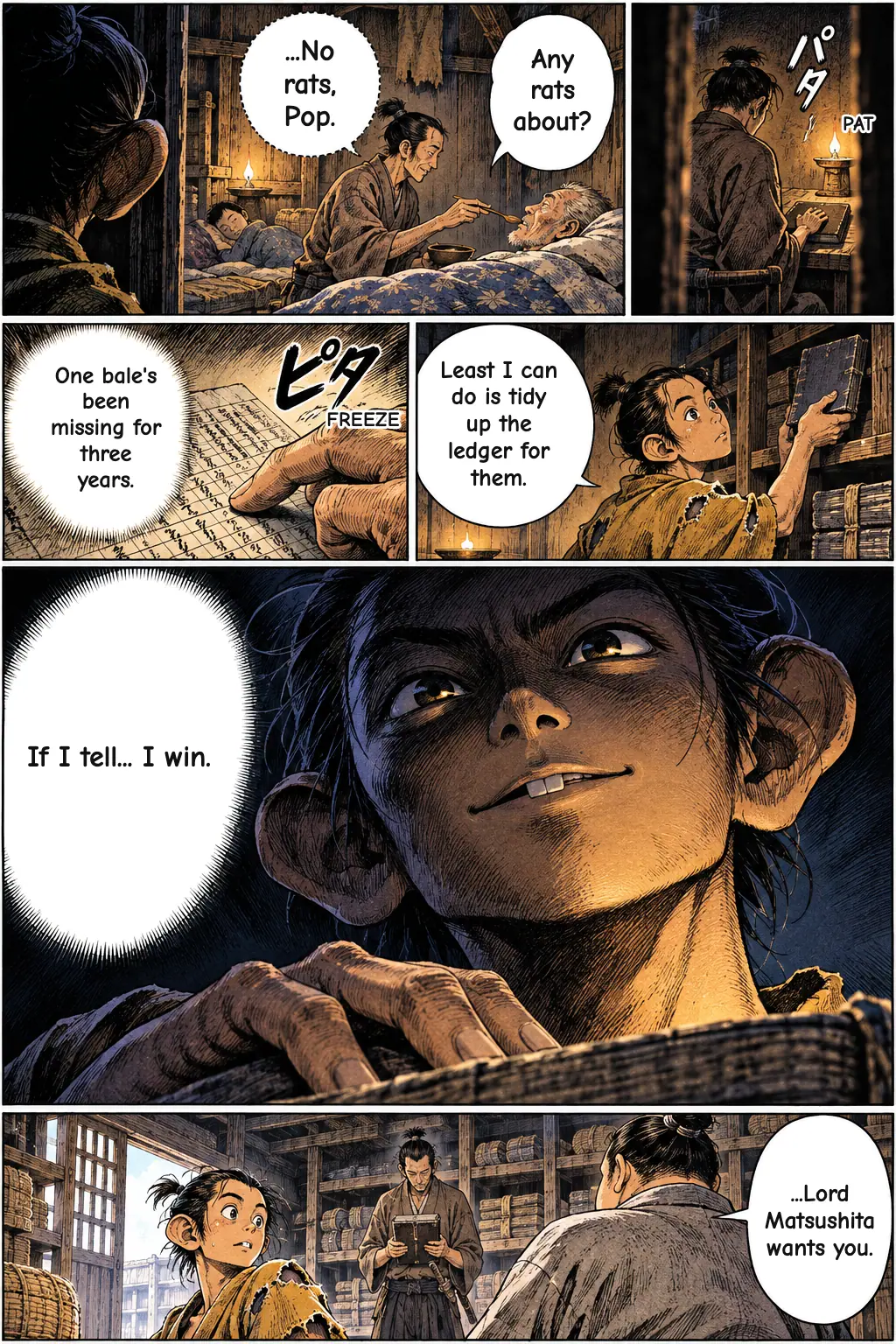
A starving boy leaves home with nothing and, armed only with his mouth and his wits, finds the first master ever to value him. But being too good makes everyone turn their backs on him. He swallows the one sentence that could win it all and walks on toward the next land, carrying a single tiny gourd.
Get new episodes in your feed. Follow us on:ThreadsBluesky
Story summary
Taikōki, written by the scholar Oze Hoan and completed around the Kan'ei era (1624–1644), is one of the best-known accounts of Toyotomi Hideyoshi's life. Its title comes from Taikō, the honorary title Hideyoshi held late in life as a retired imperial regent. Hoan was writing decades after his subject's death in 1598, so the book is better read as an early biography with a storyteller's instincts than as an eyewitness record. The story opens in Nakamura, a village in the Aichi district of Owari Province, in what is now the city of Nagoya.
Toyotomi Hideyoshi's Boyhood: Early Life and Taikōki Summary
In short: Toyotomi Hideyoshi's boyhood, as told in Oze Hoan's early Edo-period biography Taikōki, is the story of Hiyoshimaru, a boy from a humble home in Nakamura, Owari Province, who leaves his village, wanders the provinces, and enters the service of the warrior Matsushita Kahei in Tōtōmi. That restless child would go on to become the ruler of Japan.
The Boyhood of Hideyoshi in Taikōki: A Summary
Taikōki, written by the scholar Oze Hoan and completed around the Kan'ei era (1624–1644), is one of the best-known accounts of Toyotomi Hideyoshi's life. Its title comes from Taikō, the honorary title Hideyoshi held late in life as a retired imperial regent. Hoan was writing decades after his subject's death in 1598, so the book is better read as an early biography with a storyteller's instincts than as an eyewitness record.
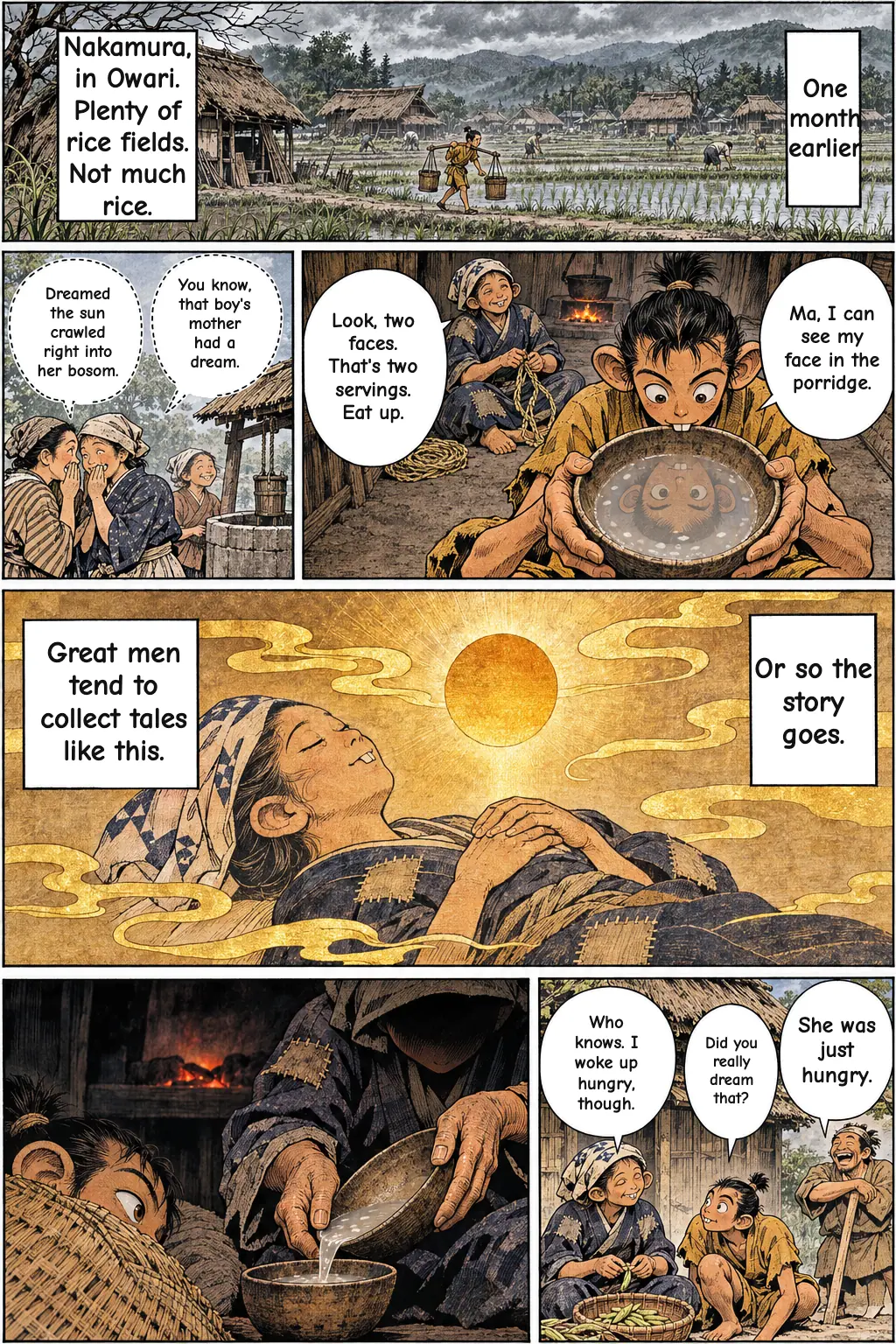
The story opens in Nakamura, a village in the Aichi district of Owari Province, in what is now the city of Nagoya. A son is born into the household of a man named Chikuami. His mother is said to have conceived him after dreaming that the sun entered her bosom, a sign of the greatness to come. The boy is called Hiyoshimaru.
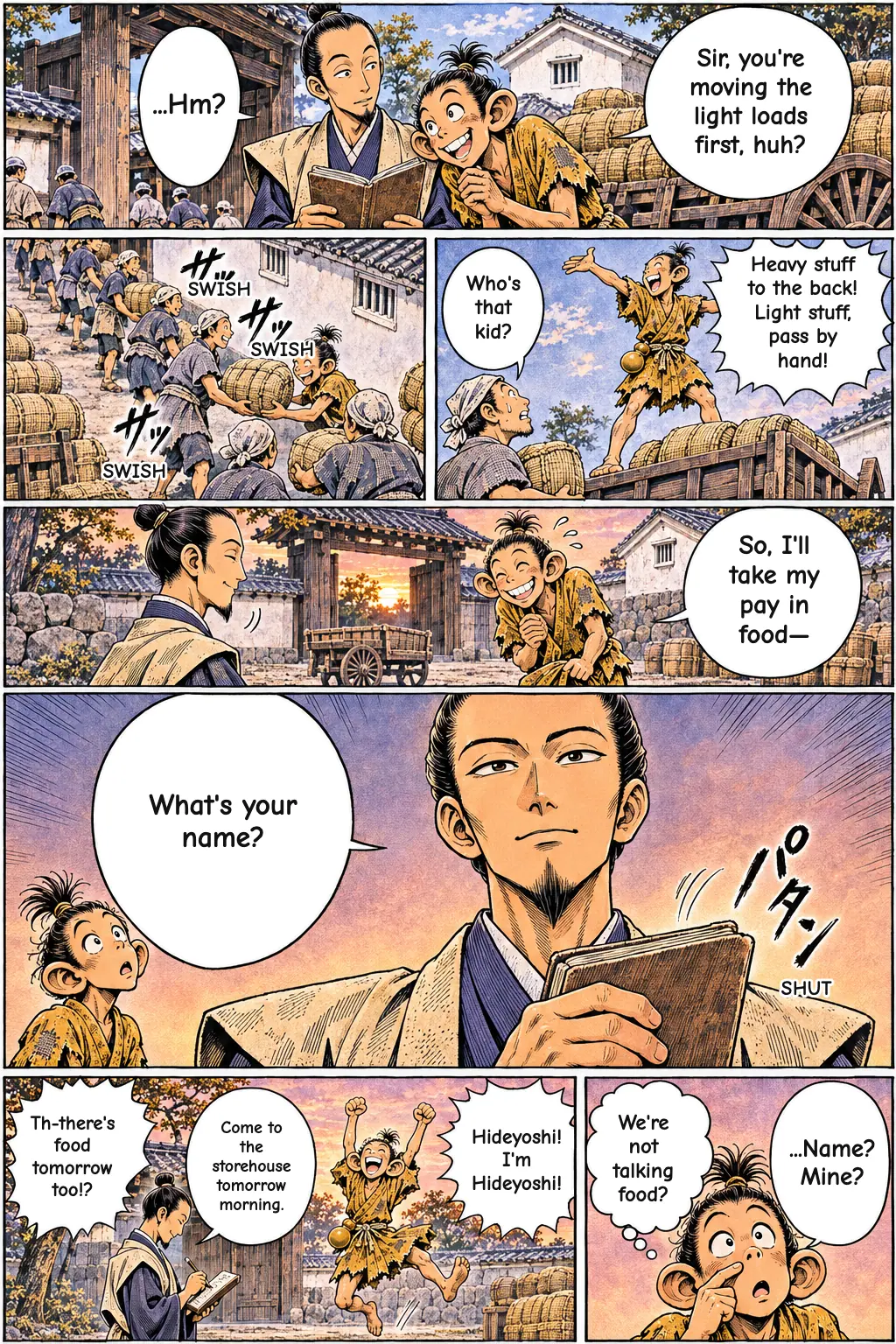
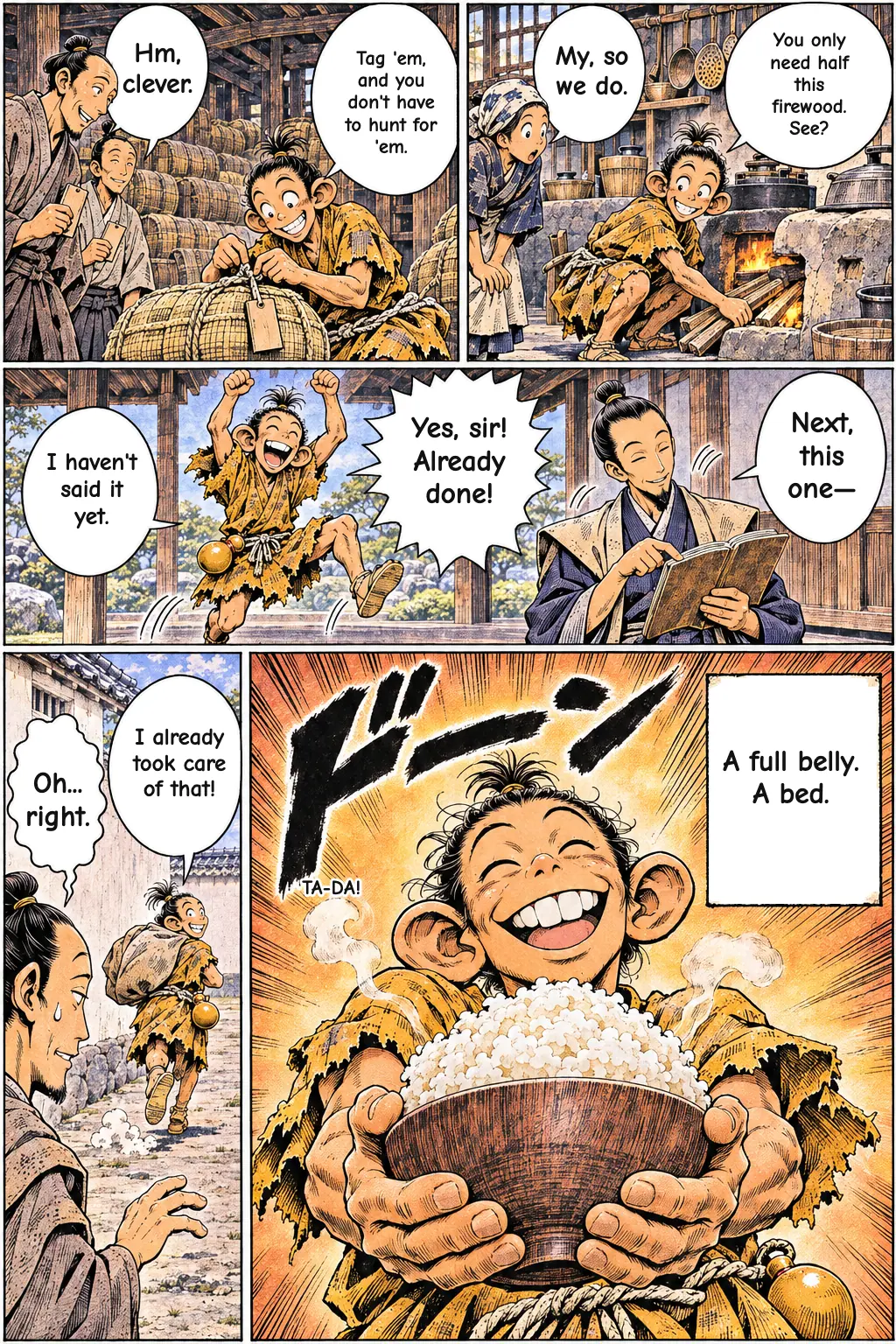
He does not stay in his poor home. He leaves Nakamura and drifts from province to province until he reaches Tōtōmi, in the western part of present-day Shizuoka Prefecture. There he meets Matsushita Kahei, a local warrior, and enters his service. This is the first step on a road that eventually leads to the top of Japanese society, and it is where the manga's first episode finds its center.
Where the Accounts Disagree
Hideyoshi's early years are poorly documented, and the surviving versions do not line up neatly. Even his birth year is debated. Both Tenbun 5 and Tenbun 6, roughly 1536 and 1537, have their supporters.
His family is another open question. Taikōki names Chikuami in connection with his home, but another early text, Taikō Soseiki, treats Kinoshita Yaemon as his birth father and Chikuami as his stepfather. His mother, later honored as Ōmandokoro, is commonly known as Naka, though that name is a customary one.
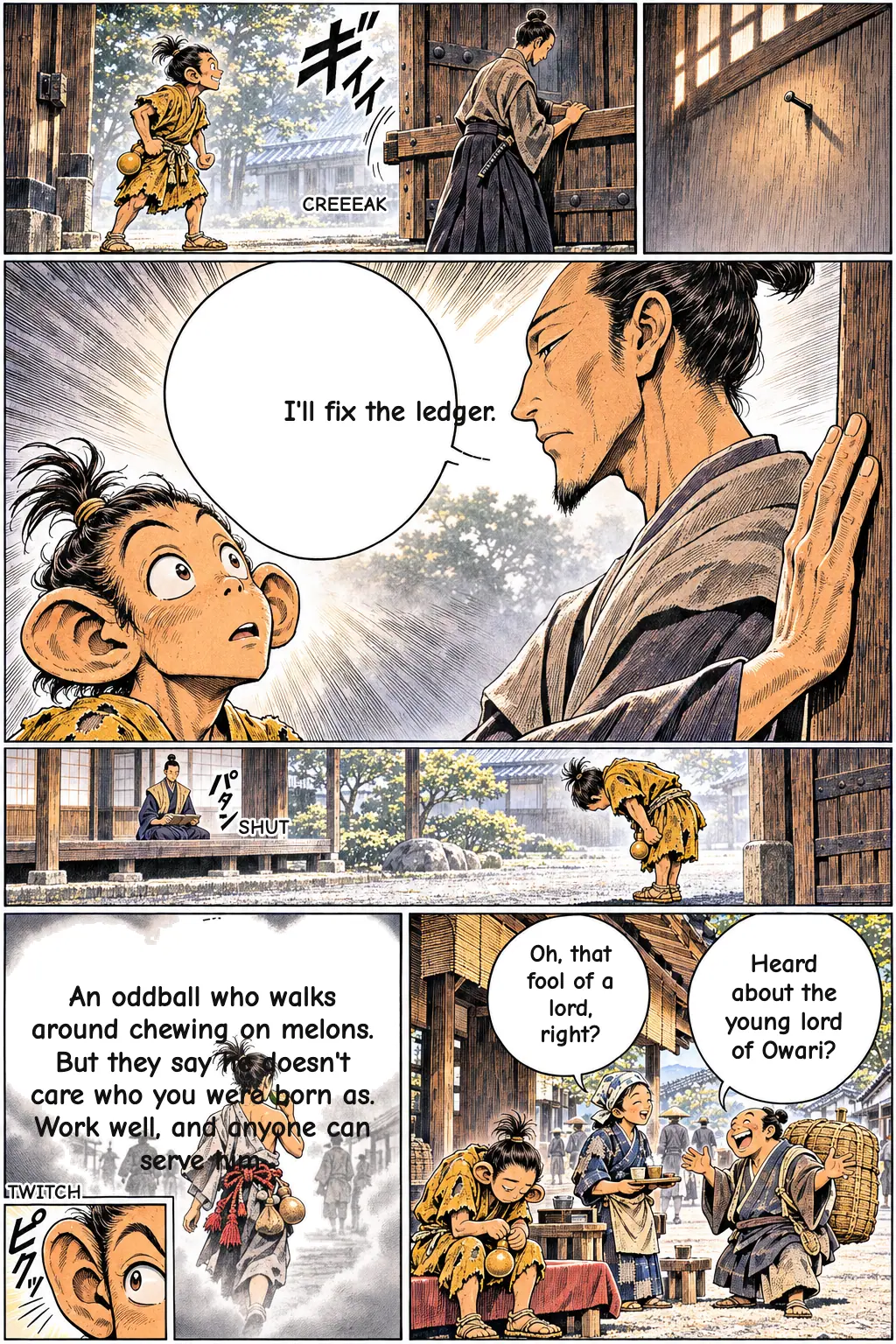
The details of his wandering and his time with Matsushita also vary. The familiar picture of the young Hideyoshi selling needles on the road belongs to the Taikō Soseiki line of tradition. So does the story that Matsushita gave him money to buy armor in Owari and that he never came back with it. Some retellings say jealous fellow servants made his position unbearable, but it is uncertain how much of this appears in Hoan's own text. The safest summary is that he served Matsushita for a time, stood out, and moved on, with the reasons told in different ways.
What the Story Says About Its Time
Hideyoshi grew up during the Sengoku, or Warring States, period, when rival warlords fought across Japan and old hierarchies were breaking down. Even then, a climb from the bottom to the very top was extraordinary. He went on to serve Oda Nobunaga, a powerful warlord from Owari, and after Nobunaga's death in 1582 he completed the military unification of Japan by 1590. That is why his childhood has fascinated Japanese readers for centuries: it is one of the country's great rags-to-riches stories.
The dream of the sun shows how such a life was explained. A man with no noble ancestry had no lineage to justify his power, so a sign from the heavens filled the gap. Hideyoshi himself used a similar sun story in letters to foreign rulers, which suggests the image was already useful to him during his lifetime. Whatever one makes of it as history, it works as political legend.
Hoan's book also belongs to the more settled Edo period, when Japan was at peace and readers looked back on the warring age with curiosity. Stories of a clever boy with nothing to his name appealed to that audience, and they still do.
What the Manga Changes and Adds
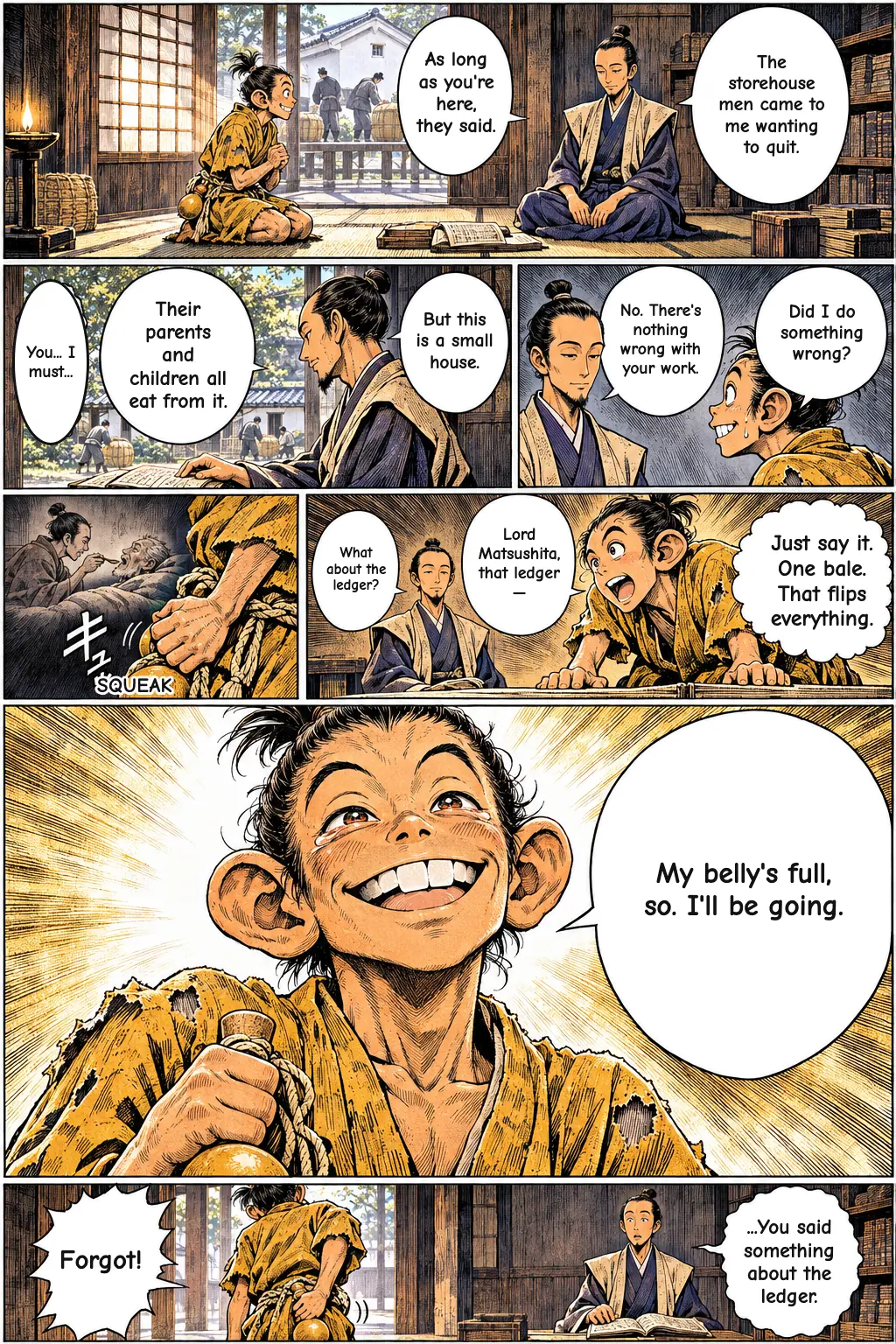
Episode 1, "He Would Rule Japan. He Owned Nothing.", keeps the basic outline from the tradition: a poor boy from Nakamura, the departure from home, the wandering years, and his service under Matsushita Kahei. The sun dream appears as something people say happened, not as established fact.
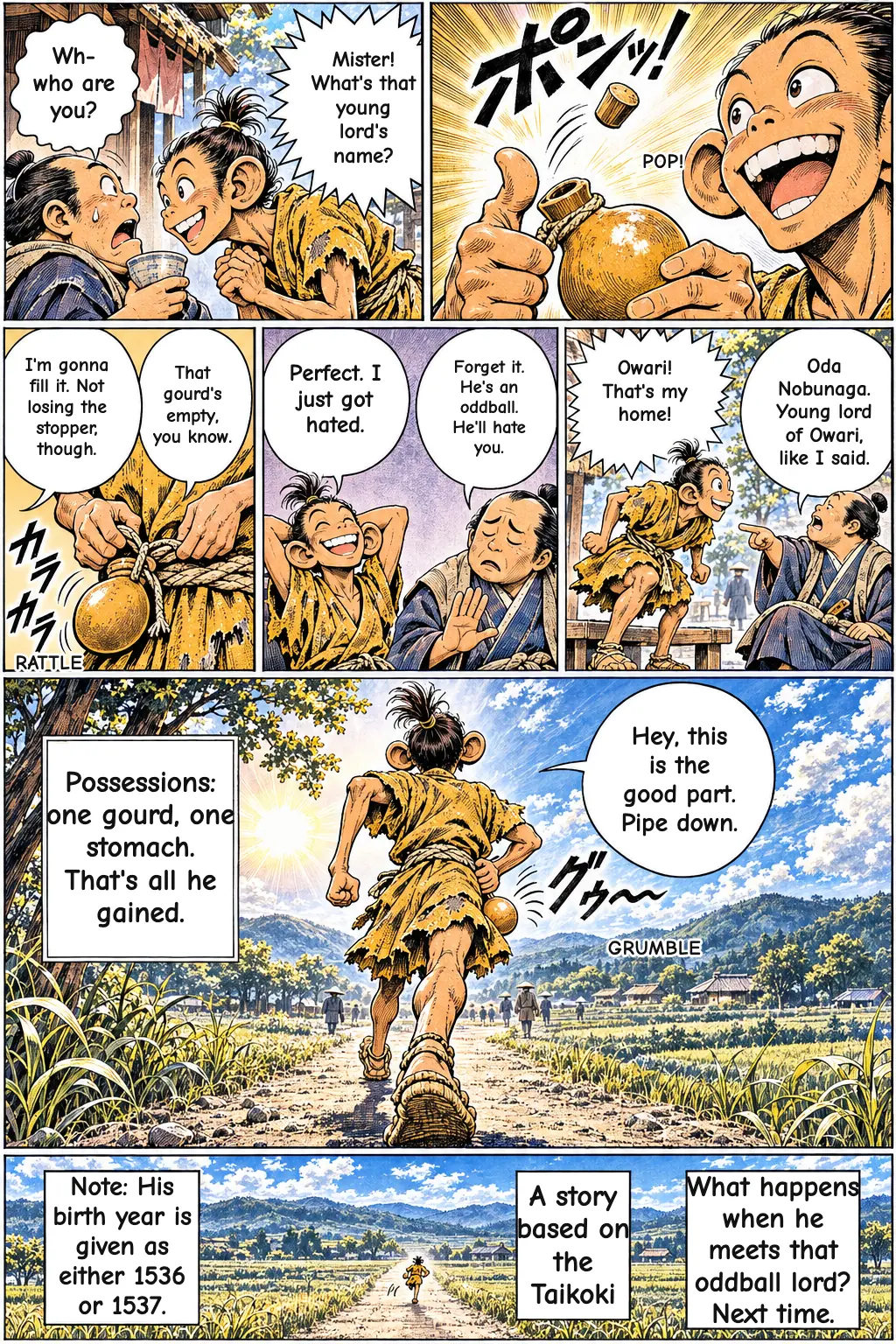
Much of the drama is the manga's own invention. That includes the family farewell and its dialogue, the specific adventures on the road, the scenes of the boy proving himself in the Matsushita household, and the clashes with his fellow servants, who are fictional characters rather than recorded people. The moment when he swallows a single sentence that could have won him everything is also storytelling, as is the tiny gourd he carries away. Later tradition links Hideyoshi with a gourd battle standard, so the image may ring a bell for some readers, but it should be read as a creative touch, not a recorded detail.
The closing image, with the boy walking on and Oda Nobunaga present only as a rumor, is dramatic framing too. At this stage Nobunaga is a young lord in Owari, not yet the dominant warlord he later became.
Where to Read It
If you would like to see this story told through pictures, Toyotomi Hideyoshi: From Peasant to Ruler of Japan is available here on Manga Portal. Every episode is free, with no sign-up needed. Episode 1 is a good place to begin even if you know nothing about Japanese history, since it starts where Hideyoshi himself started: hungry, unknown, and relying on his wits.
Characters in this episode
Hiyoshimaru (later Toyotomi Hideyoshi)
A poor boy from Nakamura in Owari who leaves home, wanders the provinces, and eventually becomes the ruler of Japan.
Chikuami
A resident of Nakamura named as the boy's father in Taikōki, though another tradition treats him as a stepfather.
Hiyoshimaru's mother (later Ōmandokoro)
The boy's mother, remembered for the tradition that she conceived him after dreaming the sun entered her bosom.
Matsushita Kahei
A warrior of Tōtōmi Province who takes the wandering boy into his service.
The Matsushita servants
The boy's envious co-workers, portrayed in the manga as fictional characters rather than recorded individuals.
Oda Nobunaga
The young lord of Owari, heard of only by rumor in this episode, whom Hideyoshi later serves.
FAQ
Was Toyotomi Hideyoshi really born a peasant?
He certainly came from a humble background, far outside the warrior elite who usually held power. The exact status of his family is uncertain, and some accounts describe his father as a foot soldier who turned to farming. Early sources disagree on many details of his home life.
What was Hideyoshi's childhood name?
Taikōki calls him Hiyoshimaru, and this is the name most retellings use. It comes from the biographical tradition rather than from firm records of his childhood, so it is best treated as the traditional name.
Who was Matsushita Kahei?
Matsushita Kahei was a warrior in Tōtōmi Province, in the west of modern Shizuoka Prefecture, who took the young Hideyoshi into his service. Later sources give his personal name as Yukitsuna and connect him with the Imagawa clan. Accounts differ on how and why Hideyoshi left him.
Did Hideyoshi's mother really dream of the sun?
There is no way to confirm it, and it is best understood as legend. The story appears in Taikōki, and Hideyoshi himself used a similar image in letters to foreign rulers. It helped present a man of low birth as someone destined by heaven.
Is Taikōki historically accurate?
Only partly. It was written decades after Hideyoshi's death and mixes historical events with embellishment and storytelling, so historians check it against other sources. It is especially hard to verify for his early life, which is poorly documented.