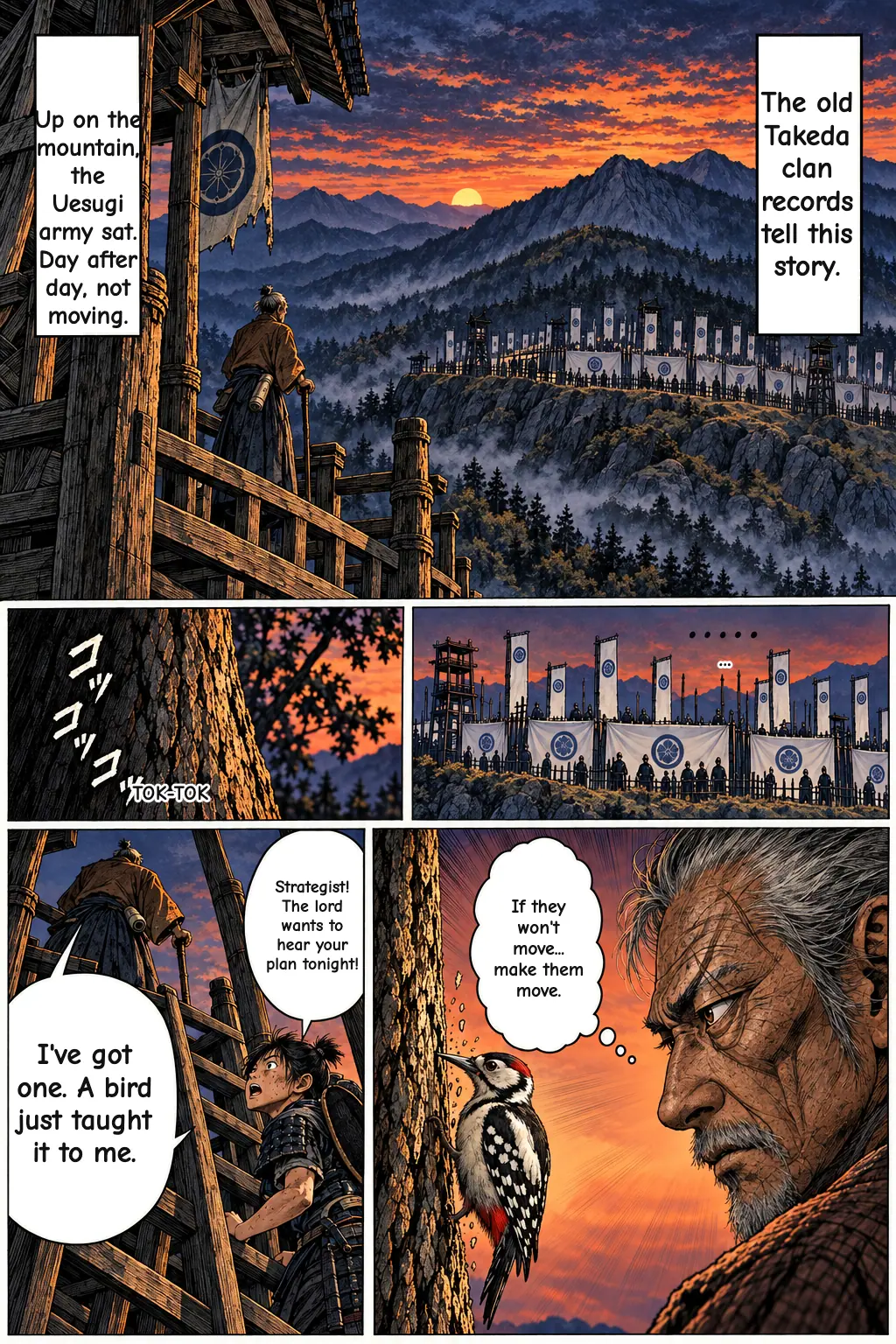
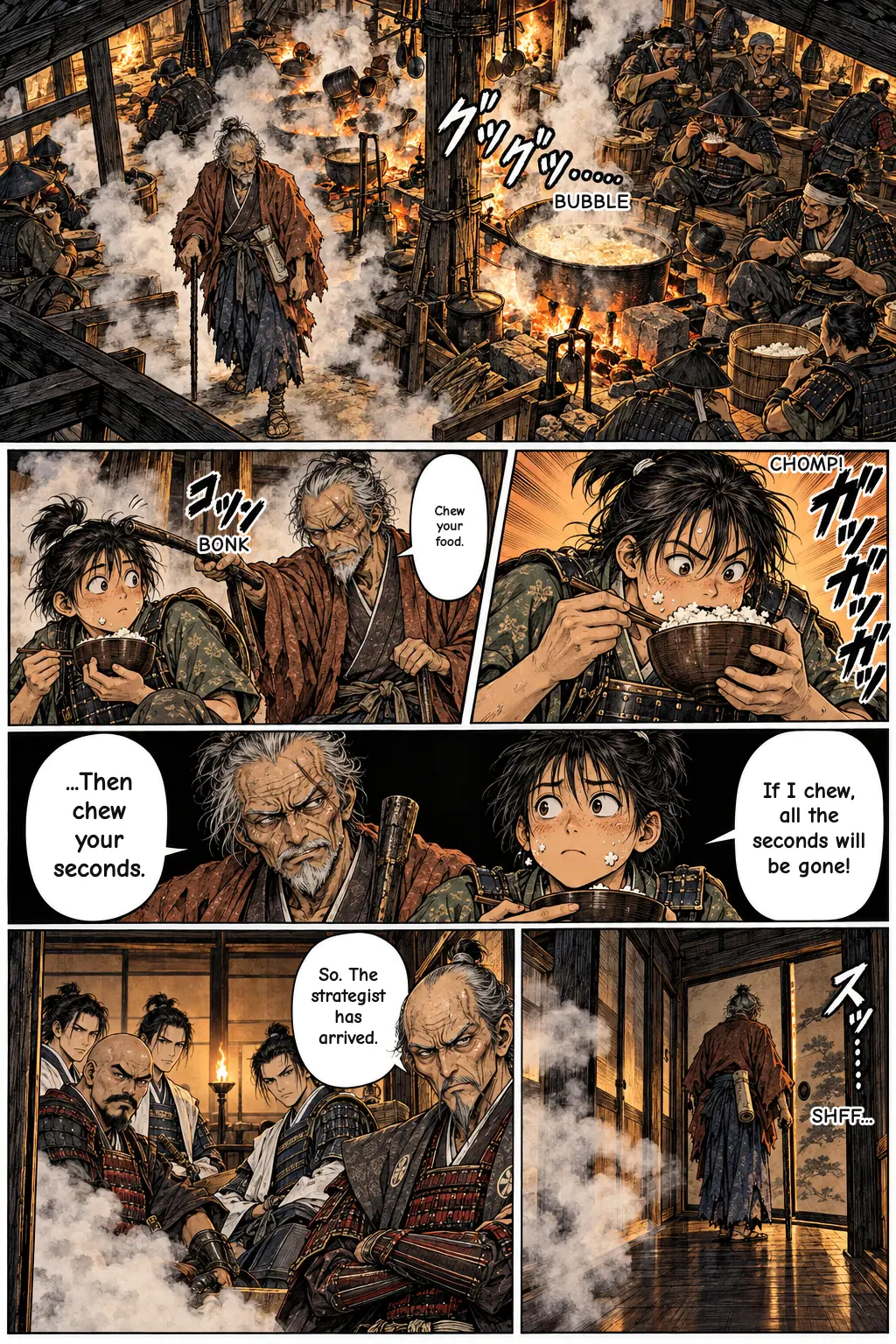
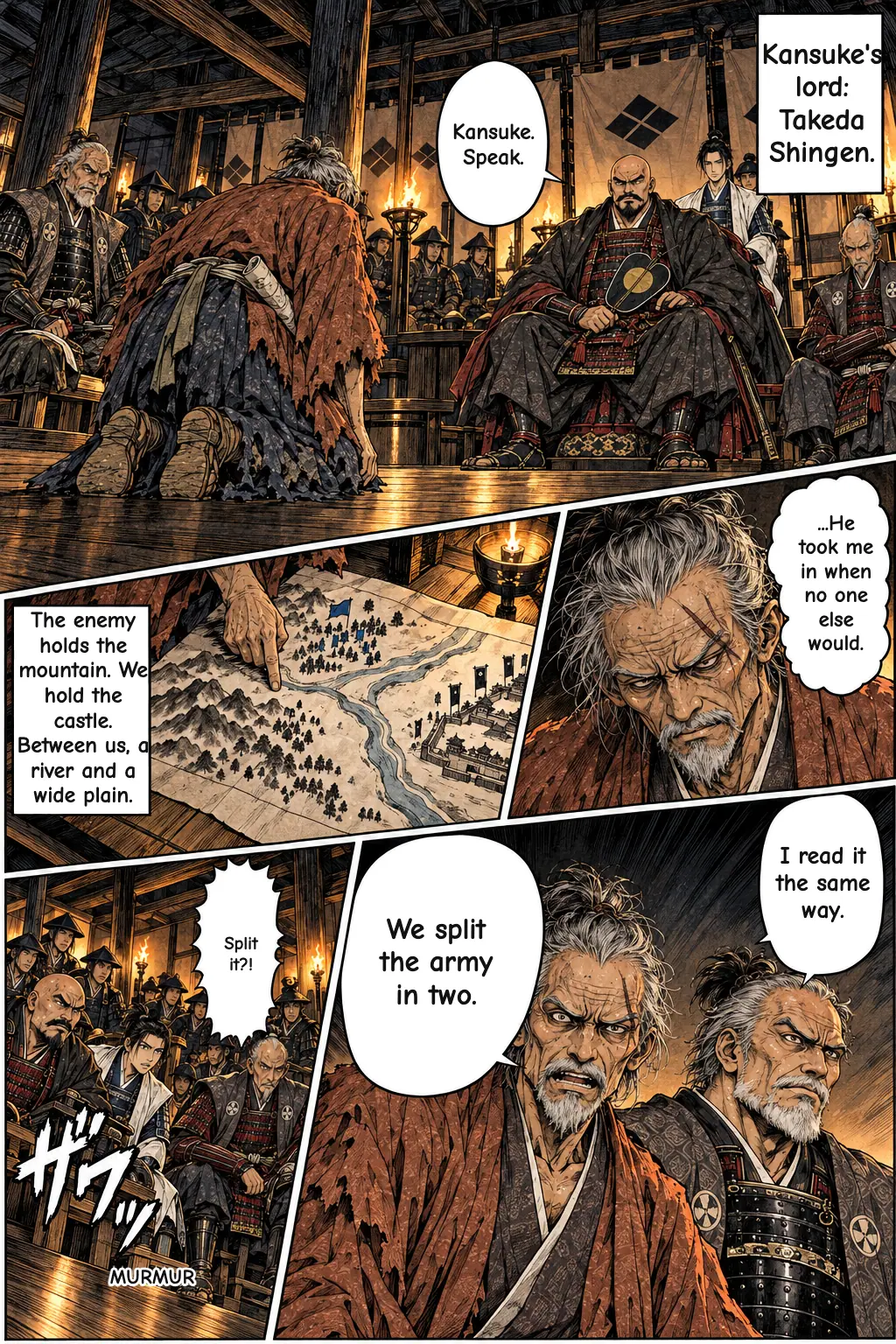
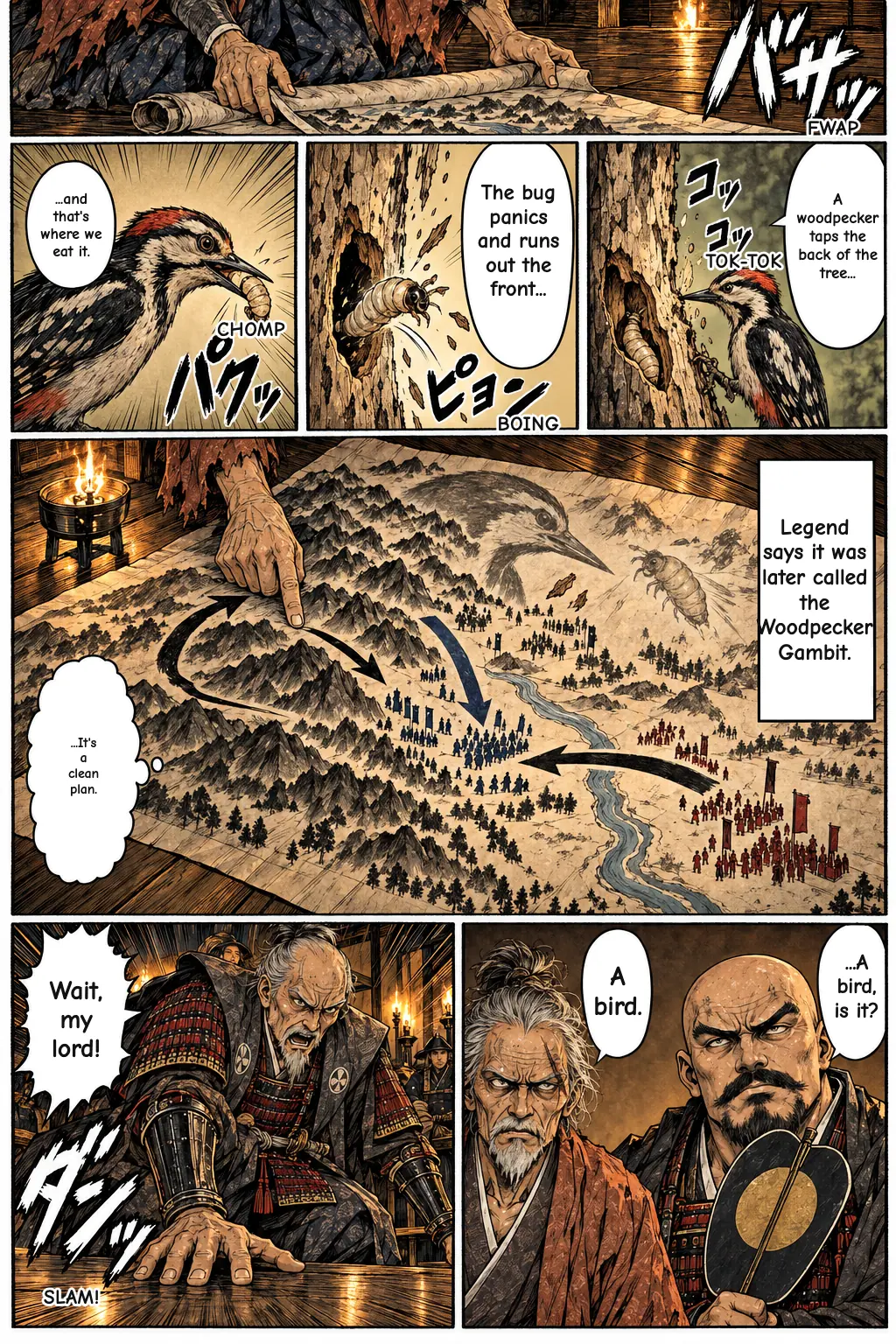
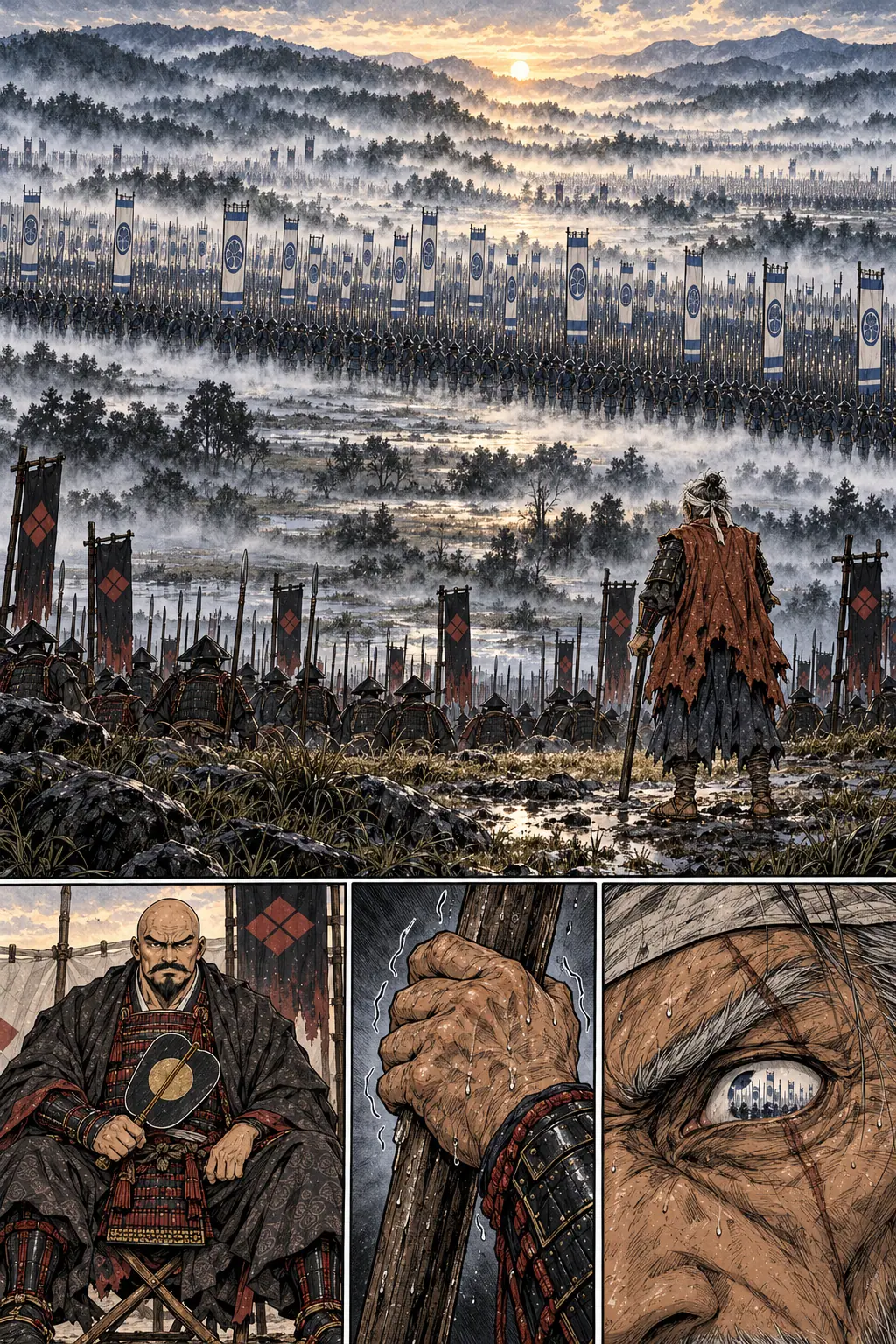
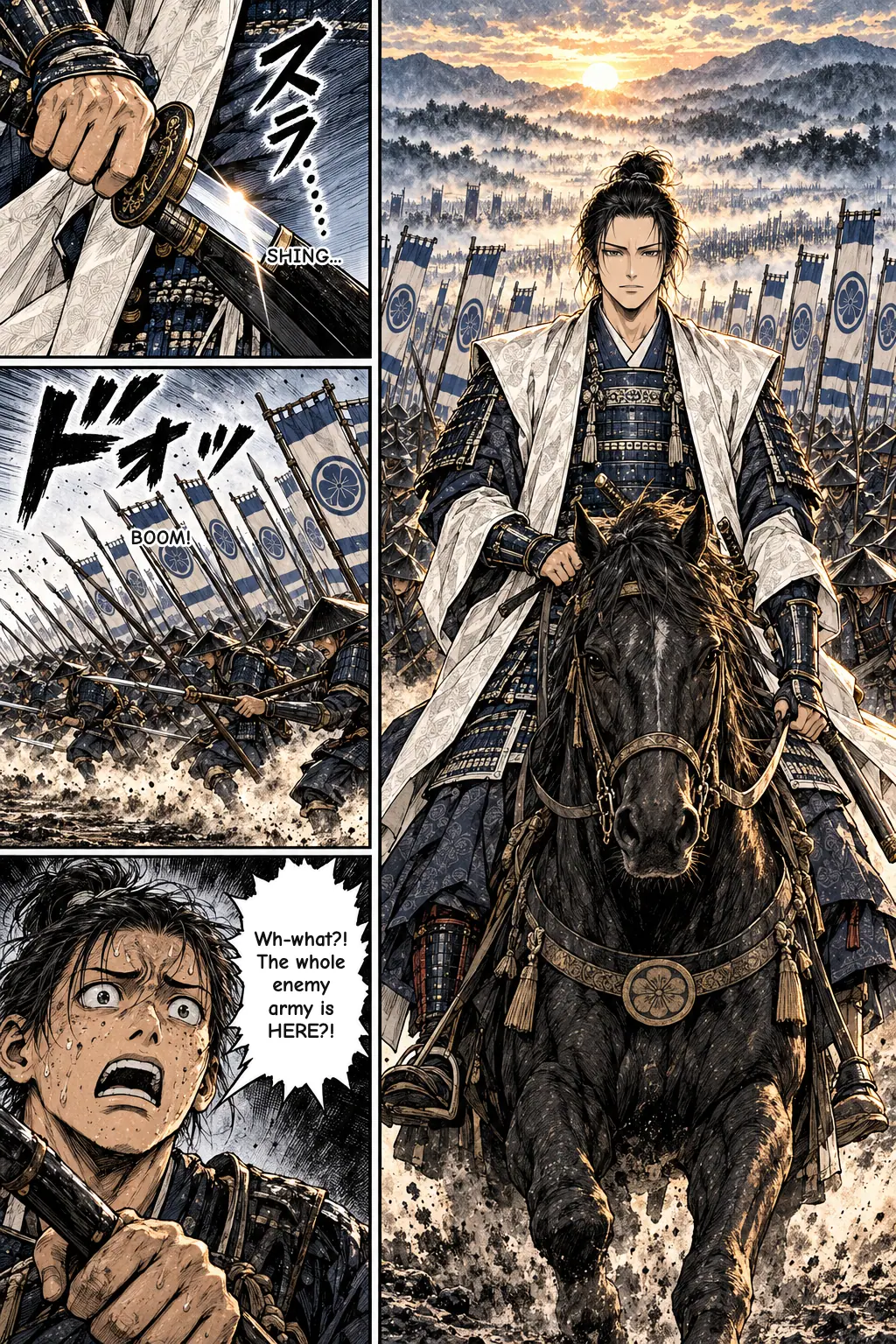
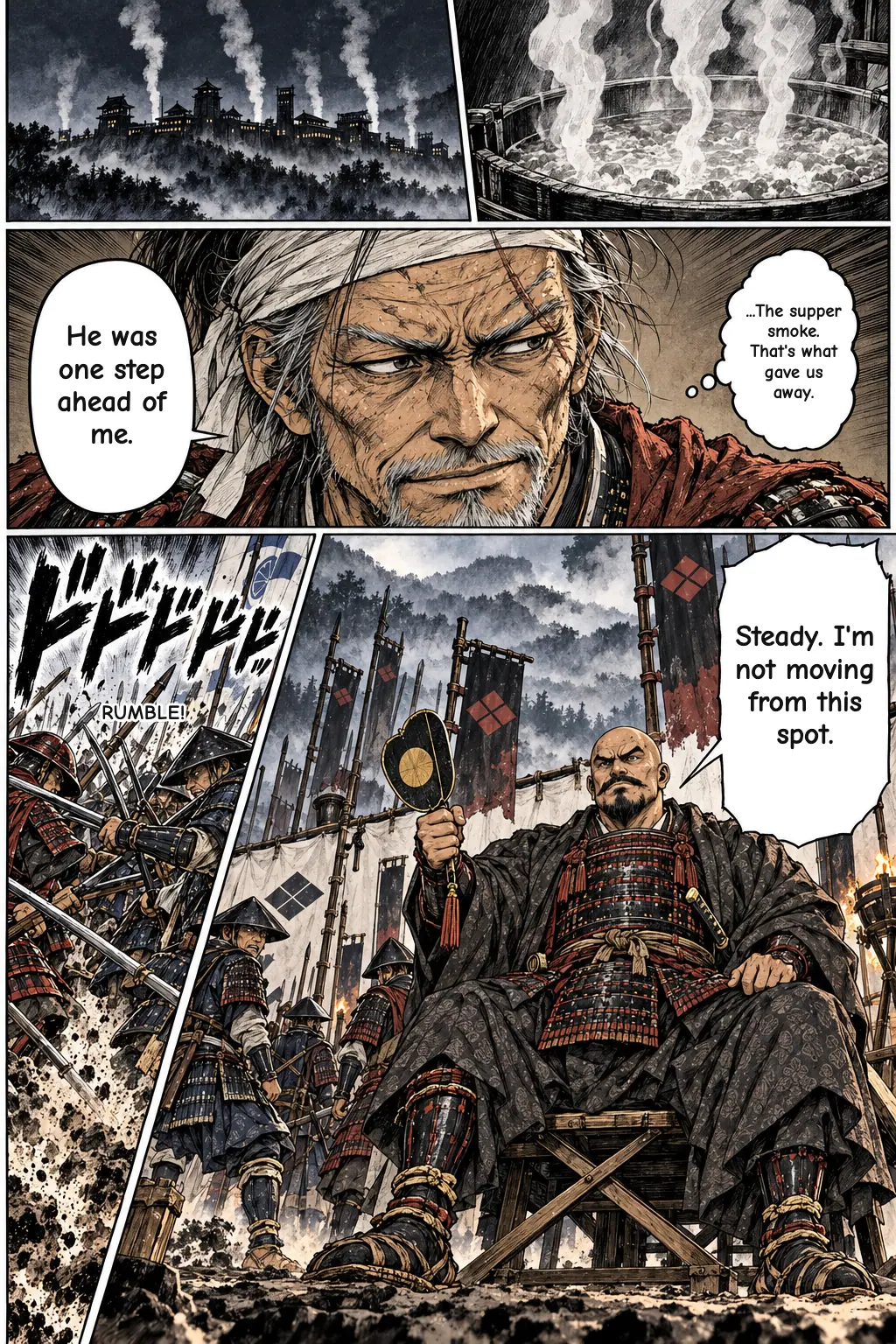
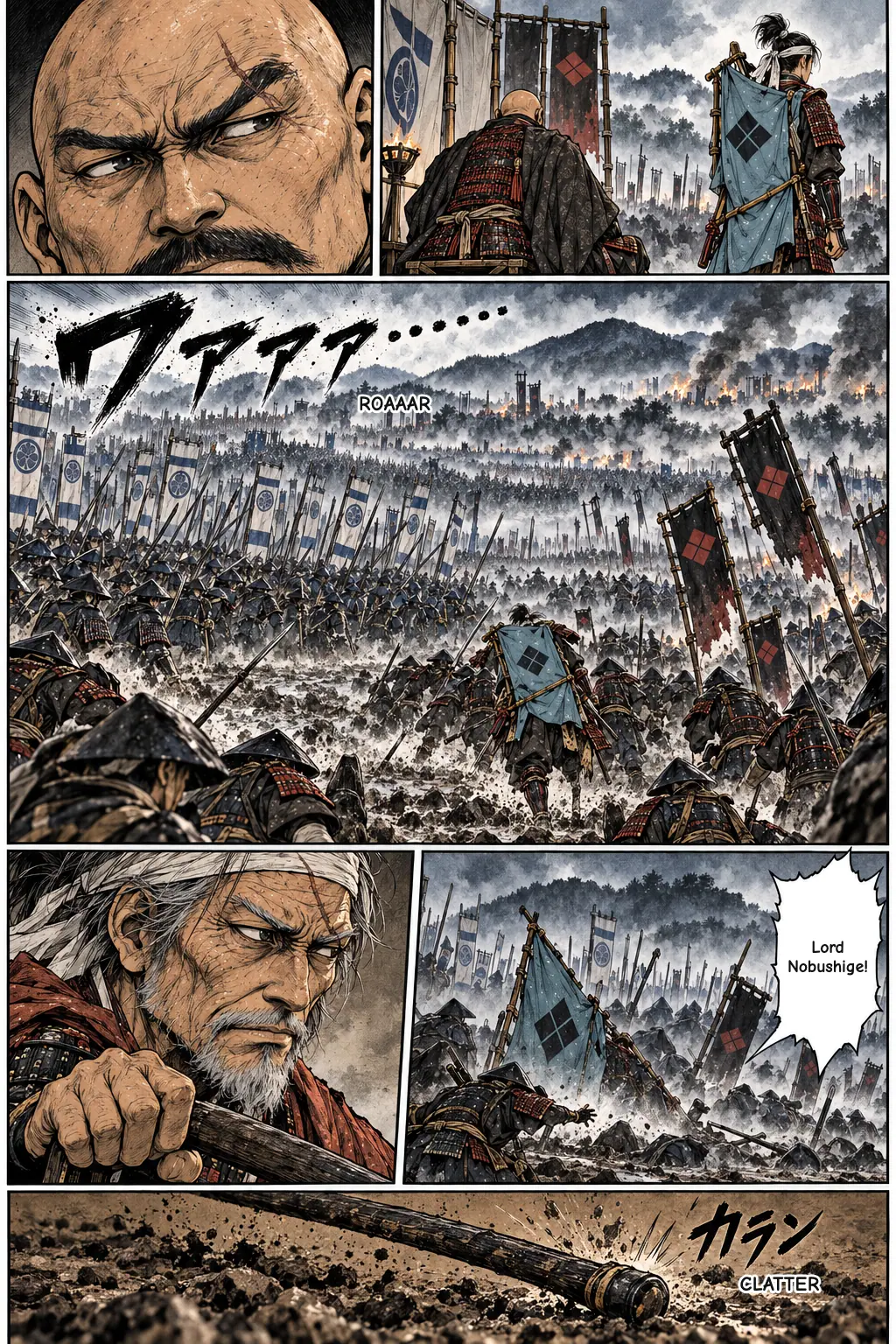
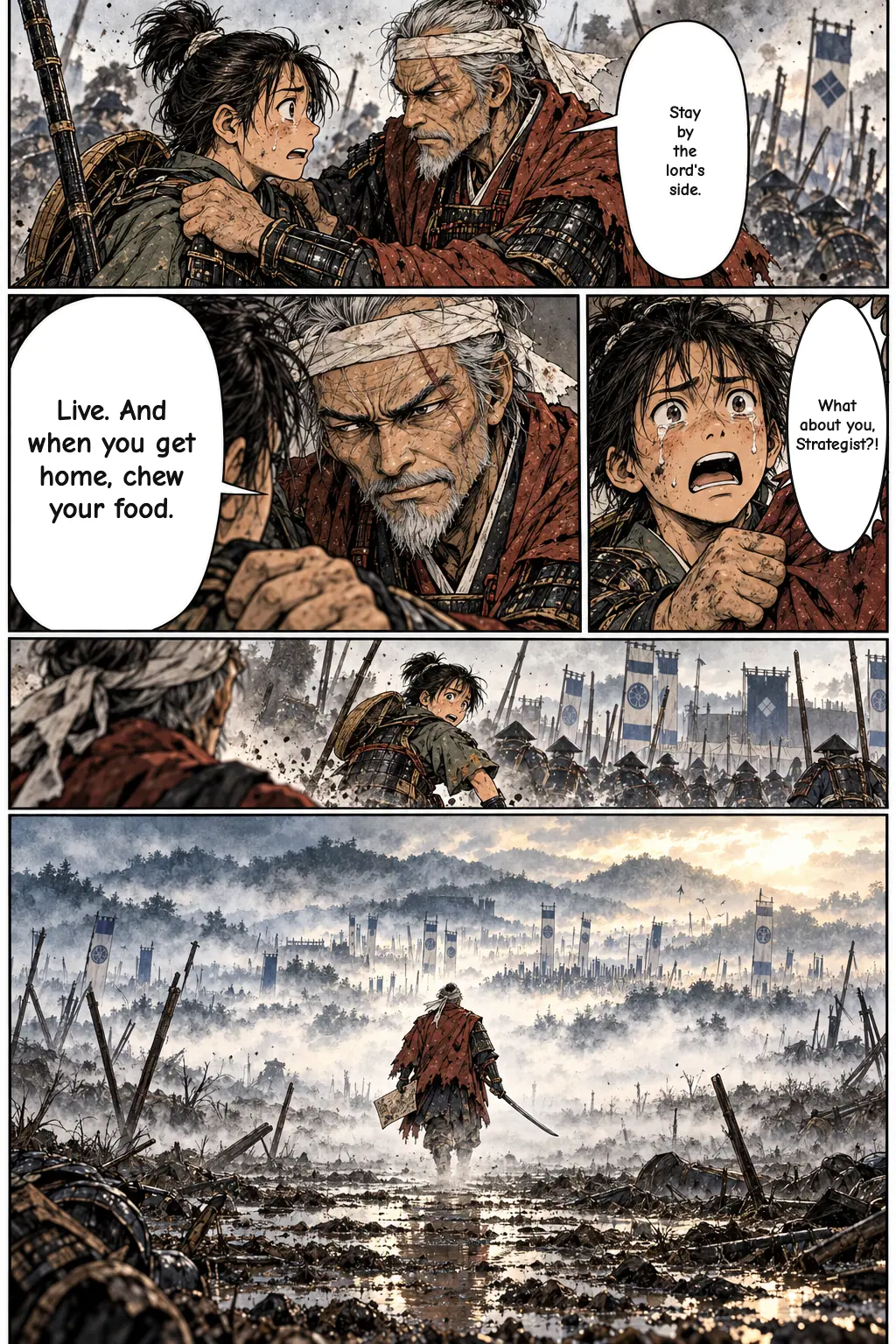
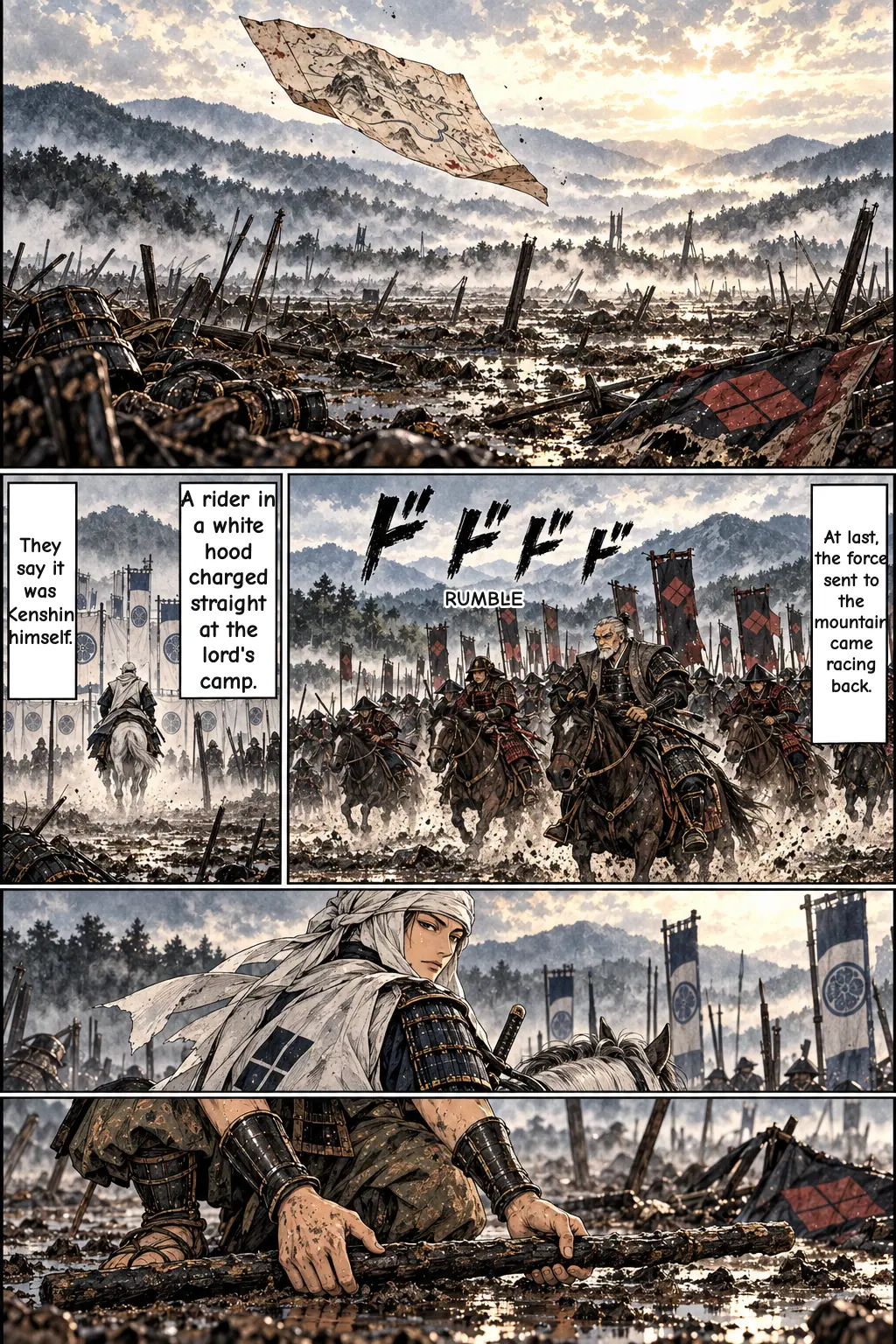
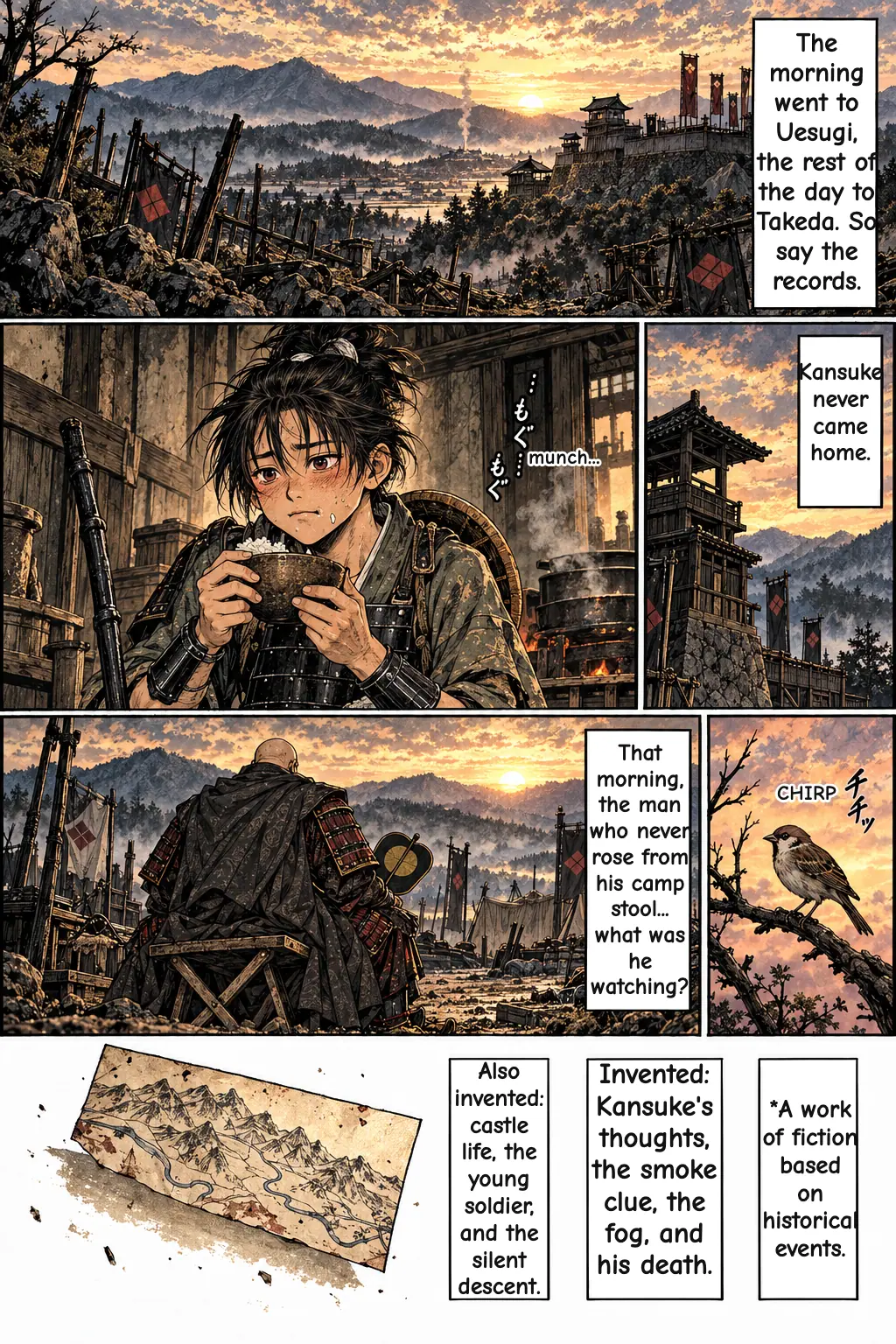
Episode 3The Perfect Plan, Betrayed by Dinner SmokeBattle of Kawanakajima (the Woodpecker Gambit)
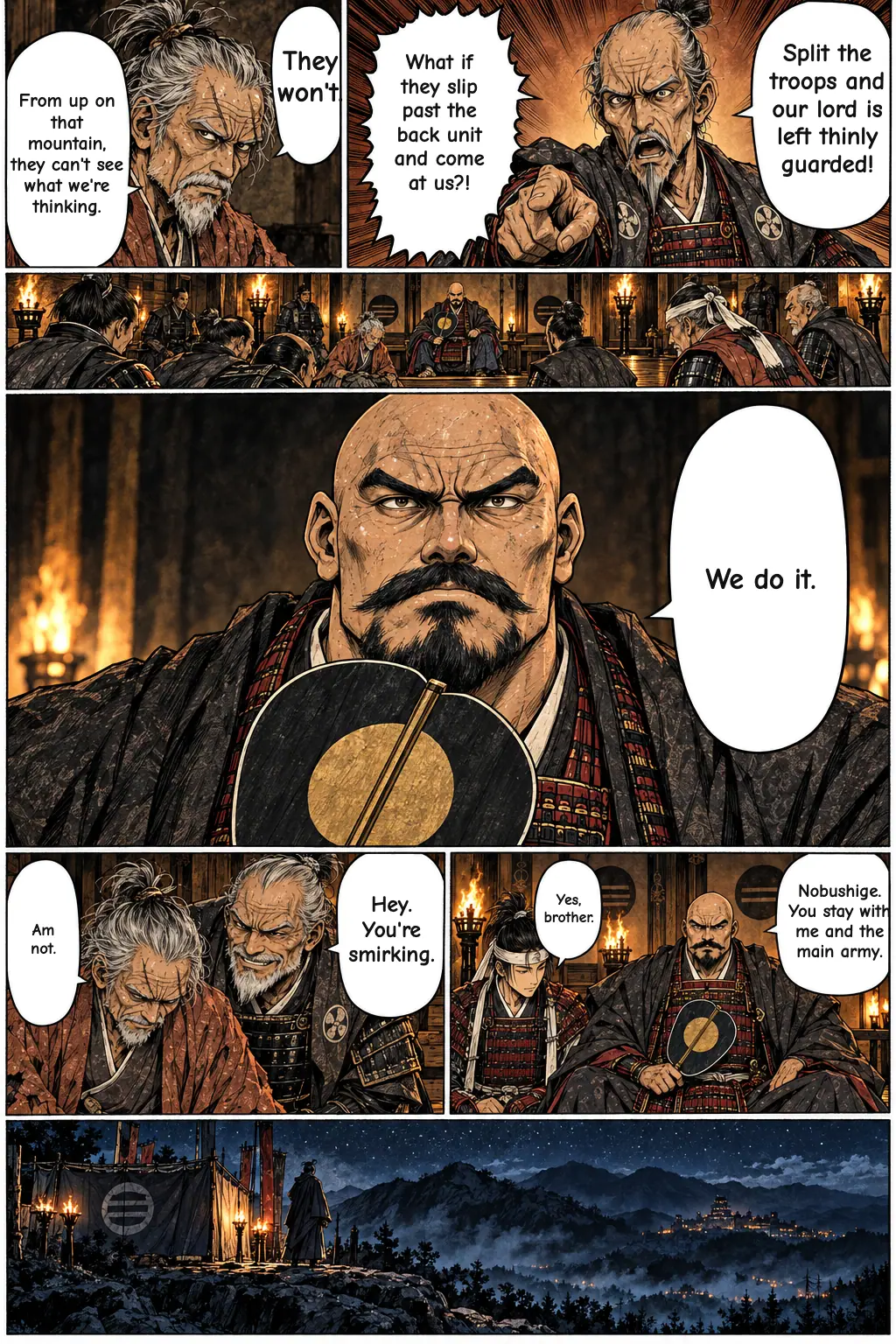
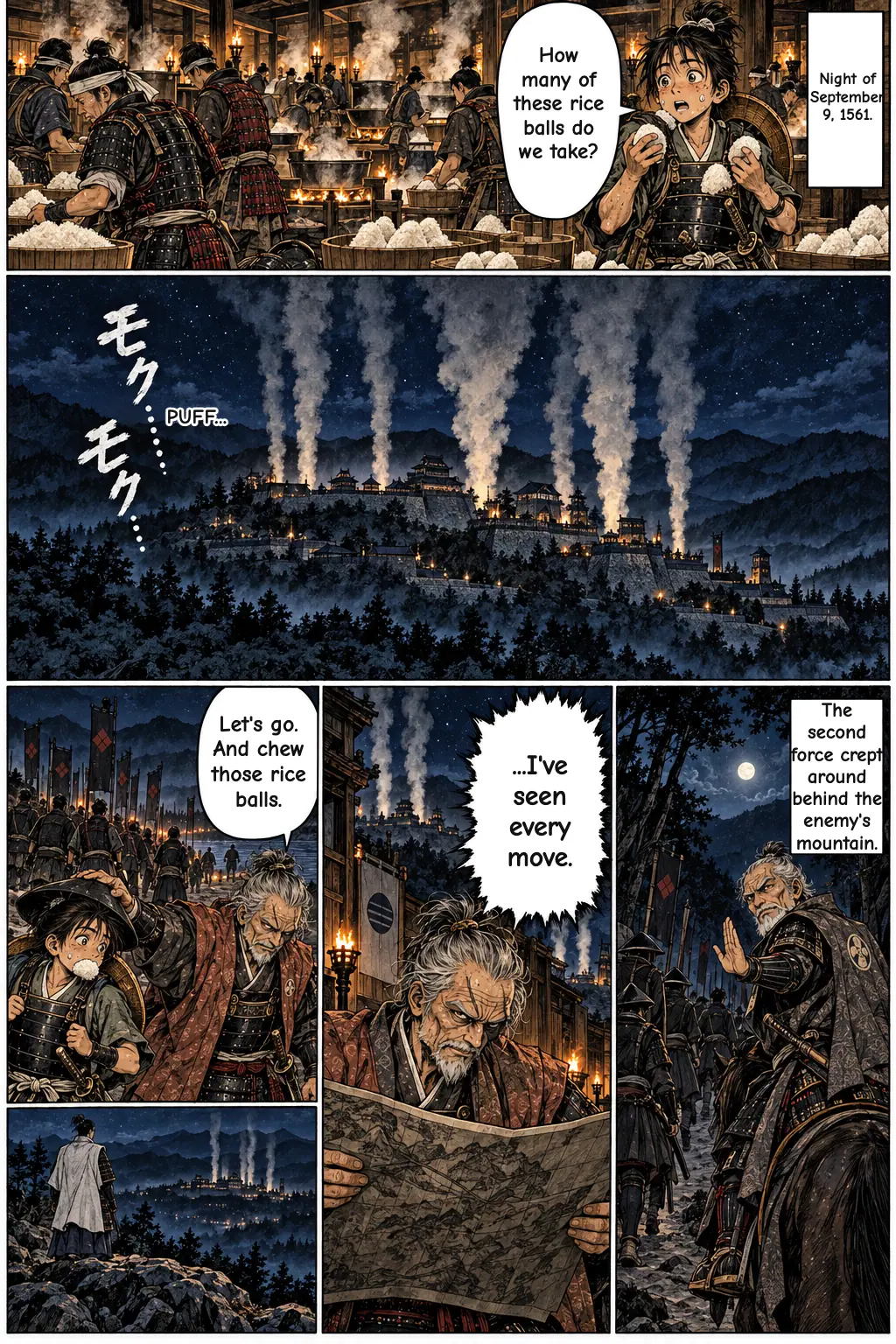
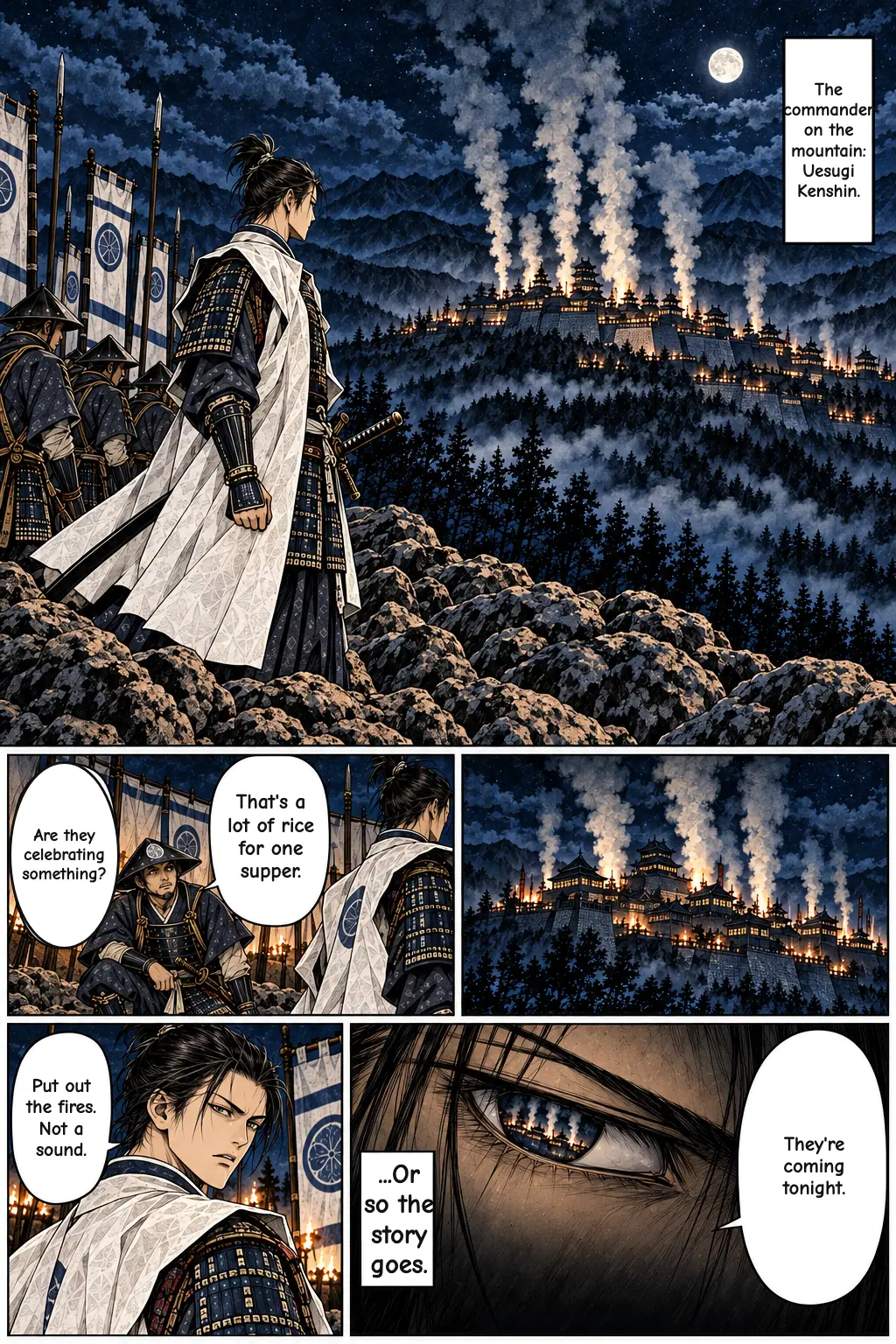
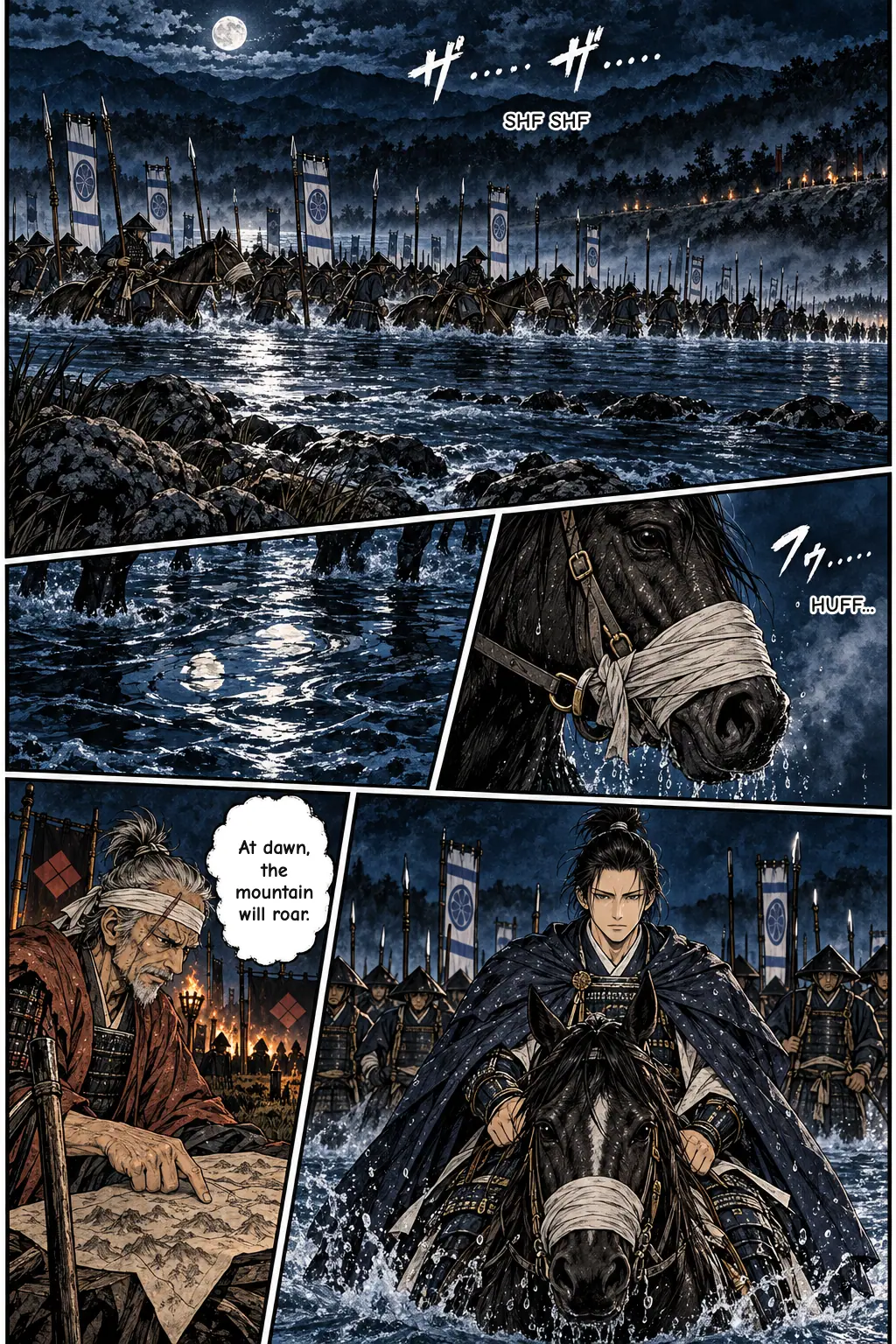
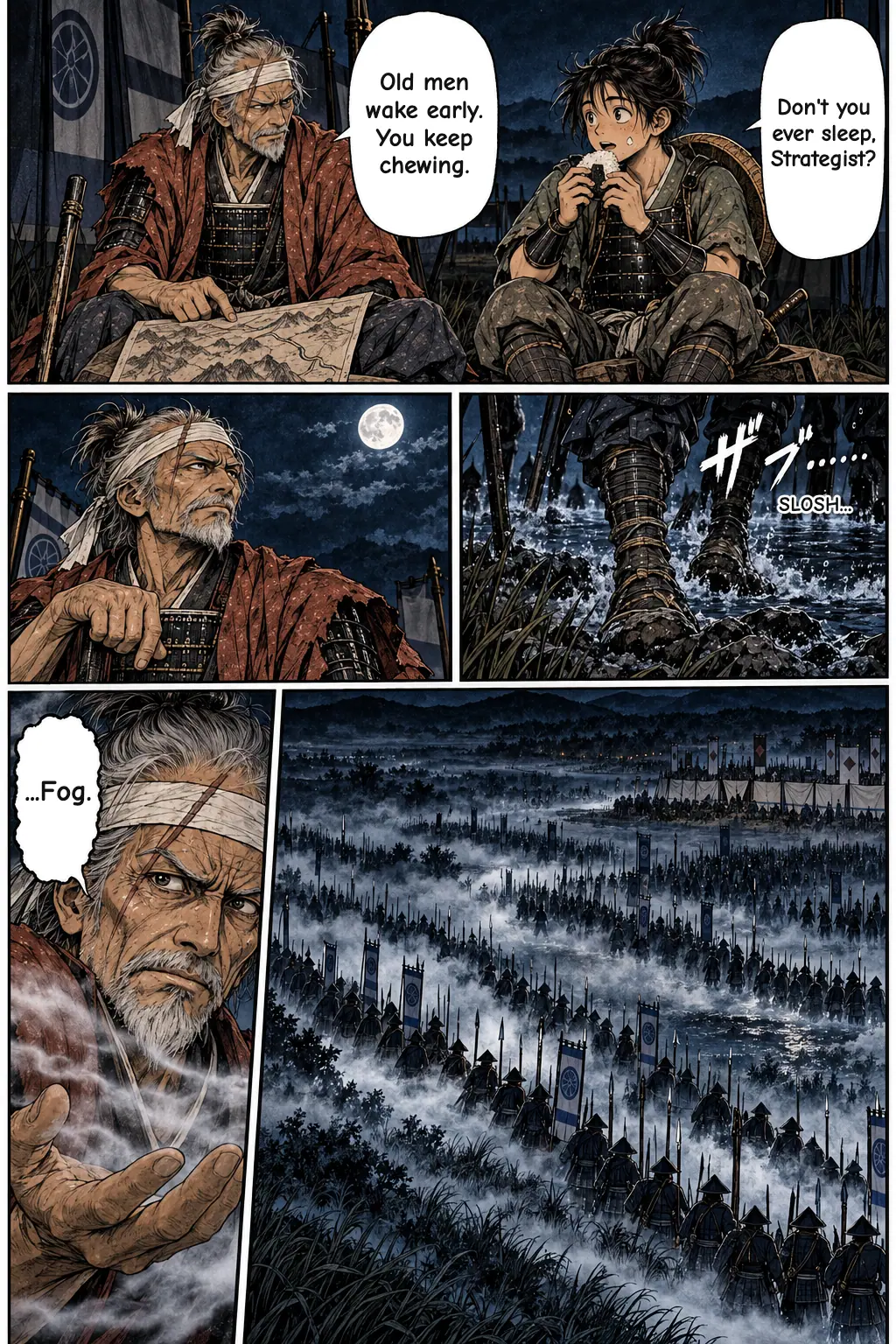
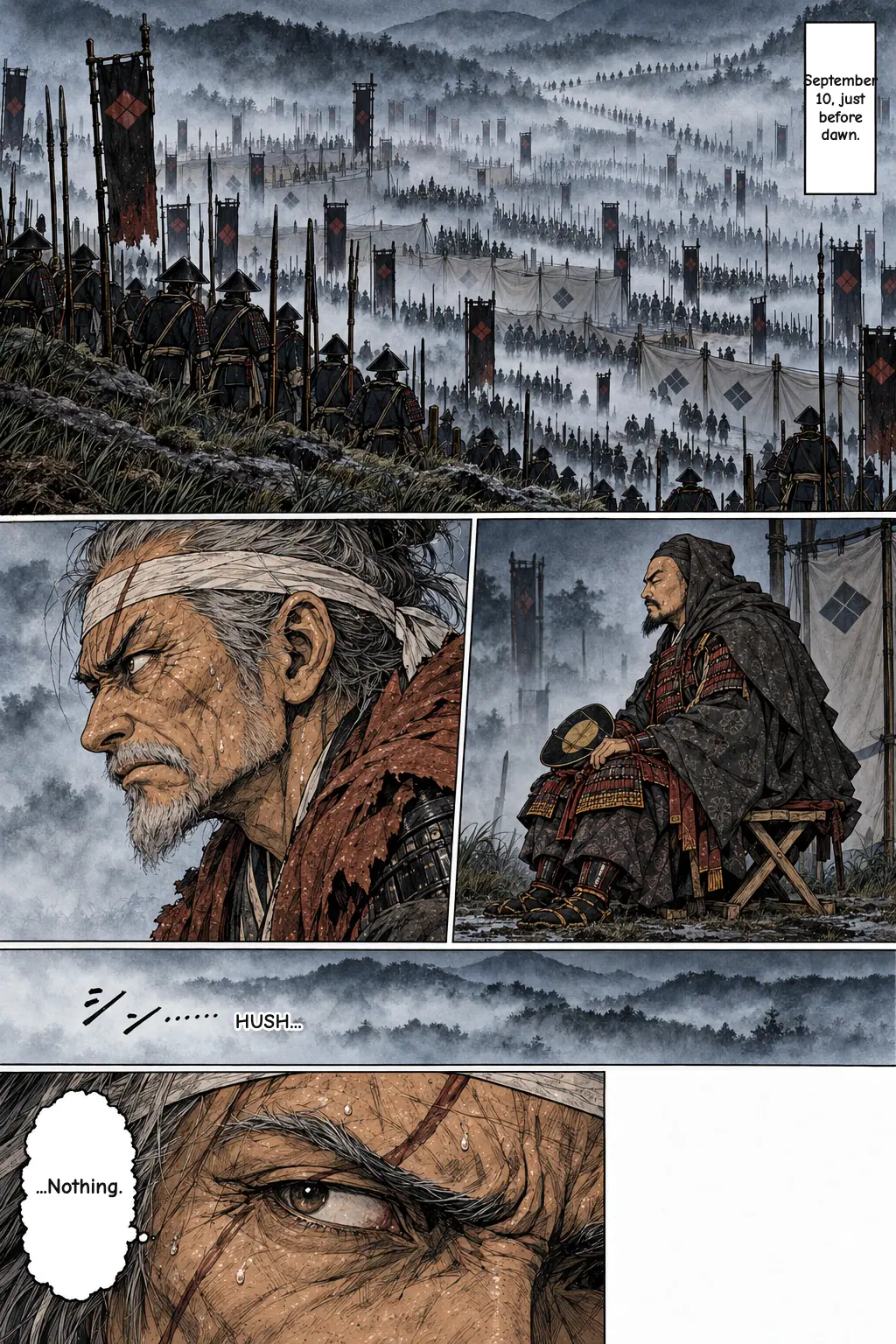
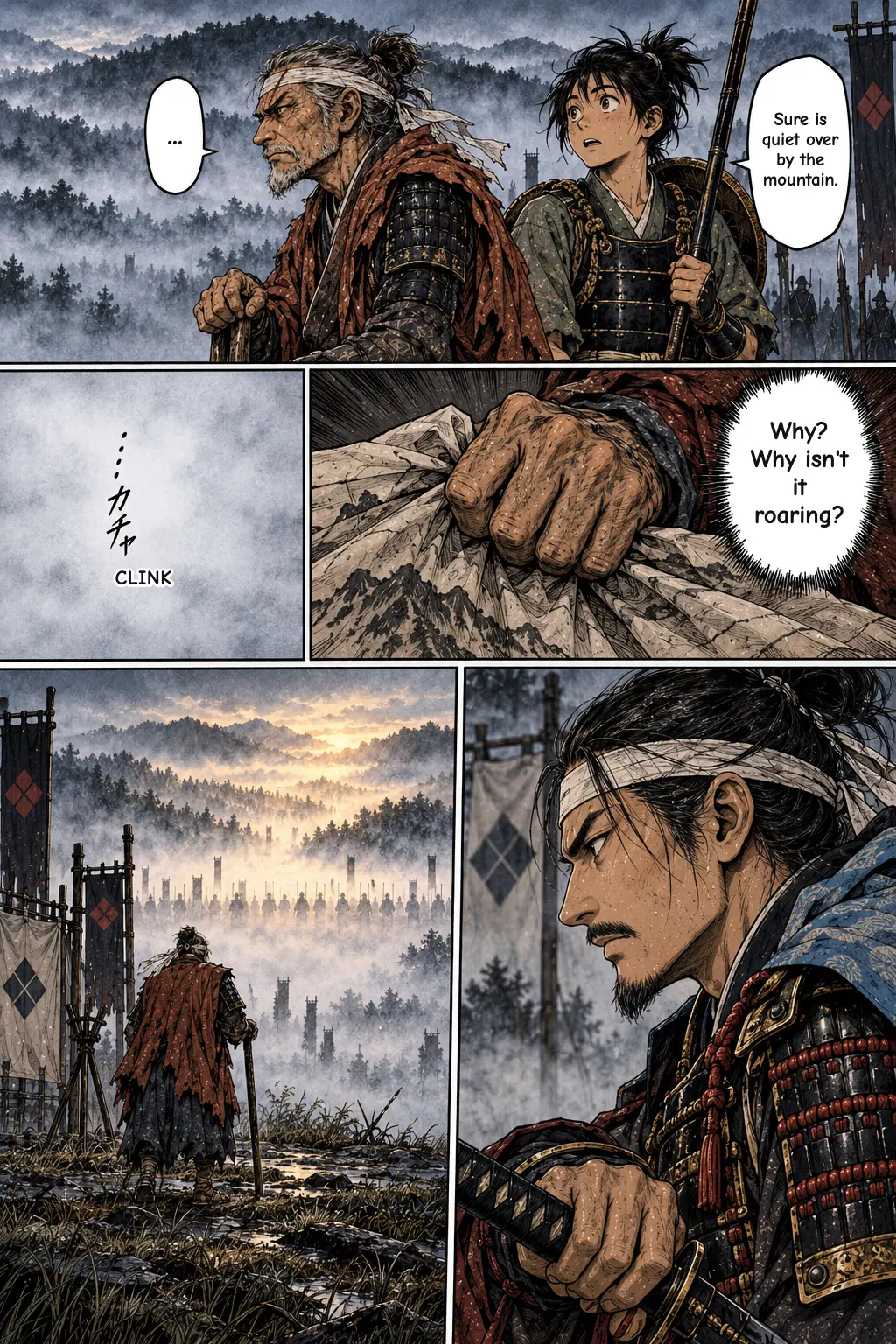
The enemy won't come down from the mountain, so the strategist Kansuke plans to drive them out with a "woodpecker" trick. But the enemy commander saw through it from one thing: the cooking smoke rising from the castle at suppertime. When the fog lifts, the whole enemy army is standing right in front of him.
Bookmark the series page so you can jump back in when the next episode is out: SAMURAIRSS for this series
Get new episodes in your feed. Follow us on:ThreadsBluesky
Story summary
The main source for this episode is the Kōyō Gunkan, a long chronicle of the Takeda clan. It is said to come from the spoken memories of Kōsaka Danjō Masanobu, one of Takeda Shingen's generals, and to have been edited into its final form by the military scholar Obata Kagenori in the early 1600s. Historians argue about how reliable it is, but it shaped how Japan remembers this battle. The chronicle first tells how Yamamoto Kansuke joined the Takeda. Kansuke was born in Ushikubo in Mikawa province. He traveled from province to province learning strategy and castle design.
Battle of Kawanakajima 1561: The Woodpecker Gambit and Kansuke Explained
In short: The fourth Battle of Kawanakajima (1561) is a famous samurai battle. Takeda Shingen's strategist Yamamoto Kansuke split the Takeda army to flush Uesugi Kenshin off his mountain, the "woodpecker" plan. Kenshin guessed the plan, came down in the night, and struck Shingen's weakened main army at dawn, killing Kansuke and Shingen's brother Nobushige. The best-known account is the Kōyō Gunkan, a Takeda military chronicle from the early 1600s.
The Story in the Original Chronicle
The main source for this episode is the Kōyō Gunkan, a long chronicle of the Takeda clan. It is said to come from the spoken memories of Kōsaka Danjō Masanobu, one of Takeda Shingen's generals, and to have been edited into its final form by the military scholar Obata Kagenori in the early 1600s. Historians argue about how reliable it is, but it shaped how Japan remembers this battle.
The chronicle first tells how Yamamoto Kansuke joined the Takeda. Kansuke was born in Ushikubo in Mikawa province. He traveled from province to province learning strategy and castle design. He spent years with the Imagawa clan in Suruga, but they never hired him, and the chronicle says this was because of his looks: dark skin, one blind eye, and a lame leg. Shingen's senior retainer Itagaki Nobukata spotted his talent and recommended him. Shingen hired him and paid him double the promised stipend, 200 kan instead of 100.
In the eighth month of 1561 (Eiroku 4), Uesugi Kenshin, lord of Echigo, marched deep into Shinano province with a large army and camped on a mountain the chronicle calls Saijōsan (often written Mount Saijo). Shingen came up from Kai and moved into nearby Kaizu Castle. The two armies watched each other, and neither would move first.
Kansuke and the general Baba Minbu proposed a plan. A strike force would climb Saijōsan at night and attack Kenshin's camp. When the Uesugi army came down the mountain, Shingen's main army would be waiting on the Hachimanbara plain to catch them from the other side. Shingen accepted the plan. On the night of the ninth day of the ninth month, the strike force set out, and Shingen crossed the Chikuma River to take up position at Hachimanbara.
How the Woodpecker Gambit Failed
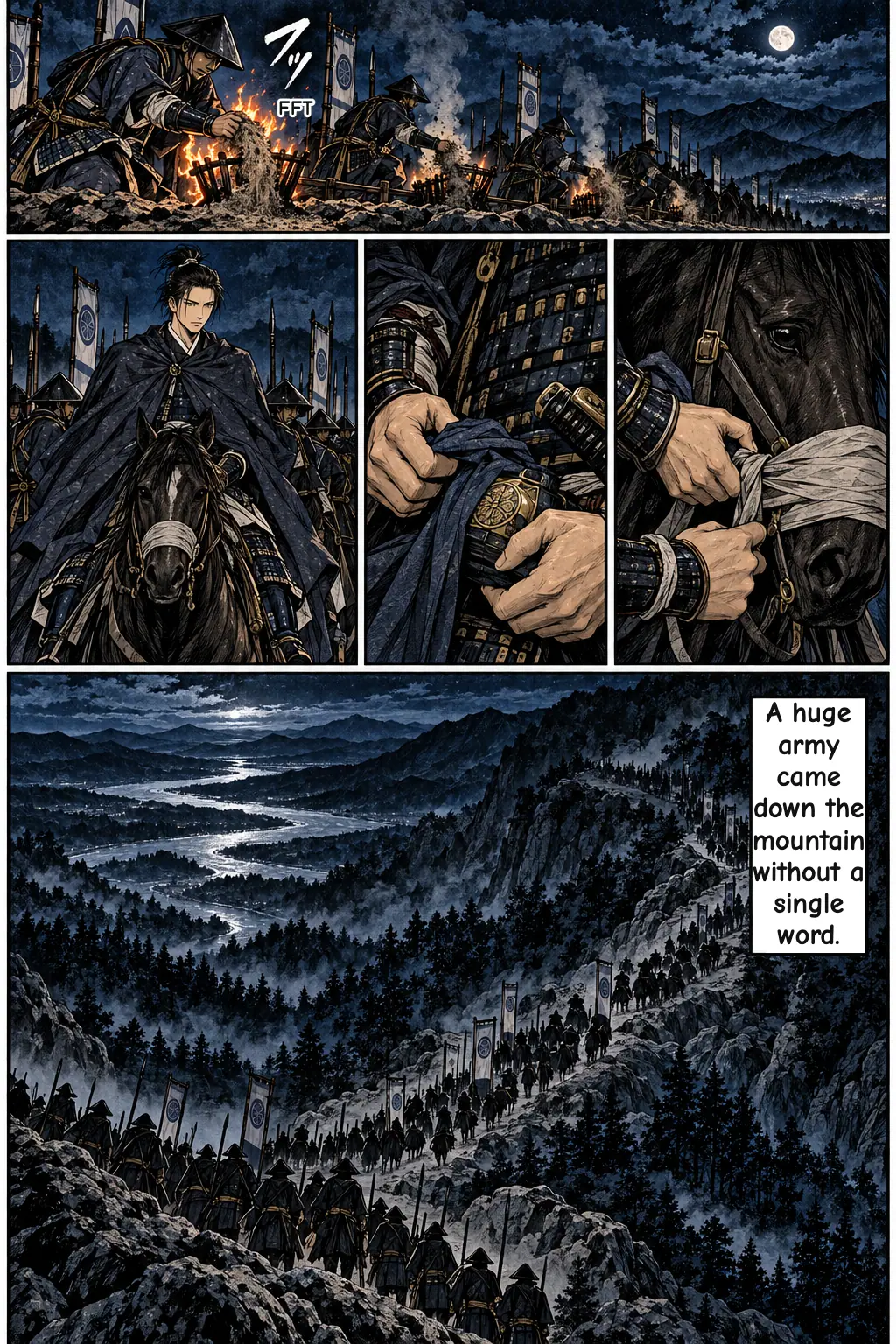
Kenshin read the Takeda movements. While the strike force was still climbing, he quietly led his army down the mountain, crossed the Chikuma at the Amenomiya ford, and at dawn on the tenth day attacked Shingen's main army, which was now much smaller than planned. The Gunkan says the Uesugi attacked in a kuruma-gakari, or "wheel" formation, where fresh units rotate to the front one after another.
The Takeda main army fought hard but suffered badly. Shingen's younger brother Takeda Nobushige, called Tenkyū, was killed. So were the old retainer Morozumi Bungo-no-kami and Yamamoto Kansuke himself. Later the strike force reached the plain and hit the Uesugi from behind, and Kenshin pulled back toward Zenkōji. The chronicle's own verdict is honest: the morning belonged to Uesugi, and the later fighting belonged to Takeda.
Several famous details are best treated as tradition. The name "woodpecker" (kitsutsuki) explains the plan with an image: a woodpecker taps a tree so the startled insects come out the other side. We have not yet confirmed whether the name is in the chronicle's main text or only in later editions and headings. The story that Kenshin saw through the plan because more cooking smoke than usual rose from Kaizu Castle, the thick morning fog that hid his army, and the exact troop numbers often quoted all come from later retellings and should not be treated as confirmed parts of the source. The same goes for the legend of a horseman in a white head cloth, later said to be Kenshin, who rode into Shingen's camp and struck at him while Shingen blocked with his war fan.
What the Battle Means: Background and Culture
Takeda and Uesugi fought at Kawanakajima, the land where the Sai and Chikuma rivers meet in today's Nagano Prefecture, about five times between the 1550s and 1564. The 1561 battle was the largest and bloodiest. It took place in the Sengoku, or "Warring States," period, when local lords fought for land with no strong central government.
The story lasted because it is about more than winning. It shows two great commanders who could read each other's minds, a plan that looked perfect on paper, and the cost of a single misjudgment. The Gunkan is written from the Takeda side, but it treats Kenshin as an outstanding general, and it grieves openly for Nobushige. Kansuke himself became a symbol of a man judged by his looks who proved his worth through skill. Historians once even doubted he existed, though later documents naming a man called Kansuke have weakened that doubt.
What the Manga Changes
The manga follows the chronicle's main events: Kansuke being hired, the standoff, the divided army, Kenshin's night crossing, the dawn attack, and the deaths of Nobushige and Kansuke. The rest is dramatized. Kansuke's inner voice, including his doubts before proposing the plan, his shock when it fails, and his final resolve, is invented for the story.
The cooking-smoke clue, the silent night march, the fog lifting to reveal the Uesugi banners, and the woodpecker image are shown as legend and storytelling, not as facts from the source. Kansuke's death and Nobushige's are suggested through distance, fog, and falling banners rather than graphic combat. Faces, armor, and banners are original designs, though the real Takeda and Uesugi family crests are used.
Where to Read It
If you want to see the plan fall apart panel by panel, read Episode 3 of SAMURAI: Legends of the Warring States here on Manga Portal. Every episode is free, and you don't need to sign up. Start from Episode 1 to follow the series, or read this episode first and then go back to see how Kansuke came to serve Shingen.
Characters in this episode
Yamamoto Kansuke
Takeda Shingen's strategist and castle expert, rejected elsewhere for his looks, who proposed the woodpecker plan and died at Kawanakajima.
Takeda Shingen
Lord of Kai province and the hero of the Kōyō Gunkan, who hired Kansuke and led the main army at Hachimanbara.
Uesugi Kenshin
The lord of Echigo, who camped on Saijōsan, saw through the Takeda plan, and attacked at dawn (in 1561 he was still called Masatora).
Takeda Nobushige (Tenkyū)
Shingen's younger brother, killed defending the main army, whose death the chronicle deeply mourns.
Baba Minbu (Baba Nobuharu)
A leading Takeda general who proposed the split-army plan with Kansuke and joined the strike force.
Kōsaka Danjō Masanobu
Keeper of Kaizu Castle and member of the strike force, traditionally named as the voice behind the Kōyō Gunkan.
FAQ
What was the woodpecker strategy at Kawanakajima?
It was a plan to split the Takeda army. One force would attack Uesugi Kenshin's mountain camp at night and drive him down onto the plain, where Shingen's main army would trap him. The name compares it to a woodpecker tapping a tree to drive insects out, though whether the name appears in the original chronicle is uncertain.
Who won the Battle of Kawanakajima in 1561?
Neither side won outright. The Kōyō Gunkan itself says the Uesugi won the morning and the Takeda won the later fighting, after the Takeda strike force arrived. Both sides suffered heavy losses.
How did Uesugi Kenshin see through the plan?
The chronicle says Kenshin read the Takeda movements and came down the mountain at night. A famous tradition says he noticed unusually heavy cooking smoke rising from Kaizu Castle, a sign the Takeda were preparing food for a night march, but this detail should be treated as legend.
How did Yamamoto Kansuke die?
Kansuke was killed in the dawn fighting on the Hachimanbara plain when the Uesugi army struck the Takeda main force. Later stories say he charged into the enemy to take responsibility for his failed plan, but that is tradition, not a confirmed detail of the source.
Did Kenshin and Shingen really fight one-on-one?
It is a legend. Stories tell of a horseman in a white head cloth, later said to be Kenshin, who rode into Shingen's camp and struck at him while Shingen blocked with his war fan. Historians do not treat it as an established fact.