Episode 245,000 Were Coming. Nobunaga Went to Sleep.Battle of Okehazama
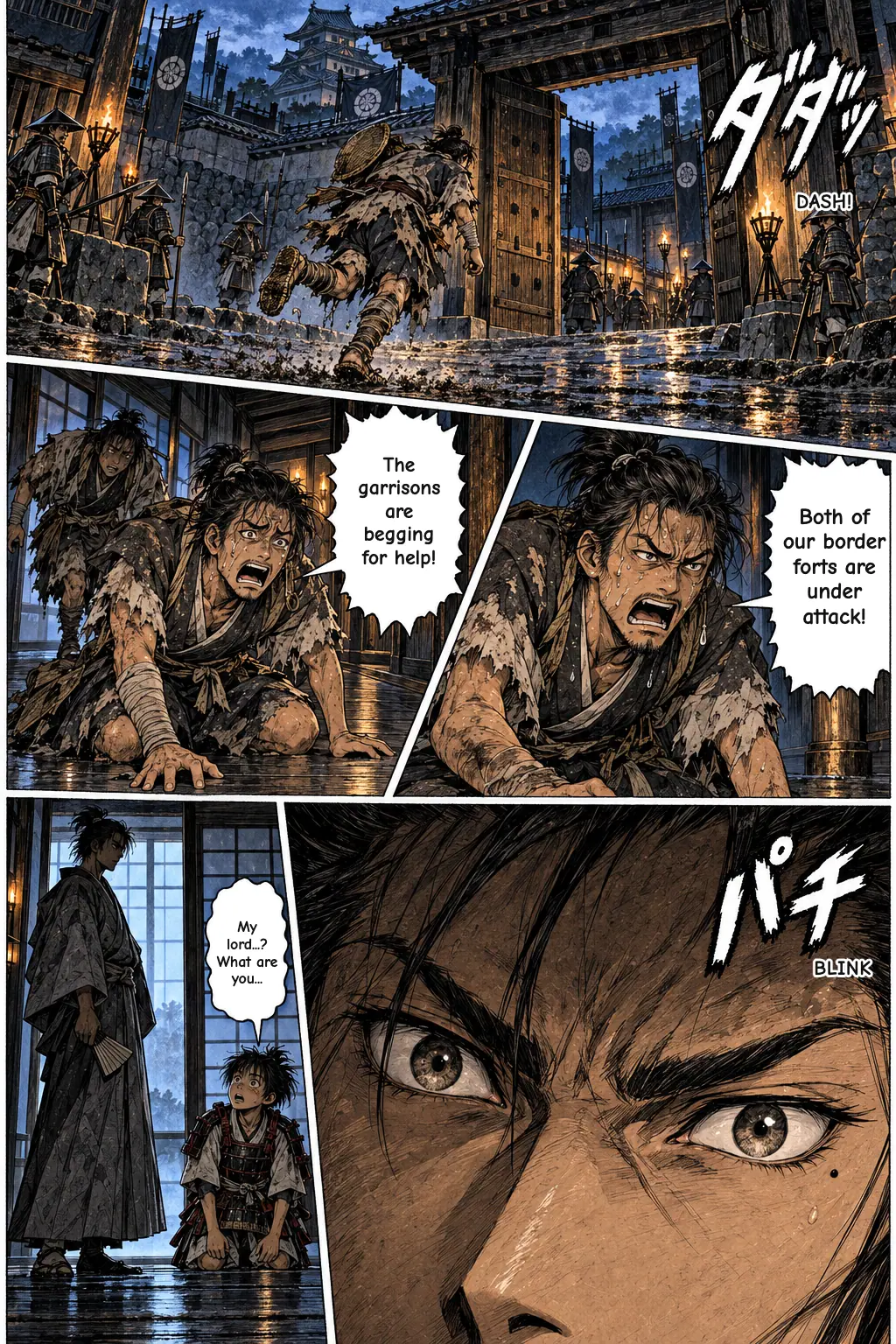
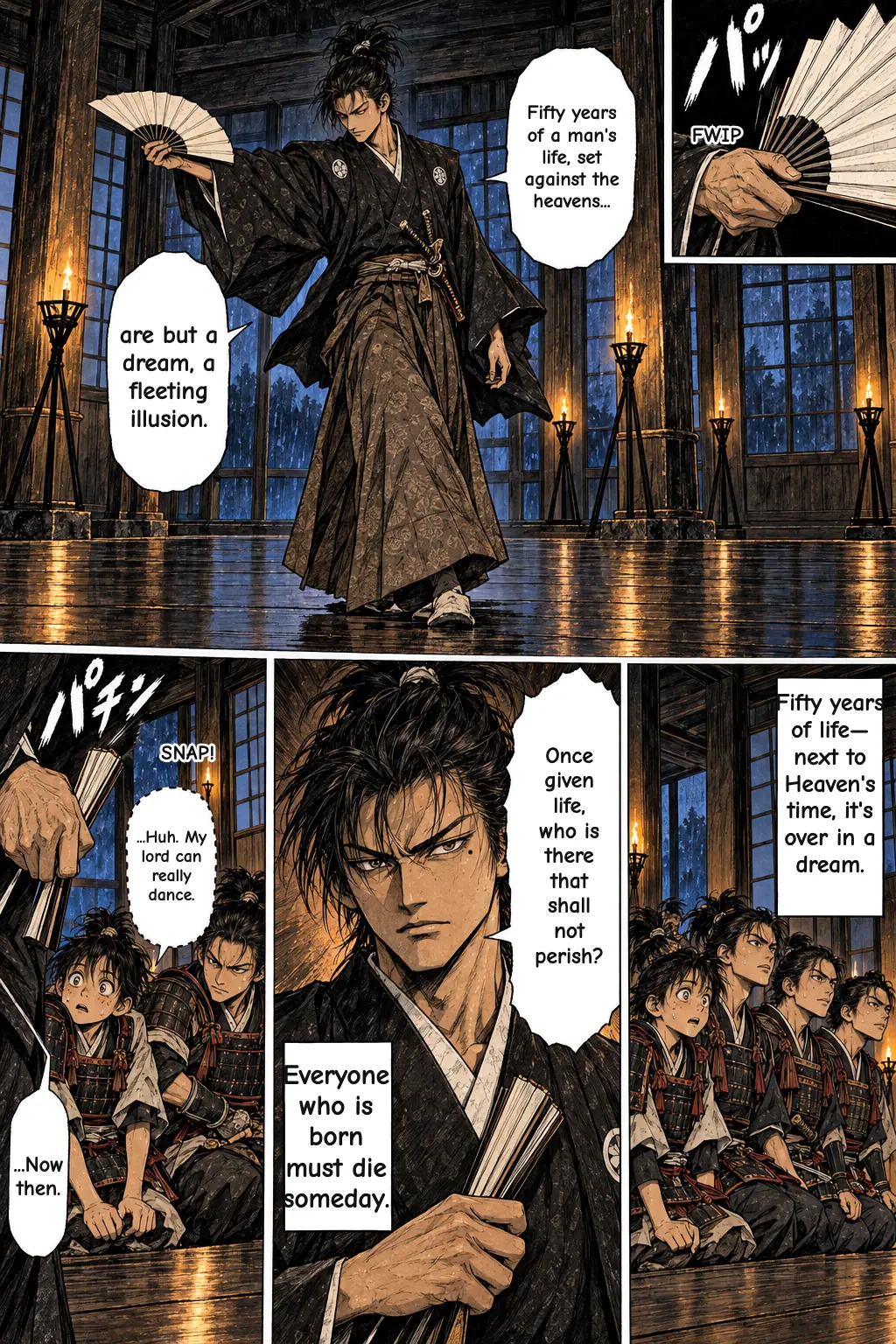
On the night an army of 45,000 closes in, 27-year-old Oda Nobunaga ignores his retainers' pleas to hold the castle, makes small talk about swallows, and goes to bed. At dawn he dances "Fifty years of a man's life" and bolts from the castle. Past retainers trying to stop him and allies falling in battle, he pushes forward—and in the instant the storm breaks, he shouts: "Charge!"
Bookmark the series page so you can jump back in when the next episode is out: SAMURAIRSS for this series
Get new episodes in your feed. Follow us on:ThreadsBluesky
Story summary
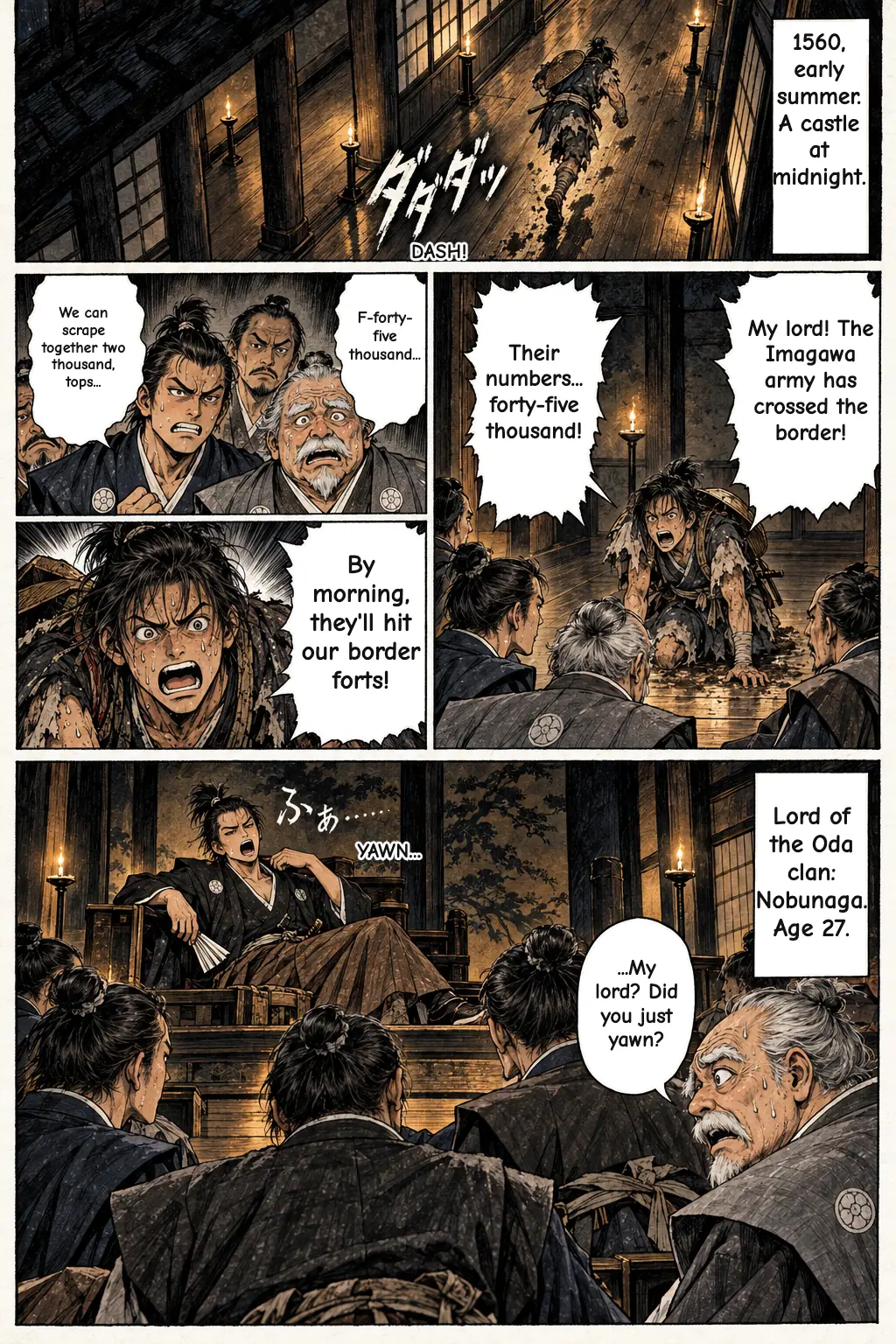
Our main source is the Shinchō Kōki ("The Chronicle of Lord Nobunaga"), written by Ōta Gyūichi, a samurai who served Nobunaga. It tells the story in one chapter of its first volume. Imagawa Yoshimoto, a powerful lord in the east, marches into Owari province. The chronicle says he had 45,000 men. He camps at Kutsukake. Messages reach Nobunaga at Kiyosu Castle: the enemy plans to bring supplies into Ōdaka Castle and attack Nobunaga's border forts the next morning, once the tide is right. That night Nobunaga talks about nothing important.
Battle of Okehazama Explained: How Oda Nobunaga Beat 45,000 — SAMURAI Ep. 2
In short: The Battle of Okehazama (1560) is the story of 27-year-old Oda Nobunaga, a minor warlord who rode out with a few thousand men against Imagawa Yoshimoto's invading army. A sudden storm hit, Nobunaga charged as soon as it cleared, and Yoshimoto was killed in the fighting. The best-known early account is the Shinchō Kōki, a chronicle by Nobunaga's retainer Ōta Gyūichi.
The Story in the Original Chronicle
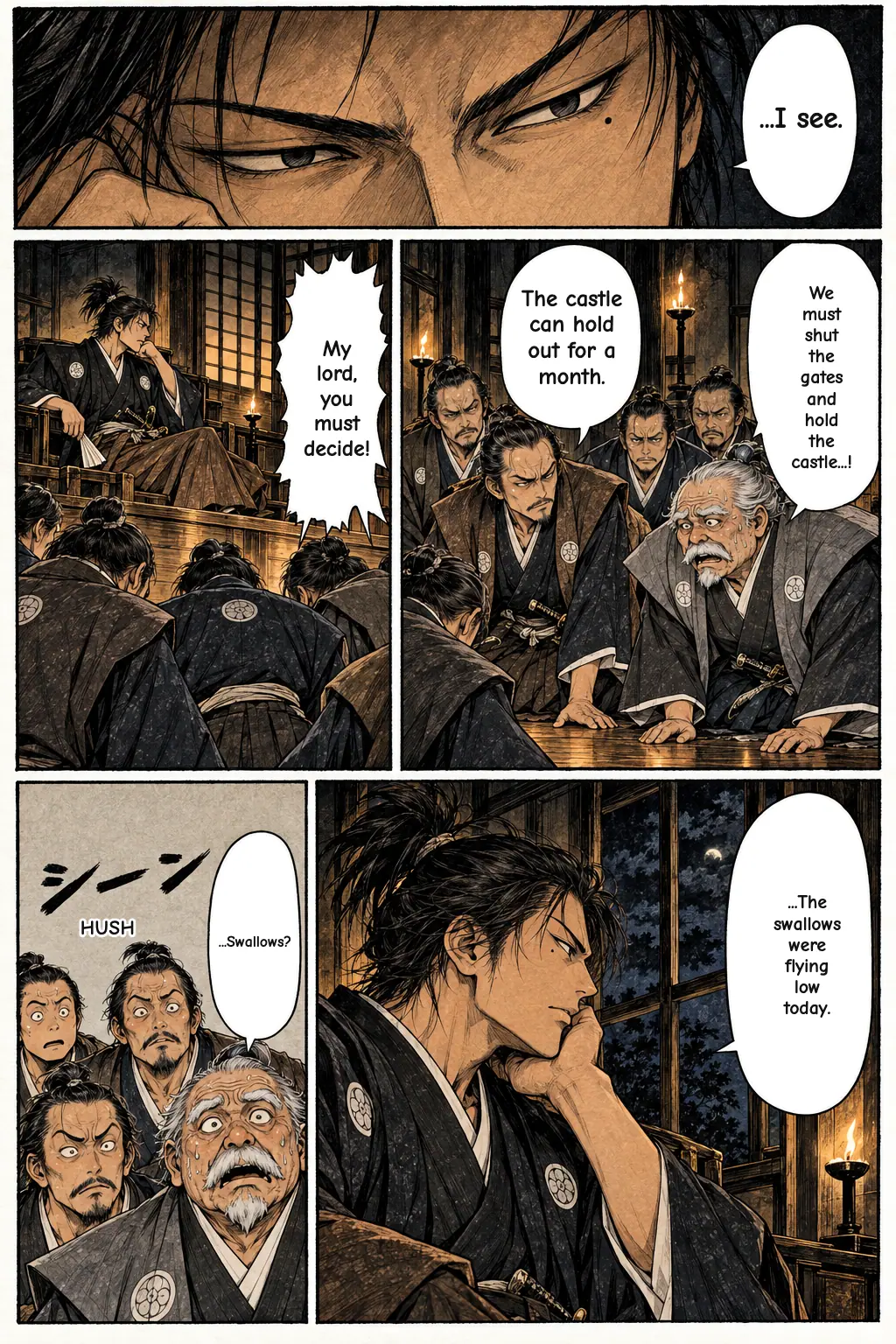
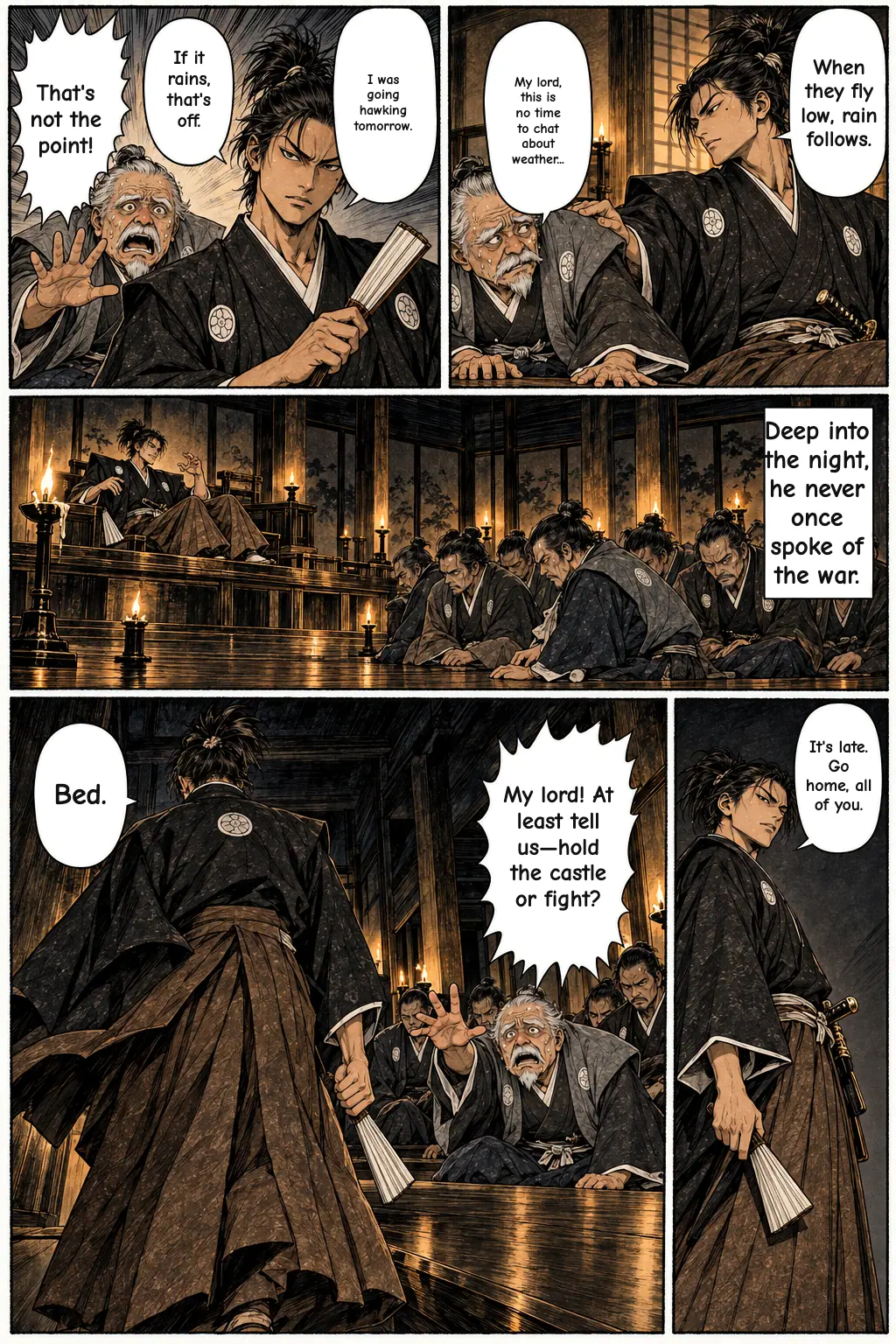
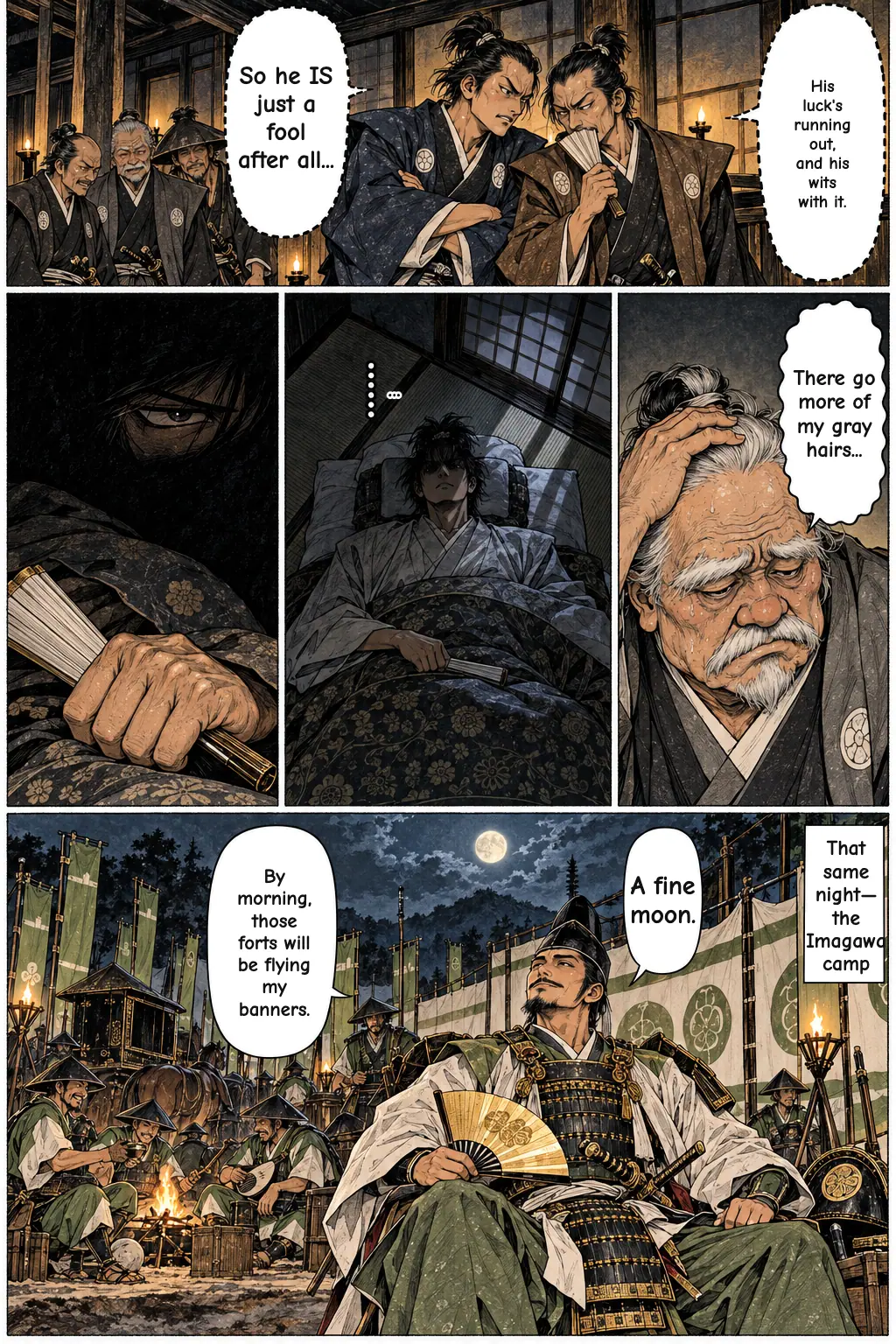
Our main source is the Shinchō Kōki ("The Chronicle of Lord Nobunaga"), written by Ōta Gyūichi, a samurai who served Nobunaga. It tells the story in one chapter of its first volume. Imagawa Yoshimoto, a powerful lord in the east, marches into Owari province. The chronicle says he had 45,000 men. He camps at Kutsukake. Messages reach Nobunaga at Kiyosu Castle: the enemy plans to bring supplies into Ōdaka Castle and attack Nobunaga's border forts the next morning, once the tide is right. That night Nobunaga talks about nothing important. He never mentions the war, and late at night he sends his men home. His senior retainers mock him behind his back. When a man's luck runs out, they say, even his good sense goes dim.
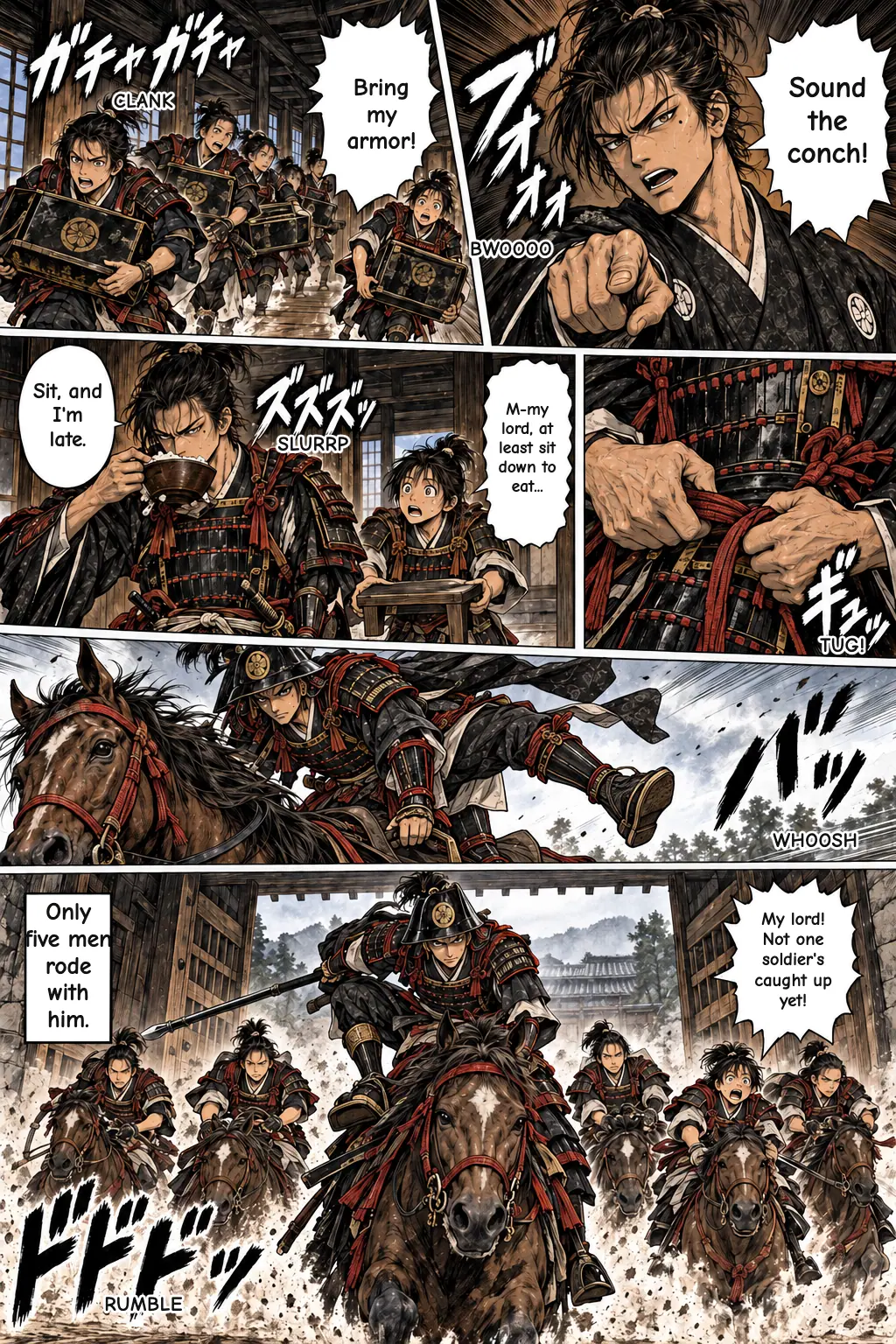
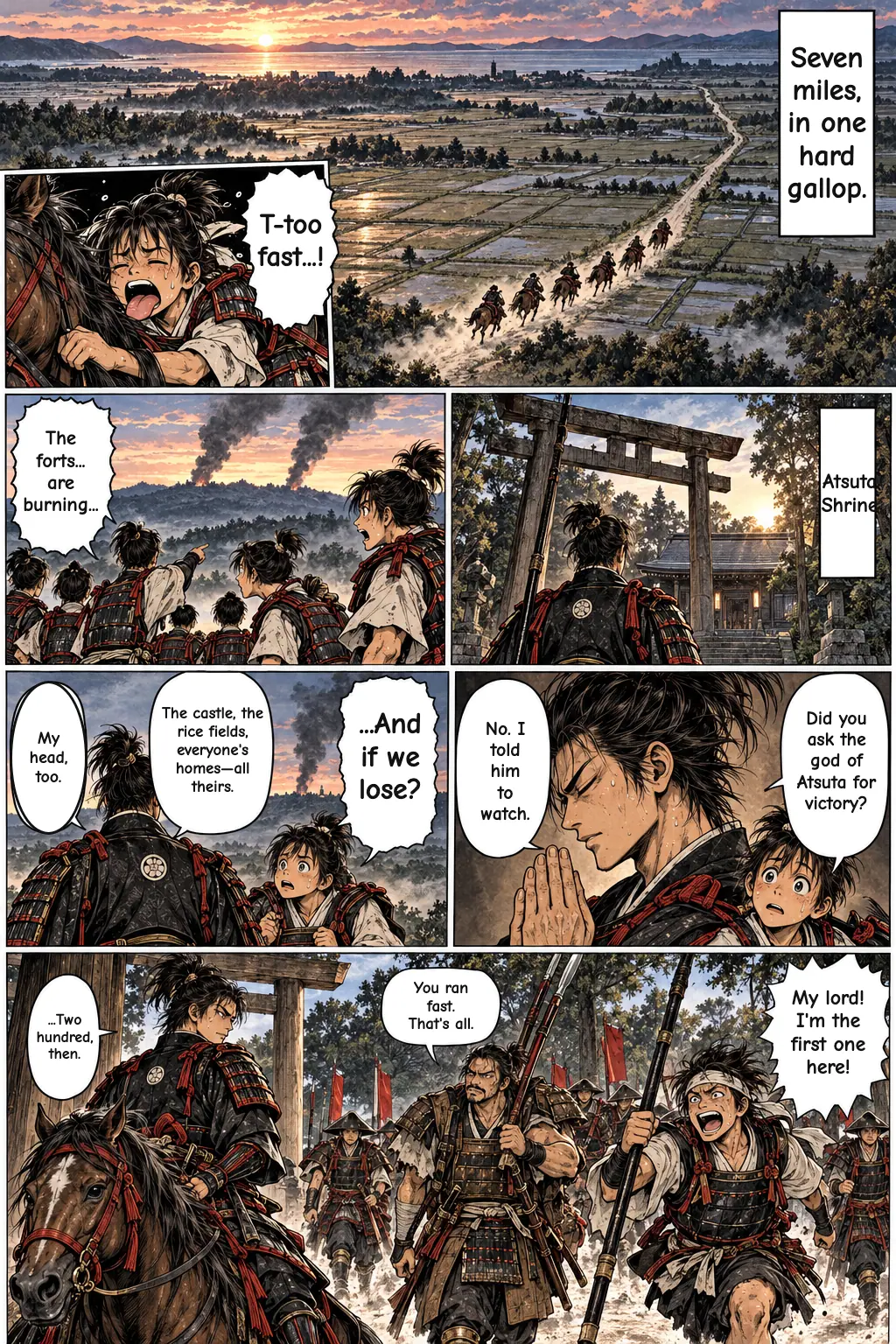
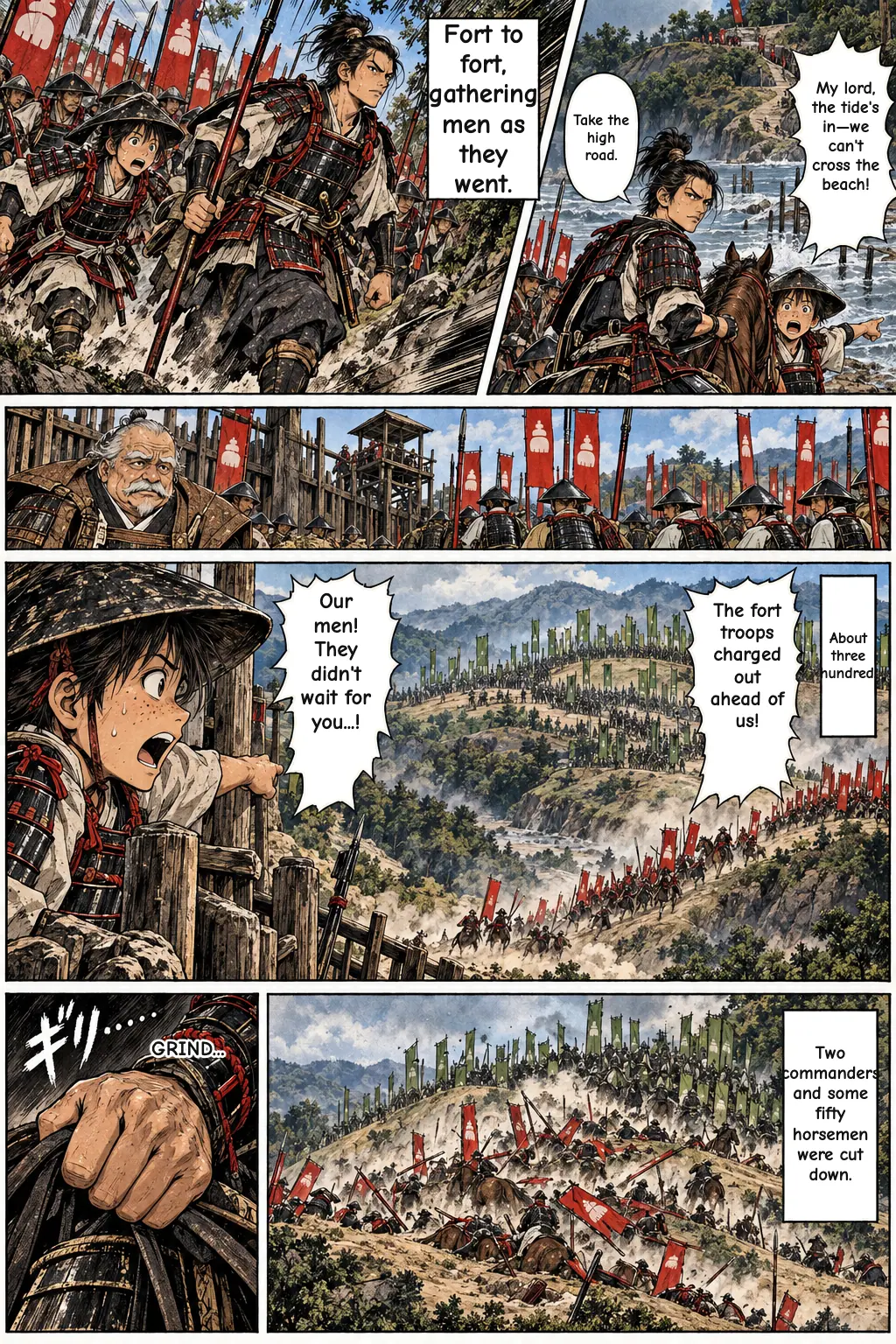
Before dawn, reports arrive that the forts at Washizu and Marune are under attack. Nobunaga dances a few lines from the old piece Atsumori, about how short a human life is next to the endless span of the heavens. Then he calls for his conch horn and armor, eats a meal standing up, and rides out with only five pages. At Atsuta he sees smoke rising from the forts. They have fallen.
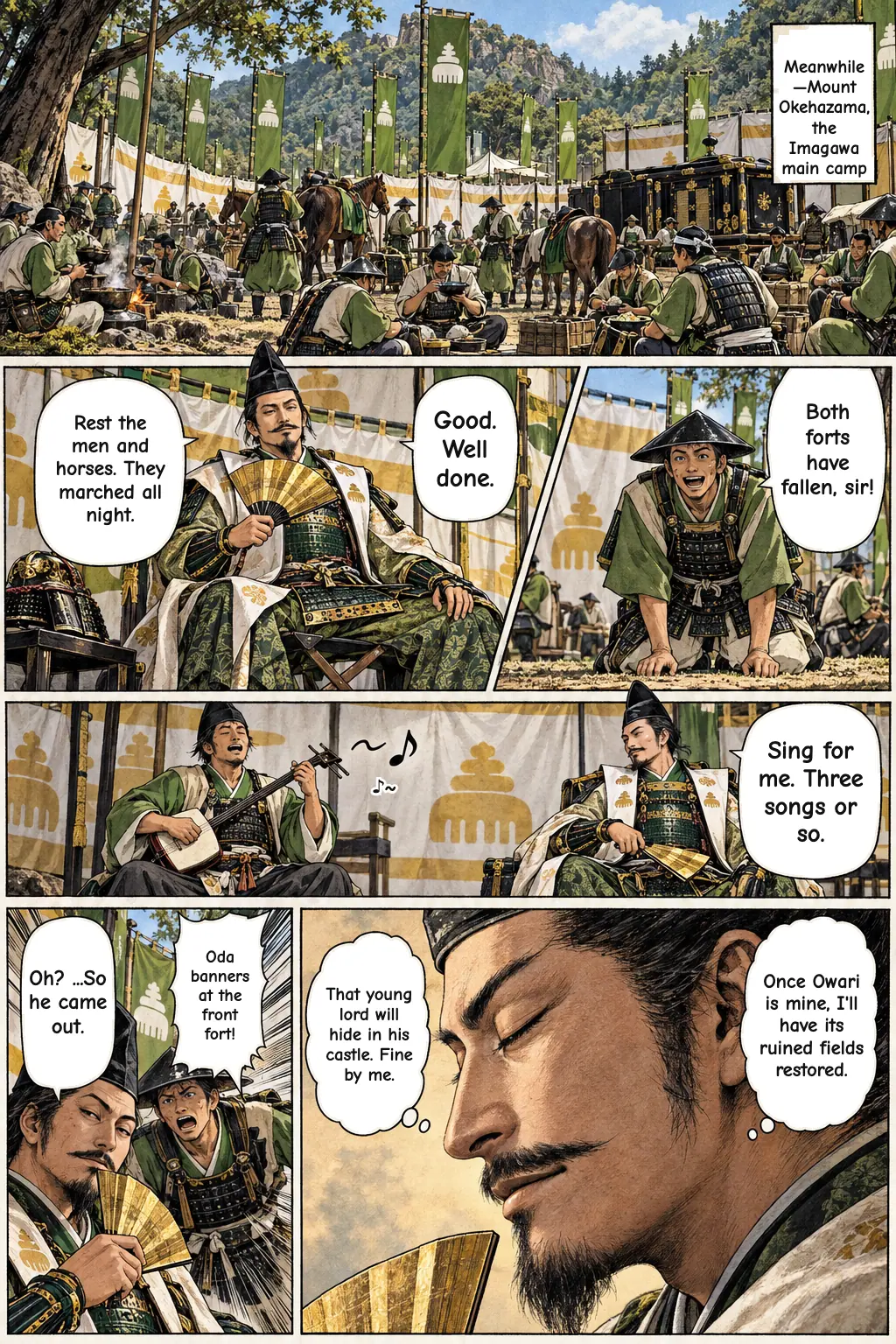
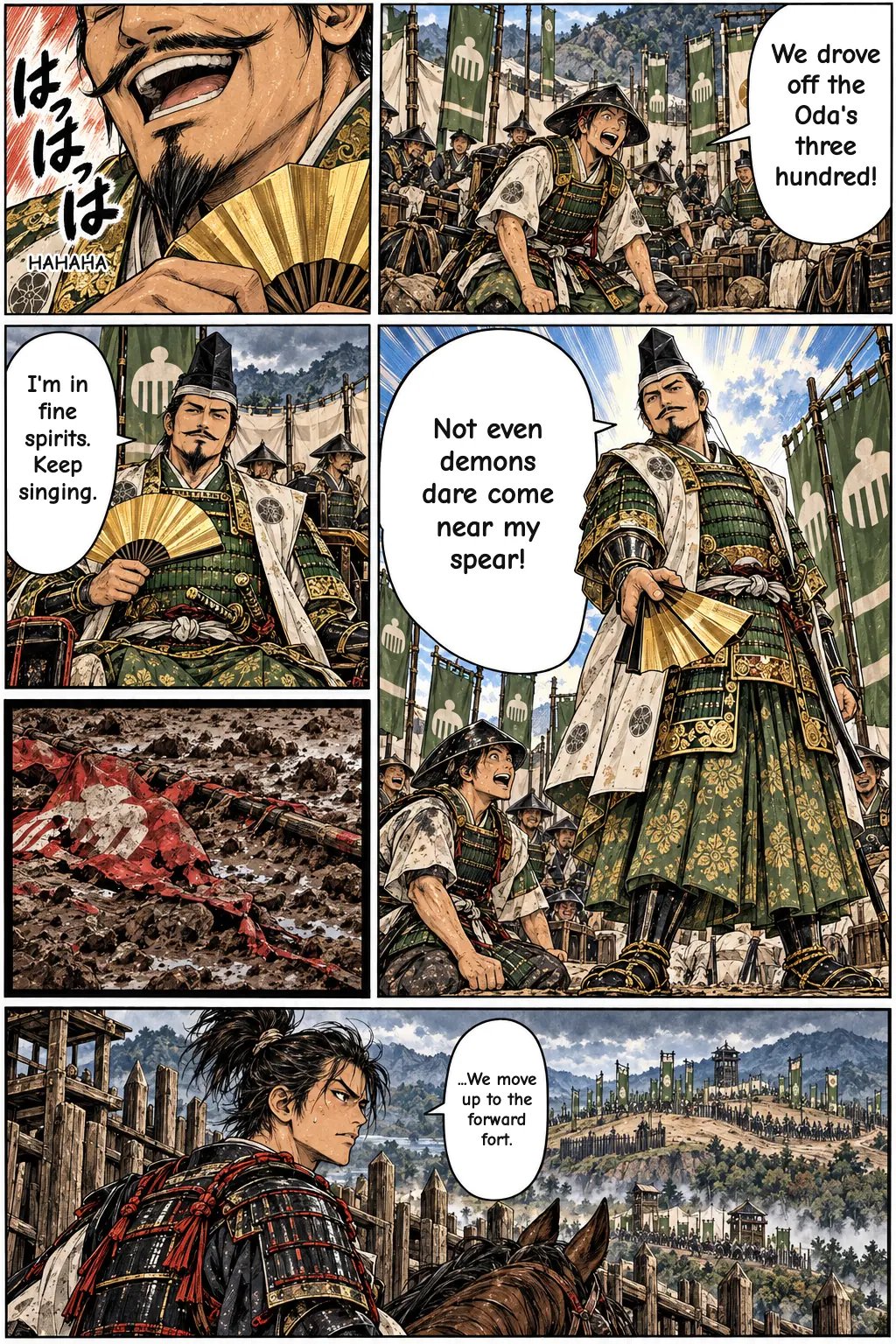
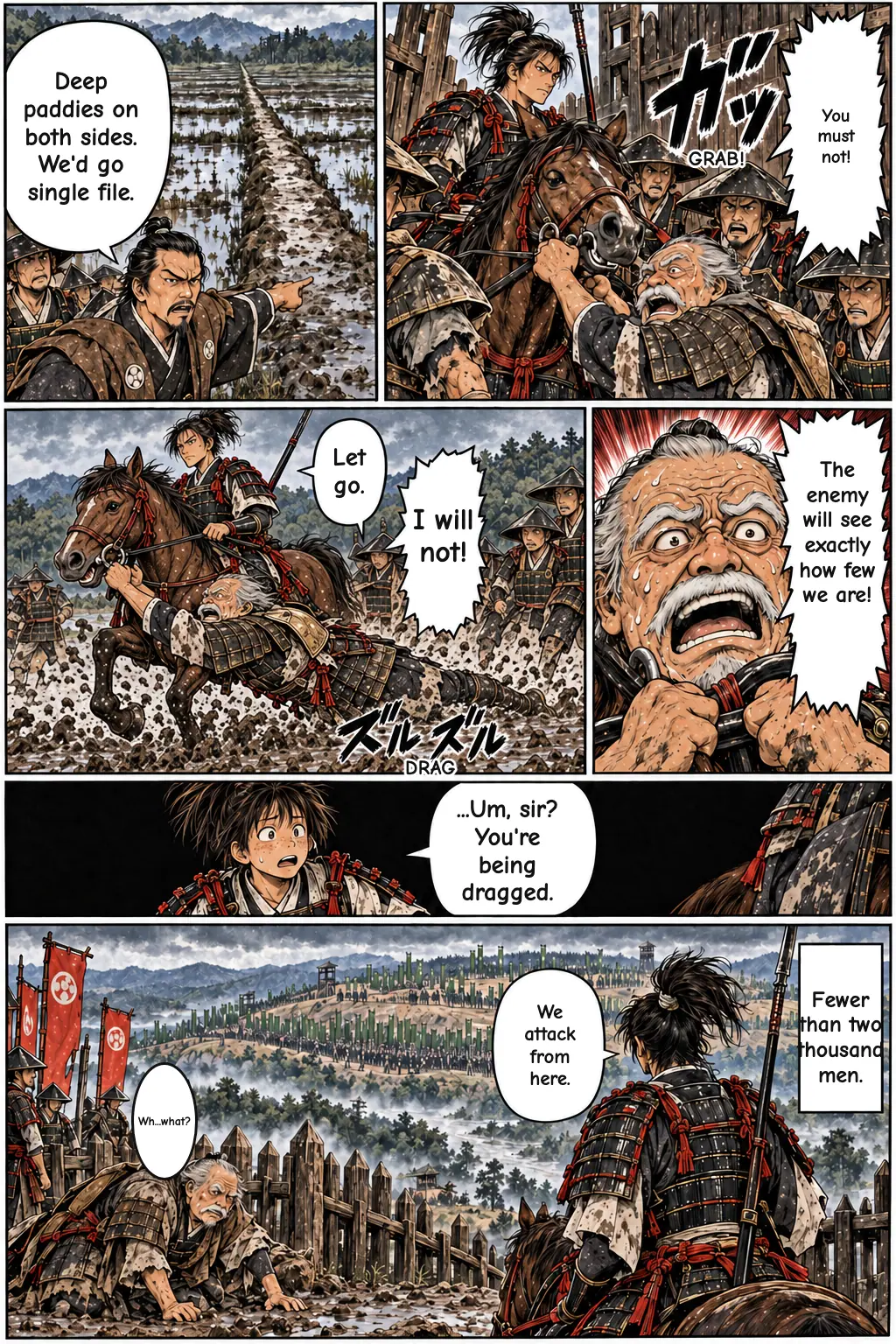
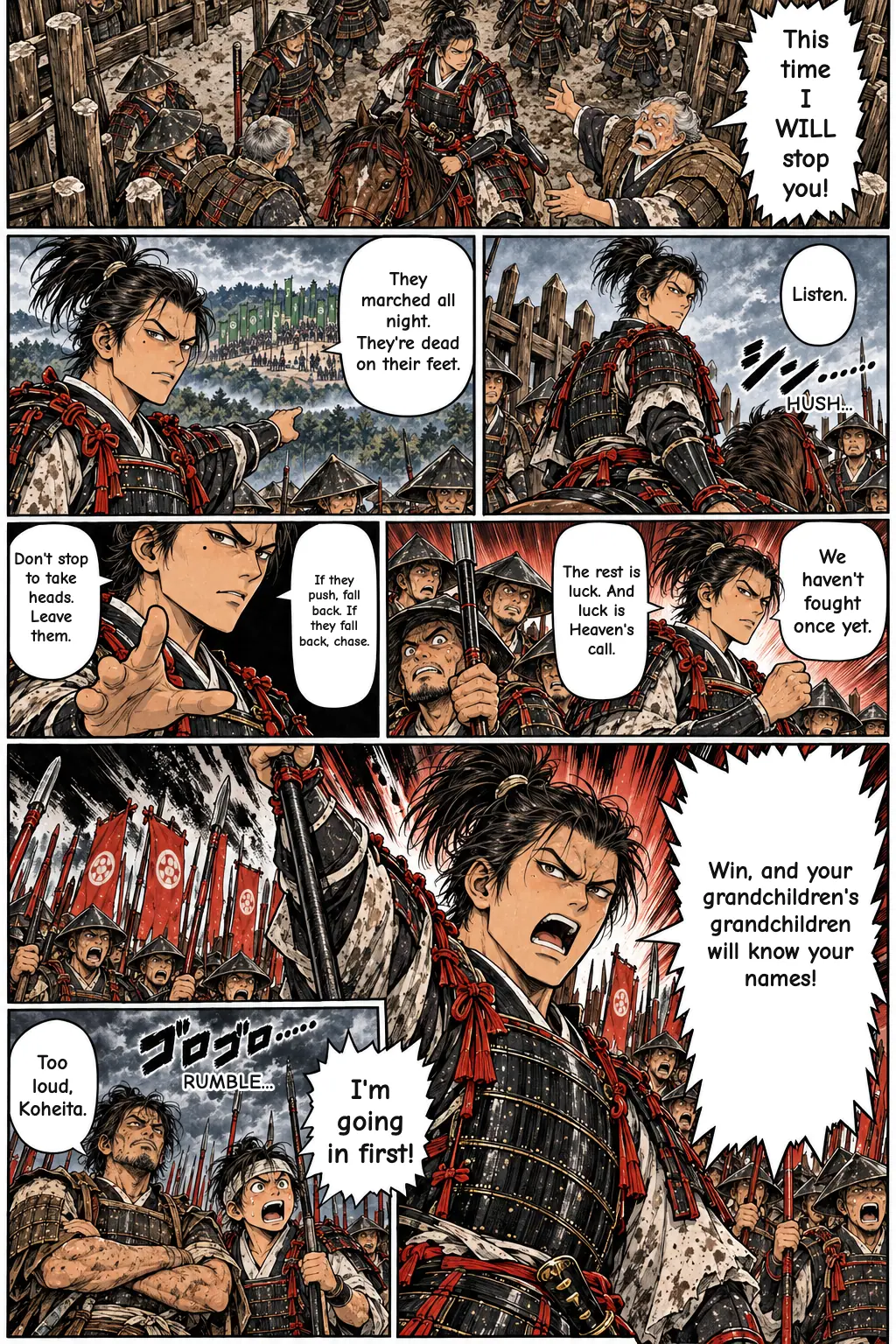
He gathers troops at the Tange and Zenshōji forts. Two of his commanders, Sassa and Senshū, attack too early with about 300 men and are killed. Yoshimoto, resting his army at Okehazama, is delighted and has songs chanted in his camp. Nobunaga pushes forward to the Nakajima fort, even though his elders grab his horse's bridle to stop him. He has fewer than 2,000 men. He tells them the enemy is worn out from marching all night and fighting, while they are fresh. Fate is in Heaven's hands. Don't stop to take heads, he says. Just win.
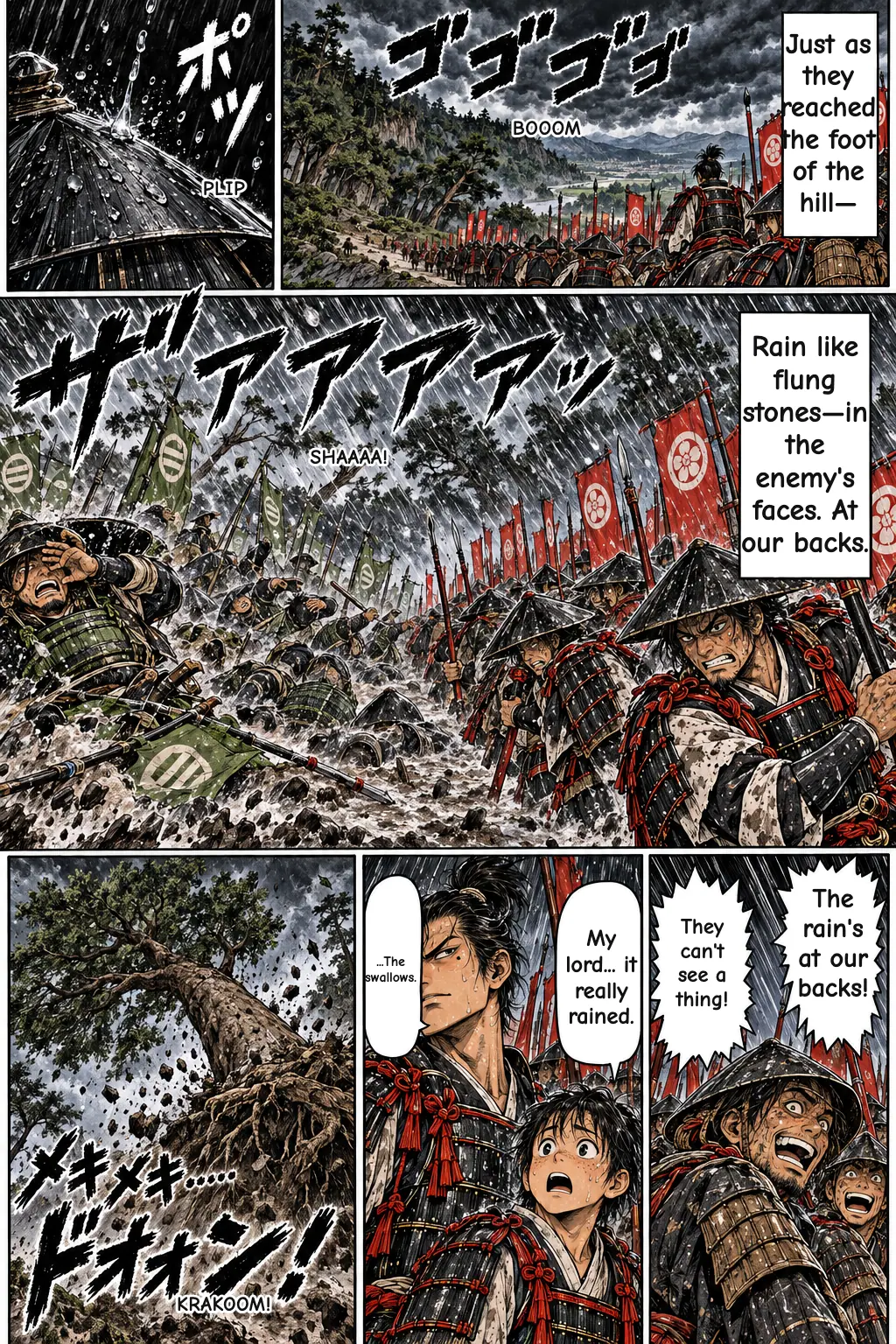
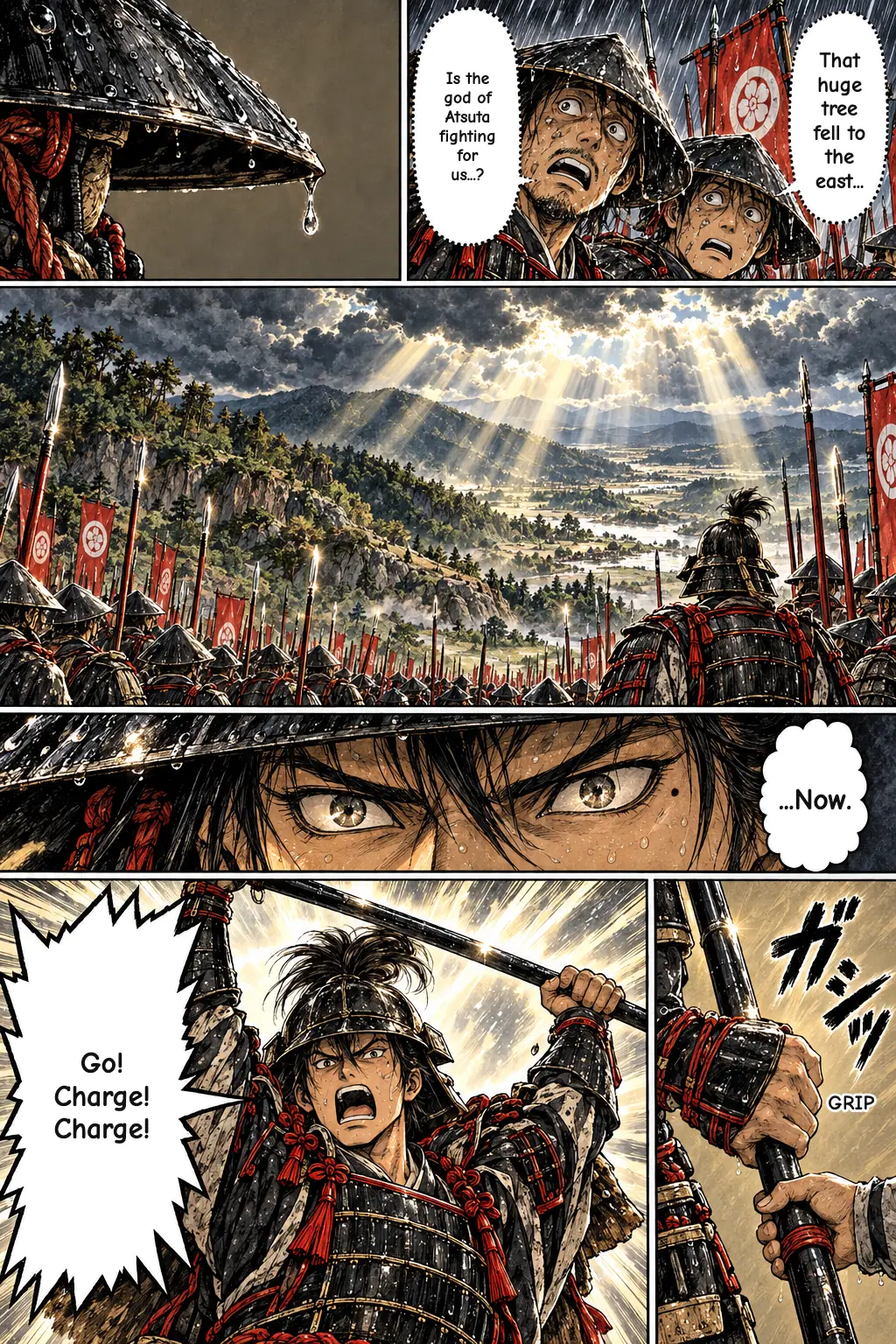
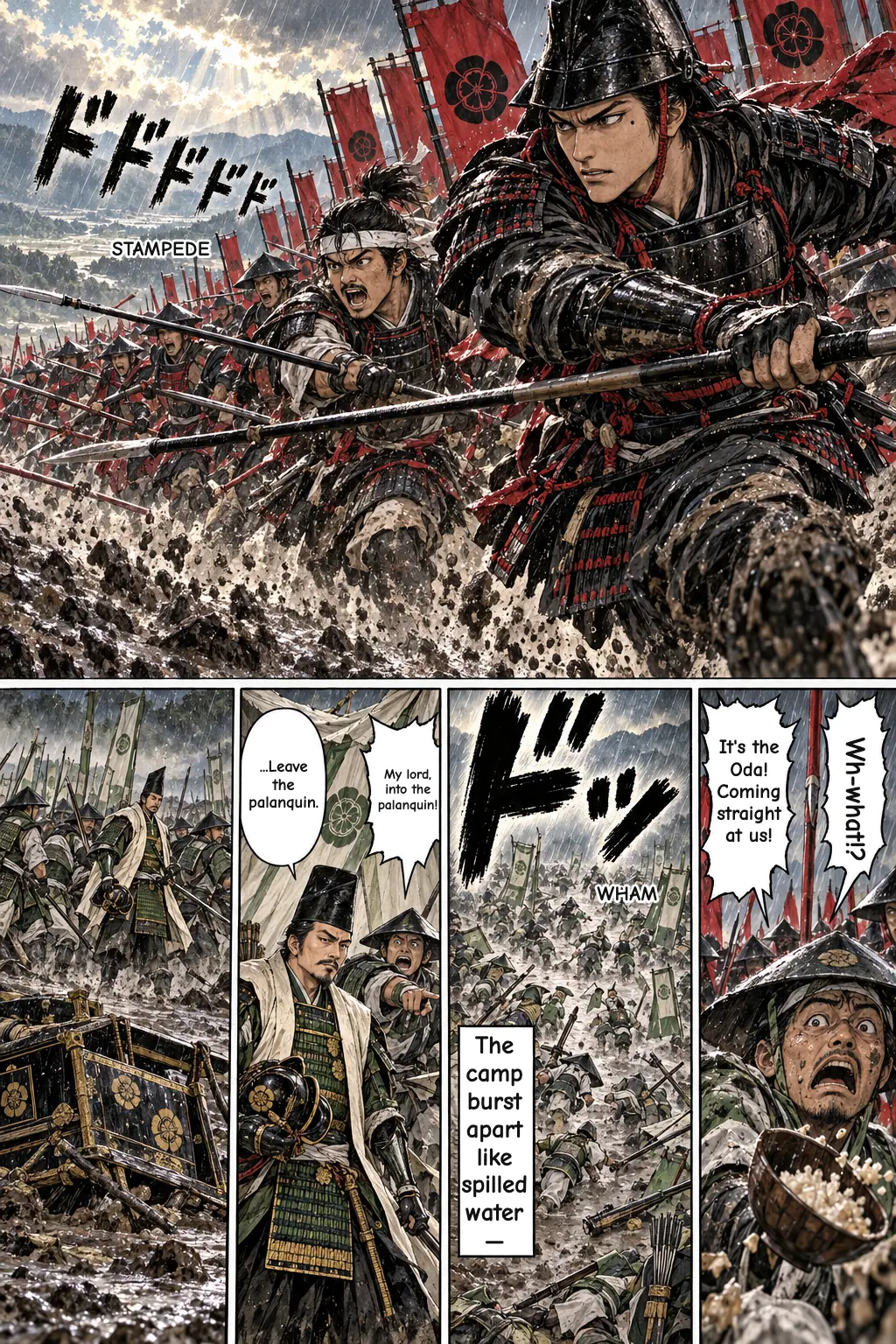
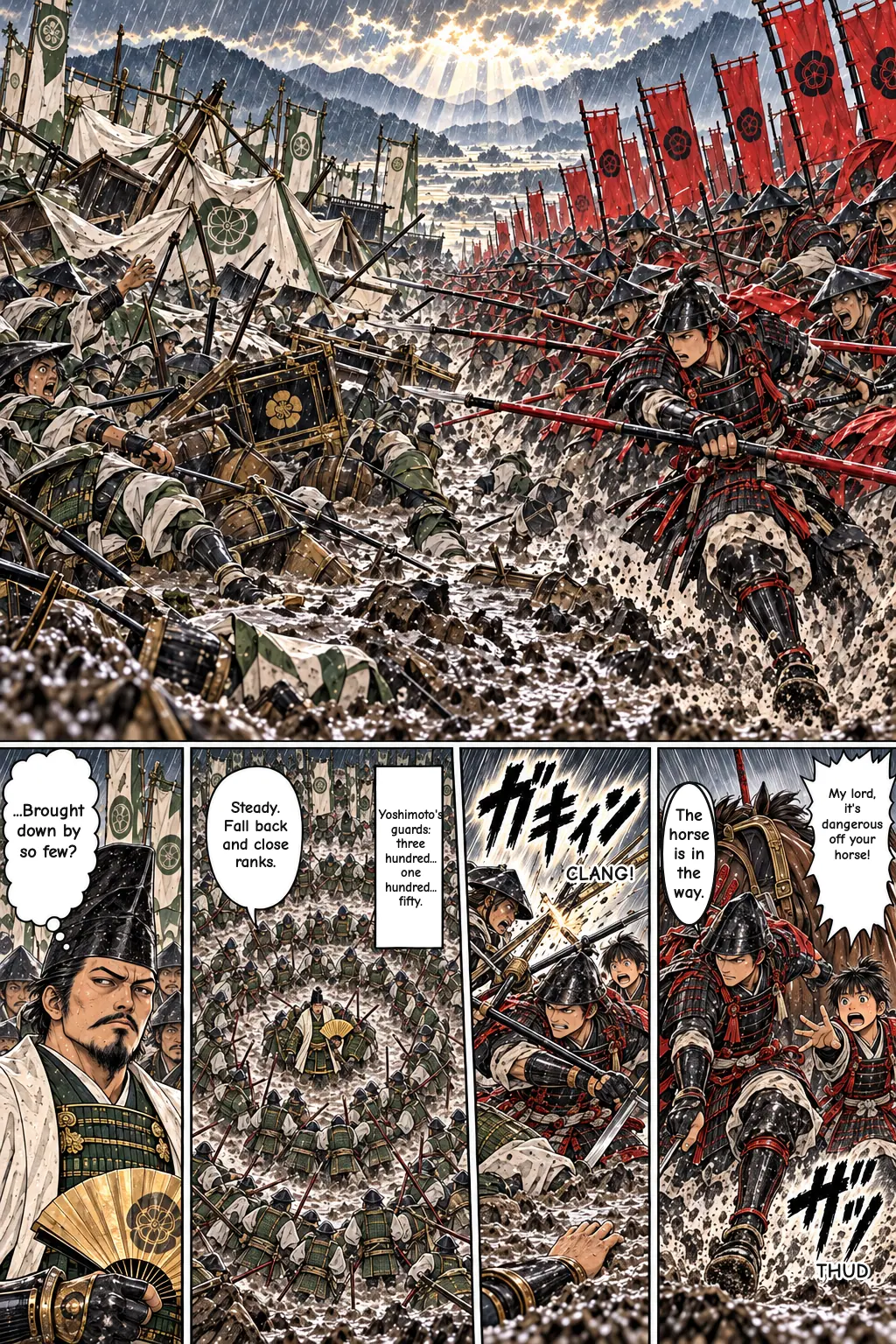
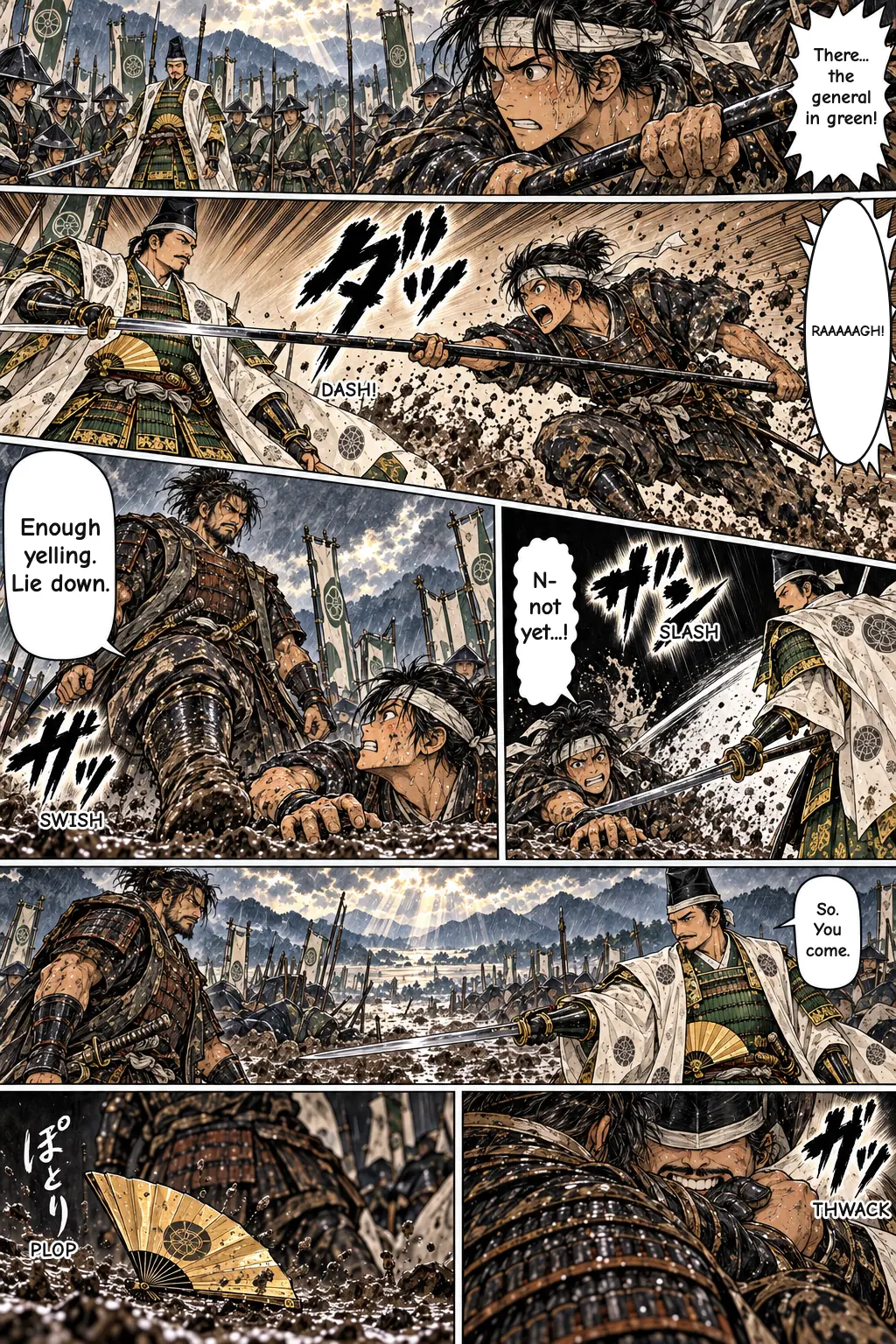
As they near the hills, a violent storm blows into the enemy's faces like flying stones and ice, and a huge camphor tree comes crashing down. When the sky clears, Nobunaga raises his spear and shouts the order to charge. The Imagawa army falls apart. Yoshimoto's lacquered palanquin is left behind, and his 300 guards shrink to about 50. Hattori Koheita attacks him first and is cut in the knee. Then Mōri Shinsuke strikes Yoshimoto down.
Main Characters
Oda Nobunaga is the young lord of Owari. He seems careless, but he moves fast once the moment comes. Imagawa Yoshimoto rules Suruga, Tōtōmi and Mikawa, and he is confident enough to celebrate in the middle of a campaign. A young Tokugawa Ieyasu, then called Matsudaira Motoyasu, also appears. He leads the Imagawa vanguard in red armor, takes supplies into Ōdaka, and is resting there during the main battle. Many years later he would unify Japan and found the Tokugawa shogunate.
What This Story Tells Us
Okehazama took place in the Sengoku, or "Warring States," period, when regional lords fought each other for land and survival. Japanese culture remembers it as the great upset that launched Nobunaga's rise. Within about two decades he controlled much of central Japan.
The chronicle also shows how people of the time understood such events. Yoshimoto's boasting reads as pride before a fall. The storm was so well timed that soldiers wondered aloud if it was a divine army sent by the god of Atsuta. The Atsumori lines Nobunaga dances, about life being as brief as a dream, have since become one of the most famous images tied to him.
Some details need care. Modern historians generally think the 45,000 figure is too high. For a long time, popular retellings described a surprise attack around the enemy's flank, through a narrow valley. Some historians now argue the Shinchō Kōki points to a more direct advance from Nakajima, and the question is still debated. Other well-known details are not in this chronicle at all. These include a war council where most men wanted to hold the castle, prayers and lucky omens at Atsuta Shrine, and the idea that Nobunaga's standing meal was rice in hot water. Those come from later tradition.
What the Manga Changes
The manga keeps the main shape of the chronicle. That includes the quiet night, the Atsumori dance, the ride with five pages, the fallen commanders, the elders blocking his horse, the speech at Nakajima, the storm and the charge. The speech follows what the source says.
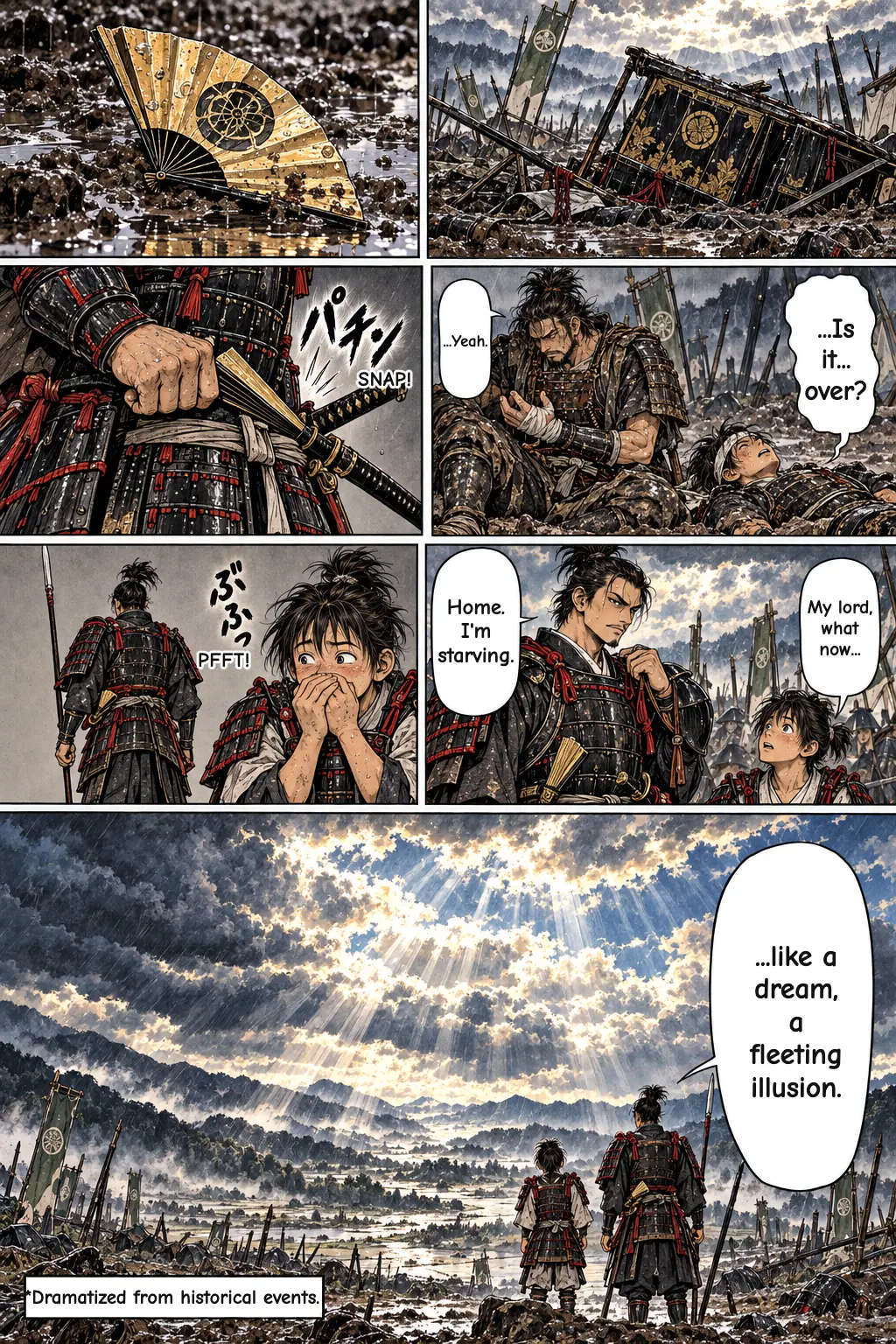
Some parts are dramatized. The chronicle only says Nobunaga made small talk that night, so the actual conversation, including the talk about swallows, is invented. The scene where retainers urge him to hold the castle is drawn from later tradition and is not in the original. Dialogue on the march, Yoshimoto's inner thoughts in his camp, Nobunaga's private thoughts, and the staging of the storm and the falling tree are also creative additions. Armor and banner designs are original. The manga does not show Yoshimoto's head being taken. It shows the overturned palanquin and the clearing sky instead.
Where to Read It
The original chronicle is in Japanese. A Meiji-era printed edition (1881) can be viewed free in the National Diet Library Digital Collections (https://dl.ndl.go.jp/pid/781192). The Okehazama chapter is in the first volume.
If you'd like to see the night, the dawn dance and the storm play out first, Episode 2 of SAMURAI: Legends of the Warring States on Manga Portal tells the whole story in a few minutes of reading. Every episode is free, and you don't need an account.
Characters in this episode
Oda Nobunaga
The 27-year-old lord of Owari, who seems careless the night before battle and then leads a small force against a huge army.
Imagawa Yoshimoto
The powerful ruler of three eastern provinces, who invades Owari and celebrates his early victories in camp.
Matsudaira Motoyasu (Tokugawa Ieyasu)
The young leader of the Imagawa vanguard in red armor, who later became the founder of the Tokugawa shogunate.
Sassa Hayato-no-shō and Senshū Shirō
Oda commanders who attack ahead of the main force with about 300 men and are killed.
Hattori Koheita
An Oda warrior who reaches Yoshimoto first but is wounded in the knee.
Mōri Shinsuke
The Oda warrior who strikes down Imagawa Yoshimoto and ends the battle.
FAQ
What happened at the Battle of Okehazama?
In 1560 Oda Nobunaga attacked Imagawa Yoshimoto's invading army with a much smaller force. A sudden storm hit, and he charged right after it cleared. Yoshimoto was killed and his army broke.
How many soldiers were at Okehazama?
The Shinchō Kōki gives Yoshimoto 45,000 men and Nobunaga fewer than 2,000 at the key moment. Modern historians generally think the Imagawa number is exaggerated, but they agree Nobunaga was heavily outnumbered.
Why did Nobunaga dance Atsumori before the battle?
According to the chronicle, he danced lines from Atsumori, about how short human life is, right after hearing his forts were under attack. Then he armed himself and rode out. It is often read as a sign that he had accepted the risk of death.
Was Okehazama a surprise attack through a valley?
That is the popular version, but it is debated. Some historians argue the Shinchō Kōki describes a more direct advance from the Nakajima fort, and the question is still open.
Who killed Imagawa Yoshimoto?
Mōri Shinsuke, one of Nobunaga's warriors, struck him down. Hattori Koheita reached him first but was wounded in the knee.