Episode 5He Drank the Face. Now It Comes CallingIn a Cup of Tea
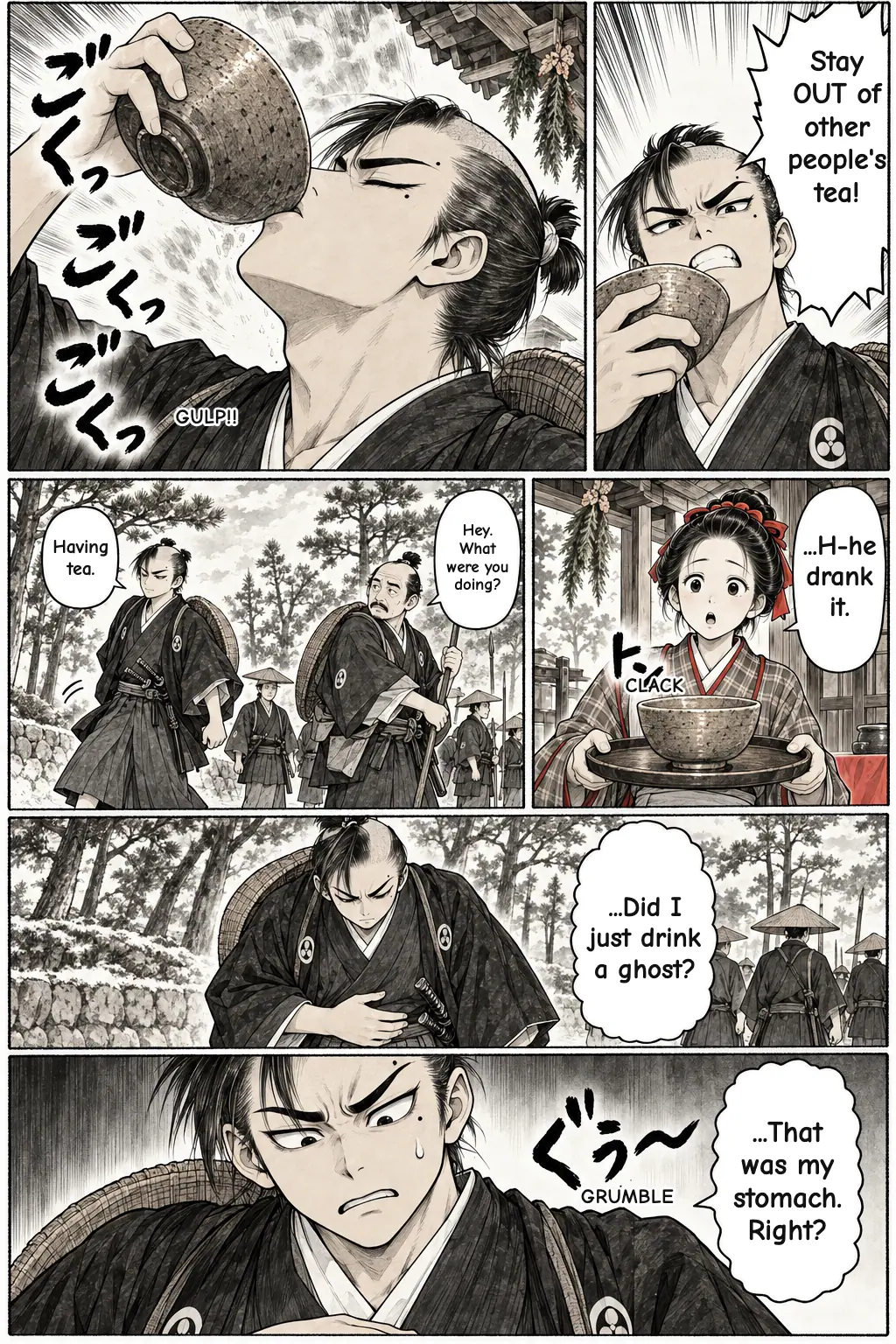
KAIDAN, Episode 5. At a teahouse on New Year's, a stranger's face appears in Sekinai's cup of tea. The hot-tempered young samurai snaps, "Stay out of other people's tea!" and drinks the face down in one gulp. That night, oddly polite visitors begin to call, each promising to repay him. And this story has no ending.
Bookmark the series page so you can jump back in when the next episode is out: KAIDANRSS for this series
Get new episodes in your feed. Follow us on:ThreadsBluesky
Story summary
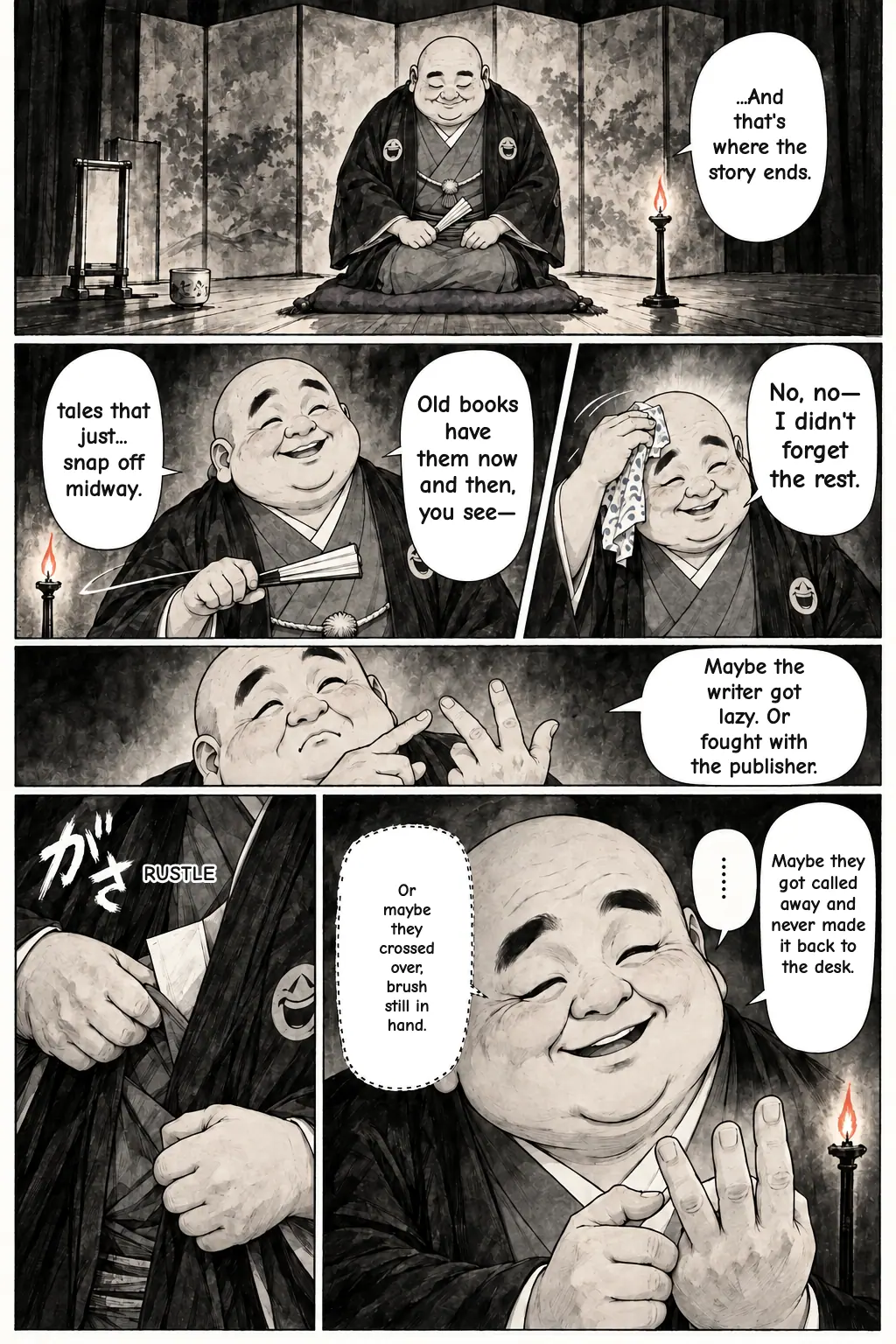
"In a Cup of Tea" appears in Kottō: Being Japanese Curios, with Sundry Cobwebs (1902), a collection by Lafcadio Hearn (also known as Koizumi Yakumo), the Greek-Irish writer who settled in Japan and retold its old tales in English. Hearn begins with something unusual: a reflection on unfinished stories. He compares them to climbing a dark tower stair and discovering there are no more steps, only empty space. Some old Japanese books, he says, break off in the middle of a tale. He offers several possible reasons.
In a Cup of Tea: Hearn's Unfinished Ghost Story, Summary & Meaning
In short: "In a Cup of Tea" is a Japanese ghost story retold by Lafcadio Hearn in Kottō (1902). A young samurai named Sekinai sees a stranger's face in his tea at a New Year's teahouse and drinks it down. That night the stranger, Shikibu Heinai, visits him and complains of being badly treated, and three of his retainers later warn that he will return for revenge. The story then stops in mid-scene, unfinished on purpose.
The Original Story: A Face in the Tea
"In a Cup of Tea" appears in Kottō: Being Japanese Curios, with Sundry Cobwebs (1902), a collection by Lafcadio Hearn (also known as Koizumi Yakumo), the Greek-Irish writer who settled in Japan and retold its old tales in English. Hearn begins with something unusual: a reflection on unfinished stories. He compares them to climbing a dark tower stair and discovering there are no more steps, only empty space. Some old Japanese books, he says, break off in the middle of a tale. He offers several possible reasons. The author may have been lazy, or fallen out with the publisher, or been called away and never come back to the desk, or died with the brush still in hand.
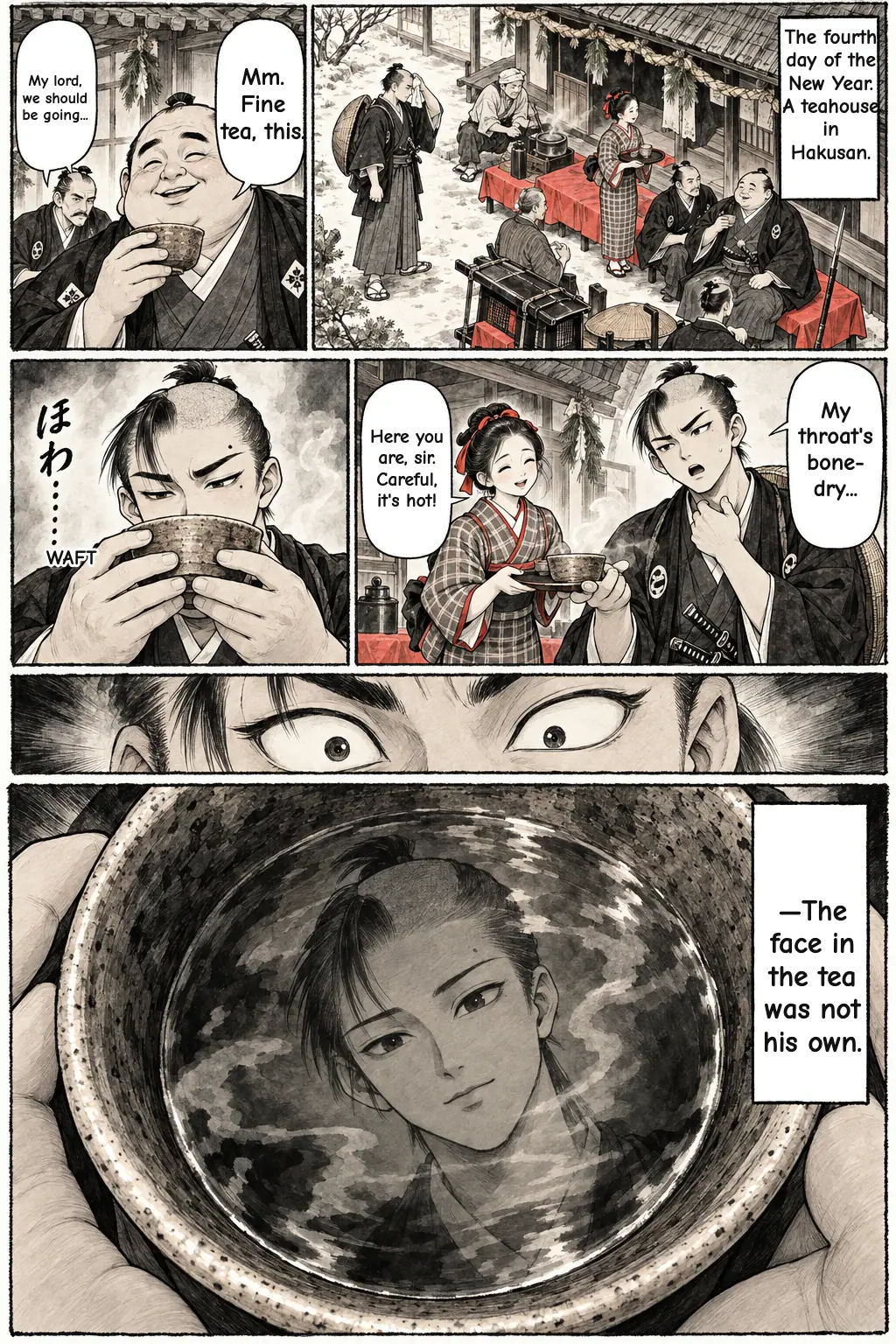
Then the story begins. On the fourth day of the New Year, in the third year of the Tenna era (Hearn writes "the third Tenwa," about 1683, roughly two hundred and twenty years before he was writing), a lord named Nakagawa Sado is traveling to pay a New Year's call. He stops with his attendants at a teahouse in Hakusan, in the Hongō district of Edo (old Tokyo). One of his young retainers, Sekinai, looks into his cup of tea and sees the face of a handsome young samurai who is not him. He turns around, and nobody is there.
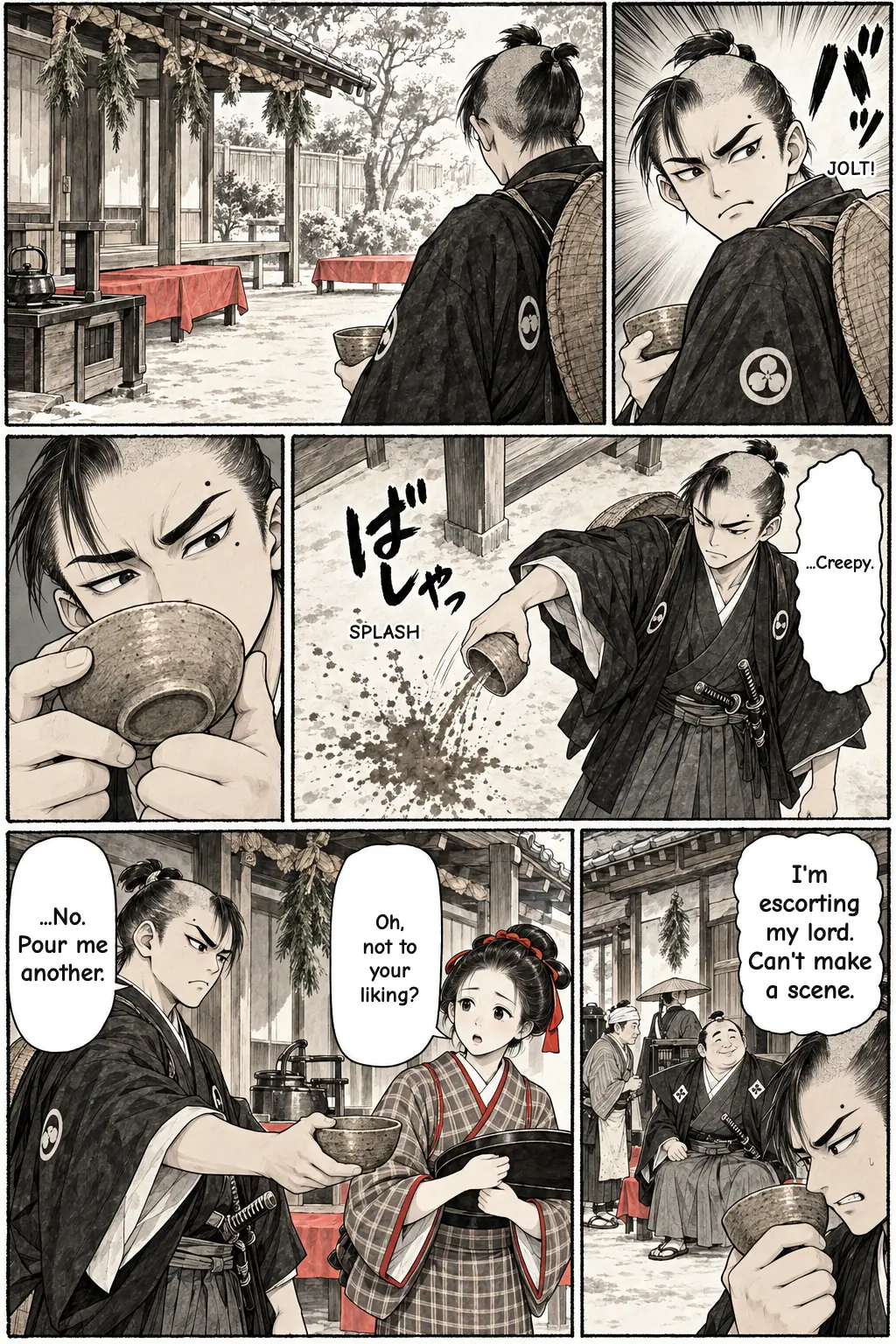
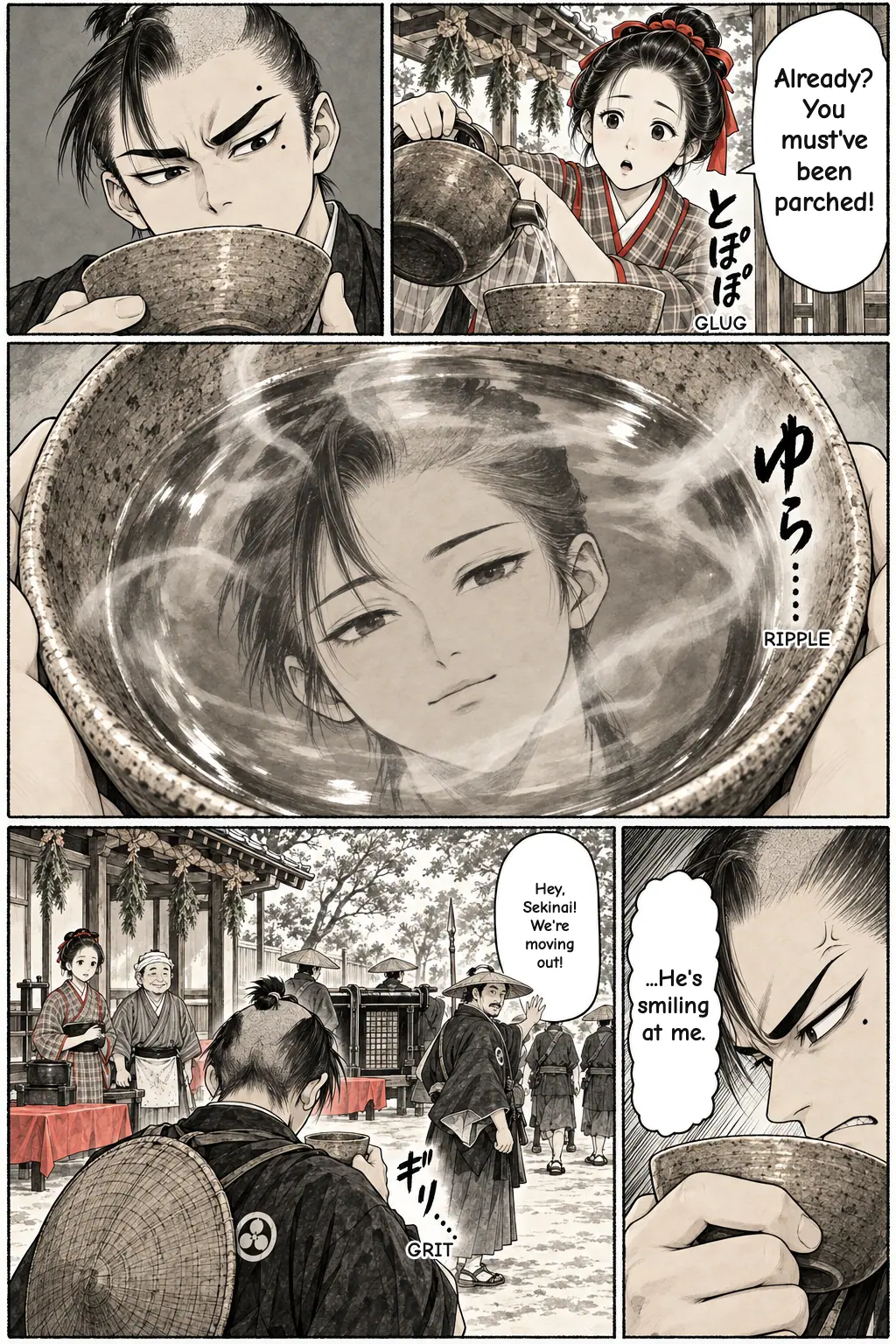
Sekinai throws the tea out and checks the cup. It is an ordinary cup. He pours more tea, and the face comes back, now smiling at him mockingly. Sekinai decides he will not be fooled any longer, whatever the thing is, and drinks the tea, face and all. He walks on, wondering whether he has just swallowed a ghost.
Night Visitors and a Story That Stops
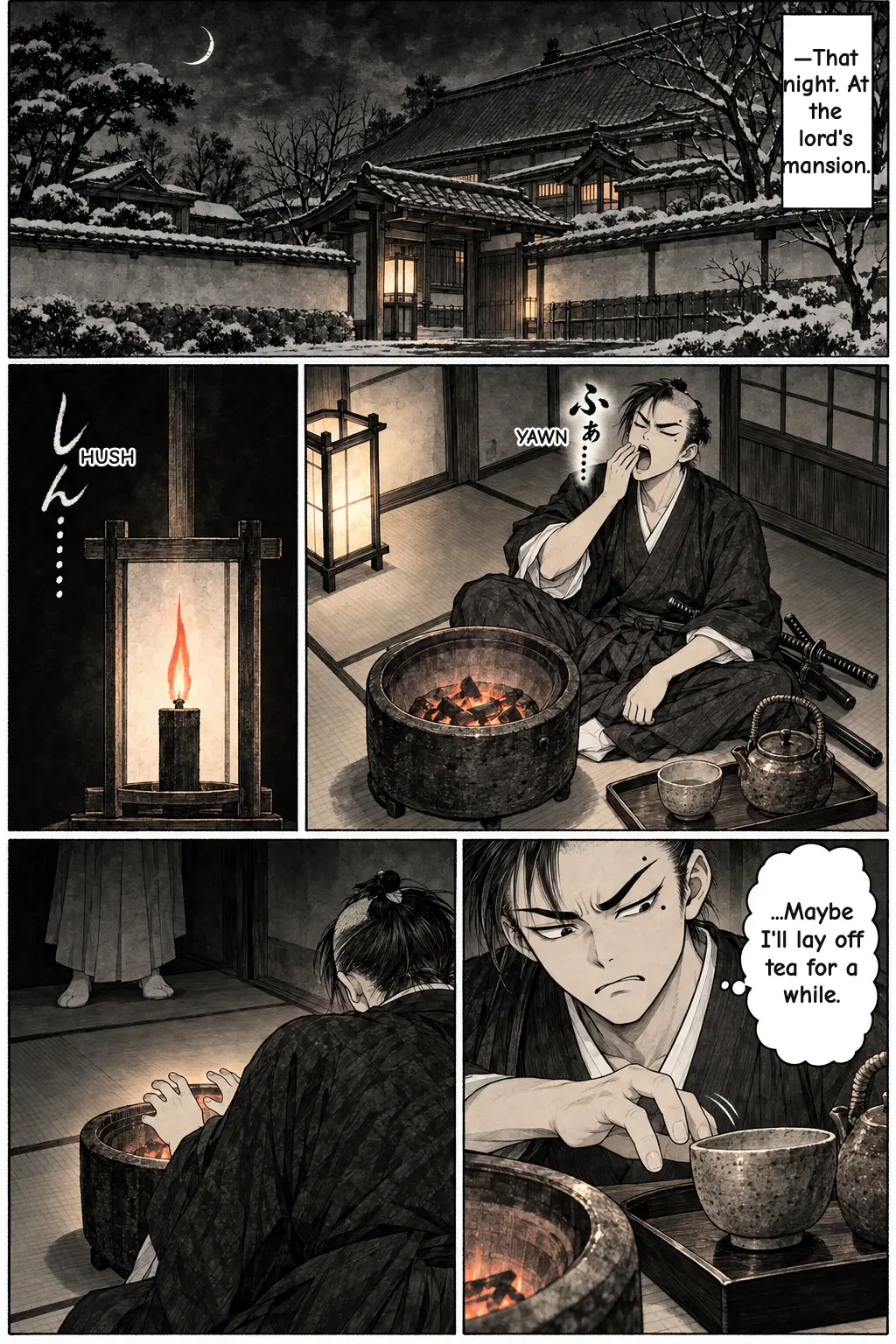
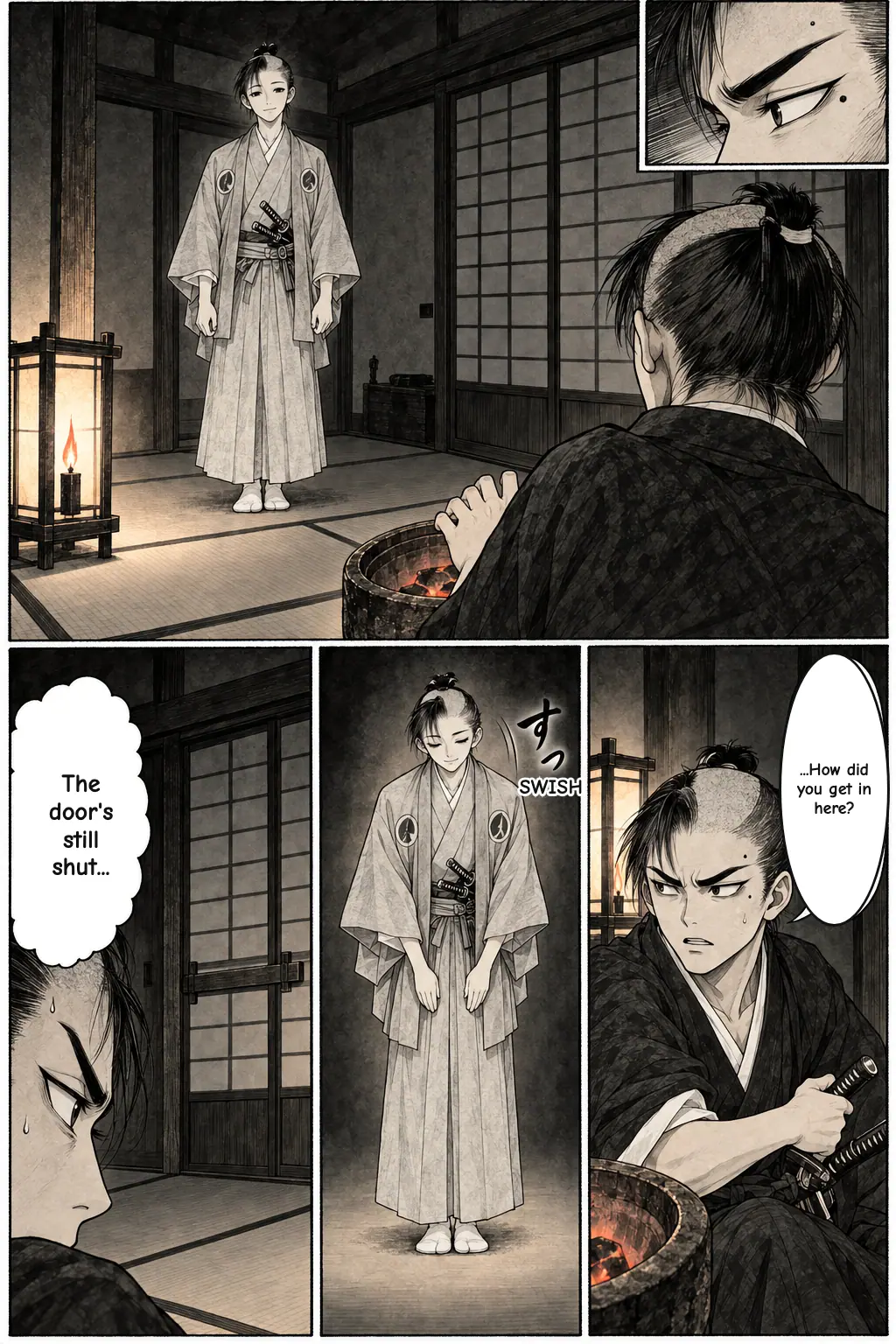
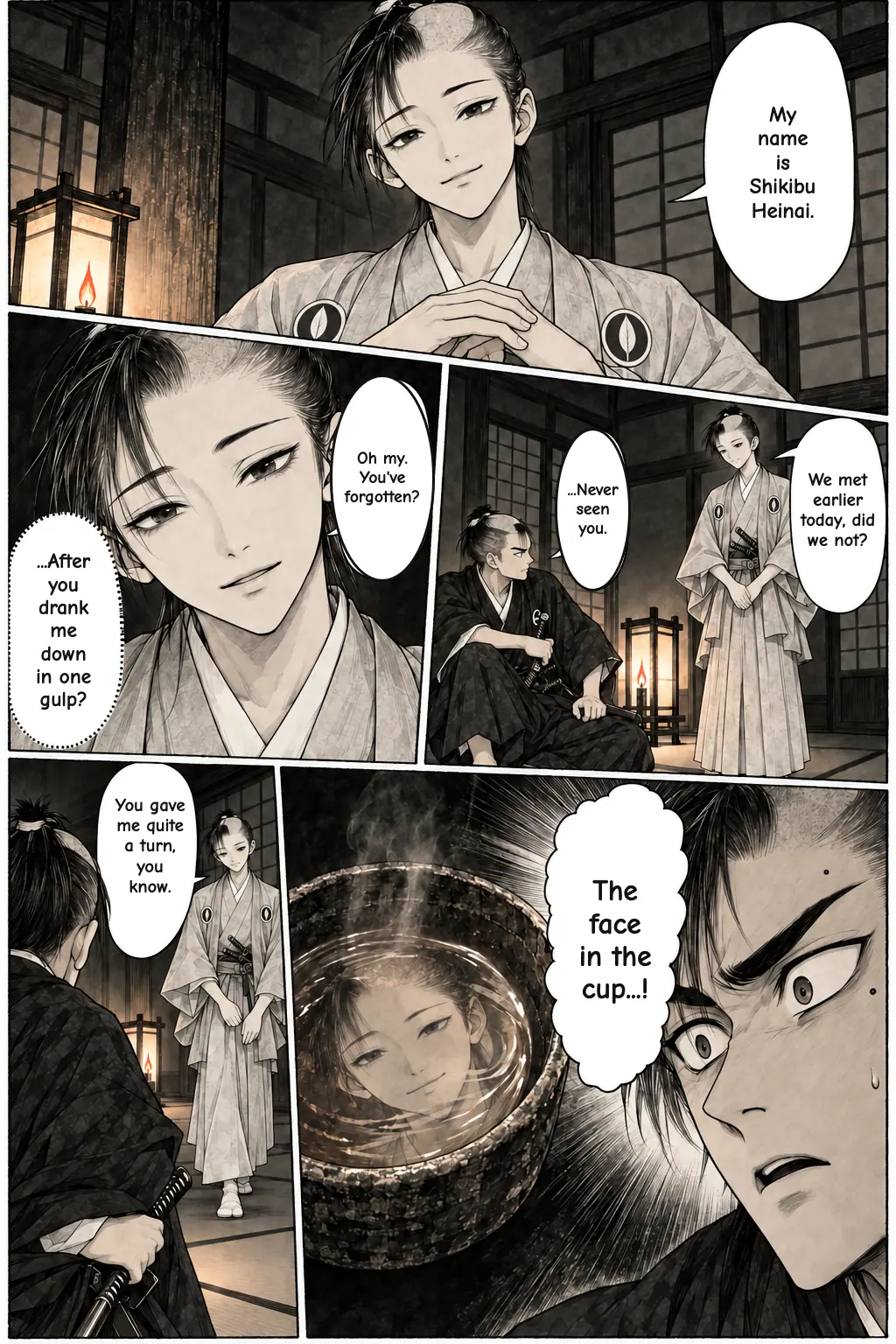
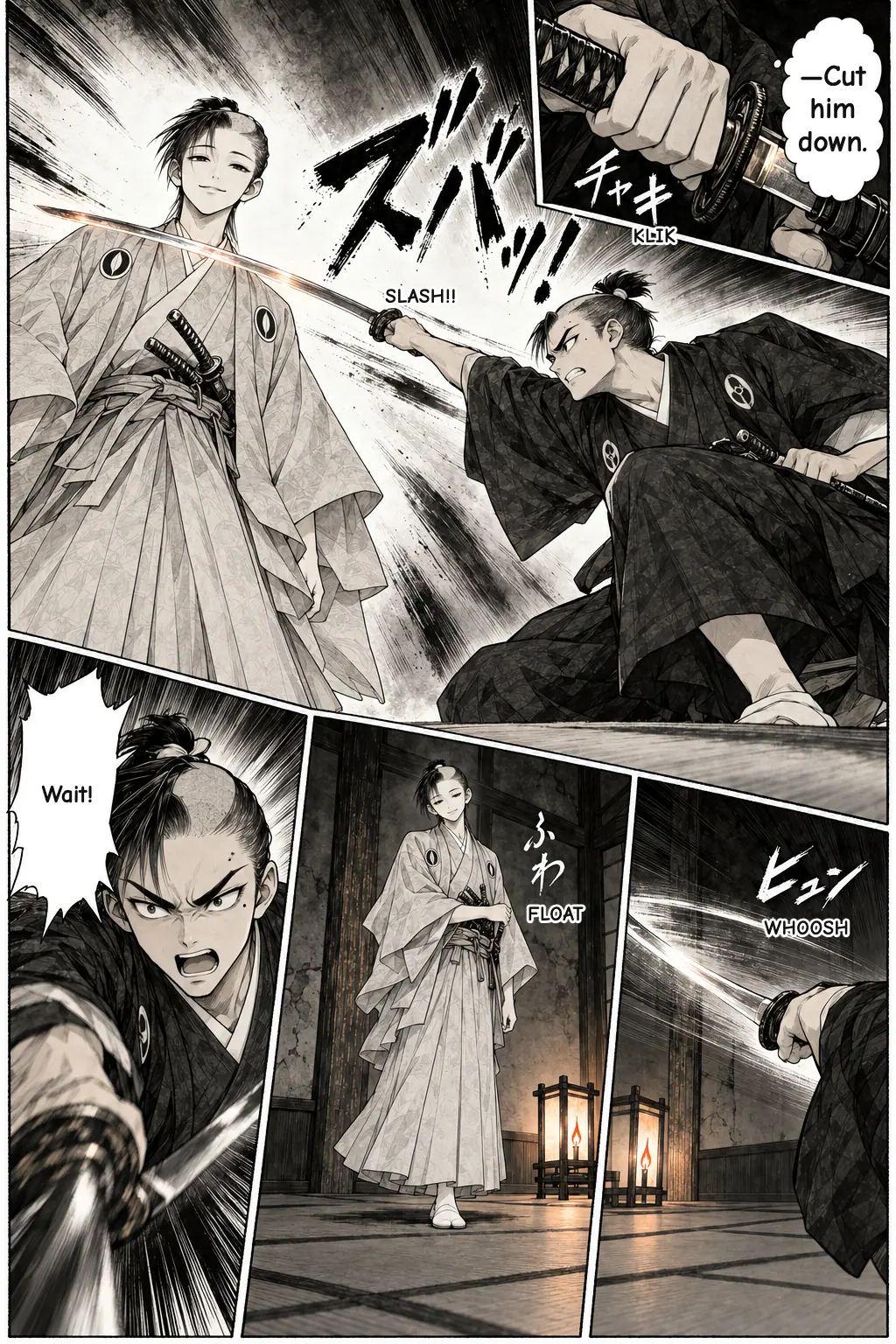
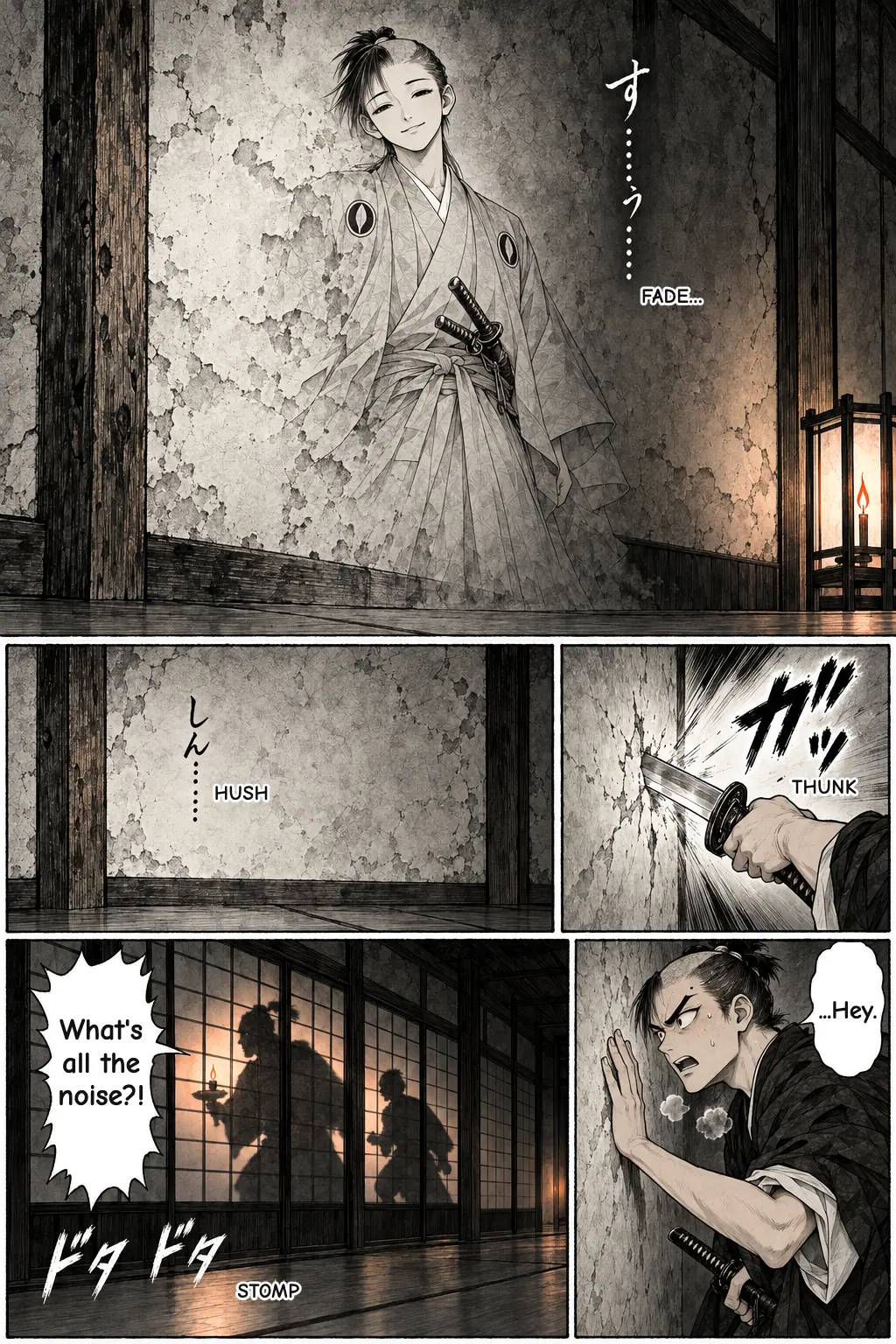
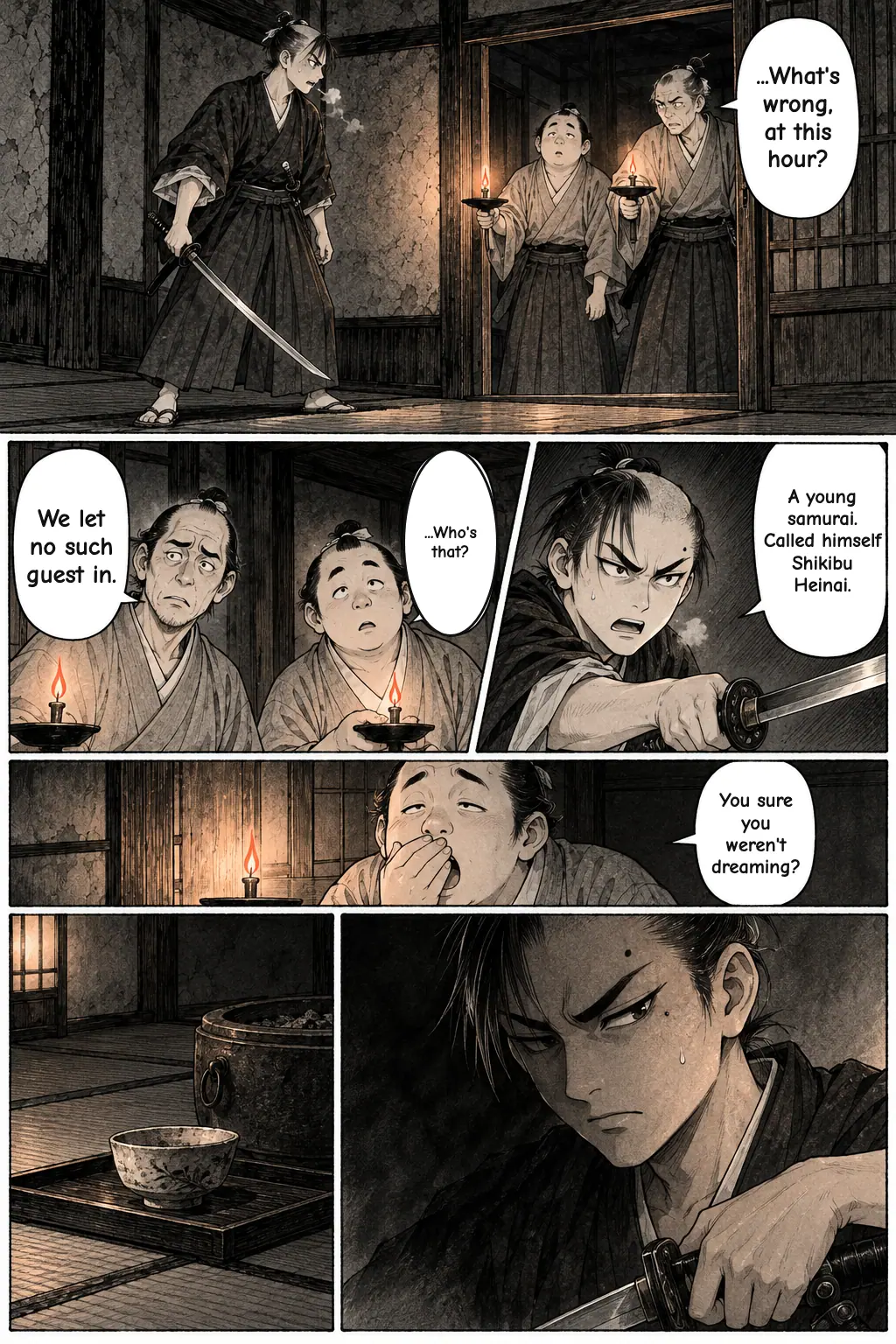
That night Sekinai is on guard duty at Lord Nakagawa's residence. The young samurai from the teacup walks silently into his room, finely dressed. He gives his name as Shikibu Heinai and says, roughly, that Sekinai does not seem to recognize him even though they met that same day, and that Sekinai treated him very badly. Sekinai takes him for a goblin and strikes at his throat. Heinai leaps to the wall and passes through it, leaving no trace. When Sekinai tells the household, they are astonished. No one let a visitor in, and no one has ever heard the name Shikibu Heinai.
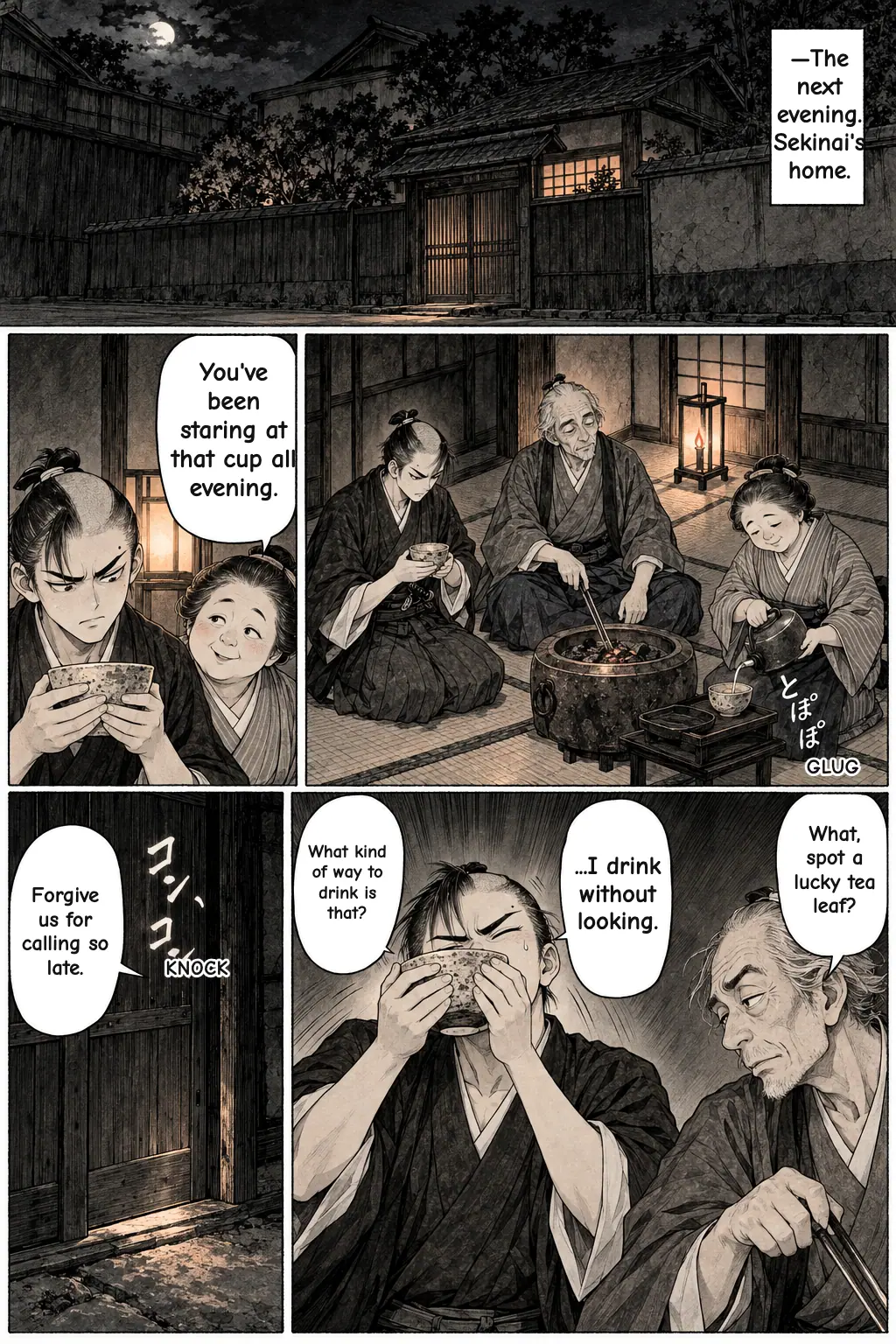
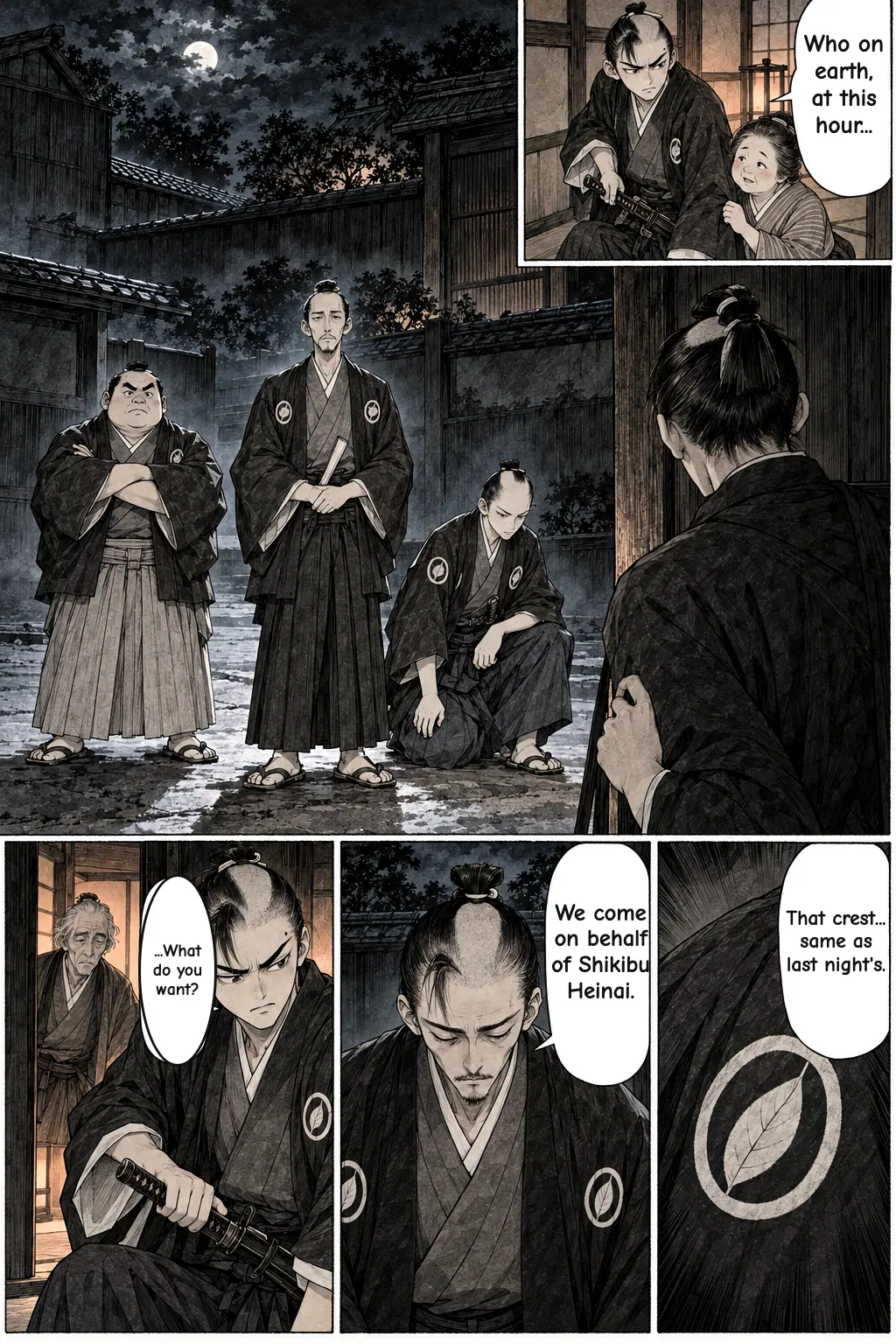
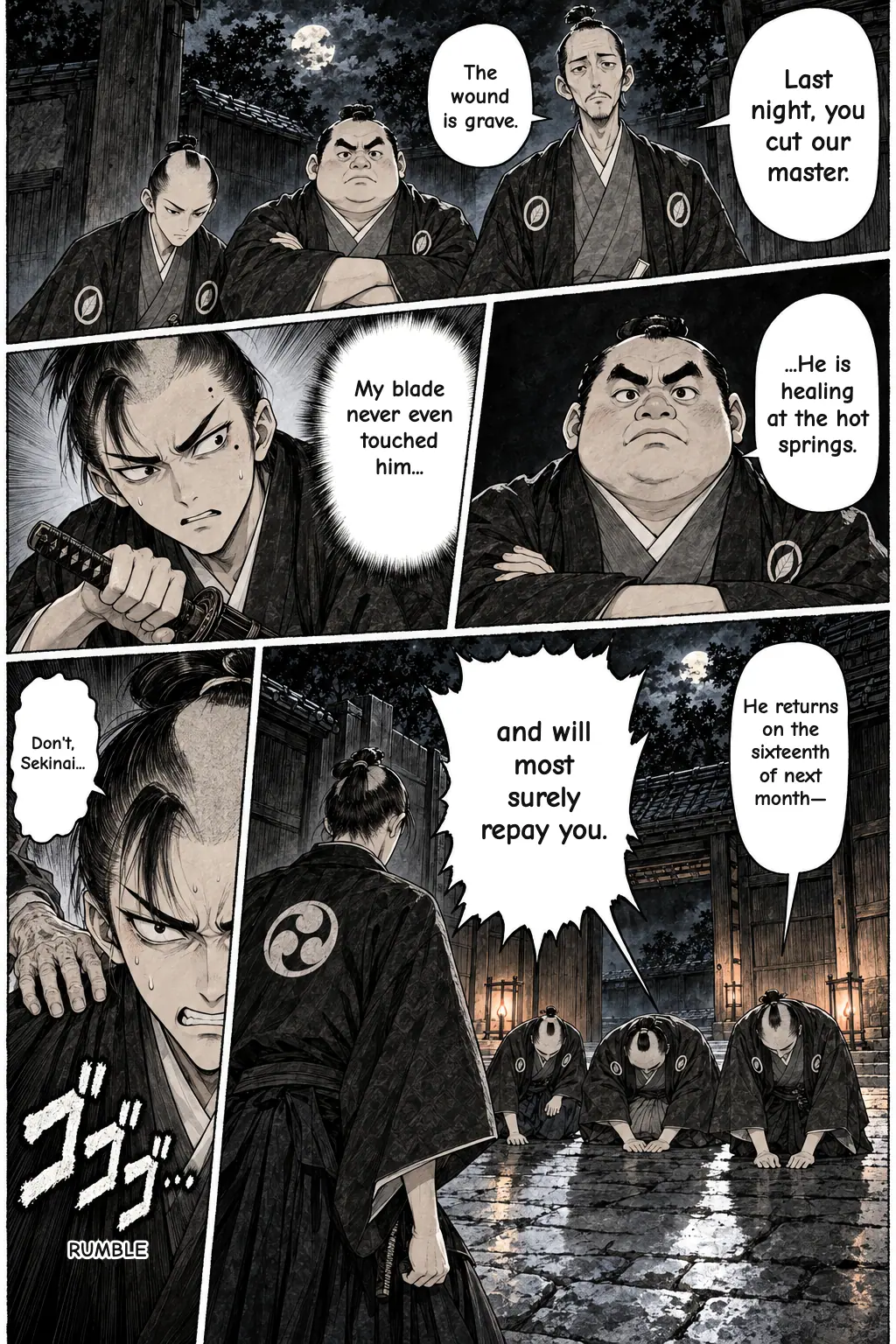
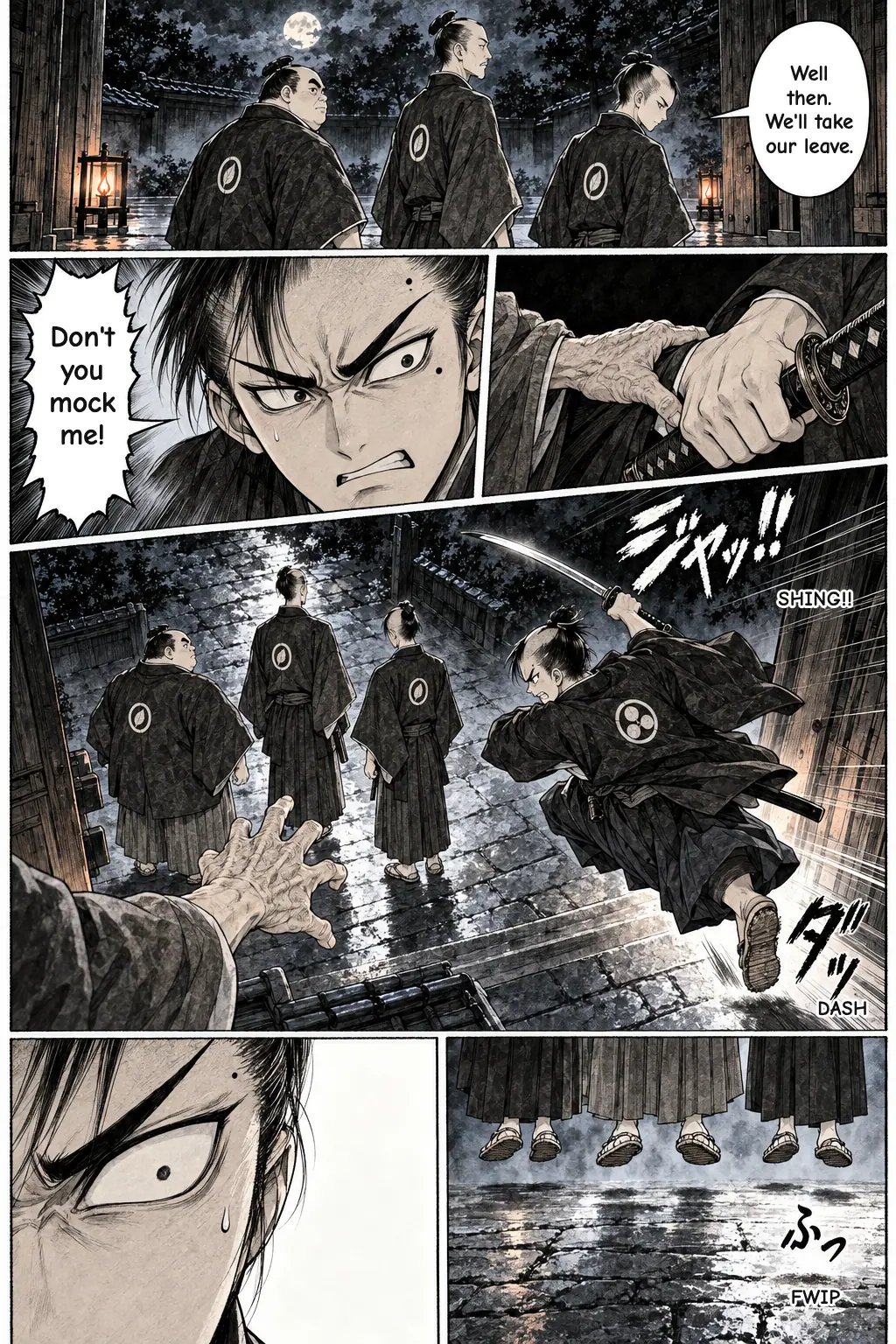
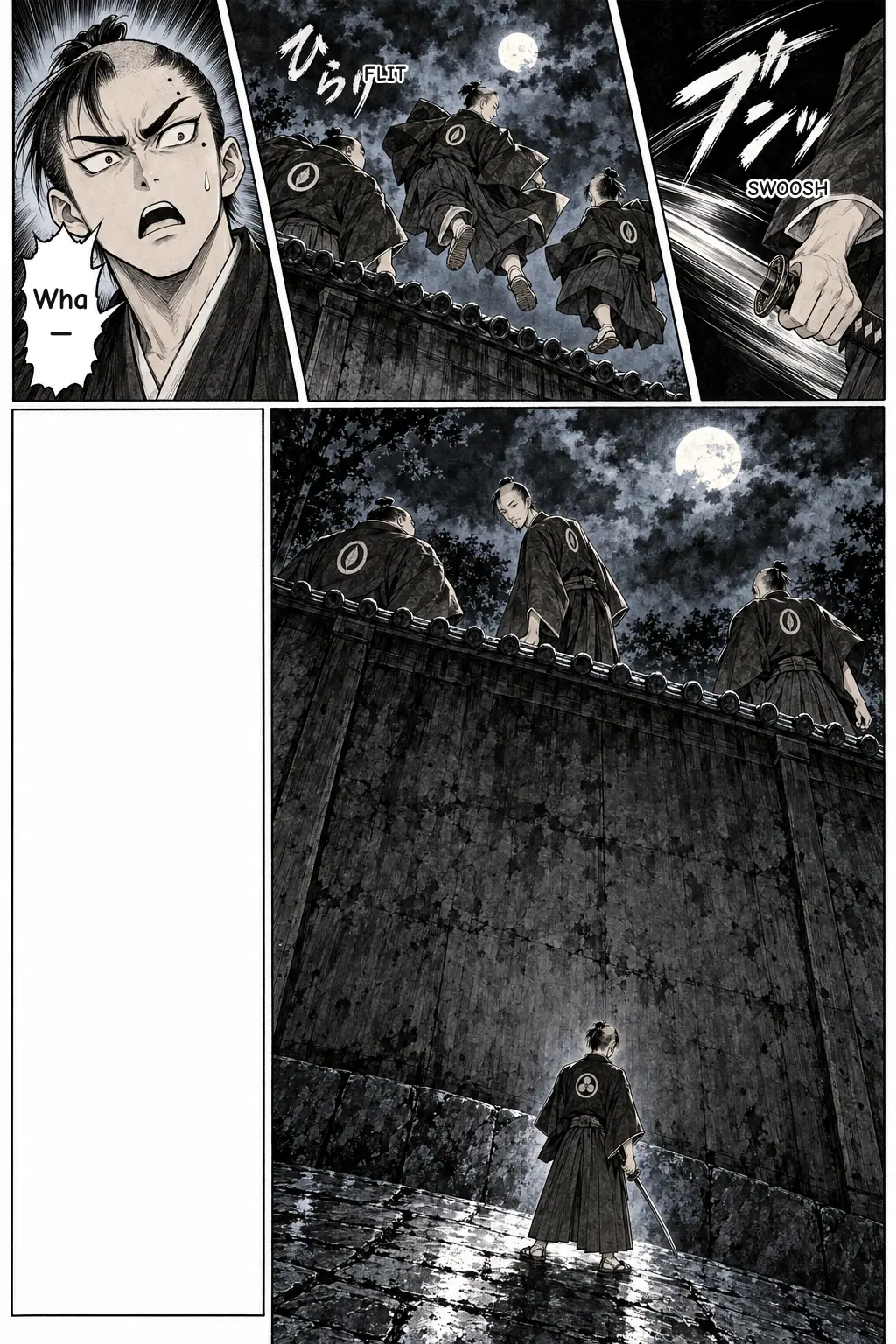
The next evening Sekinai is off duty and at home with his parents. Three samurai call on him and say they are Heinai's retainers. They tell him their master was badly wounded by his sword and has gone to a hot spring to heal, and that he will return on the sixteenth day of the next month to repay the injury. Sekinai draws his sword and lunges at them. They spring to the wall of the neighboring house and climb up it like shadows. The old story ends there, in mid-scene.
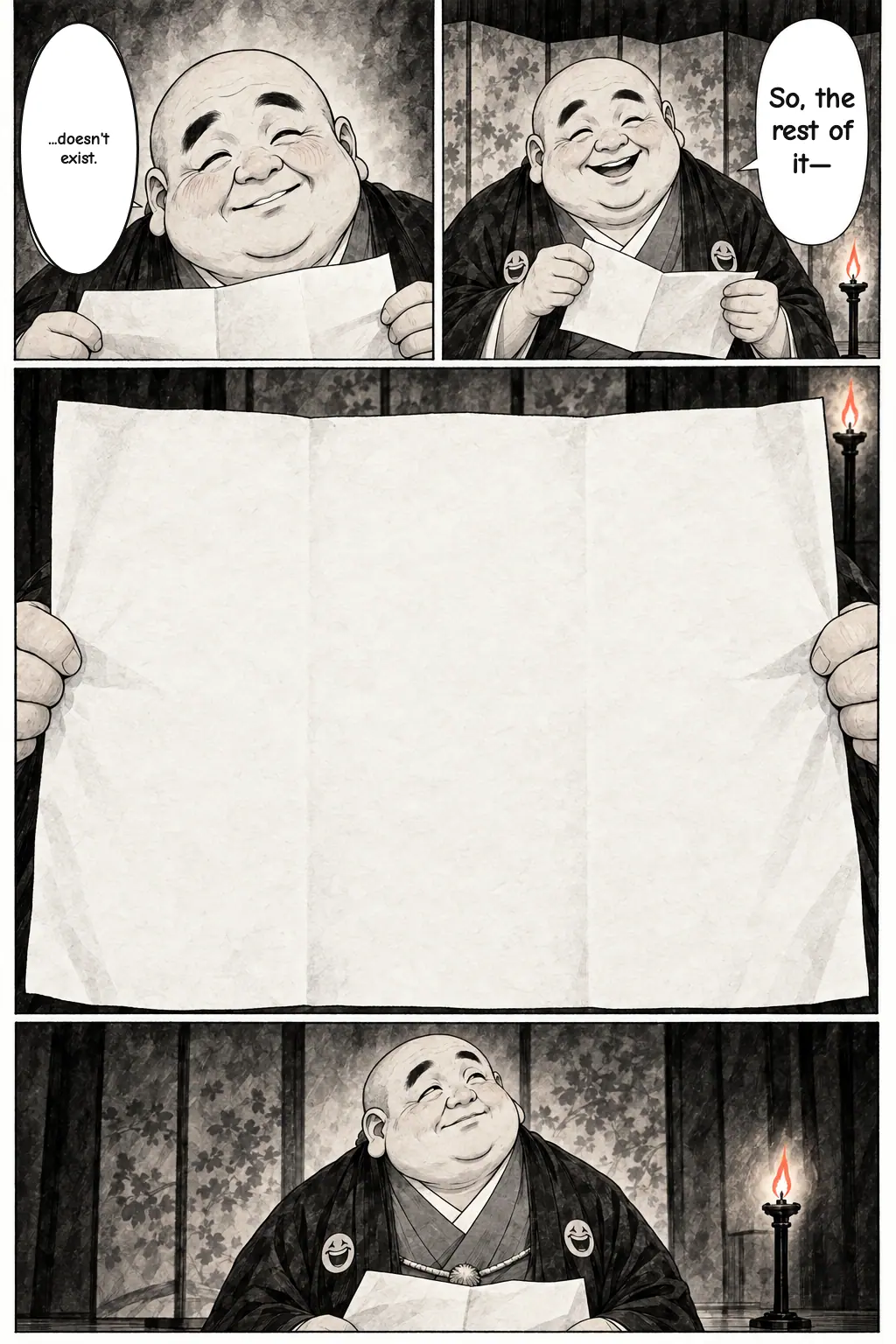
Hearn closes by saying the rest of the tale existed only in the mind of someone who turned to dust a century ago. He can imagine several endings, but none that would satisfy a Western reader. He leaves readers to work out for themselves what might happen to someone who has swallowed a soul.
What the Story Means: Old Japan and the Art of No Ending
The setting is the early Edo period, when samurai households followed strict routines. A wakatō, a young retainer like Sekinai, attended his lord on formal visits and took turns standing night watch. Hearn's text takes place on New Year's, a season of courtesy visits, and these ordinary customs make the strange face in the tea stand out even more.
The tale belongs to kaidan, the Japanese tradition of strange and ghostly stories. Hearn's version is commonly said to be based on a tale in an Edo-period anthology called Shinchomonjū, though the source he actually used is not always clear. The ghost here does not look like a typical Japanese ghost. Heinai shows up as a well-dressed young samurai who speaks politely and still frightens the reader. Part of the horror is the etiquette: an injured spirit that sends formal messengers to announce its revenge.
Above all, the story is famous because it is unfinished. Hearn treats the gap as part of the work, and his opening and closing comments turn a short anecdote into a puzzle about storytelling. What happens after you swallow someone's soul? The text never says, and readers have argued about it ever since.
What the Manga Changes
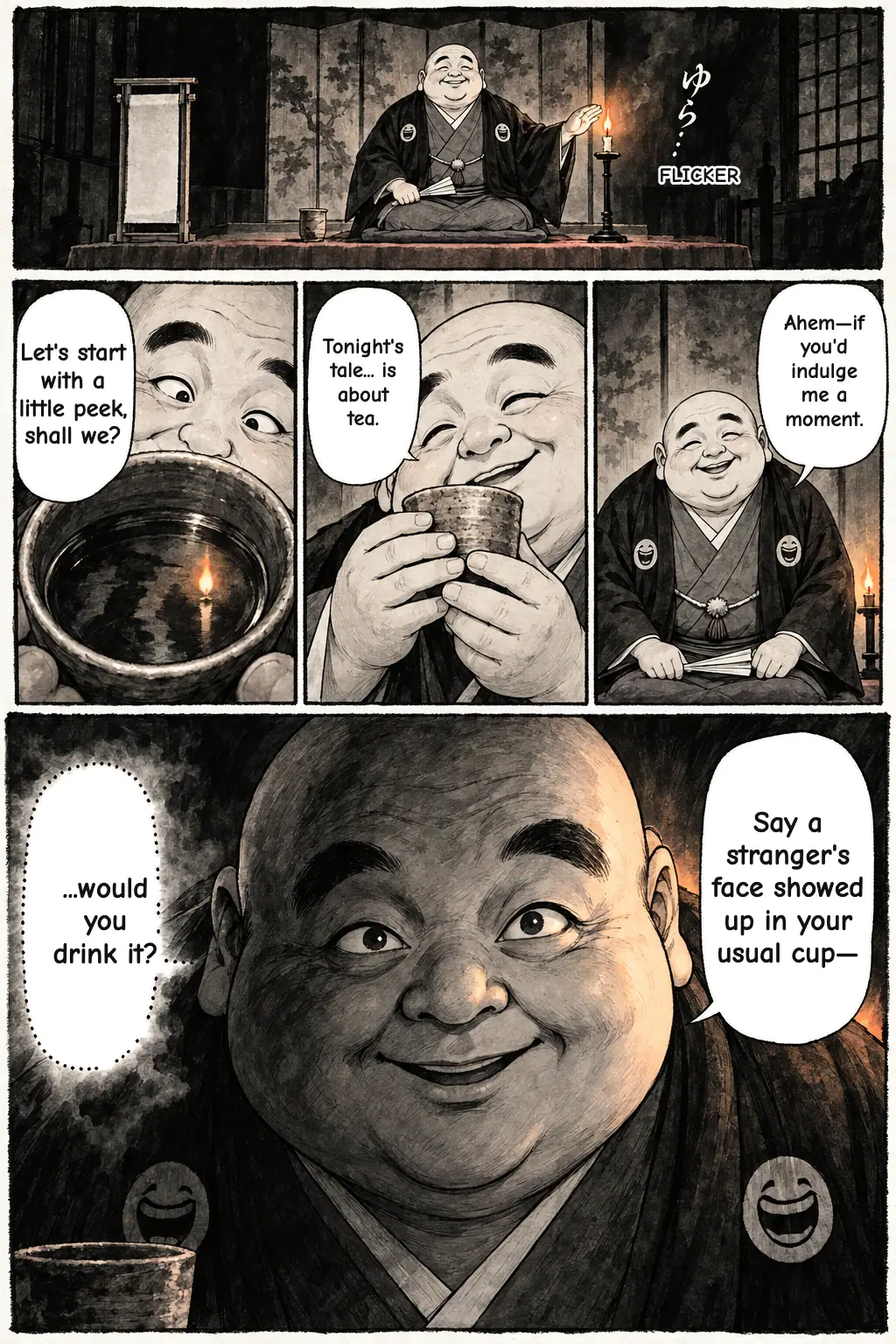
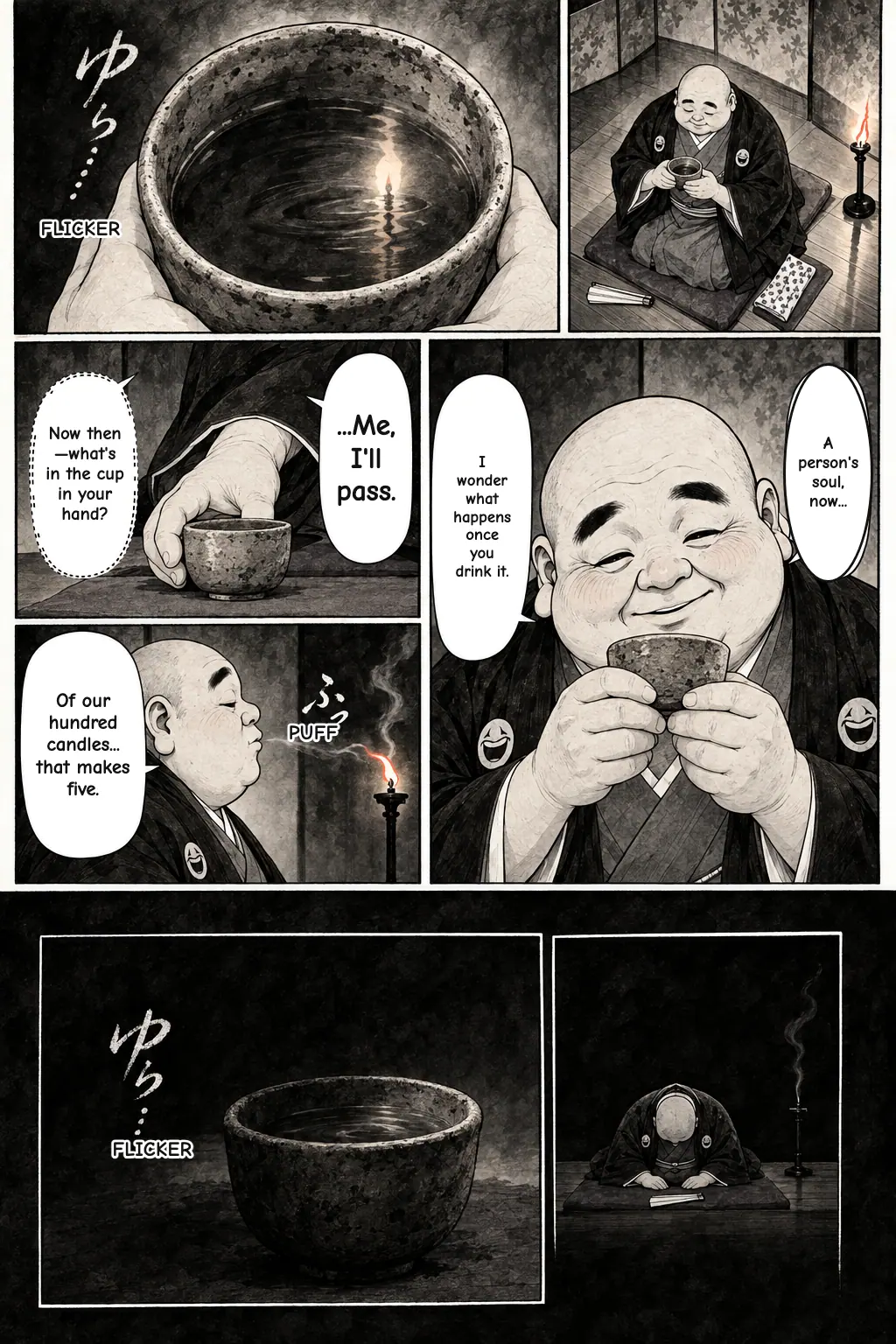
Manga Portal's KAIDAN series is framed as a night of ghost stories told by Fukurai, an original storyteller character created for the series. Fukurai opens and closes each episode in a lamplit room, and blows out one light at the end. This frame does not come from Hearn, but in this episode it does the same job as Hearn's own opening and closing remarks: Fukurai introduces the idea of a story that breaks off, and at the end shows the reader that there is nothing more to tell.
Some details are invented for the manga. These include the look of the teahouse and the New Year's street scene, Sekinai's exact age, face and hot-tempered personality, his line "Stay out of other people's tea!", the designs of Heinai and his three retainers, and the way the wall-passing and wall-climbing scenes are drawn. The manga's closing image, Fukurai's own teacup with something faint on its surface, is also original.
The main events are not changed. The manga follows Hearn's order of events and stops exactly where his text stops. It does not invent an ending, reveal who Heinai really is, or show what happens on the sixteenth day. Some well-known film versions of the tale add an ending of their own. This manga deliberately does not.
Where to Read It
If you would like to see this story rather than just read about it, KAIDAN: Japanese Ghost Stories, Episode 5, "He Drank the Face. Now It Comes Calling — In a Cup of Tea," is on this page. All episodes of KAIDAN are free to read, with no sign-up. The series also includes other Hearn tales, such as the flying heads of Rokuro-Kubi. Hearn's original English text of Kottō is in the public domain if you want to compare. Then decide for yourself how the story should end.
Characters in this episode
Sekinai
A young retainer of Lord Nakagawa Sado who sees a stranger's face in his tea and boldly drinks it down.
Shikibu Heinai
The mysterious, handsome young samurai whose face appears in the tea and who later visits Sekinai, then vanishes through a wall.
Heinai's three retainers
Samurai messengers who announce that their wounded master will return for revenge, then climb a wall like shadows.
Nakagawa Sado
Sekinai's lord, whose New Year's journey brings the party to the Hakusan teahouse.
Lafcadio Hearn (narrator)
The writer who retells the tale and gives the reader the unanswered question of how it ends.
Fukurai (manga only)
The KAIDAN series' original storyteller, who frames the episode and presents its missing ending as a blank page.
FAQ
What is "In a Cup of Tea" about?
A young samurai named Sekinai sees a stranger's face in his tea and drinks it. That night the stranger, Shikibu Heinai, visits him, and later three retainers warn that Heinai will come back for revenge. The story then breaks off unfinished.
Who wrote "In a Cup of Tea"?
Lafcadio Hearn (Koizumi Yakumo) retold it in English in his 1902 book Kottō. It is commonly said to be based on a tale in an older Edo-period Japanese collection.
Why does "In a Cup of Tea" have no ending?
Hearn presents it as an old Japanese tale whose original text simply stopped. He suggests possible reasons, such as the author dying or being called away, and leaves readers to imagine what follows.
Who is Shikibu Heinai?
He is the young samurai whose face appears in Sekinai's tea. The story never explains what he is. He walks through walls, and no one in the household has heard of him.
Is "In a Cup of Tea" in Kwaidan?
No. It is in Hearn's book Kottō (1902), not Kwaidan (1904). It became widely known through the 1964 film Kwaidan, which adapted it alongside stories from the other book.