Episode 4He Didn't Run. He Hid the Body.Rokuro-kubi
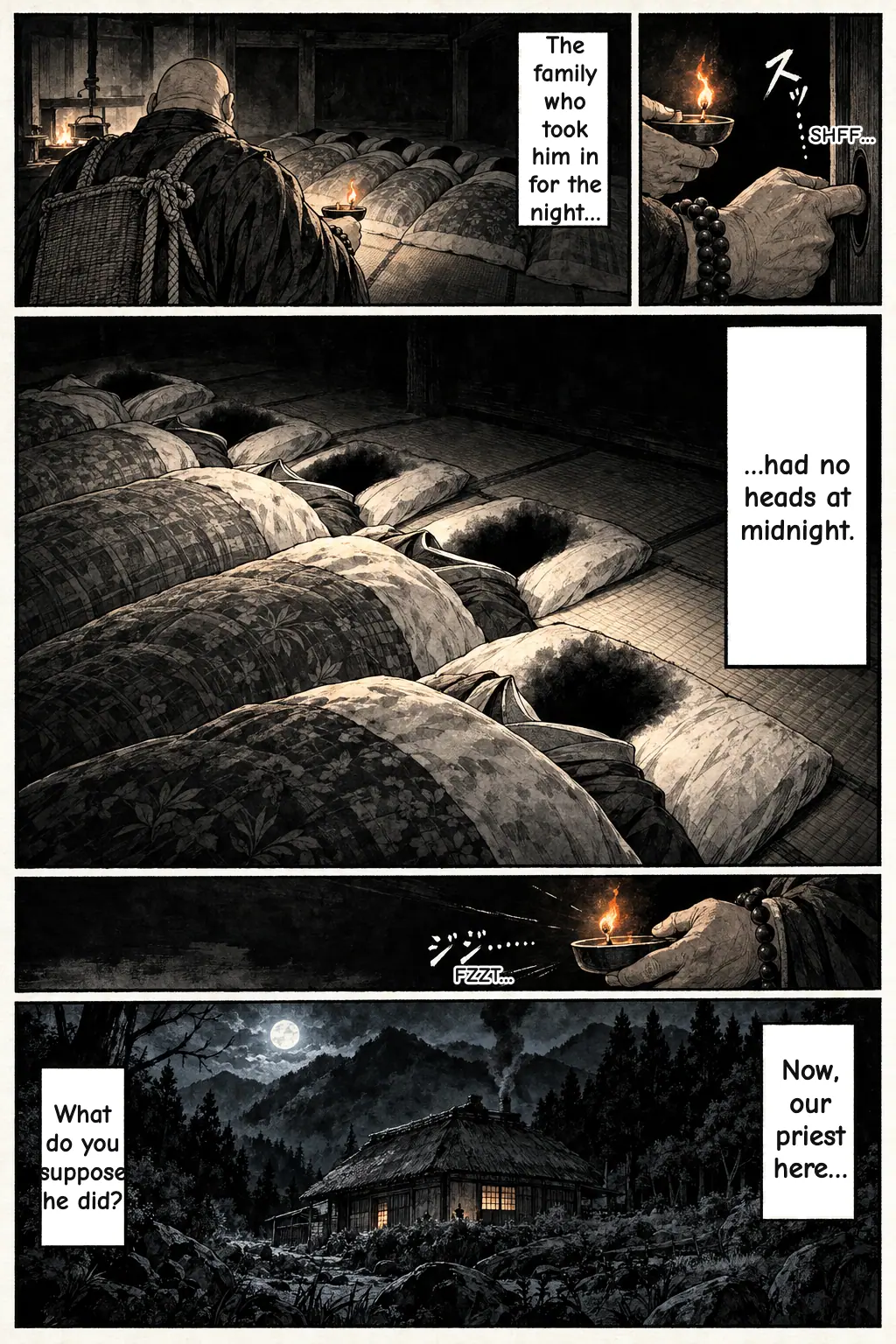
KAIDAN: Japanese Ghost Stories, Episode 4. Kwairyo, a wandering priest who used to be a fierce samurai, spends the night with a kind family deep in the mountains. At midnight he finds their sleeping bodies with no heads. He doesn't run. He quietly hides one of the bodies instead.
Bookmark the series page so you can jump back in when the next episode is out: KAIDANRSS for this series
Get new episodes in your feed. Follow us on:ThreadsBluesky
Story summary
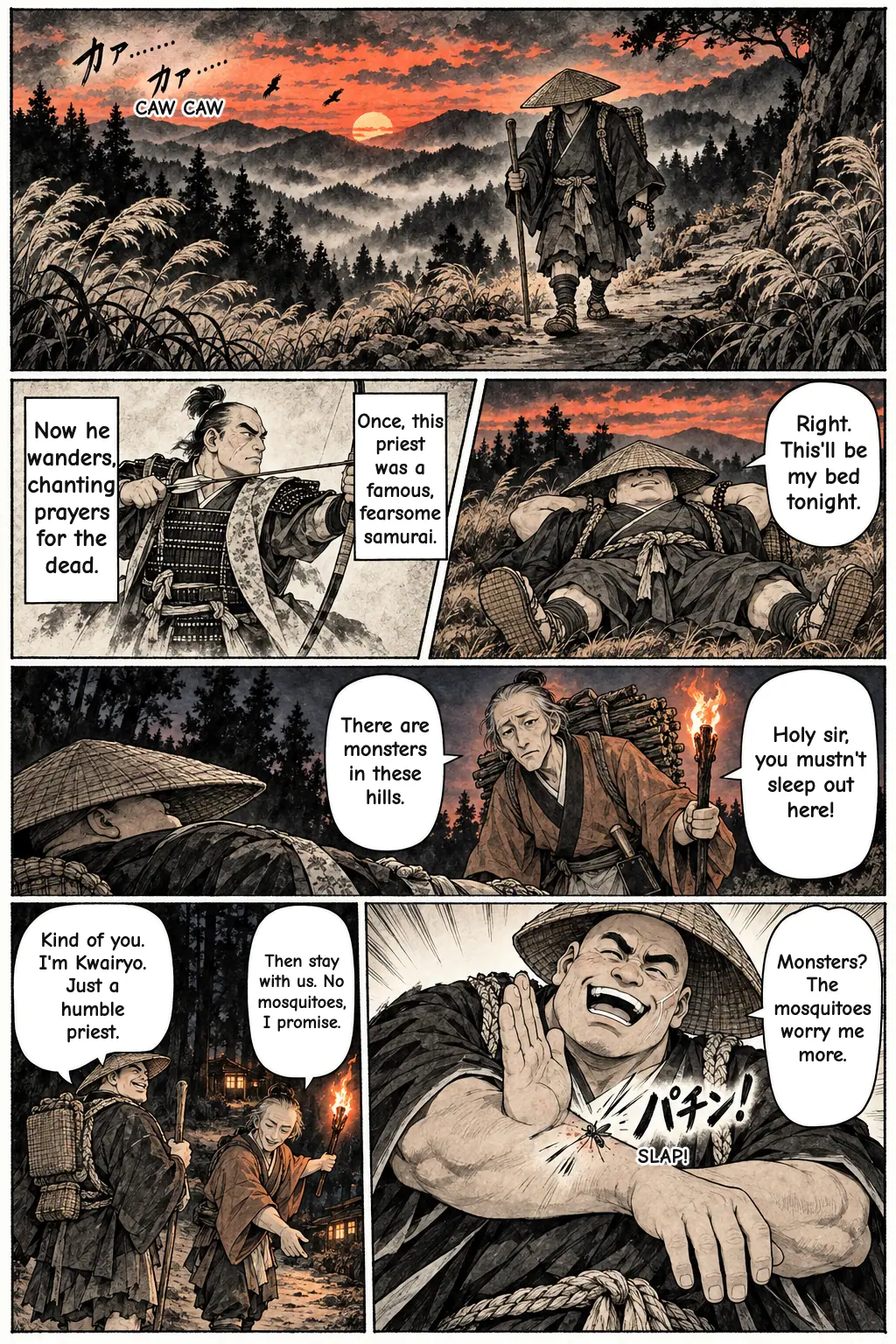
Hearn sets the tale about five hundred years before his own time. Isogai Heidazaemon Taketsura was a retainer of the Kikuchi clan in Kyushu, Japan's southern main island, and was known for his skill in arms. When his lord's house fell, he did not look for a new master. He shaved his head, became a Buddhist priest under the name Kwairyo, and wandered the country. He went wherever other travelers were afraid to go. One evening in the lonely mountains of Kai province (modern Yamanashi), he lies down in the grass to sleep.
Rokuro-kubi Story Explained: Kwaidan's Flying Heads and the Priest Kwairyo
In short: "Rokuro-Kubi" is a ghost story from Lafcadio Hearn's Kwaidan (1904). Kwairyo, a samurai turned wandering priest, stays the night with a mountain family, finds their bodies without heads, and moves the master's body so his head can never return. He then fights off the flying heads, and one of them dies still biting his sleeve.
The Original Story: A Summary of "Rokuro-Kubi"
Hearn sets the tale about five hundred years before his own time. Isogai Heidazaemon Taketsura was a retainer of the Kikuchi clan in Kyushu, Japan's southern main island, and was known for his skill in arms. When his lord's house fell, he did not look for a new master. He shaved his head, became a Buddhist priest under the name Kwairyo, and wandered the country. He went wherever other travelers were afraid to go.
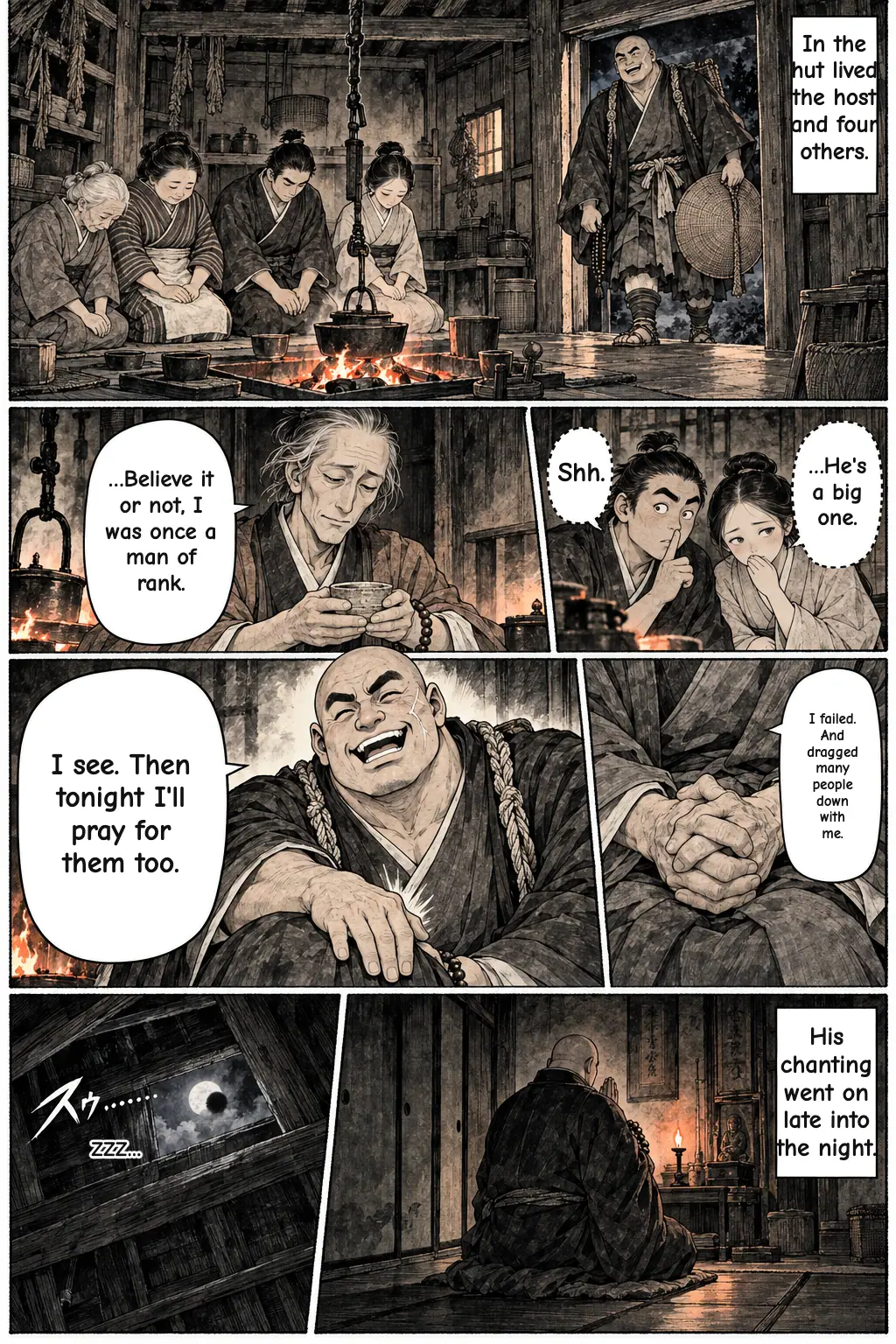
One evening in the lonely mountains of Kai province (modern Yamanashi), he lies down in the grass to sleep. A woodcutter carrying an axe and a bundle of firewood warns him that the area is full of goblins and spirits. Kwairyo says he isn't afraid, but he accepts the man's offer of a bed in his hut. Inside, four men and women sit around the hearth. The host tells Kwairyo that he was once a man of rank who ruined his own house through his wrongdoing, and that he hopes to make up for it. Kwairyo promises to recite sutras for him and prays late into the night in a side room.
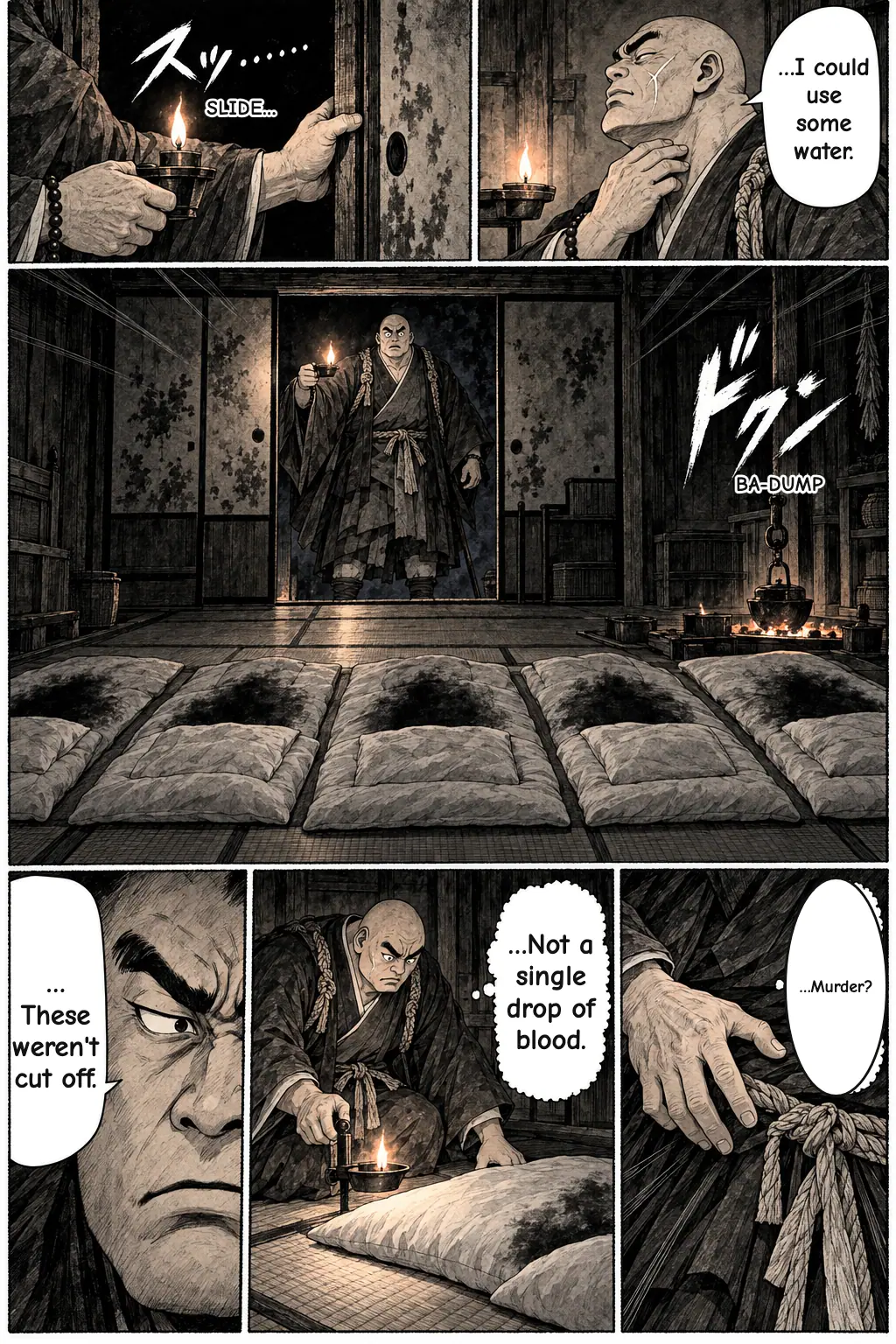
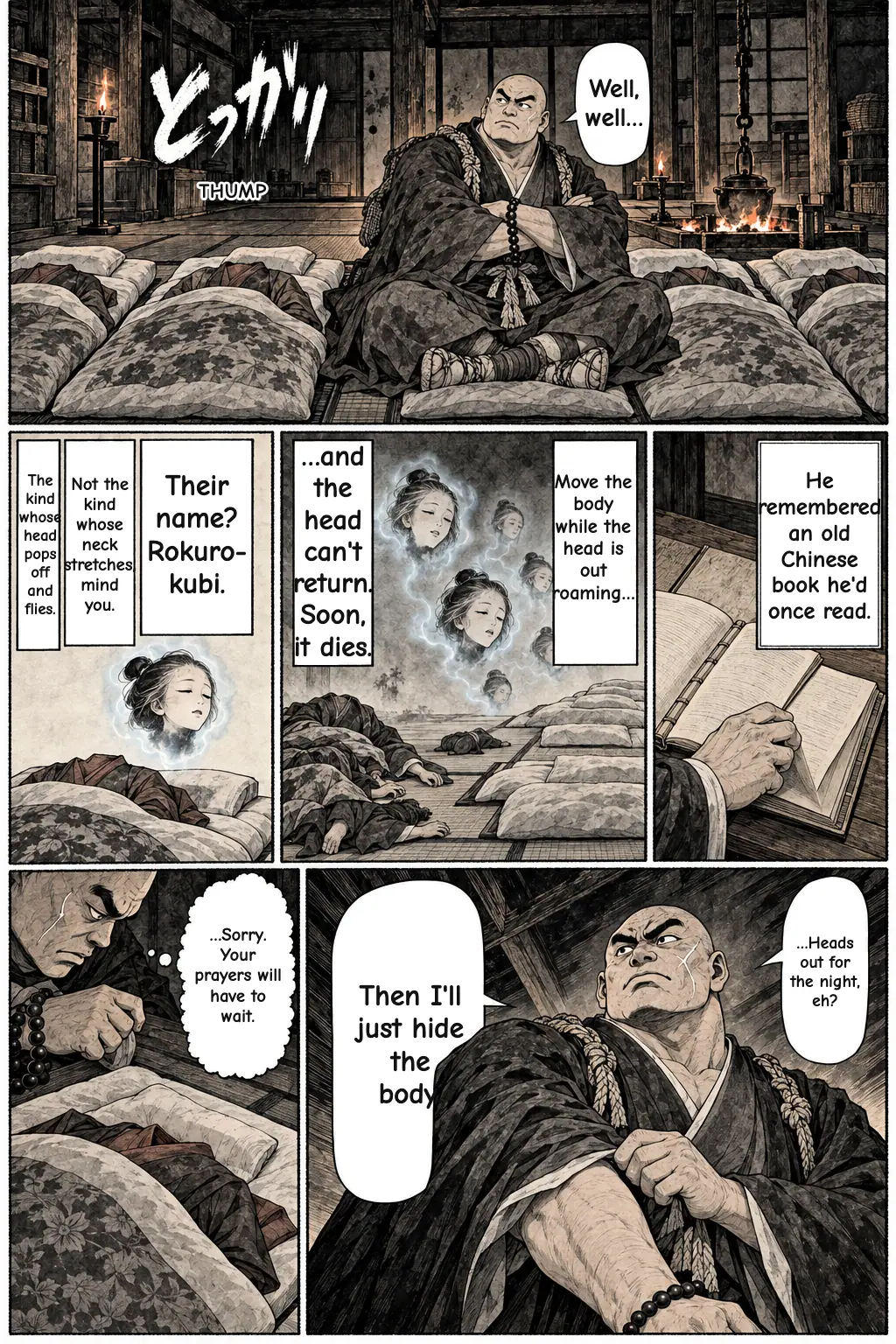
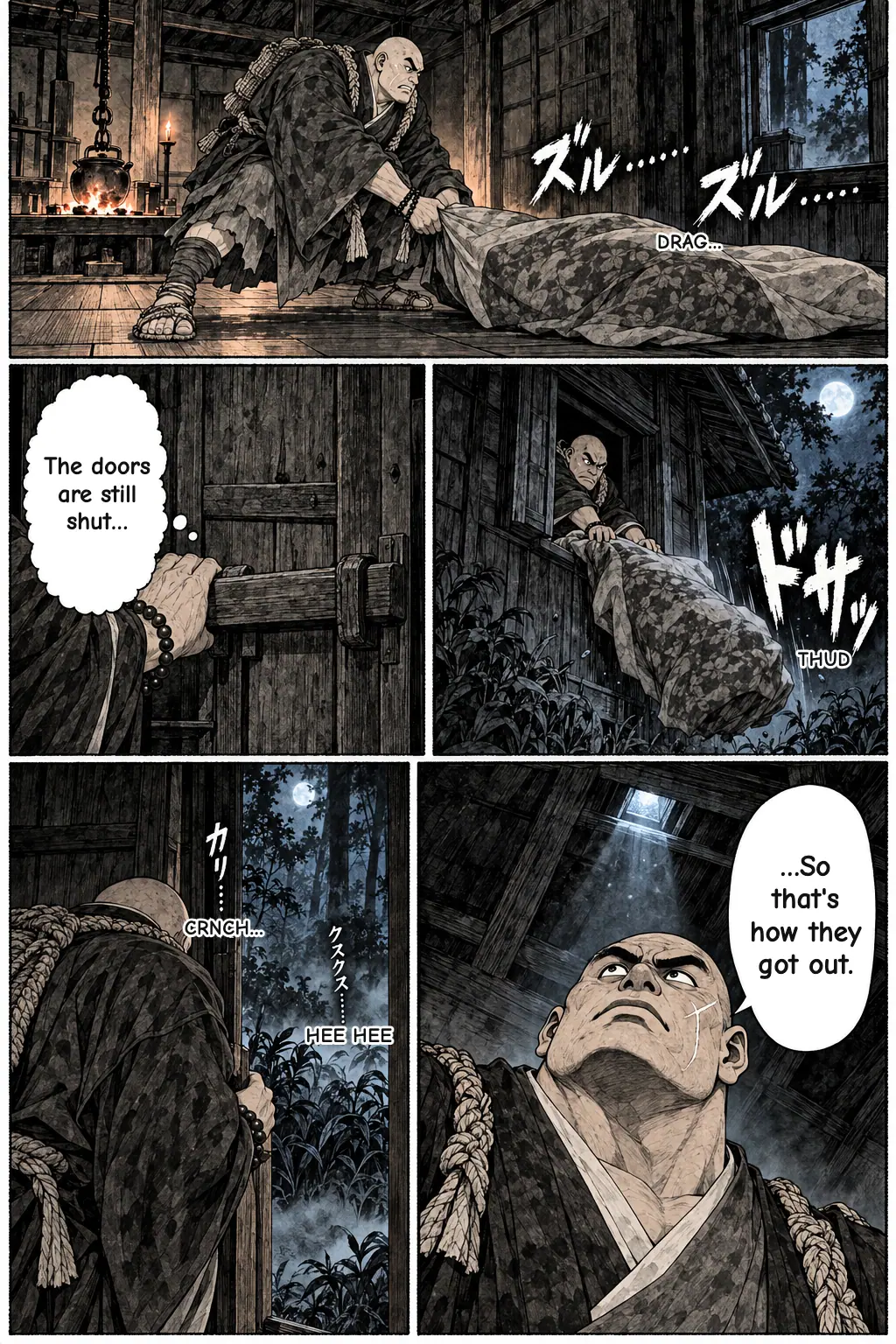
When he gets up for a drink of water, he finds five bodies lying in the next room, and none of them has a head. At first he suspects murder. Then he notices there is no blood and no cut, and he realizes these are rokuro-kubi. He remembers a passage from a book Hearn calls the Soshinki: if the headless body of such a creature is moved, its head cannot rejoin it. The head beats against the floor until it dies. Kwairyo drags the master's body to the window and pushes it outside.
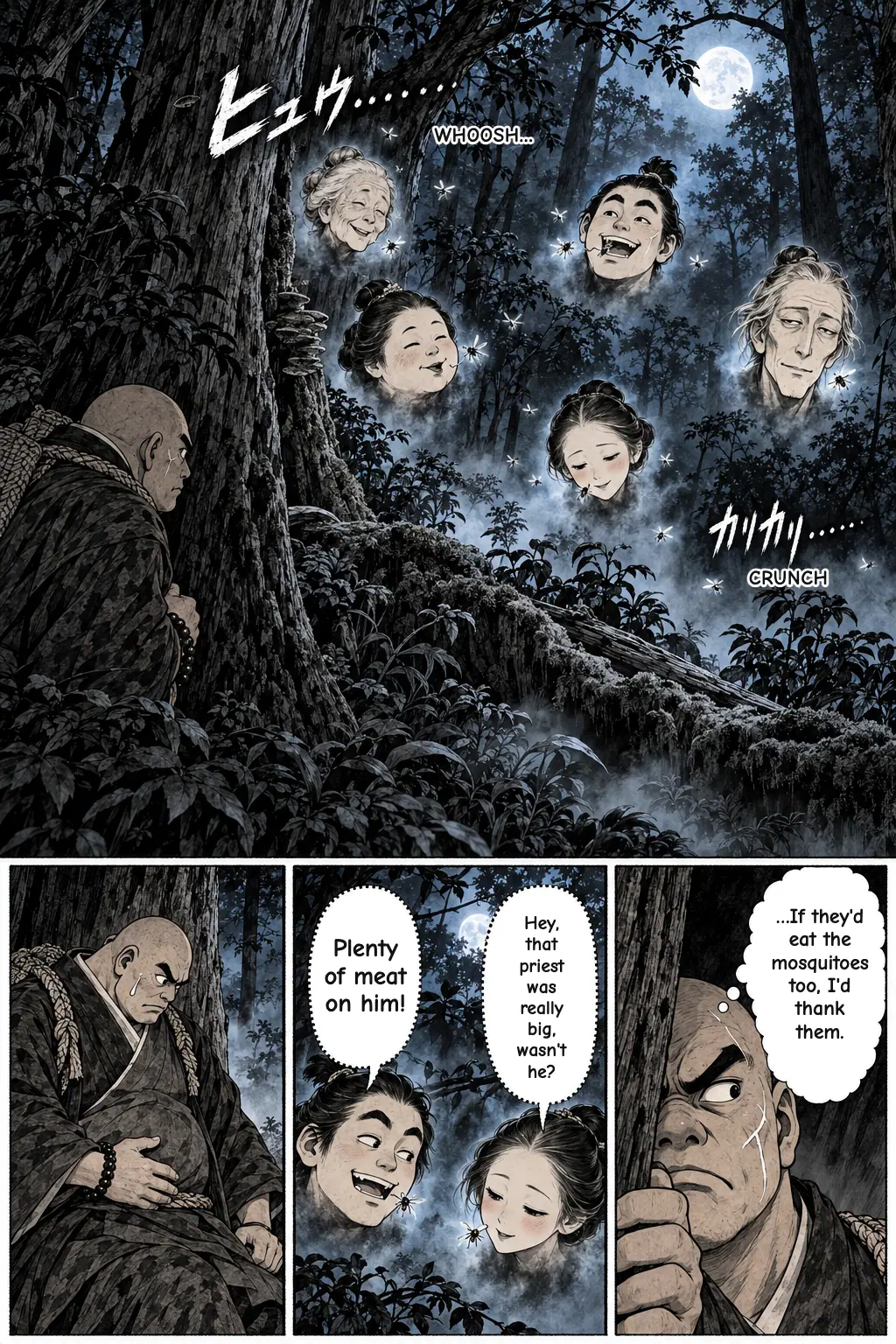
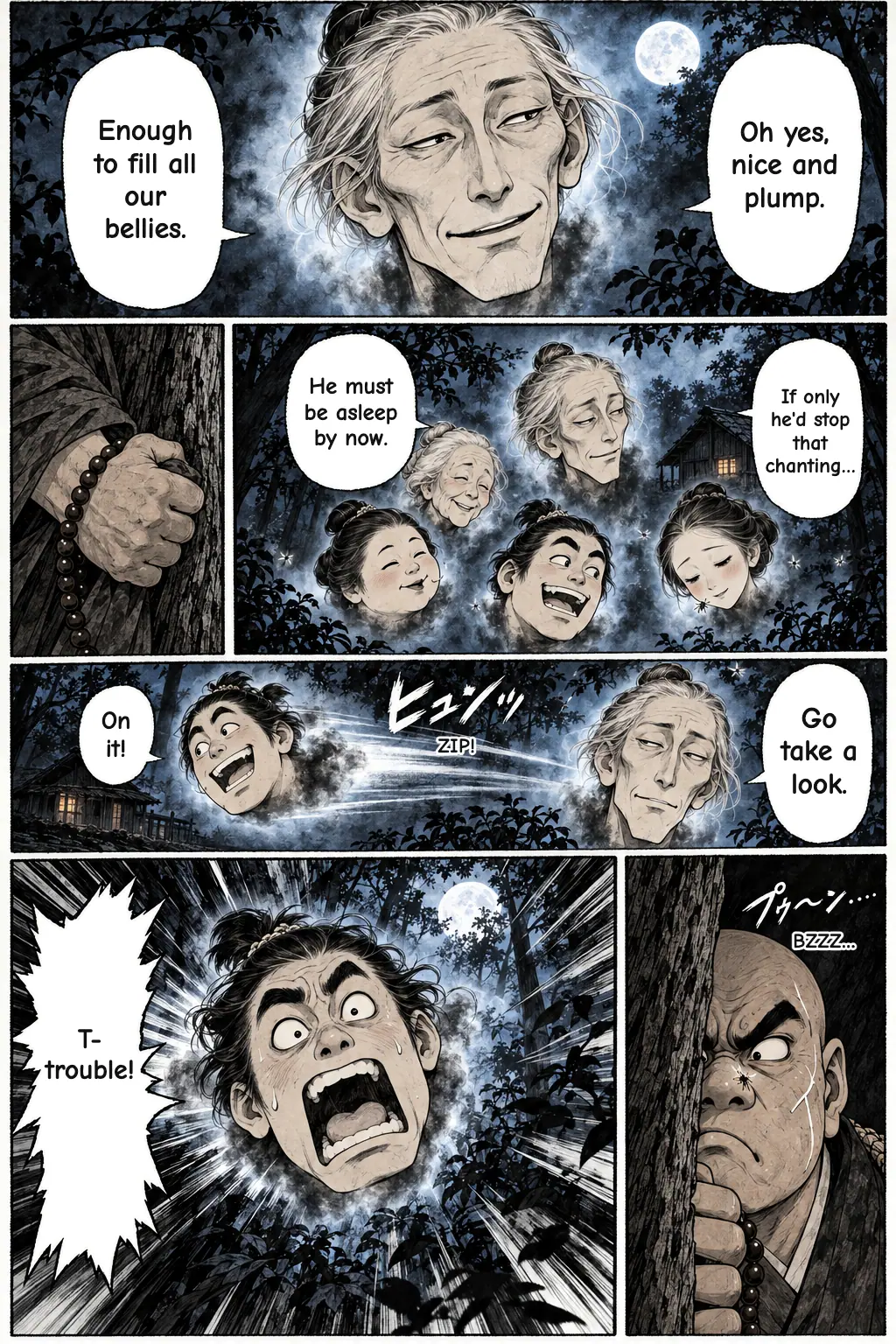
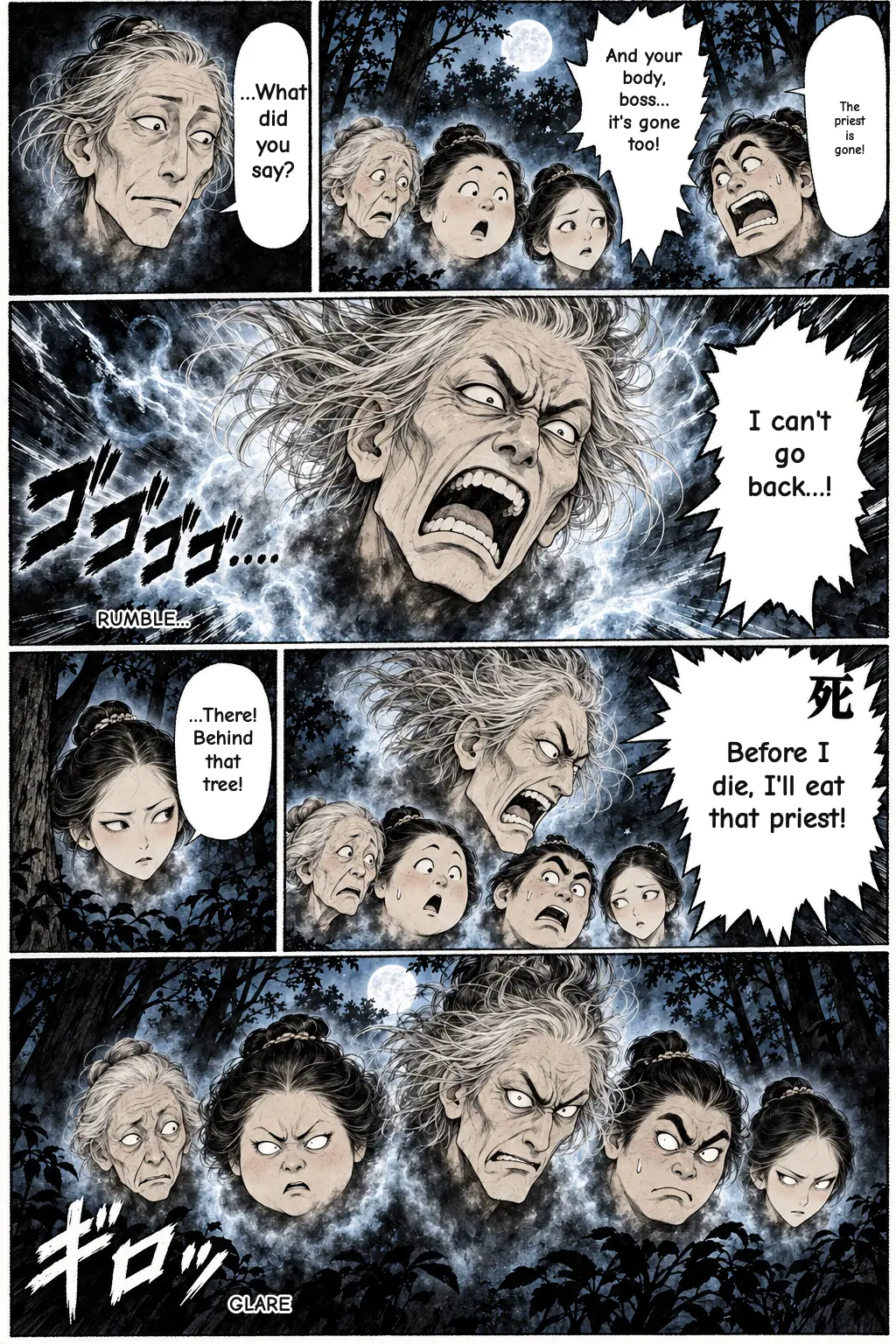
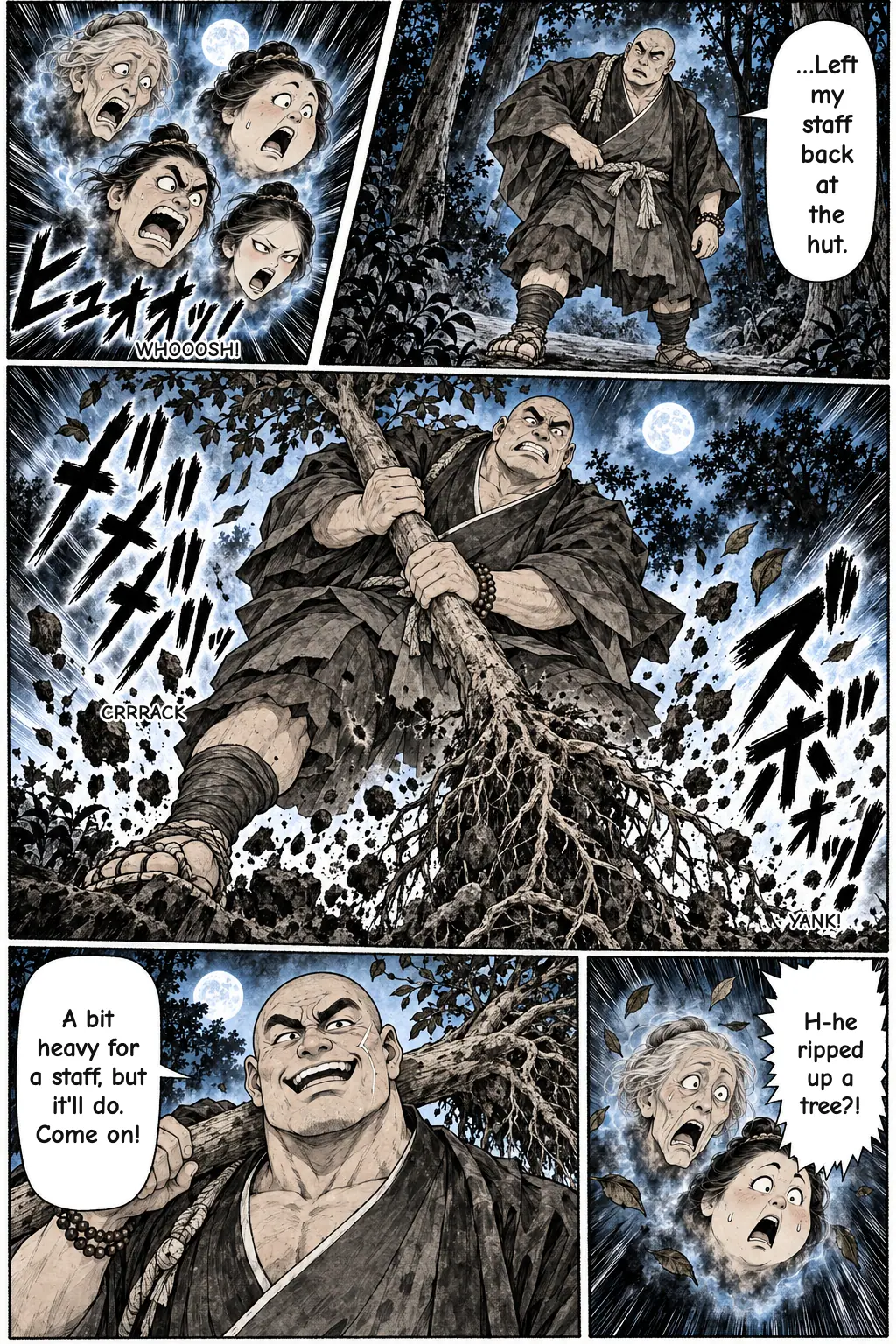
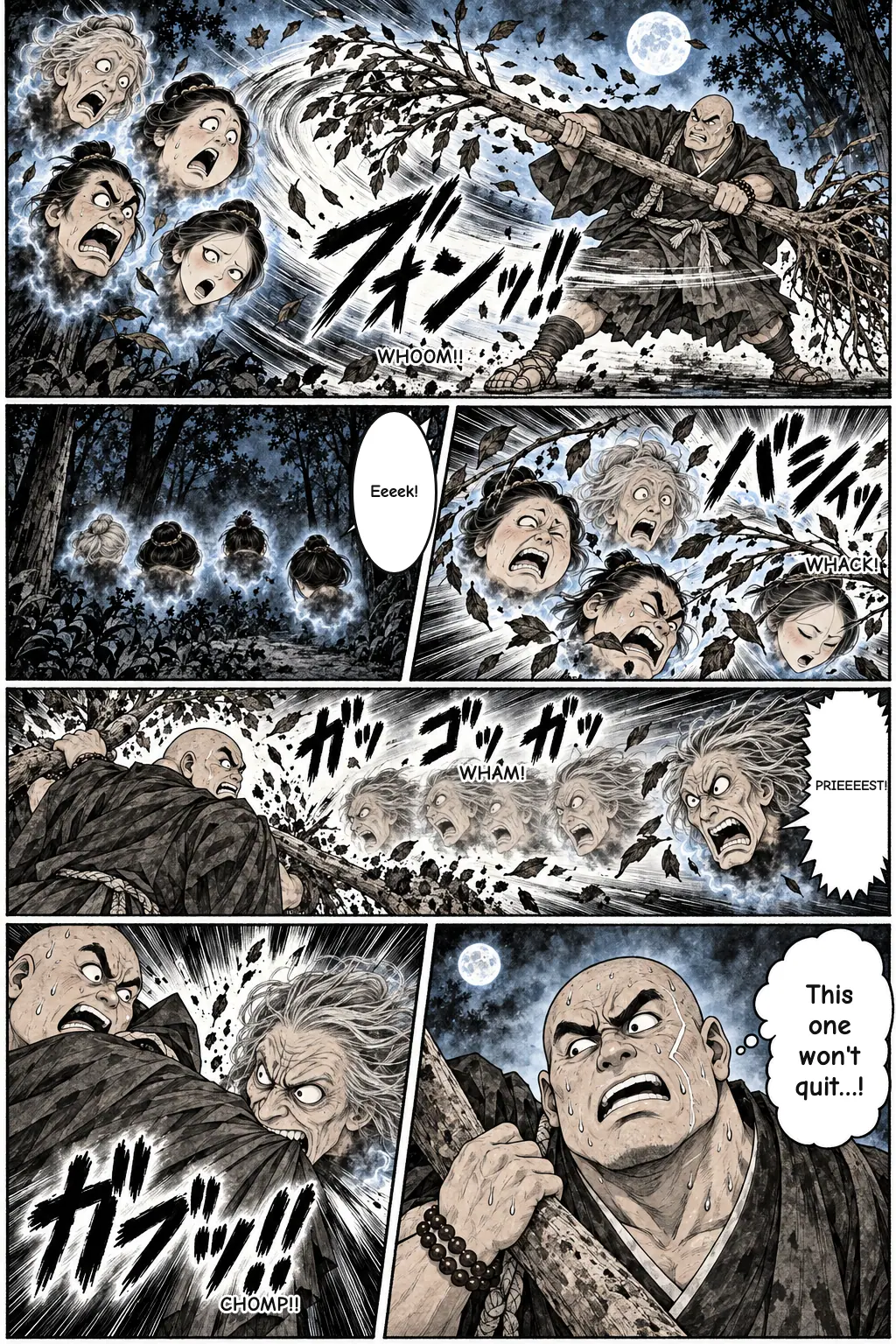
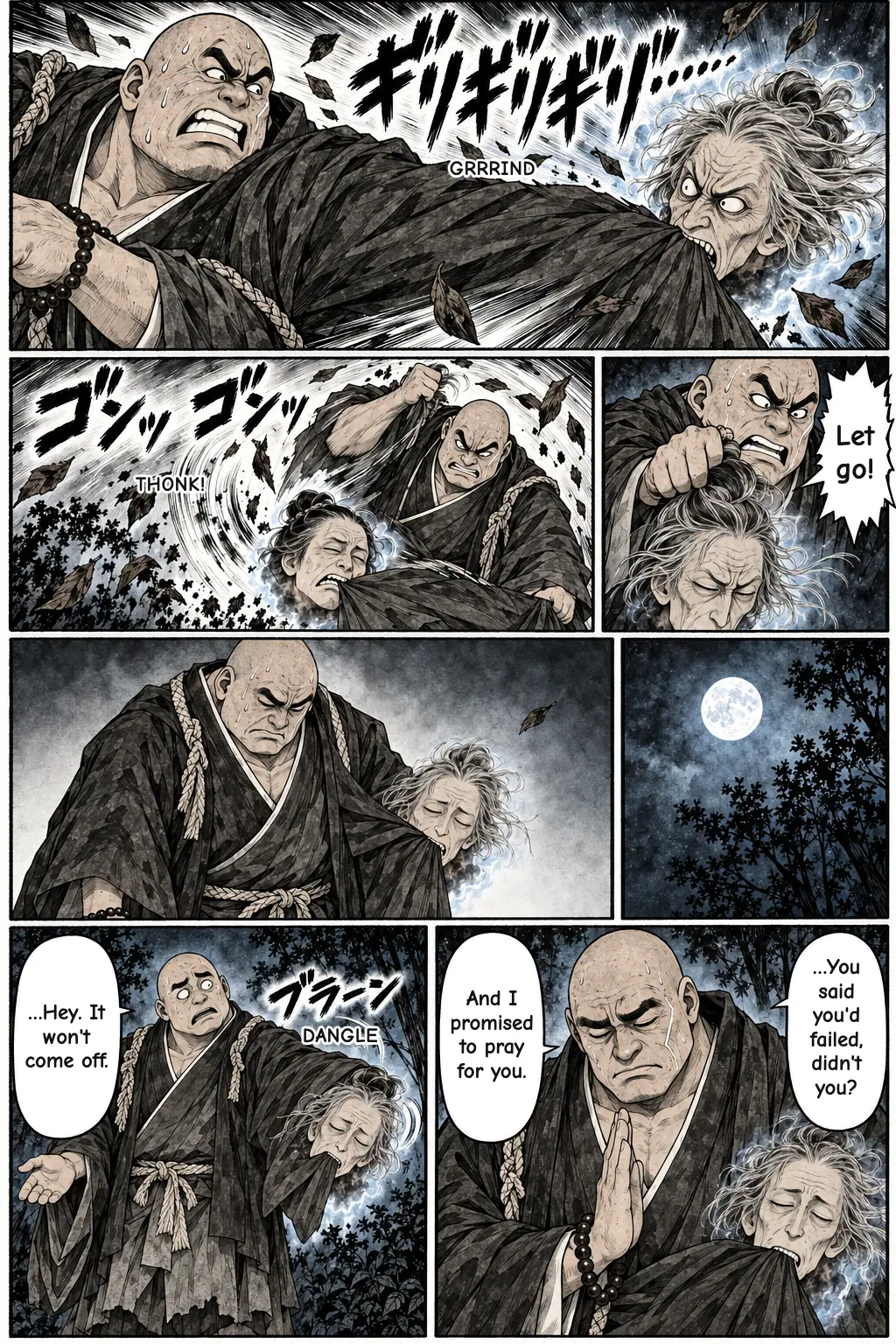
Out in the grove he finds the five heads flitting about and eating insects. The master's head says the plump priest would make a fine meal once his prayers have stopped. A scout head comes back with bad news: the priest is gone, and so is the master's body. Furious, the master's head leads an attack. Kwairyo pulls up a young tree and beats the heads back. Four of them flee, but the master's head clamps onto his left sleeve and dies there without letting go.
The Aftermath: Suwa, the Judges, and the Robber
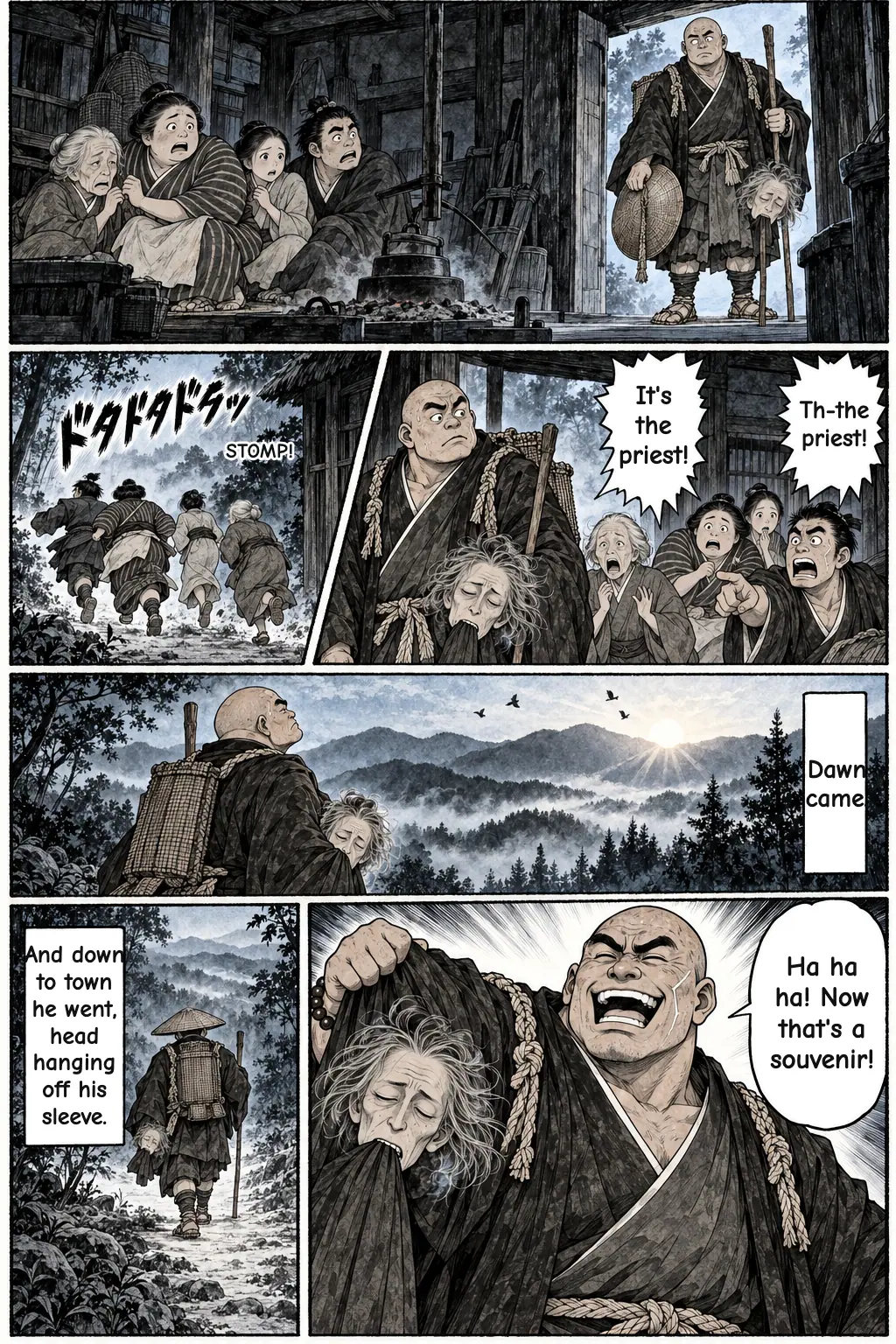
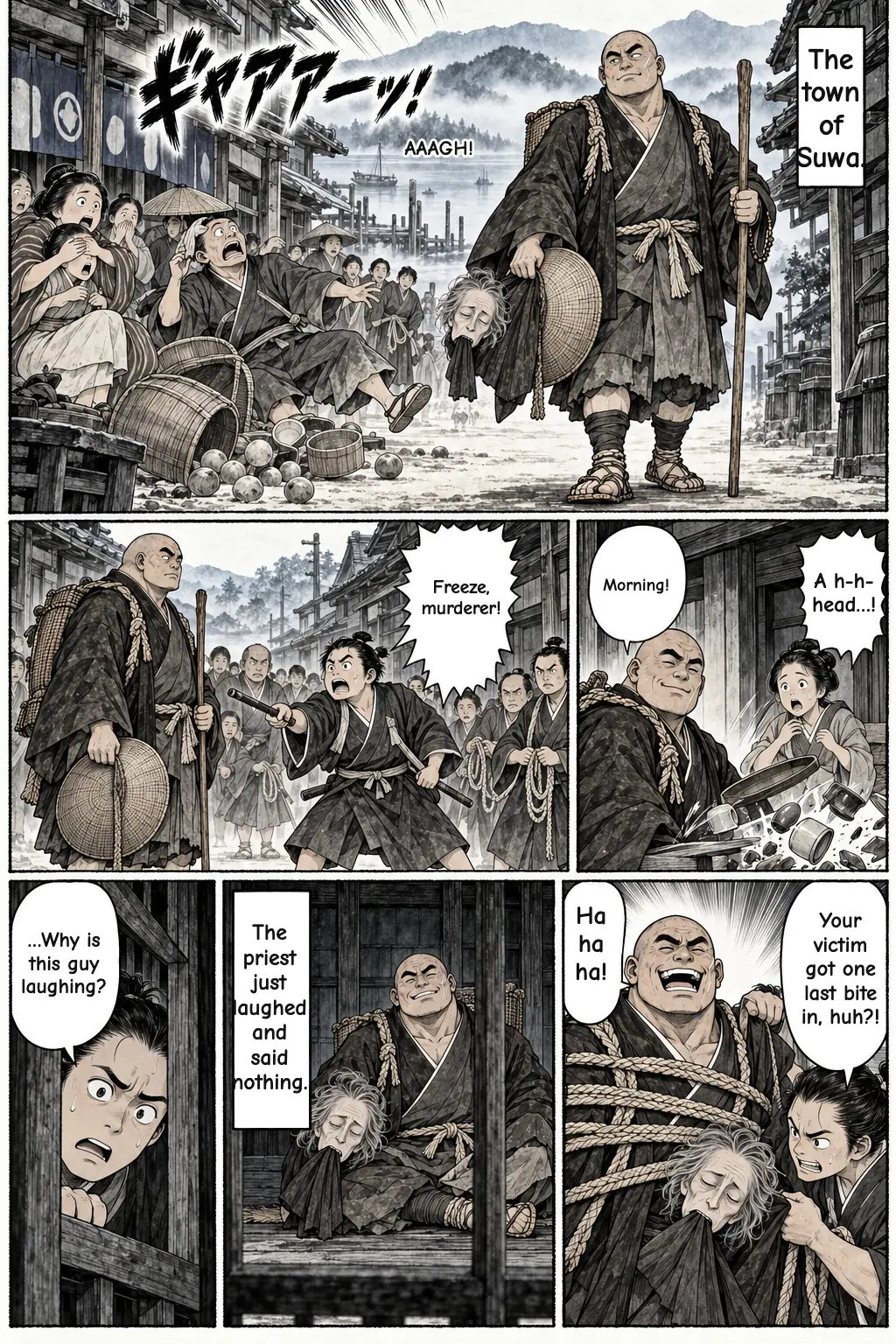
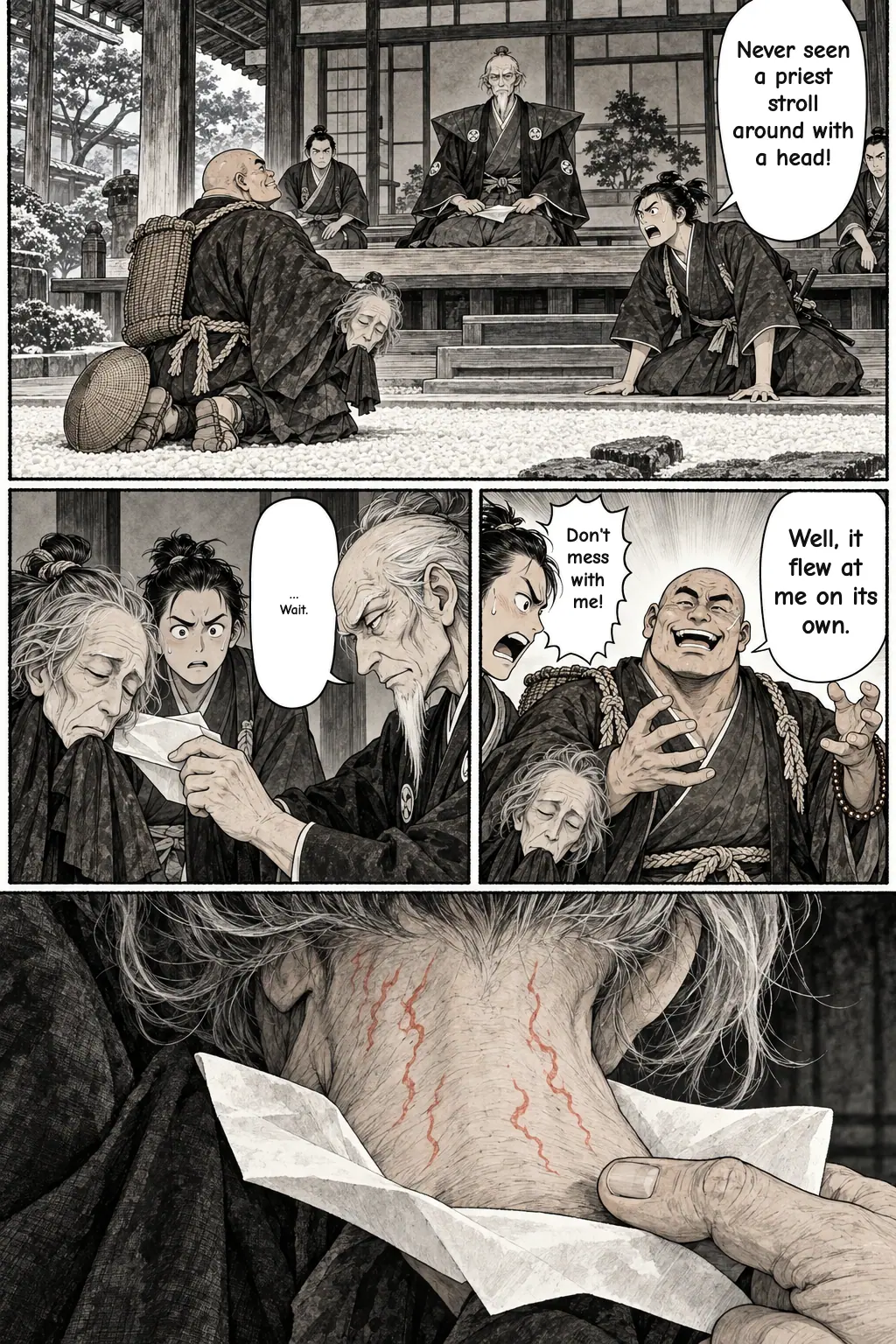
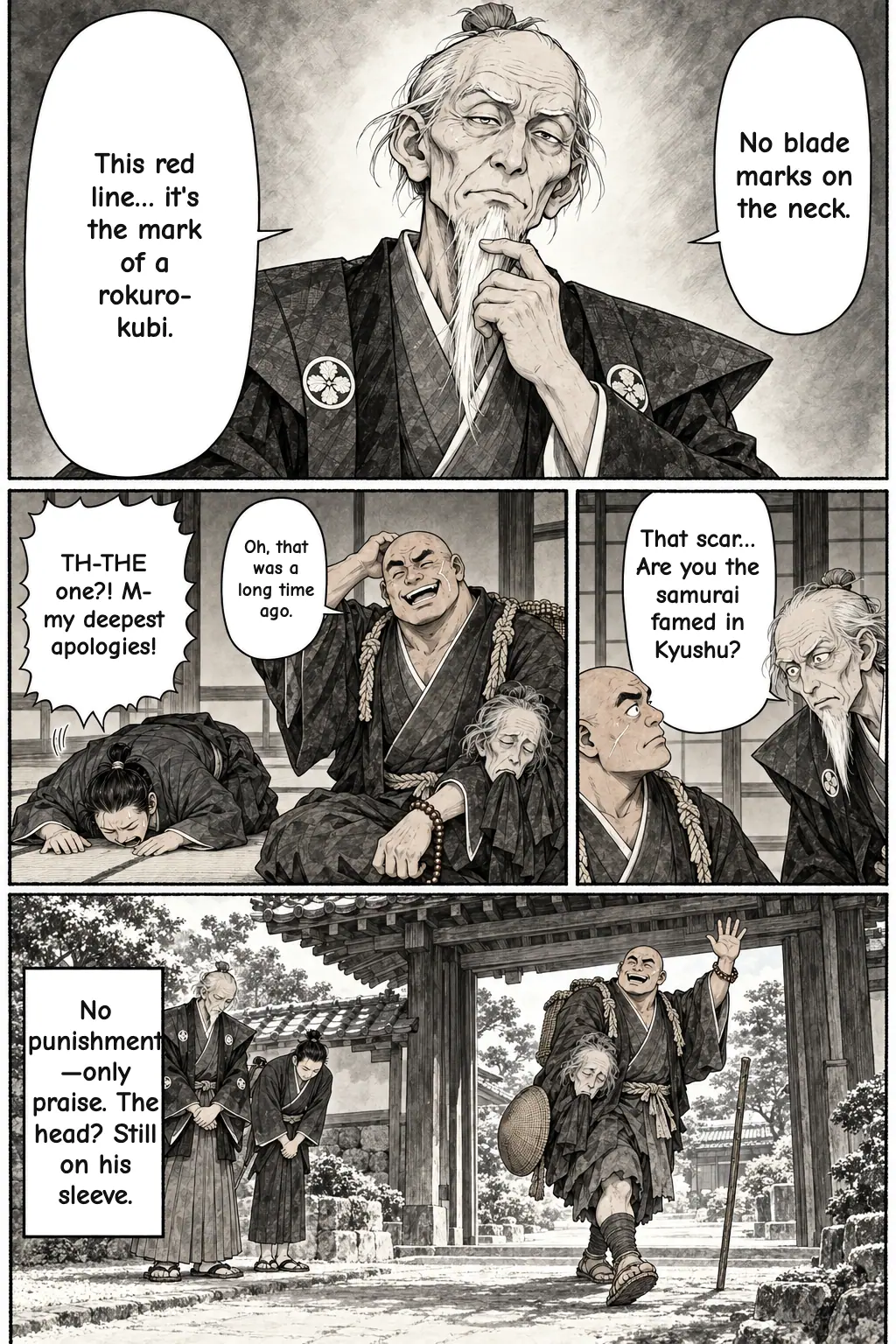
At dawn the four surviving creatures, back in their bodies, see Kwairyo and run into the forest screaming. He laughs, calls the head a fine souvenir, and walks down to Suwa in Shinano province with it still hanging from his sleeve. The townspeople panic, and he is arrested on suspicion of murder. He only smiles. During questioning, an elderly judge looks closely at the head. He finds no sign of a blade at the neck and notes other marks of a rokuro-kubi. He also recognizes the prisoner as the famous warrior Isogai. Kwairyo is praised and set free.
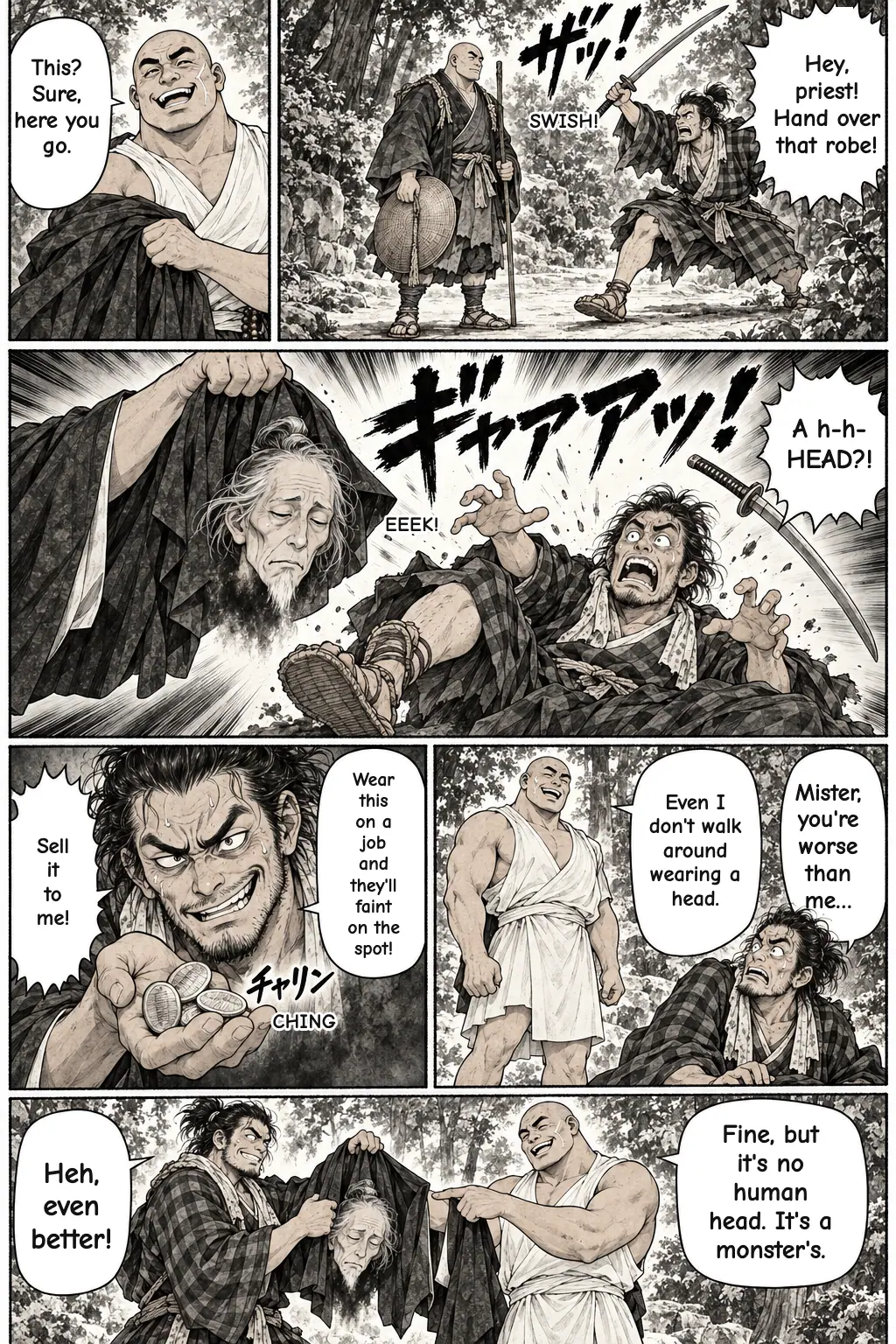
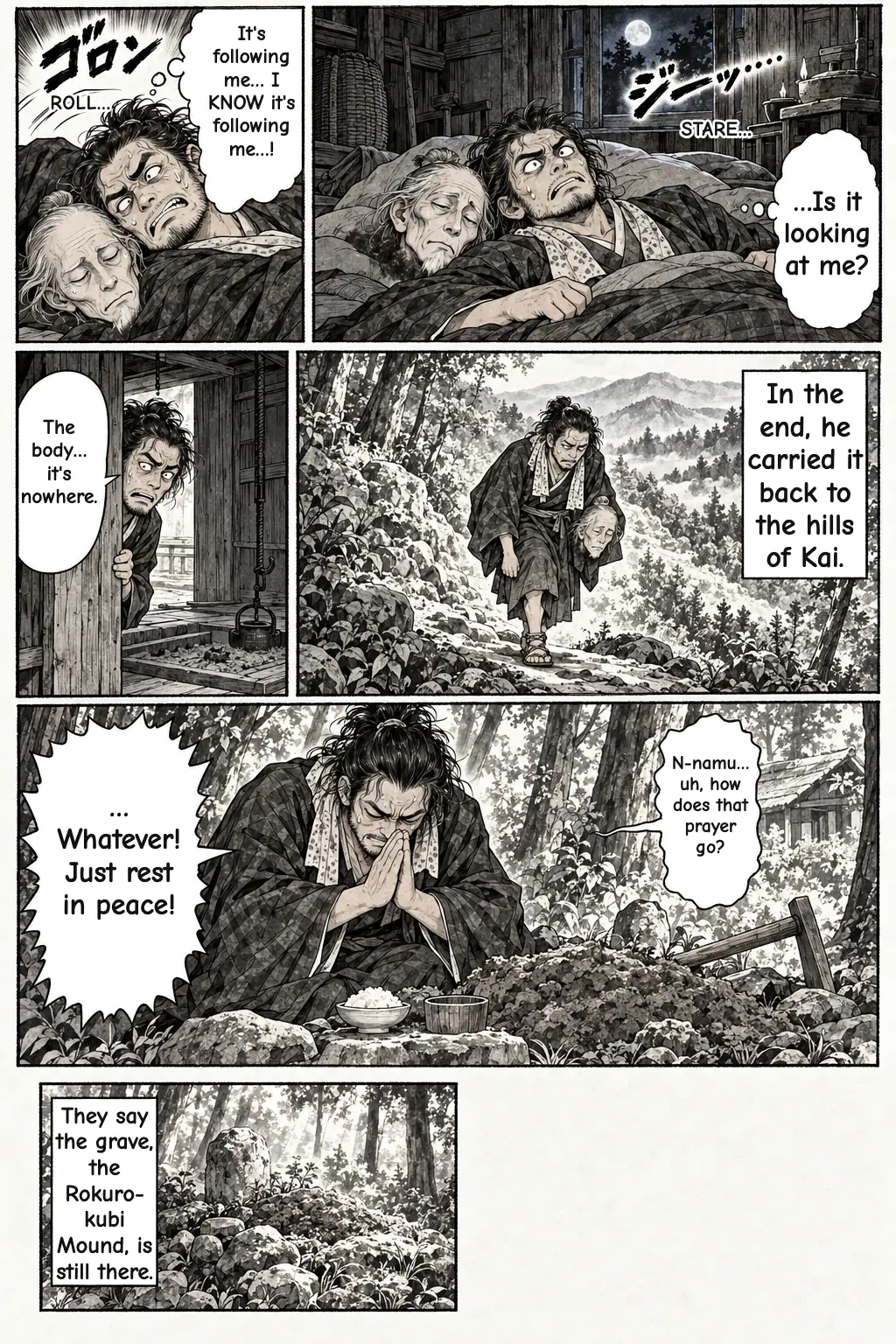
Later a robber in the mountains orders him to hand over his robe. When the robber sees the head, he is so impressed that he buys the robe, head included, thinking it will help him frighten people. Kwairyo tells him plainly that it is a goblin's head, not a man's. In time the robber grows afraid of a curse. He goes back to the hut in Kai, finds no body, buries the head alone, and holds a service for wandering spirits. Hearn closes by saying that Japanese storytellers claim the grave can still be seen.
What Is a Rokuro-kubi? Cultural Background
The word rokuro-kubi is often linked to a creature whose neck stretches to great lengths. Hearn's version is a different type, in which the head detaches completely and flies off at night. In Japanese folklore this type is sometimes called nukekubi, and some writers trace it to Chinese tales of flying heads. Hearn's own nod to a Chinese-sounding book of marvels fits that idea.
The story also reflects the samurai ideal that Hearn admired. Kwairyo wins with calm reasoning, book learning, and strength, and he stays steady even in prison. The bodies and the heads have no power once day comes, which echoes a common belief that such beings only rule the dark. The robber's burial and the service for hungry spirits show the Buddhist concern for laying restless dead to rest, even monstrous ones.
Main Characters
Kwairyo (Isogai Heidazaemon) is the hero, a former samurai turned priest who is devout, clever, very strong, and dryly funny. The woodcutter host seems kind and full of regret but is the leader of the rokuro-kubi. The four other members of the household are his fellow creatures. The judges of Suwa first suspect Kwairyo, and their eldest member works out the truth. The robber is a villain with a nervous conscience, and he ends up giving the head a proper burial.
What the Manga Changes
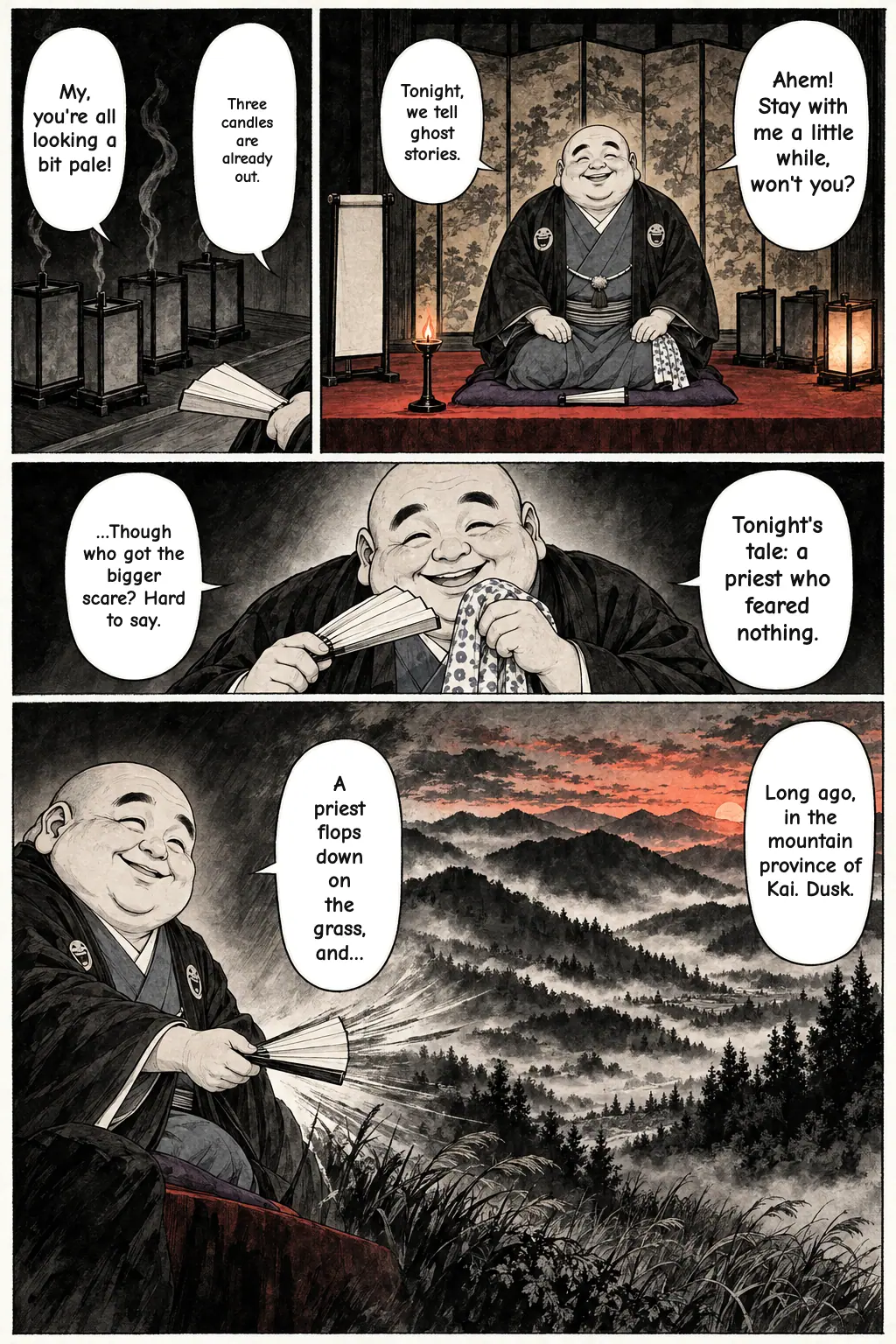
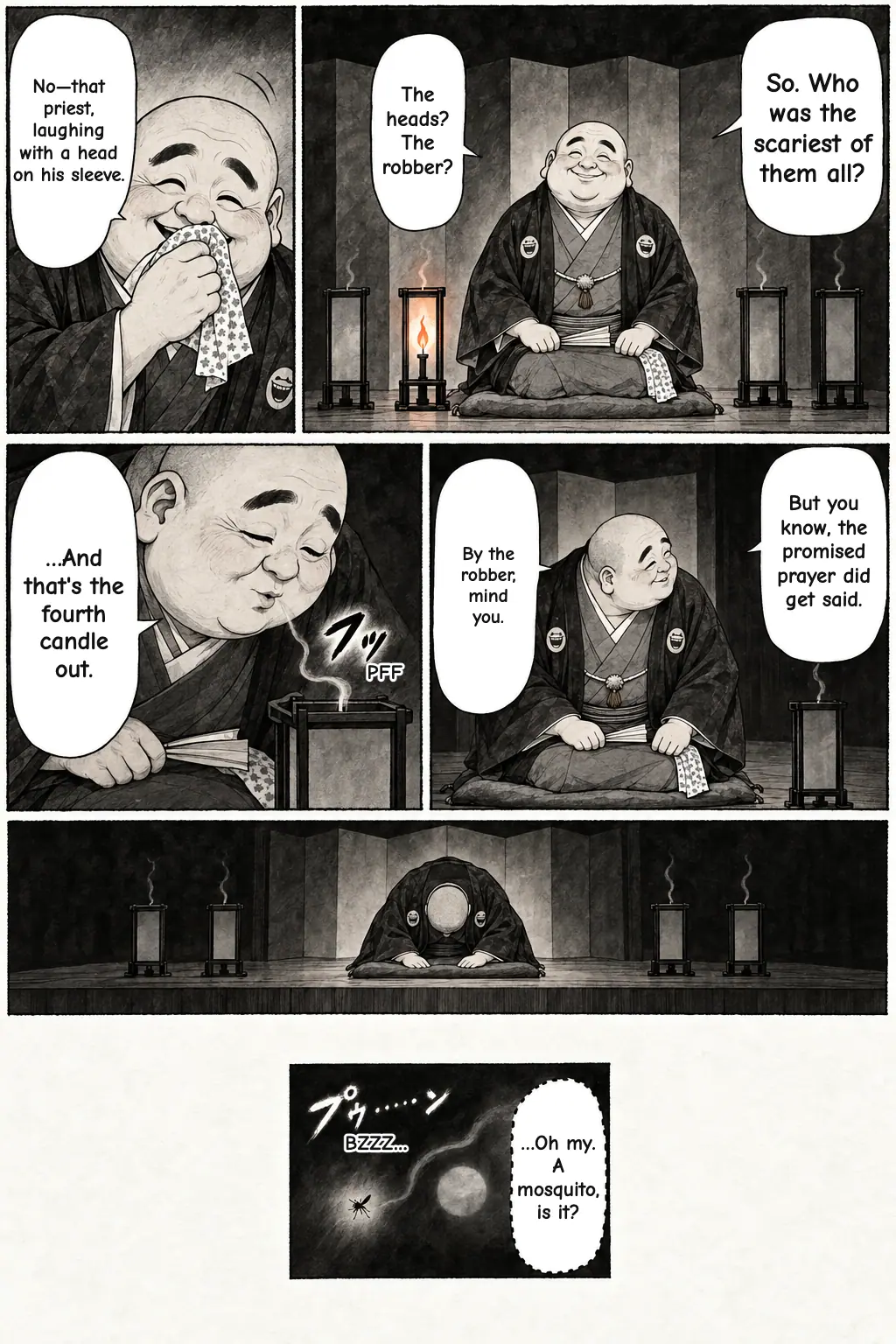
Manga Portal's Episode 4 follows the main events of Hearn's plot closely: the warning, the confession, the headless bodies, the moved body, the battle, the sleeve, the trial, and the robber's burial. Some parts are our own additions. The storyteller Fukurai, who opens the episode and blows out a paper lantern at the end, is entirely original to the series. So are the character designs, the costumes, and the makeup of the household, since Hearn describes them only briefly.
The fight is shown through flowing ink with no blood. The insect-eating scene is toned down for a general audience. The robber's story is turned into a short, comic two-page ending. Some dialogue in the trial scene is newly written, but the key points of the scene match the original.
Where to Read It
Hearn's original is in Kwaidan: Stories and Studies of Strange Things (Houghton Mifflin, 1904), which is free on Project Gutenberg (eBook #1210). For a quick and atmospheric way into the tale, read "He Didn't Run. He Hid the Body." in KAIDAN: Japanese Ghost Stories here on Manga Portal. Every episode is free, and you don't need an account. Once you've finished, the earlier ghost stories in the series are only a click away.
Characters in this episode
Kwairyo (Isogai Heidazaemon Taketsura)
A fearless former samurai of the Kikuchi clan who became a wandering Buddhist priest and uses his wits and strength against the rokuro-kubi.
The Woodcutter (the Master)
A friendly host who claims to regret a ruined past but is secretly the leader of the flying heads and plans to eat Kwairyo.
The Four Housemates
The other rokuro-kubi of the hut, whose heads leave their bodies at night to feed in the woods.
The Elder Judge of Suwa
An experienced official who examines the head, confirms it belonged to a rokuro-kubi, and recognizes Kwairyo as the famous Isogai.
The Robber
A mountain thief who buys Kwairyo's robe with the head attached, later fears a curse, and buries the head in Kai.
FAQ
What is a rokuro-kubi?
A rokuro-kubi is a creature from Japanese folklore that looks human by day. In many tales its neck stretches very long at night, but in Lafcadio Hearn's story the head detaches completely and flies around. That flying-head type is sometimes called nukekubi.
How do you defeat a rokuro-kubi in Hearn's story?
Kwairyo remembers an old belief that if the headless body is moved while the head is away, the head cannot reattach and dies. He drags the master's body out of the window, then fights off the attacking heads with a young tree he has uprooted.
Who wrote the story "Rokuro-Kubi"?
It was retold in English by Lafcadio Hearn (Koizumi Yakumo) in Kwaidan: Stories and Studies of Strange Things, published in 1904. Hearn based his Kwaidan stories on older Japanese tales.
What happens to the head stuck on Kwairyo's sleeve?
Kwairyo is briefly arrested in Suwa because of it, but a judge confirms it is a rokuro-kubi's head and releases him. Later a robber buys the robe with the head attached. Fearing a curse, the robber eventually buries the head near the hut in Kai.
Is the Manga Portal version faithful to Kwaidan?
Yes, the main plot follows Hearn's story. The storyteller Fukurai, the character designs, the bloodless ink-style fight, and the comic ending with the robber were created for the manga.