Episode 3She Turned Around. She Had No Face.Mujina (The Faceless Ghost)
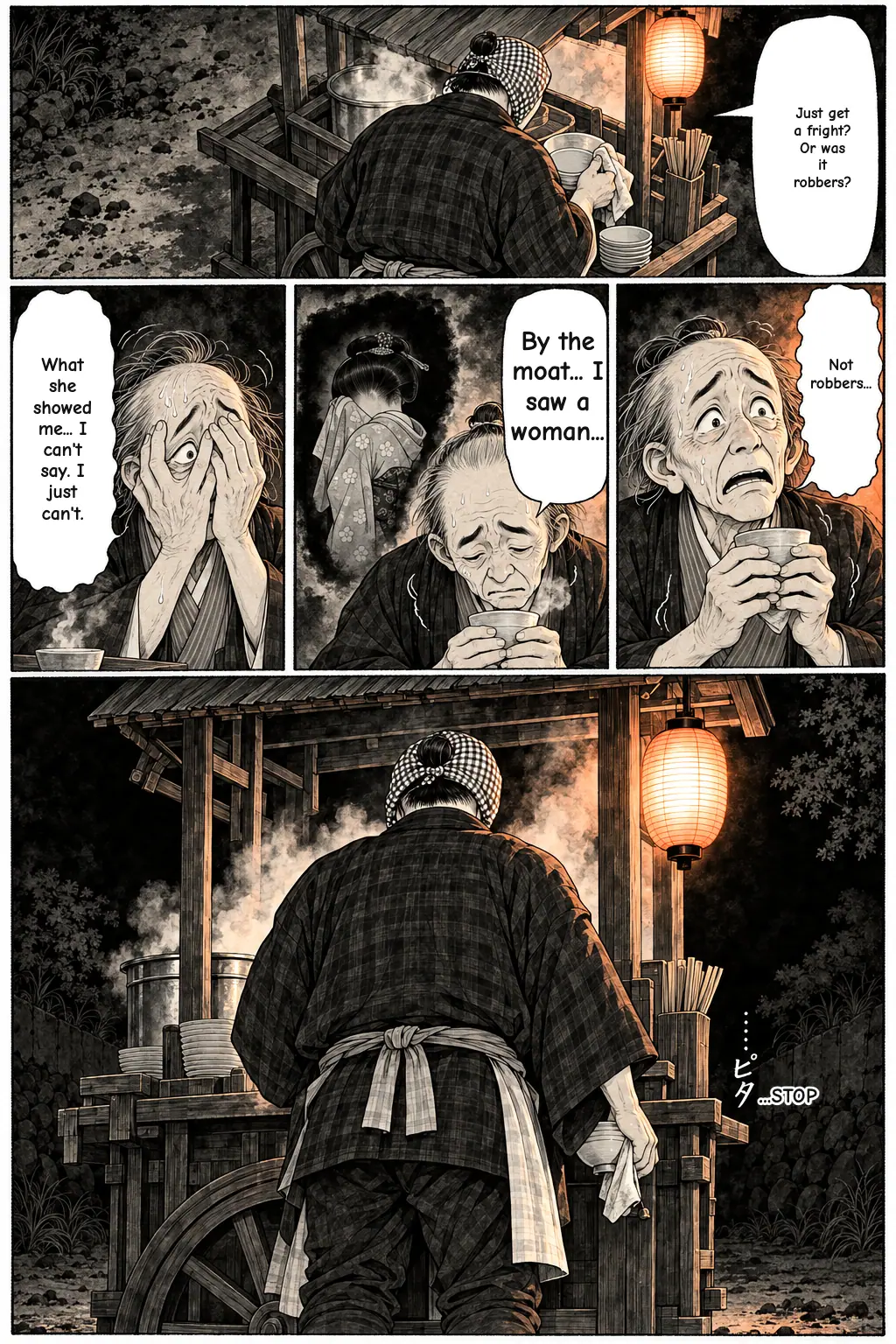
KAIDAN, Episode 3. Late at night on a dark slope, an old merchant can't bring himself to walk past a girl weeping at the edge of the moat. He flees from the faceless girl and finally reaches the glow of a noodle stall. But when he pours out the whole story to the stall keeper, whose back is turned to him...
Bookmark the series page so you can jump back in when the next episode is out: KAIDANRSS for this series
Story summary
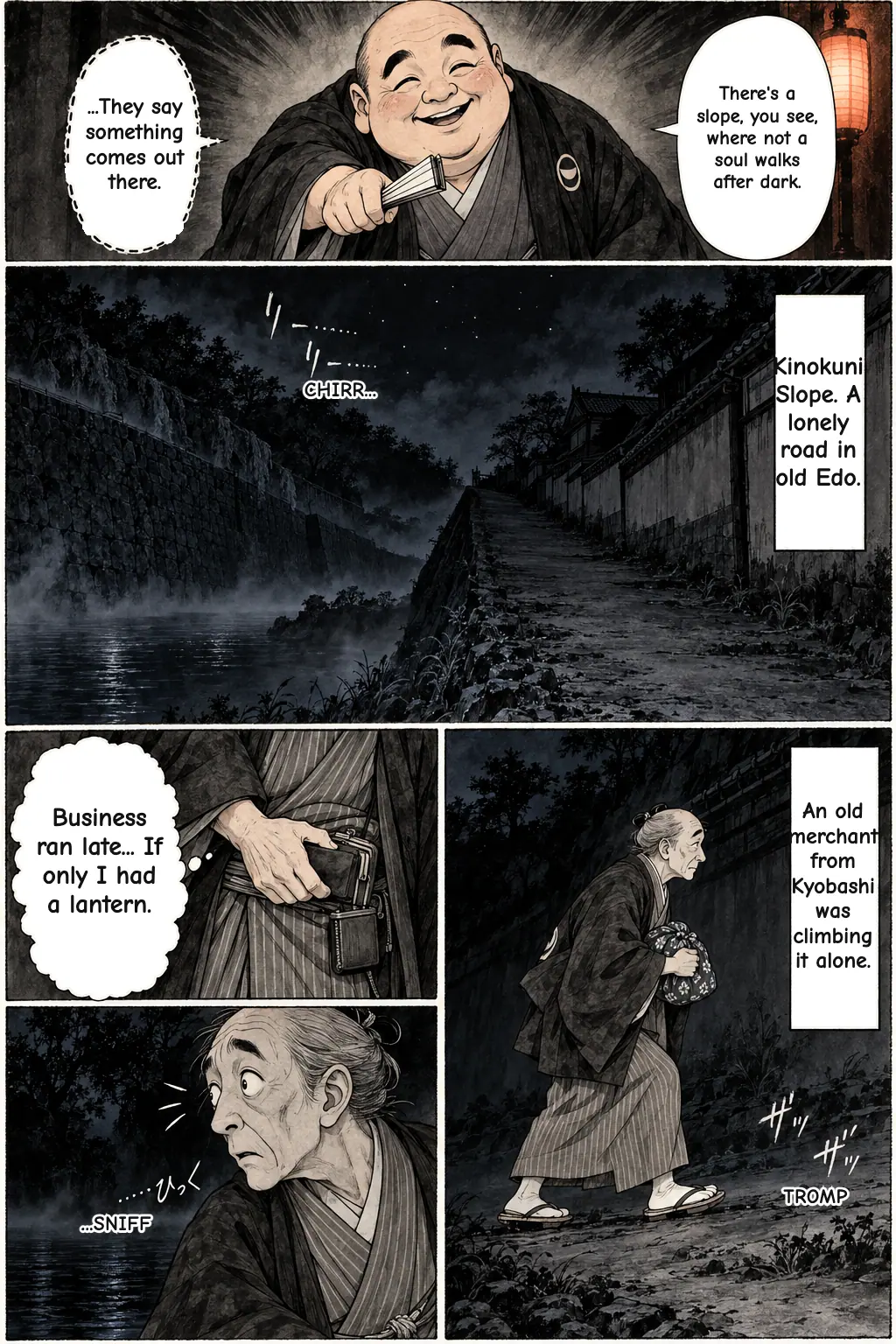
Hearn opens with a place rather than a person. In the Akasaka district of Tokyo there is a slope called Kii-no-kuni-zaka. Hearn admits he doesn't know where the name comes from. On one side runs a wide, deep old moat below a high green bank. On the other side stretch the long, high walls of a palace. Before street lamps and rickshaws came to the city, this road was so lonely after dark that people walking late would go miles out of their way rather than climb it alone. The reason was a mujina that was said to wander there.
Mujina Story Explained: Lafcadio Hearn's Faceless Ghost from Kwaidan
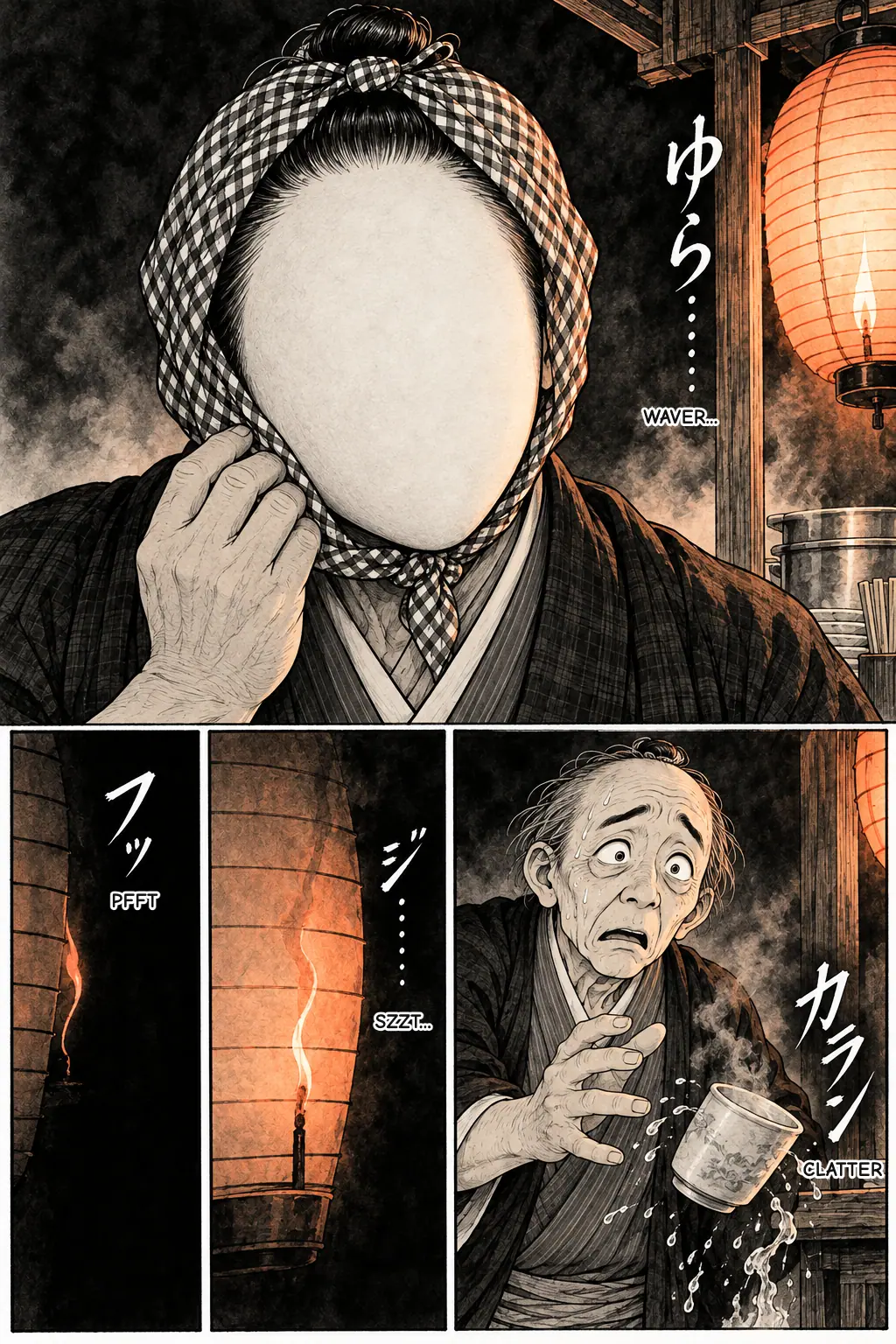
In short: "Mujina" is a short ghost story in Lafcadio Hearn's Kwaidan (1904): an old merchant climbing a dark slope in Tokyo tries to comfort a weeping girl, and she turns to show a face with no eyes, nose, or mouth. He runs to a roadside noodle seller for help, only for the seller to wipe his own face blank too, just as the light goes out. The title refers to the mujina, a shape-shifting animal of Japanese folklore that haunted the slope.
The Original Story: What Happens in "Mujina"
Hearn opens with a place rather than a person. In the Akasaka district of Tokyo there is a slope called Kii-no-kuni-zaka. Hearn admits he doesn't know where the name comes from. On one side runs a wide, deep old moat below a high green bank. On the other side stretch the long, high walls of a palace. Before street lamps and rickshaws came to the city, this road was so lonely after dark that people walking late would go miles out of their way rather than climb it alone. The reason was a mujina that was said to wander there.
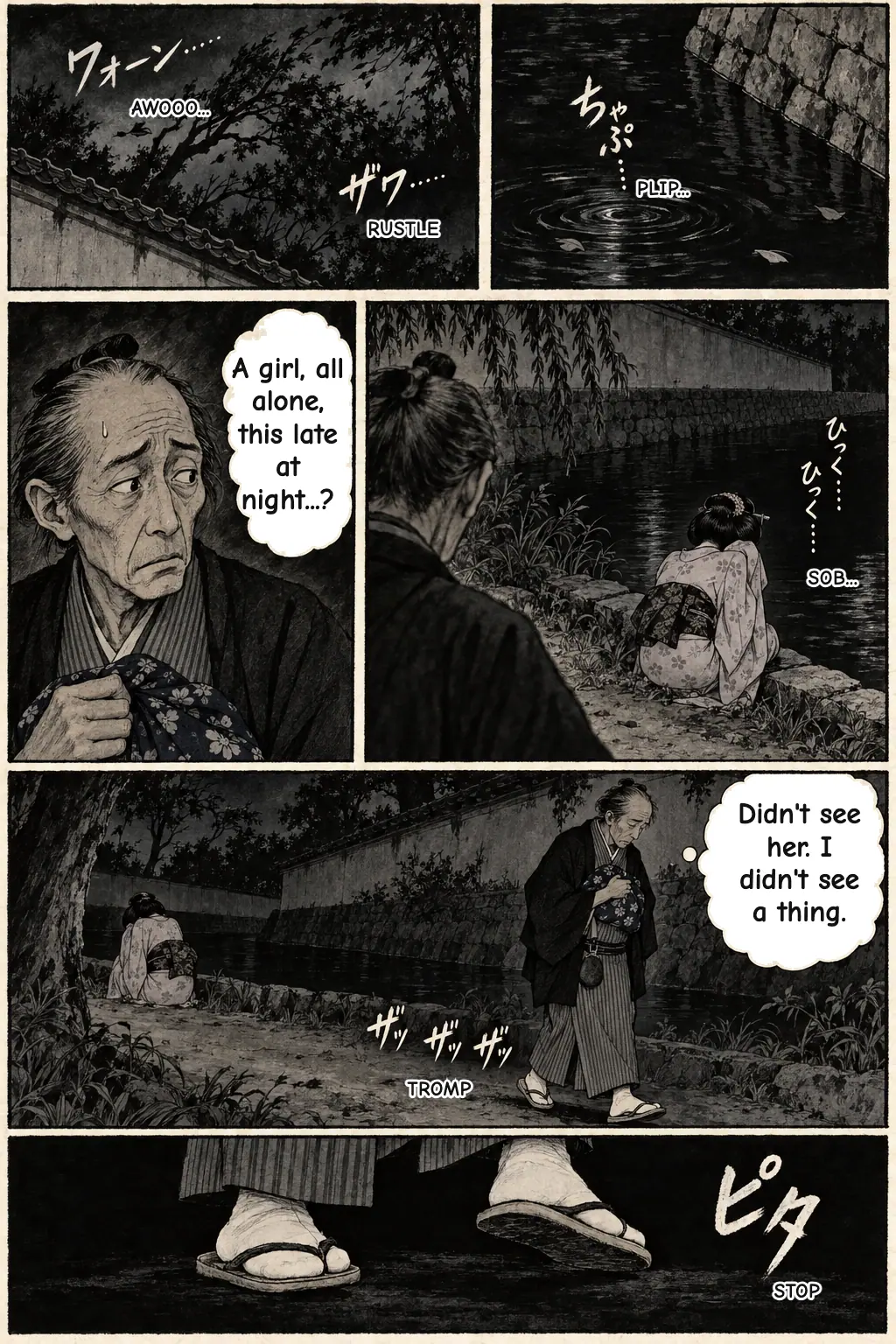
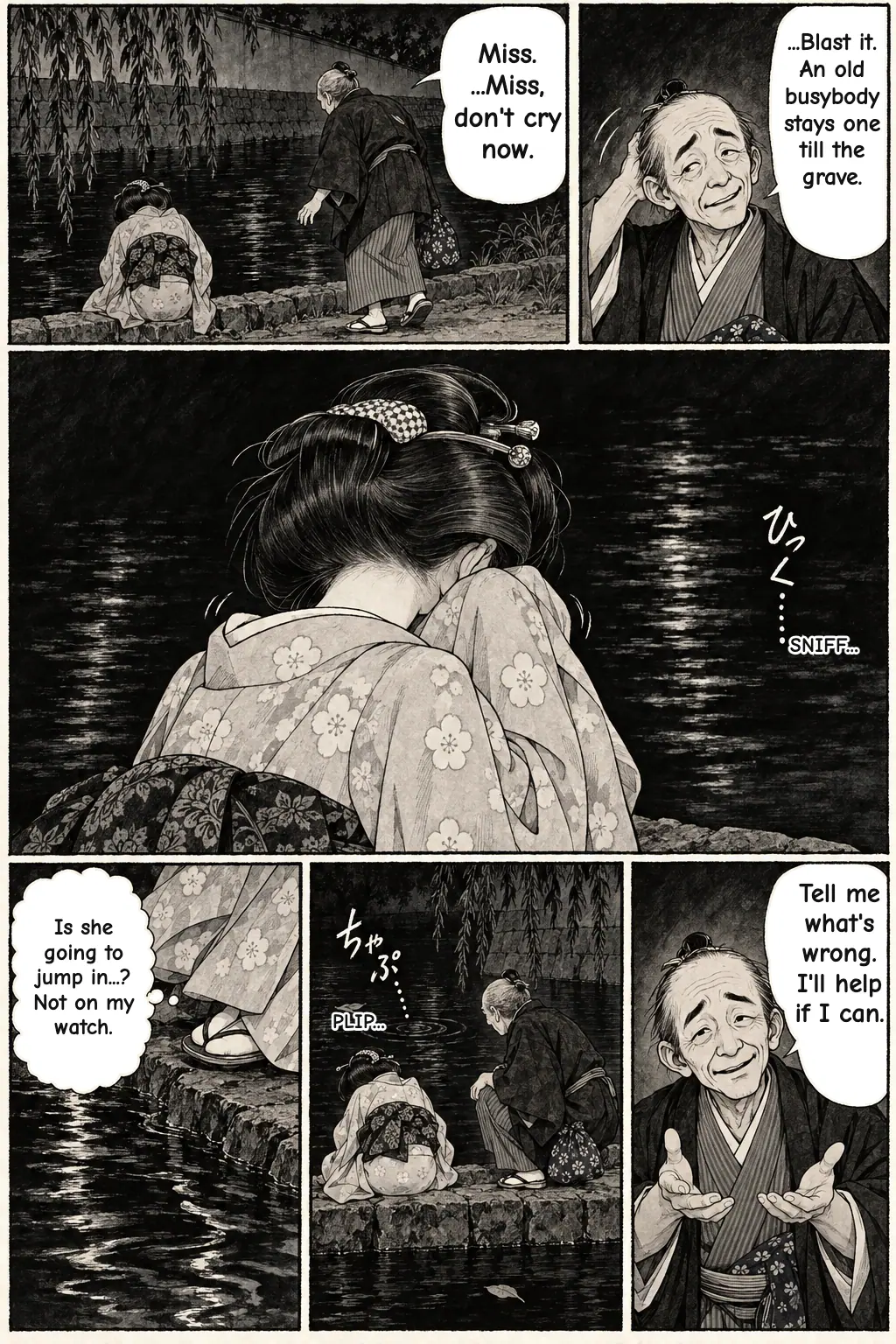
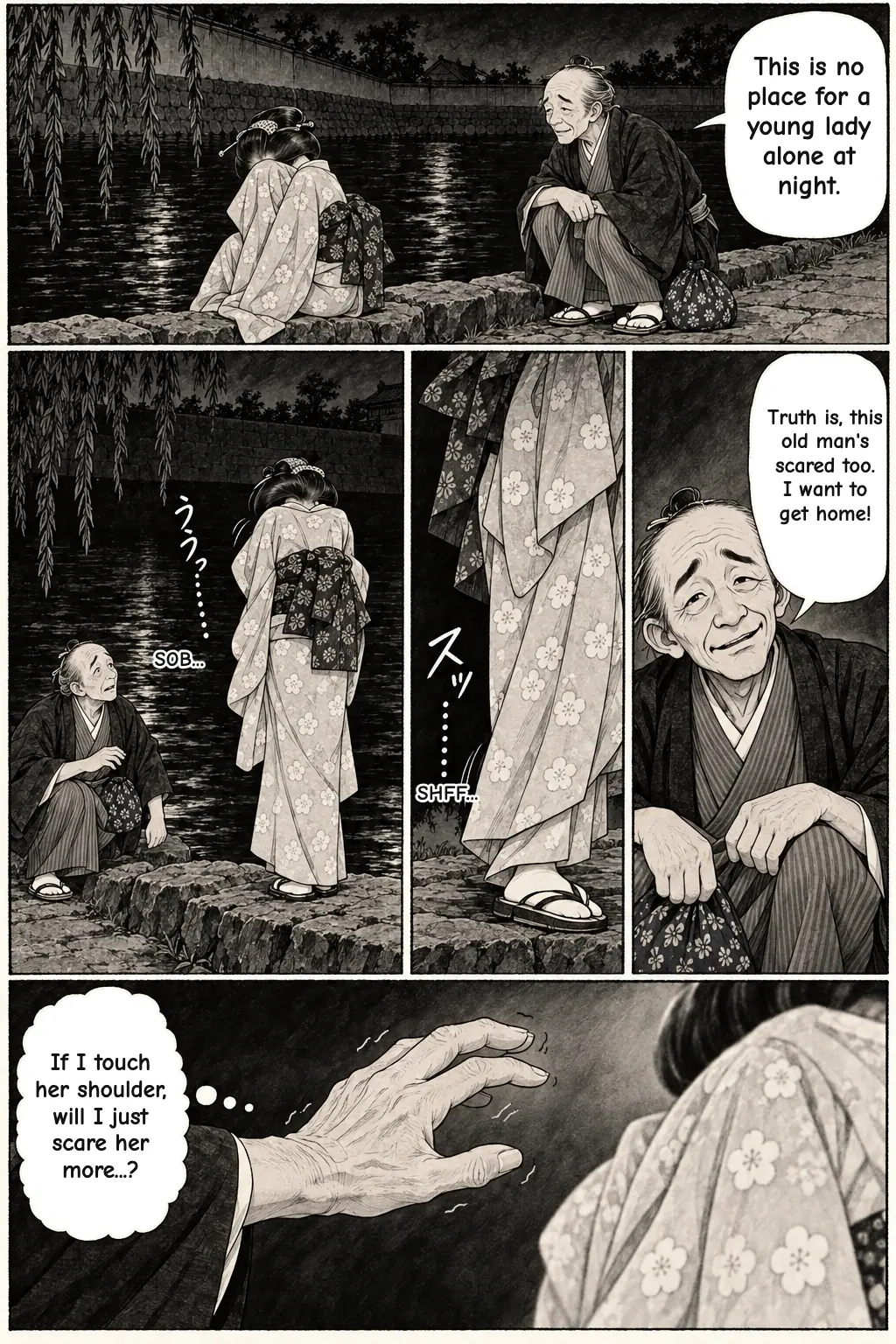
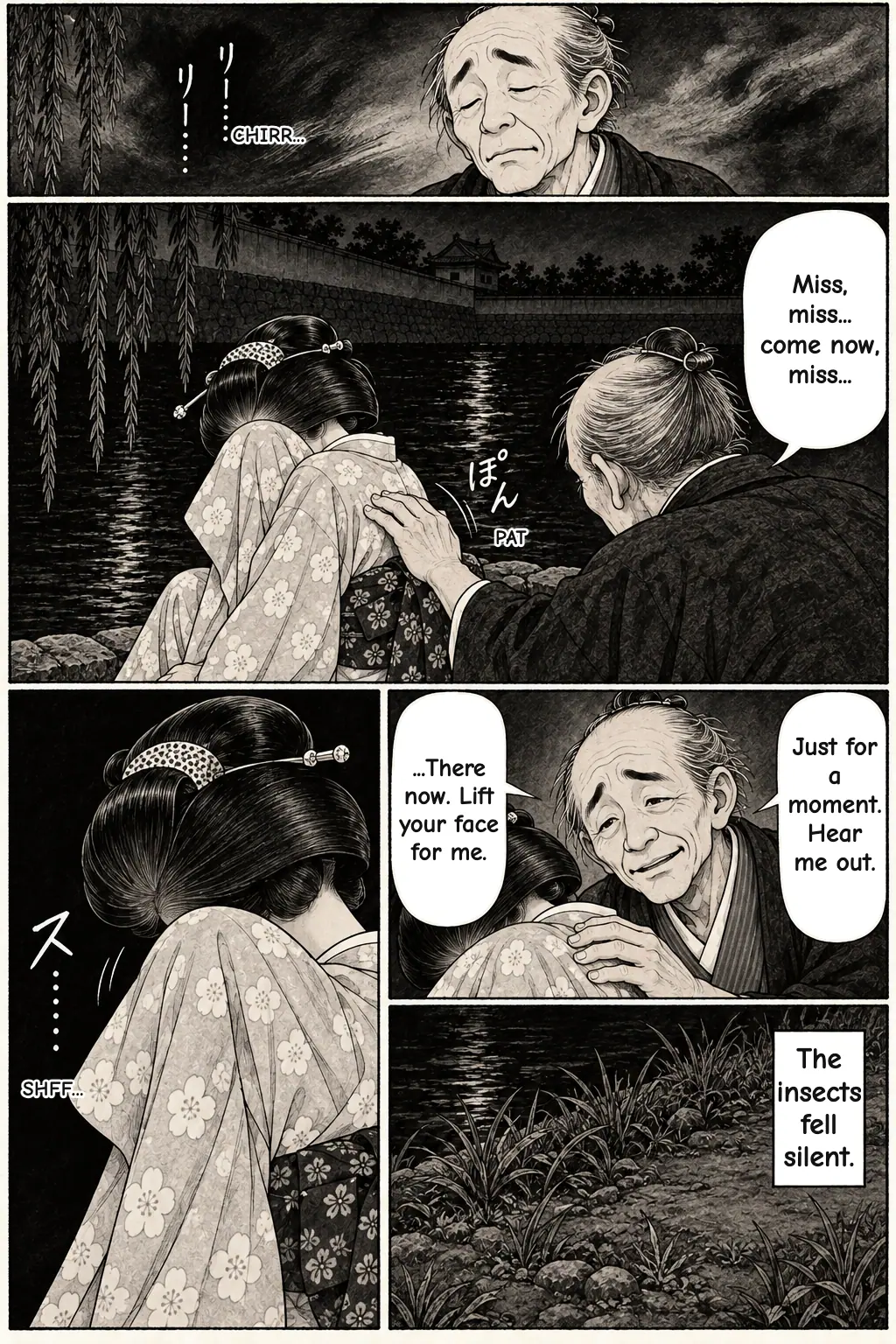
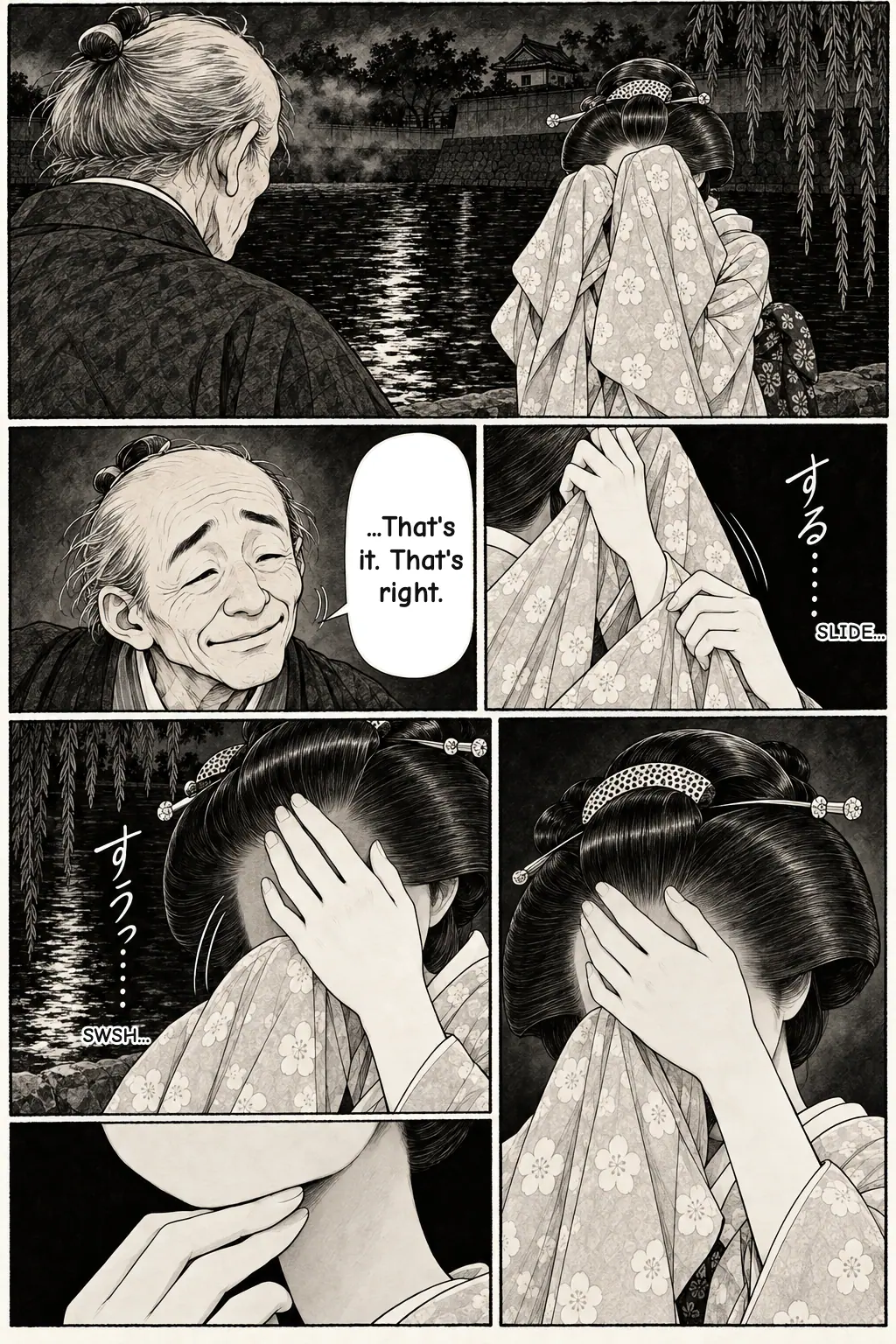
According to Hearn, the last man to see it was an old merchant from the Kyobashi district who had died about thirty years earlier, and the rest is told as that man's story. One night, hurrying up the slope, the merchant notices a young woman crouching by the moat, crying hard. She is slender and graceful, well dressed, with her hair done like a girl from a good family. Afraid she means to drown herself, he stops to help. He calls her "O-jochū," a polite way of addressing a young lady, and begs her to tell him what is wrong. She keeps her face hidden in her long sleeve. When he says this is no place for a young lady at night, she rises but keeps her back to him, still sobbing. He gently touches her shoulder and pleads with her to listen.
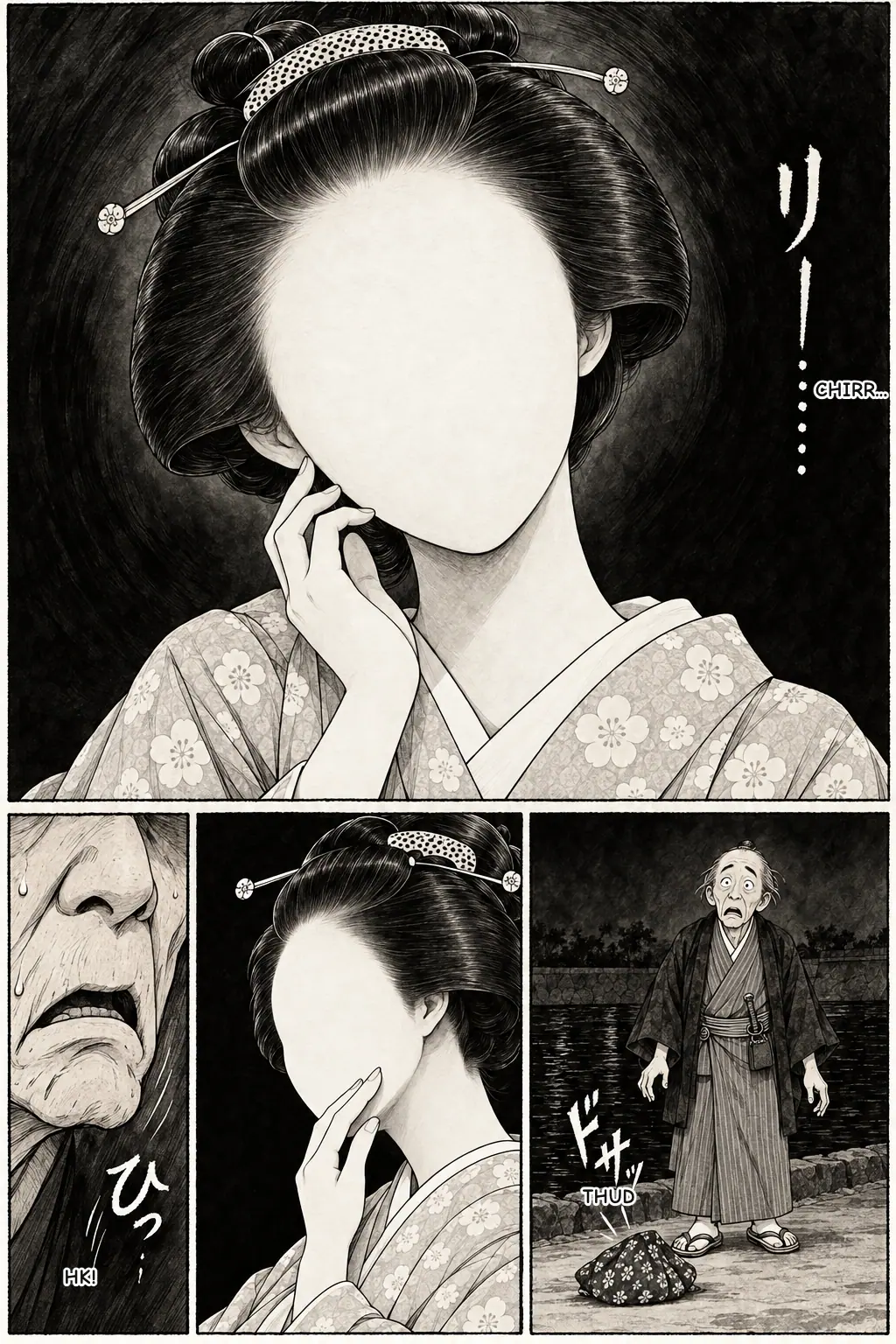
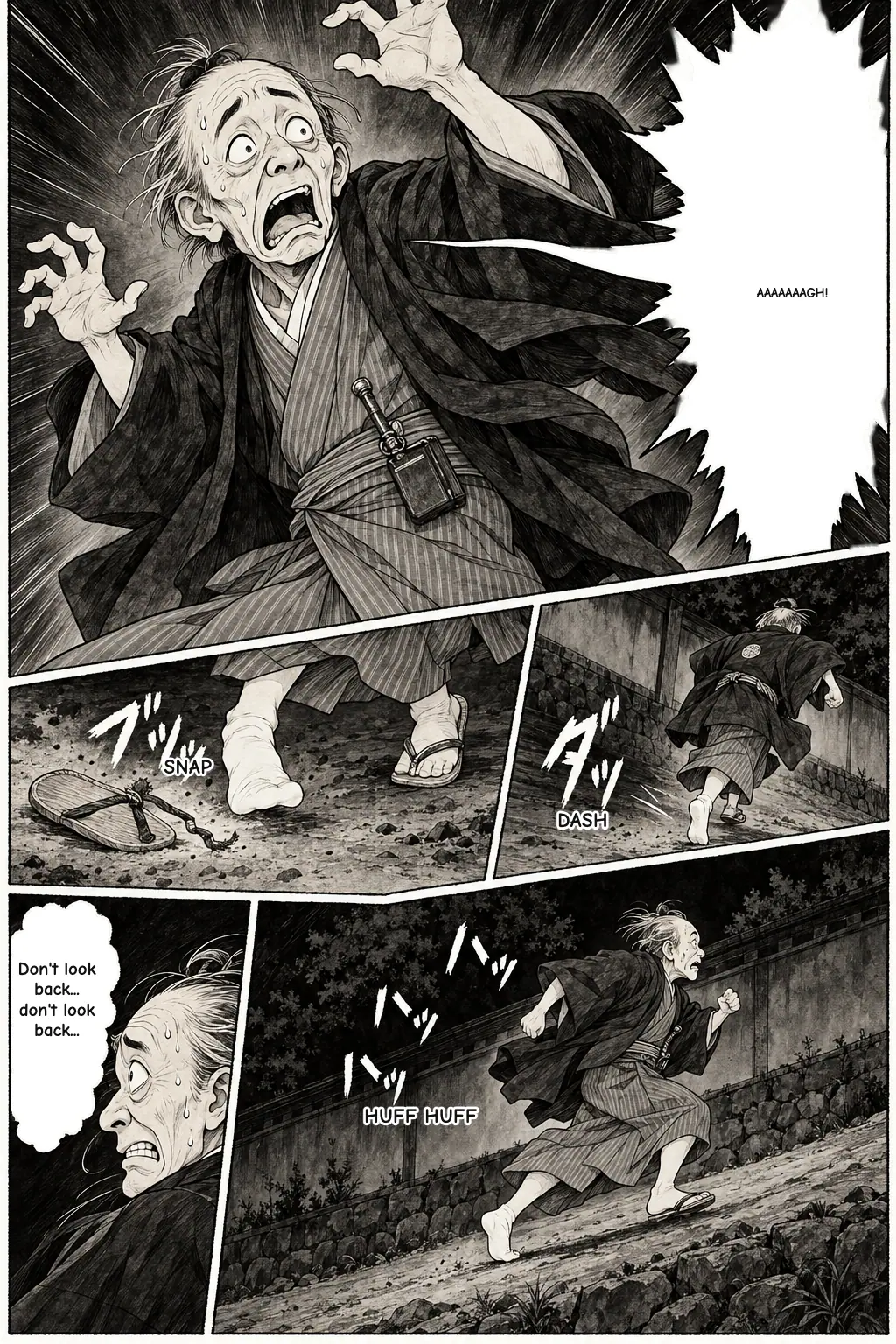
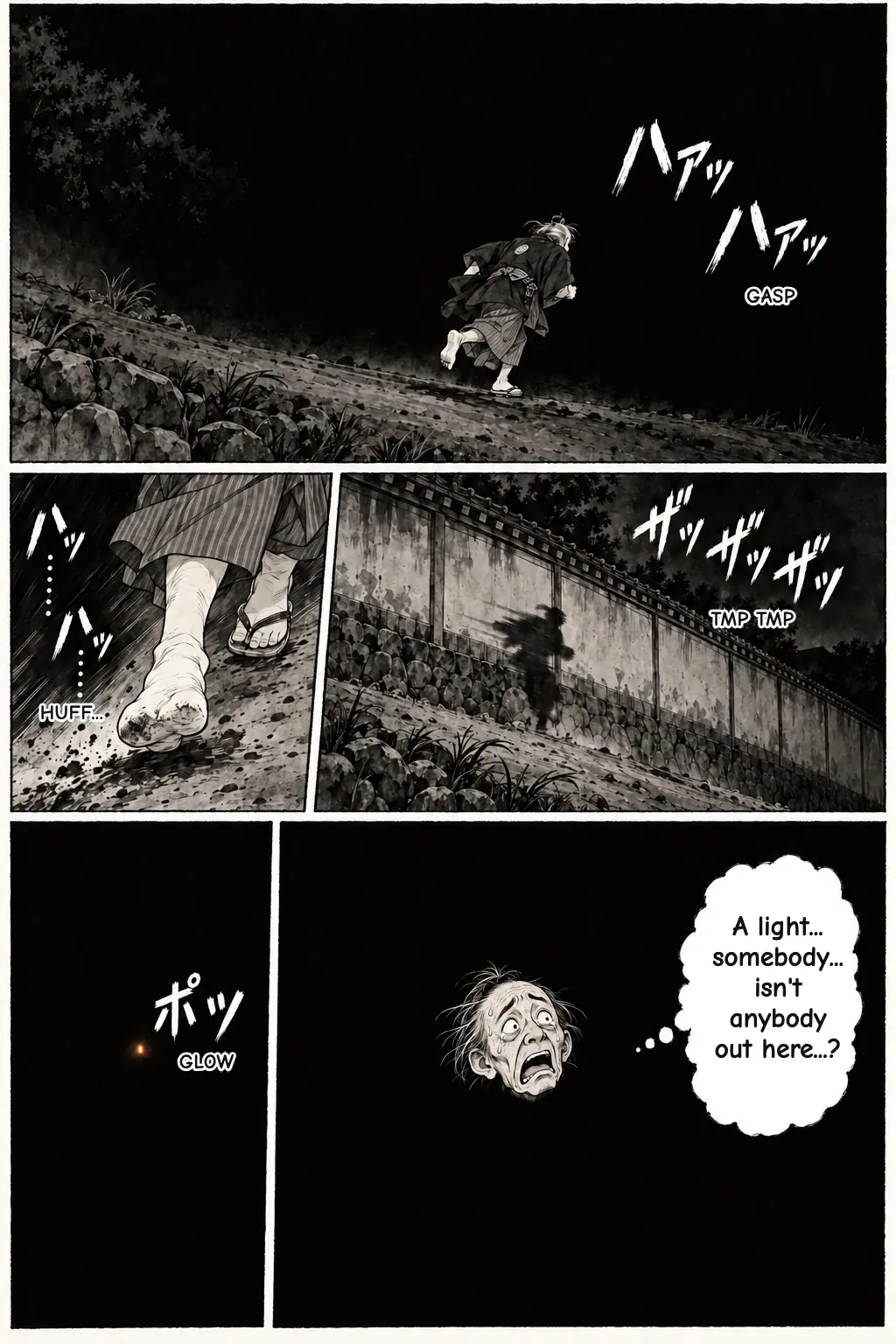
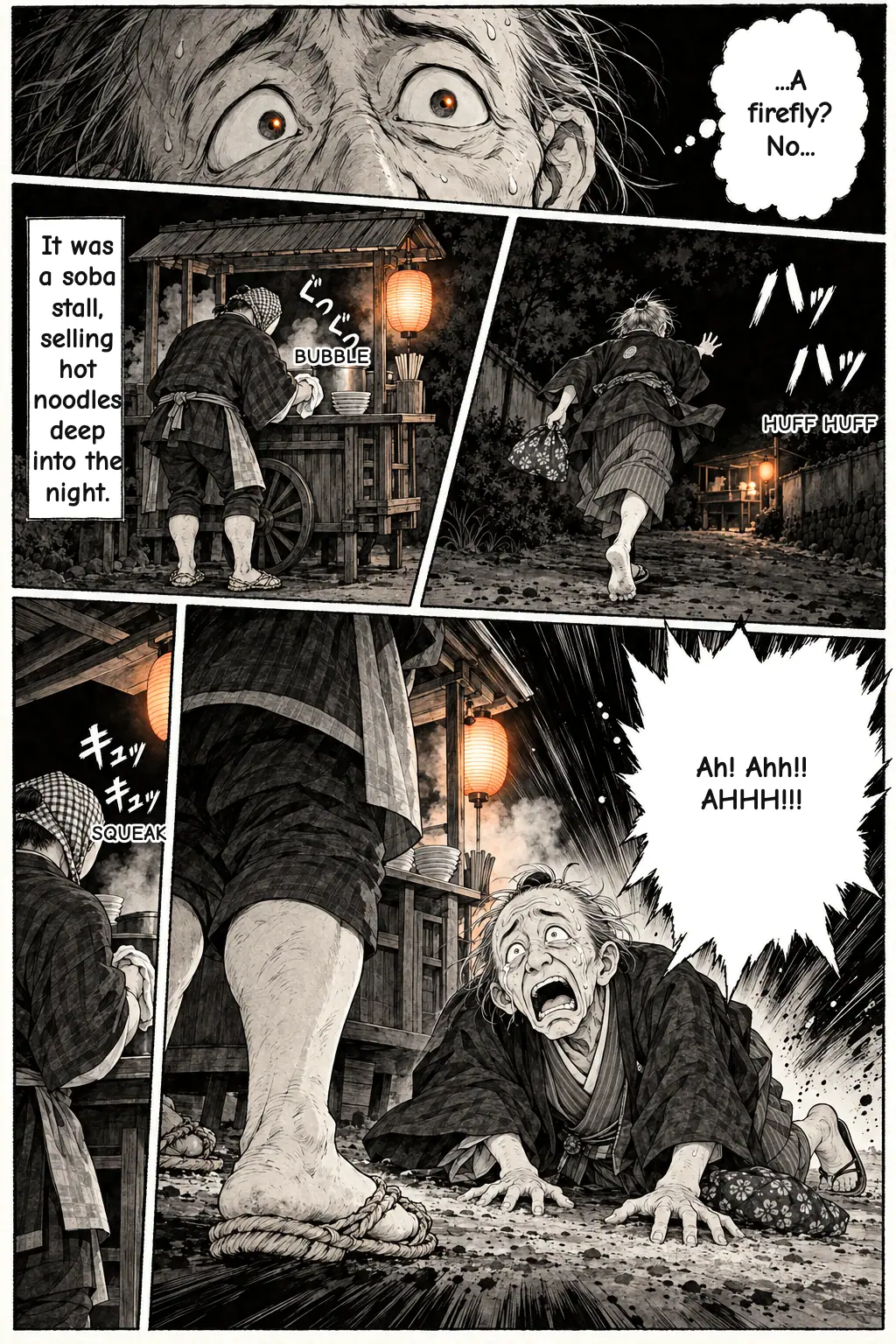
Then she turns, lowers her sleeve, and strokes her face with her hand. It has no eyes, no nose, and no mouth. The merchant screams and runs up the slope into total darkness, too terrified to look back. At last he sees a lantern so far away it looks like a firefly. It belongs to a soba (buckwheat noodle) seller who has set his stand down by the road. After what he has just seen, any light and any human company feels like rescue.
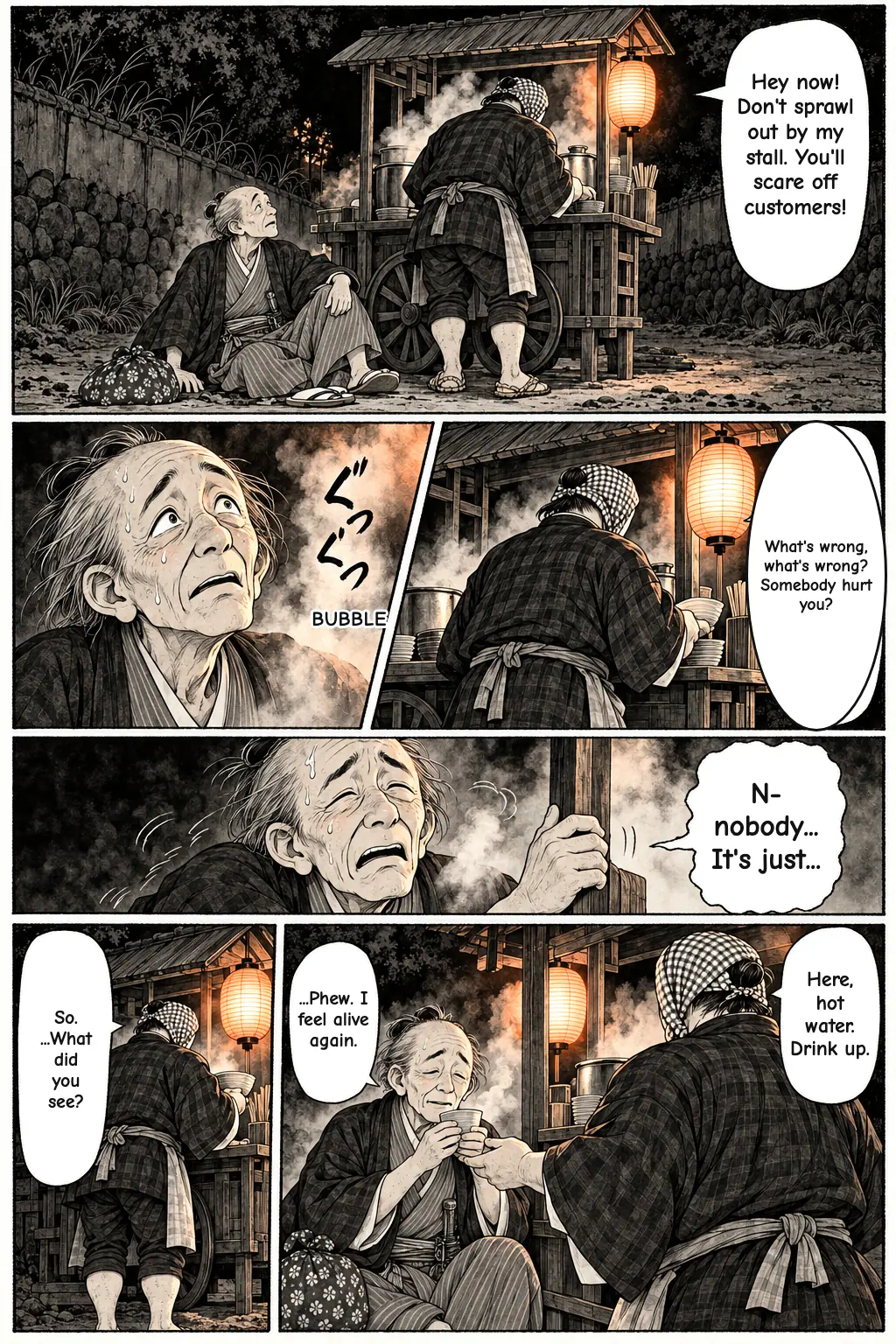
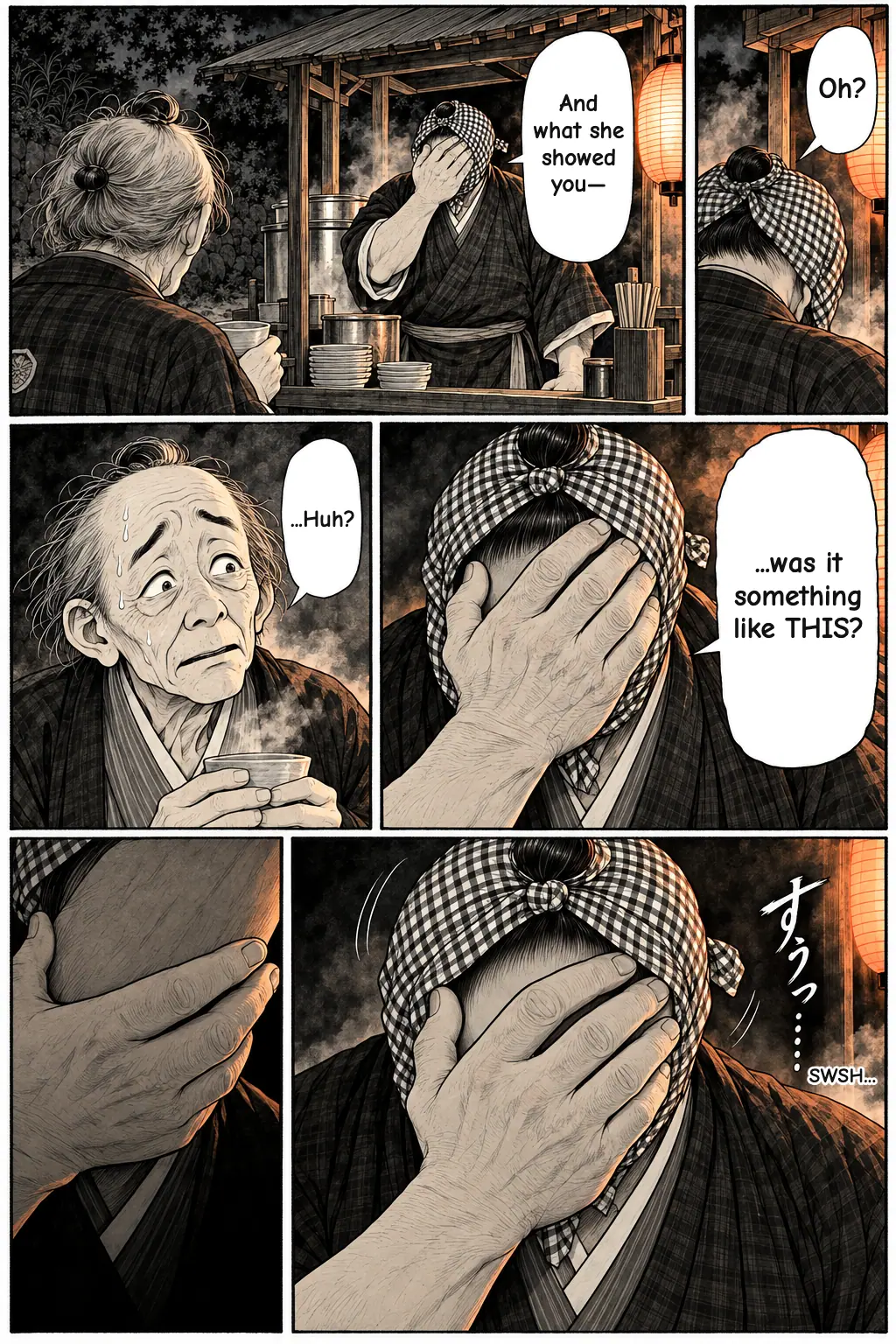
The merchant throws himself down at the seller's feet, crying out wordlessly. The seller roughly asks if someone has hurt him or robbed him. Gasping, the merchant says no, he saw a woman by the moat, and what she showed him he cannot even say. The seller replies by asking whether it looked like this, and strokes his own face. It becomes as smooth as an egg, and at the same moment the light goes out. The story ends there, with no explanation and no aftermath.
Main Characters
The cast is tiny. There is the old merchant, a genuinely kind man whose kindness is exactly what draws him in. There is the weeping girl by the moat, who never says a word. There is the gruff soba seller with his distant lantern. Above them all is the mujina named in the title, the creature believed to haunt the slope. Notably, no animal ever appears in the story itself. The mujina is never seen in its true form, never explained, and never defeated.
Cultural Background: Mujina, Nopperabō, and Lafcadio Hearn
In Japanese folklore, a mujina is a badger-like animal, and the word has sometimes also been used for the tanuki (raccoon dog). Both were traditionally believed to shape-shift and play tricks on people at night. A faceless apparition like the one in this story is usually called a nopperabō in Japanese folklore. Hearn's title points to the trickster animal behind the disguise, not to the faceless form itself.
The text never actually says that the girl and the soba seller are the same creature. Most readers take them as two disguises of one mujina, because the title and opening point that way. That reading is a natural inference, not something the story states outright.
Lafcadio Hearn was a writer of Greek and Irish background who settled in Japan, took the Japanese name Koizumi Yakumo, and retold Japanese tales in English. Kwaidan: Stories and Studies of Strange Things was published in 1904, the year he died. It remains one of the best-known English introductions to Japanese ghost stories. "Mujina" lasts only a few pages, but its two-step scare still works. The victim escapes one horror, finds someone who seems safe, and that person turns out to be the same horror.
What the Manga Version Changes
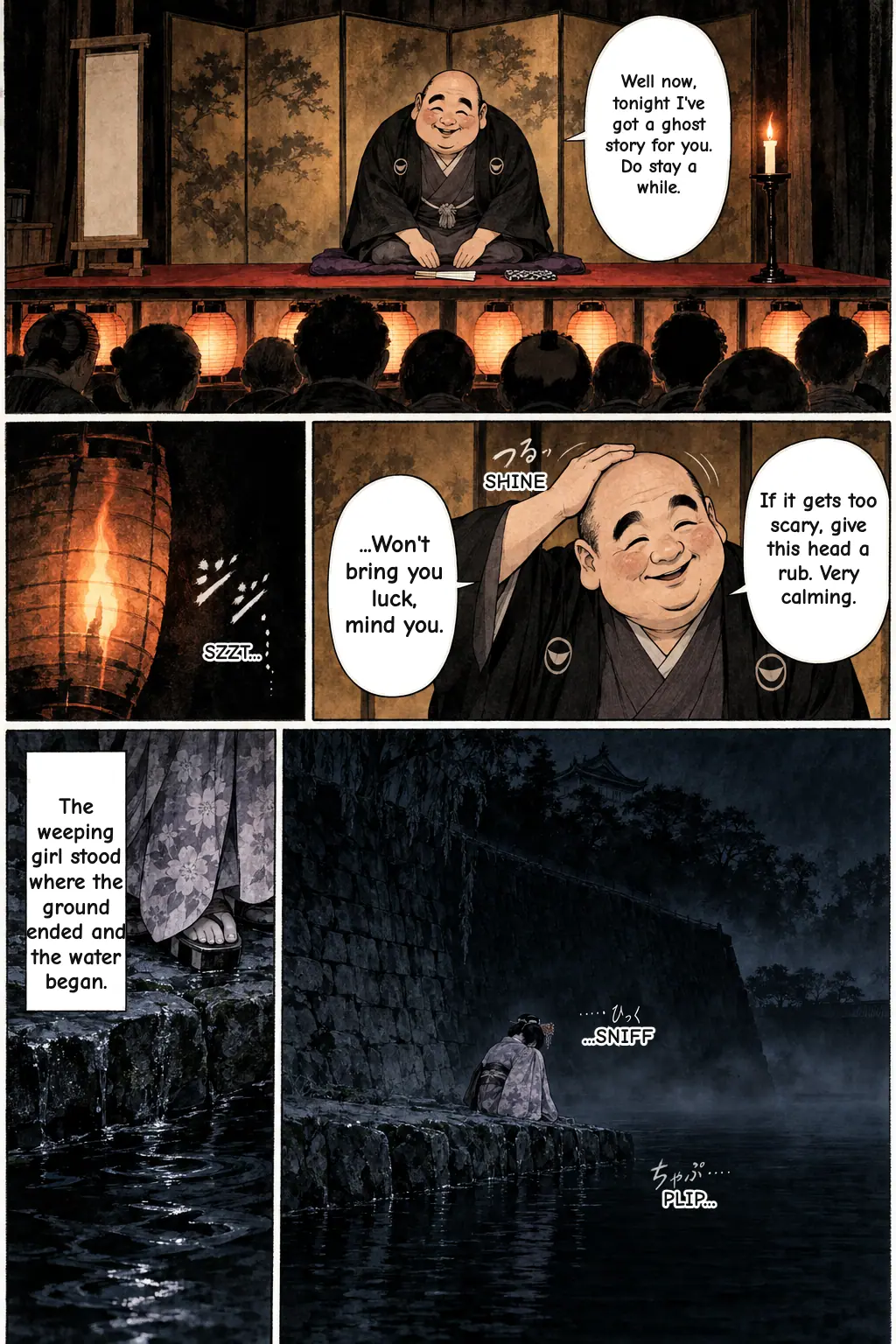
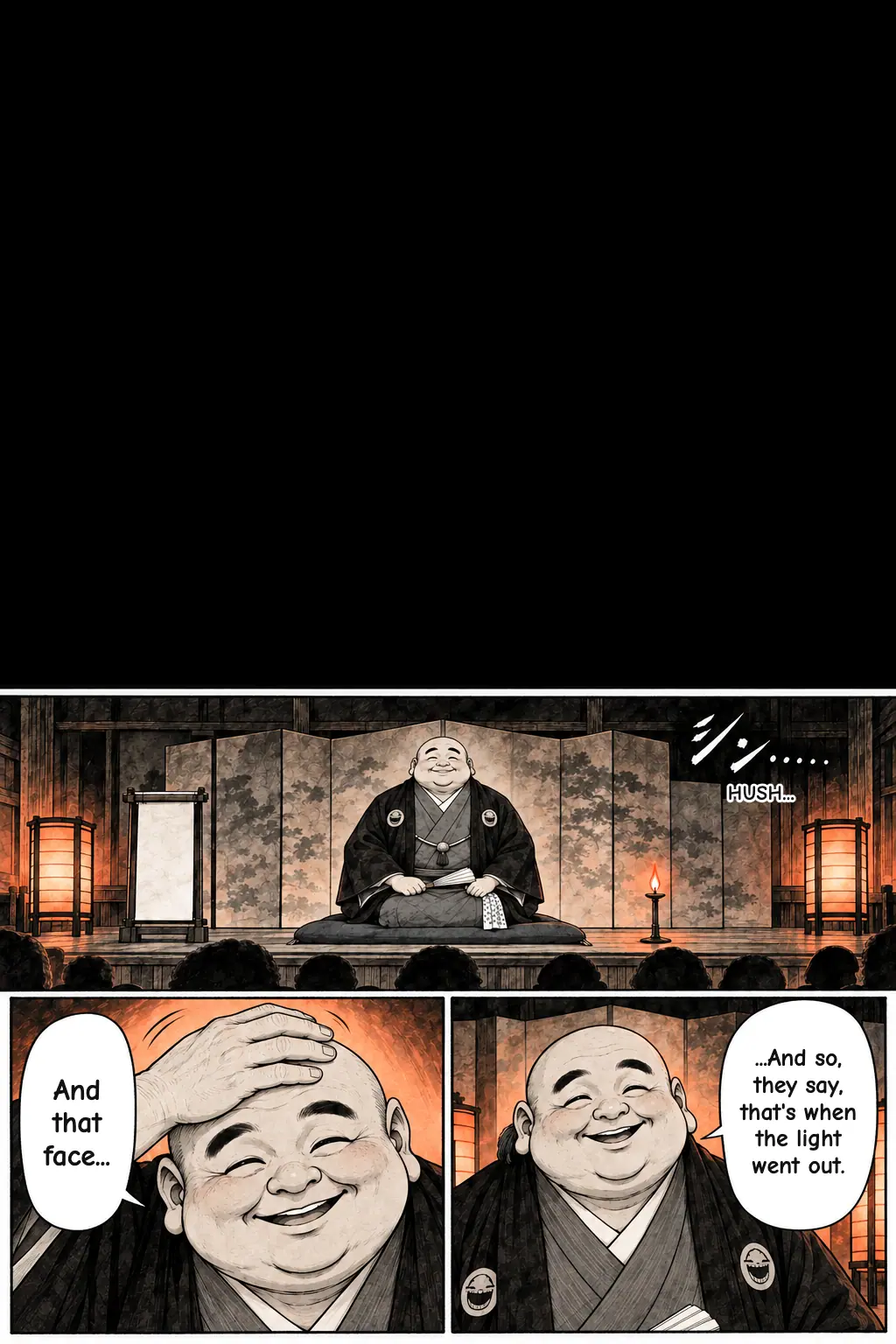
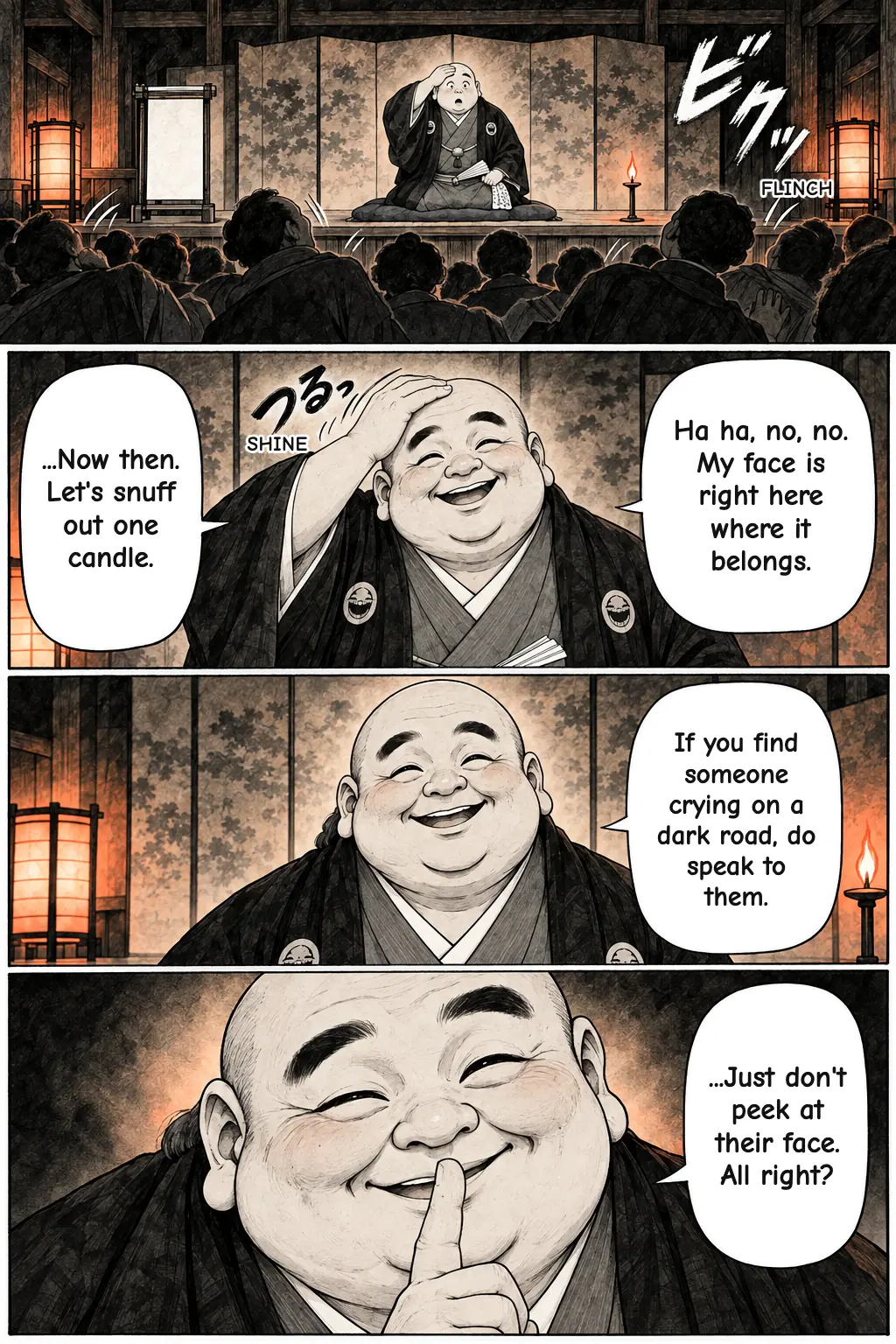
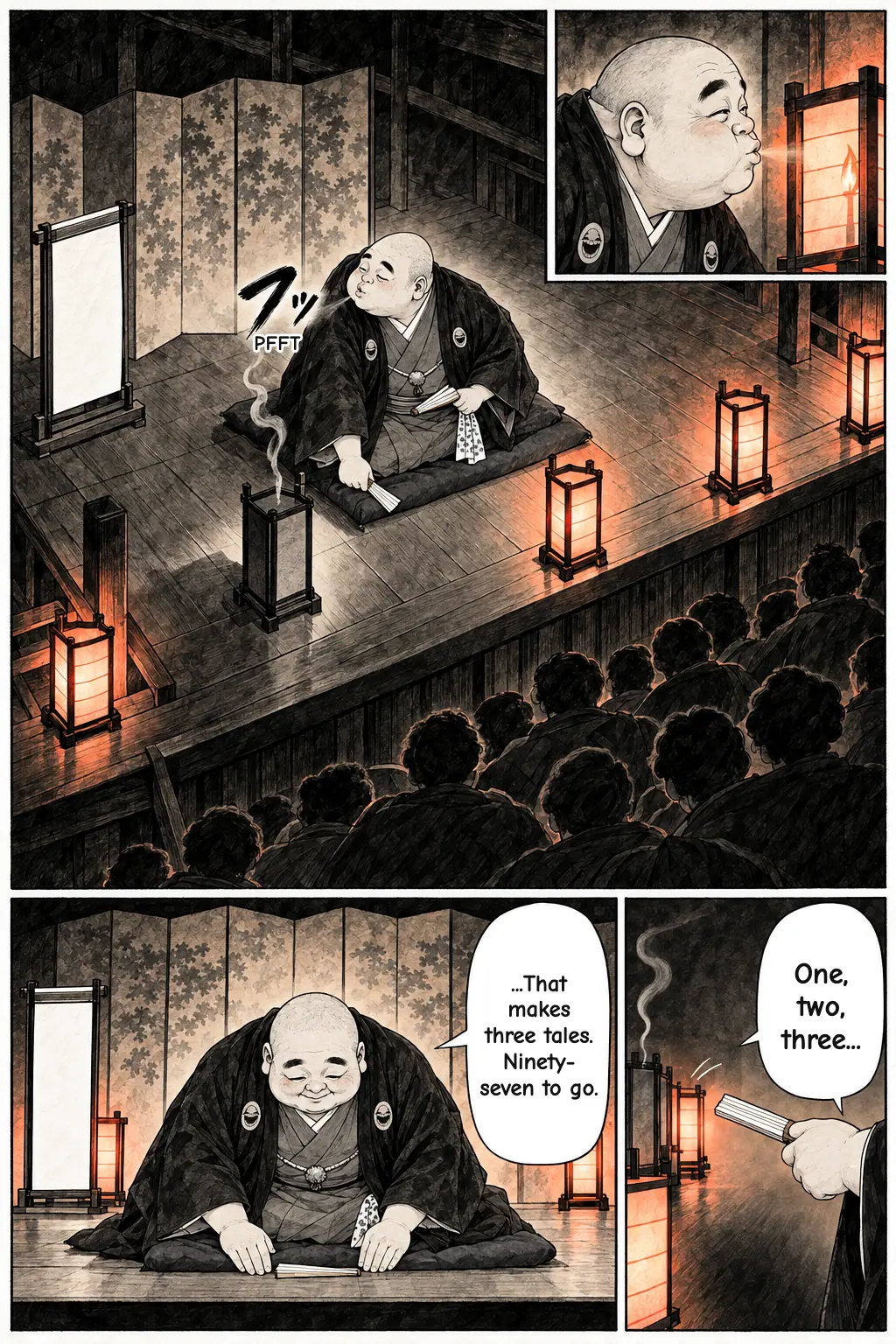
The KAIDAN manga keeps every key event of Hearn's story: the lonely slope, the merchant's repeated kindness, the faceless reveal, the firefly-like lantern, the noodle seller's question, and the darkness at the end. What the manga adds is atmosphere and framing. The storyteller Fukurai, who begins the tale in front of a paper lantern and blows it out at the end, is an original character created for the series. He echoes the way Hearn presents the tale as the merchant's own account.
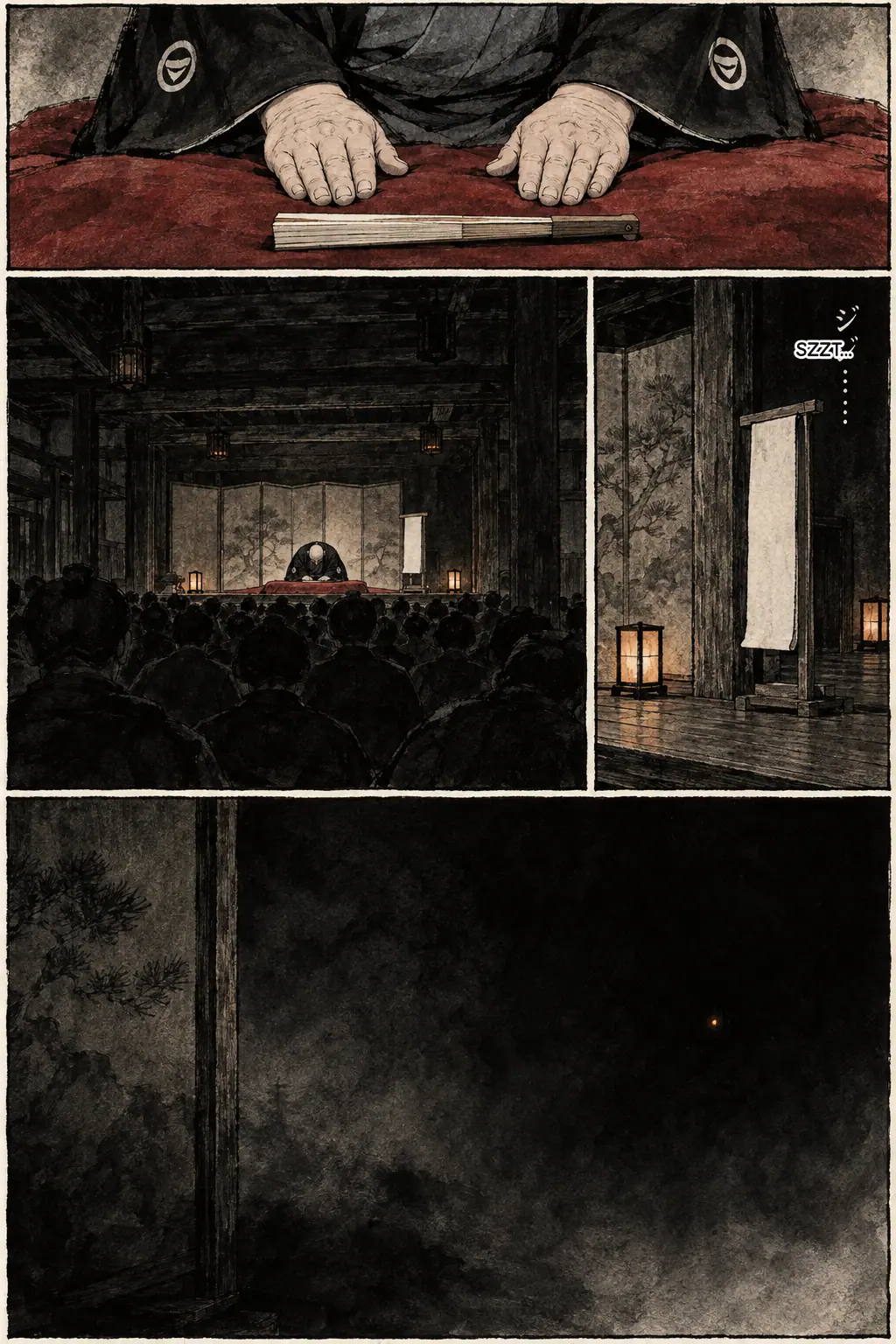
Some details are the manga's own invention. These include the merchant's inner thoughts and the reason he is out so late, the sound of the moat water and insects, the colors of the girl's kimono, and how the blank face is drawn. In the manga, the soba seller answers with his back turned. That is a dramatic choice, since Hearn never says which way he faces. The setting in the late Edo period is also an interpretation, because Hearn only says the events happened before street lamps and rickshaws. The final all-black page, however, follows the original ending closely: the light goes out, and the story stops.
Where to Read It
Hearn's original "Mujina" is in the public domain and can be read in Kwaidan on Project Gutenberg (eBook #1210). It takes only a few minutes, and it is worth reading to see how much fear he packs into so few lines.
If you'd rather see the dark slope, the weeping girl, and that lantern in the distance, Episode 3 of KAIDAN: Japanese Ghost Stories on Manga Portal tells the story in comic form. Every episode is free to read, with no sign-up needed. Turn off the lights first, if you dare.
Characters in this episode
The Old Merchant
An elderly, kind-hearted merchant from Kyobashi who tries to comfort a crying girl on Kii-no-kuni-zaka and becomes the last person to see the mujina.
The Weeping Girl (O-jochū)
A graceful, well-dressed young woman crying by the moat who hides her face in her sleeve, then reveals that she has no eyes, nose, or mouth.
The Soba Seller
A gruff roadside noodle vendor whose lantern seems to promise safety, until he wipes his own face as blank as an egg.
The Mujina
The shape-shifting, badger-like trickster of Japanese folklore said to haunt the slope; it is never seen in its animal form in the story.
Fukurai (manga original)
The lantern-lit storyteller who introduces each KAIDAN episode, created for the manga and not part of Hearn's text.
FAQ
What is a mujina in Japanese folklore?
A mujina is a badger-like animal that, in Japanese folklore, can shape-shift and play tricks on people. The word has sometimes also been used for the tanuki (raccoon dog). In Hearn's story, it's the creature said to haunt a lonely Tokyo slope.
What is a nopperabō?
A nopperabō is a faceless ghost from Japanese folklore, a figure that looks human until it reveals a smooth, blank face. The apparitions in Hearn's "Mujina" fit this type, though Hearn's title names the animal trickster behind them.
Are the girl and the soba seller the same ghost?
The story never says so directly. Because the title and opening blame a mujina, most readers understand both figures as disguises of the same shape-shifter.
Is Kii-no-kuni-zaka a real place?
Yes. Kii-no-kuni-zaka is a real slope in the Akasaka area of Tokyo, and Hearn describes it with a moat on one side and palace walls on the other. He says that before street lamps, people avoided it after dark.
Where can I read the original Mujina story?
"Mujina" appears in Lafcadio Hearn's Kwaidan (1904), which is free on Project Gutenberg as eBook #1210. A manga version is available free on Manga Portal as Episode 3 of KAIDAN: Japanese Ghost Stories.