Episode 2Silent for Ten Years. Then He Told.Yuki-onna (The Snow Woman)
KAIDAN: Japanese Ghost Stories, Episode 2. On a night of howling snow, a young woodcutter is spared by a woman in white—on one condition: he must never tell anyone what he saw. Years later, blessed with a gentle wife and ten children, he finally breaks his silence... to the one person he should never have told.
Bookmark the series page so you can jump back in when the next episode is out: KAIDANRSS for this series
Story summary
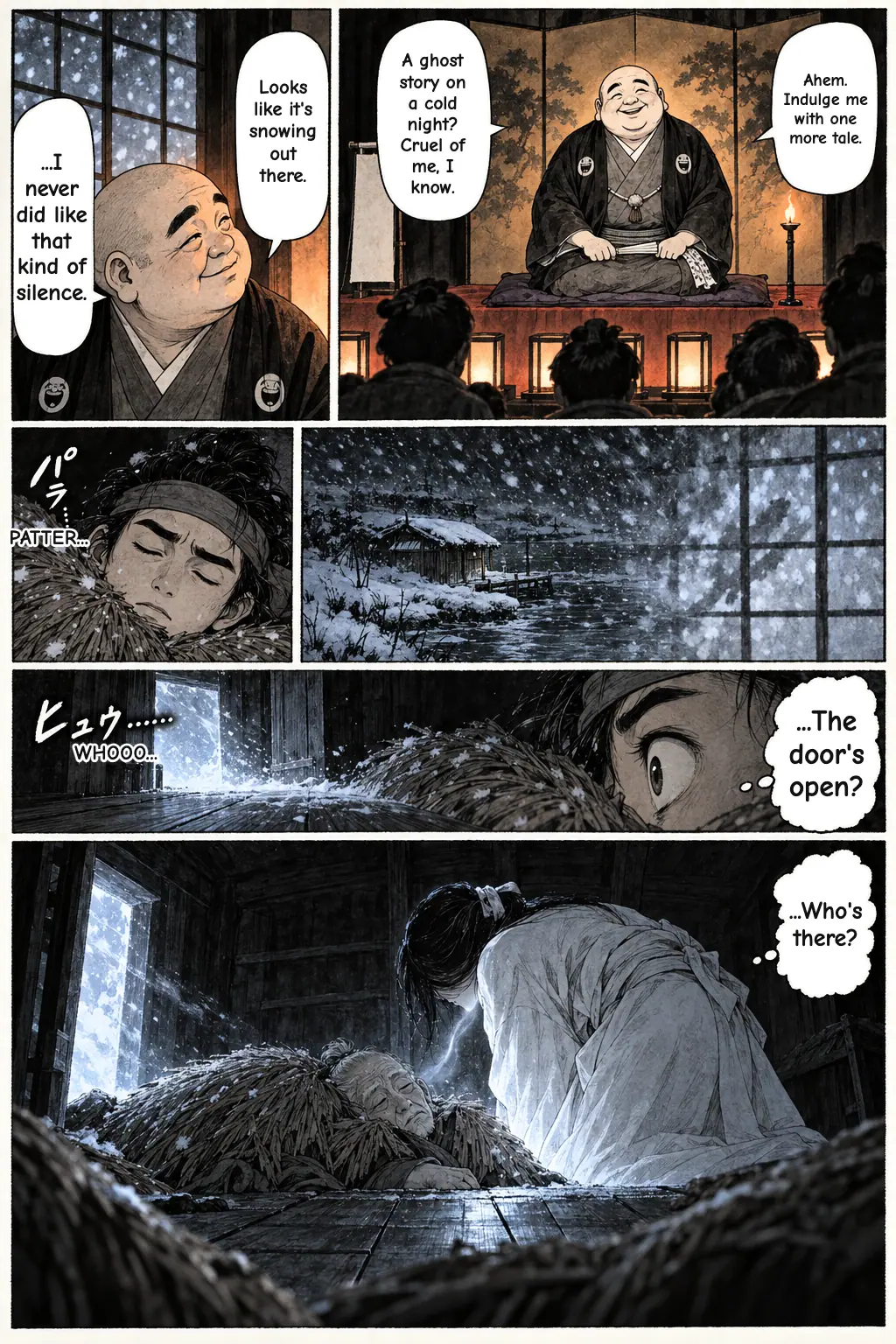
Lafcadio Hearn opens the tale with a short note saying he heard it from a farmer of Chofu, a village in the Nishitama district of old Musashi Province, the area around present-day western Tokyo. In a village there live two woodcutters: Mosaku, an old man, and his eighteen-year-old apprentice, Minokichi. Every day they walk to the forest, crossing a wide river by ferry on the way. One bitterly cold evening a snowstorm catches them on the way home. The ferryman has gone home and left his boat on the far bank, so the two take shelter in his tiny hut by the river. It has no window and no fire.
Yuki-onna Story Explained: The Snow Woman from Hearn's Kwaidan
In short: Yuki-onna (the Snow Woman) is a Japanese ghost story in which a spirit of the snow kills an old woodcutter during a blizzard and spares his young apprentice, Minokichi, on the condition that he never tell anyone what he saw. Years later Minokichi tells the story to his beloved wife, O-Yuki, who reveals that she is the Snow Woman and vanishes into mist. The best-known version is in Lafcadio Hearn's Kwaidan: Stories and Studies of Strange Things (1904).
The original story: a summary of Yuki-onna
Lafcadio Hearn opens the tale with a short note saying he heard it from a farmer of Chofu, a village in the Nishitama district of old Musashi Province, the area around present-day western Tokyo. In a village there live two woodcutters: Mosaku, an old man, and his eighteen-year-old apprentice, Minokichi. Every day they walk to the forest, crossing a wide river by ferry on the way.
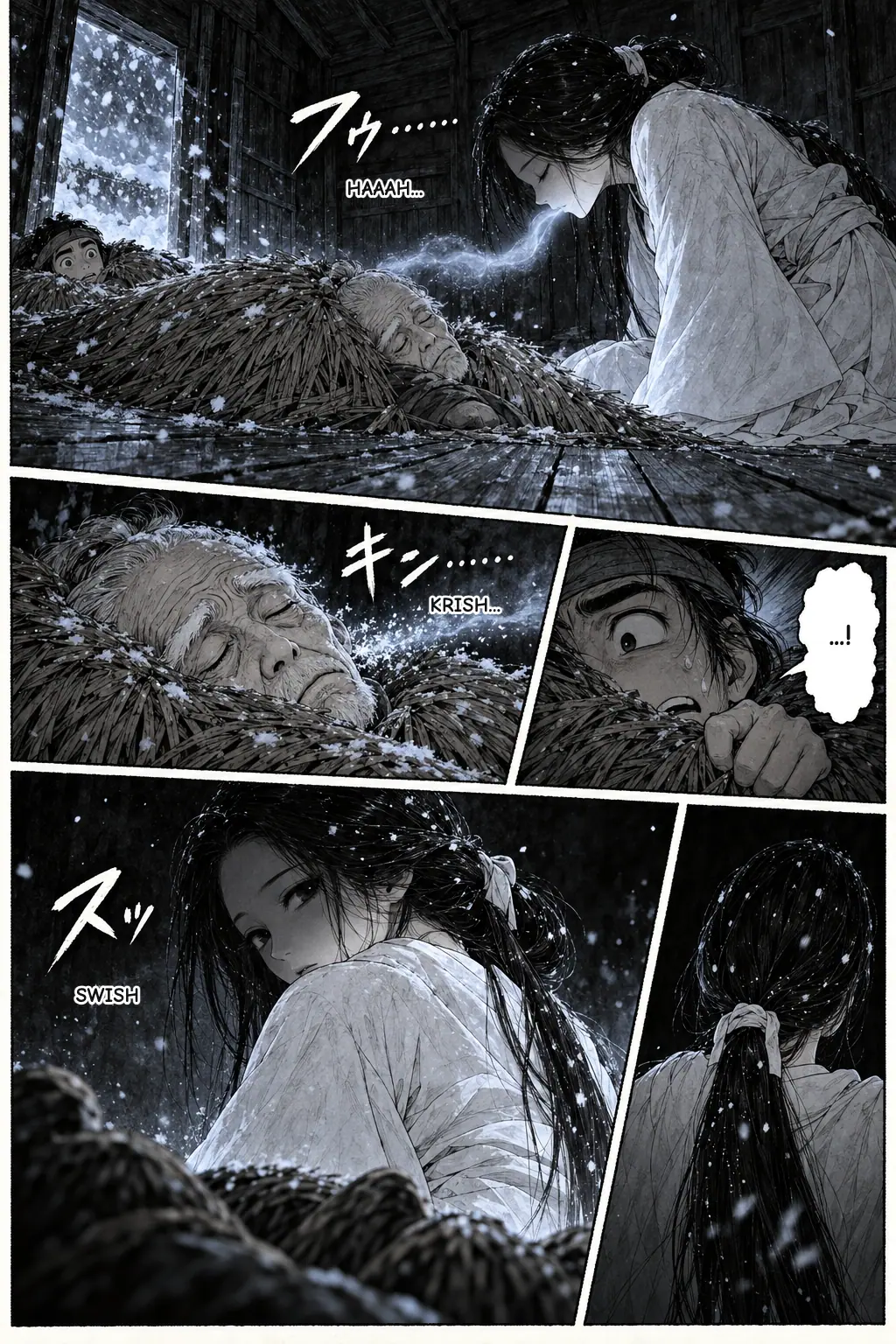
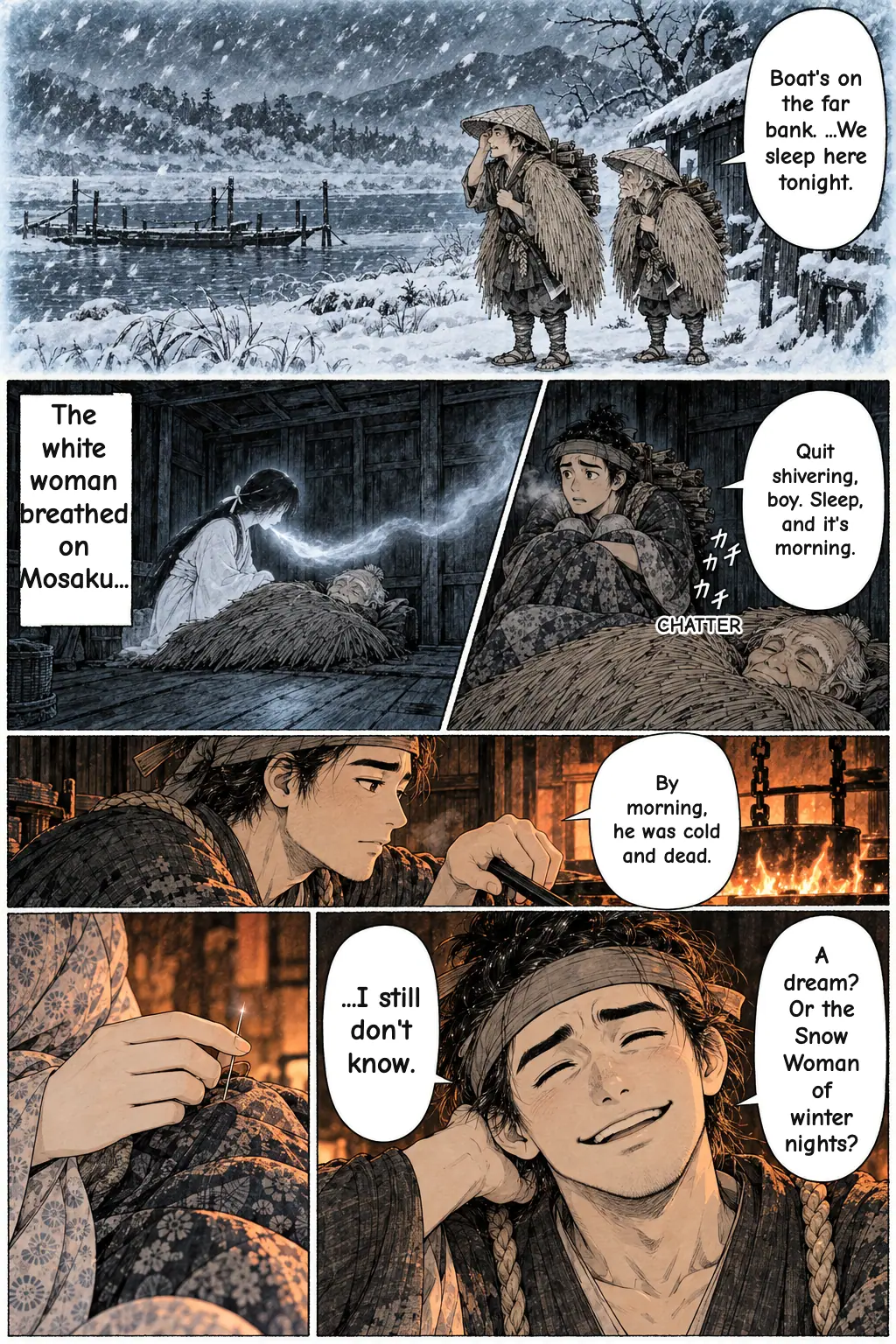
One bitterly cold evening a snowstorm catches them on the way home. The ferryman has gone home and left his boat on the far bank, so the two take shelter in his tiny hut by the river. It has no window and no fire. Mosaku falls asleep at once. Minokichi lies awake for a long time, listening to the wind, before he finally drops off. He wakes with snow blowing onto his face. The door has been forced open, and in the pale light of the snow a woman dressed all in white is bending over Mosaku, breathing on him a breath like bright white smoke.
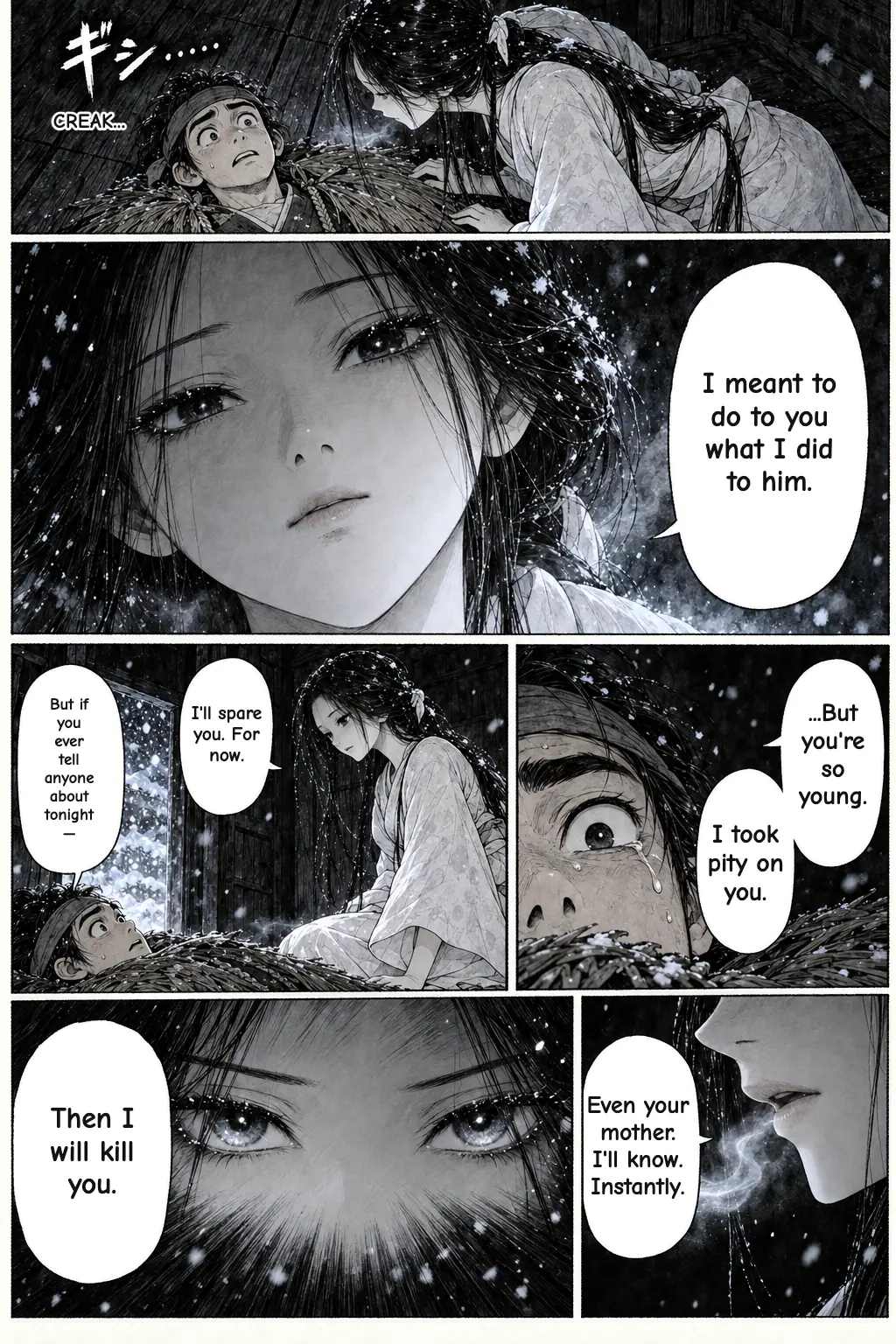
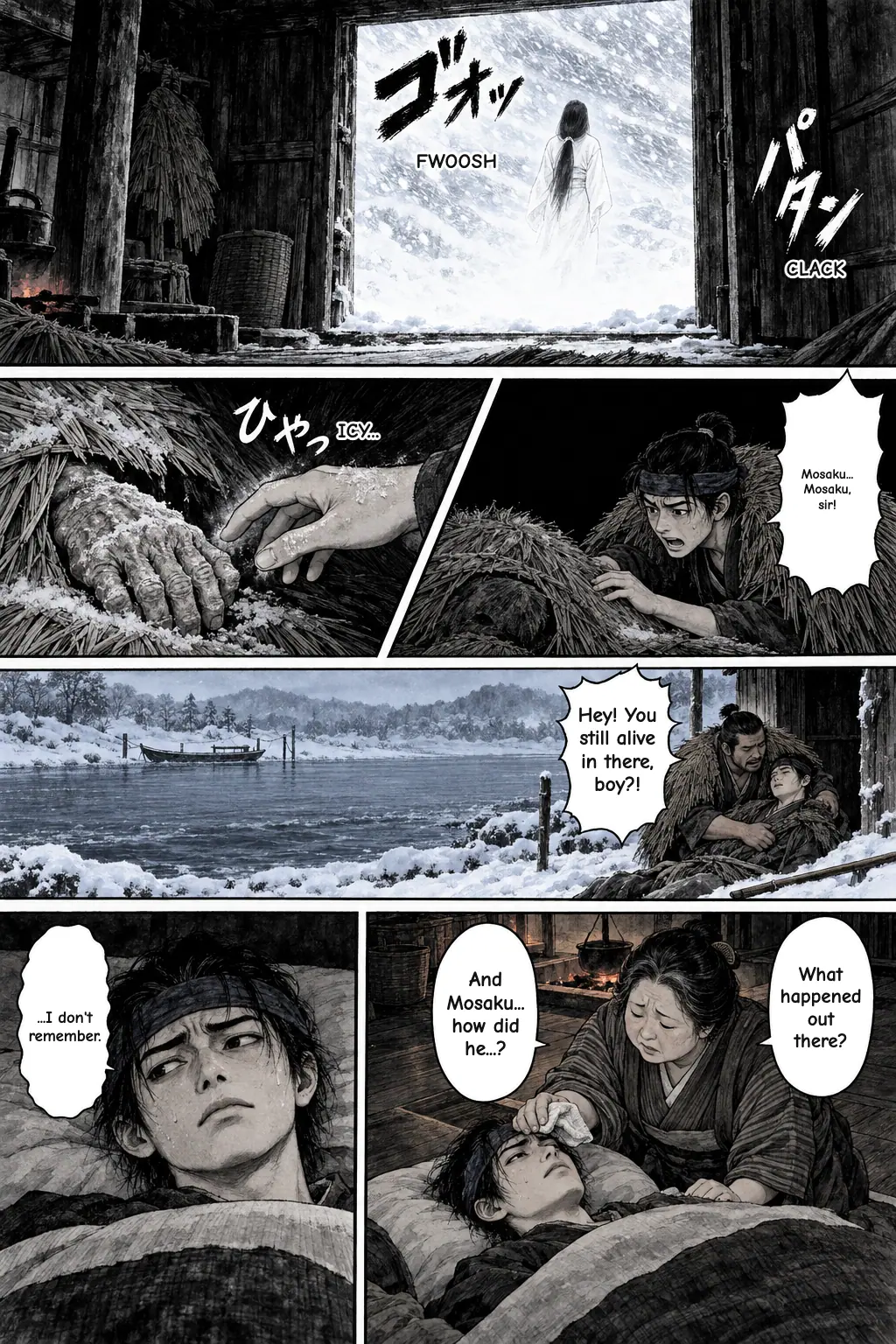
She then bends over Minokichi. He cannot make a sound. Her eyes frighten him, yet she is very beautiful. She tells him she meant to treat him as she treated the old man, but she pities him because he is young and handsome, so she will not hurt him now. There is one condition: if he ever tells anyone about this night, even his own mother, she will know, and she will kill him. Then she leaves. Minokichi calls out to Mosaku and touches him. The old man is ice-cold and dead. At dawn the ferryman finds Minokichi lying senseless and nurses him back to health. Through a long illness, Minokichi tells no one what he saw.
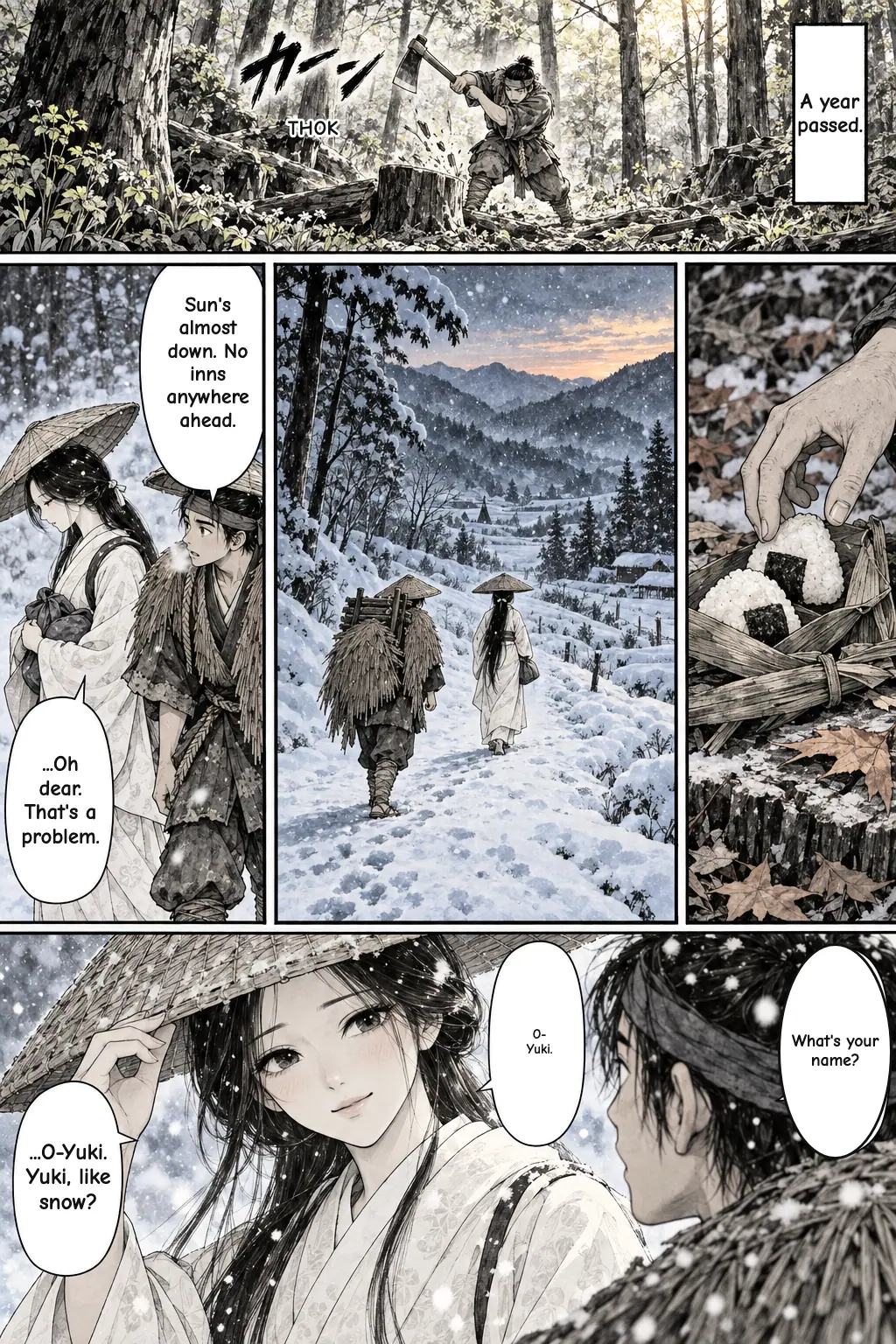
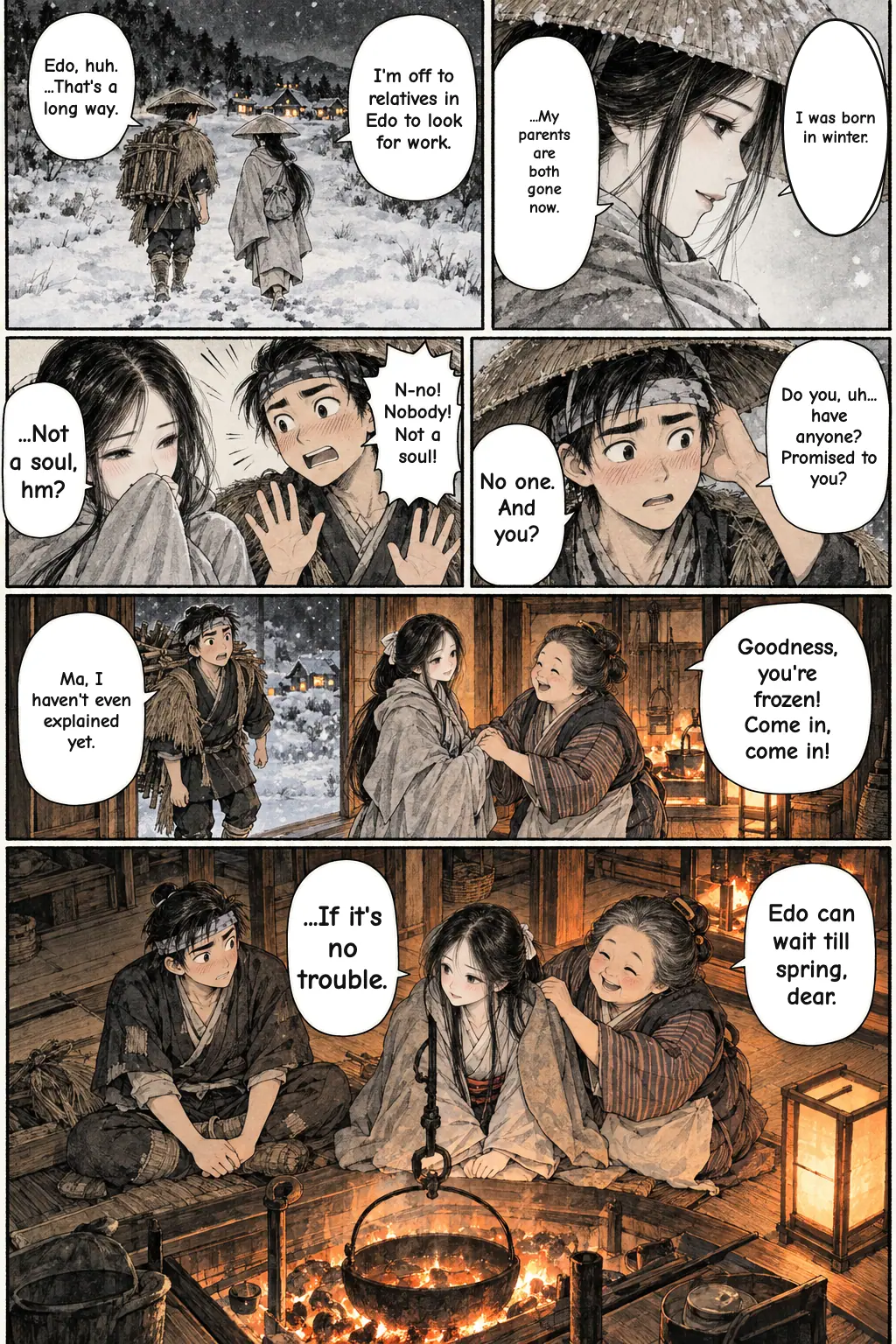
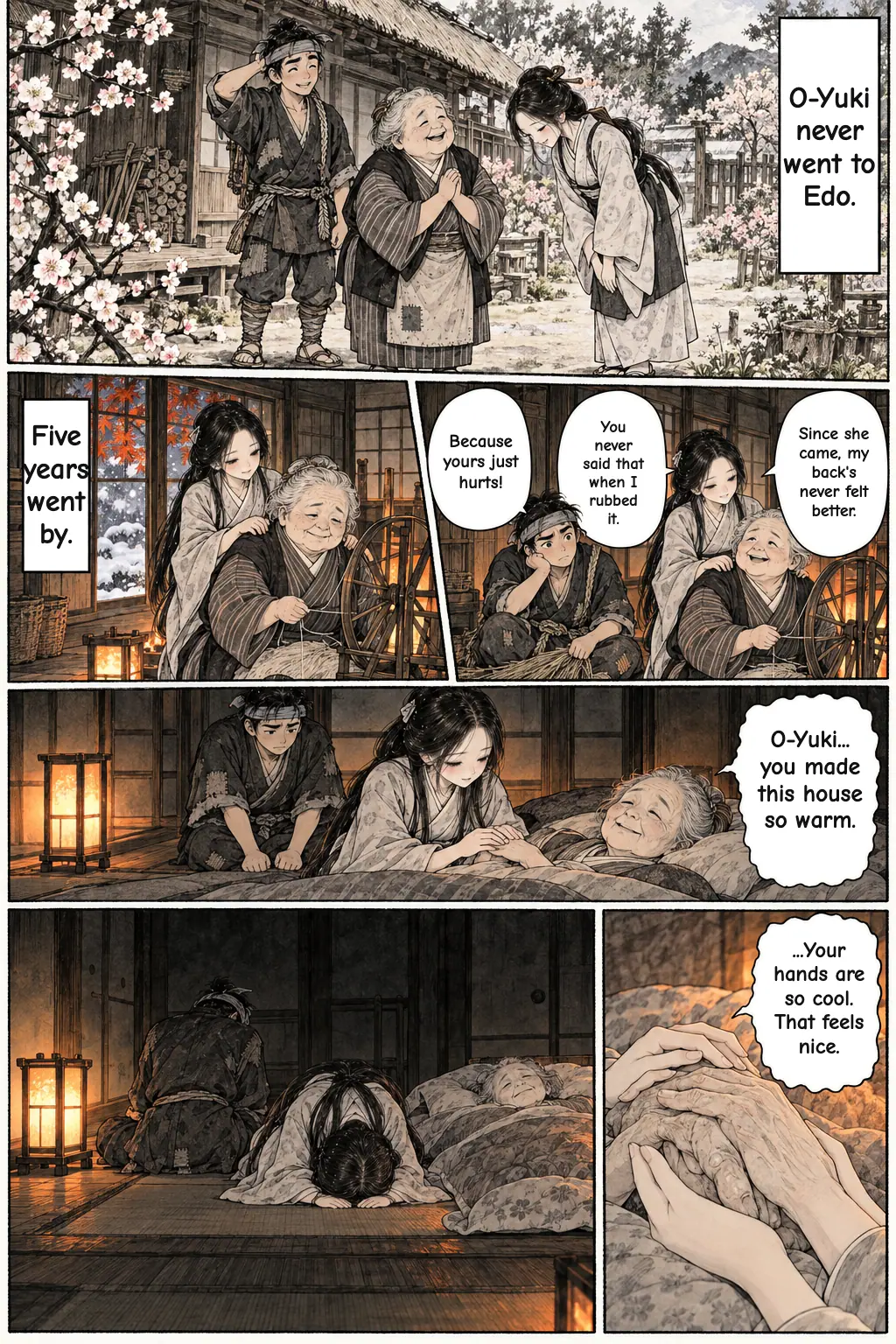
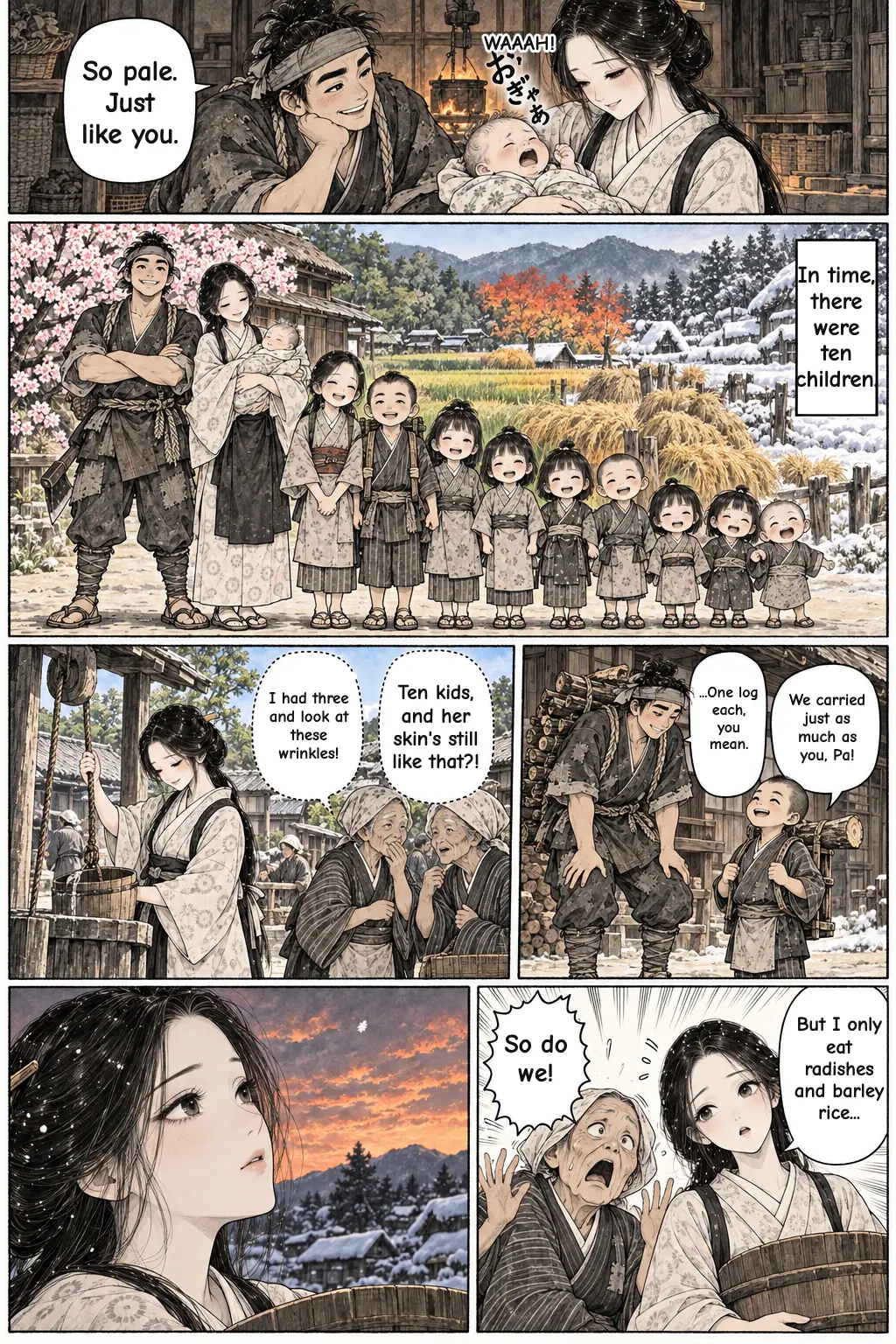
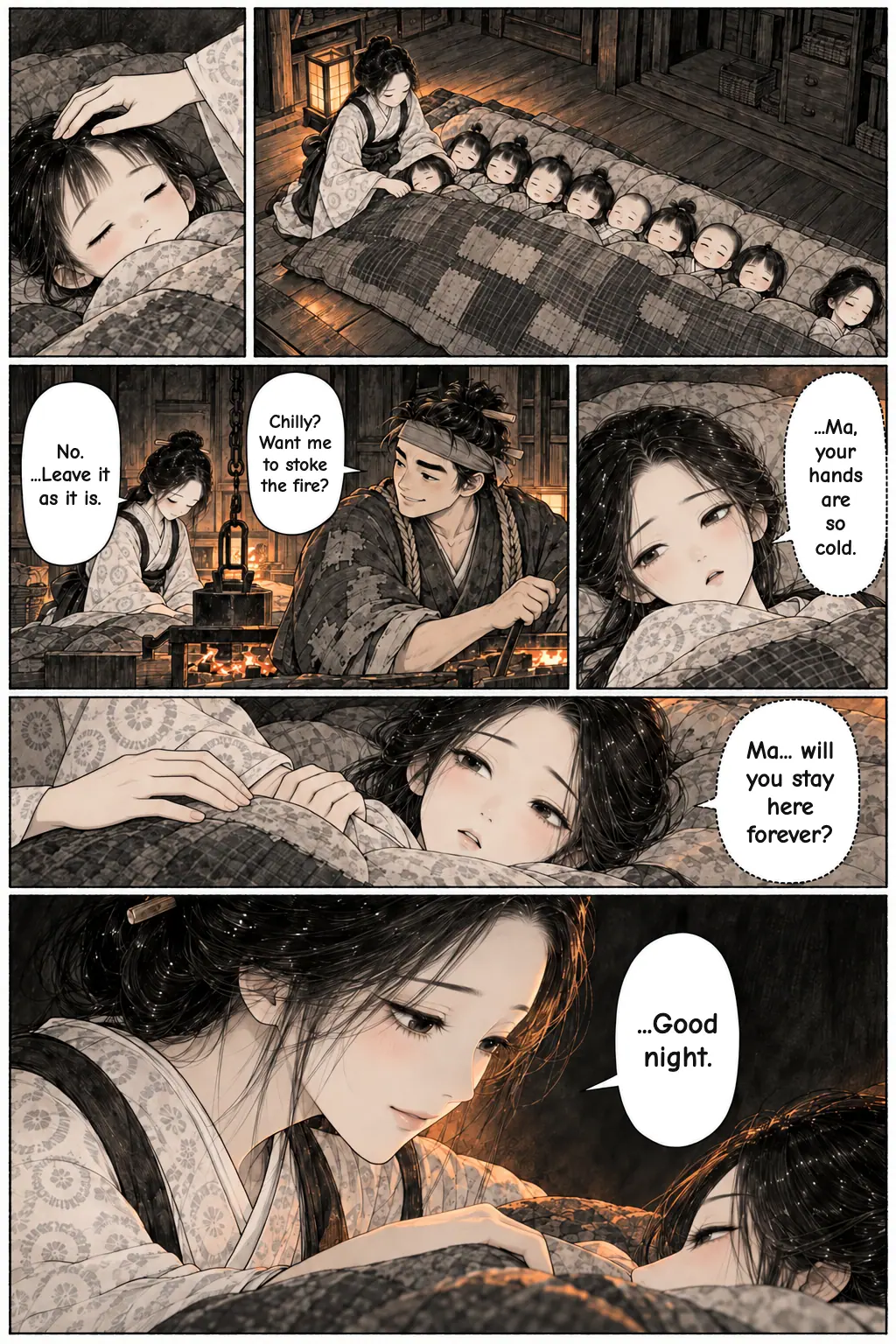
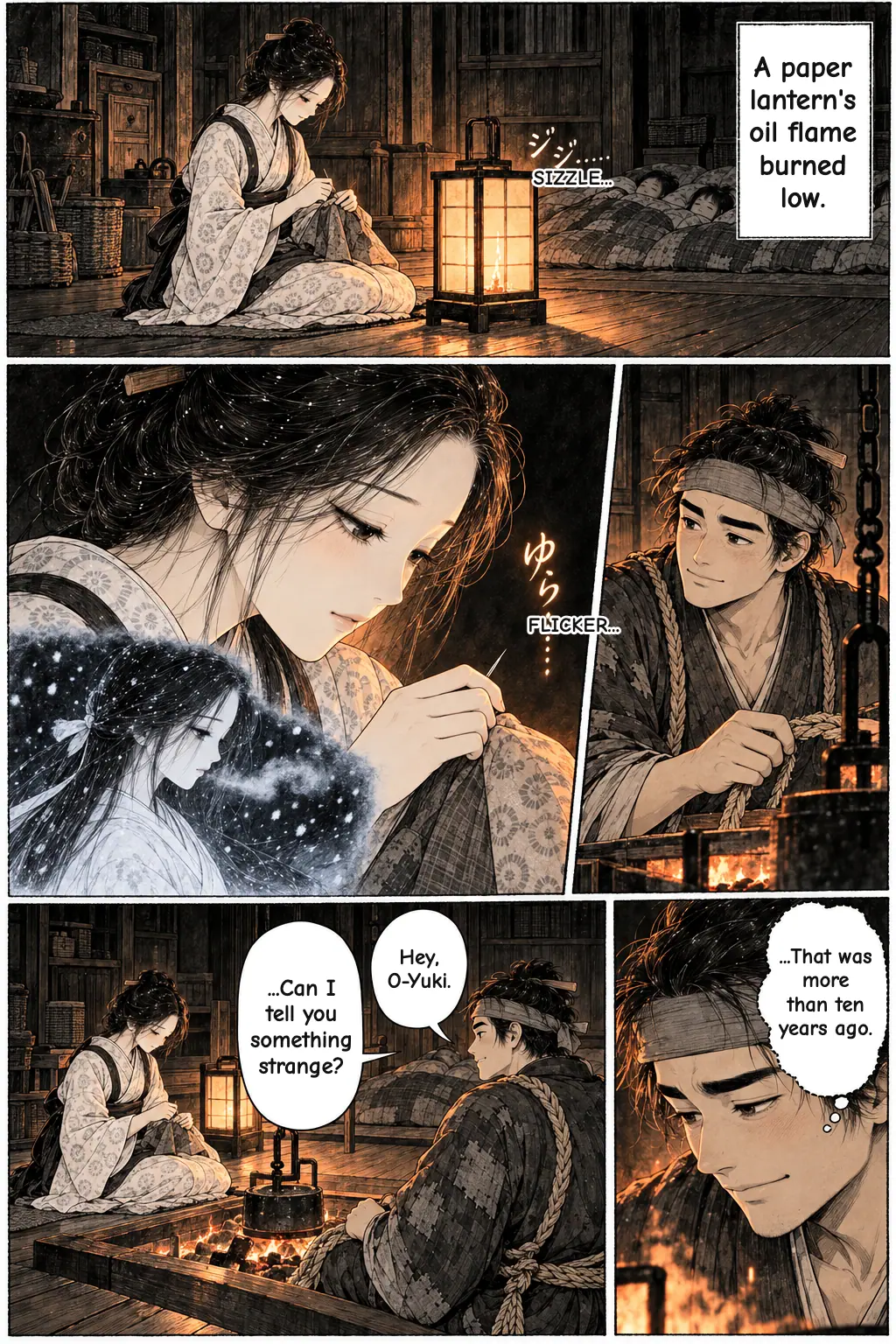
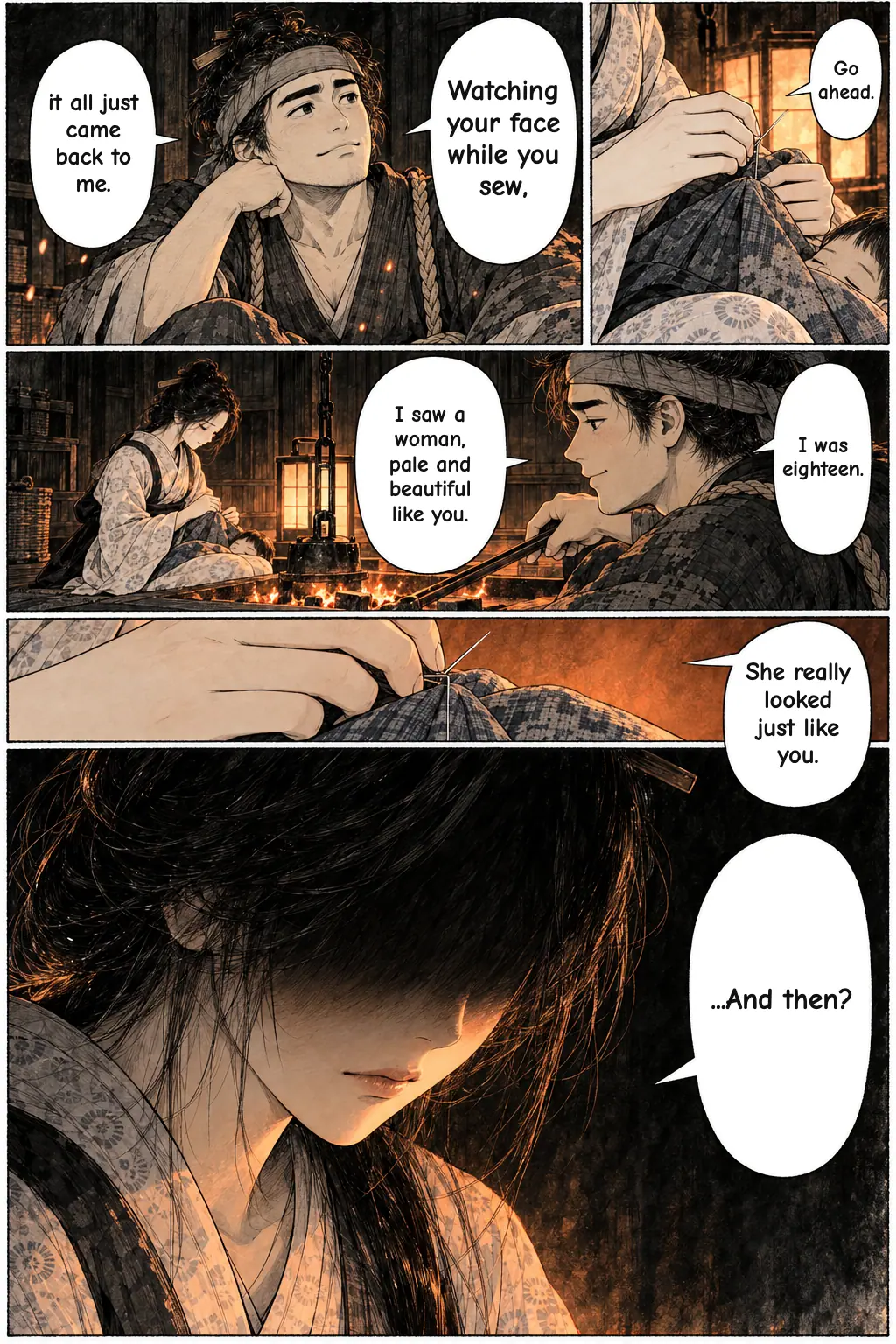
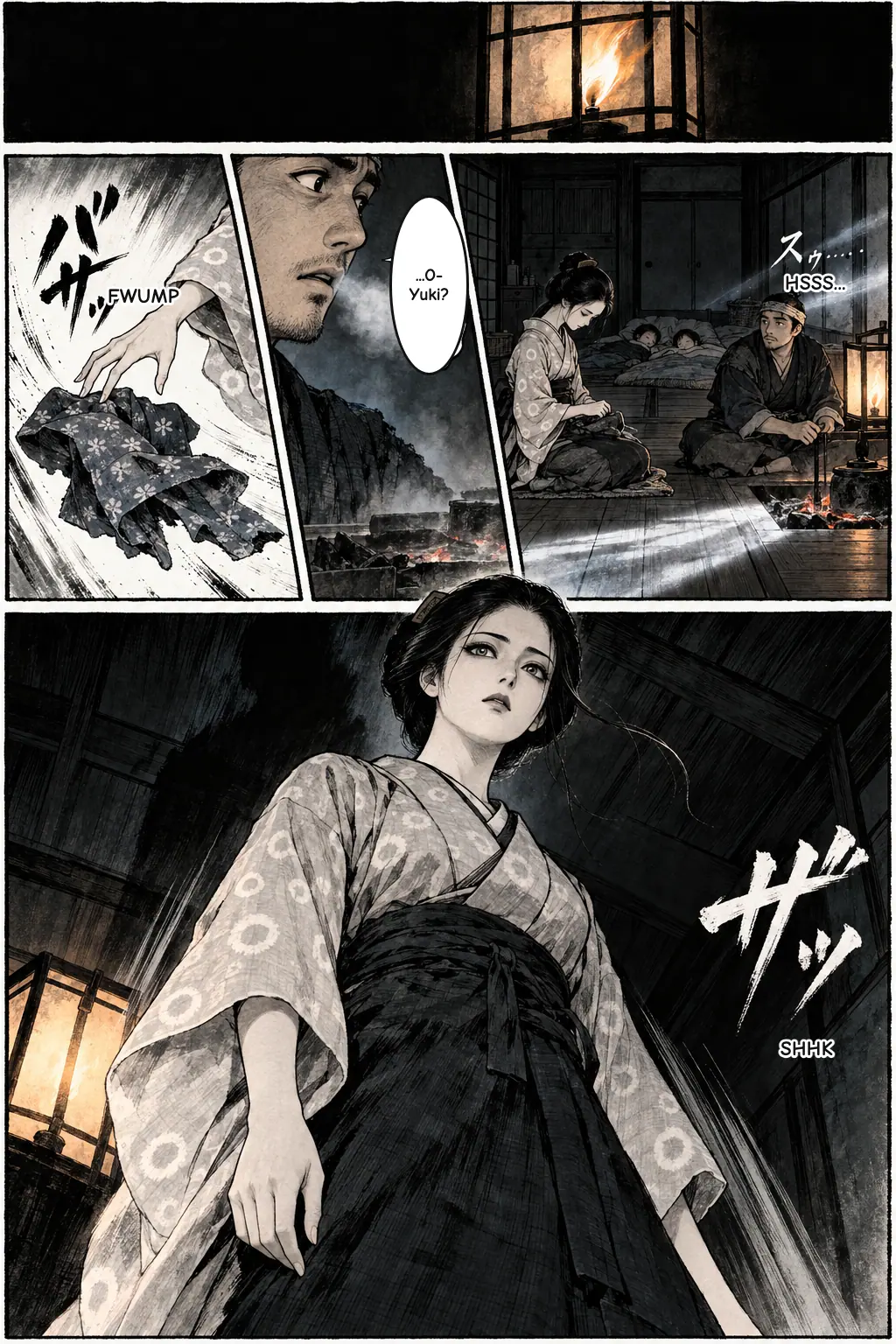
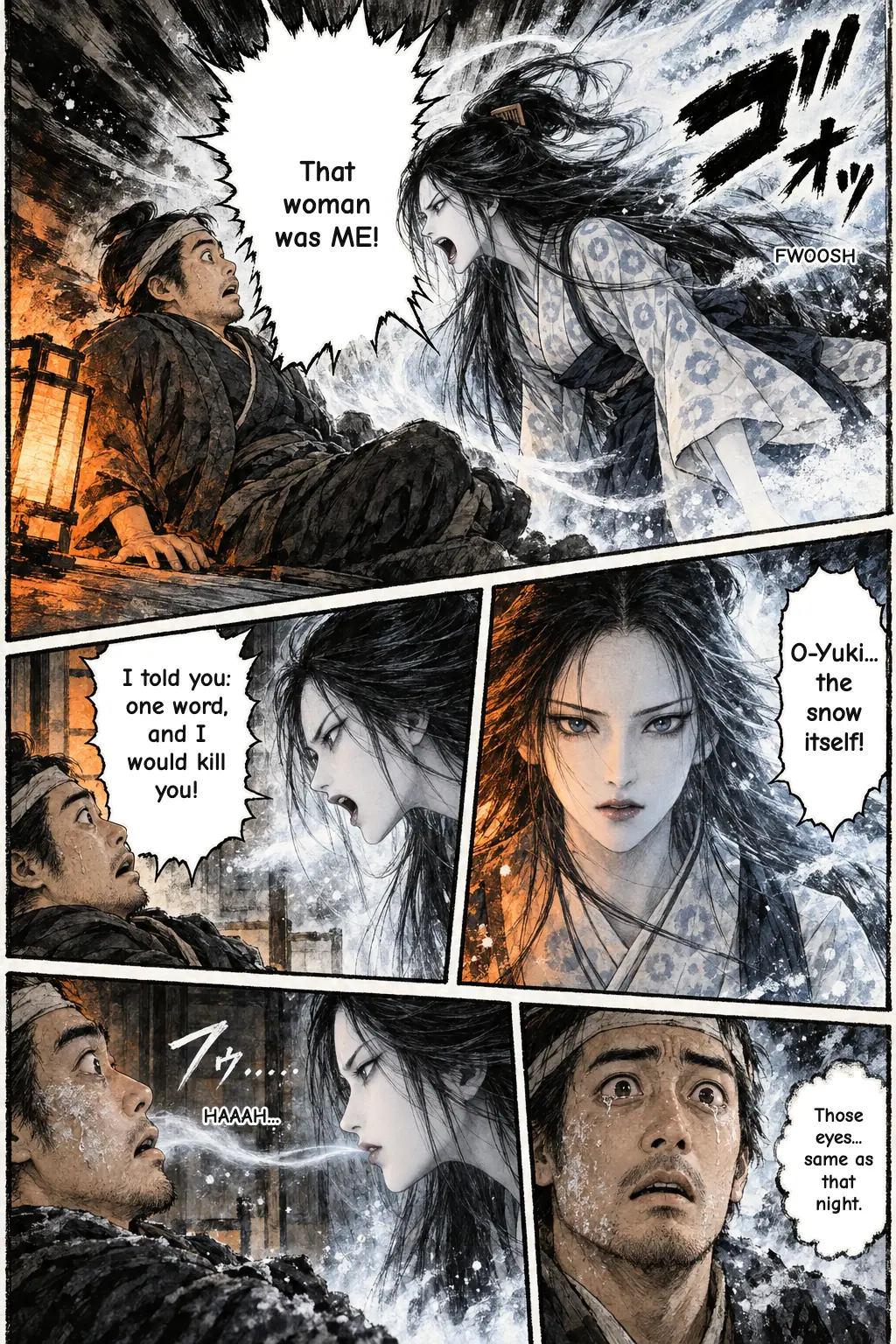
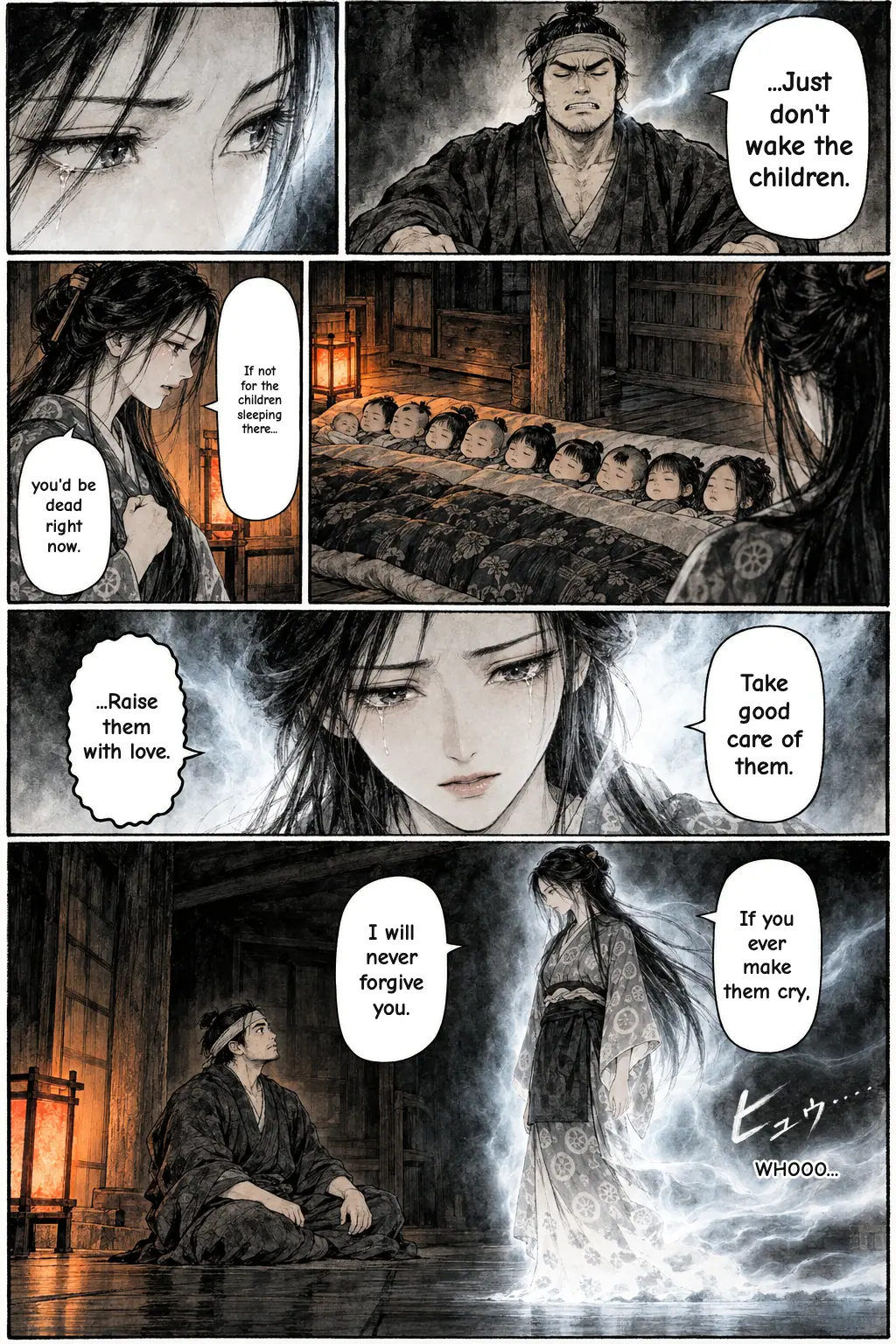
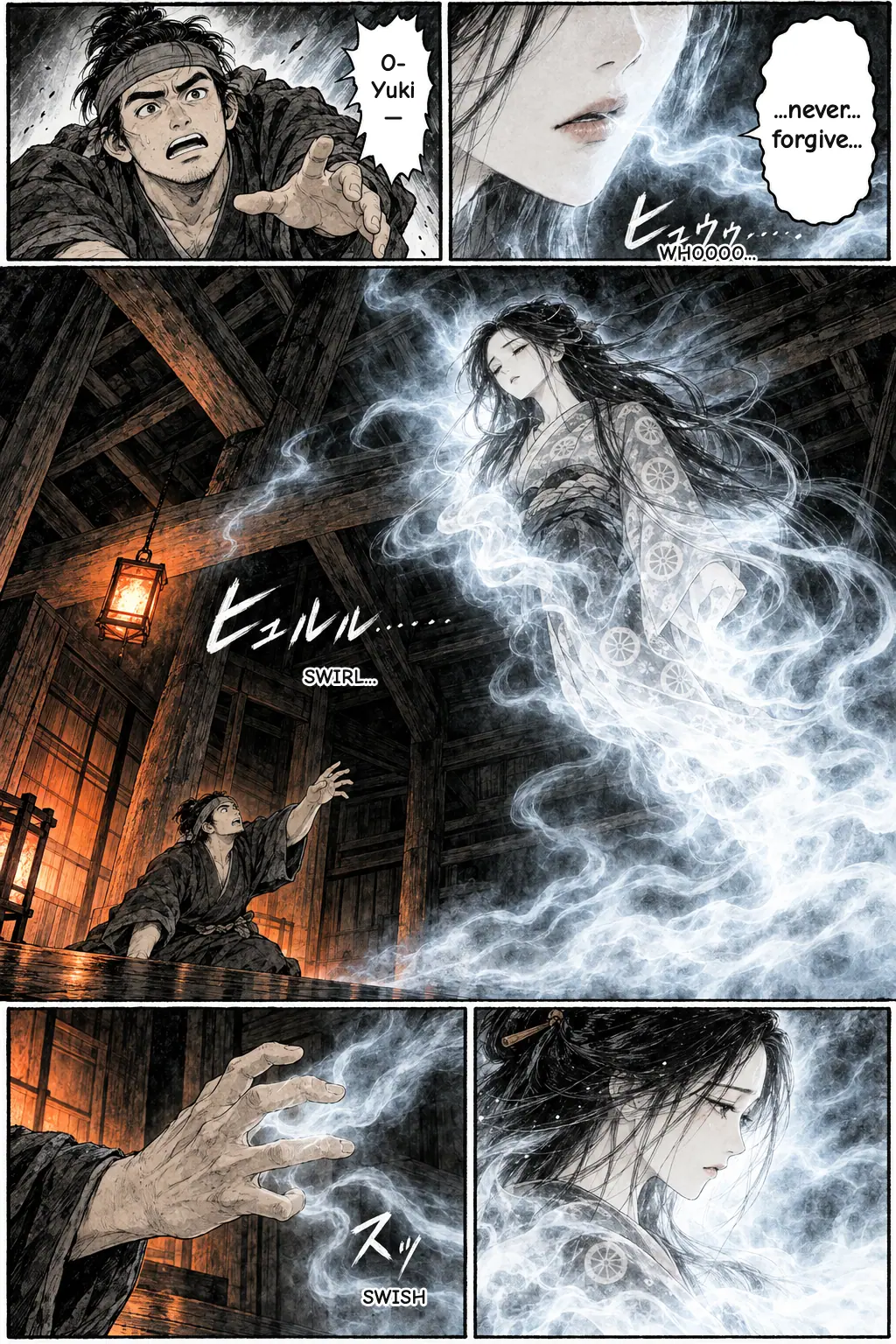
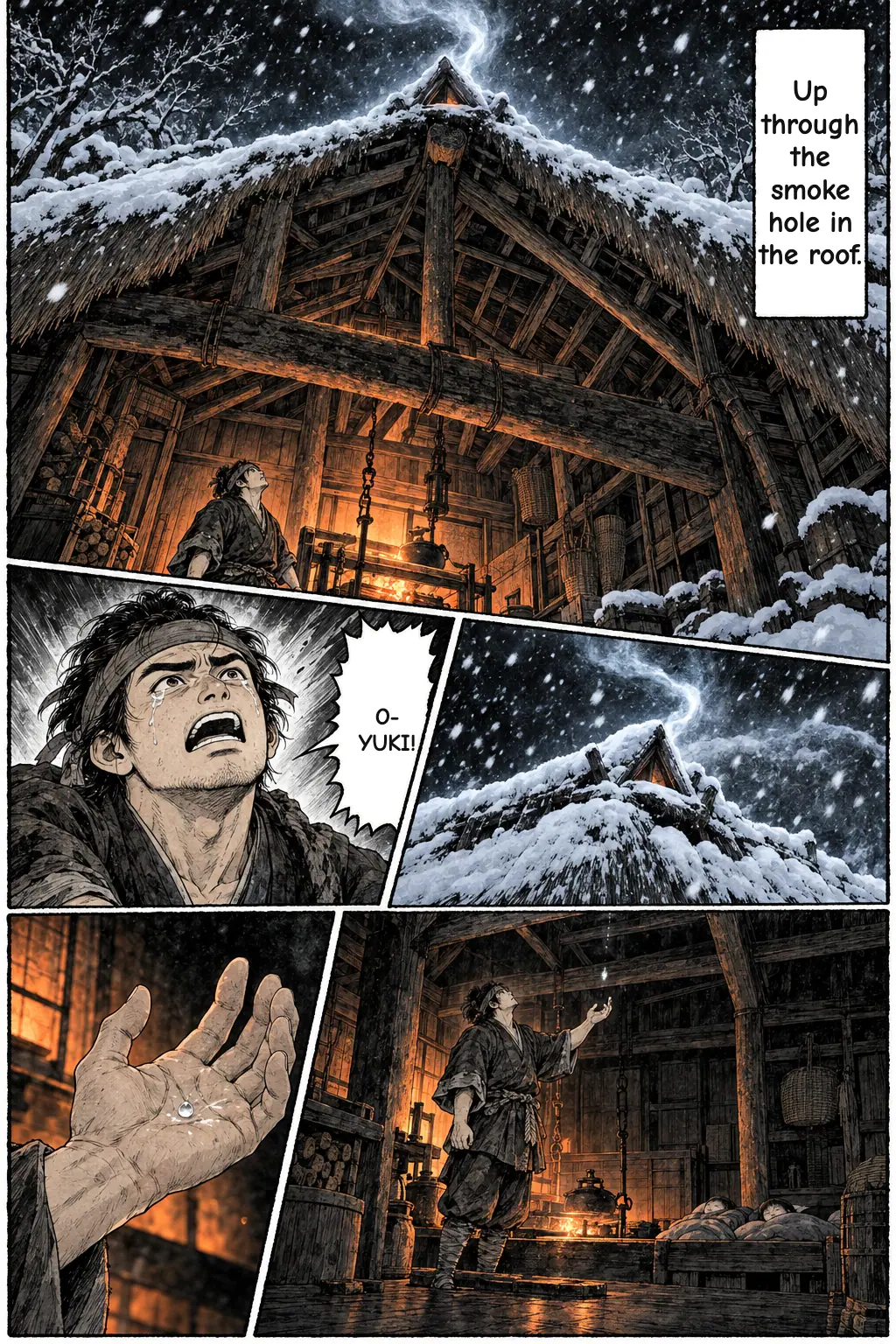
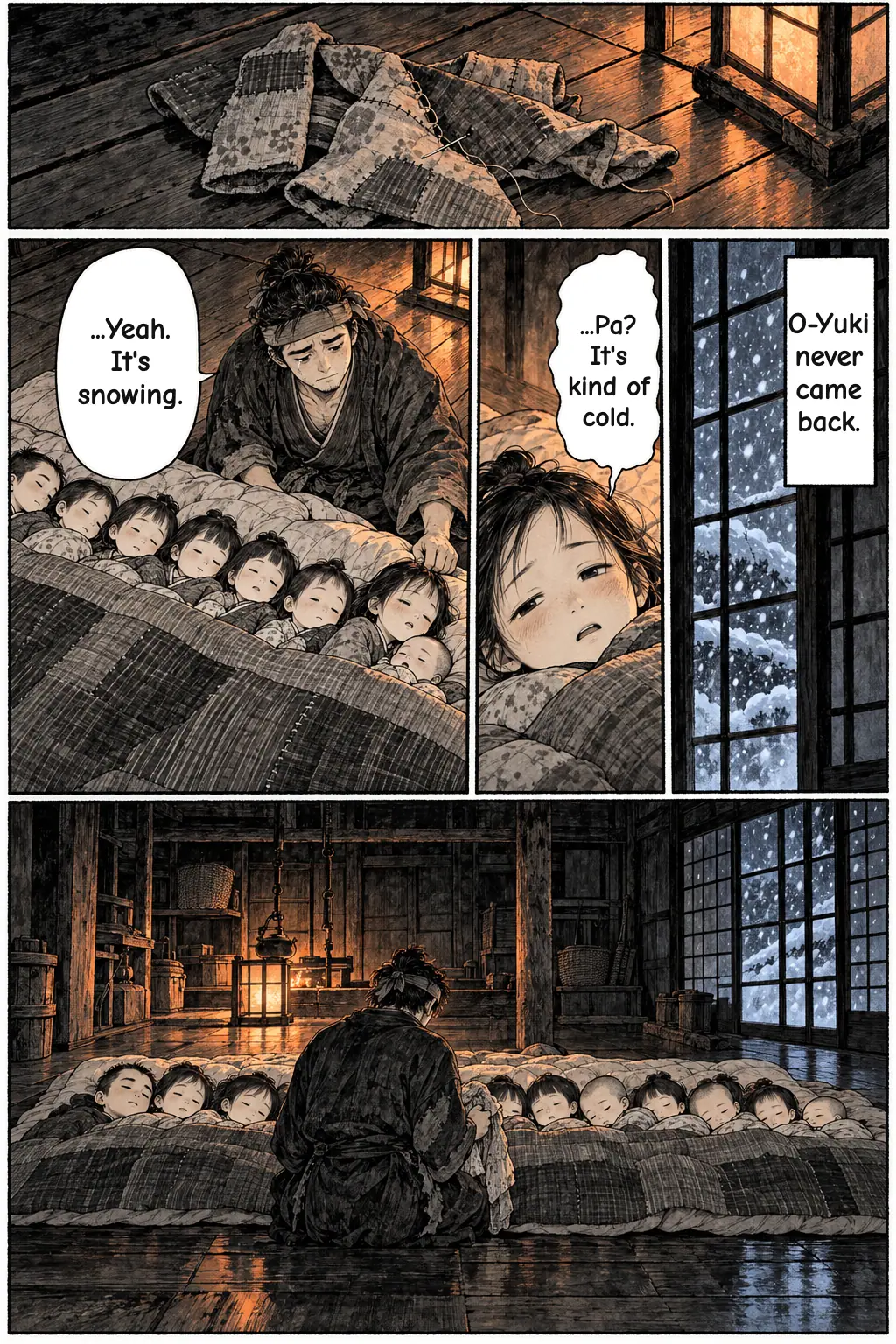
The next winter, walking home alone, Minokichi meets a tall, slender, lovely girl named O-Yuki. She says her parents have died and she is travelling to Edo (old Tokyo) to find work as a servant. The two are drawn to each other. Minokichi's mother takes a liking to her, and O-Yuki never goes to Edo; she becomes Minokichi's wife instead. She is a devoted daughter-in-law, and about five years later the mother dies praising her. O-Yuki bears ten children, all good-looking and very fair-skinned, and while other village women age quickly, she looks as young as the day she arrived. One night, as she sews by the light of a paper lantern, Minokichi says her face reminds him of something strange that happened when he was eighteen, and he tells her everything. O-Yuki throws down her sewing and cries out that the woman was her. Only for the sake of their sleeping children will she spare him; he must care for them well, or she will treat him as he deserves. Her voice thins into the sound of wind, she melts into a shining white mist, rises to the roof beams, and slips out through the smoke-hole. She is never seen again.
Main characters
Minokichi is a young woodcutter who keeps his promise for years and breaks it out of love, not carelessness. Mosaku is his elderly master and the Snow Woman's victim. The Woman of the Snow, who later lives as O-Yuki, is both deadly and tender: she kills without hesitation, yet she is also a loving mother and a good wife. Minokichi's mother, the ferryman, and the ten children complete the small cast.
What the story tells us: culture and background
Yuki-onna belongs to the world of yokai, the supernatural beings of Japanese folklore. Stories of a snow woman were told in several snowy regions of Japan long before Hearn, and the details vary from place to place. Hearn's version is the one that made her famous outside Japan. Some scholars suggest that his retelling shaped the legend as much as it recorded it, since he was writing for English readers.
At its heart this is a story about a promise. It also follows a pattern found in many cultures: a supernatural wife who must leave once her secret is spoken aloud. What makes Hearn's tale memorable is its sadness. O-Yuki's threat is real, but she does not carry it out, and her last words are about the children. The snow, quiet and beautiful but able to kill, is a fitting picture of her.
What the manga changes and adds
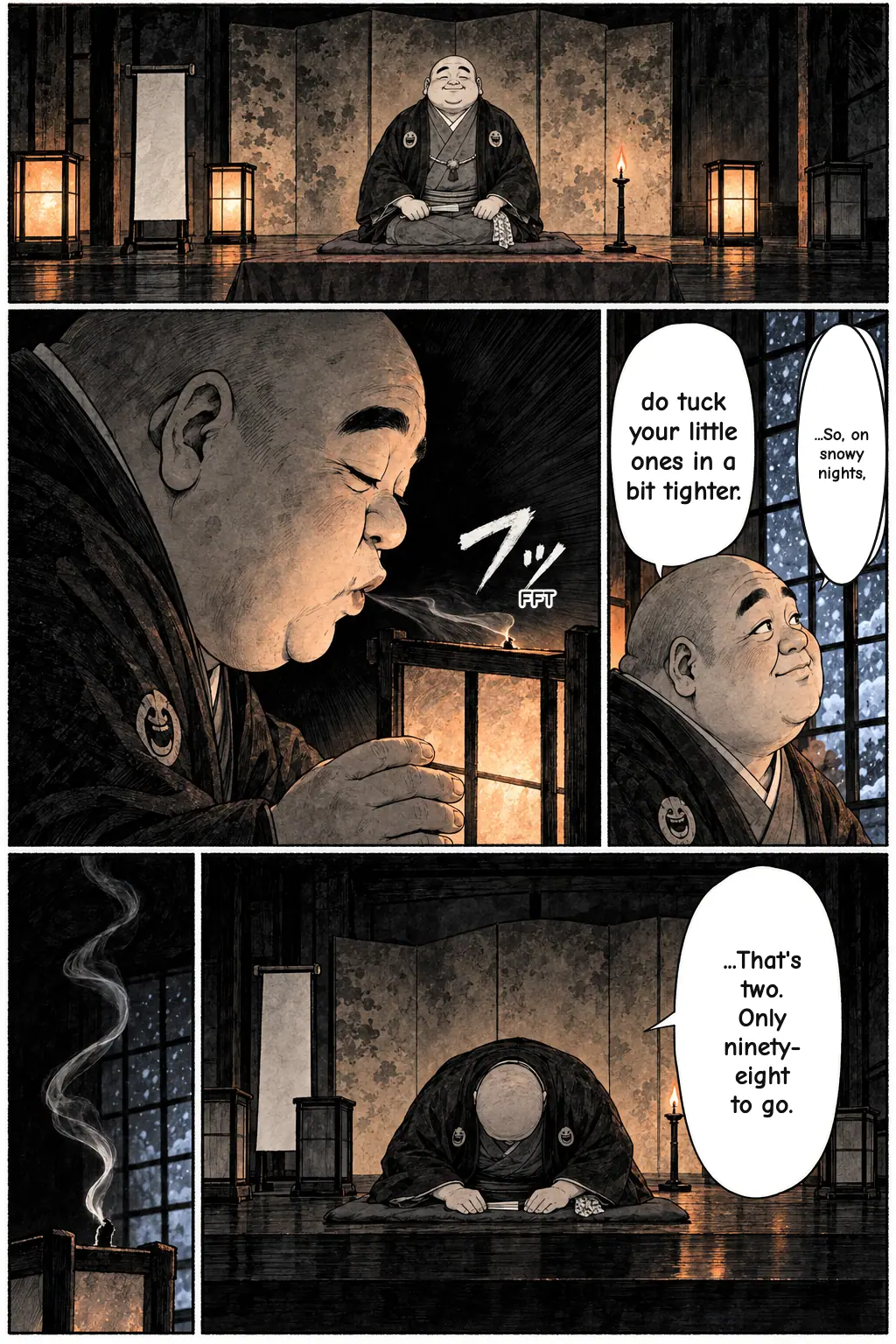
Everything in the summary above comes from Hearn's text. The manga keeps that plot and the meaning of every line of dialogue, but adds some things of its own. It opens and closes with Fukurai, an original storyteller who sits beside a paper lantern like a traditional Japanese storyteller, notices the snow outside, and at the end blows out a lantern and bows. He is not part of Hearn's story.
The artists also invented the faces, hair, and kimono patterns of the Snow Woman and O-Yuki. Hearn only tells us about white clothing, a tall slender figure, pale skin, and eyes that are frightening but beautiful. The manga shows Mosaku's death through a single panel of freezing white breath, and it adds small moments, such as O-Yuki gazing at her sleeping children or fixing their bedding, plus Minokichi's hesitation and tenderness just before he speaks. The names, ages, and personalities of the ten children, the panels of village seasons, and the quiet final images of snow, abandoned sewing, and sleeping children are also the manga's own. Hearn does not say what happened to Minokichi and the children afterward, and the manga does not invent a sequel.
Where to read it
You can read "Silent for Ten Years. Then He Told.", Episode 2 of KAIDAN: Japanese Ghost Stories, right here on Manga Portal. Every episode is free, and you don't need to sign up. If the Snow Woman gets to you, the rest of the series retells more classic Japanese ghost stories, and each one is best read on a cold night.
Characters in this episode
Minokichi
A young woodcutter, eighteen when the Snow Woman spares him, who keeps her secret for years until he tells it to his wife.
Mosaku
Minokichi's elderly master, who freezes to death when the Snow Woman breathes on him in the ferryman's hut.
Yuki-onna (the Woman of the Snow)
A beautiful, deadly spirit dressed in white whose breath freezes the living, and who spares Minokichi on one condition.
O-Yuki
A gentle, ageless young woman who marries Minokichi and bears ten children, and who turns out to be the Snow Woman herself.
Minokichi's mother
She welcomes O-Yuki into the family and dies years later full of praise for her daughter-in-law.
Fukurai (manga only)
An original lantern-side storyteller created for the manga who opens and closes the episode; he does not appear in Hearn's story.
FAQ
What is the story of Yuki-onna?
A snow spirit kills an old woodcutter in a blizzard and spares his young apprentice, Minokichi, if he promises never to speak of it. Minokichi later marries a beautiful woman, O-Yuki, and has ten children with her. When he finally tells her about that night, she reveals she is the Snow Woman, spares him for the children's sake, and vanishes.
Who wrote the Yuki-onna story?
The best-known version is by Lafcadio Hearn (also known as Koizumi Yakumo), in his 1904 book Kwaidan: Stories and Studies of Strange Things. Hearn wrote that he heard it from a farmer in Musashi Province, and snow-woman legends were told in Japan before his time.
Why didn't Yuki-onna kill Minokichi at the end?
She says she spares him only because of their sleeping children. She orders him to raise them with great care and warns that he will be punished if they ever have reason to complain about him.
Is Yuki-onna evil?
She is not simply evil. She kills Mosaku without mercy, but she also shows pity for Minokichi, is a loving wife and mother for years, and in the end puts her children first. That mix of danger and tenderness is what makes her so memorable.
Can I read the Yuki-onna manga for free?
Yes. Episode 2 of KAIDAN: Japanese Ghost Stories on Manga Portal retells the tale, and every episode is free to read with no sign-up.