Episode 1When the Dead Call His Name, Don't AnswerHoichi the Earless
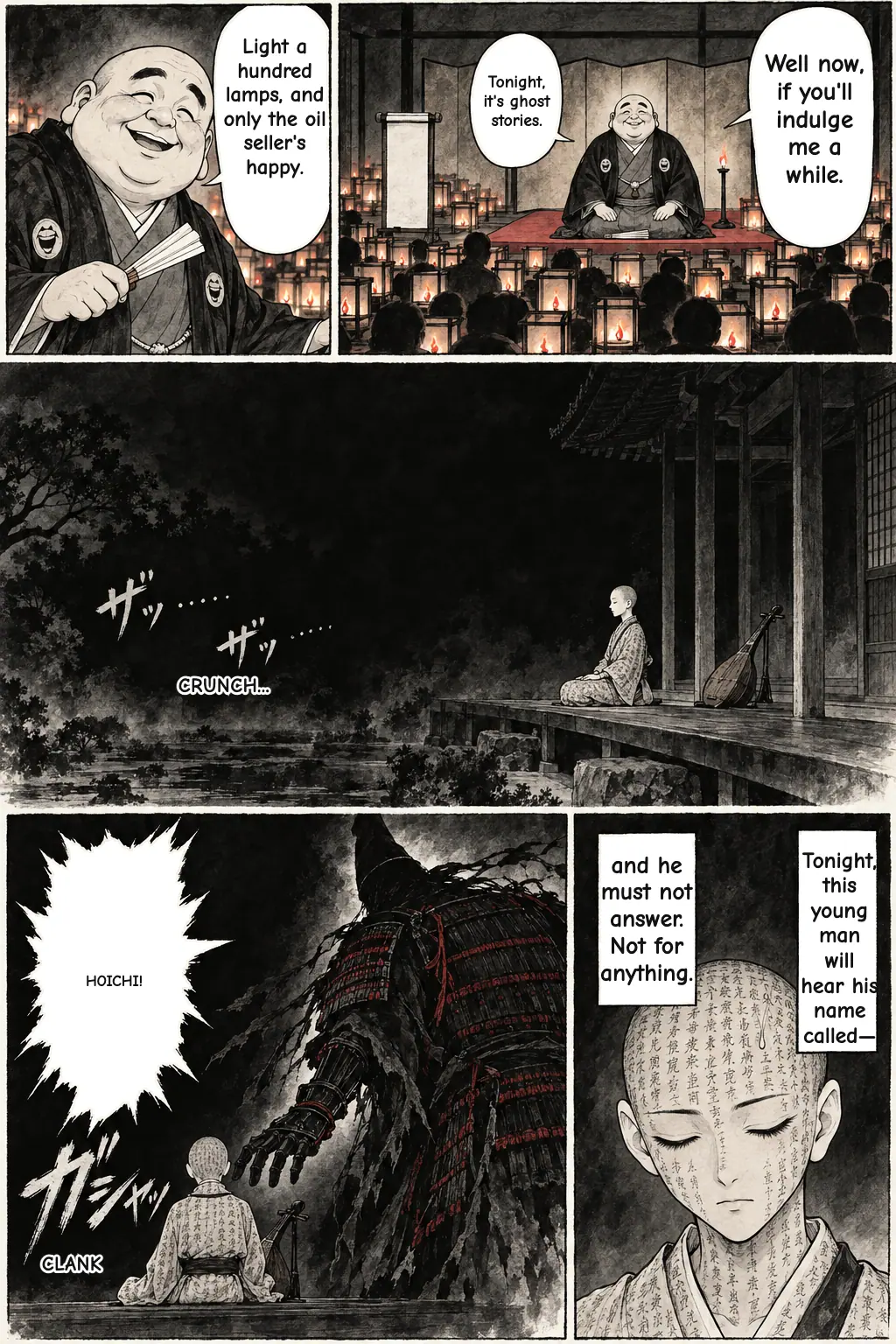
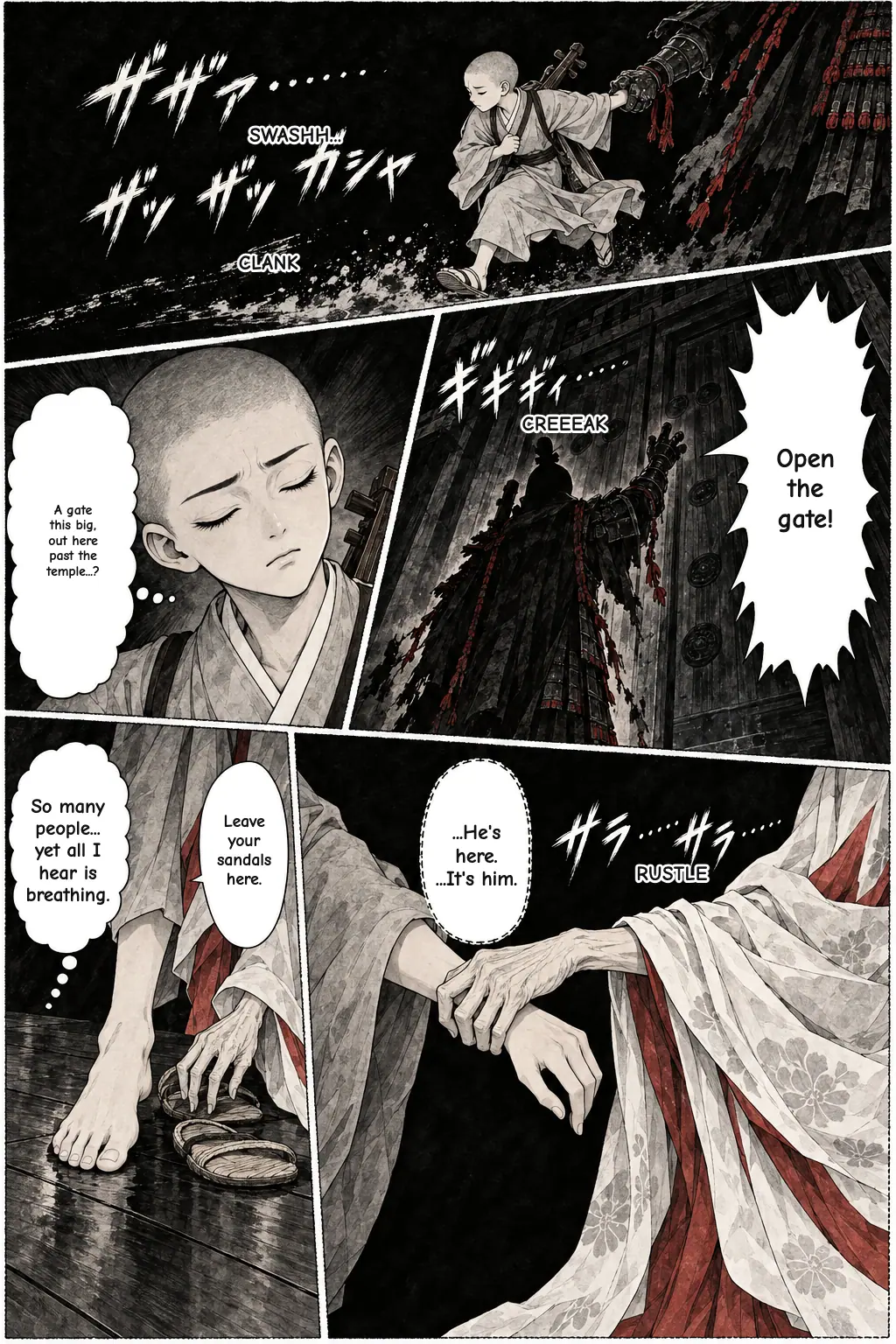
Kaidan, Tale One. Hoichi, a blind master of the biwa lute, is summoned night after night to perform for "a person of high rank." But the guests who weep at his tale are the dead of a clan that sank beneath the sea. On the night his whole body is covered in sacred writing, he must not answer, no matter who calls his name.
Bookmark the series page so you can jump back in when the next episode is out: KAIDANRSS for this series
Story summary
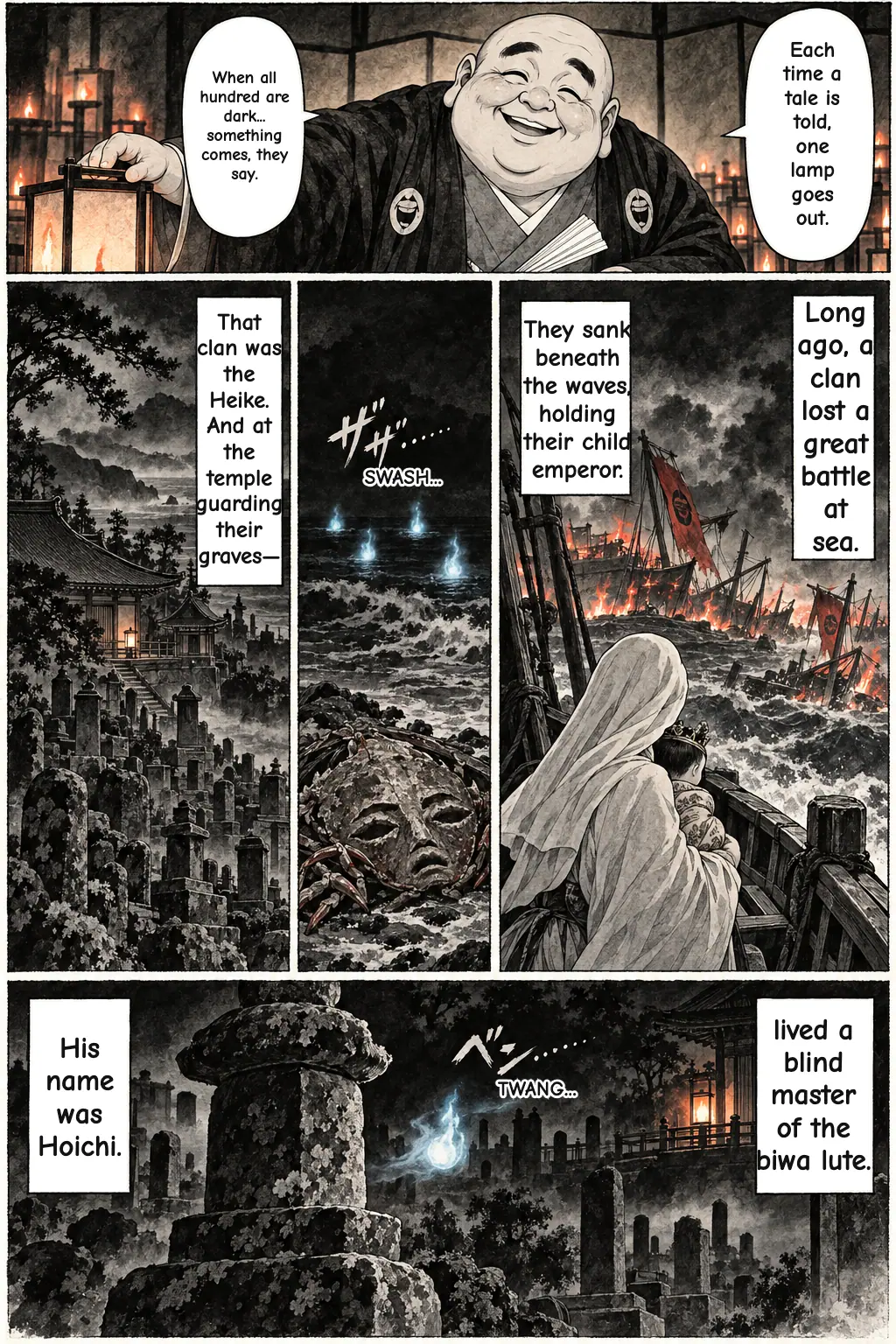
The story opens with history. More than seven hundred years before Hearn wrote, the Heike (Taira) clan lost their last battle against the Genji (Minamoto) at Dan-no-ura, in the Strait of Shimonoseki. The Heike women and children died in the sea with them, and so did the child emperor Antoku. For centuries afterward, people said the sea was haunted. Ghosts tried to pull swimmers under and sink boats, ghost-fires floated over the water at night, and there were even 'Heike crabs' whose shells seemed to show human faces.
Hoichi the Earless Story Explained: Kwaidan Ghost Tale Summary
In short: "Hoichi the Earless" (Mimi-nashi Hōïchi) is the story of a blind biwa player who is led out night after night to perform the Battle of Dan-no-ura for a noble audience that turns out to be the ghosts of the drowned Heike clan. A priest covers his body with the Heart Sutra so the ghosts cannot see him, but forgets his ears, and the ghost samurai tears them off. Lafcadio Hearn retold it in English as the first story of Kwaidan (1904).
The Original Story: A Summary of Hoichi the Earless
The story opens with history. More than seven hundred years before Hearn wrote, the Heike (Taira) clan lost their last battle against the Genji (Minamoto) at Dan-no-ura, in the Strait of Shimonoseki. The Heike women and children died in the sea with them, and so did the child emperor Antoku. For centuries afterward, people said the sea was haunted. Ghosts tried to pull swimmers under and sink boats, ghost-fires floated over the water at night, and there were even 'Heike crabs' whose shells seemed to show human faces. To calm the dead, a Buddhist temple called Amidaji was built at Akamagaseki (today's Shimonoseki), with memorial stones for the emperor and his chief retainers.
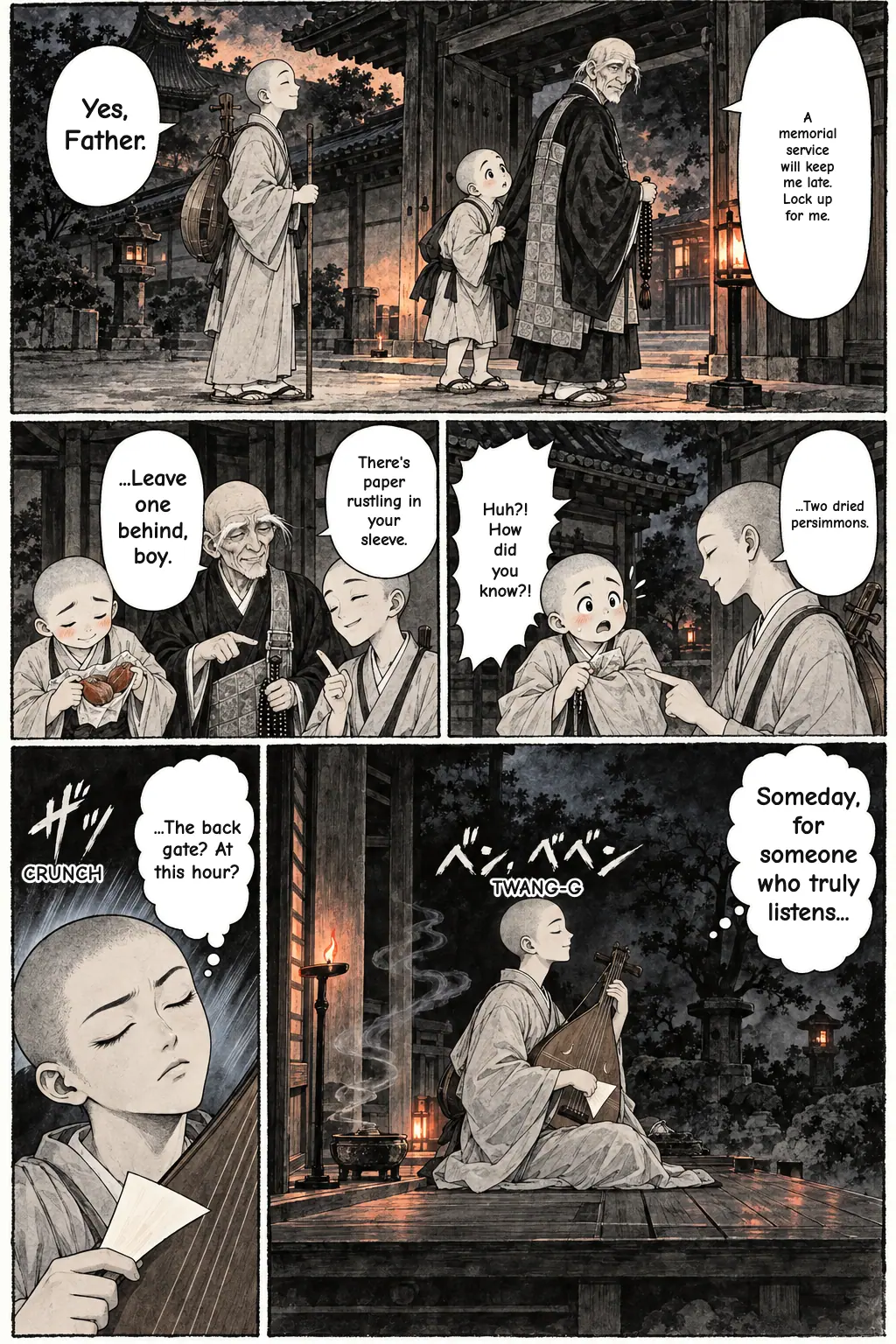
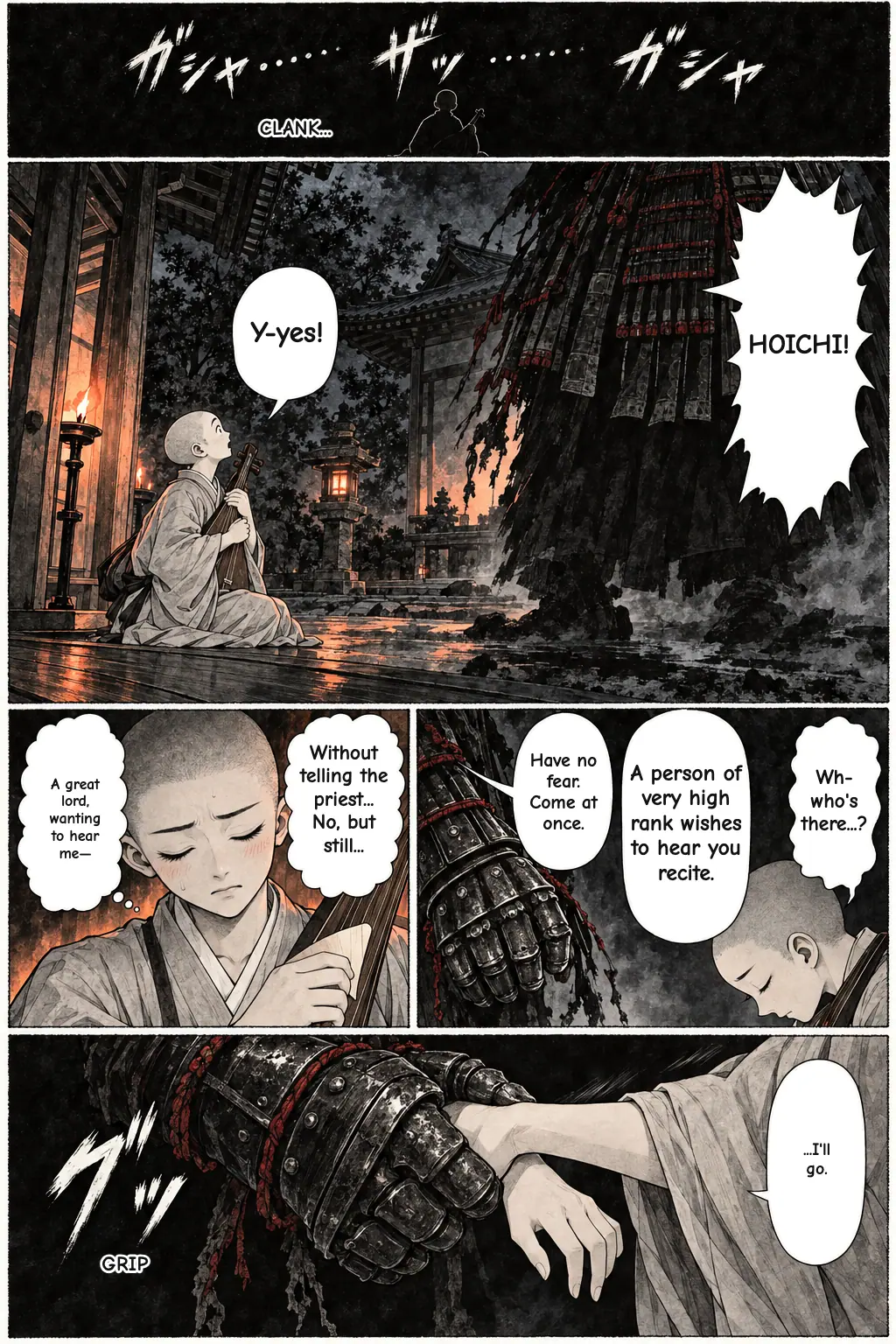
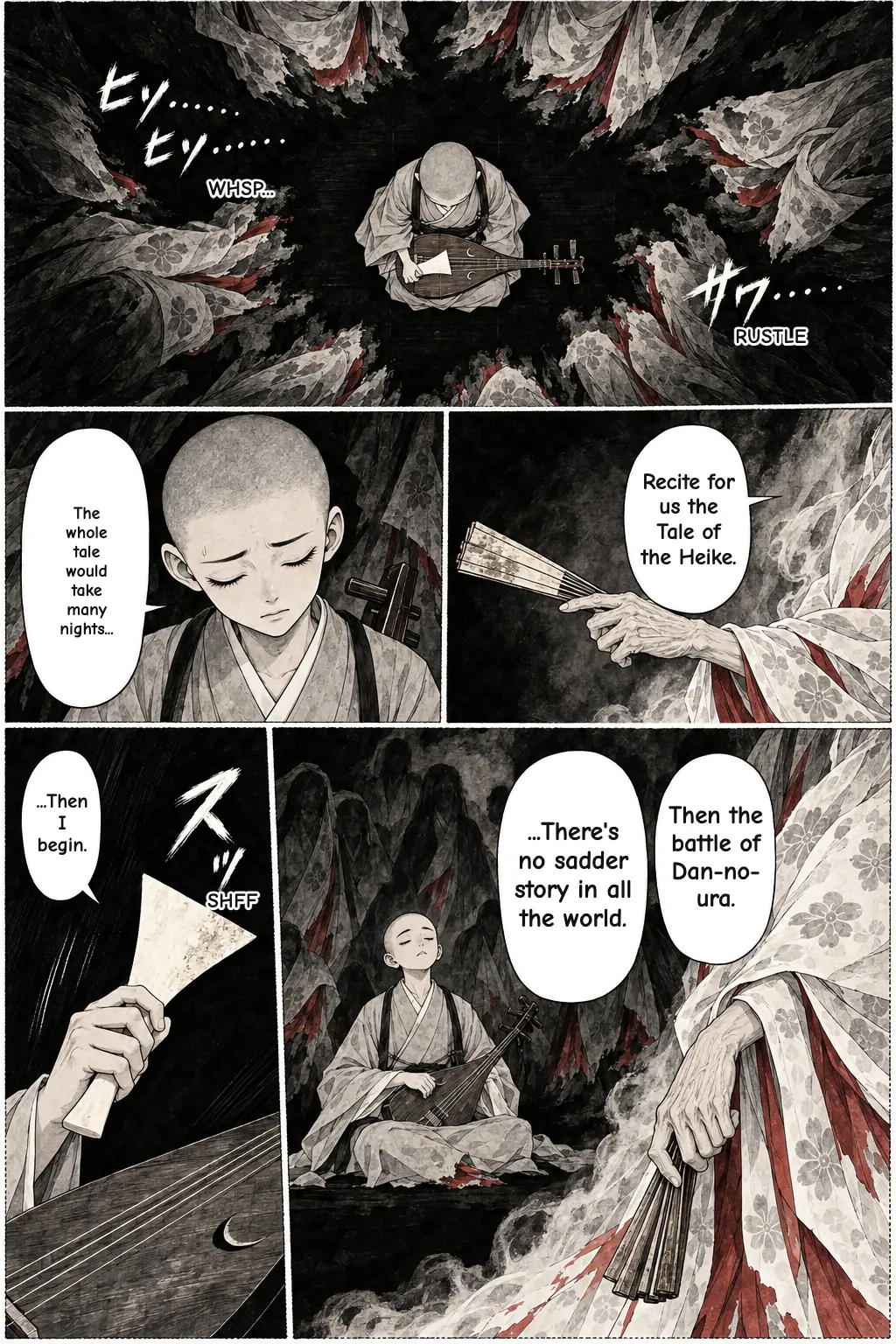
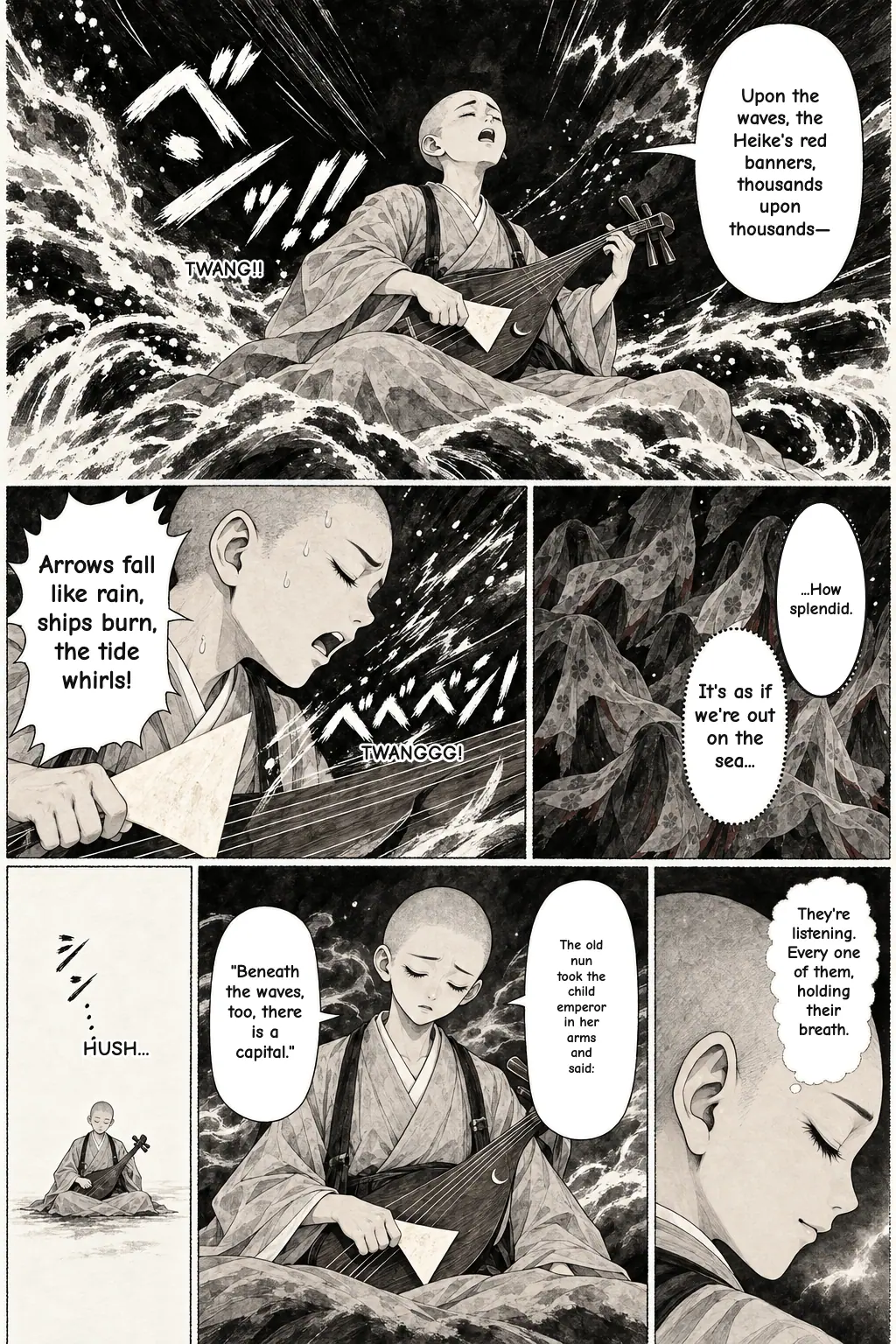
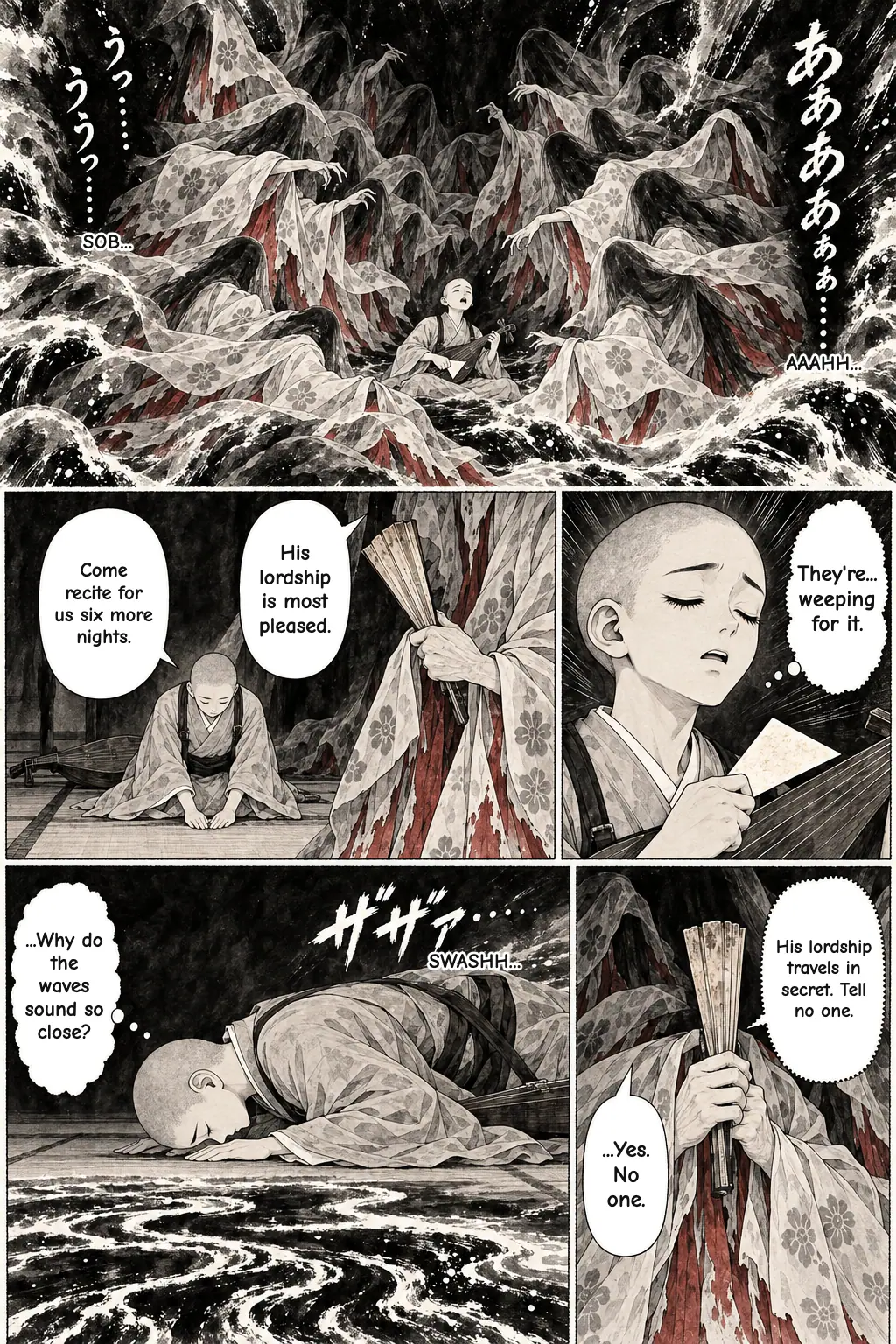
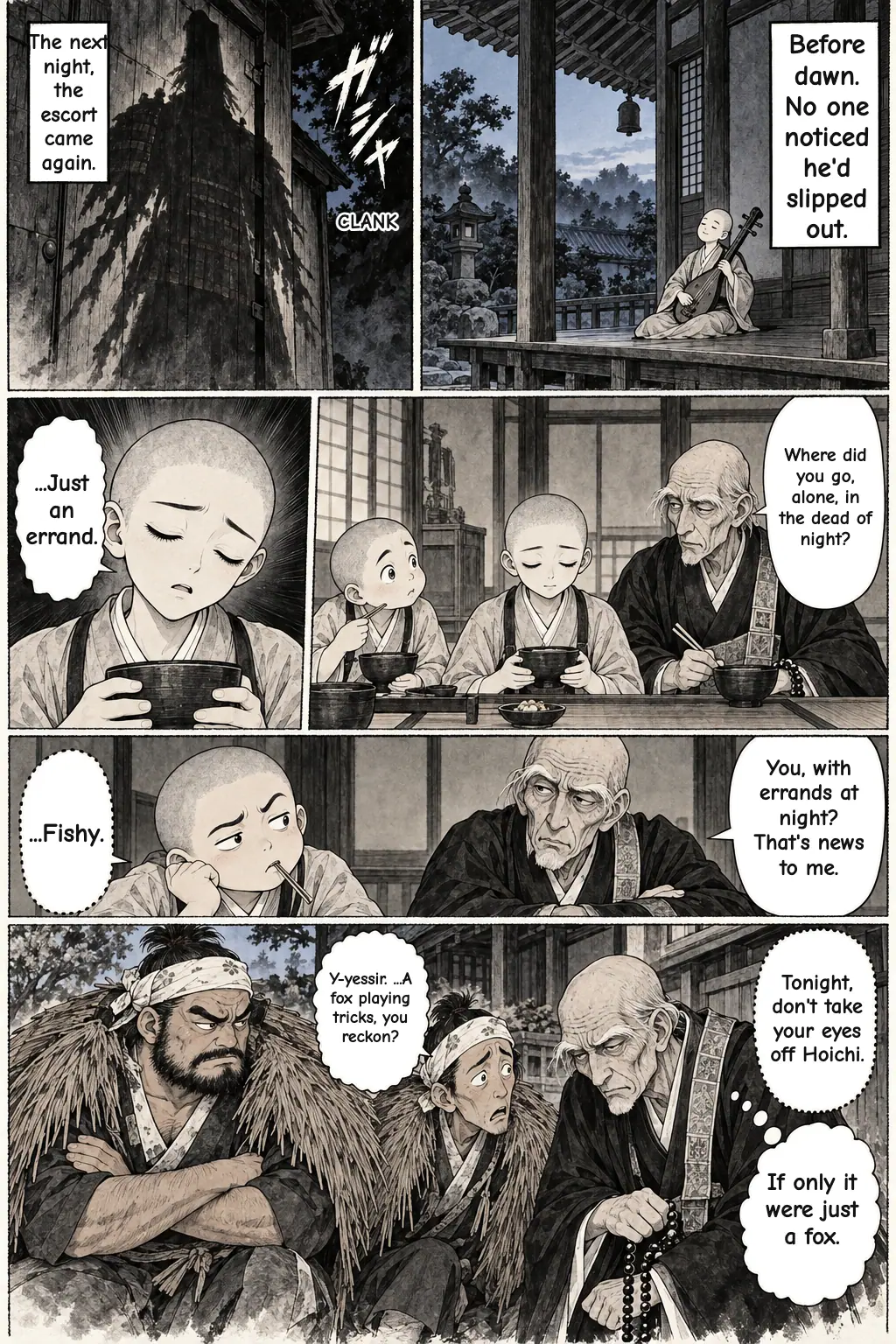
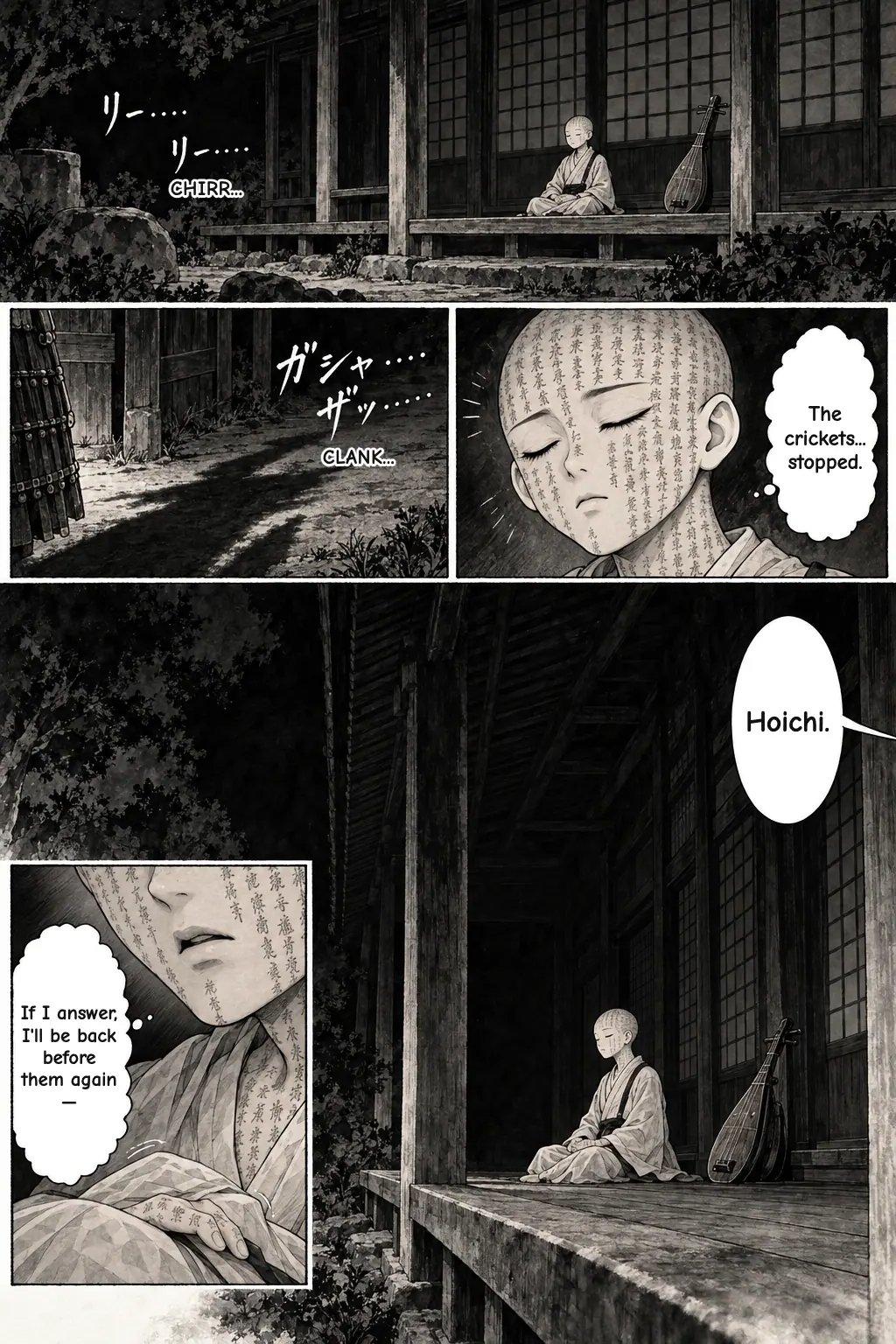
Hoichi, a blind young man famous for chanting The Tale of the Heike to the biwa (a Japanese lute), lived at this temple as a guest of the priest, who loved poetry and music. One hot summer night, while the priest was away, a deep voice called Hoichi's name. A samurai, judging by the clank of his armor, said that a lord of very high rank wanted to hear him sing of Dan-no-ura, and led him by the hand to what seemed to be a great mansion. There, surrounded by rustling silk and whispering women, Hoichi performed. When he reached the part where the emperor's grandmother, the Nii-no-Ama, leaps into the sea holding the child emperor, the whole hall broke into wild weeping. A senior lady told him to return for six more nights and to tell no one.
The Graveyard, the Sutra and the Lost Ears
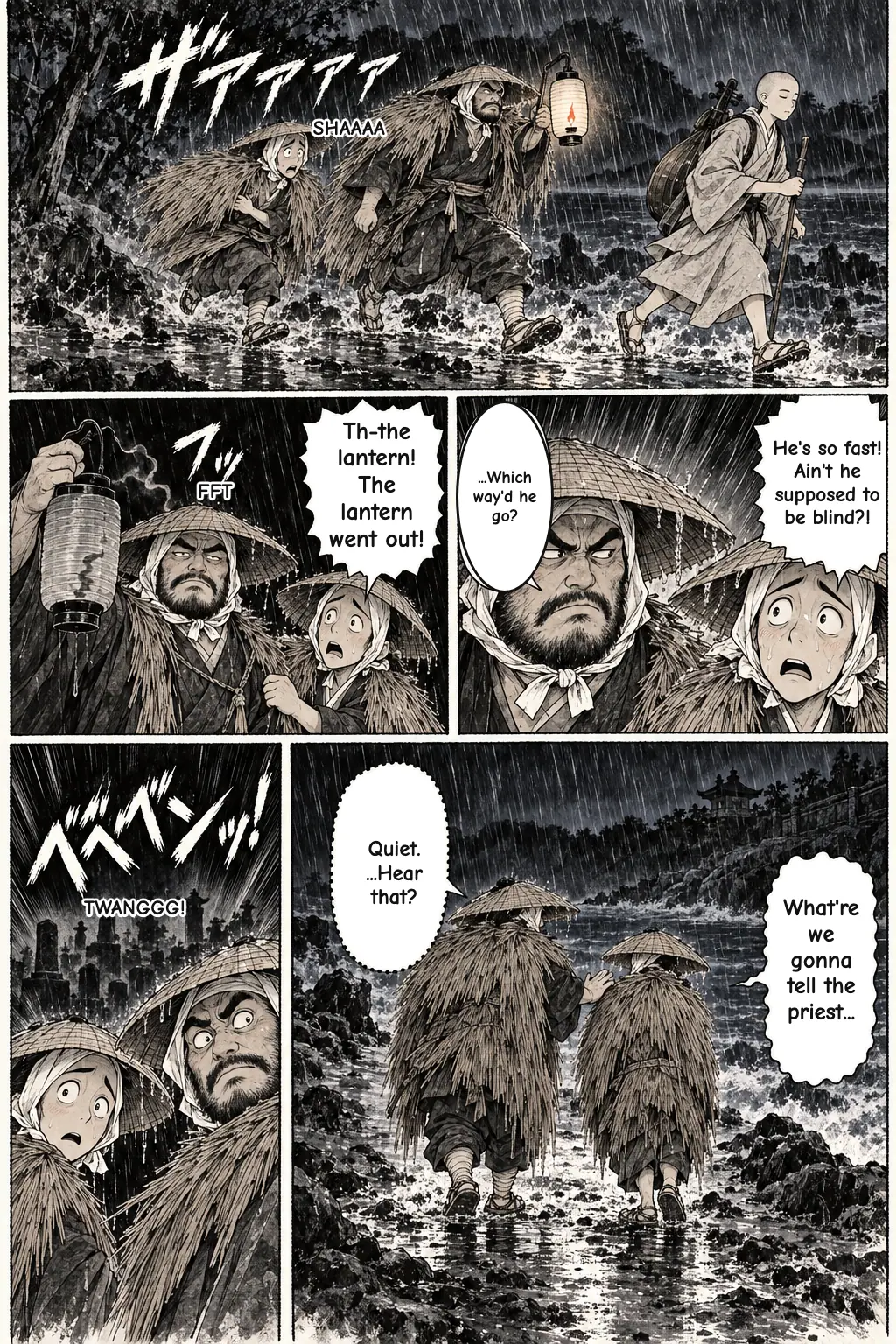
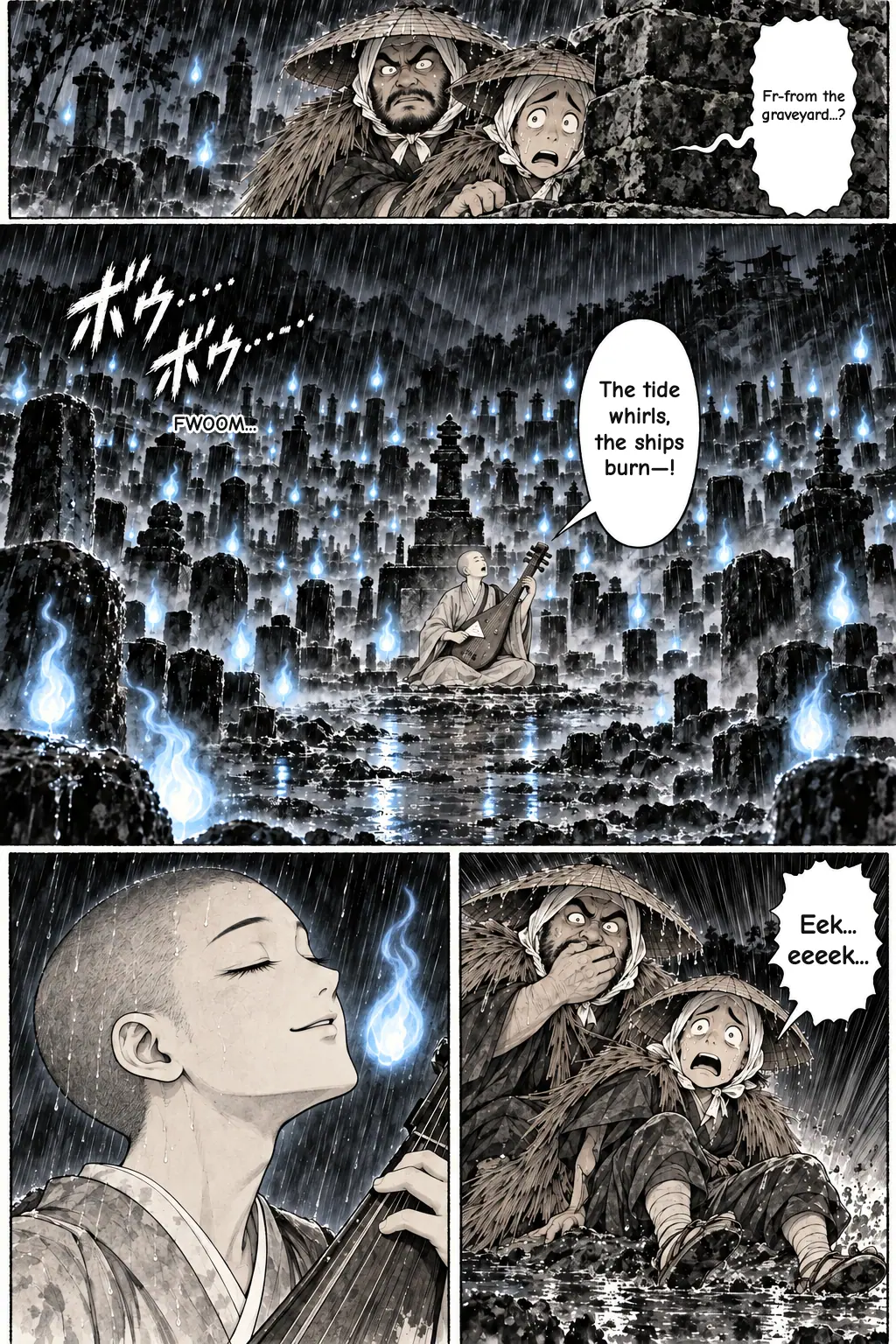
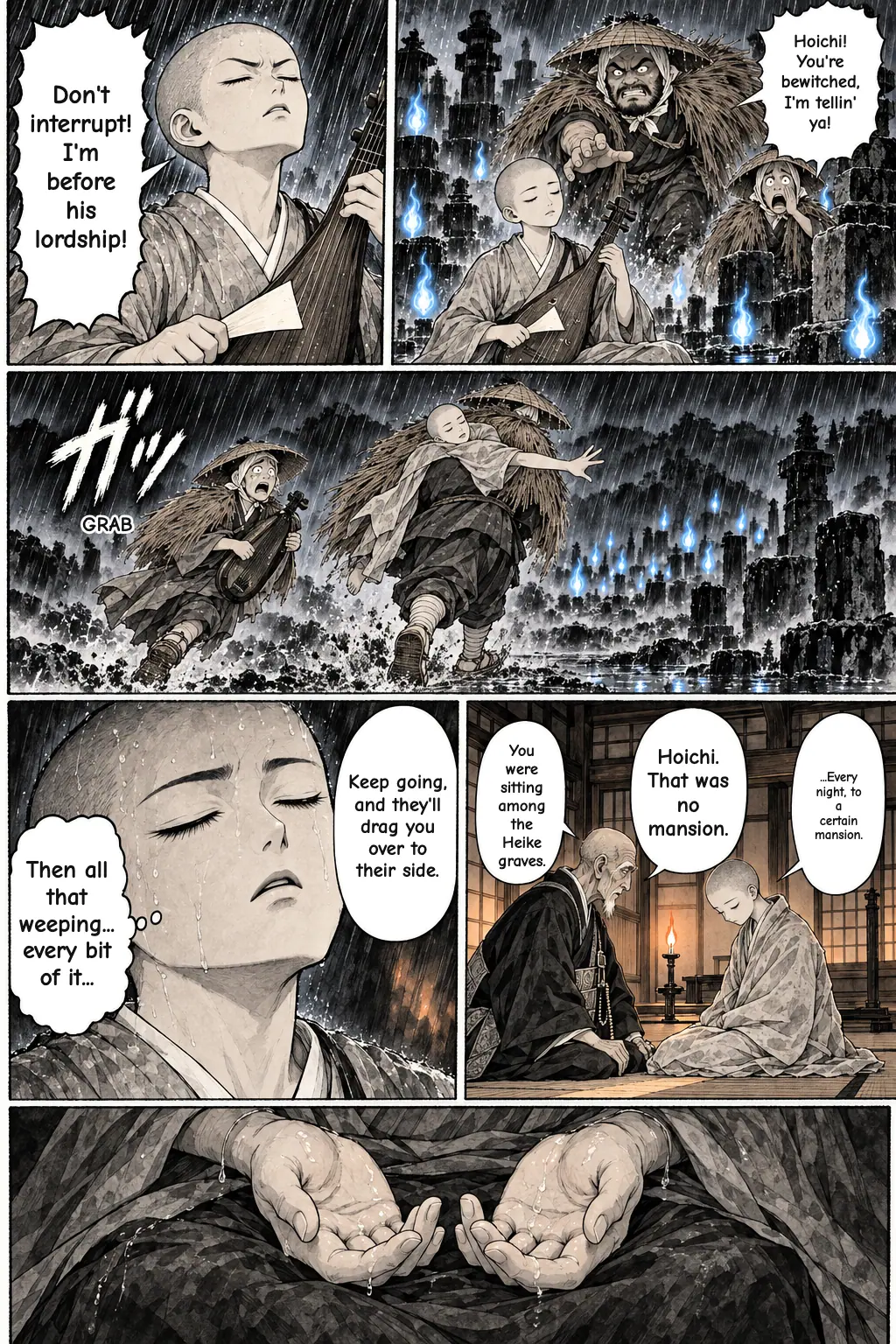
Hoichi kept the secret, but the priest noticed his absences and sent servants to follow him. On a dark, rainy night they heard a biwa in the temple cemetery and found Hoichi alone before Emperor Antoku's grave, playing loudly, with countless ghost-fires burning over the tombs around him. They dragged him home. When Hoichi finally told everything, the priest explained that he had been performing among the graves of the Heike, and that if he kept obeying them, they would one day tear him apart.
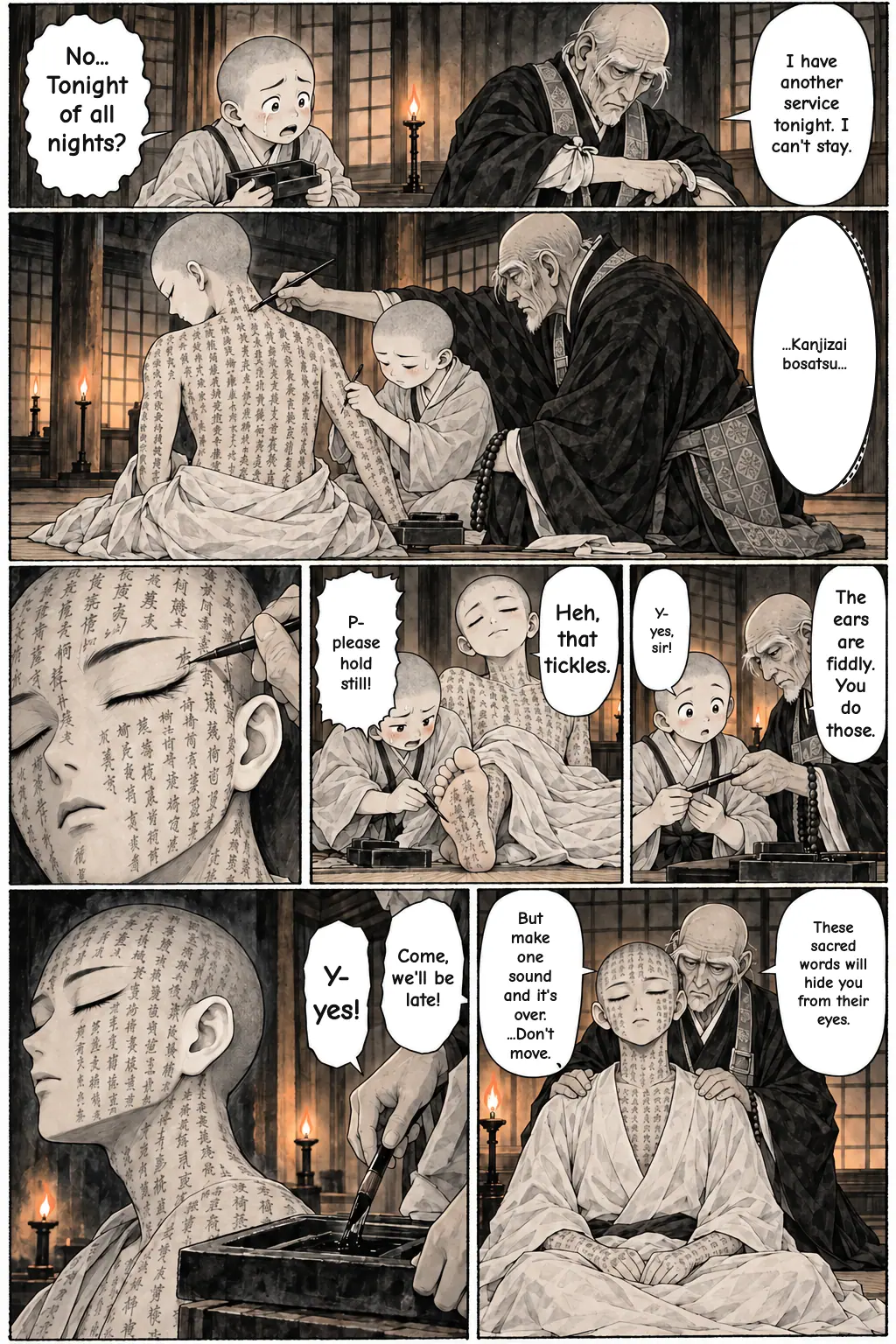
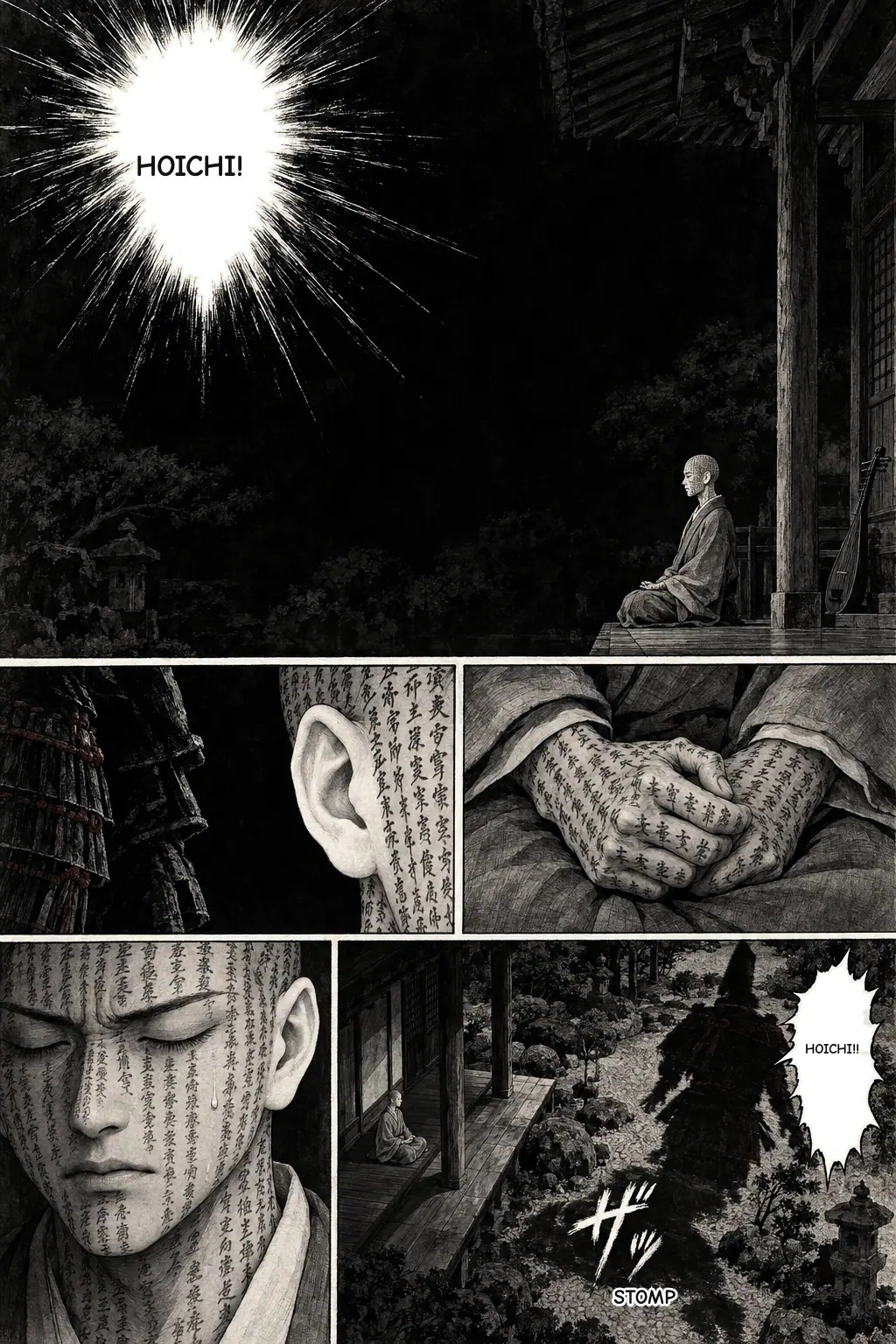
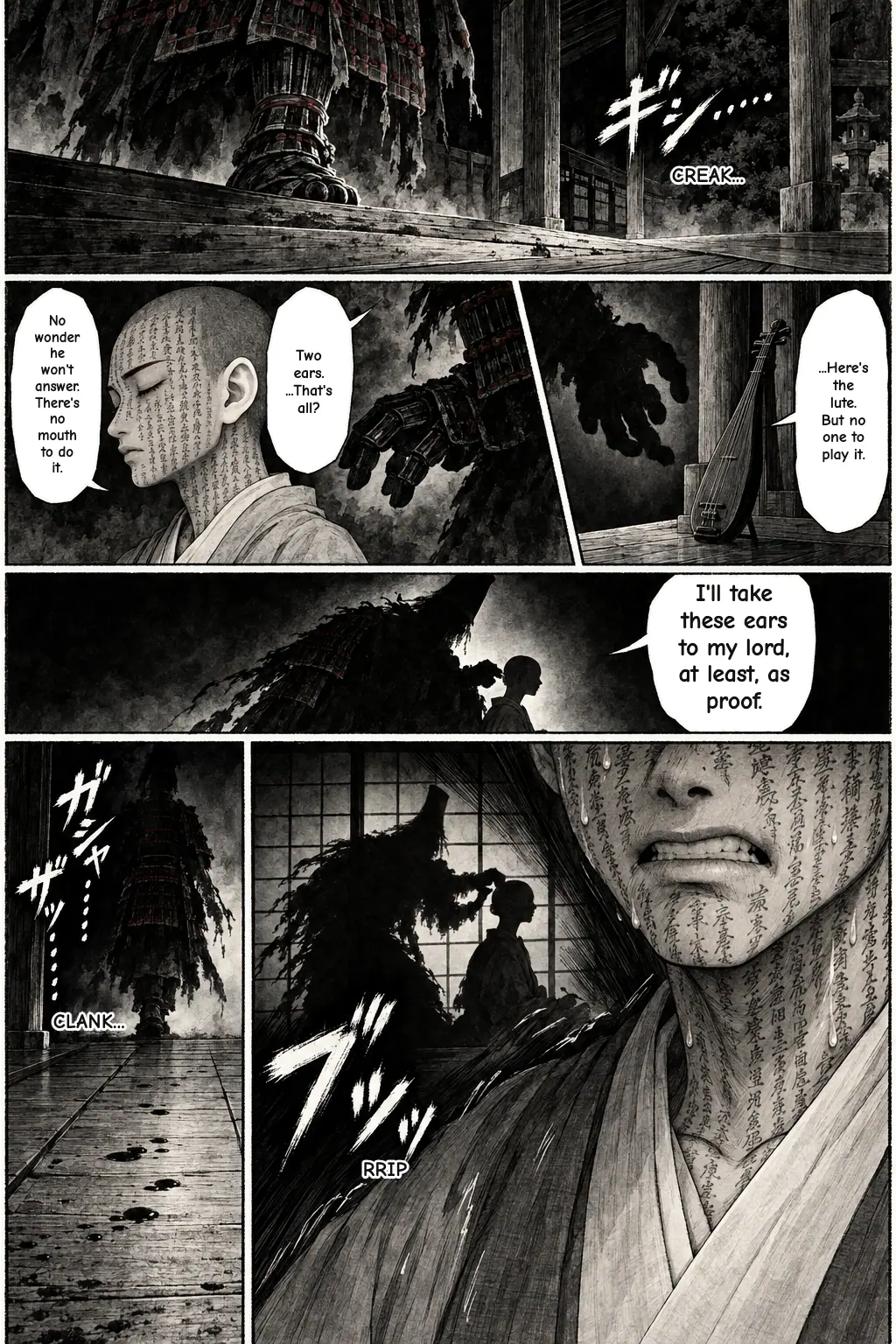
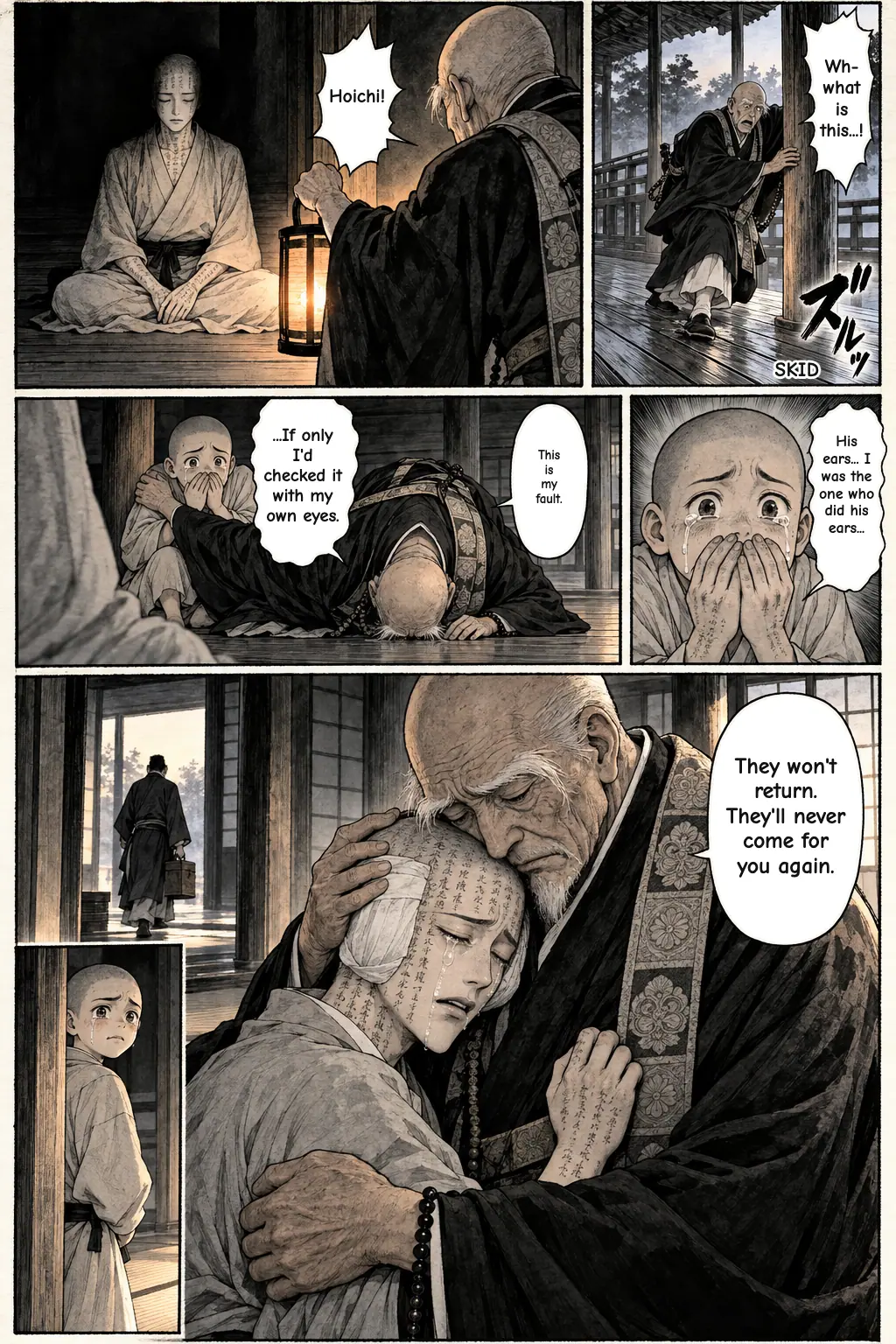
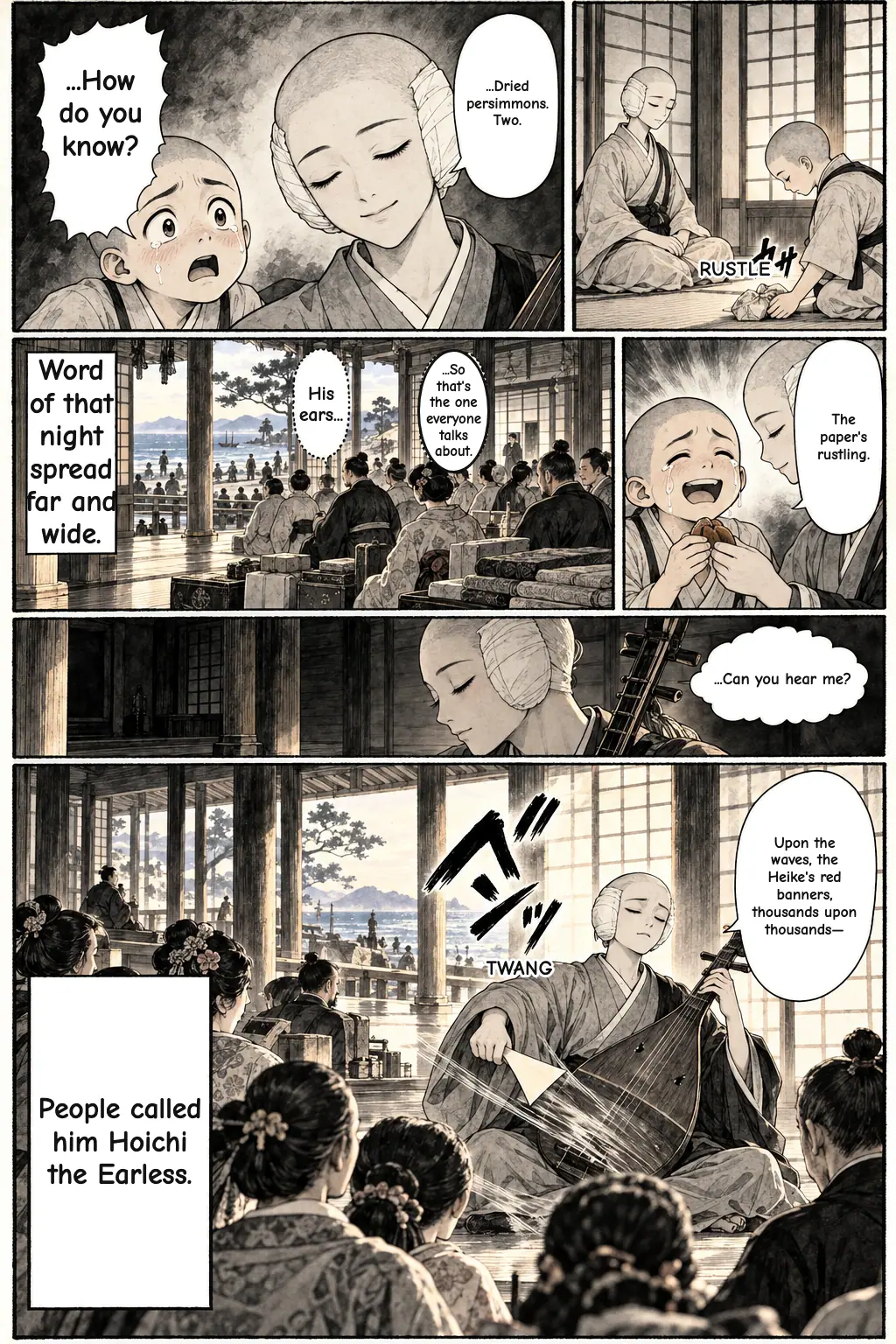
The priest had to go out again that night, so he and his acolyte stripped Hoichi and wrote the Heart Sutra, a short Buddhist scripture, all over his body, from his head to the soles of his feet. Hoichi was told to sit still and silent no matter who called him. The samurai came, called his name, grew angry, and found only a biwa and two floating ears. To prove he had obeyed his lord as far as he could, the ghost ripped the ears off and left. Hoichi did not cry out. The priest blamed himself, since he had trusted the acolyte with the ears and never checked. With a good doctor's care Hoichi recovered, became famous and wealthy, and was known ever after as Mimi-nashi Hōïchi, 'Hoichi the Earless.'
What the Story Tells Us: Culture and Historical Background
The battle is real. Dan-no-ura (1185) ended the Genpei War, and The Tale of the Heike, the medieval epic about the clan's fall, was traditionally performed by blind chanters with the biwa, called biwa hōshi. Hoichi belongs to that real tradition. The story is built on the idea that a performance can be so moving that it reaches the dead, who long to hear their own tragedy told again.
The protective writing reflects a common belief that sacred words can shield a person from spirits. The ghosts are not simply evil; they behave like a proper noble household, with servants, ladies and a loyal samurai who carries out orders to the end. That mix of courtesy and terror is a big part of the story's chill. Lafcadio Hearn, a writer born in Greece who settled in Japan and took the name Koizumi Yakumo, did not invent the tale. He retold an older Japanese story in English, and it became one of the best-known Japanese ghost stories in the world.
What the Manga Changes
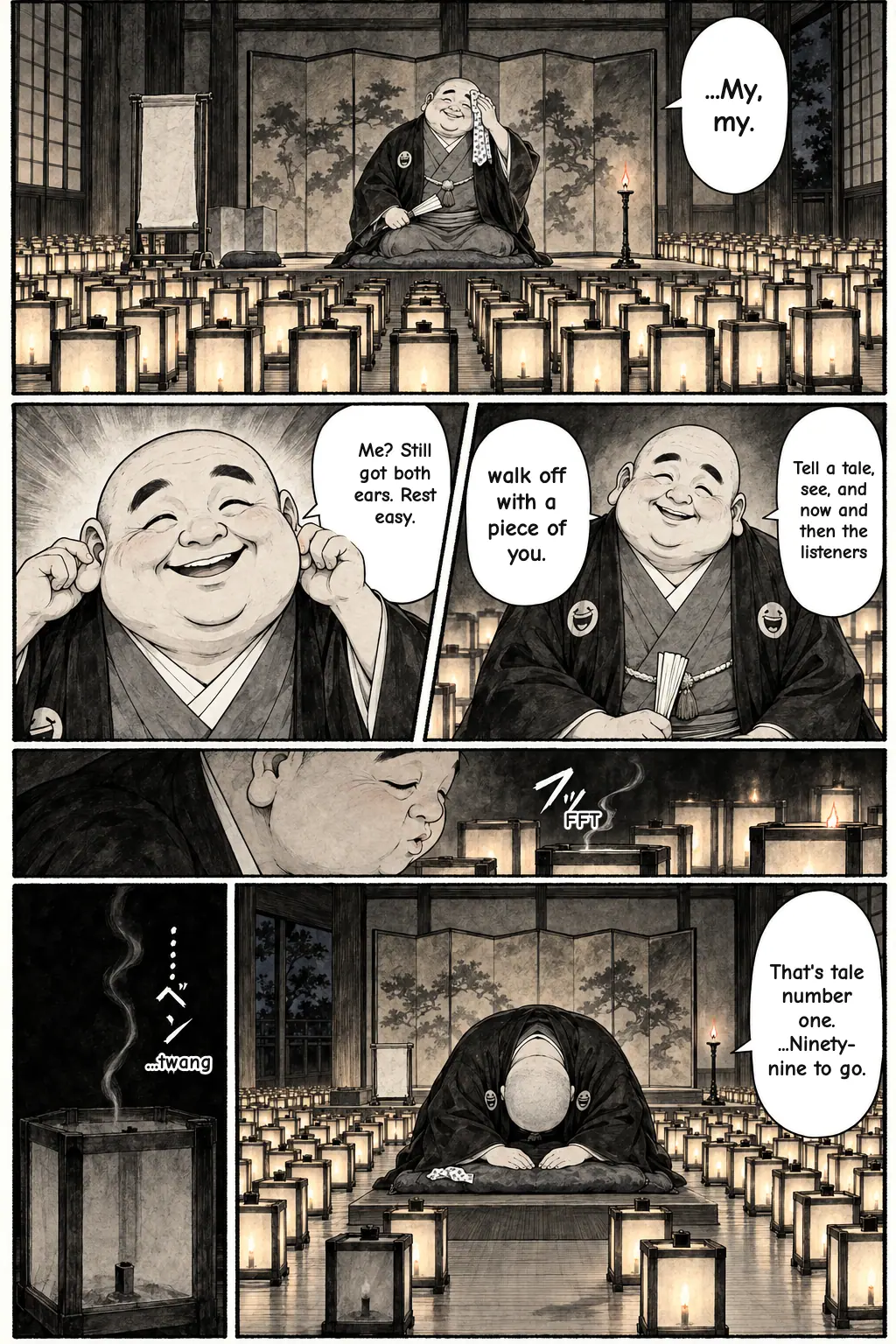
The core plot of the manga follows Hearn: the summons, the weeping hall, the graveyard, the sutra, the ears and the ending. Several elements, however, are the manga's own invention. The framing narrator, Fukurai, who tells the tale in front of a hundred paper lanterns and blows one out at the end, is an original MangaPortal character and does not appear in Hearn.
Hearn describes the mansion only through what blind Hoichi hears and feels, and the cemetery only through ghost-fires seen by the servants. So the manga's visual choices are creative additions: how the hall looks, how the ghosts appear (as figures or as flames and shadows), and the two-sided view that contrasts the sound-world Hoichi imagines with the graveyard the servants actually see. Characters' faces, ages and much of their exact dialogue are also invented, and the lines Hoichi chants about Dan-no-ura are a retelling based on The Tale of the Heike, since Hearn does not include that text. The ear scene is shown mostly through shadow and sound, which matches how the original tells it from Hoichi's side: as pain and noise in the dark.
Where to Read It
Hearn's original, 'The Story of Mimi-Nashi-Hōïchi,' is the first piece in Kwaidan: Stories and Studies of Strange Things (Houghton Mifflin, 1904), which is in the public domain and available on Project Gutenberg. It is short and well worth reading after the manga.
If you would like to see the story first, this episode is Tale One of KAIDAN: Japanese Ghost Stories here on Manga Portal. Every episode is free to read, with no sign-up needed. Start with Hoichi, then keep going to meet the other ghosts of Japan, one lantern at a time.
Characters in this episode
Hoichi (Hōïchi)
A blind young master of the biwa lute, famous for chanting the Battle of Dan-no-ura, who lives at Amidaji Temple and is summoned to perform for the dead.
The Priest of Amidaji
Hoichi's protector and friend, a lover of poetry and music who writes the Heart Sutra over Hoichi's body to save him.
The Acolyte
The priest's young assistant who helps write the sutra, and who was trusted with the ears that were left blank.
The Ghost Samurai
A deep-voiced warrior in armor who leads Hoichi to the 'mansion' each night and finally takes his ears as proof for his lord.
The Senior Lady (Rōjo)
The woman in charge of the ghostly household, who requests the Dan-no-ura chapter and orders Hoichi to keep his visits secret.
Emperor Antoku and the Heike Ghosts
The child emperor who drowned at Dan-no-ura and the clan who died with him, the unseen noble audience that weeps at Hoichi's song.
FAQ
What is the story of Hoichi the Earless?
Hoichi is a blind biwa player who is tricked into performing every night for the ghosts of the Heike clan, who drowned at the Battle of Dan-no-ura. A priest paints the Heart Sutra on his body to make him invisible to them, but forgets his ears, so the ghost samurai tears them off. Hoichi survives and becomes famous as 'Hoichi the Earless.'
Why did the ghosts take Hoichi's ears?
The sacred writing hid every part of Hoichi except his unwritten ears, so the ears were all the samurai could see. He took them as proof to his lord that he had obeyed his orders as far as he could.
Who wrote Hoichi the Earless?
The best-known English version is by Lafcadio Hearn (Koizumi Yakumo), published in Kwaidan in 1904. Hearn retold an older Japanese tale rather than inventing it.
Who were the ghosts in Hoichi the Earless?
They were the spirits of the Heike (Taira) clan, including the child emperor Antoku, who died at sea at Dan-no-ura in 1185. Hearn never names them outright, but Hoichi is found playing in front of the emperor's grave surrounded by ghost-fires.
Is Hoichi the Earless a true story?
The Battle of Dan-no-ura, the Heike clan and blind biwa chanters are all historical, and Amidaji Temple was a real temple in Shimonoseki. Hoichi's ghostly encounter, however, is a legend.