Episode 11He Stopped Writing. The Dark Wrote Back.Izumi Shikibu: Fireflies at Kifune
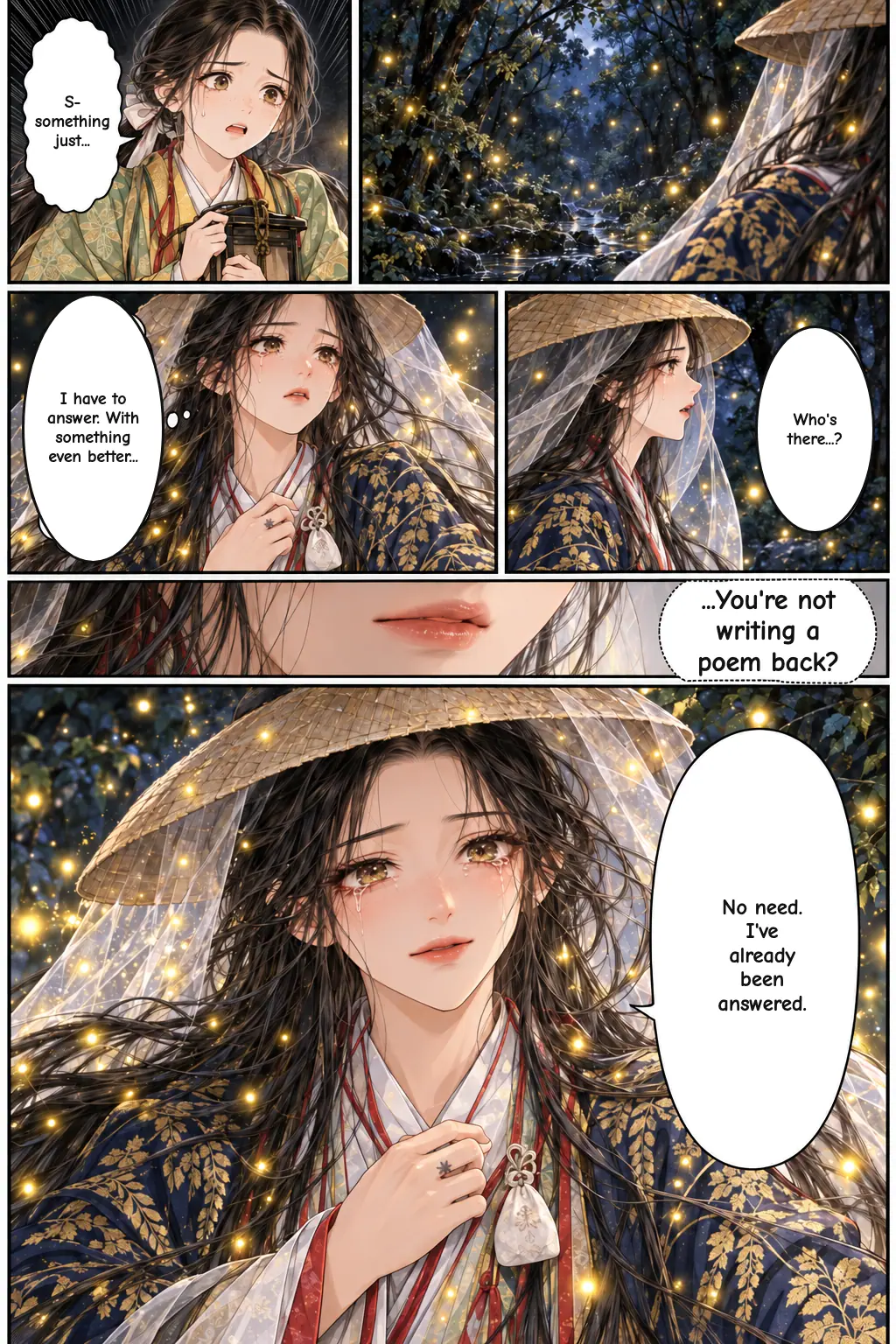
Izumi Shikibu, a poet still waiting for a lover who has stopped coming, leaves her waiting room one summer night and heads for a mountain stream in the hills north of the capital. Seeing her own soul in the fireflies that fill the dark, she composes a poem, and from deep in the darkness a voice answers. This is the story of a thousand-year-old love poem and a reply whose sender no one knows.
The source is very short. The Goshūi Wakashū is the fourth imperial anthology of Japanese poetry, presented to the court in 1086 and compiled by the courtier Fujiwara no Michitoshi. Its final book contains a section of poems about the gods, and there, side by side, are two poems: one by Izumi Shikibu, a famous woman poet of the Heian period (794–1185), and one said to come from a god. In most modern editions they are numbered 1162 and 1163, though numbering can differ between editions. A brief prose note before the first poem sets the scene. Izumi Shikibu had been forgotten by a man.
Izumi Shikibu & the Fireflies at Kifune: Story, Poems and Meaning
In short: "Fireflies at Kifune" is a story from the Goshūi Wakashū (1086), an imperial poetry anthology. In it, the Heian poet Izumi Shikibu, forgotten by a lover, visits Kifune Shrine north of Kyoto. She writes a poem about fireflies that look like her own soul leaving her body, and a reply poem said to be from the shrine's god is heard in a man's voice, telling her not to grieve so deeply.
The original story: what the Goshūi Wakashū records
The source is very short. The Goshūi Wakashū is the fourth imperial anthology of Japanese poetry, presented to the court in 1086 and compiled by the courtier Fujiwara no Michitoshi. Its final book contains a section of poems about the gods, and there, side by side, are two poems: one by Izumi Shikibu, a famous woman poet of the Heian period (794–1185), and one said to come from a god. In most modern editions they are numbered 1162 and 1163, though numbering can differ between editions.
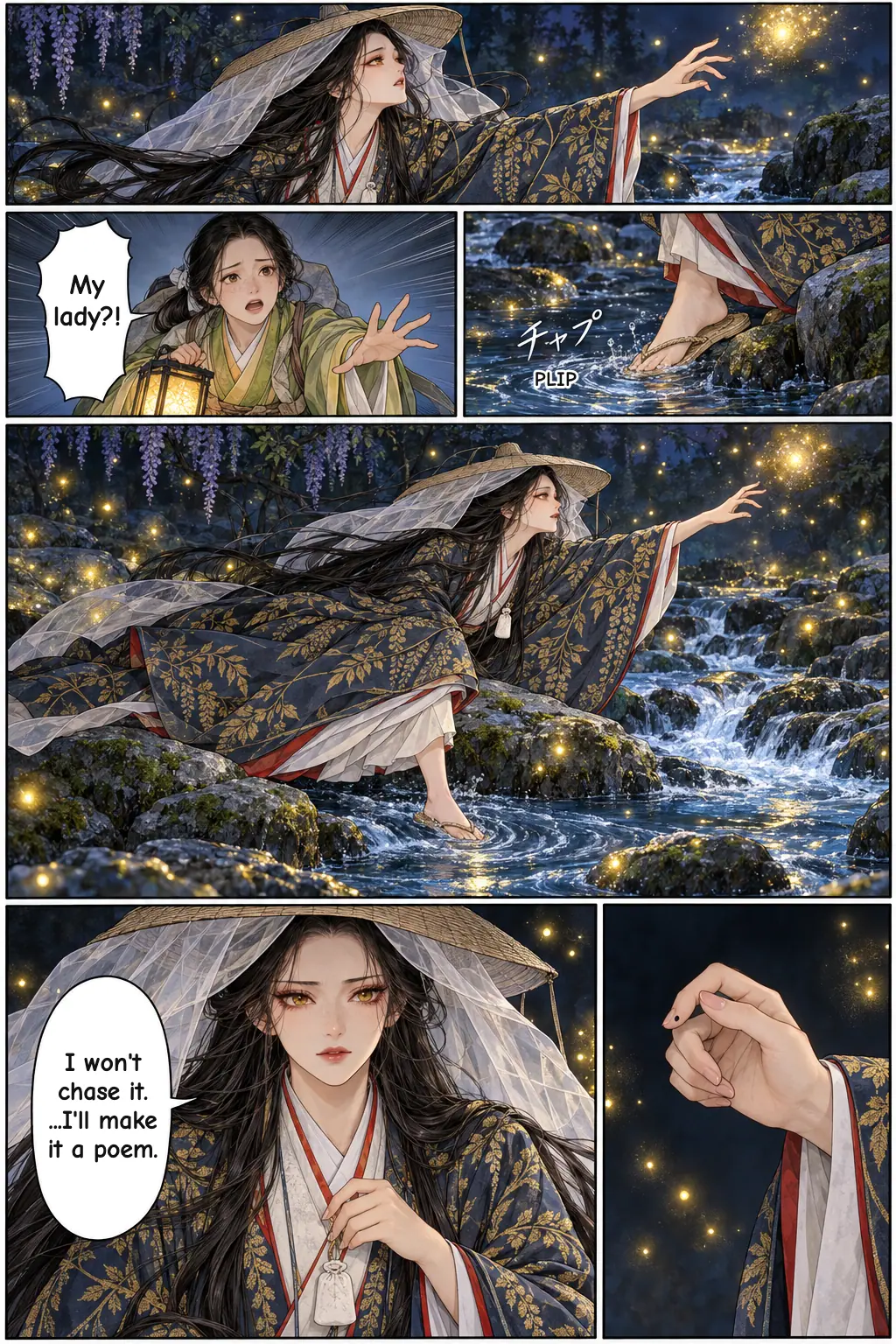
A brief prose note before the first poem sets the scene. Izumi Shikibu had been forgotten by a man. In Heian Japan this usually meant he had stopped visiting her. During this time she went to Kifune Shrine (also written Kibune), in the mountains north of the capital. At the shrine's purification stream, the Mitarashi River, she saw fireflies flying, and she wrote a poem.
A second note after the reply poem explains where it came from. According to the note, people said the reply was from the god of Kifune, and that Izumi Shikibu heard it in a man's voice. The text is careful to present this as a report of what people said, not as a plain fact.
That is all the original contains: two poems and two short notes. It does not say why she went to the shrine, who the man was, or what happened afterward.
The two poems and the wordplay of "tama"
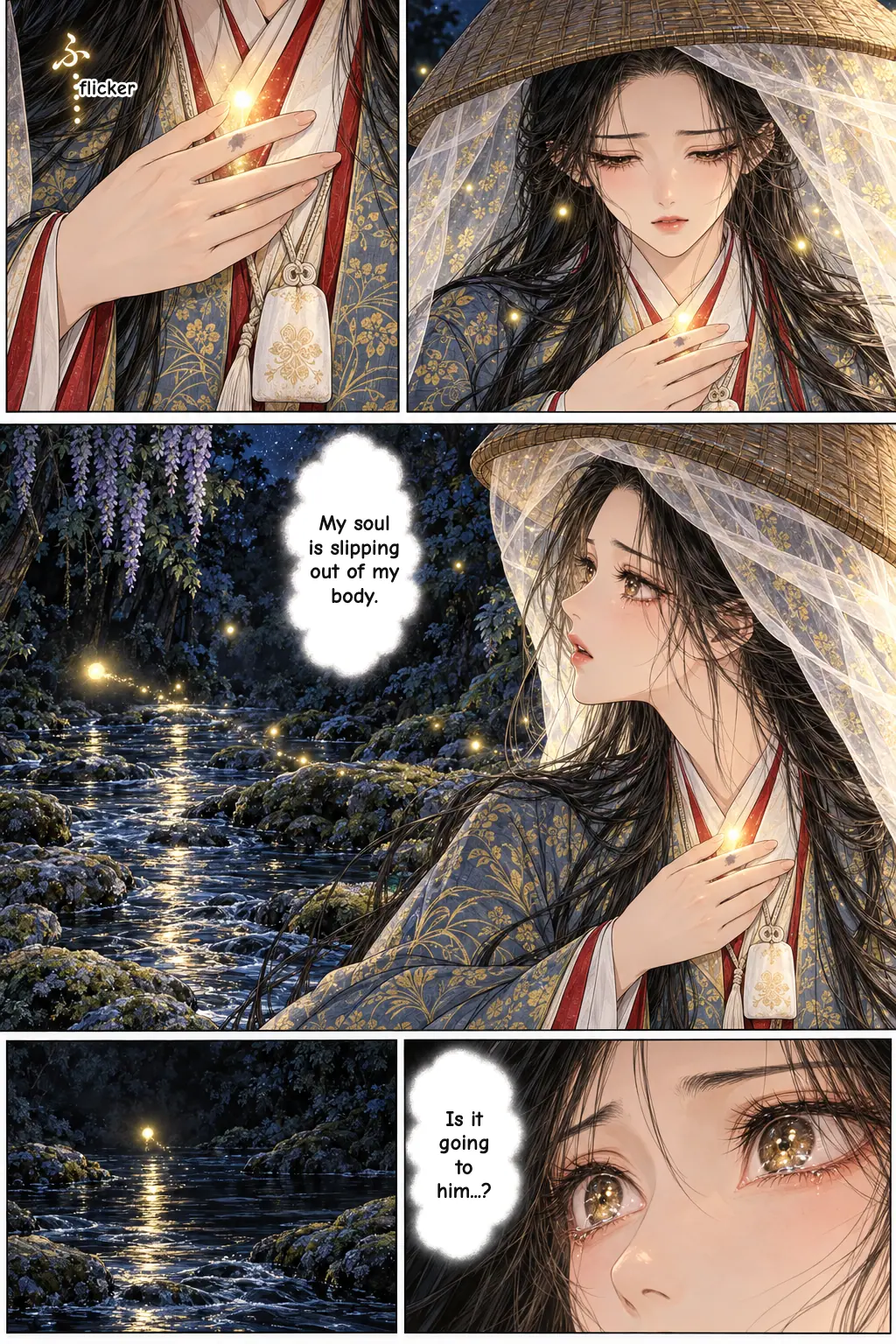
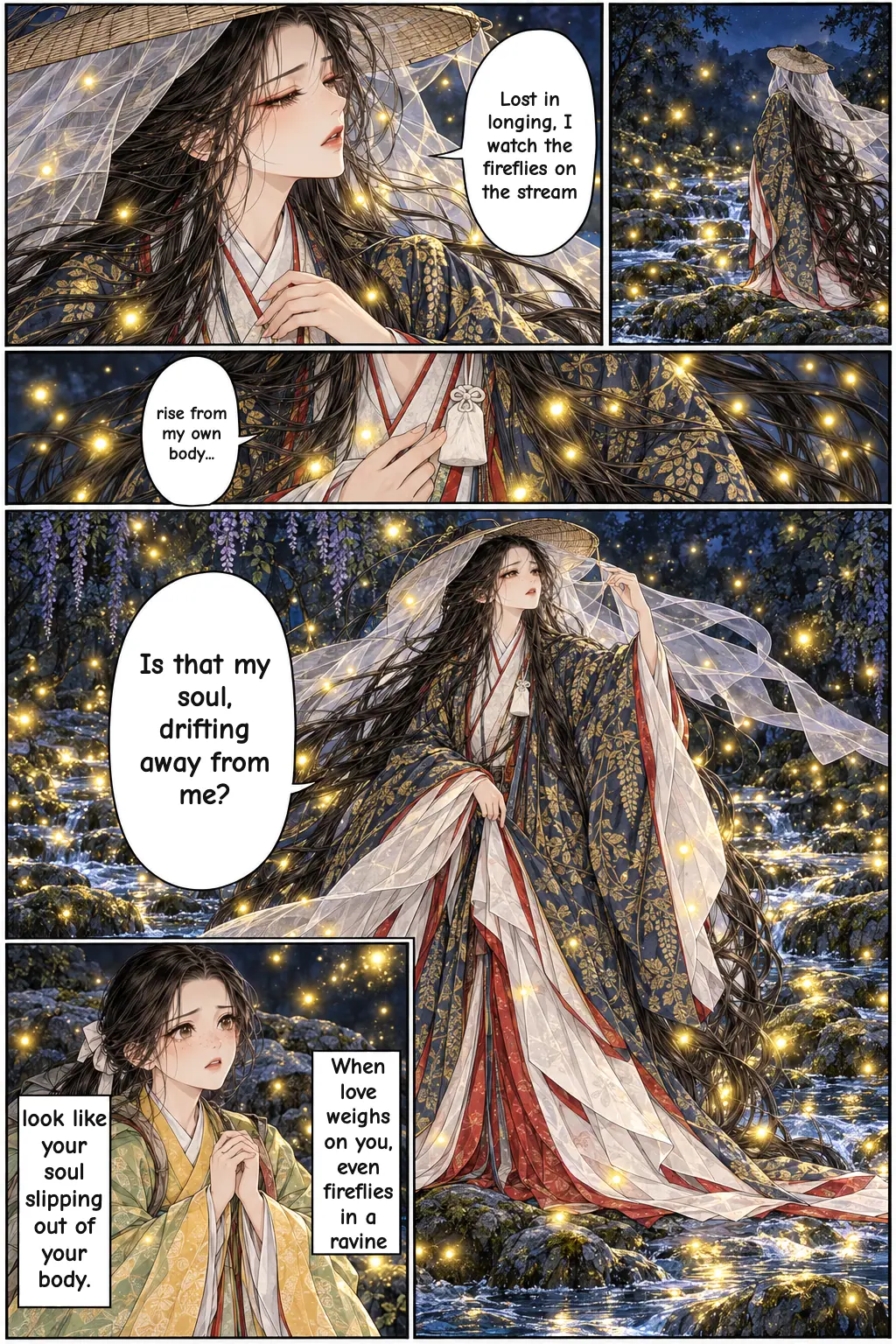
Izumi Shikibu's poem, put simply in our own words, says: when I am lost in longing, even the fireflies over the marsh look like my own soul, drifting out of my body. The key verb describes a soul that wanders away from its owner. In Heian belief, intense love or grief could cause the spirit to leave the body. So the tiny lights in the dark become a picture of how far gone she is.
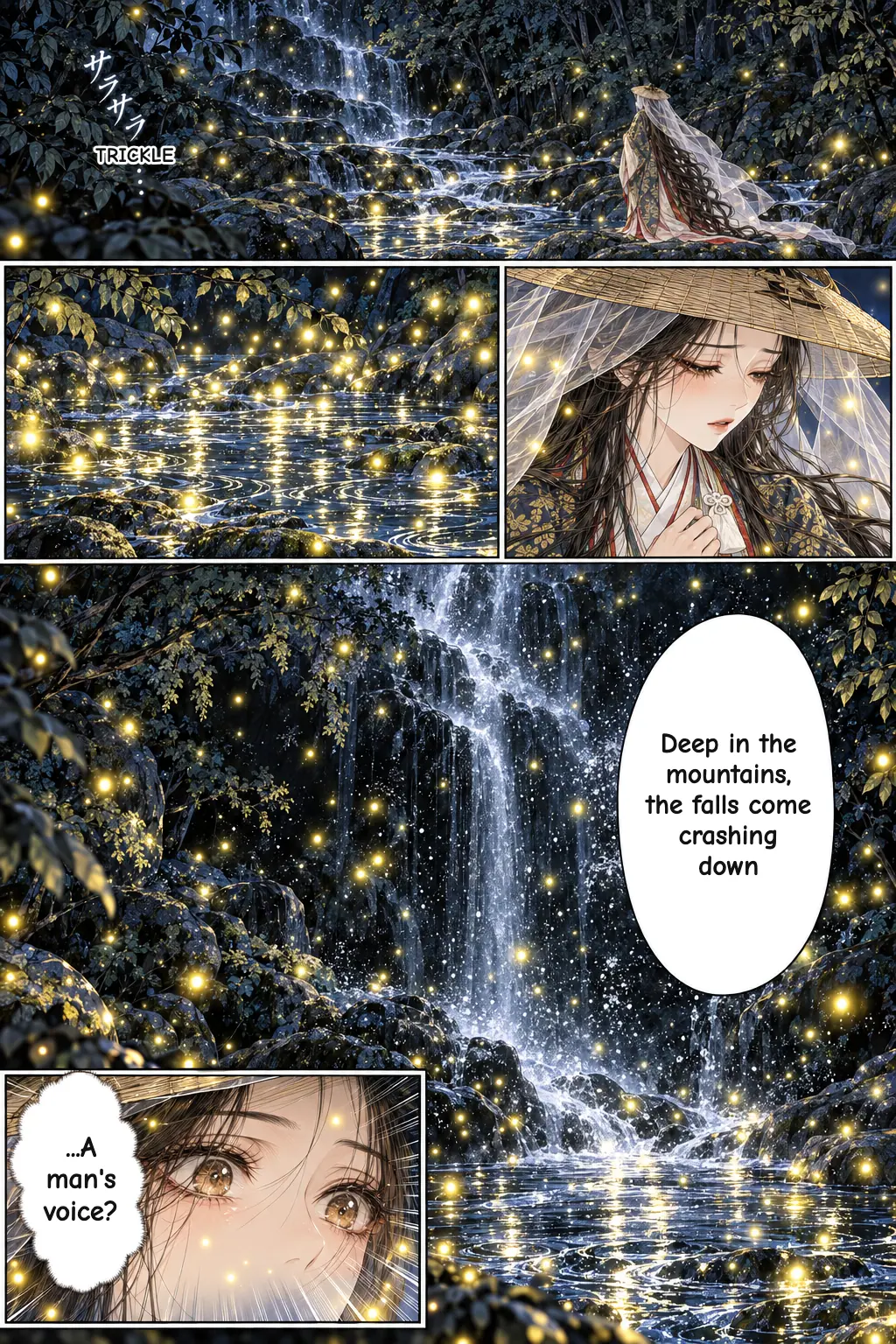
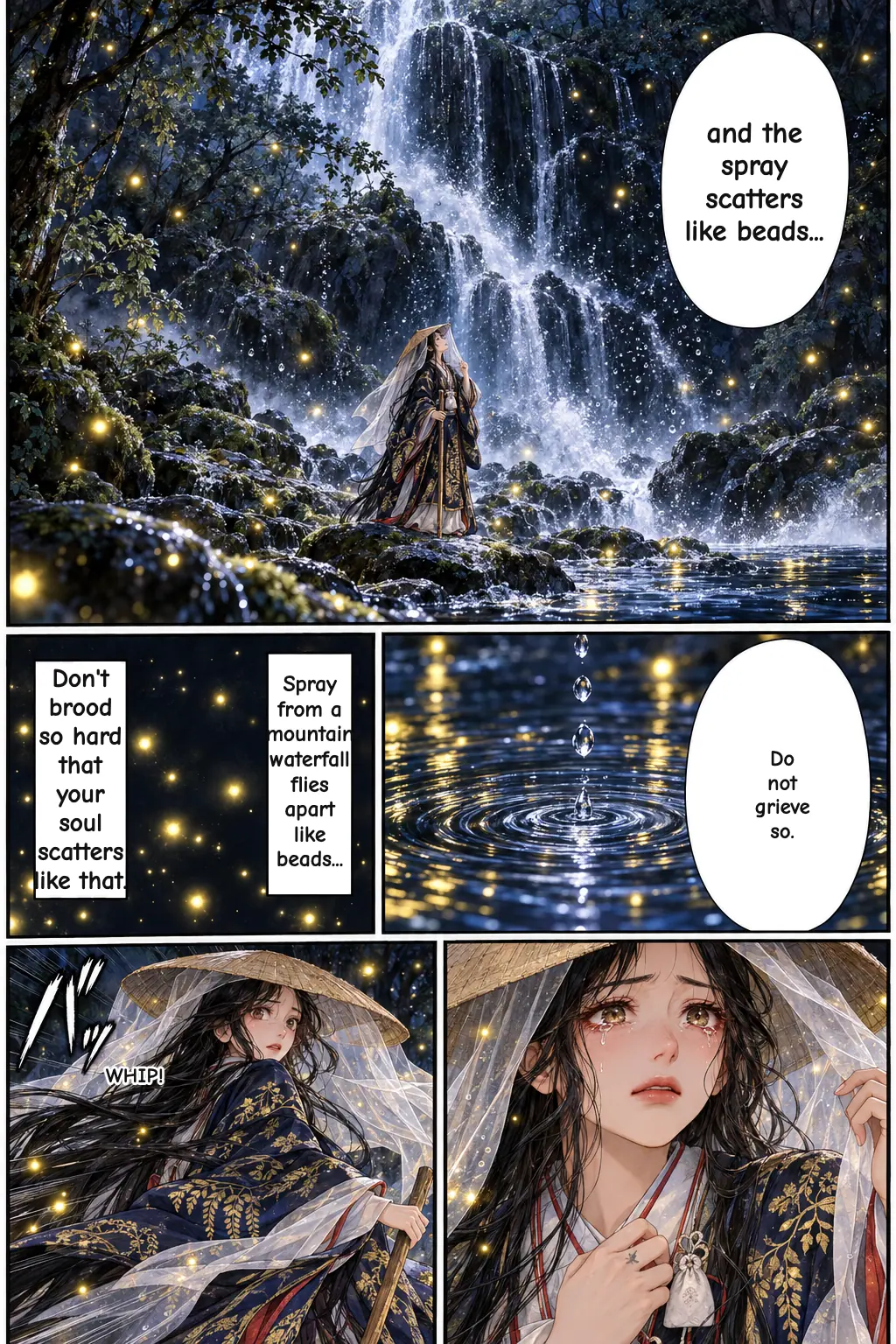
The god's reply answers in images of the deep mountains: water rushing down a waterfall, breaking into drops. Its message is gentle but firm: do not brood so hard that your soul scatters like that spray. The poem turns on the word "tama," which can mean both a jewel-like droplet and a soul. The flying drops of water and her scattering spirit become the same image. The reply is both comfort and a warning.
Cultural background: Heian love, waiting and a shrine of water
In Heian aristocratic society, a man usually visited a woman at night, and the relationship lasted as long as his visits did. A woman whose lover stopped coming could do little but wait, and poetry was the main language of that waiting. Izumi Shikibu became legendary for her passionate love poems and for a love life that drew comment even in her own time.
Kifune Shrine sits where mountain streams feed the Kamo River, and it has long been connected with water. Today many visitors think of it as a shrine for love and matchmaking. That image is generally thought to have grown in later centuries, partly through stories like this one. The Goshūi Wakashū itself does not say she went to pray for love.
Why place a love poem among poems about the gods? Because the reply was believed to be divine. The story shows a Heian idea that sincere poetry could move even the gods to answer. The same episode is said to appear in later works on poetry and in collections of tales, such as the poetry treatise Toshiyori Zuinō, but the details there may differ.
What the manga changed
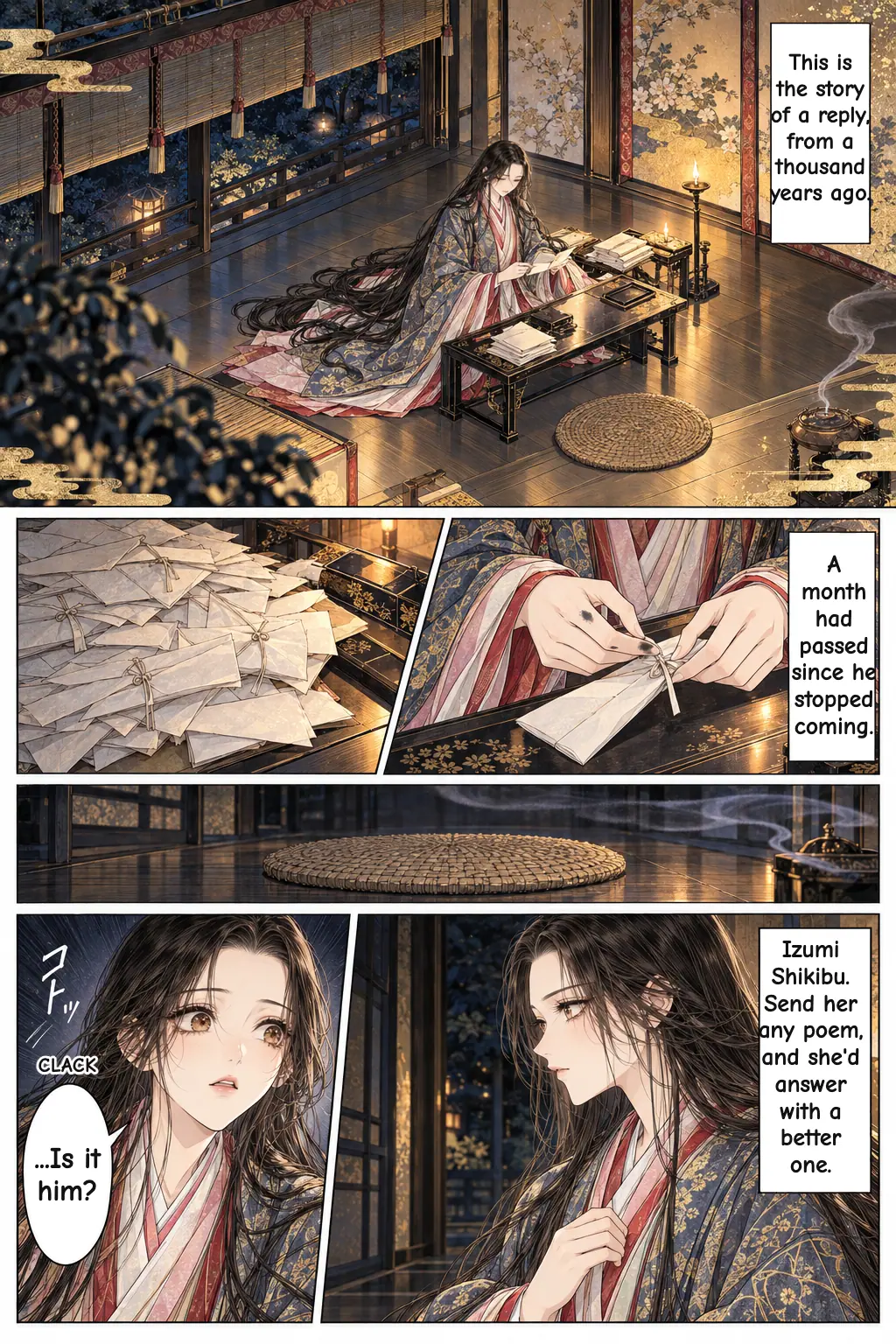
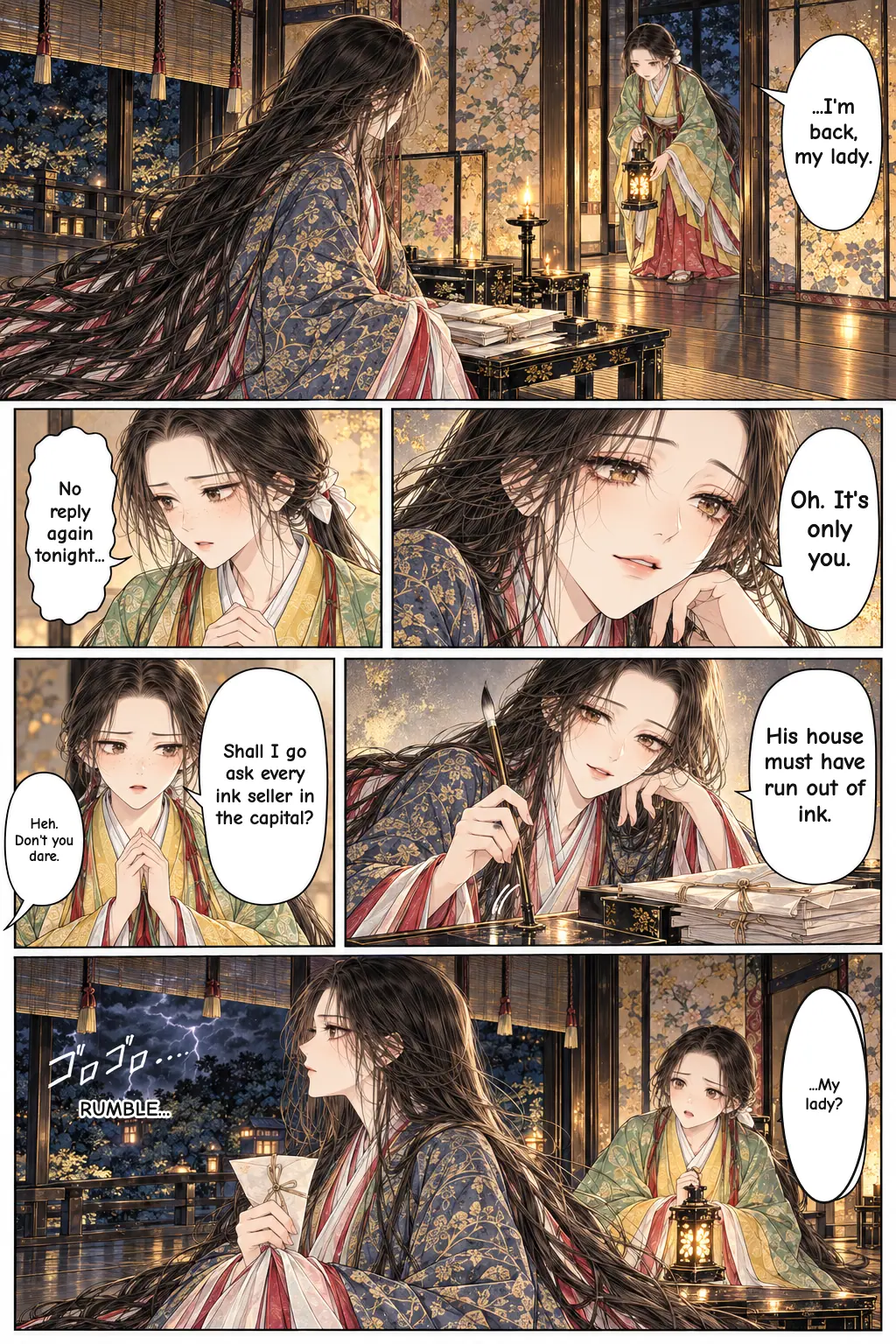
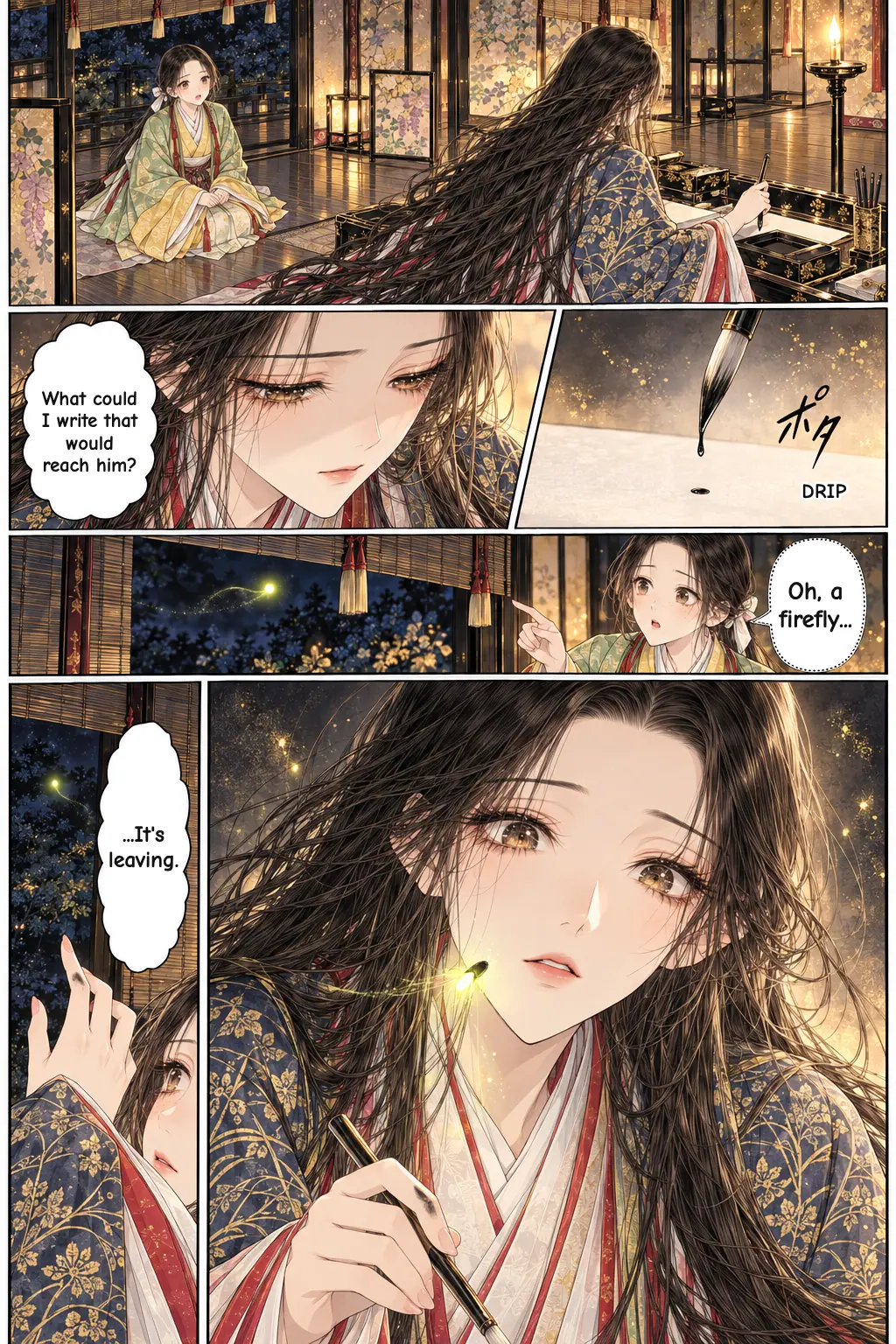
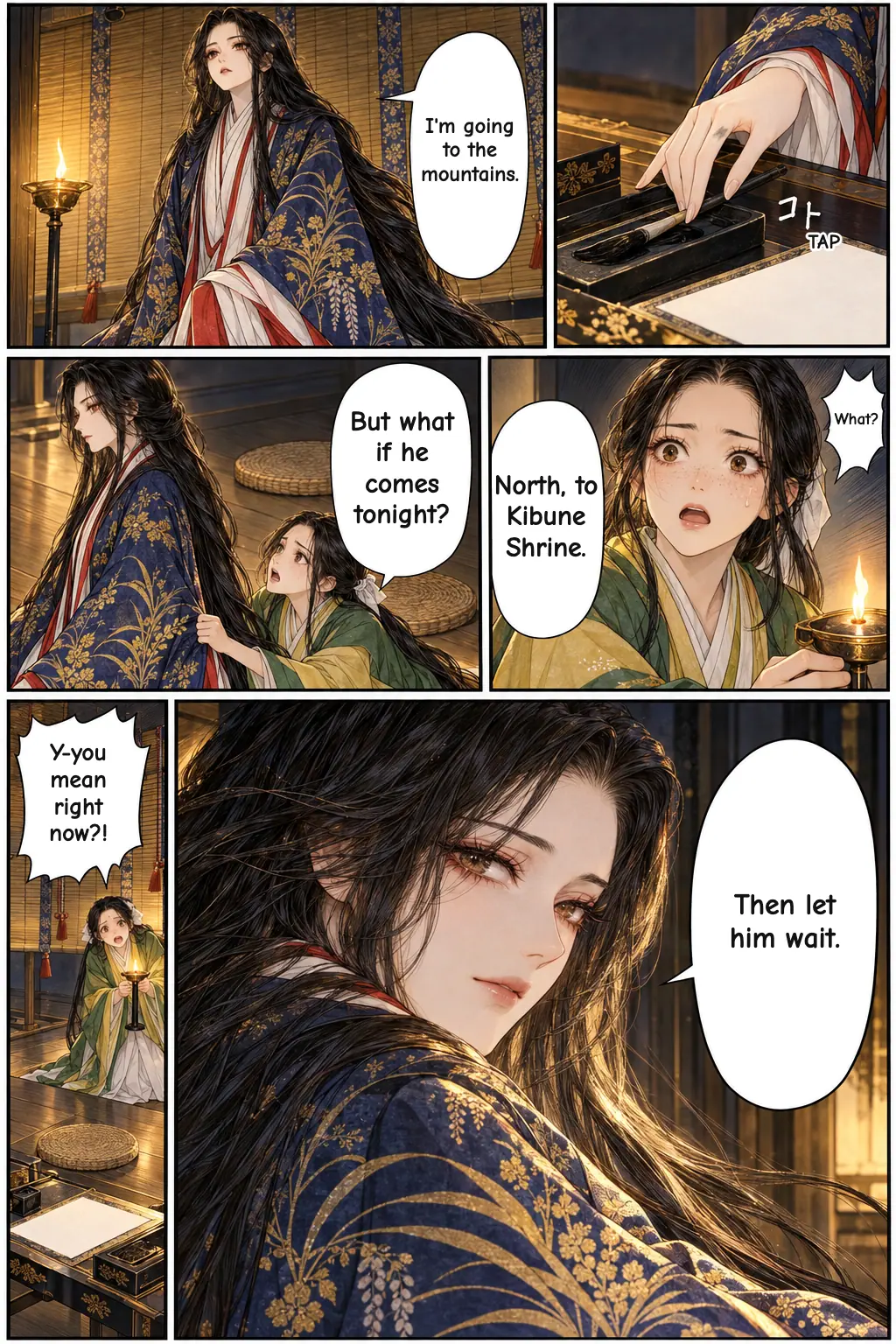
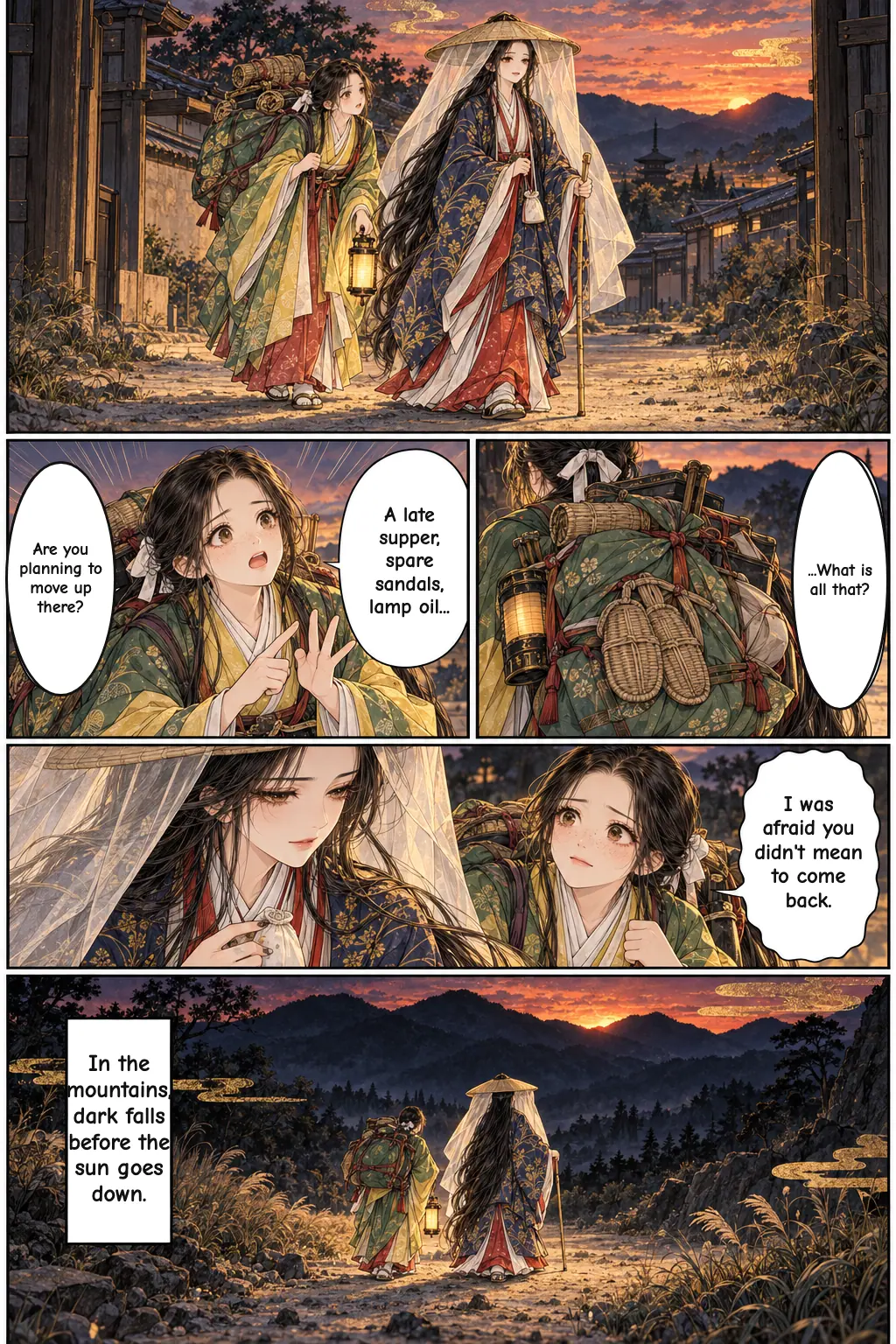
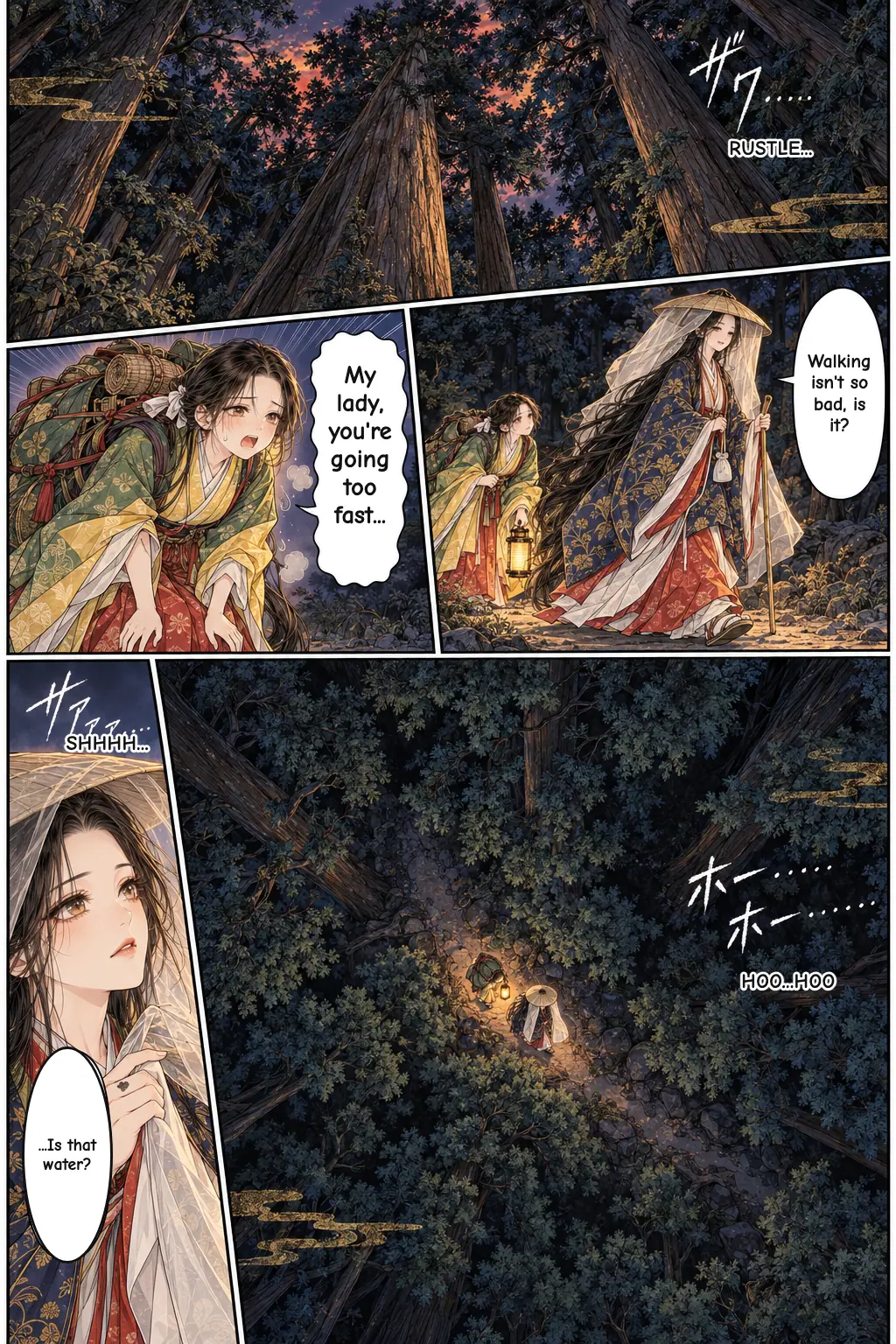
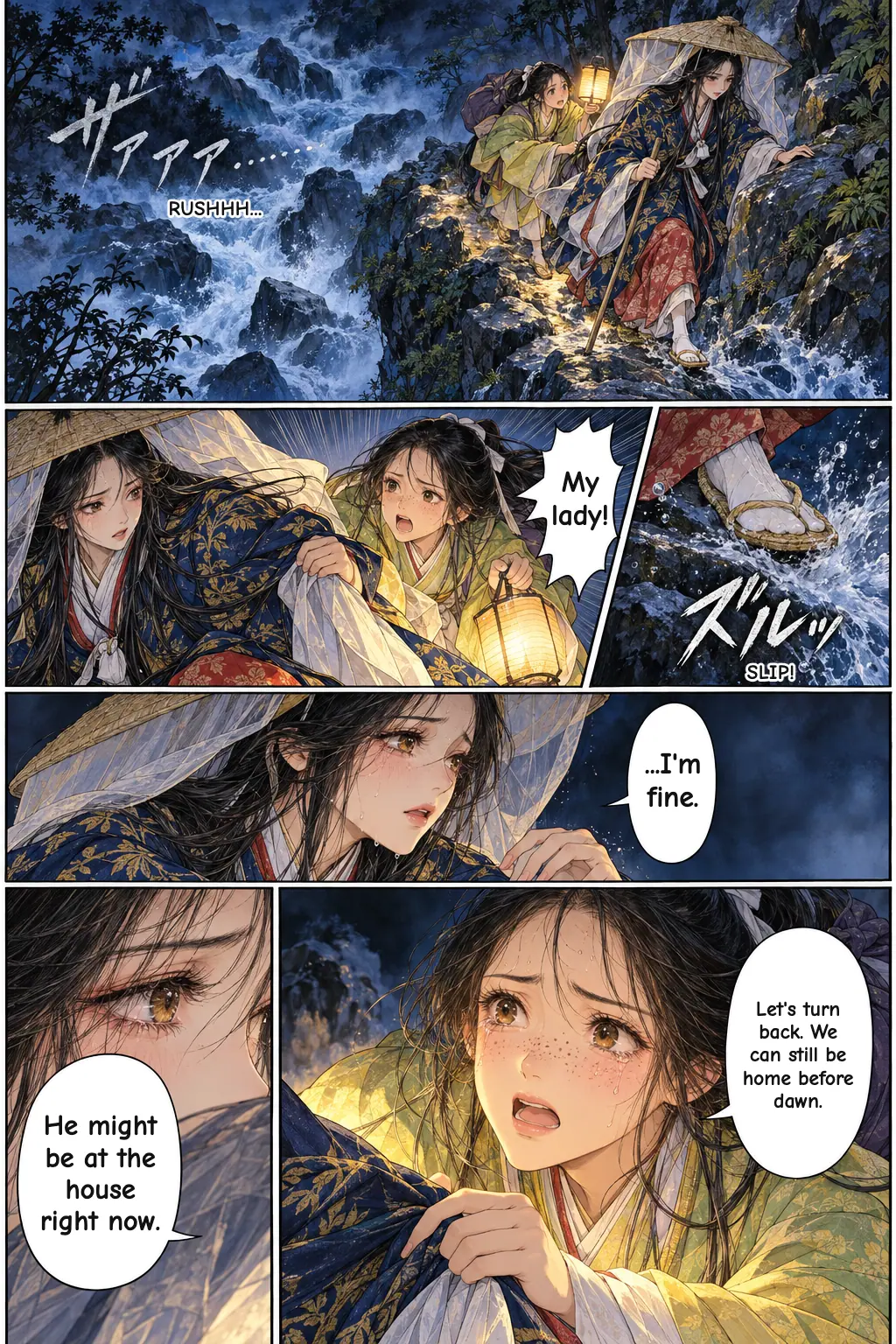
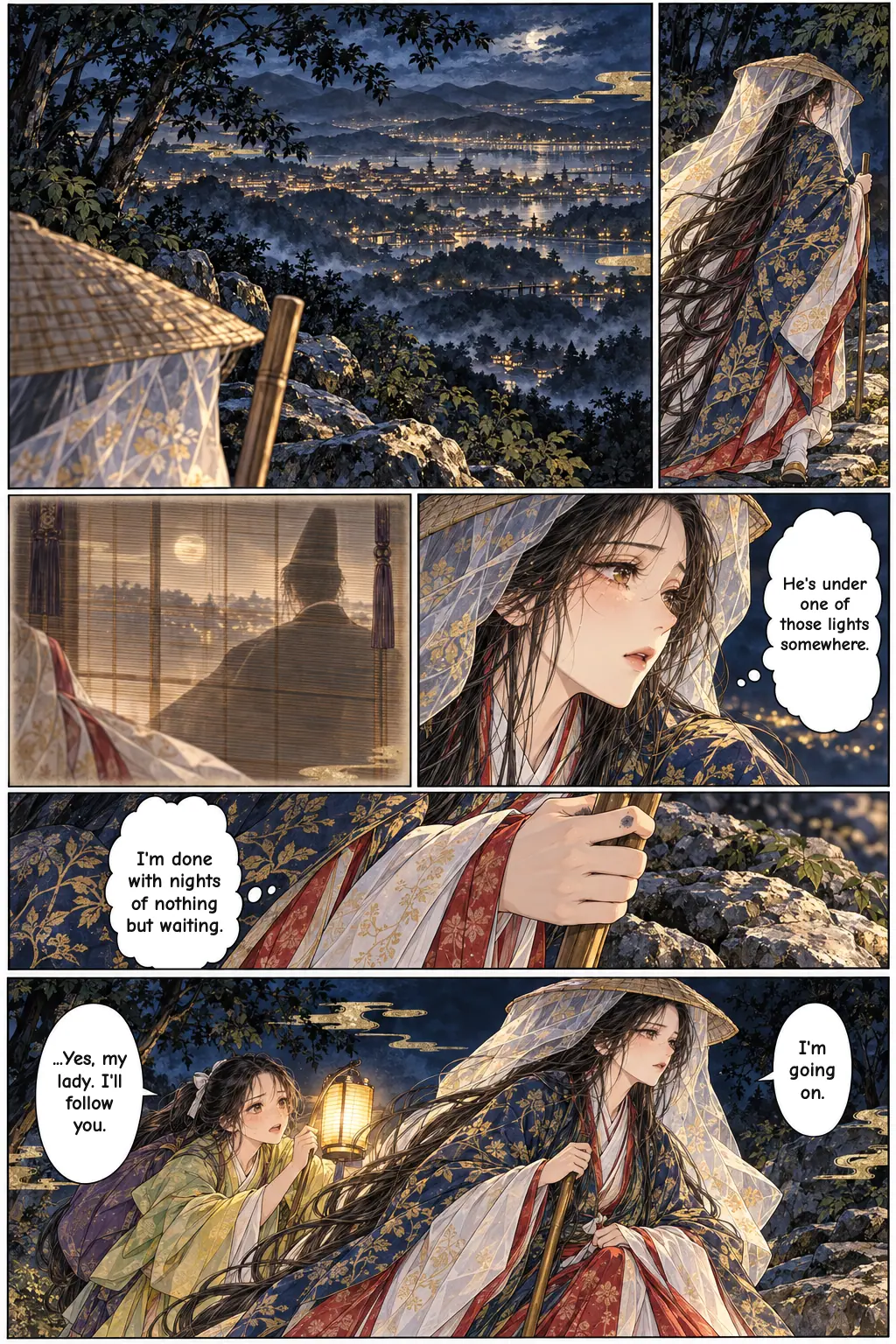
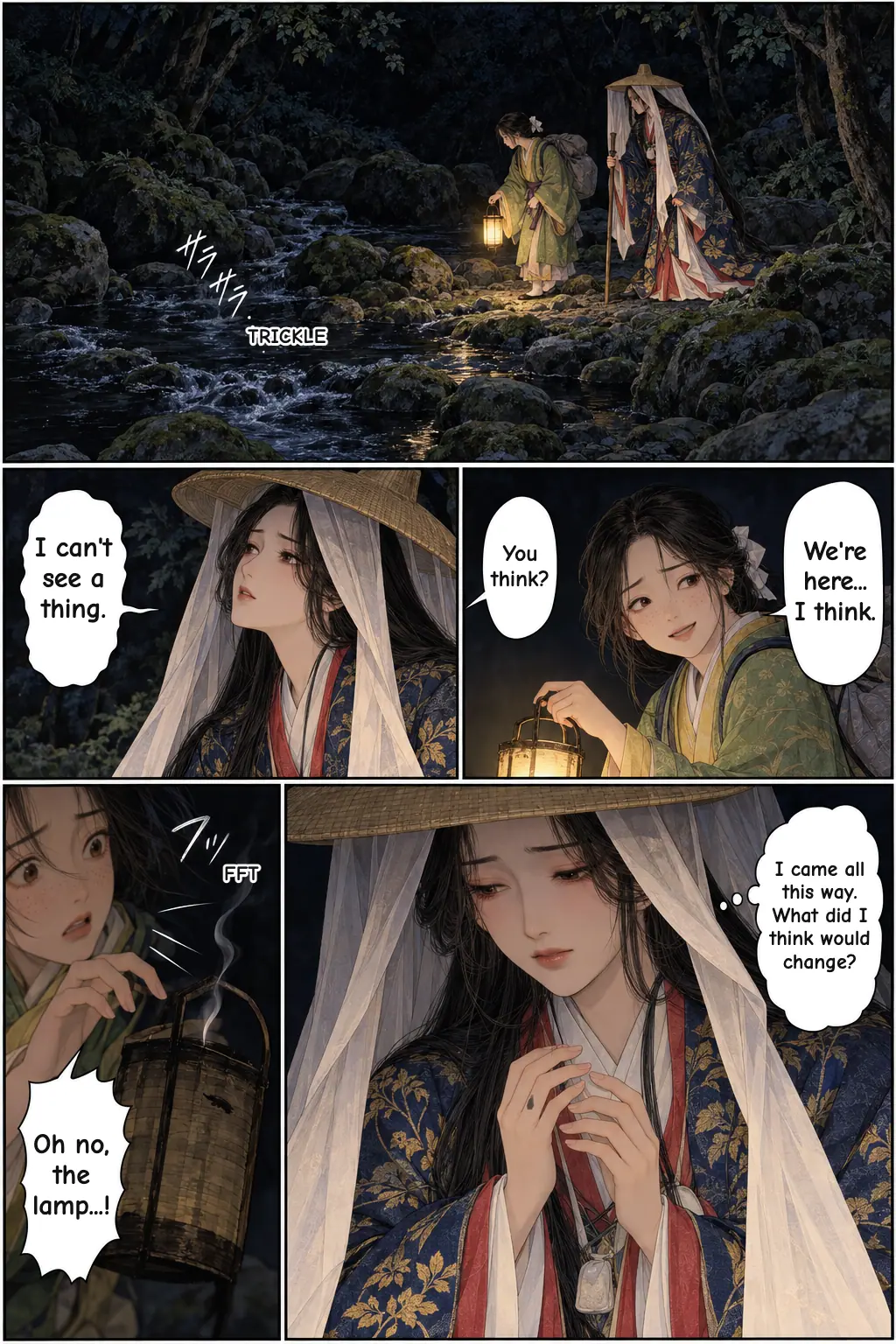
Because the source is so brief, Episode 11 adds a lot, and we want to be clear about what is invented. Everything before the shrine is new: the empty room, the letters with no reply, the long days of waiting. The source gives only the single phrase that she had been forgotten. The manga also chooses her reason for going to Kifune. The original does not give one.
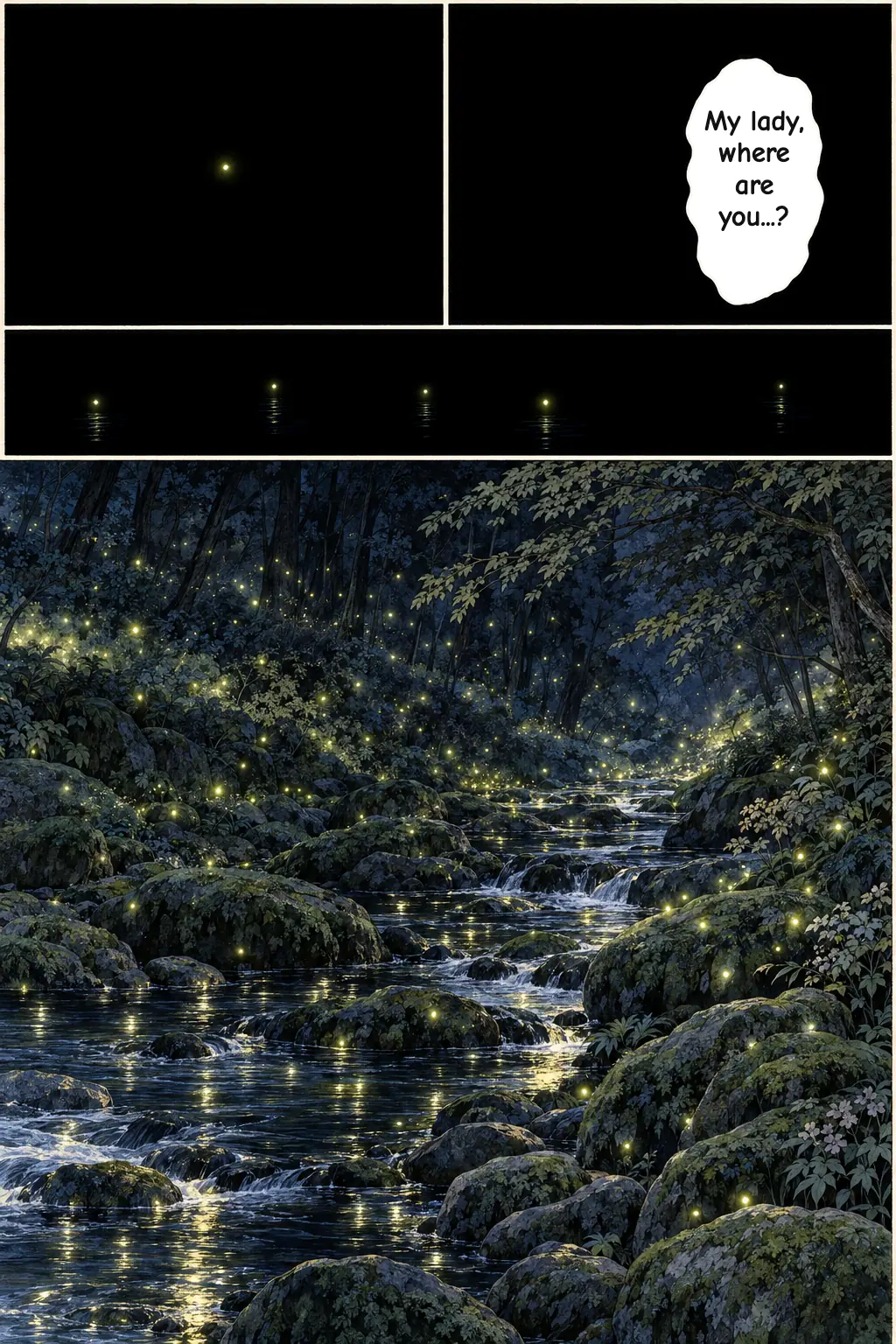
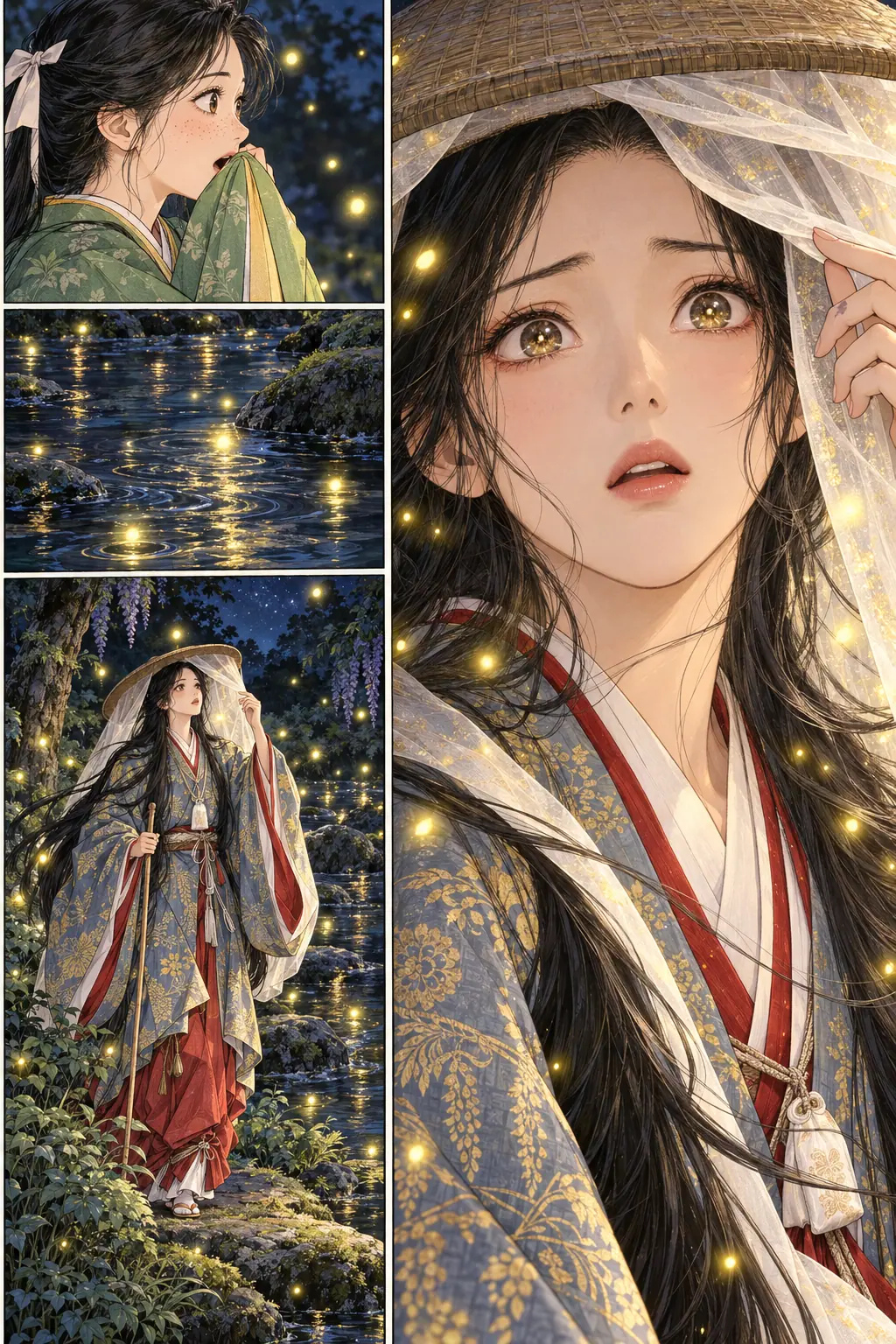
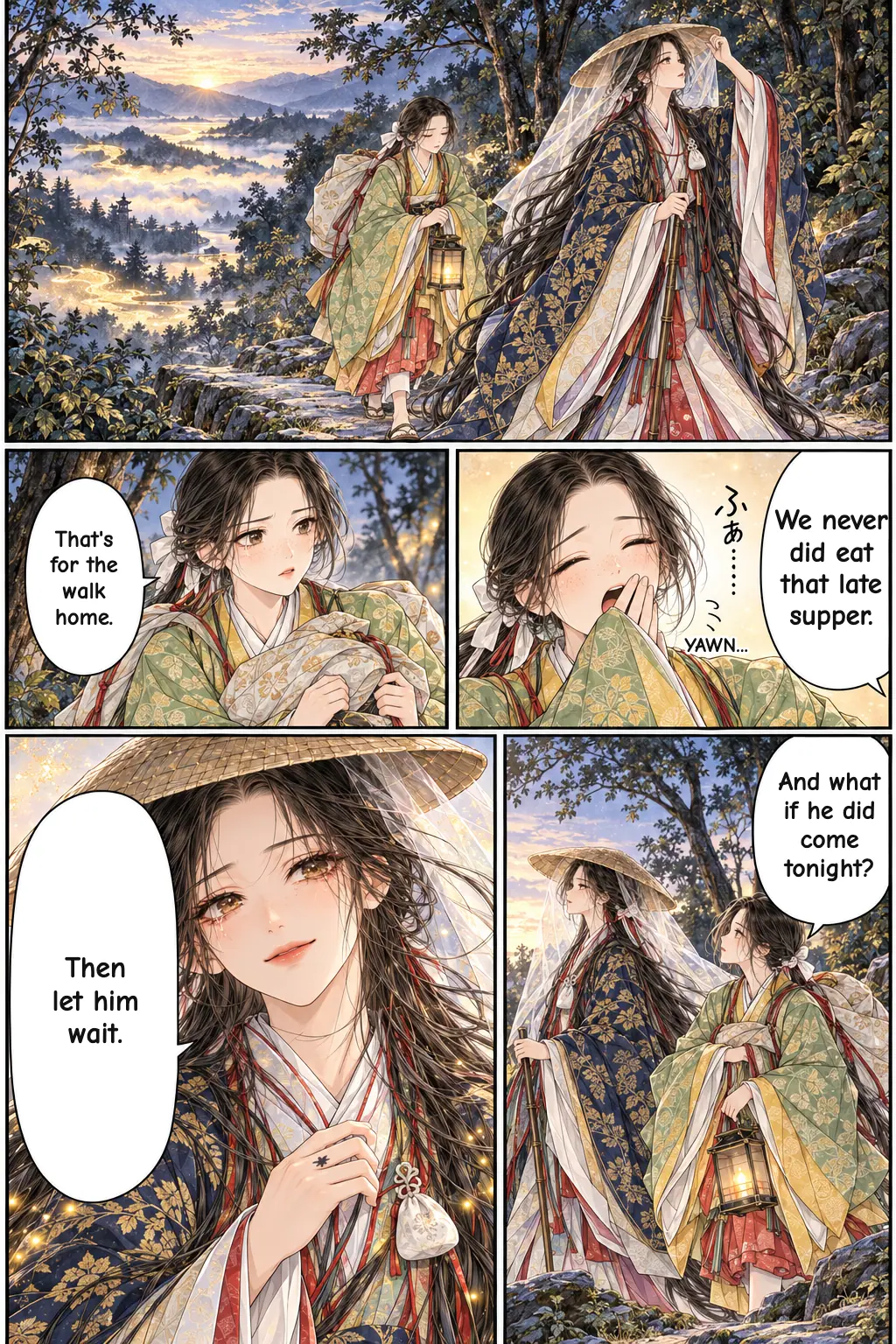
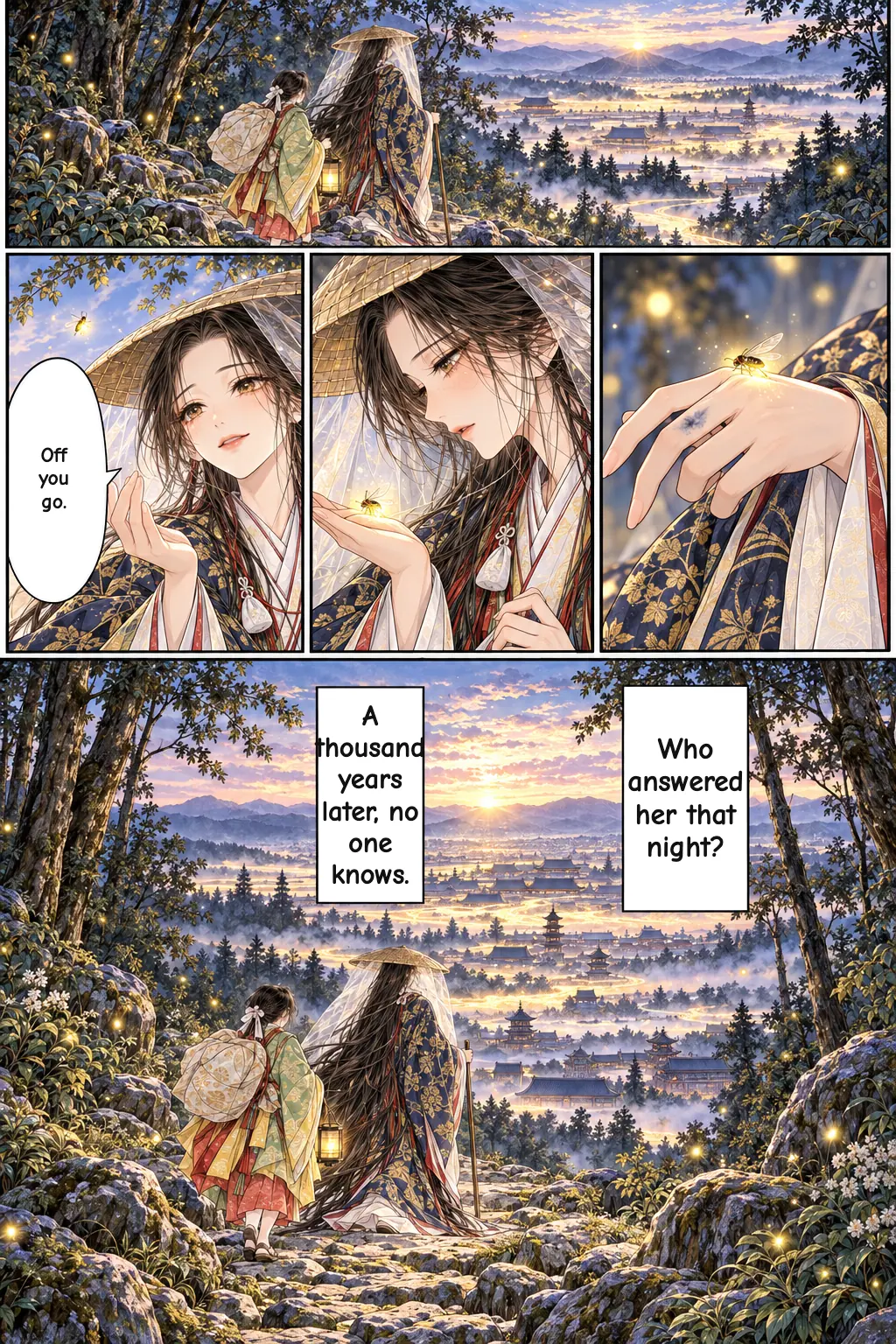
The journey is also the manga's own: the dark mountain road, the sound of the stream, the summer night. Fireflies suggest summer, but the text never says so. The way the fireflies move, the image of her soul leaving her body, and the moment and place where the voice speaks are all drawn by the artist. So is the ending. In the manga she looks around and sees no one, the fireflies circle her, and she smiles and walks back down the mountain. None of this is in the source.
The lover is shown only as a back, a sleeve or a letter, never with a face or name. Some later writers have connected him with Fujiwara no Yasumasa, a man Izumi Shikibu is known to have married, but that is only a theory, and the manga does not use it.
Where to read it
The two poems and their notes are in Book 20 of the Goshūi Wakashū. Japan's National Diet Library Digital Collections has a 1909 edition you can view online, and Izumi Shikibu's poems also survive in her personal collection, the Izumi Shikibu-shū. All of these are in classical Japanese.
If you'd like to see the story first, Manga Portal's LOVE & ALLURE: Classic Japanese Tales of Romance tells it in Episode 11, "He Stopped Writing. The Dark Wrote Back." Every episode is free to read, and you don't need an account. It's an easy way to spend one summer night in the hills above old Kyoto, then go back and read the two poems again.
Characters in this episode
Izumi Shikibu
A celebrated Heian-period woman poet who, forgotten by her lover, sees her own wandering soul in the fireflies at Kifune and writes a poem about it.
The man (her lover)
The lover who stopped visiting her; the source gives no name, face or fate, and the manga only hints at him.
The god of Kifune
The god of Kifune Shrine, whose reply poem was said to reach Izumi Shikibu in a man's voice, comforting her and warning her not to grieve too deeply.
FAQ
Who was Izumi Shikibu?
Izumi Shikibu was a Japanese poet of the Heian period, active around the late 10th and early 11th centuries. She is famous for intense love poetry, and many of her poems were included in imperial anthologies.
What is the firefly poem by Izumi Shikibu about?
Lost in longing for a lover who had forgotten her, she sees the fireflies over the stream at Kifune Shrine as her own soul drifting out of her body. The poem shows how completely her grief has taken hold of her.
Did a god really answer Izumi Shikibu's poem?
The Goshūi Wakashū says people told that the reply came from the god of Kifune, heard in a man's voice. It is presented as a story that was passed down, not as an eyewitness record, and nobody knows who actually wrote the reply.
Why is Kifune Shrine linked with love?
Kifune is an old shrine connected with water, north of Kyoto. Its reputation as a place to pray for love is generally thought to have grown later, partly because of stories like Izumi Shikibu's. The original text doesn't say she went there to pray for love.
Where does the Kifune firefly story come from?
It comes from Book 20 of the Goshūi Wakashū, an imperial poetry anthology presented in 1086. The two poems are often numbered 1162 and 1163. The story is said to appear in later writings on poetry as well.