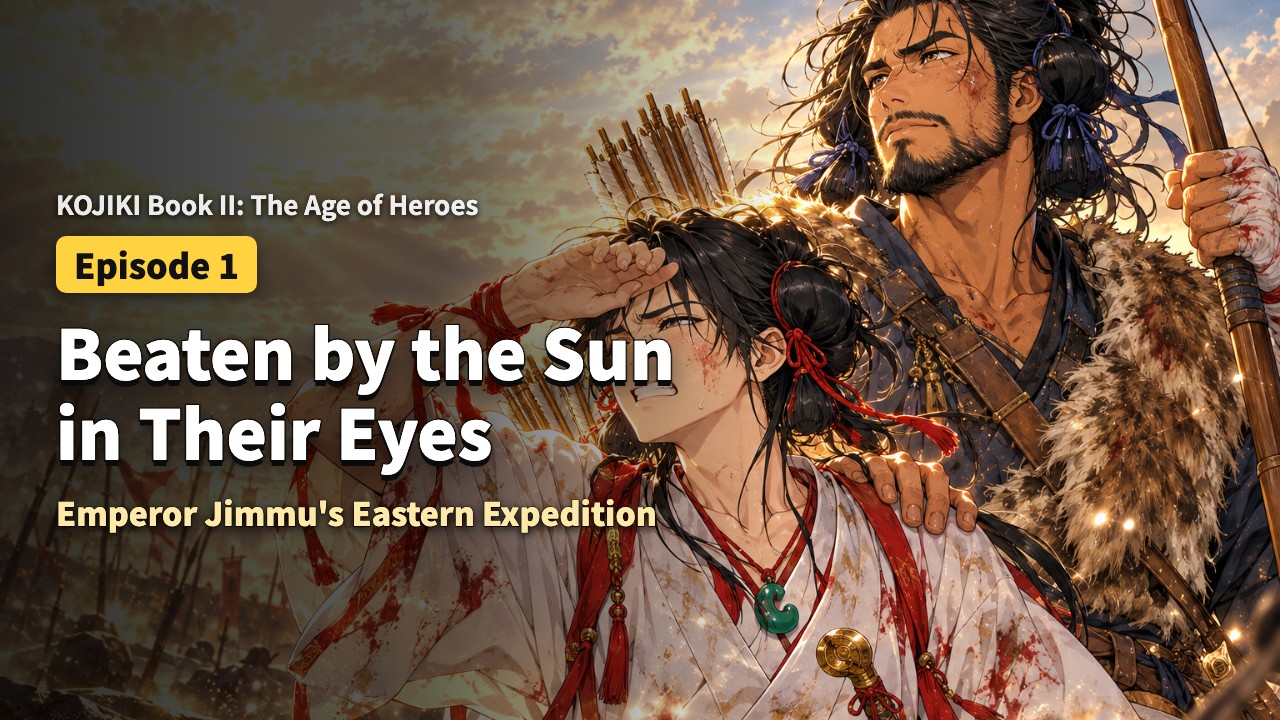
Episode 12Shape-Shift or Be Eaten, Said the SerpentTanokyu
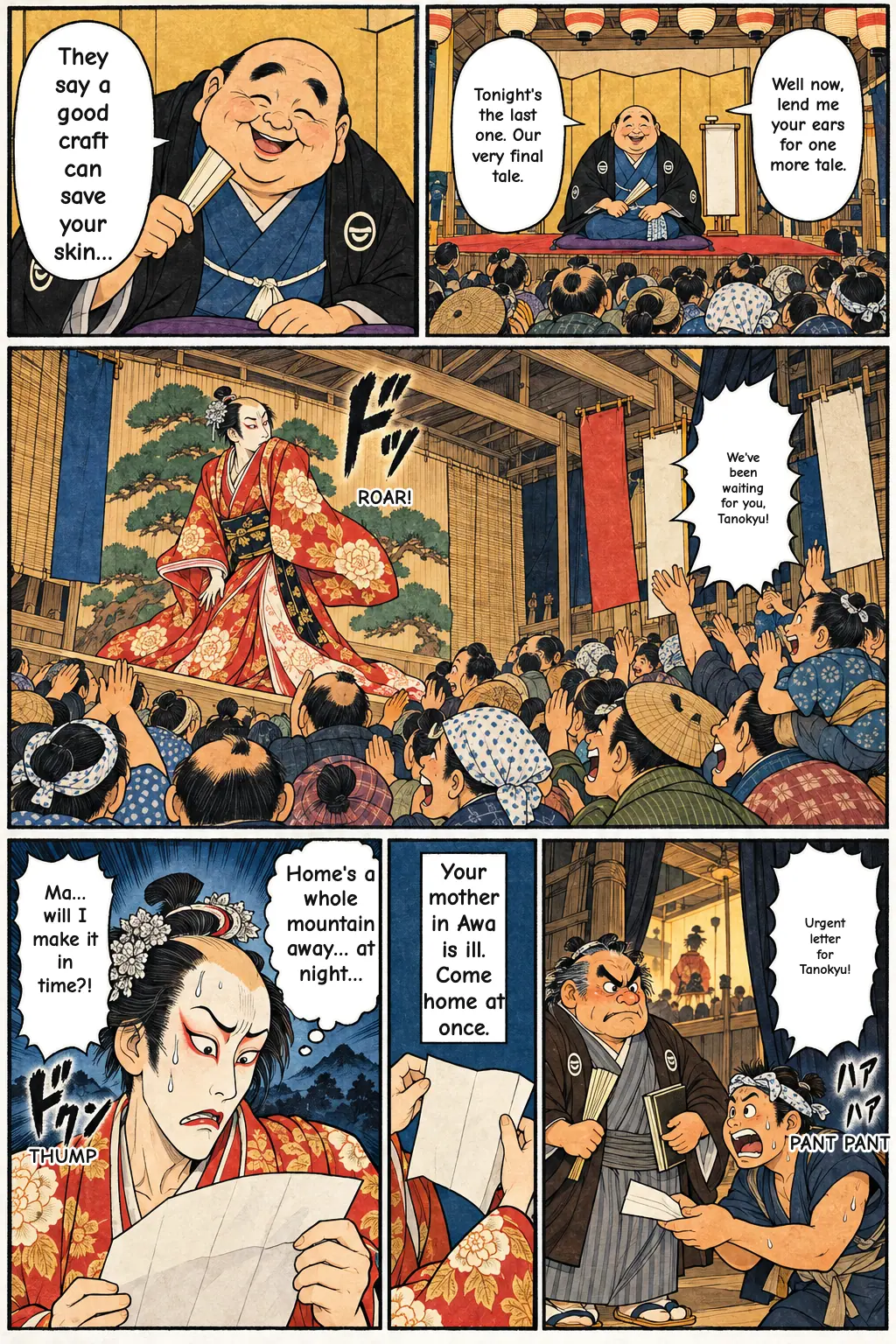
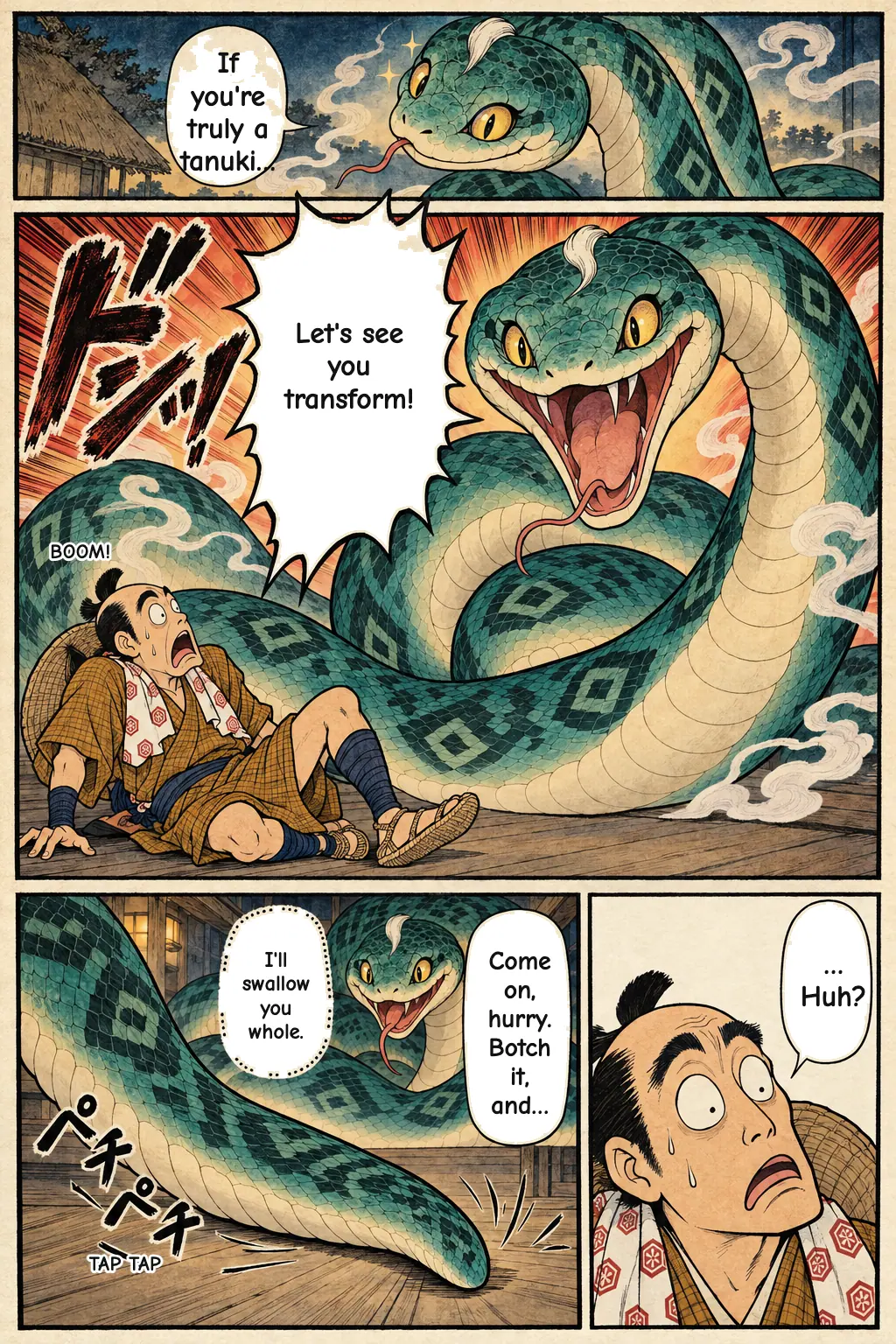
The twelfth and final tale of RAKUGO: Japan's Comic Tales. When Tanokyu, a village actor, hears that his mother is ill, he sets off over the mountains alone at night. There he meets the Giant Serpent, lord of the mountain, who mishears his name as "tanuki," the shape-shifting raccoon dog of Japanese folklore, and orders him to transform. Tanokyu pulls off a lightning-fast costume change to save his life. Then he says one thing, "What I fear most is money," and it leads to an ending nobody expected.
19 pagesFree · No sign-up
In short: Tanokyu is a classic Japanese rakugo comic tale. Kyūbei, a village actor known as "Tanokyu," is crossing the mountains at night when a giant serpent mishears his name as "tanuki," the shape-shifting raccoon dog. He survives by quick costume changes, then claims that the thing he fears most is money, so the angry serpent takes revenge by throwing money at him. The plot here was checked against a 1908 Meiji-era transcript of a performance by Tachibanaya Enzō IV.
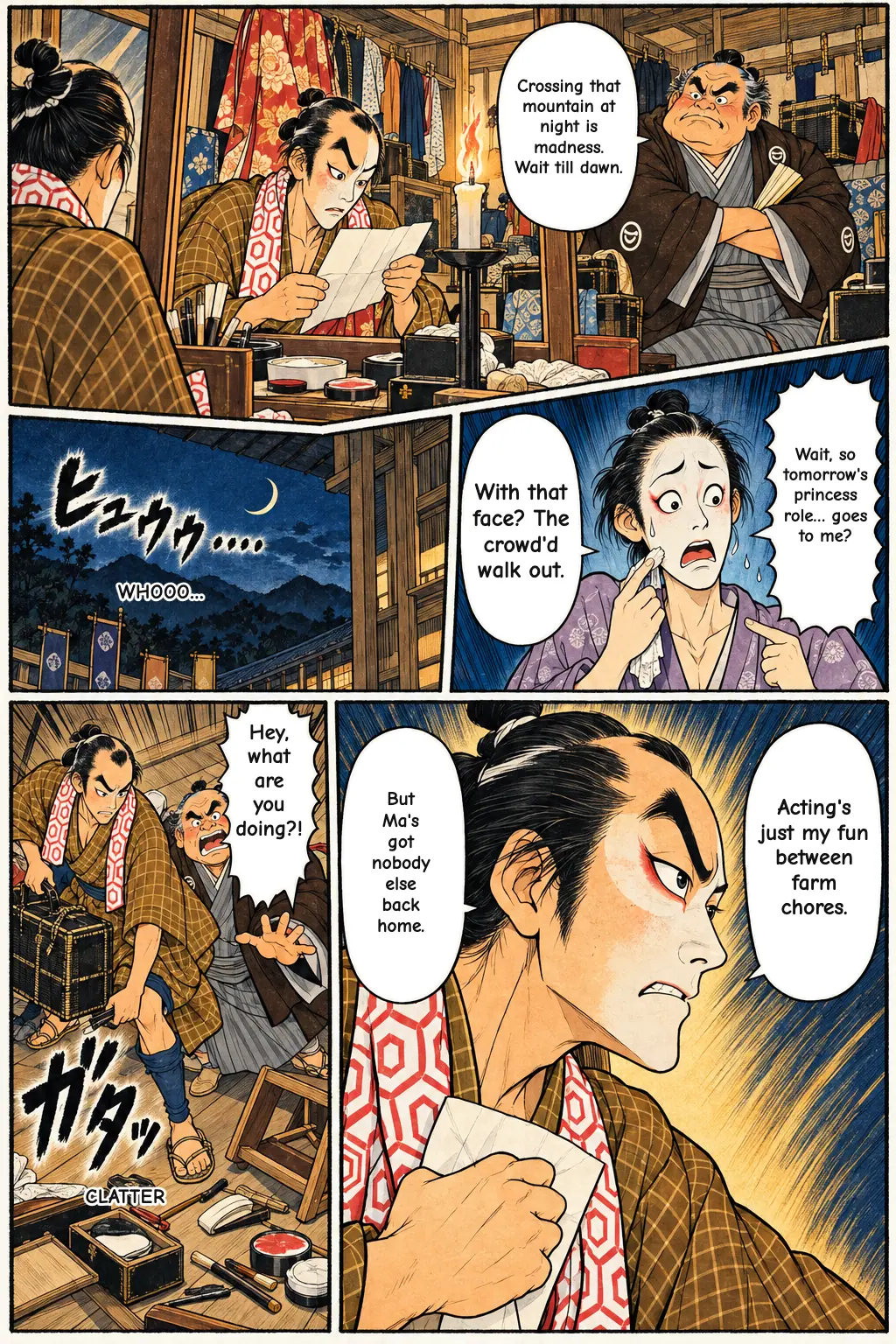
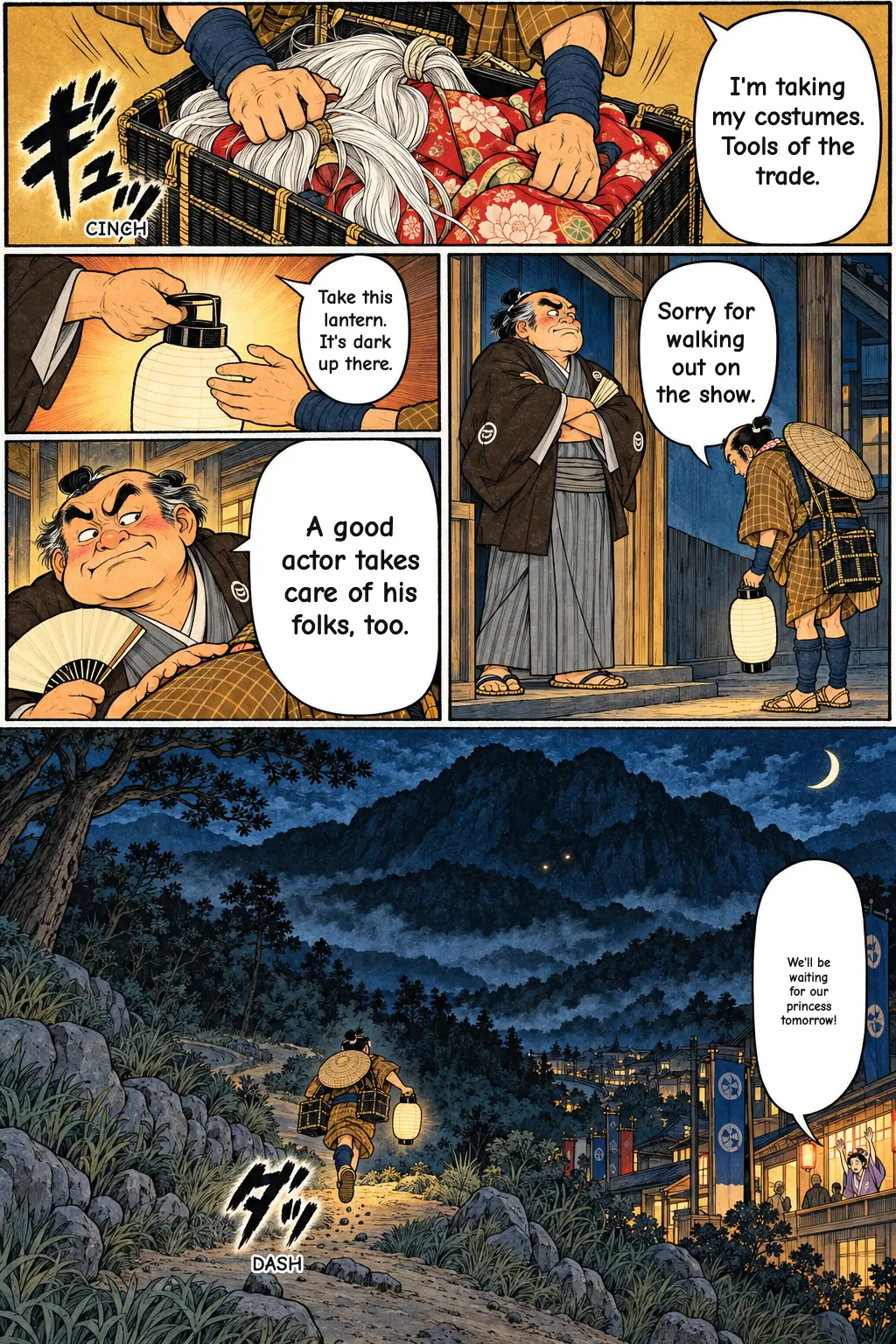
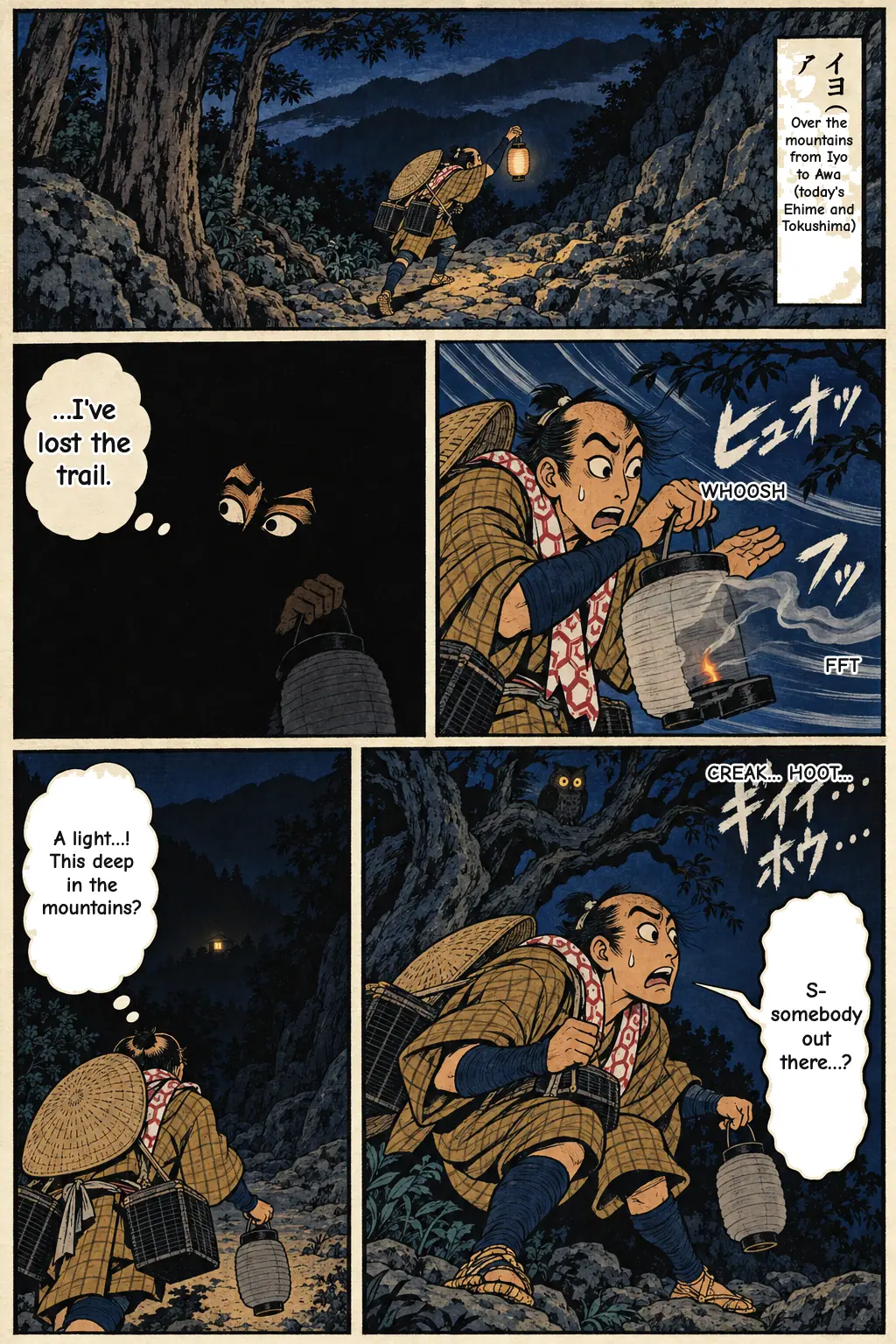
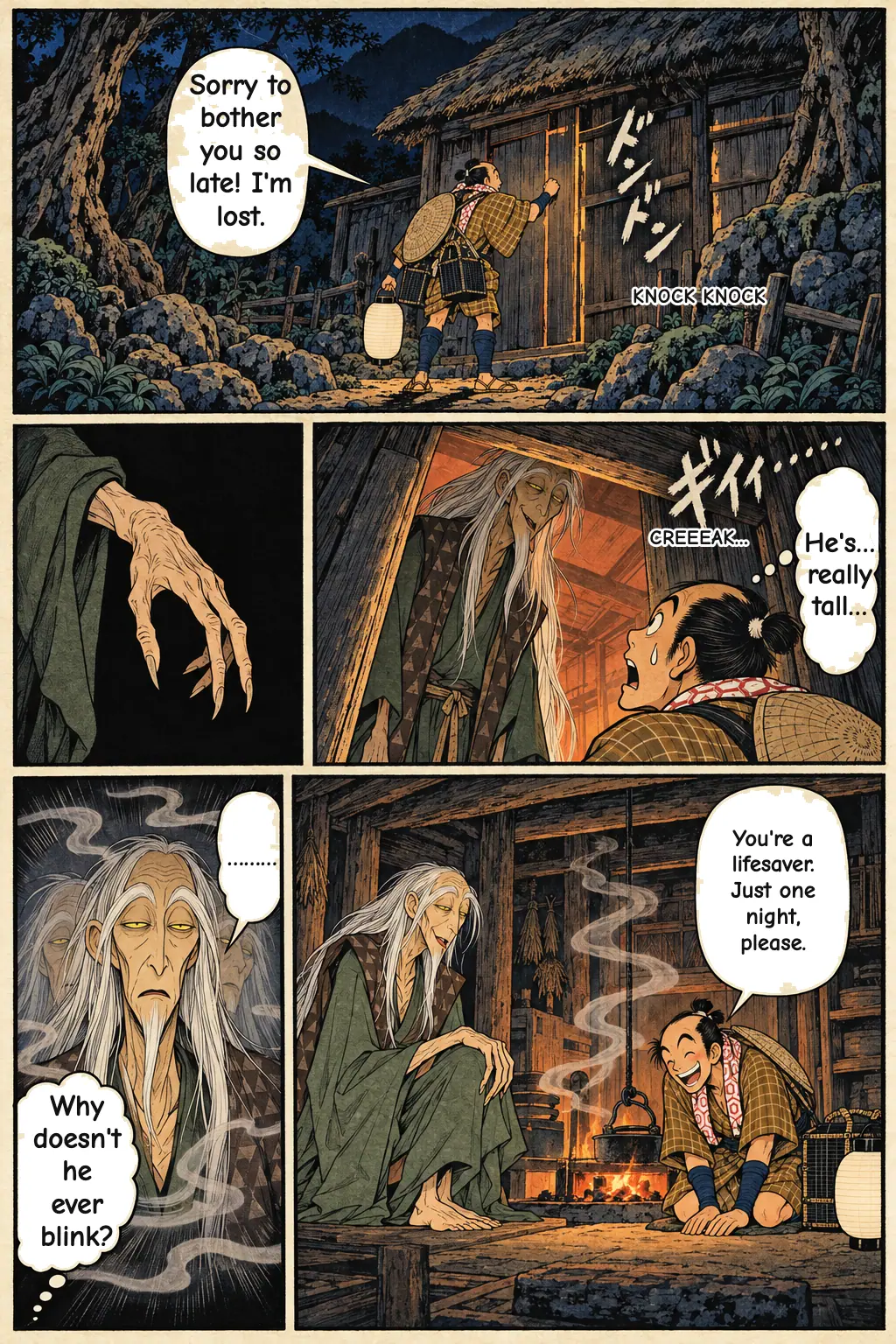
Kyūbei is a farmer from a village called Tano in Awa Province (today's Tokushima, on the island of Shikoku). He is such a good amateur actor that people know him by a stage nickname, Tanokyu: "Kyū from Tano." While he is away performing with a traveling troupe, he hears that his mother has fallen ill, so he hurries home alone by a mountain road. Night falls and he loses his way. At last he finds a lonely hut and asks a white-haired old man for a bed.
Tanokyu Rakugo Story Explained: The Actor, the Serpent and the Tanuki Pun
The Original Story of Tanokyu
Kyūbei is a farmer from a village called Tano in Awa Province (today's Tokushima, on the island of Shikoku). He is such a good amateur actor that people know him by a stage nickname, Tanokyu: "Kyū from Tano." While he is away performing with a traveling troupe, he hears that his mother has fallen ill, so he hurries home alone by a mountain road. Night falls and he loses his way. At last he finds a lonely hut and asks a white-haired old man for a bed.
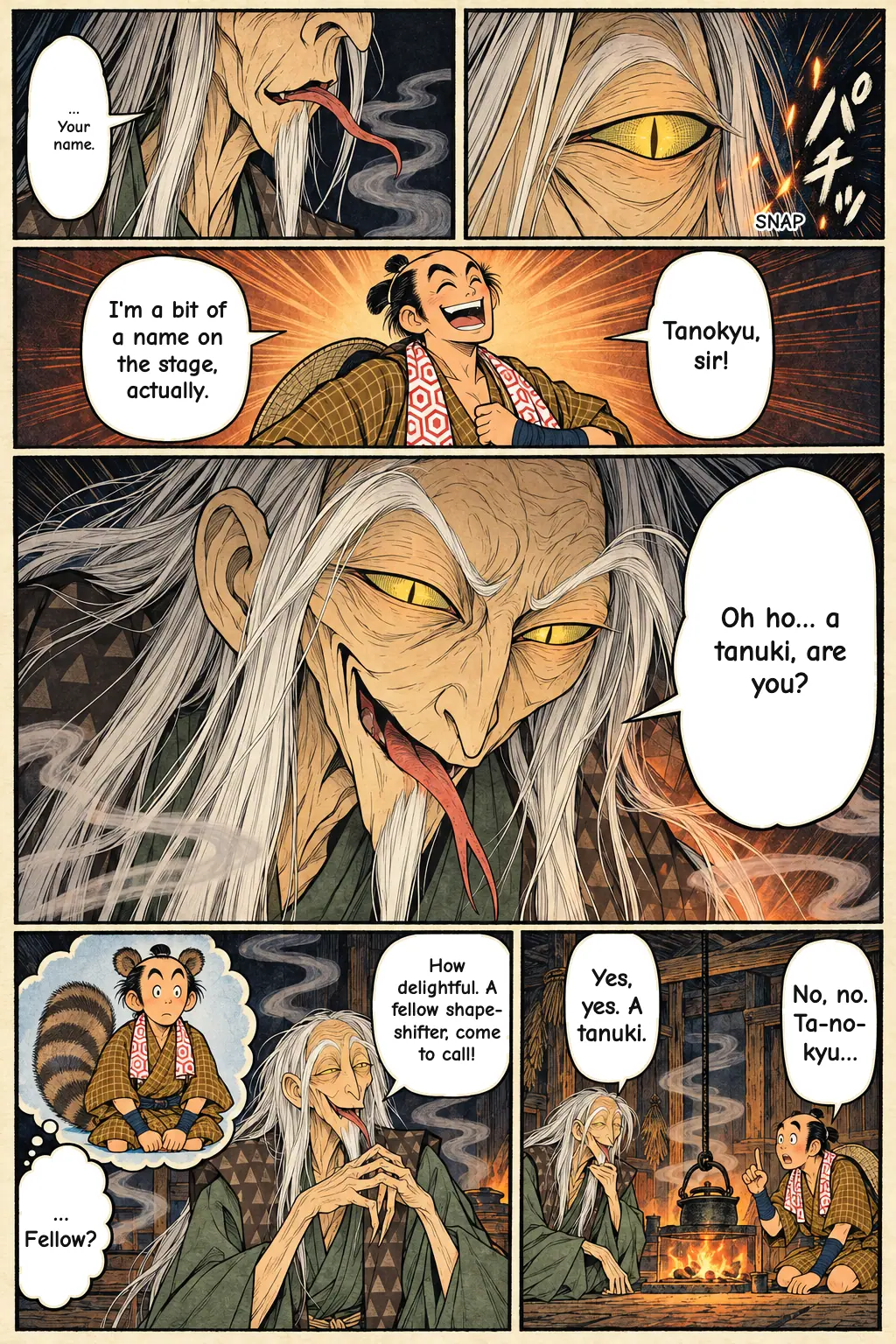
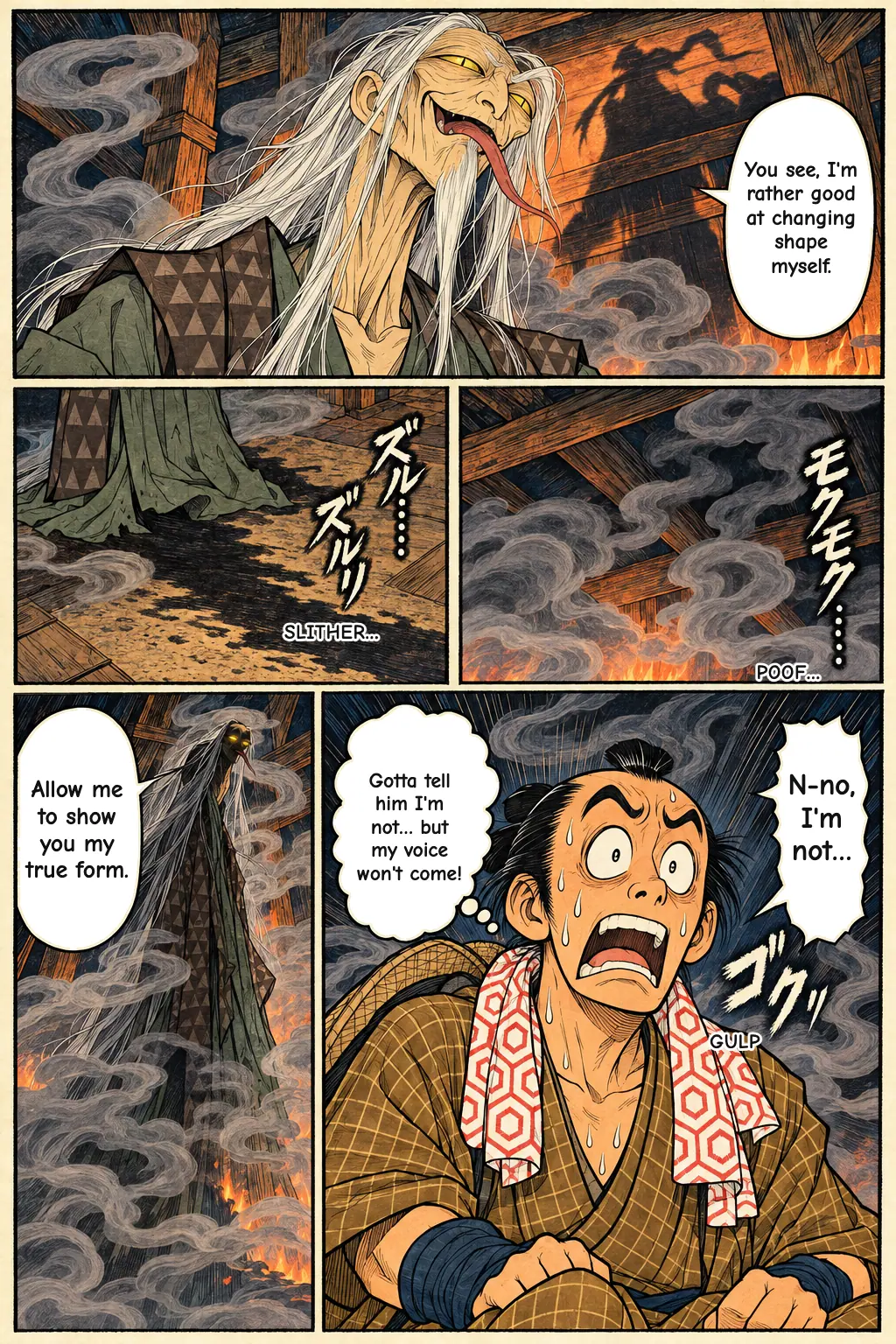
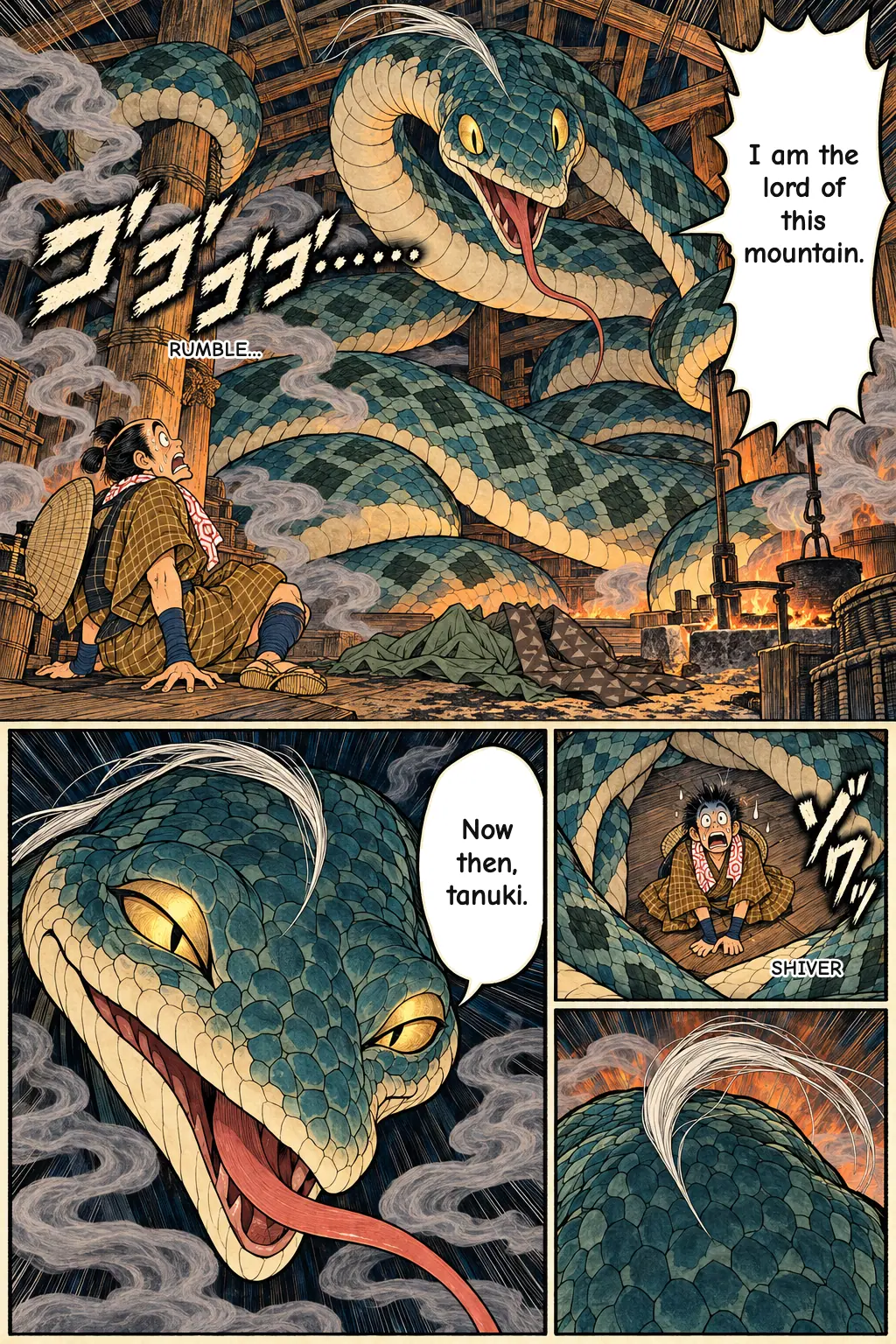
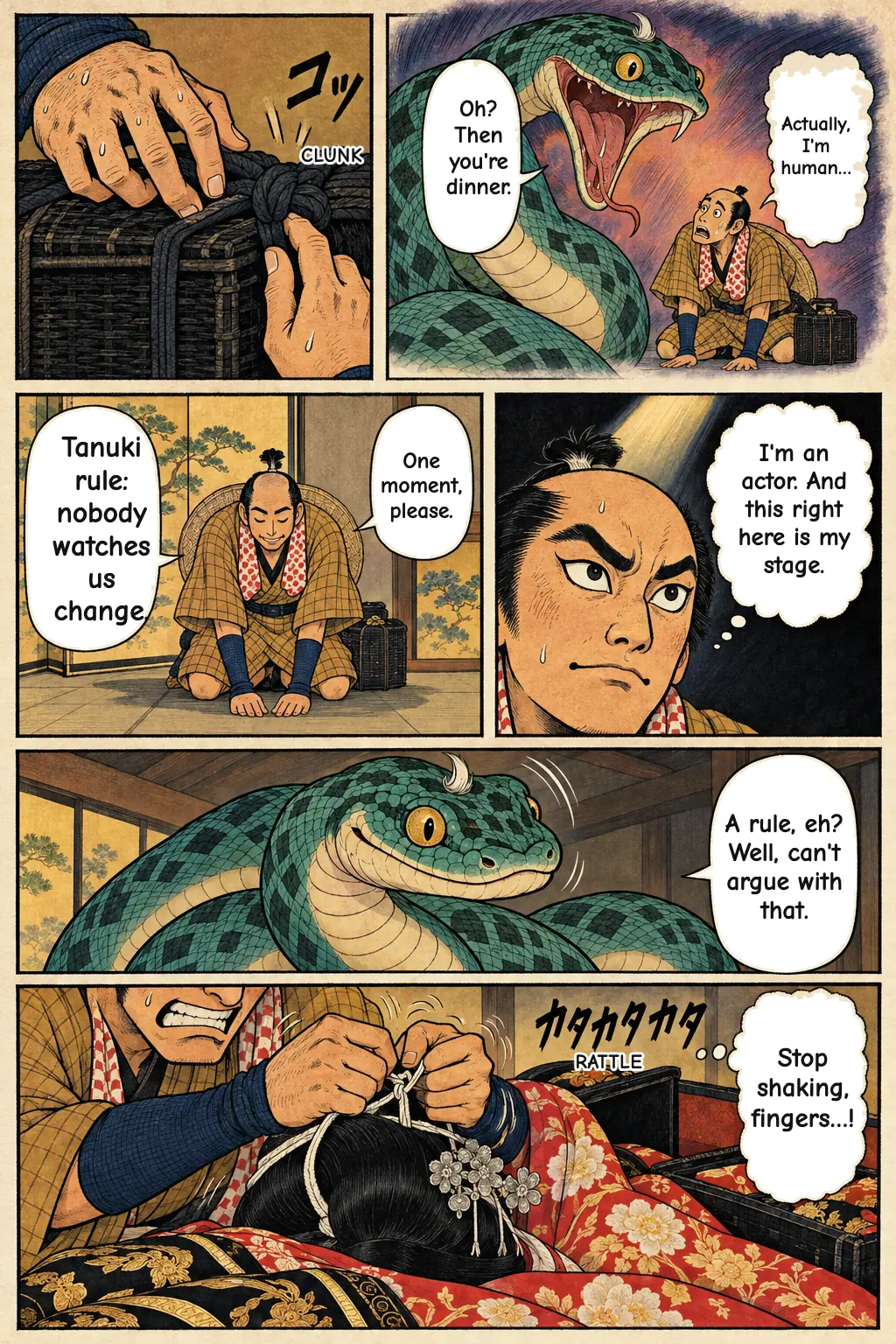
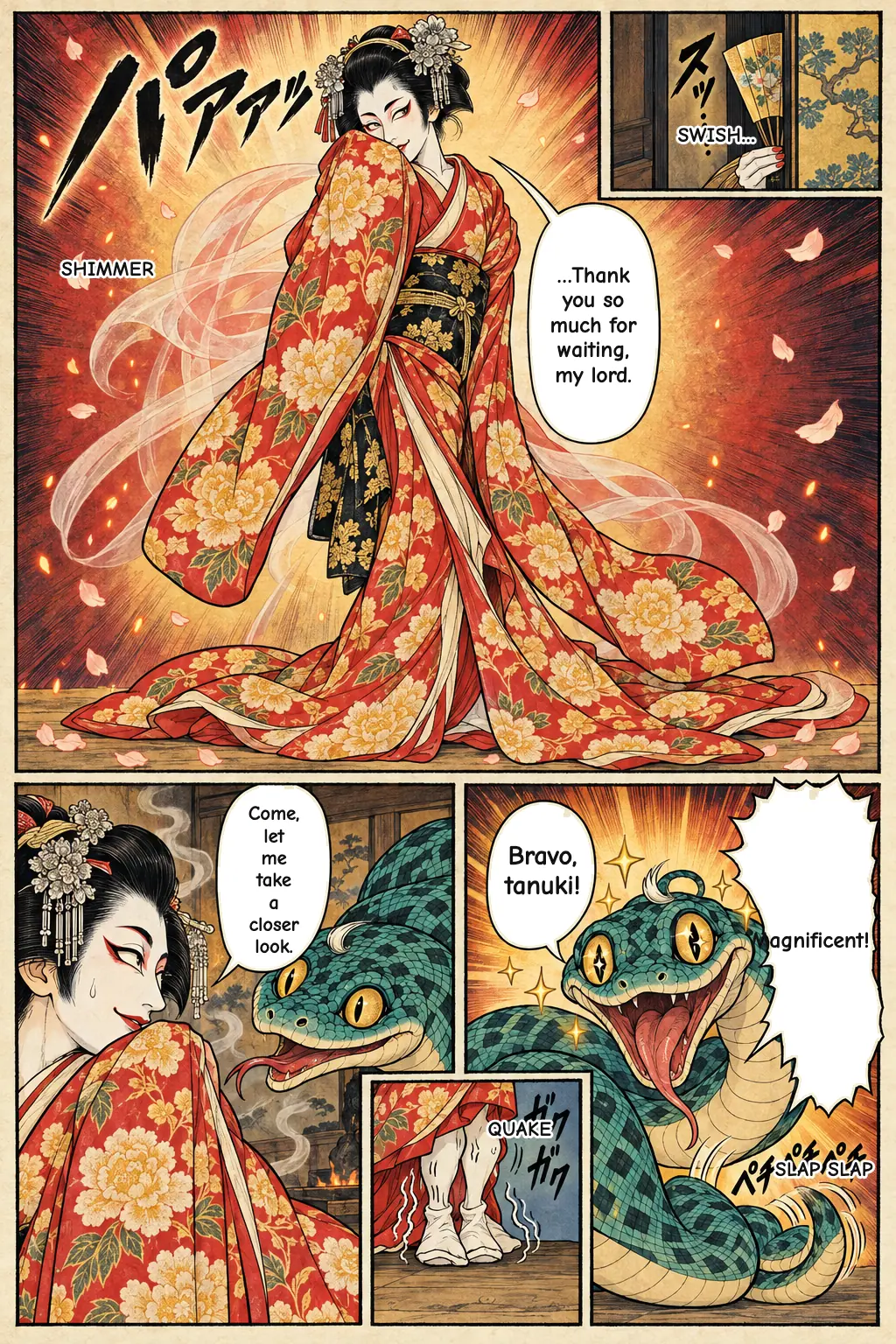
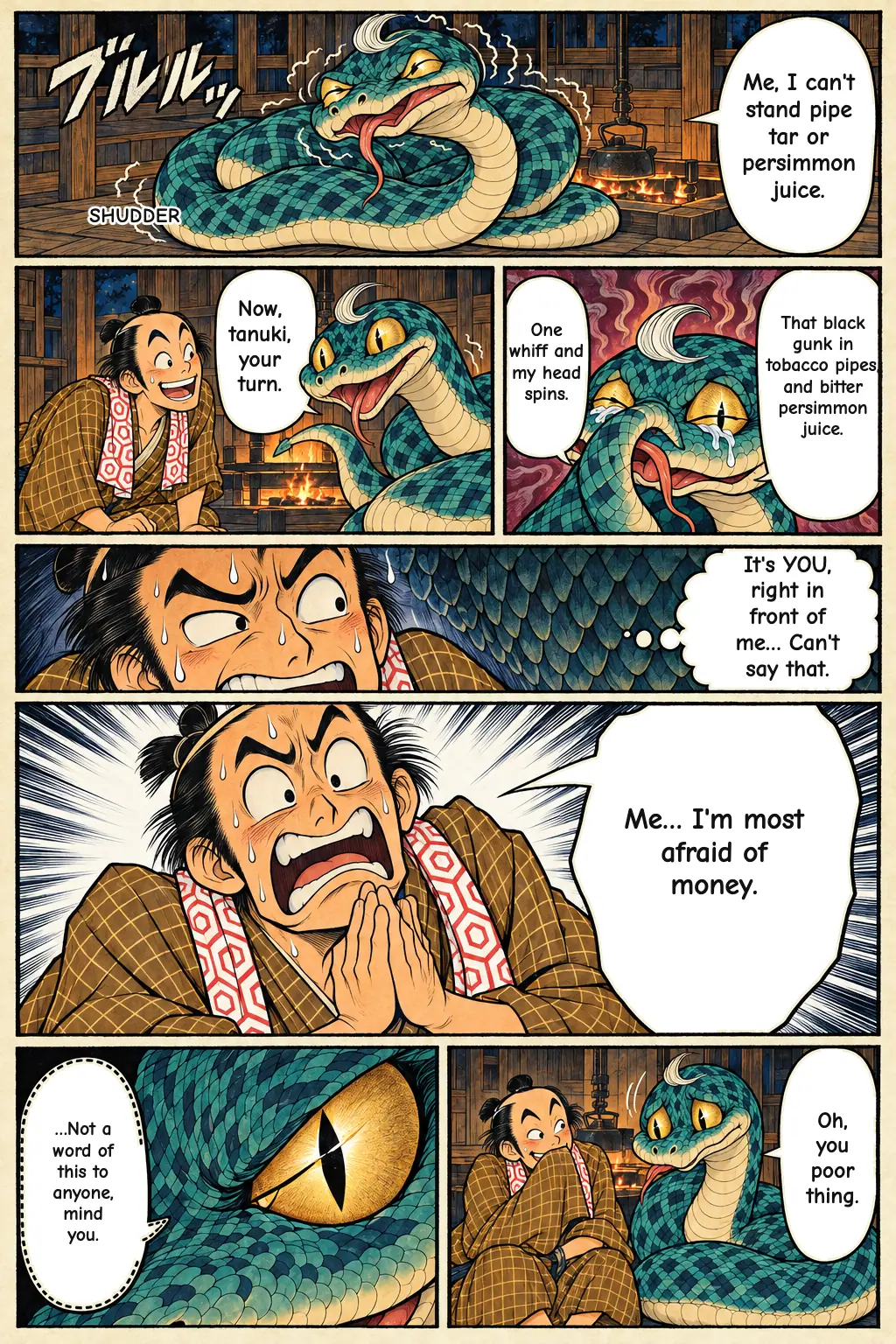
When the old man asks his name, Kyūbei answers "Tanokyu." The old man hears "tanuki," decides his guest is a fellow shape-shifter, and reveals what he really is: an uwabami, the giant serpent who rules the mountain. "If you're a tanuki, show me a transformation," he says. Kyūbei has his wigs and costumes with him, so he quickly turns himself into a woman. The serpent is delighted and fully convinced.
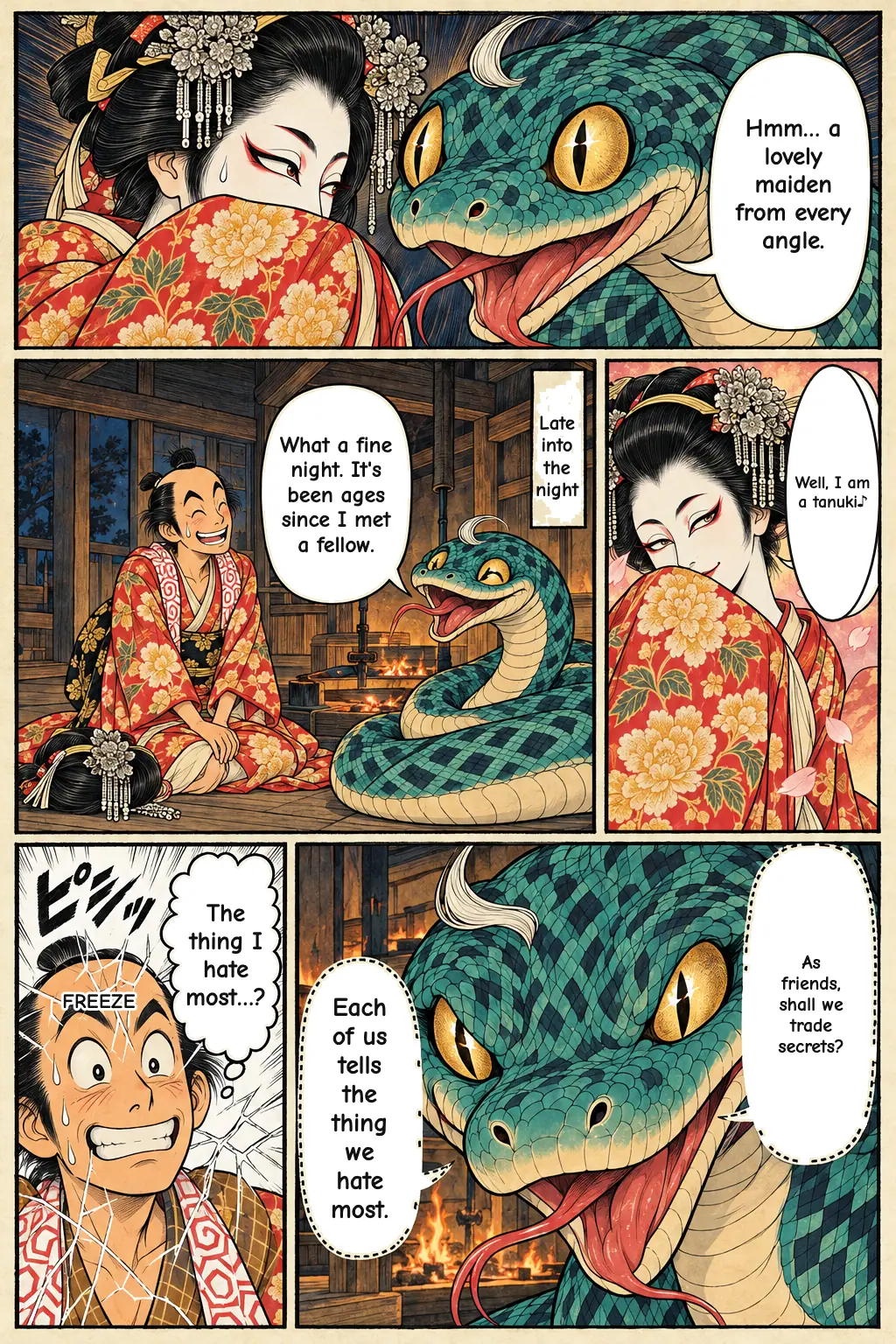
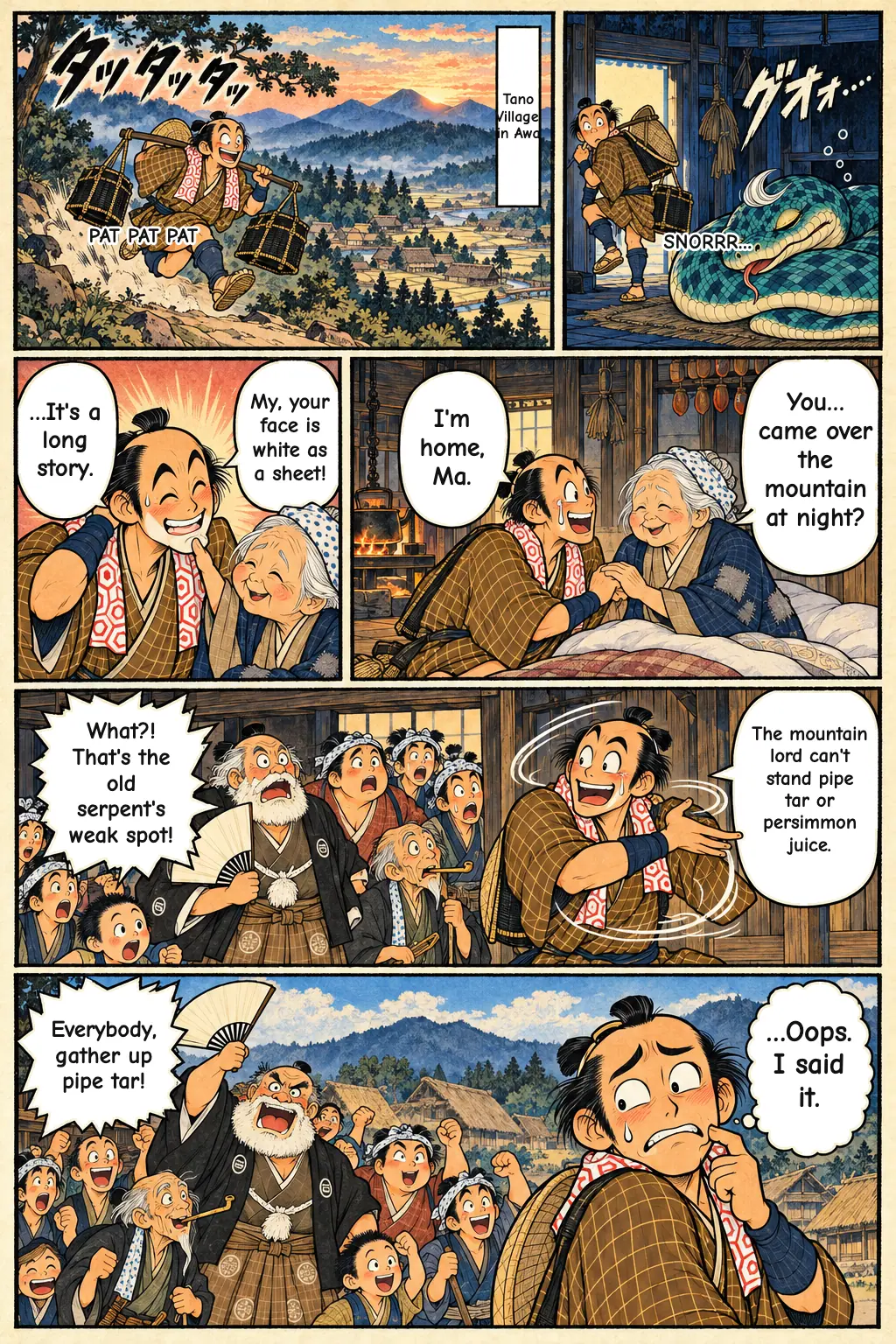
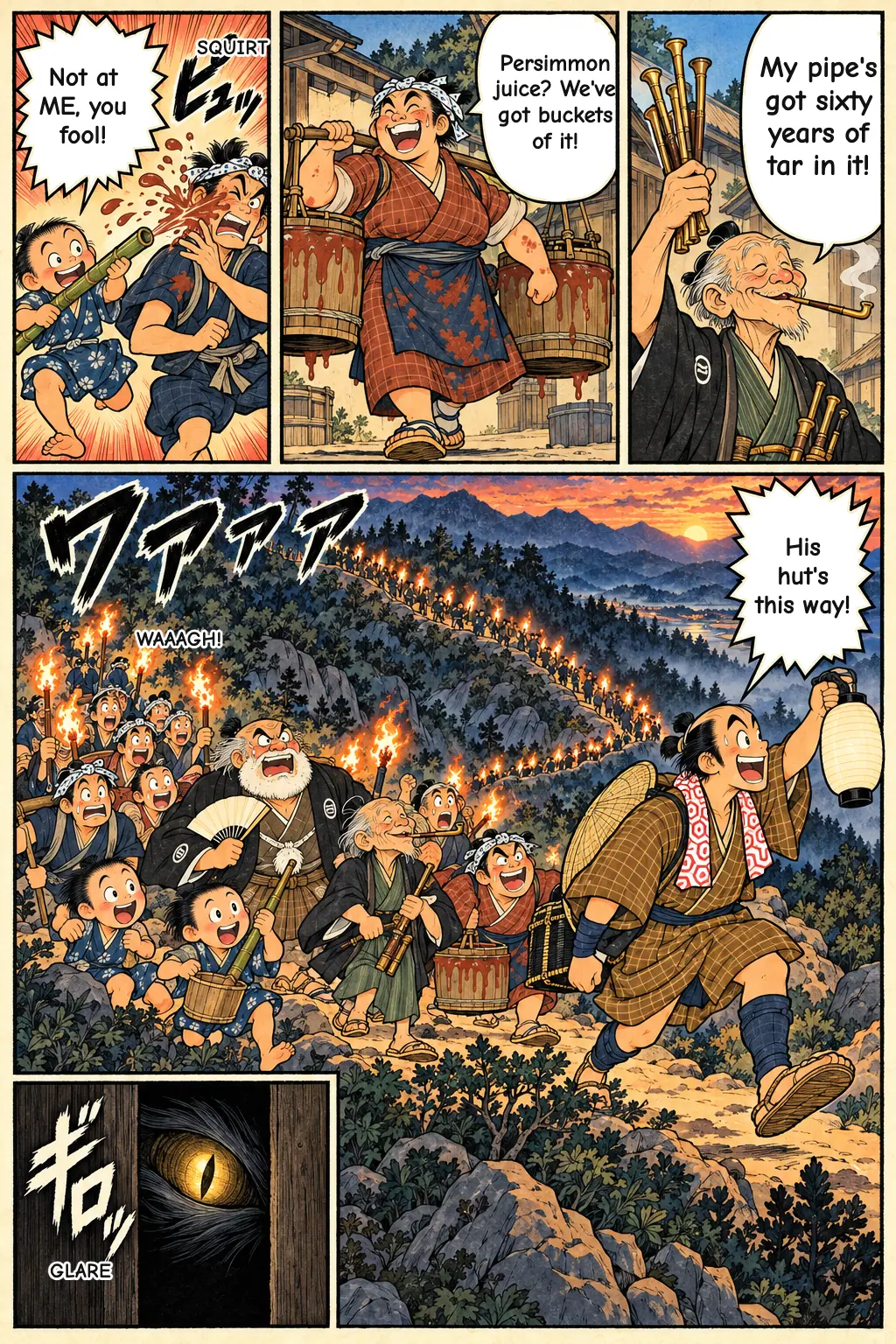
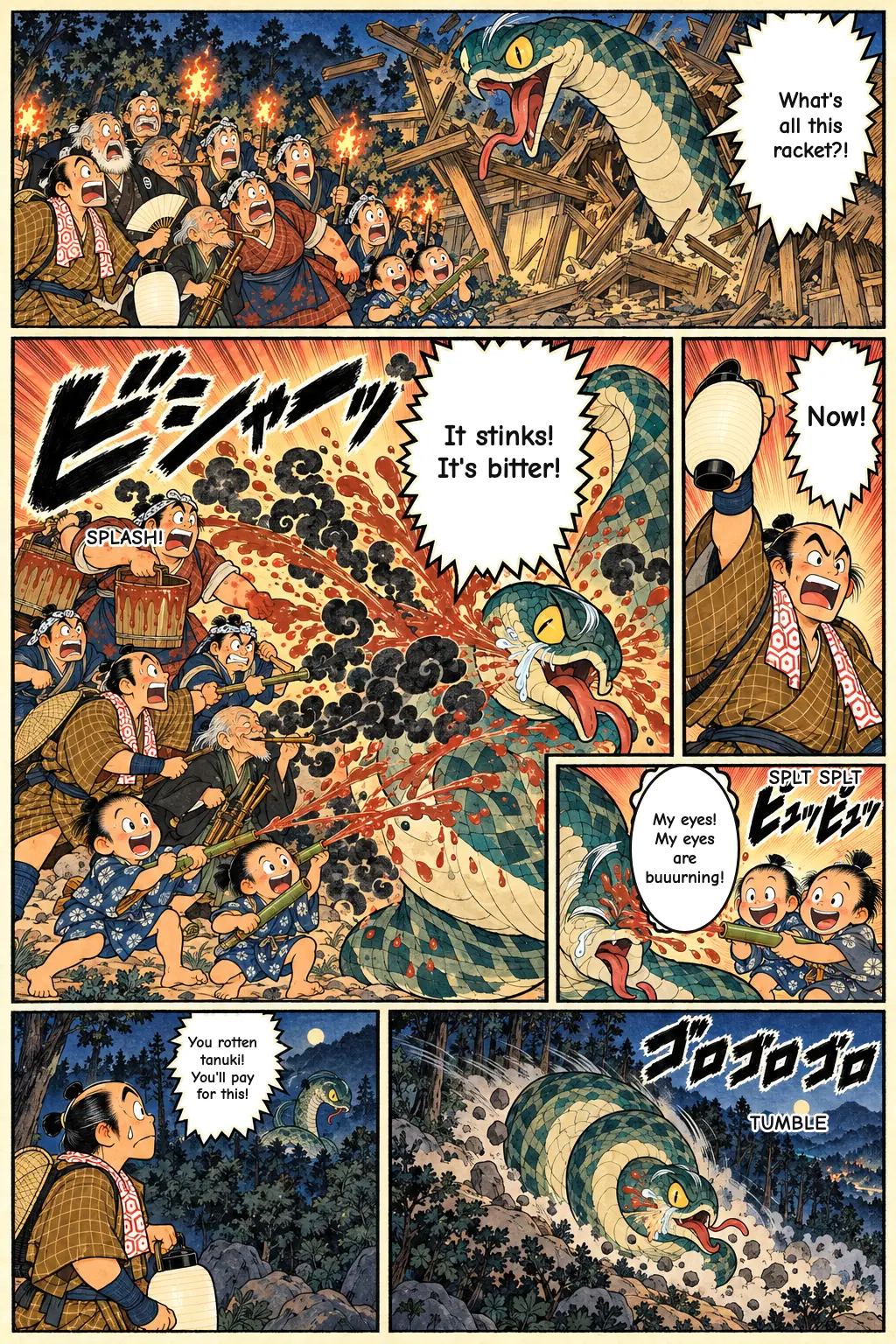
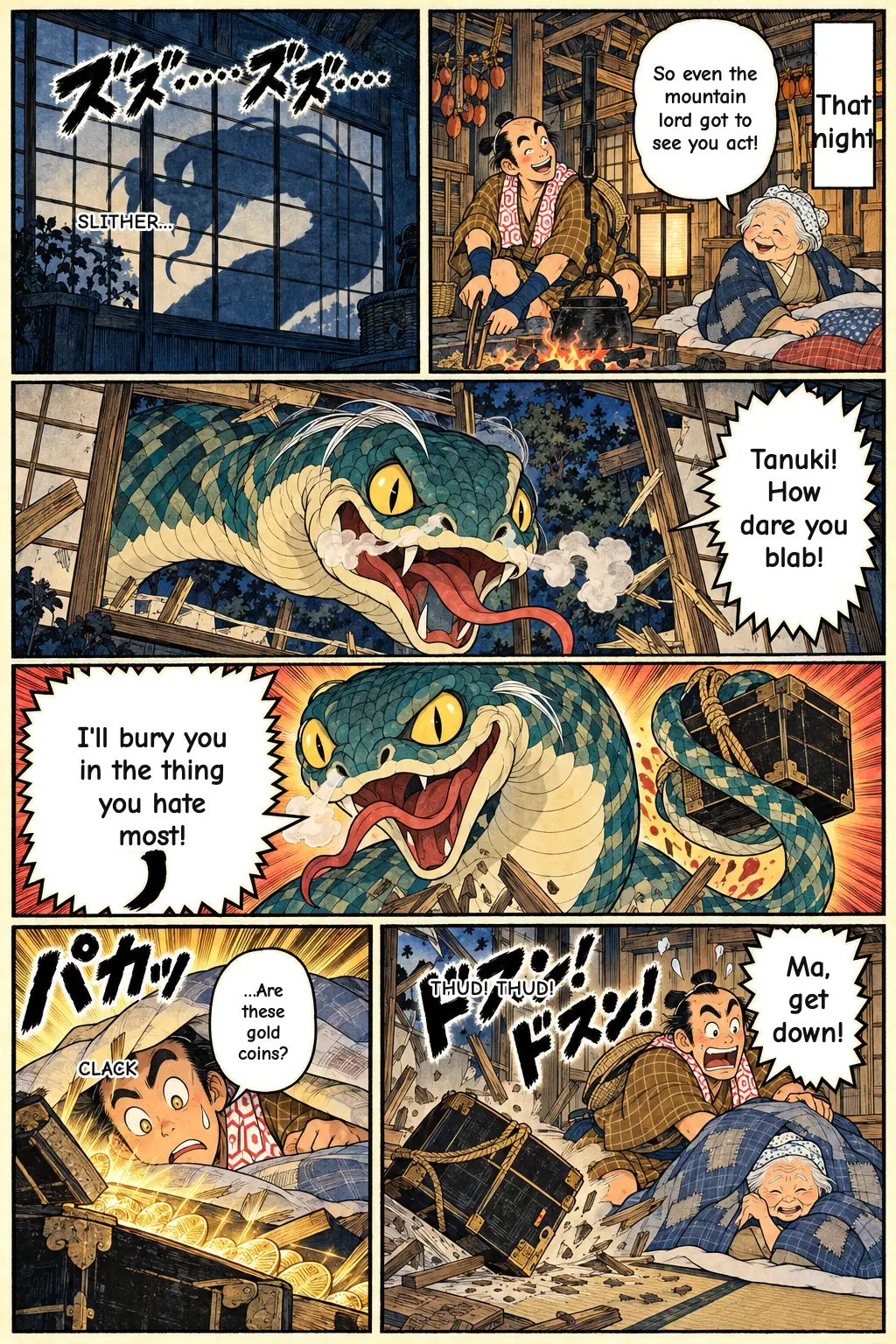
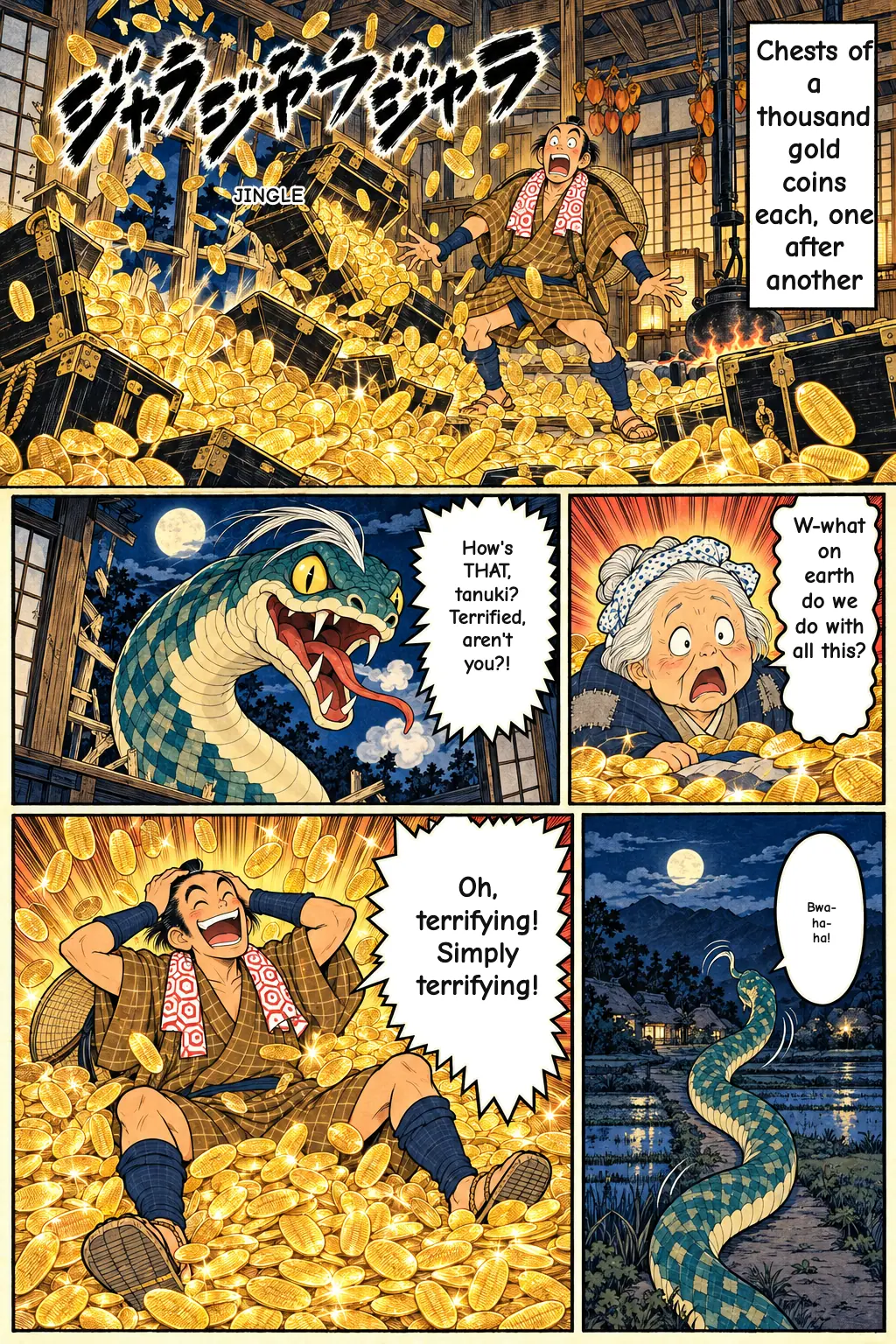
Later that night the two share secrets about what each hates most. The serpent names tobacco tar and kakishibu, a bitter juice made from unripe persimmons. Kyūbei answers: money. The next morning Kyūbei tells the villagers about the serpent's weakness, and they climb the mountain with tar and persimmon juice and drive the serpent off. Furious at being betrayed, the serpent gets its revenge by hurling the thing a tanuki supposedly hates most into Kyūbei's house: a fortune in money.
What Is Rakugo?
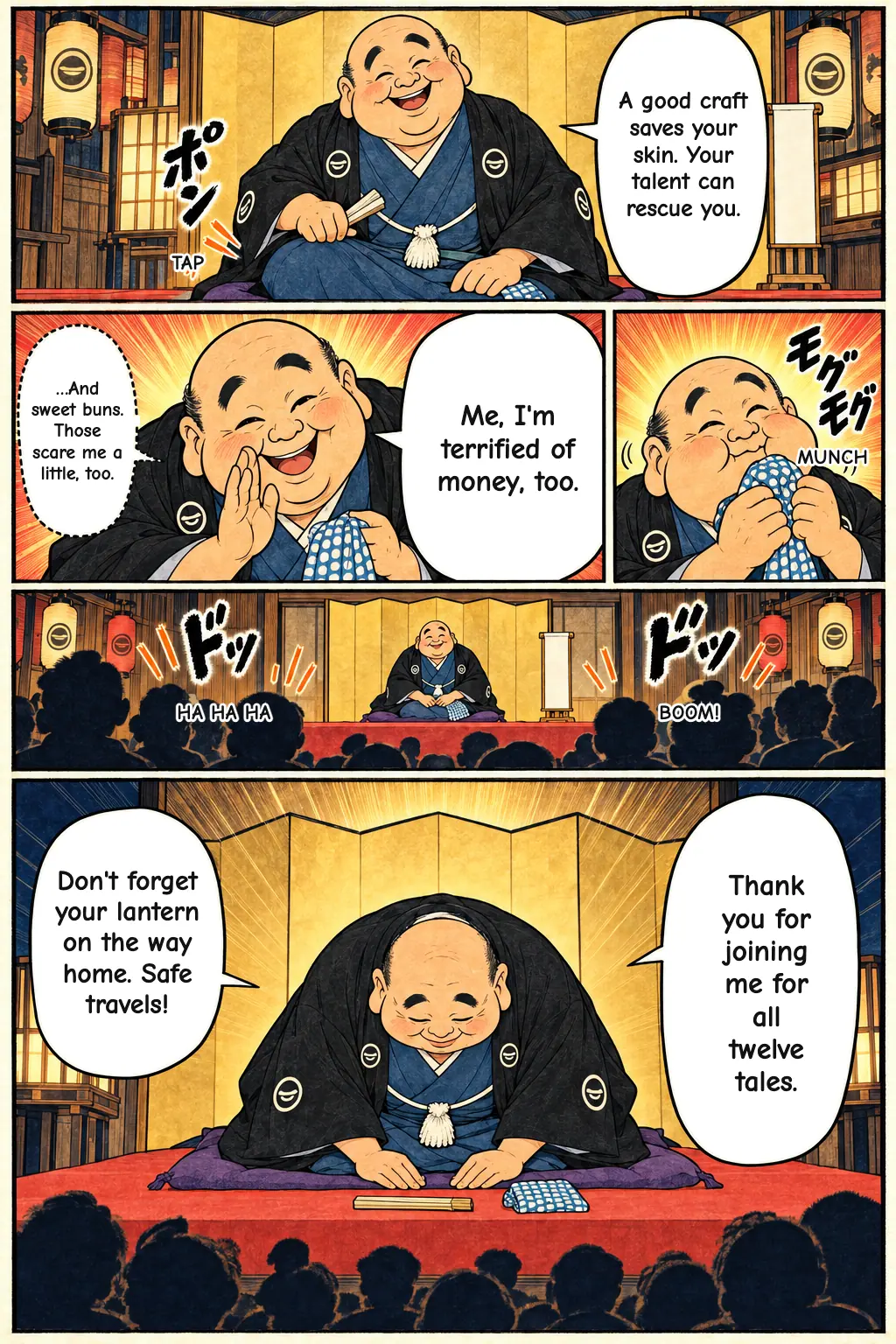
Rakugo is a Japanese storytelling art that has been performed for several hundred years in small variety theaters called yose. A single storyteller kneels on a cushion and plays every character, with only a folding fan and a hand towel as props. A turn of the head marks a change of speaker, and the fan becomes a pipe, a sword or chopsticks. Most stories build toward a final punchline called the ochi or sage. Tanokyu is one of the classic stories in this repertoire.
Tanuki, Serpents and the Name Pun
The whole story turns on one sound. In Japanese, "Tanokyu" (ta-no-kyū) sounds close to "tanuki" (ta-nu-ki). In Japanese folklore the tanuki, a real animal sometimes called a raccoon dog, is a trickster that can shape-shift. It is usually more funny than frightening. So when an actor who makes his living through disguise is mistaken for a famous shape-shifter, he really can prove it.
The uwabami is a different kind of creature: a huge serpent, often said to swallow people whole, that lives in the mountains. Tobacco tar (yani, the sticky residue left in pipes) and kakishibu (persimmon juice, used in old Japan to waterproof paper and wood) were both said to be things snakes hate. Audiences in old Japan would have recognized these details right away.
What the Manga Changed
The main plot of our manga follows the old transcript: the name mix-up, the disguise, the exchange of secrets, the villagers and the revenge with money. We wrote the script ourselves. The storyteller who opens and closes each episode, Shōmontei Fukurai, is a fictional narrator created for this series. He is not based on any real performer. His opening line, "They say an art can save your life," and his closing joke were also written for the manga.
We also added visual details that the spoken story leaves to the imagination: the troupe and the bustling town where they perform, the dark mountain road, the inside of the hut, the serpent's true form, the faces of the villagers, and chests of gold coins flying in through the window. In the English edition, tanuki ears and a tail sprout in a thought bubble to show the mishearing. The exact roles Kyūbei plays in his quick changes are our own invention. In the manga, the villagers chase the serpent away instead of killing it.
The Punchline (Ochi) Explained
The joke works because of a misunderstanding. The serpent believes Tanokyu is a tanuki who truly fears money, so it thinks throwing money at him is the cruelest revenge possible. In fact, money was the one thing Tanokyu wanted most. The serpent's revenge makes him rich. When he named his "greatest fear," Tanokyu was either joking or very cleverly setting a trap.
In Edo-period Japan, a ryō was a gold coin, and a senryōbako, a chest holding a thousand ryō, stood for an almost unimaginable fortune. That is why the manga shows chests of gold instead of a few coins.
This ending also ties the series together. Episode 1, Manjū Kowai, uses the same trick: a man claims to be terrified of sweet buns, his friends try to scare him by piling them up, and he happily eats them all. Saying "I'm scared of it" in order to get it brought to you opens and closes our first season.
Where to Read It
You can read Tanokyu as Episode 12, the season finale of RAKUGO: Japan's Comic Tales, here on Manga Portal. Every episode is free to read, and you don't need an account. If this story made you smile, start from Episode 1, Manjū Kowai, and watch the running joke build toward this ending.
Characters in this episode
Kyūbei (Tanokyu)
A farmer and amateur actor from Tano village in Awa who survives a night with a giant serpent by pretending to be a shape-shifting tanuki.
The Old Man / Giant Serpent (Uwabami)
The serpent lord of the mountain, who disguises himself as an old man, believes Tanokyu is a tanuki, and admits he cannot stand tobacco tar or persimmon juice.
The Villagers
Local people who use the serpent's secret weakness to drive it off the mountain.
Kyūbei's Mother
News of her illness sends Kyūbei across the mountains alone at night.
Shōmontei Fukurai
The fictional rakugo storyteller who introduces and closes each episode of the manga series.
FAQ
What is the story of Tanokyu in rakugo?
A village actor nicknamed Tanokyu is crossing the mountains at night when a giant serpent mistakes his name for "tanuki," the shape-shifting raccoon dog. He proves it with quick costume changes and tells the serpent that money is what he fears most. After the villagers drive the serpent away, it takes revenge by throwing money at him, and he becomes rich.
Why does the serpent think Tanokyu is a tanuki?
In Japanese, "Tanokyu" sounds close to "tanuki," the trickster animal of folklore that can change its shape. Because Tanokyu is an actor carrying wigs and costumes, he can actually "transform" when the serpent asks him to.
What is the serpent afraid of in Tanokyu?
The serpent hates tobacco tar and kakishibu, a bitter juice made from unripe persimmons. People in old Japan believed snakes disliked both.
What is the punchline of Tanokyu?
The serpent wants to punish Tanokyu with the thing he said he fears most, money. Since money is really what he wants most, the revenge makes him rich. It is the same reverse-psychology trick as the famous rakugo story Manjū Kowai.
What is rakugo?
Rakugo is a traditional Japanese comic storytelling art. A single performer kneels on stage and plays every character using only a fan and a hand towel. It has been performed in small theaters called yose for several hundred years.