Episode 11Daydreaming Out Loud at the BathhouseYuyaban (The Bathhouse Attendant)
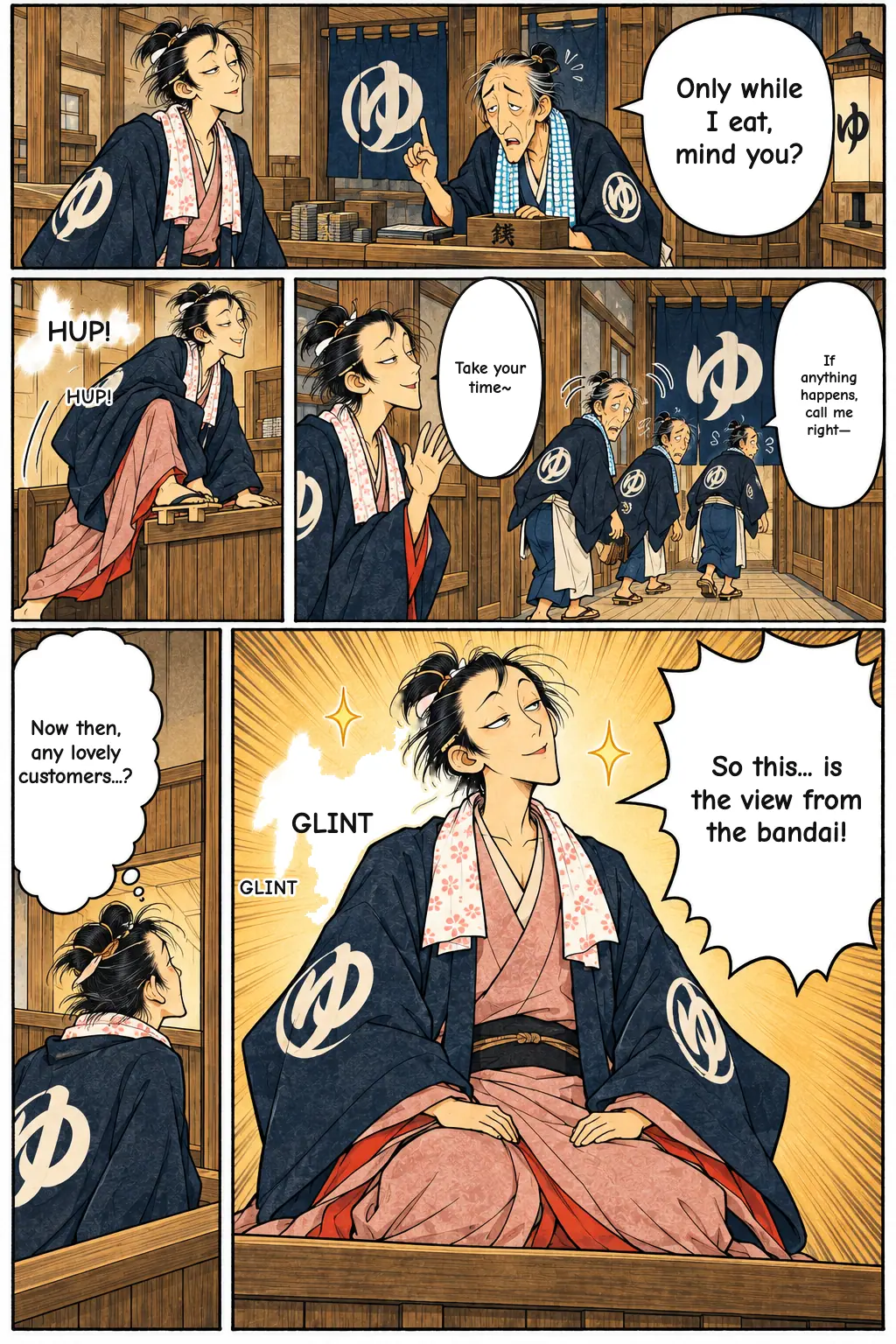
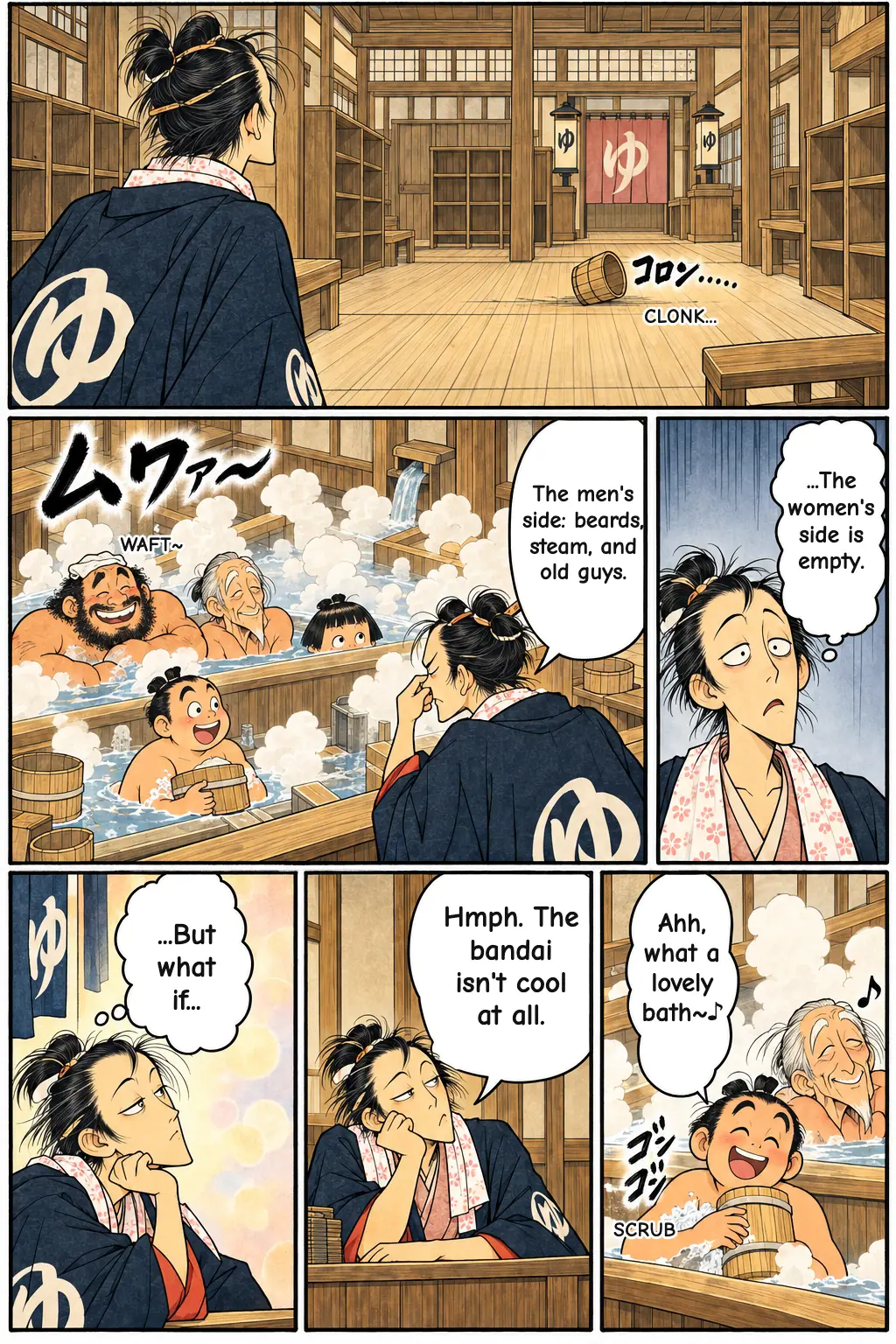
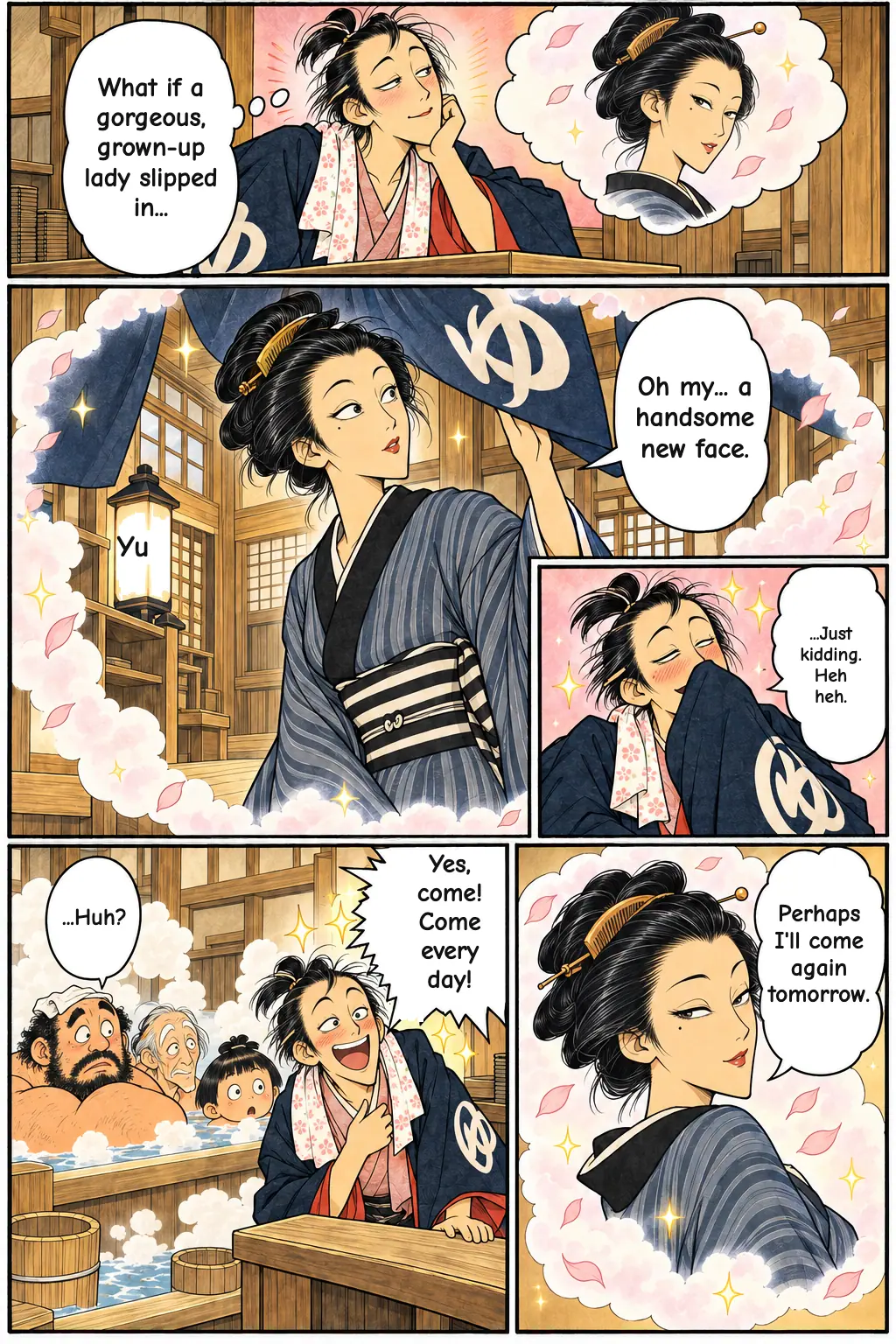
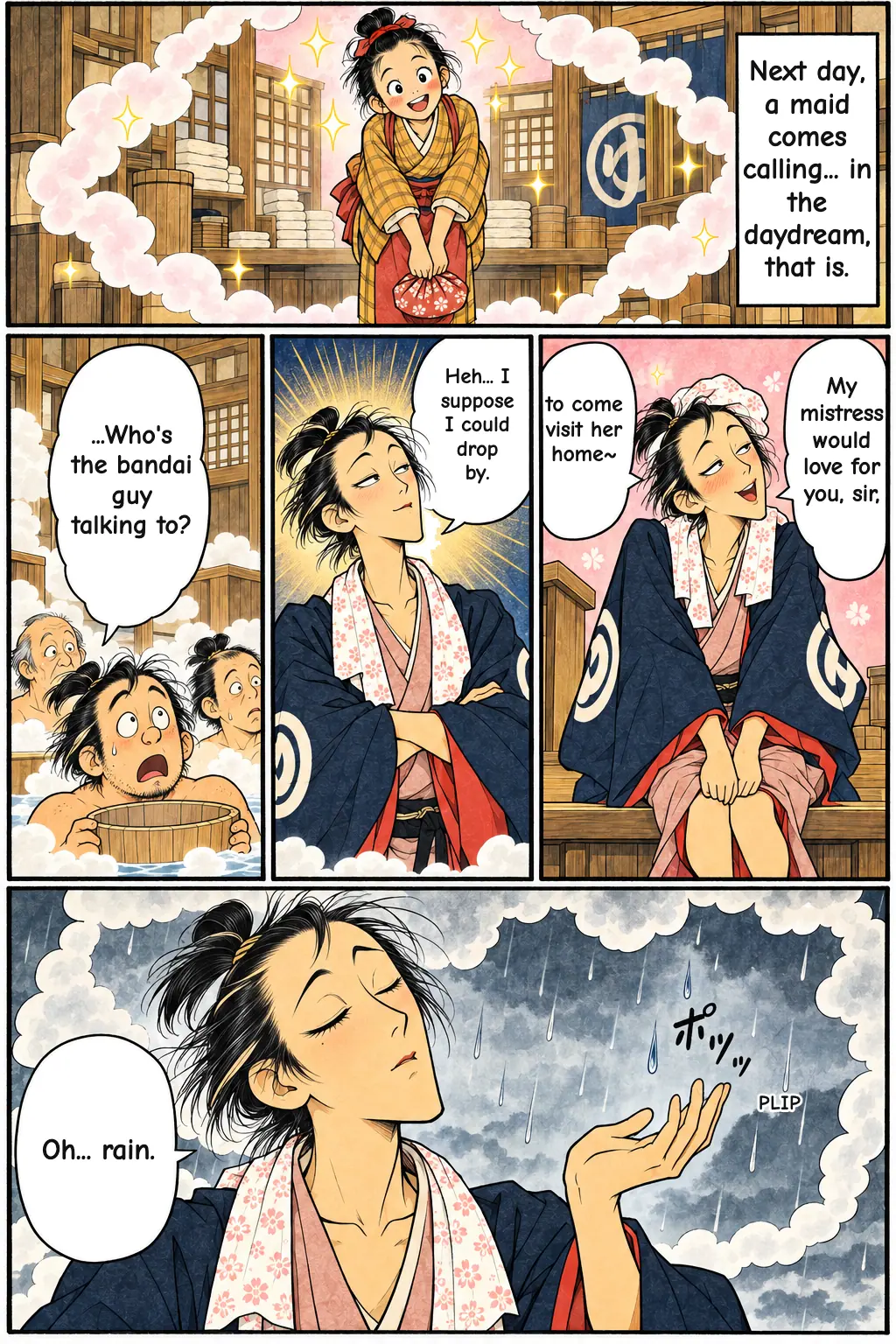
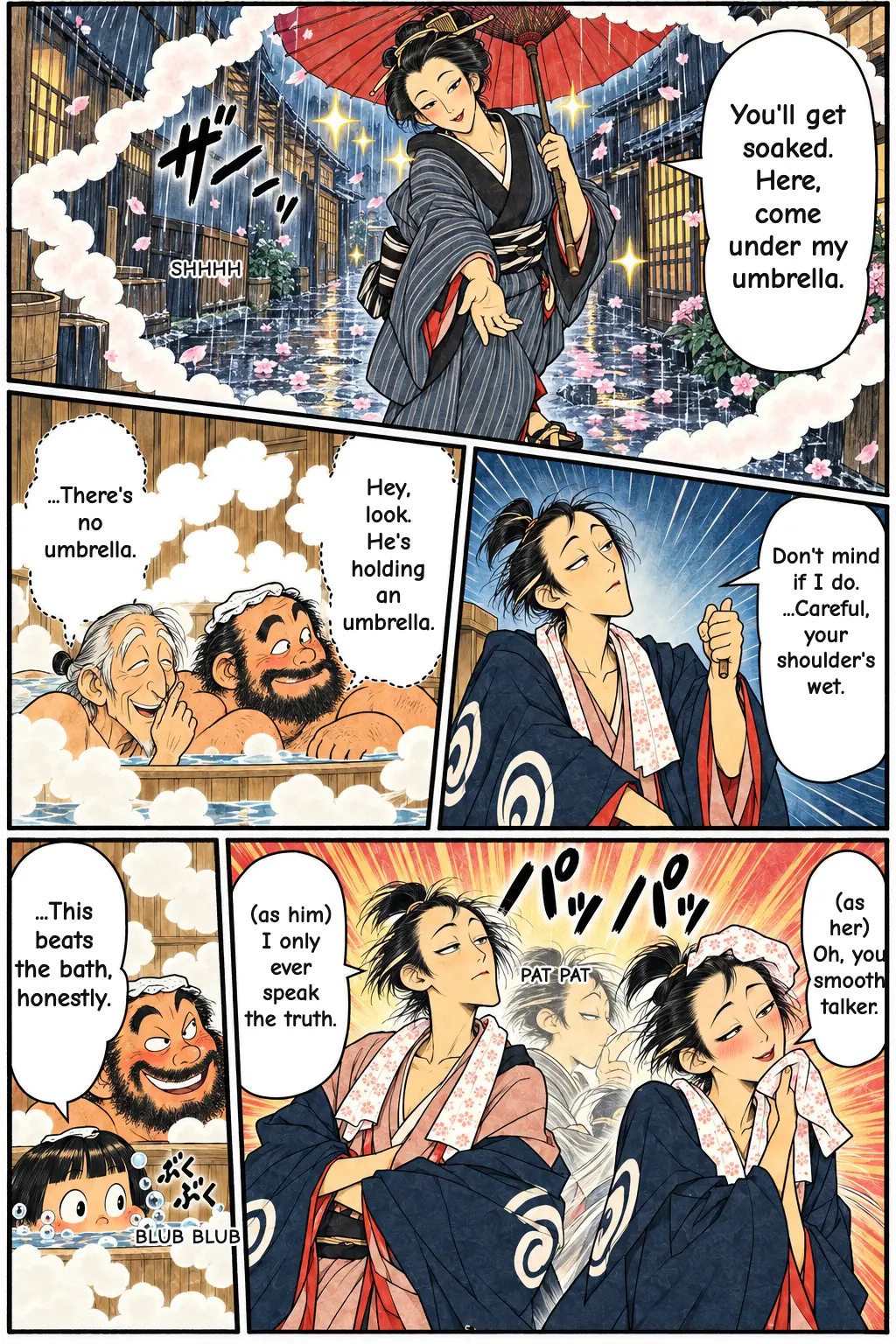
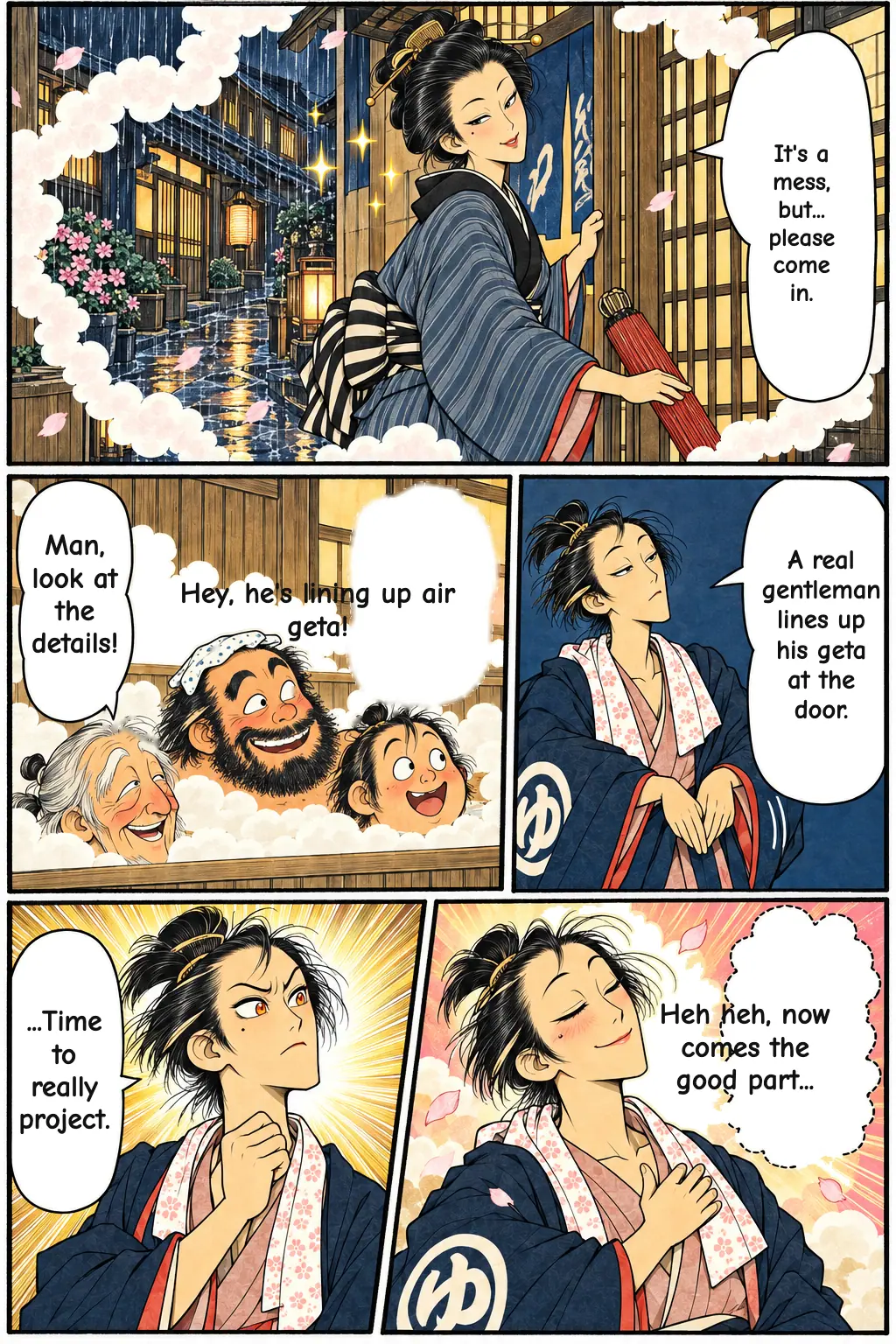
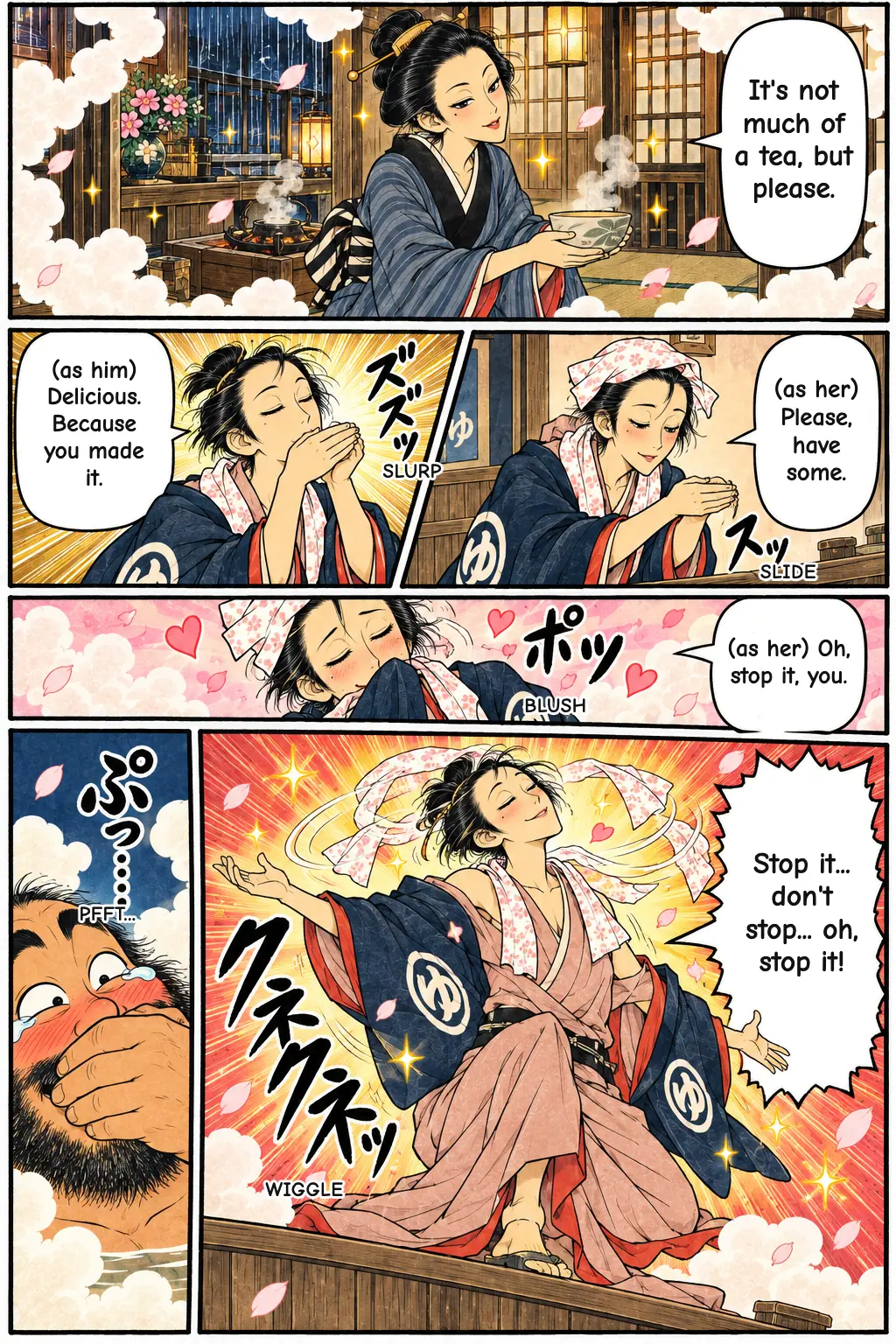
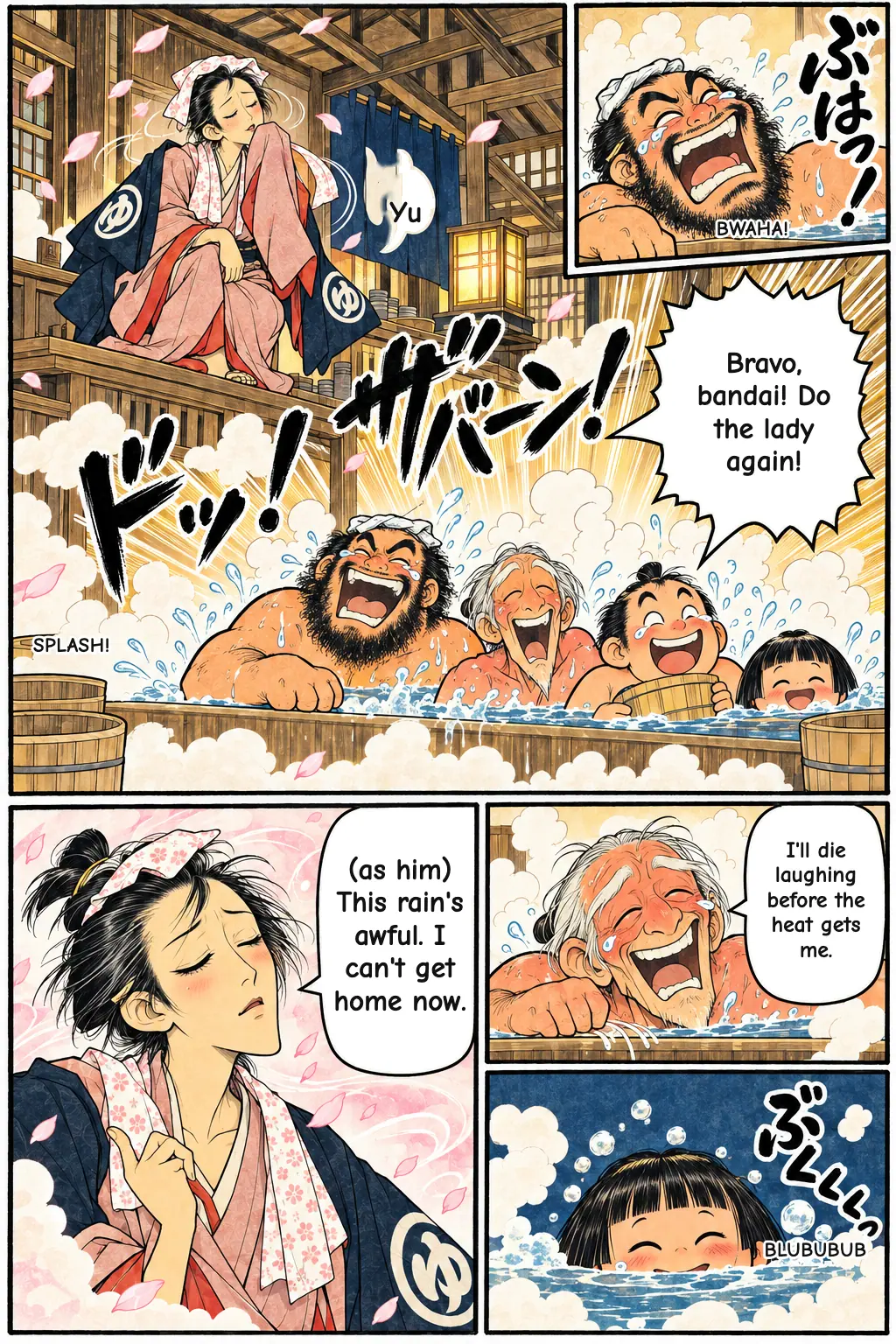
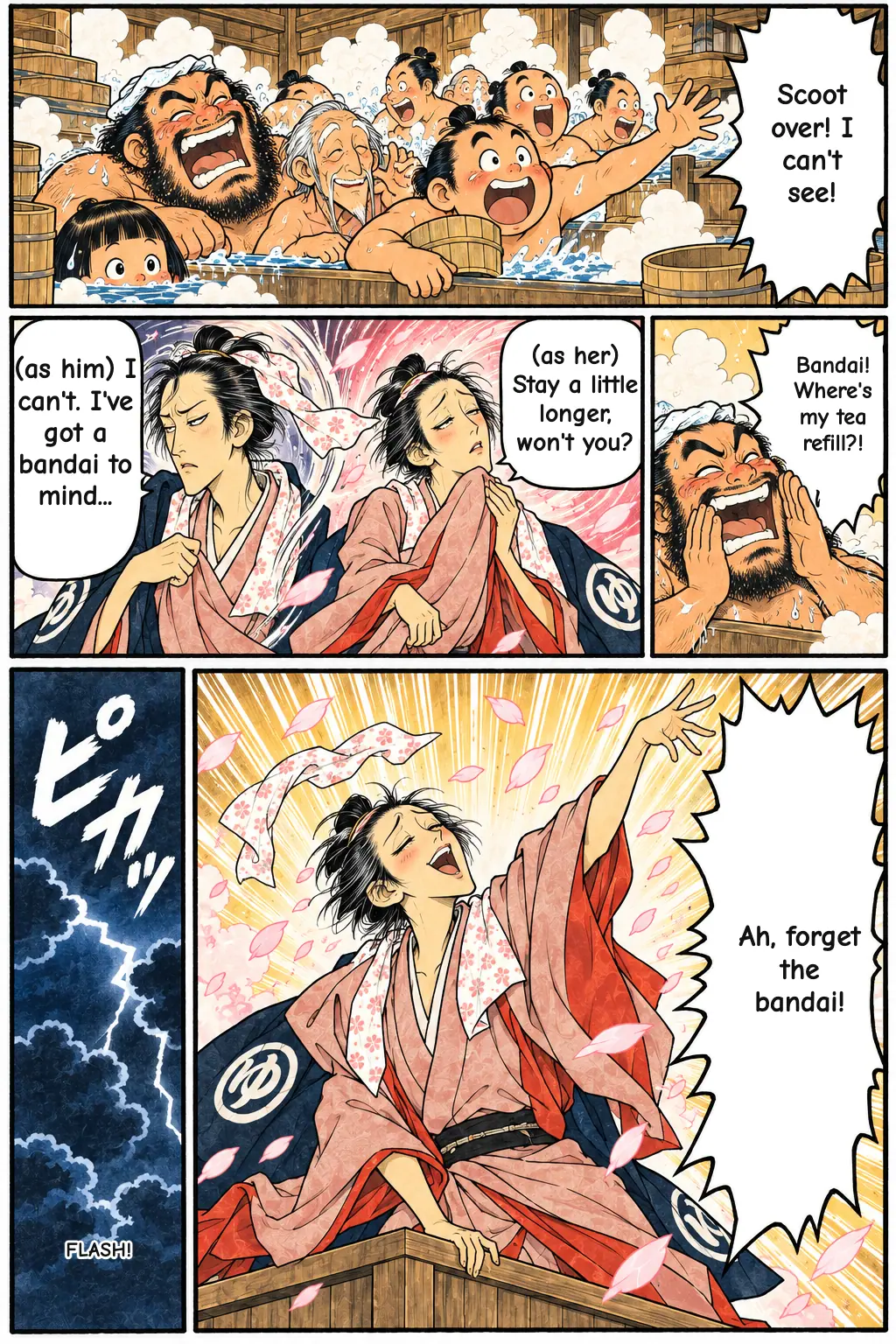
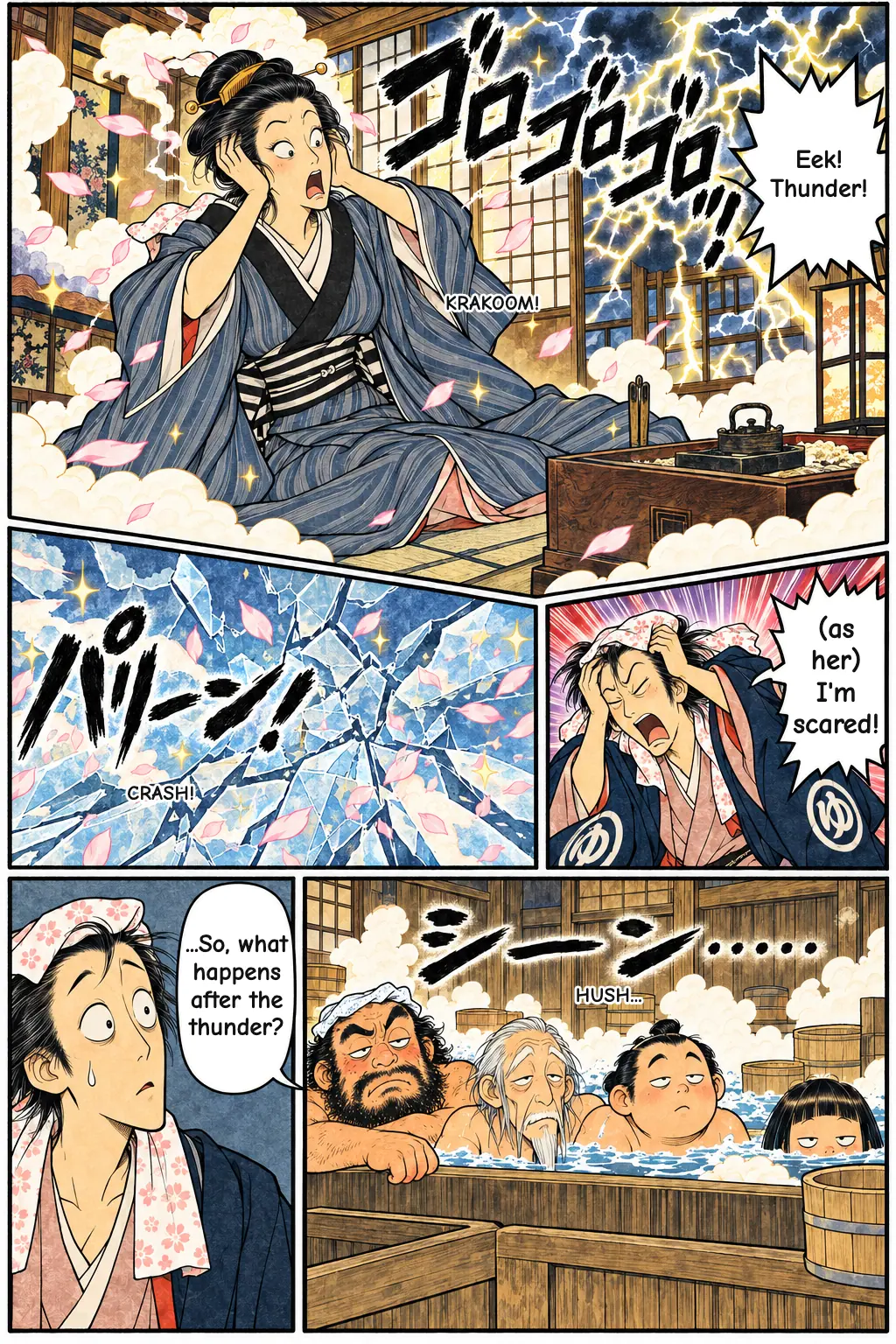
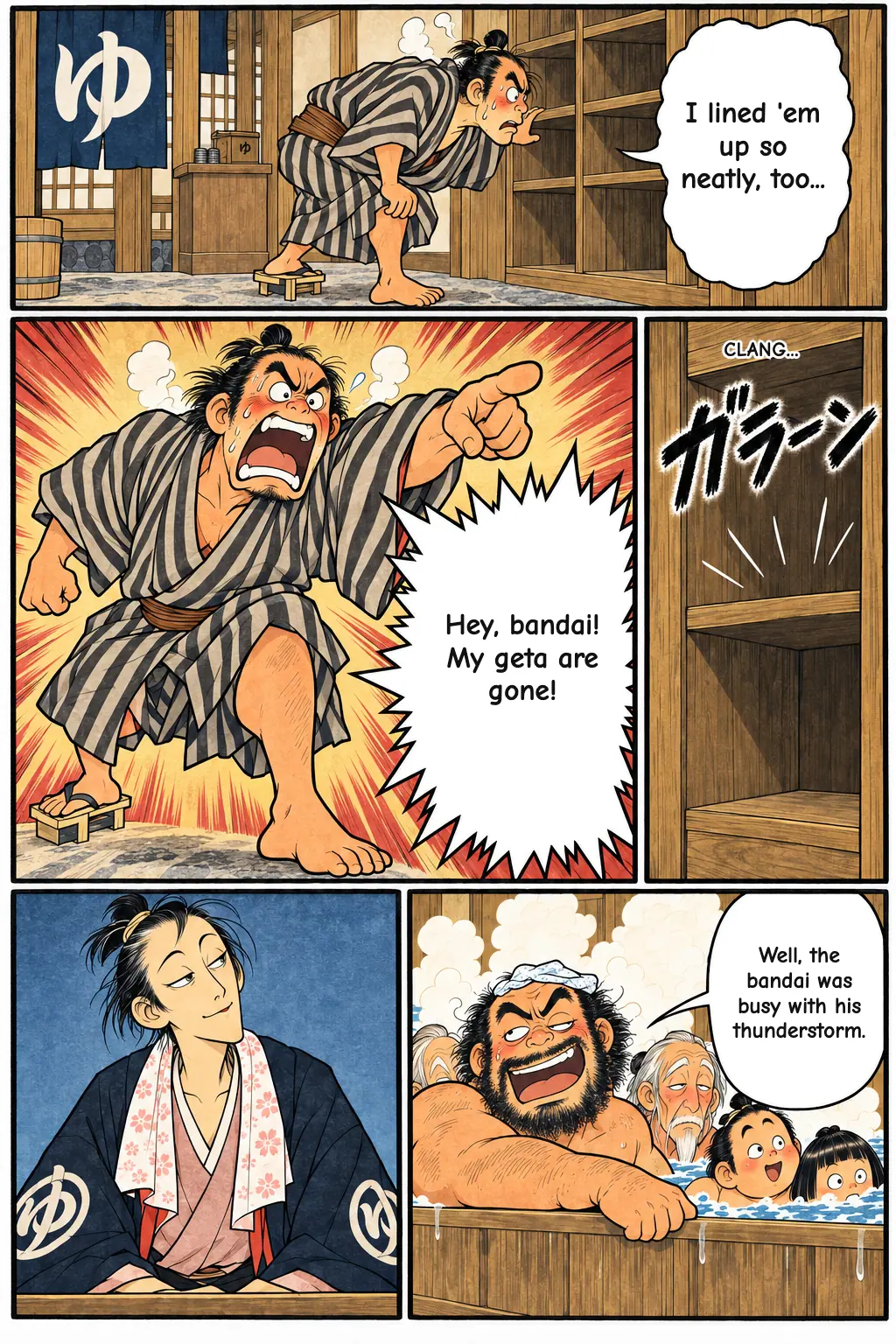
Episode 11 of RAKUGO: Japan's Comic Tales. The Disowned Young Master, freeloading at Kuma's house, finally lands his dream seat: the bandai, the high front desk of a public bathhouse. But the women's side is empty, and the men's side is nothing but sweaty old guys. To kill time, he starts daydreaming about a romance. Before long, he's acting out both parts out loud, and the whole men's bath is watching the show. Then someone shouts, "My geta are gone!"
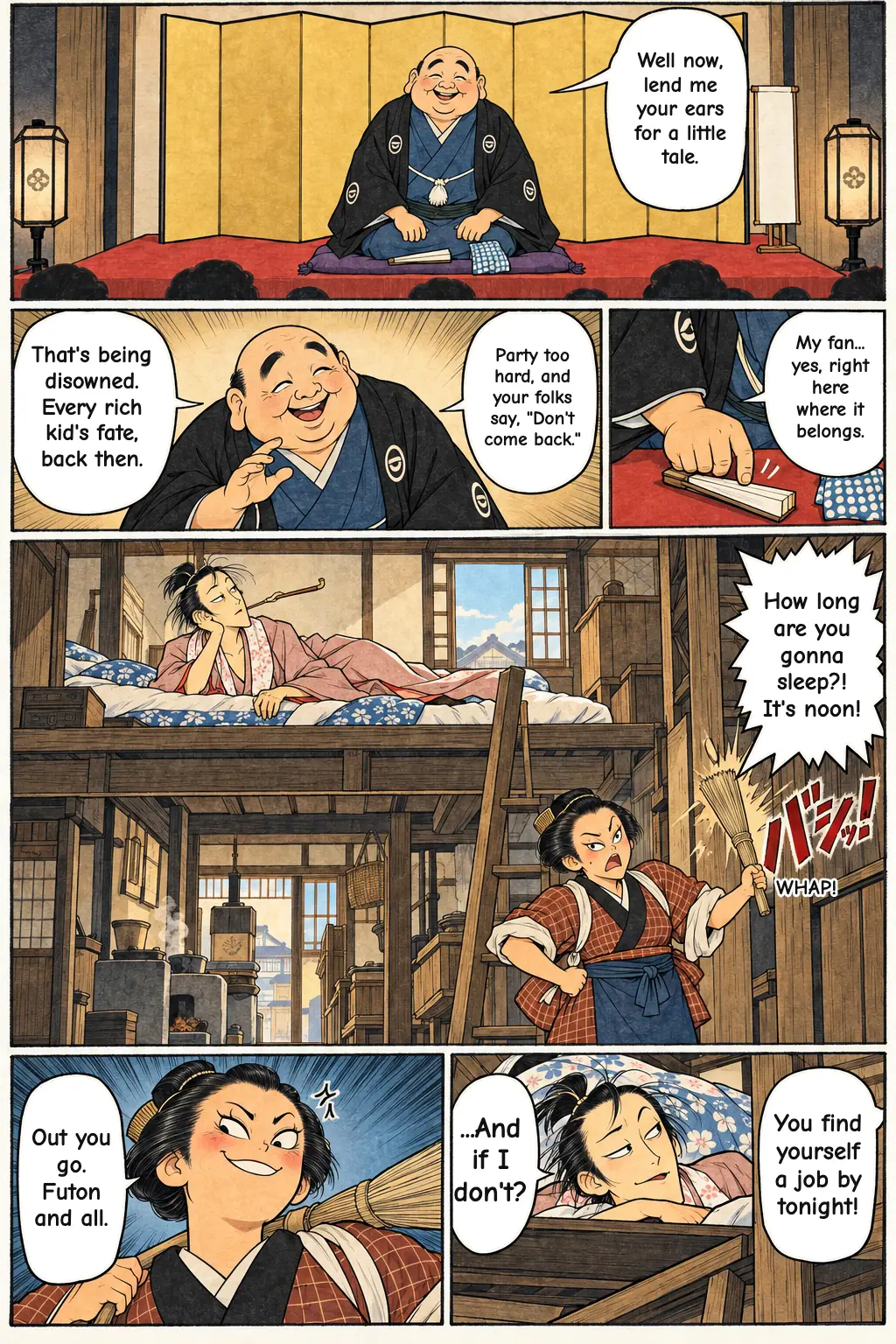
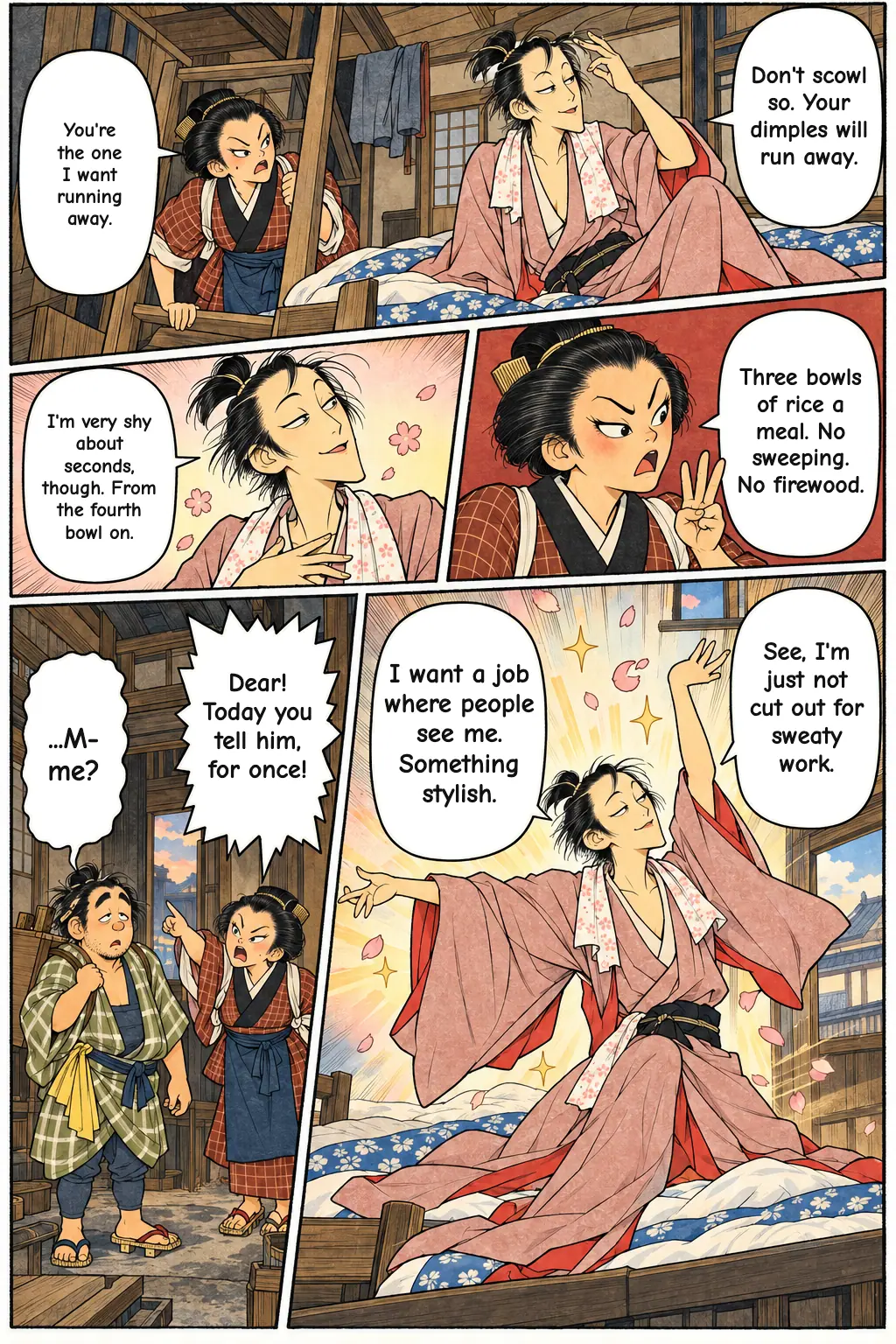
Yuyaban, which means "The Bathhouse Attendant," is a classic comic story from rakugo, Japan's art of comic storytelling. Its hero is a wakadanna, the son of a wealthy merchant family, who spent so much on fun that his parents disowned him. With nowhere else to go, he moves into the upstairs room of Kuma, a craftsman who used to do work for his family. He sleeps until noon, eats, and lies around all day. Kuma's wife quickly gets fed up with this freeloader and complains to her husband.
Yuyaban (The Bathhouse Attendant) Rakugo Summary & Punchline Explained
Yuyaban Story Summary: A Daydreamer at the Bathhouse Desk
Yuyaban, which means "The Bathhouse Attendant," is a classic comic story from rakugo, Japan's art of comic storytelling. Its hero is a wakadanna, the son of a wealthy merchant family, who spent so much on fun that his parents disowned him. With nowhere else to go, he moves into the upstairs room of Kuma, a craftsman who used to do work for his family. He sleeps until noon, eats, and lies around all day. Kuma's wife quickly gets fed up with this freeloader and complains to her husband.
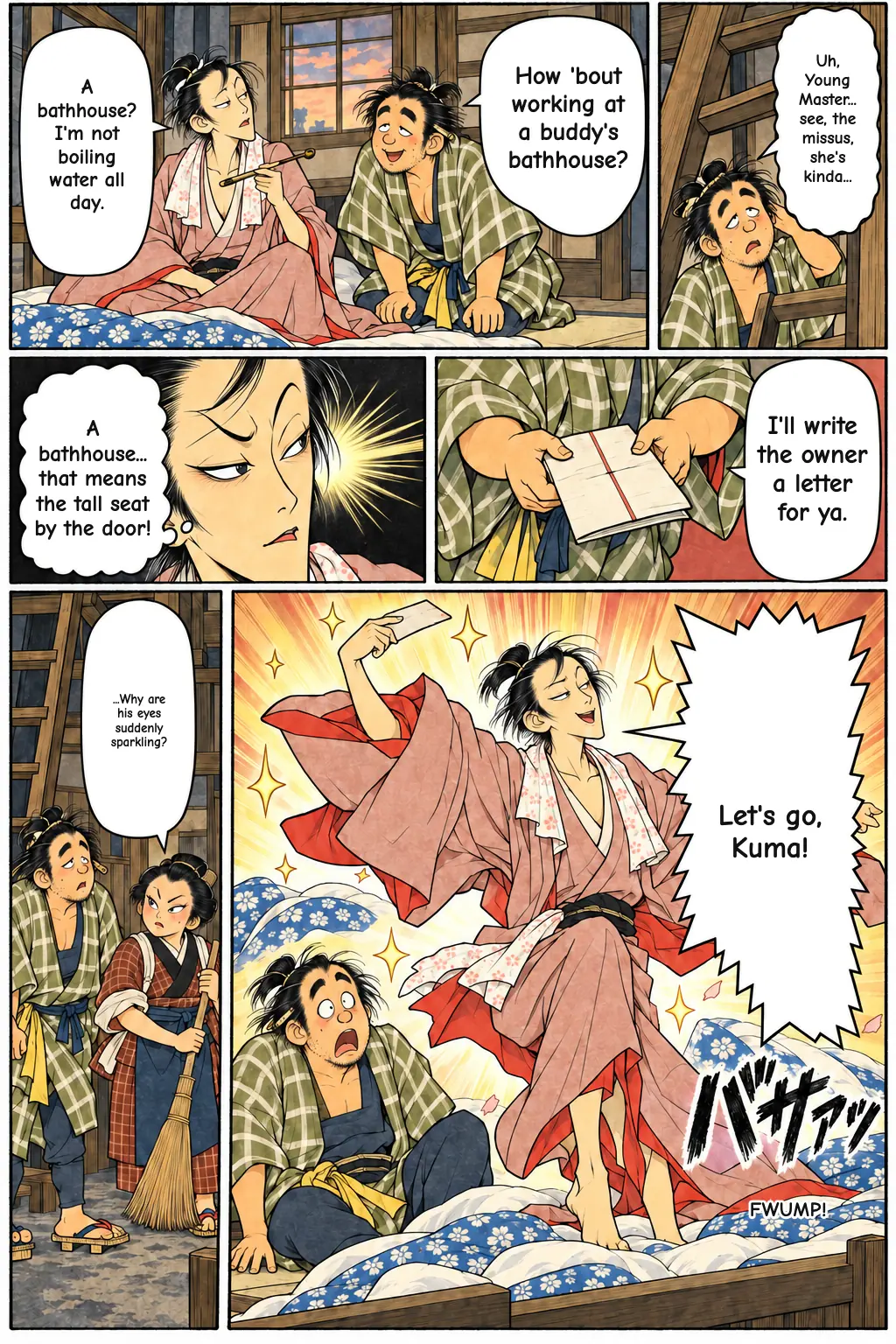
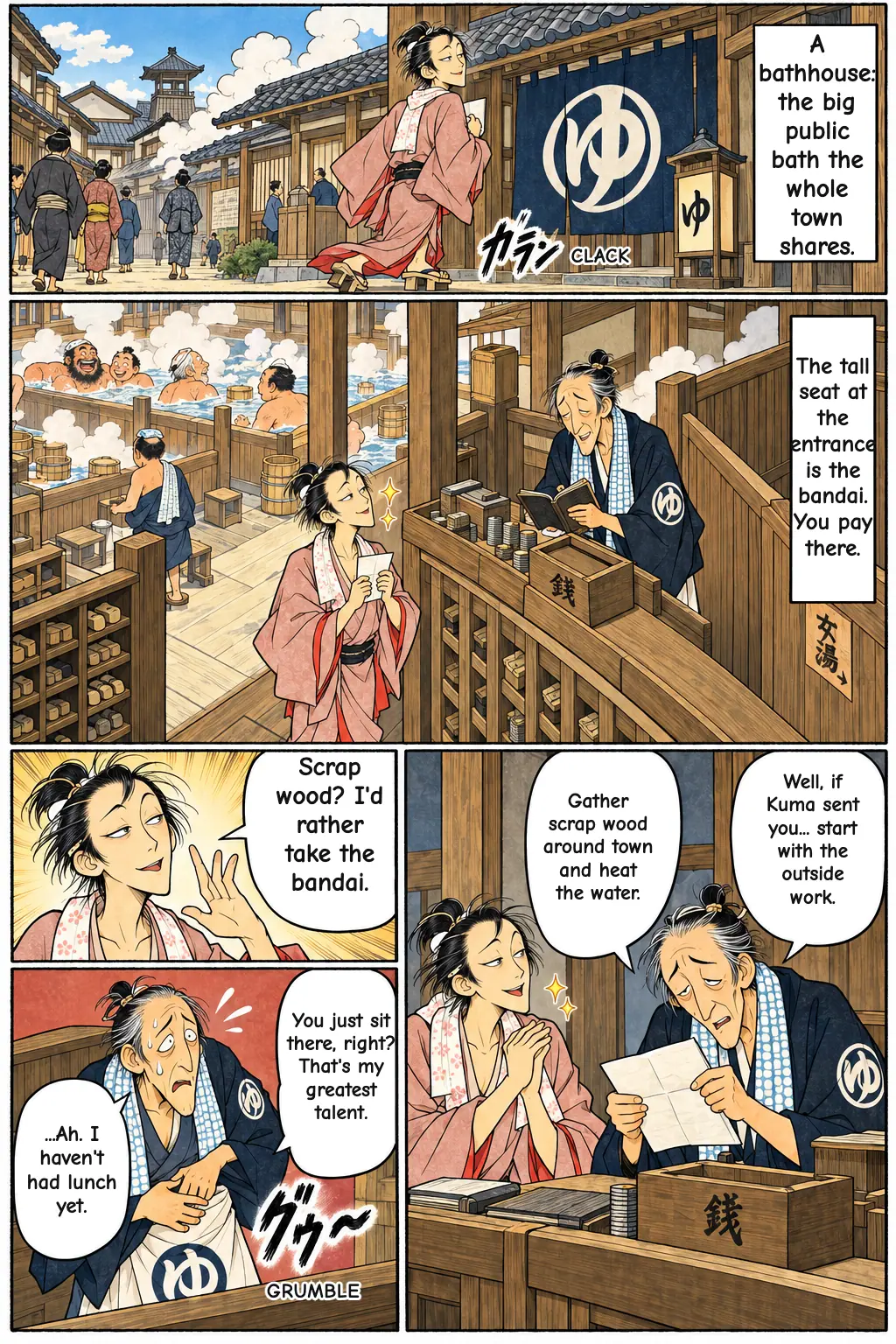
Kuma talks the young master into getting a job and sends him to a public bathhouse (yuya) run by someone he knows. The young master looks down on the real work: gathering scrap wood outside and feeding the fire under the boiler. What he wants is to sit at the bandai, the raised front desk. When the owner goes to the back for a meal, the young master finally gets to sit there while the owner is away.
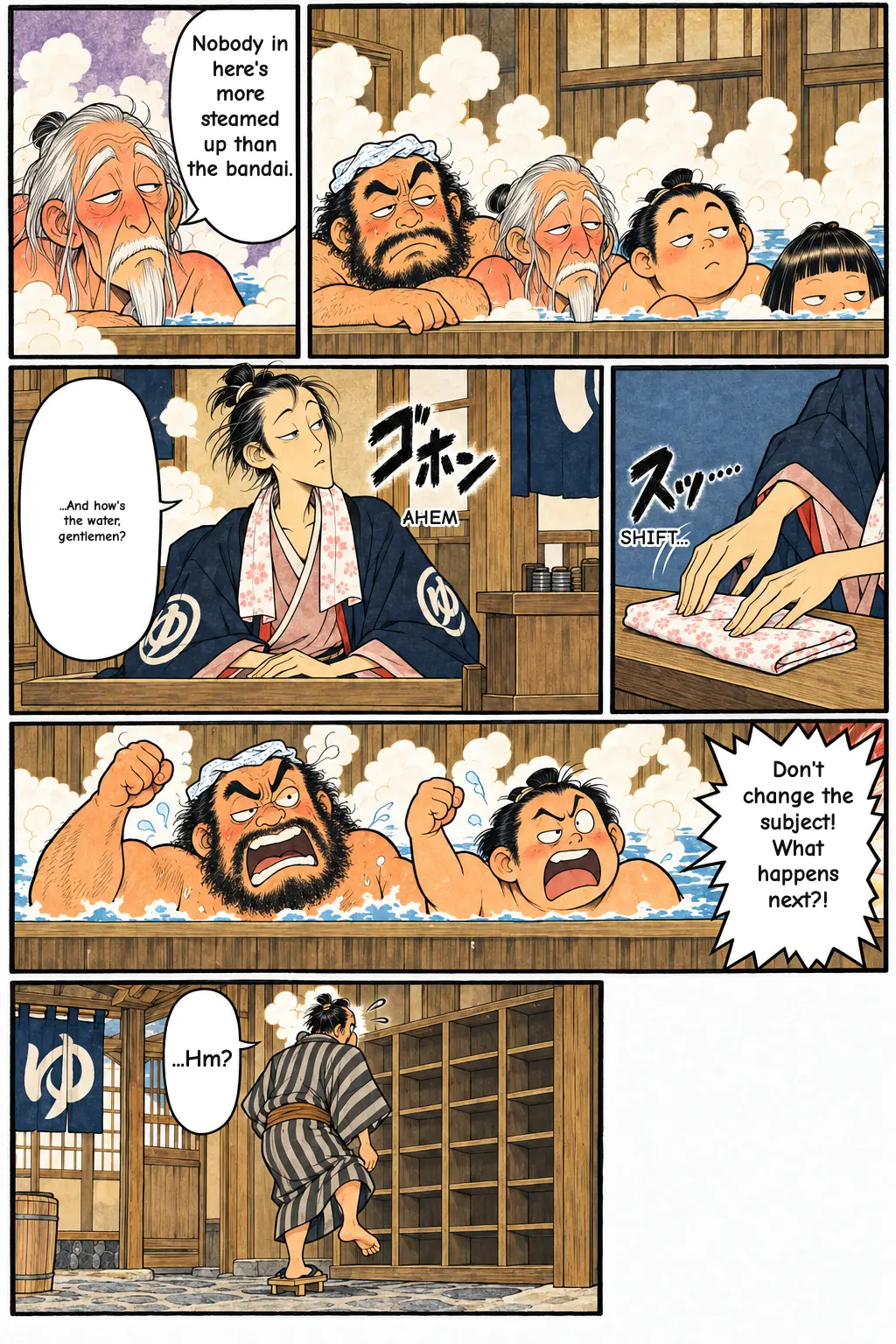
His big moment is a letdown. The women's side is empty, and the men's side is full of customers he finds dull. Bored, he slips into a fantasy. A stylish older woman, the kind Edo audiences called iki (chic and worldly), notices him, sends her maid with an invitation, and welcomes him into her home. Soon he is playing both parts out loud, doing her voice and his own with big gestures. The men in the bath stop washing to watch, laugh, and tease him. When he finally snaps back to reality, a customer heading home tells him his geta (wooden clogs) are gone. The young master's breezy answer to that problem is the punchline, explained further down.
What Is Rakugo?
Rakugo is a Japanese storytelling art in which one performer, called a hanashika, kneels on a cushion and plays every character in the story. The only props are a folding fan (sensu) and a hand towel (tenugui). The fan can turn into chopsticks, a pipe, or a brush, and the towel into a wallet or a letter. A turn of the head and a change of voice show who is talking. Rakugo has been performed in small variety theaters called yose for centuries, and a story usually opens with a casual warm-up talk (makura) and ends on a sharp final line, the ochi or sage. Yuyaban is a good fit for this art, because the hero himself ends up doing a one-man show, playing two people at once, just like a rakugo performer.
Edo Bathhouses and the Bandai: The Background You Need
Most homes in old Edo (today's Tokyo) had no bath of their own, so people went to the neighborhood public bathhouse, the ancestor of the modern sentō. People went to wash, but also to chat and catch up on local gossip. Customers paid a small fee in copper coins at the entrance. The men's and women's sides were divided by a partition.
The bandai was a high seat at the entrance, built so the person sitting there could see both sides. That person took the fees and also kept an eye on clothes and footwear, since theft at bathhouses was a real worry. Customers took off their geta at the door and left them there. So the bandai was a job of trust and attention, not a seat for watching people. That is why the young master's dream of sitting there, and the way he does the job, are funny to a Japanese audience right away.
The disowned young master was also a stock figure in rakugo: charming, useless with money, and sure the world owes him a good time. Audiences laughed at him because they recognized the type.
What the Manga Changed (and What Comes from the Original)
We checked the plot against Meiji-era stenographic transcripts, written records of live performances. The story was performed by San'yūtei En'yū I and printed in Hanakurabe Rakugo Sōsho (1890), then reprinted in the same order in 1908. The performers in these old books all died long ago, by 1930 at the latest. The main events come from that source: the disowned son freeloading at Kuma's, the wife's complaints, the job at the bathhouse, refusing the hard work, the turn at the bandai, the empty women's side, the acted-out fantasy, the laughing audience in the bath, and the missing geta. Our script is our own original writing based on that plot.
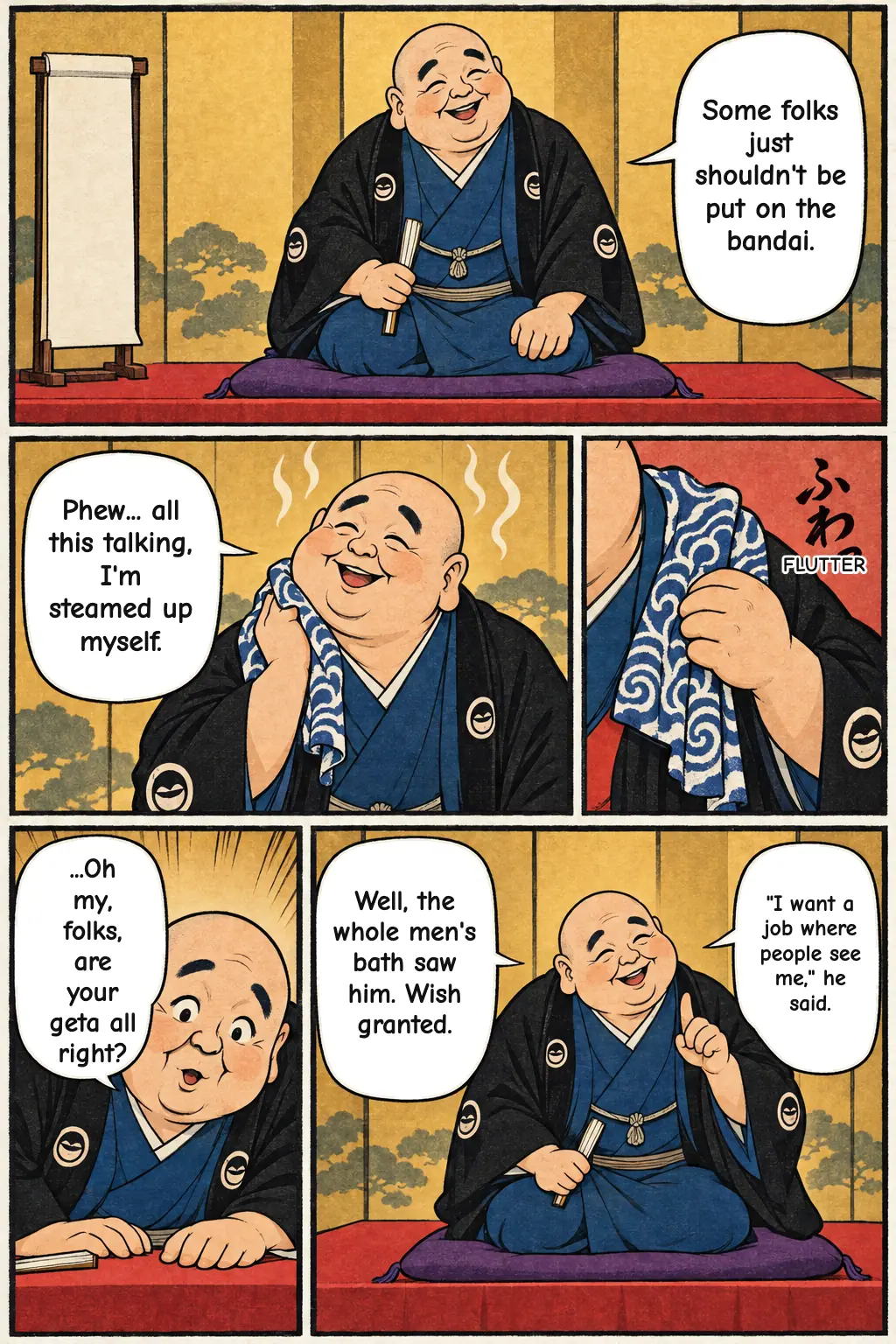
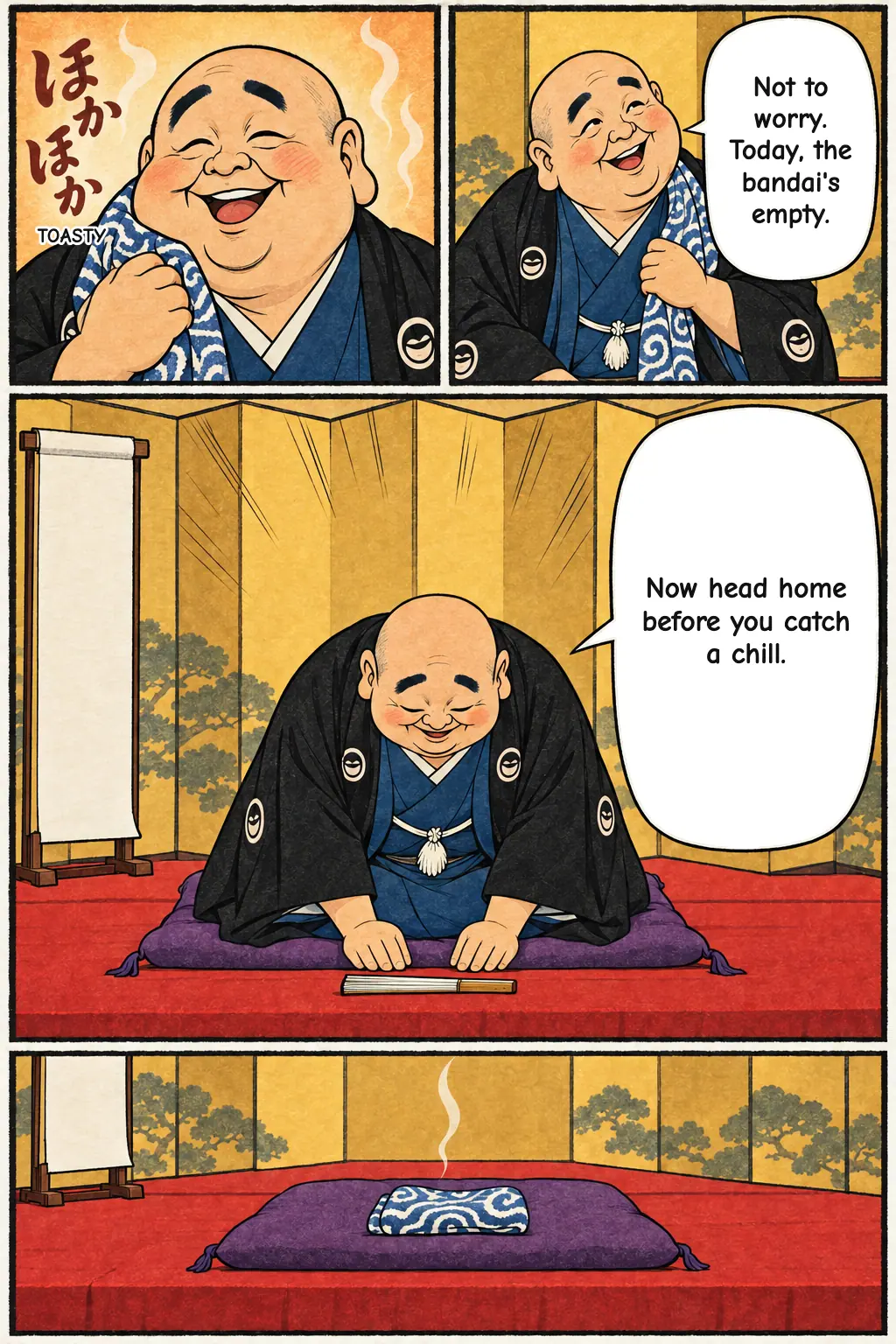
Some things are our own additions. The storyteller who opens and closes the episode, Shōmontei Fukurai, is a fictional narrator made for this series and is not based on any real performer. The young master's looks, the details of Kuma's row house, the design of the bathhouse, and many of the bathers' faces and wisecracks are our inventions. The bathhouse's name in the manga is also our choice. The fantasy is shown in thought bubbles and kept light: rain, thunder, an umbrella, a sitting room. Later performers often add their own small gags, such as a bather so caught up in watching that he slips in the bath. Details like that vary from performer to performer, so treat them as later tradition, not something fixed in the old text.
The Punchline (Ochi/Sage) Explained
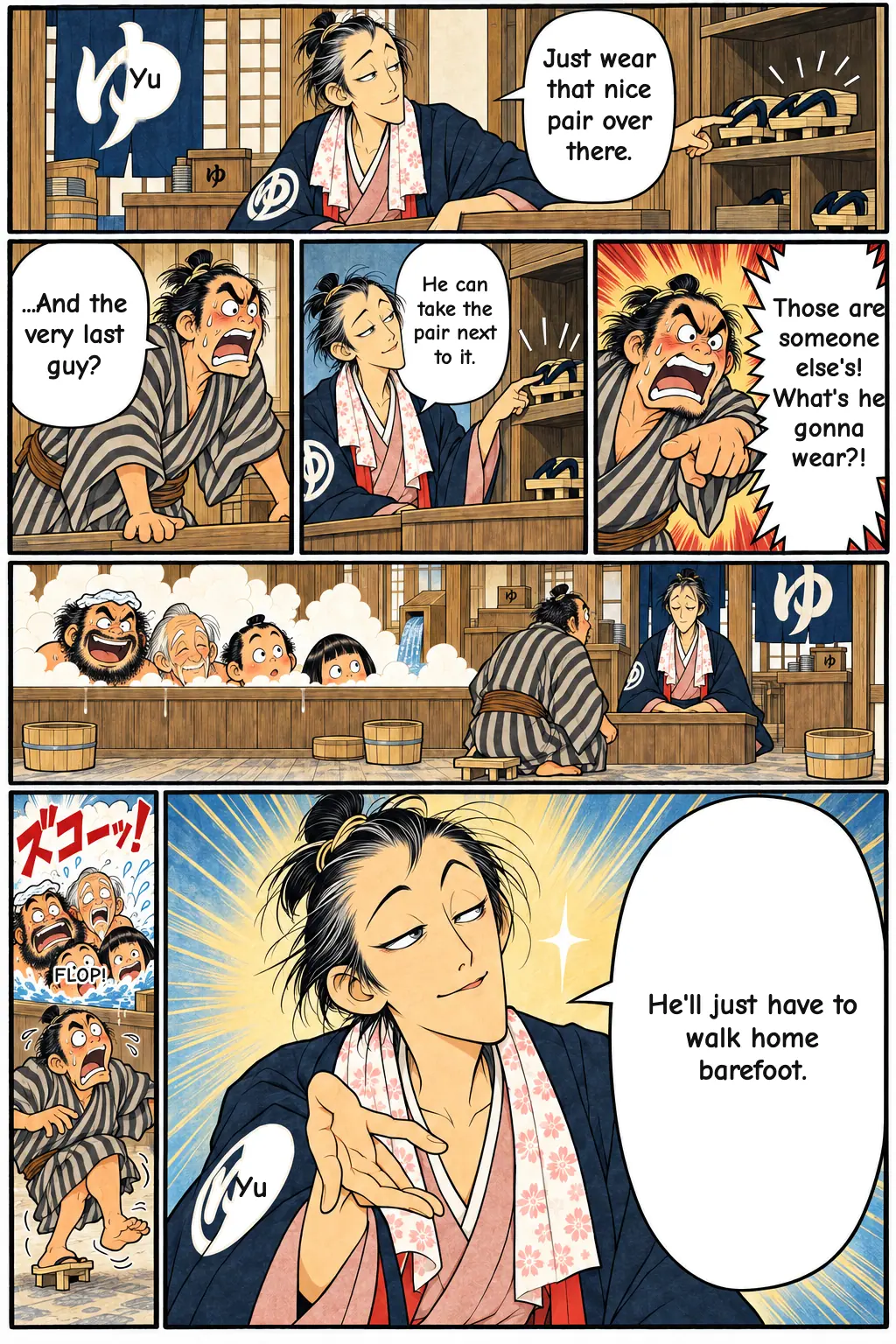
Spoiler warning: read this after the manga. A customer says his geta are missing. Watching the footwear was part of the bandai job, and someone walked off with this pair while the attendant was busy playing lovers. Instead of apologizing, the young master tells him to just wear someone else's pair. In versions that follow this idea, he points to a nice pair, perhaps the one belonging to whoever sits at the desk. The exact wording of the last line changes from performance to performance. One well-known form takes the idea to its end: each customer wears the next person's geta, and the very last one goes home barefoot.
The joke works on two levels. First, his daydream has already ruined the one job he begged for. Second, his "solution" is pure young-master logic: hand out other people's property and pass the problem down the line, as if no one will mind. Anyone who knows that a bathhouse attendant's job included watching shoes sees the whole disaster in that one line.
Where to Read Yuyaban as a Manga
Yuyaban is Episode 11 of RAKUGO: Japan's Comic Tales on Manga Portal. You get the bathhouse, the over-the-top one-man romance, and a crowd of bathers who can't look away. Every episode is free to read, and you don't need an account. If you enjoy this one, the series has more classic rakugo stories, each with a short guide like this one.
Characters in this episode
The Young Master (Wakadanna)
A merchant's son disowned for his partying, who hates hard work, longs to sit at the bathhouse desk, and gets lost in a romantic fantasy he acts out loud.
Kuma (Kumagorō)
A kind craftsman who used to work for the young master's family, lets him stay upstairs, and finds him a job at a bathhouse.
Kuma's Wife
Kuma's practical wife, who can't stand the lazy freeloader lying around her home.
The Bathhouse Owner
Kuma's acquaintance, who takes the young master on and leaves him at the front desk while he goes to eat.
The Men in the Bath
Ordinary customers who end up as the audience for the young master's one-man show, and one of whom discovers his geta are gone.
Shōmontei Fukurai
A fictional rakugo storyteller created for this manga series, who opens and closes the episode.
FAQ
What is Yuyaban about?
Yuyaban (The Bathhouse Attendant) is a classic rakugo comedy about a disowned young master who gets a job at a public bathhouse. Left alone at the high front desk, he acts out a romantic fantasy loudly in front of the men's bath. Meanwhile, a customer's geta go missing.
What is a bandai in a Japanese bathhouse?
The bandai is a raised seat at the entrance of a traditional public bathhouse, built so the attendant can see both the men's and women's sides. The person sitting there takes the entrance fee and keeps watch over customers' belongings, including the shoes left at the door.
What is the ending of Yuyaban?
When a customer says his geta are missing, the young master casually tells him to wear someone else's pair. The exact final line varies by performance. One well-known version has every customer wearing the next person's geta until the last one goes home barefoot.
Who performed Yuyaban in the Meiji era?
A Meiji-era version performed by San'yūtei En'yū I was written down and published in the 1890 collection Hanakurabe Rakugo Sōsho. The manga's plot was checked against this transcript.
Is the storyteller in the manga a real rakugo performer?
No. Shōmontei Fukurai is a fictional narrator created for the RAKUGO: Japan's Comic Tales series and is not based on any real person.