Episode 10He Forgot the Message. The Cure? A PinchSokotsu no Shisha (The Absent-Minded Messenger)
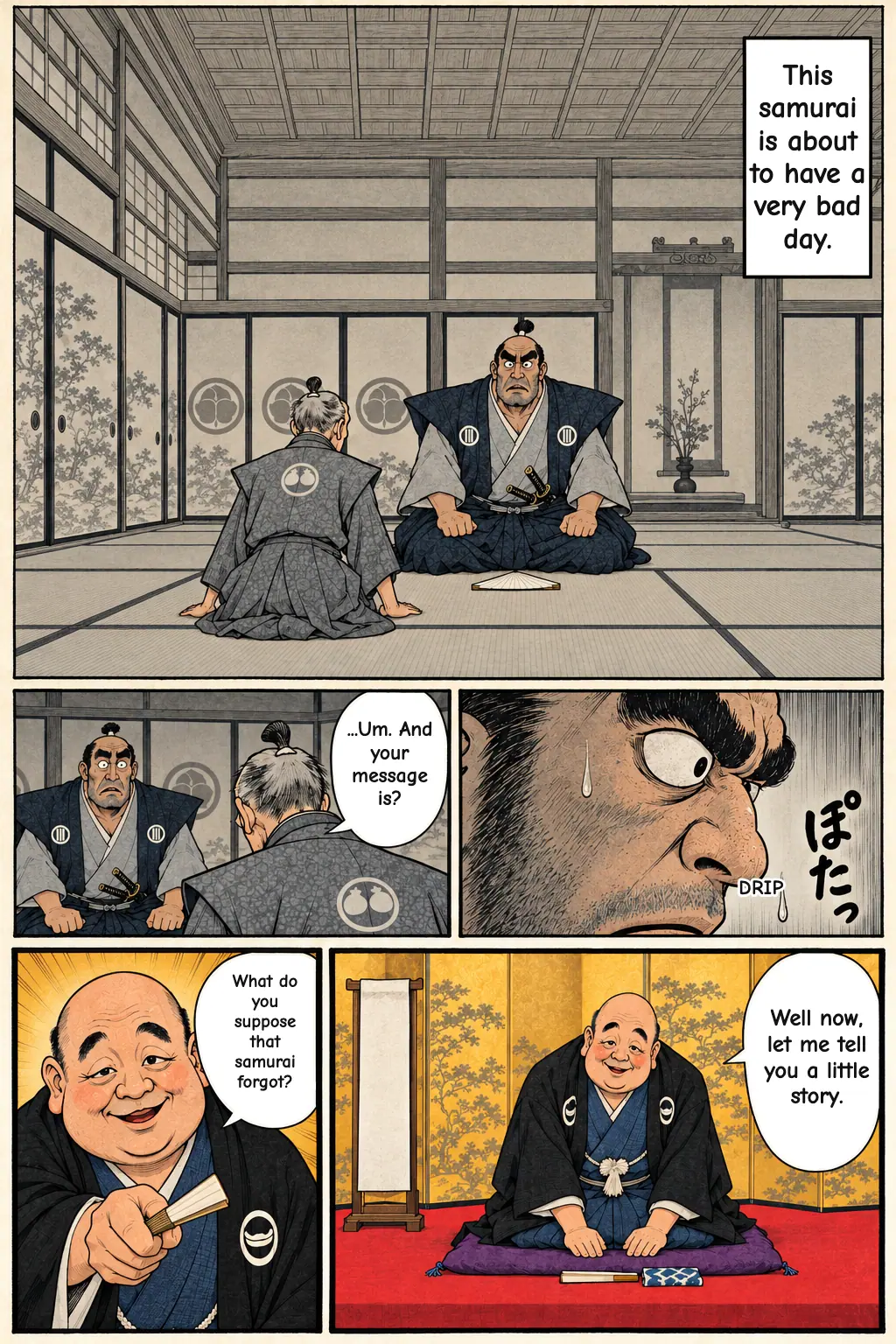
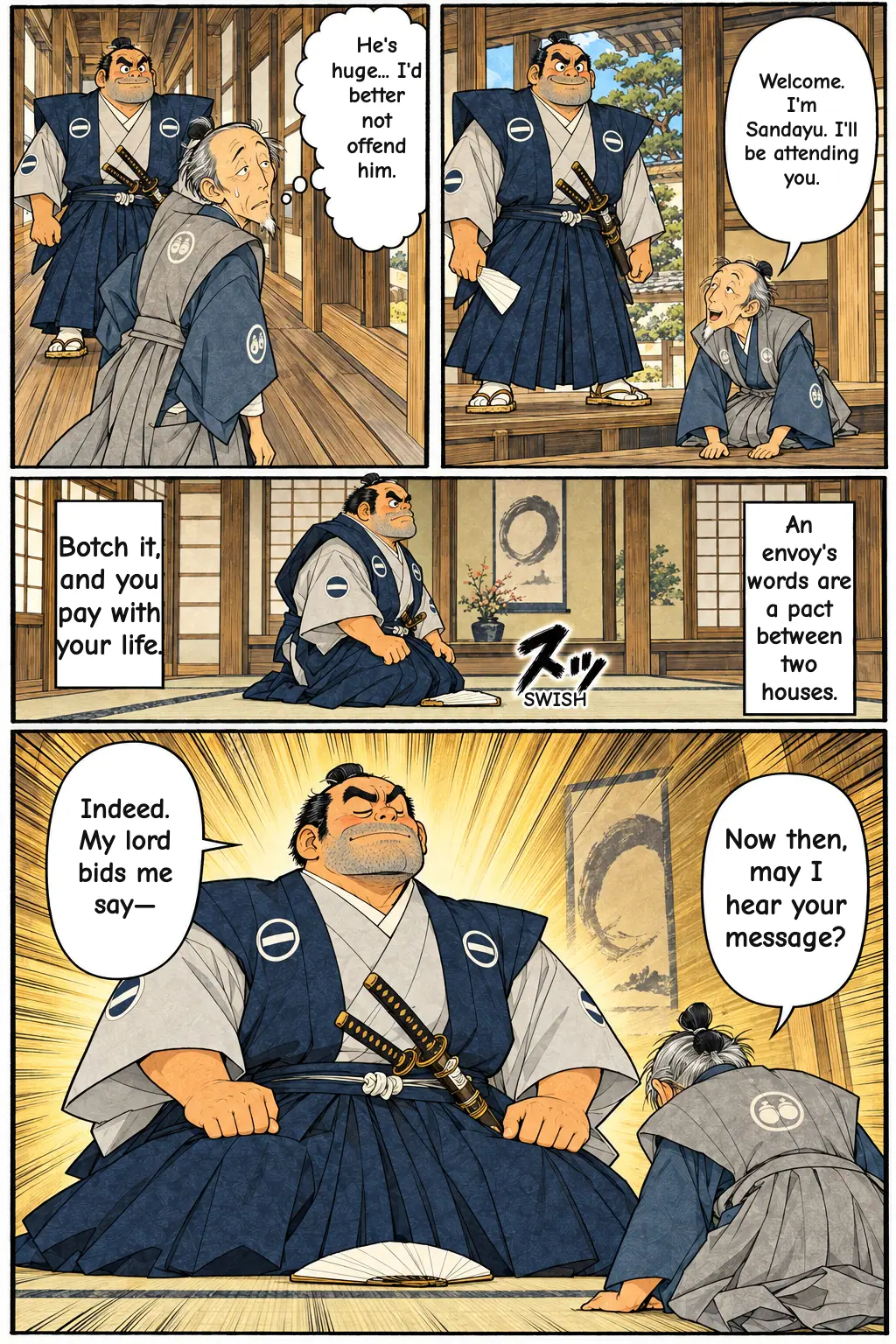
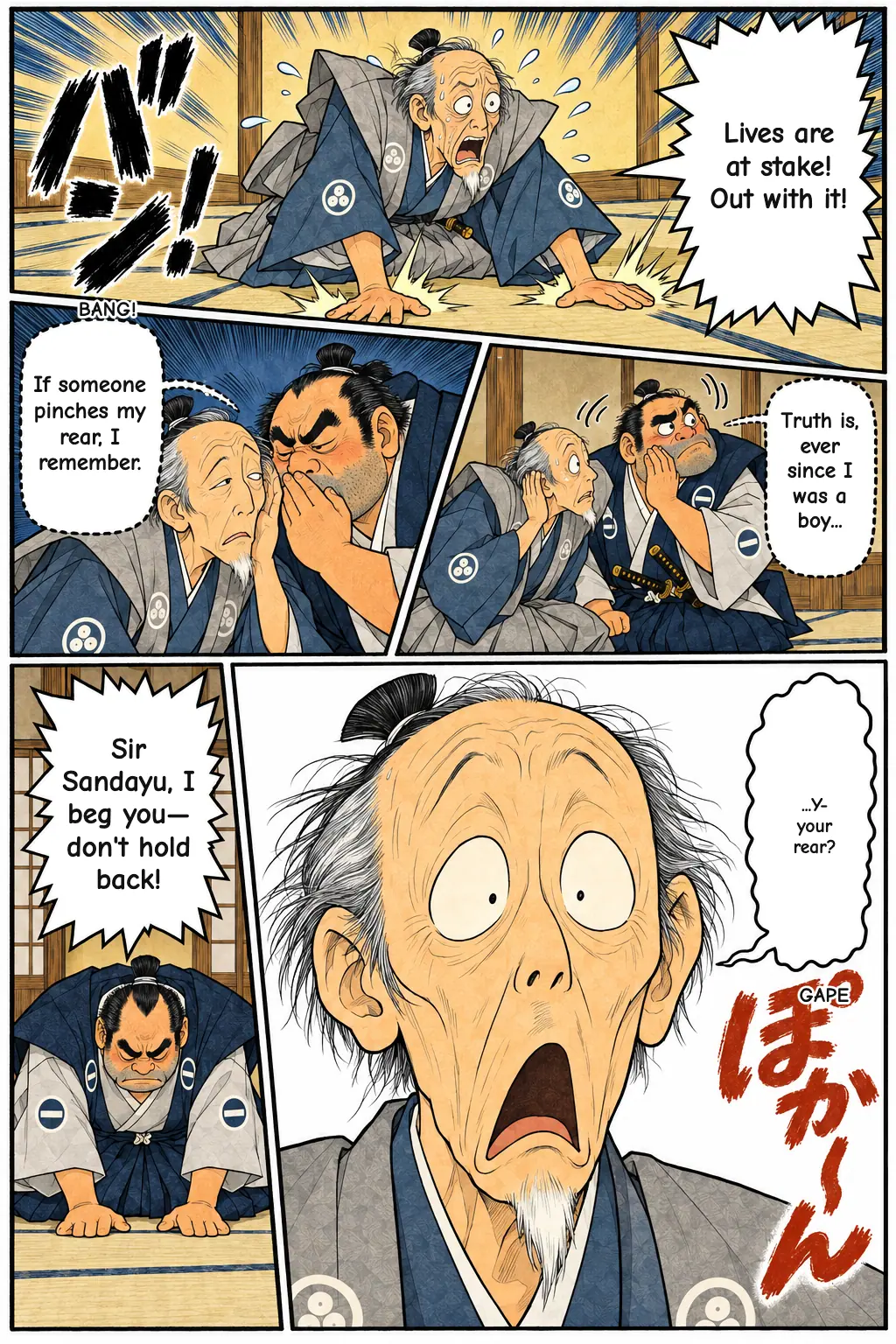
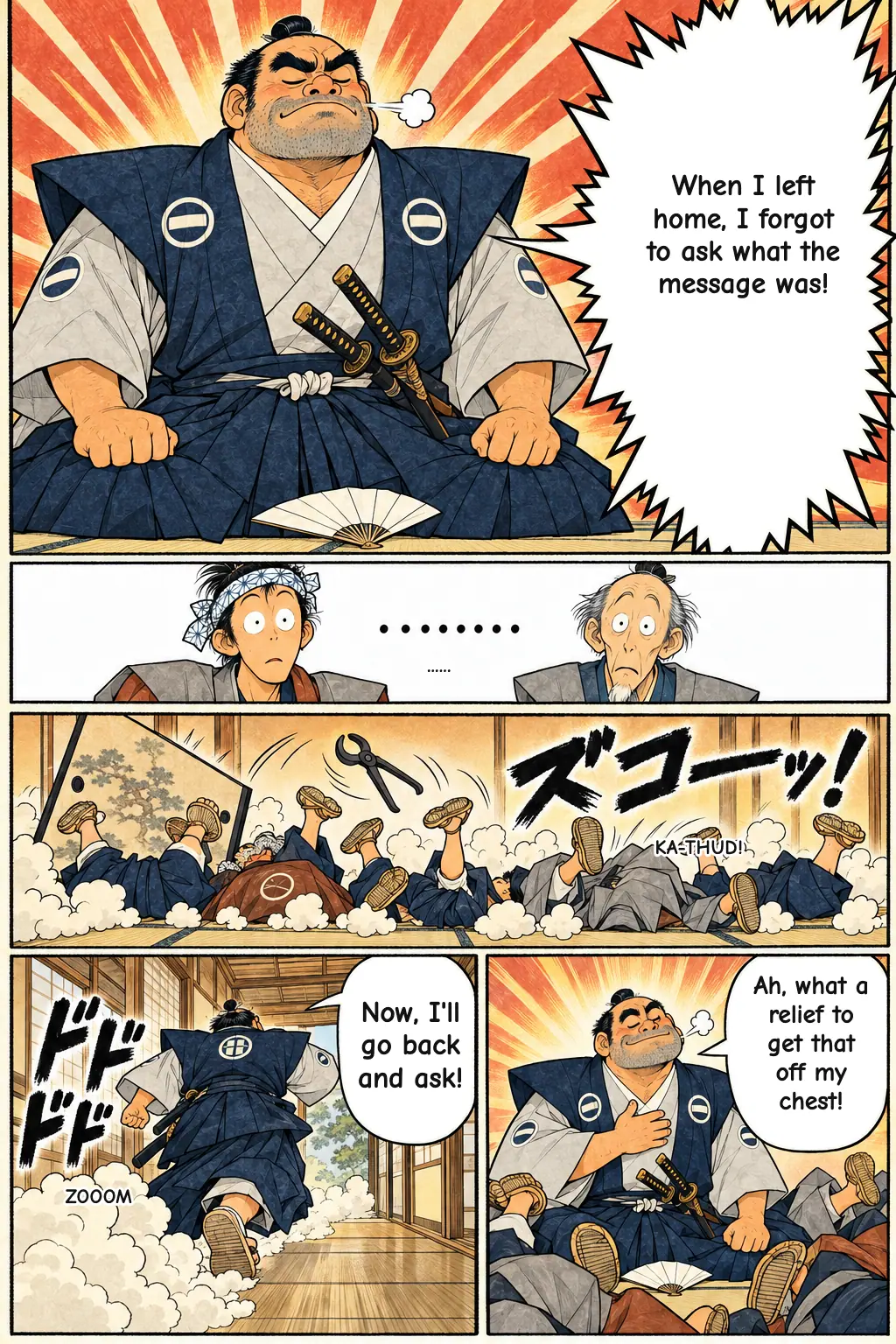
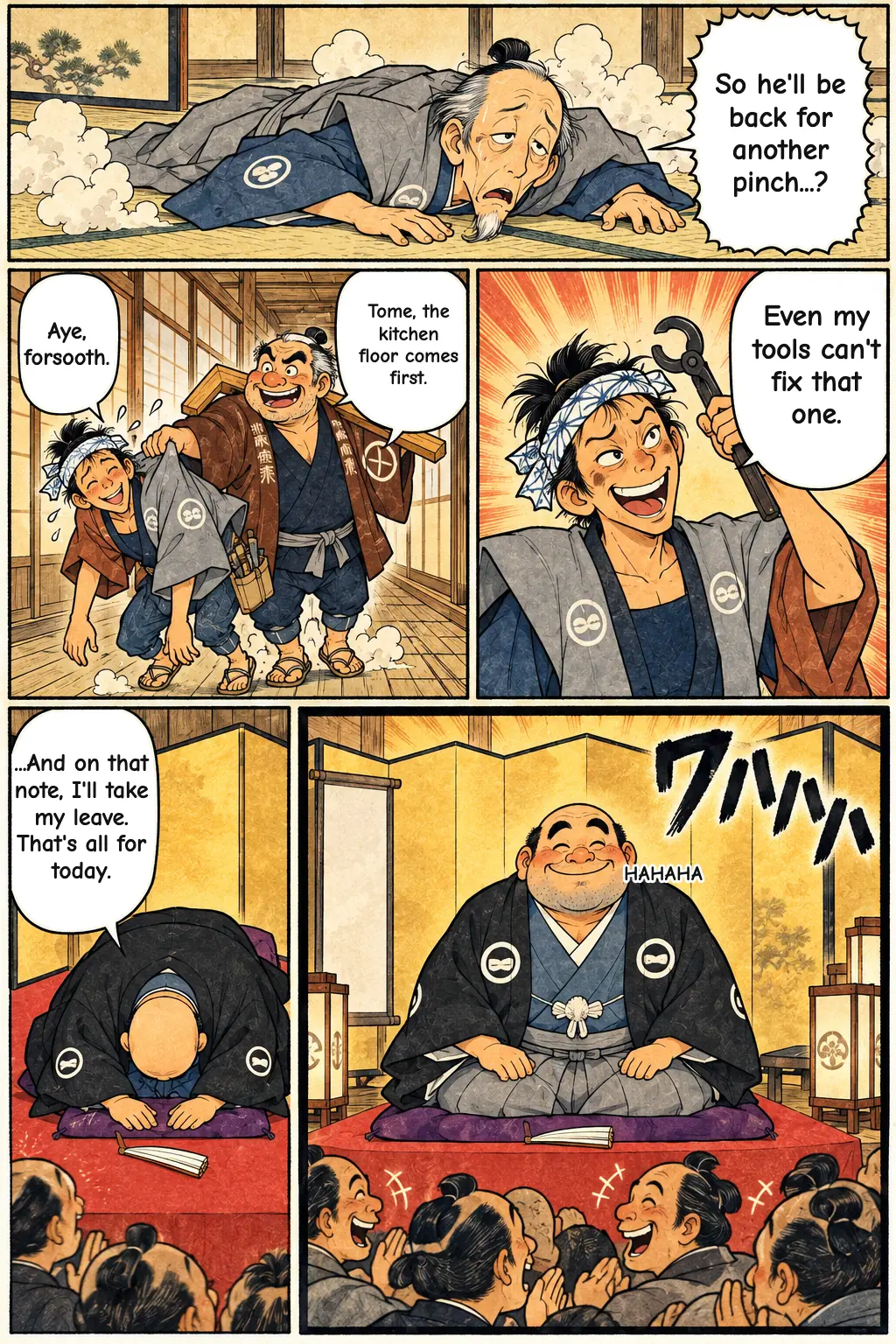
Episode 10 of RAKUGO: Japan's Comic Tales. Jibuta Jibuemon is a mighty swordsman and a hopeless scatterbrain. Sent by his lord as an envoy, he arrives at another lord's house and forgets the message he came to deliver. There's only one way to jog his memory: someone has to pinch his rear. Tanaka Sandayu's fingers can't get a grip on him, so Tome the Carpenter steps up with a tool in hand...
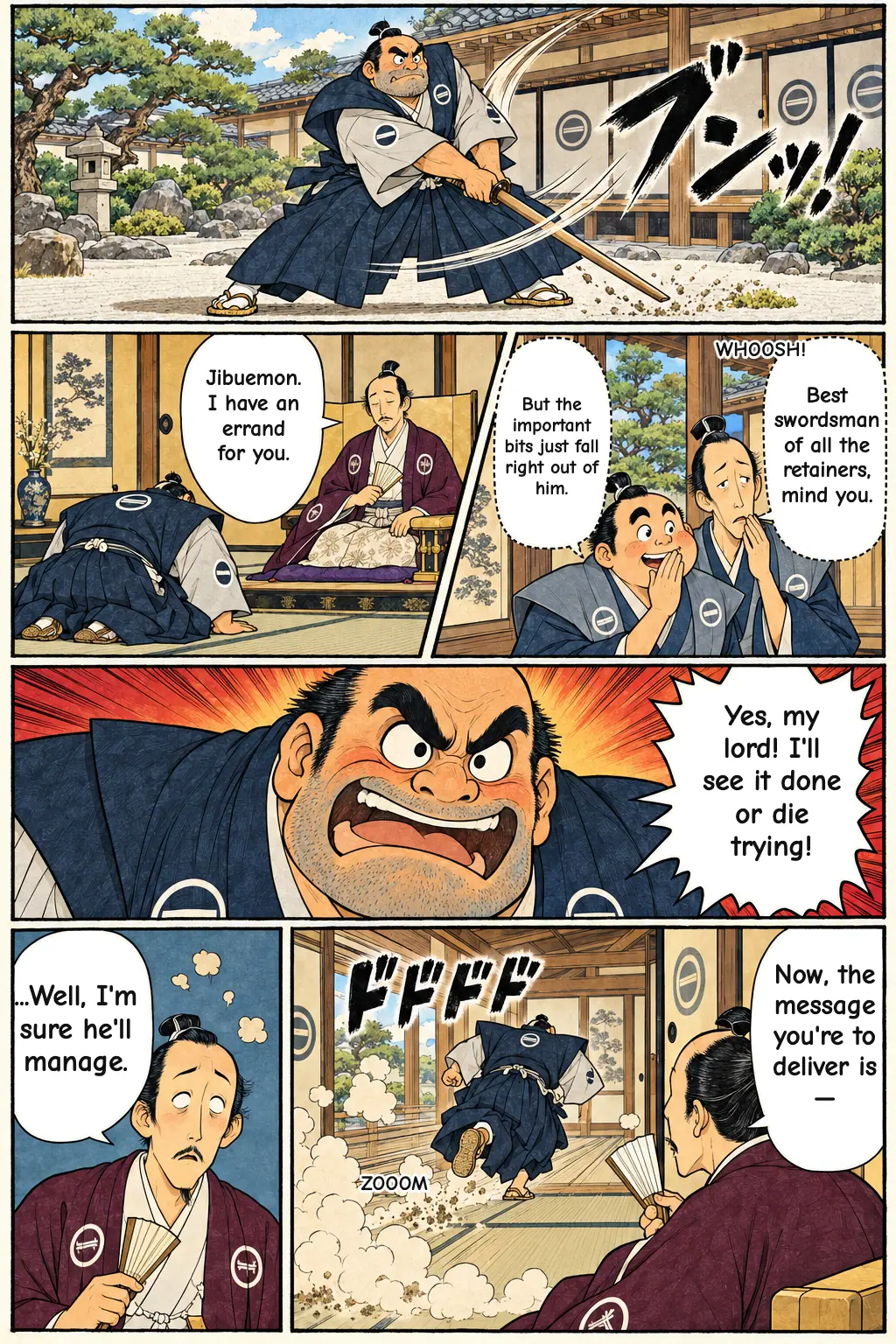
Sokotsu no Shisha, usually translated as "The Absent-Minded Messenger" or "The Forgetful Messenger," is a classic rakugo comic tale. The word sokotsu means careless or scatterbrained, and shisha means an envoy. The title gives away the hero's flaw before the story even starts. The hero is Jibuta Jibuemon, a retainer of a feudal lord (a daimyo). He is rough-mannered and fiercely loyal, but famously forgetful. One day his lord sends him as an official envoy to another daimyo's mansion.
Sokotsu no Shisha (The Absent-Minded Messenger): Rakugo Story Summary & Punchline
The Story of Sokotsu no Shisha (Plot Summary)
Sokotsu no Shisha, usually translated as "The Absent-Minded Messenger" or "The Forgetful Messenger," is a classic rakugo comic tale. The word sokotsu means careless or scatterbrained, and shisha means an envoy. The title gives away the hero's flaw before the story even starts.
The hero is Jibuta Jibuemon, a retainer of a feudal lord (a daimyo). He is rough-mannered and fiercely loyal, but famously forgetful. One day his lord sends him as an official envoy to another daimyo's mansion. A retainer of that house receives him politely, shows him into a formal reception room, and waits to hear the message (the kōjō, the formal spoken message an envoy delivers on his lord's behalf).
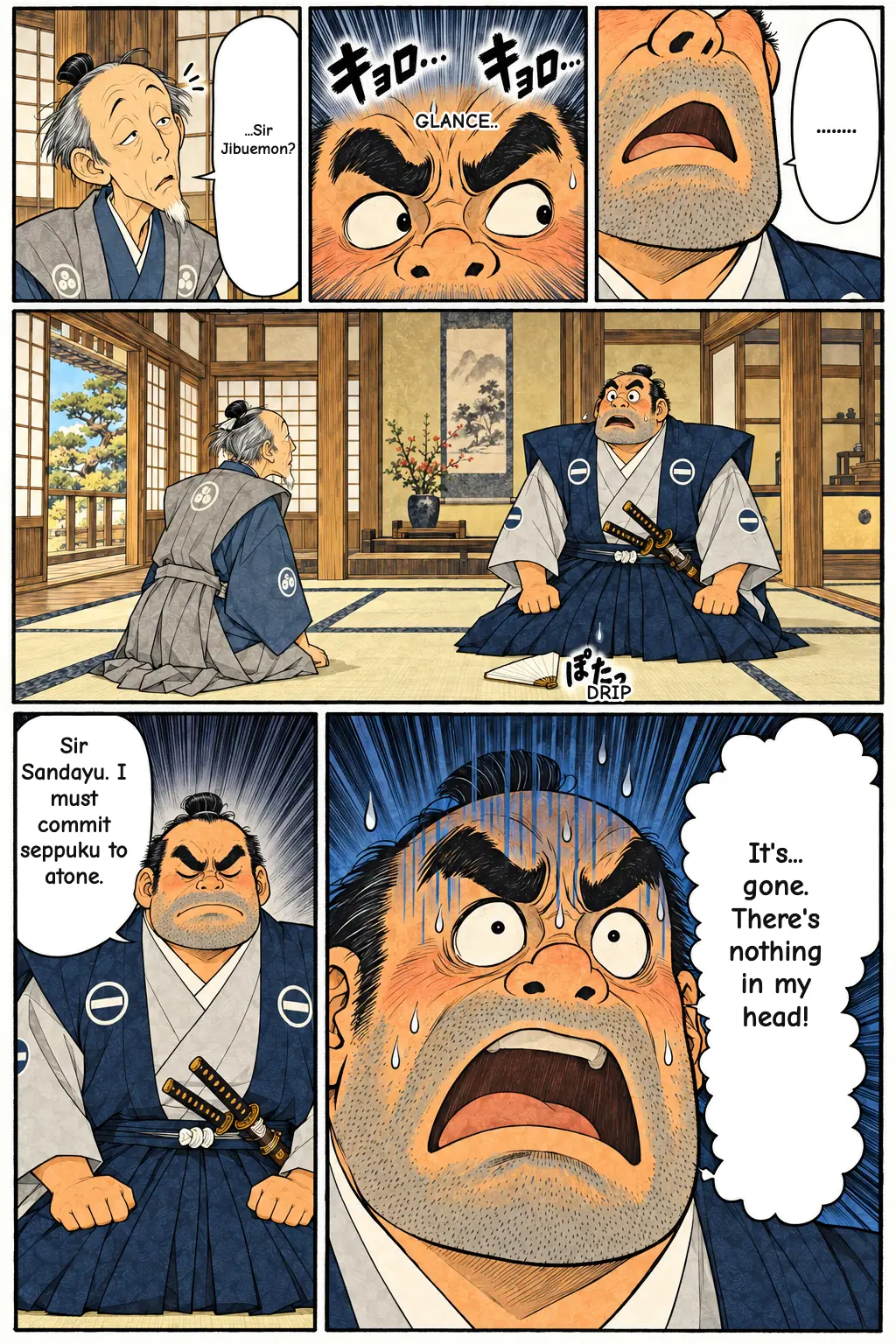
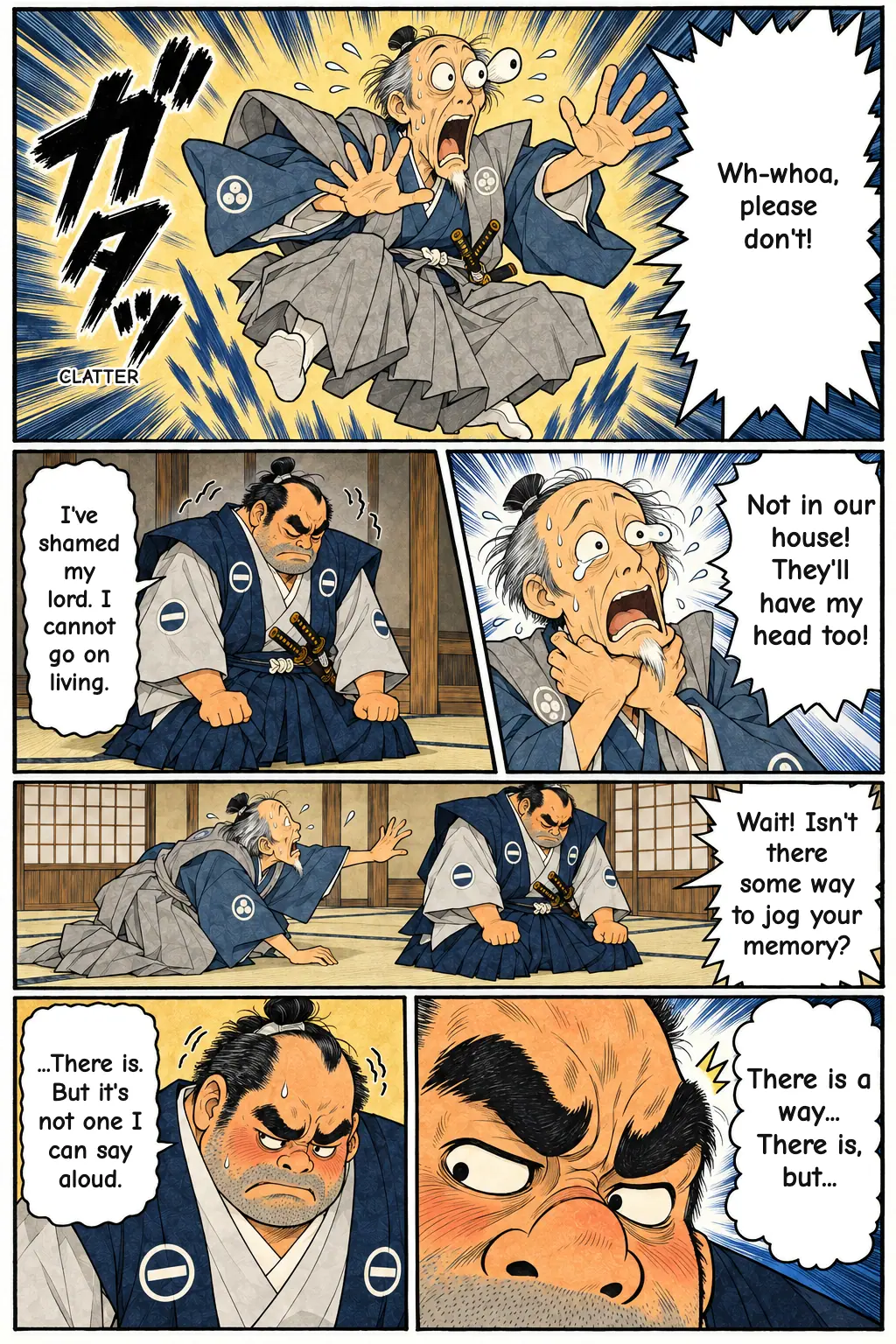
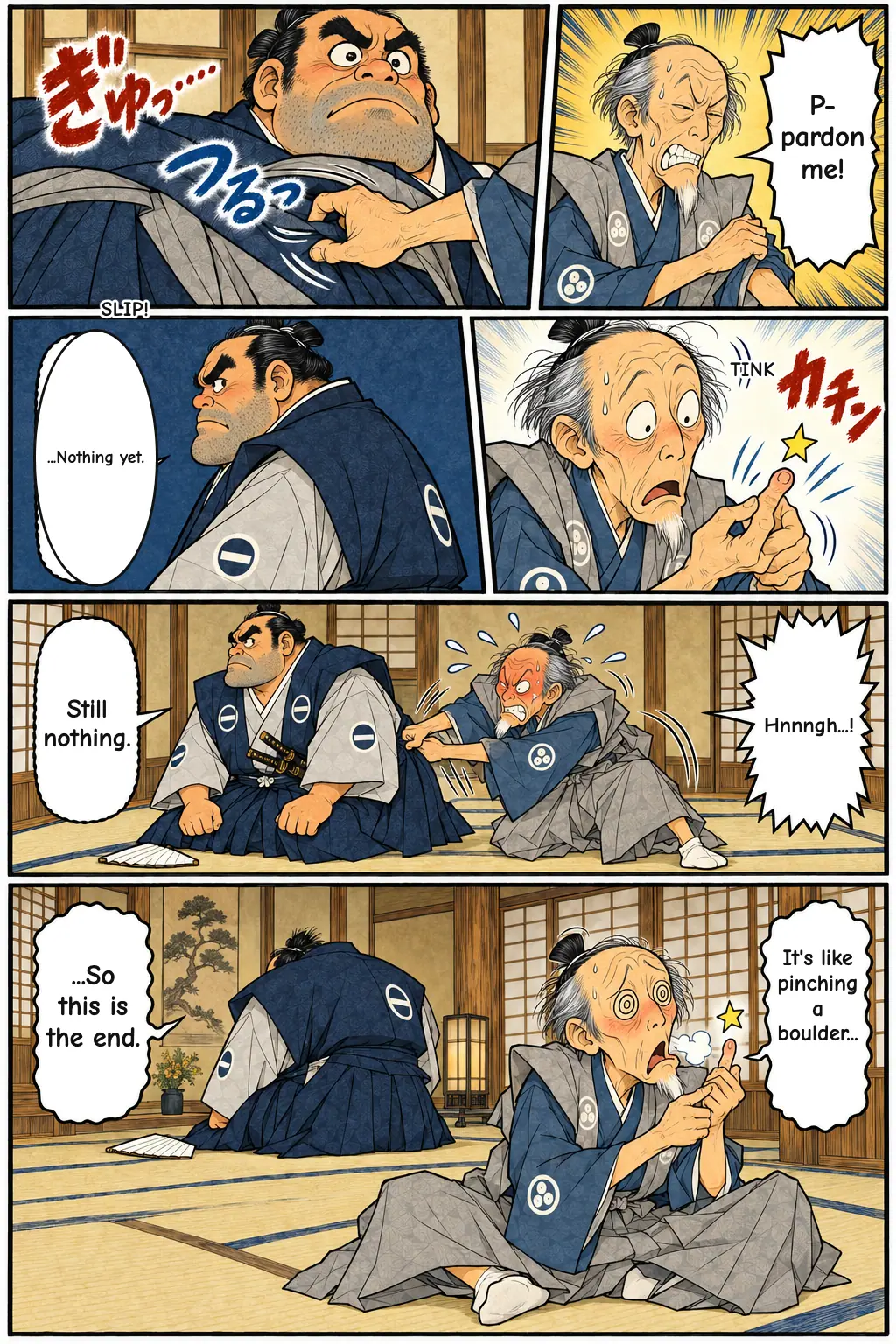
Jibuemon opens his mouth and realizes he cannot remember a single word of it. For a samurai on official duty this is a disaster, and he decides that if he cannot deliver the message, he will have to cut open his belly. Then he admits an odd secret: ever since childhood, being pinched on the backside has helped him remember things. The host's retainer pinches him with all his might, but Jibuemon's rear is as tough as his sword arm, and nothing happens.
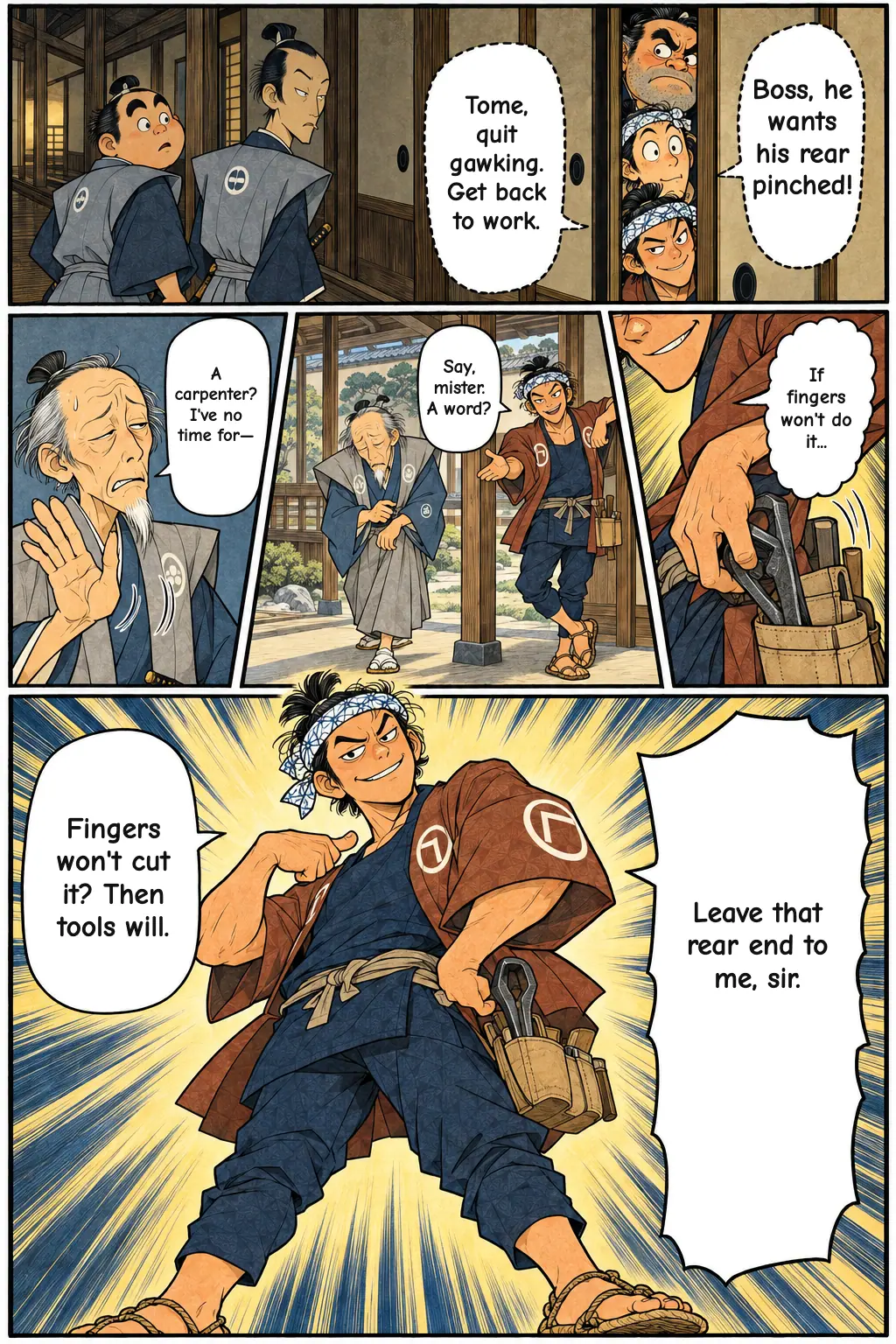
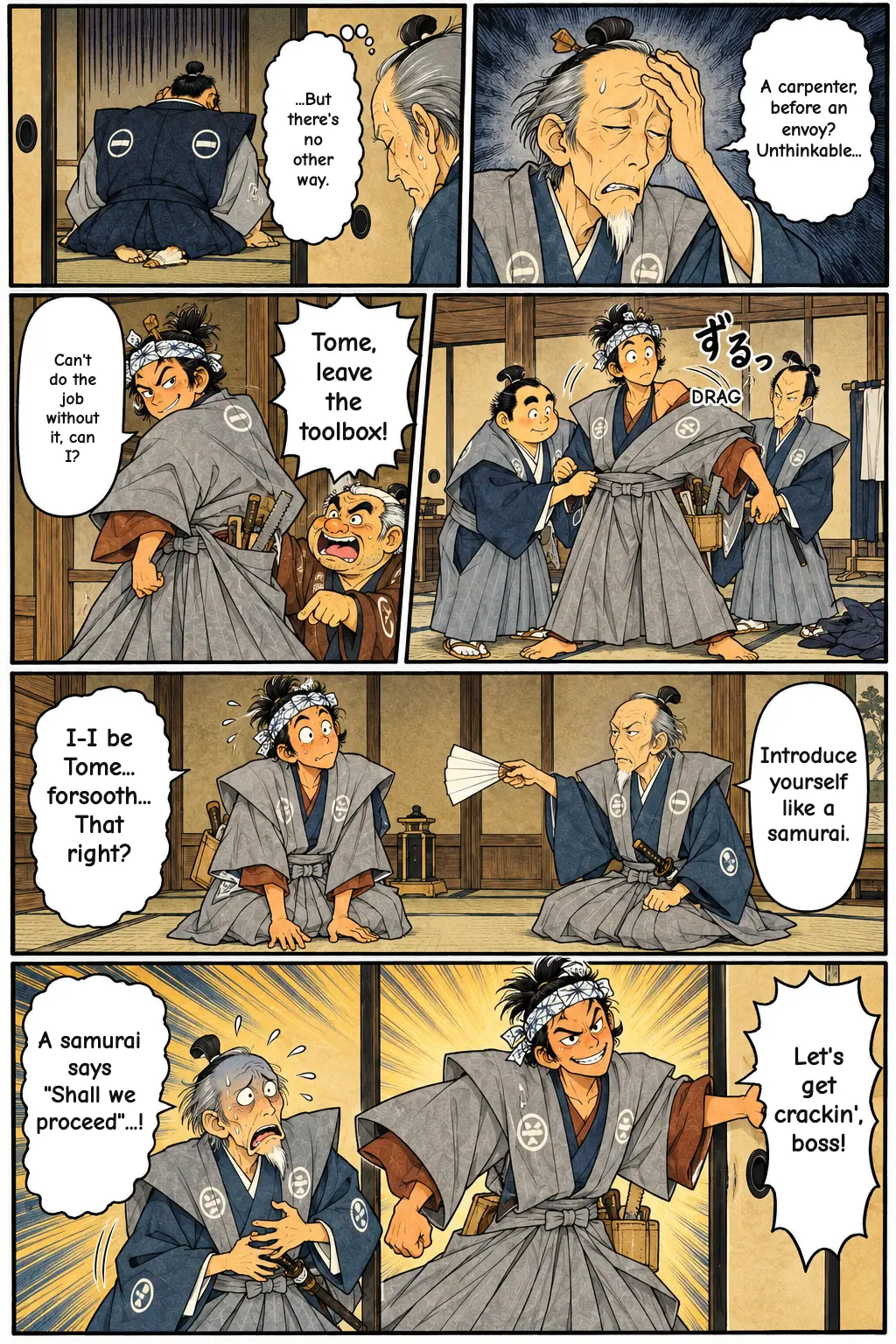
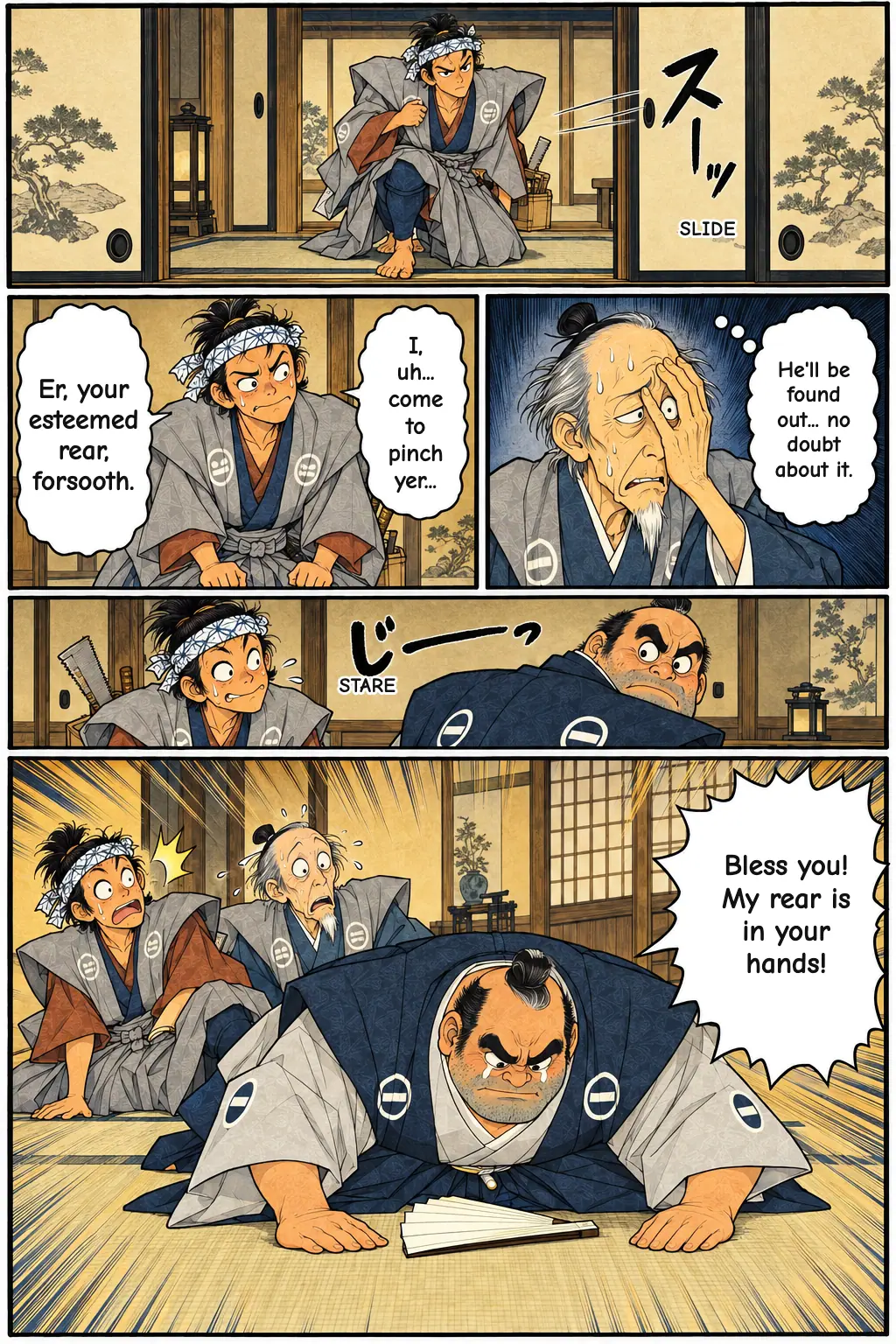
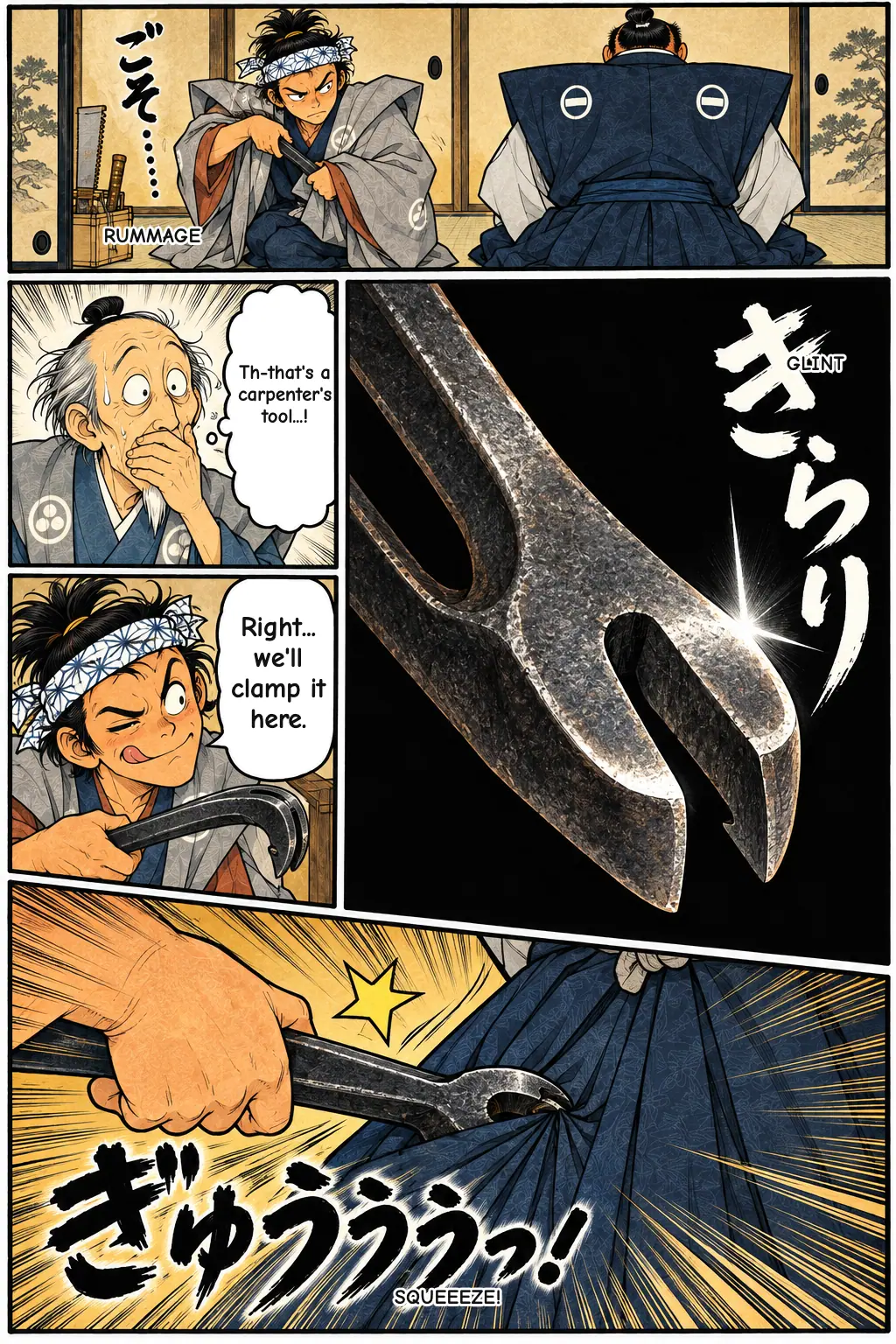
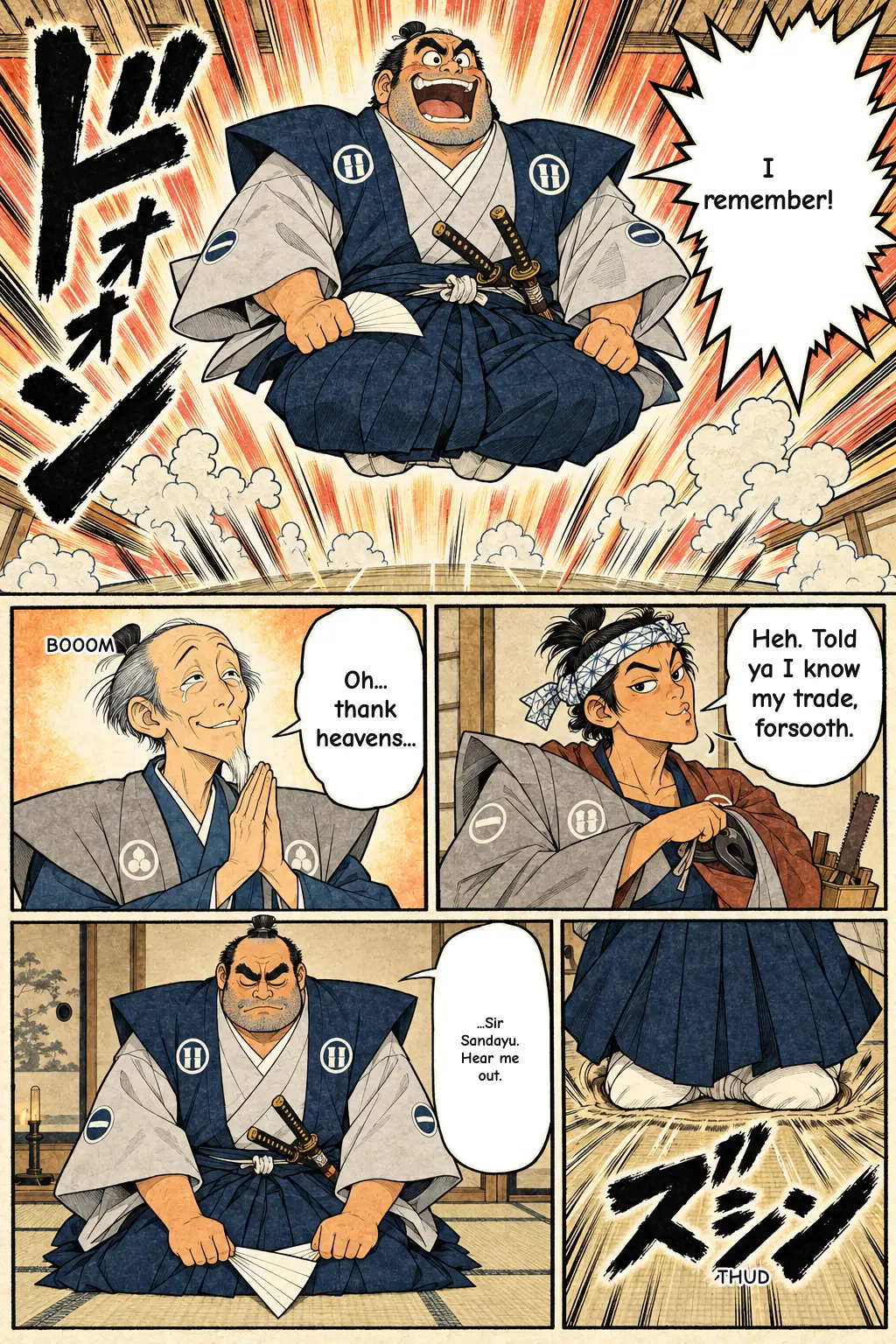
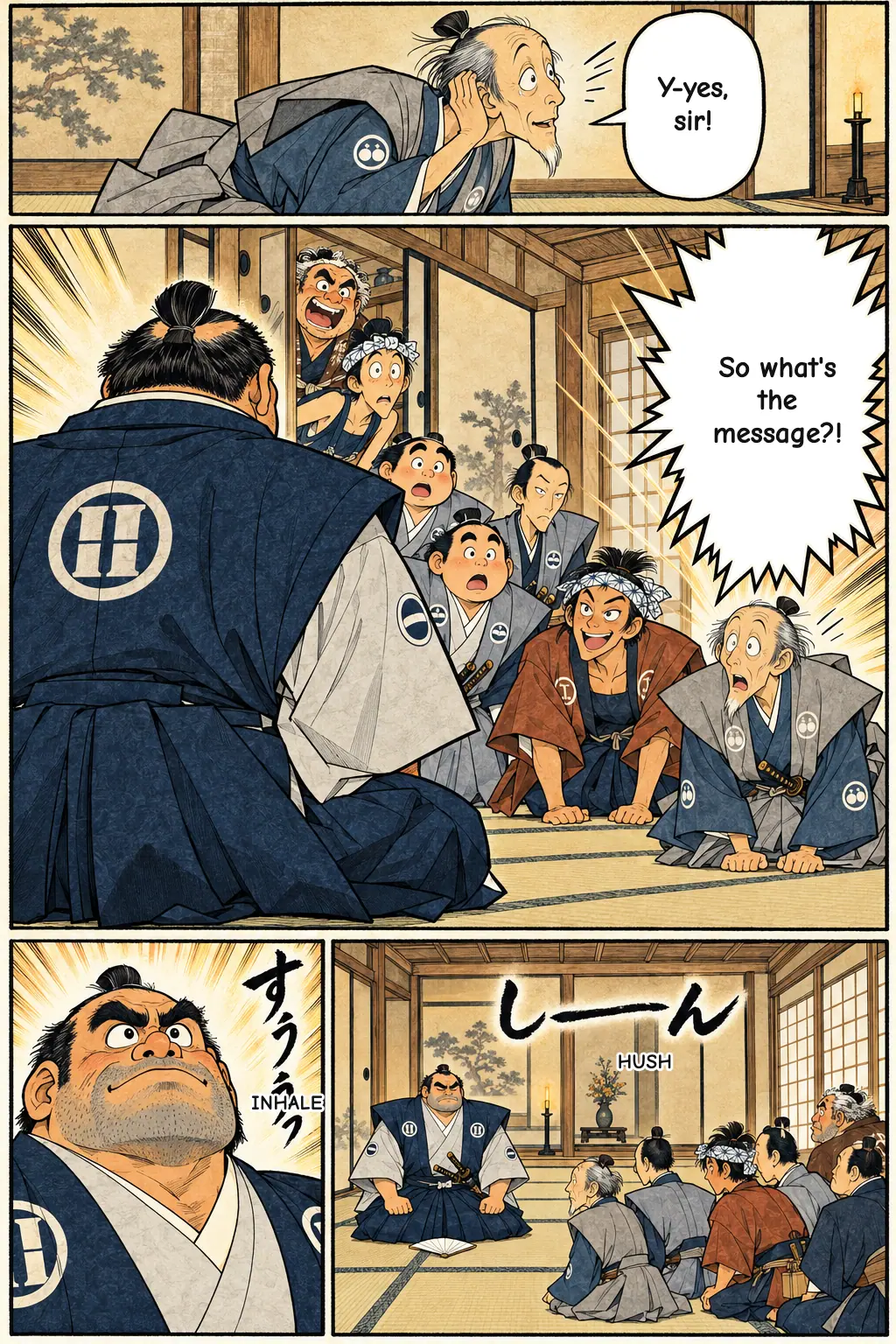
A carpenter named Tome, who is working at the mansion, overhears the problem and offers to try. A craftsman can't simply walk in on an envoy, so Tome is dressed as a samurai, and his rough city speech keeps slipping out from under his borrowed formal manners. Hidden in his clothes is a carpenter's nail puller. He clamps it on Jibuemon's backside and twists. Jibuemon leaps up and shouts, "I remember!" Everyone leans in to hear the message, and the punchline follows (explained further down, after you've read the manga).
What Is Rakugo?
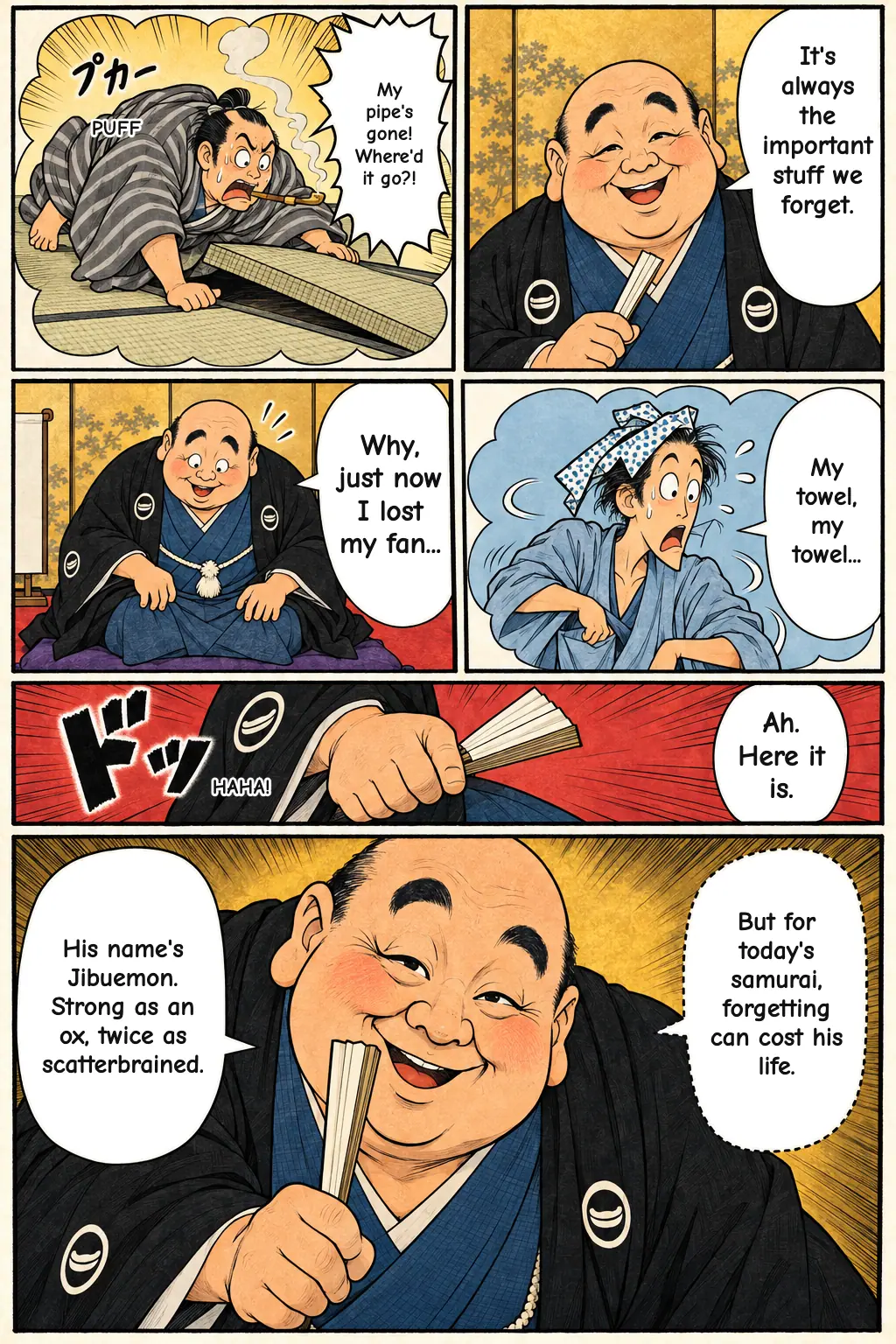
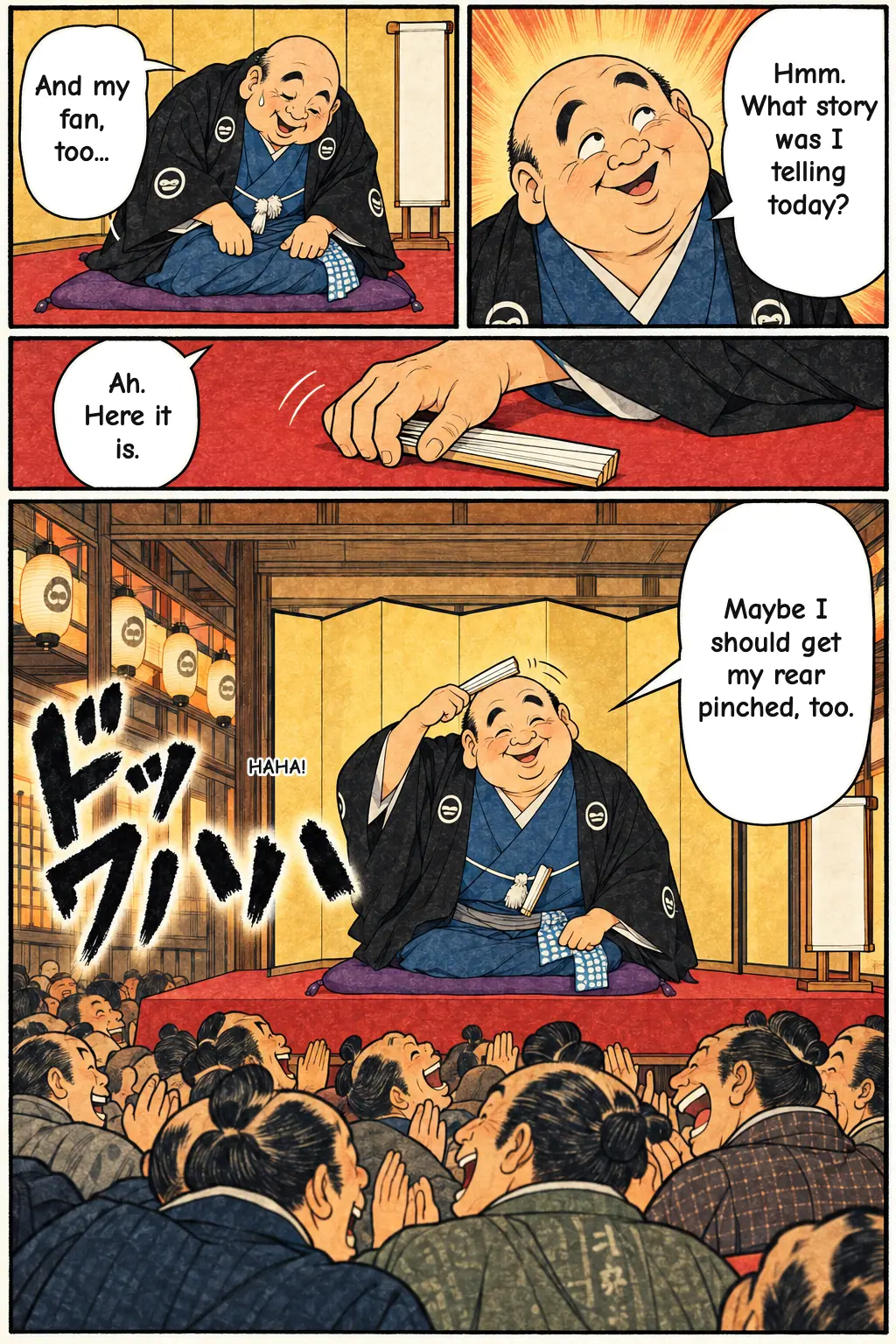
Rakugo is a Japanese storytelling art that has been performed for several hundred years and is still alive today in small variety theaters called yose. A single storyteller (a hanashika) kneels on a cushion on a raised stage and plays every character alone, using only a folding fan and a hand towel as props. The fan can turn into a sword, a pipe, or chopsticks, and a turn of the head is enough to switch from a stiff samurai to a cheeky carpenter. A performance usually opens with a short warm-up called the makura and ends on a punchline called the ochi or sage. In our manga, the storyteller who opens and closes each episode, Shōmontei Fukurai, is a fictional narrator created for this series. He is not based on any real performer.
Samurai Honor and the Envoy's Duty
The joke works because of how serious this job was. In the Edo period (1603–1868), lords sent messages to each other through trusted retainers, and the envoy spoke for his master. Samurai cared deeply about face and reputation, so arriving on an official errand and failing to state your business was a real disgrace, for yourself and for your lord. That is why Jibuemon jumps straight to the idea of ritual suicide. The audience knows the stakes are absurd for a forgotten message, and the gap between deadly samurai seriousness and a pinch on the bottom is where much of the laughter comes from.
There is a class joke too. Tome is a craftsman from the city's working class, a type known for quick tempers and blunt talk. Making him play a samurai, with his tool box and his rough words poking out, puts the two worlds of Edo side by side. The nail puller he uses is commonly nicknamed enma, after Enma, the king of the underworld; it is often said the name comes from his tongs for pulling out liars' tongues.
How the Manga Adapts the Story
We checked the plot against early printed transcripts of live performances, published in 1910: one by Kokontei Imasuke III (died 1924) and one by San'yūtei En'yū I (died 1907), both held by Japan's National Diet Library. The core events above, from the forgotten message to the nail puller and the final line, follow those versions. The script itself is our own.
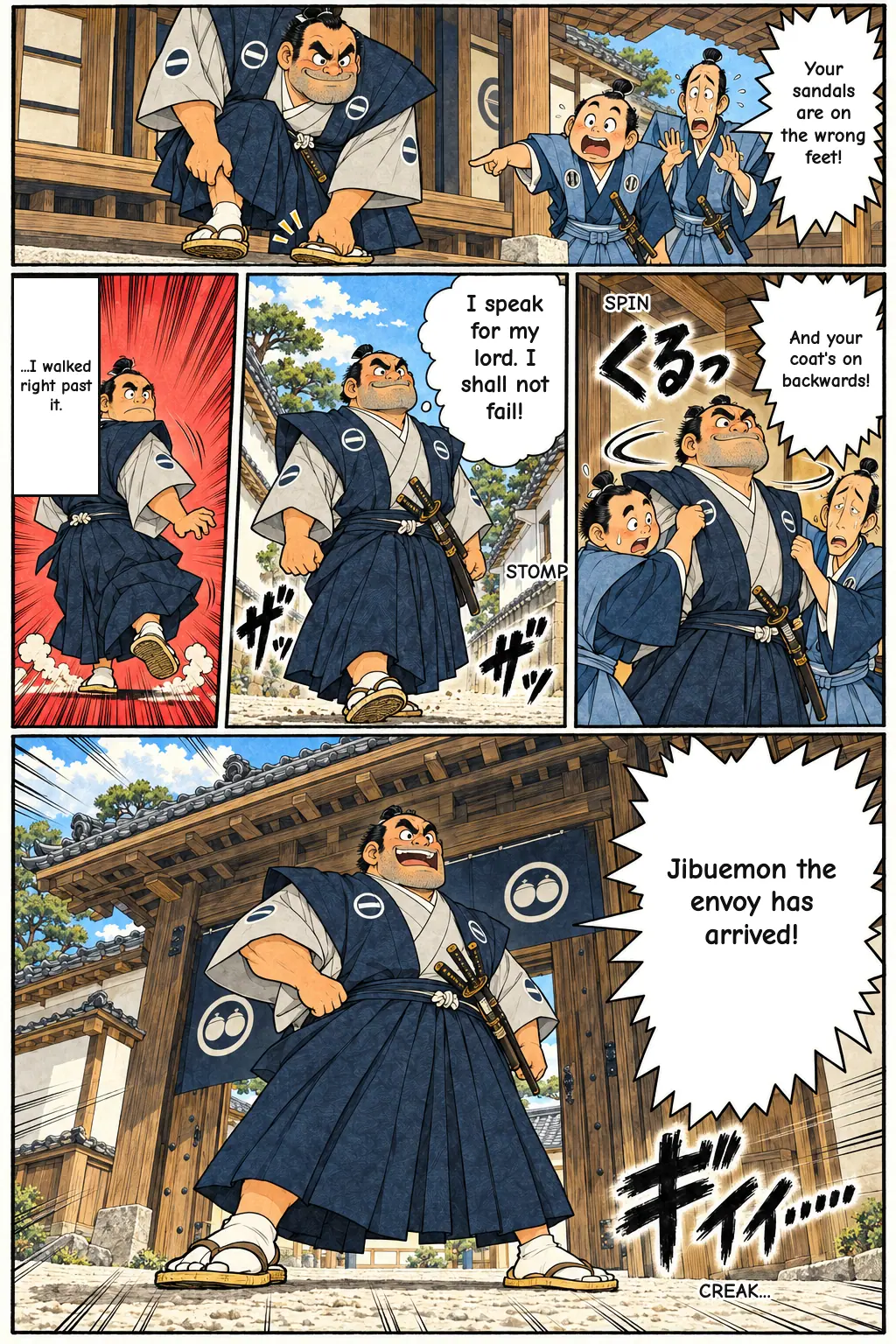
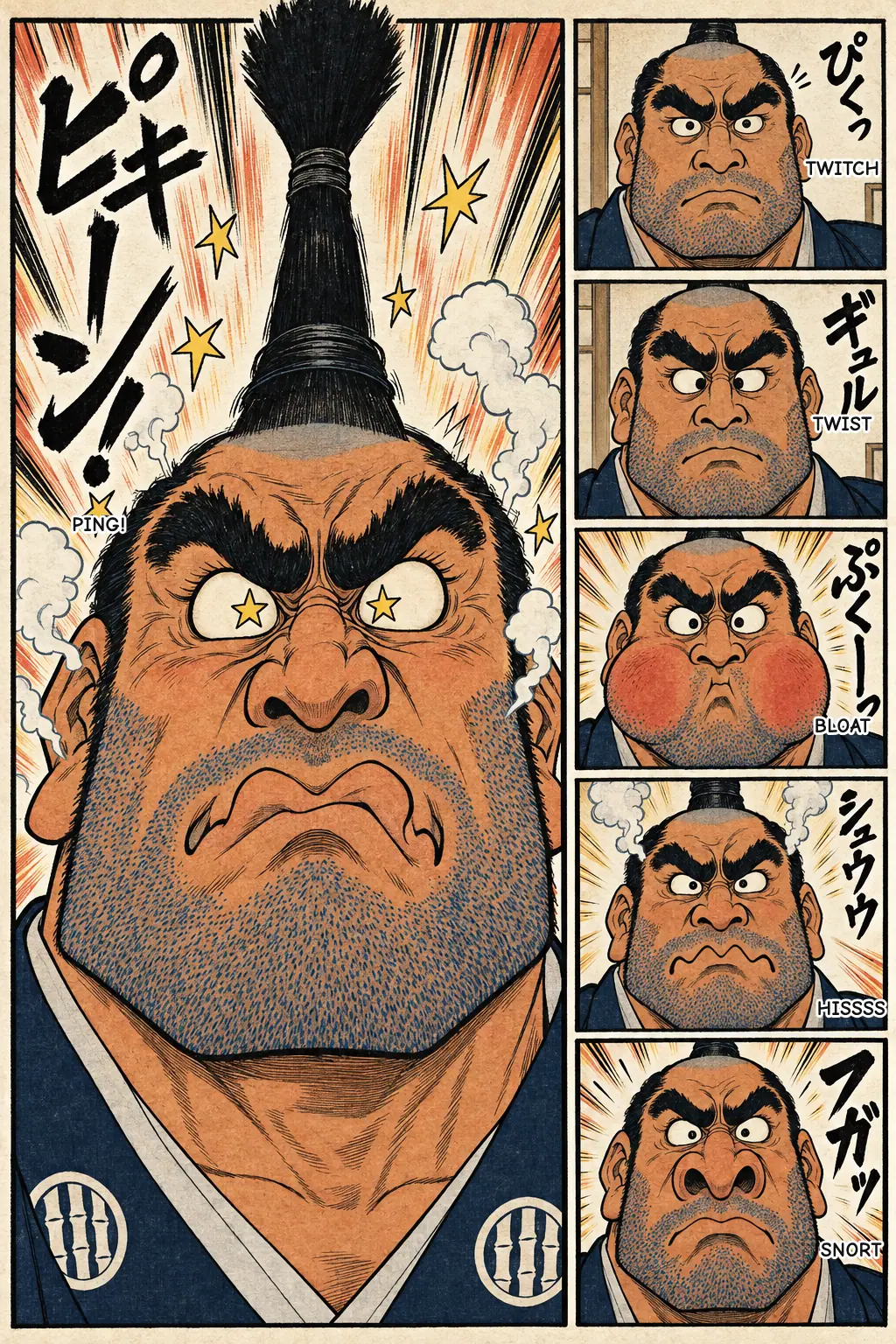
Some parts are new to the manga. Both lords' family names, crests, and titles are invented, so the story is not tied to any real daimyo house. The opening and closing scenes with the narrator Fukurai, and the short warm-up jokes about forgetful people, are original. We also added scenes showing Jibuemon's clumsiness on his way out and on the road, gave the host's retainer a nervous, serious personality, and decided how many times he tries the pinch and with how much help. Tome's disguise (a stiff formal costume, a crooked sword, a samurai name he makes up on the spot) and the moment he pulls out the tool are staged for comedy. The pinching is drawn as slapstick: bulging eyes, sweat, steam, and sound effects, not real pain. In the English dialogue, the samurai speak in stiff, old-fashioned formal English while Tome talks like a rough street worker.
The Punchline (Ochi / Sage) Explained
Spoiler warning if you haven't read the episode. After the nail puller finally works, everyone leans in and asks, "Well then, what is your lord's message?" Jibuemon proudly answers: "When I left the mansion, I forgot to ask what the message was."
The joke is the reversal. The whole story assumes Jibuemon forgot the message, so everyone, including the audience, works hard to get it out of his memory. After all that effort and pain, the thing he finally remembers is that there was never anything to remember. He set off without hearing the message at all. For a samurai who was ready to die to save face, it's a perfect deflating ending: the problem wasn't his memory but his carelessness right from the start.
Read Sokotsu no Shisha in Manga
If you'd like to see Jibuemon's iron backside, Tome's terrible samurai disguise, and that last line drawn out in full, the manga is right above this article. Episode 10 of RAKUGO: Japan's Comic Tales, like every episode on Manga Portal, is free to read with no sign-up. The other episodes bring more classic rakugo stories, each opened and closed by the same storyteller, Fukurai.
Characters in this episode
Jibuta Jibuemon
A loyal, rough-mannered samurai envoy who is hopelessly forgetful and claims a pinch on the backside helps him remember.
The host's retainer (Tanaka Sandayu)
The polite retainer who receives the envoy; in many tellings he is the steward Tanaka Sandayu, and his pinches have no effect.
Tome the Carpenter
A loud, blunt Edo craftsman working at the mansion who disguises himself as a samurai and pinches Jibuemon with a nail puller.
Jibuemon's lord
The daimyo who sends Jibuemon on his errand; he barely appears, and his name and crest are invented for the manga.
Shōmontei Fukurai
The fictional rakugo storyteller who opens and closes each episode of the series; he is not part of the original tale.
FAQ
What is Sokotsu no Shisha about?
It is a classic rakugo comedy about Jibuta Jibuemon, a forgetful samurai sent as an envoy to another lord's house. He forgets his message and says only a pinch on the backside can make him remember, which leads to a carpenter disguised as a samurai using a nail puller on him.
What is the punchline of The Absent-Minded Messenger?
When Jibuemon finally remembers, he announces that he left home without ever hearing the message. All the effort to restore his memory was pointless, because there was nothing to remember.
Why does the samurai want to commit seppuku in Sokotsu no Shisha?
In Edo-period Japan, failing to deliver an official message was a serious loss of face for both the envoy and his lord. Jibuemon's overreaction is part of the comedy: deadly samurai honor set against a forgotten errand.
What is rakugo?
Rakugo is a traditional Japanese comic storytelling art in which a single performer kneels on stage and plays every character using only a fan and a hand towel. It has been performed in yose theaters for hundreds of years.
Is the narrator Shōmontei Fukurai a real rakugo performer?
No. Fukurai is a fictional storyteller created for the manga series RAKUGO: Japan's Comic Tales. The story's plot was checked against transcripts of performances printed in 1910.