Episode 9Nobody Dares Say This Tea Is AwfulCha no Yu (The Tea Ceremony)
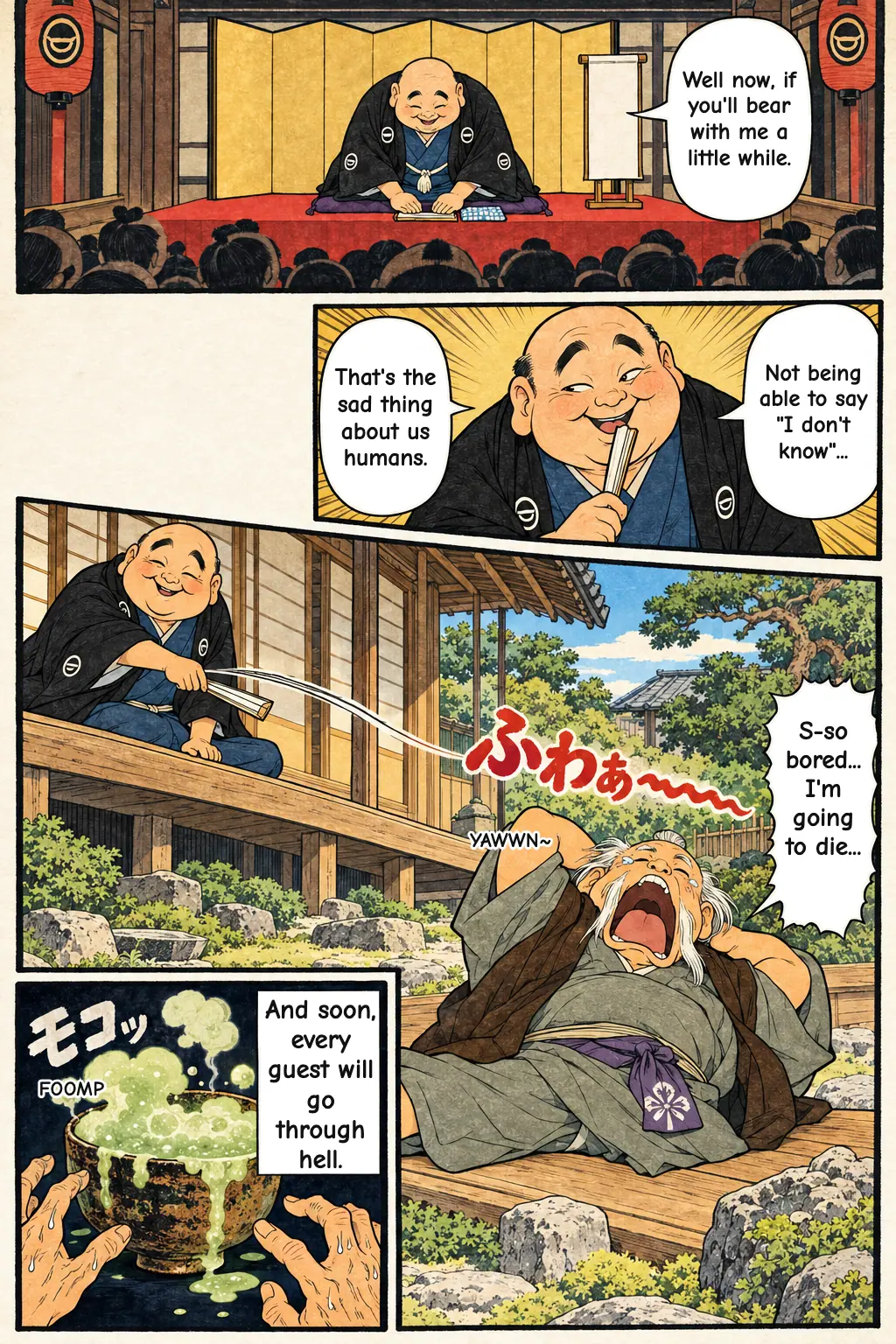
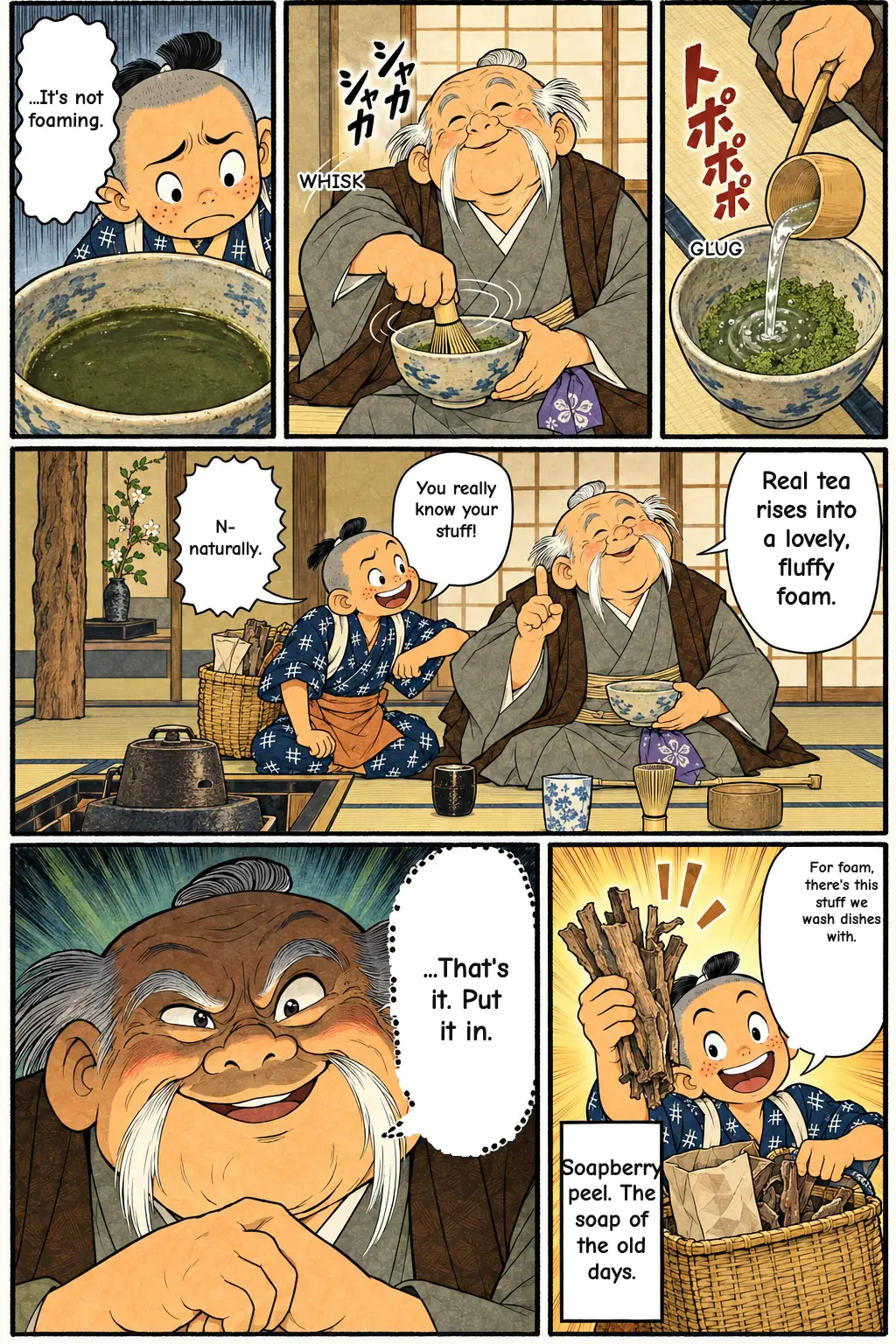
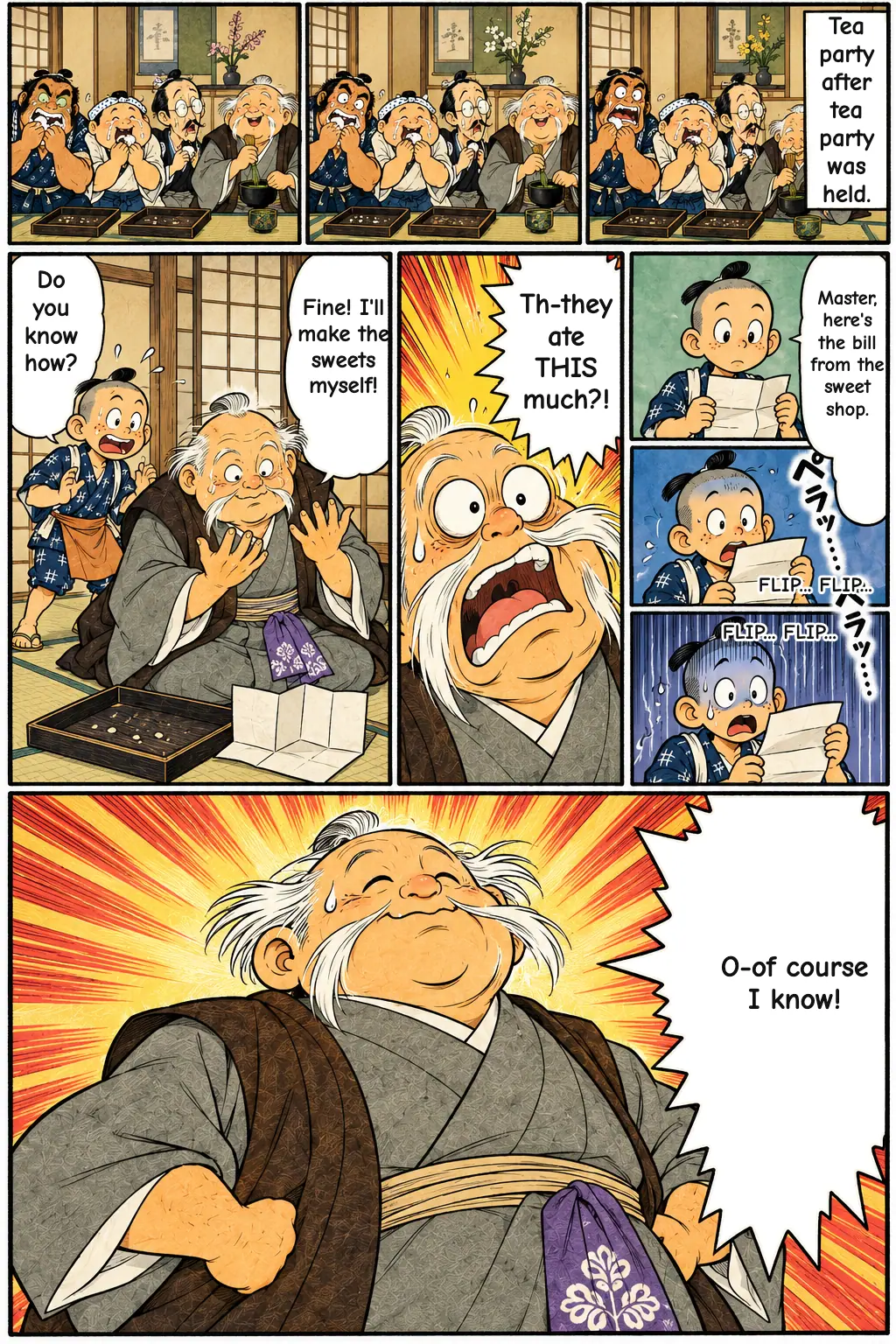
Episode 9 of RAKUGO: Japan's Comic Tales. Bored in retirement, the Retired Master takes up the tea ceremony. He knows nothing about it, but swears he does. So he keeps hosting his tenants with a mystery "tea" that foams over in green clouds, plus buns he made himself. And meanwhile, in the field beyond the hedge...
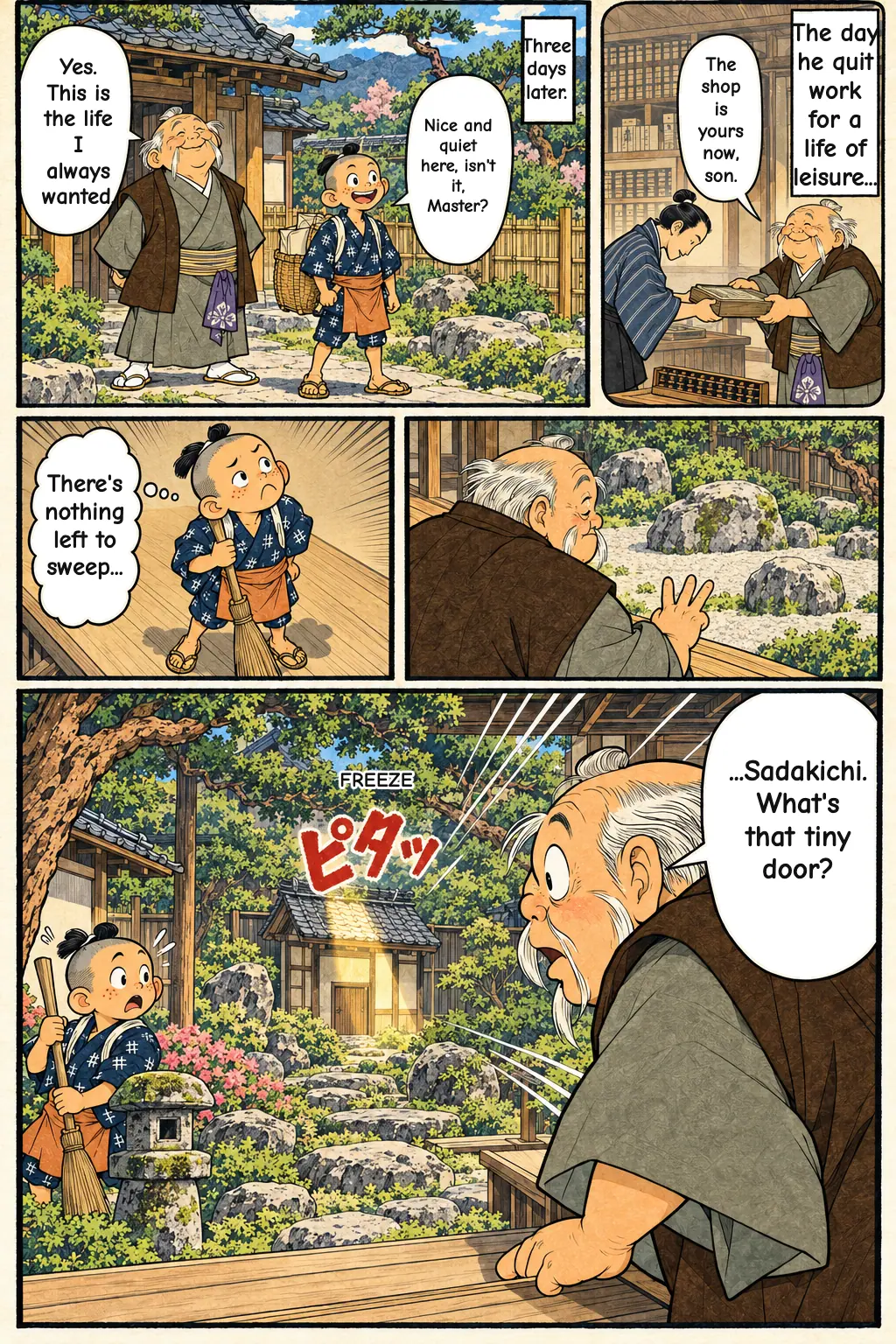
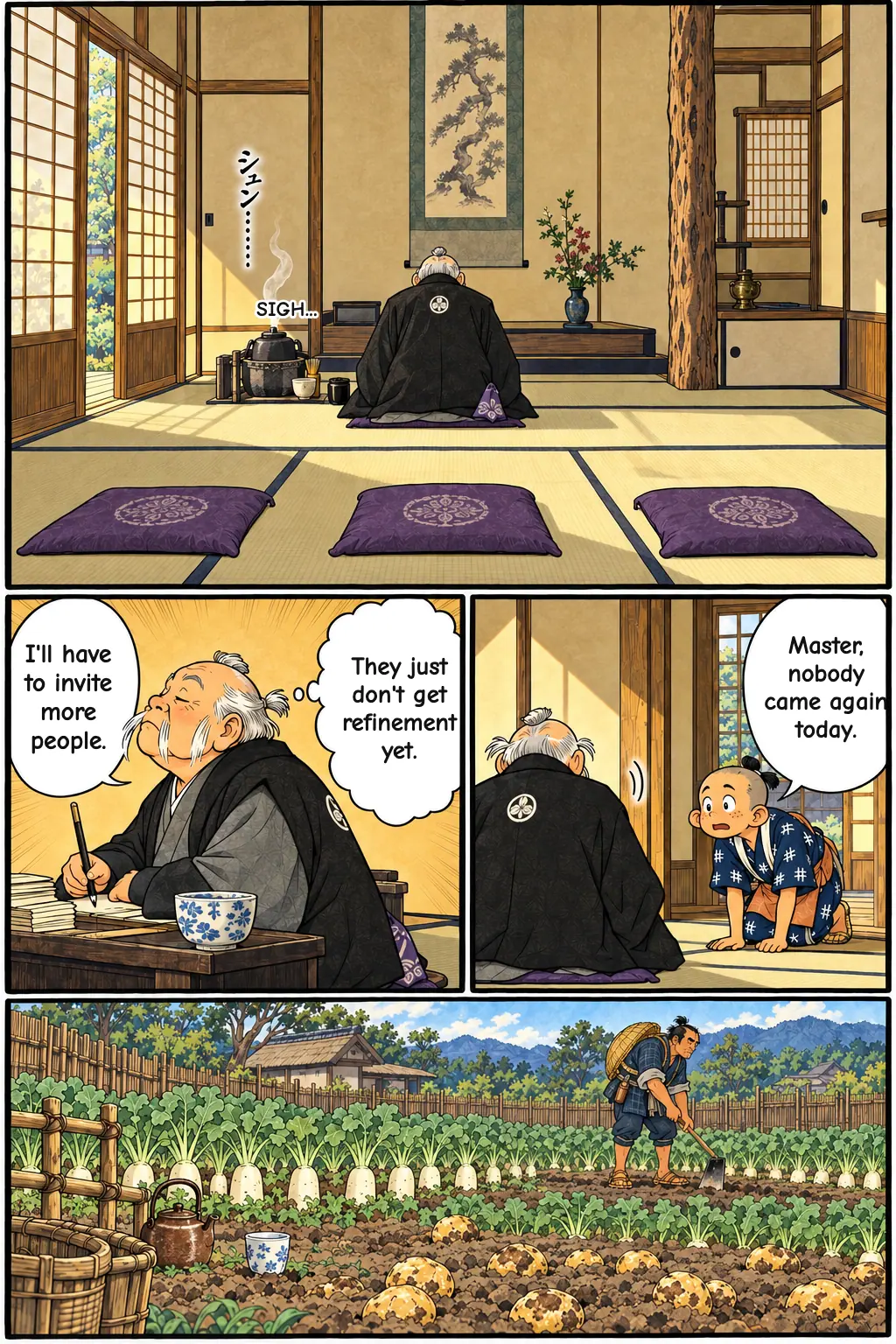
Cha no Yu ("The Tea Ceremony") is a classic rakugo story about pride, boredom, and very bad tea. A wealthy merchant from Kuramae, a busy trading district of Edo (old Tokyo), hands his business to his son and retires to Negishi, a quiet neighborhood on the city's edge where well-off people kept peaceful retirement homes. With him goes Sadakichi, a young shop boy who serves as his helper. With nothing to do, the Retired Master notices that his new house has a proper tea room and a full set of tea utensils. He decides to take up the tea ceremony. The problem: he has no idea how it works.
Cha no Yu (The Tea Ceremony) Rakugo: Summary and Punchline Explained
Cha no Yu summary: the tea ceremony nobody dares to refuse
Cha no Yu ("The Tea Ceremony") is a classic rakugo story about pride, boredom, and very bad tea. A wealthy merchant from Kuramae, a busy trading district of Edo (old Tokyo), hands his business to his son and retires to Negishi, a quiet neighborhood on the city's edge where well-off people kept peaceful retirement homes. With him goes Sadakichi, a young shop boy who serves as his helper.
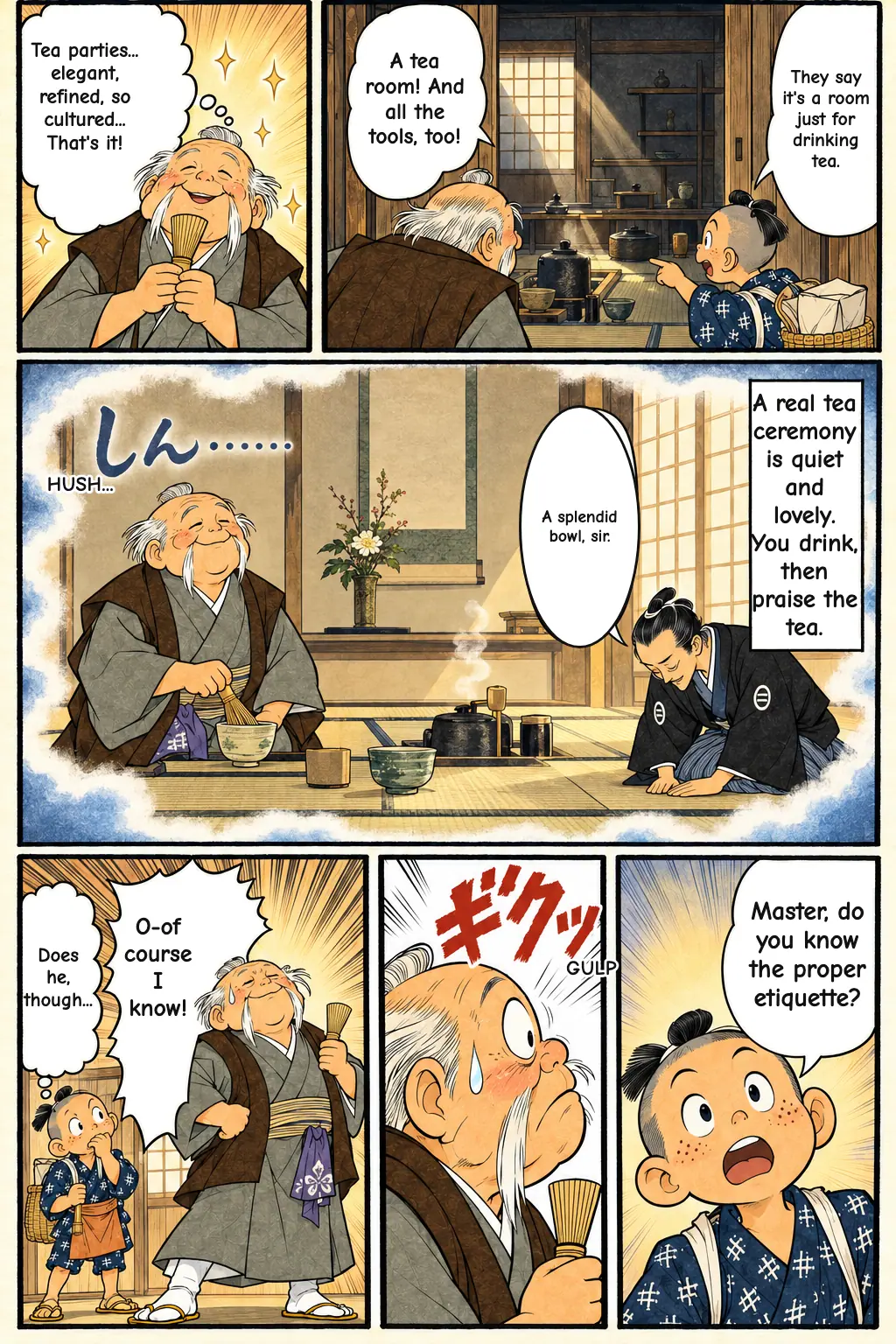
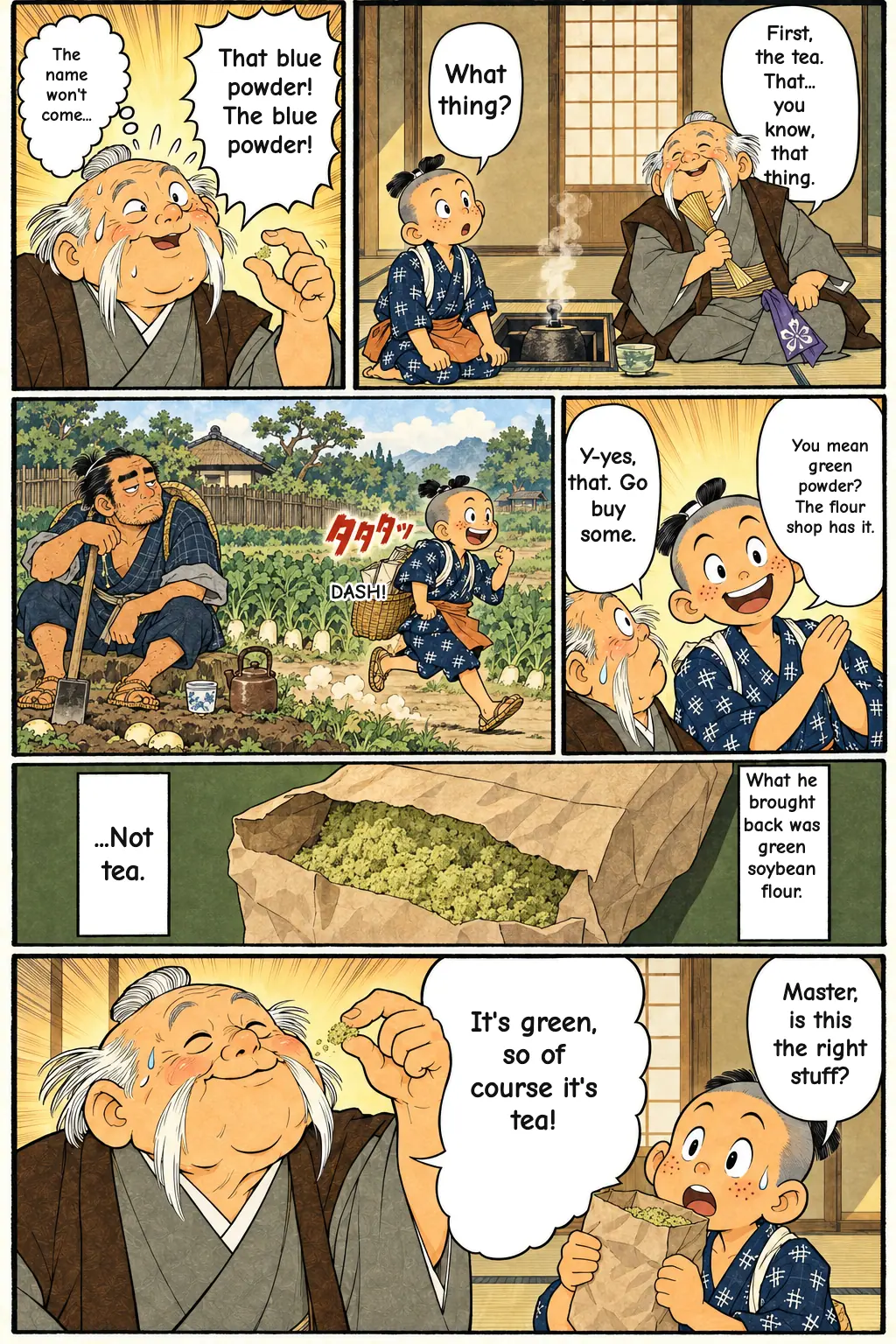
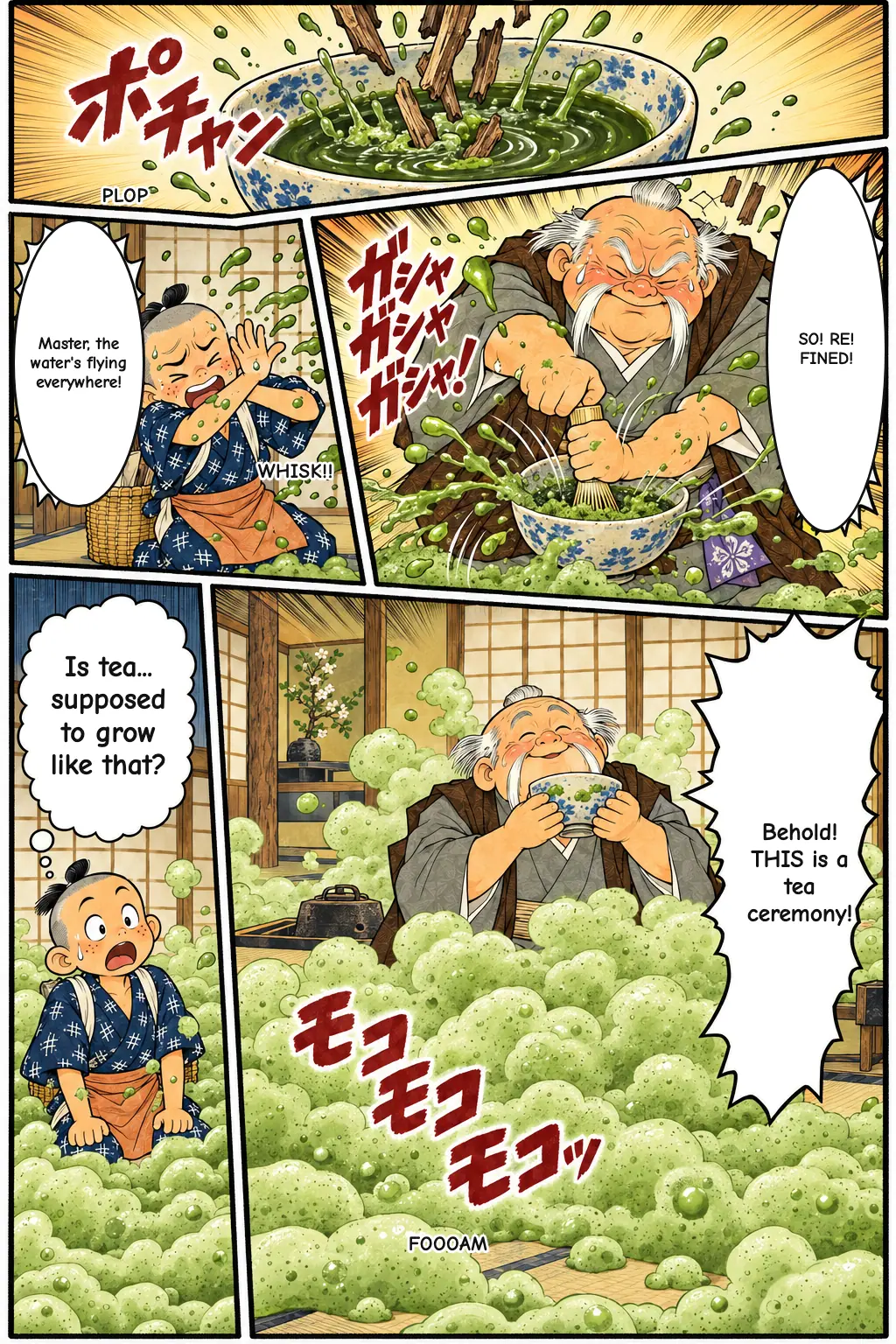
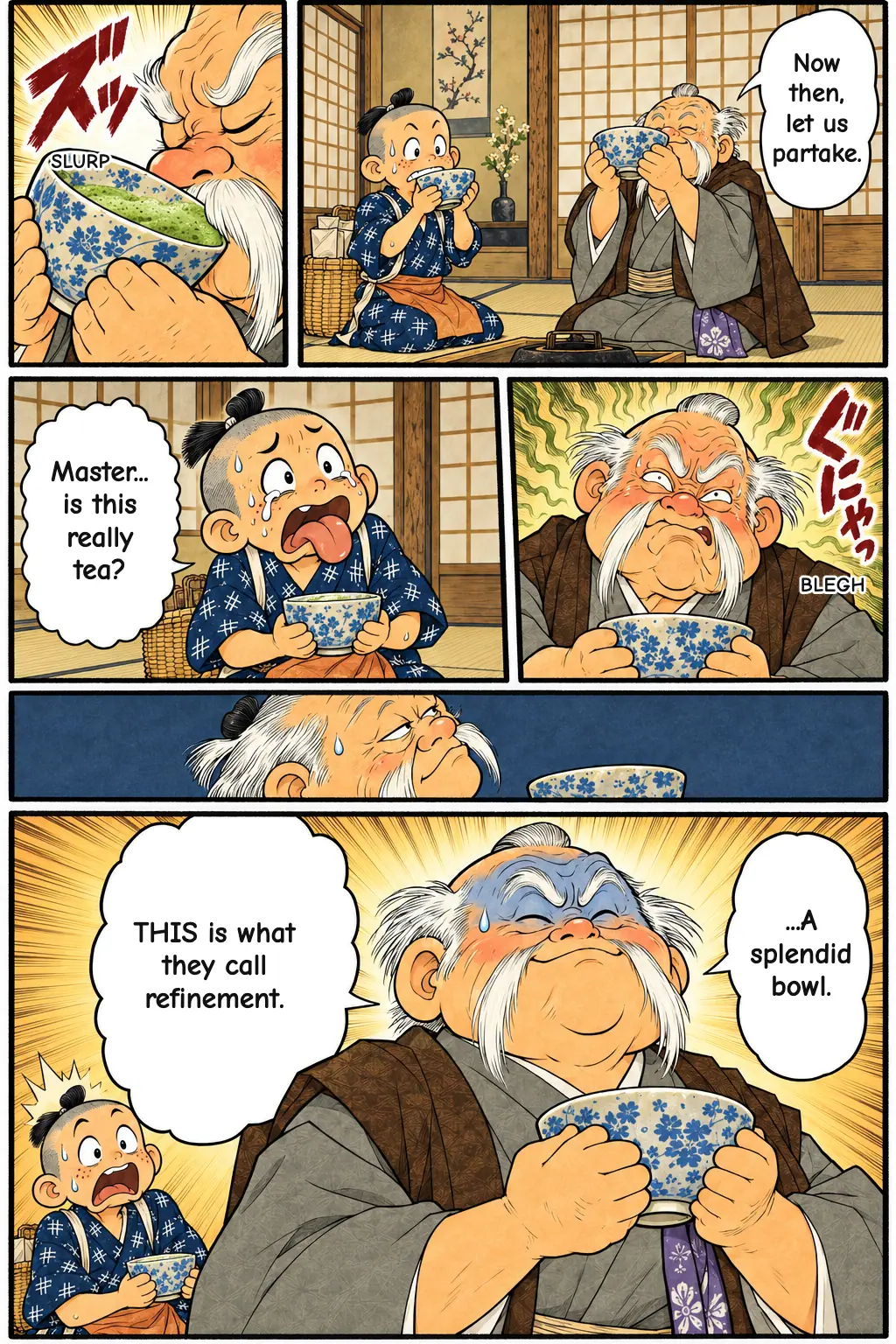
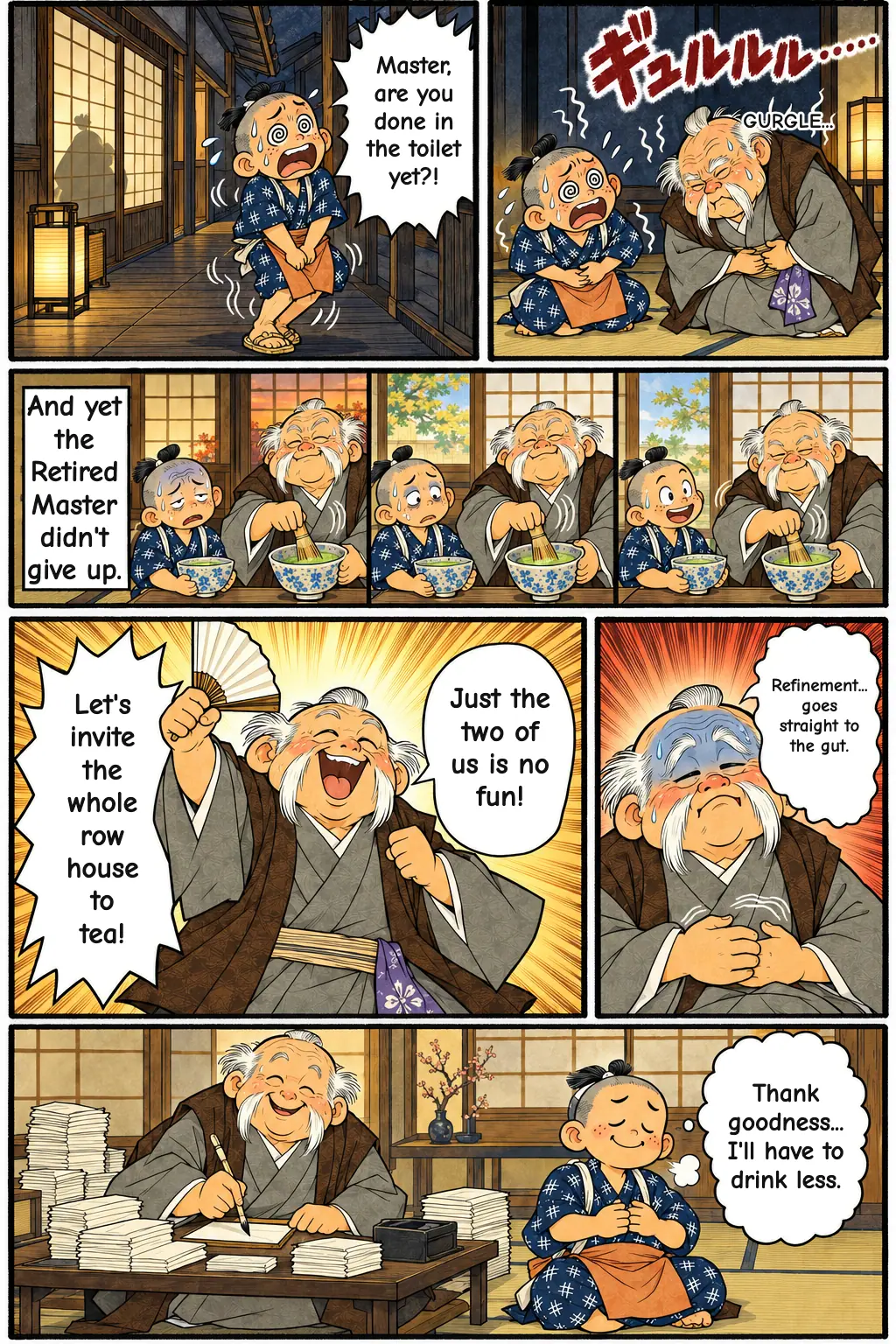
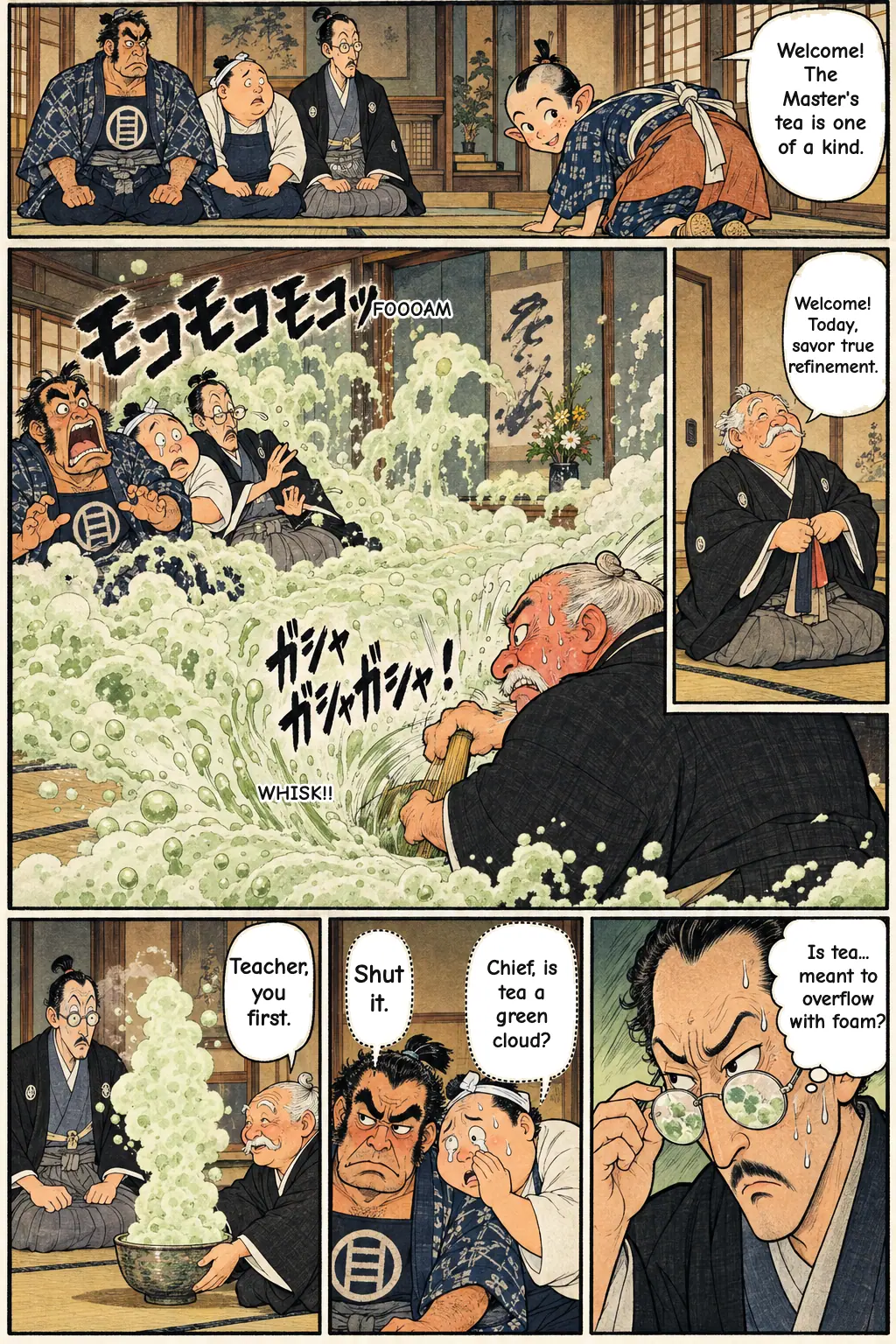
With nothing to do, the Retired Master notices that his new house has a proper tea room and a full set of tea utensils. He decides to take up the tea ceremony. The problem: he has no idea how it works. Rather than admit this in front of Sadakichi, he pretends to be an expert. He remembers only that tea is a "green powder," so he sends the boy to buy ao-kinako, a green soybean flour used for sweets, and stirs it into hot water. When it refuses to foam, they add muku bark, the skin of the soapberry fruit, which people of the time used like soap for washing clothes. Now it foams beautifully. The two drink it every day, insist it is wonderfully refined, and both end up with upset stomachs.
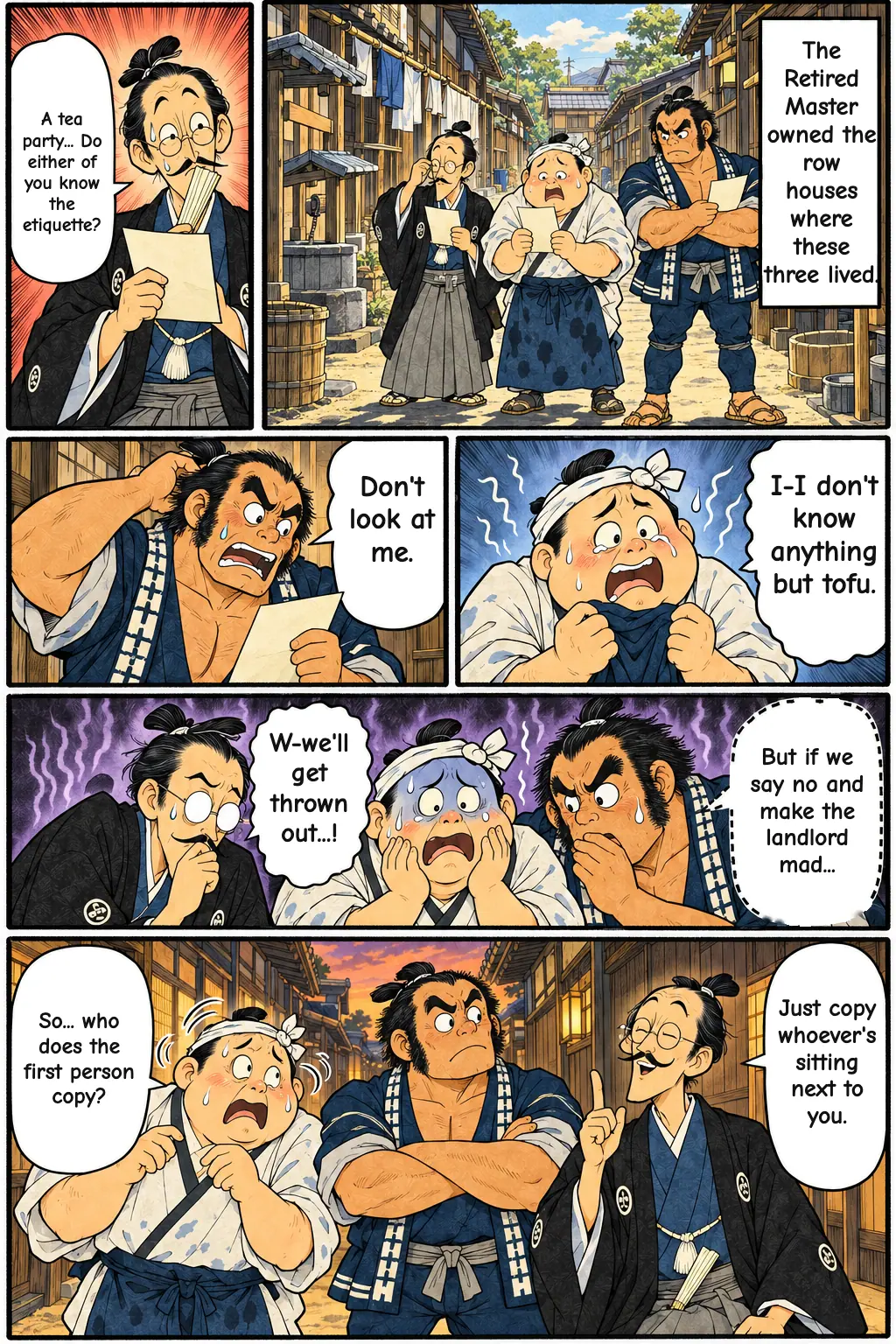
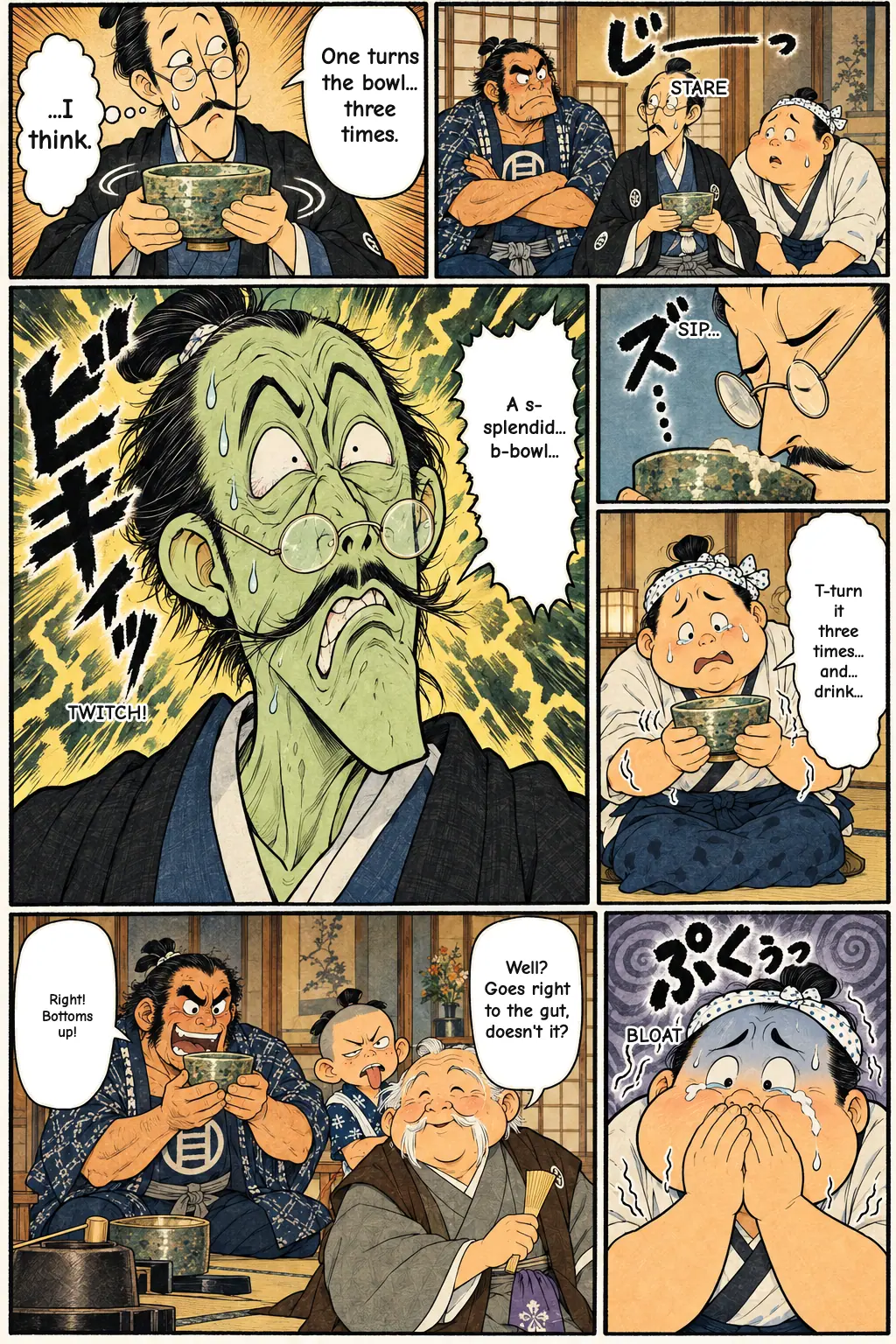
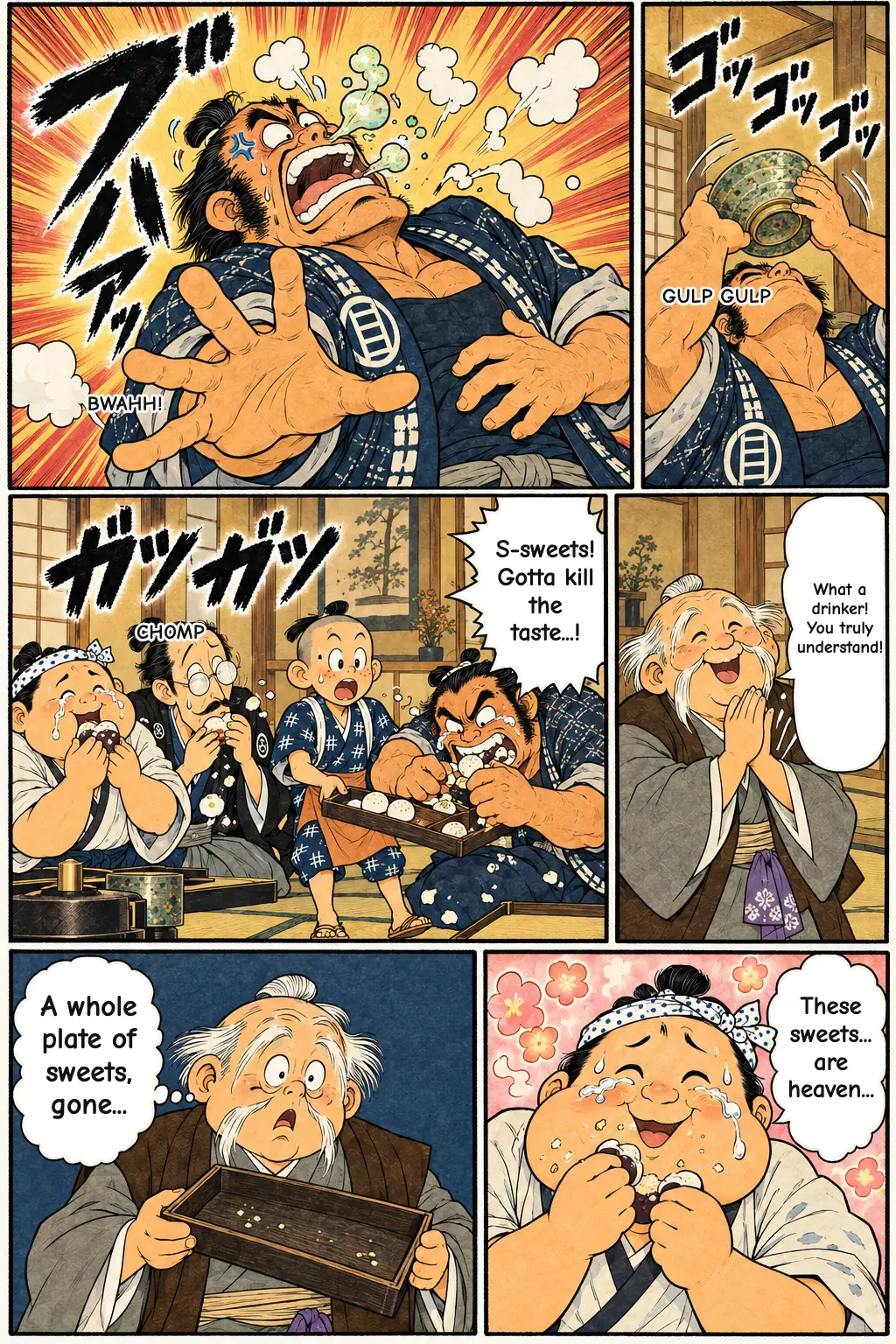
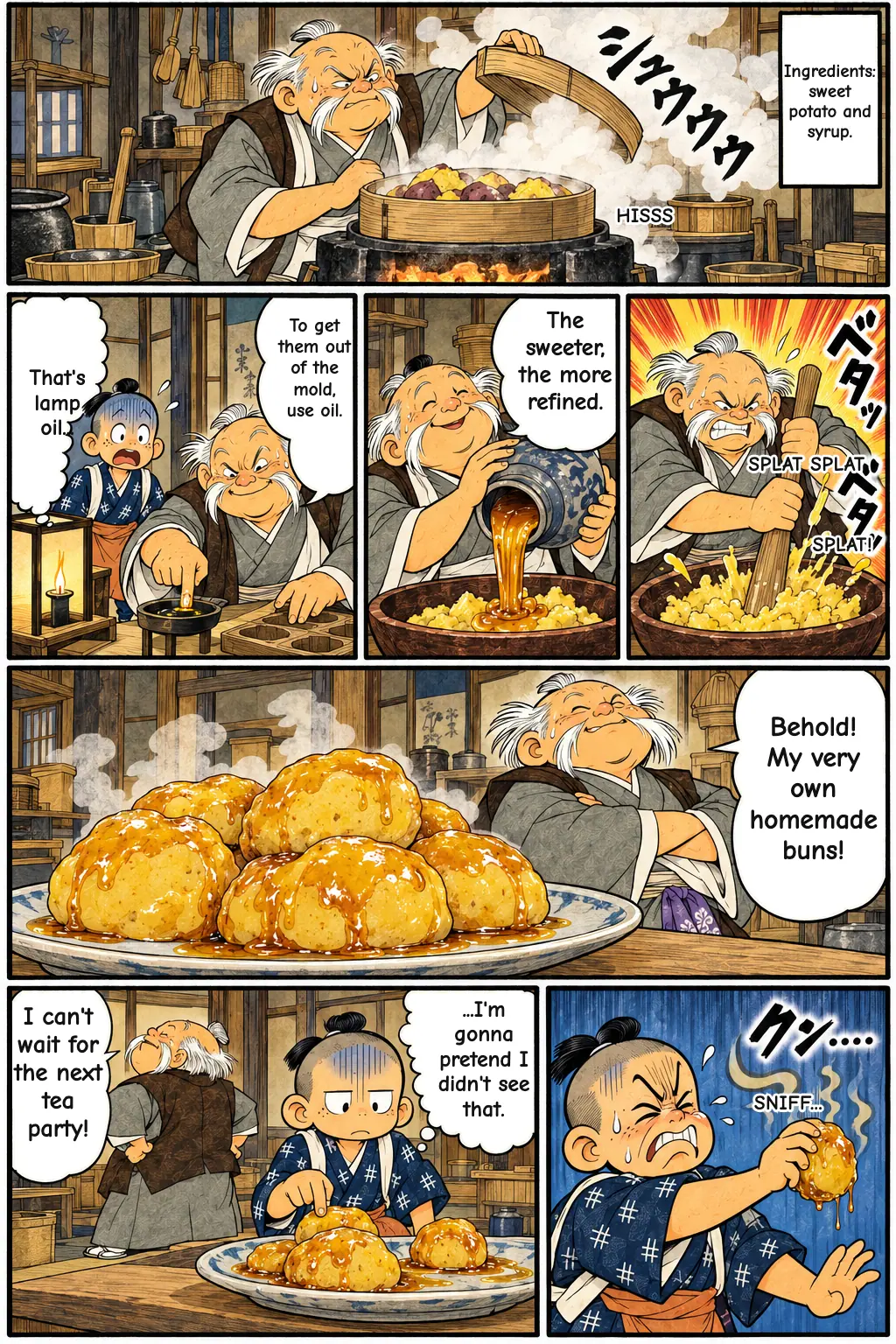
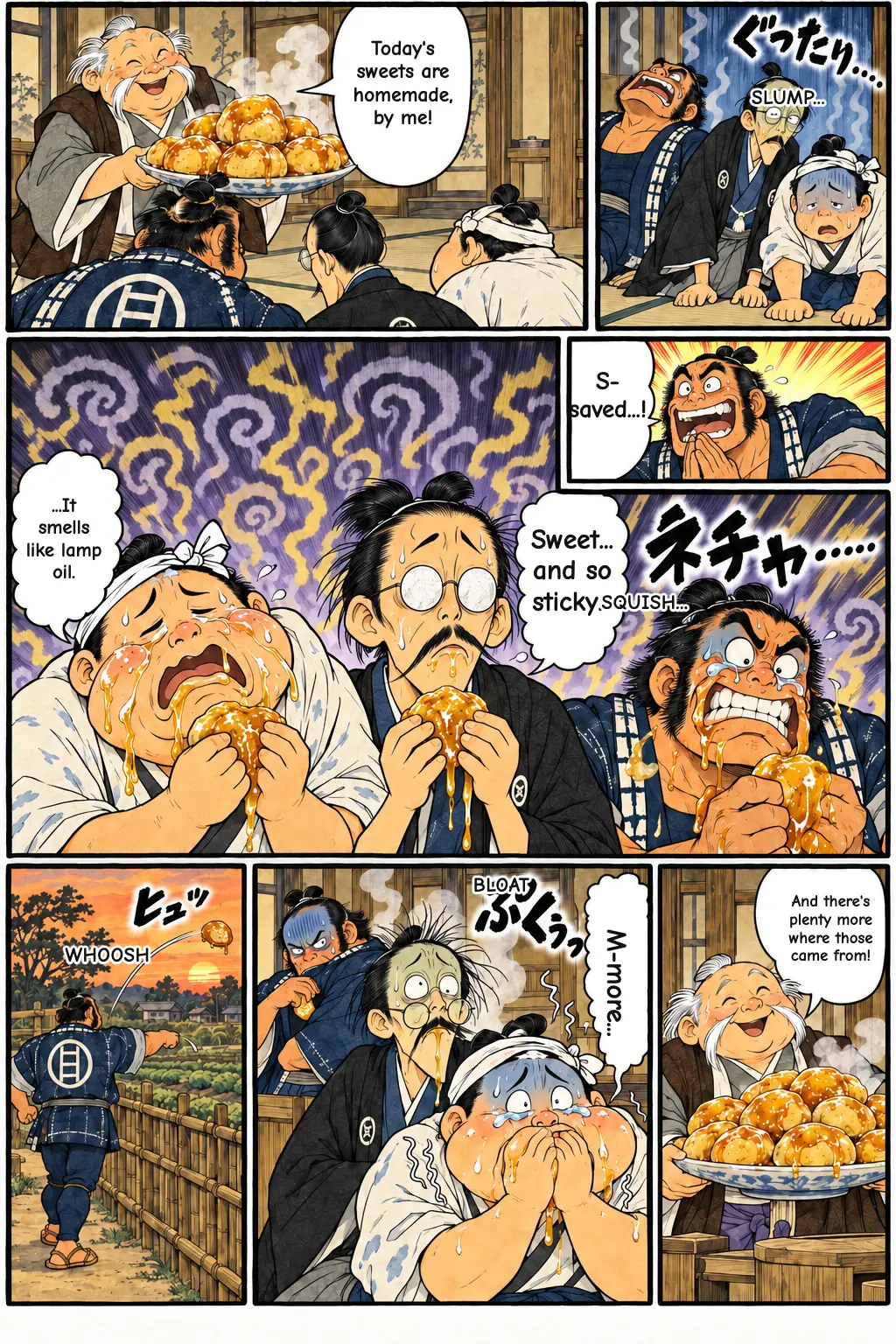
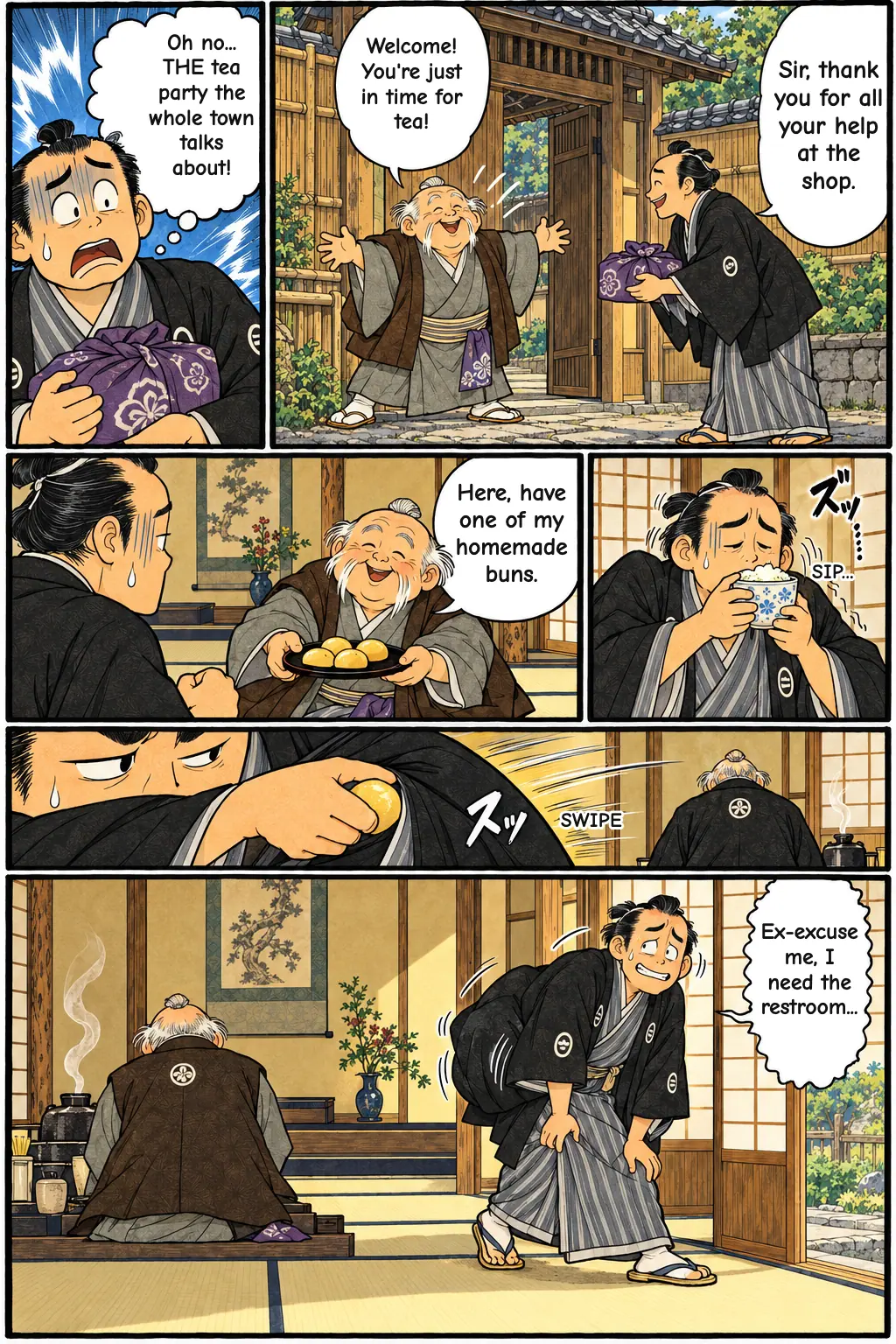
Drinking alone gets dull, so the Retired Master invites the tenants of the row houses he owns. They know nothing about tea etiquette either, but he is their landlord, and they fear that saying no could get them evicted. So they go, suffer through the foaming "tea," and rush to eat the sweets to wash away the taste. As the gatherings continue, the sweet-shop bills pile up, so the thrifty host starts making his own sweets, often described as mashed sweet potato mixed with syrup. They are awful. Soon no one will come near the place.
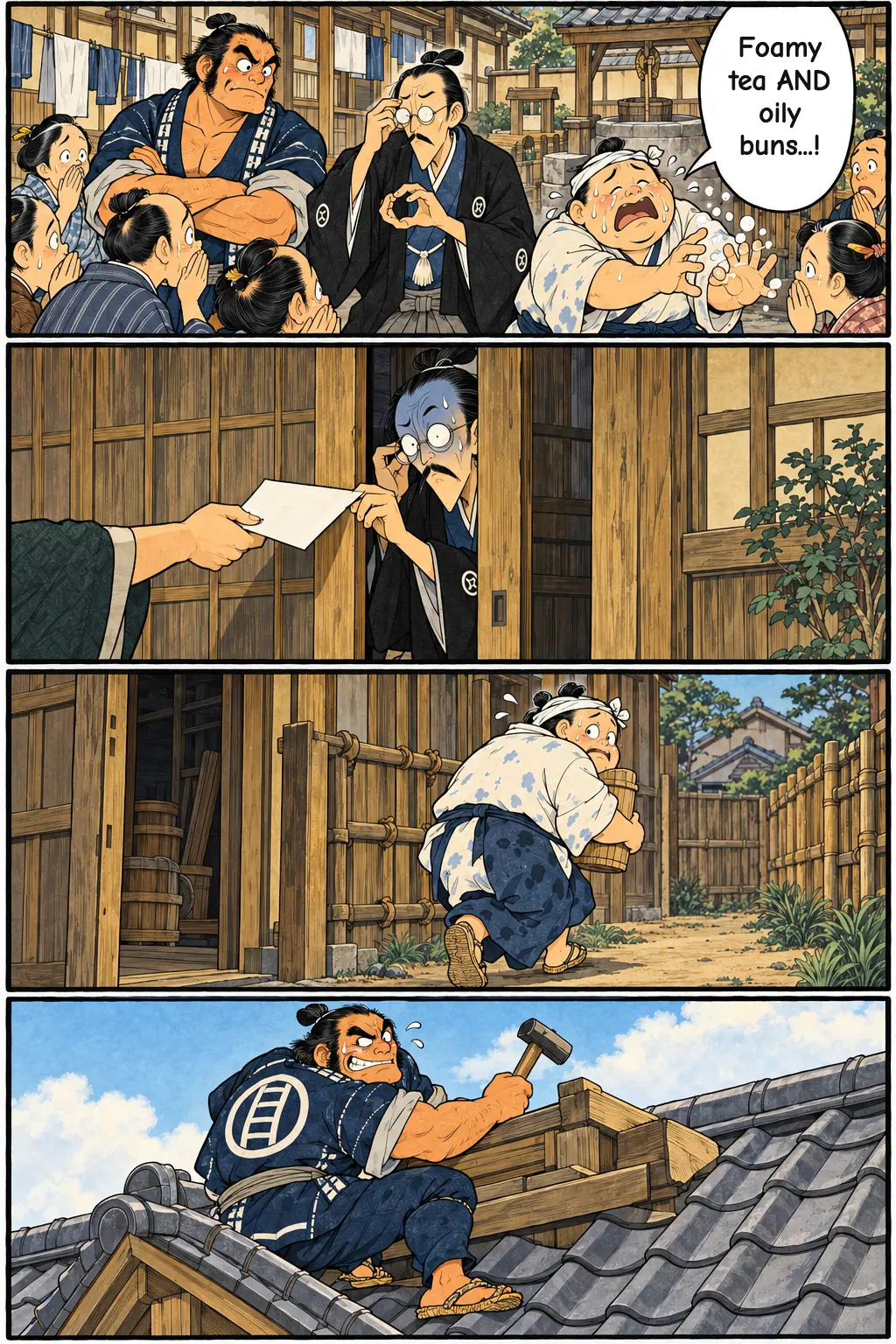
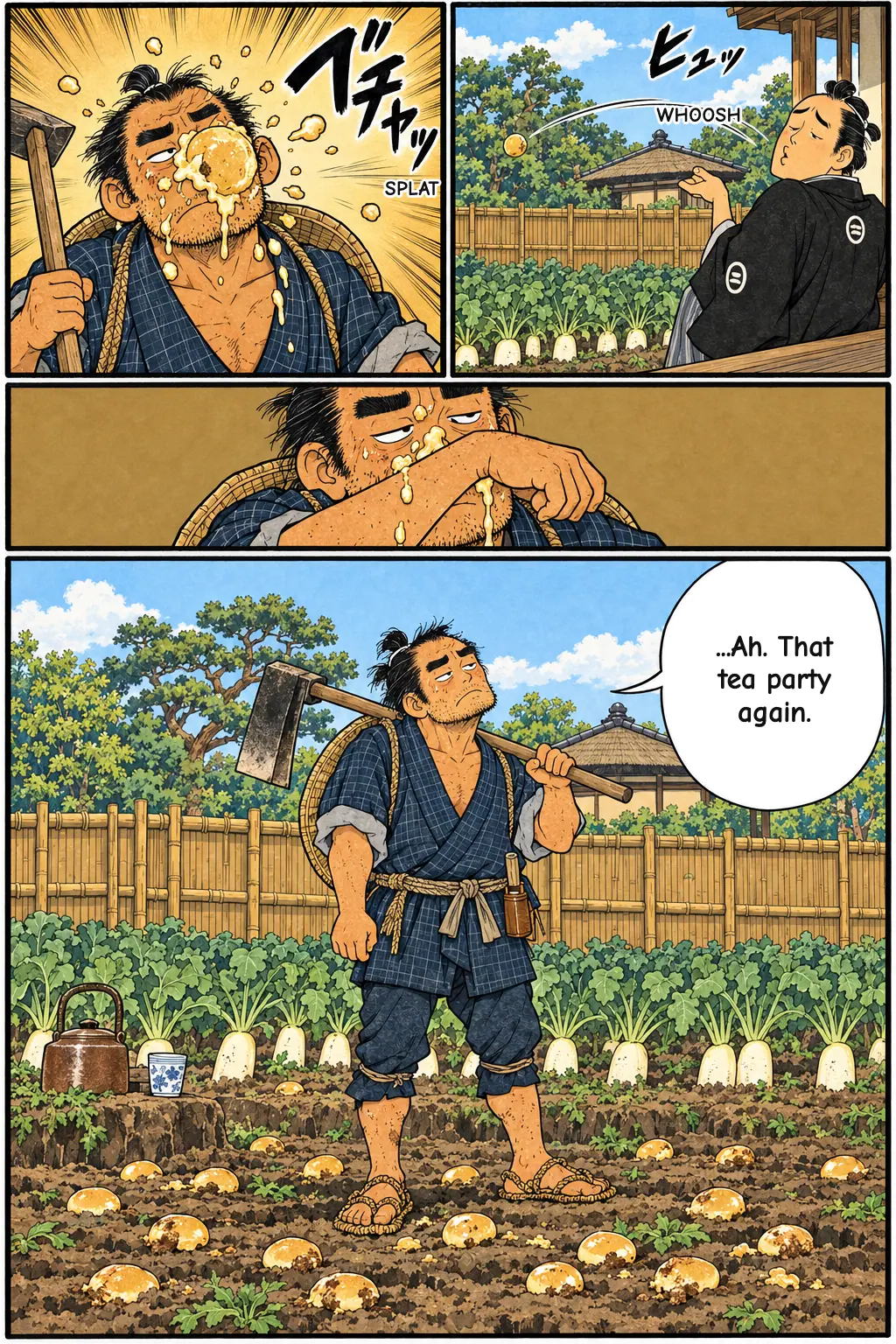
In the end, a guest who cannot face the homemade sweet hides it in his kimono sleeve, slips outside, and tosses it over the hedge into the field next door. It hits a farmer working there right in the face. The farmer wipes it off and mutters, roughly, "Ah, the tea ceremony again."
What is rakugo?
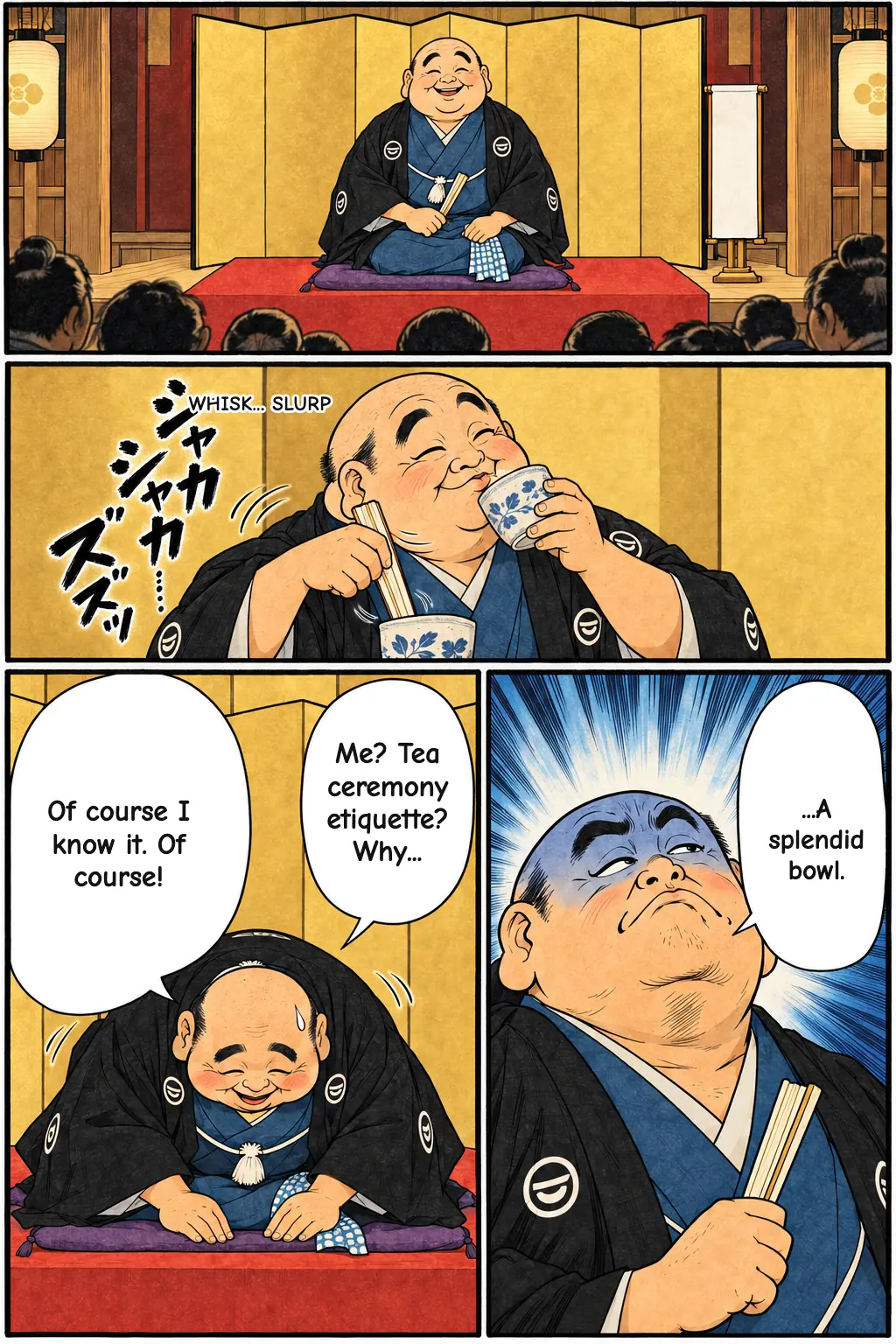
Rakugo is a Japanese storytelling art that has been performed for several hundred years, mostly in small variety theaters called yose. A single storyteller kneels on a cushion and plays every character in the story, changing voice, posture, and the turn of the head to show who is speaking. The only props are a folding fan and a hand towel, which can become chopsticks, a pipe, a letter, or, in this story, a tea whisk. Most stories begin with a short warm-up talk called the makura and end with a punchline called the ochi or sage. In our manga, the storyteller who opens and closes each episode, Shōmontei Fukurai, is a fictional narrator created for this series.
Real tea ceremony vs. the Retired Master's version
Cha no yu, also called sadō or chadō ("the way of tea"), is a traditional Japanese practice with carefully set manners. The host whisks matcha, a finely ground green tea, with hot water using a chasen, a whisk carved from a single piece of bamboo, until the surface is smooth and lightly frothy. Host and guests exchange bows and polite greetings, and guests usually eat a small wagashi (Japanese sweet) before the tea, so its sweetness balances the tea's bitterness. A guest may turn the bowl a little before drinking and then thank the host, often praising the preparation with a phrase like "kekkō na otemae," meaning roughly "a fine serving."
The comedy of Cha no Yu comes from copying the outside of all this without understanding any of it. The Retired Master gets the color right (green), the look right (foam), and the words right (lots of praise), but the substance is soybean flour and soap. Underneath the jokes is a familiar human weakness: someone who cannot say "I don't know," and who has enough social power that no one around him can say "this is terrible."
What the manga changed and added
We checked the plot against early 20th-century stenographic transcripts of live performances, mainly a 1907 collection recording a telling by Yanagiya Kosen I, with a 1911 published version as a second reference. The storytellers behind these records had all died by 1930. Our script is our own, written for the manga, not a translation of those texts.
The core events come from the traditional story: the retirement to Negishi, the fake expertise, the green soybean flour and soapberry foam, the stomachaches, the frightened tenants, the homemade sweets, and the sweet thrown over the hedge. Some details vary between tellings and are not fixed, such as exactly which tenants attend (a writing teacher, a tofu seller, and a fire brigade leader are often mentioned), who the final guest is, and the farmer's exact words.
Everything around the edges is our invention: Fukurai's opening line about how sad it is that people can't admit what they don't know, his closing gesture of using his fan as a tea whisk, much of the back-and-forth between the Retired Master and Sadakichi, the tenants' contest of pained faces, and a quick montage showing the Retired Master's reputation spreading across the neighborhood.
The punchline (ochi / sage) explained
The joke is not that a sweet hits someone in the face. It is that the farmer isn't surprised at all. He doesn't ask what fell on him or where it came from. He simply knows: it's the tea ceremony again. That one weary line tells us that guests have been throwing these sweets over the hedge so often that it has become a regular part of his day.
In other words, the Retired Master still believes he is a respected host of refined gatherings, while the whole neighborhood, right down to the man hoeing the field next door, already knows the truth. It helps to remember that in Edo, a landlord had real power over his tenants, so no one could complain to his face. The hedge was the only safe place to say what everyone was thinking.
Where to read it
You can read Cha no Yu as Episode 9 of RAKUGO: Japan's Comic Tales on Manga Portal. Every episode is free, with no sign-up needed. If you enjoyed watching a proud old man and his very polite victims, the other episodes in the series bring more of Japan's classic comic stories to life in the same way, each opened and closed by our narrator Fukurai.
Characters in this episode
The Retired Master (Goinkyo)
A wealthy merchant who retires to Negishi, takes up the tea ceremony without knowing anything about it, and refuses to admit it.
Sadakichi
The Retired Master's young shop boy, who buys the green soybean flour, suggests the soapberry foam, and shares the stomachaches.
The tenants
Residents of the Retired Master's row houses who attend his tea gatherings out of fear that refusing their landlord could get them evicted.
The final guest
A visitor who secretly throws the Retired Master's homemade sweet over the hedge rather than eat it.
The farmer
A man working in the field beyond the hedge who delivers the story's punchline.
FAQ
What is the rakugo story Cha no Yu about?
A retired merchant takes up the tea ceremony without knowing how it works and pretends to be an expert. He serves his tenants a fake tea made of green soybean flour foamed with soapberry bark, along with terrible homemade sweets. The ending shows that the whole neighborhood already knows about his awful tea parties.
What does the ending "the tea ceremony again" mean?
A guest throws the uneaten sweet over the hedge, and it hits a farmer in the field. The farmer isn't surprised and just mutters that it's the tea ceremony again, which shows that this happens all the time. It is funny because the host thinks he is admired while everyone around him knows the truth.
What did the Retired Master use instead of matcha?
He used ao-kinako, a green soybean flour normally used for sweets, mixed into hot water. When it would not foam, he added muku bark, the skin of the soapberry fruit, which people used like soap for washing.
Why did the tenants go to the tea parties if the tea was so bad?
The Retired Master was their landlord. In the story, they fear that turning down his invitation could lead to being evicted, so they go and suffer quietly.
How is a real Japanese tea ceremony done?
The host whisks matcha (powdered green tea) with hot water using a bamboo whisk until it is smooth and lightly frothy. Guests exchange bows with the host, usually eat a small Japanese sweet before the tea, and thank the host after drinking.