Episode 8The Fox Who Got Fooled by a HumanOji no Kitsune (The Fox of Oji)
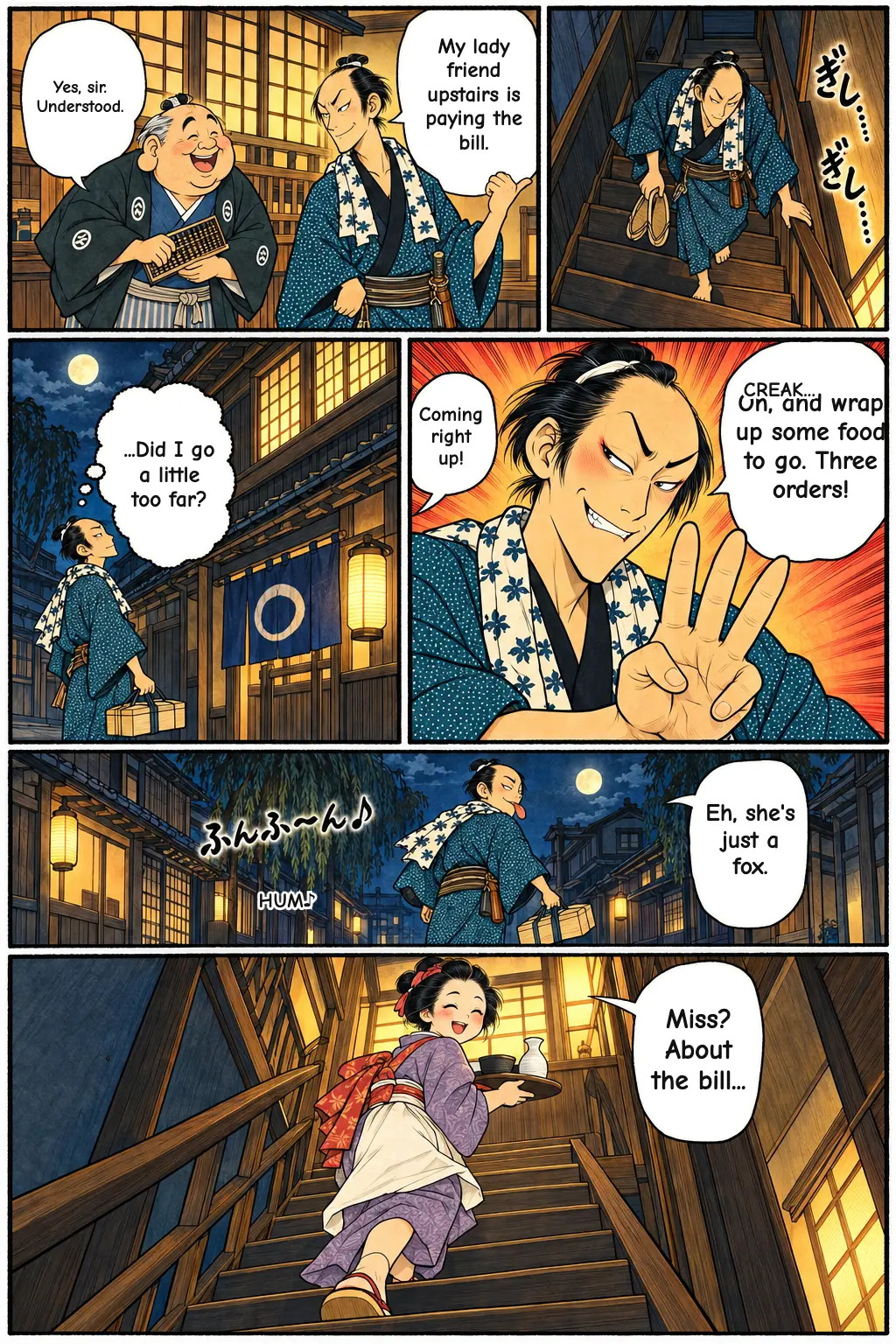
Episode 8 of RAKUGO: Japan's Comic Tales. A cocky carpenter spots a fox turning herself into a pretty girl and decides to fool her first. He wines and dines "Otama" at a restaurant, then slips out and sticks her with the bill. But when his older friend warns him that foxes always come back for revenge, he goes pale and hurries off with sweet rice cakes as an apology. The trouble is, the fox family won't trust even the rice cakes.
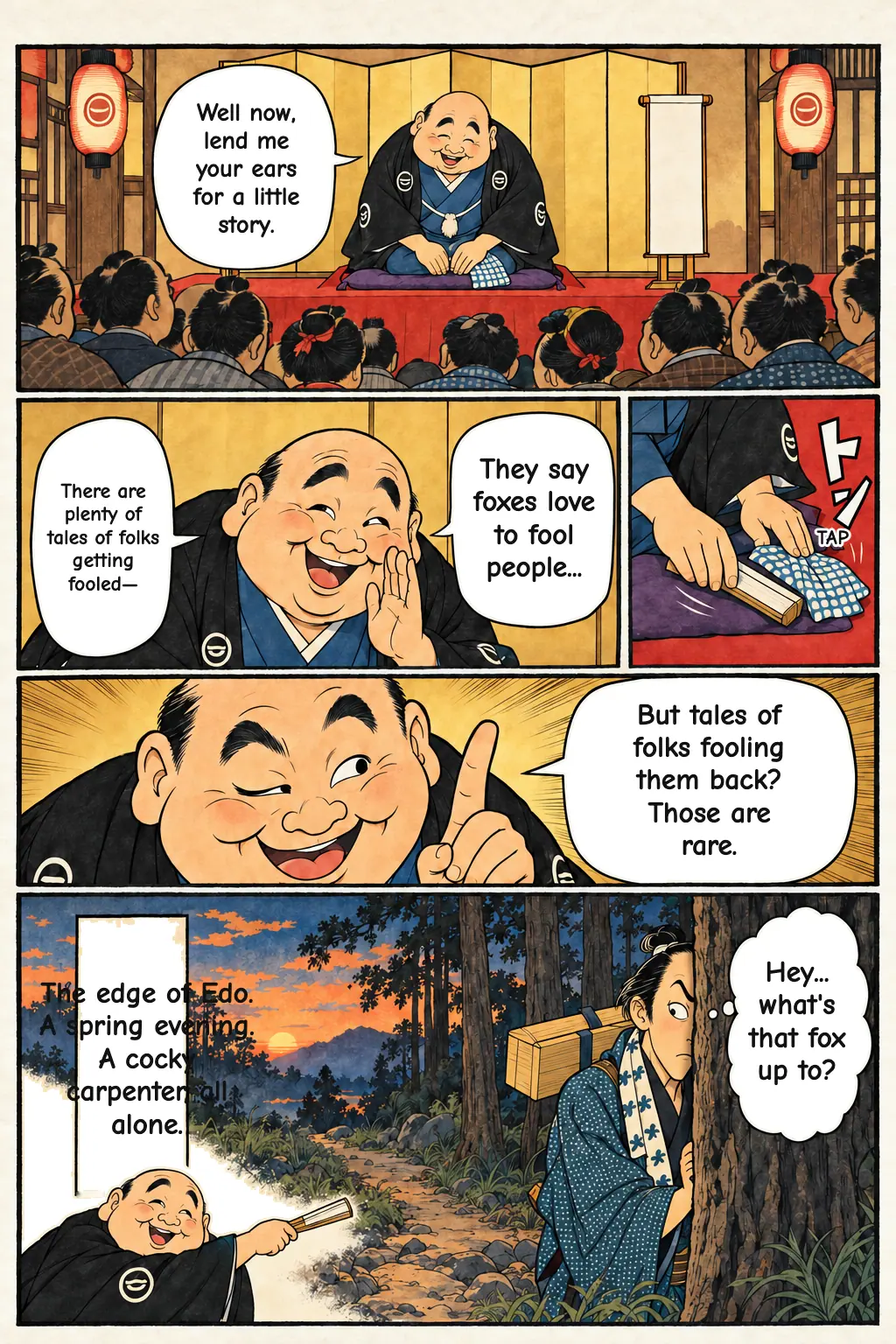
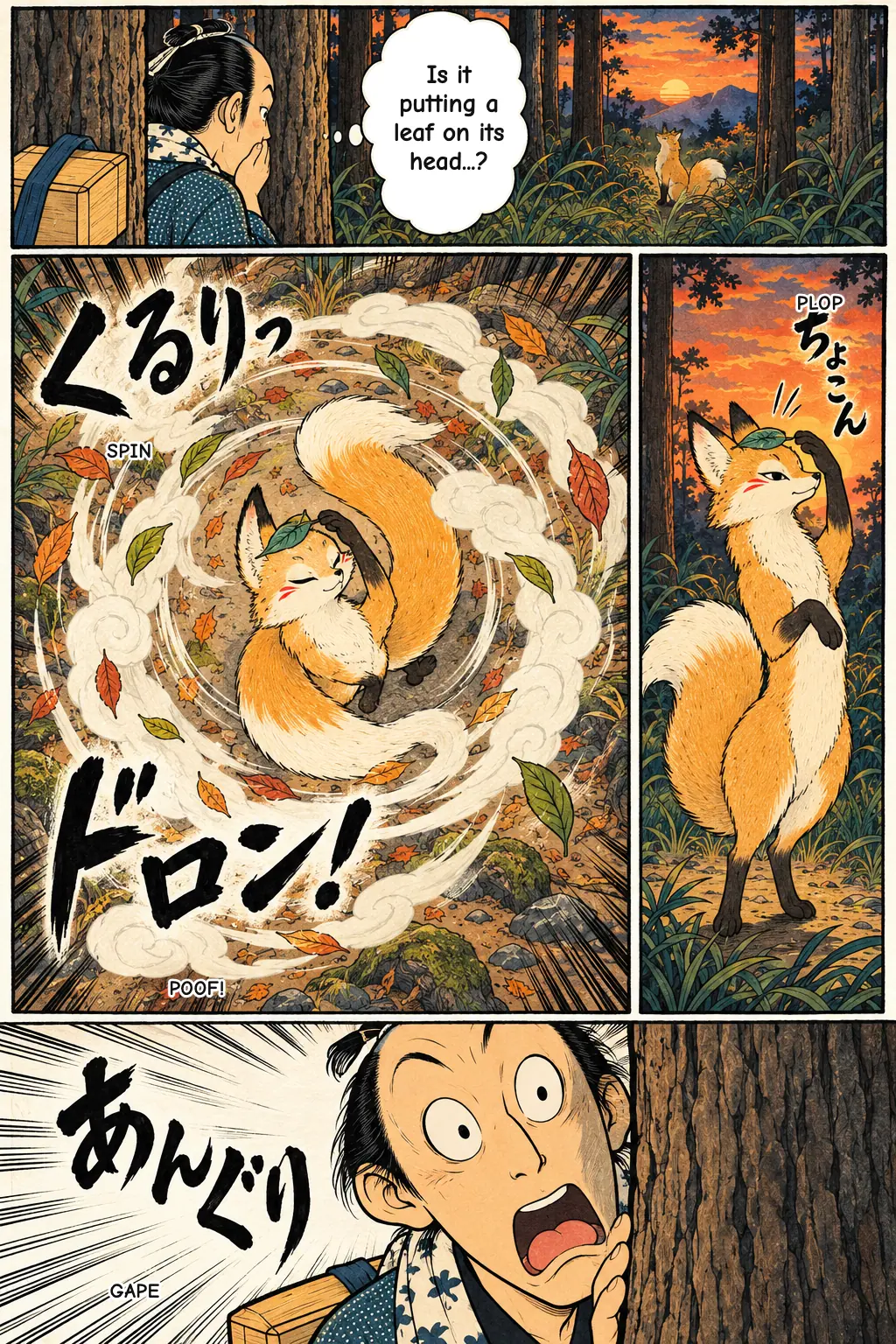
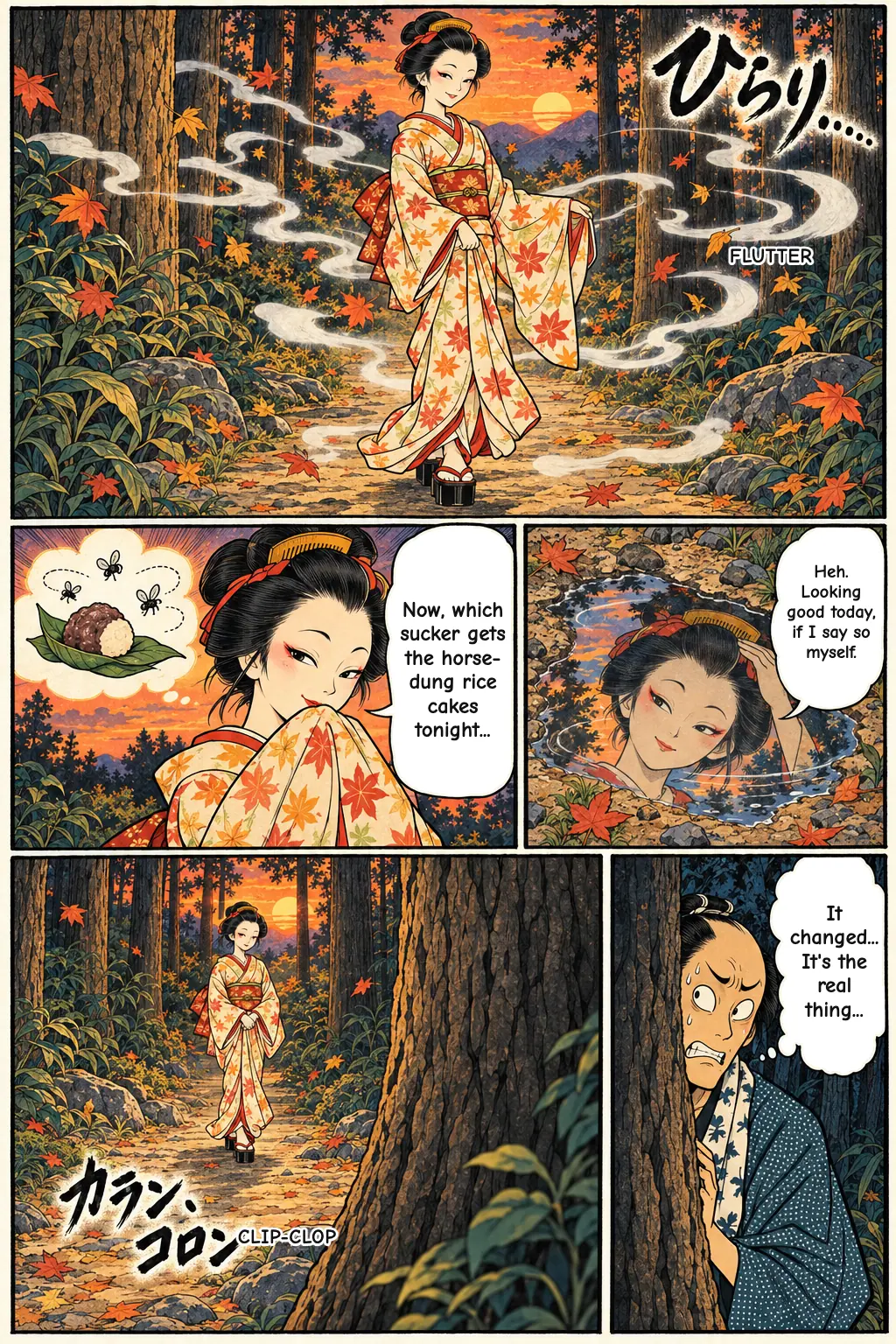
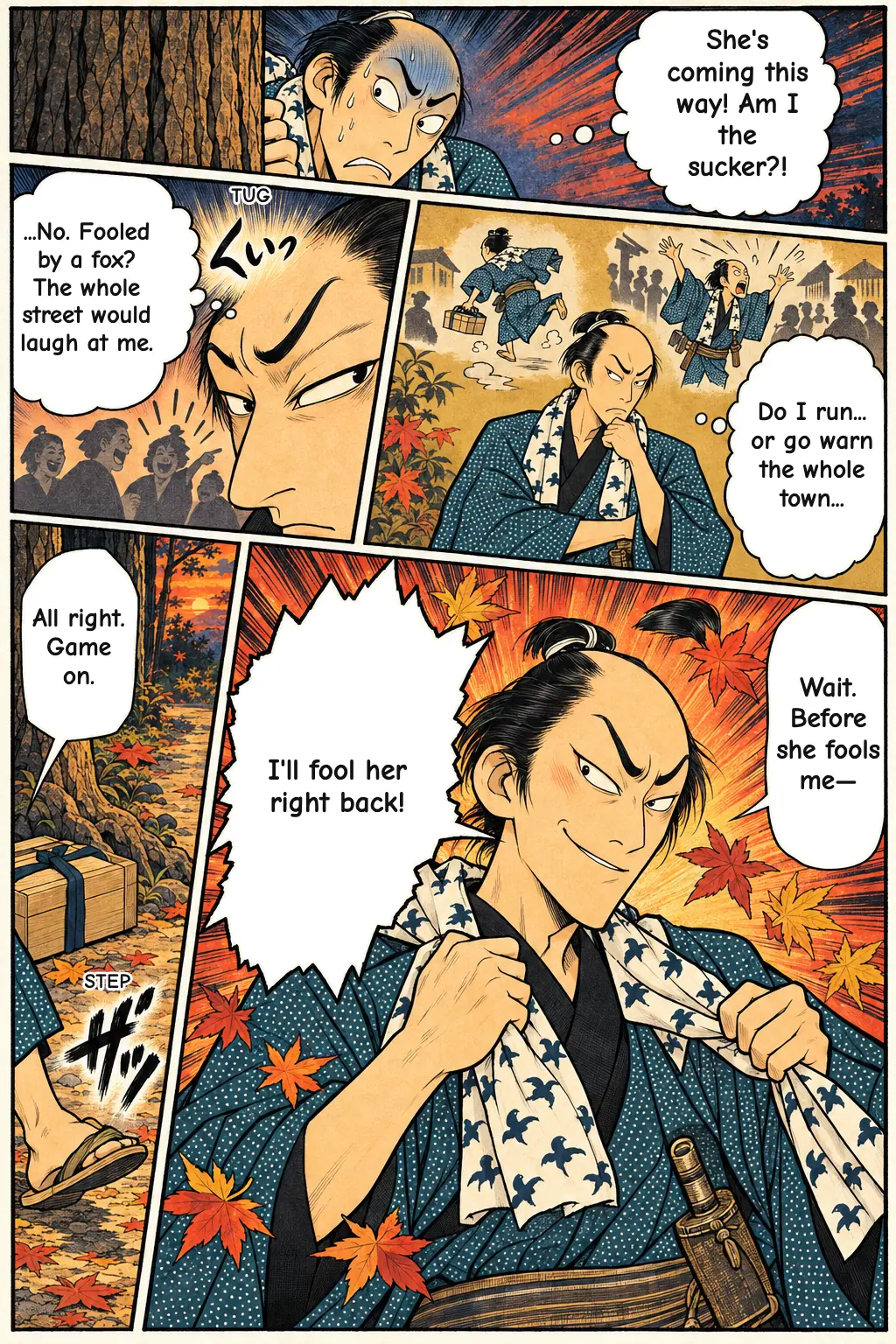
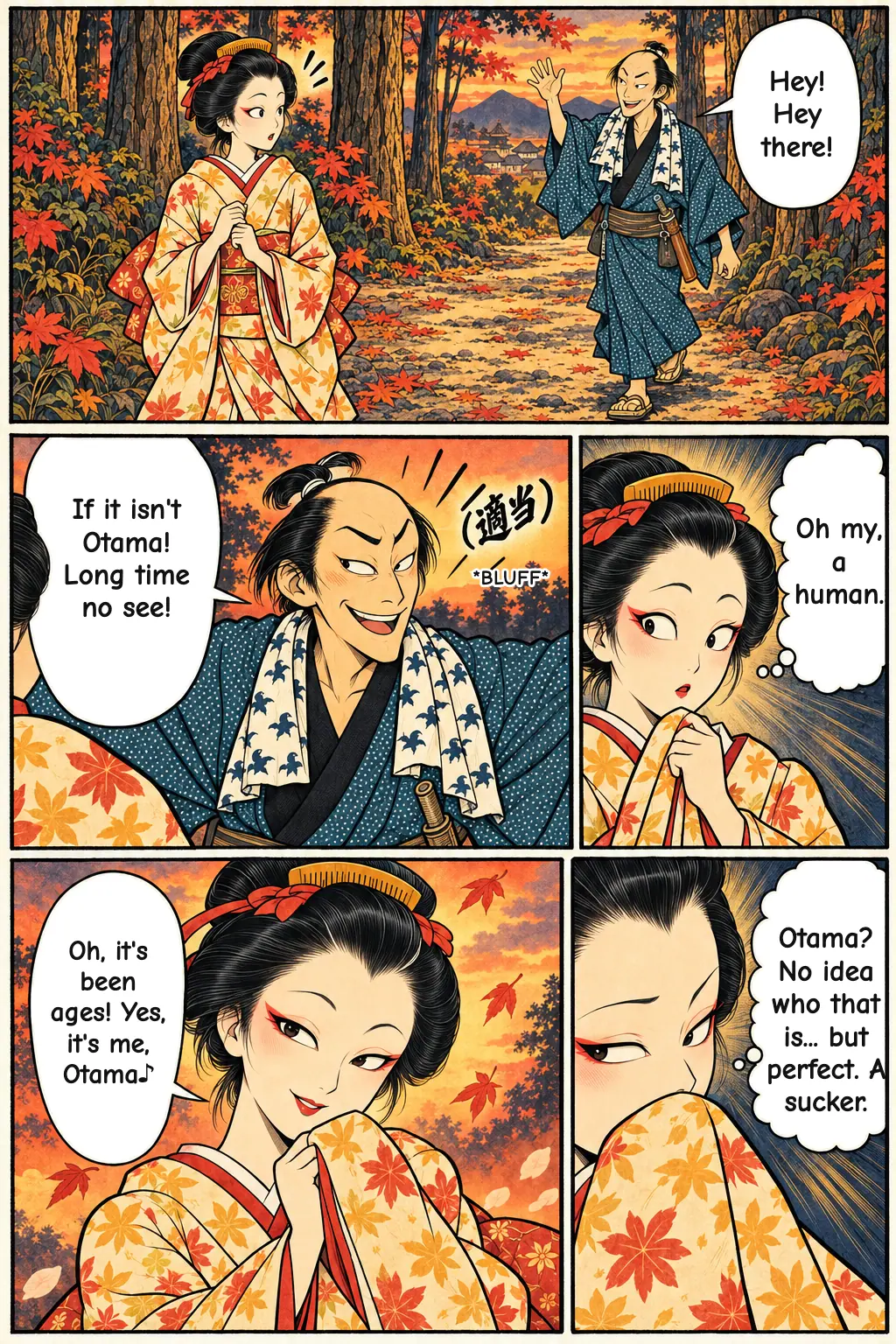
Oji no Kitsune ("The Fox of Oji," sometimes called "Outfoxing the Fox") is a classic rakugo comic story set in Edo, the old name for Tokyo. A man walking near the fox shrine at Oji, then a rural spot on the edge of the city, sees a fox put a leaf on its head, spin around once, and turn into a pretty young woman. He guesses she is about to play a trick on some poor traveler, and he decides to trick her first. Pretending to be an old acquaintance, he greets her by a made-up name, "Otama." The fox plays along, thinking she has found her victim.
Oji no Kitsune (The Fox of Oji) Summary: The Rakugo Tale of a Fox Fooled by a Human
Oji no Kitsune: The Story in Brief
Oji no Kitsune ("The Fox of Oji," sometimes called "Outfoxing the Fox") is a classic rakugo comic story set in Edo, the old name for Tokyo. A man walking near the fox shrine at Oji, then a rural spot on the edge of the city, sees a fox put a leaf on its head, spin around once, and turn into a pretty young woman. He guesses she is about to play a trick on some poor traveler, and he decides to trick her first.
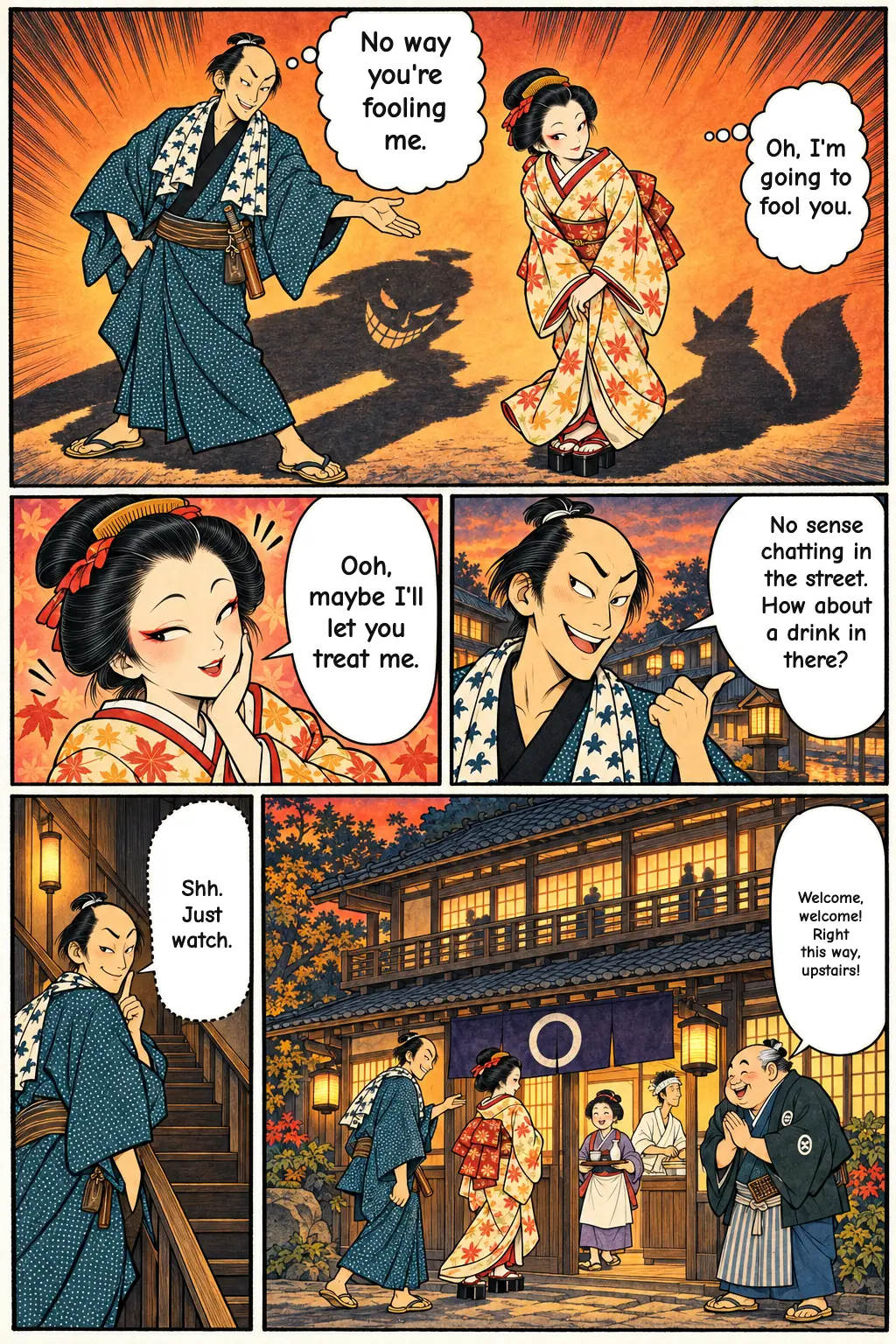
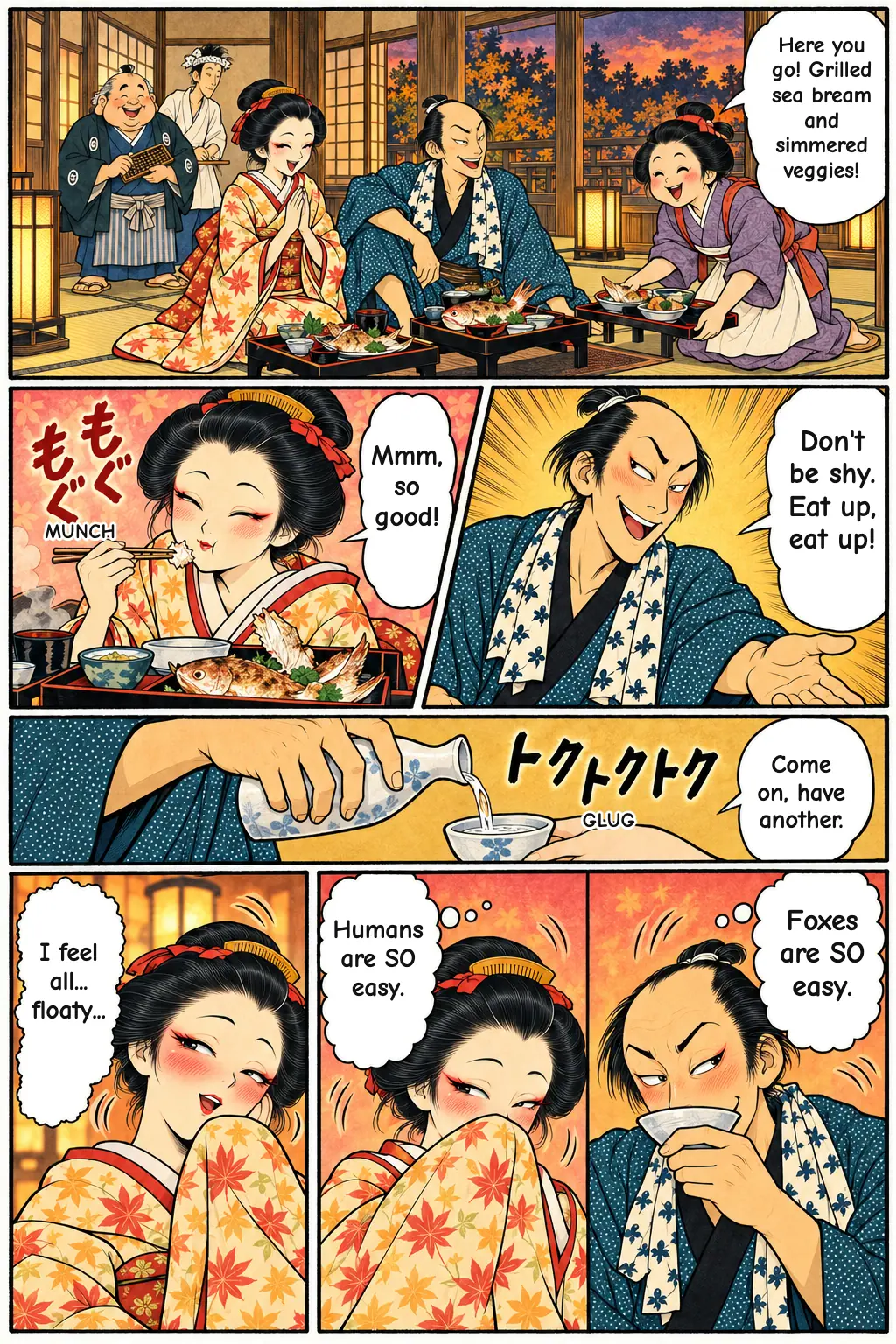
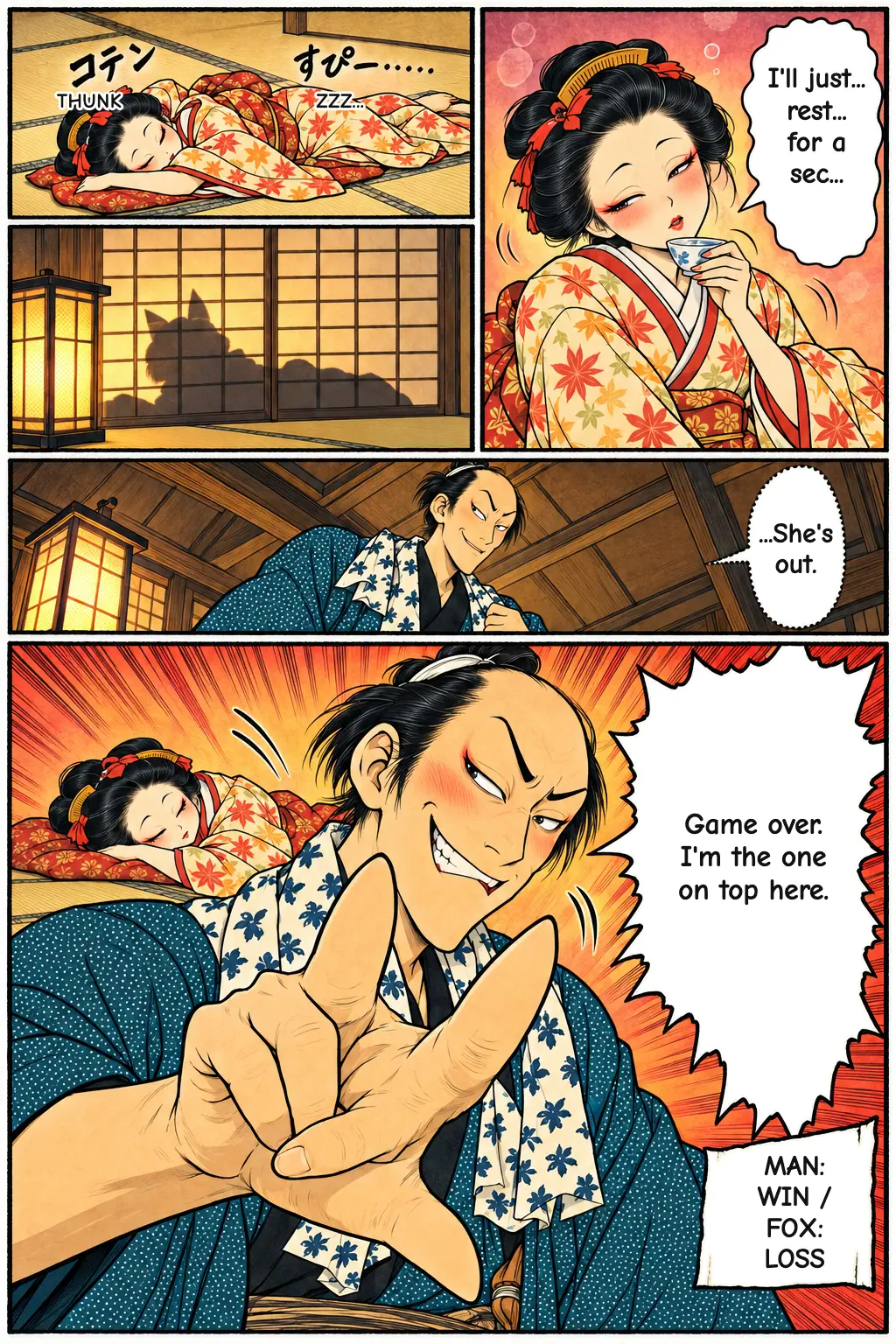
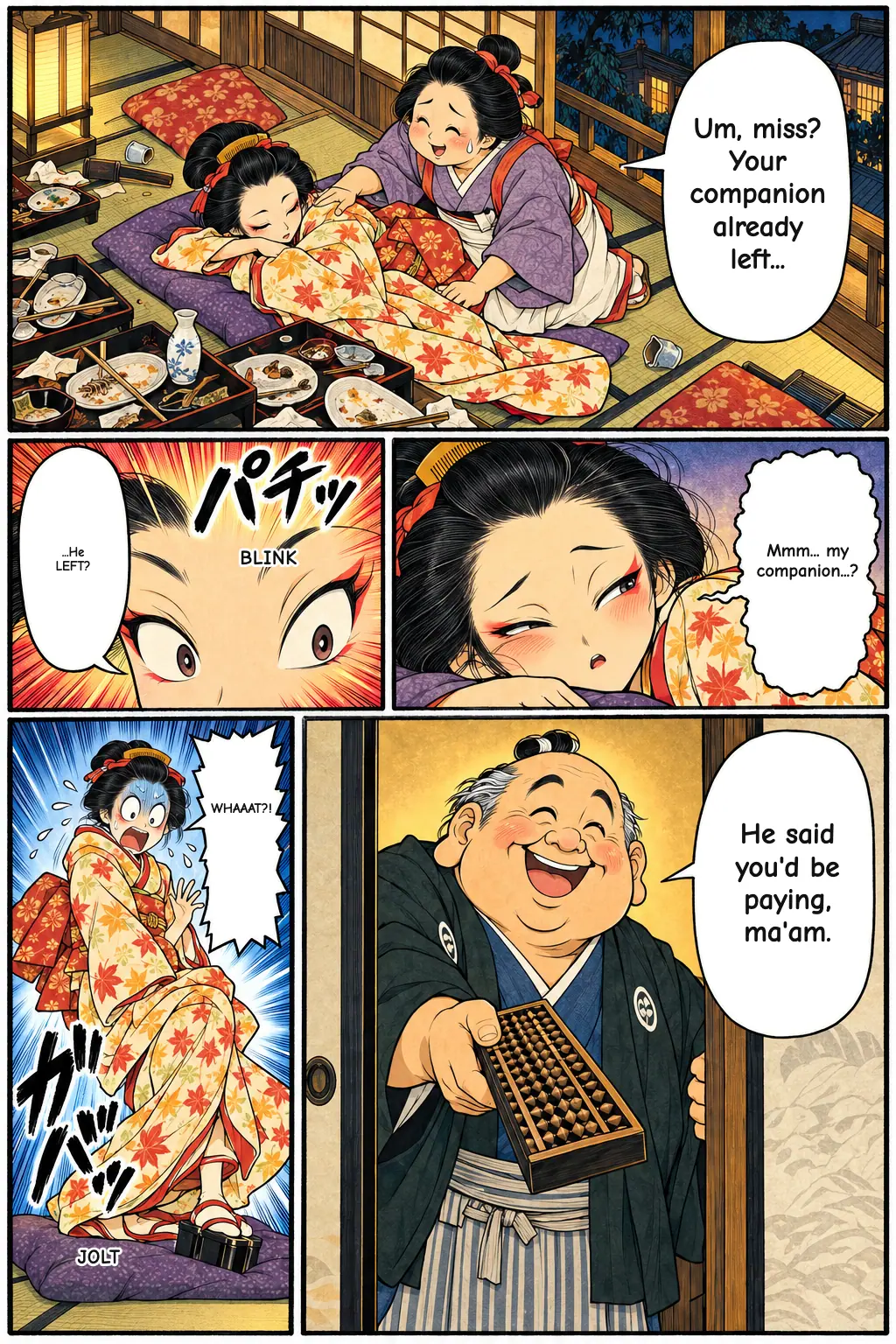
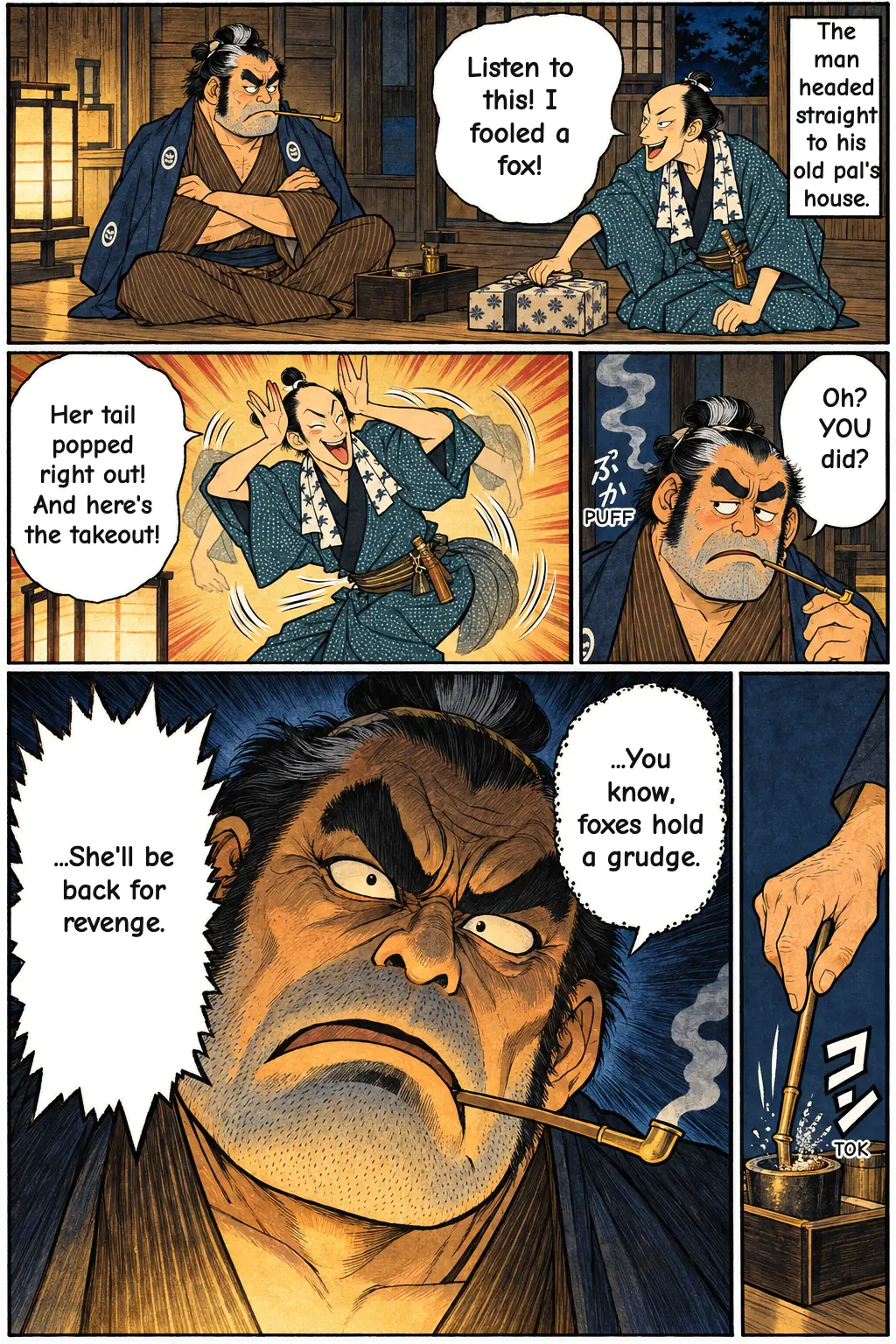
Pretending to be an old acquaintance, he greets her by a made-up name, "Otama." The fox plays along, thinking she has found her victim. He takes her upstairs at a restaurant and keeps ordering food and sake until she gets drunk and falls asleep. Then he goes downstairs alone, tells the staff that "my companion upstairs will pay," has them wrap up some food to take home, and leaves.
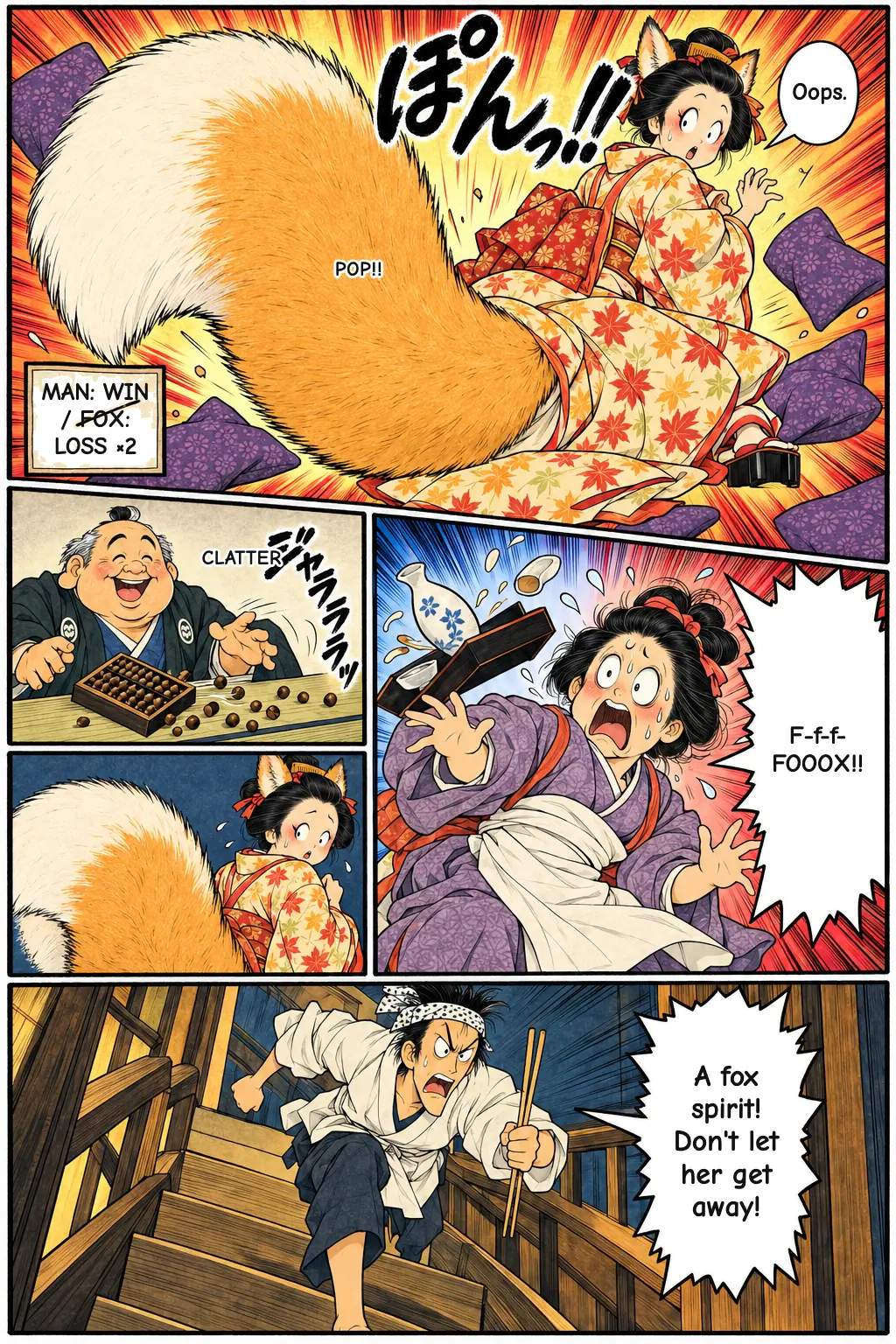
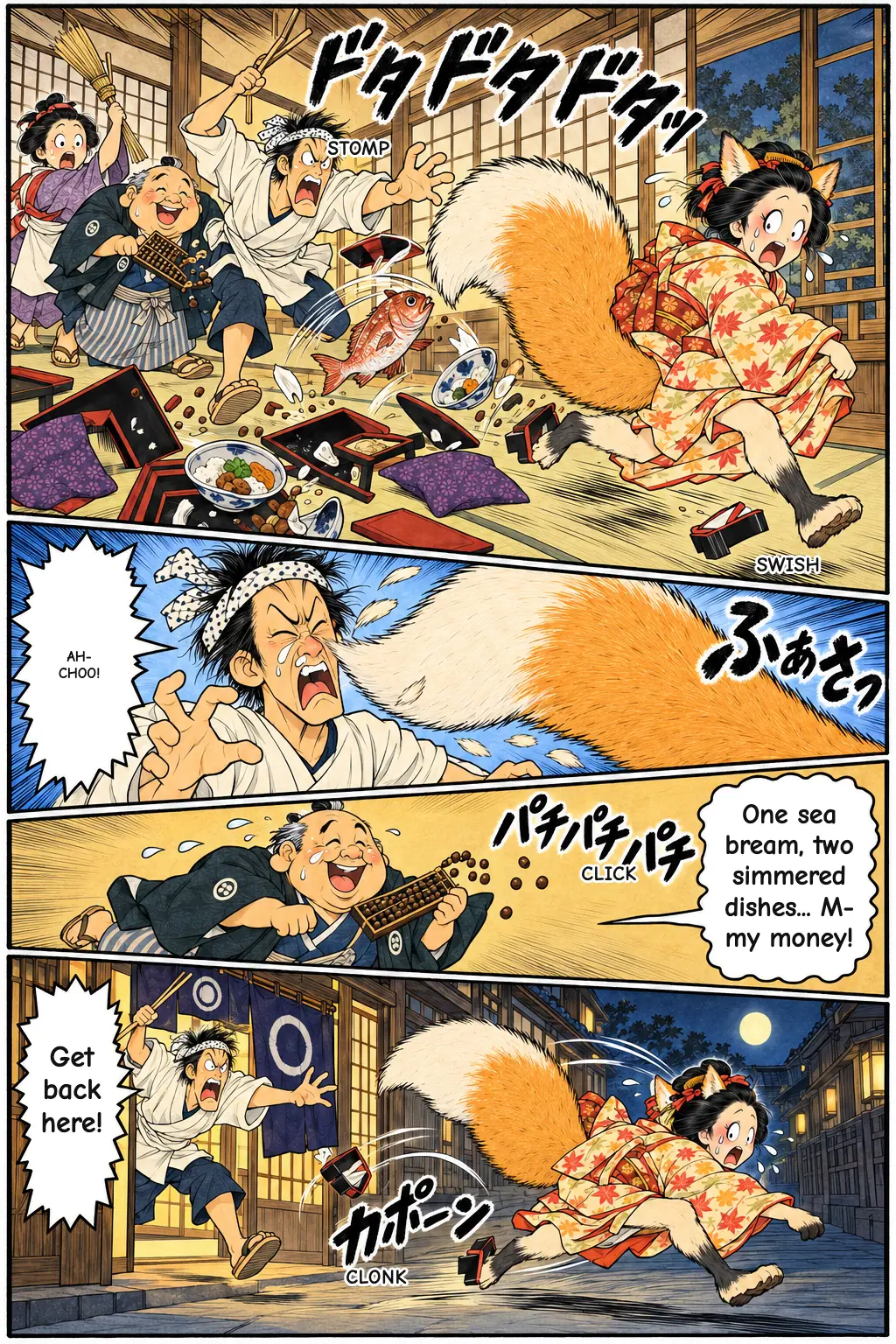
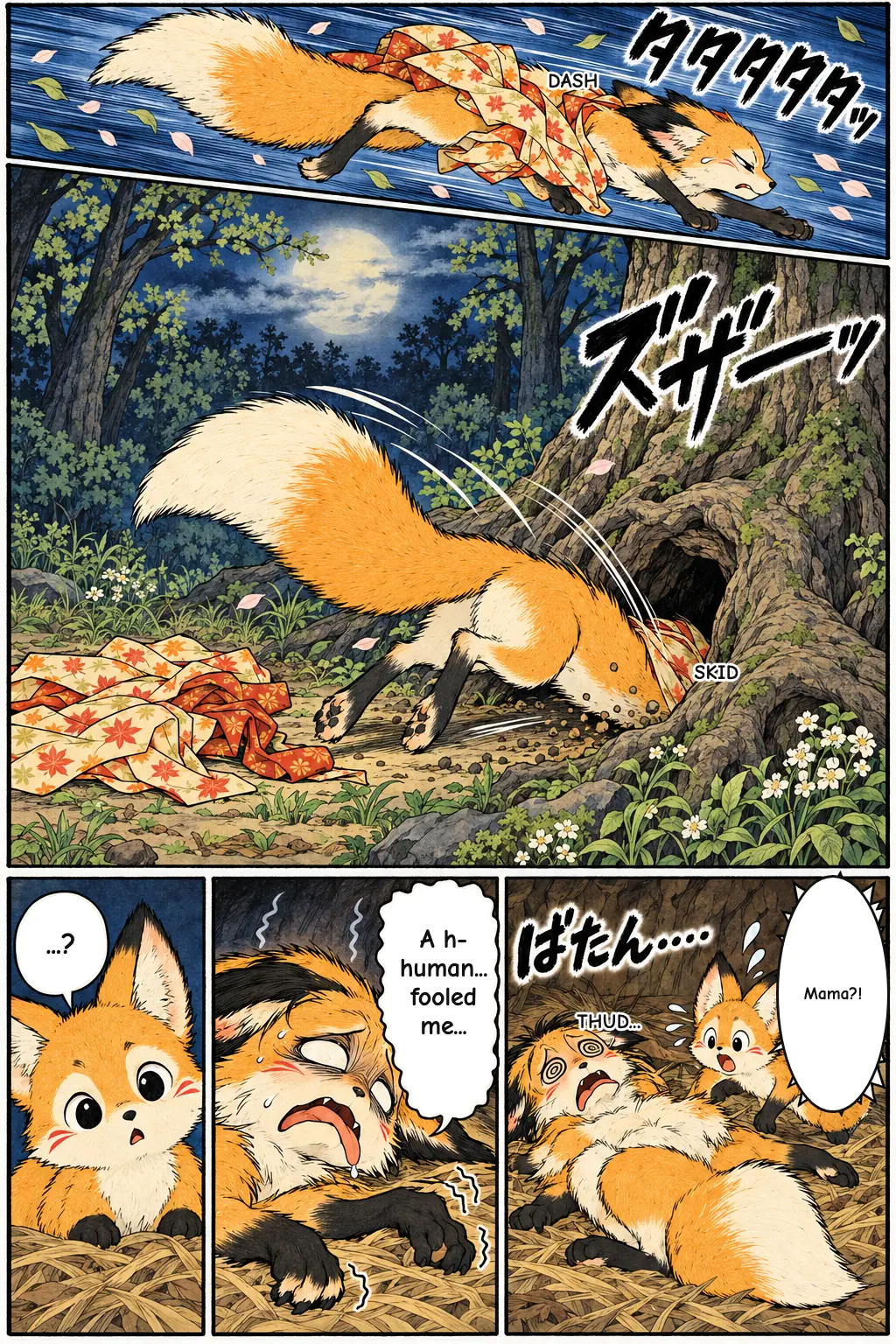
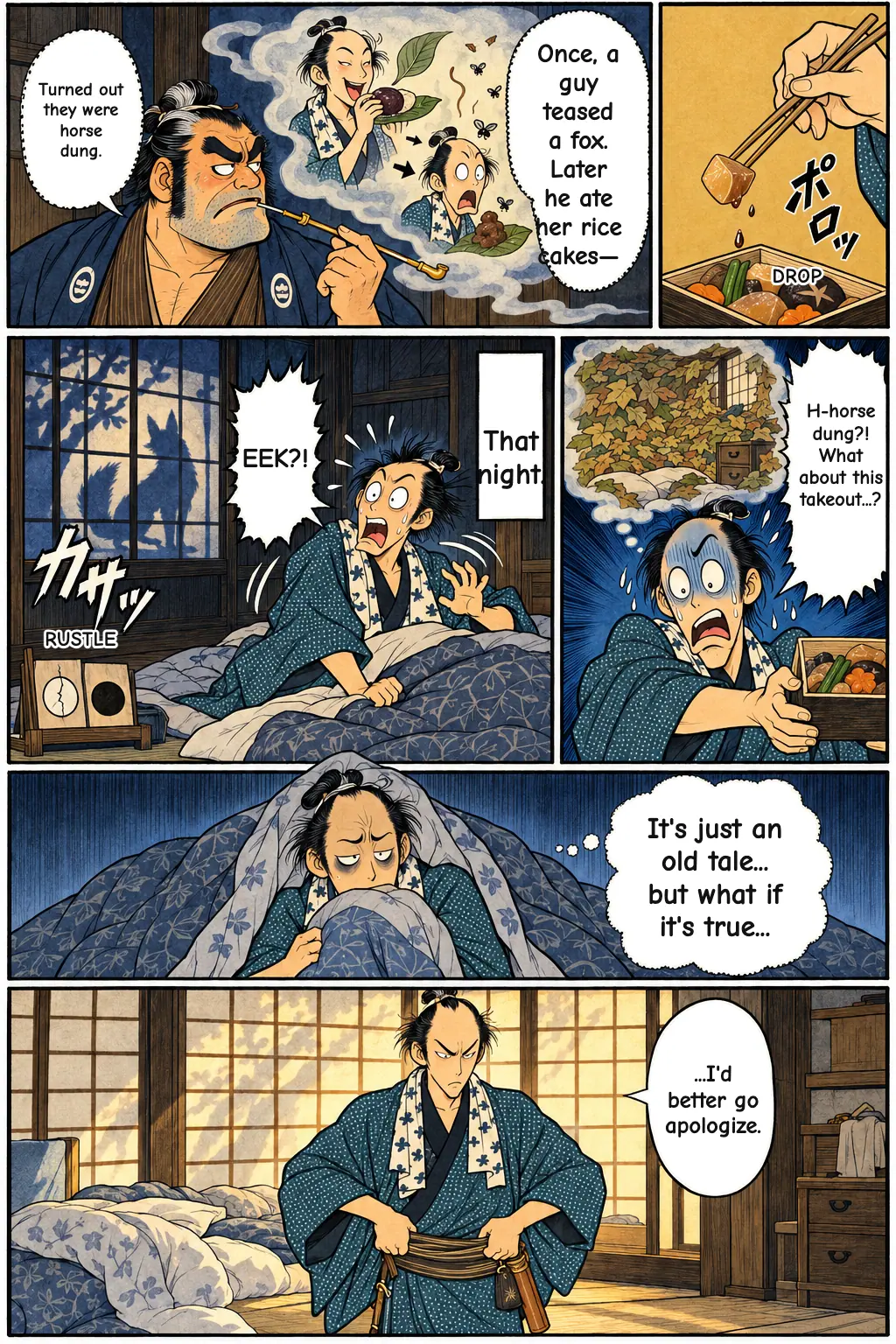
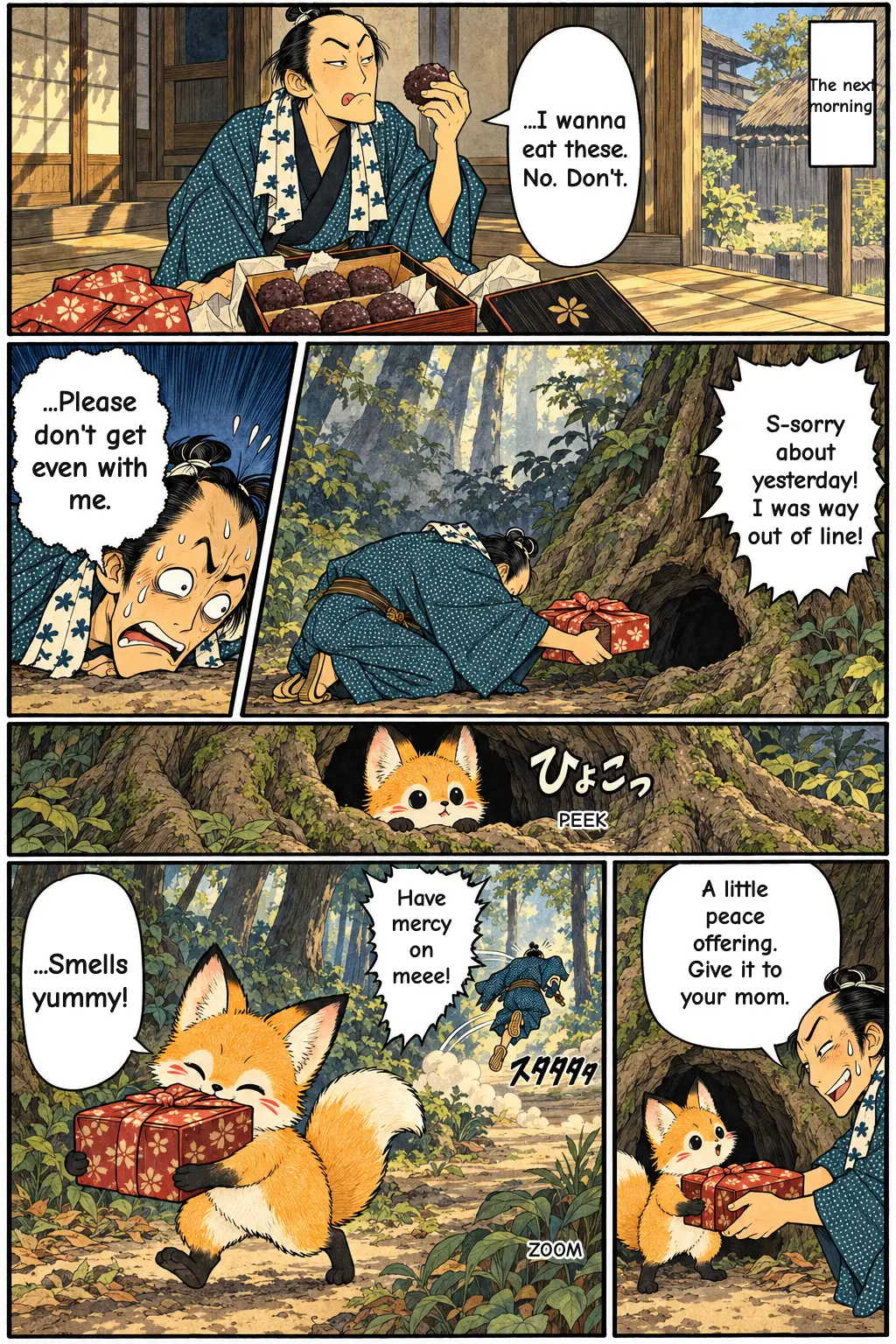
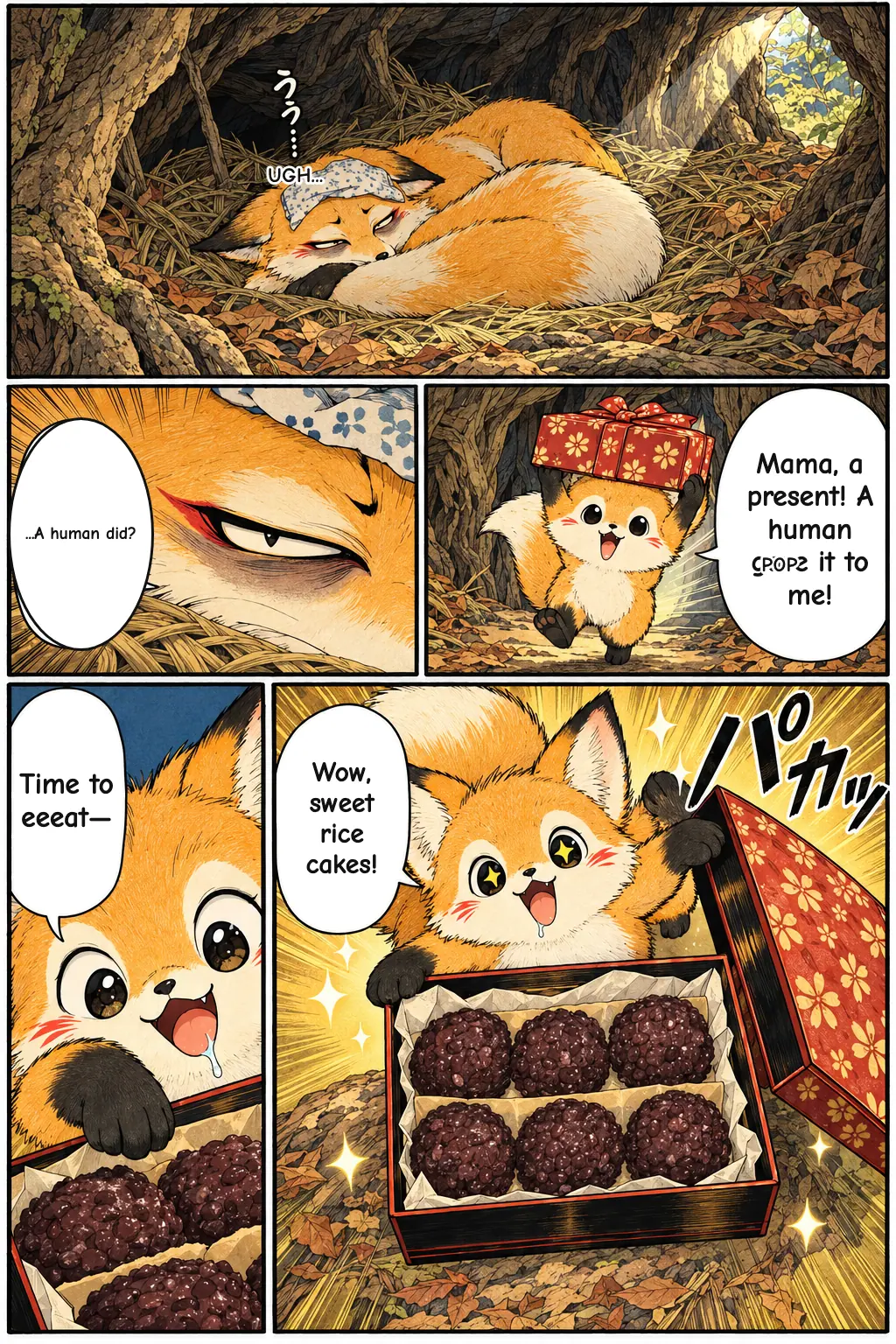
When the staff wake the young woman to collect the bill, she is so startled that her tail and ears pop out. Her disguise gone, the fox is chased out of the restaurant and barely makes it back to her den in the woods. The man brags about all this to an acquaintance, who warns him that foxes hold grudges and will take revenge. Badly scared, the man goes to the fox's den the next day with sweet rice cakes as an apology. A fox cub comes out and takes the package to its mother, who is in bed worn out from the chase. What she says to her cub is the story's punchline, which we explain further down.
What Is Rakugo?
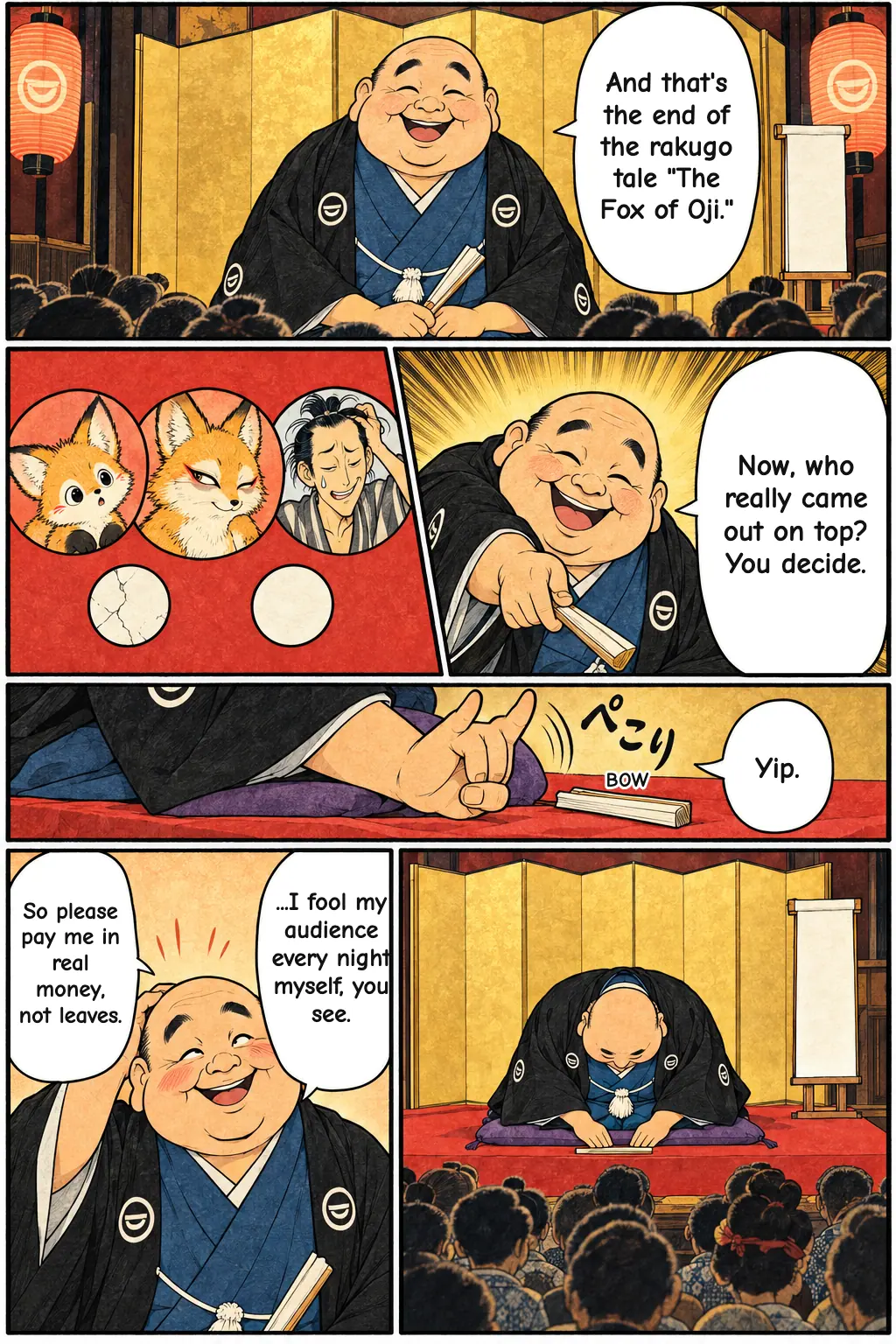
Rakugo is a Japanese form of comic storytelling that has been performed in small theaters called yose for a few hundred years. A single storyteller sits on a cushion in a kimono and plays every character, using only a folding fan and a hand towel as props. A turn of the head, a change of voice, and a fan held like chopsticks or a sake cup are all it takes to bring a whole street to life. Most stories end on a final line called the ochi or sage, the "drop," which caps the story with a laugh. In this manga series, the storyteller who opens and closes each episode, Shomontei Fukurai, is a fictional narrator made up for the series, not a real performer.
Foxes, Shape-Shifting, and Why Oji
In Japanese folklore the fox, or kitsune, is known for bewitching people. In the old phrase, foxes "bakasu" humans: they take a human form, lead travelers astray, or make people see things that are not there. A leaf on the head before the transformation is a familiar part of this kind of folk tale. Foxes are also linked to Inari, the deity of rice and prosperity, whose shrines are often guarded by fox statues.
Oji, now part of Kita Ward in Tokyo, was famous for its foxes in the Edo period. Its Inari shrine was well known, and according to a local legend, foxes from all over the region gathered there on New Year's Eve. Edo audiences would have heard the name "Oji" and expected a fox story right away. That is why the story works so well: everyone expects the fox to do the fooling, and instead it is the human who fools her.
What the Manga Version Changed
We checked the plot against shorthand transcripts of rakugo performances published in the Meiji and Taisho eras (late 1800s to 1920s), by storytellers who all died by 1930. The script itself is our own, written from scratch. The main events are all taken from the traditional story: the transformation, the fake name "Otama," the unpaid bill, the fox's exposure, the warning, the apology gift, and the final line.
The rest is our invention. The shrine and restaurant in the manga are fictional, with made-up names and crests, and are not drawn to look like the real places. The dishes, the take-home food, the season, the woman's face and kimono, and the smoke and swirling leaves of the transformation are all creative choices. The man has no fixed name in the traditional story, and the manga does not give him one. The traditional story does not make clear exactly who warns him, so the manga makes that person an older friend and writes his scary warnings itself. In some old versions the fox is beaten by the restaurant staff. The manga turns this into a slapstick chase with brooms and trays, so the mother fox is simply exhausted rather than hurt. Fukurai's opening and closing scenes are also new.
The Punchline (Ochi / Sage) Explained
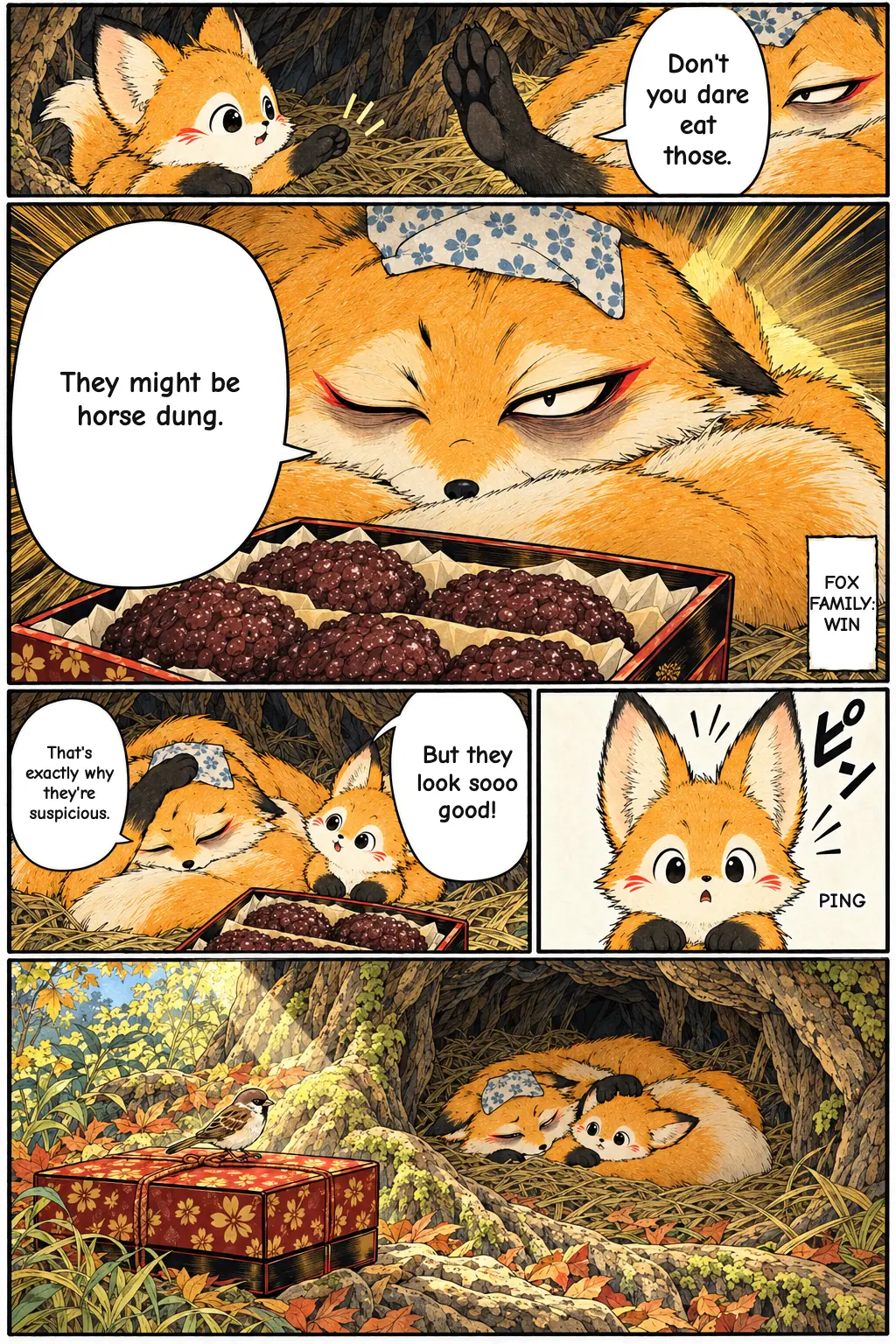
Spoiler ahead. The cub opens the package and finds botamochi, soft rice cakes covered in sweet brown bean paste, and wants to eat them right away. The mother fox stops it: "Don't eat those. They might be horse dung."
Two things make this funny. First, in Japanese folk tales, offering a person horse droppings disguised as tasty food is a classic fox trick, and lumpy brown botamochi really do look the part. Second, the mother fox now expects humans to use her own trick. A fox is supposed to be the one who fools people, but after one bad night she warns her child that humans are the ones who fool you. The roles have flipped: the trickster has become the one who gets tricked, and the man's honest apology is mistaken for one more trick.
Where to Read It
You can read Episode 8 of RAKUGO: Japan's Comic Tales, "The Fox Who Got Fooled by a Human," here on Manga Portal. Every episode is free, and there is no sign-up. If you liked watching a trickster get out-tricked, the other episodes in the series are full of more of Edo's talkers, schemers, and lovable fools.
Characters in this episode
The Man
A quick-witted Edo townsman who sees a fox transform, fools her first, and then panics when warned that she will take revenge.
The Mother Fox ("Otama")
A fox from the Inari woods who turns into a young woman to trick people, only to be stuck with a restaurant bill and chased home.
The Fox Cub
The mother fox's innocent child, who takes the man's apology gift and can't wait to eat the rice cakes.
The Restaurant Staff
They wake the sleeping "guest" to collect the bill, discover she is a fox, and chase her out.
The Man's Acquaintance
He hears the man brag and warns him that foxes always take revenge (in the manga he is an older friend).
Shomontei Fukurai
The series' fictional rakugo storyteller, who appears only at the beginning and end of each episode.
FAQ
What is Oji no Kitsune about?
It is a classic rakugo comic story about a man who sees a fox turn into a woman near Oji in old Tokyo and tricks her first. He leaves her with a restaurant bill, then panics about her revenge and brings an apology gift that the foxes refuse to trust.
What is the punchline of Oji no Kitsune?
The mother fox tells her cub not to eat the man's rice cakes because they might be horse dung. Passing off horse dung as food is a classic fox trick, so the joke is that the fox now expects humans to trick her.
Why are foxes associated with Oji?
Oji, now in Kita Ward, Tokyo, had a famous Inari shrine, and foxes are linked with Inari. A local legend says foxes gathered there on New Year's Eve, so Edo audiences connected the area with fox stories.
Do foxes trick people in Japanese folklore?
Yes. In Japanese folk belief the kitsune can take human form and bewitch people, for example by leading them astray or making them see illusions. Many rakugo stories and folk tales play with this idea.
What is rakugo?
Rakugo is a traditional Japanese form of comic storytelling. One performer sits on a cushion and plays every character with only a fan and a hand towel, and most stories end with a punchline.