Episode 2My Ex's Sister Is Moving Into My HousePersuasion (Jane Austen)
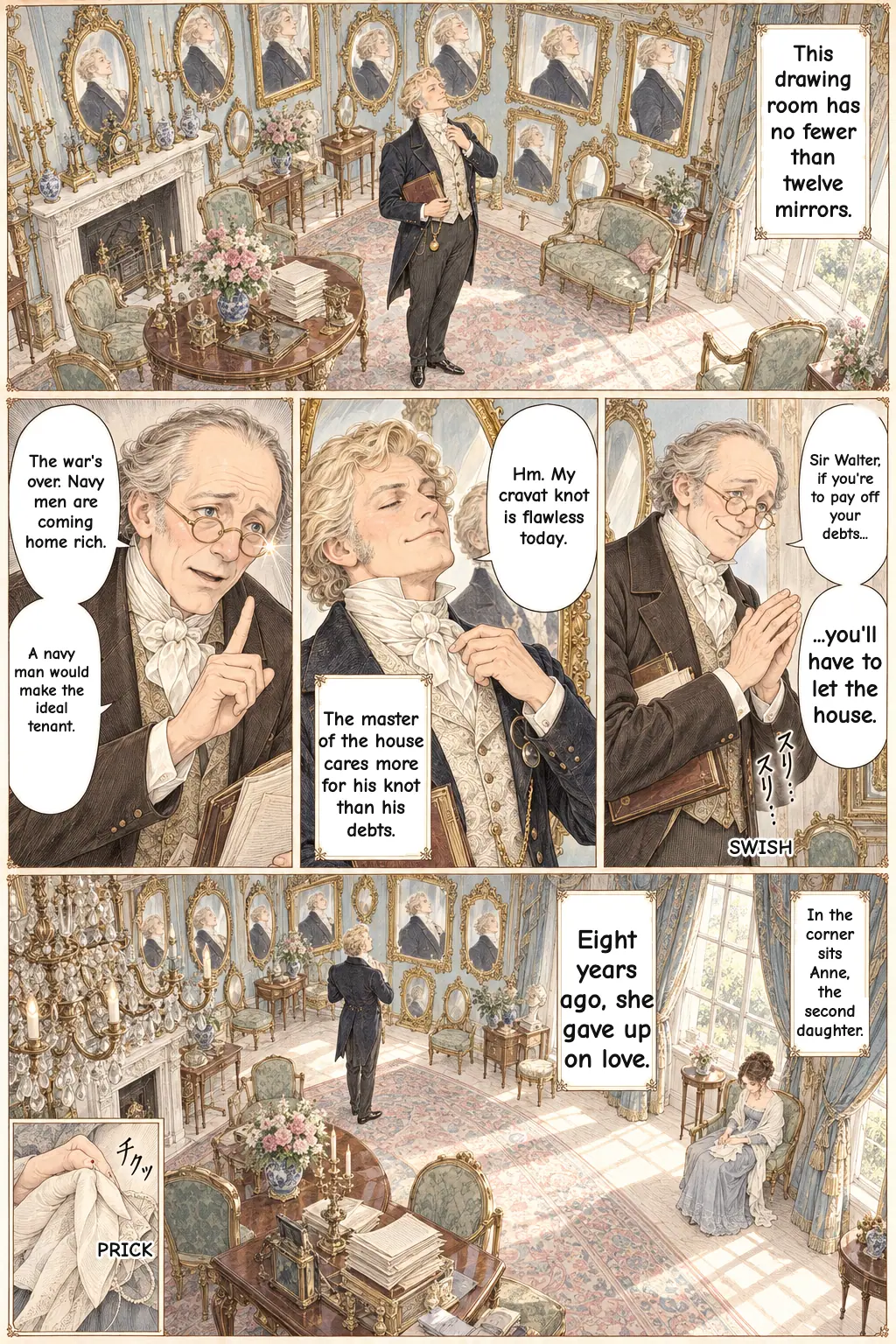
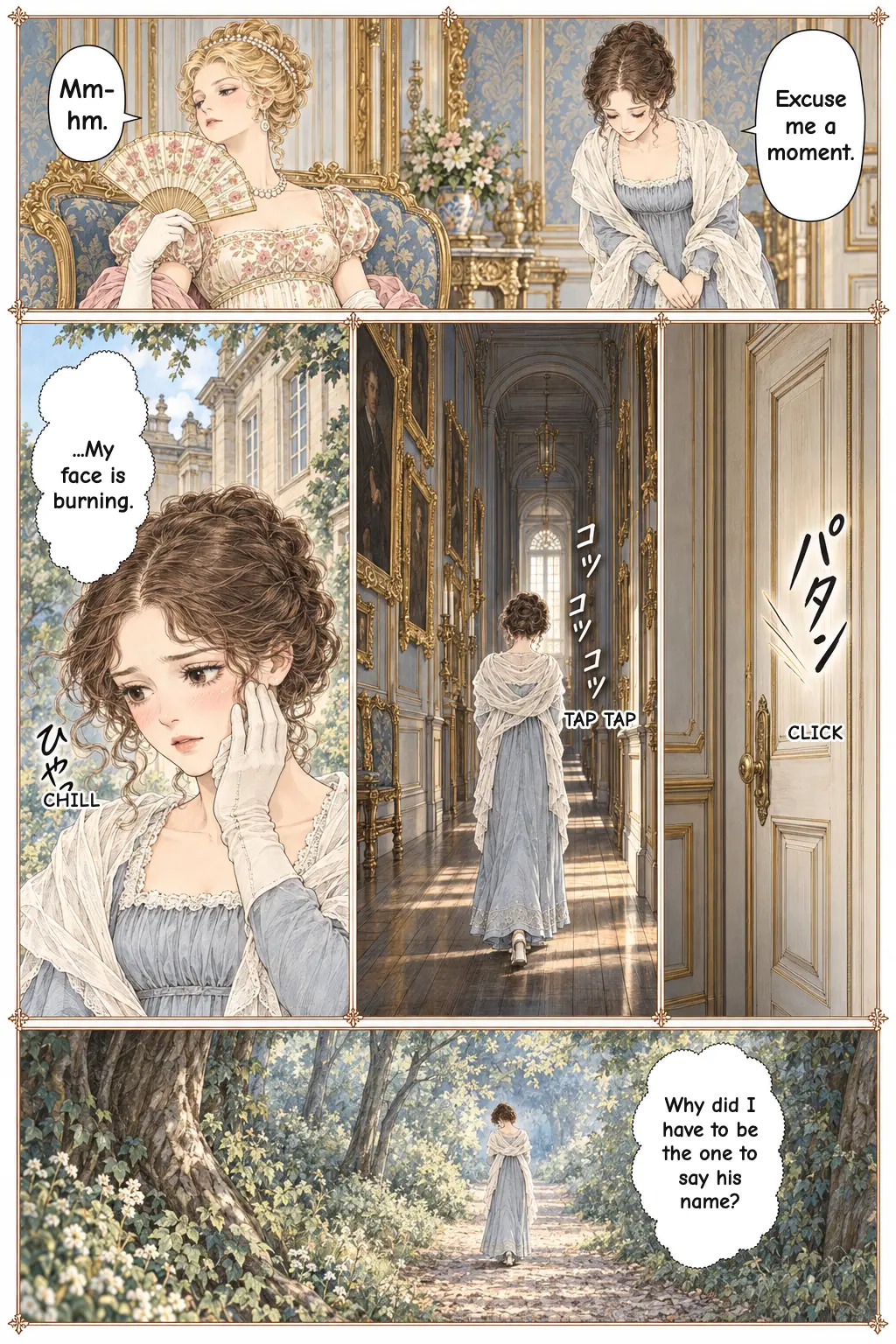
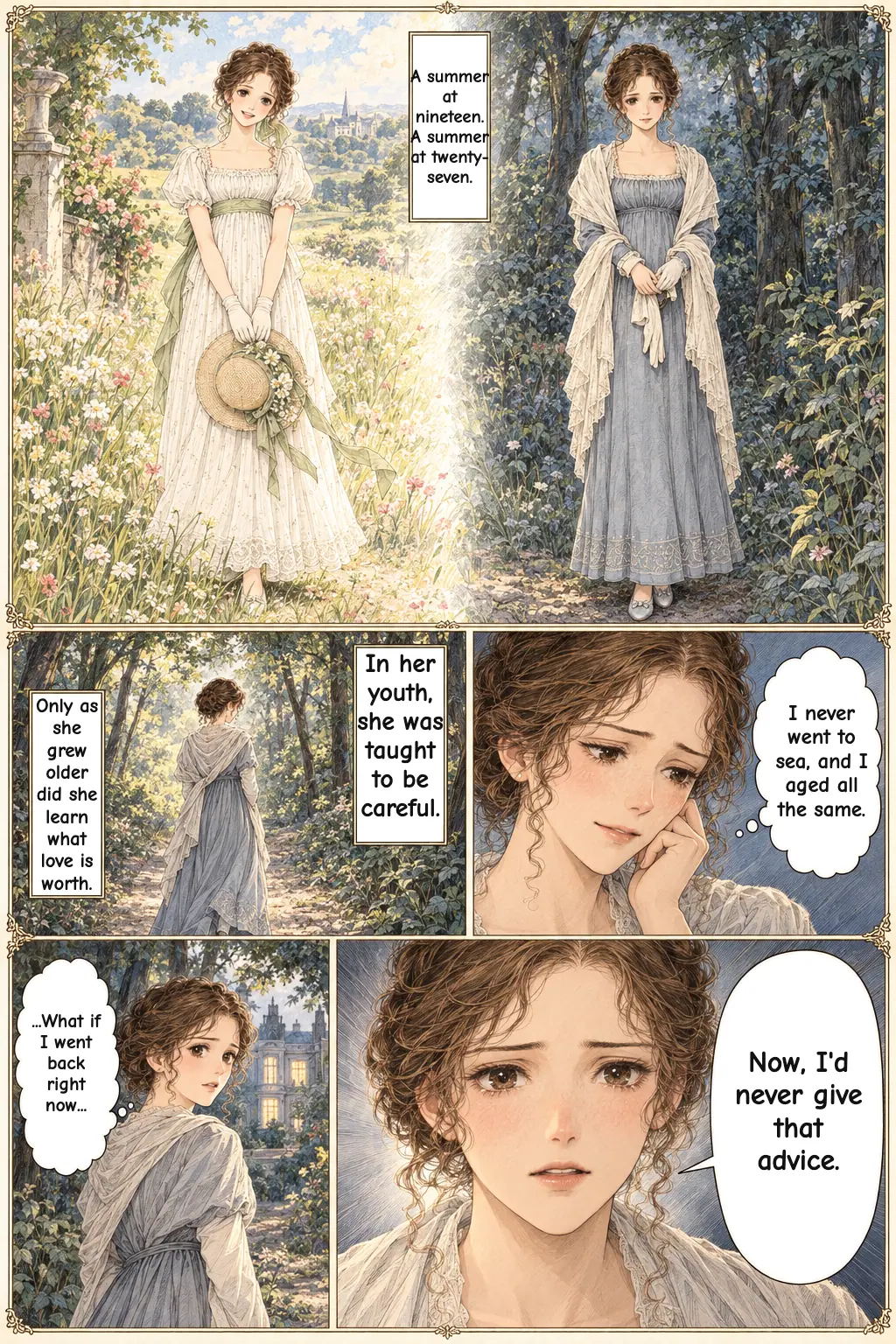
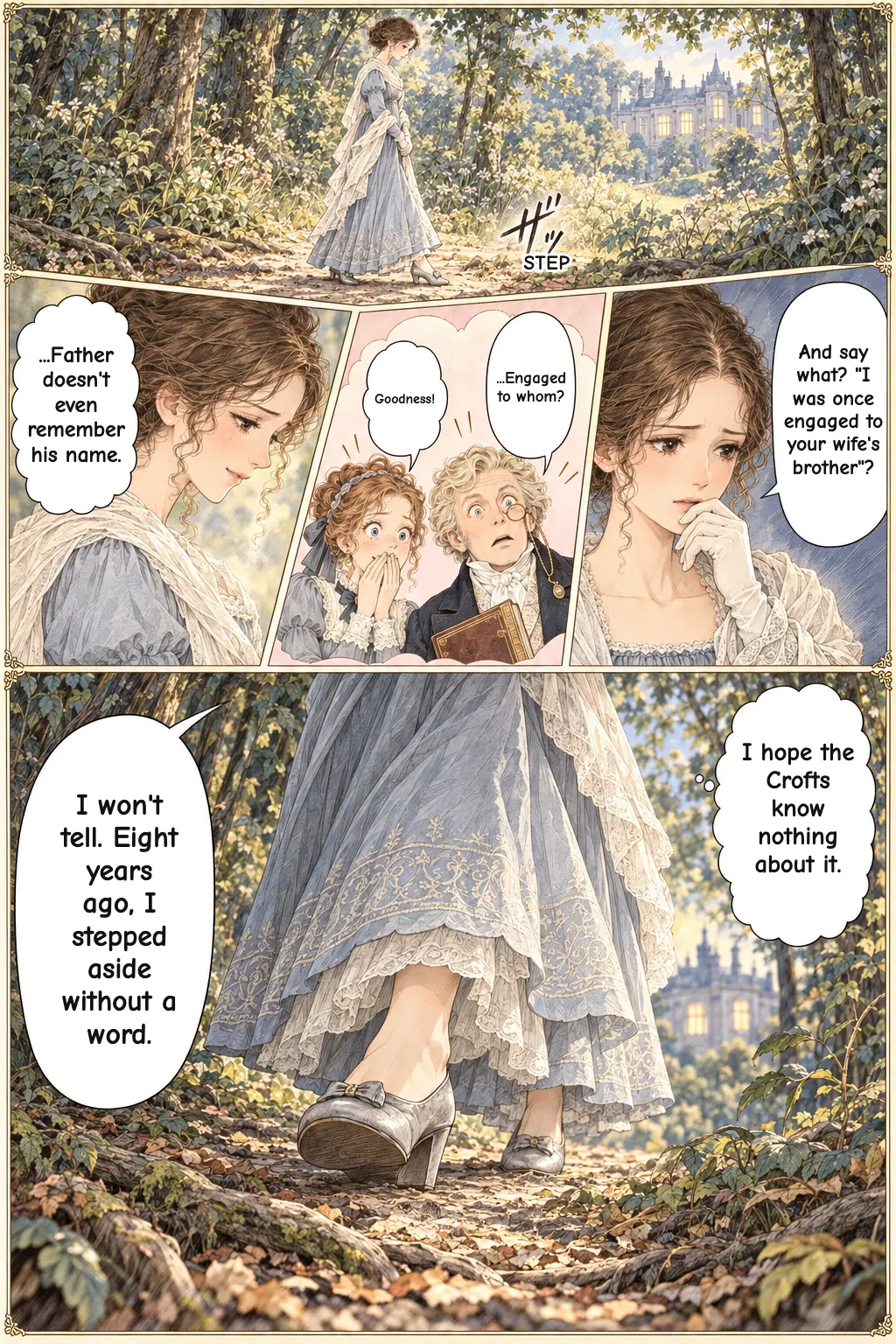
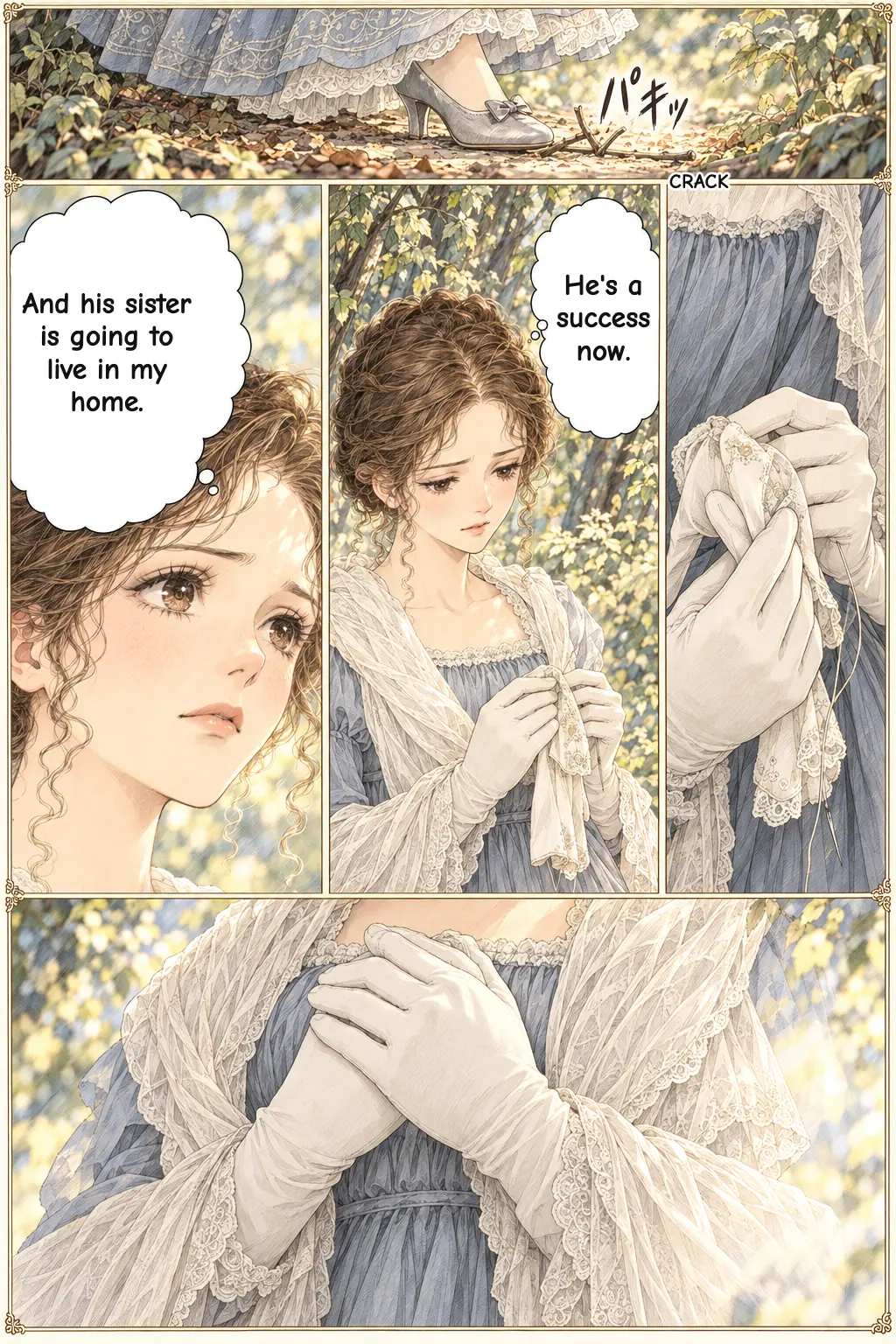
While her family turns choosing a tenant into a comedy, settling on a navy admiral, 27-year-old Anne Elliot ends up saying a name before anyone else can. It belongs to the man she gave up more than seven years ago. Out on the woodland path, she remembers the summer she was nineteen, and quietly accepts that his sister is about to live in her home.
19 pagesFree · No sign-up
In short: In Chapters 3–4 of Jane Austen's Persuasion (1817), Sir Walter Elliot, short of money, agrees to rent his house, Kellynch Hall, to a navy admiral. When the lawyer can't recall the name of the admiral's wife's brother, his daughter Anne says it for him: Wentworth. That is the man she was engaged to at 19 and then gave up after being persuaded.
Persuasion opens in the summer of 1814. The long wars against Napoleon seem to be over, and navy officers are coming home in large numbers. Sir Walter Elliot, a baronet who cares a great deal about looks and rank, has spent far more than he can afford. To save money, his family has agreed to rent out their country house, Kellynch Hall, and move to the city of Bath. Mr. Shepherd, the family's careful lawyer, suggests that a rich navy officer would make an ideal tenant, since many have made fortunes during the war. His daughter, Mrs.
Persuasion Chapters 3–4 Summary: Anne Elliot, Wentworth & the Admiral
What Happens in Chapter 3: A Navy Tenant for Kellynch Hall
Persuasion opens in the summer of 1814. The long wars against Napoleon seem to be over, and navy officers are coming home in large numbers. Sir Walter Elliot, a baronet who cares a great deal about looks and rank, has spent far more than he can afford. To save money, his family has agreed to rent out their country house, Kellynch Hall, and move to the city of Bath.
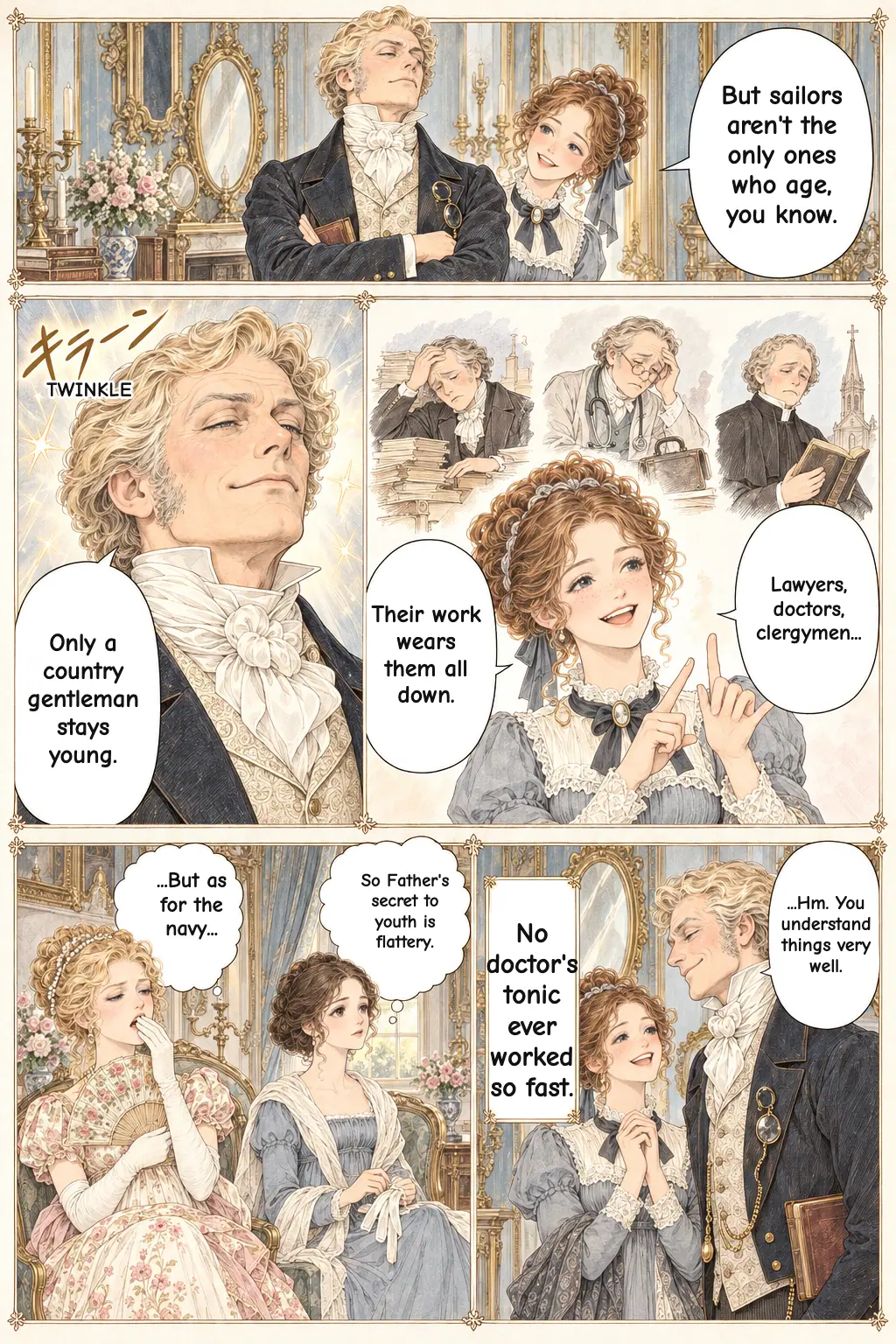
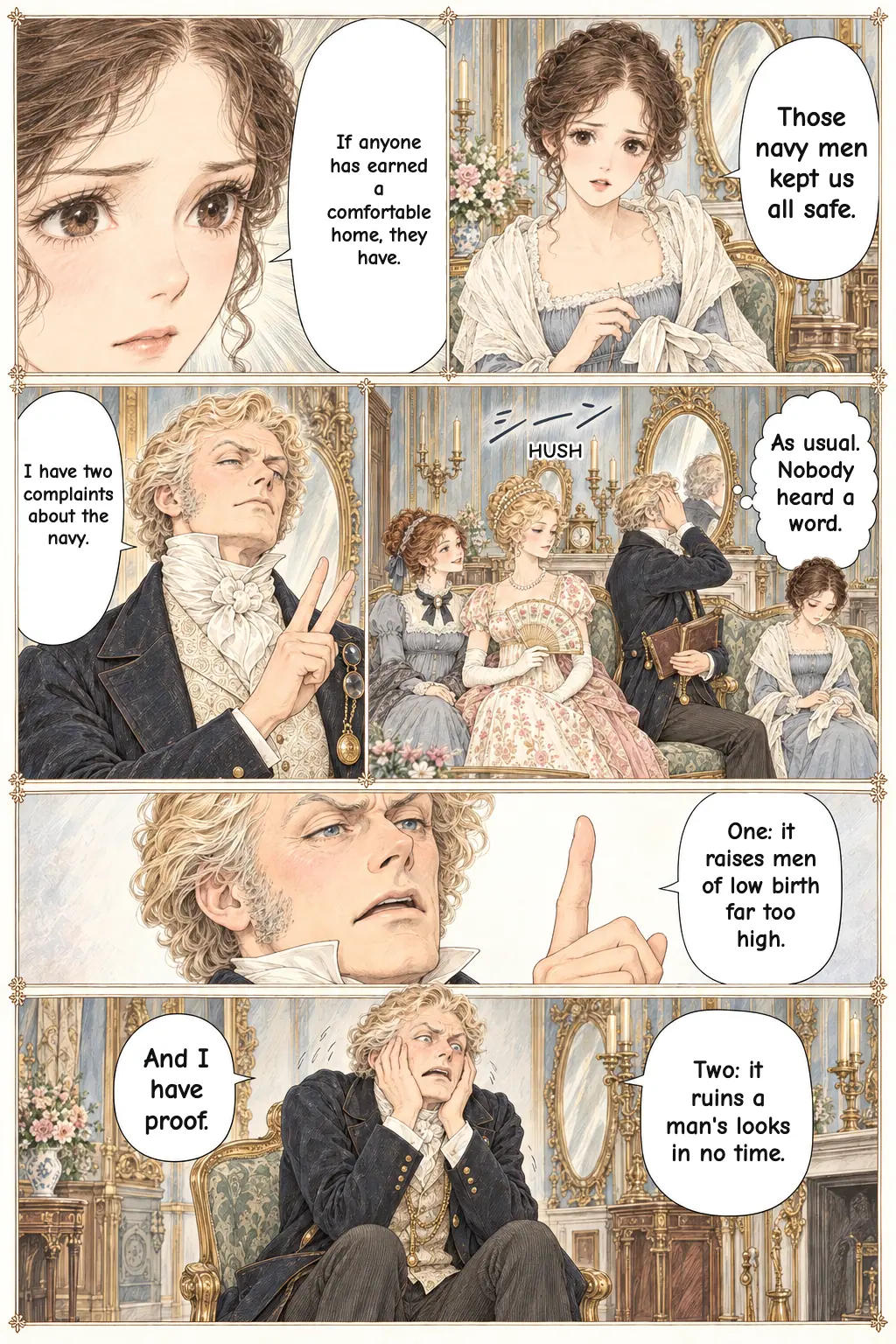
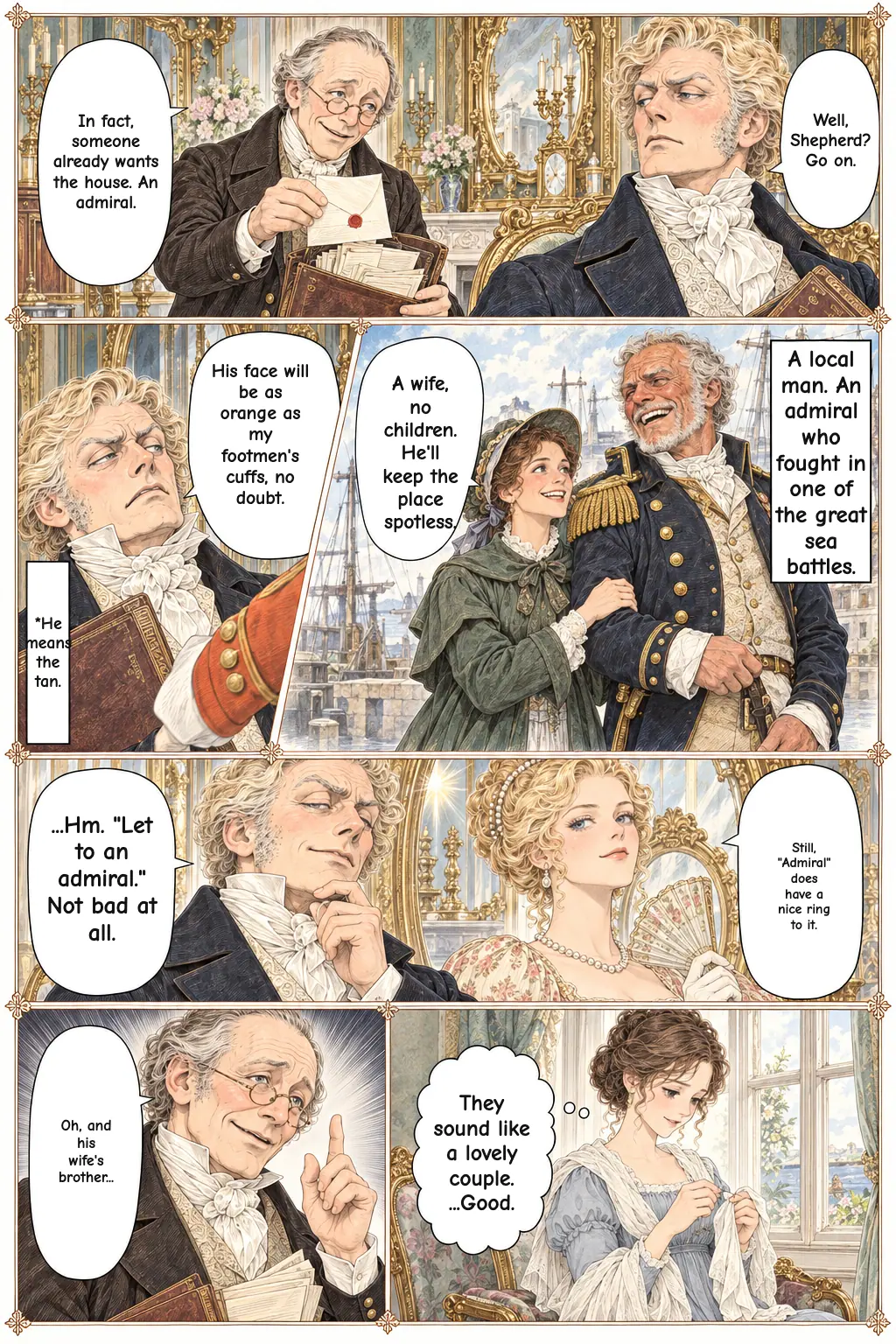
Mr. Shepherd, the family's careful lawyer, suggests that a rich navy officer would make an ideal tenant, since many have made fortunes during the war. His daughter, Mrs. Clay, a widow who visits the Elliots often, flatters Sir Walter by saying that every profession ages a man, and only a country gentleman keeps his youthful looks. Anne, Sir Walter's quiet second daughter, is the only one who speaks up for the sailors. She argues that men who served the country so well deserve a comfortable home as much as anyone.
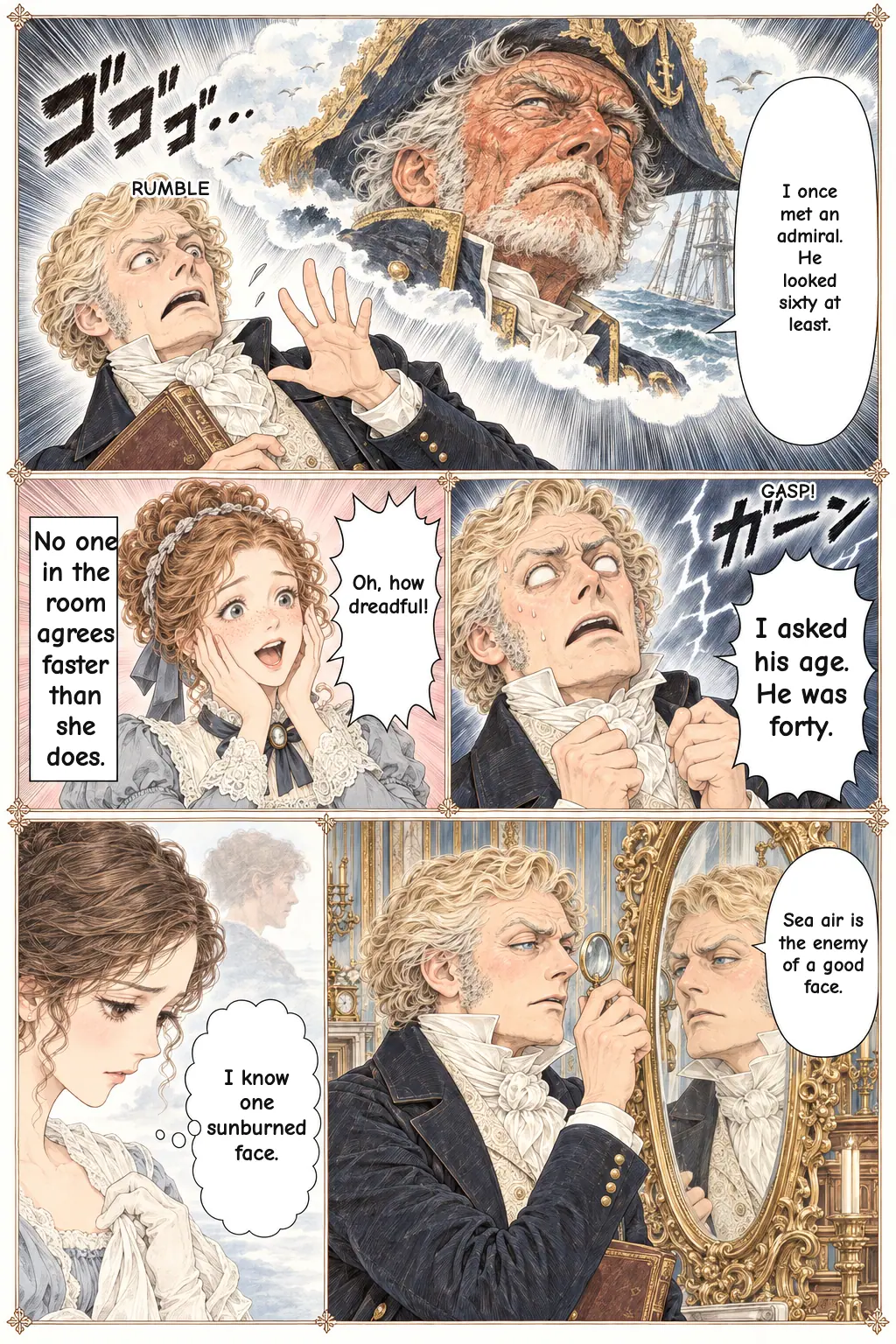
Sir Walter has two complaints about the navy. It raises men of humble birth to honors he thinks they don't deserve, and the sea air ruins a man's face. As his example he describes an Admiral Baldwin, so weathered that Sir Walter took him for about sixty. The man turned out to be forty. It's one of the funniest moments in the opening chapters.
Then Mr. Shepherd names an actual applicant: Admiral Croft, a rear admiral from Somerset who fought at Trafalgar and later served in the East Indies. He is married, with no children. Sir Walter jokes that the admiral's face must be as orange as the trim on his servants' uniforms. Still, the title "admiral" sounds grand enough that he and his eldest daughter, Elizabeth, begin leaning toward the deal (it is settled formally in Chapter 5).
The Name Only Anne Remembers
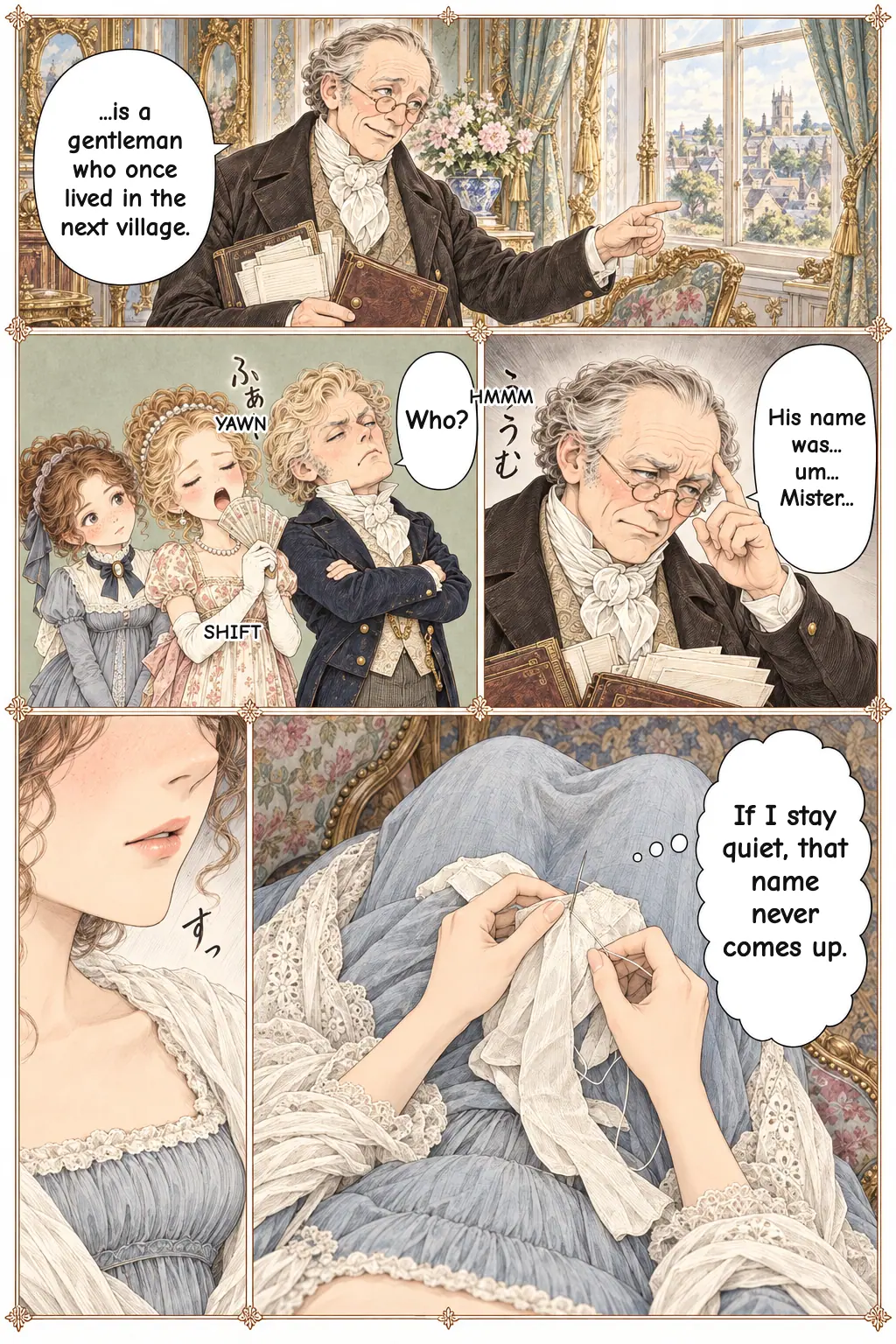
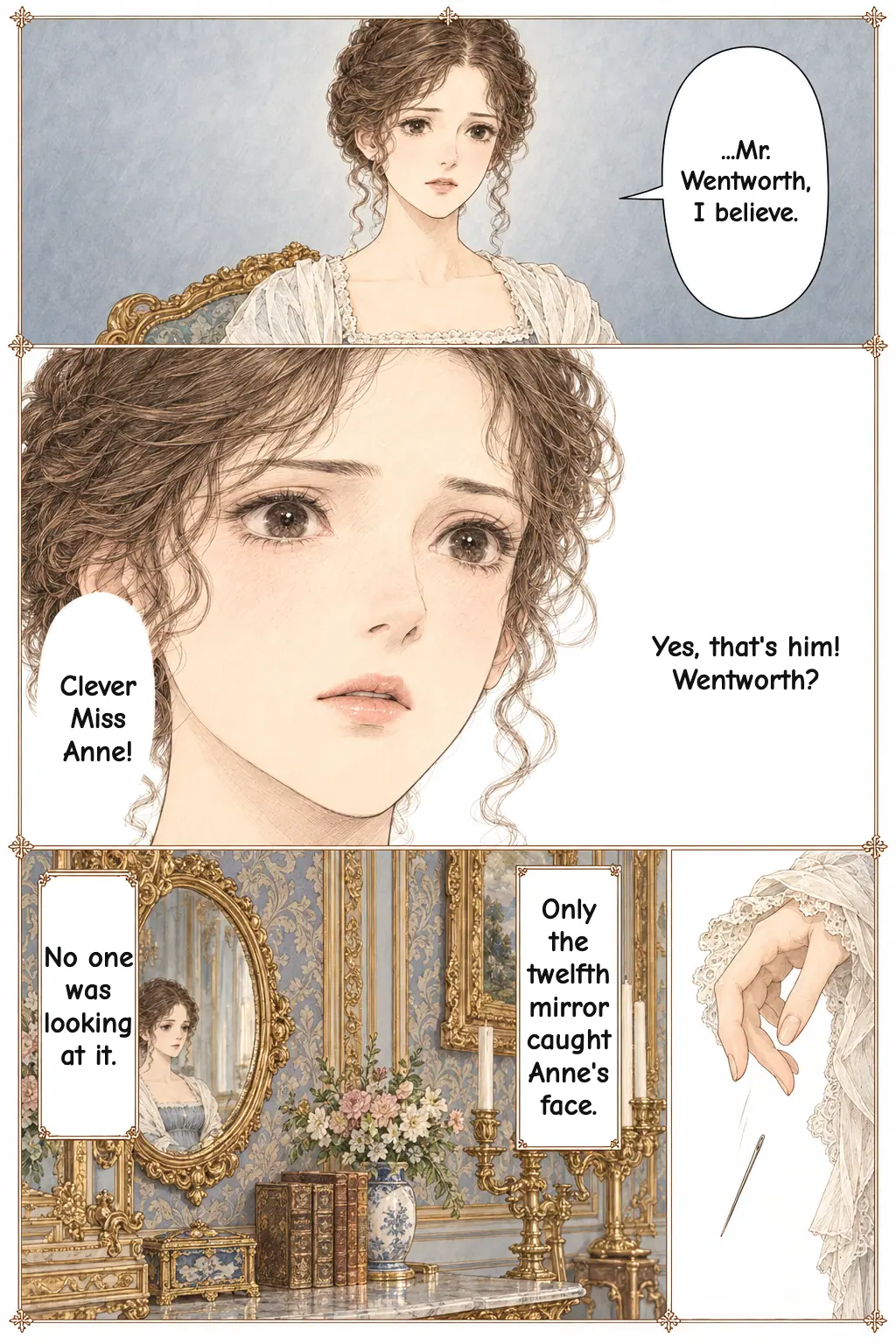
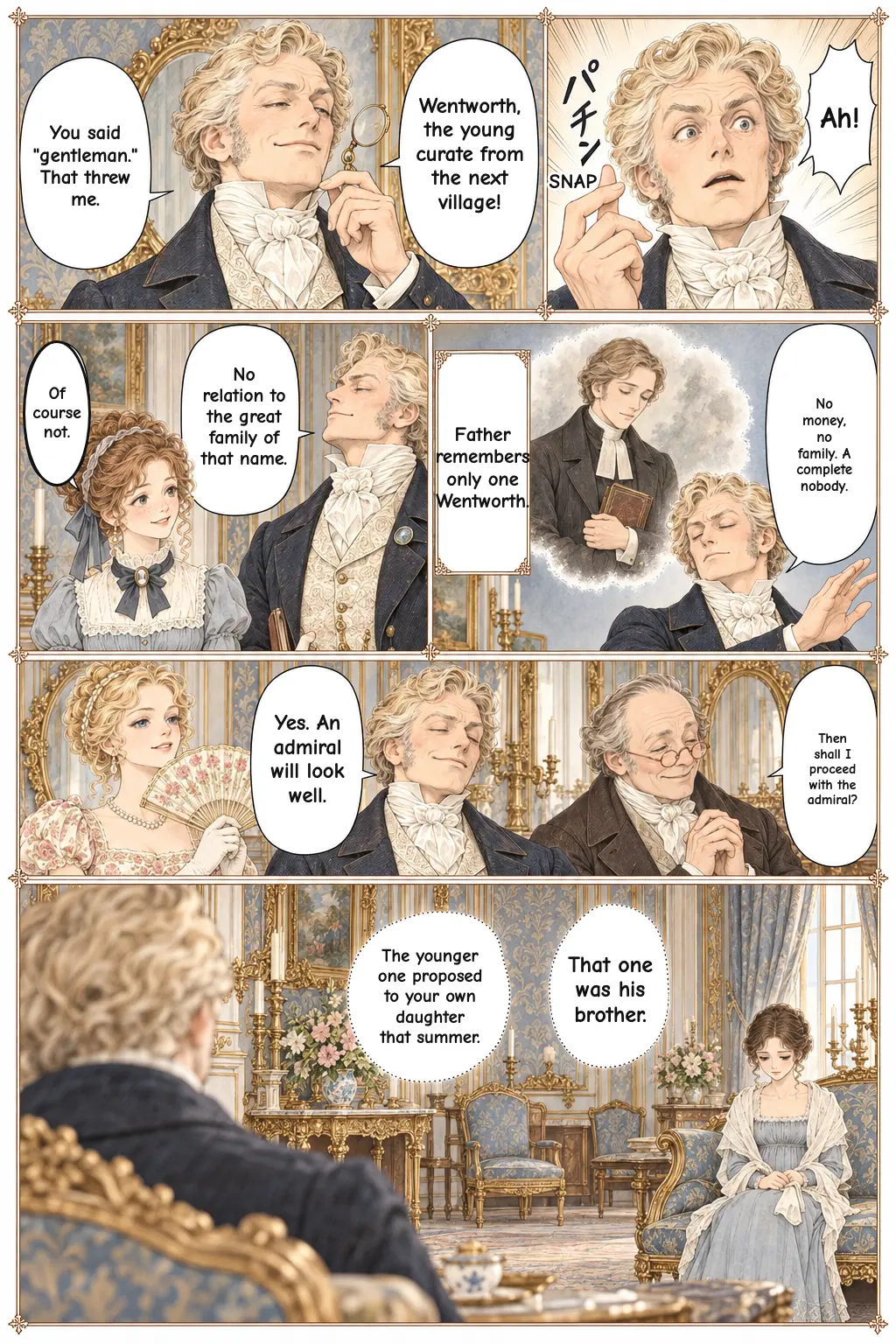
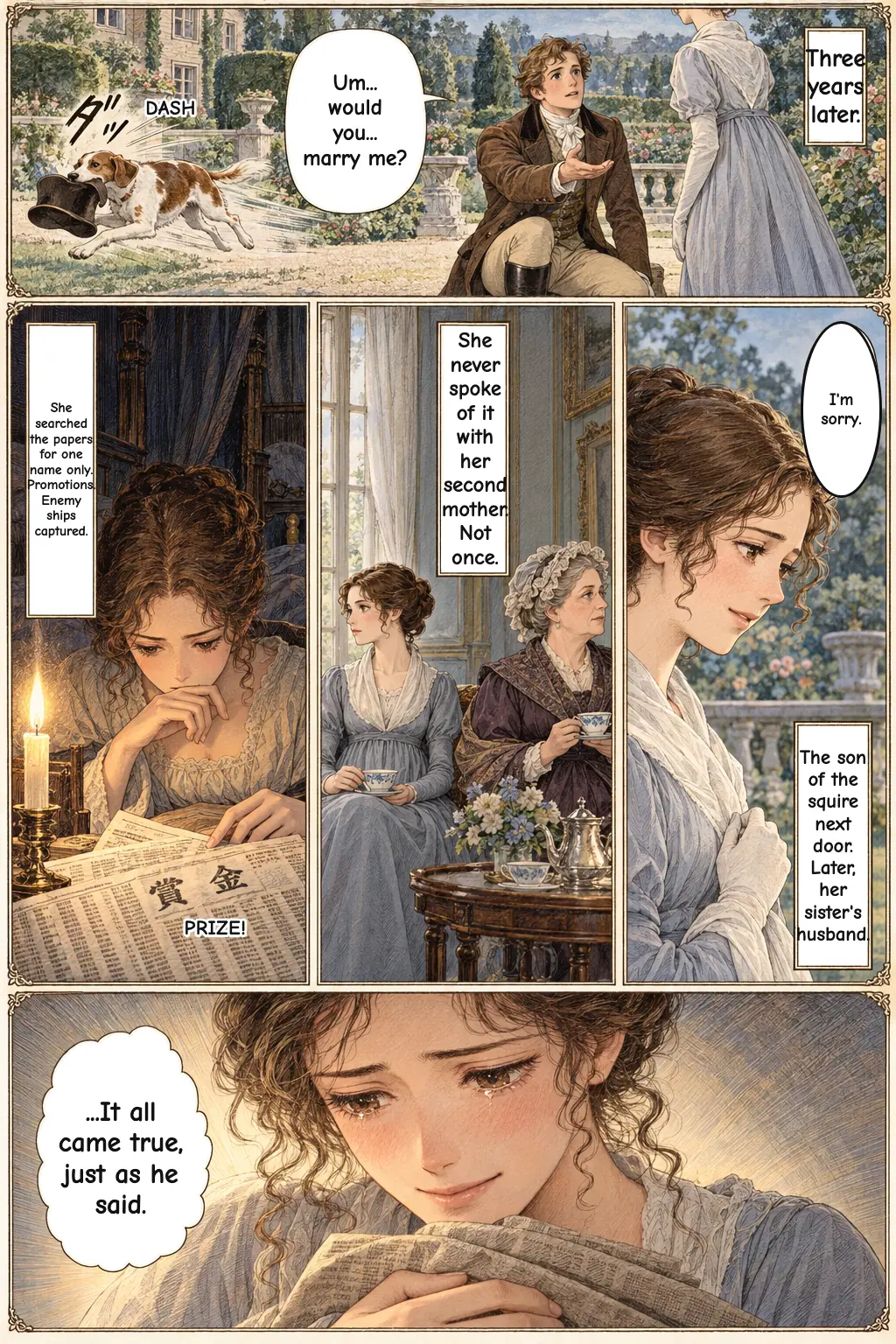
Mr. Shepherd mentions that Mrs. Croft's brother once lived nearby at Monkford, but he can't recall the name. Anne quietly supplies it: Mr. Wentworth. Sir Walter immediately thinks of the curate (a junior clergyman) who used to live at Monkford and dismisses him as a nobody, nothing to do with the noble family that shares the surname. He never connects the name to anything else, and that is the joke. He has forgotten the episode that shaped his own daughter's life.
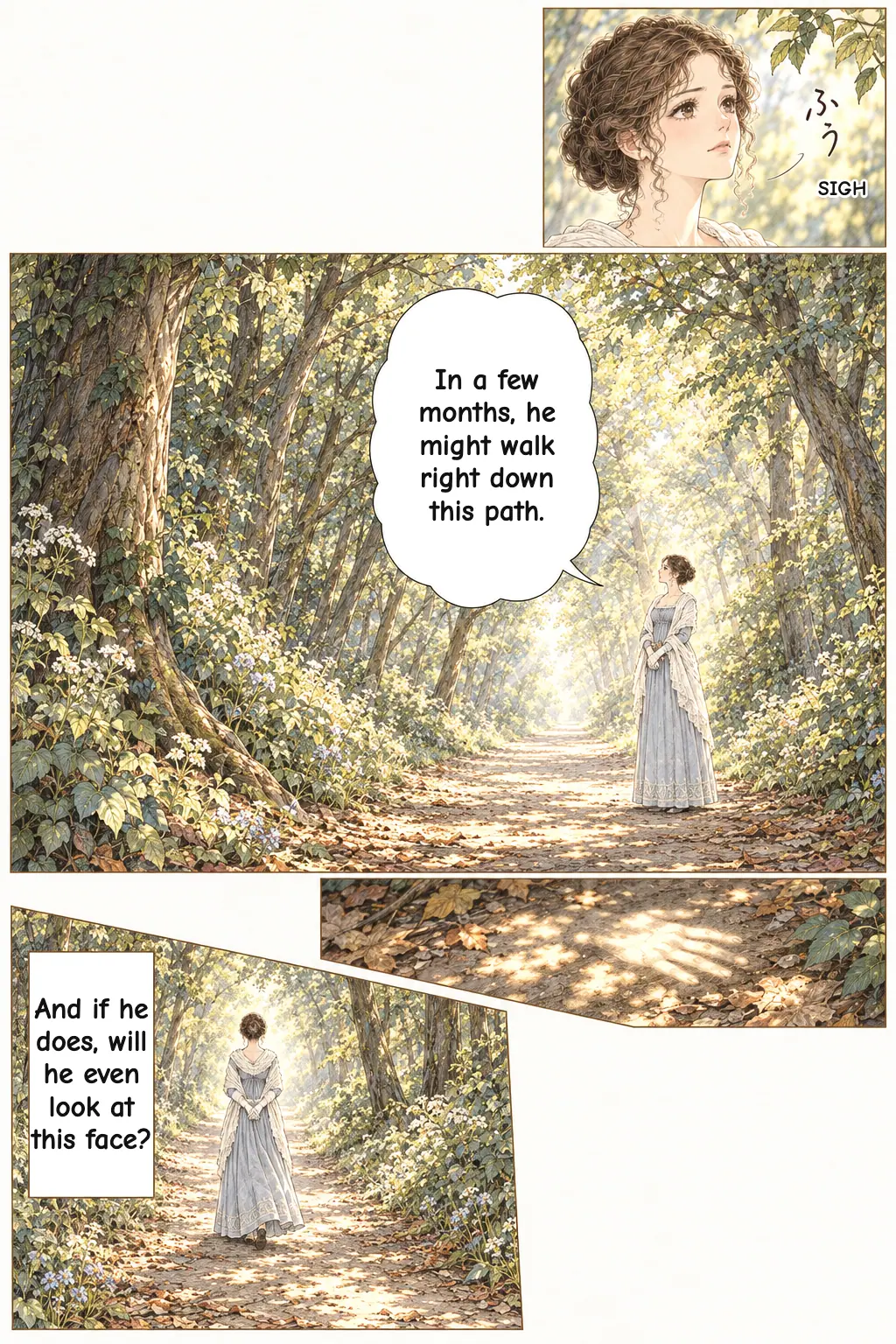
Anne leaves the room to let her flushed cheeks cool. Walking along her favorite path through the grove, she sighs that in a few months he may be walking here too.
Chapter 4: The Engagement Anne Gave Up
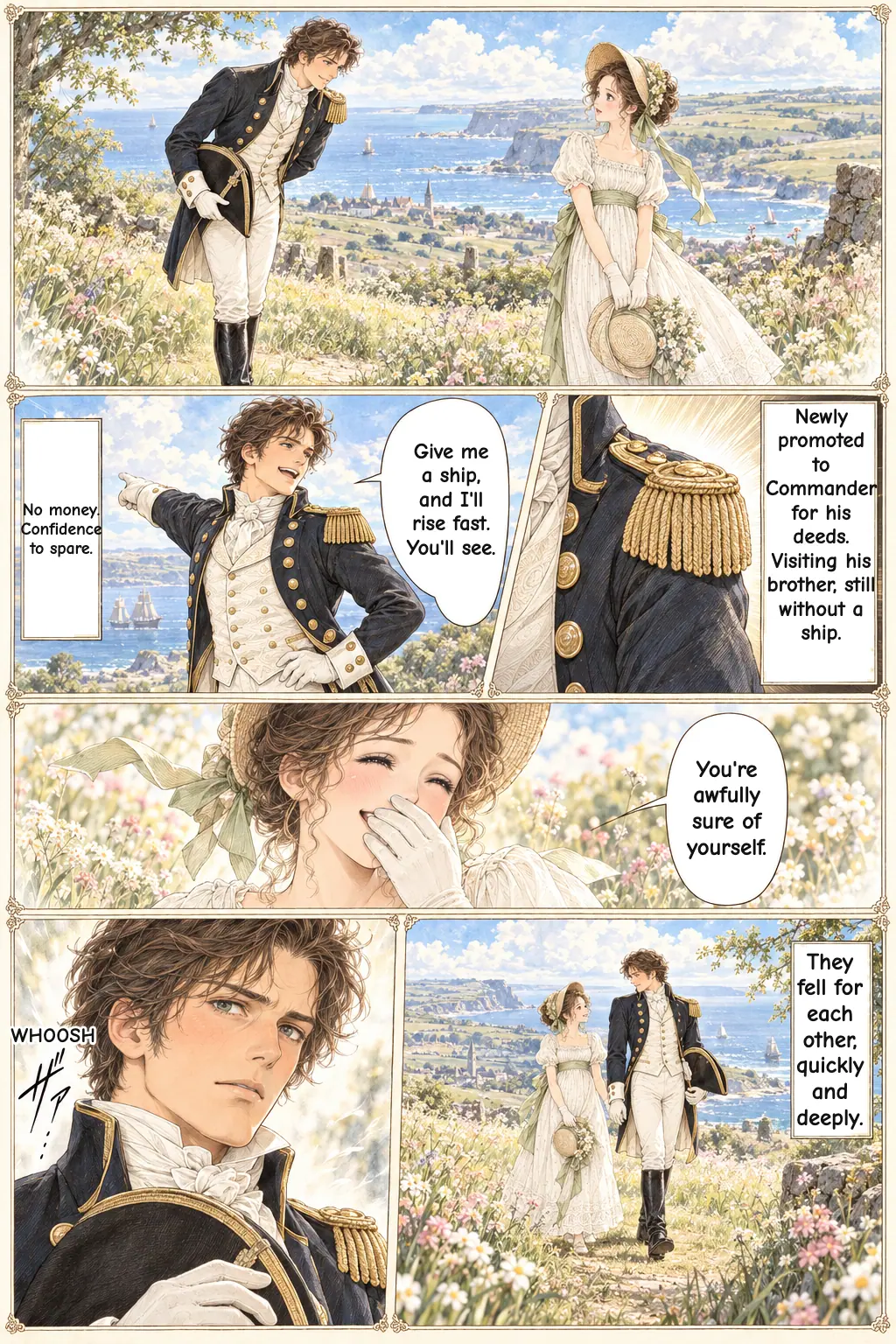
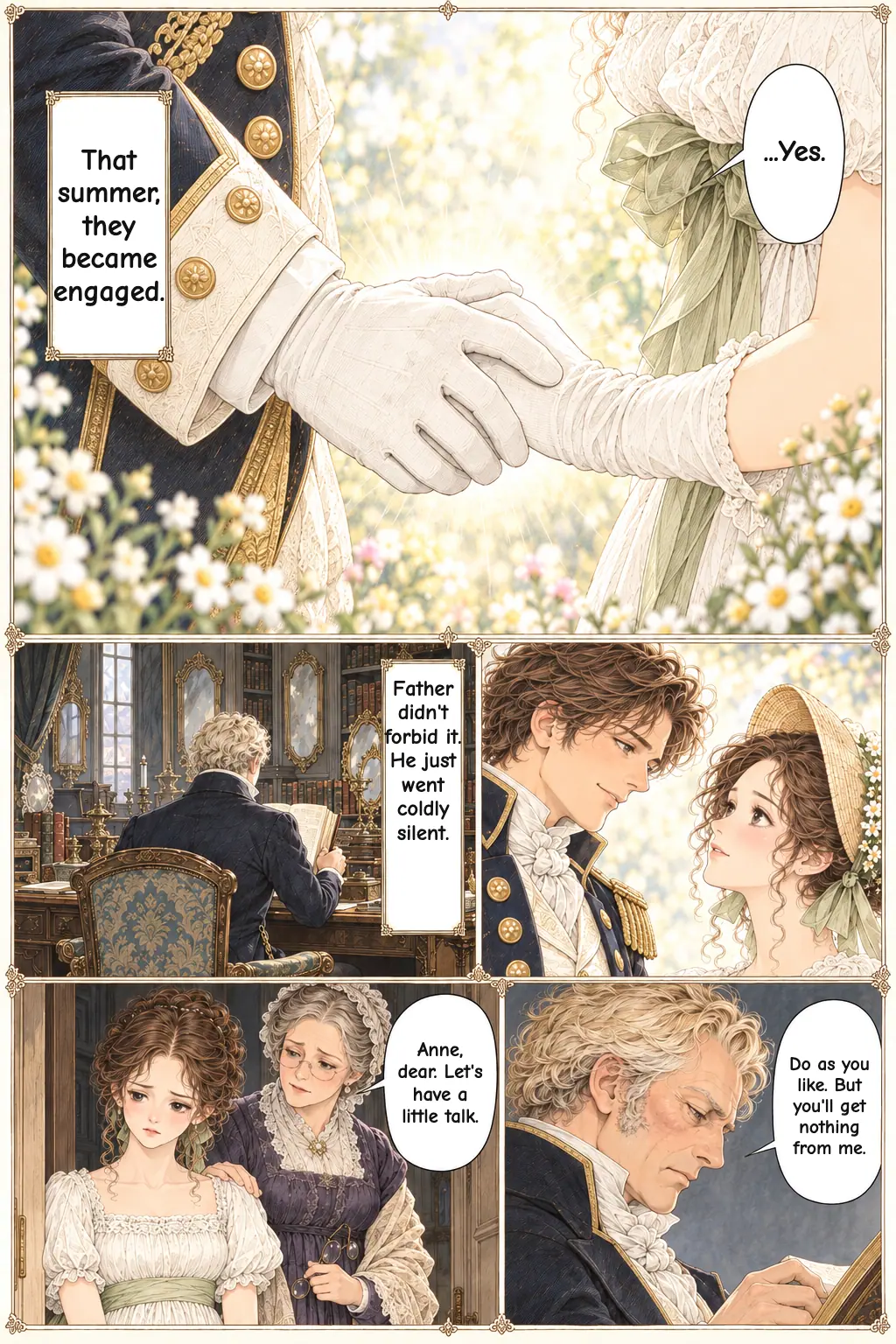
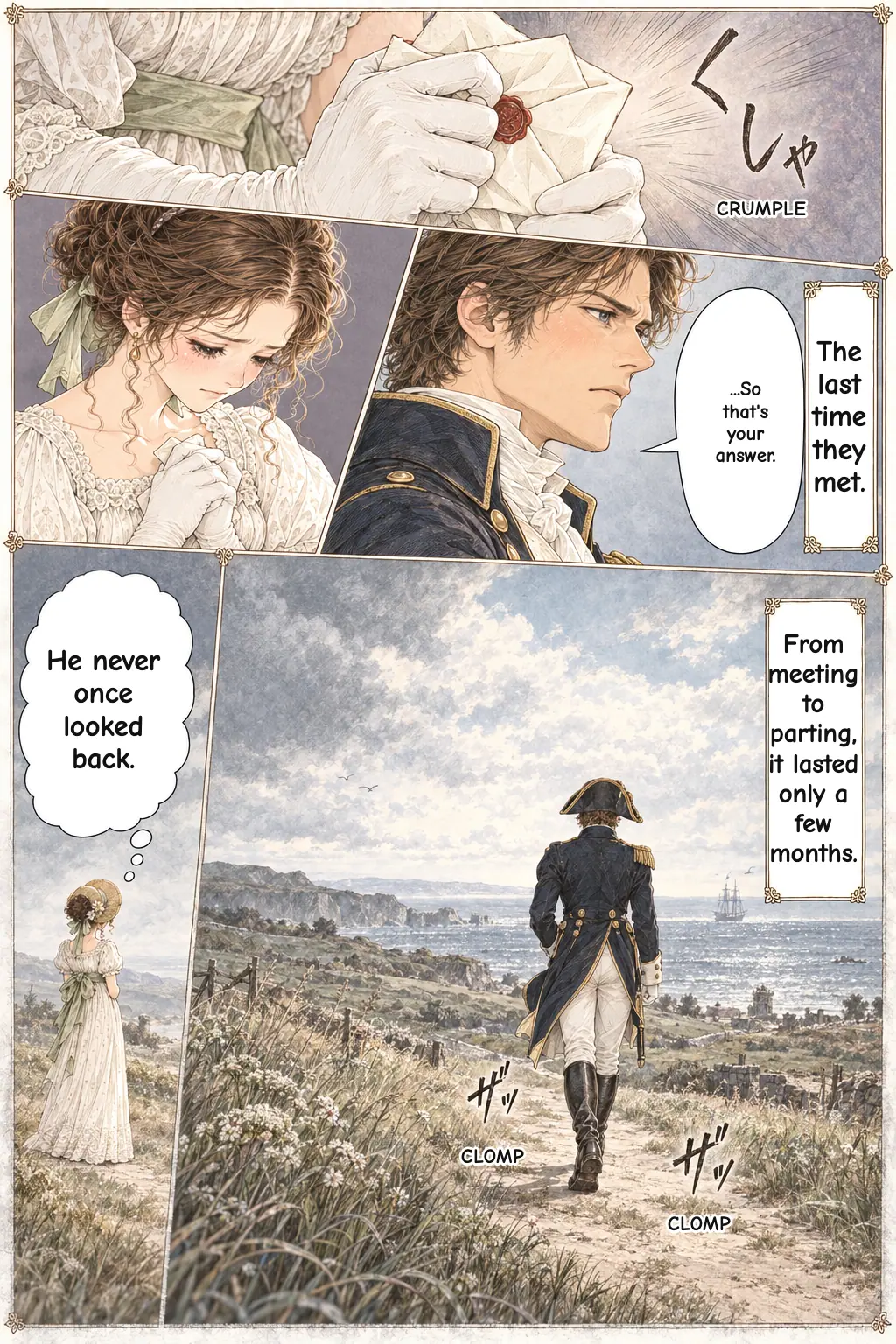
Chapter 4 explains why. The man in question is not the curate but his younger brother, Frederick Wentworth. In the summer of 1806 he had just been promoted to commander after the naval battle off Santo Domingo, and he came to stay with his brother while waiting for a ship. He was clever, lively, and very sure of himself. Anne was 19, gentle and beautiful. They fell deeply in love and became engaged within a few months.
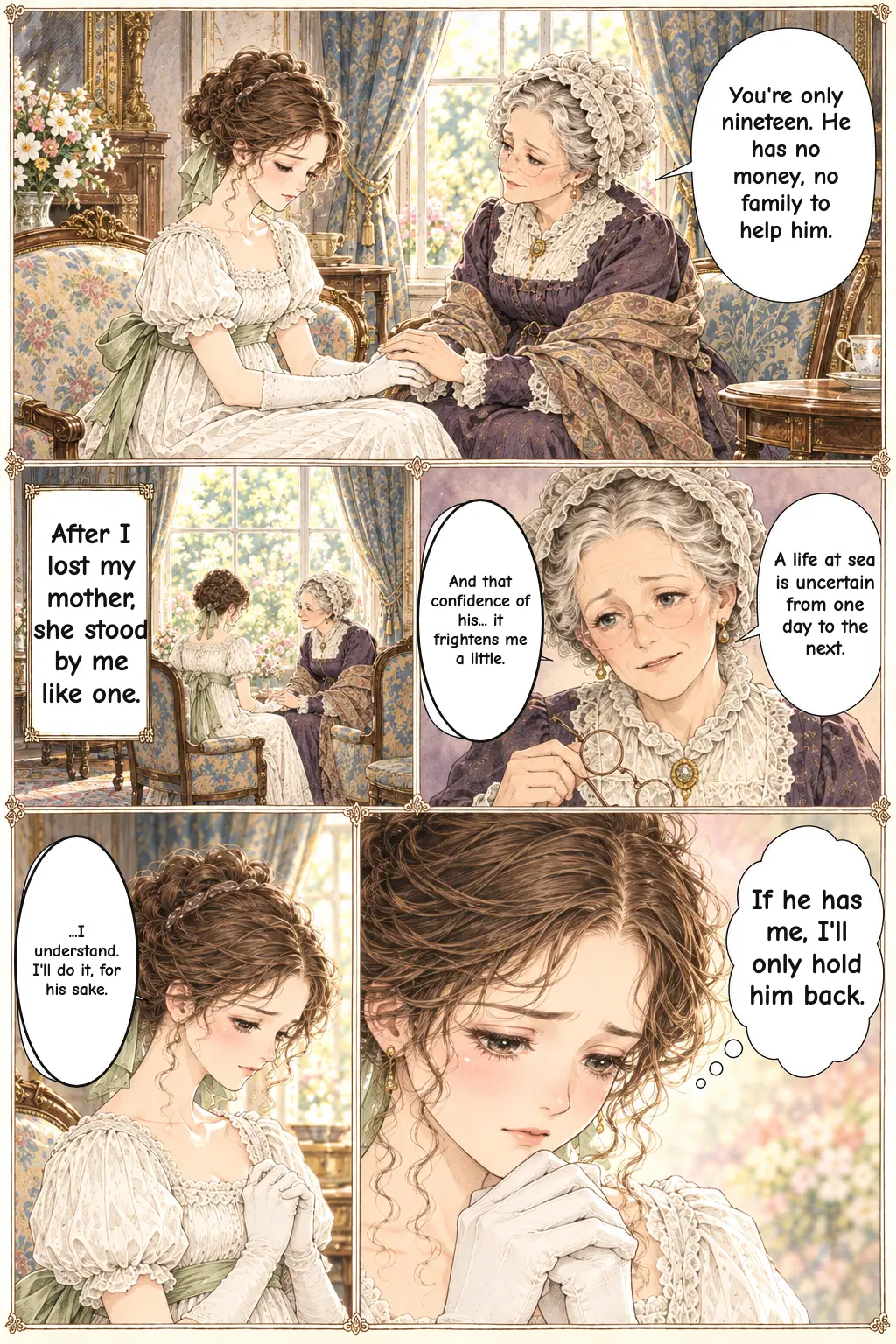
Sir Walter never refused outright, but he showed cold disapproval and said he would do nothing for his daughter. The real pressure came from Lady Russell, Anne's late mother's closest friend and the person Anne loved and trusted most. She believed a girl of 19 shouldn't tie herself to a young man with no fortune, no family connections, and an uncertain career, and she worried about his overconfidence. Anne was convinced that ending the engagement would be better for him as well as for her. Wentworth felt badly treated and left the area.
The regret lasted for years. Anne lost her bloom early and never cared for anyone else. Around age 22 she turned down Charles Musgrove, a wealthy neighbor's son, who soon married her younger sister Mary instead. At 27, Anne sees things differently. She was taught caution when she was young and learned romance as she got older, and she would no longer give the advice she once took. Meanwhile, as he had predicted, Wentworth has done well. She has followed his promotions in the navy lists and newspapers, and he is said to have made a fortune. Now his sister is about to live in Anne's home, and Anne can only hope the Crofts never knew about the engagement.
Historical Background: Rank, the Navy, and Prize Money
These chapters set up the central conflict of Persuasion: old status against earned success. Sir Walter's whole idea of a person's worth comes from birth and appearance. The navy was one of the few places in Regency England where a man without connections could rise through skill and luck. Officers also shared in "prize money" when they captured enemy ships, which is how men like Wentworth could become rich within a few years. Austen had two brothers in the navy who both went on to become admirals, and readers often see her respect for sailors in Anne's defense of them, though how much the novel draws on her family is a matter of interpretation.
Lady Russell isn't a villain. Her advice was reasonable by the standards of her time, and the novel asks whether yielding to it was weakness or a sense of duty. That question gives the book its title.
What the Manga Adds or Changes
Austen tells the flashback in Chapter 4 almost entirely as narrated summary, with no dialogue between the young lovers. The manga turns it into a three-to-four-page flashback with scenes of its own. Some of what you see there is the manga's invention, not Austen's. That includes the moment the couple touch hands through their gloves, young Wentworth's face and clothing (these chapters never describe his appearance), and the exact place and words of their final meeting, where the novel only says he felt ill-used. Lady Russell's lines are newly written, though the reasons she gives match the book.
The woodland path, the rooms, and the garden are drawn freely. The Admiral Baldwin anecdote becomes an exaggerated comic panel. In the curate mix-up, the manga keeps Austen's tone: Sir Walter isn't pretending, he really is picturing the wrong brother and looking down on him.
Where to Read It
If you want to see Anne's quiet heartbreak and Sir Walter's vanity in pictures, Episode 2 of PERSUASION: A Second Chance at Love on Manga Portal covers these two chapters. Every episode is free to read, with no sign-up. The original novel is also in the public domain and available free on Project Gutenberg (#105) if you'd like to read Austen's own words afterward.
Characters in this episode
Anne Elliot
The 27-year-old heroine, kind and sensible but overlooked by her family, who broke off her engagement to Wentworth at 19 after being persuaded.
Captain Frederick Wentworth
Anne's former fiancé, a navy officer with no fortune in 1806 who has since risen in rank and reportedly grown rich from prize money.
Sir Walter Elliot
Anne's vain, debt-ridden father, a baronet who judges people by rank and looks and has to rent out Kellynch Hall.
Lady Russell
Anne's godmother-like friend and her late mother's confidante, who persuaded Anne that the engagement was unwise.
Admiral Croft
A rear admiral from Somerset and Trafalgar veteran who wants to rent Kellynch Hall; his wife is Wentworth's sister.
Mr. Shepherd
The Elliots' tactful lawyer, who proposes a navy tenant but can't remember Wentworth's name.
FAQ
Why did Anne Elliot break off her engagement to Captain Wentworth?
Lady Russell, whom Anne loved and trusted like a mother, persuaded her that at 19 she was too young to marry a man with no fortune, no connections, and an uncertain naval career. Anne also believed that ending it would be better for Wentworth.
Who rents Kellynch Hall in Persuasion?
Admiral Croft, a rear admiral from Somerset who fought at Trafalgar, and his wife. Mrs. Croft is Captain Wentworth's sister, which is why the arrangement unsettles Anne.
How long ago were Anne and Wentworth engaged?
More than seven years before the novel begins. They met and became engaged in the summer of 1806, when Anne was 19, and the story opens in 1814, when she is 27.
Why does Sir Walter dislike the navy?
He says it lets men of low birth rise to honors they don't deserve, and that life at sea ages a man's face early. He jokes about a weathered admiral he took for sixty who was really forty.
Who is the Mr. Wentworth that Sir Walter mentions?
Sir Walter is thinking of the former curate of Monkford, whom he dismisses as a nobody. The man Anne loved is that curate's younger brother, Frederick, the naval officer.