Episode 2She Chose to End It. Then He Showed Up.The Tale of Genji: The Sacred Tree (Farewell at Nonomiya)
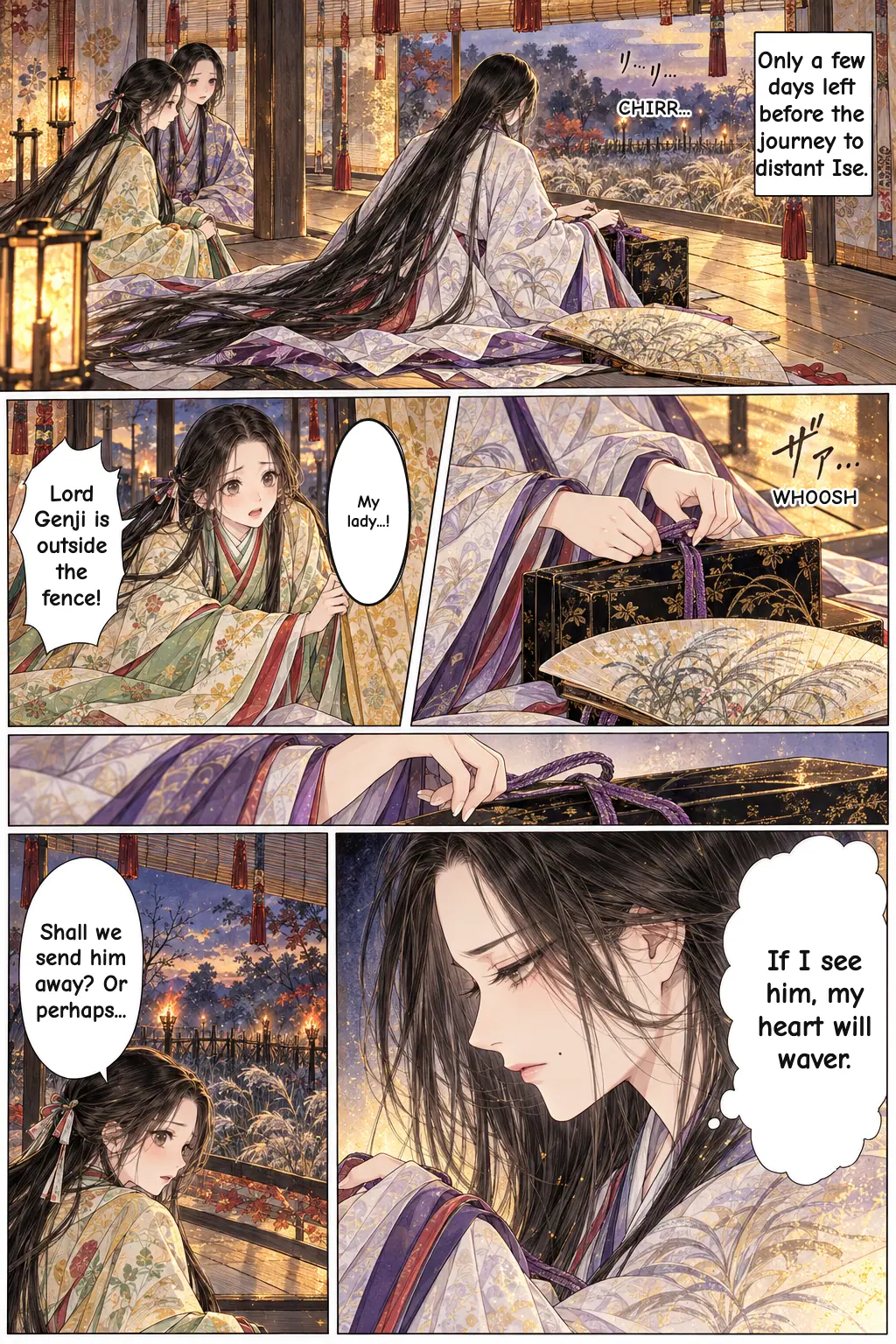
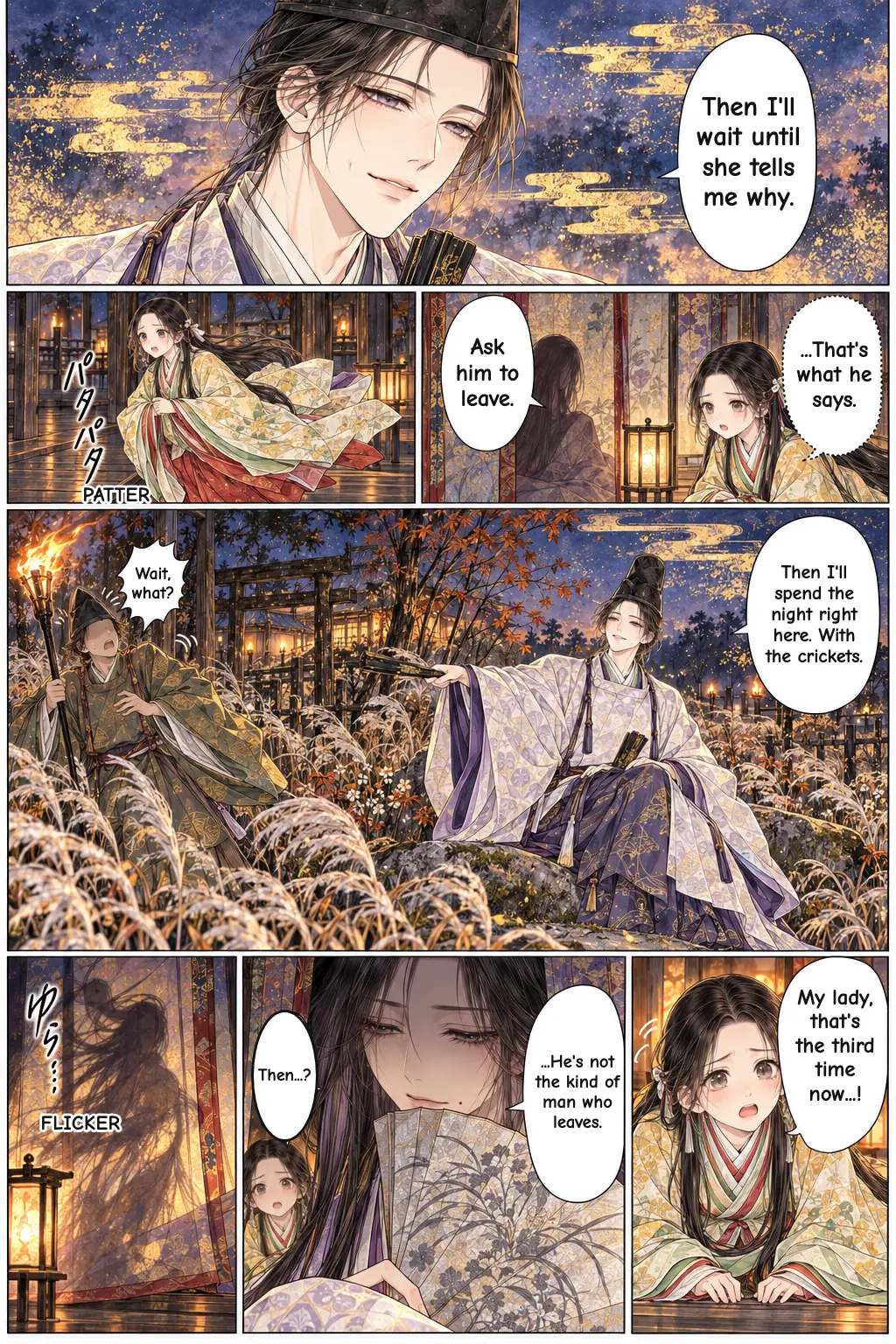
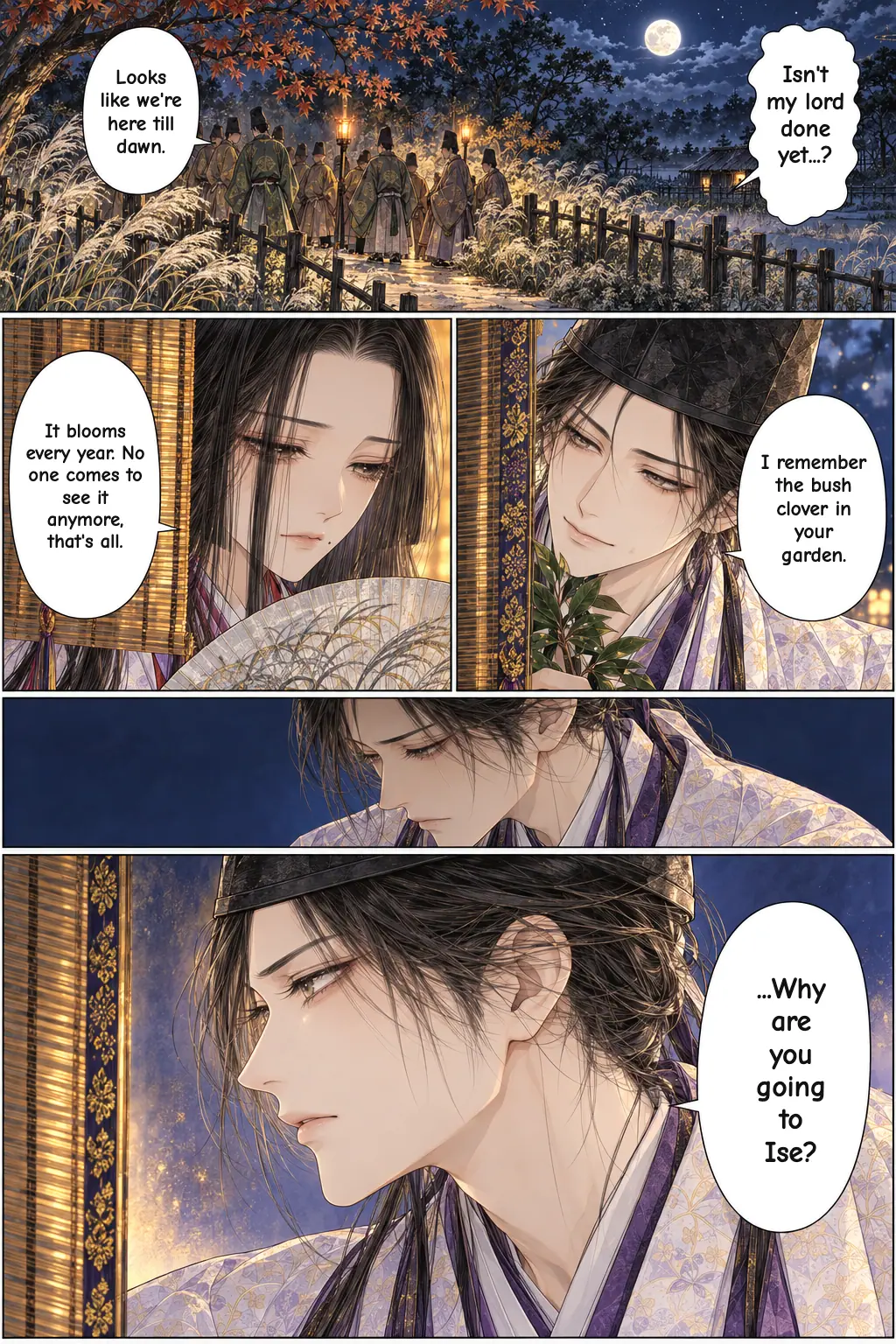
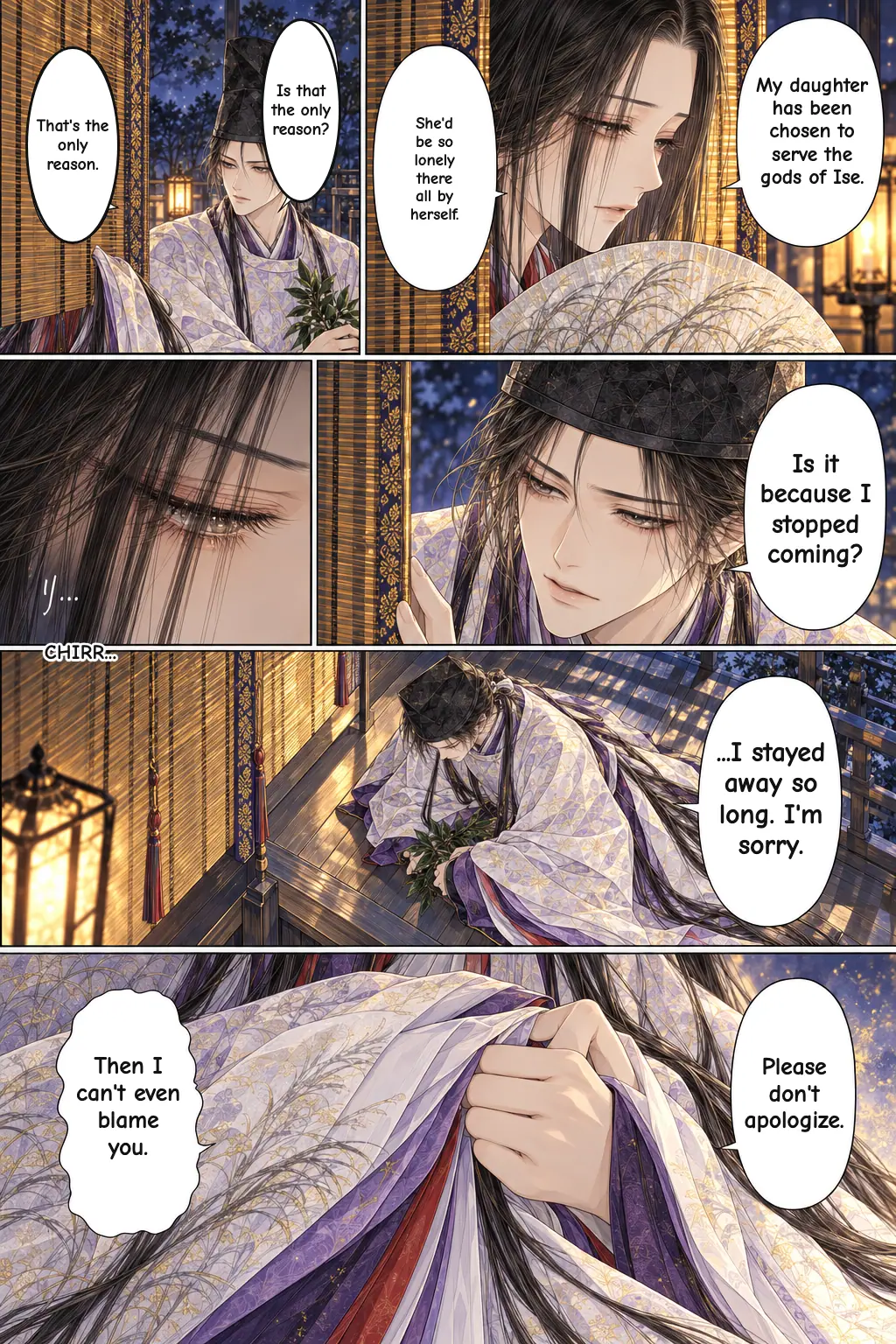
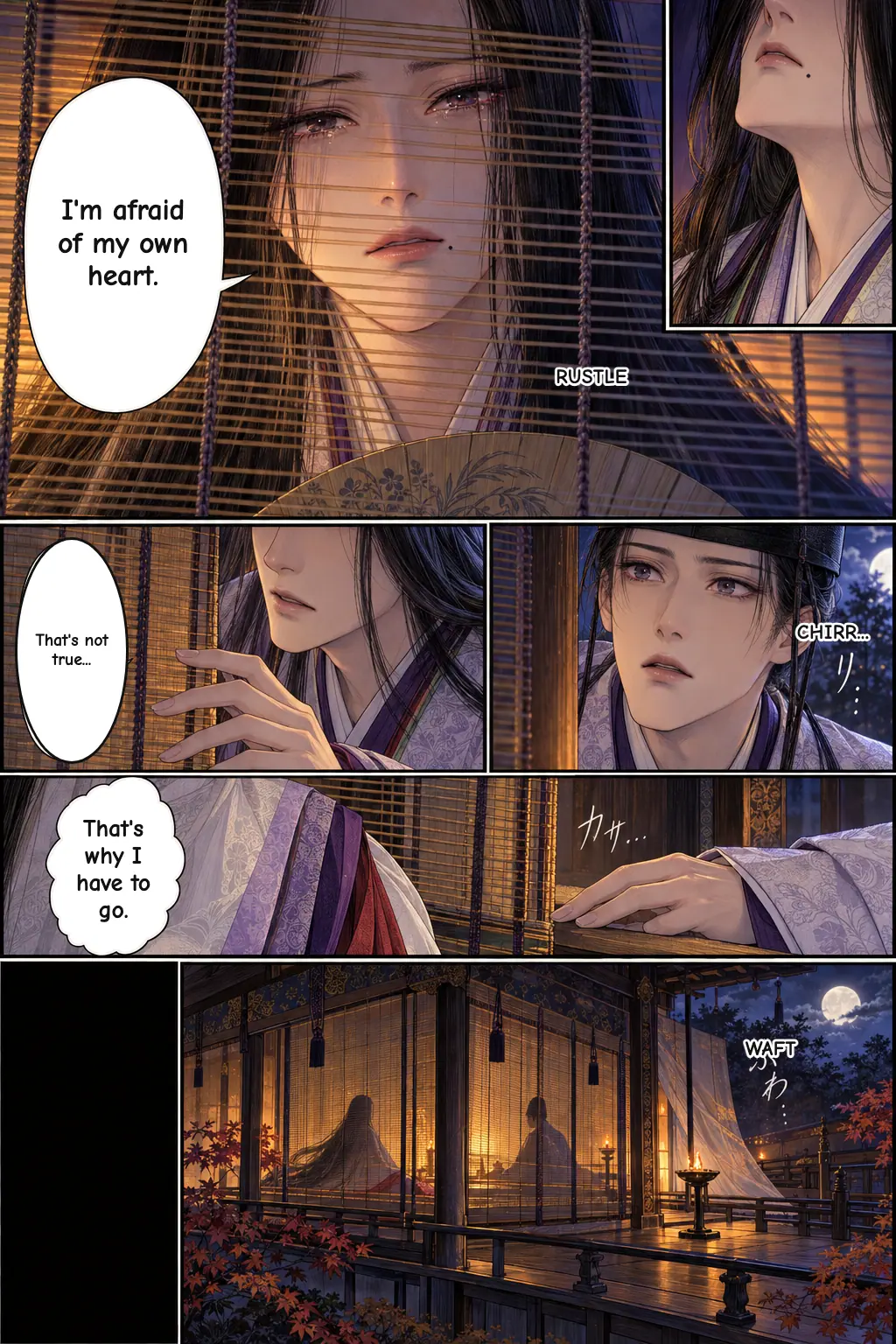
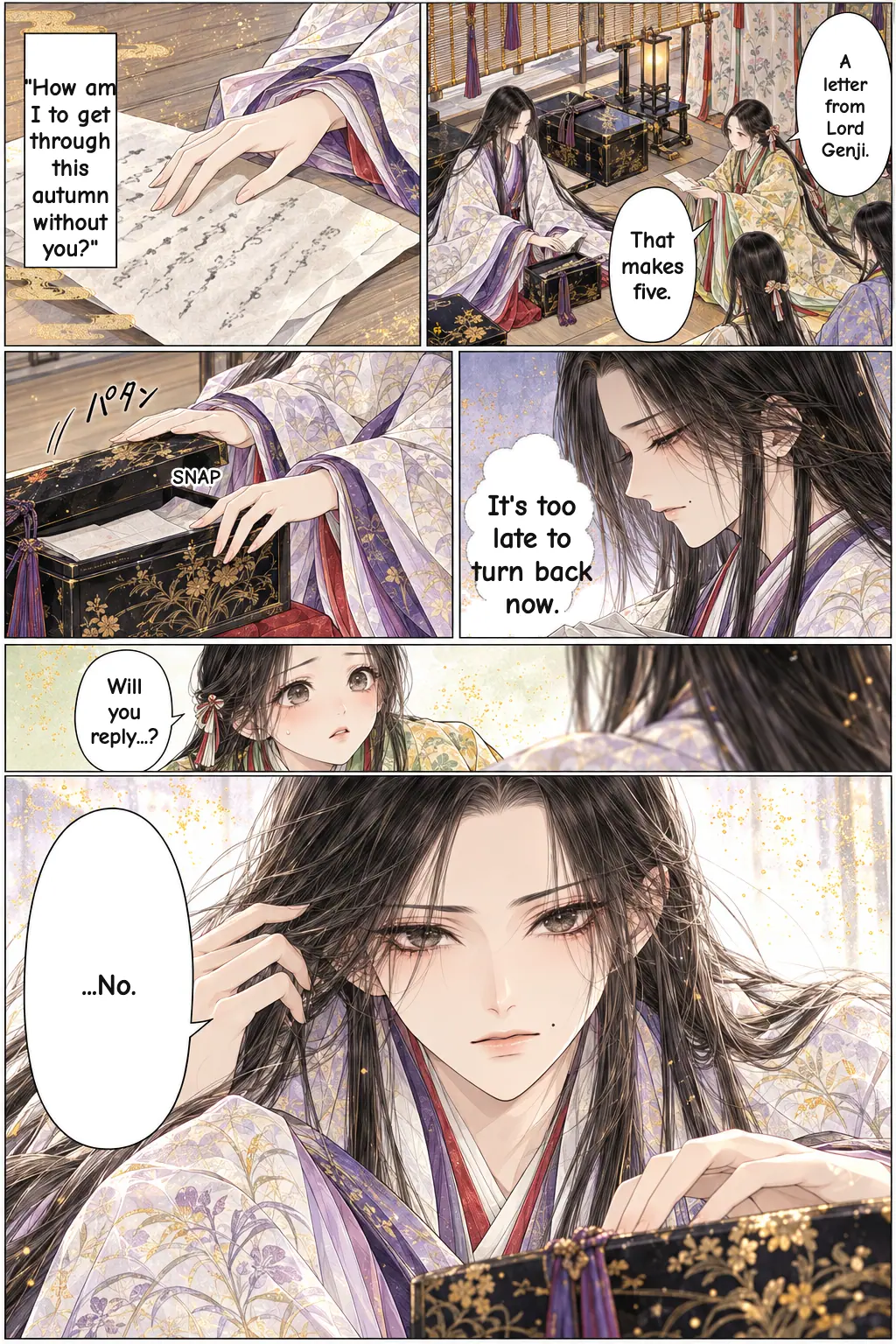
Lady Rokujō has decided to end her love affair herself by leaving for distant Ise. Then, just before she goes, Genji comes to see her. Through a bamboo blind they trade poems and talk until dawn. After that night she doesn't answer his letters begging her to stay, and she leaves the capital without looking back.
19 pagesFree · No sign-up
In short: The Nonomiya farewell is the opening of “The Sacred Tree” (Sakaki), a chapter of Murasaki Shikibu’s 11th-century novel The Tale of Genji. Lady Rokujō, Genji’s proud older lover, decides to end their painful affair by following her daughter, the new Ise Priestess, to distant Ise. Genji visits her at the Nonomiya shrine in Sagano, where they talk through a blind until dawn, yet she keeps to her decision and leaves the capital.
Lady Rokujō (Rokujō no Miyasudokoro, the widow of a former crown prince) has loved Genji for years, but the affair has brought her more pain than joy. After the death of Genji’s wife, Lady Aoi, people in the capital gossip that Rokujō will become his new principal wife. Instead, Genji’s visits grow rarer. When her daughter is chosen as the Ise Priestess (Saigū, an imperial princess who serves the great shrine at Ise), Rokujō decides to go with her—and to put the whole relationship behind her.
The Tale of Genji: Nonomiya Farewell Summary – Lady Rokujō and Genji in “The Sacred Tree”
The Original Story: A Farewell in the Autumn Fields
Lady Rokujō (Rokujō no Miyasudokoro, the widow of a former crown prince) has loved Genji for years, but the affair has brought her more pain than joy. After the death of Genji’s wife, Lady Aoi, people in the capital gossip that Rokujō will become his new principal wife. Instead, Genji’s visits grow rarer. When her daughter is chosen as the Ise Priestess (Saigū, an imperial princess who serves the great shrine at Ise), Rokujō decides to go with her—and to put the whole relationship behind her.
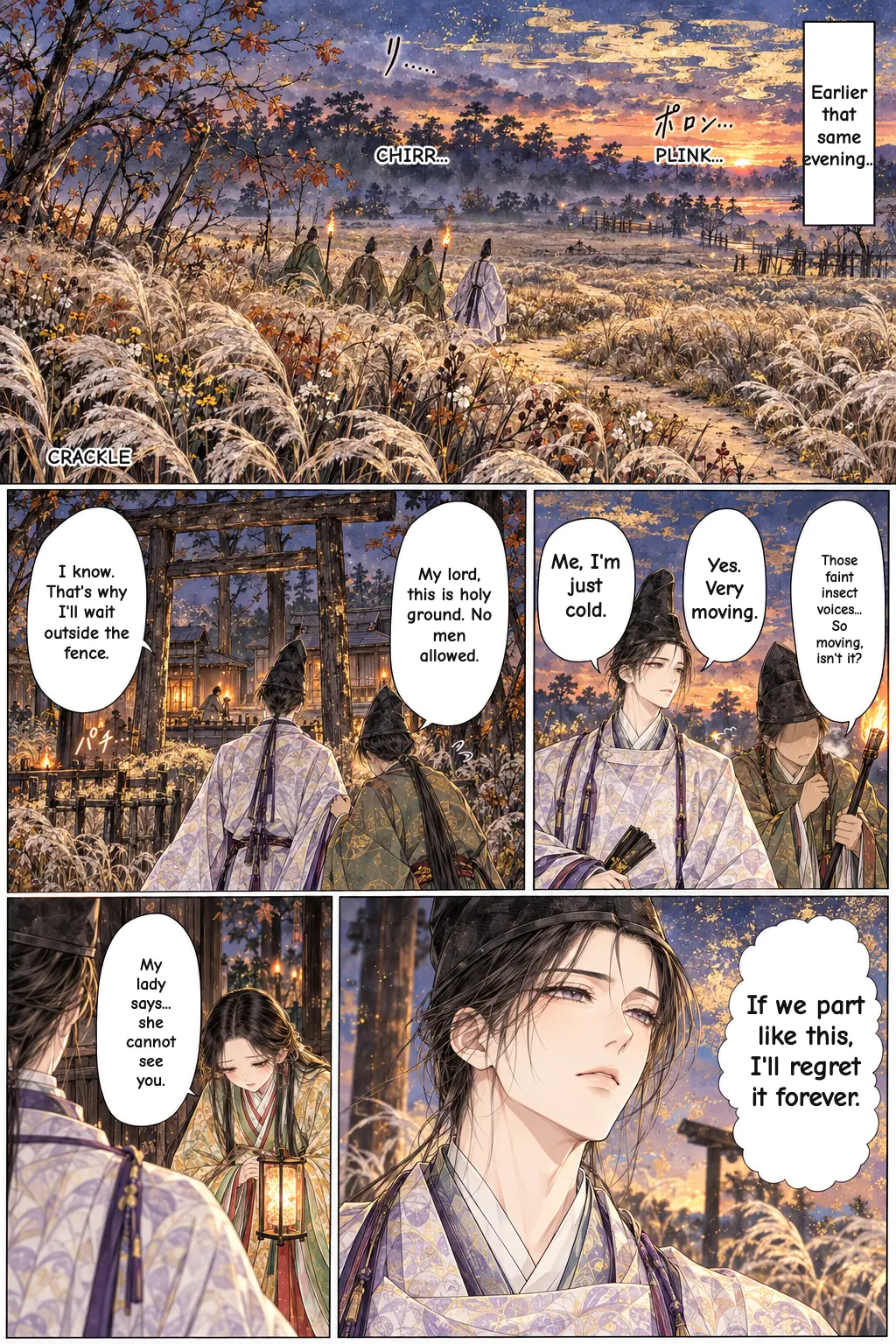
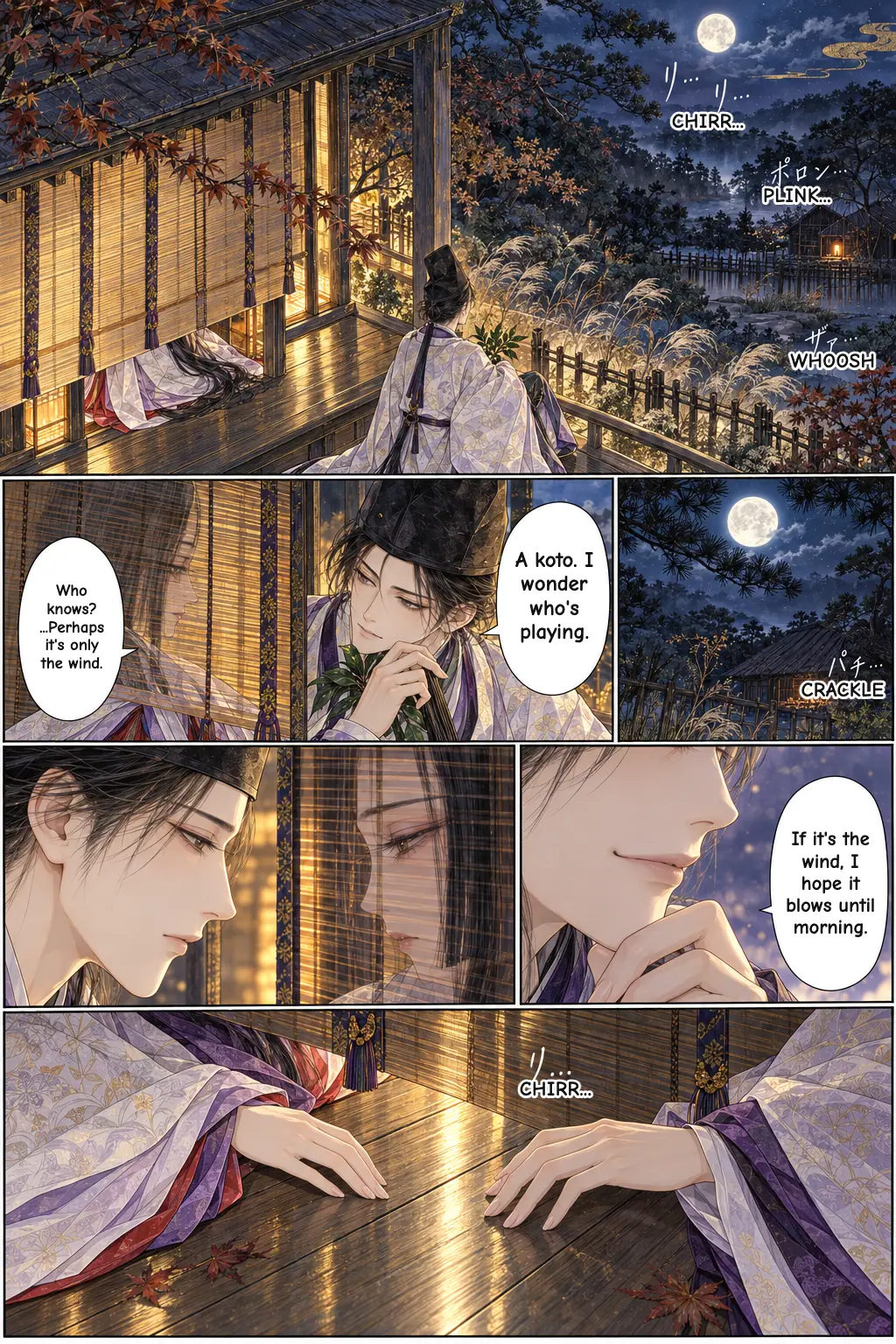
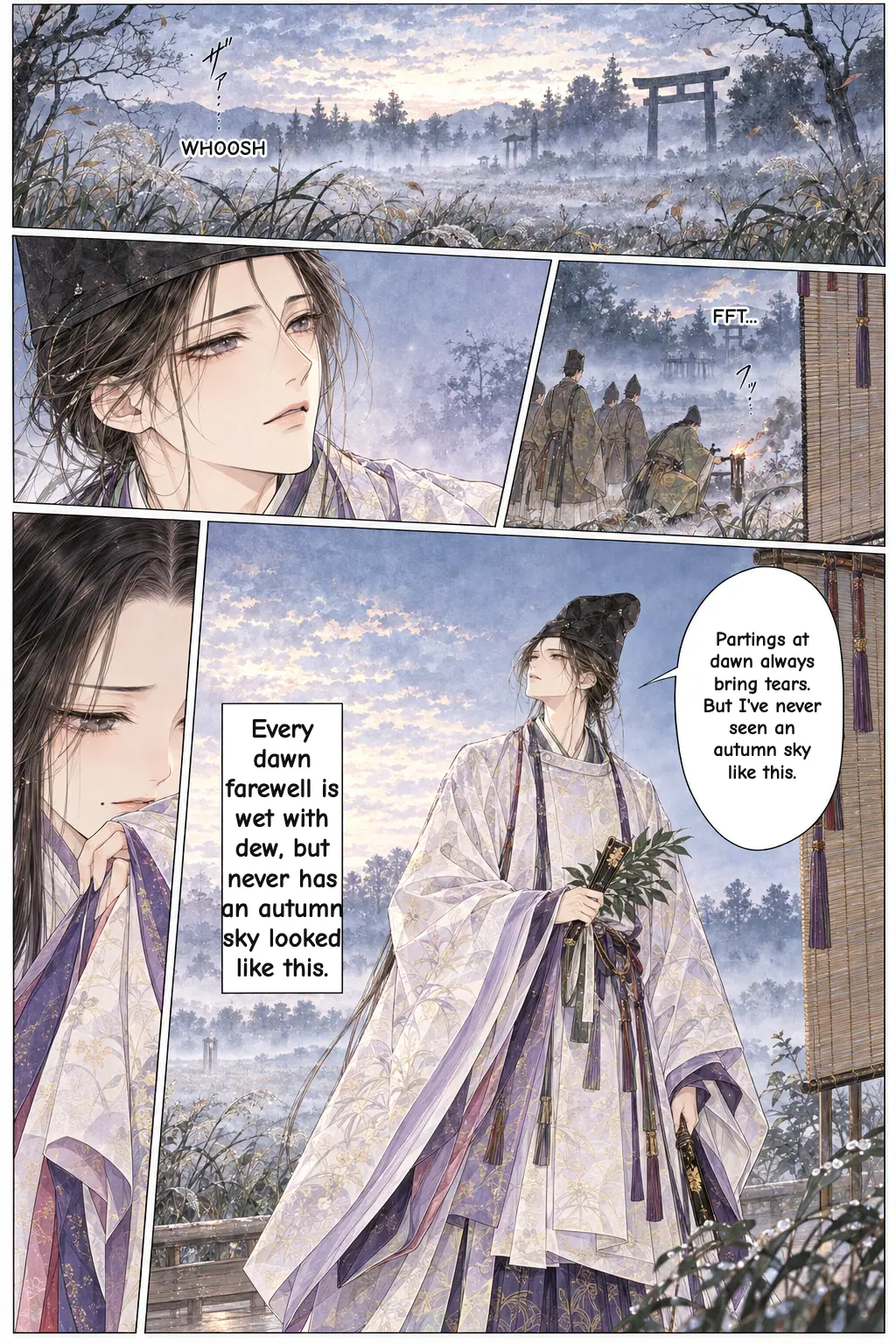
Before leaving, mother and daughter stay at Nonomiya, the “Shrine in the Fields,” a temporary place of purification in Sagano on the western edge of Kyoto. Genji, partly afraid of looking heartless and partly genuinely unwilling to let her go, rides out to see her around the seventh day of the ninth month. The autumn flowers have faded, the grasses are withered, insect voices are thin, wind roars in the pines, and faint music drifts from somewhere unseen. The shrine itself is deliberately plain: a torii gate of unbarked logs, a low brushwood fence, scattered wooden buildings, and the glow of a guardhouse fire. Genji is deeply moved by its quiet, sacred atmosphere.
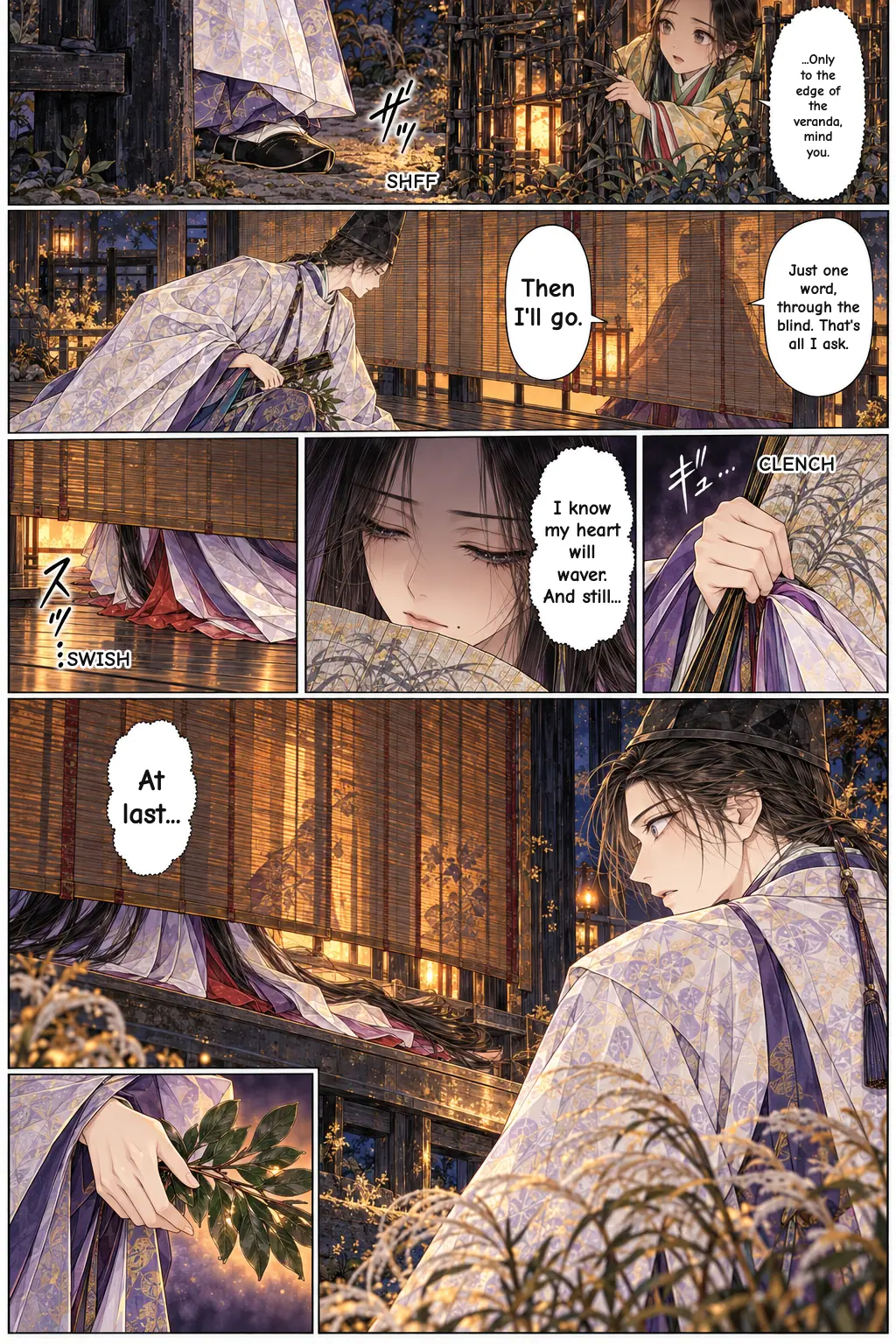
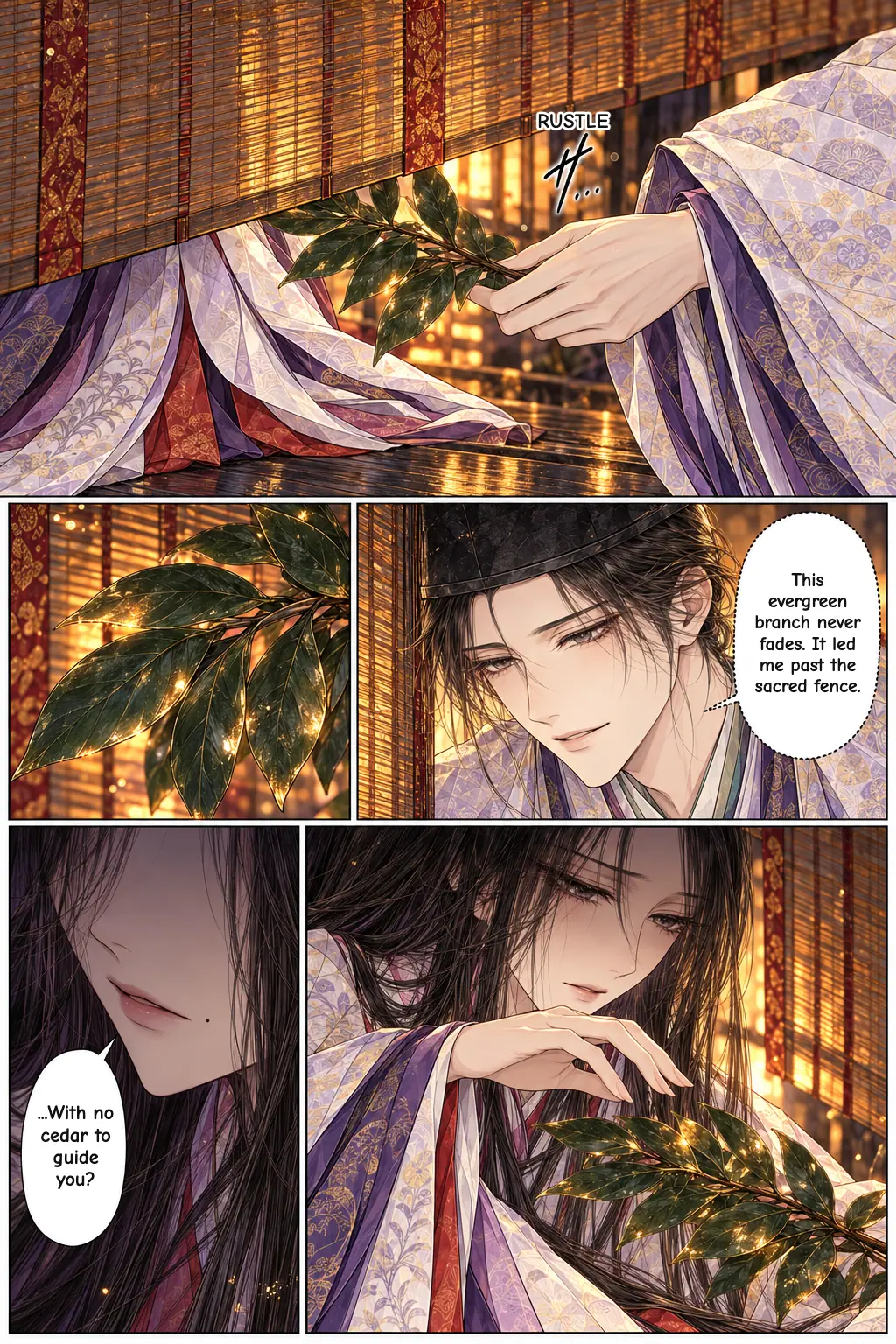
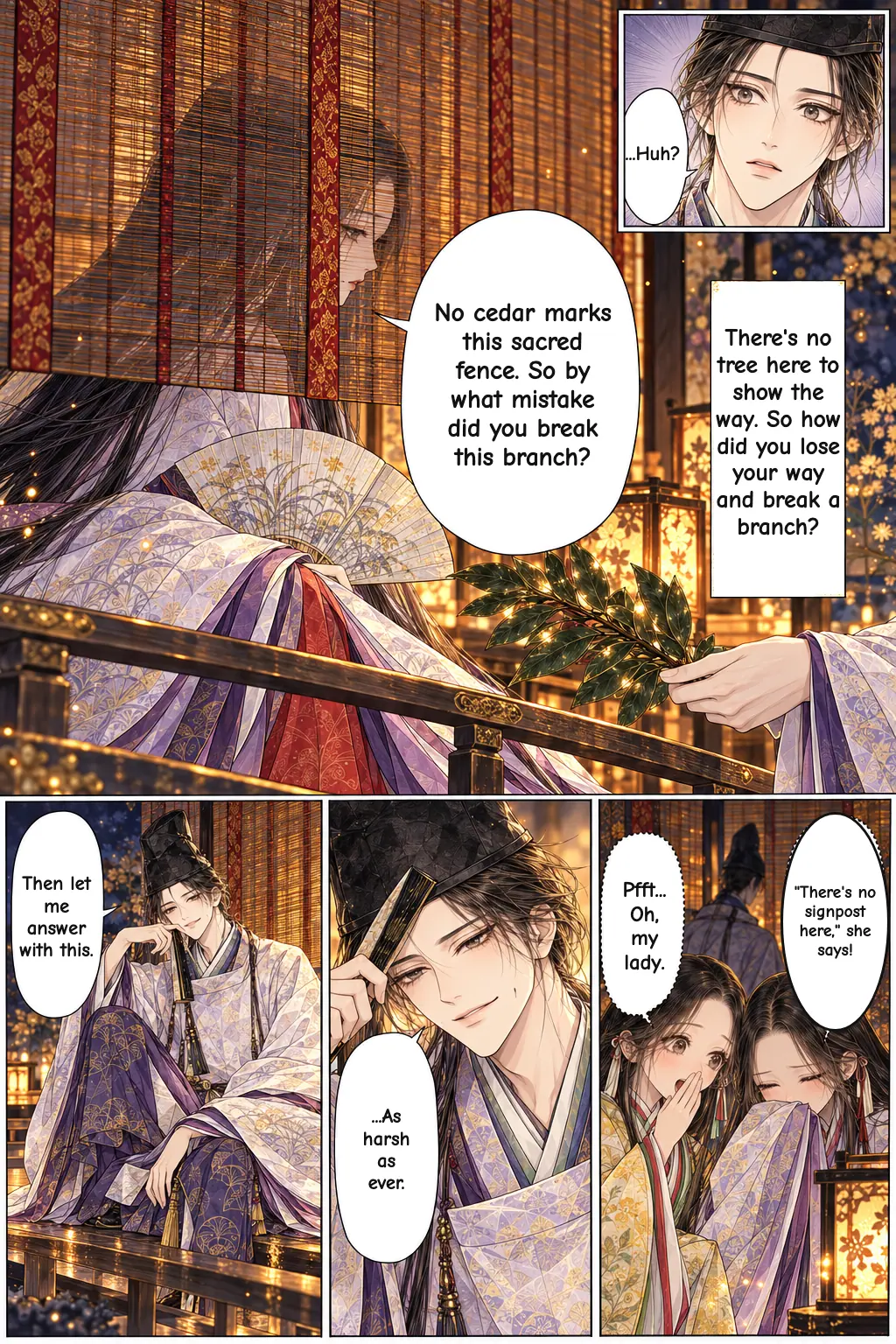
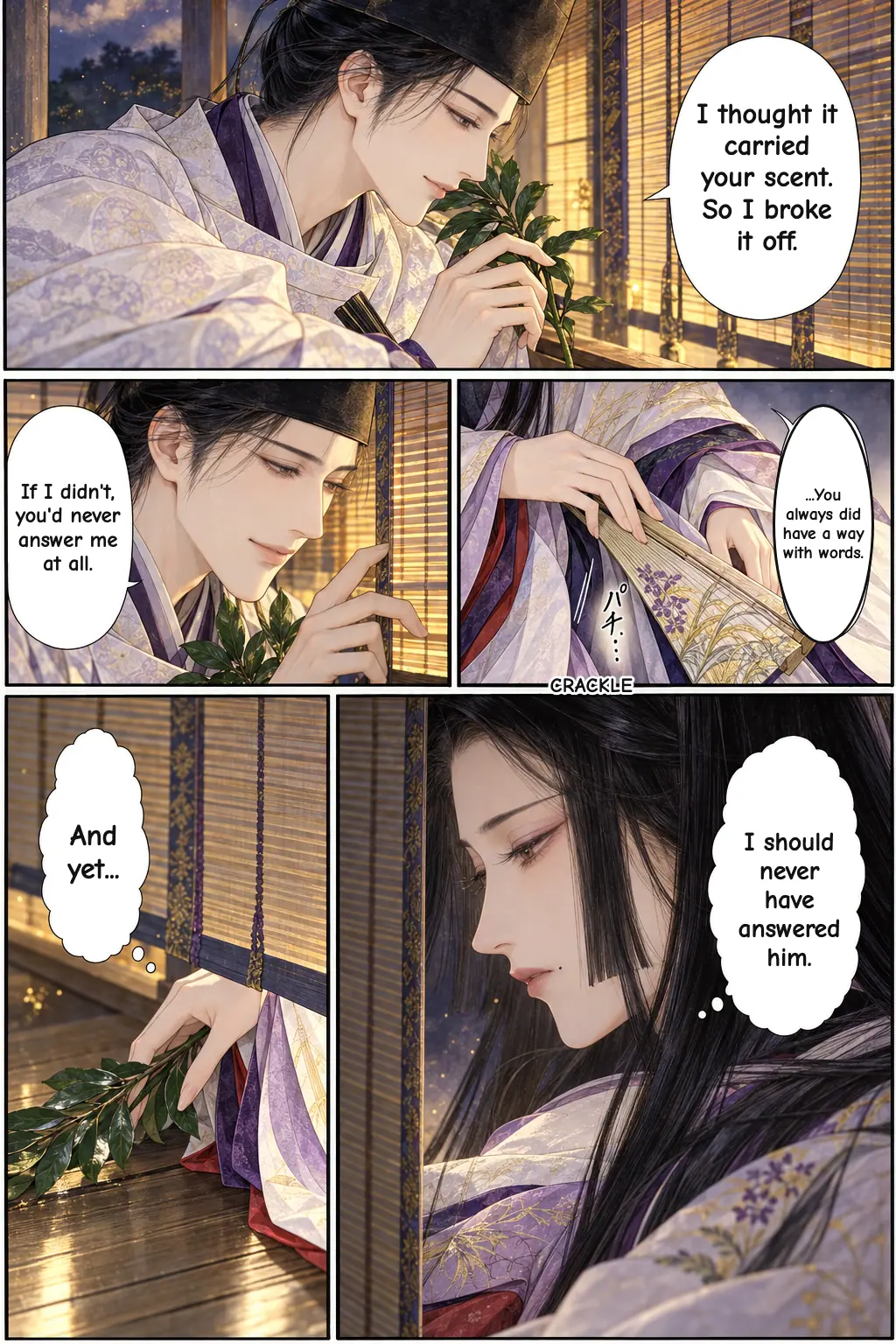
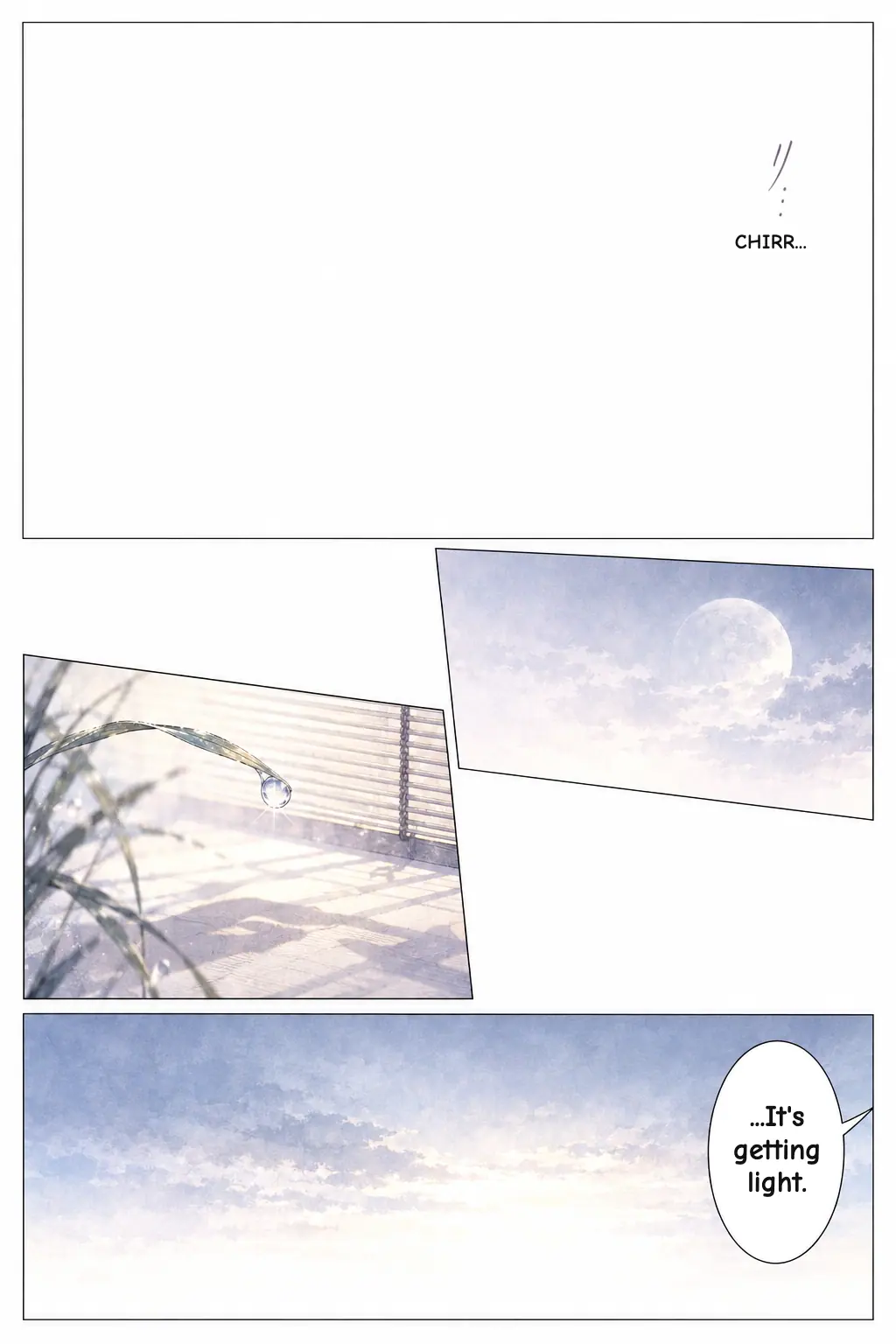
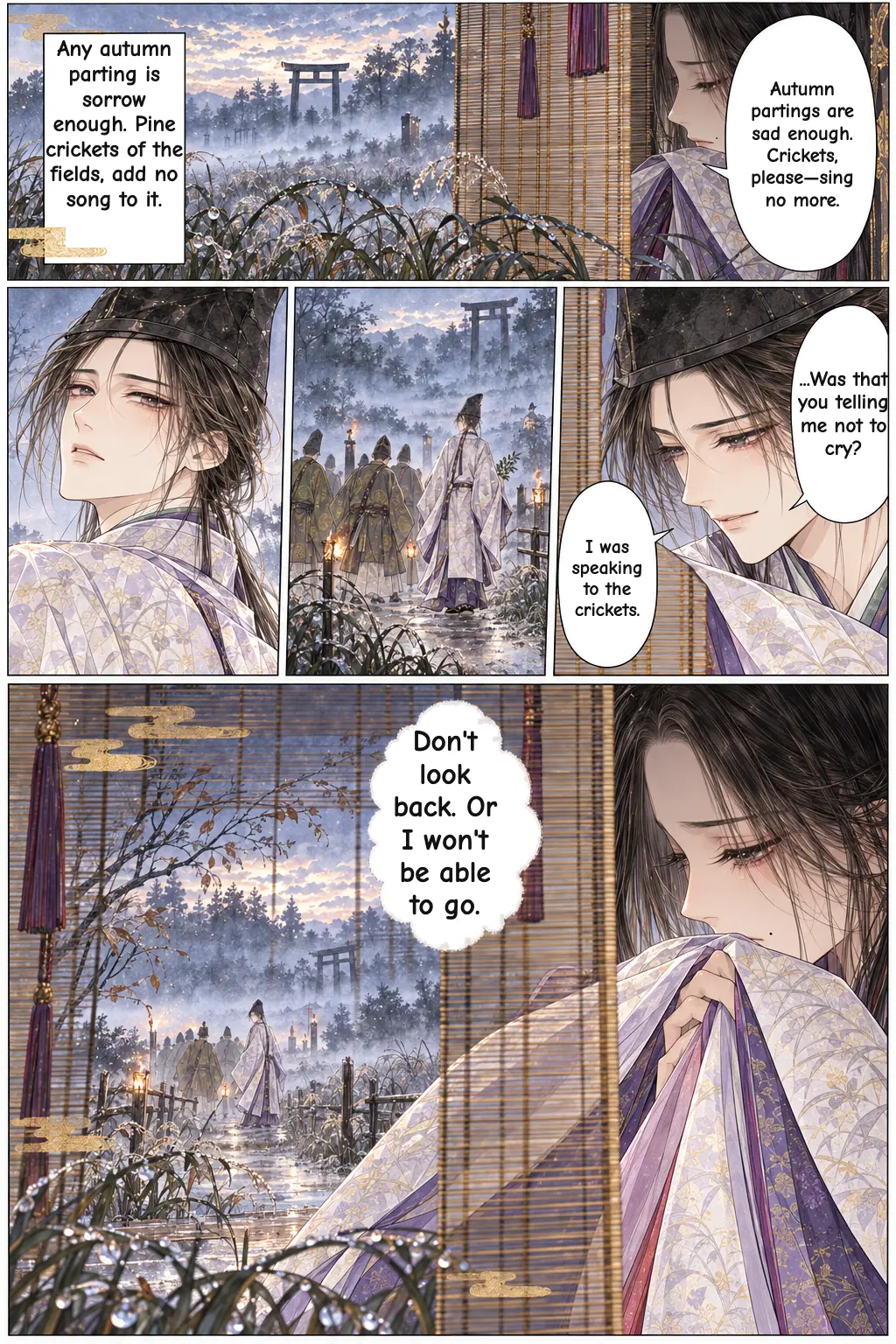
Rokujō hesitates to see him, but at last agrees to talk through a bamboo blind. Genji slips a branch of sakaki, the evergreen tree sacred to Shinto, under the blind, saying that its unchanging green guided him past the shrine’s fence. They exchange poems about the branch, then talk under the moon about old resentments and lingering love until dawn. What else happens that night, the text leaves unsaid. At daybreak they trade parting poems, his about an autumn sky unlike any he has known, hers asking the pine crickets not to add their cries to her grief.
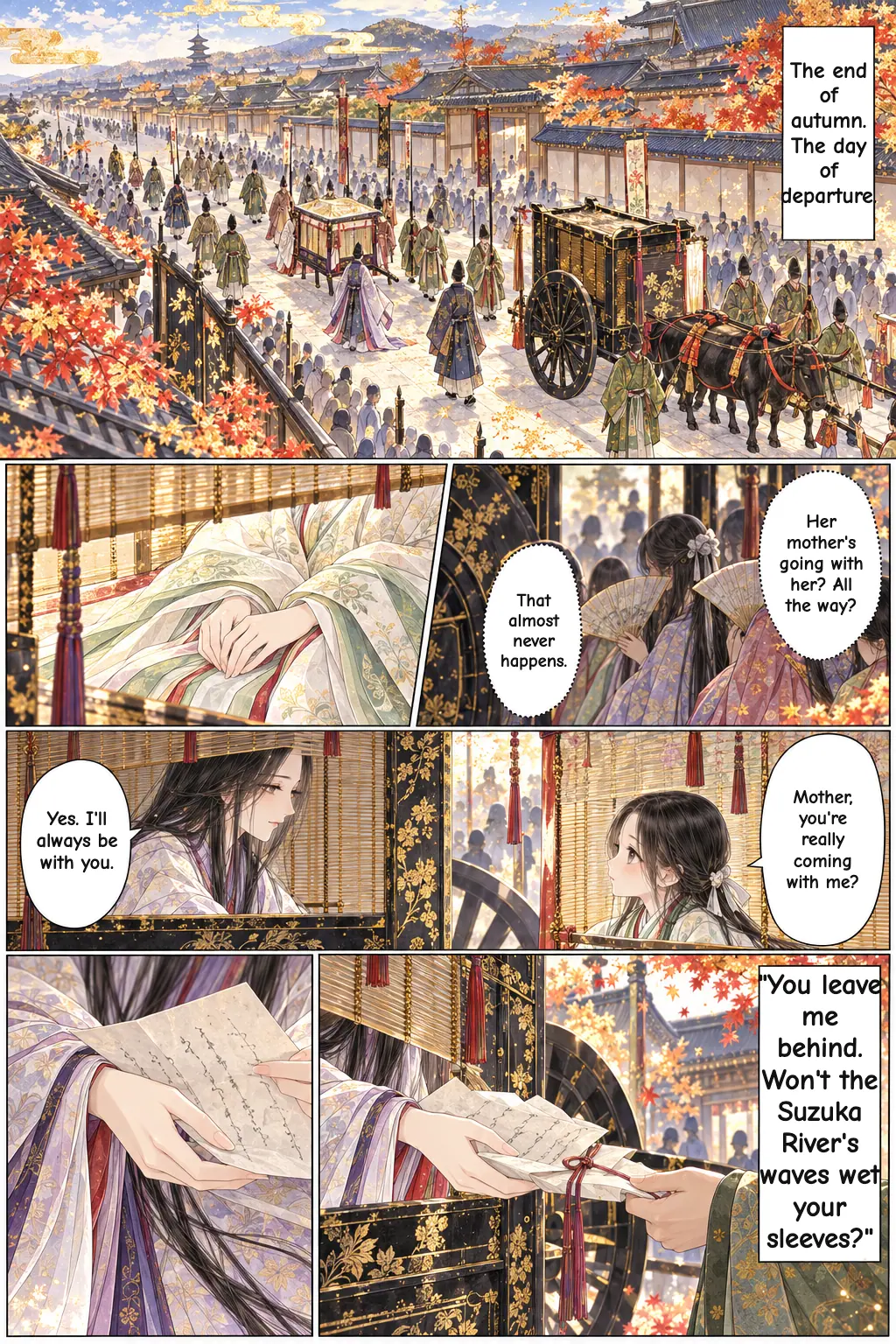
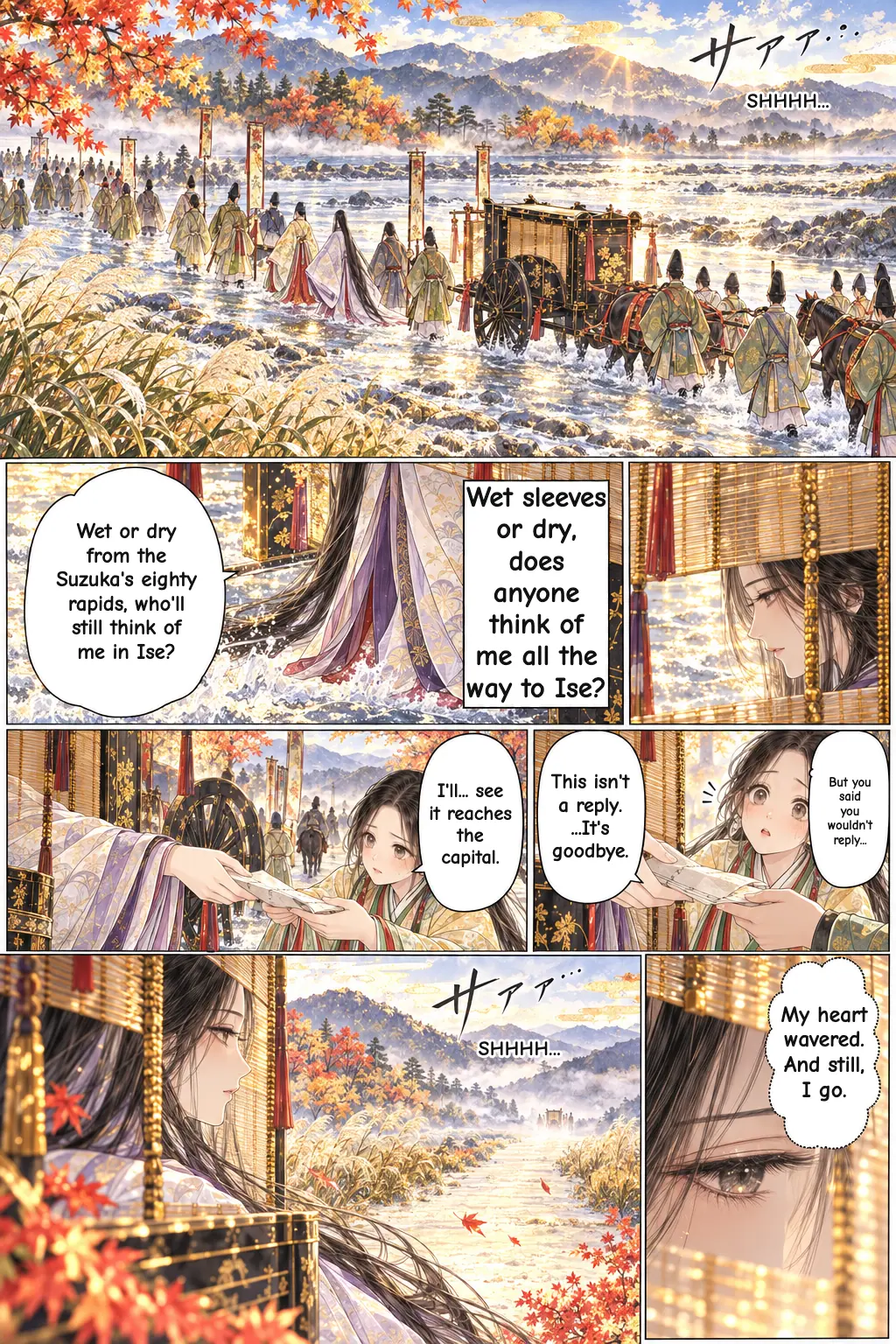
Genji keeps writing heartfelt letters. Rokujō is shaken, but she does not change her mind. Her daughter, about fourteen and very beautiful, is purified in the Katsura River, and at the palace the emperor places the ceremonial “comb of parting” in her hair. Rokujō, who entered the palace at sixteen and lost her husband at twenty, quietly grieves at the memory. As the procession leaves, Genji sends a poem asking whether she will not weep at the many shallows of the Suzuka River on the road to Ise. The next day her reply arrives from beyond the Ōsaka Barrier: whether her sleeves are wet or not, who in the capital will think of her once she is in Ise? Genji is left gazing after her in thought.
What This Story Tells Us: Love, Pride, and Letting Go
Murasaki Shikibu wrote The Tale of Genji around the early 1000s, during the Heian period, when court romance was conducted largely through letters and poetry. Women of high rank were usually seen only through blinds or screens, so the bamboo blind between Genji and Rokujō is both realistic and symbolic: they are close, yet a barrier remains.
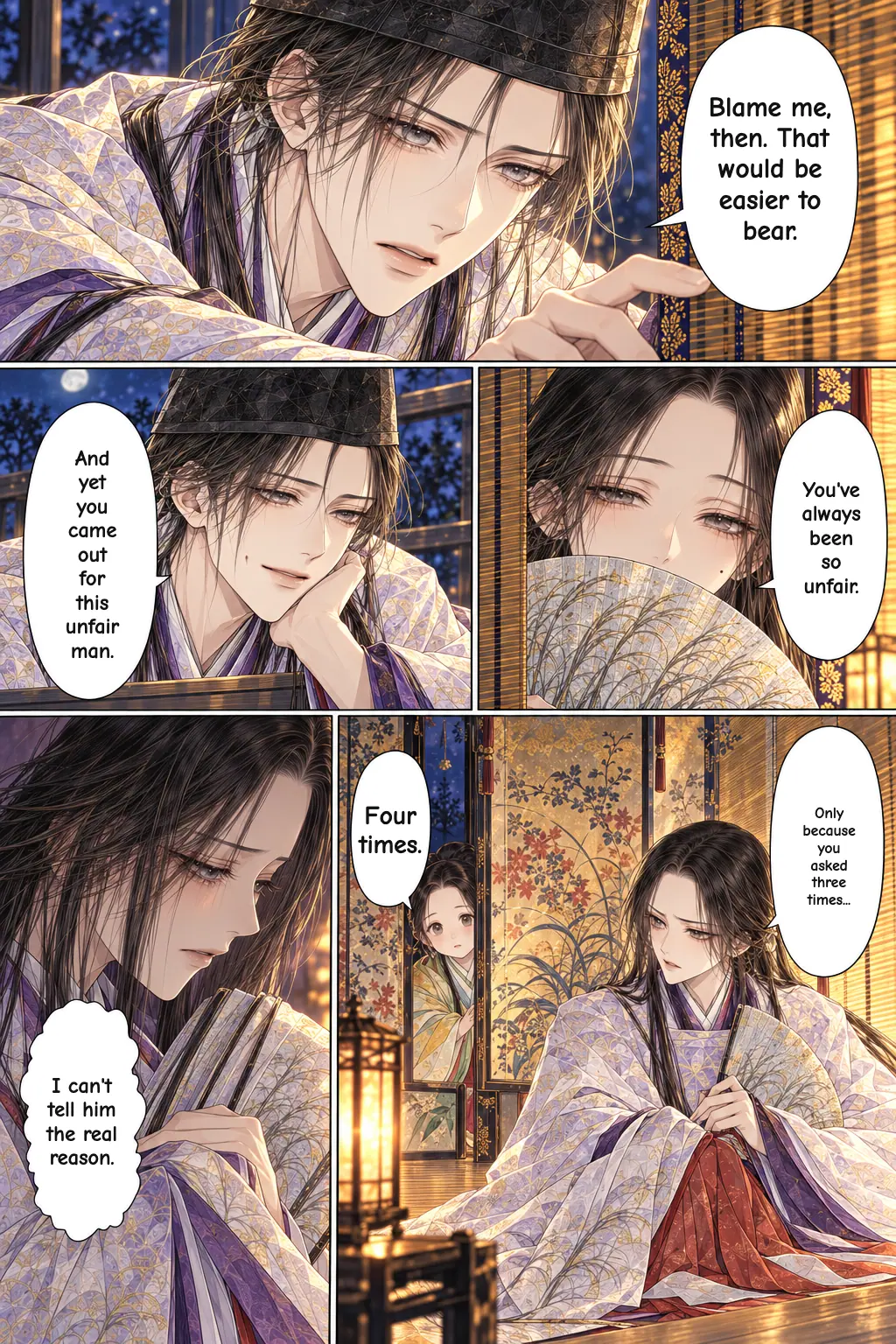
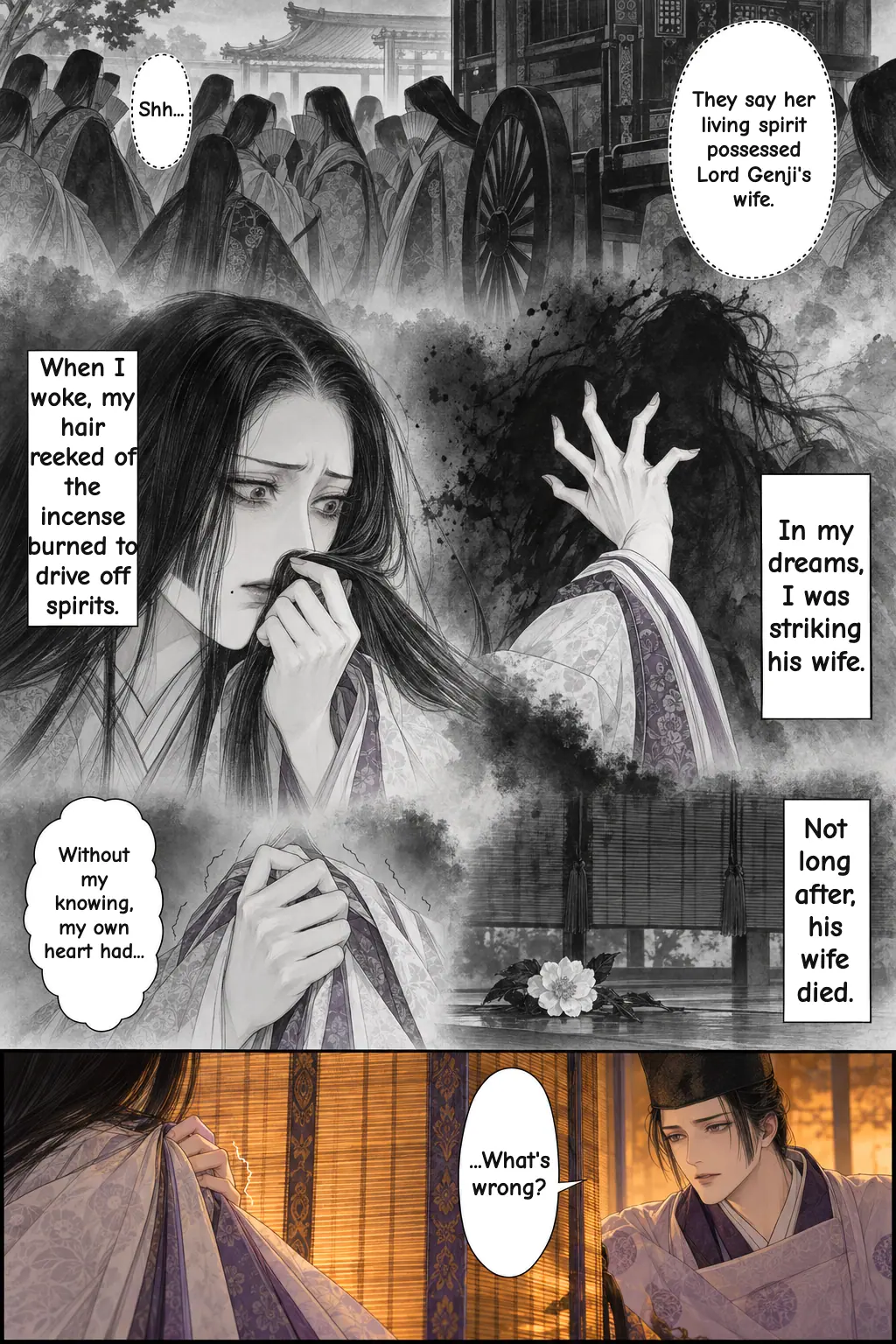
The scene is famous because Rokujō is the one who chooses to leave. Readers of earlier chapters know why the decision matters. In the “Aoi” chapter, her jealous spirit is said to have left her body and tormented Genji’s wife; in “The Sacred Tree,” this is only hinted at through her own sense that Genji now keeps his distance. Leaving for Ise is a way to escape both the humiliation and her own feelings.
The setting adds meaning too. A sacred shrine, where romance should have no place, becomes the stage for a final meeting, and the dying autumn landscape mirrors the end of a love affair. The scene later inspired the Noh play Nonomiya, and today Nonomiya Shrine in Arashiyama, Kyoto, with its dark log torii, is visited by fans of the tale. Scholars debate how sincere Genji is here; the text itself shows him moved but also concerned about appearances.
What the Manga Changes
The manga follows the main events of the original, but some parts are creative additions. The original only says the two talked about their grievances and feelings; the manga writes its own dialogue for them, apart from the poem exchanges. The night itself is handled with a fade to black, matching the original’s silence.
The faint music the original calls unidentifiable is drawn as a koto. Rokujō’s memories of the gossip and of fearing her own heart are shown as brief flashbacks, and the spirit episode is only suggested, not depicted. Faces, robe colors, and the layout of the shrine are the artist’s interpretation, though the log torii, brushwood fence, and guard fire are kept.
The biggest change is the ending. In the original, Rokujō sends her Suzuka River poem the day after leaving, from beyond the Ōsaka Barrier. In the manga, she composes her answer while crossing the river itself and rides on without looking back—a dramatic choice that compresses the timing but keeps the poem as her reply to Genji.
Where to Read It
If you want to see this farewell unfold—the withered autumn fields, the sakaki branch slipped under the blind, and Rokujō’s quiet resolve—Episode 2 of LOVE & ALLURE: Classic Japanese Tales of Romance brings it to life in manga form. Every episode on Manga Portal is free to read, with no sign-up needed. It is an easy way to meet one of The Tale of Genji’s most unforgettable women, and to explore other classic Japanese love stories in the same series.
Characters in this episode
Lady Rokujō (Rokujō no Miyasudokoro)
A refined, proud widow of a former crown prince and Genji’s older lover, who decides to end their affair by leaving for Ise.
Genji (Hikaru Genji, the Shining Prince)
The hero of The Tale of Genji, who visits Nonomiya to say goodbye and keeps writing to Rokujō after she refuses to stay.
The Ise Priestess (Saigū, later Empress Akikonomu)
Rokujō’s beautiful daughter, about fourteen, chosen to serve the Ise Shrine, whose appointment gives her mother a reason to leave.
The Emperor (Suzaku)
The reigning emperor, who places the ceremonial comb of parting in the priestess’s hair before she departs.
The Priestess’s Lady-in-Waiting (Nyobettō)
A senior attendant who writes the reply to Genji’s poem on the young priestess’s behalf.
FAQ
What happens at Nonomiya in The Tale of Genji?
Genji visits Lady Rokujō at Nonomiya, a temporary shrine in Sagano, shortly before she leaves for Ise. They exchange poems over a sakaki branch and talk through a blind until dawn. Afterward she ignores his pleas and goes to Ise as planned.
Why did Lady Rokujō leave for Ise?
Her daughter was chosen as the Ise Priestess, and Rokujō used this as a way to break off her painful relationship with Genji. Genji had been visiting less after his wife Aoi’s death, and Rokujō also felt he had grown wary of her after the spirit episode described in the earlier “Aoi” chapter.
Why is the chapter called “The Sacred Tree” (Sakaki)?
Sakaki is an evergreen tree sacred in Shinto. Genji brings a branch of it to the shrine and passes it under Rokujō’s blind, and their exchange of poems about the branch gives the chapter its name.
Who wrote The Tale of Genji?
It was written by Murasaki Shikibu, a lady-in-waiting at the Japanese imperial court, in the early 11th century during the Heian period. It is often called one of the world’s earliest novels.
Is Nonomiya a real place?
Yes. Nonomiya Shrine stands today in the Arashiyama area of Kyoto, known for its dark log torii gate, and is associated with this scene from The Tale of Genji.