Episode 5I Overheard My Ex Through the HedgePersuasion (Jane Austen)
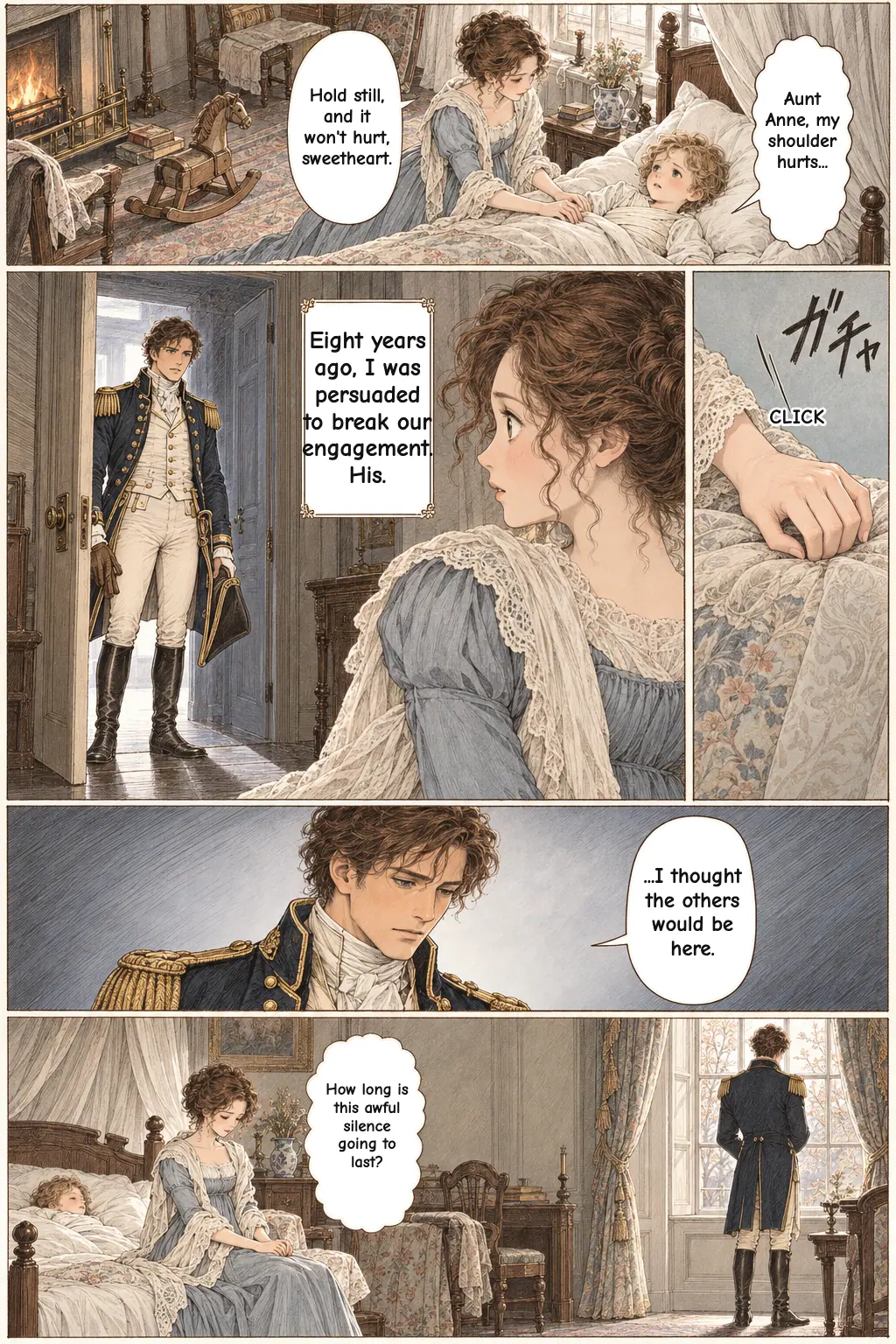
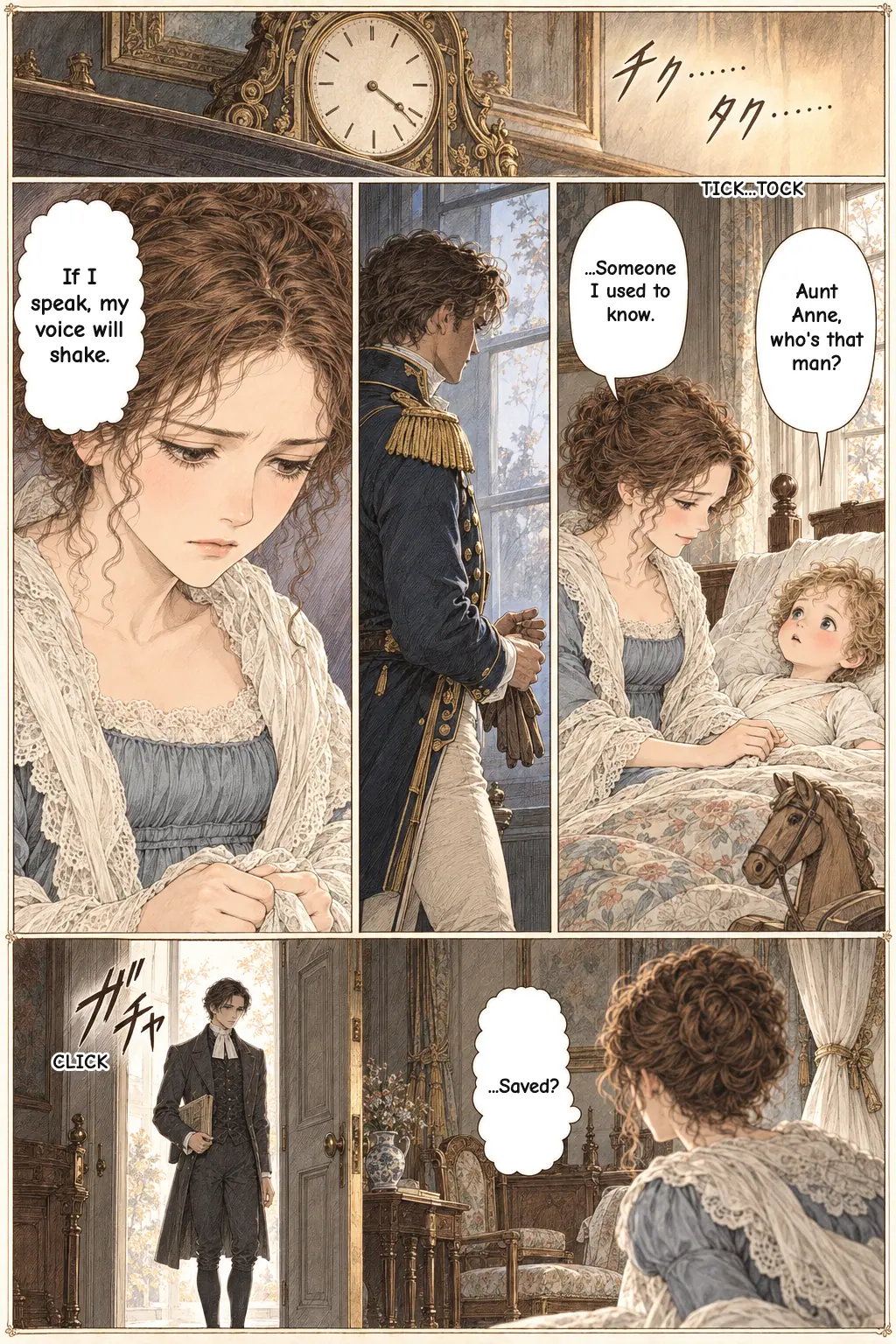
Anne finds herself alone in the nursery with the man she was persuaded to reject eight years ago. Days later, on a long autumn walk, she overhears his voice from behind a hedgerow, condemning people who change their hearts because others tell them to.
Captain Frederick Wentworth, a naval officer who came home rich from the war, is staying at Kellynch Hall with his sister Mrs. Croft and her husband, Admiral Croft, who rent the house from Anne's father. He rides over to Uppercross almost every day, and the neighbourhood keeps guessing which Musgrove sister he will marry, Henrietta or Louisa. Henrietta's cousin Charles Hayter, a young curate, notices that she has cooled toward him and stops visiting. One morning Anne is alone at Uppercross Cottage, looking after her nephew little Charles, who has hurt his collarbone.
Persuasion Chapters 9–10 Summary: Anne Overhears Wentworth at the Hedge (Jane Austen)
In short: In chapters 9 and 10 of Jane Austen's Persuasion (1817), Captain Wentworth quietly lifts a clinging toddler off Anne Elliot's back, and days later Anne, resting behind a hedgerow, overhears him praise Louisa Musgrove's firmness and scorn people who give in to persuasion. She also hears Louisa reveal that Anne once turned down Charles Musgrove. On the way home, Wentworth helps the tired Anne into his sister's carriage without saying a word.
What happens in Persuasion chapters 9–10
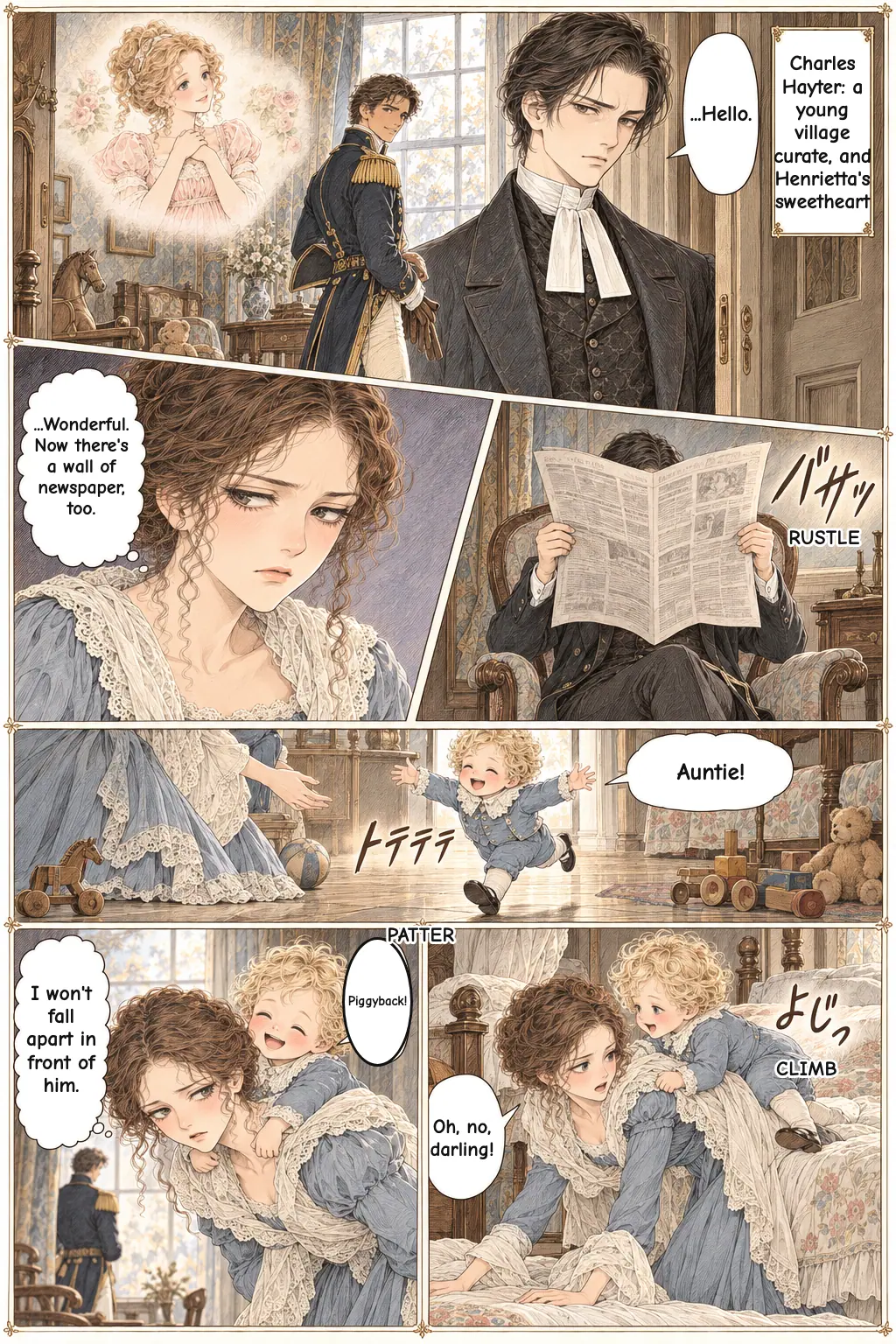
Captain Frederick Wentworth, a naval officer who came home rich from the war, is staying at Kellynch Hall with his sister Mrs. Croft and her husband, Admiral Croft, who rent the house from Anne's father. He rides over to Uppercross almost every day, and the neighbourhood keeps guessing which Musgrove sister he will marry, Henrietta or Louisa. Henrietta's cousin Charles Hayter, a young curate, notices that she has cooled toward him and stops visiting.
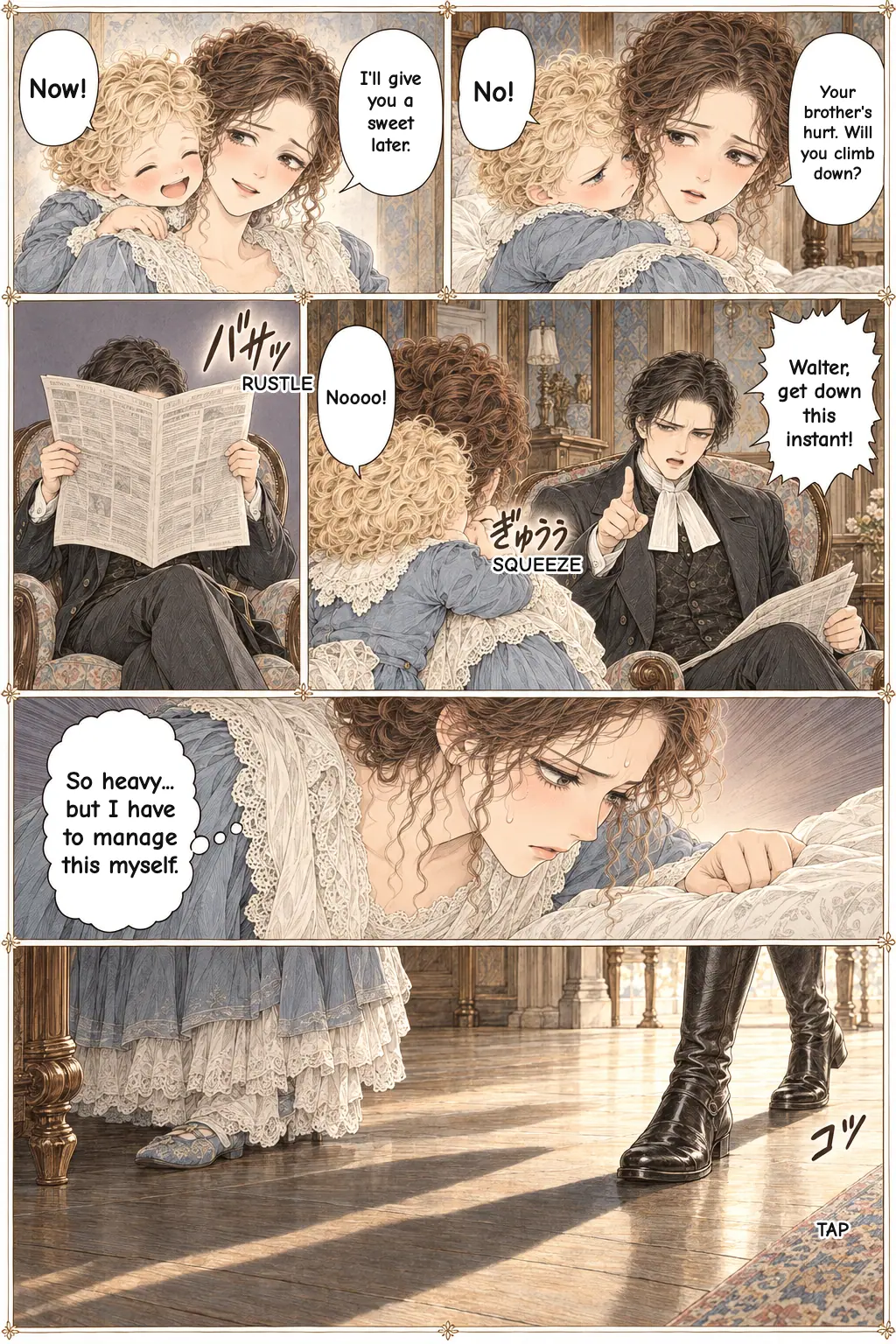
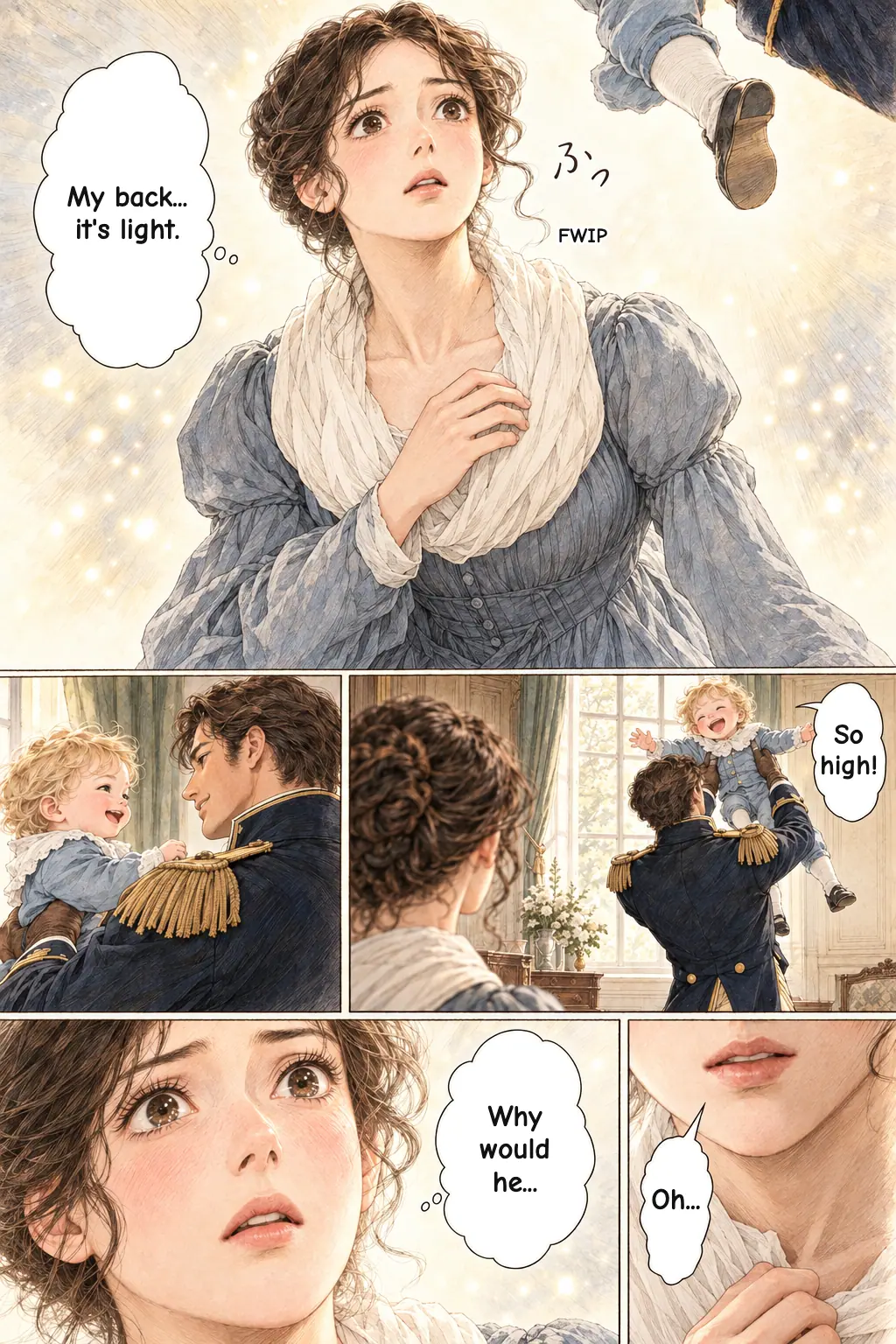
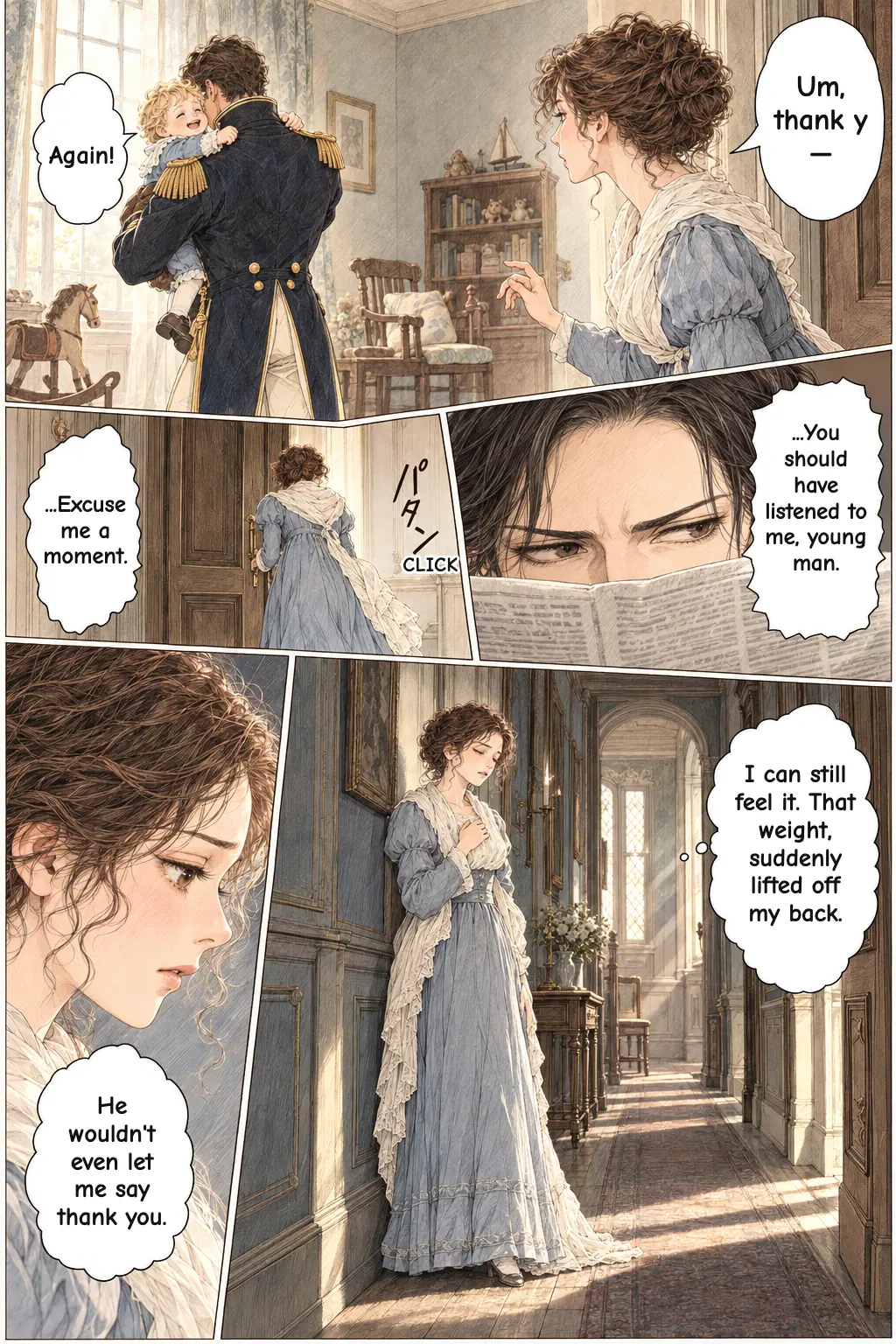
One morning Anne is alone at Uppercross Cottage, looking after her nephew little Charles, who has hurt his collarbone. Wentworth walks in expecting to find other people and gets an awkward silence instead. Charles Hayter arrives too, but he only reads the newspaper. Then two-year-old Walter climbs onto Anne's back and won't let go, and neither Anne's requests nor Hayter's scolding gets him down. Suddenly the weight is gone: Wentworth has lifted the boy off without a word, and he turns to playing with the child so that nobody can thank him. Anne is too moved to speak and leaves the room to calm herself. She also notices that Hayter is jealous.
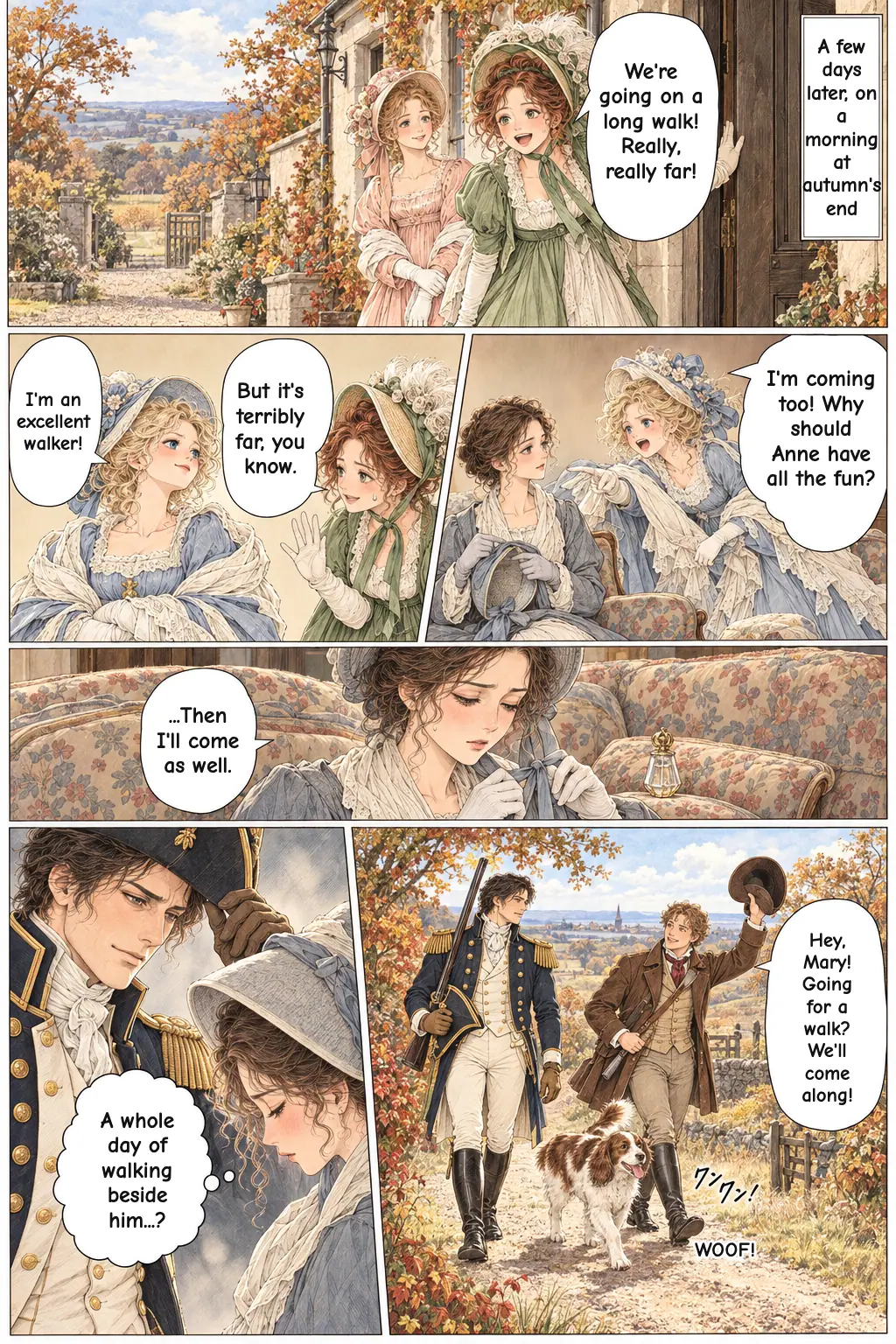
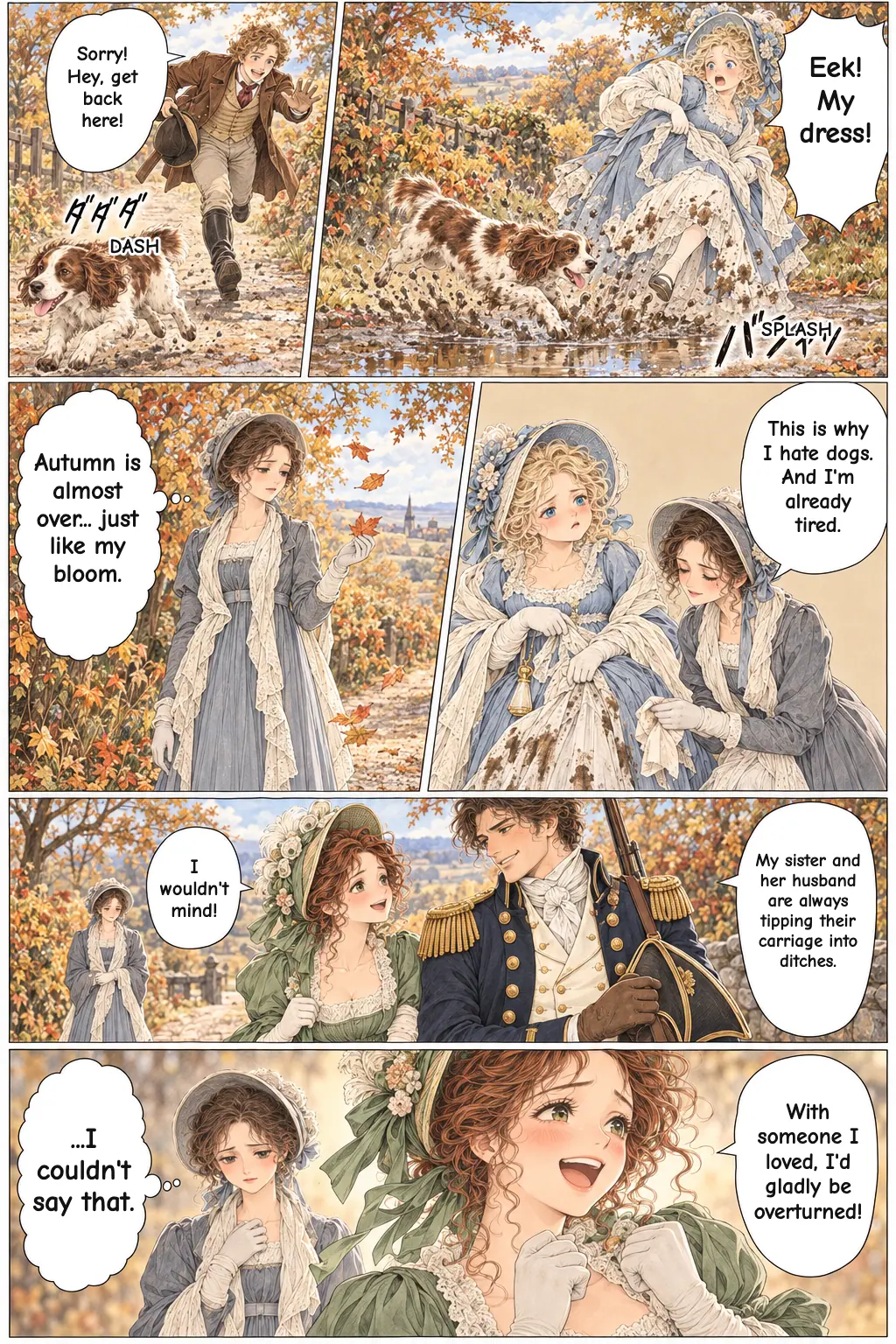
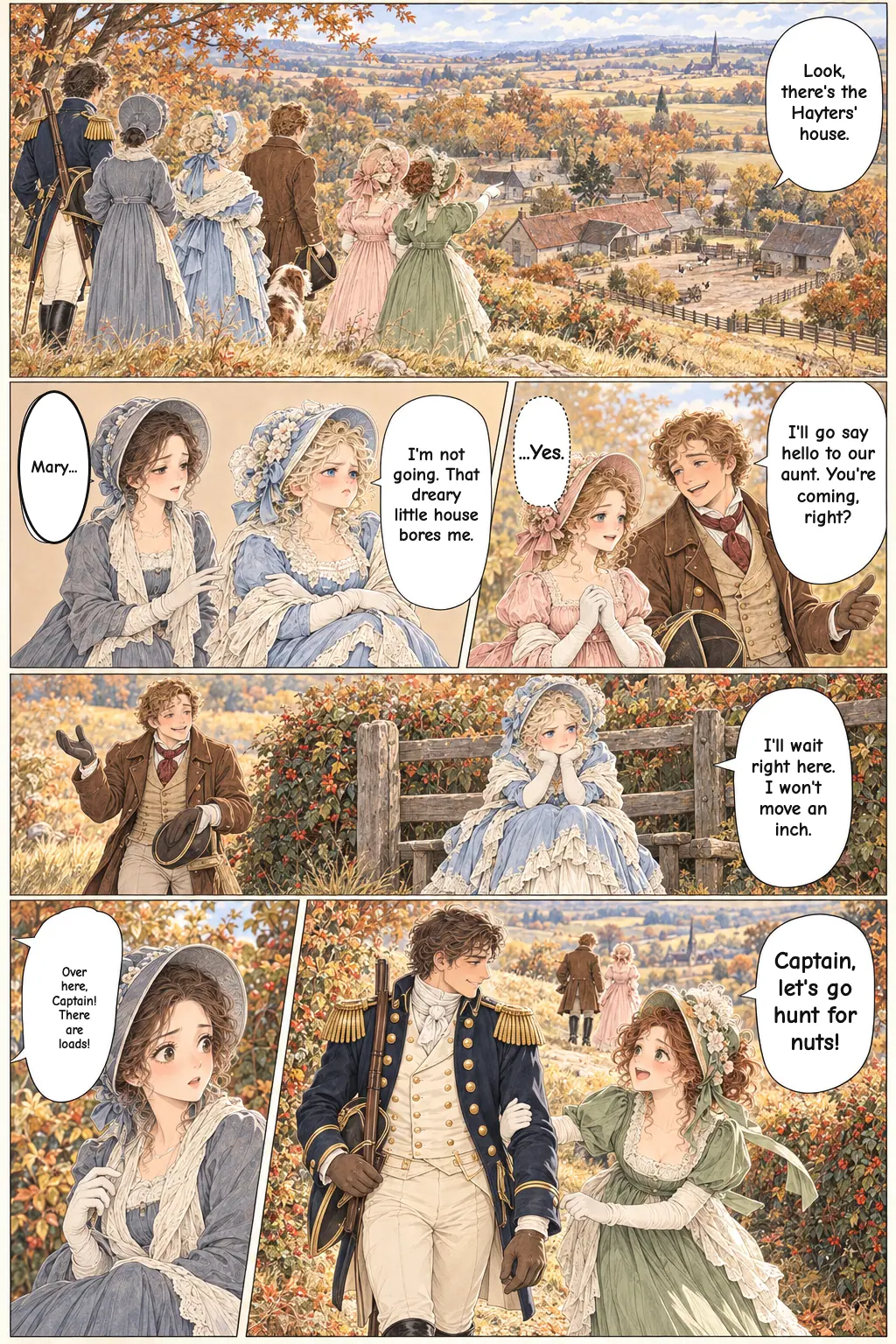
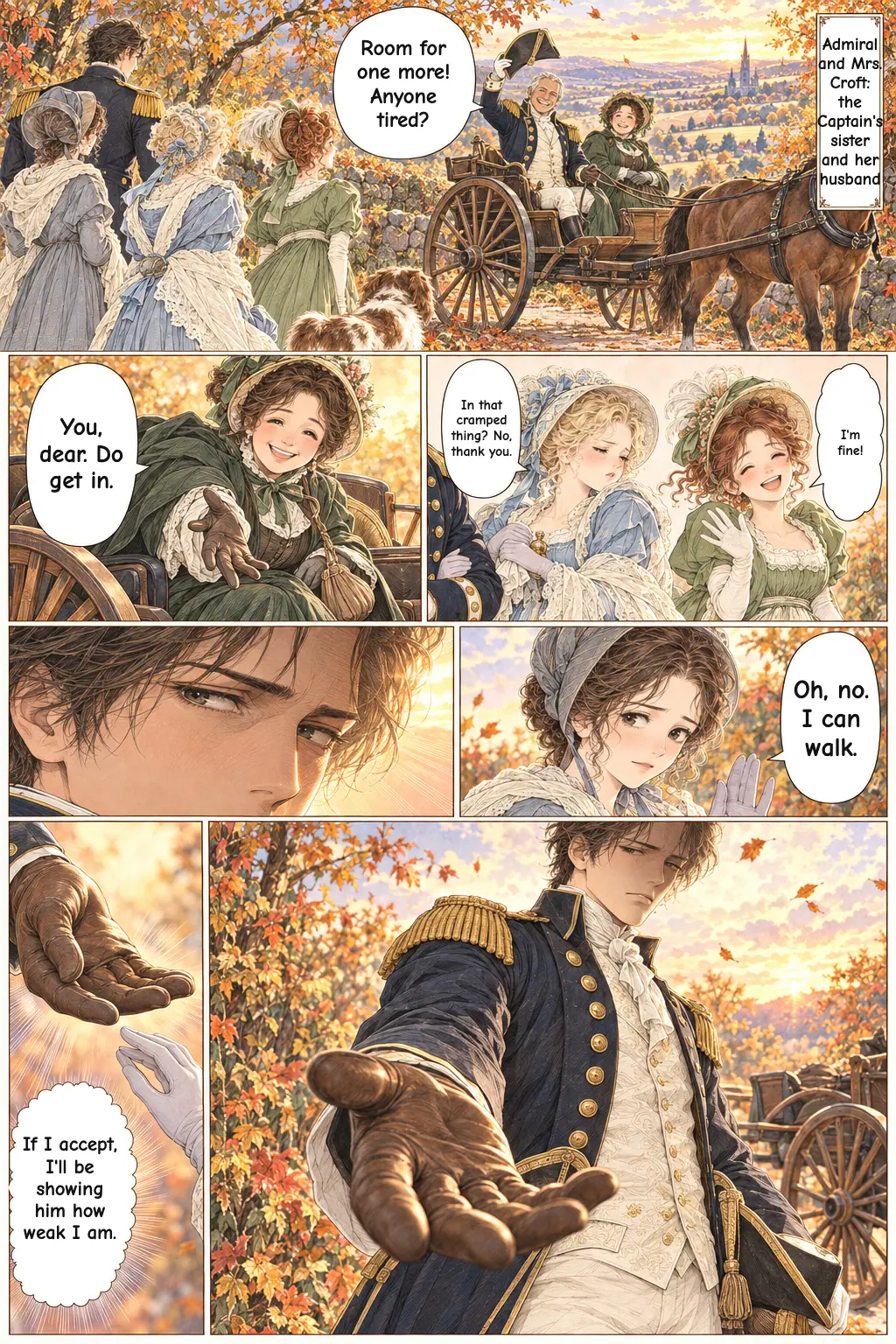
Not long after, Henrietta and Louisa set off on a long walk. Anne's sister Mary insists on coming, Anne goes along, and Charles Musgrove and Wentworth join them on their way back from shooting. Anne tries to lose herself in the autumn scenery and in half-remembered autumn poetry while Louisa tells Wentworth she would rather be overturned in a carriage by someone she loved than be driven safely by anyone else. At Winthrop, where the Hayter family lives, Henrietta goes down with Charles Musgrove to visit her aunt, and Mary refuses to go with them.
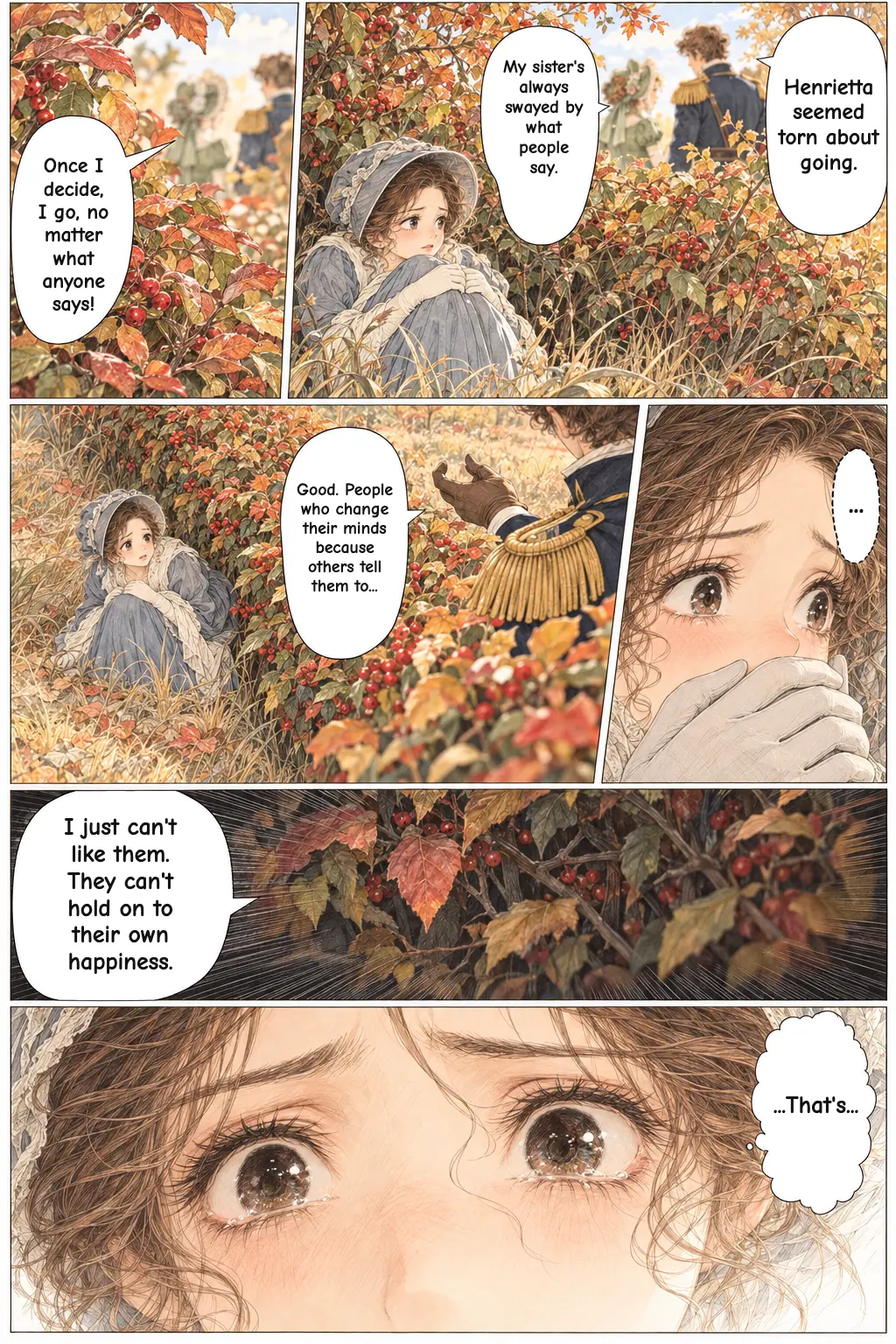
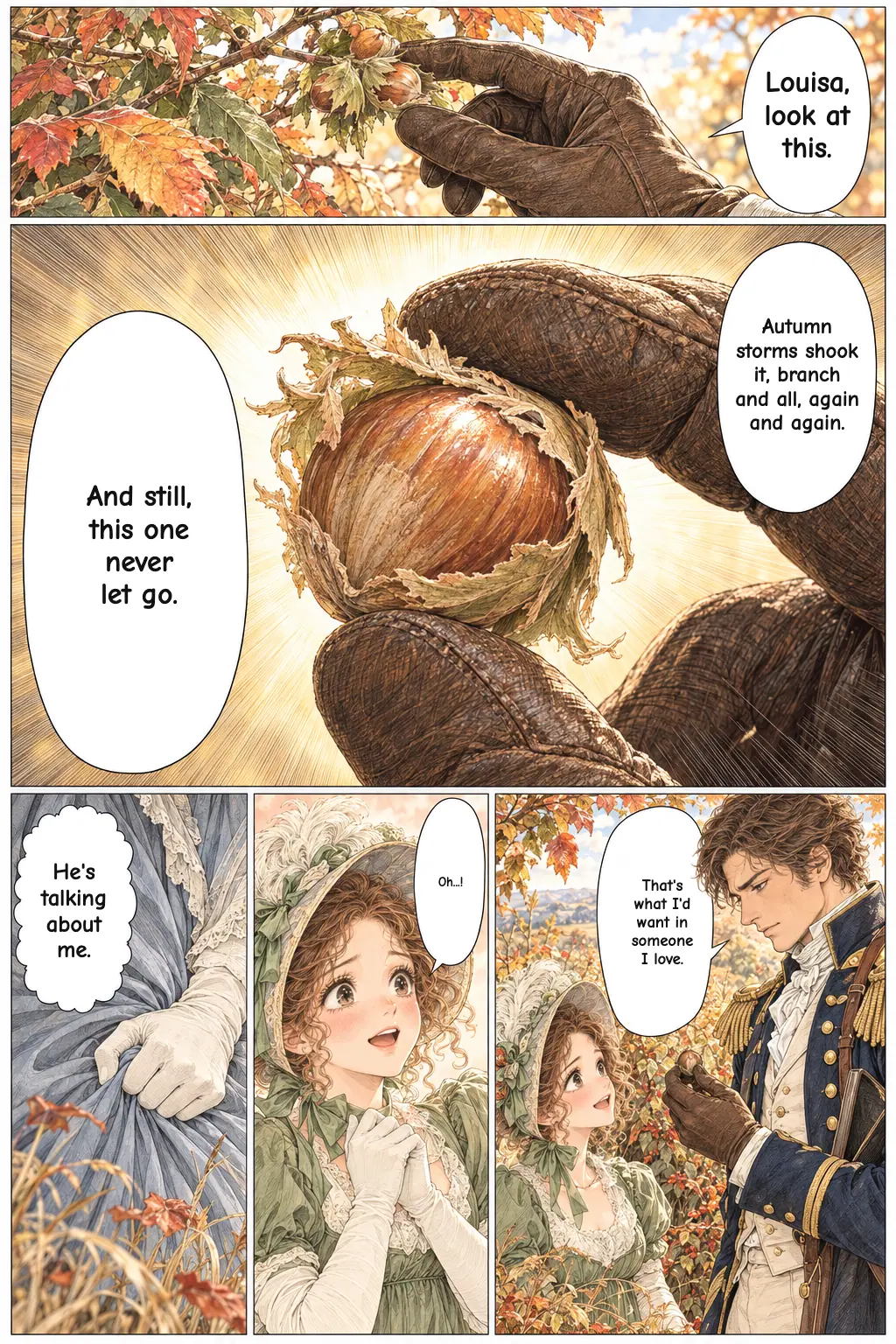
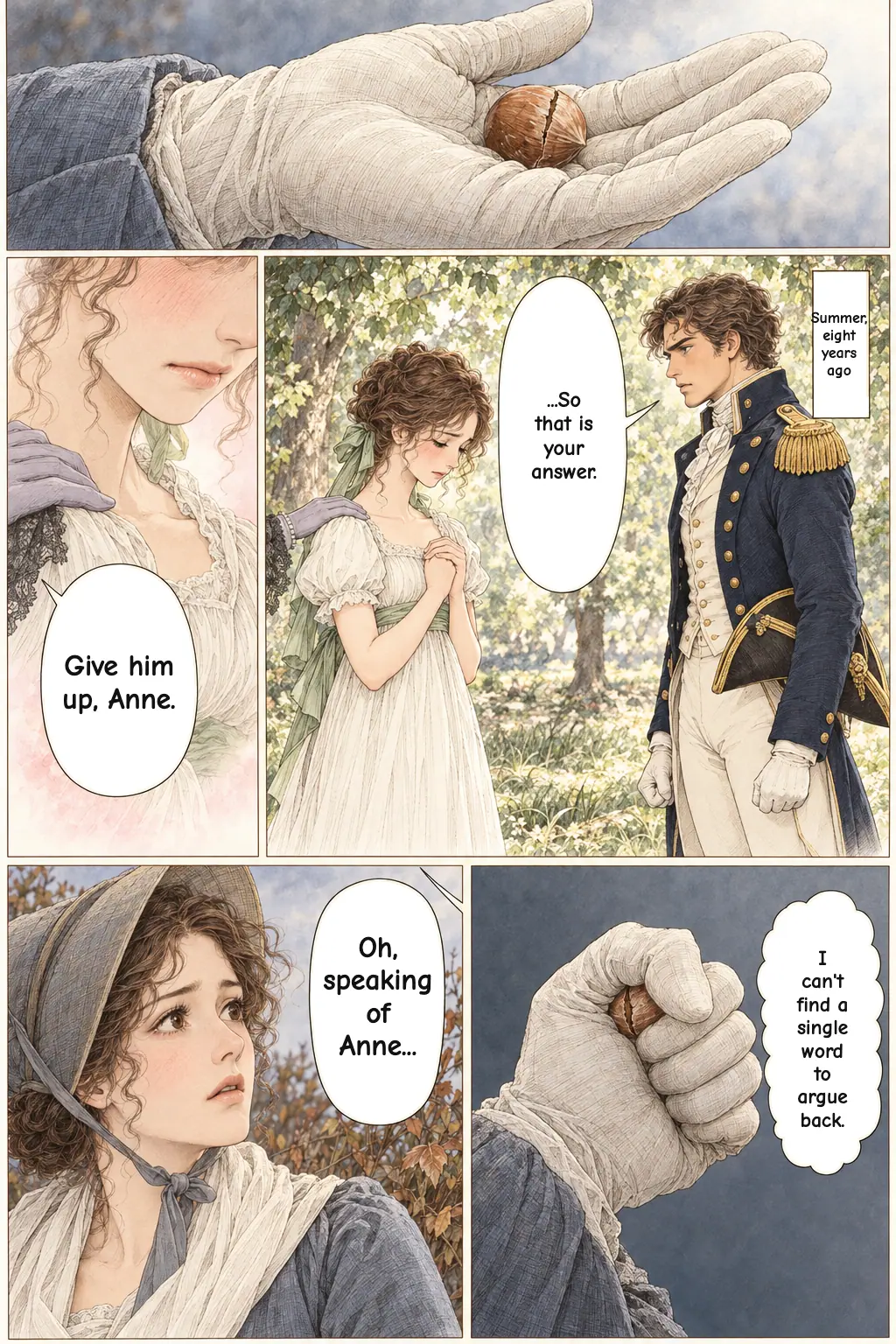
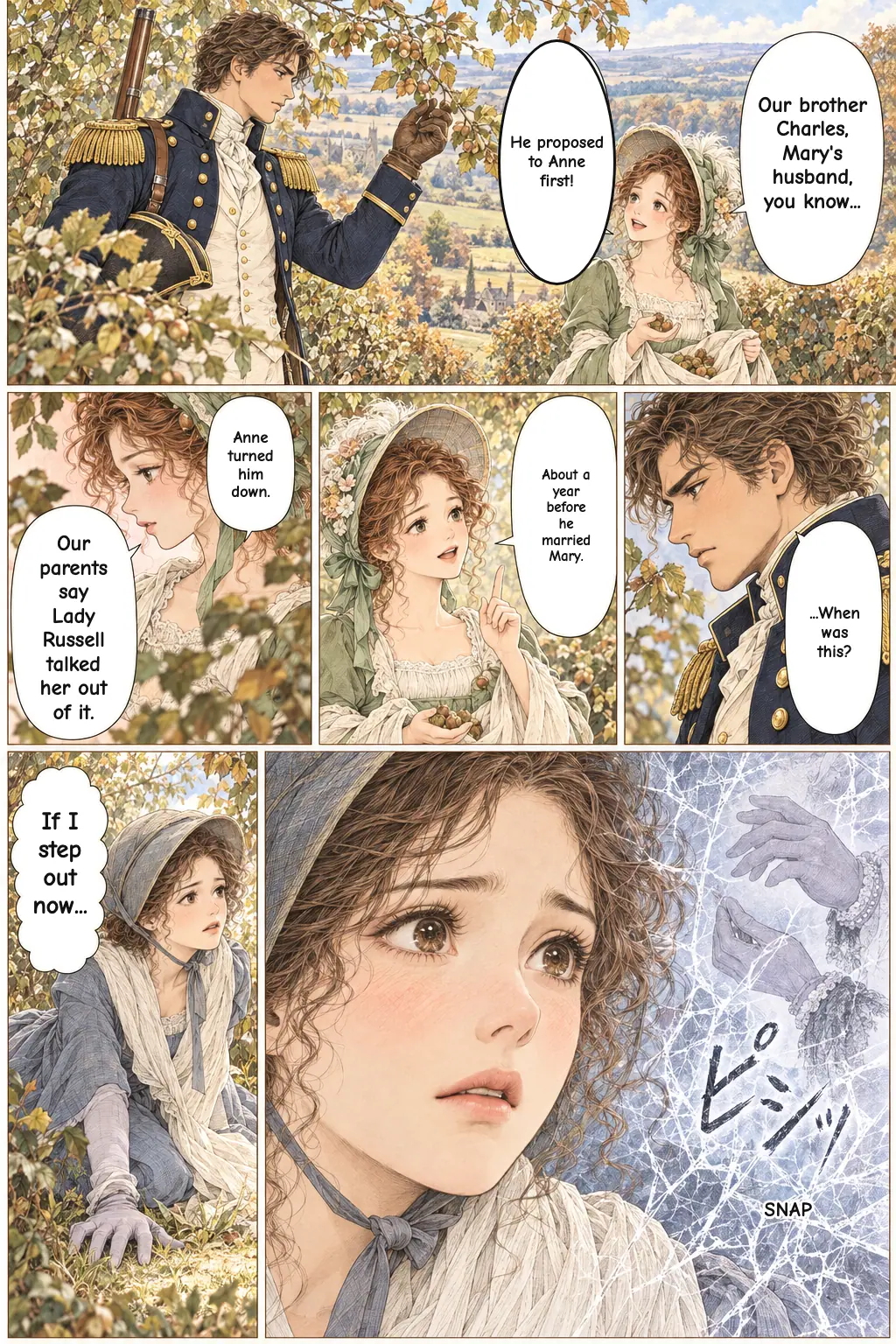
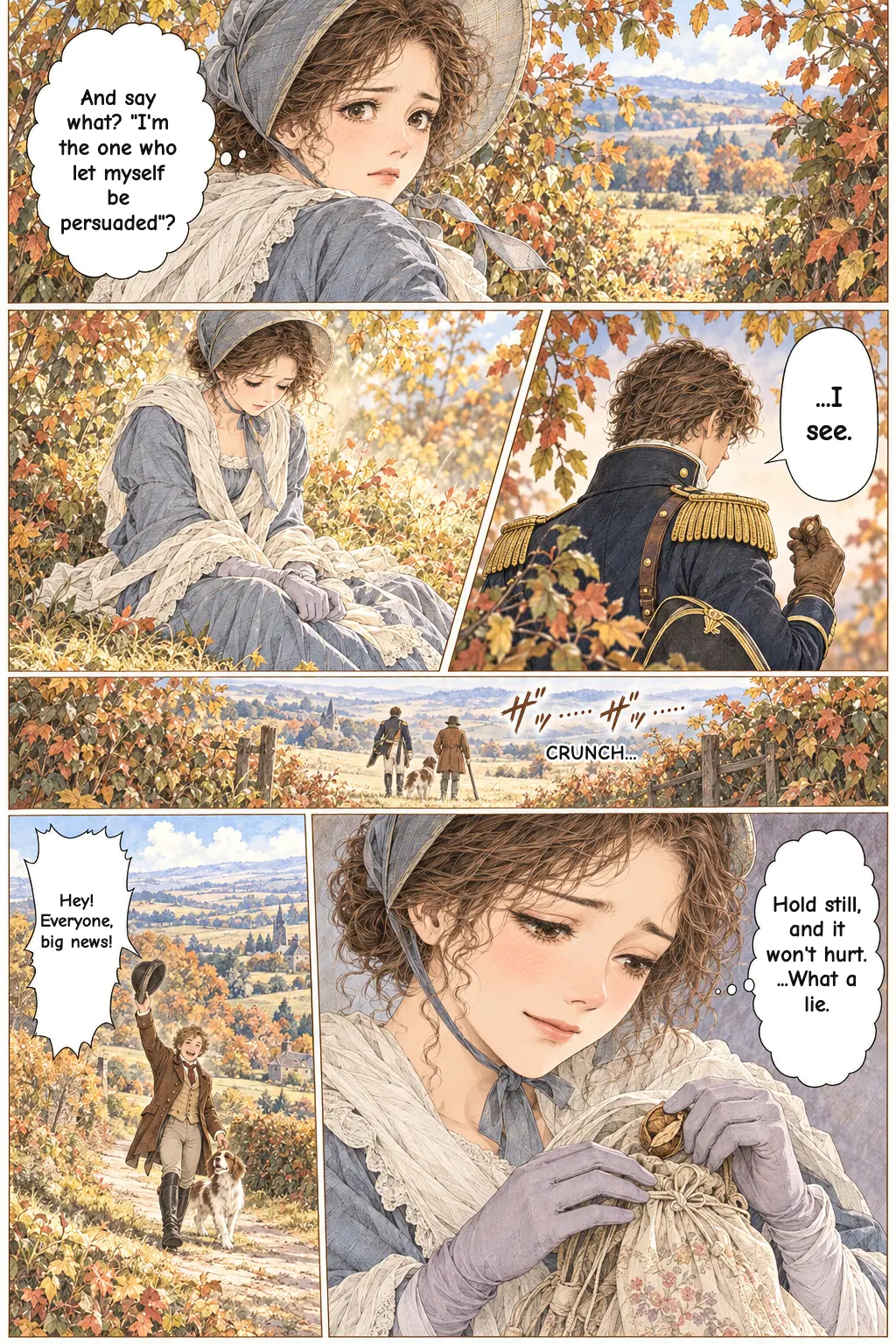
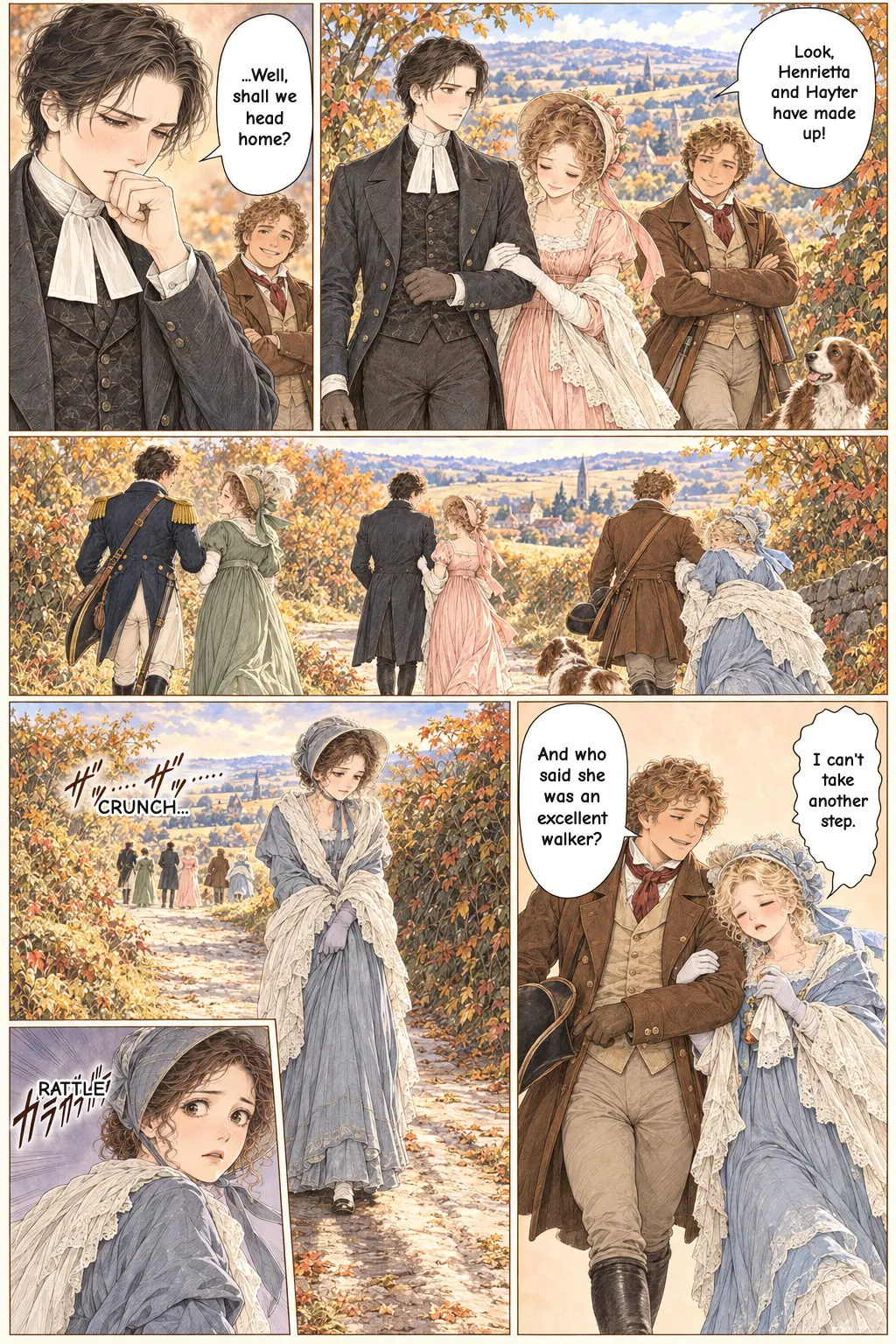
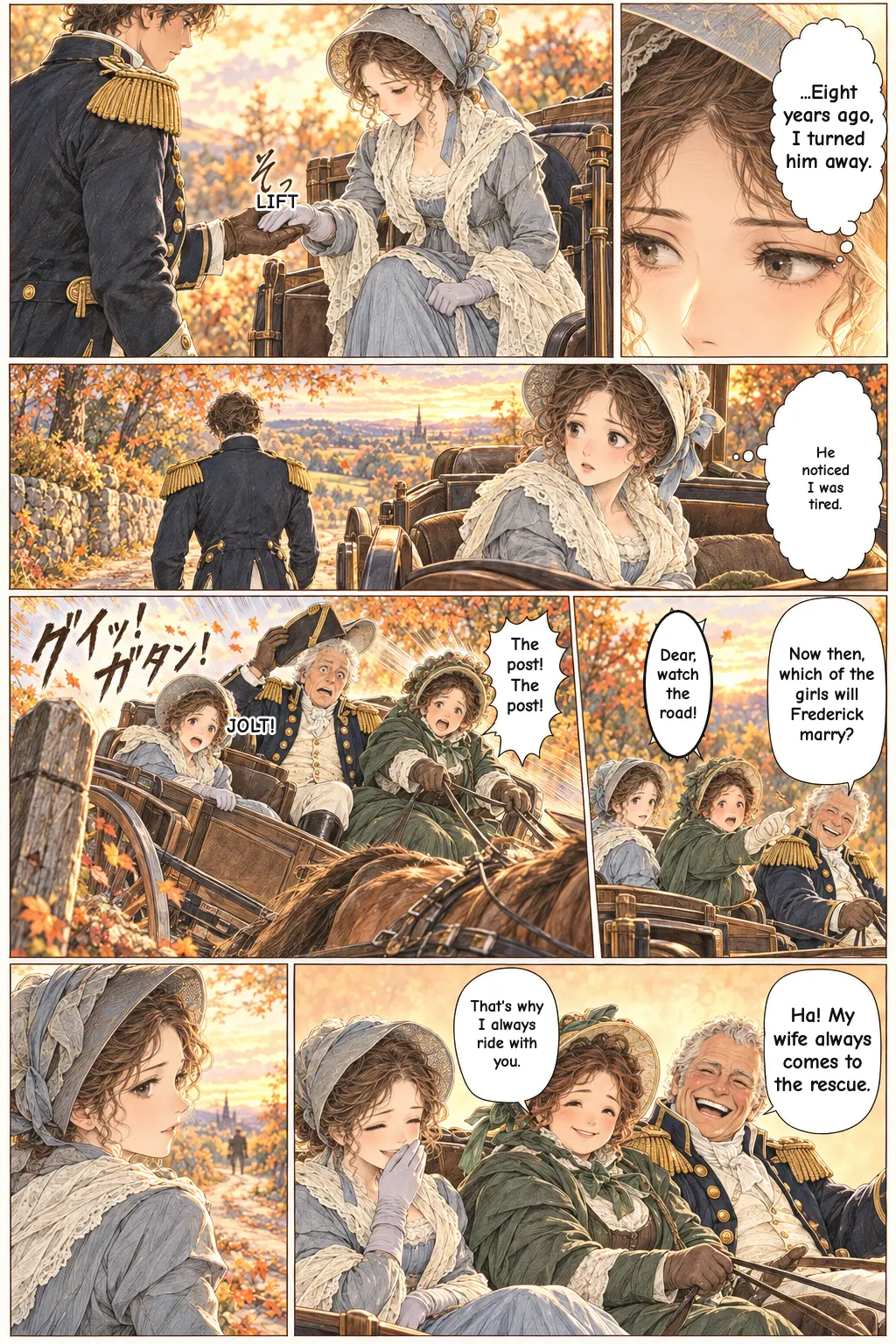
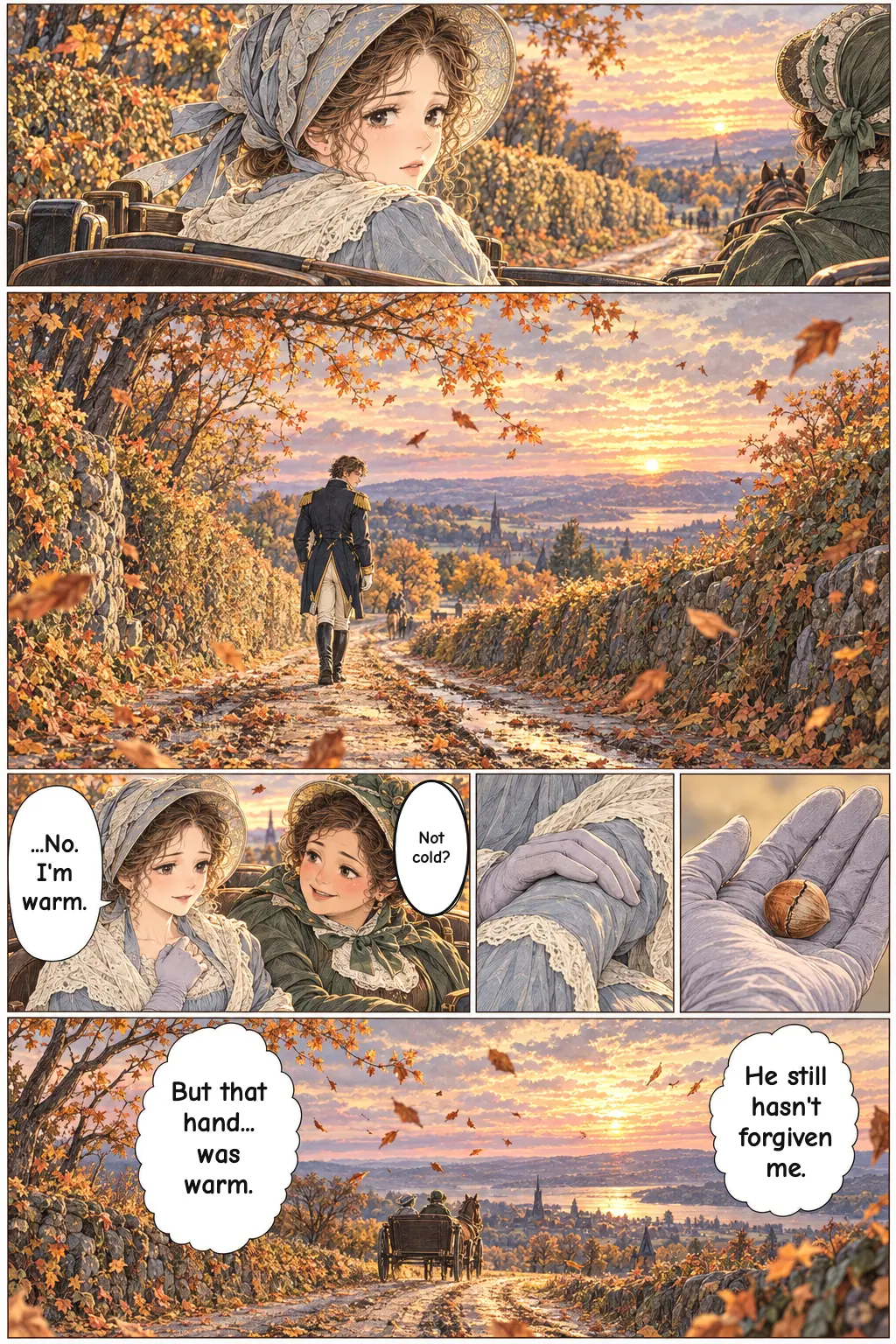
Anne sits down on a sunny bank beside a hedgerow. From the other side she hears Wentworth and Louisa gathering nuts. He praises Louisa's strong will, condemns weak characters who let other people talk them out of their decisions, and holds up a glossy hazelnut that has come through every autumn storm without a mark as a picture of the firm mind he admires. Louisa then mentions that Charles proposed to Anne before he married Mary, that Anne refused him, and that her parents blame Lady Russell's influence. Wentworth asks her about it. On the way home Henrietta comes back with Charles Hayter, the two of them obviously reconciled. When the Crofts' carriage passes and Mrs. Croft insists on taking Anne, Wentworth silently helps her in, and Anne realizes he had noticed she was tired. He hasn't forgiven her, she thinks, but he isn't unfeeling.
Main characters in this episode
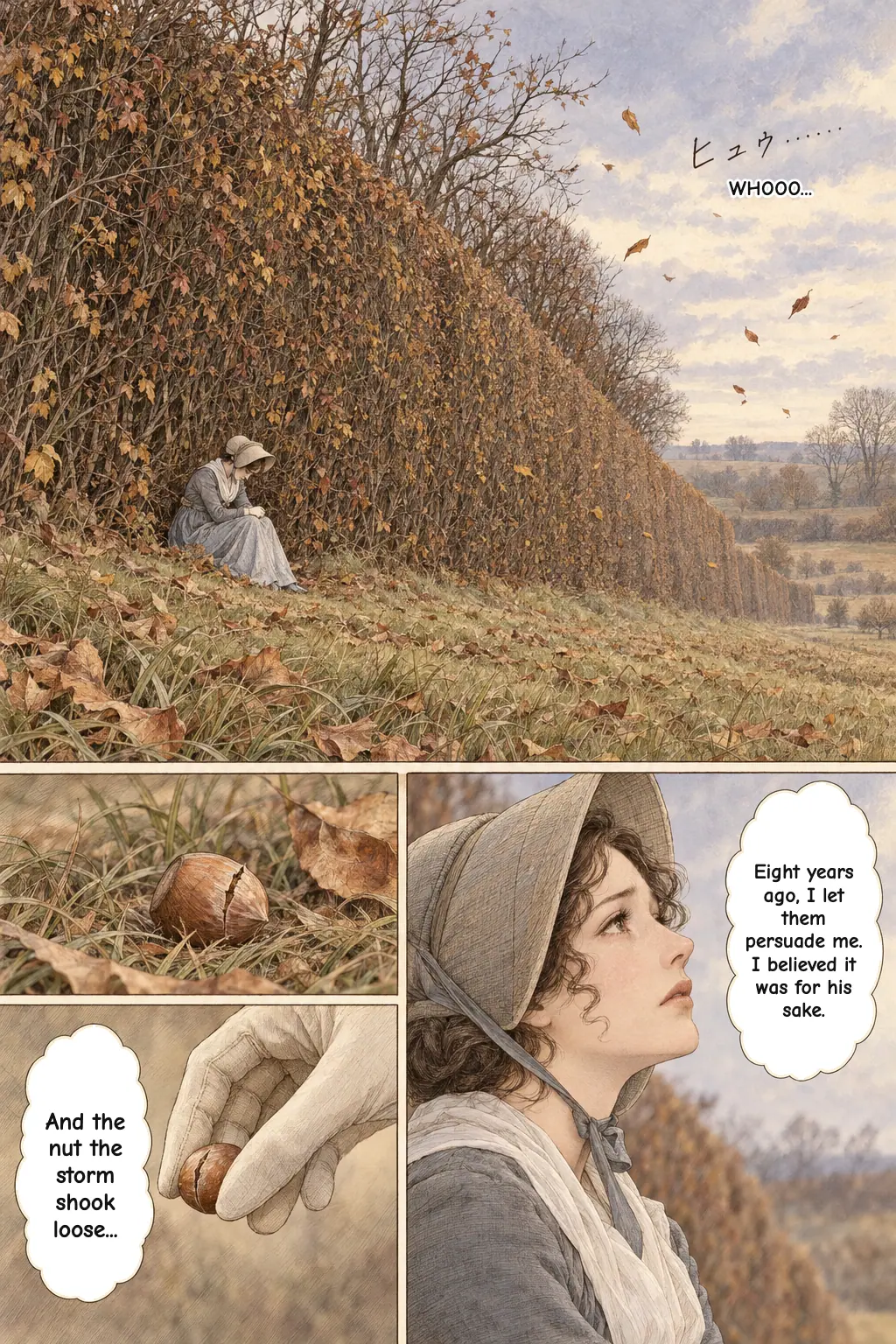
Anne Elliot, 27, is the overlooked second daughter of Sir Walter Elliot. Eight years earlier she broke off her engagement to Wentworth on the advice of Lady Russell, her late mother's friend. Wentworth still resents that decision, and it explains why the hazelnut speech hurts her so much: without knowing she can hear him, he is describing the kind of person he thinks she was.
Louisa and Henrietta Musgrove are the lively sisters Wentworth spends his time with. Louisa is headstrong, and Henrietta is the one whose feelings waver more. Charles Musgrove, their good-natured brother who loves shooting, is married to Mary, Anne's sister, who is quick to complain and looks down on the Hayters. The Crofts are a cheerful naval couple. Mrs. Croft has sailed the world with her husband, and in this episode she handles the carriage reins with real skill.
What the scene means: persuasion and firmness
The novel's title is about this very question: is it a weakness or a virtue to be guided by others? Wentworth's hazelnut speech gives one confident answer, and the rest of the book tests it. The reader knows what he doesn't: Anne gave him up out of duty and the advice of someone she trusted, and she has regretted it ever since. Louisa's story about Anne refusing Charles, which her parents also put down to Lady Russell, suddenly shows Wentworth that Anne once turned down a perfectly respectable match. Readers often take that as the first crack in his picture of her.
The setting matters too. Persuasion was published in late 1817, a few months after Austen died, and it takes place after the Napoleonic Wars. Navy officers like Wentworth and the Crofts had won fortunes in prize money and were moving into houses that belonged to the old gentry. Austen uses small physical moments, like a child lifted away or a hand offered at a carriage step, to show feelings that her reserved characters can't say out loud.
What the manga version changes
Everything in the summary above comes from Austen's text. The manga keeps that order of events and the meaning of what is said, but the dialogue is written fresh rather than copied. Wentworth's hazelnut lines and his conversation with Louisa are reworded in the comic's own voice.
Some details are the artists' own. Austen gives no description of the cottage room, the path to Winthrop, the hedgerow or the weather, so the manga invents them. The same goes for the characters' faces and hair, which the novel barely mentions. The rescue from little Walter is drawn as Anne feeling the weight on her back suddenly disappear, and her expressions and pauses are interpreted visually. The manga also chooses how much of Anne's inner voice to show, whether to cut in brief glimpses of eight years ago, how quickly to handle Henrietta and Hayter making up (a panel or two), and what the Crofts talk about in the carriage. Austen doesn't describe exactly how long Anne stays frozen by the hedge or how Wentworth moves around it, so those moments are staging choices, not quotations.
Where to read it
You can read Austen's novel for free on Project Gutenberg (eBook #105), where these events are in Chapters IX and X of Volume One. If you'd like to see the scene first, Episode 5 of PERSUASION: A Second Chance at Love on Manga Portal shows the nursery and the hedgerow in comic form. Every episode is free to read, with no sign-up, so you can follow Anne and Wentworth from the start and then compare the comic with Austen's own words.
Characters in this episode
Anne Elliot
A thoughtful, reserved 27-year-old who was persuaded eight years ago to break her engagement to Wentworth.
Captain Frederick Wentworth
A naval captain grown rich in the war who prizes firmness of mind and still resents Anne, though he quietly looks out for her.
Louisa Musgrove
The bold, headstrong younger Musgrove sister whose determination Wentworth praises at the hedgerow.
Henrietta Musgrove
The elder Musgrove sister, torn between Wentworth and her cousin Charles Hayter, until she makes up with Hayter on the walk.
Charles Hayter
Henrietta's cousin, a young curate from Winthrop who grows jealous and withdrawn once Wentworth arrives.
Mrs. Croft
Wentworth's sister, a seafaring admiral's wife who kindly offers the exhausted Anne a ride home and drives with skill.
FAQ
What is the hazelnut speech in Persuasion?
In Chapter 10, Captain Wentworth holds up a glossy hazelnut that has come through autumn's storms undamaged and uses it as an image of a firm, steady mind. He tells Louisa Musgrove that anyone who wants to be happy should be resolute and not easily talked out of things. Anne overhears all of it from behind a hedgerow.
Why does Anne Elliot overhear Wentworth?
When the walking party reaches Winthrop, Anne rests on a sunny bank beside a hedgerow. Wentworth and Louisa come by on the other side looking for nuts and have no idea she is there.
Who did Charles Musgrove propose to before Mary?
Charles Musgrove first proposed to Anne, and she refused him. Louisa tells Wentworth that her parents believe Lady Russell persuaded Anne to say no.
Who takes Walter off Anne's back in Persuasion?
Captain Wentworth lifts the two-year-old Walter off Anne without saying anything, after the boy has ignored both Anne and Charles Hayter. Anne is too overwhelmed to thank him and leaves the room.
When was Persuasion published?
Persuasion was published in late 1817, after Jane Austen died that July. It was her last completed novel.