Greek Mythology Origins: Cronus, Zeus and the War of the Titans – Manga and Lesson Plan
A teacher-ready page for the Greek creation story as Hesiod tells it, from Chaos to the war between the Titans and the Olympians. It includes a summary, a table of the three generations of gods, a 45-minute lesson flow, four discussion questions and a one-page printable worksheet. Students read up to six free 19-page manga episodes with no sign-up, and you can share each straight to Google Classroom. The manga is an adaptation based on Hesiod’s poem, so use it as an entry point before or alongside the original.
Read the manga · Share to Classroom
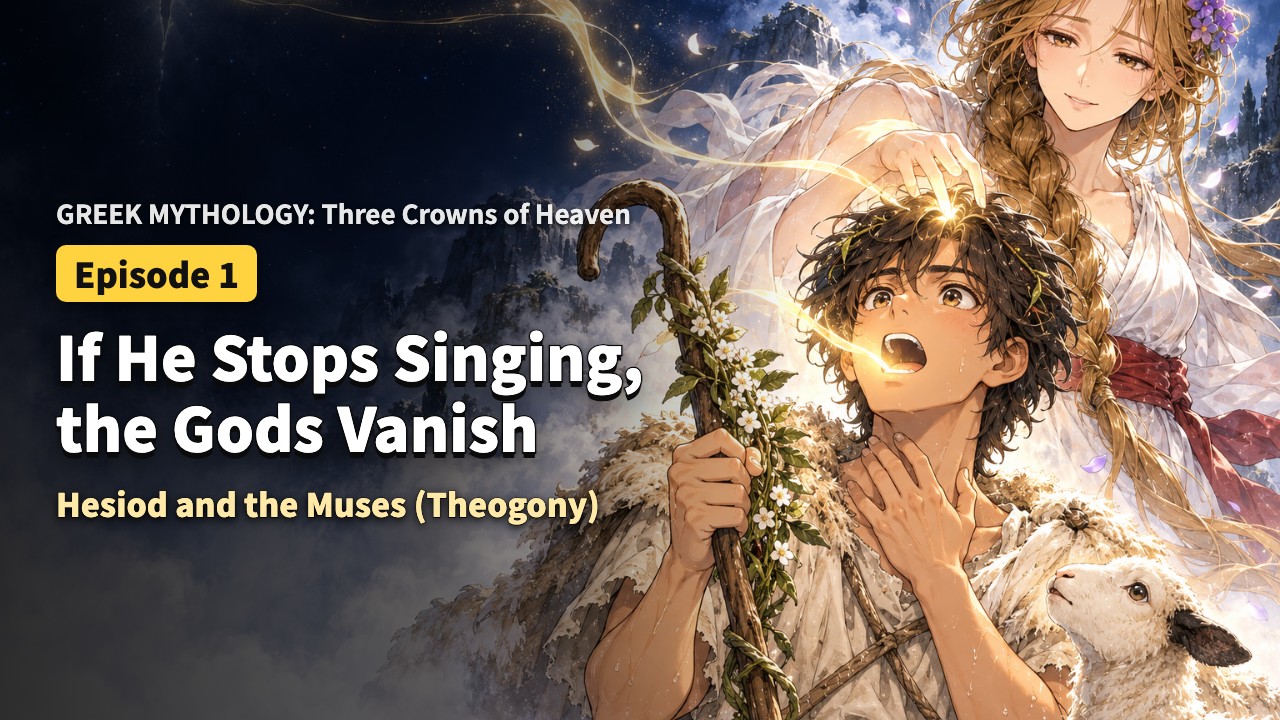
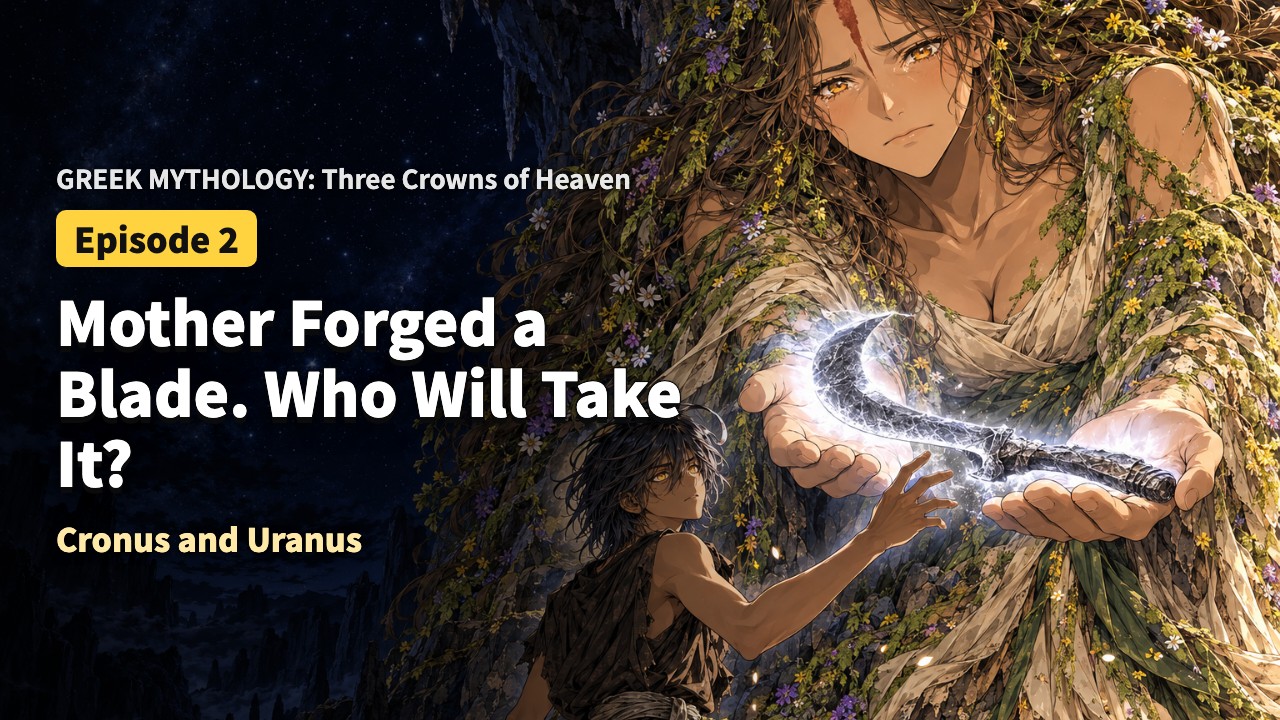
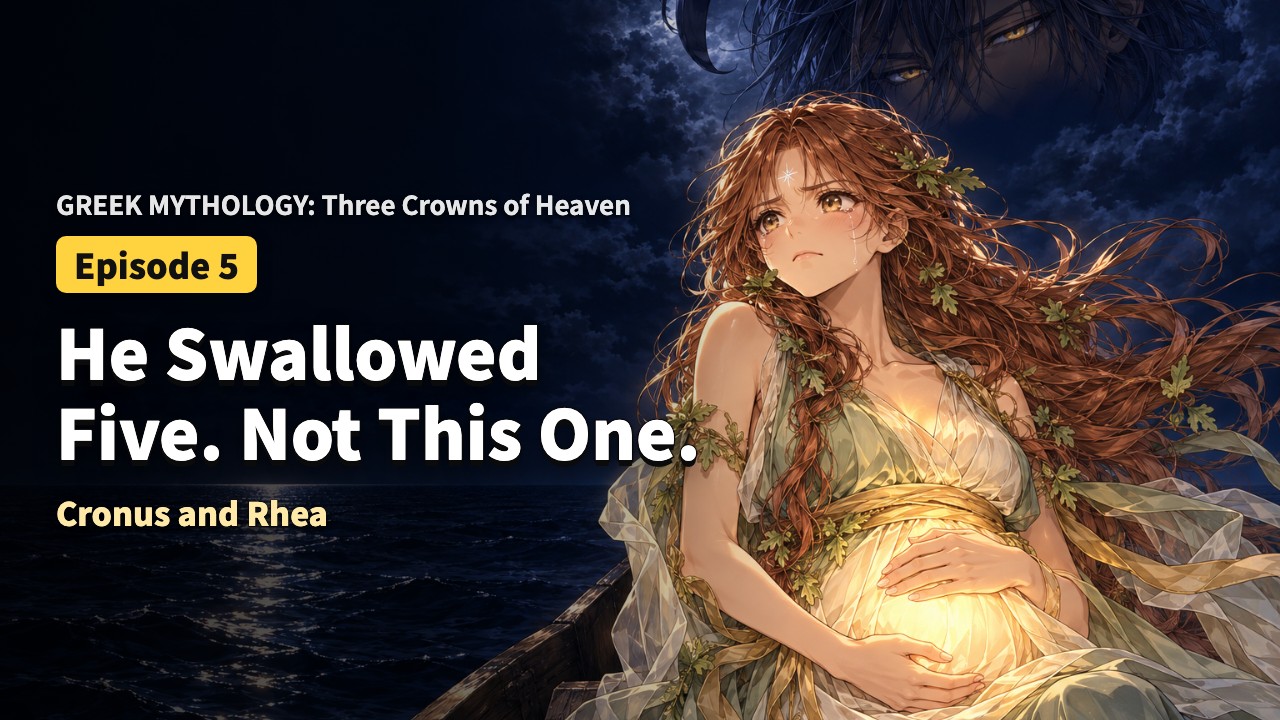
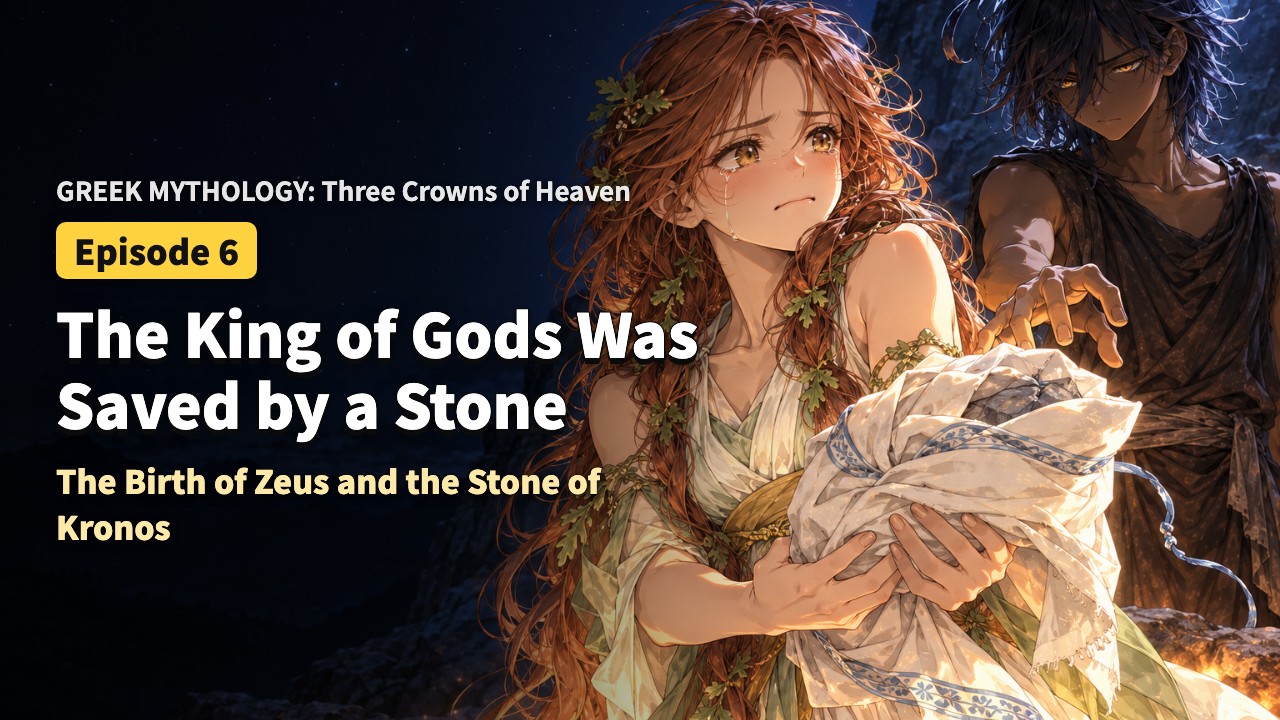
Summary (following the original)
The Theogony (“birth of the gods”) is a poem by Hesiod. He says that while he was tending sheep on Mount Helicon the Muses, goddesses of song, taught him to sing and told him to celebrate the race of the blessed gods.
First came Chaos, a yawning gap. Then came Gaia (Earth), Tartarus (the deep underworld) and Eros (desire). Gaia bore Uranus (Sky), who covered her on every side. Uranus pushed his children back into Gaia’s body as they were born. In pain, Gaia made a sickle and asked her children for help. Only the youngest Titan, Cronus, was willing. He ambushed Uranus and cut him, and Cronus became ruler of the gods.
Gaia and Uranus warned Cronus that one of his own children would overthrow him. So he swallowed each child that his sister-wife Rhea bore. When she was about to give birth to Zeus, Rhea asked her parents for help. They sent her to Crete. She gave Cronus a stone wrapped in cloth, which he swallowed, and hid the baby.
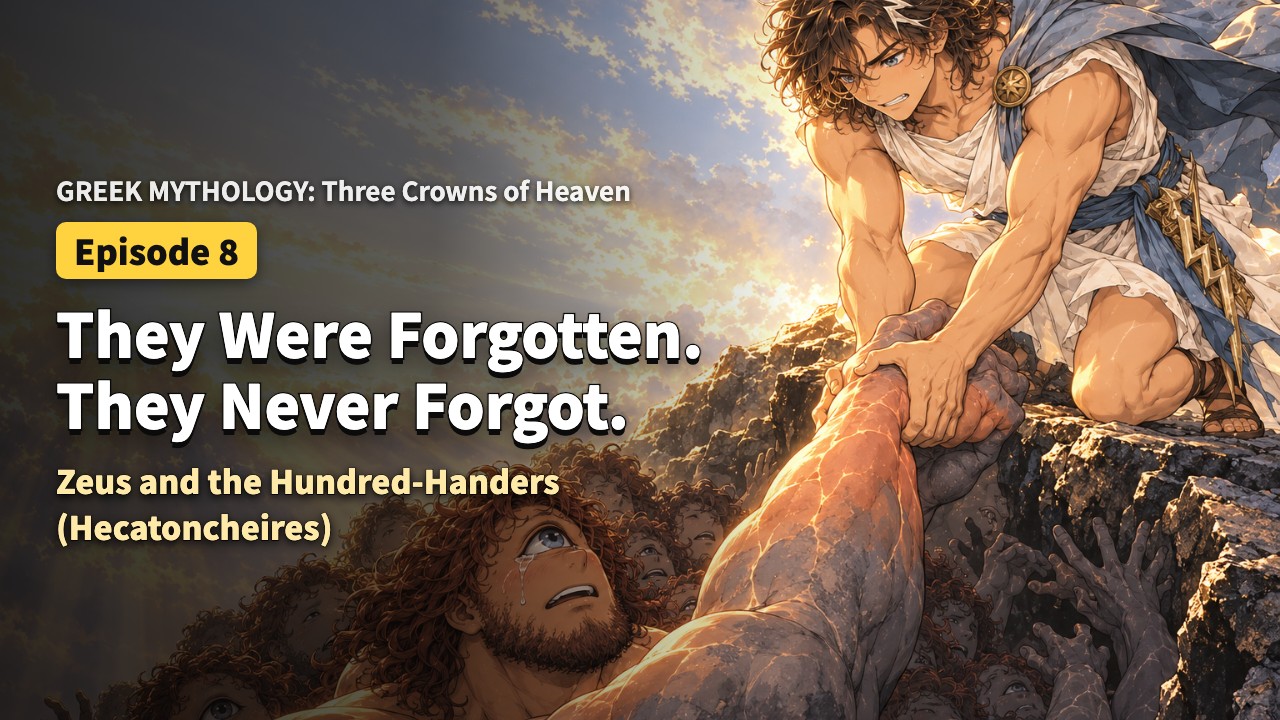
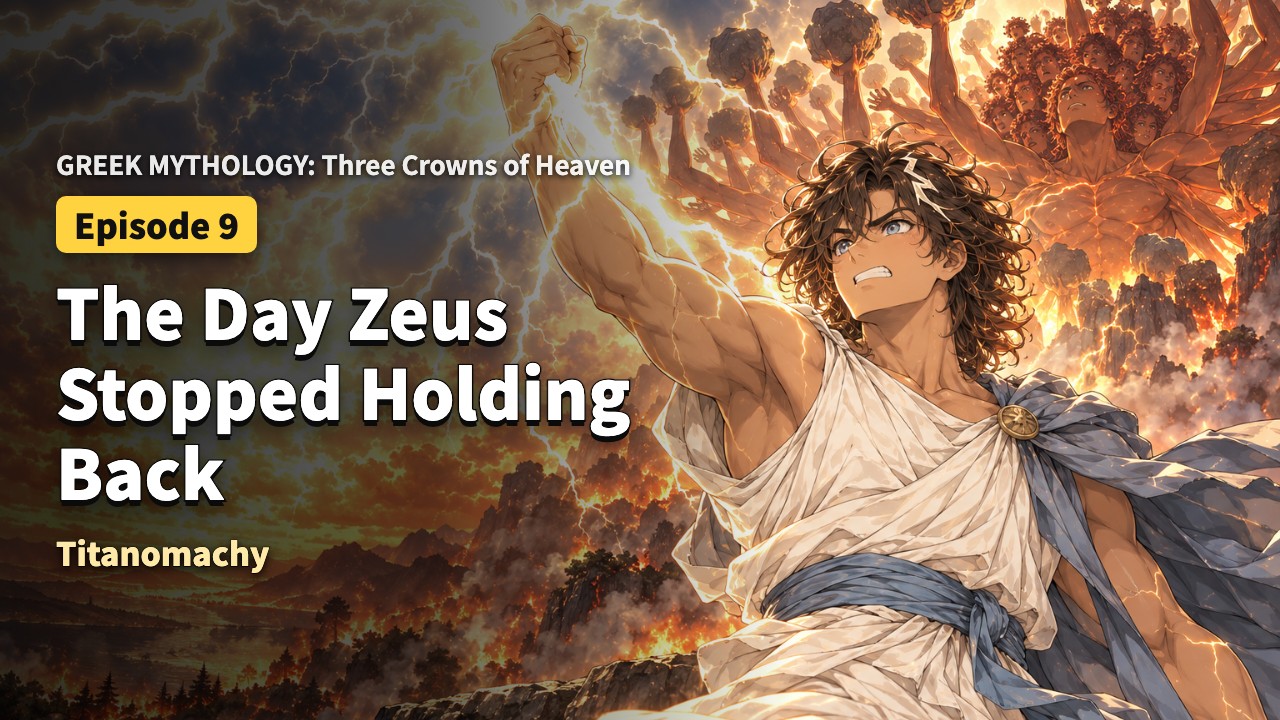
When Zeus grew up, Gaia’s cunning made Cronus bring up the children he had swallowed. The freed gods, together with Zeus, fought the Titans in a war that lasted ten years, with the Titans on Mount Othrys and the Olympians on Mount Olympus. Zeus freed the Cyclopes, who gave him thunder and lightning. Then, on the advice of Gaia, he freed the three Hundred-Handers, who joined the fight. They hurled three hundred boulders at the Titans, who were defeated and bound in Tartarus.
After the war, Zeus also defeats the monster Typhoeus. The gods then urge him to rule, and he gives each god a share of honors. The Theogony goes on to list many more gods and their families.
Three generations of rulers
| Generation | Ruler | How power changes hands |
|---|---|---|
| The first gods | Uranus (Sky) and Gaia (Earth) | Uranus is overthrown by his youngest son, Cronus, with a sickle Gaia made. |
| The Titans | Cronus and Rhea | Cronus swallows his children, but Rhea hides Zeus. Zeus and his allies defeat the Titans after a ten-year war. |
| The Olympians | Zeus and his siblings (Hera, Poseidon, Hades, Demeter and Hestia) | Zeus becomes king of the gods after defeating the Titans and, later, the monster Typhoeus. |
Characters
- Hesiod
- A farmer-poet from Greece, c. 700 BCE. He is both the poem’s author and a character.
- The Muses
- Goddesses of song, who give Hesiod his voice.
- Gaia
- Earth. She is the mother of Uranus and the Titans, and she helps Zeus.
- Uranus
- Sky, and the first ruler of the gods. He is overthrown by Cronus.
- Cronus
- The youngest Titan. He overthrows Uranus and swallows his own children.
- Rhea
- Cronus’s sister and wife. She saves Zeus by tricking Cronus.
- Zeus
- The youngest of Cronus’s children, who becomes king of the gods.
- The Hundred-Handers
- Three giants with a hundred arms each, freed by Zeus to fight for him.
Background
Hesiod’s Theogony is among the oldest surviving Greek poems and is usually dated to around 700 BCE. It has about a thousand lines. Along with Homer’s epics it gave the Greeks their picture of the gods.
Like many origin stories, it explains why the world is ordered the way it is: why Zeus rules, and how the gods are related. Students might compare it to creation stories from other cultures.
The stories are myths, not history. Ancient Greeks told many versions, and Hesiod’s is one of them.
Lesson flow (about 45 minutes)
- Hook (5 min): “Why does the sky seem so far above us? How might someone in the ancient world have explained it?” Take a few ideas.
- Read the manga (15 min): Students read two or three episodes (each is 19 pages) in the order listed, and fill in a three-column family tree: first gods, Titans, Olympians.
- Share and compare (15 min): Groups explain how power changed hands in their generation. Use the table above to check. Ask: which events are the same in each change of power?
- Discussion and exit ticket (10 min): Choose a question below, then have students answer one on the worksheet.
Discussion questions
- In Hesiod’s poem, power passes from father to son by force twice. What patterns do you see, and what might the story be saying about power?
- Rhea tricks Cronus with a stone. Why do you think this trick works? Does it change how you see Cronus?
- Zeus frees the Cyclopes and the Hundred-Handers, who then help him win. Why might the ancient Greeks have told the story that way?
- What is the same and what is different between this creation story and another one you know?
Printable worksheet
Three questions with answer lines on one printable page. The manga links are printed on it too.
GREEK MYTHOLOGY: all episodes
All classroom-ready manga for teachers
This manga is drawn and produced with AI. It follows the original texts, but dialogue and details include creative additions for the comic. Use it as a way into the characters and scenes, not as a replacement for the text. About us
Name: ______________________ Class: ____________ Date: ____________
Greek mythology origins: reading questions
Manga: https://manga-portal.com/en/read/2026-10-30-theogony-2732/ https://manga-portal.com/en/read/2026-10-17-theogony-200c/ https://manga-portal.com/en/read/2026-10-17-theogony-020f/ https://manga-portal.com/en/read/2026-10-18-theogony-b14b/ https://manga-portal.com/en/read/2026-10-18-theogony-3145/ https://manga-portal.com/en/read/2026-10-18-theogony-9539/
1. Explain how Cronus became ruler of the gods, and how he lost power.
2. Why did Cronus swallow his children, and how did Rhea save Zeus? Use evidence from the manga.
3. Choose one: How is the Titanomachy like a human war, and how is it different?
This manga is drawn and produced with AI. It follows the original texts, but dialogue and details include creative additions for the comic. Use it as a way into the characters and scenes, not as a replacement for the text.